ilcastellomenu.com is reader-supported. When you buy through links on our site, we may earn an affiliate commission.
Where to Buy
HDR photography begins with an insult every camera suffers: the world is brighter and darker, in the same frame, than any sensor can hold. A church interior with one blazing window, a coastline at noon, a city street where the shadows are alleys and the highlights are white stone — the best cameras for hdr photography are the ones that give you the most honest material to reconcile that range, whether you bracket exposures for merging or coax a single raw file through careful development.
Where to buy and what to value depends on which HDR school you belong to. Bracketers need speed and discipline: fast, quiet bursts, exposure bracketing that is easy to set, and a body steady enough that the frames align. Single-shot workers need sensor latitude above all — shadows that lift without dissolving into noise and colour confetti, highlights that roll off gracefully rather than clipping to paper white. This guide ranks for both schools and labels which camera serves which master.
A word of taste before technique. HDR’s reputation suffered in the era of radioactive skies and halos, when merging software was used as a special effect rather than a solution. Modern HDR photography, done well, is invisible: the picture simply looks the way standing there felt, with detail in the white dress and the dark doorway alike. Every pick below was chosen to serve that invisible ideal — dynamic range as honesty, not as garnish.
Support features matter more than headline specifications. In-camera HDR modes that merge and tone-map a finished file suit some shooters; raw shooters will ignore them and demand the sensor’s full latitude instead. Zebras and highlight warnings that show exactly what is clipping, histograms that can be trusted, and electronic shutters that keep a bracketed burst silent in a cathedral — these working details separate HDR tools from cameras that merely mention HDR in the brochure.
Finally, the lens and the tripod deserve their sentence early. HDR merging punishes camera movement and rewards stability, and the sharpest sensor cannot rescue a bracket set smeared by a flexing tripod head. The guide’s later sections treat support and workflow seriously, because HDR is a discipline of small accuracies — and the cameras here were picked to reward that discipline rather than fight it.
Key Takeaways
- Sensor latitude is the foundation: shadows must lift cleanly and highlights must roll off gently.
- Bracketers should prize fast, quiet bursts and bracketing controls that need no menu diving.
- Single-shot HDR workers should shoot raw and expose for the highlights, trusting the shadows.
- Highlight warnings and zebras prevent the one error merging cannot fix — clipped detail.
- A rigid tripod and a remote release contribute as much to HDR quality as the sensor.
- Good modern HDR is invisible: the scene rendered as it felt, not as an effect.
In this guide
Quick Picks
| Pick | Badge | Why it is here |
|---|---|---|
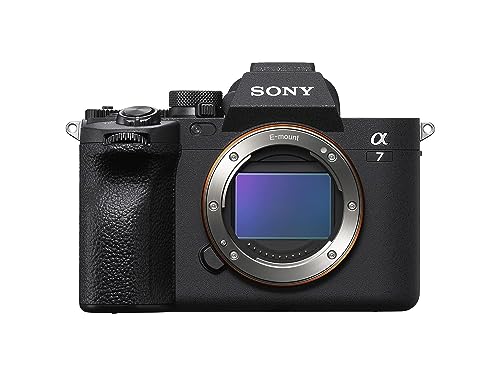
| Sony Alpha 7 IV | Best all-round HDR camera for single-shot latitude | A full-frame sensor with forgiving shadows and disciplined highlights — the single-frame HDR worker’s benchmark. |
| Panasonic LUMIX S5II | Best HDR value in full-frame, with superb stabilisation | Generous dynamic range plus class-leading stabilisation for handheld bracket sets, at a friendlier system cost. |
| Canon EOS R6 Mark II | Best HDR camera for fast, silent bracketing | Rapid silent bursts and confident highlight handling for bracket sets in places that demand quiet. |
| Fujifilm X-T5 | Best HDR camera for resolution and colour on a smaller system | A high-resolution sensor and beloved colour science in a weather-sealed body with proper dials. |
| Nikon Z50 II | Best HDR starter system with room to grow | A capable APS-C mirrorless with honest dynamic range and friendly bracketing — the learning HDR camera. |
| Canon EOS R10 | Best lightweight HDR camera for travel | Fast bursts and capable raw files in the lightest system body here — HDR for people who walk all day. |
How Did We Choose Cameras for HDR Photography?
Dynamic range was judged as behaviour, not brochure. We favoured sensors known for forgiving shadows — files that tolerate being lifted several stops in the shadows while keeping colour plausible — and for highlights that bend rather than break. Two cameras can share a megapixel count and differ by a visible mile in this behaviour, and HDR photographers live in exactly that mile.
Bracketing ergonomics came second. How many frames, across what exposure span, at what burst speed, with what shutter noise? A camera that makes a five-frame bracket a single button-press encourages the habit; one that buries the settings three menus deep ensures the habit dies by the second outing. Electronic shutter options scored for silent work in churches, museums, and ceremonies.
We also weighed the viewing tools. Highlight zebras, clipping warnings in review, and trustworthy live histograms let a photographer protect the bright end of the scene — the end that, once clipped, no software can resurrect. Screens and viewfinders that remain readable in the bright conditions where HDR is needed earned their keep in the ranking.
Ecosystem honesty closed the assessment. HDR shooters often work slowly, with filters and tripods, in weather. Weather sealing, battery stamina for long dawn sessions, and lens ranges with good flare behaviour — because HDR scenes usually contain the sun or its reflections — all counted. A camera for HDR is a field instrument, and it was graded as one.

Sony Alpha 7 IV — Best all-round HDR camera for single-shot latitude
The Alpha 7 IV is the camera for HDR photographers who prefer one exposure and a confident raw file. Its full-frame sensor holds shadow detail with unusual grace: lift the dark corner of a nave or the shaded side of a street and the information is there, coloured plausibly rather than speckled. Highlights, handled with even moderate care, roll toward white instead of snapping to it, which is exactly the behaviour that makes a bright window survivable in a single frame.
Around that sensor sits a working photographer’s toolkit. Highlight warnings and zebras can be tuned to warn at the threshold your raw converter actually clips, so the screen tells the truth about the file. Bracketing is quick to set when a scene exceeds even this sensor — as midday deserts and forge interiors will — and the burst speed aligns frames tightly enough for handheld merges in decent light. In-body stabilisation steadies the single-shot work that dominates real HDR practice.
It is not the cheapest route into HDR, and its menus reward an afternoon’s customisation before they feel like home. Pair it with lenses that behave against the light, because HDR scenes are flare scenes. For the photographer whose HDR means landscapes, architecture, and interiors from raw files, though, this is the guide’s reference standard: latitude first, everything else arranged competently around it.
- Sensor: full-frame with wide dynamic range for raw work
- Stabilisation: in-body image stabilisation for handheld brackets
- Exposure tools: zebras and highlight warnings for clipping control
- Bracketing: multi-frame exposure bracketing with fast bursts
- Files: raw capture suited to highlight-first exposure
Strengths
- Shadow recovery that stays clean and colour-true
- Highlight behaviour forgives careful single exposures
- Complete toolkit for both HDR schools
Trade-offs
- Menu system needs personalising to feel fast
- Premium lenses complete the system at premium cost
- In-camera HDR modes are outshone by its raw files
Best for: raw-shooting HDR photographers working landscapes, architecture, and interiors from single frames.
Not suited for: casual shooters wanting finished HDR from the camera with no developing.

Panasonic LUMIX S5II — Best HDR value in full-frame, with superb stabilisation
The S5II’s HDR party trick is steadiness. Its in-body stabilisation is among the most effective in any camera, and that changes HDR practice: bracketed sets that would demand a tripod from other systems can be shot handheld in good light and merged cleanly, because the frames land almost on top of each other. For travel HDR — the cathedral you cannot tripod in, the viewpoint with a queue behind you — this is not a convenience but a capability.
The sensor behind the stabilisation is a generous full-frame unit with the shadow manners HDR shooters need. Panasonic’s colour science flatters landscapes, and the body’s exposure tools, including a clear histogram and highlight display, support the highlight-first discipline this guide preaches. Video credentials are a bonus for hybrid shooters, but stills HDR is a fully honoured citizen here, with bracketing that is quick to arm.
The L-mount lens range is younger than its rivals’, and autofocus — though much improved in this generation — is the area where competitors still brag. For deliberate, tripod-or-stabilised HDR work, autofocus speed is rarely the deciding factor. Price the whole system and the S5II emerges as the full-frame HDR bargain: latitude, stabilisation, and weather sealing without the flagship tax.
- Sensor: full-frame with wide dynamic range
- Stabilisation: highly effective in-body system for handheld brackets
- Sealing: weather-resistant body for field work
- Exposure tools: histogram and highlight displays for raw discipline
- Mount: L-mount with a growing lens range
Strengths
- Handheld bracket sets merge cleanly thanks to stabilisation
- Full-frame latitude at a friendlier system price
- Weather sealing suits dawn and coastal HDR work
Trade-offs
- Lens range still maturing beside older systems
- Autofocus is capable rather than class-leading
- Menus differ from rivals — a switch cost for some
Best for: travelling HDR photographers who bracket handheld and want full-frame latitude without flagship prices.
Not suited for: shooters deeply invested in another lens system already.

Canon EOS R6 Mark II — Best HDR camera for fast, silent bracketing
Some HDR locations are silent by law or by courtesy: the cathedral during mass, the museum gallery, the ceremony where a shutter’s clatter would be a small rudeness repeated five times per bracket. The R6 Mark II brackets at high speed with an electronic shutter that makes no sound at all, and its sensor’s highlight behaviour — Canon’s colour rolling gently into white — suits the stained-glass problem better than almost anything else here.
Speed helps alignment as well as manners. A five-frame bracket captured in a fraction of a second freezes leaves, water, and passers-by between frames, so merges come out clean where a slower burst would ghost. The autofocus and subject detection are the most assured in this guide, which matters for the HDR-adjacent work — events in mixed light — that pays for many photographers’ landscape habits.
Its sensor resolves a little less than the highest-resolution picks, a trade resolution shooters should weigh if enormous prints are the goal. For HDR specifically, its combination of speed, silence, and highlight grace is the most practical in the pool. Churches, theatres, and dawn streets where tripods are banned: this is the camera that treats those constraints as its home turf.
- Sensor: full-frame with graceful highlight roll-off
- Shutter: silent electronic option for discreet brackets
- Burst: high-speed capture for tightly aligned bracket sets
- Autofocus: subject detection for people, animals, and vehicles
- Stabilisation: in-body system cooperating with lenses
Strengths
- Silent, rapid brackets suit sacred and public spaces
- Highlight colour flatters stained glass and bright stone
- Autofocus confidence covers event work in mixed light
Trade-offs
- Resolution trails the highest-resolution rivals
- Electronic shutter needs care with flickering artificial light
- Full capability arrives at a full-frame system price
Best for: HDR photographers working churches, venues, and events where brackets must be fast and silent.
Not suited for: maximum-resolution landscape printers.

Fujifilm X-T5 — Best HDR camera for resolution and colour on a smaller system
The X-T5 argues that HDR does not require full-frame bulk. Its high-resolution APS-C sensor resolves the fine detail that large HDR prints devour — stonework, foliage, distant rigging — and Fujifilm’s colour science gives merged files a head start that raw shooters quietly appreciate: skies that stay believable, foliage that refuses the radioactive green lesser processing invites. For photographers who print their HDR work big, resolution per kilogram is this camera’s whole case, and it is persuasive.
The body’s analogue dials suit HDR’s deliberate pace beautifully. Shutter, ISO, and exposure compensation sit under your fingers with the camera off, so a dawn setup on a tripod is a matter of touch rather than menus. Weather sealing covers the coastal and mountain conditions where dramatic range lives. Bracketing is straightforward, the electronic shutter keeps sets silent, and in-body stabilisation steadies the handheld sequences.
Its sensor’s latitude, while strong for its class, concedes a little shadow forgiveness to the full-frame picks — the honest physics of a smaller sensor. HDR shooters who lift shadows aggressively should expose with extra care or bracket one frame deeper. Those who expose for the highlights and let the mid-tones carry the picture will find the X-T5’s files rich, detailed, and unusually pleasurable to develop.
- Sensor: high-resolution APS-C for detailed HDR prints
- Controls: dedicated analogue dials for deliberate setup
- Sealing: weather-resistant body and compact system size
- Stabilisation: in-body system for handheld sequences
- Colour: film-inspired colour science valued by raw shooters
Strengths
- Resolution serves large HDR prints from a smaller kit
- Dials suit slow, tripod-based HDR discipline
- Colour science keeps merged skies and foliage believable
Trade-offs
- Shadow latitude concedes a little to full-frame rivals
- Small body balances awkwardly with the longest lenses
- Deepest HDR work may want one extra bracketed frame
Best for: HDR photographers printing large who want resolution and colour without full-frame weight.
Not suited for: shooters who habitually rescue shadows by several stops.

Nikon Z50 II — Best HDR starter system with room to grow
Every HDR photographer begins somewhere, and the Z50 II is the somewhere this guide recommends. Its sensor delivers dynamic range that rewards correct technique — expose for the highlights, and the shadows develop with dignity — while its bracketing is easy enough that a beginner will actually use it on the first outing rather than the fifth. Nikon’s menus and ergonomics have a teaching clarity: settings sit where logic expects them, which shortens the road from reading about HDR to practising it.
The body is compact enough to live in a day bag with a small tripod, and that portability is an HDR feature in disguise — the best bracket set is the one taken because the camera came along. Subject-detection autofocus, inherited from Nikon’s larger bodies, covers the everyday photography between HDR projects, so the camera earns its keep on ordinary days too. The Z-mount lens range gives the system a future as skills and ambitions expand.
Latitude is the honest limit: scenes that the full-frame picks hold in one frame will ask the Z50 II for a bracket — which, pedagogically, is no bad thing, since bracketing is the craft’s foundation. Battery life and buffer depth suit deliberate work rather than spray-and-pray. As a first serious HDR instrument that teaches while it serves, it has no equal at its level in this pool.
- Sensor: APS-C with honest, workable dynamic range
- Bracketing: accessible exposure bracketing for learners
- Autofocus: subject detection for everyday versatility
- Size: compact body that travels with a small tripod
- System: Z-mount lenses for future growth
Strengths
- Teaches HDR technique while delivering real results
- Portable enough to be carried on speculation
- Friendly ergonomics shorten the learning curve
Trade-offs
- Extreme scenes need brackets full-frame might hold singly
- Buffer and battery suit deliberate, not rapid, work
- Kit lenses are the start of the system, not its best
Best for: beginners and improvers building HDR craft on a sensible, growing system.
Not suited for: professionals needing maximum single-frame latitude today.

Canon EOS R10 — Best lightweight HDR camera for travel
Travel HDR has a logistics problem: the scenes with the greatest range — noon harbours, white villages, desert light — arrive in the middle of long walking days when a heavy kit has already been quietly resented for hours. The R10 answers with the lightest serious body in this guide, fast bursts for quick bracket sets, and raw files with enough latitude to honour the highlight-first method. It is the HDR camera most likely to be present, and presence outranks specifications.
Canon’s colour and the R10’s subject-detect autofocus make it a complete travel camera between HDR opportunities — street scenes, family moments, the market’s chaos — so it never feels like a specialist instrument carried for one purpose. The electronic shutter keeps brackets discreet in churches and museums, and the vari-angle screen helps with the low tripod angles that make foregrounds work in wide HDR landscapes.
The smaller sensor asks for bracketing in the most extreme scenes, and the body gives up some weather sealing and stabilisation to its bigger siblings — a travel tripod earns its place in the bag. Judged as the HDR companion for people who cover ground, though, the R10’s equation of weight, speed, and file quality is the most convincing here. The best HDR camera is the one still on your shoulder at the golden hour, and this one will be.
- Sensor: APS-C with capable raw latitude
- Burst: fast capture for quick, aligned brackets
- Shutter: electronic option for silent sets
- Screen: vari-angle for low tripod angles
- Weight: lightest serious system body in this guide
Strengths
- Light enough to carry through whole travel days
- Quick brackets suit opportunistic HDR scenes
- Complete everyday camera between HDR projects
Trade-offs
- Extreme range still demands bracketing
- Less sealing and stabilisation than bigger siblings
- Smaller grip may not suit the largest hands or lenses
Best for: travellers who shoot HDR opportunistically across long walking days.
Not suited for: studio-based HDR or maximum-latitude single-shot work.
Should You Bracket or Shoot a Single Frame?
The two schools of HDR are really two answers to the question of where the work happens. Bracketing moves the work to the scene: three to five exposures spanning the range, merged later, with the tripod as the altar. Single-frame HDR moves the work to the desk: one carefully exposed raw file, highlights protected at capture, shadows developed upward with patience. Neither is purer. Bracketing captures range no sensor holds; the single frame captures moments no bracket can — the wave, the gesture, the bird crossing the bright window exactly once.
Choose per scene, not per identity. Static architecture under a violent sky begs for the bracket; a street scene with moving people begs for the single frame and the latitude of the Sony or Panasonic. Many working HDR photographers default to a hybrid: expose a single frame for the highlights, and — when the scene holds still — fire a safety bracket around it. The cameras in this guide were selected to make that hybrid habit effortless, because it is how HDR actually gets practised outside of forum arguments.
Whichever school you favour, expose for the highlights with religious consistency. Shadow detail can be lifted, coaxed, and denoised; clipped highlights are a hole in the world that software fills with invention. Watch the zebras, mind the blinking warnings in review, and let the dark end of the scene look after itself — with these sensors, it can.
How Do You Merge HDR Without the HDR Look?
The infamous HDR look — halos along rooflines, skies like bruises, shadows lit as flat as noon — is a processing failure, not a capture failure. It begins when tone mapping is asked to do the composition’s job. Start merges gently: align carefully, deghost honestly where things moved, and aim first for a file that looks like a good straight photograph of a difficult scene. If a viewer can tell the technique from across the room, the sliders have gone too far.
Work locally rather than globally. The window needs its own treatment, the shadowed doorway its own, and the sky usually needs less drama than instinct suggests. Modern raw converters reward this restraint with graduated filters and masks that keep each region’s contrast believable. Keep some shadows genuinely dark: a scene where everything is visible is a scene where nothing is important, and HDR’s purpose is to serve the picture’s hierarchy, not abolish it.
Print is the final examiner. Halos invisible on a phone bloom on paper, and shadow noise that a screen forgives becomes texture a print interrogates. HDR photographers who print — and the X-T5’s resolution invites it — learn to keep a restrained hand because the paper taught them. Let the merged file rest overnight before finishing it; morning eyes spot yesterday’s excesses instantly.
Which Scenes Demand HDR Most?
Interiors with windows are the canonical case: the room lives in one exposure world, the view through the glass in another, and any single naive exposure betrays one of them. Churches, galleries, stairwells, and real-estate interiors all pose the same riddle, which is why HDR began as an architectural technique. The cameras in this guide answer it two ways — the full-frame sensors hold more of the riddle in one frame, and the fast bracketers solve it in several — and the working HDR photographer learns to read a room’s range the way a sailor reads sky.
Landscapes at the day’s edges pose the second case. Dawn and dusk put a luminous sky over a land still holding its night, and the graduated filter of the film era has become, in digital practice, an exposure problem for the sensor and the merge. Coastal scenes add a third: noon on white sand and dark rock, where the range is violent and the light is merciless. Each scene type rewards a different pick here — latitude for the coast, resolution for the printed landscape, silence for the church — and the guide’s table is best read with your own dominant scene in mind.
City streets at night are HDR’s modern growth area: neon and sodium, lit windows and unlit alleys, wet stone multiplying every source. Single-frame latitude serves best here because the city moves; brackets ghost on traffic and crowds. This is the Sony and Panasonic’s home fixture, and the reason their shadow behaviour — colour that stays truthful when lifted — matters more to urban HDR than any burst rate.
How Do Filters and Lenses Change HDR Results?
The polariser is the HDR photographer’s first filter, because it manages range at the source: skies deepen, reflections on water and glass surrender their glare, and the scene’s contrast falls toward what the sensor can hold. A polarised single frame often needs no merge at all, which is the most elegant HDR of all — the kind that never happened. Neutral-density filters serve the moving-water and crowd-blurring genres, where a long base exposure is the picture and the bracket rides on top of it.
Lens flare behaviour matters more in HDR than in ordinary work because HDR scenes so often include the light source itself. A lens that veils at the sun’s inclusion taxes every frame of the bracket identically, and no merge removes a veil that was everywhere. When building an HDR kit from the systems in this guide, favour the lenses known for clean sunstars and disciplined coatings, keep front elements obsessively clean — a fingerprint is a flare farm — and use hoods wherever the geometry allows.
Graduated filters, the film era’s answer, still serve photographers who prefer optical solutions and moving scenes. They ask for a horizon that cooperates and a holder that does not vignette. Most digital HDR workers have moved to brackets and masks, but the graduate’s discipline — seeing the range problem in the field and solving it at capture — is exactly the habit this guide teaches, whatever tool expresses it.
How Should HDR Files Be Organised and Archived?
HDR doubles the archivist’s problems: every finished picture has a family of source frames behind it, and the family must stay together or the picture becomes unverifiable and unrepeatable. Keep bracket sets in their own folders named by place and date, never delete the odd frames in a fit of tidiness, and let the finished file carry a suffix that declares it a merge. The photographer who cannot find the sources owns a picture; the one who can owns a process, and processes are what improve.
Develop with a light hand and save the recipe. Modern raw converters store settings alongside files; keep them, because the taste that seems restrained today will look different in five years and the ability to re-develop from the sources is HDR’s great advantage over every earlier era. More than one master of the craft re-develops old brackets as software improves and finds pictures inside them that the year of capture could not express.
Back up the brackets with the same pessimism the historians’ guide in this series preaches: two copies, two places. Storage is finally cheap enough that keeping five frames where one would do is a rounding error, and the day a drive fails, the rounding error becomes the archive. HDR photographers, who plan everything else in stops and sets, should plan survival with the same rigour.
What Does HDR Do to Colour, and How Do You Keep It Honest?
Merging exposures multiplies colour decisions. Each frame of a bracket renders the scene’s colours under a different exposure, and careless tone mapping amplifies saturation as a side effect of amplifying everything — the origin of the radioactive foliage and bruised skies that gave HDR its gaudy reputation. Honest colour in HDR is therefore an act of subtraction: merge for luminance truth, then audit the colour as a separate step, comparing the result against memory and against the middle frame’s calmer rendering.
White balance fixed at capture, as the technique section insists, is the foundation. A bracket whose frames disagree about the light’s colour gives the merge an impossible negotiation, and the resulting casts hide in skies and stonework where they are hardest to see and easiest to print. The cameras here all allow fixed white balance gracefully; use it, and include a grey reference in test scenes when a project’s colour must testify — the artefact and architecture workers in this guide’s audience will recognise the discipline.
Skin is colour’s strictest examiner. HDR portraits and event work in mixed light fail first in the faces, where saturation errors read as sunburn and shadow-lifting reads as grime. Develop the faces first and the scene second, mask locally where the guide’s processing section advises, and let some of the scene stay darker than the sliders want. HDR’s promise was never that everything be visible. It was that the important things be true.
How Do You Print HDR Photographs Well?
Paper has a narrower range than any screen, which makes printing HDR a second act of translation. The merged file that glows on a monitor must be persuaded, not merely sent: shadows need lifting a touch beyond screen taste because paper’s blacks are shallower, highlights need headroom because paper’s white is a material, not a light. Soft-proofing in the converter — simulating the paper before committing it — is the HDR printer’s core skill, and the X-T5’s resolution exists to reward those who learn it.
Choose paper as part of the picture. Matte papers forgive HDR’s busiest textures and suit the architectural and landscape subjects that dominate the genre; glossy and baryta papers hold the deepest blacks for night-city work. Print small proofs of the difficult regions — the sky gradient, the shadowed doorway — before the full sheet, because HDR’s sins concentrate in gradients and paper is an unforgiving confessor.
Hang the result before judging the process. A print lives at walking distance in room light, not at pixel distance under a loupe, and many merges that look overwrought on screen settle into quiet truth on a wall. The HDR photographers whose work endures are the ones who print, live with the print, and let the wall teach the next merge its manners.
How Does HDR Fit a Working Photographer’s Week?
Professionals who sell interiors, architecture, and property work run HDR as a production line, and their habits are worth stealing. Brackets are shot on a fixed recipe — same span, same count, same support — so the merge settings become a preset rather than a meditation. The R6 Mark II’s speed and silence exist for exactly this economy: a room in ninety seconds, the next room already waiting, the client never watching a photographer wrestle a menu.
Amateurs have the opposite luxury and should use it oppositely. The unhurried HDR photographer can afford the scene-by-scene judgement this guide teaches — single frame or bracket, polariser or patience, dawn’s return tomorrow for a better sky. The Z50 II and R10 serve this apprenticeship honestly: capable enough that technique is the only limit, priced so that the limit can be explored without fear.
Both economies share the same foundation, which is why this guide keeps returning to it: protect the highlights, settle the support, distrust the gaudy merge. Whether HDR is your invoice or your meditation, those three habits are the craft, and the cameras are ranked by how gracefully they let you practise it.
How Do You Shoot HDR in a Church or Museum?
Ask first. Many sacred and curated spaces permit photography under conditions — no tripod, no flash, silence — and the R6 Mark II’s silent electronic brackets were ranked for exactly this negotiation. Work at the space’s quiet hour, keep the camera’s footprint smaller than your own, and let the architecture set the pace: these buildings were composed for contemplation, and HDR shot contemplatively inside them inherits some of the calm.
Technically, the church is HDR’s examination hall: a nave in shadow, a window in glory, stone that punishes both clipping and noise. Expose the anchor frame for the glass, let the sensor’s latitude hold the aisle, and bracket deeper than instinct suggests — storage forgives, blown stained glass does not. Review the merge candidates’ histograms before leaving the building; the light that made the picture will not reassemble itself for your return.
How Do You Shoot HDR on the Coast?
The coast offers HDR’s most violent ranges and its most forgiving subjects: rock, water, and sky do not ghost, hurry, or blink. Dawn is the coastal HDR hour, when the range is dramatic but not yet impossible, and the sealed picks — the S5II and X-T5 above all — earn their weatherproofing against the spray that arrives with the best light. Set the support on rock, not sand; the tide edits tripod positions without consultation.
Polarise with judgement: the filter that deepens the sky also flattens the sea’s sparkle, and coastal HDR often wants that sparkle as its highlight anchor. Shoot the bracket both ways on the first morning and let the prints argue. Coastal photographers learn their own coastline’s moods across a season; HDR simply gives them the range to keep what they learn.
How Do You Know Your HDR Has Gone Too Far?
Three witnesses testify. The sky witness: if clouds have edges like cut metal and gradients like bruises, the merge has been bullied. The shadow witness: if the darkest corner of the scene reads as brightly as its middle, the picture’s hierarchy has been abolished and with it its meaning. The stranger witness: show the print to someone who was not there and ask what the place felt like — if they describe a special effect, the HDR has failed at its only job.
The cure is procedural, not penitential. Return to the middle frame, rebuild the merge at half the strength, and compare. Keep the version where the technique disappears. Professional HDR has always been invisible; the gaudy years were a software demo that escaped into the wild, and this guide’s cameras — chosen for latitude and honesty — are happiest in the invisible school.
What Tripod Discipline Does HDR Demand?
The tripod is HDR’s second camera and should be bought with the same seriousness: legs that do not flex when locked, a head that does not creep under the body’s weight, and a height that does not require the centre column’s wobble for ordinary work. Set it on the thickest sections first, spread the legs to the scene’s wind, and hang weight from the hook when the ground allows. Every merge artefact that is not a ghost is usually a tripod confessing.
Between frames, touch nothing. The remote release or timer is not a refinement but the mechanism by which the bracket stays one photograph instead of five neighbours. Check the first frame’s sharpness at full magnification before completing the set — a soft anchor frame poisons four sharp companions, and the two minutes of checking are the cheapest quality control in the entire HDR process.
How Do You Build an HDR Portfolio?
Work one location until it teaches you. The same doorway across a season of light — dawn, noon, storm, dusk — produces a portfolio with an argument, and teaches the photographer more about range than fifty landmarks visited once. The cameras here reward the practice differently: the X-T5’s resolution for the printed series, the Sony’s latitude for the impossible days, the travellers for the portfolio that must be carried to its subjects.
Print as you go and hang the prints where you live with them. A portfolio is a set of pictures that survived being looked at daily, and HDR’s excesses are exactly what daily looking exposes. The final set will be quieter than the first attempts and stronger for it — range in the service of feeling, technique in the service of the place. That is the whole tradition this guide’s cameras were chosen to continue.
How Do You Shoot HDR Portraits and Events?
Carefully, and usually in a single frame. People move, blink, and breathe between brackets, and the ghosting that results is unflattering in a way no subject forgives. The latitude school owns this territory: expose for the brightest skin highlight, let the full-frame sensors hold the shadowed side of the face, and develop with the restraint the colour section teaches. HDR for people is a dynamic-range decision, not a merging decision.
Events add mixed light to the problem — window daylight against tungsten, stage light against a dark hall — and the R6 Mark II’s speed and highlight grace were ranked with those rooms in mind. Shoot raw, fix the white balance by the dominant light on the faces, and accept that some frames serve the moment rather than the portfolio. The HDR discipline still applies; it simply travels at the event’s speed instead of the landscape’s.
How Do You Learn HDR from Your Own Mistakes?
Keep a failures folder and visit it like a teacher. The clipped window from March, the haloed skyline from June, the bracket smeared by a lazy tripod in October — each is a lesson with your name on it, filed in your own hand. Photographers who archive their failures improve at a rate the highlight-reel photographers cannot match, because their tuition is specific and their examiner is honest.
Re-develop one old bracket set every season with your current taste and software. The distance between the two versions is your progress made visible, and occasionally the old set yields a picture the younger photographer could not see. HDR’s raw materials keep their promises for years; the craft is in returning to them with better eyes.
One Last Word on Patience
HDR is the branch of photography that most openly rewards waiting: for the cloud to cover the sun by the one stop the scene needed, for the square to empty, for the dawn to repeat itself tomorrow with a better sky. The cameras in this guide are fast where speed helps and silent where silence helps, but none of them hurries the light. Bring the patience yourself, and the latitude, the brackets, and the discipline in these pages will do the rest — the scene, given time, almost always offers the version of itself you came for.
How Do the Six HDR Cameras Compare?
Rank them by your school first. Single-frame workers live at the top of the table with the full-frame sensors; bracketers should weigh burst speed and silence; travellers should weigh the walk. The right HDR camera is the one whose strengths match where your scenes actually happen.
| Pick | Role | What to know |
|---|---|---|
| Sony Alpha 7 IV | The latitude benchmark | Buy it for the sensor’s manners; the rest is professional competence. |
| Panasonic LUMIX S5II | The steady bargain | Stabilisation is its HDR argument, and it is a strong one. |
| Canon EOS R6 Mark II | The silent bracketer | Five frames before anyone notices you took one. |
| Fujifilm X-T5 | The resolution pick | Detail and colour carry its HDR case. |
| Nikon Z50 II | The HDR apprenticeship | Learn the discipline here; the files already respect it. |
| Canon EOS R10 | The travelling HDR camera | Its specification is presence: it will be there at the light. |
A final honesty: lenses and tripods will differentiate your results as much as these bodies will. Budget for a lens that behaves against the light and a support that does not flex, and any camera in this table becomes a serious HDR instrument.
How Do You Shoot a Clean Bracketed HDR Set?
Technique, in order, for a set that merges without drama. The sequence takes two minutes at the tripod and saves twenty at the desk.
Settle the support before the settings
Extend the tripod’s thickest legs first, keep the centre column down, and hang your bag from the hook if the wind is up. HDR merging forgives many things but not a camera that wandered between frames, and most wandering is born in lazy support.
Fix everything except the shutter
Manual focus on the scene’s anchor point, fixed white balance, fixed ISO at the base setting, aperture chosen for depth. Only the shutter speed should travel across the bracket, so the frames differ in exposure alone and align like siblings.
Expose the brightest frame for the highlights
Set the top of the bracket so the sky, window, or white stone holds detail — check the highlight warnings, not the preview’s prettiness. The rest of the set follows at even steps from that anchor.
Use a remote or timer, and shield the wind
Touching the camera between frames is how sets smear. A remote release, an app trigger, or the self-timer keeps hands off, and your body makes a surprisingly effective windbreak on exposed viewpoints.
Review one merge candidate on site
Zoom into the camera’s playback at the brightest and darkest extremes of the scene. If the highlights blink clipped in the top frame or the shadows are soup in the bottom one, extend the bracket now — the scene will not wait for your return.
Bracket wider than feels necessary when the light is extreme; storage is cheap and unrepeatable dawns are not. The discipline above becomes muscle memory within a month of outings, after which HDR stops feeling like a procedure and starts feeling like seeing.
What Mistakes Spoil HDR Photographs?
Clipping the highlights at capture
The unrecoverable error. Merging software can invent many things, but the detail in a blown window or a white dress is gone from every frame that clipped it. Expose for the bright end and let the shadows trust the sensor.
Letting the camera move between frames
A flexing tripod, a bumped leg, a hand on the camera for each exposure — the merge inherits all of it as ghosting and softness. Support discipline is HDR discipline, and it is cheaper to learn than to fix.
Processing until the technique shows
Halos, crunchy textures, and skies the colour of a warning sign announce the method and bury the scene. Restraint is the professional signature: if the HDR is visible, it is not finished.
Bracketing a scene that needed one frame
Moving water, crowds, and wind-blown trees ghost in merges no matter how fast the burst. Recognise the single-frame scenes and trust latitude instead — that judgement, more than any setting, is the HDR photographer’s real skill.
Ignoring flare
HDR scenes point cameras at the sun, windows, and reflections, and a flare-prone lens veils the whole frame. Clean front elements, a hood where it helps, and lenses known to behave against the light are part of the HDR kit, not accessories.
Final Recommendation
For most HDR photographers, the Sony Alpha 7 IV is the reference: latitude that forgives, tools that tell the truth about clipping, and competence in both schools. The Panasonic S5II challenges it on value and steadiness, and handheld bracketers may honestly prefer it.
Choose the R6 Mark II when brackets must be silent and swift, the X-T5 when prints and colour lead, and the Z50 II or R10 when the journey — learning the craft, or walking all day toward the light — is the real assignment. Each is a serious instrument; the differences are in where their excellence sits.
Whichever body you choose, let the discipline in this guide travel with it: protect the highlights, settle the support, process with restraint. HDR done that way stops looking like a technique at all. It just looks like the day did — which was the point from the beginning.
Frequently Asked Questions
Do I still need to bracket with a modern sensor?
Often, no — and sometimes, absolutely. Moderate scenes fit inside one raw file from the full-frame picks here. Extreme range — sunlit snow against a dark interior, a forge, a noon desert — still exceeds any single exposure, and bracketing remains the honest answer.
What is the best HDR setting to start with?
Aperture priority or manual with auto bracketing across three frames is the classic apprenticeship: one at the metered exposure, one darker, one brighter. Review the merges, learn what your scenes actually need, and widen or narrow the set from experience rather than habit.
Can HDR be shot handheld?
Yes, with the stabilised picks here and a fast burst in decent light — the S5II specialises in it. Alignment software handles small movements well. For the widest brackets and the darkest scenes, though, the tripod remains undefeated.
Why do my HDR images look unnatural?
Almost always over-processing: global tone mapping applied too strongly, shadows lifted until nothing is dark, saturation invited along for the ride. Merge gently, adjust locally, keep some true darkness, and let the file rest before finishing it.
Are in-camera HDR modes worth using?
They are convenient for sharing an immediate, pleasing result and useless for serious developing, since they discard the raw material. Shoot raw alongside if your camera allows it, and treat the in-camera merge as the postcard, not the negative.
Related Guides
Continue with our guides to dynamic range, landscape photography, and long-exposure work: Best Cameras for Dynamic Range Best Cameras for Landscape and Portraits Best Cameras for Long Exposure


