ilcastellomenu.com is reader-supported. When you buy through links on our site, we may earn an affiliate commission.
Where to Buy
Humidity is the quietest camera killer. It does not announce itself like a dropped lens or a wave over the bow; it condenses on cold glass walked out of an air-conditioned room, creeps toward the sensor through every unsealed seam, and feeds the fungus that etches itself across elements in tropical storage. The best cameras for high humidity are chosen, therefore, on two fronts at once: seals that keep the weather’s water out, and habits — which this guide teaches — that keep the air’s water from winning slowly.
Where to buy depends on which humidity you mean. There is the dramatic kind: rainforest trails where the air itself drips, monsoon streets, waterfall spray, boat decks in the tropics. And there is the domestic kind: a camera living year-round in a coastal flat in a humid climate, stored in a wardrobe that smells faintly of mildew by August. The first kind demands waterproof or thoroughly sealed bodies. The second demands decent sealing plus the dry-storage discipline covered later — and it destroys more cameras, because it never feels like an event.
This list therefore mixes philosophies honestly. Two picks can be dunked outright and rinsed under a tap. Three are weather-sealed system or compact bodies built to shrug off drizzle, spray, and steamy air while delivering serious image quality. One is a budget action camera for the places you would not risk the others. What unites them is that humidity was a design consideration, not an afterthought discovered by the warranty department.
A caution that belongs at the front: weather sealing is a defence, not an invitation, and no seal survives being opened carelessly in wet air. Changing a lens on a steamy boat swaps the inside of your camera for the outside’s saturated air, whatever the body is rated for. The guide’s working sections treat behaviour — acclimatisation, lens discipline, drying, storage — as half the product, because in humid climates behaviour genuinely is half the product.
Photographers in the tropics also know humidity’s accomplice: the transition. The dangerous moment is rarely the rainforest itself but the walk from the chilled hotel room into the morning’s wall of warm wet air, when every surface colder than the dew point collects condensation instantly. Cameras that survive the tropics are carried by people who manage transitions deliberately. Keep that image in mind while reading the picks; each was judged partly on how forgiving it is of real human mornings.
Key Takeaways
- True waterproofing and weather sealing are different defences; know which your climate demands.
- The cold-room-to-hot-street transition causes more humidity damage than rain does.
- Never open a camera or change a lens in saturated air if it can possibly wait.
- Dry storage — a cabinet or box with desiccant — is half the humidity battle at home.
- Rinse salt and spray from rugged cameras in fresh water; seals hate crystals.
- Fungus grows in storage, not in use: cameras that travel and dry regularly stay cleaner.
In this guide
Quick Picks
| Pick | Badge | Why it is here |
|---|---|---|
| OM SYSTEM Tough TG-7 | Best waterproof camera for saturated environments | A sealed, dunkable compact with macro talents — the camera that treats humid air as its natural habitat. |
| OM SYSTEM OM-5 Mark II | Best sealed system camera for humid climates | Serious weather sealing and stabilisation in a compact mirrorless body, from the makers of the Tough line. |
| Fujifilm X-T5 | Best sealed camera for humid travel and street work | Weather resistance, high resolution, and dials that work with damp fingers in steamy cities. |
| GoPro HERO13 Black | Best waterproof camera for humid adventure video | Sealed action capture for jungle rivers, surf, and storm-season movement where video is the point. |
| DJI Osmo Action 5 Pro | Best low-light waterproof action camera | Waterproof action capture with unusually good low-light video for steamy evenings and dim interiors. |
| AKASO Brave 7 LE | Best budget waterproof camera for risky places | An inexpensive waterproof action camera for the kayak, the quarry swim, and the trips where loss is a real possibility. |
How Did We Choose Cameras for High Humidity?
We ranked sealing by design class rather than by marketing adjectives. Fully waterproof compacts and action cameras — bodies with no openings in normal use and gaskets at every hatch — form the top tier for saturated environments. Weather-sealed interchangeable-lens bodies form the second tier: excellent against rain and spray, dependent on the lens being sealed too, and vulnerable at the moment of any opening. Cameras with neither were excluded regardless of image quality.
Materials and maintenance counted next. In humid service, what matters is whether the owner can rinse the camera, dry it properly, replace a perished gasket, and store it intelligently. Models with simple, inspectable seals and honest care instructions scored above models with heroic claims and no maintenance path. A seal you can check beats a seal you must believe in.
Image quality was then judged within each tier, because nobody should accept a foggy picture as the price of a dry camera. The sealed system bodies here carry serious sensors; the rugged compacts carry the best optics their armoured class allows. The budget action camera is labelled plainly as the expendable scout, not as a quality champion.
Finally, we considered failure honesty. Every camera in saturated air eventually meets condensation somewhere — a viewfinder on a cold morning, a screen breathing between temperatures. Picks were favoured when their design tolerates the owner’s real behaviour: slow mornings, damp bags, and the occasional mistake. The tropics forgive slowly, but they forgive the prepared.

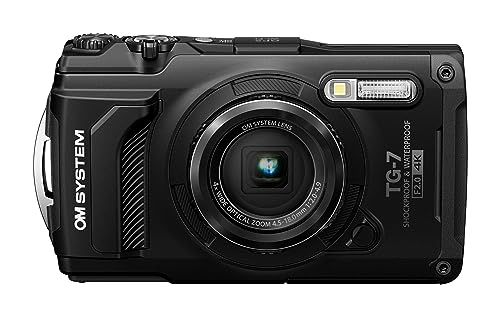
OM SYSTEM Tough TG-7 — Best waterproof camera for saturated environments
The TG-7 is the answer when the air itself is wet. Its body is waterproof to real depths, sealed against dust and mist, and built so that humidity has no casual way in: the lens never extends into the weather, the hatches are gasketed, and the whole camera can be rinsed under a tap at the end of a day of spray and sunscreen. In a rainforest, at a waterfall’s base, or on a small boat in the tropics, this is the camera you carry without a plastic bag of anxiety around it.
Its photographic talents suit humid places specifically. The macro modes photograph the subjects wet climates specialise in — frogs the size of a thumbnail, orchids after rain, fungi on a fallen log — at distances other cameras cannot focus. The bright lens helps under a canopy where the light is green and scarce. Location and condition logging records the steamy facts of the day alongside the pictures, which naturalists quietly love.
Care is simple but not optional: check the gaskets for grit and hair before closing hatches, rinse salt water off in fresh, and let it dry before sealing it in a bag. The image ceiling is a compact’s ceiling — fine for prints of reasonable size and superb for sharing — and the menus run deep for a camera of its size. For humidity as a daily condition rather than an occasional risk, nothing else in this pool is as unbothered.
- Build: waterproof, dustproof, and mist-resistant sealed body
- Lens: fixed zoom that never extends into the weather
- Macro: close-focus and microscope-style modes for wet subjects
- Logging: sensors record location and conditions with images
- Care: rinseable body with inspectable hatch gaskets
Strengths
- Humidity simply has no way in during normal use
- Macro modes match rainforest and reef subjects perfectly
- Rinses clean after salt, spray, and mud
Trade-offs
- Image quality ceiling is a compact camera’s
- Deep menus for a small body
- Gaskets need a moment’s inspection before wet outings
Best for: rainforest, waterfall, boat, and beach photographers in genuinely saturated air.
Not suited for: large-print landscape work or interchangeable-lens ambitions.

OM SYSTEM OM-5 Mark II — Best sealed system camera for humid climates
The OM-5 Mark II comes from the company that built its reputation on cameras surviving weather, and the sealing shows: this is a mirrorless body designed to be rained on, sprayed, and carried through steamy mornings without the owner performing rituals of worry. Paired with a sealed lens — the pairing matters, and the guide repeats it deliberately — it forms the most humidity-confident system in this list while staying small enough for a day bag.
Its sensor system is built around stabilisation and computational assists that humid travel rewards. Handheld slow exposures at waterfalls, high-resolution modes for rainforest detail when the air briefly clears, and colours that handle green shade gracefully all serve the tropical portfolio. The Micro Four Thirds lens range is deep in compact, sealed options, so the whole kit — body, standard zoom, small prime — stays light enough to carry through a humid day without resentment.
The discipline it asks is lens discipline: in saturated air, choose the day’s lens indoors and leave it on. The mount’s seal works when the system stays closed. Battery life is good, the body shrugs off the condensation-prone transitions better than most because it is meant to live outdoors, and storage in a dry cabinet completes the ownership picture later in this guide. For system quality in a wet climate, this is the balanced answer.
- Type: weather-sealed interchangeable-lens mirrorless
- Stabilisation: strong in-body system for slow handheld work
- Modes: high-resolution and computational shooting options
- System: deep range of compact sealed lenses
- Build: sealing designed for rain, spray, and steamy air
Strengths
- Sealing pedigree from a weather-first manufacturer
- Compact sealed lenses keep the whole kit light
- Stabilisation suits waterfalls and dim canopies
Trade-offs
- Sealing only counts with a sealed lens fitted
- Smaller sensor concedes some low-light headroom
- Lens changes in wet air remain a bad idea
Best for: system photographers living or travelling in humid climates who shoot in all weather.
Not suited for: photographers who swap lenses constantly outdoors.

Fujifilm X-T5 — Best sealed camera for humid travel and street work
Tropical cities are a humidity genre of their own: monsoon downpours that arrive at four o’clock sharp, markets steaming with cooking, streets where the air is a warm bath from May to October. The X-T5, weather-resistant and built around direct dials, works beautifully in that genre. Shutter and ISO sit under your fingers — operable with damp hands without screen-diving — and the high-resolution sensor resolves wet stone, neon through rain, and market colour in the detail such scenes deserve.
Fujifilm’s colour science flatters humid light. The grey-green cast that steamy overcast lays over a city is exactly where lesser colour turns sickly; the X-T5’s film-inspired rendering keeps skin, food, and wet foliage plausible. Its compact primes include sealed options that make a discreet, rain-ready street kit, and the body’s sealing handles the downpour dash between awnings that tropical street photography is made of.
It is resistance, not waterproofing: the X-T5 should not be dunked, left in rain for hours, or opened in saturated air, and lens choice decides how sealed the system truly is. Owners in permanently humid homes should pair it with the dry-storage routine in this guide, because its likely enemy is wardrobe fungus across a season, not a single storm. Judged as the humid-city and travel instrument, it is the most pleasurable camera here to use.
- Sensor: high-resolution APS-C for detailed travel work
- Controls: analogue dials usable with damp hands
- Sealing: weather-resistant body; sealed lens options available
- Colour: film-inspired rendering kind to steamy light
- Size: compact system suited to street and travel
Strengths
- Dials keep control when screens and fingers are wet
- Resolution and colour excel in tropical city light
- Sealed compact primes make a discreet rain kit
Trade-offs
- Weather resistance is not waterproofing
- System sealing depends on the lens chosen
- Needs dry storage in permanently humid homes
Best for: travel and street photographers working monsoon cities and humid coasts.
Not suited for: underwater use or careless all-day rain exposure.

GoPro HERO13 Black — Best waterproof camera for humid adventure video
When the humidity comes with motion — a jungle river run, surf at dawn, a mountain-bike trail in the wet season — the HERO13 Black is the camera that goes. Waterproof as a matter of identity, stabilised against the judder of real movement, and wide enough to hold a whole rapid or ridgeline in frame, it records the wet tropics in the first person. Humidity cannot fog a lens that never opens, and its hatches are the simple, glove-friendly kind that get checked by feel.
Its lens system deserves a mention in this company: interchangeable lens mods let the same body serve wide scenic work and closer perspectives, and the hydrophobic lens coating sheds droplets that would blind lesser action cameras — a feature invented for exactly the spray-and-drizzle world this guide is about. Footage from humid adventures also benefits from its tall capture, which reframes for both television and phone from one master.
Still photographs are souvenirs, the small body drinks batteries on long river days, and a fogged interior — if a hatch was ever closed on wet air — takes patience to clear. Those are the honest costs. For video-first humidity, where the TG-7 leads for stills, the HERO13 is the pick that treats a downpour as a filming condition rather than a cancellation.
- Build: waterproof action body with simple sealed hatches
- Lens: interchangeable mods with water-shedding coating
- Stabilisation: advanced smoothing for wet-season movement
- Capture: tall-format video for flexible reframing
- Mounts: full system for helmets, boards, and boats
Strengths
- Downpours and dunkings are filming conditions, not risks
- Water-shedding lens keeps spray from blinding shots
- Stabilised first-person video of humid adventures
Trade-offs
- Stills are mementos rather than photographs
- Battery appetite on long active days
- A hatch closed on wet air fogs until patiently dried
Best for: adventure video in jungles, surf, rivers, and storm season.
Not suited for: considered still photography or long static recording.

DJI Osmo Action 5 Pro — Best low-light waterproof action camera
Humid places have a light problem layered over their water problem: rainforest shade, monsoon gloom, and evenings that arrive like a dimmer switch. The Osmo Action 5 Pro answers with the strongest low-light video in the action class — a larger sensor that keeps steamy night markets, cave mouths, and dusk boat rides watchable rather than grainy. It is fully waterproof, so the humidity half of the brief is settled by design, and its dual screens help solo travellers frame themselves against the waterfall.
Battery endurance is its second gift to humid work. Long, hot days drain cameras and people alike; this one records for extended stretches and charges quickly during the midday retreat to shade, which is how tropical days are actually structured. Subject tracking and strong stabilisation cover the walking tour through the old town in the rain, and the magnetic mount system makes the transitions between hand, chest, and railing painless.
Choose it over the GoPro when the itinerary leans toward evening and shade; choose the GoPro for its lens-mod system and reframing tall capture. Both are honest waterproof tools. The DJI’s stills, like all action cameras’, serve the story rather than the wall, and its ecosystem of mounts, while growing, is younger. For the humid traveller filming after dark, it is the action pick of this guide.
- Build: waterproof action camera for full immersion
- Sensor: larger sensor for low-light video in shade and evening
- Screens: dual displays for solo framing
- Power: long recording endurance with fast charging
- Mounting: magnetic quick-release system
Strengths
- Best dim-light video among the waterproof picks
- Endurance suits long tropical days
- Dual screens help solo travellers enormously
Trade-offs
- Stills remain a supporting act
- Mount ecosystem younger than its main rival’s
- Low-light skill cannot rescue a fogged hatch seal
Best for: humid travel video weighted toward shade, dusk, and night markets.
Not suited for: stills-led trips or maximum mount variety.

AKASO Brave 7 LE — Best budget waterproof camera for risky places
Every humid-climate kit benefits from a camera whose loss would be an anecdote rather than an insurance claim. The Brave 7 LE is that camera: waterproof in its housing, stabilised adequately, and priced — in spirit, since this guide prints no prices — at the expendable end of the pool. It rides the kayak that might capsize, the waterfall scramble, the beach bag of a large family holiday, and it returns usable footage and stills from all of them.
Its dual-screen arrangement, with a front display for self-framing, is generous at this level, and the included accessories cover the mounts a holiday actually uses. Image quality is the honest compromise: good in daylight, ordinary in gloom, and no match for the DJI after dark or the TG-7 for considered stills. Treat it as the scout that goes first into the wettest, riskiest places and reports back.
There is strategy in owning the expendable camera. It preserves the good cameras for the conditions they are sealed for, and it liberates the photographer — some of the best humid-climate pictures come from angles nobody would risk a system camera for: at water level in the creek, under the waterfall’s fringe, in the downpour itself. The Brave 7 LE earns its place by making those angles affordable.
- Build: waterproof with its housing fitted
- Screens: dual displays including front self-framing
- Stabilisation: electronic smoothing for action clips
- Kit: accessory bundle covering common holiday mounts
- Role: expendable scout for high-risk wet positions
Strengths
- Loss or damage would not ruin the trip’s budget
- Goes to water-level angles pricier cameras avoid
- Front screen helps group and solo framing
Trade-offs
- Image quality trails the premium action picks
- Housing required for waterproofing — one more seal to check
- Low light is its weakest territory
Best for: families and travellers wanting a risk-free waterproof camera for swims and scrambles.
Not suited for: anyone expecting premium image quality after dark.
How Do You Stop Condensation When Moving Between Temperatures?
Condensation obeys one rule: warm wet air deposits water on any surface colder than the air’s dew point. The classic tropical disaster — camera chilled overnight in air conditioning, carried into a steaming morning — coats every cold surface, including internal ones if the camera breathes. The fix is patience with a plastic bag. Before going outside, seal the camera in a bag with the cold room air; carry it out and let the bag, not the camera, collect the condensation while the kit warms to ambient temperature. Twenty minutes of foresight prevents the fogged lens that ruins the dawn shoot.
The reverse journey matters too. A camera soaked in humid air and brought into a cold room will condense as it cools past the dew point of the air trapped around it. Dry the exterior first, then let it rest in the room inside an open bag so temperatures equalise gently. Photographers who dive or boat in the tropics learn to stage these transitions like pit stops — bag, wait, open — because the alternative is a viewfinder that fogs from the inside at the day’s best moment.
Small habits compound. Keep a microfibre cloth for exterior glass only — never wipe a fogged internal element you cannot reach, and never ‘help’ condensation with a hairdryer’s hot blast, which drives moisture deeper and warps seals. Silica gel sachets in the camera bag absorb the day’s accumulated damp between outings, provided they are dried or replaced regularly; a saturated sachet is just ballast with good intentions.
How Should Cameras Be Stored in a Humid Home?
Storage is where humidity wins its quiet victories. Fungus colonises lens elements and sensor-adjacent surfaces in dark, still, saturated air — a wardrobe in a tropical flat is a fungus farm with excellent lighting for mould. The countermeasure is a dry environment: a sealed cabinet or box with rechargeable desiccant, kept at moderate dryness rather than desert extremes, with the cameras stored without their bags and with caps arranged so air can circulate. Dedicated dry cabinets exist for exactly this climate problem and are common in tropical camera shops for a reason.
Use is the other countermeasure. Fungus prefers the forgotten; a camera taken out weekly, exposed to daylight, warmed by working, and dried by moving air rarely grows anything. The dangerous collection is the one in the cupboard since last season. If a camera must rest for months in a humid home, rest it in the dry box with a note of its last outing, and give it an airing when the desiccant is serviced.
Inspect with a torch twice a year. Early fungus looks like a faint snowflake or thread at an element’s edge and, caught early, is a cleaning job; caught late, it is an etching that no cleaning reverses. The same inspection covers gaskets and seals, which perish faster in heat and humidity — a supple seal is protection, a cracked one is a rumour. Ten minutes of torchlight per season is the cheapest insurance in this entire guide.
Which Humid Places Test Cameras Hardest?
The rainforest canopy walk concentrates every threat: air at saturation, drip from above that is neither rain nor dew but a third thing, shade that keeps nothing dry, and boardwalks where a dropped camera is a lost camera. Cameras for this place need the TG-7’s sealed indifference or a system body under a disciplined rain cover, plus straps that assume slippery hands. Photographers who work there speak of the forest as a slow waterfall you stand inside, and they dress their cameras accordingly.
Waterfalls and surf create the second test: directed water. Spray arrives as a wind-driven aerosol that finds seals the way smoke finds a doorway, and salt spray adds corrosion to the indictment. The rugged picks rinse clean — a genuine maintenance advantage, since salt left on any camera is a debt collected later — while system bodies need the photographer’s cloth discipline and a position chosen with the wind read first.
The third test is the least photogenic and the most destructive: the humid home itself. A camera that survives a Borneo assignment can be undone by two monsoon seasons in a coastal wardrobe, because the expedition included drying rituals and the wardrobe includes none. This guide’s storage chapter is therefore not an appendix to the camera choice but its second half, and buyers in permanently humid climates should budget for the dry cabinet in the same conversation as the body.
How Do Boats, Diving, and Salt Change the Rules?
Salt water is humidity with intent. It conducts, corrodes, and crystallises in mechanisms, and it punishes cameras that fresh water merely inconveniences. The rinse discipline for the waterproof picks — fresh water, promptly, hatches closed — is the difference between a camera that boats for years and one that develops a crusty dial by the second season. System cameras on boats live in dry bags between shots, come out for the photograph, and return to the bag before the spray does; the OM-5’s sealing buys working time, not storage rights.
Diving-adjacent work — snorkelling, reef walking, the rockpool at low tide — belongs wholly to the dunkable picks, with the TG-7’s macro turning the pool into a studio. Housings for system cameras exist beyond this pool’s scope, and the honest advice for the humid traveller is to let the sealed compact own the waterline and keep the system for the shore. Two cameras, two elements, no compromises negotiated at the water’s edge with wet hands.
Below the surface, humidity’s rules invert: the enemy becomes the air trapped inside a housing or body at sealing time. Divers learn to load cameras in the driest air available — the air-conditioned room, never the steamy deck — so the sealed-in air cannot condense on the cold descent. The same principle governs the TG-7’s hatches on a boat morning: close them in dry air, and the camera carries its own good climate with it.
How Should You Pack a Camera Kit for the Tropics?
Pack for transitions. The kit bag should contain the plastic bags for acclimatisation, sachets of desiccant in zip pouches, a cloth reserved for glass and another for bodies, and a dry bag sized for the whole camera in the boat-and-downpour moments. None of this weighs anything; all of it is the difference between a tropical kit and a temperate kit on holiday. Photographers who pack these small things stop thinking about humidity as a threat and start treating it as weather — present, managed, and mostly irrelevant.
Choose the day’s kit by the day’s water. A city day in the monsoon wants the sealed system and one lens, chosen indoors. A river day wants the TG-7 and the action camera, with the system left in the hotel’s dry box rather than brought along for courage. The beginner’s instinct is to carry everything; the tropical veteran carries the camera the day’s element demands and lets the rest stay dry, because a camera collection’s survival is a team statistic, not an individual one.
At the airport, the same logic rides in the cabin bag: cameras and lenses with you, batteries with you, desiccant with everything. Holds are cold, and cold holds plus humid destinations recreate the condensation problem at thirty thousand feet’s remove. The bag-before-opening ritual from this guide’s technique chapter applies at the hotel door exactly as it does at the trailhead.
What Are the Signs Humidity Is Winning?
Learn to read the early warnings, because humidity damage is a story with a long first chapter and a sudden end. A viewfinder that fogs from the inside on cool mornings is reporting moisture in the body. A zoom or focus ring that feels gritty is reporting crystals or corrosion at a seal. White bloom on leatherette, a musty smell from the bag, spots on the rear element that wipe off and return — each is the climate filing a claim, and each is cheap to answer early and expensive to answer late.
The torch inspection from the storage chapter is the formal version of this vigilance: elements examined for the first threads of fungus, contacts for the green kiss of corrosion, gaskets for cracks and flattening. Ten minutes, twice a year, in a humid home. Photographers who keep the ritual describe their collections in decades; those who skip it describe theirs in anecdotes about the one that got away — usually a lens, usually a favourite.
When a warning appears, act like a conservator, not an optimist. Dry the item properly in the cabinet, clean what is cleanable, and send seals and fungus to professionals while the job is still small. Humidity rewards procrastination with compound interest, and the tropics’ camera graveyards are filled with equipment that was going to be dealt with next month.
How Do Professionals in the Tropics Organise Their Kit?
Working photographers in Singapore, Lagos, Manaus, and Brisbane converge on the same architecture, and it is worth copying wholesale. A dry cabinet at home base, sized generously. A rotation: cameras in use live out and dry; cameras at rest live in the cabinet. Working bodies are chosen sealed, working lenses are chosen sealed, and one rugged compact handles the assignments where water is not a risk but a medium. Rental and repair relationships are maintained before they are needed, because a deadline does not wait for a gasket’s shipping time.
Their field habits are this guide’s habits, systematised: acclimatisation bags in every vehicle, lens changes treated as indoor surgery, a drying stop built into the working day’s middle. What looks like fussiness from a temperate climate is, in the tropics, simply the cost of equipment that works on the day — and professionals, whose rent depends on the day, pay it without resentment.
The amateur in a humid home can adopt the architecture at any scale: one dry box, one rotation, one rugged camera for the wet work, and the torch twice a year. The climate does not grade on budget. It grades on dryness, and dryness is mostly a set of habits wearing a small amount of equipment.
What Should You Do After a Camera Gets Soaked?
First, do not turn it on to check. Water and electricity negotiate badly inside a camera, and a soaked body that might have survived drying has killed itself proving it still worked. Remove the battery and card with dry hands, blot — never wipe — the exterior, and if the water was salt, follow the manufacturer’s guidance for the rugged picks about rinsing; for system bodies, a barely damp cloth removes salt from surfaces without driving it inward.
Then give it dryness and time in the right order: the camera rests open — hatches, caps, and doors arranged for air — inside the dry box or cabinet with desiccant, for days rather than hours. Silica in quantity beats rice in folklore. Resist the hairdryer, the oven, and the sunny windowsill, all of which cook seals and drive moisture toward the sensor’s neighbourhood.
If the camera wakes afterwards, watch it for a month: intermittent faults, creeping corrosion, and late fungus all declare themselves slowly. If it does not wake, the professional assessment is worth its fee for any body in this guide’s system class — water damage is sometimes a cleaning, sometimes an epitaph, and only opening it tells which. Either way, record what happened in the kit log. The next soaking, if the habits in this guide are kept, should be a rarer event with a better ending.
How Do You Photograph in Rain Without a Waterproof Camera?
A sealed system body under a proper rain cover is the working answer, and the cover’s craft matters: the lens port kept clear, the photographer’s hands working inside the sleeve, the whole arrangement practised at home before it is needed in anger. Plastic bags improvise bravely for one shower and fail across a monsoon assignment; the OM-5’s sealing buys the margin that improvisation cannot. Know which rain you are in — the passing shower forgives, the tropical downpour audits.
Position is the second defence. Shoot from doorways, awnings, and the lee of buildings; let the rain be in the picture rather than on the camera. A lens hood and a cloth in a dry pocket handle the droplets that arrive anyway. Photographers who work rainy cities — and the X-T5 was ranked partly for them — develop a choreography of cover, wipe, shoot, shelter that looks like fussiness and functions like armour.
How Do You Care for Seals and Gaskets?
Inspect before the wet season, not during it. Gaskets should be supple, seated, and free of the grit and hair that turn a seal into a sieve; hatches should close with the same resistance they had when new. A soft brush and a barely damp cloth do the cleaning; anything sharper is vandalism with good intentions. The TG-7’s owner-checkable hatches are a genuine design virtue in this climate, because a seal you can see is a seal you will maintain.
Replacement is a calendar item in the tropics, not a repair event. Heat and humidity perish rubber on their own schedule, and the photographer who diarises gasket checks alongside the torch inspections from the storage chapter will never learn about a failed seal from the inside of a fogged camera. Professionals in wet climates treat seals the way sailors treat rigging: inspected on rhythm, replaced on evidence, trusted because verified.
How Does Humidity Affect Film-Era and Vintage Cameras?
Collectors in humid climates fight the same war on older fronts: leather bellows feed fungus, lubricants thicken and migrate, and uncoated elements bloom with a haze that no modern coating would tolerate. The dry cabinet is even less optional for a vintage collection than for a digital one, and the rotation principle — use it or store it properly, never abandon it in between — was learned by collectors decades before digital photographers needed the lesson.
This guide’s picks are all modern, but the vintage lesson transfers: humidity punishes neglect, not age or newness. A forty-year-old camera in a dry cabinet in Singapore will outlive a new mirrorless in a damp wardrobe in the same city. The climate does not read specification sheets. It reads storage, and storage is a decision renewed every season.
What Humidity Kit Should Live in the Camera Bag?
Four things, permanently: resealable bags for acclimatisation, sized for the body and the longest lens; rechargeable desiccant sachets in their own pouch, dried on the household rhythm; two cloths in sealed bags, one for glass and one for bodies; and a small dry bag that swallows the whole camera when the boat or the downpour makes its argument. The kit weighs almost nothing and converts humidity from a threat narrative into a weather report.
Add a headtorch for the inspections and the hatch checks in poor light, and a notebook habit: which camera went out, in what conditions, and what was done about it afterwards. Tropical professionals keep this log without thinking, because memory is the first casualty of a busy season and the log is what lets a pattern — this seal, that bag, this storage shelf — be caught before it becomes a loss.
How Do You Dry a Lens with Internal Fog?
Slowly, in dry air, with the caps arranged for circulation and the lens resting in the cabinet for days if necessary. Internal fog is moisture that has already crossed the border; heat and hurry drive it deeper and deposit it on elements as a permanent bloom, while patience in genuinely dry air lets much of it leave the way it came. If the fog returns on the next humid morning, the moisture has a home inside and the lens needs professional drying, not another week of hope.
Distinguish fog from fungus while you wait: fog is a uniform mist that changes with temperature, fungus is a fixed pattern — threads, snowflakes, a lace at the edges — that does not care what the weather does. Fog is a drying problem. Fungus is a cleaning problem with a deadline. The torch inspection tells them apart in seconds, which is why this guide keeps prescribing it: in humid climates, diagnosis is nine-tenths of survival.
How Do You Work in a Sauna-Hot City with a System Camera?
The steamy metropolis is humidity’s daily form: air-conditioned towers exhaling into streets at saturation, rain arriving on a schedule, every doorway a temperature border. The city photographer’s ritual is the trail ritual in miniature — bag the camera before leaving the chilled interior, let it warm while the first coffee happens, and choose the day’s lens before the door opens. The X-T5’s dials, workable without screen-diving in the damp, were ranked partly for these mornings.
Evening brings the second act: markets steaming, pavements drying, neon doubling itself in wet stone. Sealed systems earn their keep here not by surviving immersion but by ignoring the ambient wetness that fogs lesser kit and frays lesser tempers. Return home to the dry cabinet, and the city kit is ready to repeat the performance for years — which is the whole ambition of owning good tools in a wet climate.
What Should You Check Before a Wet-Season Trip?
Seals first, while replacements can still arrive: hatches, gaskets, lens mounts, the condition of every rubber surface the climate will test. Batteries second, because heat and age conspire in the tropics and a battery that sulks at home will resign abroad. Storage third — the dry box at the destination planned, the desiccant fresh, the bags and cloths packed by the packing chapter’s list rather than by memory at midnight.
Finally, check the plan against the wettest day, not the average one. Which camera owns the river day? Which lens stays on for the boat? Where does the kit dry at each stop? A wet-season itinerary answered in advance reads, in the event, like luck — and luck, in humid countries, is usually preparation that has stopped introducing itself.
How Do the Six Humidity Cameras Compare?
The table divides by defence class first: dunkable bodies at one end, weather-resistant systems at the other, with the budget scout where loss is likely. Match the class to your wettest realistic day, not your wettest imaginable one — overbuying armour costs image quality, and underbuying it costs cameras.
| Pick | Role | What to know |
|---|---|---|
| OM SYSTEM Tough TG-7 | The sealed scout | Take it where the air drips; it was built there. |
| OM SYSTEM OM-5 Mark II | The sealed system | The humidity answer for people who need real lenses. |
| Fujifilm X-T5 | The humid-city camera | For steamy streets and market light, with style. |
| GoPro HERO13 Black | The wet-motion camera | Humidity plus speed is its home fixture. |
| DJI Osmo Action 5 Pro | The dusk-proof action camera | Waterproof outside, light-hungry inside. |
| AKASO Brave 7 LE | The expendable scout | Cheap enough to be brave with. |
Whichever class you choose, the ownership chapters matter as much as the row you pick: acclimatisation bags, lens discipline, dry storage. A mid-table camera with excellent habits outlives a top-table camera stored in a damp wardrobe, every single time.
How Do You Work a Full Day in Saturated Air?
A field routine for the rainforest day, the boat day, or the monsoon city day — the habits that keep sealed cameras sealed and photographers calm.
Stage the morning transition
Bag the cold camera before leaving the air-conditioned room, and let it warm inside the sealed bag while you travel to the trailhead or the harbour. Open it only when the bag’s outside and the world agree on temperature.
Commit to one lens outdoors
Choose the day’s lens in the dry of the room and keep the system closed. If a second lens is truly needed, change it in the driest available shelter, body opening facing down, quickly, and accept that the day’s other lens stays home next time.
Manage spray actively
Wipe droplets from the front element with a dedicated cloth before they dry to spots, and rinse salt from rugged bodies in fresh water at the day’s end. Seals keep water out; only you keep it off the glass.
Rest the kit at midday
Use the hot, still hours to dry everything in moving air — shade with a breeze, not a sealed bag in the sun. Batteries charge, sachets breathe, and the afternoon starts with a dry kit rather than a marinating one.
End the day with the drying ritual
Exterior dry, hatches checked, camera into the dry box or cabinet with desiccant, sachets into their drying routine. Fifteen unhurried minutes at night is what a camera collection in the tropics runs on.
None of this is heroic. It is housekeeping performed at photographic moments — which is precisely why it works, and why the photographers whose gear survives the tropics are the methodical ones rather than the lucky ones.
What Humidity Mistakes Destroy Cameras?
Changing lenses in saturated air
The moment a body opens in wet air, the inside of the camera becomes the outside. Sensor spots, internal fog, and eventually fungus all date from cheerful lens swaps on boats and trails. Choose the lens indoors; live with the choice.
Sealing a wet camera in a bag
A damp camera in a closed bag is a terrarium. Always dry the exterior and let the kit breathe in moving air before anything gets zipped away, however tired the evening makes you.
Trusting sealing as a substitute for care
Gaskets perish, hatches collect grit, and one grain of sand across a seal undoes the rating entirely. Inspect, rinse, and maintain — the rating describes a maintained camera, not an immortal one.
Storing the kit in a wardrobe
Dark, still, humid, and full of organic material: a wardrobe is fungus habitat. Dry boxes and cabinets exist because wardrobes failed a generation of tropical photographers.
Wiping a fogged lens aggressively
Condensation on glass should be blotted and air-dried, not scrubbed — grit in the cloth turns a fog into a scratch. Internal fog cannot be wiped at all; it can only be waited out in dry air.
Final Recommendation
If your humidity is the dramatic kind, the OM SYSTEM Tough TG-7 is the stills answer and the GoPro HERO13 Black or DJI Osmo Action 5 Pro the video answers — sealed bodies that treat saturated air as home. The AKASO Brave 7 LE scouts the riskiest positions so they do not have to.
If your humidity is the domestic, year-round kind and you shoot a system, the OM-5 Mark II and Fujifilm X-T5 bring serious sealing and serious image quality — provided the dry-storage half of this guide becomes household routine. In the tropics, the cabinet is part of the camera.
Buy the defence class your wettest realistic day demands, then practise the transitions, the lens discipline, and the drying ritual. Cameras in humid climates rarely die in the rain. They die in the wardrobe, the wet bag, and the opened body — and all three deaths are preventable.
Frequently Asked Questions
Is weather sealing enough for the tropics?
For rain, spray, and steamy streets with a sealed lens fitted, yes — the system picks here are built for it. For immersion, waterfall bases, and boat work in breaking water, choose the genuinely waterproof bodies. Match the defence to the water’s intentions, not its politeness.
How do I know if my lens has fungus?
Shine a torch through the elements and look for faint threads, snowflakes, or a hazy patch near the edges. Early growth is a professional cleaning job; late growth etches glass permanently. Inspect twice a year in a humid home, and store the lens dry so the inspection stays boring.
Can I dry a fogged camera with rice?
Rice is a weak desiccant and a good source of dust. Silica gel in quantity, moving dry air, and patience do the job properly. Keep the camera open in a dry box, battery out, and let hours — not minutes — clear internal fog.
Should I keep silica gel in my camera bag?
Yes, and maintain it. Rechargeable sachets that change colour when saturated are ideal; dry or replace them on a rhythm, because a saturated sachet protects nothing. The bag is the camera’s daytime home, and its climate is your responsibility.
Does humidity affect batteries and cards too?
Heat and damp shorten battery temper and corrode neglected contacts. Store cards dry, wipe contacts occasionally, and rotate batteries so none sits discharged for a season. The camera is a system, and humidity negotiates with every part of it.
Related Guides
Pair this guide with our advice on hiking cameras, travel kits, and rugged gear care: Best Cameras for Hikes Best Cameras for Travel and Backpacking Best Cameras for Photography Waterproof


