ilcastellomenu.com is reader-supported. When you buy through links on our site, we may earn an affiliate commission.
Where to Buy
Every travel photographer eventually has the same argument with a suitcase. Full-frame image quality is wonderful; full-frame weight, multiplied by a fast zoom and multiplied again by eight hours of walking in Lisbon, is a negotiation your shoulders lose by day three. The best cameras for light travel full frame are the bodies and kits that resolve that argument — genuine full-frame files from systems designed, lens by lens, to be carried all day without resentment.
Notice the wording: kits, not bodies. Travel weight is a system property. A featherweight body behind a heavy fast zoom is a heavy kit wearing a disguise, and several famous ‘travel’ setups fail exactly there. This guide therefore judges each pick as a working kit — body plus the lens or two a traveller actually carries — and names the specific glass that keeps each system honest, because a light body with no light lenses is a promise the catalogue breaks.
Three of our picks are current models from our verified pool, chosen because their systems offer genuinely portable full-frame glass. Three are prose-only — the compact rangefinder-style bodies that define this category in the wider market but sit outside our pool — included because a light-travel guide that omitted them would mislead you, and labelled plainly so you know exactly which recommendations carry links and which carry only our judgement.
What does light buy you, beyond comfort? Photographs. The camera that stays in the hotel safe takes no pictures; the camera on your shoulder at the unplanned moment — the fisherman mending nets at dawn, the alley that suddenly fills with festival — takes the ones you frame. Travel photography is a carrying discipline disguised as an art form, and every gram saved is a small wager on being present when the light does something unrepeatable.
Set the quality expectation clearly: nothing here is a compromise in file terms. These are full-frame sensors with full-frame dynamic range, low-light reach and lens character. The compromises live elsewhere — in grip size, in viewfinder magnification, in the number of dials, in weather sealing depth — and the reviews below name them pick by pick, because a traveller deserves to know which comfort was traded for which gram.
Key Takeaways
- Judge travel weight as a kit — body plus the lenses you will actually carry, not the body alone.
- Compact full-frame bodies exist in two flavours here: linked all-rounders and prose-only rangefinder styles.
- A single fast prime often beats a slow zoom for travel: lighter, better at dusk, easier to carry all day.
- Small bodies trade grip, dials and viewfinder size for grams; know which comfort you are surrendering.
- In-body stabilisation is the traveller’s tripod — it saves more weight than any single body choice.
- The best travel camera is the one still on your shoulder at hour eight, not the one in the hotel safe.
- Back up nightly to two places and format cards only after the archive at home is verified.
In this guide
Quick Picks: Full-Frame Quality at Backpack Weight
| Pick | Badge | Why it earns its place |
|---|---|---|
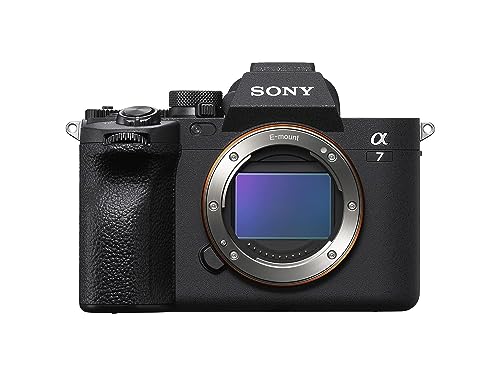
| Sony Alpha 7 IV | Best Travel All-Rounder | Thirty-three megapixels, the deepest compact-lens catalogue in full frame, and stabilisation that replaces a tripod most days. |
| Panasonic LUMIX S5II | Best for Travel Video and Stills | Phase-detect focus, superb stabilisation and L-mount’s growing compact primes — the hybrid traveller’s pick. |
| Canon EOS R6 Mark II | Most Capable in Low Light | Superb high-ISO files and RF glass; the choice when trips run long into the evening. |
| Sony a7C II (Prose-Only) | Compact Rangefinder Reference | Full-frame quality in a body barely larger than crop cameras — the category’s benchmark, listed prose-only as it sits outside our pool. |
| Canon EOS R8 (Prose-Only) | Lightest Canon Full Frame | Canon’s full-frame sensor and focus in its lightest RF body — prose-only, and a genuine featherweight for Canon loyalists. |
| Nikon Z5 II (Prose-Only) | Value Full Frame for Nikon Travellers | Nikon’s approachable full-frame body with stabilisation and Z glass — prose-only, and the sensible Nikon travel anchor. |
How Did We Choose Full-Frame Kits That Travel Light?
Our first measurement was the honest kit weight: body, battery, card and the one or two lenses a traveller plausibly carries for a mixed city-and-landscape trip. Systems were rewarded for offering light native glass — compact primes, collapsible or modest zooms — and penalised when their only routes to quality ran through heavy professional zooms. A body cannot be a travel recommendation if its catalogue forces a choice between weight and sharpness at every focal length.
Second, we weighed stabilisation as a weight-saving technology. Effective in-body stabilisation lets a traveller leave the tripod at home for most itineraries, shoot handheld at dusk in old towns where tripods are impractical or unwelcome, and carry slower, lighter lenses without the usual penalty. Every pick here stabilises well; the differences are in how many stops of confidence each system genuinely delivers at the slow shutter speeds travel demands.
Third came the traveller’s practicalities: USB charging from a power bank on trains and in cafés, battery endurance across a long day, weather resistance against the drizzle that follows every northern itinerary, and a screen that tilts for the low and high angles street photography lives on. A camera that needs its proprietary charger and a wall socket every night is a camera negotiating against your itinerary.
Finally, we kept three prose-only places for the compact specialists. The rangefinder-style full-frame bodies are the philosophical centre of this category — cameras designed from a blank page around the travelling photographer — and excluding them for a linking technicality would have made the guide tidier and worse. They are reviewed with the same rigour, the same trade-offs and no invented listings.
A closing word on what we excluded: the magnificent heavyweights. Several flagship bodies produce marginally finer files than anything here, and we left them out without hesitation, because a travel guide that recommends a camera its readers will leave in the hotel has failed at the only metric the keyword cares about. The flagships have their own guides, their own assignments and their own sherpas of the imagination; this one belongs to the cameras that actually go.
Why Does the Lens Decide Your Travel Weight More Than the Body?
Hold two facts together: full-frame bodies in this guide differ by a few hundred grams, while full-frame lens choices differ by kilograms. A professional f/2.8 zoom can outweigh three compact primes combined. The travelling photographer’s real decision is therefore optical, not electronic: one versatile but slow zoom, two or three small primes, or the hybrid of a standard zoom plus one fast prime for evenings. Each answer produces a different trip, a different bag and — because lenses shape seeing — a different set of photographs.
The prime route rewards commitment. Carrying a single fast standard or wide prime produces the lightest kit, the best dusk performance and a distinctive visual consistency across a trip’s album; it also demands zooming with your feet and accepting the frames that geography refuses. The zoom route rewards opportunism at the cost of shoulder hours and slower apertures exactly when old towns turn golden and dim. Most experienced travellers converge on the hybrid: a modest zoom for daylight wandering, one fast prime that comes out when the light turns serious.
Whichever route you choose, weigh the kit you will carry, packed, before the trip — bag, body, lenses, batteries, water — and walk an afternoon with it at home. Travel weight is discovered on your own stairs in April or on a stranger’s stairs in August, and the April discovery is the cheaper one by far.
One more lens truth, learned by every traveller eventually: the lens you carry changes the trip you have. A wide prime makes you a participant, close to the market stall and the conversation; a telephoto makes you an observer, patient at the square’s edge. Neither is superior — but choose consciously, because the album will remember which traveller you decided to be, and switching identities mid-trip costs the attention that both roles need.
What Do Small Full-Frame Bodies Ask You to Give Up?
Shrinking a full-frame camera removes things in a predictable order. First the grip: small bodies hold beautifully with small lenses and awkwardly with large ones, which is another way of saying the system enforces its own discipline. Then dials and buttons migrate into menus, viewfinders shrink, dual card slots vanish, and battery capacity tightens. None of these losses matter on a spec sheet’s highlight reel; all of them matter at specific moments — the wedding guest’s once-only embrace shot to a single card, the gloves-on dawn when the menu hides the setting you need.
The mature response is to price each loss against your itinerary rather than against an ideal camera. A city break forgives a single card slot and rewards the small body every hour. A once-a-decade expedition to photograph a total eclipse argues for the larger body’s redundancy. This guide’s picks span that spectrum deliberately, from the full-sized all-rounders that travel acceptably to the compacts that travel beautifully and ask their small surrenders in return.
One surrender deserves special mention because travellers discover it late: heat and sustained video. Small bodies recording long video in warm climates manage heat less gracefully than large ones. If your travel work is primarily stills, ignore this paragraph. If you film long ceremonies or summer street scenes, the reviews flag which picks shrug off warmth and which negotiate with it.
There is also a social dimension to small bodies that specifications ignore: they look like holiday cameras. A compact full-frame on a wrist strap invites no professional assumptions, no demands to see credentials, no wariness from market traders — while producing files indistinguishable from the intimidating rig’s. For street and documentary travel, that social invisibility is a feature no flagship can buy at any weight.
Which Six Full-Frame Kits Travel Best?
Three linked picks anchor the list — full-frame bodies from our verified pool whose systems offer genuinely light glass. Three prose-only compacts complete it, because they are the category’s reference points. Each review names the travel kit we would actually pack with that body, not merely the body itself.
Weights in this guide are discussed as kits rather than body-only figures, because nobody travels with a body alone; when we call a setup light, we mean the bag you will actually lift at the station, at the stairs and at the end of the longest, best day of the trip.

Sony Alpha 7 IV — Best Travel All-Rounder
The Alpha 7 IV earns first place on the strength of its ecosystem’s travel bench. Sony’s own compact primes and the swarm of small third-party E-mount lenses mean a traveller can build a two-prime kit — a wide and a standard — that disappears into a day bag, or choose the collapsible-feeling compact zooms that keep the whole system jacket-friendly. The thirty-three-megapixel sensor is the travel sweet spot: enough resolution to crop a street scene into a second composition, clean enough at high ISO for candlelit taverns and night markets, and forgiving of the exposure improvisations travel forces.
Its travel manners are thoroughly modern. USB charging tops the battery from a power bank on a train; the autofocus finds eyes in a crowd without negotiation; the stabilisation holds city dusk at shutter speeds that would have demanded a tripod a generation ago. The craft it encourages is opportunistic: because the kit is light, it stays assembled and ready rather than packed away, and ready cameras collect the photographs that define trips. Pair it with small primes and it behaves like a compact system; pair it with serious glass at home and it becomes a studio body — that dual citizenship is its deepest travel virtue.
A note on its crop dividend, because travellers use it constantly: the thirty-three-megapixel file tolerates a decisive crop into the composition you could not walk to — the detail across the square, the face in the procession — and still prints respectably. Rivals with fewer pixels ask you to have been somewhere else; this one forgives geography, which on real trips is the more common sin.
- Sensor: 33MP full-frame
- Huge compact-lens catalogue (native + third-party)
- In-body stabilisation for handheld dusk work
- USB charging for travel power banks
- Dual card slots — rare peace of mind
Strengths
- Lightest quality glass options of any full-frame system
- Resolution that forgives travel cropping
- Works as home studio body between trips
Trade-offs
- Body is portable, not pocketable
- Menus need pre-trip setup time
- Best travel lenses are an additional purchase decision
Best for: Mixed itineraries wanting one body for travel and everything after.
Not suited for: Ultralight purists counting every hundred grams.

Panasonic LUMIX S5II — Best for Travel Video and Stills
The S5II is the pick for travellers whose trips produce films as well as photographs. Its stabilisation is the best in this guide for walking shots and handheld stills alike, its autofocus — finally phase-detect in this generation — tracks subjects through markets and festivals without the hunting that plagued its predecessor, and its video tools are professional in depth: the traveller who vlogs a journey or films family milestones gets a camera that treats that work seriously rather than as an afterthought mode.
The L-mount alliance shapes its travel kit pleasantly. Panasonic’s own compact primes are light and optically honest, Sigma’s contemporary lenses add small fast options, and the standard zooms stay reasonable in the bag. The working rhythm the S5II encourages is the hybrid day: stills at the viewpoint, a stabilised walking clip through the old town, stills again at dinner — one body, one lens much of the time, no rig-building. Its files grade beautifully for those who edit, and its JPEGs behave for those who would rather be at the café than the laptop.
Battery and heat manners suit the hybrid day well: it records long stretches without drama and sips power in stills mode, so the same battery that filmed the morning market still has opinions at the evening viewpoint. Pack the second battery anyway — hybrid days are hungry days — and the S5II will not be the reason any moment went unrecorded.
- Sensor: 24MP full-frame
- Class-leading stabilisation for handheld work
- Phase-detect autofocus
- Deep video feature set for travel films
- L-mount lenses from three makers
Strengths
- Best handheld stability in this guide
- True hybrid stills/video competence
- Reliable focus in crowds and motion
Trade-offs
- Feels largest of the linked picks
- Compact lens bench still developing
- 24MP leaves less cropping room than the Sony
Best for: Travellers who film their journeys as seriously as they photograph them.
Not suited for: Still-only minimalists chasing the smallest possible kit.

Canon EOS R6 Mark II — Most Capable in Low Light
Some trips live after dark: winter cities at Christmas, festivals that ignite at dusk, aurora excursions, old towns whose beauty is lamplight. The R6 Mark II is this guide’s answer to those itineraries. Its files stay clean at sensitivities that embarrass lesser sensors, its autofocus works in light your eyes find moody, and Canon’s RF system includes compact primes and a standard zoom that keep the travelling kit civilised. Twenty-four megapixels is ample for travel albums and respectable prints, and the resolution you trade away returns as confidence in the dark.
Canon’s ergonomics flatter the travelling hand. The body is the largest of our linked three yet balances beautifully, the controls fall where travelling fingers expect them, and the vari-angle screen serves street photography’s discreet waist-level style as readily as it serves a vlog. The craft rhythm here is the evening walk: one fast prime, stabilisation on, sensitivity allowed to climb, and the city rendered as it actually glows. Photographers whose favourite travel photographs were all taken after dinner will understand this pick immediately.
There is a colour argument that Canon travellers make and others roll their eyes at, until they print the files: skin tones under mixed evening light — tungsten lanes, neon signs, the last blue of dusk — hold together on this sensor with a grace that saves real editing time. Travel albums are mostly faces in found light, and this body flatters exactly that subject.
- Sensor: 24MP full-frame
- Excellent high-ISO performance
- Fast, confident low-light autofocus
- Vari-angle screen for discreet street work
- Strong stabilisation
Strengths
- The evening and night specialist
- Beautiful handling over long days
- Files forgive travel exposure errors
Trade-offs
- Heaviest direction of the linked three with big glass
- Compact RF lens choice is narrower
- Resolution is the list’s modest end
Best for: Night markets, winter cities, festivals and aurora trips.
Not suited for: Gram-counters and heavy croppers.
Sony a7C II (Prose-Only) — Compact Rangefinder Reference
The a7C II is the camera this category is secretly about: a full-frame sensor and Sony’s autofocus intelligence folded into a rangefinder-style body small enough to hang from a wrist strap all day. Paired with Sony’s compact primes it forms the lightest quality kit in this entire guide, the one that disappears into a crossbody bag and reappears at every unplanned moment. We review it prose-only — it is not in our verified pool, so we link nothing and simply tell you plainly that if minimal full-frame travel is your exact goal, this is the market’s reference design.
Living with its smallness is a specific pleasure with specific terms. The viewfinder is modest, the grip suits small lenses only, a single card slot asks your trust, and the control layout leans on customisation and a dial or two fewer than its larger siblings. Travellers who accept those terms describe a conversion experience: the camera comes everywhere, the photographs multiply, and the full-frame files at the end of the day feel like a conjuring trick given what your shoulder remembers carrying.
Its autofocus deserves the last word, because in a body this small it feels like a magic trick: faces in a crowd lock on and hold while you think about composition instead of focus. Travellers upgrading from older compacts describe the first day with it as the day photography stopped feeling like a negotiation — and started feeling like the trip again.
- Sensor: 33MP full-frame (manufacturer specification)
- Rangefinder-style compact body
- Sony compact prime ecosystem
- Single card slot
- Strong subject-detection autofocus
Strengths
- Lightest route to full-frame quality here
- Disappears into small bags
- Shares Sony’s deep travel lens bench
Trade-offs
- Small viewfinder and grip
- Single card slot
- Not linkable under our pool rules — research current listings
Best for: Minimalist travellers who carry one small bag and shoot all day.
Not suited for: Large-lens users and dual-card traditionalists.
Canon EOS R8 (Prose-Only) — Lightest Canon Full Frame
The R8 answers a specific traveller: the Canon shooter who wants full frame without the flagship’s bulk. It carries the sensor and autofocus lineage of larger RF bodies in Canon’s lightest full-frame shell, which makes it the natural travel companion for anyone already holding RF lenses. Its files share the family’s lovely colour, its focus system is thoroughly modern, and as a stills-first travel camera it makes very few wrong moves. Like the other compacts in this section, it appears prose-only because our pool does not include it — the judgement is ours, the listing hunt is yours.
Its compromises are the compact class’s usual trio, sharpened slightly: battery endurance is the list’s most modest, so the travelling kit includes spare batteries as a line item rather than a precaution; the single card slot and absent in-body stabilisation — it leans on lens stabilisation — ask the traveller to choose stabilised glass deliberately. In exchange you get a body that with Canon’s smaller RF primes feels almost crop-sized while delivering unmistakably full-frame files, a trade many Canon households will take happily.
One more traveller’s detail in its favour: it shares batteries and menus with Canon’s larger bodies, so households running a flagship at home will find the R8 instantly familiar as the travel understudy. Familiarity is worth grams of its own — the camera you already understand is the lightest camera of all, whatever the scale says.
- Sensor: 24MP full-frame (manufacturer specification)
- Lightest Canon full-frame body
- RF lens mount
- Lens-based stabilisation strategy
- Single card slot
Strengths
- Featherweight for a full-frame Canon
- Modern autofocus and Canon colour
- Natural upgrade for RF owners
Trade-offs
- Battery life demands spares
- No in-body stabilisation
- Prose-only here — verify listings independently
Best for: Canon shooters building a light travel kit from RF glass they own.
Not suited for: Heavy video users or battery-anxious long-day shooters.
Nikon Z5 II (Prose-Only) — Value Full Frame for Nikon Travellers
Nikon’s entry full-frame bodies have a loyal travel following for a sound reason: they pair the Z system’s excellent lenses with bodies priced and sized for mortals, and the Z5 line’s second generation adds the modern autofocus and processing that travellers actually feel. In-body stabilisation, dual card slots — a rarity in this compact company — and Nikon’s colour science make it the risk-averse traveller’s full-frame: nothing exotic, everything dependable. It is prose-only in this guide, outside our pool, and recommended on its merits to Nikon households.
The travel kit writes itself: Nikon’s compact Z primes and the smaller standard zooms keep the bag civilised, the stabilisation rescues dusk in cathedral towns, and the body’s weather resistance shrugs at the drizzle that empties lesser itineraries. Think of its natural craft as the unhurried trip — landscapes from viewpoints reached on foot, portraits of travelling companions in window light, street scenes gathered patiently. It will not win a specification duel with the flagships, and it will also never be the reason a photograph did not happen.
Nikon travellers also inherit the F-mount’s long history through the FTZ adapter, which matters more to travel than it first appears: a beloved older prime from the film-era drawer can ride along as the character lens of the trip, rendering in a way no modern optic quite repeats. Few value bodies offer a past as well as a future.
- Sensor: full-frame (manufacturer specification)
- In-body stabilisation
- Dual card slots
- Z-mount compact primes available
- Weather-resistant construction
Strengths
- Redundancy and stabilisation at a value position
- Nikon colour travellers love
- Deep, high-quality Z lens bench
Trade-offs
- A rung below flagships in speed features
- Video set is competent, not class-leading
- Prose-only here — check listings yourself
Best for: Nikon households wanting dependable full-frame travel without flagship weight or cost.
Not suited for: Burst-heavy action travellers or spec-sheet duelists.
How Do the Six Travel Kits Compare Packed and Ready?
The only comparison that matters happens on a scale and on a shoulder. The table translates each pick into travel terms: the kit we would pack, the virtue that earns its grams, and the surrender it requests.
| Pick | Sensor / Format | Standout trait | Watch out for |
|---|---|---|---|
| Sony Alpha 7 IV | Body + two compact primes | Deepest light-lens bench | Mid-sized body, menu setup |
| Panasonic LUMIX S5II | Body + standard zoom | Stabilisation and hybrid video | Largest feel of linked three |
| Canon EOS R6 Mark II | Body + fast prime | Evening and low-light mastery | Compact RF glass is limited |
| Sony a7C II (Prose-Only) | Body + compact prime | Minimum full-frame weight | Grip, finder, single slot |
| Canon EOS R8 (Prose-Only) | Body + small RF primes | Lightest Canon route | Battery spares required |
| Nikon Z5 II (Prose-Only) | Body + compact Z prime | Value, stability, dual slots | Speed features a rung down |
How Should You Pack a Full-Frame Kit for a Week in One Bag?
Start from the photographs, not the gear wall. List the trip’s actual scenes — city streets, one coastline, two interiors, family portraits, one night market — and let each scene claim its lens. Most mixed itineraries resolve into a standard zoom or a standard prime, plus one wider or longer accent lens; everything beyond that is insurance against imaginary photographs, paid for in real shoulder hours. Pack the kit, weigh the bag, and then remove one item: the exercise is brutal and almost always right.
Distribute weight like a hiker. The camera rides on a strap or sling that puts it at your hand, not in the bag’s depths; the second lens sits in the day bag’s most accessible pocket; batteries, cards and the power bank live in the bag you keep at cafés and on trains. Rain changes everything, so the kit’s weather plan — a cover, a dry bag, a hotel towel routine — is packed as deliberately as the lenses. A light kit that fears weather is only light on dry days.
Finally, rehearse the carry at home. A full afternoon’s walk with the packed bag, in the shoes of the trip, reveals the strap that digs and the lens that was never once mounted. Discovering either at home costs nothing. Discovering them on a foreign staircase costs the photographs the trip was for.
Why Do Experienced Travellers Shoot Fewer Lenses Than Beginners Pack?
Because they have learned that a lens change is a tax on attention. Every swap is a minute not looking, a chance of dust, a decision remade — and travel’s best photographs are usually found by photographers who were looking at the street rather than at their bag. A single focal length, carried for a whole trip, goes further: it teaches the eye to pre-see that frame, so compositions are found at walking speed. Many celebrated travel albums were shot overwhelmingly on one prime, and their consistency is part of their beauty.
This is not puritanism; it is strategy. Choose the focal length that matches your trip’s dominant geometry — wider for old towns and interiors, standard for mixed wandering, short telephoto for mountains and portraits — and let the minority of scenes go, or crop for them. The photographs you decline are the fee; the photographs you are ready for are the dividend. Beginners pack for the fee. Experienced travellers invest in the dividend.
What About Renting, Borrowing and the Second-Body Question?
For a once-a-decade trip, renting a flagship is rational; for the trips that make up a life, owning a light kit you know intimately beats renting a heavy marvel you must learn on location. Muscle memory is travel infrastructure — the dial found without looking, the menu known by heart — and it only accrues to owned cameras. Borrow and rent to audition a system, by all means; then commit, and let familiarity compound across trips.
The second-body question answers itself by itinerary risk. A paid assignment or an unrepeatable expedition justifies a backup body — often the small compact from this very list riding as second to a flagship. A family holiday does not; a phone is the backup, and the weight saved is the souvenir budget. Match redundancy to consequence, not to anxiety.
How Do You Back Up Travel Photographs Without a Laptop?
The light traveller’s backup system should weigh grams and work in cafés. The simplest robust pattern is the nightly two-copy ritual: the day’s card stays unformatted until its contents exist in two places — the camera’s second slot where fitted, a phone or tablet transfer, or a small SSD fed through a hub. Cloud upload joins when hotel Wi-Fi allows, but it is a bonus layer, never the plan, because mountain bandwidth has humbled many confident itineraries.
Cards are the traveller’s film rolls: carry several modest ones rather than one enormous one, shoot a day per card when practical, and store full cards separately from the camera — a stolen bag should not take the trip’s photographs with it. The discipline takes ninety seconds an evening and converts catastrophe into inconvenience, which is the entire philosophy of travel backup in one sentence.
On return, the ritual completes before the suitcase is unpacked: cards to the main archive, the archive verified, and only then formatting. Photographers who reverse that order eventually star in the cautionary tale every camera club tells, and it is never told by the person it happened to with any enjoyment.
What Should a Travel Photographer Do About Insurance, Theft and Guilt?
Insure the kit or self-insure it consciously, but decide before departure. Valuable kits travelling internationally deserve a policy or a household-insurance rider, with serial numbers photographed and stored separately. At the level of this guide, many travellers rationally self-insure: the kits are mid-priced, the trips are ordinary, and the premium money funds an extra lens over the years. Either decision is defensible; drifting without one is not.
Streetcraft matters more than policies. A camera on a crossbody strap under a jacket in a crowd, a bag that does not advertise its contents, a wrist strap in markets — these habits prevent the incident rather than compensating for it. And keep the guilt in proportion: equipment is replaceable in a way that the trip’s unrepeatable mornings are not, which is why this guide keeps arguing for carrying the camera rather than protecting it from the journey it was bought for.
How Does Weather Sealing Change What a Traveller Can Attempt?
Sealing is a confidence technology. The traveller with a weather-resistant kit photographs the waterfall’s spray zone, the fishing harbour in drizzle, the desert’s blowing dust with a cover and a plan — while the unsealed kit stays bagged and the trip loses those frames. Every linked pick here carries meaningful resistance, and the practical technique matters as much as the rating: zoom lenses pump air and moisture as they extend, lens changes belong under shelter, and the nightly ritual of wiping down and airing the kit in the hotel room is what converts a sealed camera into a surviving one.
Cold deserves its own sentence, because winter travel is where light kits shine and batteries lie. Keep a spare battery in an inside pocket, rotate it at viewpoint stops, and expect the gauge to recover warmth it pretended to lose. Small bodies chill faster but also warm faster against the body — one more quiet way the compact class suits the travelling rhythm.
The honest limit: sealing resists weather, not immersion or abuse, and no rating covers a lens change in a sandstorm. Travellers who respect that line find these kits astonishingly durable; the ones who treat ‘weather-sealed’ as ‘waterproof’ fund the repair industry’s travel stories.
Why Do Travel Albums Improve When the Camera Is Boringly Reliable?
Because attention is the scarcest resource on any trip, and unreliable equipment spends it. A camera that always focuses, always exposes sanely, always has charge and always fits the bag disappears from consciousness, leaving the traveller’s mind free for the work that actually makes photographs: watching light, anticipating moments, talking to people. The picks in this guide were chosen partly for this invisibility — none of them is the most exciting camera in its line, and all of them are the ones owners stop mentioning because they simply attend every day and perform.
There is a corollary for buyers: resist the exotic travel purchase. The unusual body bought for one trip, with its unfamiliar menus and orphan lens mount, spends your attention exactly when the trip deserves it. Boring, owned, understood equipment is a creative strategy disguised as a lack of adventure — and the albums prove it, trip after trip.
How Should Couples and Families Share One Travel Camera?
Many trips run on one shared body, and the light full-frame class suits sharing unusually well: full auto modes that hand over gracefully, face detection that forgives the novice’s framing, and files good enough that the enthusiast half of the partnership still gets keepers. Set the camera up with two personalities — a custom mode tuned for the enthusiast, plain auto for everyone else — and agree the rule that whoever carries it at the golden moment shoots without committee.
Sharing also argues for the mid-sized picks over the most minimal compacts: grips that fit different hands, screens that tilt for the shorter photographer, and batteries that survive a household’s combined shooting day. The lightest kit is not always the most shared kit, and a camera the whole travelling party uses takes more photographs than a precious personal instrument ever will.
What Role Does a Phone Still Play Beside a Light Full-Frame Kit?
An honest one: the phone is the kit’s scout, archivist and understudy. It scouts compositions at walking pace, geotags the places the camera’s files should remember, photographs menus, timetables and the hotel’s address for the taxi ride home, and stands ready on the day the camera’s battery, card or luck runs out. Travellers who assign the phone these jobs stop resenting its presence in the kit and start exploiting it.
The division of labour sharpens the camera’s work. When the phone handles documentation, the full-frame kit is reserved for photographs that justify it — the dusk square, the portrait, the landscape from the viewpoint — and that selectivity improves the album twice: fewer, better camera files, and a phone roll that serves as the trip’s diary rather than its failed masterpiece collection.
How Do You Set Up a Travel Camera Before the Flight?
Configure at home, where mistakes are free. Update firmware, format cards in-camera, set the file naming to something meaningful, and build one custom mode for travel: raw capture, auto ISO with a sane ceiling, stabilisation on, silent shutter available but not default, and the rear screen’s brightness honest rather than flattering. Save your menu favourites — format, sensor cleaning, Wi-Fi transfer — so the trip never involves manual-diving in a foreign hotel room at midnight.
Charge and stage the power system: batteries labelled by number so rotation is even, the power bank and cable that the camera actually accepts for USB charging tested before departure, and a card wallet with a simple rule — full cards face one way, empty the other. Photographers lose more travel images to card confusion than to theft; a wallet ritual is cheap insurance.
Do a final rehearsal shoot the weekend before: an hour’s walk, the packed kit, deliberate practice with the lens you mounted least last trip. You will find the loose strap lug, the forgotten setting, the lens that needs cleaning — at home, where each discovery is a relief rather than a regret.
Pack the bag the night before departure and then photograph its contents laid out — a childish trick that has saved many travellers at the airport, because the photograph answers ‘did I pack the charger’ without unpacking, and later serves as the insurance record if the bag and its owner part company.
How Should You Shoot Differently When the Camera Is Light Enough to Always Be There?
Exploit presence. The light kit’s superpower is that it attends breakfast, the market run, the unplanned detour — so build the day’s photography around attendance rather than expeditions. Keep the camera out and awake during transitions, because travel’s connective tissue — stations, ferries, queues, cafés — photographs better than its monuments and with a tenth of the crowd. The monuments will still be there at the blue hour, when you return deliberately with the day’s second wind.
Protect the evenings. Light kits with stabilisation and fast primes own the hours when tour groups retreat: restaurants, lamplit lanes, night trains. Rest the camera at midday, when light is harsh and crowds peak, and spend your energy when the trip turns golden. This rhythm — present all day, serious at dusk — is how small cameras produce albums that look like expeditions.
What Mistakes Turn a Light Kit Back Into a Heavy One?
Packing the ‘just in case’ lens daily. Insurance lenses belong in the hotel, rotated in for the specific outing that needs them — not carried for a week against a hypothetical. Weigh your day bag honestly each morning; mission creep is measured in hundreds of grams and paid in photographs not taken at hour eight.
Choosing the body by weight and the lenses by habit. A compact body behind a professional zoom is a heavy kit with a small grip — the worst of both negotiations. The lens bench decides the system’s travel weight; audit it before falling for a featherweight body.
Forgetting that batteries and chargers are weight too. A camera with poor endurance plus three spares and a brick charger can outweigh a frugal rival. Count the power system in the kit weight, favour USB charging, and let one power bank serve camera and phone alike.
Leaving the light camera at the hotel ‘for safety’ on the best day. Insure the kit, back up nightly, and carry it — a camera protected from the trip takes no photographs of it. The travellers in this guide’s spirit accept small risks to equipment in exchange for the images the equipment exists to make.
Buying the compact body and none of its compact lenses. The system’s magic is the pairing; a small body with big glass is merely an uncomfortable large camera. Budget body and light lenses as one purchase, or choose a larger body honestly.
Judging the kit by the walk to the airport. Travel weight is measured at hour eight of day five, in heat, on stairs, with water and souvenirs added. Every pick here was chosen for that afternoon, not for the flattering first hour when any kit feels light and every photographer feels strong.
Testing a new travel camera on the trip itself. Every body in this guide rewards a fortnight of home familiarity; the traveller who unboxes at the destination spends the first days photographing their own learning curve, and the album’s opening chapter shows it.
Final Recommendation
For most travellers, the Sony Alpha 7 IV is the complete answer: full-frame files, the deepest bench of light glass, and a body that moonlights at home without complaint. Travellers who film their journeys should take the Panasonic S5II’s stabilisation and hybrid depth instead, while evening-heavy itineraries — winter cities, festivals, the aurora — belong to the Canon EOS R6 Mark II and a fast prime.
The prose-only compacts refine the same idea for minimalists: Sony’s a7C II is the lightest expression of full-frame travel, Canon’s R8 keeps Canon households packing light, and Nikon’s Z5 II adds stabilisation and dual slots at a value position. We cannot link them, and we recommend them anyway, because a guide’s first duty is to the traveller rather than the link.
Whichever kit you choose, run the home rehearsal: pack it, weigh it, walk with it. The right travel camera is the one whose weight you forget by the second morning — leaving you free to remember everything else about the trip, in full-frame detail.
And if the rehearsal walk surprises you — if even the light kit feels heavy by your own stairs — believe it, and cut before you fly. A smaller kit carried joyfully will out-photograph a complete kit carried resentfully on every trip ever taken; the history of travel photography is largely the history of photographers learning that sentence, usually somewhere around day three.
Frequently Asked Questions
Is full frame really worth the weight over smaller formats for travel?
For travellers who shoot at dusk, print their albums or crop their compositions, yes — the low-light reach and file flexibility are tangible. For daylight-only shooters posting to phones, smaller formats travel lighter still; this guide exists for those who have already decided the files matter.
What is the single best travel lens strategy here?
A modest standard zoom for the day plus one fast prime for the evening covers most itineraries at sane weight. Prime-only kits are lighter and more distinctive; zoom-only kits are simpler and slower after dark. Choose by your trip’s hours, not its highlights reel.
Can these cameras charge from a power bank?
The linked picks support USB charging, which is why they headline a travel guide — a train journey or café stop becomes a charging opportunity. Carry the cable your specific body accepts and test the pairing before departure; not every bank and cable combination negotiates successfully.
Do I need a tripod with stabilisation this good?
For most travel, no — stabilisation plus high-ISO competence covers dusk streets and interiors. Take a mini tripod only for deliberate long-exposure work: waterfalls, night panoramas, astro attempts. Our long-exposure guide covers that specialism properly.
Which pick is best for a one-bag, carry-on-only trip?
The compact prose-only bodies with a single prime form the smallest full-frame kits; among linked picks, the Sony with compact primes packs smallest. In every case the lens choice moves the total more than the body choice does.
How do I protect a light kit in bad weather?
Prefer weather-resistant bodies and lenses, carry a simple rain cover, dry the kit each evening, and never change lenses in driving rain when a doorway exists ten steps away. Light kits forgive weather better than reputations suggest, provided the nightly drying ritual is kept.
Why are three picks not linked?
Our links come only from a verified pool for this site. The compact Sony, Canon and Nikon bodies sit outside that pool, so we review them prose-only rather than invent listings — the recommendations are genuine, and current listings are easy to find and compare.
Should I buy the travel kit before or after booking the trip?
Before — ideally a month before. A new camera needs a rehearsal period at home so its menus and quirks are learned where mistakes are free. Buying at the airport duty-free is how trips become expensive tutorials; the photographs of the first week show it, every time.
Is one lens really enough for a whole trip?
For many celebrated trips, yes — a single well-chosen prime has produced entire beloved albums, and its constraint becomes the album’s visual signature. If the thought frightens you, the zoom-plus-prime hybrid in this guide is the gentle middle path: two lenses, two moods, still a light bag.
Related Guides
Keep exploring with best cameras for travel and best cameras for landscape and portraits and best cameras for low light livestream.


