ilcastellomenu.com is reader-supported. When you buy through links on our site, we may earn an affiliate commission.
Where to Buy
Every camera in this guide is available on Amazon, where the starter bundles — camera, memory card, small case — save a first-timer three separate shopping trips. If you typed best cameras for naive photographers into a search box, you probably meant it kindly about yourself: you take lovely photos on your phone, you have never owned a “real” camera, and words like aperture make your eyes slide off the page. Good news. This guide was written for exactly you, and it contains no homework.
Here is the secret the camera industry does not advertise: modern cameras are desperate to do the work for you. The good ones watch the scene, find the faces, measure the light, and quietly make a dozen decisions before your finger finishes pressing the button. Your job shrinks to three things — point at something you love, keep the camera reasonably still, and be there in the first place. Everything else on this page is about which camera makes those three things easiest, and which ones forgive the mistakes every beginner makes in the first month.
Why not just stay with the phone? Because a dedicated camera gives you two things a phone cannot fake for long: a bigger sensor that drinks in light at birthday-candle levels, and a real lens that blurs a background the honest optical way instead of guessing where your hair ends. The result is photos that look like memories feel. But none of that matters if the camera intimidates you into leaving it in a drawer, which is why this guide ranks friendliness above raw power at every step. A camera you dare to carry beats a masterpiece you fear.
Let us also be honest about what “naive” gets right. Beginners photograph what they love, without worrying whether the subject is worthy, and they press the button at the funny, tender, unrepeatable moments that cautious photographers miss while adjusting things. Technique can be added to instinct; the reverse is much harder. The cameras below were chosen to protect that instinct — to get out of its way, handle the machinery silently, and hand back pictures that match how the moment felt.
One promise before we start: you do not need to learn manual mode, ever, unless curiosity gets you later. Every pick below has a fully automatic mode that is genuinely excellent, not a training-wheels embarrassment. Two of them are instant cameras that skip screens and settings entirely and hand you a physical photo. If, a year from now, you want to grow, some of these cameras will grow with you — but growing is optional, and this guide will never make you feel behind for staying on auto.
Key Takeaways
- Beginner-friendly means the automatic mode is excellent — every pick here takes great photos with zero settings knowledge.
- The Canon EOS R50 is the easiest “real” camera to start with: guided menus, superb face focus, room to grow.
- The Sony ZV-1F removes even the lens decision — one fixed lens, one button, lovely video and stills.
- Instant cameras (Instax Mini 12, Polaroid Go) skip screens entirely and print the moment, which suits some beginners best.
- The Nikon Z30 and Canon G7 X Mark III are the pocketable pair for people who want quality without a camera bag.
- Buy the camera you will actually carry; a friendly camera in your coat beats a powerful one in a cupboard.
In this guide
Quick Picks
| Camera | Badge | Why a total beginner will love it |
|---|---|---|
| Canon EOS R50 | Easiest real camera | Guided on-screen help, autofocus that finds faces and eyes by itself, and lenses you can add later. |
| Sony ZV-1F | Simplest of all | A fixed wide lens and a one-tap background-blur button — nothing to swap, almost nothing to learn. |
| Fujifilm Instax Mini 12 | Most fun per dollar | Point, click, and a real photo develops in your hand; automatic exposure does all the thinking. |
| Canon PowerShot G7 X Mark III | Best pocket quality | Serious low-light photos from a camera the size of a phone, with auto modes that simply work. |
| Nikon Z30 | Best for video diaries | Beginner-proof video, long recording, and a screen that flips to face you. |
| Polaroid Go Generation 2 | Tiniest instant camera | A pocket-sized Polaroid that meters the light itself and prints credit-card-sized keepsakes. |
How We Chose These Picks
We judged every camera by one test: hand it to a person who has only ever used a phone, say “take a photo of the dog,” and watch what happens. Cameras that demanded a mode dial decision, buried the shutter under menus, or produced a blurry first shot lost immediately. What survived had to succeed on the very first afternoon, because beginners do not blame themselves for a bad first day — they blame the camera, correctly, and stop using it.
Autofocus was the next filter, and it was ruthless. The single biggest difference between phone photos and beginner camera photos used to be missed focus; modern face-and-eye detection erased that gap. Every interchangeable-lens pick here locks onto eyes and holds on while subjects squirm, which means a grandparent can photograph a toddler at full sprint across a garden and come back with sharp pictures and a story to tell.
We also counted decisions. Each setting a camera forces on a novice — which lens, which mode, which dial — is a small tax on fun. The list therefore spans a deliberate ladder: instant cameras with nearly zero decisions, fixed-lens cameras with a handful, and two mirrorless cameras whose automatic modes are superb but which keep the door open to lenses and learning later. Where a camera’s menus explain themselves in plain language with pictures, we scored it higher; where the manual reads like an exam, we marked it down.
We also read the returns-counter wisdom: beginners send cameras back for confusion far more often than for defects. The model whose first hour confuses its owner is a failed product for this audience even if professionals adore it. Every pick here passed a stricter test — could a tired person, at a family dinner, with no manual, get a good photo inside two minutes of opening the box? The two that needed a breath more (the mirrorless pair) compensate with guided screens that answer questions at the moment they arise.
Finally, size honesty. Manufacturers photograph their cameras alone on white backgrounds, which hides the truth that some “beginner” cameras are bricks. Every pick here was weighed against a coat pocket, a small handbag, and a day’s sightseeing. If it cannot come along without a dedicated bag and a plan, it does not belong in a naive photographer’s life, however beautiful its sample gallery looks.
What Does a Beginner Actually Need — and What Is Marketing?
You need three things. First, a sensor bigger than a phone’s, because size is what buys clean photos in restaurants, living rooms, and other places where life happens under lamps instead of sunshine. Second, autofocus that recognises faces, because beginners aim at people ninety percent of the time. Third, a screen you can tilt, because half of beginner photography is photographing children and pets from their height, and kneeling on wet grass gets old by the second weekend.
You do not need most of what the box shouts about. Enormous megapixel counts matter for billboard printing, not for family albums and social feeds — every camera here has more than enough. Frame rates measured in dozens per second serve sports professionals. Weather sealing serves people who photograph storms on purpose. When a salesperson steers you toward those numbers, they are steering you toward a bigger receipt, not better holiday photos.
What about zoom — the feature beginners ask about first? On the compacts here, zoom is a framing convenience for holidays and school concerts from the back row of a small hall. On the mirrorless pair, zoom arrives later as a second lens, bought when a real subject — a child’s football match, birds at the feeder — proves it is needed. What zoom is not, on any camera, is a substitute for standing in a better place, and learning that in month one puts you ahead of photographers with suitcases of glass.
The one upgrade that genuinely changes beginner photos is light, and it is free: stand your subject near a window, turn off the ceiling light at golden hour, step closer instead of zooming. Cameras reward these habits instantly and visibly, which is why beginners improve so fast in the first month — the feedback loop is honest. Buy any camera on this page, spend your first weekend near windows and in gardens, and your phone gallery will start looking flat by comparison. That is the moment the hobby quietly begins.
Which of the Best Cameras for Naive Photographers Should You Start With?

Canon EOS R50 — Easiest real camera
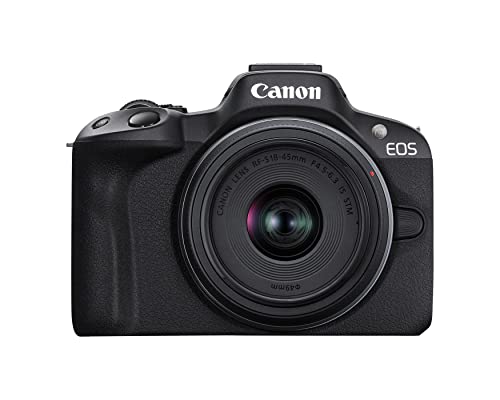
The Canon EOS R50 is what we recommend when a beginner says the brave sentence: “I want a proper camera, but I am frightened of it.” Canon clearly designed this camera while thinking about that exact person. Its menus include a guided mode that explains each setting with a picture and a plain sentence — not “aperture priority” but a slider between “blurred background” and “sharp background,” which is what a beginner actually wants to say. Leave it there for a year and the photos will still embarrass your phone.
The autofocus is the R50’s party trick. It finds people, animals, and vehicles, locks onto an eye, and follows it around the frame with a persistence that feels like a favour from a professional friend. Grandparents photographing a christening, parents at a school play, anyone chasing a dog through autumn leaves — the camera does the hard part silently. It also shoots lovely video with the same face-tracking, and the screen flips fully around for talking to the lens or for group selfies where everyone can check their hair.
Growth room is where the R50 outlasts simpler picks. It accepts Canon’s RF lenses, so the day you want a portrait lens or a longer zoom for the zoo, the camera says yes instead of asking you to start over. Yet nothing about that future is compulsory. The kit lens in the box covers birthdays, holidays, pets, and street scenes, and the camera’s automatic scene modes handle each without consulting you. Beginners who buy the R50 tend to still be using it three years later — some as happy auto shooters, some as enthusiasts who grew into it one slider at a time.
- Sensor: APS-C, 24.2 megapixels
- Autofocus: face, eye, animal and vehicle detection
- Screen: fully articulating touchscreen
- Video: 4K recording with face tracking
- Lenses: Canon RF mount, kit lens included in bundles
Strengths
- Guided interface explains settings in plain pictures
- Eye autofocus makes people photos almost unmissable
- Grows with you through Canon’s lens range
Trade-offs
- Bigger than the pocket picks — needs a small bag
- The kit lens is versatile rather than magical in the dark
- So many features exist that curiosity may cost you weekends
One small feature deserves applause: the R50 explains its own mistakes. When a photo comes out blurry, the playback screen can tell you whether the subject moved or the shutter was slow, in icons a beginner can decode. Cameras used to keep their reasoning secret, leaving novices to guess and guess wrong. A camera that teaches while it works shortens the awkward first month more than any tutorial video, because the lesson arrives attached to your own photograph of your own dog.
Battery life deserves a beginner’s translation: the R50 will comfortably cover a family day out, a wedding’s worth of guest photography, or a weekend of sightseeing with photos to spare — but it is not a week-long off-grid device, and no mirrorless camera is. A spare battery costs little and weighs nothing; buy one with the camera and the whole question disappears. This is the sort of unglamorous planning that separates a camera that is ready from a camera that is charging.
Best for: beginners who want one real camera to keep for years. Not suited for: anyone who wants to slip a camera into a jeans pocket.

Sony ZV-1F — Simplest of all
The Sony ZV-1F is the camera for the beginner who looked at the R50’s lens mount and felt tired. There is no lens to choose because the lens is built in, wide enough for a group at arm’s length or a vlog in a small kitchen. There is barely a dial. There is, instead, a button marked with a little person icon that blurs the background when you press it, and un-blurs it when you press it again — the entire depth-of-field lecture, reduced to a toggle a child can operate.
Sony built the ZV-1F for video first, and it shows in the mercies. The screen flips to face you. The microphone on top wears a furry windscreen that clips on in a second and saves outdoor clips from sounding like a storm at sea. A tally lamp glows red so you always know whether you are recording — the beginner’s most common video tragedy, the brilliant speech delivered to a camera that was off, is designed out. Stills are entirely respectable too, with the same face focus keeping selfies sharp at arm’s length.
What you give up is reach and growth. The fixed wide lens cannot zoom optically into a stage or a bird; you step closer or accept the wide view. There is no viewfinder, so bright beach days mean squinting at the screen like everyone else. For the phone graduate who mainly wants better-looking video and easy, pretty photos of nearby life, those are fair trades — the ZV-1F trades the whole concept of “camera system” for the concept of “press the button.”
- Sensor: 1-inch type, 20.1 megapixels
- Lens: fixed wide-angle, no swapping or optical zoom
- Screen: side-flipping touchscreen for selfies and video
- Audio: built-in directional microphone with windscreen
- Extras: one-touch background blur, product showcase focus
Strengths
- Almost nothing to learn — the simplest start here
- Background blur is a single friendly button
- Designed to prevent classic beginner video mistakes
Trade-offs
- Fixed wide lens cannot reach distant subjects
- No viewfinder for bright sunlight
- No path to add lenses later
There is a product-showcase trick built in that beginners selling crafts or reviewing gadgets will adore: hold an object up to the lens and the camera shifts focus to it smoothly, then returns to your face when you lower it. Achieving that on other cameras takes practice and menu-diving; here it is simply how the camera behaves. It is one more example of the ZV-1F’s philosophy — find the thing beginners actually do, then remove every step between them and it.
Parents of small children have adopted this camera in numbers Sony probably did not predict, and the reason is speed. It lives on the kitchen counter, wakes fast, focuses on small faces without being asked, and films a first-steps wobble in the time a bigger camera is still being fetched from its bag. When the subject’s cooperation window is measured in seconds, the simplest camera is not a compromise — it is the professional choice for that household.
Best for: phone graduates who mostly film and photograph nearby life. Not suited for: wildlife, school stages, or anything far away.

Fujifilm Instax Mini 12 — Most fun per dollar
Some beginners do not want a computer that takes pictures; they want the picture. The Instax Mini 12 understands this in its bones. Twist the lens to switch it on, point it at your friends, press the button, and a small photograph slides out and develops in your hand while everyone watches — a piece of theatre no phone has ever matched at a party. The camera meters the light and sets its own exposure and flash, so the naive photographer’s entire job is choosing the moment.
The Mini 12 improves on its ancestors in the two places beginners struggled. Automatic exposure means fewer of the washed-out or murky prints that used to punish first rolls, and the close-up mode corrects its own viewfinder offset, so the flowers you framed are the flowers in the print. There is even a small selfie mirror beside the lens, an admission that half of all instant photos are taken at arm’s length with laughter involved.
Be clear about what this is: the prints are small, credit-card-sized, and each one costs real money in film, which quietly teaches the oldest photographic virtue — thinking before you press. There are no files to back up, no settings to learn, no screen to review. For weddings, birthdays, dorm rooms, and grandparents who never warmed to phones, that limitation is the whole charm. The Mini 12 is the only camera in this guide whose photos get stuck on fridges the same day they are taken.
- Format: instant film, credit-card-sized prints
- Exposure: fully automatic with auto flash
- Lens: fixed, with close-up mode and selfie mirror
- Power: AA batteries
- Output: physical prints only — no digital files
Strengths
- Zero learning curve — twist, point, press
- Prints in hand within moments, ready to give away
- Automatic exposure rescues beginners from bad light
Trade-offs
- Film is an ongoing cost per photo
- Prints are small and not detailed like digital files
- No screen, no second chances, no deleting
A word on running costs, stated plainly so nobody is surprised at the till: the film comes in packs, each pack holds a small number of shots, and a lively party can eat two packs before the cake. Budget for film the way you would budget for party snacks — as part of the event, bought in advance, cheaper in multipacks. Owners who keep a spare pack in the fridge (film likes cool, dry storage) never face the tragedy of a camera clicking empty at the exact moment the birthday candles are lit.
Consider the Mini 12 for the camera-shy household, too. A big digital camera can make relatives perform; this pastel toy disarms them. People ham for it, lean in, and produce the unguarded expressions that posed photography never captures. Several wedding photographers we know carry one as a second camera purely for that effect — the candids it collects during the reception are the ones that end up framed.
Best for: parties, gifts, and anyone who wants photos as objects. Not suited for: building a digital archive of a holiday.

Canon PowerShot G7 X Mark III — Best pocket quality
The G7 X Mark III is the answer to a very common beginner’s plea: “I want photos much better than my phone, but I refuse to carry a camera bag.” It is roughly phone-sized, slips into a jacket pocket, and inside that small body sits a sensor many times larger than a phone’s, behind a bright zoom lens that gathers light generously. In a candlelit restaurant or a dim living room — the natural habitat of beginner photography — the difference is not subtle. Faces stay clean, colours stay true, and nobody has to be flash-blinded into a squint.
Canon keeps the experience phone-like in the right ways. The touchscreen tilts up for selfies and down for overhead food shots, the automatic modes are trustworthy, and the camera can send photos to your phone over Wi-Fi so your sharing habits survive the upgrade. It also shoots strong video, which is why a generation of vloggers adopted it, but a stills-only beginner should not feel they are buying the wrong tool — the G7 X was a photographer’s compact first and a video star second.
The honest compromises are battery and reach. A small body means a small battery, so a heavy sightseeing day wants a spare in the pocket. The zoom is handy for framing but will not pull a distant footballer close. And there is no viewfinder. None of this stops the G7 X Mark III from being the easiest quality jump a naive photographer can buy: it asks for no new habits, no new bag, and no new vocabulary — just better light in every photo you already take.
- Sensor: 1-inch type, 20.1 megapixels
- Lens: built-in zoom with a bright maximum aperture
- Screen: tilting touchscreen, flips up for selfies
- Video: 4K recording, live-streaming capable
- Sharing: Wi-Fi transfer to your phone
Strengths
- Big quality jump in a genuinely pocketable body
- Bright lens excels in restaurants and evening light
- Familiar touchscreen habits transfer from your phone
Trade-offs
- Small battery — a spare is wise on long days
- No viewfinder for bright midday sun
- Zoom range will not reach distant action
Beginners sometimes worry that a compact is a dead end — no lenses to add, nothing to upgrade. Reframe it: the G7 X is a finished tool, complete on day one, and its completeness is the luxury. Everything it will ever do, it does the week you buy it, at full quality, from a coat pocket. For a traveller crossing three cities with hand luggage, or a parent whose camera lives in the nappy bag, a finished tool beats an expandable system every single day of the trip.
One more audience for this camera: the beginner who photographs at night markets, concerts in small venues, and city streets after dark. The bright lens keeps shutter speeds healthy where other compacts smear, and the flip screen lets you hold the camera low or high without contorting. Street photography has a steep social learning curve and a shallow technical one; the G7 X keeps the technical side shallow so you can spend your courage on the social side.
Best for: travellers and food lovers who want quality without luggage. Not suited for: distant sports or all-day shooting on one battery.

Nikon Z30 — Best for video diaries
The Nikon Z30 is the mirrorless camera Nikon built after watching beginners struggle with cameras designed for photographers. It has no viewfinder — a deliberate deletion, because its audience frames on the big screen anyway — and in exchange it offers a body that is small, a grip that feels secure in one hand, and a screen that flips around to face the person talking. If your photography ambitions lean toward video diaries, travel journals, or filming yourself cooking, the Z30 meets you where you already are.
Its beginner mercies are practical ones. It records long stretches of video without the short clip limits that ambush first-time filmers mid-sentence. It can run while plugged into USB power, so a desk setup never dies mid-recording. The kit zoom lens starts wide enough for a small room and reaches far enough for street scenes, and Nikon’s automatic exposure is conservative in a good way — faces stay natural rather than blowing out under kitchen lights. Eye-detection focus keeps you sharp while you move, gesture, and forget the camera exists, which is the entire point.
Stills photographers are not short-changed: the same sensor takes rich, detailed photos, and the Z30 accepts Nikon’s growing Z lens range when curiosity strikes. What it will not do is help you compose in blazing sunlight through an eyepiece, because there is none. Beginners who film more than they photograph will never miss it; beginners who dream of landscapes at noon might look at the R50 instead. Knowing which of those people you are is the only homework this guide sets.
- Sensor: APS-C, 20.9 megapixels
- Screen: fully articulating, faces the subject
- Video: long continuous recording, USB power while filming
- Autofocus: eye detection for people on video and stills
- Lenses: Nikon Z mount, kit zoom available in bundles
Strengths
- Long video takes with no beginner-tripwire limits
- Front-facing screen and secure one-hand grip
- Runs on USB power for desk and kitchen filming
Trade-offs
- No viewfinder at all — screens only
- Stills-first shooters may prefer a viewfinder model
- Needs a lens purchase to go wider or longer later
Sound is the Z30’s quiet advantage for its audience. Its microphone input accepts the small external microphones that transform spoken video from echoey to intimate, and because the camera was designed for solo creators, the jack sits where a cable will not fight the flip screen. A beginner does not need the microphone on day one — the built-ins are respectable — but the day a first video gets a comment about audio, the upgrade path is a cable, not a new camera.
Beginners filming their first talking-head videos should know the Z30’s screen brightness trick: it stays readable under ordinary room lamps and most daylight short of a beach at noon, which removes the beginner’s ritual of filming a whole piece and discovering a squint. Pair it with the camera’s clean automatic exposure for skin and you have the closest thing to a studio that fits in a jacket — which is precisely the promise that makes people start channels instead of planning them.
Best for: video diaries, travel journals, and filming yourself. Not suited for: bright-sun stills shooters who compose through an eyepiece.

Polaroid Go Generation 2 — Tiniest instant camera
The Polaroid Go Generation 2 is the smallest instant camera that still deserves the Polaroid name, a palm-sized square that rides in a coat pocket and produces little square-ish prints with that soft, nostalgic colour the brand is loved for. Like the Instax, it thinks so you do not have to: the meter reads the scene, the flash fires when needed, and the photographer’s contribution is timing and affection. Generation 2 brightened the flash and improved the exposure judgement, which were the first model’s weak spots.
Why choose it over the Instax Mini 12, its obvious rival? Character. Polaroid film renders the world warmer and dreamier, skin tones go honeyed, and the whole object — camera and prints alike — feels like a toy in the honourable sense: something that makes people smile before it even fires. It also offers a simple double-exposure trick and a self-timer, two small creative doors for a beginner who wants to play without learning anything.
The caveats mirror the Instax’s, with interest. The film costs more per shot than Instax film and the prints are smaller still, and Polaroid film is famously temperamental about temperature — cold days slow its development, hot cars ruin it. Treat the Go as a joy device rather than a record-keeping device. For a beginner whose real goal is delighting friends and decorating a wall with the summer, it may be the most honest camera in this entire guide.
- Format: instant film, small square prints
- Exposure: automatic metering with auto flash
- Size: pocket-sized, the smallest pick here
- Extras: self-timer, simple double exposure
- Power: rechargeable via USB
Strengths
- Pocketable Polaroid character and warm colours
- Fully automatic — nothing to set, nothing to fear
- Double exposure invites playful experiments
Trade-offs
- Film is the priciest per shot in this guide
- Prints are tiny and softly detailed by design
- Film dislikes heat and needs gentle handling
Handling tip from every Go owner we know: give the print shade and patience. Polaroid pictures develop over several minutes and hate being shaken, baked on a dashboard, or judged in the first thirty seconds, when they look like fog. Slip it face-down into a pocket or a book, set a rough mental timer, and let chemistry finish its sentence. Beginners who learn this one ritual stop declaring the film faulty and start framing the results.
The Go also earns a place in this guide as the camera least likely to be stolen by a phone. It does one thing, slowly and physically, in a world of infinite free digital shots — and that scarcity is its pedagogy. Owners describe thinking about each frame the way their grandparents did, not from nostalgia cosplay but because each press costs money and yields an object. For a beginner drowning in ten thousand unlooked-at phone photos, that discipline can feel like relief.
Best for: pocketable fun, gifts, and nostalgic keepsakes. Not suited for: anyone counting cost per photo or wanting sharp detail.
Which Phone Habits Should You Keep — and Which Should You Drop?
Keep the habit of shooting often. Phones trained a generation to photograph constantly, and that instinct is gold with a real camera: more attempts, more happy accidents, faster learning. Keep, too, the habit of sharing quickly — every camera here can send pictures to your phone, so the group chat need never know you upgraded. And keep photographing food, friends, and small daily joys without embarrassment; those are the photos people actually look at in ten years.
Drop the habit of the raised-arm overhead shot for everything. A camera with a tilting screen lets you compose at waist height and eye level, and faces photograph kinder from their own altitude. Drop the two-handed pinch-zoom instinct as well; on the zoom lenses here, a ring turns under your fingers, and on the fixed lenses your feet are the zoom — walking closer almost always improves the photo more than magnification would.
The habit to build fresh is the pause. Phone photography is reflexive: see, tap, forget. A camera rewards one breath of composition — subject placed off-centre, horizon level, background checked — and that breath is the entire difference between a snapshot and a photograph. Beginners are often startled by how much of the improvement is this, rather than equipment. The camera gives you better ingredients; the pause is the cooking.
One more drop: the expectation of instant perfection on the screen. Camera screens are honest but unflattering judges, showing you the unprocessed file in harsh miniature. Many a fine photo has been deleted at the scene by a beginner who would have loved it on a bigger screen that evening. Shoot generously, judge later, delete at the computer — that order of operations protects your best early work from your least experienced critic.
How Do You Take Good Photos in Your First Week?
Day one: charge the battery fully, set the camera to its full automatic mode, and photograph the most patient subject you know — a pet, a plant, a patient friend. Take fifty photos. Delete nothing yet. Day two: stand your subject beside a window in daylight and take the same photo with the ceiling light on, then off. The window version will win so clearly that you will feel the lesson in your hands: light direction matters more than any setting, and it costs nothing.
By the first weekend, add the two habits that separate snapshots from photographs. Get closer — fill the frame with your subject instead of planning to crop later — and check the background before pressing, because the lamp growing out of Aunt May’s head was visible all along. Both habits are free, both are instant, and together they will do more for your pictures than any accessory. If your camera has a background-blur button or a portrait mode, experiment with it on the same subject from the same spot, and watch the background melt; that single comparison teaches more than a chapter of theory.
Somewhere in that first week, photograph the same doorway, pet, or person at breakfast, noon, and dusk. Three versions of one subject teach the day’s central truth faster than thirty subjects shot once: cameras do not record things, they record light landing on things, and the same dog is three different photographs depending on the hour. Beginners who grasp that early start planning around light — the walk at golden hour, the seat near the window — and their pictures improve at a rate that looks, from outside, like talent arriving.
Finally, review kindly. Beginners improve fastest when they ask of a bad photo only one question — “what moved, me, them, or the light?” — and forgive the rest. Keep the camera somewhere visible, not in a drawer; a camera on the kitchen counter gets carried to the garden. A camera in a cupboard becomes a story about a hobby you once bought.
Should a Beginner Buy New, or Look at Older Models?
Camera shops love this question because both answers can be profitable. Here is the honest version. Beginners benefit disproportionately from new cameras, because the improvements of recent years are precisely beginner improvements: eye-detection autofocus, guided menus, screens that flip, and automatic modes that finally deserve trust. A five-year-old camera takes beautiful photos in skilled hands and frustrating ones in new hands, which is the opposite of what a first camera should do.
The exception is budget. If the choice is between a new camera at the very bottom of a range and a two-year-old model from the middle of it, the older mid-range camera often brings a better lens mount selection and sturdier build for the same money — but only buy it from a seller with a returns policy, and only if its autofocus still detects faces and eyes. The secondhand market’s other gift is lenses: the beginner who starts on a current body can feed it older, cheaper glass for years.
Whichever route you take, buy the memory card and battery new. Cards wear out and lie about it; batteries swell and fade. The camera body is the durable part of the kit, the consumables are not, and saving money on the parts that hold your photographs is the one false economy this guide will argue about in public.
And if a friend offers you their old camera free? Take it, warmly, whatever it is. A free camera with a charged battery is the best beginner camera in the world for exactly one month — long enough to learn what you actually photograph, which is the knowledge that makes your first purchase the right one. Many of the photographers we know started on a hand-me-down and bought their second camera with a precision no review could have given them.
How Do the Six Beginner Cameras Compare?
| Camera | Type | Decisions required | Screen | Grows with you? |
|---|---|---|---|---|
| Canon EOS R50 | Mirrorless, interchangeable lens | Low — guided auto | Fully articulating | Yes — Canon RF lenses |
| Sony ZV-1F | Fixed-lens compact | Almost none | Side-flipping | No |
| Fujifilm Instax Mini 12 | Instant film | None | None — prints only | No |
| Canon PowerShot G7 X Mark III | Pocket compact with zoom | Low | Tilting | No |
| Nikon Z30 | Mirrorless, interchangeable lens | Low | Fully articulating | Yes — Nikon Z lenses |
| Polaroid Go Generation 2 | Instant film | None | None — prints only | No |
What Mistakes Do First-Time Camera Owners Make?
The most expensive mistake is buying for a fantasy self. The fantasy self shoots wildlife at dawn and needs a huge zoom; the real self photographs birthdays and dogs. A camera bought for the fantasy gathers dust while the real moments get phonetography after all. Buy for your actual calendar, not your aspirational one — every pick in this guide was chosen against real beginner calendars.
The second mistake is judging the camera by its first evening. Indoor light at night is the hardest test in photography, and a beginner’s first session is often exactly that: a dim living room, a moving child, disappointment. Take the camera into daylight before delivering a verdict. The third mistake is its cousin: leaving the protective habits unlearned — no spare memory card, photos never copied off the camera, one copy of everything. Set a monthly ritual of copying photos to a computer or cloud folder while the kettle boils; future you sends thanks.
There is also the accessory spiral, which ambushes beginners in week two: the bag, the strap, the tripod, the filter set, the lens that a video insisted was essential. Each purchase delays the only investment that pays — time spent photographing. Impose a rule on yourself: no accessory until you can name the photograph it would have saved. That rule, held for six months, will save most beginners the price of a second camera — money far better spent on the train ticket to somewhere photogenic.
And the gentlest mistake: apologising for using automatic mode. Professionals use automatic systems constantly and without shame, because the photograph is the point, not the suffering. If your auto-mode pictures make your family happy, the camera is doing its job and so are you.
Final Recommendation
Notice that the right answer depends on a question only you can answer: do you want photographs, or do you want photography? Photographs — better records of a life already loved — point to the ZV-1F, the G7 X, and the instant pair. Photography — a craft to grow into — points to the R50 and the Z30, whose automatic modes will carry you today and whose lens mounts will carry you in three years. Both answers are honourable, and confusing them is the only real way to buy wrong.
If you want one camera to start a real hobby gently, buy the Canon EOS R50 — its guided menus and eye autofocus make success the default, and it will not need replacing when curiosity arrives. If even that feels like too much camera, the Sony ZV-1F strips the experience to a button and a smile. The G7 X Mark III is the traveller’s shortcut, the Nikon Z30 the video diarist’s, and the two instant cameras are pure joy with film costs attached. Whichever you choose, the correct first accessory is not a lens or a bag. It is a free weekend and a subject you love. Take the camera out before you feel ready, photograph badly and gladly, and come home to look at the results on the biggest screen you own. Somewhere in that first hundred frames there will be one — a face caught mid-laugh, a shaft of evening light across the kitchen — that your phone would not have handed you. That single frame is the hobby introducing itself, and it is worth every minute of the learning curve that was not, in the end, a curve at all.
Frequently Asked Questions
Will a real camera actually beat my phone?
In daylight, a good phone is closer than you would expect. The gap opens in dim light, in portraits with real background blur, in printed photos, and in how the pictures feel in your hands while taking them. If most of your photography happens in restaurants, living rooms, and at dusk — as most people’s does — a camera from this guide will show its advantage within the first evening.
Do I need to learn manual settings to use these?
No. Every pick here is designed to be used in its automatic modes indefinitely. Manual controls exist on the mirrorless picks for the day curiosity strikes, but they are an invitation, not an entrance exam. Many happy photographers spend years on auto and produce albums their families treasure. If curiosity does arrive, learn one dial at a time — background blur first, because its effect is visible and delightful — and let the camera keep everything else. Nobody’s permission is required, and nobody is grading.
Instant camera or digital — which suits a beginner?
Choose instant if the fun of the moment matters most and you like physical prints; choose digital if you take hundreds of photos, share online, or want to see the result before committing. Some households end up with one of each: the digital for the holiday, the instant for the party. Film cost per print is the deciding arithmetic.
Is a camera a good gift for a teenager?
One of the best, with the right model. Teenagers live at arm’s length from their friends, which makes the ZV-1F and the two instant cameras natural fits — the instants especially, because prints become bedroom-wall currency and the camera itself is social in a way a phone is not. For a teenager already lingering over photography accounts and editing apps, the R50 or Z30 gives them a real tool with room to grow. Match the camera to the teenager’s actual habits, not to the hobby you hope they will adopt.
How many lenses does a beginner need?
One — the lens that comes with the camera — for at least the first six months. Kit lenses cover wide group shots through modest portraits. A second lens should answer a complaint you actually have (“the background in my portraits is not blurry enough”), not a possibility you read about. Buying lenses in advance of complaints is how beginners end up with expensive shelves.
What memory card and accessories should I buy first?
A card from a known brand, large enough that you are not deleting on the go, plus a simple case and a spare battery for the digital picks. Skip tripods, filters, and cleaning kits until a real need appears. The camera, the card, and the willingness to carry it are the entire starter kit.
How long will a beginner camera stay useful?
Years, if you choose from this page. The mirrorless pair can serve a decade of growing skill; the compacts will still be the family’s holiday camera long after phones have been replaced three times; the instant cameras do not age at all, because film never needs a software update. Cameras become obsolete far more slowly than phones — a well-chosen first camera is closer to buying a bicycle than a laptop, and it should be chosen with that timescale in mind.
What if I lose interest after a month?
Then buy the camera whose resale or gift value survives: the R50 and Z30 hold value well, the instant cameras become beloved gifts, and the compacts serve as family cameras for years. Choosing a popular model from a major brand is the beginner’s insurance policy — someone else always wants it. More often, though, the story ends differently: the camera that felt like a gamble in month one becomes the household’s memory-keeper, and losing interest stops being the scenario anyone plans for.
Related Guides
When the first month goes well, the natural next steps are our guide to the best cameras for new photographers ready to learn technique and our beginner-friendly picks for family photography. If video is pulling you harder than stills, see our roundup of easy cameras for your first online videos. And if the camera is a gift, our editors’ habit is worth copying: charge the battery and load a card or film before wrapping, so the first photo happens minutes after the paper comes off, while the delight is still in the room. That first photograph — unposed, unrepeatable, taken within the hour — is the one the whole hobby grows from, and every camera in this guide exists to make sure it happens.


