ilcastellomenu.com is reader-supported. When you buy through links on our site, we may earn an affiliate commission.
Where to Buy
Sport does not repeat itself for the photographer who blinked. The best cameras for taking sports photos are the ones that understand this cruelty and arm you against it: autofocus that acquires a runner, a rider or a number seven in a muddy shirt and refuses to let go; bursts deep enough to cover the whole arc of a jump rather than its anticipation; and sensors that stay honest under floodlights, in gyms lit like caves, and on November touchlines where the light gives up before the match does. This guide is written for the people who actually shoot most of the world’s sport — parents on touchlines, students covering school teams, club volunteers and aspiring local-paper photographers — as much as for the telephoto aristocracy at professional stadiums.
That audience shapes the rankings. A parent photographing a Saturday league needs a camera that forgives: tracking that works without a menu pilgrimage, a kit that survives being carried with the flask and the folding chair, and a price that leaves room for the telephoto lens, because in sports photography the lens is not an accessory — it is the admission ticket. The telephoto question runs through every verdict below: how far each system lets you reach, at what cost, and how gracefully the body performs when the light falls and the reach must be paid for in sensitivity.
Six cameras divide the territory. Two Canons bookend the budget — one the school-sports sweet spot, one the semi-professional’s instrument. Sony brings the tracking brain and the lens shelf. OM SYSTEM brings weatherproof reach in a small bag for the all-weather volunteer. Nikon brings the viewfinder and the calm. And a beginner Canon body proves that even the entry level now tracks a sprinting child better than professional cameras of a decade ago.
You will find every recommendation linked on Amazon, once in the summary table and again where its detailed review begins. Read the sections on shutter speeds and positioning as carefully as the camera verdicts: in this genre, where you stand and how you set the dial decide more photographs than the badge on the body ever will.
Key Takeaways
- Canon’s EOS R10 is the school-sports sweet spot: subject tracking and fast bursts at a parent’s price.
- Canon’s EOS R6 Mark II is the semi-pro’s tool for floodlit and indoor sport, with tracking that borders on clairvoyant.
- Sony’s Alpha 7 IV pairs a deep lens shelf with autofocus that recognises players, balls are another matter, and chaos generally.
- OM SYSTEM’s OM-5 Mark II multiplies telephoto reach in a weatherproof kit the touchline volunteer can carry all season.
- Nikon’s Z50 II serves the deliberate photographer at field sports with a finder and dependable tracking.
- Canon’s EOS R50 proves beginners can start in sport today, provided the lens budget is spent on reach.
In this guide
Quick Picks
| Camera | Badge | Why it earns its place |
|---|---|---|
| Canon EOS R10 | Best for school sport | Tracking, bursts and value tuned for touchline parents. |
| Canon EOS R6 Mark II | Best semi-pro | Floodlight-proof files and tracking that survives chaos. |
| Sony Alpha 7 IV | Best system for sport | Autofocus intelligence plus every telephoto worth owning. |
| OM SYSTEM OM-5 Mark II | Best all-weather reach | Compact telephotos and sealing for the rainy season. |
| Nikon Z50 II | Best finder for field sport | Concentrated tracking through a proper viewfinder. |
| Canon EOS R50 | Best beginner start | Friendly guidance with tracking that already works. |
How Did We Judge Cameras for Sports Photography?
Tracking autofocus was the first and heaviest test, judged the way touchlines judge it: not on a cooperative athlete running a drill, but on a midfielder changing direction behind two other players, a gymnast crossing a beam’s worth of distractions, a dog-show of a junior match where the ball, the subject and the light all move at once. Systems that acquire a subject, label it — person, animal, vehicle — and hold it through occlusion scored at the top; systems that hunt or swap targets at the decisive moment were marked down without sympathy.
Burst depth and buffer behaviour came second. A fast headline frame rate is a brochure figure; what matters is how many frames the camera sustains at the speed the sport demands, and how gracefully it behaves when the card becomes the bottleneck mid-play. Indoor and floodlit performance formed the third test, because school and amateur sport lives under bad light: gyms, halls, winter evenings. Sensors that keep detail and autofocus composure as sensitivity climbs earned their rankings there.
Finally, the system test: telephoto economics. A sports body is only as useful as the long lens its owner can afford, so each system’s reach-per-budget — kit telephotos, beloved mid-price zooms, the crop factor’s free multiplication on APS-C and Micro Four Thirds — was weighed as a first-class criterion, not a footnote. Parents: this paragraph is the one that will decide your photographs.
Why Is Sports Photography Mostly About Position and Anticipation?
Because the camera, however gifted, can only photograph the sport that happens in front of it. The professional’s open secret is that their advantage is mostly geography: they stand where the action is coming toward them, at the end the team attacks in the second half, at the corner where the light falls across the track, low enough that the background clears and the athlete rises against sky or crowd rather than merging with a fence. A parent who learns three positions for their child’s sport will out-photograph a richer parent standing at the halfway line with a flagship, most weekends of the season.
Anticipation is position extended in time. Sport repeats its patterns — the winger always cuts inside, the point guard always drives left, the striker’s celebration always runs to the same corner — and the photographer who watches two matches as a student before shooting the third as a photographer will be facing the right way when the moment assembles. Bursts then become insurance rather than strategy: a short, timed sequence across the peak of the action, not a motor-drive prayer sprayed at anything moving.
The cameras below were ranked with this humility built in. Their tracking and buffers exist to convert good position and good anticipation into keepers at a higher rate — not to rescue bad geography. Learn the sport, stand in its future, and even the beginner body in this list will produce photographs the school newsletter will fight over.
What Are the Best Cameras for Taking Sports Photos?
Two Canons for the budget’s two ends, Sony’s system depth, and three specialists in weather, finders and first steps.

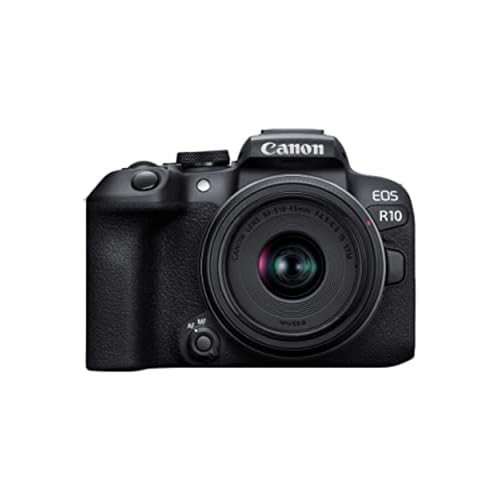
Canon EOS R10 — Best for school sport
If one camera in this guide was designed by someone who had stood on a school touchline, it is the R10. Its subject detection recognises people, animals and vehicles, and its tracking holds a young athlete through the scrum of a junior match with a reliability that feels borrowed from cameras twice its price. The bursts are fast, the buffer honest for its class, and the APS-C sensor’s crop quietly multiplies every telephoto’s reach — the parent’s favourite piece of arithmetic, since it turns an affordable zoom into a pitch-length instrument.
For this article’s audience, its manners matter as much as its numbers. The menus guide rather than intimidate, the body is light enough to hang from a neck through a double-header, and Canon’s colour gives the muddy, mixed light of sports halls a fighting chance of looking like the day felt. Paired with a mid-range telephoto zoom — the purchase this guide will keep recommending — it produces the photographs that end up framed in hallways: the goal, the leap, the face at the moment of knowing it went in.
Its ceilings are the class’s ceilings: the buffer fills during the longest professional-length bursts, and the darkest gyms will test its sensor before they test the full-frame picks. For school and club sport — the brief in its badge — those ceilings sit far above the work. This is the camera we would buy a keen parent, with the lens money protected, every time.
- Format: APS-C mirrorless, RF mount
- Tracking: people, animals and vehicles
- Bursts: fast sequences with a fair buffer
- Reach: crop factor multiplies telephoto lenses
- Role: the touchline parent’s benchmark
Strengths
- Tracking that embarrasses older flagships
- Reach economics built into the sensor
- Light enough for a whole tournament day
Trade-offs
- Buffer limits the longest bursts
- Darkest halls stretch the sensor
- Weather sealing is modest
Its emblematic frame is a November equaliser: rain threatening, light going, a striker’s shot and the little Canon’s burst catching the exact frame where ball, keeper and net agree on history. The parent who made it was congratulated like a player.
Best for: parents, school and club photographers on a sane budget. Not suited for: professional agency work or the darkest indoor arenas

Canon EOS R6 Mark II — Best semi-pro
The R6 Mark II is what the touchline parent graduates to when the photographs start being requested — by the club, the local paper, the athletes themselves. Its tracking is the deepest here: subjects are acquired early, held through occlusion and confusion, and handed back to the photographer frame after frame with an almost insulting calm. Under floodlights and in halls, its full-frame sensor keeps files clean at the sensitivities indoor sport demands, and its stabilisation steadies the long lens during the long waits between plays.
For this guide’s angle — real sport at real venues — its burst behaviour is the professional difference. Long sequences at high speed, written to fast cards without the camera locking the photographer out at the decisive play, turn coverage into certainty: the whole jump, the whole tackle, the whole celebration, with the peak frame guaranteed to exist somewhere in the run. Add Canon’s fast telephoto shelf and you have the semi-professional’s complete argument.
The toll is money and appetite: the body, the cards and the glass form a system priced for people whose photographs work for a living or a serious club. Resolution, too, is tuned for speed rather than for the billboard crop. Within its brief — the best sports photographs this guide can recommend below the flagship tier — it has no serious rival here.
- Format: full-frame mirrorless, RF mount
- Tracking: the most persistent in this guide
- Bursts: long, fast, professionally buffered
- Low light: clean files under floodlights
- Stabilisation: in-body support for long lenses
Strengths
- Keeps the subject when the play turns chaotic
- Indoor sport without the noise penalty
- Coverage you can promise an editor
Trade-offs
- System cost assumes the work justifies it
- Resolution tuned for speed, not cropping
- Serious appetite for fast memory cards
Its proving ground is the floodlit cup tie that goes to extra time: light like a cave, rain in the beams, and a set of frames at the end in which every decisive touch is sharp enough to argue about in the clubhouse. That is semi-professional reliability, defined.
Best for: club photographers, local media and serious enthusiasts. Not suited for: casual budgets or pixel-peeping landscape crossovers

Sony Alpha 7 IV — Best system for sport
Sony’s entry argues from ecosystem. The Alpha 7 IV’s autofocus — real-time tracking with subject recognition across people, animals and more — is superb in the specific chaos of team sport, where the subject ducks behind opponents and re-emerges at speed. Its resolution gives the sports photographer the crop as a second lens: a frame shot wide for safety can be tightened in the edit without falling apart, a working method many professionals quietly prefer.
The lens shelf completes the argument. E mount offers telephotos at every rung — the affordable zooms a parent graduates through, the mid-price instruments of the club photographer, the great fast primes of the professional — and third-party makers compete on the same mount, keeping prices honest. A sports system is a decade-long marriage, and this guide rates the Sony’s household the most prosperous to marry into.
Against the Canon above, its burst depth and low-light cleanliness concede a half-step, and its menus ask an evening’s configuration before the first match. Configured, it is the system choice: the body for the photographer who intends to keep climbing, in a mount that will never tell them the next lens does not exist.
- Format: full-frame mirrorless, E mount
- Tracking: real-time, broad subject recognition
- Resolution: crop as a second telephoto
- Lenses: the deepest sports shelf at every price
- Role: the long-term system investment
Strengths
- Never outgrows its lens catalogue
- Wide frames rescued by confident crops
- Tracking that handles team-sport confusion
Trade-offs
- Bursts a step behind the Canon semi-pro
- Setup time before it feels personal
- Stabilisation less generous for long waits
Its characteristic triumph is the tournament weekend: six matches, three sports, one body and two lenses covering all of it, with the crops from Sunday’s final still sharp enough for the programme cover. Systems earn their keep in weekends like that.
Best for: photographers building a multi-sport system over years. Not suited for: buyers wanting Canon’s burst depth at this tier

OM SYSTEM OM-5 Mark II — Best all-weather reach
Outdoor sport in a wet climate is a war of attrition against the photographer’s equipment, and the OM-5 Mark II is the camera that shows up for every round. Weather sealing shrugs at touchline rain; the Micro Four Thirds format doubles the effective reach of its lenses, so a compact, affordable telephoto frames the far end of the pitch like a professional’s long glass; and the whole kit rides in a bag small enough to carry between the flask, the blanket and the programme.
Its computational and stabilisation talents suit the amateur game’s realities. Long waits at slow shutters for the panning shot, sudden bursts when the break comes, high frame rates for the gymnastics and athletics where the peak lasts a blink — the little body covers the repertoire with an enthusiasm that belies its size. For the school sports day, where one photographer must cover sprints, jumps and throws across a field, its reach-per-kilo is unmatched in this guide.
The smaller sensor concedes the darkest indoor work to the full-frame picks, and its subject-recognition menu is narrower than Sony’s or Canon’s. But the volunteer who photographs every fixture from September’s sun to February’s horizontal sleet will get more sport, in more weather, from this camera than from any rival here — and in amateur sport, presence across the season is the whole portfolio.
- Format: Micro Four Thirds mirrorless
- Sealing: weatherproof for the full season
- Reach: format doubles telephoto effect
- Stabilisation: strong for pans and waits
- Carry: the lightest long-reach kit here
Strengths
- Professional reach at amateur weight and cost
- Rain is a fixture, not a cancellation
- One small kit covers a whole sports day
Trade-offs
- Darkest gyms exceed its comfort
- Subject recognition narrower than rivals
- Shallow-focus stadium looks need fast glass
Its biography is written in February: the cup match in sleet, the other photographers’ cameras bagged in plastic or gone home, and the OM-5 still working the far touchline, returning the only complete record of the day the underdogs won.
Best for: outdoor volunteers, schools and all-weather club coverage. Not suited for: indoor arena specialists

Nikon Z50 II — Best finder for field sport
Field sport rewards the photographer who watches through the lens rather than at a screen, because the play develops in peripheral vision before it arrives in the frame. The Z50 II’s bright viewfinder is its sports argument: track a runner through it and the world narrows to the athlete, the light and the background — the three things a sports photograph is made of — while the camera’s subject detection handles people, animals and vehicles with Nikon’s characteristic calm.
Its bursts and buffer suit the deliberate end of sport: athletics, equestrian, cricket, the field events where the peak is predictable and a timed sequence beats a sprayed one. The crop sensor multiplies telephoto reach as the Canon’s does, Nikon’s colour keeps kits and skin honest under mixed light, and the handling — twin dials, real grip — supports the gloved, cold-fingered reality of the outdoor season.
It concedes the frantic end of team sport to the R10’s deeper action credentials and the Sony’s tracking breadth, and its Z telephoto shelf at starter prices is still filling in. For the photographer whose sports are measured in strides and jumps rather than scrums, it is the composed, craftsmanlike choice in this list.
- Format: APS-C mirrorless, Z mount
- Viewfinder: bright finder for tracking by eye
- Detection: people, animals and vehicles
- Reach: crop multiplication for telephotos
- Handling: dials that work with cold hands
Strengths
- Tracking with your eye in the game
- Timed bursts for predictable peaks
- Honest colour for kits and programmes
Trade-offs
- Buffer modest for chaotic team sport
- Starter telephoto shelf still growing
- No in-body stabilisation
Its natural habitat is the county athletics meet: a day of heats and finals, the Nikon user moving between track and field with two lenses, coming home with the complete, composed record the school will print in its yearbook.
Best for: athletics, equestrian and deliberate field-sport photographers. Not suited for: the fastest indoor team sports

Canon EOS R50 — Best beginner start
The R50 closes the list by demolishing an old excuse: that sports photography must wait for a serious camera. Its eye and subject tracking, inherited from Canon’s professional line, already follows a sprinting child, a family dog at full stretch and a school cyclist with a competence that would have headlined a flagship launch within living memory. A beginner can stand on their first touchline this weekend and come home with sharp, timed, publishable frames — provided the second half of this guide’s repeated advice is followed and the lens budget buys reach.
Its guidance systems are the beginner’s caddie: menus that explain, automatic modes that choose sane shutter speeds for moving subjects, and a sports scene setting that makes the right decisions while the photographer learns to make them. Canon colour flatters the results, and the body’s lightness keeps a young photographer mobile along the touchline rather than anchored to a chair of equipment.
The honest limits are stamina and speed at the margins: smaller buffer, smaller battery, and low-light ceilings that the R10 above handles with more grace. As a first sports camera whose owner will learn anticipation, position and timing — the skills that transfer to every future body — it is a generous starting point rather than a compromise.
- Format: APS-C mirrorless, RF-S mount
- Tracking: eyes, people, animals and vehicles
- Guidance: sports mode and plain-language menus
- Reach: crop factor helps affordable telephotos
- Role: the first touchline camera
Strengths
- Professional-grade tracking at a starter price
- Teaches sport settings while using them
- Light, friendly and immediately productive
Trade-offs
- Buffer and battery are beginner-sized
- Dark halls challenge it sooner than the R10
- Fewer dials for mid-match adjustments
Its first-season story writes itself across the country every autumn: a parent, a new camera, a child’s first goal photographed in a burst so well timed that the school uses it in the newsletter — and a hobby, and occasionally a career, beginning in that single frame.
Best for: beginners and parents buying their first sports camera. Not suited for: tournament-volume shooting or pro indoor work
How Do the Six Sports Cameras Compare?
| Camera | Format | Sports strength | Best use |
|---|---|---|---|
| Canon EOS R10 | APS-C | Tracking value | School and club sport |
| Canon EOS R6 Mark II | Full-frame | Tracking plus low light | Semi-pro coverage |
| Sony Alpha 7 IV | Full-frame | System and crops | Multi-sport systems |
| OM SYSTEM OM-5 Mark II | Micro Four Thirds | Reach and sealing | All-weather outdoor sport |
| Nikon Z50 II | APS-C | Finder tracking | Athletics and field events |
| Canon EOS R50 | APS-C | Guided tracking | First sports camera |
Notice what the table cannot show: the lens each body will be paired with matters more than the row itself. A mid-table camera behind a proper telephoto will out-shoot the top row behind a kit zoom at any sport played on a field larger than a tennis court.
Which Shutter Speeds Does Each Kind of Sport Demand?
Freeze or flow — that is the sports photographer’s whole decision, made fresh at every venue. Freezing a sprinting athlete, a struck ball or a gymnast at a vault’s peak asks for speeds in the region of a thousandth of a second and upward, paid for in sensitivity when the light is poor. Team sport at school level forgives a little less speed; racket sports and cycling’s wheels forgive almost none. The cameras above were ranked partly on how their files behave at the sensitivities those speeds force under real floodlights.
Flow is the deliberate opposite: the panned cyclist at a thirtieth, the runner’s legs blurring while the torso stays, the waterfall of a long jumper’s sand. Slow shutters at sport are not mistakes but signatures, and the skill is choosing which element stays sharp — usually the face or the number — while the rest of the frame is allowed to move. Practise both dialects at training sessions, where failure is free, and arrive at the match bilingual.
What Mistakes Do Touchline Photographers Make?
The halfway line is the first: standing where the referee stands, photographing both ends badly. Pick an end, the one your team attacks in the half that matters, and let the other end go. The second mistake is the kit-lens illusion — expecting a standard zoom to cover a pitch — followed by its cousin, the centred subject: every frame with the athlete marooned in the middle, space behind them, none ahead. Compose for where the play is going, and give the runner a frame to run into.
Chimping through the match is the third error: the photographer reviewing the last play while the next one scores. Shoot the game, review at half-time. And the fourth is neglecting the story around the sport — the warm-up, the team talk, the substitutes’ bench, the mud, the handshake line — which is where the photographs that families keep actually live. The goal is one frame of the album; the album is the season.
How Should Parents Photograph Their Own Child’s Match Ethically and Well?
Start with the club’s rules and the other parents’ comfort, because a touchline camera photographs everyone’s children. Most schools and leagues welcome photography with common-sense conditions — no changing areas, no publishing of other children without their parents’ agreement, respect for any safeguarding policy in force — and the photographer who asks first and follows visibly becomes a fixture rather than a concern. Share generously with the team; the parent-photographer’s photographs are a community asset, and sharing them is both kind and the fastest route to being invited closer.
Photographically, resist the parental magnet that follows only your child. The camera that covers the whole team’s story — the assists, the defending, the goalkeeper’s lonely heroics — produces the album every family wants, including yours, because your child’s moments gain their meaning from the match around them. Stand at the attacking end, keep the shutter honest, and remember the rule that outranks every setting in this guide: when your child looks toward you after the big moment, lower the camera and be a parent for that one. Some frames are for memory, not memory cards.
Why Does the Telephoto Lens Matter More Than the Body in Sport?
Because sport happens at a distance the photographer is not allowed to close. The pitch, the track and the arena fix the geography, and the lens is the only visa. A telephoto does three kinds of work at once: it reaches the far touchline, it compresses the background into the clean blur that separates an athlete from a cluttered fence, and it lets the photographer fill the frame with the subject rather than cropping a distant figure out of a wide shot and watching the quality evaporate. This is why experienced sports photographers speak of bodies as the thing the lens is attached to.
The budget consequence is liberating once accepted: buy the body one tier below your maximum and spend the difference on reach. The crop-sensor picks in this guide exist partly to make that arithmetic kinder, multiplying modest telephotos into pitch-length tools. Whatever body you choose from this list, choose its long lens in the same conversation — a sports camera without one is a ticket to a match you will watch through a keyhole.
How Do You Cover a Whole Tournament Day Without Falling Apart?
Tournament days are marathons wearing a fixture list, and the photographer’s craft becomes logistics. Arrive with batteries charged in rotation, cards formatted and numbered, and a shot list built from the schedule: which teams, which players the club needs, which matches the light will favour. Work in arcs — photograph the morning’s games from the east end, the afternoon’s from the west — so the sun becomes a different backdrop rather than a constant enemy, and schedule your own shade, water and food with the same seriousness as the finals, because a wilting photographer misses the day’s best light along with its best play.
Edit in the gaps, ruthlessly and briefly. Star the keepers on the camera during half-times and lunch, delete nothing in anger, and resist the full review until the day is done — the tournament photographer’s evening is for backing up twice and sleeping, with the gallery built tomorrow from starred frames. The cameras above differ in battery appetite and buffer manners across such a day; the OM-5’s frugality and the Canon semi-pro’s stamina are their tournament virtues, while every body here rewards the photographer whose system — spares, cards, shelter, snacks — never becomes the story.
What Should You Photograph at Training, Not Just Matches?
Training is where access lives. Coaches who would never permit a stranger at a cup final will often welcome the club photographer at a Tuesday session, and the photographs made there — drills, laughter, the new player’s first touch, the veteran teaching the rookie — carry an intimacy match-day formality forbids. The light is frequently better too, chosen by no television schedule, and the photographer can stand closer, ask for a drill to repeat, and learn the athletes’ habits that match-day anticipation is built from.
Use training to rehearse your own craft at full honesty: the new panning speed, the unfamiliar position, the burst discipline you intend to debut on Saturday. Athletes forgive a photographer’s experiments in training and benefit from the results in matches, which is the club photographer’s whole social contract. Some of the most beloved images in any club’s archive — the ones printed for retirements and reunions — were made on ordinary training nights, by the photographer who showed up when nothing was at stake.
How Does Weather Change Sports Photography Across a Season?
Autumn gives the touchline photographer golden light and firm ground; winter takes both away and hands back atmosphere — breath in the floodlights, mud as a texture, rain streaking through the beams — at the price of cold batteries, fogged viewfinders and fingers that stop obeying the dials. The weather-sealed OM-5 and the robust Canon bodies in this guide are ranked with February in mind. Dress as a spectator who cannot leave, keep the spare battery warm inside your coat, and let a simple cloth live in a dry pocket for the lens’s front element, which will need it more often than the camera will.
Summer reverses every problem: hard light at midday fixtures, heat shimmer over distant pitches that no lens can defeat, and athletes squinting into the sun the fixture list chose. Shoot from the shaded side, expose for faces under caps and helmets, and save the day’s ambitions for the evening matches. Across all seasons, the constant is that weather is not the obstacle to the sports photograph but its scenery — the mud, mist and glare are what make one season’s photographs distinguishable from another’s, and the clubs treasure the wet ones most.
Why Should Every Sports Photographer Learn to Shoot the Quiet Moments?
Because the score is the least of the story. The bootlaces tied for the hundredth time, the goalkeeper alone with the posts before kick-off, the injured player’s face on the bench, the two captains laughing at the coin toss — these are the frames that carry what the season felt like, and they ask nothing of burst rates or tracking at all. A photographer who only hunts action returns with evidence; one who also watches returns with the season.
The quiet moments are also where this guide’s cameras repay their subtler virtues: silent shutters that do not disturb a team talk, tilting screens for the unobtrusive low frame, colour that honours a grey morning in the dressing-room corridor. Build them into your shot list deliberately — arrive for the warm-up, stay for the handshake line, walk the ground once after the crowd has gone — and your sports photography will deepen from coverage into witness, which is the promotion every touchline photographer actually wants.
How Do You Edit a Thousand Sports Frames Into a Gallery That Tells the Match?
Begin within hours, while the match is still in your body, and cull in passes with different questions. The first pass asks only about focus and exposure — the unusable leave without ceremony. The second asks about the peak: in each burst, the one frame where the action’s geometry completes itself, the ball at the boot, the jumper at the apex, the face at the realisation. The third pass is the editor’s, and it is about sequence rather than quality: the gallery needs its establishing wide, its mid-distance rhythm, its details — the boots, the chalk, the scoreboard — and its emotional close, arranged so a stranger can feel the afternoon’s arc.
Resist the highlight-reel temptation to publish forty versions of the goals. Families and clubs return to the galleries that include everyone: the defender’s block, the substitute’s warm-up, the supporters under their banner. Tag players where the platform allows, name files sensibly, and deliver while the match is still the week’s conversation. The cameras above generate the raw material at professional rates; the gallery is where that material becomes the club’s memory, and memory — unlike sharpness — cannot be recovered later if the edit is lazy.
What Is the Route From Touchline Parent to Paid Sports Photographer?
It is shorter than it looks, and it runs through reliability rather than genius. The parent whose galleries the club shares becomes the volunteer the club briefs; the volunteer whose tournament coverage never misses a final becomes the stringer the local paper calls when their staff photographer is doubled-booked; the stringer with a system like the Sony or Canon semi-pro in this guide, a telephoto that reaches, and a reputation for delivering on deadline becomes, fixture by fixture, a professional. Every step is purchased with the same currency: showing up in the rain, delivering on time, and photographing the whole story rather than only its goals.
Upgrade equipment along that route in the order the work demands — reach first, low-light second, burst depth third — and let each purchase be justified by a fixture you actually cover. The photographers who stall are usually those who bought the flagship before the access; the ones who arrive bought access with courtesy and consistency, and let the cameras follow. This guide’s list is deliberately built as that ladder, from the R50’s first touchline to the R6 Mark II’s semi-professional beat.
How Should You Set Up Your Camera Before the Whistle?
Matches are lost in the car park, photographically speaking: the settings chosen in calm are the ones that survive the chaos. Arrive with the recipe decided — tracking autofocus with the subject type selected, shutter priority or manual exposure at the speed the sport and light demand, sensitivity automatic within a ceiling you have personally approved, and the burst mode set to the rate the play deserves rather than the maximum the brochure boasts. Photograph the warm-up as a rehearsal of exactly these decisions, checking sharpness at full magnification while failure is still free.
Build the small rituals that protect the big moments. Format the card in the camera at home, never at the venue. Set the clock correctly so sequences from two bodies — or from you and the club’s other photographer — interleave honestly in the edit. Decide your frame’s orientation bias by sport: vertical for the basketball player and the gymnast, horizontal for the pitch’s sweep, and let the grip and the practice follow. The cameras in this guide all allow custom settings banks; the photographer who saves a “match day” configuration in the quiet of the kitchen will never again miss a kick-off while excavating a menu.
Finally, scout your own position with the same care: where the sun will be in the second half, where the crowd’s heads will rise at the exciting end, where the marshal’s patience ends. Position, settings, anticipation — the trinity is unglamorous and undefeated, and every body ranked above exists to serve it.
Why Do Sports Photographs Look Better Shot Low?
Because athletes are monuments in motion, and monuments are photographed from below. A camera at knee height — the touchline photographer’s crouch, the kneeling pad’s whole purpose — makes players rise against sky and crowd rather than sinking into the pitch’s clutter, lengthens the apparent leap, and clears the background of the fence, the parked cars and the other parents. Watch any professional gallery and count the frames shot from standing height: the number is small, and it is not an accident of fashion.
The low position changes the light’s story too, catching the rim of floodlights on shoulders and the spray of mud or water backlit into drama. It costs the photographer comfort and occasionally dignity, and it returns both with interest in the gallery. The tilting screens on the mirrorless picks above exist to spare the neck during this crouch; the OM-5’s compactness spares the knees’ neighbour, the back. However you achieve it, get down. Sport photographed from standing height looks like surveillance; sport photographed from the grass looks like glory.
Final Recommendation
Buy the Canon EOS R10 for school and club sport and spend what you saved on the telephoto; it is the combination this guide would hand to most parents tomorrow. Graduate to the Canon EOS R6 Mark II when the work turns semi-professional and the light turns bad, choose the Sony Alpha 7 IV to build a multi-sport system for a decade, and take the OM SYSTEM OM-5 Mark II if your season is played in the rain. The Nikon Z50 II serves the deliberate field-sport photographer, and the Canon EOS R50 starts the beginner honestly. Then learn the sport, stand where it is going, and shoot the story around the score.
Frequently Asked Questions
What is the best first telephoto for school sport?
A mid-range telephoto zoom covering the classic 70-300mm class of reach — or its crop-sensor equivalent — balances price, weight and pitch coverage for most field sports. It is the single purchase that will change a parent’s photographs more than any body upgrade.
Can I photograph indoor sport without a professional camera?
Yes, within limits the light sets. The R10 and even the R50 produce usable indoor frames with a fast lens and sensible expectations; the full-frame picks extend the ceiling in the darkest halls. Position near the action and shoot the peaks of play, where movement briefly slows.
Should I use continuous autofocus and bursts for everything?
For moving subjects, yes to tracking autofocus; for bursts, use them as timed insurance across the peak of the action rather than as a substitute for timing. Endless spraying fills cards, drains batteries and buries the good frames in thousands of almosts.
How do I keep kits and faces properly exposed under floodlights?
Meter for the players, not the sky or the dark stands: use spot or centre-weighted metering on the action, watch the histogram for clipped highlights on light kits, and set a manual exposure once the light stabilises — floodlights are constant, which makes them the photographer’s friend once measured.
Is it acceptable to photograph other people’s children at matches?
Follow the club’s or school’s policy first, ask where unsure, never photograph in sensitive areas, and do not publish images of other children without their parents’ agreement. Sharing within the team’s parent group, under the club’s norms, is the usual and welcome practice.
One scene closes every sports photographer’s season, and it is worth planning for: the last match, when the light does something generous and a player you have followed all year produces the moment the whole campaign will be remembered by. You will not know which fixture it hides in. The only strategy is the one this guide has repeated in every section — be there, at the right end, with the tracking set and the card empty, having learned the sport well enough to recognise the moment as it assembles. The cameras above will do the rest at a level their makers’ grandparents would have called impossible.
And when the gallery is delivered and the boots are cleaned, keep one frame for yourself — the one that made you gasp slightly when it appeared on the screen at midnight. Print it. Sports photography is a volunteer economy of early mornings and wet socks, and the photographers who last are the ones who remember, in a frame on their own wall, exactly why the touchline is worth it.
Bring the season home in your notebook as faithfully as on your cards: the positions that worked at each ground, the settings the hall’s lights demanded, the players whose habits you learned too late. Sports photography compounds like interest for the photographer who writes it down, because next season begins where this season’s knowledge ended rather than where its innocence did. The cameras will be a year older and entirely sufficient. The eye behind them is the equipment that appreciates.
And spare a thought, when the gallery goes out, for crediting the occasion properly: the club, the competition, the players named where naming is welcome. A sports photograph lives a long social life — shared by families, printed in programmes, dug out at reunions decades later — and the photographer who treats names and consent with care is building the archive the right way up. The cameras in this guide can freeze a hundredth of a second. The courtesy around them is what makes the frozen second worth keeping for fifty years.
Start this Saturday, wherever the sport is nearest: one match, one end of the ground, one camera from this list and the longest lens you can honestly assemble. Shoot the warm-up, the story and the score, in that order of attention, and review the gallery on Sunday with the notebook open. By the third weekend the touchline regulars will be asking which settings made the difference, and you will be able to give them the true answer this guide has argued throughout: the camera helped enormously, and the standing, watching and learning helped more.
Keep faith with the ordinary fixtures, too. The cup final photographs itself, in a sense — drama guaranteed, light arranged, crowd provided — but the photographer’s reputation and eye are built at the nil-nil in the rain in front of eleven spectators, where the story must be found rather than received. The cameras above were not ranked on their finals performance. They were ranked on their Tuesdays, because Tuesdays are where sports photographers are made.
One more investment outranks every accessory after the telephoto: the kneeling pad, the waterproof trousers and the flask, bought without irony. Sports photography is an outdoor endurance hobby disguised as a technical one, and the photographer who is warm, dry and caffeinated in the eighty-ninth minute is the one still capable of the anticipation this guide keeps preaching. Equip the photographer first, the camera second — then let the six bodies above compete, as they were ranked to, on the only ground that matters: the next match, in whatever weather it chooses.
Finally, remember that every athlete in your frame was somebody’s whole Saturday long before they were your subject. Photograph them as you would want your own child, teammate or younger self photographed: at their striving best, with the failures treated kindly in the edit and the triumphs delivered promptly. The cameras in this guide will keep up with any sport you point them at. The reputation that gets you invited back to point them again is built entirely of that courtesy.
Choose the body, then, the way coaches choose players: for the role in your actual season, not for the poster. The parent needs the R10’s kindness and reach economics; the volunteer in the wet league needs the OM-5’s indifference to weather; the climber needs Sony’s or Canon’s deepening systems. All of them, in the right hands at the right end of the ground, will produce the frame that stops a family’s scrolling and starts a story — which is, and always was, the entire point of bringing a camera to a game.
The whistle is not patient, and neither is this craft’s learning curve — but it is honest, and it pays out in proportion to attendance. Turn up for the season with any of these six cameras properly lensed, and the season will turn up for you.
Parents ask one question at the touchline more than any other — whether the photographs will still matter when the boots are outgrown — and the answer, from every family that has kept a season’s gallery, is that they matter more with each passing year, in a way the league table never does. The striker’s grandchildren will not ask about the score in the November match. They will ask who that is, flying through the rain with the ball at her feet, and the photograph you are about to learn to make is the only witness who will still be able to answer.
So charge the batteries the night before, not the morning of. Check the card, the weather and the fixture list while the kettle boils, and be standing at your end of the ground before the warm-up begins — because the season’s defining frame has a habit of arriving early, disguised as an ordinary play, in front of the one photographer who bothered to be ready for it.
Related Guides
Continue with our guide to telephoto lenses for amateur sport, our walkthrough of panning technique for cycling and motorsport, and our notes on photographing indoor sport in bad light.


