ilcastellomenu.com is reader-supported. When you buy through links on our site, we may earn an affiliate commission.
Where to Buy
Backpacking arithmetic is pitiless: everything in the bag is carried on the back, up the hill, in the rain, for every kilometre of the trip. The best cameras for travel and backpacking are therefore not the best cameras that travel — they are the cameras whose total system weight a walker will still be glad of on day nine, when the novelty has worn off and the shoulders have begun their audit. This guide weighs whole systems, not bodies: camera, the one lens it will actually wear, batteries, charger and case, because that is the number your spine will be negotiating with.
One lens is the second law, and it is a liberation disguised as a restriction. The backpacker’s camera wears a single versatile zoom or a single fast prime for the whole journey, which means the choice of that lens matters more than the choice of body, and the photography gains the consistency and speed of a kit that is never being reconfigured at a viewpoint while the light leaves. Every pick below was judged as a one-lens system first and a camera second.
Weather is the third law, because a backpack lives outdoors in a way a suitcase never does. Rain walks are not cancelled for photography; they are often the photography. Sealing, small rain covers, and bodies that tolerate being wiped and carried on are ranked as primary virtues, alongside battery manners that respect the multi-day stretch between sockets on a trail.
The six systems below span the honest range: a sealed micro-system built for mountains, two pocketable fixed-lens and compact instruments for the ultralight, two friendly mirrorless bodies for travellers who want lens choice without the weight, and an armoured compact for the trips where the weather is the itinerary. Each system below carries an Amazon link in the Quick Picks table and another beside its detailed review.
Key Takeaways
- OM SYSTEM’s OM-5 Mark II is the mountain system, sealed and small enough for genuine multi-day trails.
- Fujifilm’s X100VI removes lens decisions entirely and produces the trip’s most beautiful evenings.
- Sony’s RX100 VII puts a versatile zoom in a hip-belt pocket for walkers counting every gram.
- Canon’s EOS R50 is the learner’s travel system, light now and expandable between trips.
- Nikon’s Z30 serves the backpacking creator who films the journey as faithfully as photographing it.
- OM SYSTEM’s Tough TG-7 is the monsoon answer, a camera the weather cannot vote against.
In this guide
Quick Picks
| Camera | Badge | Why it earns its place |
|---|---|---|
| OM SYSTEM OM-5 Mark II | Best mountain system | Sealed body, tiny lenses and stabilisation that leaves the tripod at home. |
| Fujifilm X100VI | Best one-camera trip | A fixed lens, gorgeous files and nothing to swap, charge extra or decide. |
| Sony RX100 VII | Best ultralight zoom | Wide-to-telephoto range in a body that rides in a hip-belt pocket. |
| Canon EOS R50 | Best growing system | Featherweight mirrorless start with RF lenses to grow into between trips. |
| Nikon Z30 | Best for trail creators | Stills and film of the journey from one small, friendly body. |
| OM SYSTEM Tough TG-7 | Best in wild weather | Waterproof armour for river crossings, storms and careless drops. |
How Did We Weigh Systems for the Trail?
Total carried weight was measured the way a walker measures it: body, the lens it wears, two batteries, the charger and cable it shares with the phone where possible, and the pouch that protects it in the bag. Systems were then imagined at day nine of a wet traverse, not at the shop counter — because the camera that gets left at the hostel on day nine might as well have stayed in the shop, and the history of travel photography is mostly the history of cameras that were carried.
The one-lens test followed. Could this system, wearing a single lens, honestly cover the journey’s real subjects — the wide valley, the companion’s portrait, the market’s detail, the far ridge, the café’s gloom? Versatile zooms were credited for range; fast fixed lenses were credited for evenings and for the discipline they impose; and systems whose second lens was small enough to earn its grams — a tiny telephoto in the OM line, for instance — were allowed that exception with the grams counted.
Weather tolerance and power formed the third test, judged together because trails combine them: the wet day is also the day far from sockets. Sealing across body and lens, batteries that sip rather than gulp, USB charging from the same power bank that feeds the phone and the headtorch — the trail’s electrical economy is a shared one, and cameras that insist on private charging ceremonies were marked down as the antisocial luggage they are.
Last came the evening audit: what does this system do at the journey’s still hours, in the hostel, the teahouse, the old town’s lamplight? Travel memories concentrate disproportionately in those hours, and a system that only performs at noon on a summit has misunderstood the assignment. Low-light manners, stabilisation for hand-held dusk, and files that flatter faces by lamplight all earned their place in the ranking.
Why Does One Lens Beat Three on a Long Walk?
Because every lens change on a trail is a small tax levied in the worst currency: time at the viewpoint while the light changes, exposure of the sensor to the dust and drizzle the trail provides, and decision fatigue in a traveller whose decisions are already spent on route, water and weather. The three-lens traveller photographs the journey’s pauses; the one-lens traveller photographs the journey, because the camera is always dressed and ready in the hand or the hip pocket.
There is a creative dividend that surprises everyone who tries it. A single focal range — or a single focal length — teaches the eye to see the trip in that frame until the photographs acquire a visual accent, a consistency that albums built from five lenses rarely achieve. Travellers return from one-lens trips with a body of work; travellers return from three-lens trips with a portfolio of unrelated excellent photographs and a sore shoulder. Both are fine. Only one of them is a story.
The honest exceptions are named rather than hidden. Wildlife journeys and birding trails justify the telephoto’s grams because the subject cannot be approached; astro journeys justify the fast prime because the night cannot be negotiated with. The systems below were chosen to make those exceptions cheap when they are needed — and unnecessary the rest of the year.
What Are the Best Cameras for Travel and Backpacking?
A mountain system, two pocket instruments, two growing systems and an armoured companion for the weather’s worst itineraries.

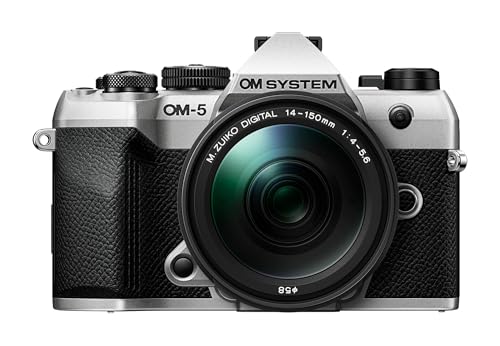
OM SYSTEM OM-5 Mark II — Best mountain system
Above the treeline, where the weather writes the itinerary and every gram is audited by altitude, this is the system the serious walking photographers keep choosing. The body is weather-sealed to a standard that treats a ridge squall as a photographic opportunity, the lenses shrink in proportion — a standard zoom, a genuine telephoto and a fast prime together occupy a full-frame lens’s footprint — and the stabilisation is so capable that the tripod, the backpacker’s heaviest photographic habit, can simply stay home. That last emancipation alone returns more weight than any single component choice in this guide.
The computational gifts read like a trail wish-list. Hand-held high-resolution capture at the great viewpoint, live composite for the hut-terrace star trails, focus stacking for the alpine flowers at the path’s edge — features that on other systems require accessories or a desk, delivered by a body that rides in a jacket pocket between uses. Depth of field from the smaller format suits landscape honesty: foreground moraine and background summit sharing a frame’s sharpness the way the eye remembers them.
Evenings are the negotiation: the sensor works harder in the teahouse gloom than the big-sensor compacts below, and the system’s menus reward the familiarity that a long trip conveniently provides. By day four the OM-5’s owner is fluent, the kit has disappeared into the walking rhythm, and the photographs — sealed, stabilised, far-reaching — keep arriving in weather that sends bigger systems back into the bag.
For the backpacker whose trip is a photographic expedition conducted on foot, there is no second answer at this weight. There are only heavier ones.
- Format: Micro Four Thirds mirrorless system
- Sealing: body and lenses for mountain weather
- Stabilisation: tripod left at home, honestly
- Kit: three lenses in one lens’s footprint
- Modes: high-resolution and live composite on board
Strengths
- A complete expedition system at walking weight
- Weather becomes a subject instead of a stoppage
- Telephoto reach for ridge wildlife, pocketably
Trade-offs
- Teahouse gloom taxes the smaller sensor
- Menus reward days of familiarity
- Video is a companion, not the headline
The bothy evening is its portrait: rain on the roof, the day’s ridge drying on a line, and this small sealed kit on the table downloading a summit panorama shot in weather that had every other walker sheltering. Systems earn reputations in bothies, and this one’s is spoken with respect.
Best for: multi-day mountain and trail photography with real lens ambitions. Not suited for: travellers who mainly shoot lamplit evenings and faces

Fujifilm X100VI — Best one-camera trip
There is a radical simplicity available to the backpacker willing to take it: a camera with one lens that cannot be changed, carried in a coat pocket, charged with the phone’s cable, producing files of a quality that embarrasses systems three times its luggage. The X100VI is that simplicity’s current masterpiece. Its fixed wide-normal lens frames the journey the way a traveller actually sees it — the street, the table, the companion, the valley from the pass — and its sensor’s resolution quietly forgives the absence of a telephoto more often than pride expects, because a considered crop from a rich file beats a zoomed frame from a tired one.
Evenings belong to it outright. A fast lens, real stabilisation and Fujifilm’s film simulations turn hostels, night markets and old-town dinners into the trip’s most beautiful chapter, with a finished look straight from the camera that suits travellers who would rather walk tomorrow than edit tonight. The hybrid finder serves bright summits and lamplit squares alike, the leaf shutter keeps its counsel in quiet places, and built-in neutral-density filtration stretches rivers and empties squares in daylight without a filter kit’s grams.
The discipline is the price and the prize: wildlife stays distant, architecture keeps its distance-based honesty, and the traveller learns to zoom with the feet the trip already provides. Weather sealing is a courtesy rather than a promise, so a small cover rides along for the wet days. Popularity has made it scarce in seasons past — a backpacker with a departure date should shop early and forgive the hunt, because the trip it enables is worth the procurement.
One camera, one lens, no decisions: the X100VI traveller’s album has a unity that gear-rich journeys envy, and the shoulders file no complaints at all.
- Format: fixed-lens APS-C compact
- Lens: fast wide-normal, permanently ready
- Evening gifts: stabilisation, ND filtration, film looks
- Finder: hybrid optical and electronic for all light
- Carry: coat pocket, charged with the phone’s cable
Strengths
- The trip’s evenings photographed beautifully
- Zero lens decisions across the whole journey
- Resolution forgives the missing telephoto often
Trade-offs
- Distant wildlife stays distant, honestly
- Sealing is partial; a cover earns its grams
- Scarcity can complicate a fixed departure
The night-market frame is its signature: steam, lamplight, a companion laughing over an unknown dish, the whole scene rendered like a still from a film the traveller actually lived. Backpackers carry home many photographs; the X100VI’s are the ones that get printed.
Best for: one-camera travellers, old towns and evening-led journeys. Not suited for: wildlife itineraries or monsoon trekking without protection

Sony RX100 VII — Best ultralight zoom
Ultralight backpacking is a religion with a spreadsheet, and its adherents cut the handles off toothbrushes. For them, and for ordinary walkers who simply like a light bag, the RX100 VII is the camera that survives the audit: a body that rides in a hip-belt pocket beside the snacks, yet carries a zoom that runs from the wide valley to a genuinely useful telephoto — the chamois on the far slope, the lighthouse across the bay, the companion small against the glacier. No lens to change, no system to grow, no decision at the viewpoint except the photograph itself.
The one-inch sensor is the pocket format’s sweet spot, delivering files with real polish for the trip book and the wall, and Sony’s autofocus — inherited from the professional line — locks onto a moving companion, a market dog, a ferry’s wake with an assurance that pocket cameras historically only promised. The pop-up viewfinder answers the bright-altitude problem that washes out screens at exactly the viewpoints that matter, and the tilting screen handles the low frame in the old town without the traveller kneeling in the street.
Battery life is pocket-camera modest, which the trail answers with rhythm rather than capacity: a spare in the hip pocket, a top-up from the shared power bank at lunch, the camera sleeping between viewpoints instead of idling. Delicacy is the family trait — this is an instrument, not armour — and its small case earns its negligible grams in any bag that also holds a stove.
For the walker whose photography must never become the trip’s logistics, this is the ceiling of quality per gram currently on sale, and its albums prove the arithmetic every season.
- Format: premium one-inch compact
- Zoom: wide to telephoto in one pocket body
- Finder: pop-up for bright altitude light
- Focus: professional-line subject locking
- Carry: hip-belt pocket, beside the snacks
Strengths
- Real reach at a weight no audit can refuse
- Viewpoints framed before companions finish resting
- Files polished enough for print and projection
Trade-offs
- Battery rhythm must be learned and kept
- An instrument, not armour, in a hard bag
- Evening files sit below the Fujifilm’s richness
The far-slope chamois is its emblem: seen for ninety seconds from a col, framed at full zoom from the hip pocket, gone. Heavier systems were still being assembled in their owners’ bags when the RX100 VII’s owner was walking again, photograph in hand, uphill and unencumbered.
Best for: ultralight walkers and one-pocket travel photography. Not suited for: abusive weather or battery-forgetful travellers

Canon EOS R50 — Best growing system
Not every backpacker is a finished photographer; many are beginners whose first big trip is also their photographic education, and the R50 is the kindest schoolmaster that travels light. The body with its compact kit zoom weighs little more than the compacts above, the menus teach rather than test, and Canon’s colour renders the journey — faces, food, coasts — with a generosity that forgives a learner’s exposure while the craft is being acquired. Subject detection finds the travelling companion’s face at the viewpoint so the beginner can think about the view.
The system’s promise is temporal. This trip, the kit zoom does everything honourably; before the next trip, a small fast prime joins for the evenings, or a compact telephoto for the coast; the RF shelf above stretches all the way to professional bodies the traveller may never want, but the lenses bought along the way never become obsolete. Backpacking kits usually freeze at purchase; this one grows at the pace of its owner’s curiosity, between journeys, at home, where growth is cheap.
Trail manners are good rather than armoured: no weather sealing, so the rain cover is a real line item, and battery life asks for the shared-bank rhythm the whole guide preaches. The vari-angle screen serves the solo traveller’s self-portraits at the summit cairn — a genre the backpacking album honestly requires — and the video is capable enough for the journey’s moving diary.
Buy it for the traveller you are becoming. Few purchases in this guide will be used more, across more years, by a wider range of journeys.
- Format: APS-C mirrorless, RF mount
- Kit: compact zoom that covers the journey
- Screen: vari-angle for solo summit portraits
- Files: forgiving colour for learning photographers
- Future: lenses accumulate between trips
Strengths
- A light system that grows with its owner
- Teaching menus and kind colour for beginners
- Summit self-portraits without a stranger’s help
Trade-offs
- No sealing; the rain cover is mandatory kit
- Battery rhythm relies on the shared bank
- Kit zoom’s evenings are willing, not rich
Three trips tell its story: the first with the kit zoom and a head full of questions, the second with a little prime for the evenings, the third with an album that strangers ask about. The R50 is the rare travel purchase that documents its owner’s education while providing it.
Best for: beginners and improvers building a travel system over years. Not suited for: sealed-system mountain specialists or one-trip minimalists

Nikon Z30 — Best for trail creators
A generation of backpackers documents the journey as a film with stills in it, not the other way round, and the Z30 was designed in that generation’s image. Nikon’s small creator body pairs a compact kit zoom with video tools that treat the trail vlog as a serious genre: a flip screen for the walk-and-talk, reliable face tracking while the path demands the eyes, clean audio ambitions with an external microphone when the wind allows, and stills that hold their own in the same day’s album. One small body, both diaries.
Weight and manners suit the trail’s economy. The kit rides at the top of the bag or in a shoulder pod without reorganising the packing, USB power aligns with the shared bank, and Nikon’s colour keeps the creator’s face honest in mountain light — a working detail for anyone whose audience knows their face better than the scenery. The Z shelf above offers the growth path: a wider lens for the gorges, a longer one for the coast, bought between trips as the channel’s ambitions clarify.
Weather sealing is absent, the viewfinder is too — creators compose on the screen by creed — and stills purists will find the Fujifilm and OM bodies more devoted to their craft. Battery discipline on filming days is a real itinerary item: a day’s walking footage and a day’s stills draw on the same small reserves, and the wise creator budgets frames like water.
For the backpacker whose journey is also a publication — the route film, the weekly episode, the audience waiting at home — this is the lightest honest way to carry both crafts up the hill.
- Format: APS-C mirrorless, Z mount
- Video: flip screen and face tracking for trail films
- Kit: compact zoom for both diaries
- Power: USB feeding from the shared bank
- Role: the journey published as it is walked
Strengths
- Film and stills of the journey from one small body
- Walk-and-talk framing without a crew
- Growth path in Z lenses between trips
Trade-offs
- No viewfinder and no weather sealing
- Filming days tax the shared battery budget
- Stills devotion sits below the OM and Fujifilm
The route film’s audience never sees the arithmetic: one small camera, charged from the same bank as the headtorch, producing the episode they watch from a hut with no name. The Z30’s parish is that invisible arithmetic, and its congregation grows with every trail season.
Best for: backpacking creators filming and photographing the same journey. Not suited for: viewfinder traditionalists or sealed-system purists

OM SYSTEM Tough TG-7 — Best in wild weather
Some itineraries are weather with walking in it: the monsoon trek, the coastal path in equinox gales, the river journey where the camera will be wet by breakfast whatever anyone decides. The TG-7 is the backpacking camera for those trips, armoured and waterproof to a degree that removes the camera from the list of things the weather can vote on. It rides in the hip pocket through the downpour, photographs the waterfall from inside its spray, survives the drop onto the jetty, and logs the route while doing all of it.
Its photographic gifts are tuned to the trail’s small wonders as much as its grand ones. Macro modes turn the orchid at the path’s edge, the frog on the bothy step and the ice crystals on the tent into genuine photographs rather than phone-grade approximations, and the zoom covers the roadside-to-ridge range that wet-weather walking actually offers. Files are compact-sensor honest: excellent for the journal, the audience and the printed trip book at modest sizes, unpretentious about gallery ambitions.
Evenings are its border — lamplight taxes the small sensor — and the deliberate landscape photographer will miss interchangeable glass on the great clear morning. But trips are remembered whole, including their weather, and the TG-7 is the only body here guaranteed to have been present and working for the whole memory, especially the parts the sealed systems spent in a dry bag.
Expeditions keep adopting it as the second camera that becomes the first: the one in the pocket while the system camera waits for conditions. On the wettest trips, waiting for conditions is a synonym for never, and the TG-7’s album is complete.
- Format: armoured waterproof compact
- Survival: waterproof, drop-proof, freeze-proof
- Trail gifts: macro for the path’s small wonders
- Logging: position and conditions recorded automatically
- Carry: hip pocket, in the rain, all day
Strengths
- The weather cannot cancel its working day
- Small wonders photographed as seriously as summits
- Route diary written by the camera itself
Trade-offs
- Evening and lamplight files are modest
- No interchangeable lenses for the great morning
- Zoom range serves the trail, not the safari
The waterfall is its standing portrait: the group sheltering under the overhang, cameras bagged, while the TG-7’s owner stands in the spray getting the photograph the trip is now known by. Presence in weather is this camera’s whole philosophy, and wet trips vindicate it daily.
Best for: monsoon, coastal and river journeys where wet is the forecast. Not suited for: lamplight specialists or large-print landscape ambitions
How Do the Six Backpacking Systems Compare at Day Nine?
| Camera | Format | Trail strength | Signature day |
|---|---|---|---|
| OM SYSTEM OM-5 Mark II | Micro Four Thirds | Sealed system, no tripod | The ridge in a squall |
| Fujifilm X100VI | Fixed-lens compact | Evenings and simplicity | The old town at lamplight |
| Sony RX100 VII | Premium compact | Reach per gram | The col and the far chamois |
| Canon EOS R50 | APS-C mirrorless | A system that grows | The first big trip, whole |
| Nikon Z30 | APS-C mirrorless | Film and stills together | The route episode from the hut |
| OM SYSTEM Tough TG-7 | Armoured compact | Weatherproof presence | The waterfall from inside |
Day nine is the honest test in the table’s title: novelty gone, shoulders auditing, weather having voted at least once. Every system here was ranked by whether its owner, on that morning, packs it at the top of the bag with intent — or begins the quiet negotiation about leaving it at the hostel.
How Should You Pack a Camera So It Survives the Bag?
A backpack is a hostile neighbourhood: a stove with ambitions, a water bladder with secrets, boots, poles and the constant percussion of walking. The camera’s home in it should be padded, upright, at the top or in a hip or shoulder pod that the walker’s own body protects — never at the bag’s base against the ground at every rest stop, never loose among the hard goods. A dry bag or a sealed pouch is the second skin for the unsealed bodies, and the discipline of returning the camera to its home after every viewpoint, rather than letting it migrate through the bag’s geology, prevents most of the damage that travellers blame on the trail.
Accessibility decides use. A camera that takes two minutes to excavate will be excavated twice a day; a camera in the hip pocket or the shoulder pod is used twenty times, and the trip’s album is written by those twenty-a-day frames — the pass appearing, the companion’s unposed laugh, the weather arriving. Pack for the photographer you are at hour six, tired and gloved, not for the one who arranged the bag at home. Quick-release straps and capture clips earn their grams exactly here, holding the camera on the shoulder strap where the hand already is.
Lens care on trail is a cloth and a habit. Dust and drizzle are cleaned at the viewpoint, not ground in at the hostel; the cloth lives with the camera, not in the wash bag. Filters protect front elements cheaply on systems that take them, and caps are tethered or pocketed by rule, because a cap set down on a summit has a well-documented instinct for emigration.
What Mistakes Do Backpacking Photographers Make in the First Big Trip?
Overpacking the system leads, inevitably. The second lens that is carried for six hundred kilometres and used for four frames, the tripod that becomes a walking-stick of guilt, the charger for the charger — the first trip’s bag is a museum of good intentions, and the second trip’s is the correction. Weigh the photographic kit separately, write the number down, and let it argue for its grams against the water and the warm layer like everything else in the bag.
Second is the battery fantasy: manufacturer figures measured in a laboratory, believed at altitude in the cold, on a filming day, three days from a socket. Derate every promise, carry the spare, run the shared-bank rhythm from day one rather than inventing it in a panic at the refuge. Third is the un-backed-up card — a trip’s whole memory in one fragile place, riding in the same bag as the water bladder. The nightly copy to the phone takes four minutes; the alternative has ended more travel albums than weather ever will.
The last mistake is shooting only the summits. The album that travellers actually love is the journey’s whole fabric — the bus, the bothy, the companion’s blister, the dog that followed for a day — and the cameras in this guide were ranked partly for being present at that fabric’s level: in the pocket, at the table, in the rain. Pack for the fabric, not just the peaks, and the trip photographs itself honestly.
How Do You Keep a System Alive Between Sockets for Five Days?
Budget power like water, because on a trail it is the same discipline. Know each device’s daily appetite in the units the bank provides, turn off the radios and reviews that sip invisibly, and let the camera sleep between viewpoints instead of glowing in the hand. Photographers who shoot review-free — checking the frame at the rest stop rather than after every exposure — routinely double a battery’s working life, and their companions prefer the company.
The shared bank is the system’s heart, so size it for the whole electrical family: camera, phone, headtorch, watch. A bank that serves four masters must be refilled at every socket the route offers — the café lunch, the refuge’s charging shelf, the bus with seat power — in small opportunistic sips rather than one heroic overnight that the itinerary may not contain. Solar panels earn their grams only on slow, sunny, base-camp rhythms; on a moving traverse they mostly photograph well and charge poorly, and the honest trail verdict is to carry capacity instead.
Cold is the silent tax collector at altitude. Batteries sleep warm — in the sleeping bag’s foot, in an inside pocket on the dawn start — and are rotated so the warm one works while the cold one recovers against the body. The sealed and armoured bodies tolerate the conditions best, but no chemistry is exempt from physics, and the five-day stretch rewards the traveller who treats warmth as a power accessory.
Why Is the Evening the Backpacker’s Real Photographic Harvest?
Because the walking day is mostly transit, and the journey’s meaning condenses when the boots come off. The teahouse table, the hostel’s common room, the old town entered at lamplight, the companions becoming friends over an unknown dish — these are the frames that travellers print, and they are taken in the day’s worst light by the day’s most tired photographer. Systems were ranked for that harvest deliberately: stabilisation for the hand-held dusk, fast glass or kind sensors for the lamplight, files that flatter faces the sun has spent all day weathering.
The evening also belongs to the journey’s administration, which the wise photographer folds into the ritual: cards copied, batteries rotating onto the bank, tomorrow’s lens — the one lens — cleaned and ready. Ten minutes at the table purchases the next day’s whole photographic freedom, and the travellers who keep the ritual are recognisable by their albums’ completeness: nothing missing, nothing corrupted, every day present and accounted for.
Protect one evening habit above the rest: put the camera down for part of it. The journey is not content, the companions are not cast, and the traveller who experiences nothing except through a finder returns with an excellent archive of a trip they did not quite take. The best backpacking photographs include the evidence of a life being lived at the table — and somebody at that table, laughing, unposed, is usually holding the camera’s owner in the frame for once.
How Should a Solo Backpacker Photograph a Journey Lived Alone?
The solo traveller’s album has a structural problem: its protagonist is behind the camera for the entire trip. The solutions are a craft of their own. The small tripod or the balanced-on-a-rock timer frame at the summit cairn; the vari-angle screens on the Canon and Nikon picks, composed and checked before the traveller walks into the scene; the remote release from a phone, pocketed before the shutter fires so the photograph shows a walker, not a photographer performing one. Practise the routine at home until it is ninety seconds from idea to walking on, because a viewpoint ritual that takes ten minutes will be performed exactly once.
Strangers are the solo traveller’s second shutter. Asking a fellow walker to take the frame — camera pre-set, composition described, the favour returned with interest — produces not only the photograph but a conversation, and the solo album’s best portraits of its owner are usually taken by people whose names are now in the back of the notebook. Choose askable moments: rest stops, summits, the long evening light, when nobody is hurrying and the exchange is a pleasure rather than a toll.
Finally, photograph the solitude itself honestly. The empty trail ahead, the single cup, the tent’s lamplit triangle in a dark valley — the solo journey’s signature images are quiet ones, and the small, present, always-carried cameras in this guide are built for exactly that quiet. The album’s honesty about being alone is what makes its owner’s presence in a few frames feel earned rather than staged.
Final Recommendation
For the mountains, take the OM SYSTEM OM-5 Mark II and leave the tripod home. For the one-camera journey, take the Fujifilm X100VI and let the evenings be beautiful. Count grams with the Sony RX100 VII, grow with the Canon EOS R50, publish with the Nikon Z30, and let the OM SYSTEM Tough TG-7 answer for the weather’s worst itineraries. In every bag: one lens worn with conviction, batteries budgeted like water, cards copied nightly — and a camera light enough that day nine finds it at the top of the pack, where the photographs are.
Related guides
Frequently Asked Questions
How much should a backpacking camera system weigh?
Less than your resolve at day nine. As a working guide, a complete system — body, one lens, batteries, charging — that stays near or under a kilogram will be carried gladly by most walkers; the pocket compacts here come in at a fraction of that for the ultralight.
Is one lens really enough for a whole trip?
For most journeys, yes — a versatile zoom or a fast prime covers the valley, the portrait and the old town, and the consistency improves the album. Wildlife and night-sky itineraries are the honest exceptions, and the OM system makes the telephoto exception unusually cheap in grams.
How do I charge everything on a multi-day trail?
One shared power bank sized for camera, phone and torch together, sipped at every socket the route offers, with batteries kept warm at altitude. The detailed rhythm is in the power section above; the principle is that electricity on a trail is budgeted like water.
What if it rains for three days?
Then the sealed and armoured picks earn their ranking: the OM-5 system and the TG-7 keep working, while unsealed bodies live under covers and shoot from shelter. Rain days produce some of a trip’s most honest photographs — plan to take them rather than wait them out.
Should I bring a tripod for landscapes?
Usually not. Stabilisation in the OM, Fujifilm and Sony picks handles viewpoint work at dusk, and a mini tripod or a beanbag answers the rare long-exposure need at a tenth of the weight. Full tripods earn their grams only on dedicated photographic expeditions.
How Do You Photograph in a Country Whose Language You Barely Speak?
The camera is the traveller’s most fluent phrasebook, and also its most dangerous one, because it speaks before permission has been negotiated. The backpacker’s etiquette abroad is a craft with rules that outrank any setting: learn the sentence for may I take your photograph in the local language and use it before the camera rises, read the answer in the face rather than the words, and understand that in some places — houses of worship, markets near borders, anywhere uniforms gather — the correct photograph is the one not taken. The small, friendly systems in this guide help precisely because they look like what they are: a traveller’s souvenir-maker, not a news crew, and people grant souvenirs a latitude they deny productions.
Markets and festivals reward the purchase-first courtesy: buy the tea, eat the pastry, then ask, and the portrait that follows will include a relationship instead of a theft. Children are photographed through their adults, always, with the adult in the conversation if not the frame. And the gift economy completes the craft — showing the frame, sending it onward, carrying prints back along a repeated route — because a backpacking photograph taken from a community and never returned is a small extraction, while the returned one becomes the next traveller’s introduction. The journey’s album gains its conscience from these habits, and its best portraits are usually the ones where the asking took longer than the exposure.
What Should You Do When the Weather Closes In for Days?
First, reclassify it. A backpacking trip’s rain days are not lost photographic days; they are the days the trip shows its true texture — the bothy’s society, the teahouse’s long conversations, the old town’s streets turned to mirrors, the forest in its dripping, saturated glory. The sealed and armoured picks exist for the outdoor half of that texture, and the evening-capable bodies for the indoor half, and the traveller carrying either has no excuse for a blank chapter. Work close and human in bad weather: hands, steam, lamplight, the map consulted under an awning. Those frames, reviewed at home, routinely outrank the summit panorama in the family’s affections, because they smell of the trip as it was actually lived.
Second, use the enforced stillness for the journey’s administration, the unglamorous liturgy this guide keeps returning to: cards copied and verified, batteries rotated and warmed, the one lens cleaned and inspected, the notebook brought up to date while the days are still distinguishable in memory. Trips are long and weather is patient; the traveller who treats a rain day as a studio day arrives at the next clear morning with an archive in perfect order and a camera that has nothing pending. Then, when the cloud finally tears at the pass and the light does its famous trick, the whole system — camera, batteries, photographer — is ready in the ninety seconds the mountain allows, and the photograph that justifies the entire wet week gets taken by the person who spent the rain preparing to deserve it.
How Do You Decide What to Leave Behind at the Trailhead?
The honest backpacking kit is edited at the trailhead, not at the shop, and the camera gear should face the same ruthless interview as everything else: what did you actually do on the last trip? The lens that produced four frames in six hundred kilometres has answered its own question. The tripod that served one sunset has confessed its exchange rate. Even beloved items — the fast prime kept for evenings that turned out to be spent asleep by nine — must argue in the currency of the coming route: its altitude, its weather, its subjects, its sockets. Travellers who keep a written kit list per trip, annotated afterward with what earned its grams and what rode as ballast, converge within three journeys on a photographic outfit so personally correct that it stops feeling like equipment and starts feeling like clothing.
Sentiment is the smuggler to watch. The camera carried because it was a gift, the lens kept because it was expensive, the accessory retained because it might — might is the heaviest word in the backpacking vocabulary, and the trail taxes it by the kilometre. The systems ranked in this guide were chosen to make the trailhead interview easy: each is a coherent answer on its own, none requires a supporting cast of just-in-case, and the heaviest of them still leaves the warm layer and the second book unmolested. Pack the camera you will use at hour six of day nine, in the rain, with gloves on and dinner uncooked — and leave the rest to the cupboard, which has never once complained about the view.
Why Does the Journey Home Deserve a Camera Still Working?
Because the return leg is a photographic country of its own, and travellers habitually arrive in it with dead batteries, full cards and a camera buried under the dirty laundry of three weeks. The journey home reverses every view: the pass crossed in the opposite light, the border town now familiar, the first sight of the home coast or the home hills with a traveller’s educated eye. Those frames close the album’s argument — departure and return, stranger and knower — and they are lost by the surprising number of photographers whose systems quietly expired two days before the ferry. The disciplines this guide has repeated like a refrain are aimed precisely here: batteries rotated to the last day, cards copied and cleared with room to spare, the camera riding at the top of the bag until the front door, not merely until the last famous viewpoint.
There is a final frame the wise traveller plans deliberately: the arrival itself. The unpacked bag on the hall floor, the boots by the door, the camera that made the journey sitting on top of the pile, still working. It is the album’s full stop and, often, its most honest photograph — proof that the system chosen at a kitchen table months earlier survived the whole argument of the road. Choose from the six above with that last frame in mind, and the middle of the album will take care of itself.
How Should the Photographs Be Sorted Before Memory Starts Editing Them?
Do the honest work within a week of coming home, while the journey’s geography is still in your legs. Copy everything twice, then walk the whole archive once at viewing speed without deleting anything, letting the trip replay at the pace it deserves after being lived at walking pace. Mark the keepers on that pass and only that pass; the second-guessing of later weeks, when the journey has already begun its transformation into legend, deletes the ordinary frames — the bus, the bothy, the companion’s blister — that future you will value above the panoramas. Ordinary is the first thing memory falsifies and the first thing the archive should protect.
Label by place before labelling by subject, because in ten years the question will be where, not what: the valley’s name, the hut, the town whose spelling you will have forgotten by spring. Write the captions while the notebook’s abbreviations still mean something, and include the people — names, spellings checked against the messages they sent you — because a portrait without a name becomes a stranger twice. The systems in this guide, several of which log position automatically, give the sorting a skeleton; the traveller’s week of honesty gives it a soul. Finish with the small printed selection, made now, while the choosing is easy. Future you, holding that book, will be grateful to the only person who could have made it: the one who had just come home, tired, tanned, and still able to tell the valleys apart.
What Is the Photograph You Will Wish You Had Taken?
Ask returning backpackers and the answer is almost never a landscape. It is the person who is no longer travelling with them, photographed properly while they were; the hut evening before the group scattered to four countries; the self of day three, unweathered and grinning, whom the traveller would like to show to the self of day thirty. The lesson hides in plain sight inside every section of this guide: the light, present, always-ready camera is not really a landscape instrument at all. It is insurance against the future’s specific regrets, bought in grams and paid out in faces. So point the thing at the table tonight, at the companion mid-laugh, at the group complete for the last time — with the window’s light, with the screen flipped or the timer set, with whatever body from the six above is sitting in the top of the bag. The summit will still be there in the morning, in everybody’s photographs. The table will not, in anybody’s, unless you make it so.
What Is the Simplest Test Before You Buy?
Pack it and walk. Load the candidate system into the actual bag, at its true travelling weight with batteries and pouch, and carry it on a long day walk you already know — the hill behind the house, the coastal errand, the city’s far museum and back. By the return leg your shoulders will have filed the only review that cannot be argued with, and your hand will have reported how often the camera actually came out when a view offered itself. A system that was carried gladly and used twenty times on a familiar walk will be carried gladly and used daily on the great one. A system that spent the walk as cargo has told you its future, whatever its files promise, and the shop’s returns window is kinder than the trail’s.
Related Guides
Continue with our guide to cameras for touring by motorcycle and car, our notes on ultralight camera kits for hiking, and our walkthrough for travel blogging and vlogging cameras.


