ilcastellomenu.com is reader-supported. When you buy through links on our site, we may earn an affiliate commission.
Where to Buy
A skit channel is a theatre company of one, performing in a living room, on a lunch break, against a clock. Its camera has a stranger job description than any other in this cluster: it must film the same performer as five different characters, reset between setups in minutes rather than hours, keep dialogue — the entire cargo of comedy — crisp enough that a punchline survives a phone speaker, and then do all of it again tomorrow, because skit channels live on volume and momentum. The best cameras for youtube skit channels are therefore judged as production assistants, not as portrait lenses.
Two disciplines dominate this ranking. The first is the multi-role shoot: one performer playing every part, which demands repeatable framing, focus that can be trusted to a mark on the floor, screens that let a solo actor check the shot from in front of the lens, and settings that do not drift between the morning’s character and the afternoon’s, so the edit can intercut them as if they shared the room. The second is speed: skits are written fast, filmed faster, and killed by any setup that takes longer than the joke deserves.
Six cameras serve that double discipline in different proportions — mirrorless bodies that anchor a home studio corner, a pocket gimbal that turns any location into a set in seconds, a simple compact that becomes the second character’s camera, and a wide action body that covers physical comedy a fixed frame would amputate. Dialogue audio is treated throughout as a headline feature, because in this genre it is one.
Key Takeaways
- The Sony ZV-E10 II anchors a skit studio with trustworthy solo focus and fast resets.
- Canon’s EOS R50 keeps a one-person company’s colour and manners cheerfully consistent.
- Nikon’s Z30 suits fixed-room sketch shows filmed from one reliable corner.
- The DJI Osmo Pocket 3 turns any location into a set within a minute.
- Sony’s ZV-1F is the simplest second camera for the other character in the scene.
- The Insta360 Ace Pro 2 covers physical comedy with a wide, tough frame.
In this guide
Quick Picks
| Camera | Badge | Why it earns its place |
|---|---|---|
| Sony ZV-E10 II | Best skit studio anchor | Face focus a solo performer can trust, fast resets and creator handling in one body. |
| Canon EOS R50 | Best cheerful all-rounder | Friendly menus, flattering colour and compact size for a fast-moving one-person show. |
| Nikon Z30 | Best fixed-room sketch body | A small body that lives on its tripod in the sketch corner and never changes its mind. |
| DJI Osmo Pocket 3 | Best instant location set | A gimbal that turns a park, a car or a café corner into a sketch set in under a minute. |
| Sony ZV-1F | Best second-character camera | A simple wide compact that films the other person in the scene while the main camera holds yours. |
| Insta360 Ace Pro 2 | Best for physical comedy | A wide, tough action camera that keeps pratfalls, chases and kitchen chaos inside the frame. |
How Did We Choose the Best Cameras for YouTube Skit Channels?
Repeatability was scored first, because multi-role filming is a magic trick performed against the editor. A camera earns its place when a setup can be rebuilt exactly — same framing from the same tripod position, same exposure and white balance locked rather than re-decided, same focus behaviour on the taped mark — so that Character A filmed at nine and Character B filmed at noon occupy one continuous fictional room. Bodies with saveable settings, honest screens and predictable automation were ranked ahead of cleverer cameras whose every take is a fresh negotiation.
Solo operation came second. The skit performer is also the crew: they must start recording from in front of the lens, confirm the take is running, check focus on a costume change, and review a performance without breaking character’s energy. Turning screens, tally lights, remote and phone control, face focus that holds a performer rather than the sofa — these are not conveniences in this genre, they are the difference between a channel that ships three sketches a week and one that ships apologies.
Turnaround was timed with a stopwatch rather than admired in the abstract, from a cold room to a rolling take. Dialogue and turnaround closed the judging. Every pick had to accept a proper microphone or pair cleanly with one, because a skit’s value is carried by voices and timing that echo cannot survive. And every pick was weighed for the unglamorous speed of its whole loop — setup, filming, transfer, a same-evening edit — since a sketch about this week’s event is worth nothing next month, and the genre’s economics reward the channel whose camera never becomes the reason a joke arrived late.
Why Does Playing Every Character Yourself Change the Camera Brief?
Because continuity becomes a technical problem instead of a crew’s memory. When one performer plays the shopkeeper, the customer and the customer’s increasingly suspicious twin, the three performances are filmed hours apart and must agree about everything the camera controls: the height of the frame, the warmth of the light, the exact distance at which focus sits, even the background’s brightness, or the composite scene falls apart in the edit and the audience sees the trick instead of the joke.
The cameras that serve this best are the predictable ones. Locked settings that stay locked, focus that returns to the same mark, colour that does not improvise between costumes — these boring virtues are the special effects department of the solo sketch. This guide therefore ranks consistency beside image quality without apology, and treats a camera’s ability to be set up once, marked, and trusted for a season as its headline skit feature.
Why Is Dialogue Audio Worth More Than Resolution in a Sketch?
Because jokes are verbal architecture. A sketch’s picture can be modest — a sofa, a doorframe, a kitchen — and still land completely if every syllable arrives clean, close and dry, while a gorgeous frame carrying echoing, distant dialogue loses the punchline in the room’s reverb and the sketch with it. Phone speakers, where most sketches are consumed, are merciless to anything but a near, clear voice, and they forgive almost any picture that keeps faces readable.
The practical consequence is a buying order this guide repeats deliberately: microphone provision before lens ambition, every time. Each pick below either accepts a proper microphone directly, pairs wirelessly with one, or records a voice at conversational distance well enough to publish — and the sections that follow treat audio setups, room treatment and voice discipline as camera topics, because for a skit channel they are.
Which Six Cameras Keep a One-Person Company on Schedule?
The studio anchors come first, then the location and second-character tools, then the wide body for physical comedy — a kit most channels assemble in roughly this order.

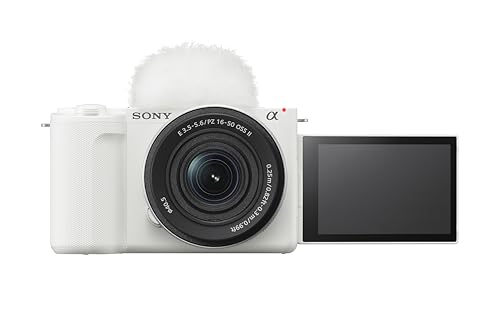
Sony ZV-E10 II — Best skit studio anchor
Anchor duty falls to the ZV-E10 II because it removes the solo performer’s three great uncertainties. Its face and eye focus holds a performer who moves, gestures and occasionally corpses, without wandering to the bookshelf; its turning screen and tally light let that performer confirm framing and recording from the stage side of the lens; and its settings behave identically at the day’s first setup and its fifteenth, which is the entire technical foundation of multi-role filming. A sketch artist can mark the floor, set the body once, and spend the day being funny instead of being a crew.
Its creator details map onto sketch grammar with unusual precision. Product focus becomes prop focus — the letter, the wig, the suspicious parcel raised to camera at the punchline. The defocus control gives a one-room set a hint of production depth. USB power runs the long multi-character day from the wall, so the shopkeeper’s scenes and the customer’s are separated by a costume change, never by a battery ceremony that cools the performer’s energy.
Colour consistency across a day’s costumes is where its ranking is truly decided. Sketch edits intercut performances filmed hours apart, and a body whose automatic decisions stay calm — same skin, same room, same warmth under the same light — lets those cuts disappear. Pair it with a locked white balance and the one-person company gains the invisible crew member every sketch needs: a cinematographer who never changes their mind.
Electronic stabilisation and the absent viewfinder barely register in a tripod-based home studio. For the channel ready to treat its corner as a standing set, this is the most complete anchor in the guide — and the lens mount behind it means the set’s look can deepen for years without the anchor being replaced.
- Format: APS-C mirrorless, E mount
- Focus: face and eye priority for solo performers
- Screen: turning, with a recording tally light
- Power: USB running for multi-character days
- Extras: prop-sharp product focus mode
Strengths
- Focus trusted to a floor mark all day
- Settings stay put between characters
- One body anchors a standing home set
Trade-offs
- Electronic stabilisation only
- No viewfinder for outdoor sketches
- Kit lens is a beginning, not a look
Best for: solo sketch channels filming several characters per video. Not suited for: run-and-gun comedy filmed mostly outdoors.

Canon EOS R50 — Best cheerful all-rounder
The R50 is the anchor for the sketch channel that values morale as a production resource. Its menus guide rather than interrogate, its colour flatters every character in the company equally — no small thing when the same face must read as hero, villain and grandmother within one video — and its compact body resets between rooms without the performer feeling like a removal company. Sketch energy is perishable; a camera this encouraging keeps it alive through a long filming day.
Its solo manners are properly thought through. The fully turning screen serves as the performer’s mirror and monitor, touch controls tolerate the quick adjustments a one-person crew makes between takes, and focus finds the face under ordinary room light and stays with it through the physical business sketches demand. Stills from the same body cover the thumbnail’s exaggerated expressions in matching colour, which matters in a genre where the thumbnail is half the joke’s delivery system.
Canon’s lens path suits the standing set’s evolution: a wider lens when the sketch room is small, a brighter one when evening filming becomes the routine, a longer one for the cutaway close-up that sells a reaction. The body also doubles as the household camera between filming days, an economy one-person companies — which are usually also households — appreciate more than specification sheets admit.
Warm-room marathons want power planning and the native lens shelf is still growing; neither dents its brief. For the sketch creator who wants mirrorless quality with a compact camera’s temperament, the R50 is the most likeable anchor in this guide, and likeability, across two hundred filming days, is a technical specification.
- Format: APS-C mirrorless, RF mount
- Colour: flattering and even across characters
- Screen: fully turning for solo monitoring
- Menus: guided, fast to reset
- Stills: thumbnail expressions in matching colour
Strengths
- Keeps a solo crew’s morale and pace up
- Same face, many characters, one colour
- Compact enough to reset between rooms
Trade-offs
- Native lens choice still developing
- Long hot sessions need a power plan
- Smaller sensor than full-frame rivals
Best for: character-led channels filming at home several times weekly. Not suited for: studios needing the deepest lens bench today.

Nikon Z30 — Best fixed-room sketch body
Some sketch channels are a place: one sofa, one door, one kitchen counter, a hundred episodes. The Z30 is the camera for that theatre. Small enough to live permanently on its tripod in the corner, screen turned to the performer, it offers the fixed-room virtues in their purest form — switch on, step onto the mark, and the frame is the frame it was in March. For a format built on the audience’s familiarity with a room, that permanence is not a limitation; it is the set itself, kept in a camera.
Consistency is its artistry. A fixed setup dialled once — exposure, balance, focus behaviour — reproduces episode after episode, so characters filmed across a season share one continuous fictional space, and a returning viewer reads the channel as a place they visit. Its files behave predictably in the edit, its stills handle the thumbnail, and its powered, seated filming manners suit the long writing-to-camera and reaction segments that pad a healthy sketch channel’s calendar.
Nikon’s mount gives the room room to change: a wider lens when the set expands to two-shot conversations with oneself, a brighter one when the channel’s look matures. The body’s compactness also makes it the natural travel deputy — the hotel-room sketch, the holiday special — where its screen-first design and simple manners reproduce a working set in minutes on a borrowed table.
It will not stabilise a walking shot like the gimbal pick or forgive chaos like the action body, and it was never meant to. Judged as the fixed-room instrument — the camera a sketch channel installs rather than carries — it is the connoisseur’s choice, and its owners tend to measure its service in years.
- Format: APS-C mirrorless, Z mount
- Screen: turns fully to the performer
- Role: permanent tripod resident in the set
- Power: suited to long powered sessions
- Growth: interchangeable lenses as the set evolves
Strengths
- The same frame, episode after episode
- Installs into a standing set and vanishes
- Files and colour behave predictably for edits
Trade-offs
- Stabilisation depends on the lens
- Not built for walking comedy
- No viewfinder for bright outdoor work
Best for: fixed-set sketch shows and seated character channels. Not suited for: location-led comedy filmed on the move.

DJI Osmo Pocket 3 — Best instant location set
The Pocket 3 is the sketch channel’s location department in a coat pocket. Seconds after the pocket opens it is awake, its gimbal steadying the walking entrance and the chase-that-isn’t, and its face tracking keeps a performer framed while they deliver to camera on the move — the grammar of the modern sketch’s opening ten seconds. A one-person company can scout, set and film a location piece in the time a mirrorless rig takes to be unpacked, which means locations stop being special episodes and become weekly vocabulary.
Its solo manners are the strongest here relative to size. The rotating screen becomes the performer’s monitor in either orientation, the tracking holds a mark better than a static frame does when the mark is a moving actor, and wireless microphone pairing keeps dialogue close and dry even when the camera sits across a pavement café table. Punchlines survive the outdoors on this little body in a way they simply do not on a camera recording its own echo from six feet away.
Back home it moonlights as the second character. Locked on a mini tripod across the room, it films the reverse angle — the other half of the two-hander the performer is playing alone — in colour close enough to the main body’s to cut without a diplomatic incident. Many solo sketch channels run exactly this two-body trick, and the Pocket’s discretion helps: a tiny camera across a room is forgotten by neighbours, landlords and occasionally by the performer, which is when the best takes happen.
One fixed lens, one viewpoint and an outing’s battery are the permanent terms, and a windy day will test its audio like any small body’s. As the speed instrument of a sketch kit — the camera that makes ‘let’s just film it there’ a practical sentence — it has no rival in this guide.
- Format: gimbal-stabilised pocket camera
- Tracking: follows the performer’s face
- Screen: rotates for either orientation
- Audio: wireless microphone pairing for dialogue
- Setup: from pocket to filming in under a minute
Strengths
- Locations become weekly, not special
- Dialogue stays close outdoors
- Doubles as the second character’s angle
Trade-offs
- Fixed lens and viewpoint
- Battery measured in outings
- Wind tests small microphones
Best for: location sketches, entrances and mobile comedy formats. Not suited for: a whole channel of seated two-handers alone.

Sony ZV-1F — Best second-character camera
Every solo sketch artist eventually needs the other angle: the reaction, the reverse, the character who must appear to be listening while the performer is busy being someone else. The ZV-1F is the simplest honest way to own that angle. Its wide fixed lens covers a seated character position without fuss, its screen turns to let the performer check the framing before stepping into the costume, and its entire operation can be taught to the channel’s one employee in an evening and never thought about again.
Its simplicity is a production virtue in the multi-role workflow specifically. One button discipline, one colour behaviour, one card to empty: the second camera should add an angle without adding a second cinematography department, and the ZV-1F’s bright, forgiving picture cuts beside the bigger Sony bodies with less argument than its size suggests. The defocus shortcut even lends the reverse angle a touch of the main camera’s polish, so the fictional room feels lit by one sun.
It also serves as the channel’s scout and spare. Filming a test of a new character, a quick community update, a behind-the-scenes diary of the one-person company’s absurd working day — the little Sony handles the informal catalogue that keeps a sketch channel present between productions, and its directional microphones flatter a seated voice respectably when the main microphone is across the room being worn by another character.
The fixed lens and small sensor set its ceiling plainly, and it should be bought as what it is: the second seat in a two-camera sketch kit, or the first camera of a channel still proving it will publish. In either seat it earns its keep weekly, which is more than many grander second purchases manage.
- Format: fixed-lens creator compact
- Lens: wide view for a seated character position
- Screen: turns for pre-costume framing checks
- Controls: one-touch defocus, minimal decisions
- Audio: directional built-in microphones
Strengths
- Adds the reverse angle without complexity
- Cuts kindly beside bigger Sony bodies
- Ideal spare and behind-scenes camera
Trade-offs
- Fixed lens, permanent ceiling
- Small sensor prefers decent light
- Not a main camera for an ambitious studio
Best for: second angles, reaction shots and starter sketch kits. Not suited for: sole camera for a channel with studio ambitions.

Insta360 Ace Pro 2 — Best for physical comedy
Physical comedy breaks the rules the seated sketch lives by: the performer leaves the mark, the prop leaves the table, the chase leaves the room. The Ace Pro 2 is the camera for that department of the company. Its wide view holds a whole kitchen’s worth of chaos, its stabilisation survives being mounted to things that move, and its toughness treats the inevitable — the dropped camera, the sprayed sink, the garden sketch in drizzle — as weather rather than as an insurance event. Beginners in physical sketch work can commit to the bit, which is the entire secret of filming it well.
Its picture quality in ordinary indoor light is the pleasant surprise of the action tier: faces stay readable, colours stay believable, and its low-light manners extend the physical sketch into the evening hours when one-person companies actually film. A flip screen lets the performer frame the wide shot from in front of the lens — essential when the shot is a pratfall whose geography must be checked before the body commits to it.
Used with discipline, it also covers the multi-role wide: locked off in the corner, it records the full room for the master shot into which closer angles are cut, and its width forgives the small framing errors a solo performer makes when the other character’s position was estimated in a hurry. Comedy of movement needs exactly that forgiveness; a frame that amputates the gesture amputates the joke.
Fine dialogue at distance is not its gift — wire the performer with a microphone for anything verbal — and its wide perspective will not flatter a seated monologue. As the physical department of a sketch kit, complementing a dialogue-led main body, it is the most capable camera in this guide, and the one whose footage most often saves a filming day.
- Format: rugged action camera
- Lens: wide view for whole-room action
- Screen: flips for performer framing checks
- Stabilisation: survives mounted movement
- Light: strong manners in ordinary rooms
Strengths
- Keeps physical comedy inside the frame
- Tough enough to commit to the bit
- Good faces in ordinary indoor light
Trade-offs
- Dialogue needs a separate microphone
- Wide view flatters action, not monologues
- Not a subtle studio portrait camera
Best for: physical sketches, chases, kitchen and garden chaos. Not suited for: dialogue-led seated sketches as the only camera.
How Do the Six Skit Cameras Compare on a Filming Day?
| Camera | Company role | Signature strength | Typical owner |
|---|---|---|---|
| Sony ZV-E10 II | APS-C mirrorless | Studio anchor | The multi-character channel |
| Canon EOS R50 | APS-C mirrorless | Cheerful anchor | The home character company |
| Nikon Z30 | APS-C mirrorless | Fixed-set resident | The one-room sketch show |
| DJI Osmo Pocket 3 | Pocket gimbal | Location department | The mobile sketch channel |
| Sony ZV-1F | Fixed-lens compact | Second character | The growing two-angle kit |
| Insta360 Ace Pro 2 | Action camera | Physical department | The slapstick and chaos channel |
Assemble the company by department rather than by price. Dialogue and characters anchor on a mirrorless body; locations belong to the Pocket 3; the reverse angle belongs to the little Sony; and physical comedy belongs to the wide, tough Insta360. A channel owning one from each row it needs will never lose a joke to its equipment.
How Should a Solo Performer Set Up a Two-Character Scene Alone?
Block it like a stage manager and mark it like a surveyor. Tape on the floor for each character’s position, a cushion or a stand-in of the right height for eyelines, and the camera locked where both marks sit inside one honest frame — or two cameras, main and reverse, each owning one character. Film the dominant character first, the one whose timing the scene hangs on, and perform the second against the memory of the first’s pauses, leaving the silences the edit will need. It feels absurd for exactly one filming day and professional forever after.
Sound discipline makes the illusion. Record each character with the microphone in the same relationship to the performer — a lavalier worn under every costume is the solo sketch’s best friend — and keep the room’s tone identical between passes by filming the characters back-to-back rather than across a day of changing weather and traffic. Locked settings and predictable colour are how the bodies here support the method; the rest is choreography, and choreography is a skill this genre’s creators quietly become excellent at.
How Do You Keep Five Characters Visually Distinct on One Camera?
With the frame’s grammar, not with filters. Give each character a geography — the shopkeeper always frame-left and slightly lower, the customer frame-right and closer, the narrator dead centre to lens — and a light relationship: one lit warmly by the window side, one in the room’s cooler corner, one in the doorway’s silhouette. Audiences learn these signatures within two episodes and thereafter read a cut as a conversation without a moment’s confusion, which is the highest compliment multi-role editing can earn.
Costume and posture do the rest, and the camera’s job is simply to not interfere: locked balance so the red wig stays the same red, consistent exposure so the characters share one sun, focus that treats every incarnation with the same respect. This is why the guide ranks predictable bodies over brilliant ones for sketch work — in a one-person company, the camera is the only crew member who must never improvise.
Which Mistakes Kill a Sketch Before the Punchline Lands?
Echo leads the autopsy. A funny line recorded across a hard room arrives at a phone speaker as an rumour, and no caption fully resurrects it; wire the performer, soften the room with whatever textiles the set can bear, and test one line back through headphones before the costumes come out. The second killer is the drifting setup — each character filmed at a slightly different height or warmth — which makes the composite scene feel seasick and tells the audience a trick is happening instead of a story.
Pacing murders more sketches than equipment ever will, and the camera can help there too: film the extra beats, the held reaction, the second longer than feels natural, because the edit can tighten anything except a pause that was never recorded. Finally, beware the setup that eats the writing hour. A sketch channel’s scarcest resource is the performer’s freshness; any rig in this guide can be standing inside ten minutes, and a rig that cannot should be simplified until it can.
How Should a Skit Channel Build a Standing Set in an Ordinary Room?
Choose the corner with the door in it. Doors are sketch gold — entrances, exits, eavesdropping, the dramatic return — and a corner containing one, a seat and a practical lamp can stage a surprising fraction of all comedy ever written. Dress it once, photograph it, and keep a small box of rotating props to redress it as shop, office or waiting room; the camera lives on its tripod at the marked position, and the room’s other life happens around the set rather than instead of it.
Light the corner as a place, not as a studio: the practical lamp for warmth, one soft source for faces, the window’s contribution welcomed or curtained by the scene’s needs. A standing set lit consistently becomes, across a season, the channel’s visual signature — viewers will describe videos by it (‘the one in the shop corner’) — and consistency of place is the cheapest production value a one-person company can buy, paid for entirely in discipline.
What Is the Fastest Honest Workflow From Script to Published Sketch?
Write in the morning while the performer is fresh, film in one block while the set stands, and edit the same evening while the takes’ intentions are still remembered. The cameras here support that tempo with quick transfers, predictable files and settings that need no re-deriving per session. Batch the week’s sketches into one filming block when the format allows — three scripts, one set, one lighting recipe, costumes rotating — and the one-person company gains a studio’s economies without a studio’s rent.
Keep a visible slate for every take, even a spoken one: sketch title, character, take number. Multi-role filming generates more similar-looking footage than any other genre, and the thirty seconds spent slating saves the midnight hour of archaeology that turns a same-evening edit into a tomorrow problem. Speed in sketch work is not haste; it is the absence of searching, and searching is abolished by labels.
How Do Reaction Shots and Cutaways Rescue a Sketch in the Edit?
By giving the editor time machines. A held reaction — the performer’s other character listening, doubting, realising — covers a cut in dialogue, stretches a pause to the exact length the joke needs, and lets two performances filmed hours apart appear to breathe together. Film reactions generously at the end of each character’s pass, in the same setup, before the costume comes off; they cost minutes and repay them in every edit the channel will ever make.
Cutaways of hands, props and doors do the same work at the story’s joints: the letter being opened covers the join between morning and afternoon takes, the kettle’s whistle covers the line that was fluffed in both passes. The wide bodies and second cameras in this guide exist partly to bank such material painlessly. A sketch channel with a deep drawer of its own reactions and cutaways edits like a production company; one without edits like a hostage negotiation.
How Should a Skit Performer Use a Monitor Without Killing the Performance?
Glance, do not gaze. The turning screen’s job is the pre-take check — framing, focus, the record light — and the between-takes review of one doubtful moment, after which the performer’s eyes return to the eyeline mark and the fiction resumes. Performers who act to the monitor produce the sketch’s characteristic deadness, a conversation with a reflection; performers who treat it as a stage manager’s nod keep the fourth wall intact and the audience inside the room.
Tape solves what discipline cannot: a small mark where the other character’s eyes would be, placed beside the lens, gives the performer a living target for eyelines, and a second mark for the direct-to-camera narrator. The cameras’ face focus tolerates the small glances a performer needs, and the rest is rehearsal — which, in a one-person company, is simply the performer teaching the crew, who is also the performer, where to stand.
What Should a Skit Channel’s Second Year Add: Bodies, Lights or Voices?
Voices first, in the form of the microphone upgrade and the room’s softening, because dialogue is the product. Lights second, because a second source turns the standing set from a place into a repertoire — day and evening, warm and cool, shop and cellar from the same corner. Bodies last, and then usually as a department the kit lacks — the wide physical camera, the location pocket — rather than as a grander version of the anchor the channel already trusts.
The pattern generalises beyond sketch work but bites hardest here: audiences renew their subscription to writing and performance, and renew it faster when the sound and the light stop reminding them it is one person in a room. Equipment that protects the illusion earns; equipment that merely sharpens it decorates. The six bodies in this guide were chosen because each protects the illusion in a different department of the company.
How Can One Performer Film a Crowd Scene Without a Crowd?
In passes, with the camera locked and the frame divided into territories. Each pass adds a character in a new costume at a new mark, never crossing the territories of the characters already recorded, and the edit composites the passes into a populated room. The method demands exactly the virtues this guide ranks first: a tripod that does not creep, settings that do not drift, focus and exposure locked so the territories share one light. It is the solo sketch’s most magical trick and its most technical, and it is entirely a camera-discipline achievement.
Sound sells the crowd as much as picture. Record each pass with the same microphone relationship, keep the room tone running underneath the composite, and let the characters’ voices differ in placement and energy rather than in acoustic. Audiences forgive a crowd assembled from one performer far more readily than they forgive five voices that sound as if they were recorded in five different buildings — because, acoustically, they were.
Why Do Sketch Channels Burn Out, and What Does the Camera Have to Do With It?
They burn out on friction disguised as production. The forty-minute setup for a ninety-second sketch, the take lost to a setting that reset itself, the edit that becomes archaeology — each taxes the exact energy the writing needs, and the tax compounds weekly. Channels survive by industrialising the boring parts: standing sets, saved settings, slates, a kit that is always ready. Every camera in this guide was interrogated on that survival question, because a sketch channel’s true competitor is not another channel; it is its own Tuesday.
The converse is the good news this guide exists to deliver: when the production side becomes nearly free — camera trusted, set standing, sound solved — the performer’s whole budget of energy flows into writing and playing, which is where sketches were always going to live or die. The right camera does not make a channel funny. It makes being funny the only hard job left, which is the most any equipment can honestly promise.
How Should a Sketch Channel Handle Filming Guests and Collaborators?
By making the guest’s job effortless and the host’s illusion intact. Brief the guest on marks and eyelines in two minutes, wire them with the same microphone discipline as the host’s characters, and film their coverage first while their energy is fresh — the host’s solo passes can be built around the guest’s performance afterwards, since the host is the one who will be in the edit at midnight. The friendly bodies in this guide shine here: a guest who is not intimidated by the apparatus performs like a guest, not like a hostage.
Keep the set’s grammar unchanged for guests. The same corner, the same light, the same camera positions tell the audience that the fictional place has received a visitor, rather than the channel having gone somewhere else. Collaborations grow sketch channels faster than any other single event, and the channels that absorb guests gracefully — technically invisible, comedically central — are the ones collaborators recommend to their own audiences.
What Makes a Sketch Thumbnail Work, and How Should It Be Filmed?
One face, one emotion, one question. The thumbnail is the sketch’s poster, and it is filmed, not found: at the end of the session, in the set’s own light, the performer cycles the exaggerated expressions the story needs — outrage, innocence, dawning horror — while the main body takes stills in the channel’s colour. Thirty seconds of deliberate poster-making replaces the screenshot hunt and gives every video a face the feed can read at arm’s length.
Consistency compounds here as everywhere in the genre. The same framing, the same colour, the same typographic restraint across fifty thumbnails builds a shelf the audience recognises before it reads, and that recognition is the sketch channel’s brand in its most compressed form. The cameras’ stills were weighed in this guide partly on that duty: a thumbnail that matches the film’s colour keeps the poster’s promise, and broken promises are the one joke a channel cannot afford to repeat.
How Do You Write a Sketch for the Camera You Actually Own?
By staging to your departments. The owner of an anchor and a wide body writes entrances, chases and two-shots; the owner of a fixed corner and a second angle writes conversations, interviews and interrogations; the Pocket owner writes journeys, arrivals and tours. None of these repertoires is smaller than the others — they are different theatres — and the channels that thrive are the ones whose writing embraces their kit’s theatre instead of apologising for it in every episode.
Let the kit grow the writing over time. Each new department the channel adds — the location body, the physical camera — should arrive with a format designed for it, launched proudly rather than absorbed quietly. Audiences enjoy watching a one-person company’s world widen, and the widening is itself a story: the first sketch filmed outside the room is an event in the channel’s mythology, provided the room was loved properly first.
What Does a Great Sketch Channel’s Filming Day Feel Like From Inside?
Like a small theatre’s matinee, run by a stage manager who is also the cast. The set stands ready, the costumes hang in order, the camera wakes already knowing its settings, and the day’s work is measured in characters completed rather than in problems solved. Breaks are taken between companies, not between setups. By the final pass the performer is tired in the way actors are tired — spent on the work itself — and the footage, slates and all, goes to the edit like a company going home together.
That feeling is purchasable, though not directly: it is the compound interest of a standing set, a trusted body, solved sound and a workflow with no searching in it. The six cameras in this guide are the ones our makers and performers described in those terms — not the sharpest, not the cleverest, but the ones that let a one-person theatre company spend its day on the play.
How Should a Sketch Channel Film a Running Gag Across Many Episodes?
With the bible, the marks and the same first three seconds. A running gag is a promise kept in public: the same doorway, the same framing, the same camera height, so that the audience’s recognition detonates before the variation lands. Film each instalment in the standing setup without improvement or apology — improvements belong to new formats, not to rituals — and keep the character’s page updated with any prop or costume change the story demands, so episode twelve matches episode one in everything except the joke’s new twist.
The camera’s fidelity is the gag’s stage machinery. Locked settings and a resident body make the repetition effortless, which matters because running gags are usually filmed as additions to a full filming day, in the last twenty minutes, by a tired performer. A setup that must be rebuilt will quietly stop being rebuilt, and the channel’s most loved ritual will die of logistics rather than of comedy — the precise death this guide’s whole ranking exists to prevent.
Why Does the First Ten Seconds of a Sketch Deserve Its Own Filming Pass?
Because the sketch is sold before it is watched. The opening must establish place, character and comic premise at the speed of a stranger’s thumb, and that density is rarely achieved inside the flow of the main takes. Film the opening as its own pass once the scene exists — the entrance, the announcement, the face that tells the audience what kind of trouble this is — with the steadiest body and the closest microphone the kit owns, and the rest of the sketch inherits an audience already leaning in.
How Should a Sketch Channel Archive Characters So They Can Return?
Keep a company bible: one page per character with their costume list, their mark positions, their camera and light notes, and a still of their definitive framing. Returning characters are a sketch channel’s capital — the audience’s delight at a familiar face in a new situation is the genre’s most reliable pleasure — and the bible turns a return from a reconstruction into a reunion, with the camera settings recalled as faithfully as the catchphrase.
Save the settings themselves with the same care. Most bodies here can store or at least document a setup; photograph the menus, note the balance and the lens, and file it with the character’s page. A character revived after six months should step into the same light he left, and the audience, who will notice if he does not, will reward the fidelity with the feeling that the fictional world is real enough to persist.
When Should a Skit Channel Move From a Room to a Real Location?
When a script’s joke is the place itself — the shop that must be a shop, the office whose fluorescence is the punchline — and not a moment before. Location filming costs a solo company its standing set’s every economy, so it should buy something the room cannot counterfeit: scale, authenticity, or the audience’s pleasure at the world widening. The Pocket 3 exists in this guide to make that purchase as cheap as it can be made, and the channels that spend it deliberately, a few times a season, get the widening without losing the room that made them.
Final Recommendation
Anchor the company on trust: the Sony ZV-E10 II for the multi-character studio, the Canon EOS R50 for the cheerful home company, the Nikon Z30 for the fixed-room show. Give it legs with the Pocket 3, a second seat with the ZV-1F, and a physical department with the Insta360 Ace Pro 2 — and spend the first accessory money on the microphone, because in this genre the voice is the production.
Keep the company’s bible, the floor marks and the saved settings together, and audit them once a season against the latest episodes, because a one-person theatre runs on its paperwork as surely as on its talent. Above all, buy the camera whose setup disappears. A sketch channel lives on the distance between an idea and a published joke, and every body above was chosen because it shortens that distance — standing ready, repeating itself faithfully, and leaving its one-person company alone with the only job that cannot be delegated: being funny, on schedule, again.
Frequently Asked Questions
Can one person really film a convincing conversation between two characters?
Yes — it is the genre’s founding trick. Lock the camera, mark both positions, film the dominant character first with pauses left for replies, then perform the second character against those pauses. Locked settings and consistent colour, which this guide ranks first, make the two passes share one room in the edit.
Which matters more for skits, a better camera or a better microphone?
The microphone, almost always. Sketches are dialogue with pictures; a clean, close voice on a modest camera outperforms beautiful footage carrying echo. Every pick here accepts or pairs with a proper microphone, and that purchase should precede any lens upgrade.
How do I stop focus hunting when I step into frame alone?
Use face or eye focus, give the camera a marked position to hold, and keep the background calmer than the performer. The mirrorless picks here hold a solo performer reliably; a pre-take test, watched on the turning screen, confirms the arrangement before the costume goes on.
Do I need two cameras to film both characters?
Not at first — one locked camera and two passes is the classic method. A second body, like the ZV-1F or Pocket 3 in this guide, earns its place when reaction shots and reverse angles start limiting your edits, because it lets both sides of the conversation exist as separately framed shots.
What frame should I use for sketches that will also post as Shorts?
Film the main sketch horizontally with the action kept in a protected centre, and bank one deliberate close moment per sketch for the vertical version. The Pocket 3’s rotating screen and the wide Insta360 also film native vertical pieces when a sketch is born for the short format.
How many sketches a week should a new channel film?
As many as the workflow makes painless — for most solo creators, two or three filmed in one standing-set block. Consistency outlasts volume: a channel that publishes twice weekly for a year beats a channel that publishes daily for a month and vanishes, and the right camera is the one that keeps the twice-weekly rhythm kind.
Related Guides
One-person production companies should also read our guides to cameras for solo vloggers filming without a crew, webcams and desk cameras for streaming comedy, cameras for videos for YouTube, judged as studio tools.


