ilcastellomenu.com is reader-supported. When you buy through links on our site, we may earn an affiliate commission.
Where to Buy
A quick word about the spelling, because it shapes everything below: read ‘progams’ as programs — photography programs, the courses, certificates and degree tracks where students learn photography properly, with assignments, deadlines, critiques and borrowed lenses. The best cameras to use for photography progams are therefore not the cameras that make photography easiest; they are the cameras that make photography learnable, semester after semester, without fighting the curriculum.
That distinction eliminates most fashionable advice. A student body must expose the full manual triangle — aperture, shutter, ISO — on honest dials or clear menus, because tutors grade understanding, not automation. It must accept the lenses a school or class already owns for loan, because no student budget survives buying a private lens library in term one. And it must produce clean, standard files that survive printing, projection in critique sessions and submission portals with opinions about formats.
Six bodies below cover the realistic programme landscape: friendly starters for foundation courses, dial-rich teachers for serious amateurs, a compact system for students whose programme travels, and one body bought by students who already know they are staying for the advanced years. Read them as curriculum equipment first and consumer electronics second — that ordering is the whole review.
Key Takeaways
- Manual control you can touch beats automation you must fight.
- School loan lenses decide mounts more than brand loyalty does.
- Standard, printable files matter more than video headlines here.
- A body should survive being a student: bags, buses, deadlines.
- Buy for the second year of the course, not the first week.
- Dials teach; touchscreens merely operate. Choose accordingly.
In this guide
Quick Picks
| Camera | Badge | Why it earns its place |
|---|---|---|
| Canon EOS R50 | Foundation-course favourite | Guided menus coach beginners while full manual control waits underneath. |
| Nikon Z50 II | Serious student’s teacher | Direct controls and Nikon’s deep lens heritage reward students who practise daily. |
| Canon EOS R10 | Enthusiast step within Canon | More speed and control than the starter tier, for students specialising early. |
| OM SYSTEM OM-5 Mark II | Travelling programme companion | Small, weather-sealed and computational tricks suit fieldwork-heavy courses. |
| Fujifilm X-T5 | Dial-first purist teacher | Physical dials for every exposure decision make the manual triangle tangible. |
| Nikon Z30 | Video-module sidekick | Programmes with film and content modules get a small body aimed at moving images. |
How Did We Choose Cameras for Coursework Rather Than Holidays?
Selection began with tutors’ actual requirements, gathered from programme handbooks rather than marketing: full manual control that students cannot accidentally bypass, standard file formats for submission portals, and mounts compatible with the lenses institutions already own. Any body failing those gates was excluded regardless of its consumer reputation, because a camera that fights the syllabus fails the student twice — once in the wallet, once in the grade book.
Durability and serviceability formed the second gate. Student cameras live in shared bags, survive bus floors and get repaired on student budgets, so designs with established service networks and healthy second-hand ecosystems ranked ahead of exotic newcomers. A body that can be repaired locally in a week beats a marginally better body that tours a distant service centre for a month of term.
Finally, each pick was matched to a programme shape: foundation, specialisation, fieldwork, purist craft, moving image. No single winner exists across those shapes, and any guide claiming one is selling rather than advising. The table is a faculty, not a podium — choose the teacher whose subject you are actually studying.
Why Do School Loan Lenses Decide Your Mount for You?
Walk into any photography department’s equipment store and count the shelves: years of accumulated lenses, donated alumni bodies, a cupboard of classics in one or two dominant mounts. A student whose body accepts that library multiplies their education for free — the fast prime for the portrait module, the long zoom for the sports elective, the macro for the still-life term — while a student on an orphan mount rents or goes without.
Ask the department before buying anything. Tutors will name the house mount in one sentence, and that sentence is worth more than a month of review-reading. Programmes also standardise critique around known rendering and known quirks; speaking the department’s optical language makes feedback more precise, because everyone in the room knows what your lens does to a face at arm’s length.
What Makes a File Suitable for Submission and Print?
Coursework lives a harder file life than holiday photography. Images get projected at wall size in critique, printed for exhibition, compressed by submission portals and archived by the institution — sometimes all in one week. Bodies whose JPEGs hold together at print sizes, whose RAW files open everywhere without conversion drama, and whose colour stays honest under gallery lighting protect students from technical deductions on creative work.
Resolution matters here in a specific, unglamorous way: cropping room. Students compose imperfectly — it is rather the point of learning — and a file that survives a thoughtful crop in the editing tutorial teaches composition twice, once at capture and once at the screen. Bodies in this list all clear that bar; the differences lie in how much forgiveness their files extend to beginners, which tutors quietly factor into recommendations.
Which Cameras Belong on a Photography Programme?
Six bodies, six teaching philosophies: coaching starters, a serious trainer, a specialisation step, a fieldwork companion, a dial purist and a video sidekick.

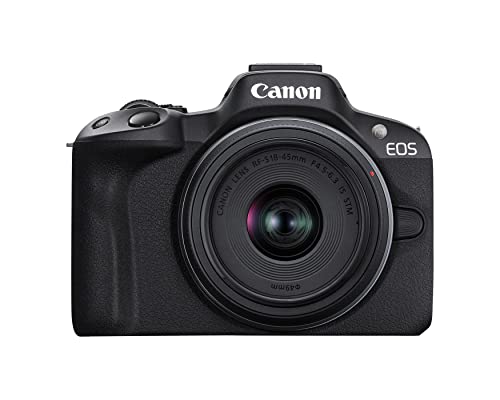
Canon EOS R50 — Foundation-course favourite
Foundation tutors quietly love this camera, because it teaches in layers. A new student begins in the guided modes, where the camera explains itself in plain language on the screen, and graduates — often within one term — to the full manual controls waiting underneath, without changing bodies or relearning a layout mid-course. Programmes run on continuity, and a body that grows with the student across the beginner-to-intermediate arc saves everyone a disruptive mid-degree upgrade.
Canon’s lens situation suits student economics honestly. The RF mount’s own range grows yearly, and the enormous second-hand market in adapted EF glass — the lenses schools, parents and local shops already hold — means a student can borrow, rent or buy modestly without waiting for a mount to mature. When a classmate’s spare lens fits your body, the programme’s informal lending library doubles in size overnight.
- Format: APS-C mirrorless, RF mount
- Learning path: guided modes over full manual
- Lens world: RF plus vast adapted EF pool
- Files: friendly JPEGs, standard RAW
- Role: the body foundation courses standardise on
Strengths
- Coaching interface over genuine manual depth
- Huge borrowable lens pool through adaptation
- Print-friendly colour tutors already trust
Trade-offs
- Light build asks for bag discipline
- Dial count limits advanced shooters eventually
- Weather sealing is not its story
Files behave exactly as coursework demands. Colours arrive pleasing without heroic editing, JPEGs submit cleanly to portals, and RAW files open in every tutor’s software without conversion rituals. Print labs near campuses know Canon output intimately, which matters at 11 p.m. before a critique when the only question that counts is whether the exhibition print looks like the screen promised.
Its limits are the friendly kind. The body is light rather than armoured, so a programme involving field trips in rough weather will teach bag discipline the hard way, and enthusiasts will eventually want more direct dials than its layout offers. For the foundation and intermediate years — the years most students actually spend — those are the right compromises, priced in the right order.
Alumni panels confirm the pattern yearly: graduates return to show final projects shot substantially on the same body they bought in foundation week, the camera having climbed the curriculum alongside its owner. Nobody at those panels describes the body as a compromise they endured; they describe it as the instrument their eye was trained on, which is a different and warmer category of object entirely.
Shared-household diplomacy also favours it. A student whose sibling or parent already shoots Canon inherits informal tech support, a charger in every house and the occasional borrowed lens at holidays — logistics that sound trivial until a deadline week makes them decisive. Ecosystems are social networks wearing mount threads.
Insurance through the student union’s scheme is straightforward for mainstream bodies like this, another unglamorous advantage. When a camera is both a coursework tool and a significant asset, insurability is a curriculum feature, and exotic bodies that insurers squint at cost their owners sleep as well as money.
A final practical note from equipment stores: this is the body they hold the most loan stock of in several departments, which means a student whose own is in repair borrows an identical twin and loses no teaching time. Continuity of tools during breakdowns is a programme feature nobody advertises and everybody uses.
Graduation exhibitions shot on it have a house style examiners recognise — clean colour, honest exposure, no processing heroics — and recognisability, in assessment, is another word for trust.
Equipment-store ledgers show this body among the most-borrowed in its class, a statistic tutors quote when parents ask what ‘everyone uses’ — popularity inside a department is not fashion but accumulated institutional trust, earned one uneventful semester at a time.
Best for: foundation and intermediate students wanting one body for the whole learning arc. Not suited for: advanced students demanding a full dial deck from day one

Nikon Z50 II — Serious student’s teacher
Some students arrive at a programme already bitten — they shoot daily, read manuals voluntarily, and want a body that stops coaching and starts collaborating. The Z50 II is that body in Nikon’s line: a control layout with real intent, subject-aware autofocus that teaches by succeeding, and an image pipeline whose files reward careful exposure in critique sessions where tutors zoom to pixel level and ask uncomfortable questions.
Nikon’s lens heritage is a programme asset hiding in plain sight. Decades of F-mount glass circulate through schools, camera clubs and family cupboards, and adapted classics give students focal lengths to experiment with at borrowing cost rather than buying cost. A student can spend a term learning what a fast prime does to portraiture before spending anything at all — the correct order of education, enforced by economics.
- Format: APS-C mirrorless, Z mount
- Controls: direct, enthusiast-grade layout
- Lens world: Z glass plus adapted F classics
- Autofocus: subject-aware, instructive
- Role: the keen student’s multi-year body
Strengths
- Control depth rewards daily practice
- Borrowed classic lenses multiply experiments
- Files withstand pixel-level critique scrutiny
Trade-offs
- Less hand-holding for true beginners
- Stills-first priorities over video flair
- Adapted lenses need an adapter’s budget
Handling encourages the daily-practice habit programmes secretly grade. The grip fills a student’s hand properly through a long location shoot, the viewfinder invites deliberate composition rather than screen-waving, and the whole body feels like an instrument to be mastered rather than a gadget to be operated. Instruments get practised; gadgets get upgraded. Tutors can tell which object a student owns by week six.
Video capability, while present and respectable, is not why a photography student buys it — and that focus is a virtue here. The stills pipeline, the control depth and the lens library serve the curriculum’s core: considered single images, printed and defended in a room full of peers. Students chasing hybrid fame should look at the video-led bodies elsewhere; students chasing photographs have found their teacher.
Shutter counts tell its programme story in the used market: examples surface with honest five-figure counts, scarred grips and perfect sensors — the archaeology of a body that was practised on rather than displayed. Students buying second-hand should learn to read those signs as credentials, because a camera that survived one degree can certainly survive a second.
Mentor photographers in camera clubs single it out for a subtler virtue: it does not flatter sloppy exposure. Files reveal under- and over-exposure honestly in the histogram and the print, giving feedback a student can act on. Cameras that rescue everything teach nothing; this one’s honesty is a teaching method.
Night classes in winter — the working student’s real timetable — suit its viewfinder and grip with gloves better than touchscreen-led rivals. Programmes run in February as well as May, and equipment chosen for the brochure season gets found out by the academic one.
Club darkrooms — the analogue revival rooms attached to many programmes — adopt its scans-and-prints workflow happily, because its files print without the colour arguments digital natives expect. Old rooms and new bodies agree more often than the culture wars predict.
Its grip and dials suit the long-exposure night exercises tutors set in November, when gloves and tripods sort the prepared from the hopeful. Small ergonomic mercies compound across a winter term.
Its second-hand listings near campuses sell within days at term start, which students read correctly as a liquidity guarantee: money parked in this body is money recoverable when plans change, and student plans change constantly.
Best for: committed students who practise daily and plan to keep the body for years. Not suited for: absolute beginners wanting the camera to explain itself constantly

Canon EOS R10 — Enthusiast step within Canon
Programmes sort students faster than students expect: by the second term, the sports society, the wildlife elective and the event team have claimed their members, and those students need burst speed and tracking their foundation body never promised. The R10 is Canon’s answer inside the same mount — a faster, more serious APS-C body that accepts everything the student already owns, borrows or rents, so specialising costs a body rather than a system.
That mount continuity is the argument in one sentence. A student who began on a borrowed Canon, learned its menus and built a small lens shelf steps into the R10 with zero relearning and zero orphaned glass. Programmes love such ladders because students climb them voluntarily, spreading purchases across years instead of demanding one frightening flagship outlay before the advanced modules begin.
- Format: APS-C mirrorless, RF mount
- Speed: fast bursts for action electives
- Tracking: holds runners, riders, wildlife
- Continuity: same mount as starter Canons
- Role: specialisation body for year two onward
Strengths
- Specialising costs a body, not a system
- Action assignments stop being lotteries
- Viewfinder teaches real anticipation skills
Trade-offs
- Assumes fluency the newest students lack
- Coaching layer thinner than starter tier
- Enthusiasts will still eye the flagship rungs
Performance serves the action-leaning curriculum honestly: rapid bursts for the sports assignment, tracking that holds a runner or a dog through the frame, and a viewfinder experience that teaches anticipation — the photographer’s real skill, which no automation supplies. Wildlife electives at campus wetlands and drama productions in the school hall both fall inside its competence without drama.
It asks more of its owner than the friendliest starter does. Menus assume growing fluency, the body rewards students who read and practise, and beginners who need coaching should begin one rung down and climb. As the second body of a Canon student’s programme life — or the first for a confident entrant — it occupies its rung with unusual precision.
Drama departments borrow these constantly for production photography, because its tracking holds an actor crossing a lit stage while its files please a poster designer afterward. Cross-department borrowing is the sincerest form of institutional approval, and it builds the student’s portfolio in genres their own syllabus never schedules.
Alumni now shooting professionally describe the ladder effect precisely: the R10 years taught them anticipation and burst discipline on forgiving files, so the eventual flagship felt like a promotion rather than a rescue. Skills transferred completely; only the ceiling moved. That is what a rung is for.
Sports societies funding their own coverage choose it for the refreshingly boring reason that its batteries and cards match the department’s existing stock. Logistics, again — the invisible curriculum that decides whether student media actually happens on rainy Saturdays.
Conservation programmes photographing artefacts borrow it for its honest colour and close-focus lens options, then return it with the ultimate institutional compliment: a request to buy one of their own. Borrowed-then-bought is the equipment store’s favourite story.
Action tutors set its burst mode against a stopwatch in week one — write speeds, buffer depth, card discipline — turning specifications into laboratory method. Students leave that session understanding their tool as scientists rather than consumers.
Anecdotally, it is the camera most often seen in graduation photographs themselves — held by the students, pointed at each other — which is perhaps the purest review a programme body can earn.
Best for: students specialising in sports, wildlife or events inside the Canon system. Not suited for: first-week beginners who still need guided explanations

OM SYSTEM OM-5 Mark II — Travelling programme companion
Geography, environmental science crossovers, documentary programmes with fieldwork terms — a large slice of photography education happens outdoors, in weather, far from the studio. The OM-5 Mark II is built for that slice: a genuinely compact body with weather sealing that shrugs off moorland drizzle, and a Micro Four Thirds lens world where a student’s whole kit — body plus three lenses — fits a small daypack instead of a expedition case.
Size rewires student behaviour in ways tutors notice. A kit that comes on every field trip, every bus ride and every ordinary Tuesday gets used ten times more than a superior kit that stays in a hall of residence, and photography programmes are ultimately graded on images made, not equipment owned. The OM-5’s owners simply have more photographs at critique, because their camera attended their life.
- Format: Micro Four Thirds mirrorless
- Build: weather-sealed, genuinely compact
- Kit weight: body plus lenses in a daypack
- Features: in-camera composite techniques
- Role: fieldwork and travel programme body
Strengths
- Kit small enough to attend every day
- Sealing laughs at fieldwork weather
- Computational modes teach at the scene
Trade-offs
- Smaller sensor cedes darkest-hall ground
- Micro Four Thirds is its own lens world
- Studio portrait specialists may want larger
Computational features serve coursework with surprising directness. In-camera composites that build long exposures and layered night shots without a laptop teach advanced techniques inside the field trip itself, while class-leading stabilisation rescues dusk shoots where tripods were impractical. Techniques that competing systems teach in the editing suite, this body teaches at the scene — pedagogically, the better classroom.
Sensor size is the honest trade: in the darkest halls and the deepest crops, larger formats hold advantages physics will not negotiate. Documentary and travel programmes rarely live at those extremes, while portrait specialists in studio programmes might. Match the body to the syllabus’s weather and the compromise mostly vanishes.
Expedition societies adopt it as the house camera for a reason insurers appreciate: if the worst happens on a glacier, the loss is a line item, not a catastrophe, and the sealing gives the worst decent odds of not happening. Equipment that a society can afford to risk is equipment that actually goes to interesting places.
Botanical and archaeological field schools exploit its composite modes for documentation — layered exposures of sites at dusk, focus-managed records of specimens — teaching techniques their reports genuinely need. A feature marketed to hobbyists turns out to be a scientific instrument in the right syllabus.
Its owners develop a recognisable silhouette: small pack, camera in hand rather than in bag, shooting the walk between locations as seriously as the locations. Tutors call this the fieldwork eye, and they credit the carry-everywhere kit more than any lecture for developing it.
Mountain rescue training weekends, photographed by student volunteers, stress its sealing beyond any syllabus requirement, and it returns muddy and unbothered. Fieldwork credibility is earned in exactly such unglamorous service.
Time-lapse documentation of printmaking and sculpture processes exploits its composites across whole studio days, producing teaching films the art department reuses for years. One body, several faculties.
Field tutors lend it to visiting lecturers without briefing, trusting the layout to explain itself; visiting lecturers, a notoriously critical species, rarely complain.
Best for: documentary, travel and fieldwork students whose programme lives outdoors. Not suited for: studio-bound portrait specialists needing maximum sensor depth

Fujifilm X-T5 — Dial-first purist teacher
If a programme’s philosophy is that photography is learned through the hands, the X-T5 is its scripture. Aperture lives on the lens ring, shutter speed and ISO on dedicated top dials, exposure compensation under the thumb — the entire exposure triangle sits outside the menu system, visible at a glance, changeable by feel. Students do not learn settings on this camera; they learn photography, with the camera as a set of labelled levers.
Tutors exploit that tangibility ruthlessly, and rightly. An exercise like ‘shoot the courtyard at three apertures without looking at the screen’ is trivial to set and grade on dials, awkward on menu-driven bodies. The high-resolution sensor then rewards the lesson in critique, where prints reveal exactly what each aperture did — cause and effect, the rarest teaching material, delivered by hardware design.
- Format: APS-C mirrorless, X mount
- Controls: physical dials for the full triangle
- Sensor: high resolution for print critique
- Colour: film simulations as taste lessons
- Role: purist teacher for committed students
Strengths
- Exposure triangle visible and touchable
- Prints reveal lessons at critique scale
- Film looks teach colour as a decision
Trade-offs
- Commitment-level ecosystem pricing
- Dial purism overwhelms gadget lovers
- Video plays second fiddle to stills
Fujifilm’s film simulations add a second curriculum in taste. Students submit work in restrained colour, in monochrome, in looks modelled on classic stocks, and learn that colour is a decision rather than a default — a lesson most programmes struggle to teach abstractly. The simulations make the discussion concrete at the moment of capture, where taste actually forms.
It is the connoisseur’s choice and priced in commitment accordingly: students buy into a lens ecosystem prized by enthusiasts, with costs and character to match. For the student who knows photography is their subject — not a module but a direction — that commitment is the point. For the uncertain, the friendlier bodies above ask less faith up front.
Exhibition season is its annual vindication. Final shows printed large from its files silence the sensor-size debate in the only court that matters — a gallery wall, viewed at reading distance, by examiners holding mark sheets. Students who trusted the dial discipline graduate with prints that look like intentions fulfilled.
Second-hand demand from the next cohort keeps its value unusually honest, which matters to students selling up after graduation. A body the department keeps recommending is a body the next intake keeps buying, and that circular economy quietly subsidises every cohort’s education.
Calligraphy-adjacent praise comes from book-arts tutors who borrow it for documentation: the simulations’ restrained colour renders paper, ink and cloth truthfully, teaching students that fidelity is also an aesthetic. Not every lesson in a photography programme is about drama.
Portrait tutors use its dials to stage the programme’s favourite ambush: mid-shoot, they call new settings aloud — aperture, shutter, ISO — and students must set them by touch while the model waits. Dial bodies pass the ambush; menu bodies fail it publicly, and the lesson lands forever.
Collectors among the faculty quietly shoot it themselves on weekends, which students notice. What teachers choose when nobody is grading them is the most honest recommendation in any department.
The department’s repair log for it reads like a diary of student life — sand, rain, one memorable encounter with soup — and nearly every entry ends with the same word: returned to service.
Best for: committed students in programmes that teach through manual craft. Not suited for: uncertain beginners or video-first hybrid students

Nikon Z30 — Video-module sidekick
Modern photography programmes smuggle in moving images everywhere: the documentary module wants interviews, the professional-practice module wants a showreel, the final exhibition wants a loop playing beside the prints. The Z30 exists for that smuggled curriculum — a compact Nikon body designed video-first, with a forward-facing screen, clean controls for self-recording and stills competence adequate for the photographic modules surrounding the film work.
Its size serves student logistics honestly. A body this small rides in the same bag as the main camera, ready for the interview that ambushes a location shoot, and its unintimidating presence relaxes documentary subjects who would perform for a larger rig. Programmes teaching observational film-making prize exactly that invisibility; the camera’s modesty is a directing tool.
- Format: APS-C mirrorless, Z mount, video-first
- Screen: forward-facing for self-recording
- Size: second-body small, bag-friendly
- Mount: shares Nikon Z lens library
- Role: moving-image module specialist
Strengths
- Interviews and showreels without intimidation
- Shares lenses with Nikon stills bodies
- Small enough to attend every shoot
Trade-offs
- No viewfinder for stills purists
- Video-first layout compromises stills ergonomics
- A sidekick, not a main teaching body
Within Nikon’s world it shares the mount with the serious stills bodies in this list, so a programme standardising on Nikon can field Z30s for video modules and Z50-class bodies for stills without splitting its lens library. Institutional buyers think in such systems, and students benefit when the borrowed lens fits whichever body the module issued that week.
Still photographers should read its priorities clearly: the absent viewfinder and video-first layout make it a sidekick, not a main stills teacher. As the programme’s moving-image specialist — or the personal second body of a student whose final project mixes film and photographs — it fills a niche the stills-led bodies serve only grudgingly.
Observational documentary tutors set a famous exercise with it: one full day, one subject, no chimping at the screen allowed between frames. The little body’s discretion keeps subjects unselfconscious, and the exercise — borrowed from cinema training — produces the term’s most honest contact sheets year after year.
Live-event modules at student unions use it for the aftermovie while stills bodies cover the gallery, a division of labour that mirrors professional event teams. Students graduate having already worked in role-based crews, which employers notice in showreels before they notice anything else.
Parents buying a first serious camera for a student get advised toward it by tutors for a disarming reason: it is the body least likely to be sold by Christmas. Video-first students keep it because the modules keep coming; stills students forgive it because the mount keeps doors open. Retention is the market’s slow, honest review.
Student press agencies covering protests, matches and graduations field it because an editor can hand it to a new recruit with ten minutes of briefing. Newsroom-proof simplicity is a professional credential, not a beginner’s apology.
Its files slot into the agencies’ archives beside a decade of Nikon material without conversion fuss — institutional memory, again, quietly voting for continuity.
Alumni donating equipment back to the programme disproportionately donate this mount’s lenses, deepening the library the next cohort inherits — generosity follows ecosystems that treated people well.
Best for: students whose programme mixes film modules with photographic coursework. Not suited for: stills-only students needing a viewfinder-led teacher
How Do the Six Programme Cameras Compare Across a Degree?
| Camera | Primary job | Setup effort | Outgrows it when |
|---|---|---|---|
| Canon EOS R50 | Foundation to intermediate years | Borrow the department’s lenses | You crave a full dial deck |
| Nikon Z50 II | Daily practice, serious stills | Read the manual, shoot daily | You need constant beginner coaching |
| Canon EOS R10 | Sports and wildlife electives | Step up within Canon | You leave the Canon ecosystem |
| OM SYSTEM OM-5 Mark II | Fieldwork and travel terms | Pack light, shoot everything | Your syllabus moves into dark studios |
| Fujifilm X-T5 | Manual craft and print critique | Commit to the dial discipline | You decide photography is a module only |
| Nikon Z30 | Film and documentary modules | Add it beside a stills body | Your programme turns stills-only |
The outgrows column deserves a student’s honesty: most photographers keep a programme body for years after graduating, because a camera that taught you remains a camera that suits you. Upgrading is a choice the work should request — a specialisation, a professional demand — not a date on a manufacturer’s calendar.
One pattern hides inside the table’s plain rows: every body here belongs to a system with a past and a future, which is precisely what a multi-year education requires. A student is not buying a gadget for a season but joining a lineage of lenses, tutors and alumni — and lineages, unlike gadgets, compound in value the longer you stay inside them.
How Should a Student Spend a Limited Budget Across a Course?
Body first, but modestly: the bodies here all teach the same triangle, so buy the rung your current year needs and keep reserves for the unglamorous essentials — a sturdy bag, a tripod the wind respects, cards and a backup drive, printing credit for critiques. Programmes are marathons of small costs, and students who spend everything on the body spend the year borrowing tripods and skipping prints, which taxes grades more than any sensor difference.
Lenses second, slowly, and preferably borrowed first. A term shooting with the department’s fast prime teaches whether your photography actually wants one; buying in that order — experience, then expenditure — is the programme’s hidden curriculum in professional judgement. Studios hire photographers who spend like that; the habit is worth more than the glass.
What Habits Separate Students Whose Cameras Teach Them?
Manual mode as a default, not a dare. Students who shoot the term’s exercises manually — however clumsy the first fortnight — develop exposure instincts that automatic shooters are still renting from their cameras at graduation. The dial-rich bodies here reward that discipline visibly, yet even the friendliest starter teaches the same lesson to a student who insists on learning it.
Printing early and often is the second habit. A camera’s files look forgiving on a laptop and honest on paper, and programmes are ultimately judged on paper — in critiques, exhibitions and portfolios. Students who print monthly calibrate their shooting to reality; students who print only for finals meet reality at the worst possible moment, in front of the examiners.
How Should Students Care for a Camera Through Three Academic Years?
Termly rituals keep a student body alive: contacts cleaned, firmware updated during holidays rather than deadline weeks, the sensor checked before exhibition season instead of discovered during it. None of this requires talent — only a calendar — and departments that teach maintenance as coursework graduate photographers whose equipment survives their first professional years, when repair money competes with rent.
Bags deserve the same scheduled honesty. A bag that protected a first-year’s kit on city buses may fail a third-year’s fieldwork in real weather, and upgrading the bag before the body is the programme’s worst-kept secret of sensible spending. Cameras die in transit more often than in use; the statistics live in every equipment store’s repair intake book.
Keep the paperwork, finally: receipts, serial photographs, the insurance schedule updated when lenses join the kit. Students treat administration as the opposite of art until the first loss, after which they treat it as the foundation of art’s continuation. A camera documented is a camera recoverable — financially, at least — and recovery is what lets a student keep shooting through misfortune instead of merely photographing it.
What Role Do Camera Clubs Play Alongside the Formal Programme?
Clubs are where programme skills turn into appetites. The formal syllabus teaches competence in sequence; the club’s photo walks, competitions and borrowed-lens evenings teach desire, which no syllabus can schedule. Students active in clubs shoot several times more frames per term, and frame count — guided by critique — remains the most reliable predictor of who flourishes. A camera that fits the department’s ecosystem fits the club’s too, doubling the informal education available to its owner.
Clubs also operate the friendliest second-hand market in student life, where bodies pass between cohorts with histories attached and prices softened by goodwill. Buying inside that market, from a senior who can show you their portfolio shot on the very camera, is due diligence no retailer can match — the evidence is literally hanging in the department corridor.
What Mistakes Do Photography Students Make When Buying?
Buying the flagship first is the classic financial injury. A new student with a professional body and no lens library, no tripod and no printing budget has purchased anxiety, not education — and the body’s automation quietly does the learning the student paid tuition to do themselves. The rungs exist so that skill and equipment can climb together; skipping rungs mostly skips the skill.
Ignoring the department’s ecosystem comes second. The student who arrives with an incompatible mount spends the course as an optical orphan, watching classmates borrow freely while their own lens shelf stays at one. One question to the equipment store, asked before purchase, prevents three years of that exile.
Third is buying for video fame in a stills degree. Hybrid ambitions are legitimate — the Z30 exists for them — yet a student whose assessed work is printed photographs should let print requirements drive the main purchase. Showreels are modules; the portfolio is the degree. Spend where the examiners look.
Frequently Asked Questions
Should I buy new or second-hand for a programme?
Second-hand bodies from the systems listed here are a student tradition for good reason: previous students sell exactly the models tutors recommend, usually with known histories. Buy through the department’s noticeboard or a reputable dealer with a warranty, check the shutter count conversation with a tutor, and put the savings toward lenses and printing.
Which mount does my programme probably use?
Ask — but expect Canon or Nikon in most general programmes, with Fujifilm strong in art-leaning schools and Micro Four Thirds where fieldwork dominates. The equipment store’s shelves answer the question physically: the dominant loan mount is the department’s language, and fluency in it is worth real money across a degree.
Do I need full-frame for a photography degree?
Almost never during the programme itself. APS-C and Micro Four Thirds bodies here teach every assessed concept, print beautifully at exhibition sizes and leave budget for the lenses and printing that grades actually reward. Full-frame becomes a professional conversation after graduation, funded by the work the degree produces.
Can one camera cover both stills and video modules?
Yes, with honest expectations. Most bodies here shoot respectable video, and the Z30 covers video-led modules as a specialist. A student whose final project is half film should plan a two-body or borrowed-body strategy with their tutor rather than demanding one body excel at two crafts simultaneously.
What should I practise before the first term starts?
The exposure triangle, on your actual body, in manual mode: one subject, every aperture, then every shutter speed, reviewing what changed. A weekend of that drill puts you a month ahead of classmates meeting the concepts cold, and it costs nothing but walks around your own neighbourhood.
How long should a programme camera last me?
Through the degree and into the first professional years, if bought on the right rung. These are systems, not semesters: lenses and habits transfer upward when a body upgrade eventually makes sense. Students still using their programme camera at their first exhibition are not behind — they are the norm.
Final Recommendation
Match the body to the syllabus in front of you. Foundation students belong on the Canon EOS R50’s coaching ladder; keen daily shooters on the Nikon Z50 II; Canon students specialising early on the R10; fieldwork programmes on the little sealed OM-5 Mark II; craft-first courses on Fujifilm’s dial-led X-T5; and film-mixed degrees with the Z30 riding beside a stills body. Each is among the best cameras to use for photography progams because each teaches a real programme’s real lessons.
Before paying for anything, walk into the equipment store and ask two questions: which mount do you lend, and which body do the tutors quietly recommend? Then buy that answer, insure it, and spend the savings on printing. Degrees are made of images defended in rooms — choose the camera that gets you into those rooms with files worth defending.
One last encouragement for the student reading this with a limited budget and an unlimited reading list: the photographers you admire were mostly taught on equipment humbler than anything in this table, and their programmes’ real gift was never the camera — it was the structure of assignments, critiques and deadlines that turned looking into seeing. Buy the body that fits that structure, then let the structure do its work on you.
And when the degree ends, resist the ceremonial upgrade. Work for a season with the body that taught you, letting clients and subjects — not catalogues — file the first equipment requests of your professional life. Photographers who upgrade on evidence build kits that fit their actual practice; photographers who upgrade on ceremony build shelves. Your programme spent years teaching you evidence. Honour it.
How Do Critique Sessions Change What a Camera Should Be?
A critique is a public examination of your files at unflattering scale, and it rewards cameras whose output is honest. Files that hide behind heavy processing collapse under projection; files from the bodies here hold their exposure decisions visibly, which is exactly what a tutor needs to teach from. Students learn to expose for the projector and the print rather than the phone screen — a professional instinct disguised as a hardware consequence.
Critiques also reward consistency across a series. A body whose colour and rendering stay stable across a term’s shooting lets a tutor discuss the work’s ideas rather than its technical weather, and ideas are where grades live. This is a quiet argument for buying one body and keeping it: the department learns your camera’s dialect, and feedback sharpens accordingly, term after term.
How Should Students Build a Portfolio Examiners Actually Enjoy?
Sequence beats selection. Examiners read a portfolio as an argument — control established early, curiosity in the middle, a personal direction by the end — and the camera’s role is to keep technique invisible enough that the argument shows. Bodies that render consistently across a year make sequencing possible, because the work coheres visually instead of reading as five different photographers sharing a folder.
Print the portfolio at final size months before the deadline and live with it on a wall. Weak images announce themselves at scale and at leisure; strong sequences reveal gaps a screen never shows. Students who rehearse the exhibition privately rarely panic publicly, and the rehearsal costs only prints — which is why this guide keeps steering budgets toward paper.
Write the artist statement last, from the prints, in the language the images actually speak. Tutors can detect a statement written from ambition instead of evidence in one paragraph. The camera you choose will have shaped that evidence quietly for years; choose one whose honesty you are willing to sign your name under.
What Does the Equipment Store Know That Reviews Do Not?
Ask the store’s technician which bodies come back broken and which come back merely tired. The answer, accumulated over hundreds of student years, is the most honest durability data in photography education — and the bodies in this guide are the ones stores describe as tired, year after year: worn grips, honest shutters, sensors that outlasted the degree. Reviewers test cameras for weeks; stores bury them, and burial data is definitive.
Stores also know the borrowing graph — which mounts circulate, which lenses never return on time because everyone wants them, which accessories students actually lose. A student who spends twenty minutes drinking that knowledge before buying will make a better decision than one who spends twenty hours reading specifications, because programmes are social systems and the store is their memory.
Finally, stores know the resale truth of each cohort: which bodies the next intake queues for and which gather dust on the trade-in shelf. Buy the body the queue forms for, and your exit economics — should graduation send you travelling light — are quietly secured by other people’s demand.
How Do Students Keep Shooting Through the Difficult Middle Term?
Every programme has a valley: the novelty spent, the mastery not yet arrived, assignments turning technical while inspiration thins. Cameras influence survival more than students expect — a body that feels like an instrument invites the daily walk that carries photographers through the valley, while a body that feels like an exam question gets left in its bag until deadlines force the issue. Choose, at purchase, the object your future tired self will still pick up.
Routines bridge the valley better than motivation does. Same morning walk, same lens, same subject revisited weekly: the constraint sounds dull and functions as a meditation, producing the term’s most quietly impressive series more often than any ambitious expedition. Tutors set such exercises knowing the camera must disappear for them to work; familiar bodies disappear fastest.
The valley ends, reliably, at the first critique where a student’s series is discussed as work rather than as homework. Equipment cannot schedule that morning, yet it can make sure nothing technical stands between the student and it — no orphan mount, no missing lens, no file the projector rejects. That is the deepest sense in which the right programme camera earns its place: it removes itself from the list of things that can go wrong with an education.
Why Do Programmes Teach Printing Before Advanced Shooting?
Because print is where photography’s promises get audited. A screen forgives noise, flatters contrast and crops by scrolling; paper does none of these mercies, and examiners know it. Students who print from the first term calibrate everything — exposure, sharpening, colour discipline — to the medium that will judge them, and their cameras’ files are chosen partly for how gracefully they survive that audit. Every body in this guide prints honestly at exhibition sizes, which is a higher compliment than it sounds.
Printing also slows students down in the productive direction. A print costs money and wall space, so each one represents a decision defended; a term of such decisions builds the editorial judgement that separates photographers from people who own cameras. Departments with strong print cultures produce graduates whose portfolios feel inevitable, and the inevitability begins with hardware whose files were worth printing from the start.
The darkroom revival has added a coda: students scan film, print digitally, and compare the two on the same wall, learning that capture medium matters less than intention. Programme cameras earn their keep in that comparison by being the digital half of an honest conversation — no filters pretending to be film, no processing disguised as vision.
Related Guides
Students can plan further with our guide to first lenses for photography students, read printing coursework for critique and exhibition, or compare cameras for documentary fieldwork before the fieldwork term begins.


