Where to buy
Check the latest price, availability and delivery on Amazon. Orders are placed on Amazon. We may earn a commission from qualifying purchases.
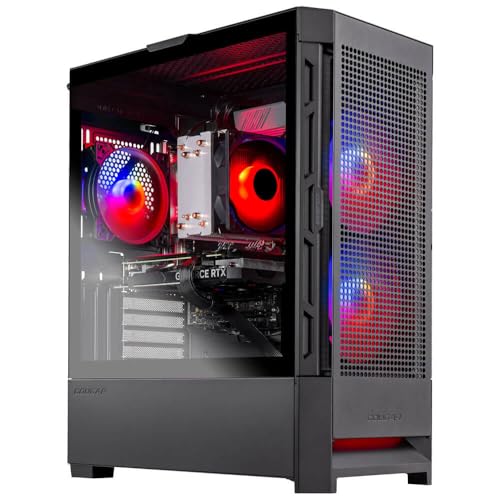
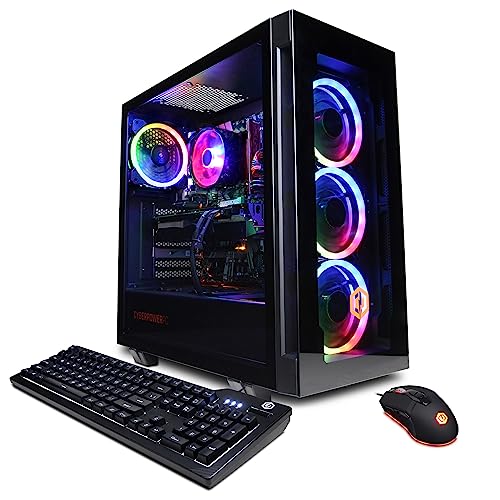
- Best 1440p step-up: CyberPowerPC Gamer Xtreme VR (Core i7-13700F / RTX 4060 Ti 16GB) — Check on Amazon
- iBUYPOWER Slate MESH Gaming PC (Core i7-14700F / RTX 5070) — Check on Amazon
- Skytech Nebula Gaming PC (Core i5-13400F / RTX 4060) — Check on Amazon
- HP OMEN 45L Gaming Desktop (Core i7-13700KF / RTX 4070 Ti) — Check on Amazon
- iBUYPOWER SlateMesh Gaming PC (Ryzen 5 7600 / RTX 4060) — Check on Amazon
- ASUS ROG Strix gaming desktops (family) — prose-only pick: ASUS’s ROG Strix desktops carry the enthusiast brand’s design language — a family to verify SKU by SKU
Read the full guide ↓
Disclosure: As an Amazon Associate, ilcastellomenu.com earns from qualifying purchases. Links to Amazon on this page are affiliate links; they cost you nothing extra. Listing details such as price and availability change often, so check the current Amazon listing before you buy.
Searching for the best computers for gaming means you are really asking which specification deserves your trust, because gaming PCs are the most specification-dense purchase in consumer technology and the easiest to buy badly with confidence. This guide answers with six machines and classes chosen for one lens above all: comparing across brands and shapes, because the plural in your search is the point — the field, not a favorite. Every pick below was selected from a verified listing record or — where no single product could be verified to that standard — is labeled prose-only and described at family or class level, so that nothing in this guide asks you to trust a number nobody checked.
The plural matters. Searching for computers, in the plural, is asking for the field: the integrator value machines, the step-up all-rounders, the big-brand towers and the enthusiast alternatives, laid out so their philosophies can be compared rather than merely their prices. That is how the picks below were assembled — each represents a different maker’s answer to the same question, and the reviews dwell on the philosophy as much as the parts, because at similar specifications the maker is the difference you live with.
Three philosophies dominate the field. The system integrators — Skytech, CyberPowerPC, iBUYPOWER — compete on specification per purchase, with standard parts and support organizations built around gamers. The global brands — HP’s OMEN here, with Lenovo and ASUS kept as researched alternatives — compete on service networks, software ecosystems and design. Neither philosophy is the correct one; they price differently because they are selling slightly different things, and this guide prices the difference in plain language wherever it appears.
Two habits will serve you through every section that follows. First, compare specification tables, not family names: the model code is the product, and this guide prints the codes it verified. Second, let your monitor set your ambition — readers cross-shopping the wider category will find the same ladder in Best Pc Specs For Gaming and Best Computers For Gamers, and it is the same ladder here: buy the rung your display can show, with a foundation that outlives the graphics card.
In this guide
Quick Picks
Short on time, or comparing several options at once? Each row below names a buyer type and the machine that suits it, with a link to the listing where one is verified.
| Buyer type | Pick | Why it stands out | Link |
|---|---|---|---|
| Best 1440p step-up | CyberPowerPC Gamer Xtreme VR (Core i7-13700F / RTX 4060 Ti 16GB) | The 16GB version of the RTX 4060 Ti plus a sixteen-core i7 — the VRAM headroom that keeps 1440p textures comfortable for longer | Check on Amazon |
| Best all-round step-up | iBUYPOWER Slate MESH Gaming PC (Core i7-14700F / RTX 5070) | Twenty-core i7, RTX 5070 and 32GB of memory in one specification — the complete step-up machine with no obvious weak line | Check on Amazon |
| Best Intel value pick | Skytech Nebula Gaming PC (Core i5-13400F / RTX 4060) | A ten-core 13th-generation Core i5 under the same RTX 4060, for buyers who split time between games and everyday work | Check on Amazon |
| Best big-brand tower | HP OMEN 45L Gaming Desktop (Core i7-13700KF / RTX 4070 Ti) | HP’s flagship 45L tower with its separate Cryo Chamber cooling and an RTX 4070 Ti — the enthusiast option from a major manufacturer | Check on Amazon |
| Best compact-platform value | iBUYPOWER SlateMesh Gaming PC (Ryzen 5 7600 / RTX 4060) | The AM5/DDR5 entry point from iBUYPOWER — a modern platform and an RTX 4060, with one honest compromise in storage size | Check on Amazon |
| Best enthusiast-brand alternative | ASUS ROG Strix gaming desktops (family) | ASUS’s ROG Strix desktops carry the enthusiast brand’s design language — a family to verify SKU by SKU | Prose-only — see review |
How These Picks Were Chosen
The filter for this guide was the lens itself — comparing across brands and shapes, because the plural in your search is the point — the field, not a favorite — applied after a harder filter that every pick had to pass first: verifiability. A product earns a link in this guide only when its Amazon listing record could be corroborated with its exact model code and headline specifications during research. Products and families that could not be verified to that standard were not quietly dropped; where they genuinely belong in the conversation, they appear as prose-only entries, described at family or class level with no invented specifications, and flagged in the article’s source notes.
We did not use these machines ourselves. We read Amazon listing records and corroborating retailer and manufacturer specification data, cross-checked the numbers that decide ownership — processor, graphics card and its memory, system memory, storage, and power supply wattage where the listing states it — and favored specifications that are balanced over specifications that are spectacular in one line and trimmed in three others. Where a listing did not state a power supply wattage, this guide says so in the review rather than guessing, because a guessed PSU is exactly the kind of number a future upgrade gets planned around.
Prebuilt gaming PCs also carry a category warning that shaped the selection: configurations drift. System integrators refresh model years, swap graphics card brands within the same GPU specification — several listings here say ‘brand may vary’ in their own text — and retire SKUs without ceremony. Every review below therefore names the exact model code verified, and the standing advice of this guide is to confirm the live listing’s specification table matches it before ordering. The machine you want is a specification, not a name, and the two minutes spent confirming it are the cheapest insurance in the category. Readers comparing across budgets should also see Best Office Pc To Upgrade For Gaming for the neighboring rung of the same ladder.
The 6 Best Computers for Gaming
CyberPowerPC Gamer Xtreme VR (Core i7-13700F / RTX 4060 Ti 16GB)
Who it suits: 1440p players and VR-curious buyers who want more graphics memory than the 8GB cards offer, without jumping to the next price class.
The specification that defines this Gamer Xtreme is in the graphics card’s memory: the RTX 4060 Ti here carries 16GB, double the 8GB of the standard cards in this guide. At 1080p that difference is mostly invisible; at 1440p, with texture quality set where modern games want it, graphics memory is the first wall the 8GB cards meet, and this machine meets it later. The Core i7-13700F brings sixteen cores to the partnership, which makes the machine a confident base for streaming, recording and editing alongside play, and the platform memory is DDR5.
Storage is a 1TB NVMe SSD, Wi-Fi is ready out of the box, and Windows 11 Home is installed. CyberPowerPC sells this configuration under the Gamer Xtreme VR name — treat the VR label the way this guide treats every headset claim: the graphics card class is genuinely suitable for mainstream VR headsets, but the headset, its software and your room setup decide the experience as much as the PC does. One honest gap: the verified listing record for this SKU did not state a power supply wattage, so check the live listing’s specification table for the PSU before you plan any upgrade around it — that is a two-minute check that protects a later purchase.
For this search — comparing across brands and shapes, because the plural in your search is the point — the field, not a favorite — that specification reads as a deliberate answer rather than an accident of pricing.
- RTX 4060 Ti with 16GB of graphics memory is the most future-resistant card in its class here
- Sixteen-core Core i7-13700F handles gaming plus streaming and creation work
- DDR5 platform and 1TB NVMe storage are the modern defaults, both present
Honest limitation: The verified listing did not publish a PSU wattage for this SKU, so upgrade planning starts with checking the live specification table.
Choose it if 1440p is your target resolution and you want graphics memory headroom more than a newer processor platform. Skip it if you mostly play esports at 1080p — the cheaper RTX 4060 machines deliver that experience for less.
iBUYPOWER Slate MESH Gaming PC (Core i7-14700F / RTX 5070)
Who it suits: 1440p gamers who want to buy once: enough processor, memory and graphics headroom that no part of the spec needs an early apology.
Read this Slate MESH specification top to bottom and the pattern is completeness. The Core i7-14700F brings twenty cores, the graphics card is a GeForce RTX 5070 12GB, the memory is 32GB of DDR5 5200 — the capacity this guide recommends for a machine meant to last — and storage is a 1TB NVMe SSD. Machines one class down each make you choose which line to compromise; this one declines to. For gaming, that means high-refresh 1440p as home territory, with the processor and memory headroom to stream, record and keep a busy desktop running behind the game.
iBUYPOWER includes a keyboard and mouse in the box, Windows 11 Home is installed, and the Slate MESH case is the company’s current mesh-front design in its 2024 Slate 8 Mesh form. Two planning notes apply. The LGA1700 platform is mature: DDR5 gives it modern memory, but the processor socket’s own upgrade path is shorter than AM5’s, so read this as a buy-it-complete machine rather than a platform to grow. And the verified listing record did not state a PSU wattage — check the live listing before assuming what a future graphics card can draw. Neither note dents the day-one proposition, which is the most rounded specification in this guide’s step-up class.
Judged through this article’s lens (comparing across brands and shapes, because the plural in your search is the point — the field, not a favorite), the machine’s balance is the point: nothing here is specified to impress a stranger, and everything is specified to serve the owner.
- No weak line: 20-core i7, RTX 5070 12GB, 32GB DDR5 and 1TB SSD in one box
- 32GB of memory is the capacity that keeps a step-up machine feeling new longest
- Keyboard and mouse included — a genuinely complete starter box
Honest limitation: The LGA1700 socket is at the end of its road, and the PSU wattage was not in the verified listing record.
Choose it if you want the step-up class’s complete specification and plan to keep the machine whole for years. Skip it if you want a socket with a long processor upgrade future — the AM5 picks trade a little day-one completeness for that runway.
Skytech Nebula Gaming PC (Core i5-13400F / RTX 4060)
Who it suits: Players who also run a busy desktop — browser, chat, coursework or office apps alongside the game — and want more processor cores in reserve.
This Nebula keeps the RTX 4060 8GB graphics card and swaps the foundation to Intel: a Core i5-13400F with ten cores, supported by 16GB of DDR4 3200 memory and a 1TB NVMe SSD. In purely GPU-limited games the two Nebula variants in this guide sit close together, because the graphics card is shared; where the Intel chip earns its place is everywhere around the game — streaming software, voice chat, a dozen browser tabs, file work — where its extra cores keep the whole desktop feeling unhurried while a match loads.
The case is the black Nebula edition with a mesh front and four RGB fans moving air through it, Wi-Fi is the 802.11AC standard, and the power supply is a 600W Gold unit — slightly smaller than its AMD sibling’s, still sensibly sized for this graphics card class and a modest upgrade beyond it. Windows 11 Home is preinstalled and Skytech assembles the machine in the USA with a one-year parts and labor warranty and lifetime technical support, which matters more than most spec lines when it is your first gaming PC and something small goes wrong at month three.
Where this pick meets this guide’s angle — comparing across brands and shapes, because the plural in your search is the point — the field, not a favorite — is in the details a headline hides, and those details are why it holds its place against newer-looking rivals.
- Ten-core Core i5-13400F is the stronger multitasking processor in this price class
- Same RTX 4060 8GB graphics card as the value leaders, with DLSS support
- Mesh-front case with four RGB fans prioritizes airflow over a sealed glass front
Honest limitation: DDR4 memory on an LGA1700 board is the value configuration of that platform; the DDR5 versions of this processor’s platform age better.
Choose it if you want Intel’s core count for a mixed gaming-and-everything desktop at a value price. Skip it if you are choosing a five-year upgrade platform first and a graphics card second — look at the DDR5 picks in this guide.
HP OMEN 45L Gaming Desktop (Core i7-13700KF / RTX 4070 Ti)
Who it suits: Buyers who want a large, serviceable flagship tower from a global brand, with the support network that comes with the badge.
The OMEN 45L is the big-brand answer to the system-integrator machines, and its signature idea is thermal: the Cryo Chamber design places the liquid-cooling radiator in a separate chamber above the main compartment, pulling cooler air than a radiator buried inside a hot case can. Around that idea sits a full-size tower with a Core i7-13700KF — an unlocked, overclockable processor — and a GeForce RTX 4070 Ti, a graphics card class that makes 1440p high-refresh its home and 4K with upscaling a comfortable reach. Sixteen gigabytes of memory and a 1TB SSD complete the verified specification of this GT22-1072 configuration.
What the badge buys beyond parts is infrastructure: HP’s warranty and service reach, the OMEN Gaming Hub software for lighting, fan and performance control, and a large owner community whose knowledge base answers most questions before support has to. The honest notes are the usual flagship ones. Sixteen gigabytes of memory is the line a long-term owner will upgrade first in a machine of this class, and OMEN’s larger towers reward owners who check the live listing for the exact configuration — the 45L name covers many builds across model years, and this ASIN is one specific 2023 configuration. Confirm the specification table matches this description before ordering, because with flagship towers the family name is not the specification.
Through the lens of comparing across brands and shapes, because the plural in your search is the point — the field, not a favorite, this is the configuration whose compromises all fall on the side of the owner rather than the seller.
- RTX 4070 Ti class graphics with an unlocked K-series processor for tinkerers
- Cryo Chamber cooling layout is a real thermal idea, not a styling badge
- HP’s service network and OMEN software ecosystem behind the machine
Honest limitation: 16GB of memory is the first upgrade a machine of this class will want, and the 45L family spans many configurations — verify this ASIN’s table.
Choose it if you want flagship-tower cooling and big-brand support with 1440p/4K-upscaled performance. Skip it if you want 32GB of memory fitted from day one — several step-up picks here include it as standard.
iBUYPOWER SlateMesh Gaming PC (Ryzen 5 7600 / RTX 4060)
Who it suits: First-time buyers who want the current AMD platform at an entry price and are comfortable adding storage later.
The SlateMeshA5N4601 is iBUYPOWER’s argument that the modern platform should start at the entry tier: a Ryzen 5 7600 on AM5, 16GB of DDR5 5200 memory and an RTX 4060 8GB graphics card. The Ryzen 5 7600 is a strong six-core gaming processor — comfortably ahead of the older AM4 chip in the value Nebula — and because the socket is current, a processor upgrade years from now is a drop-in decision rather than a rebuild. For 1080p gaming today, the pairing is balanced exactly where it should be, with the graphics card doing the heavy work.
The compromise is printed in plain sight: storage is a 500GB NVMe SSD, half the size most picks in this guide carry. A modern game library notices that within months — two or three large titles plus Windows and applications is a realistic fill — so treat a second drive as a planned, inexpensive second step rather than a surprise. iBUYPOWER positions this machine for gaming, editing and everyday upgrades alike, Windows 11 Home is installed, and the SlateMesh case follows the mesh-front airflow school. The verified listing record did not state a PSU wattage for this SKU; check the live listing before planning a graphics upgrade around it.
For this search — comparing across brands and shapes, because the plural in your search is the point — the field, not a favorite — that specification reads as a deliberate answer rather than an accident of pricing.
- Ryzen 5 7600 on AM5 is the strongest entry-tier processor platform here
- DDR5 memory from day one — no platform compromise to reach the price
- iBUYPOWER’s standard-parts approach keeps the inevitable storage upgrade easy
Honest limitation: 500GB of storage is the smallest in this guide and will need a second drive sooner rather than later.
Choose it if you want the current AMD platform at the entry price and accept storage as your first upgrade. Skip it if you download everything and delete nothing — start with a 1TB machine and skip the drive juggling.
ASUS ROG Strix gaming desktops (family)
Who it suits: ASUS loyalists and buyers who value the ROG design and software ecosystem and will verify the exact configuration.
The ROG Strix desktop family is ASUS applying its enthusiast motherboard-and-laptop brand to prebuilt towers, across sizes and tiers that refresh with each hardware generation. The family’s appeal is real — distinctive case design, the ROG software ecosystem, and a maker whose component knowledge is not in question. This guide nevertheless keeps it prose-only, for the same reason as the other family entries: no single current Strix desktop configuration’s Amazon listing record was verified to the standard the linked picks meet, and ROG badges have covered everything from esports-value builds to flagship hardware.
The shopping method is the standing one. Choose the exact Strix configuration, read its processor, graphics card, memory and storage from the listing’s specification table, and place that line beside the verified picks in this guide at the same moment. Pay particular attention to graphics card memory and system memory capacity, the two lines where family-line desktops most often trim quietly. A Strix configuration that wins that comparison honestly is a good purchase; the badge alone is not evidence either way, and this guide will not pretend otherwise.
Judged through this article’s lens (comparing across brands and shapes, because the plural in your search is the point — the field, not a favorite), the machine’s balance is the point: nothing here is specified to impress a stranger, and everything is specified to serve the owner.
- Enthusiast-brand design and software ecosystem from a top component maker
- Configurations span value to flagship, so a fitting tier usually exists
- Strong owner community and documentation for the line
Honest limitation: Prose-only in this guide: no single configuration verified to the linking standard, and the badge spans too wide a range to imply a specification.
Choose it if you are invested in the ASUS/ROG ecosystem and will verify the exact configuration’s table before buying. Skip it if you want the guide to have done the SKU verification for you — the linked picks are that work, done.
Prose-only pick — no verified listing link for this family or class; see the review and the source notes for how to verify a specific unit or configuration before buying.
Comparison Table
| Product | Platform | Key specifications | Link |
|---|---|---|---|
| CyberPowerPC Gamer Xtreme VR (Core i7-13700F / RTX 4060 Ti 16GB) | DDR5 (LGA1700) | Core i7-13700F · RTX 4060 Ti 16GB · 16GB DDR5 · 1TB NVMe SSD · Windows 11 Home · PSU: check live listing | Check on Amazon |
| iBUYPOWER Slate MESH Gaming PC (Core i7-14700F / RTX 5070) | DDR5 (LGA1700) | Core i7-14700F · RTX 5070 12GB · 32GB DDR5 5200 · 1TB NVMe SSD · Windows 11 Home · PSU: check live listing | Check on Amazon |
| Skytech Nebula Gaming PC (Core i5-13400F / RTX 4060) | DDR4 (LGA1700) | Core i5-13400F · RTX 4060 8GB · 16GB DDR4 3200 · 1TB NVMe SSD · 600W Gold · Windows 11 Home | Check on Amazon |
| HP OMEN 45L Gaming Desktop (Core i7-13700KF / RTX 4070 Ti) | DDR5-class OMEN 45L (see live listing) | Core i7-13700KF · RTX 4070 Ti · 16GB RAM · 1TB SSD · Windows 11 Home · OMEN 45L Cryo Chamber tower | Check on Amazon |
| iBUYPOWER SlateMesh Gaming PC (Ryzen 5 7600 / RTX 4060) | DDR5 (AM5) | Ryzen 5 7600 · RTX 4060 8GB · 16GB DDR5 5200 · 500GB NVMe SSD · Windows 11 Home · PSU: check live listing | Check on Amazon |
| ASUS ROG Strix gaming desktops (family) | ROG Strix family | Family line — specifications vary by exact configuration; verify the individual SKU | Prose-only |
Read the table the way this guide wrote it: across, for balance, not down, for a winner. A row whose lines agree with each other — graphics class, processor, memory, storage, power — is a machine that will feel coherent for years. Readers whose shortlist spans categories can cross-check the same machines’ roles in Best Gaming Pc For Beginners.
Integrators vs Global Brands: What the Difference Buys
An integrator’s machine is a parts list with a warranty: standard cases, boards and power supplies, chosen visibly, upgradable ordinarily, supported by people who build gaming PCs all day. A global brand’s machine is an appliance with a pedigree: designed as a whole, cooled by ideas like OMEN’s separate radiator chamber, supported by a network that exists in most cities, and occasionally carrying proprietary elements that make upgrades a research project. The specification tables often tie. The ownership experiences do not.
The practical rule this guide applies: if two machines tie on specification, the integrator usually wins on upgrade freedom and the brand usually wins on support reach — so the tiebreaker is your own temperament. Confident upgraders buy integrators; buyers who want a service counter buy brands. Both are served in the picks below, and the prose-only family entries exist so the brands we could not verify to linking standard are still on your research list, honestly labeled as homework rather than dressed up as recommendations.
Warranties, Support and the First Bad Week
Some week in a PC’s first year, something small will go wrong: a driver, a fan curve, a stick of memory that wants reseating. The difference between an anecdote and a grievance is the support behind the machine. The big integrators in this guide assemble in the USA or operate substantial support organizations, publish one-year parts-and-labor warranties, and — in Skytech’s case — advertise lifetime technical support. Big brands add physical service networks. None of that appears in a benchmark, and all of it appears in your life.
Protect the asset the boring way: keep the box until the return window closes, register the warranty, update drivers from the graphics maker’s own releases, and make a restore point before big changes. A gaming PC is among the most complex objects in a home; the buyers who treat its first month as a shakedown cruise, rather than assuming perfection, are the ones still happy with it in year three.
Cooling, Noise and the Third Hour
Every gaming PC is fast for ten minutes. The specification that decides the third hour is thermal: how much air the case moves, where the processor’s heat goes, and whether the graphics card is breathing fresh intake or its own exhaust. Mesh-front cases with multiple fans are the value tier’s correct answer, and the flagship OMEN 45L’s separate radiator chamber is the expensive tier’s. When you compare two similar specifications, choose the one whose cooling story you can describe in a sentence — if you cannot describe it, the case is a photograph, not a design.
Noise is cooling’s shadow. A machine that holds its temperatures with large, slow fans is quieter than one screaming with small ones, and on a desk in a shared room that difference is a daily quality-of-life specification. Liquid cooling helps the processor specifically; it does nothing for a graphics card starved by a sealed front panel. Read the case before the lighting: intake, exhaust, radiator placement, in that order.
Storage: The Specification Everyone Underbuys
Modern game installs are measured in tens of gigabytes each, and a library plus Windows, applications and captures consumes a terabyte with no malice at all. That is why this guide treats 1TB as the default, flags the 500GB configuration’s compromise in plain language, and counts a second SSD among the first-year plans for creator-gamers. Drive speed matters less than capacity once you are on NVMe at all — Gen4 is the current sweet spot — but capacity regret arrives on a schedule you can predict from your library’s size today.
The practical habits are simple. Keep the operating system and your two or three current games on the fastest drive, let the back catalogue live on the second, and never let a system drive sit nearly full — SSDs slow as they fill, and the machine will feel older than it is. Storage is the cheapest, easiest upgrade in any standard tower, which is exactly why underbuying it is a plan rather than a mistake — as long as it was, in fact, a plan.
Networking: The Invisible Frame Rate
A gaming PC’s network is part of its performance, and the hierarchy is boring and absolute: a wired Ethernet cable to the router beats everything; a modern Wi-Fi connection in the same room is a good second; Wi-Fi through two walls to a distant router is where mysterious lag lives. Every pick in this guide includes Wi-Fi, which is the right default, but the player with a competitive streak and a router within cable reach should run the cable and never think about it again.
Where Wi-Fi must carry the load, placement beats specifications: line of sight where possible, the router elevated, and the PC’s antennas actually attached and upright — a detail so small it is embarrassing how many ‘network problems’ it solves. Judge a listing’s networking line for presence, not poetry, and spend the saved attention on the graphics card.
How to Choose
The checklist below distills the whole guide. Work it in order — the early items eliminate most listings, and the later ones separate the survivors.
- Read the power supply line like a contract. A named wattage with an 80 Plus Gold rating — 600W to 650W in the value and mid tiers — signals a machine built with upgrade headroom. Where a listing does not state the PSU, check the live specification table before you plan a future graphics card around it. The PSU is invisible in every screenshot and decisive in every upgrade.
- Decide your platform horizon: DDR4 value or DDR5 runway. DDR4 machines (AM4, LGA1700-DDR4) are cheaper because their platforms are complete; DDR5 machines (AM5, LGA1700-DDR5) cost a little more and keep processor and memory standards current for years. Neither answer is wrong — buying DDR4 knowingly for value is a plan; buying it accidentally while expecting a long upgrade path is a mistake.
- Interrogate cooling and case airflow, not lighting. Mesh fronts, multiple intake and exhaust fans, and — at the top end — liquid cooling with a sensibly placed radiator are what sustain performance in hour three of a session. Tempered glass shows the machine off; airflow keeps it fast. Read how air enters and leaves the case you are buying.
- Count the ports your desk actually uses. Enough USB ports for headset, controller, wheel or flight stick, plus the display outputs your monitor needs, plus Ethernet if your router is within cable reach — wired networking still beats Wi-Fi for latency-sensitive play. Wi-Fi built in is the right default for everyone else.
- Value the warranty and the standard-parts question. One year of parts and labor with real technical support is the integrator norm; big brands add service networks. Just as important: standard cases, boards and power supplies make year-three upgrades ordinary jobs. Ask both questions before the machine is on your desk, not after.
- Budget the whole setup, not just the tower. A gaming PC’s experience is capped by its monitor: a 1440p-capable machine on an old 1080p 60Hz display shows a fraction of what you bought. Keyboard, mouse, headset and the display belong in the same budget conversation as the PC itself — the setup articles in this category exist because that arithmetic is where satisfaction is decided.
- Check the exact SKU, every time. Prebuilt families reuse names across years and configurations. The model code and the listing’s specification table — processor, graphics card and its memory, system memory, storage — are the product. Two machines with the same family name can be a generation apart; buy the table, not the name.
- Plan the first upgrade on day one. Every machine in this guide has a natural first upgrade: memory to 32GB, a second SSD, or a graphics card onto a strong foundation. Knowing which one yours will be — and confirming the power supply and case support it — turns a purchase into a platform decision instead of a countdown to replacement.
- Start with the graphics card, because games do. The GPU decides your resolution and settings more than any other part. As a working ladder: the RTX 4060 / RX 9060 XT class is the high-refresh 1080p tier with an entry into 1440p; the 16GB RTX 4060 Ti and RTX 5070 class make 1440p home territory; the RTX 4070 Ti class reaches toward 4K with upscaling; the RTX 5090 is the native-4K flagship. Choose the card for the monitor you own, not the one in a reviewer’s studio.
Common Mistakes
- Skipping the warranty and support question on a first PC. The integrator’s support line is a feature you will value precisely once — the week something small goes wrong.
- Believing a VR-ready or 4K-ready badge without asking which headset, which resolution and which settings. Badges compress; specifications do not.
- Buying a compact or proprietary case as an upgrade foundation. Small and design-led machines are best bought complete, at the specification you actually want.
- Letting the RGB decide. Lighting is the last line of a specification, not the first — every pick in this guide earns its place with the lights imaginable off.
- Buying the processor headline and starving the graphics card — games spend the GPU budget first, and an i9 beside a modest card loses to a balanced build every time.
- Ignoring graphics memory. At 1440p and above, 8GB cards meet texture limits years before their processing power runs out; the 16GB options exist for exactly this reason.
- Trusting the family name instead of the SKU. Prebuilt lines span generations under one badge — the specification table is the only truth, and it takes two minutes to read.
- Forgetting the monitor in the budget. A flagship PC on a 1080p 60Hz display is a sports car in a traffic jam; pair the machine to the screen you own or budget for both.
Final Recommendation
- Best 1440p step-up: CyberPowerPC Gamer Xtreme VR (Core i7-13700F / RTX 4060 Ti 16GB).
- Best all-round step-up: iBUYPOWER Slate MESH Gaming PC (Core i7-14700F / RTX 5070).
- Best Intel value pick: Skytech Nebula Gaming PC (Core i5-13400F / RTX 4060).
- Best big-brand tower: HP OMEN 45L Gaming Desktop (Core i7-13700KF / RTX 4070 Ti).
- Best compact-platform value: iBUYPOWER SlateMesh Gaming PC (Ryzen 5 7600 / RTX 4060).
- Best enthusiast-brand alternative: ASUS ROG Strix gaming desktops (family).
Our top two for this search are the CyberPowerPC Gamer Xtreme VR (Core i7-13700F / RTX 4060 Ti 16GB), for the buyer this article was written for, and the iBUYPOWER Slate MESH Gaming PC (Core i7-14700F / RTX 5070), for the household whose priorities run the other way. Between them they cover the two shapes this search usually takes: the specification that maximizes the lens this guide applied — comparing across brands and shapes, because the plural in your search is the point — the field, not a favorite — and the specification that maximizes all-round balance. Readers weighing a neighboring question should also see Best Computer Setup For Gaming and Best Gaming Pc For Under $1500, which apply the same verification standard to their own lenses.
Frequently Asked Questions
Which brand makes the best gaming computers?
No brand wins the category; configurations win comparisons. The integrators in this guide — Skytech, CyberPowerPC and iBUYPOWER — consistently offer the strongest specifications at a given moment, while HP’s OMEN line offers the strongest service infrastructure. The right method is the one used here: compare exact configurations line by line at the moment of purchase, and let brand break ties rather than make decisions.
Do I need a special monitor for a gaming PC?
You need a monitor that lets the PC show what it renders. A 1080p high-refresh display (144Hz class) is the natural partner for 4060-class machines; a 1440p high-refresh display is where 4060 Ti 16GB and 5070-class machines earn their price; a 4K display only makes sense with the flagship tier. Connector-wise, DisplayPort is the default choice for high-refresh PC gaming, and variable-refresh support (G-Sync or FreeSync) matched to your graphics card smooths the whole experience.
How long should a gaming PC last?
A balanced machine bought at the right tier should play well for four to six years: the graphics card ages first, the processor and platform last longer, and one mid-life GPU upgrade typically resets the clock. Machines bought with headroom — 32GB of memory, a strong power supply, a current platform — reach the long end of that range. The shortest-lived purchases are unbalanced ones: a flagship card on a weak platform, or a strong platform with no upgrade provisions.
What does VR-ready actually mean in a listing?
It means the configuration clears the headset makers’ minimum specifications — a useful floor, not a promise about any specific headset or game. The graphics card class is the main variable: 4060 Ti 16GB and above give VR comfortable headroom, while entry cards run mainstream headsets at moderated settings. Your headset model, its refresh rate and the games you choose decide the real requirement, so read VR claims as ‘eligible to start’, then check your headset’s recommended specification.
Should I worry about which brand of graphics card is inside a prebuilt?
Less than folklore suggests. Integrators often note that the card brand may vary, because they fit equivalent cards from several board partners to the same specification — same GPU, same memory, different cooler shroud. What matters is the GPU model and its memory capacity, which the listing fixes. Cooling quality varies slightly between designs, but within one GPU class the performance difference is small compared with the difference between classes.