ilcastellomenu.com is reader-supported. When you buy through links on our site, we may earn an affiliate commission.
Where to Buy Cameras That Can Carry a Production
The best digital cameras for film productions are chosen the way cinematographers choose anything: by the image pipeline they feed. This guide ranks five verified hybrid bodies — cameras that shoot production-grade motion with log profiles, 10-bit colour and the rigging points a set demands — plus one prose-only class, the dedicated cinema camera, discussed honestly as the ceiling these hybrids approach. The axes are a working set’s axes: colour depth that survives a grade, dynamic range that holds a window and a face in the same frame, audio that does not embarrass the picture, overheating behaviour across a twelve-hour day, and the unglamorous economics of media, batteries and backups. The five bodies link to their verified listings; the cinema class is prose, because productions rent it more often than they buy it, and this guide will not pretend otherwise.
A note on scope: “film production” here means the real economy of shorts, features at independent scale, documentaries, branded films and high-end online cinema — the work these hybrid bodies genuinely shoot, credited and broadcast, every week. Nobody is claiming a phone-commercial mirrorless replaces the camera on a studio tentpole; the prose pick exists to mark exactly where that line sits.
Key Takeaways
- Log and 10-bit colour are the entry ticket; everything else is negotiation.
- A production camera is a pipeline: media, power, audio and monitoring included.
- Overheating behaviour across a long day outranks any headline specification.
- Full-frame hybrids now shoot work that screens at festivals without apology.
- Dedicated cinema cameras are rented for a reason — crew, rig and reliability.
- The second body is not a luxury on a production; it is the schedule’s insurance.
In this guide
Quick Picks
| Camera | Badge | Why it earns its place |
|---|---|---|
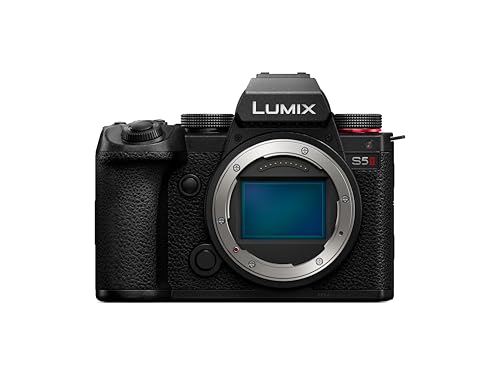
| Panasonic LUMIX S5II | The independent feature favourite | Full-frame log, serious colour science and a fan-cooled body that treats long takes as routine. |
| Canon EOS R6 Mark II | The fast-turnaround production body | Canon colour, dependable autofocus for small crews and oversampled footage that grades kindly. |
| Sony Alpha 7 IV | The documentary all-rounder | S-Log3 depth, a vast lens ecosystem and the low-light manners night shoots are made of. |
| Fujifilm X-T5 | The film-look stylist | Fujifilm’s colour heritage and film simulations give small productions a look money usually rents. |
| Sony ZV-E10 II | The second-unit and B-camera | Compact, affordable and colour-matched to the Sony A-camera — the angle that saves the scene. |
| A dedicated cinema camera | The prose-only production ceiling | Built-in ND, production audio, rigging and reliability — rented by the week, respected by everyone. |
How Did We Judge Hybrid Bodies by a Set’s Standards, Not a Reviewer’s?
The first test was the grade. Footage from each candidate pipeline — log profile, 10-bit recording where offered, the maker’s colour science underneath — was considered as a colourist meets it: skin tones pushed, highlights rolled toward a window, shadows lifted in a night scene. Bodies whose files tore, banded or turned skin waxy under ordinary grading pressure lost marks no sharpness chart could restore, because a production camera’s real output is not its footage but its graded footage.
The second test was endurance, the specification brochures whisper. A production day is twelve hours of intermittent recording in warm rooms, under lights, inside cages and matte boxes that trap heat. Bodies were judged on their thermal design — passive hope versus active cooling — and on the ecosystem around the day: battery capacity and hot-swap manners, media cost per hour of footage, the price of recording a backup simultaneously rather than praying over a single card at wrap.
The third test was crew arithmetic. Small productions run small crews, so a camera’s autofocus, its monitoring tools — waveforms, false colour, zebras, focus peaking — and its audio provisions were scored as labour: every function the camera performs reliably is a crew position the production does not have to fill or a mistake it does not have to reshoot. The rankings below are, in that sense, payroll decisions wearing camera badges.
Why Do Log, 10-Bit Colour and Dynamic Range Decide What a Production Can Attempt?
Log recording is a promise to the grade: the camera captures the scene’s brightness range in a flat, compressed form that looks wrong on the monitor and contains multitudes in the file — the bride’s dress and the church’s gloom, the neon street and the face beneath it. A production shooting log is buying decisions it can make later, in the suite, with the director present, instead of decisions baked into the card by a contrast curve at the moment of the take. For narrative work, where a scene’s look is an argument the film is making, that deferral is not a feature. It is the medium.
Ten-bit colour is log’s necessary partner. Colour depth decides whether gradients — skies, walls, skin in soft light — stay smooth when the grade stretches them, or break into visible bands that announce the budget to every viewer. Eight-bit footage graded gently survives; graded ambitiously, it tears, and ambitious grading is precisely what separates a production’s look from a recording’s. Every linked body in this guide records 10-bit in its serious modes, which is why they are here and many fine stills cameras are not.
Dynamic range completes the trio, and it is best understood as the number of lighting problems the camera forgives. The actor who steps from shade into sun mid-take, the interview against a window the location forbids you to curtain, the car interior crossing a tree-lined street — range holds them all in one exposure, reducing the lighting crew’s battle from conquest to negotiation. Productions feel range as schedule: fewer relights, fewer compromises, more of the day spent on performance. It never appears in the credits. It is in every frame.
Which Are the Best Digital Cameras for Film Productions, From Shorts to Independent Features?
Two full-frame leaders split by temperament, one documentary institution, one stylist with a film heritage, one compact B-camera, and the rented ceiling above them all. Read by the size of your crew and the length of your day.

Panasonic LUMIX S5II — The independent feature favourite
If one hybrid body has become the independent feature’s default in the last seasons, it is this Panasonic, and the reasons are a cinematographer’s reasons. Its V-Log profile carries a wide, gradeable range with colour science that treats skin as the reference everything else serves; its full-frame sensor gathers the low light that location schedules are made of; and — the trait directors of photography mention first — it is actively cooled, built with a fan that treats a long take in a warm room as a specification rather than a gamble. On a twelve-hour day, thermal confidence is creative confidence: the camera will not be the reason a scene stops.
The production toolkit around the image is equally adult. Monitoring aids — waveform, vectorscope, false-colour style exposure tools — live in the body where a small crew needs them; stabilisation steadies the handheld work that independent schedules substitute for rigs; and the L-mount’s lens options, from affordable modern glass to adapted cinema favourites, let a production dress the same body for a short, a feature and a documentary without changing its colour pipeline. It records like a camera that expects to be graded, monitored and trusted, because it was designed by the division that makes the prose pick’s smaller siblings.
- Format: full-frame mirrorless, L-mount
- Colour: V-Log profile with 10-bit recording
- Cooling: active fan for long-take reliability
- Monitoring: waveform and professional exposure tools in-body
- Role: the narrative A-camera for independent productions
Strengths
- Gradeable files with skin-first colour science
- Thermal design that respects a full shooting day
- Professional monitoring without external recorders
Trade-offs
- Autofocus, while much improved, trails the Sony for solo work
- L-mount cinema glass is a growing rather than vast library
- Rolling shutter demands care with fast pans
Productions count money differently, and by that arithmetic one owned S5II body covers the short, the pickup day, the second unit and the director’s own tests, amortising itself across the slate in a way rental lines never do. Independent producers buy it the way theatres buy a good lighting desk — as infrastructure that quietly raises every production it touches — and its second-hand market among filmmakers is the compliment that matters.
Buy it as the A-camera of a serious small production company. It is the closest thing in this guide to a consensus, and the consensus was earned on sets, not in launches.
Best for: independent features, shorts and narrative work on owned budgets. Not suited for: run-and-gun solo filming where autofocus must be infallible

Canon EOS R6 Mark II — The fast-turnaround production body
The R6 Mark II is the production body for schedules that turn around fast: branded films, event cinema, music work, the documentary that must screen while its subject is still news. Canon’s colour is its headline — skin tones that arrive nearly finished, sparing the grade hours that other pipelines spend rescuing faces — and its C-Log profile still holds the range for productions that want the full treatment. Footage from this body has a broadcast readiness that producers feel in the edit: it looks expensive sooner than it should.
Small-crew virtues surround the image. Autofocus that can be trusted with a moving subject while the operator also pulls the frame’s composition; in-body stabilisation that makes a monopod behave like a small rig; oversampled footage whose detail survives the crop-happy world of multi-format delivery — the vertical cutdown, the square teaser, the cinema master, all from one take. Thermal behaviour is the honest caveat, improved over its predecessor and manageable with the ordinary disciplines of shade, airflow and duty cycling, but a production planning continuous hours-long recording should test its exact configuration rather than trust any review, including this one.
- Format: full-frame mirrorless, Canon RF mount
- Colour: Canon Log with famously kind skin rendering
- Stabilisation: in-body, for small-rig handheld work
- Focus: dependable subject tracking for lean crews
- Role: the fast-turnaround A-camera
Strengths
- Faces arrive nearly graded; the suite’s hours go elsewhere
- One take serves master and social cutdowns alike
- Handling speed suits small crews and live schedules
Trade-offs
- Test thermal limits for continuous long-form recording
- RF cinema glass investment is real for full rigs
- Monitoring tools are capable rather than class-leading
Watch what the client monitor shows. On branded and commercial work, the person approving the day is watching a feed, and Canon’s image — warm, confident, finished-looking even before the grade — approves itself in the room in a way flatter pipelines must argue for. Directors who shoot for clients learn to value a camera that sells the take at the moment of the take; this is that camera, and on commercial schedules the value is denominated in reshoots that never happen.
Choose it when the production’s deadline is the story and faces are the product. The Panasonic above grades deeper; this Canon delivers sooner, and both are legitimate definitions of best.
Best for: branded films, music and event cinema, fast-turnaround documentary. Not suited for: continuous multi-hour recording without thermal testing

Sony Alpha 7 IV — The documentary all-rounder
Documentary is production at the mercy of the unrepeatable, and the A7 IV is its most common hybrid instrument for reasons that compound. S-Log3 gives the grade a deep, flexible file; the sensor’s low-light manners keep night streets, available-light interiors and dawn exteriors inside the film rather than in the outtakes; and Sony’s autofocus — face, eye, tenacious through occlusion and gloom — functions as the focus puller a one-person crew cannot hire. Around those pillars stands the deepest lens ecosystem in this guide, including the cinema lines and the adapted glass documentaries accumulate.
The body’s documentary manners are in its details: dual card slots recording backup simultaneously, because the interview that exists once cannot be re-lit; customisable colour pipelines that let a production match its B-cameras; and a stills capability strong enough that the same body shoots the production’s poster and press kit. Its caveats are a documentarian’s familiar ones — rolling shutter on fast pans, thermal limits on the longest continuous takes — managed by the genre’s ordinary crafts of tripod, patience and duty cycle.
- Format: full-frame mirrorless, Sony E mount
- Colour: S-Log3 with 10-bit recording
- Media: dual slots for simultaneous backup recording
- Focus: class-leading face and eye tracking
- Role: the documentary and hybrid A-camera
Strengths
- Low-light files keep unrepeatable moments usable
- Backup recording protects the single-take interview
- Lens ecosystem covers every documentary situation
Trade-offs
- Rolling shutter shows in fast pans and vehicle work
- Long continuous takes need thermal awareness
- Menus reward a dedicated setup afternoon
Ecosystem gravity is hard to overstate: documentary teams, rental houses and second shooters speak Sony fluently across much of the industry, so an A7 IV production can crew up, rent matching bodies and replace a failure mid-shoot with a phone call rather than a crisis. A camera’s professional value includes the world’s familiarity with it, and by that measure this body is the safest pair of hands in the guide — the one whose absence from a kit list requires explanation.
Buy it when the film must chase reality rather than schedule it. Narrative productions with controlled light may prefer the Panasonic; reality prefers this.
Best for: documentary, factual and hybrid stills-and-film productions. Not suited for: effects-heavy work needing global-shutter behaviour

Fujifilm X-T5 — The film-look stylist
The X-T5 enters a production guide through the door marked look. Fujifilm’s decades of motion-picture film manufacture live in this body’s colour science and its film simulations — profiles that give a small production a considered, cinematic palette in-camera, or a characterful starting point for the grade. For the short film, the music video and the fashion piece whose entire budget cannot hire a senior colourist, a camera that arrives with taste is not a shortcut. It is the art department the production could afford.
Beneath the look sits a serious tool: a high-resolution APS-C sensor whose cropped-format lenses keep a rig small and affordable, F-Log profiles for productions grading properly, 10-bit recording, and physical dials that a camera operator’s fingers learn as choreography. Its limits are the format’s honest ones — low-light range a stop behind the full-frame trio, a lens library oriented more to stills, thermal care on the longest takes — and its productions are the ones that choose style and agility over brute sensitivity.
- Format: APS-C mirrorless, Fujifilm X mount
- Colour: film simulations plus F-Log profiles, 10-bit
- Controls: physical dials for shutter, sensitivity and compensation
- Rig size: compact lenses suit small, mobile units
- Role: the look-led production camera
Strengths
- A distinctive palette without a colourist’s invoice
- Small rigs move fast and shoot discreetly
- Stills strength serves posters and production books
Trade-offs
- Low-light ceiling below the full-frame picks
- Cinema lens options are narrower than rivals’
- Long-take thermal discipline required
Morale deserves a mention, because productions run on it more than they admit. A camera that makes the monitor look beautiful at the moment of the take lifts a tired crew at hour ten; actors play to it differently; directors find their next shot faster. The X-T5’s image has that morale in it, and low-budget cinema — where belief is a production resource as real as batteries — spends it gratefully. Never let a specification table tell you morale is not a feature.
Buy it when the film’s look is its argument and the unit is small enough to turn on a pavement. It will make the production feel like a film before the grade begins.
Best for: shorts, music videos, fashion and style-led small productions. Not suited for: night-heavy shoots or large-crew rigging conventions

Sony ZV-E10 II — The second-unit and B-camera
Every production in this guide’s class needs the angle it cannot afford to staff: the wide lock-off behind the bar, the insert camera over the hands, the second interview angle that turns a talking head into a conversation in the edit. The ZV-E10 II is that camera, chosen for productions the way B-cameras are actually chosen — by colour match first. Its Sony pipeline sits beside the A7 IV’s footage in the grade without a wrestling match, its autofocus manages an unattended angle more reliably than any right it has at its size, and its compactness lets it live where a full body cannot: clamped, tucked, mounted inside the car, carried by the second unit across town.
It also serves as the production’s ambassador formats: the behind-the-scenes diary, the director’s social cutdowns, the audition and rehearsal recordings, all from the same colour family as the master footage. Its limits are a B-camera’s accepted ones — a single card slot that forbids it irreplaceable work, thermal and battery manners sized for angles rather than epics, no viewfinder for the operator who needs one — and productions that respect those limits get a second set of eyes for a fraction of an A-body’s price.
- Format: APS-C mirrorless, Sony E mount
- Colour: Sony log pipeline matching the A7 IV
- Size: mounts and clamps where bodies cannot go
- Focus: trustworthy unattended tracking for lock-offs
- Role: the B-camera and second-unit body
Strengths
- Grades into a Sony A-camera’s footage seamlessly
- Small enough for the angles that save scenes
- Doubles as the production’s behind-the-scenes camera
Trade-offs
- Single card slot: never give it the only copy of anything
- Battery and thermal scale suit angles, not features
- No viewfinder for bright exterior operating
Editors will thank you for the insurance. Scenes die in edits for want of a reaction, a cutaway, a second size — and the B-camera rolling unattended in the corner is the cheapest editor’s insurance a production can buy, turning coverage problems into cutting options. Directors who have rescued one scene this way never shoot without the little Sony again, which is why it appears in a guide of A-cameras without apology: it is the pick that makes the other picks’ footage editable.
Buy it as the second body of any Sony-led production, or the first body of a one-person unit that plans to grow. Treat its card discipline with respect and it will save a scene a year.
Best for: B-camera angles, second units and behind-the-scenes. Not suited for: sole-camera responsibility on irreplaceable work
A Dedicated Cinema Camera — The prose-only production ceiling
The final pick has no link because productions overwhelmingly rent it, and because it is a class rather than a product: the dedicated cinema camera, with its built-in neutral-density filters, its production-grade audio connectors, its rigging points on every face, its dual native sensitivities, its global or near-global shutter behaviour and its fan-cooled indifference to the longest day. Everything the hybrids above negotiate, this class assumes. Filters wheel in without matte-box surgery; timecode and genlock make multi-camera days clerical; the files — RAW or production codecs — hand the grade a canvas the hybrids approach on their best behaviour and this class treats as Tuesday.
Why, then, does this guide not simply recommend it? Because its true price is a system and a crew: the rig, the support, the media, the data wrangler, the operator who speaks its language, and a rental line that recurs on every production. For a feature with a camera department, that price is the cost of certainty and it is paid gladly. For the independent slate this guide mostly serves, the same certainty is bought more cheaply by owning two hybrid bodies — one of them the B-camera above — and renting the cinema class for the days whose scale genuinely demands it: the multi-camera set piece, the effects plate day, the night exterior where its sensitivity is the schedule’s saviour.
- Class: dedicated digital cinema cameras, rental-led
- Hallmarks: built-in ND, production audio, timecode, rigging
- Files: RAW and production codecs for maximum grade latitude
- Crewing: assumes a camera department, rewards one
- Role: the ceiling the hybrids are measured against
Strengths
- Certainty: built for the longest, hardest production days
- Image pipeline with nothing negotiated away
- Multi-camera synchronisation as a native habit
Trade-offs
- Rental economics recur on every production
- Demands crew, rigging and data infrastructure
- Ownership suits rental houses better than small producers
Treat it as an education: a young cinematographer should rent this class early and often, not from gear hunger but because one week inside a real camera department’s discipline — the checks, the data rituals, the respect for the negative — teaches production values no hybrid’s manual contains. Then come home to the hybrids above and shoot them like someone who has seen the ceiling: with the same rituals, at a friendlier price. That is the healthiest relationship a small production can have with the top of its craft.
Rent it for the days that need it. Own the hybrids for the slate that feeds you. The line between them is not quality — it is arithmetic.
Best for: features with camera departments, multi-camera and effects days. Not suited for: ownership by small producers or one-person units
How Do the Six Production Solutions Compare Side by Side?
| Solution | Format | Colour pipeline | Production role |
|---|---|---|---|
| Panasonic LUMIX S5II | Full frame | V-Log, 10-bit | Narrative A-camera |
| Canon EOS R6 Mark II | Full frame | C-Log, 10-bit | Fast-turnaround A-camera |
| Sony Alpha 7 IV | Full frame | S-Log3, 10-bit | Documentary A-camera |
| Fujifilm X-T5 | APS-C | F-Log and simulations, 10-bit | Look-led productions |
| Sony ZV-E10 II | APS-C | Sony log pipeline | B-camera and second unit |
| Dedicated cinema camera (prose) | Production formats | RAW and production codecs | Features and set pieces |
The pipeline column is the one to read twice. Bodies come and go across a slate; the colour pipeline is the production company’s visual signature, and it should be chosen like one.
How Do You Rig a Hybrid Body Until It Behaves Like a Cinema Camera?
From the plate outward. The cage comes first — not as armour fetish but as a grammar of mounting points that lets the production attach, in the same places every day, the monitor, the microphone receiver, the follow focus and the handles that turn a stills-shaped object into an operable camera. A top handle and a side handle change handheld work from endurance to choreography; a matte box tames the light and holds the filters the hybrids lack internally; a baseplate that speaks the standard dovetail language lets the camera move between tripod, slider and shoulder in seconds rather than in a tools-out re-rig.
Power and data are rigged, not carried. A production hybrid runs from a larger external battery through a dummy or regulated feed, with the internal battery as backup rather than as the plan; media goes to cards sized for the day’s format with a wrangling rhythm — offload, verify, backup twice, only then format — that the whole crew can recite. Audio arrives through the cage: the production microphone on its shock mount, the wireless receiver for the principals, a scratch track discipline and a slate, because the finest picture pipeline in this guide still cannot rescue unsynced sound discovered in the edit.
Monitoring completes the transformation: an external screen the director and the focus puller can both read, fed cleanly, with the body’s own tools — waveform, false colour, peaking — distributed where each crew member stands. Rigged this way, the hybrids above stop being cameras with accessories and become what a production actually hires: a small, honest cinema system whose limits are known, tested and scheduled around.
How Does Sound Earn Its Half of the Film?
Picture people say sound is half the film and then budget it like a garnish; audiences, who forgive a soft frame instantly and a muddy line never, know better. The production audio chain for the bodies here begins with the rule that the camera’s own microphones are a scratch track and a safety net, never the plan. The plan is a proper microphone at the proper distance — boom above the frame line where a crew allows, wireless lavaliers where it does not, a recorder running independently so the film’s sound exists in two places from the moment of the take.
The hybrids support the plan better than their stills heritage suggests: microphone and headphone sockets on every linked body here, manual levels with meters that must be watched rather than trusted to automatic gain, and — on the Panasonic and the cinema class — the professional connectors and timecode habits that multi-device days are built from. Set levels for the loudest line in rehearsal, monitor on closed headphones rather than the room’s optimism, and slate every take even when the schedule mocks the ritual. The edit will bless the slate; it always does, usually at 2 a.m.
How Does Light, Not the Camera, Set the Ceiling on a Small Production’s Look?
Every cinematographer inherits the same arithmetic: the camera records the light, so the light is the look, and the production that spends its camera savings on a lighting package has understood the craft’s economics better than the one that rents a flagship body to photograph a ceiling bulb. The hybrids in this guide are chosen partly for how little light they demand — full-frame sensors and fast colour pipelines forgive the small package — but forgiveness is not exemption. A single large soft source, a practical lamp motivated in the frame, a negative fill card to give faces their modelling: that modest kit, wielded by someone who has practised with it before the shoot day, raises a production’s images further than any body upgrade on this page.
The discipline is rehearsal with the actual equipment. Light the test scene in prep, grade the test footage, and let the director sign the look before the cast is called; productions that discover their lighting philosophy on the day spend the day discovering, and the schedule pays tuition. Notice how this section reorders the budget the way the ecommerce guide reordered its own: the instrument third, the illumination first, the process binding them. Film and product photography are the same craft at different speeds — both are the management of light onto a surface that must persuade a stranger — and the camera, in both, is the most replaceable element in the room.
What Happens Between the Take and the Edit: The Data Discipline?
Footage is the production’s negative, and the hours between the card leaving the camera and the verified backups existing are the most dangerous in the film’s life. The ritual is not negotiable and not glamorous: cards are never formatted in the field; a named human owns the offload; every card is copied to two destinations and verified by checksum or by playback before its camera record is cleared; the day’s material is reviewed — actually watched, at speed, with the sound up — before the company sleeps, because the corrupted file, the misfocused master and the missing slate are all curable tomorrow only if they are discovered tonight.
The bodies here support the discipline unevenly, and the unevenness belongs in a buying decision. Dual-slot backup recording — the Sony A7 IV’s quiet glory — means the negative exists twice from the moment of creation; single-slot bodies demand a wrangling rhythm tight enough to compensate, which is a crew habit rather than a purchase. Media economics matter at scale: a production should cost its chosen format in hours per card and cards per day before the shoot, because the format that halves the media budget sometimes doubles the data risk, and the producer who learns that trade in prep is doing the job the camera cannot.
How Do You Direct Actors When the Camera Package Is Small?
The hybrid era’s gift to directors is intimacy at scale. A small, quiet camera package does not reorganise a room the way a cinema rig and its department do; performances happen nearer to it, documentary subjects forget it sooner, and children and non-actors — the casts independent film is made of — stay themselves in its presence in a way they rarely manage before a machine that arrives with its own weather system. Directors who have worked both ways describe the trade precisely: the big package buys certainty and costs naturalness, the small package buys naturalness and costs vigilance, and the productions in this guide’s class are usually richer in the second currency than the first.
Practically, the small package asks the director to protect the take differently: fewer resets, because the camera is ready again in seconds; more respect for the first two takes, when non-actors are least self-conscious; and a monitor discipline that keeps the director’s eyes on the performance rather than on the equipment’s anxieties. The camera’s smallness is a directing style before it is a budget line, and the filmmakers who thrive with these bodies are the ones who cast their process, not only their actors, around it.
How Does a Production Choose Lenses When the Bodies Are This Capable?
By character before sharpness, because modern sensors resolve more than modern stories need and the lens is where a film’s visual accent is actually decided. A production typically builds around a small set of fast primes for the narrative core — the faces, the night work, the shallow-focus grammar of intimacy — and one honest zoom for documentary and second-unit days when the light will not wait for a lens change. Vintage glass, adapted onto every mount in this guide, is the independent sector’s open secret: older lenses flare kindly, soften digital precision into something resembling memory, and rent or buy for sums that leave budget for the lighting package the previous sections keep insisting on.
Consistency across the set matters more than any single lens’s brilliance. A film cut from three lens families shows three films arguing; the production that chooses one family’s rendering — or tests its mixed set until the grade can marry them — protects the audience’s immersion, which is the entire asset. This is also where the B-camera discipline returns: matching the little Sony’s lensing to the A-camera’s family keeps the insurance angle from looking like a different production wandered in. Lenses, like pipelines, are signatures; sign once, legibly, and let the film be about its subjects.
What Does a Sensible Camera Budget for a Short Film Actually Look Like?
In proportions rather than products: roughly a third to the camera package itself — body, cage, media, power; a third to light and grip, the departments whose absence the audience actually sees; and a third to sound, data and the contingency that converts accidents into anecdotes. A short that inverts those proportions, arriving with a flagship body and a borrowed torch, will look exactly like its budget’s priorities, and no grade can fully argue otherwise. The bodies in this guide are priced, deliberately, to let a production keep the proportions sane: two hybrids and their rigs for the price of one cinema body’s weekly entourage, with the slate’s other departments funded rather than apologised for.
The budget’s wisest line is the test day, costed like a shoot day and defended like one. Every uncertainty this guide has flagged — thermal behaviour in the real format, media consumption, the grade’s response to the chosen profile, the audio chain’s manners in the real location — is retired by that single day at rehearsal prices. Productions that skip it pay the same tuition on the shoot day, at cast-and-crew rates, in front of an audience. Buy the test day. It is the cheapest insurance in this entire document.
How Do Multi-Camera Days Work When Every Body Is a Hybrid?
Concerts, theatre captures, interviews with two principals and the wedding film’s ceremony all ask the same question: can small bodies behave like a department? The answer is yes, with preparation doing the work that genlock does on the cinema class. Match the pipelines first — same log profile family, same white balance discipline set from a shared reference, shutter angles agreed so motion renders identically across angles — then synchronise the old way: a slate, a clap, an audio spike every camera’s microphone can hear, because the scratch tracks the previous section defended become the edit’s alignment grid. Record times get written down by a human with a notebook, the oldest multi-camera technology and still the most reliable.
Assign the bodies by their honest strengths rather than by hierarchy’s vanity: the full-frame A-camera takes the close, low-light angle; the second full-frame mirrors it from the reverse; the ZV-E10 II takes the wide lock-off and the insert positions nobody can stand beside. In the grade, matched Sony pipelines cut together without ceremony, and the Canon and Panasonic bodies join a multi-camera day happily once their profiles have been tested against the master — tested, again, on the prep day, not discovered in the edit. The hybrid multi-camera day is entirely achievable; it simply refuses to be improvised, which is the cinema class’s whole argument stated from the other side.
Why Does the Grade Begin on the Set, Not in the Suite?
Because the colourist can only spend what the set saved. The production that monitors its log footage through a viewing transform — the picture on the director’s monitor already resembling the intended grade — makes its lighting and exposure decisions against the film it means to release, rather than against a flat grey rumour of it. Every body in this guide supports that monitoring in some form, and the discipline costs nothing but the decision to use it: one agreed look, loaded on every monitor, defended against well-meaning adjustments, and recorded in the camera reports so the suite inherits the intention along with the files.
Exposure for log is its own craft and worth the paragraph: log files are exposed to protect highlights and feed the grade healthy mid-tones, judged by waveform and false colour rather than by the monitor’s mood, with skin placed where the pipeline’s documentation — tested on the prep day — says skin belongs. The cinematographer who exposes log by eye alone is gambling with the one asset the production cannot re-shoot cheaply. Instruments are not a failure of artistry; on a log production they are its handwriting, and the bodies above were partly ranked by how honestly their instruments speak.
How Should a Production Handle Night Exteriors and Low-Light Locations?
Night is where the full-frame trio in this guide earn their sensor size in a single scene. The craft begins with honesty about what “available light” means at production quality: a street’s practicals, a shopfront’s spill, the dashboard’s glow — gathered by fast lenses and clean high sensitivity into footage that still grades, rather than the noisy approximation smaller sensors file under the same conditions. The S5II and A7 IV in particular let a small unit light a night exterior with a fraction of the traditional package, which is a budget revolution disguised as a specification: fewer lamps, fewer cables, smaller generators, locations that permit a five-person unit and would never survive a fifty-person one.
The disciplines are old ones in new light. Expose for the highlights the scene cannot lose — the neon, the window, the flame — and let the modern sensors hold the shadows for the grade; focus becomes a craftsman’s problem again as depth of field thins at wide apertures, which is where the Canon’s and Sony’s tracking earn their catering. And schedule night like the scarce resource it is: the hybrid package’s speed — rigged in minutes, moved in one trip — buys more setups per night than a cinema package manages, and on a short’s three-night schedule, setups are the currency the whole film is denominated in.
What Mistakes Do Small Productions Keep Making With Cameras?
Buying the A-camera and starving everything it connects to: one battery, one card, no cage, no monitor, sound by hope. The camera is the glamorous fifth of a working system, and productions fail at the unglamorous joints — power, data, audio — far more often than at the sensor.
Shooting the showpiece format all day without testing the whole chain — record, offload, grade, export — at production length. Thermal limits, media costs and grading surprises are all discoverable in a test day; on a shooting day they are discoverable only as disasters with an audience of cast and crew.
Finally, owning one body. A production with a single camera has a single point of total failure standing between the schedule and the void, which is why this guide’s cheapest pick may be its most professional advice: the B-camera is not coverage. It is continuity insurance for the entire enterprise.
Final Recommendation
Build the independent slate on the Panasonic LUMIX S5II for narrative work — its grade, its cooling and its monitoring are the small feature’s best friends — or on the Sony Alpha 7 IV where reality leads and the light cannot be scheduled. Choose the Canon EOS R6 Mark II when clients and deadlines rule, the Fujifilm X-T5 when the look is the budget’s best argument, and add the Sony ZV-E10 II as the B-camera the first time a scene matters. Rent the prose-only cinema class for the days that outgrow them all, and spend the difference on sound, light and the second battery — the places productions actually live.
And a closing note for the producer reading this with a spreadsheet open: the camera package is the line item your future self will judge least harshly, whichever row of the table you choose, provided the surrounding lines — sound, light, data, the test day, the B-camera — were funded with the same seriousness. Productions are not embarrassed by their cameras in this decade; they are embarrassed by the corners cut around them. Fund the corners. The centre, on the evidence of every festival programme of the last five years, is fully capable of taking care of itself.
One habit separates the productions that thrive on these bodies from the ones that merely own them: the camera report, kept on paper, on the day, by a named member of the unit. Card numbers, lens changes, the profile and settings of record, the takes the director circled — five minutes of clerical calm per setup that the edit, the grade and any future pickup day will bless repeatedly. Hybrid cameras made the image cheap; the report is what keeps it organised, and organisation, at production scale, is indistinguishable from quality.
It is also worth saying, in a guide full of equipment, that every body on this page has been the second choice of some excellent film and the first choice of some forgettable one. The difference was never in the badge. It was in the prep, the sound, the light, the data ritual and the director’s patience — the unglamorous liturgy this guide has repeated in every section because it is, at production scale, the only specification that never becomes obsolete.
Trust the test day over the launch film, the camera report over memory, and the rushes watched honestly at midnight over every reassurance offered at noon — including, the production is invited to note, the reassurances organised so carefully in this guide.
A film is not made by a camera. It is made by a pipeline that never becomes the story of the day — and every pick above was chosen to disappear into exactly that service.
Related guides
Frequently Asked Questions
Can a hybrid camera really shoot a feature film?
Yes — features shot on bodies in this class screen at festivals and on major platforms regularly, because the image pipeline of log colour, 10-bit depth and modern sensors crossed the sufficiency line years ago. What decides the result is everything around the body: lenses, light, sound, data discipline and the grade. The camera is no longer the excuse, which is the most demanding thing about modern production.
What does 10-bit colour actually change on screen?
Smoothness under grading. Skies, walls and skin stay continuous when the colourist stretches them; 8-bit files band and tear under the same treatment. If your production grades gently and delivers fast, the difference narrows; if the look is built in the grade — most narrative work — 10-bit is the floor, and every linked body here meets it.
How important is autofocus for film work?
It depends on the crew. Traditional narrative sets pull focus manually with a dedicated puller, and autofocus is a monitor’s curiosity. Small crews, documentary and solo units live by it — the Sony and Canon systems here can hold a moving face more reliably than an overstretched operator, and pretending otherwise costs scenes. Choose the body whose focus philosophy matches your crew list, not your ideology.
Do I need an external recorder?
Only if your pipeline demands what the body cannot give internally: certain RAW formats, higher-bitrate codecs, or a monitoring screen the production needs anyway. Test the internal recording first — the bodies here are more capable internally than their reputations suggest — and let a specific deliverable, not a forum, make the recorder’s case.
How do I stop a hybrid overheating mid-scene?
Choose actively cooled bodies for long-take work, as the Panasonic pick does; otherwise practise the ordinary disciplines — shade the body, keep air moving, open screens and doors where the design allows, duty-cycle between takes, and above all test your exact format and ambient conditions before the production day. Overheating discovered in rehearsal is a scheduling note; discovered in take seven, it is a reshoot.
Should a production buy or rent its cameras?
Own the hybrids your slate uses monthly — they amortise, they are always available for tests and pickups, and your crew’s fluency compounds. Rent the cinema class and the exotic glass for the days that need them. The error is the middle path: owning a cinema body that works six days a year while its value evaporates, or renting hybrids so often that the rental ledger could have bought two.
What is the first upgrade after the camera body for a new production company?
Sound, then light, then the second body — in that order, defended against the industry’s best efforts to sell you a lens. A microphone and recorder upgrade is audible in every frame’s companion track; a lighting package is visible in every scene; the B-camera insures the whole enterprise. The lens, however beautiful, improves the productions that were already working. Companies that upgrade in this guide’s order find each purchase raising the ceiling of the next; companies that reverse it own magnificent glass pointed at badly lit, poorly recorded scenes, and the audience’s verdict is waiting for them in the comments they will not enjoy reading.
Related Guides
Continue with rigging a mirrorless camera for video production, read production sound for small film crews, or explore colour grading log footage for beginners when the first rushes come home.


