ilcastellomenu.com is reader-supported. When you buy through links on our site, we may earn an affiliate commission.
Where to Buy
A startup film production company does not shoot like a hobbyist with a bigger tripod. It shoots like a small business under a deadline: a crew of three to six, a client or a festival clock, locations that charge by the day, and footage that must survive a colour grade, a client’s revision notes and a delivery specification written by someone who has never held the camera. The best cameras for startup film production are the ones that behave on a set — that rig up without a fight, record in log profiles a colourist can work with, keep rolling through a long interview without overheating theatrics, feed clean audio or get out of audio’s way, and match each other when two bodies cover the same scene. Image quality opens this conversation; production behaviour finishes it.
That is why this guide judges cameras the way a producer would. A body’s real cost on a shoot is measured in minutes: minutes spent cooling, minutes spent fighting a rigging plate, minutes in post aligning footage that refused to match. Its real value is measured in deliverables: the master file, the vertical cutdown, the behind-the-scenes clip the client posts before the premiere. Startup companies live in the gap between cinema ambition and mirrorless budgets, and the six cameras below are the ones that narrow that gap — full-frame bodies with serious video toolkits, one APS-C B-camera that earns its place on gimbals and second angles, and one pocket gimbal camera that has quietly become the scout, the BTS unit and the emergency wide shot of half the small productions working today.
Every pick is linked on Amazon in the Quick Picks table and beside its detailed review. Read the sections on log workflow and on audio before choosing, because a startup’s first expensive lesson is usually taught there: footage can be rescued in the grade, but a missed line of dialogue, recorded badly because the camera plan treated sound as an afterthought, is gone for the life of the film. Cameras are the visible half of a production company. This guide tries to rank them by the invisible half as well.
Key Takeaways
- The Panasonic LUMIX S5II is the lead camera we would build a small crew around: stabilisation, log tools and set manners at a startup’s price of entry.
- Sony’s Alpha 7 IV is the fast-turnaround client camera — autofocus and colour that shorten the distance between wrap and delivery.
- Canon’s EOS R6 Mark II gives directors pleasing colour straight from the card when the schedule has no colourist in it.
- The Sony ZV-E10 II is the B-camera and gimbal body that lets a two-camera look survive a one-camera budget.
- Fujifilm’s X-T5 sells a look — valuable when the company’s brand is its images rather than its speed.
- DJI’s Osmo Pocket 3 is the scout, BTS and emergency unit no small production should be without.
In this guide
Quick Picks
| Camera | Badge | Why it earns its place |
|---|---|---|
| Panasonic LUMIX S5II | Best lead camera | Set-ready video tools and stabilisation for a small crew. |
| Sony Alpha 7 IV | Best for fast client work | Autofocus and turnaround speed for commercial schedules. |
| Canon EOS R6 Mark II | Best colour off the card | Footage directors approve in the room, grade or no grade. |
| Sony ZV-E10 II | Best B-camera | Second angles and gimbal work that cut with the A-camera. |
| Fujifilm X-T5 | Best signature look | Film-flavoured images for branded shorts and music work. |
| DJI Osmo Pocket 3 | Best pocket unit | Scouting, BTS and impossible little moves, stabilised. |
How Did We Choose Cameras for a Startup Film Company?
We started where a production starts: with the shooting day. The first test was endurance and temperament — can the body record long takes, interviews and event coverage without heat becoming a scheduling factor, and can it do so on batteries a small company can afford to own in quantity? A camera that needs a cooling sermon before every long take costs a startup the one currency it cannot borrow: the location’s patience. Bodies also had to rig gracefully — cages, mounting points, screens that stay visible when the camera is dressed with a matte box, a monitor and a microphone, because a startup’s camera is rarely naked after its first month.
The second test was the file’s life after wrap. Log profiles with real latitude, colour science that a freelance colourist will accept without a surcharge of sighs, and — for companies delivering without a colourist — an in-camera look that survives client scrutiny. We weighed how each body’s footage intercuts with the others a startup is likely to own, since a two-camera interview graded from mismatched colour is a tax paid on every project. Audio pathways counted heavily: clean preamps for the camera that must record sound, proper outputs and timecode-friendly habits for the company growing toward dedicated recorders.
Third came the ecosystem of work: lens shelves with cinema-friendly options and affordable primes, rental availability for the specialist glass a short film needs for one weekend, and resale value, because a startup’s camera fleet is a revolving fund. The six survivors are not cinema cameras and do not pretend to be. They are the bodies on which real first features, real client films and real festival shorts are actually being shot by companies whose names are not yet on the building.
Why Does the Log Profile Matter More Than the Resolution?
Resolution is the specification clients ask about; the log profile is the one colourists bill for. A log recording preserves the scene’s contrast in a flat, grey-looking file that holds highlight detail in a window and shadow detail in a doorway within the same frame — the raw material of a grade. On a startup’s schedule, that latitude is insurance: the exterior shot at noon because the location was only free at noon, the interviewee seated against a bright backdrop because the room allowed nothing else. A camera whose log is honest lets the grade rescue those decisions; a camera recording only a baked, contrasty look forces the production to live with them forever.
The discipline cuts both ways, and this guide will not pretend otherwise. Log footage looks unfinished on the day, which frightens clients watching a monitor they were not warned about; it demands a colour step — at minimum a conversion and a considered look — before anything can be delivered; and exposed carelessly it produces noise exactly where the grade will go looking. Startups handle this the way professionals do: a viewing LUT on the monitor so the room sees an approximation of the finished image, a test grade shot before the production proper, and the honesty to record a baked look instead when the job is a same-day delivery with no colourist in the budget. The cameras below were chosen partly for offering both doors — serious log for the films that merit it, respectable colour for the jobs that cannot wait.
What Are the Best Cameras for Startup Film Production?
A lead camera, two client-work alternatives, a B-camera, a look with a signature, and the pocket unit that saves shoots quietly.

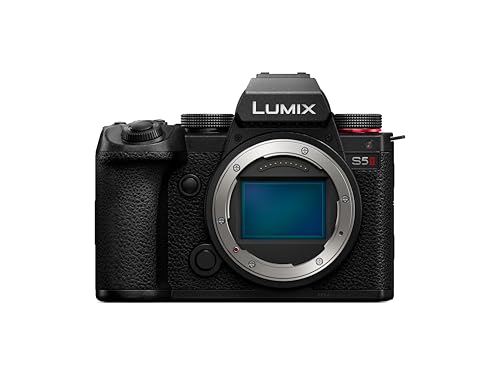
Panasonic LUMIX S5II — Best lead camera
Hand a small crew one camera and ask it to be the production, and this is the body the smart money reaches for. The S5II’s case begins with stabilisation that changes what a three-person crew can attempt: walk-and-talk scenes, gentle pushes into a product, a handheld documentary passage through a market — shots that once required a gimbal, a focus puller and an extra hour become a competent operator’s normal work. For a startup, that is not a feature; that is scenes added to the film and days removed from the schedule. Its video toolkit is built by a company that has courted working filmmakers for years, and it shows in the details a spec sheet underplays: monitoring tools that help expose log properly, recording options that respect a colourist, and menus organised by people who expect the camera to be used at speed, in anger, by professionals.
The L-mount alliance is the production manager’s half of the argument. Lenses from several makers share the mount, so the company’s shelf can grow by opportunity — a fast prime here, a workhorse zoom there — without a system divorce, and the alliance’s glass intercuts and resells well. Autofocus, historically the system’s question mark, arrived in this generation as a genuine working tool for moving subjects, which removes the last asterisk from the recommendation for client work. Long-form recording manners suit interviews and events, and the body rigs into a cage ecosystem that rental houses and accessory makers actually stock.
The debits are about the company’s growth rather than the camera’s competence. The bench of freelance operators and second shooters who arrive fluent in Panasonic is smaller than Sony’s or Canon’s, so a startup scaling toward bigger crews hires slightly harder. The stills side, while perfectly serviceable, is not why anyone buys it, and a company whose revenue tilts toward photography should read the neighbouring picks first. As the lead camera of a film-first startup — the body the schedule is built around — the S5II is this guide’s first call.
- Format: full-frame mirrorless, L mount
- Stabilisation: in-body, gimbal-lightening class
- Profiles: log recording for graded workflows
- Monitoring: exposure tools for working at speed
- Lenses: multi-maker alliance shelf
Strengths
- Handheld work that used to need a rig
- Video tools designed by filmmakers’ feedback
- Lens buying freedom across the alliance
Trade-offs
- Smaller pool of fluent freelance operators
- Stills are a sideline, not the story
- Cage and accessory bench younger than Sony’s
Its representative shoot is a two-day brand film for a furniture maker: day one in the workshop, the camera walking beside the craftsman as shavings fall, no gimbal, no second takes for stability’s sake; day two in a client’s sunlit showroom, where the log files hold the windows and the walnut in the same frame for the grade. The director’s report is the one producers frame: nothing about the camera was discussed on set. On a small production, silence about the lead camera is the highest available praise.
Documentary units inside startups — the company’s other revenue arm — report the same temperament at length: interviews that run past the hour without the body becoming the schedule’s problem, and stabilisation that lets a solo operator follow a subject through a working building while the sound recordist keeps the boom honest. A lead camera earns the title on the long days, not the showreel days.
Best for: film-first startups, small crews and documentary arms. Not suited for: stills-led companies or crews hired mainly from other systems’ freelancers

Sony Alpha 7 IV — Best for fast client work
Commercial work runs on a clock the art film never meets: the client who needs the cut this week, the event that becomes content by Friday, the product launch whose embargo lifts whether your grade is finished or not. Sony built this body for that calendar. Its autofocus — particularly on faces and eyes in motion — removes a whole category of retake from interview and presenter work, and its colour, recorded in Sony’s modern profiles, grades quickly into the clean, bright look commercial clients approve on the first viewing. Speed in this market is not haste; it is the difference between a company that delivers early and one that apologises beautifully.
The ecosystem argument is a staffing argument. E-mount glass is the deepest shelf available to a startup, spanning dedicated cinema-leaning lenses, fast photographic primes that double beautifully for film, and third-party options at prices a young company’s cash flow can absorb month by month. Freelance camera operators overwhelmingly know the system, rental houses stock it deeply, and a second body — stills-capable, client-presentable — can be added without a second lens shelf. When a startup’s A-camera must also be its B-camera’s teacher and its rental house’s dialect, Sony’s ubiquity is a production asset no specification table captures.
The qualifications belong on the call sheet too. Its rolling shutter asks the operator for considered pans rather than whips, a discipline any film crew should own but beginners will learn from one ruined take. Menus reward a setup day: build the custom modes for your interview, your product table and your run-and-gun work before the client is in the room. And its log, while entirely workable, is where the company’s colourist will spend the extra quarter-hour the Panasonic’s tools save. None of this dents the central fact: for client film work at startup scale, this body shortens more schedules than any other in the guide.
- Format: full-frame mirrorless, E mount
- Autofocus: face and eye tracking for presenters
- Profiles: log plus fast-turnaround colour
- Lenses: deepest shelf, all price points
- Staffing: freelancers commonly fluent
Strengths
- Interviews and presenters with fewer retakes
- Footage clients approve on first viewing
- An ecosystem that staffs and rents easily
Trade-offs
- Pans need discipline against rolling shutter
- Menus demand a proper setup day
- Grade takes a touch longer than Panasonic’s
Picture the turnaround it was built for: a tech client’s product film shot on Tuesday, the founder’s interview carried by autofocus while the tiny crew runs sound and questions, the edit assembled Wednesday from footage whose colour needed shepherding rather than rescue, a client link sent Thursday to approvals written in the language of relief. Startups are not killed by bad cameras; they are killed by slow deliveries and the referrals that never follow. This body is insurance against the second death.
Its stills competence keeps one more door open — the production stills, the poster frame, the client’s social photographs from the same shoot day — sold as an add-on package from the same bag. Companies that bill for everything a shoot produces find the hybrid body quietly raises the value of every day on set.
Best for: commercial client work, interviews and fast-turnaround delivery. Not suited for: whip-pan action styles or crews who grade everything from scratch by preference

Canon EOS R6 Mark II — Best colour off the card
Some productions have a colourist. Many startup productions have a Tuesday. The R6 Mark II is the camera for the second kind: its colour, recorded in Canon’s well-liked profiles, comes off the card looking like a decision a director would defend — skin that reads as skin under mixed location light, highlights that roll off gently, footage a client can watch in the room without the log disclaimer speech. For wedding films, event coverage, school and theatre work and the whole economy of films that are delivered rather than premiered, that immediacy is not a shortcut. It is the product.
Canon Log is there when the production does merit a grade, and the body’s video manners — dependable autofocus that tracks a speaker crossing a stage, ergonomics a single operator can run for a long ceremony, a lens shelf whose fast primes flatter faces — suit the delivered-film economy completely. The RF system’s professional depth matters to a growing company in a specific way: the same body that shoots the client’s film on Saturday photographs the client’s products on Tuesday at a level no client questions, and the company’s stills arm needs no second system to be credible.
The scrutiny points are practical. Long maximum takes and heat behaviour on the longest, hottest event days deserve a test in your own conditions before a contract depends on them — the professional answer is a second body and a rotation, which this guide recommends for every pick here. Canon’s fastest RF glass prices firmly for a young shelf, and the third-party lens field for the mount has historically been narrower than Sony’s, so budget the shelf deliberately. For the company whose films are watched by clients rather than juries, these are footnotes to a central virtue: footage that looks finished while the day is still young.
- Format: full-frame mirrorless, RF mount
- Colour: director-pleasing straight from the card
- Profiles: Canon Log when a grade is funded
- Work: wedding films, events, theatre, delivered work
- Dual life: stills arm without a second system
Strengths
- Clients approve the monitor without a speech
- Faces flattered under mixed location light
- One system for the film and the photographs
Trade-offs
- Test heat manners for your longest days
- Fast RF glass is a deliberate budget
- Third-party lens field narrower than Sony’s
Its signature production is the wedding film delivered while the couple is still on honeymoon: two bodies, a small crew, footage whose colour needed an afternoon’s tidy rather than a colourist’s week. The couple’s review mentions the film’s warmth — which is Canon’s colour, the operator’s light and the schedule’s mercy in equal parts — and the referrals that follow are the startup’s real revenue. Cameras that make clients happy in the room compound like interest.
School and community theatre companies form a second loyal market: performances under appalling mixed light, delivered to parents and archives on a deadline, where pleasing colour and dependable autofocus outrank every cinema specification. A startup that owns this body owns that market’s trust quickly, and trust, renewed each term, is a retainer by another name.
Best for: wedding and event film companies, delivered-work economies. Not suited for: productions grading every frame from log as a matter of house style

Sony ZV-E10 II — Best B-camera
Every startup discovers the two-camera look before it can afford the two-camera budget: the interview that cuts between a wide and a close, the performance covered from the front and the aisle, the product film whose cutaway saves the edit. The ZV-E10 II exists to close that gap. As a B-camera it shares the A-camera’s lens mount when the A-camera is Sony, borrows the shelf’s smaller lenses gracefully, and produces footage that intercuts with its full-frame siblings after the mildest colour attention. On a gimbal it becomes the moving camera — light enough for a solo operator to fly all day, quick enough in autofocus to hold a walking presenter — and in a locked-off corner it is the safety wide that has rescued more small productions than any piece of equipment this guide can name.
Its creator-bred design serves production in disguise. The controls favour speed over ceremony, the profiles include the log and colour options the grade requires, and the whole package is priced so that a startup can own the B-camera outright instead of renting the second angle by the day — a line item that quietly eats young companies. Battery and media commonality with parts of the Sony ecosystem simplify the kit room, and its size means the B-camera actually travels, in the same case, on the same shoulder, rather than being left behind on the days it would have saved.
Nobody should mistake it for the lead. The APS-C sensor concedes the darkest venues to the full-frame bodies, in-body stabilisation is absent where its siblings offer it, and a client watching it beside a flagship will read it — unfairly but reliably — as the junior camera. Deploy it as what it is: the second angle, the gimbal body, the safety net, and the camera a startup’s newest operator learns the set on. In those roles it is not the cheap option. It is the correct one, and productions that understand roles outshoot productions that understand only prices.
- Format: APS-C mirrorless, E mount
- Role: B-camera, gimbal body, safety wide
- Profiles: log and colour to match the A-camera
- Carry: travels in the A-camera’s case
- Crew: the training camera for new operators
Strengths
- Two-camera coverage on a one-camera budget
- Gimbal days without operator fatigue
- Shares the Sony shelf and habits
Trade-offs
- Darkest venues belong to full-frame
- No in-body stabilisation for handheld leads
- Reads as junior beside flagship bodies
Its finest hour is typical and unglamorous: a founder interview in a borrowed office, the A-camera on the close-up, the ZV-E10 II locked wide — when the founder, mid-answer, stands and walks to the window for the sentence the whole film will be quoted by. The close-up loses him; the safety wide holds the moment, and the edit keeps the sentence. Ask any small production what their B-camera has saved and the answer is never a specification. It is a scene.
Treat it, finally, as the company’s film school. New operators graduate from the B-camera’s forgiving roles to the A-camera with set craft learned at real stakes and survivable cost — which makes this modest body a human-resources decision as much as an equipment one, and startups run on both.
Best for: second angles, gimbal work and safety coverage in a Sony fleet. Not suited for: lead-camera duties in dark venues or as a company’s only body

Fujifilm X-T5 — Best signature look
A startup with no look is a vendor; a startup with a look is a studio people seek out. That second kind of company is exactly what the X-T5 was built to serve. Fujifilm’s film simulations — renderings descended from the company’s photographic film heritage — give footage a character that survives the client’s phone screen and the festival’s projector alike, and its high-resolution sensor feeds the reframing and cropping that modern delivery, with its vertical and square cutdowns, demands of every master. Music videos, fashion shorts, craft and food brands, wedding films with a nostalgic register: the markets where a distinctive image is the pitch itself are this camera’s home ground.
Working filmmakers add the practical footnotes with respect. The X-mount’s prime lenses are compact and optically serious, keeping a small crew’s kit elegant; the body’s dials make exposure a visible, tactile craft that directors and clients read as intent; and the video specifications in this generation are genuinely production-grade, with the profiles and monitoring a considered grade requires. A company shooting considered work — few setups, deliberate light, images composed rather than captured — will find the camera an ally that slows nothing down and signs everything.
The boundaries are the pace of the work. Fast, chaotic coverage — the run-and-gun event, the documentary ambush — tests its autofocus against Sony’s and Canon’s specialist systems, and the fastest commercial turnaround leaves little room for the care this camera rewards. The rental shelf in smaller cities runs thinner, so the one-weekend exotic lens strategy needs a plan B. None of this troubles the studio whose diary is booked for its images. In a market of interchangeable competence, the X-T5 is the deliberate purchase of a difference — and difference, priced into a brand early, is the asset a startup can least afford to rent.
- Sensor: high-resolution APS-C, X mount
- Looks: film simulations with a house character
- Delivery: resolution for multi-format cutdowns
- Controls: tactile dials, deliberate craft
- Markets: music, fashion, food, craft brands
Strengths
- Footage recognisable as yours in a feed
- Reframing headroom for vertical deliveries
- A kit that looks like an instrument, not a gadget
Trade-offs
- Chaotic coverage tests its focusing
- Thinner rental shelf in smaller cities
- Rewards care more than speed
Its emblematic commission is the independent fashion label’s seasonal film: three looks, one location, a crew of four, and images whose gentle, filmic register the label’s founder describes to other founders as “our films” — possessive, loyal, repeat-booked. The camera did not merely record that brand; it became part of the brand’s visual signature, which is the deepest moat a startup in a crowded city can dig with one purchase.
Wedding filmmakers working the nostalgic register report the same loyalty economics: couples book the look from a single shared clip, and the company’s enquiry form starts asking about dates rather than prices. A camera that changes the sales conversation is doing work far beyond its sensor, and producers should value it accordingly.
Best for: look-led studios in music, fashion, food and craft markets. Not suited for: chaotic run-and-gun coverage or rental-dependent lens plans in small cities

DJI Osmo Pocket 3 — Best pocket unit
Every experienced small crew owns a story about the shot that saved the edit, and a surprising number of those stories star a camera the size of a chocolate bar. The Osmo Pocket 3 is a gimbal and a camera fused into one pocketable instrument: stabilisation that used to require a rig and an operator’s full attention now rides in a jacket, ready for the walking scout of a location, the behind-the-scenes film the client will actually post, the insert of hands at work shot from an angle no rigged body could occupy, and the emergency establishing shot when the light is dying and the A-camera is committed elsewhere. Its footage, from a sensor generous for its class, cuts into a production’s timeline with far less apology than its size suggests.
Production managers love it for the line items it deletes. Location scouts return with moving footage a director can judge, rather than phone stills and optimism; the BTS package — increasingly a contracted deliverable, not a favour — is shot by whoever has a free hand, at a quality the client’s channels accept; and a one-person recce can pre-visualise the gimbal moves of the real shoot day, saving the expensive hours for execution. Its wireless microphone ecosystem pairing makes it a credible emergency interview unit as well: not the plan, never the plan, but a plan’s insurance that fits in the producer’s own pocket.
State its station plainly, because crews that misunderstand it waste shoots. It is not an A-camera: the fixed lens, the small sensor’s limits in true darkness, and the absence of interchangeable anything mark it as a specialist. Its proper home is the pocket, the scout bag and the second unit’s hand. Judged there, it may be the highest-value purchase in this entire guide — the only camera on the list whose absence is felt on shoots it was never meant to lead.
- Format: pocket gimbal camera
- Stabilisation: mechanical, always ready
- Roles: scouting, BTS, inserts, emergency wides
- Audio: pairs with wireless microphone systems
- Carry: a jacket pocket, literally
Strengths
- Moving shots with zero rigging time
- BTS deliverables from any free hand
- Scouts a director can actually judge
Trade-offs
- Fixed lens, one perspective
- True darkness exceeds its sensor
- Never the A-camera, by design
Its defining save is a common one: a restaurant film whose kitchen sequence was scheduled for the A-camera’s gimbal — until the gimbal’s operator was called to the dining room’s failing light, and the Pocket, riding in the second assistant’s apron, took the kitchen walk-through in one unbroken, buttery pass between the pans. The client never knew the plan had changed. The edit simply had the shot. Productions are remembered for their saves more than their plans, and this little instrument manufactures saves.
Real-estate and venue arms of startups have adopted it as the walkthrough scout that sells the full production: a two-minute stabilised tour, shot on the recce, shows the client exactly the film they are buying. Several producers in this guide’s research now refuse to quote a venue film without it — the scout footage closes the sale before the A-camera leaves its case.
Best for: scouts, BTS packages, inserts and emergency coverage on every small production. Not suited for: lead-camera work, dark venues or interchangeable-lens cinematography
How Do the Six Production Cameras Compare on a Shooting Day?
| Camera | Format | Production strength | Best assignment |
|---|---|---|---|
| Panasonic LUMIX S5II | Full-frame | Stabilisation and video tools | Lead camera, small crews |
| Sony Alpha 7 IV | Full-frame | Autofocus and turnaround | Commercial client films |
| Canon EOS R6 Mark II | Full-frame | Colour off the card | Wedding and event films |
| Sony ZV-E10 II | APS-C | Second-angle economy | B-camera and gimbal |
| Fujifilm X-T5 | APS-C | Signature rendering | Music, fashion, brand shorts |
| DJI Osmo Pocket 3 | Pocket gimbal | Instant stabilised coverage | Scouts, BTS, inserts |
Read the fleet as a crew list rather than a ranking: a lead, a fast alternative, a colour specialist, a second angle, a stylist and a runner. A startup rarely buys all six; it buys the two its diary demands and rents or borrows toward the rest. The mistake is not owning the wrong row — it is owning one row six times and calling the duplication a fleet.
How Should a Startup Think About Audio When Choosing a Camera?
As the half of the film the audience forgives least. Viewers tolerate a soft shot; they abandon a film whose dialogue crackles, echoes or swims. The camera’s role in sound is therefore a first-order buying question, and it splits by company size. The smallest productions record into the camera — which demands clean preamps, a proper microphone input, headphone monitoring that someone actually wears, and levels watched as religiously as focus. Growing companies move sound to a dedicated recorder and a recordist, at which point the camera’s duty changes: it must jam or accept timecode gracefully, record a scratch track for synchronisation, and stay out of the sound department’s way. Judge each pick above against the stage your company is actually at, and buy the stage you will reach within the camera’s working life, not the stage of the company you envy.
Whatever the stage, two habits are non-negotiable and free. Record room tone at every location — a minute of the space saying nothing — because edits breathe through it and its absence is unfixable. And never let the camera’s automatic gain make a creative decision: dialogue recorded with pumping levels announces amateur sound more loudly than any microphone’s badge. The cameras in this guide all permit manual audio discipline; the productions that fail at sound fail at the wearing of headphones, which no purchase in this article can correct.
What Mistakes Do Startup Film Companies Make With Cameras?
The founding mistake is buying the cinema fantasy instead of the production reality: a body chosen for a showreel’s sake that rigs badly, eats batteries, overheats through interviews and demands a crew the diary cannot pay. The second is the unmatching fleet — A and B cameras from different colour families, bought by opportunity, taxing every grade with reconciliation work. Third is starving the unglamorous budget lines: the tripod that cannot hold the rig’s weight smoothly, the media cards bought by price rather than sustained speed, the batteries counted for the demo day rather than the December exterior. Productions rarely fail at the sensor; they fail at the support around it.
Two further errors are managerial. Neglecting the test day — every new body should shoot a full rehearsal production, with the company’s own crew, lights and post pipeline, before a client funds its education — and neglecting the paperwork of delivery: codecs, resolutions and aspect ratios agreed with the client before the shoot, not discovered in the edit. A startup’s reputation is built in its first five deliveries. The cameras above are all capable of making those deliveries boring in their reliability, which is exactly what a young company’s reputation needs its equipment to be.
How Do You Rig a Mirrorless Camera for a Real Set?
From the shot list outward. The cage comes first, not as armour but as grammar: it gives the matte box, the monitor, the microphone receiver, the follow focus and the handles fixed places to live, so the camera builds the same way every morning and any operator can pick it up mid-production. Power follows — a rig that runs the body, monitor and accessories from one managed source ends the battery-swap interruptions that fragment a shooting day — and cable discipline finishes the job: every cable routed, strain-relieved and checked, because the take ruined by a tugged connector is always, by set law, the best one.
Resist the Christmas tree. Each accessory must argue for its weight in the day’s actual shots; a rig built for the photograph of the rig impresses the internet and exhausts the operator by lunch. The startup’s ideal build is boring in the best sense: quick to assemble at the location, quick to strip for a gimbal move or a locked-off corner, and identical enough day to day that a fault announces itself by novelty. The bodies in this guide were favoured partly for the maturity of exactly this ecosystem around them — cages, plates and power solutions that exist, are stocked, and have been debugged by other small companies’ shooting days.
How Should a Startup Choose Between Renting and Owning?
Own the diary, rent the occasions. The camera that shoots every week — the lead body, the B-camera, the working lenses — should be owned, because rental friction and cumulative fees punish frequency. The specialist that a production needs twice a year — the exotic lens, the high-speed body, the third camera for the annual conference — should be rented, because ownership punishes rarity. Between those poles sits the honest grey zone where most startups actually live, and the deciding question is scheduling: if a piece of kit’s absence would ever force you to decline work you could otherwise win, its ownership case is stronger than its rental arithmetic suggests.
Renting has a second, under-sung virtue for a young company: it is research. A weekend’s hire of the system you are considering — crewed by your own people, graded through your own pipeline — teaches more than a month of reviews, and several of the bodies in this guide have won their places in real fleets exactly that way. Build the relationship with the rental house before the emergency, test on the company’s own work, and let the diary’s evidence, rather than the launch event’s excitement, sign the purchase order.
How Do You Shoot a Two-Camera Interview on a Startup Budget?
The interview is the startup’s bread: founders, experts, brides’ fathers, chief executives — the talking head pays for the short films. Shooting it with two cameras transforms the edit, because every cut can hide a removed hesitation, and the close camera catches the expression the wide one merely reports. The budget version is a choreography of the picks above: the lead body on the close-up with the company’s best lens, the B-camera wide and slightly off-axis so the two angles differ in kind rather than merely in size, both recording the same profile and a white balance set once, by hand, from the same grey card. Sound goes to the best pathway the company owns — ideally a dedicated recorder with the cameras fed a scratch track — and a clap or a hand-clap substitute at the head of each take keeps the sync honest.
The mistakes are procedural and therefore preventable. Mismatched profiles bake a colour argument into every cut; autofocus left hunting on the wide camera draws the eye in a shot meant to be invisible; and the classic — the B-camera’s card or battery expiring mid-answer because nobody owned it — is solved by assigning the second camera a named crew member, even when the crew is two people and one of them is also asking the questions. Light both angles from the same intention, check the close camera’s eyeline against the wide’s geometry, and let the interviewee forget the machinery: the two-camera interview succeeds when the edit is rich and the room felt like a conversation.
What Does a Shooting Day Demand From Batteries, Cards and Backups?
More than the demo day suggests, by a factor every producer learns once. Count power for the longest plausible version of the day — the interview that runs long, the exterior that waits for cloud, the director who finds one more setup in the last light — and then add the margin that keeps a battery change from ever becoming a negotiation with a performing subject. Media follows the same arithmetic in the other direction: recordable minutes should exceed planned minutes generously, because the take you cannot afford is the one the card refuses. Cards are bought by sustained write performance matched to your recording modes, formatted in camera at the day’s start, and never — under any schedule pressure — reused before their contents exist elsewhere.
The backup habit is the production’s signature discipline. Footage is copied at wrap, on location, to two destinations before the kit is struck; the cards travel separately from the copies; and the company’s smallest member knows the routine as well as its founder, because the night it matters will be the night the founder is driving. None of this is cinematography, and all of it is what separates a production company from a group of people who own cameras. Clients are buying, in the end, the certainty that the day’s work exists tomorrow — the cameras in this guide merely make the pictures that certainty protects.
Frequently Asked Questions
Does a startup film company need a dedicated cinema camera?
Not at first, and often not for years. The mirrorless bodies in this guide shoot the client films, shorts and documentaries that fund a young company. A cinema body earns its place when productions regularly demand its specific workflow — and by then the diary will tell you, in bookings, exactly when.
How important is 4K for client delivery?
Clients ask for it, platforms accept it, and the reframing headroom for vertical and square cutdowns makes shooting above delivery resolution genuinely useful. Treat it as the working standard, while remembering that light, sound and colour decide whether the film looks professional — resolution merely decides at what size.
Should both production cameras be the same brand?
Ideally, yes. Matching colour families and shared lenses simplify the grade and the kit room. Where a mixed fleet already exists, shoot a colour reference at each setup and budget the colourist the reconciliation time — it is cheaper than replacing bodies, and dearer than having matched them.
What is the first accessory a startup should buy after the camera?
The support and power the shooting day actually consumes: a tripod that moves the rig smoothly, media fast enough for the recording modes you use, and batteries counted for the longest day, not the average one. A cage follows immediately; glamour accessories can wait for the second year.
Can one camera really run a whole production company?
One camera can start one — many have — provided the company rents its second angle for the days that need it and insures the diary against the body’s failure. Growth, in practice, is the story of the second body arriving: first as the B-camera, then as the reason no single failure can cancel a shoot.
How do we keep footage from different shoot days matching?
Discipline, mostly: the same profile and white-balance practice, a colour reference shot at each setup, exposure protected in the highlights, and lenses chosen for consistency over novelty. Matching is a habit built on set, not a filter applied in the edit.
How Does a Startup Grow From One Camera to a Fleet?
In the order the work demands, which is rarely the order the brochures suggest. The second purchase is almost always the B-camera — the second angle converts more client conversations than any upgrade to the lead body — and the third is usually glass: the fast prime or the honest zoom that the diary keeps renting. A second lead-class body arrives when the company starts fielding two units or when a single failure would cost a contract the business cannot refund; by then the fleet’s logic — one mount, shared batteries and media, footage that matches without a colourist’s mediation — should already be set, because retrofitting consistency onto a mixed fleet is the most expensive purchase a young company makes.
Keep the fleet’s paperwork as carefully as its cases. A simple register — bodies, serials, service dates, the lens each production took and returned — sounds like administration and functions as profit: kit that is tracked is kit that is insured properly, rented out confidently on quiet weeks, and replaced on schedule rather than in panic. The companies that survive their third year are visibly the ones whose equipment decisions became boring early. Boring, in production, is the sound of a business working.
Final Recommendation
Build the company around the Panasonic LUMIX S5II if films lead, choose the Sony Alpha 7 IV when client turnaround is the business, and take the Canon EOS R6 Mark II when your films are delivered to happy rooms rather than graded for juries. Add the Sony ZV-E10 II as the second angle your budget can actually own, the Fujifilm X-T5 when the company’s look is its pitch, and an Osmo Pocket 3 in the producer’s pocket from the first shoot onward. Then spend the money this guide has saved you on sound, support and the test day — the unglamorous thirds of production where startup film companies are actually won and lost.
There is a discipline the whole fleet depends on, worth stating before the recommendations: shoot the test. Before any body in this guide earns a place on a paid production, give it a full rehearsal day with your own crew, your own lights, your own sound pathway and your own edit — an interview, a walk-and-talk, a low-light scene, a long take that tests its temperament. Read the footage the next morning with a producer’s cold eye. Bodies reveal their production character only under production conditions, and a startup that tests before it trusts will learn in a day what a disappointed client would otherwise teach it in a season. The hour costs nothing but time, and it is the cheapest insurance in this entire article.
One closing observation from the small-company trenches: clients almost never ask which camera made their film, but they always remember how the shoot felt — calm or improvised, prepared or lucky. The bodies above are the ones that make a young crew feel prepared beyond its years, because their manners on set — reliable, riggable, forgiving of the schedule — let the humans be the professionals in the room. Buy for that feeling, test it on a rehearsal day, and the company’s filmography will do the rest of the arguing.
And when the first client film wraps — as it will, on bodies chosen this way — resist the victory lap upgrade. The fleet that made the first film can make the next five; let the diary, the rentals you keep repeating and the failures you have actually met decide what joins it. Production companies are built out of delivered work, and delivered work is built out of equipment decisions that were boring, tested and right.
Related Guides
From here, most small companies read about lenses for your first short film next, then our production notes on recording clean dialogue on small sets, and finally the walkthrough of grading log footage on a startup budget.


