Where to buy
Check the latest price, availability and delivery on Amazon. Orders are placed on Amazon. We may earn a commission from qualifying purchases.
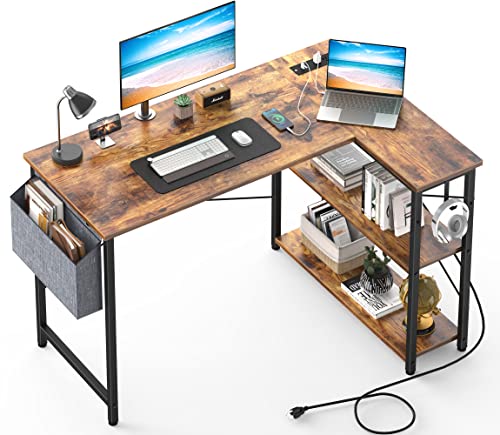
- Best value corner with power: Mr IRONSTONE L Shaped Desk 47 Inch with Outlets and USB Ports, Rustic Brown — Check on Amazon
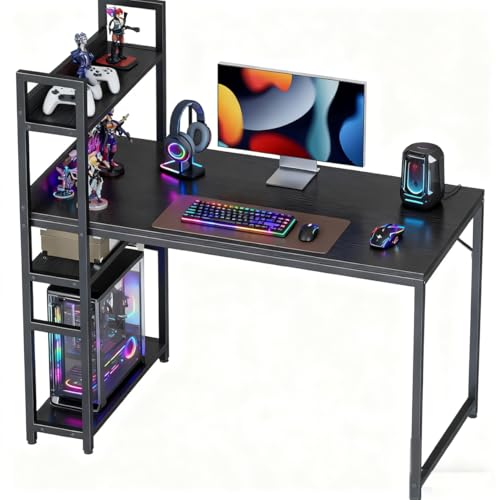
- CubiCubi Computer Desk 40 Inch with Storage Shelves, Black — Check on Amazon
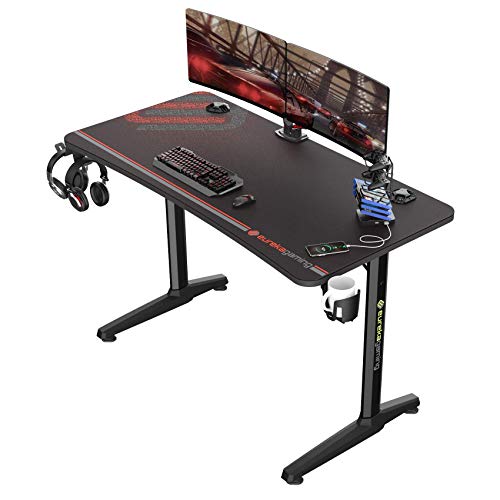
- EUREKA ERGONOMIC Gaming Desk 47 Inch, K Shaped — Check on Amazon
- Mr IRONSTONE Deep Gaming Desk 45.3 Inch — Check on Amazon
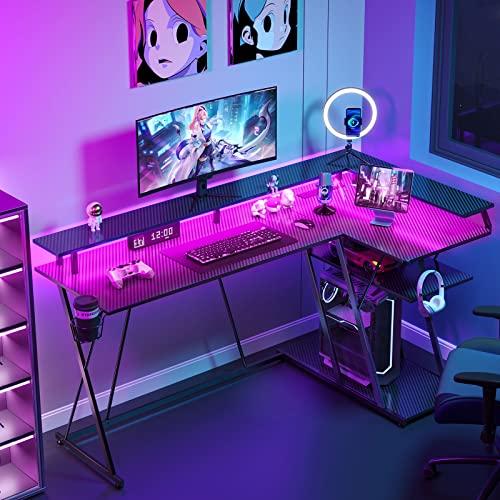
- Casaottima L Shaped Gaming Desk 51 Inch, Carbon Fiber Surface, Black — Check on Amazon
- CubiCubi 40 Inch Small L Shaped Computer Desk with Storage Shelves, White — Check on Amazon
Read the full guide ↓
Disclosure: As an Amazon Associate, ilcastellomenu.com earns from qualifying purchases. Links to Amazon on this page are affiliate links; they cost you nothing extra. Listing details such as price and availability change often, so check the current Amazon listing before you buy.
Hunting the best gaming desks for under 100 is hunting in the category’s most honest territory, where a desk cannot hide behind a motor or a brand and must justify itself as furniture: legs that do not wobble, a top that does not bow, and a layout that respects how a gaming setup actually occupies space. The good news this guide is built on is that the territory contains real answers — desks with shelving, desks with power, corner desks with rigid frames — provided you shop for structure before styling and verify the live price, because this tier’s listings move across the line constantly.
One framing note, stated plainly: ‘gaming desk’ at this level means a desk designed for a gaming setup — surface sized for a screen and a full keyboard-and-mouse zone, cable thinking, a place for the headset — not a desk with magical properties. The picks below earn the label through layout and infrastructure, and each review names what the desk does not do, so the station you assemble matches the one you imagined.
Readers comparing shapes should also see Best Desks For Gaming Under $100 and Best Desks For Gaming Under $120, which approach the same room from different angles.
In this guide
Quick Picks
Short on time, or comparing several options at once? Each row below names a buyer type and the desk that suits it, with a link to the listing where one is verified.
| Buyer type | Pick | Why it stands out | Link |
|---|---|---|---|
| Best value corner with power | Mr IRONSTONE L Shaped Desk 47 Inch with Outlets and USB Ports, Rustic Brown | The reversible return, built-in power and storage bag make a corner genuinely usable at an entry tier | Check on Amazon |
| Best with real storage | CubiCubi Computer Desk 40 Inch with Storage Shelves, Black | Forty inches of flat top plus four tiers of shelving is the most gaming a very small footprint can hold | Check on Amazon |
| Best gaming-branded feature set | EUREKA ERGONOMIC Gaming Desk 47 Inch, K Shaped | K-shaped legs, a carbon fibre textured top and the full accessory set in a tidy 47-inch frame | Check on Amazon |
| Best for stand-mounted monitors | Mr IRONSTONE Deep Gaming Desk 45.3 Inch | A genuinely deep top at a compact width: monitor stand, keyboard and wrists all fit in a straight line | Check on Amazon |
| Best rigid corner frame | Casaottima L Shaped Gaming Desk 51 Inch, Carbon Fiber Surface, Black | Eight steel legs under a 51-inch carbon fibre L: stability is the feature, and it is a good one | Check on Amazon |
| Best for the tightest corner | CubiCubi 40 Inch Small L Shaped Computer Desk with Storage Shelves, White | A true corner layout at forty inches, with shelves doing the storage work | Check on Amazon |
How These Picks Were Chosen
The budget was applied as a ceiling for the finished station, not just the box: at the $100 line, a desk that still needs a shelf unit, a charging hub and a pad is a different purchase from one that includes them, and the picks were weighed as finished stations. Prices in this category move constantly, so the live listing remains the final word on whether a given desk sits under the line today.
We did not use these desks ourselves. We read manufacturer and retailer specification records and Amazon listings, cross-checked the numbers that matter — desktop dimensions, depth, frame design, included infrastructure — and favoured desks whose makers publish full specifications over those that hide behind marketing words. Every linked ASIN in this guide was verified against a live listing record during research, and every specification printed in the reviews traces to a source recorded in the article’s source notes. Picks that could not be verified that way appear as prose-only entries, clearly labelled, with no link attached.
One filter sat on top of all of that: the finished-station test. A gaming desk is not finished when it is assembled; it is finished when the screens, tower, cables, charging and clutter all have planned homes on or around it. Picks were judged on how much of that finishing they do for you — and their honest limitations state, in each case, the part of the job they leave behind.
The 6 Best Gaming Desks for under 100
Mr IRONSTONE L Shaped Desk 47 Inch with Outlets and USB Ports, Rustic Brown
Who it suits: Corner players on a strict budget who want power at the desk and a return that can go on either side.
An L-shape earns its keep when the return becomes a second, distinct zone — and this desk is built around that idea at a small scale. The forty-seven inch main run holds the monitor and keyboard; the reversible return takes a laptop, a console, notebooks or the charging pile, and because it can be assembled on the left or the right, the desk adapts to the corner you actually have rather than the corner in the product photo.
Built-in outlets and USB ports on the top mean the power strip lives on the desk instead of on the floor behind it, which matters more in corners than anywhere: corner cables are the ones you can never reach. A storage bag and a headphone hook handle the small clutter that otherwise colonises the return. The rustic brown finish is the other quiet advantage — in a bedroom or living-room corner it reads as furniture first and gaming gear second, which is often the negotiation that decides whether a corner setup is allowed to exist at all.
In the context of best gaming desks for under 100, this pick’s role is precise: it is the choice for the buyer labelled ‘best value corner with power’ in the quick-picks table, and its verified specification line — 47 in reversible L-shape · built-in outlets and USB ports · storage bag · headphone hook · model CD03RB — is what to check against your own measurements before anything else in this review persuades you.
- Reversible return fits left or right corners without a second purchase
- On-desk outlets and USB ports tame the unreachable corner power strip
- Rustic finish blends into bedrooms and shared rooms
Honest limitation: The 47-inch class is a compact L: dual large monitors plus a tower on top will feel tight.
Choose it if the description above matches your room and your gear list closely. Skip it if its stated limitation touches the thing you care about most — another pick in this guide almost certainly covers that ground instead.
CubiCubi Computer Desk 40 Inch with Storage Shelves, Black
Who it suits: Small-room and first-desk buyers: one monitor, one keyboard, and shelves to keep the rest off the floor.
Forty inches is the width of honesty: it fits one monitor properly, a keyboard and a mouse with room to play, and nothing it cannot hold should be promised. What makes this CubiCubi work as a gaming desk rather than a study table is the four-tier shelving beside the surface — the tower, the console, the game boxes and the headset stand live in the shelves, so the small top is never asked to be storage as well as battlestation.
The industrial styling — black top, open steel frame — keeps it visually light in a small room, and the open frame is practical too: air reaches a tower on the shelves, cables route without drilling, and the whole thing can be repositioned by one person when the room changes its mind. It will not grow with a dual-monitor ambition, and it is not pretending otherwise; as a first desk or a small-room desk it spends its footprint exactly where a player needs it spent.
In the context of best gaming desks for under 100, this pick’s role is precise: it is the choice for the buyer labelled ‘best with real storage’ in the quick-picks table, and its verified specification line — 40 in wide · 4-tier storage shelves · model TS-HD-40B · industrial style steel frame — is what to check against your own measurements before anything else in this review persuades you.
- 4-tier shelves keep tower and gear off a small surface
- Compact 40-inch footprint suits bedrooms and dorms
- Open frame helps airflow and cable routing
Honest limitation: One monitor is the realistic ceiling; dual-screen plans should start a size up.
Choose it if the description above matches your room and your gear list closely. Skip it if its stated limitation touches the thing you care about most — another pick in this guide almost certainly covers that ground instead.
EUREKA ERGONOMIC Gaming Desk 47 Inch, K Shaped
Who it suits: Players who like the gaming-desk accessory set but want a cleaner, more angular frame that also passes as a home-office desk.
The K-shaped leg design is the personality of this desk: diagonal bracing gives the frame its name and its rigidity, and it leaves the under-desk space unusually open for a tower, a subwoofer or simply knees that dislike crossbars. The top is the same practical forty-seven by twenty-four inch class as its sibling, finished in a carbon fibre texture that shrugs off the scuffs and drink rings a plain matte top collects.
The accessory list mirrors the formula that made this size class popular — cable management routing, a controller stand, a cup holder, a headphone hook and an included mouse pad — so a monitor, a keyboard and a console controller all land in planned places rather than improvised ones. Because the styling is restrained once the accessories are off, this is one of the easier gaming desks to defend in a shared room: strip the pad and the controller stand and it reads as a straightforward modern desk that happens to be very good at holding a battlestation.
In the context of best gaming desks for under 100, this pick’s role is precise: it is the choice for the buyer labelled ‘best gaming-branded feature set’ in the quick-picks table, and its verified specification line — 47.24 x 23.62 in desktop, about 29.6 in high · K-shaped alloy steel frame · carbon fibre textured surface · cable management · controller stand · cup holder · headphone hook · free mouse pad — is what to check against your own measurements before anything else in this review persuades you.
- K-shaped frame braces well and keeps the knee space open
- Carbon fibre textured surface hides wear and wipes clean
- Complete accessory set: cable routing, controller stand, cup holder, hook, pad
Honest limitation: The textured top is a love-it-or-leave-it look, and the fixed height will not suit every chair and body pairing.
Choose it if the description above matches your room and your gear list closely. Skip it if its stated limitation touches the thing you care about most — another pick in this guide almost certainly covers that ground instead.
Mr IRONSTONE Deep Gaming Desk 45.3 Inch
Who it suits: Players whose monitor sits on its own stand rather than an arm — the extra depth is the whole point.
Most desks in this class are twenty-four inches deep, and this one is twenty-nine — a difference that sounds like a spec-sheet footnote and behaves like a different product. Depth is what decides whether a monitor on its factory stand pushes your keyboard into your stomach, whether a large mousepad fits without hanging off the front, and whether your eyes sit at a comfortable distance from a bigger screen. At forty-five inches wide the footprint stays bedroom-friendly while the depth does the ergonomic work.
The rest of the design is deliberately plain: two cable holes at the back corners, a cup holder and a headphone hook. There is no lighting, no charging rack and no shelving competing for the surface, which suits buyers who already own their accessories and simply need a deep, stable slab. The height, a touch over thirty inches, is slightly tall for the class; shorter players should check it against their chair’s arm height, because depth cannot rescue a desk that sits at the wrong level.
In the context of best gaming desks for under 100, this pick’s role is precise: it is the choice for the buyer labelled ‘best for stand-mounted monitors’ in the quick-picks table, and its verified specification line — 45.3 in wide x 29 in deep x 30.5 in high · cup holder · headphone hook · two cable management holes — is what to check against your own measurements before anything else in this review persuades you.
- 29-inch depth fits stand-mounted monitors without stealing keyboard room
- Simple, accessory-light design keeps the whole surface available
- Cable holes at both back corners suit left- or right-side towers
Honest limitation: Slightly taller than typical, and the plain feature set means accessory costs land elsewhere.
Choose it if the description above matches your room and your gear list closely. Skip it if its stated limitation touches the thing you care about most — another pick in this guide almost certainly covers that ground instead.
Casaottima L Shaped Gaming Desk 51 Inch, Carbon Fiber Surface, Black
Who it suits: Value-first corner players who care more about a rigid frame than about built-in electronics.
Casaottima’s pitch is structural: eight steel legs under a fifty-one inch L, where many rivals use four or six and a prayer. Legs are what a corner desk’s wobble is made of — the corner joint flexes, the long run levers against it — and doubling down on supports is the unglamorous engineering that decides whether a mouse shot stays true in year two. Adjustable leg pads handle the uneven floors that corners so often turn out to have.
The carbon fibre surface gives the gaming look, and the feature list stops there: no power hub, no lighting, no stand. Read that as a budget allocated honestly — the money went into the frame — and as flexibility: you choose your own stand, strip and power rather than inheriting the maker’s. For a buyer whose first question is ‘will it wobble’, this is the corner desk that answers best.
In the context of best gaming desks for under 100, this pick’s role is precise: it is the choice for the buyer labelled ‘best rigid corner frame’ in the quick-picks table, and its verified specification line — 51 in L-shape · carbon fibre surface · supported by 8 steel legs · adjustable leg pads — is what to check against your own measurements before anything else in this review persuades you.
- 8 steel legs give the corner layout unusual rigidity
- Adjustable leg pads level it on imperfect floors
- Carbon fibre surface, clean gaming look
Honest limitation: No built-in power, lighting or stand: the accessory budget is separate.
Choose it if the description above matches your room and your gear list closely. Skip it if its stated limitation touches the thing you care about most — another pick in this guide almost certainly covers that ground instead.
CubiCubi 40 Inch Small L Shaped Computer Desk with Storage Shelves, White
Who it suits: The tightest corners: a player who needs the two-zone benefit of an L in a footprint most Ls laugh at.
An L-shape at forty inches sounds like a contradiction until you sit at one: the corner itself becomes the monitor’s home, the short return becomes the laptop-and-notebook zone, and a room corner that held nothing now holds a complete, separated little station. The shelves carry storage vertically so the small surfaces stay playable.
The white finish is a deliberate choice in this size class — small desks live in small, often dim corners, and a light top keeps the corner from becoming a cave. The frame uses a diagonal brace for rigidity, which matters in compact Ls because the corner joint is the whole structure’s argument. No one should mistake this for a dual-monitor desk; it is the answer to a specific question — what is the most complete gaming station that fits in this exact corner — and it answers it well.
In the context of best gaming desks for under 100, this pick’s role is precise: it is the choice for the buyer labelled ‘best for the tightest corner’ in the quick-picks table, and its verified specification line — 40 in compact L-shape · storage shelves · alloy steel frame with diagonal brace · engineered wood surface — is what to check against your own measurements before anything else in this review persuades you.
- Genuine two-zone L layout in a very small footprint
- Shelves add storage without touching the surface
- Light finish brightens small corners
Honest limitation: strictly a single-screen desk; the return is a helper zone, not a second battlestation.
Choose it if the description above matches your room and your gear list closely. Skip it if its stated limitation touches the thing you care about most — another pick in this guide almost certainly covers that ground instead.
Comparison Table
| Product | Shape | Key specifications | Link |
|---|---|---|---|
| Mr IRONSTONE L Shaped Desk 47 Inch with Outlets and USB Ports, Rustic Brown | L-shaped, reversible | 47 in reversible L-shape · built-in outlets and USB ports · storage bag · headphone hook · model CD03RB | Check on Amazon |
| CubiCubi Computer Desk 40 Inch with Storage Shelves, Black | Straight flat top with side shelves | 40 in wide · 4-tier storage shelves · model TS-HD-40B · industrial style steel frame | Check on Amazon |
| EUREKA ERGONOMIC Gaming Desk 47 Inch, K Shaped | Straight flat top, K-shaped legs | 47.24 x 23.62 in desktop, about 29.6 in high · K-shaped alloy steel frame · carbon fibre textured surface · cable management · controller stand · cup holder · headphone hook · free mouse pad | Check on Amazon |
| Mr IRONSTONE Deep Gaming Desk 45.3 Inch | Straight flat top, extra deep | 45.3 in wide x 29 in deep x 30.5 in high · cup holder · headphone hook · two cable management holes | Check on Amazon |
| Casaottima L Shaped Gaming Desk 51 Inch, Carbon Fiber Surface, Black | L-shaped corner | 51 in L-shape · carbon fibre surface · supported by 8 steel legs · adjustable leg pads | Check on Amazon |
| CubiCubi 40 Inch Small L Shaped Computer Desk with Storage Shelves, White | L-shaped, compact | 40 in compact L-shape · storage shelves · alloy steel frame with diagonal brace · engineered wood surface | Check on Amazon |
Gaming Desk Versus Ordinary Desk at This Price
At the entry tier the two categories converge in materials and diverge in decisions. An ordinary desk spends its budget on looks — a drawer, a finish — while a gaming desk spends it on the playing surface: width for the mouse, cable routing, a hook or shelf where the headset and tower live. Neither budget stretches to everything, so the question is which sacrifices your setup feels. Players with a tower, a headset and a controller fleet feel missing storage daily; players with a laptop and one screen may never miss it. This guide leans gaming-side because the keyword does, but the reviews flag the picks that double gracefully as study or work desks for shared rooms.
How to Spot the Budget Desk That Will Wobble
Wobble is the entry tier’s defining failure, and it is predictable from photographs if you know the signs. Look for bracing: a crossbar, a diagonal, a K or Z geometry, or simply more legs — the corner pick here with eight steel legs exists because leg count is a wobble strategy. Look at how the top attaches and whether the frame is steel rather than thin tube pretending. Then look at your floor: adjustable feet matter more in the corners and old rooms where budget desks live. Finally, plan the load honestly — a tower on the surface is a lever arm working against every joint — and use the shelves and floor positions the designs intend. A rigid budget desk assembled patiently on a level floor will outplay a flimsy one at twice the outlay.
A Note on Prices and Listings in This Category
Gaming desks are among the most promotion-driven furniture sold online: the same model moves between list price and sale price across the year, sizes and colours of the same desk are listed as variants at different figures, and bundles change without the product changing. That is why this guide prints no product prices and sends you to the live listing for the current number — a printed price would be wrong more often than right, and a wrong price helps no one. When you check a listing, confirm the exact size variant (headline inches belong to the largest variant more often than shoppers expect), confirm the colour and finish in the variant selector, and confirm what the box includes — pad, stand, hub, hooks — because inclusions vary by variant even for the same desk family.
One more listing habit is worth adopting in this category: read the dimension diagram, not the title. Titles compress; diagrams confess. The return’s depth on an L, the shelf height on a hutch model, the distance between legs where a tower or a set of drawers must slide — these live in the diagram and the specification table, and they are the numbers your room will hold the desk to. Every specification in this guide’s comparison table was taken from such records for exactly that reason.
Measure First: The Room Decides the Desk
Every guide to best gaming desks for under 100 should start with a tape measure, because the room vetoes more purchases than any budget does. Measure the wall the desk will occupy, then measure it again at floor level where skirting boards live. Note the door swing, the radiator, the sockets and the window light — a screen that faces a bright window is a setup flaw no desk can refund. Then measure the chair’s world: the pull-back distance behind the desk, the turning circle if the desk is a corner model, and the space your legs expect underneath. Write the numbers down and shop with them open beside the listings.
Then measure the gear, not the hope. The monitor’s width and its stand’s footprint, or the arm’s clamp depth; the tower’s height if it will sit on a shelf; the keyboard’s width and the mouse travel your sensitivity needs — low-sensitivity players should physically sweep their arm across the tape to feel what a surface must hold. Desks are sold in headline inches and lived in usable inches, and the gap between the two is where stands, shelves and towers take their share. The picks in this guide carry their verified dimensions in the comparison table precisely so this arithmetic can be done before money moves, not after a box is open.
Ergonomics That Survive Long Sessions
The ergonomic core of any choice among best gaming desks for under 100 is three heights and one distance. The desk height should let your elbows rest near a right angle with your shoulders down; the screen’s centre should sit a little below eye level, which is what monitor stands and arms are really for; the chair must support the posture the first two create. The distance is the screen’s: roughly an arm’s length for typical gaming monitors, more for larger screens, and it is bought with desktop depth or an arm — never by pushing a keyboard off the front edge.
None of this requires laboratory precision, and all of it is ruined by one casual decision, like a desk slightly too tall for the chair you already own. Before ordering, sit in your chair, measure from the floor to your relaxed elbow, and compare it with the desk heights in the comparison table. If a fixed-height desk misses your number by more than a small margin, the honest options are a different desk, a chair with the range to meet it, or a footrest to close the gap from below. Comfort across a three-hour session is decided by these centimetres, not by any feature with a light on it.
Assembly Day: Doing It Once, Doing It Right
Desks in the world of best gaming desks for under 100 arrive as flat boxes and become furniture through your patience, so assembly deserves the same planning as the purchase. Assemble in the room the desk will live in — large and corner models especially, which may not forgive a doorway once built. Lay every panel out, identify left and right pieces before the first bolt, and keep the hardware in its bags until each step calls for it. Tighten in stages rather than fully at each joint: frames square themselves when the last bolts draw everything together, and a frame forced early keeps its twist forever.
Two habits separate a desk that feels factory-built from one that feels homemade. First, level it before loading it: adjustable feet exist because floors are not flat, and a desk levelled empty stays quiet under a tower. Second, cable-manage during assembly, not after — route the power strip, the monitor cables and the charging lines while the back of the desk is still reachable, because the day the desk goes against the wall is the last day its rear is convenient. Keep the instructions and the spare hardware in a labelled bag taped under the desk; the person who moves house in two years will be grateful, and it will be you.
Keeping the Desk Good for Years
A desk chosen from best gaming desks for under 100 should be a multi-year object, and its longevity is mostly housekeeping. Engineered-wood tops — the category’s standard — want coasters under cold drinks, a pad under the keyboard zone, and a wipe rather than a soak when they are cleaned. Bolts relax in the first months as joints settle; a single re-tightening pass after the first season removes wobbles that owners often blame on the frame. Cable trays and nets collect dust in exact proportion to how well they hide cables, so they join the cleaning round rather than escaping it.
The upgrade path matters too. A desk that accepts an arm today, a second screen next year and a new tower the year after is worth more than its purchase figure suggests, and the flat, standard-dimensioned designs in this guide were favoured partly for that openness. When a component does fail — a foot, a hub, a strip light — check the maker’s parts route before replacing the whole desk; furniture at this level is more repairable than its price implies, and a single part restores the station for a fraction of a new purchase.
The First Month With a New Desk
The first week with any desk chosen from best gaming desks for under 100 is calibration, and it rewards restraint. Set the screen height once, place the keyboard where your elbows say it belongs, route the cables once with slack where things move, and then change nothing for several sessions. New-desk owners who rearrange daily never learn which arrangement actually hurt; owners who hold a layout for a week can name the single thing to fix. The most common week-one fixes are small and free: the monitor a fraction closer, the tower moved off the surface to a shelf or the floor, the drink exiled to the side away from the mouse.
Weeks two to four are when the desk stops being furniture and becomes routine. The headset lands on its hook without thought, the charging cable lives where your hand expects it, and the surface’s zones — play here, store there, nothing permanent in the mouse’s country — harden into habit. This is also when honest evaluation happens: you will know whether the depth suits your screen, whether the storage matches your clutter, and whether the frame stays silent under your real load at your real hours. Small misses can still be closed cheaply in this window — a footrest, a tray, a strip of lighting — and a desk that needs only small closes in month one is a desk that was chosen well.
How to Choose
- Read the frame before the finish. Leg geometry, bracing and leg count decide wobble, and wobble decides whether the desk feels cheap every day. Finishes can be protected; a flexing frame cannot be accessorised away.
- Decide your monitor strategy first. Stand on the desk, arm on the edge, or shelf above — each strategy wants a different desk. Buying the desk that matches the strategy is cheaper than adapting the wrong one.
- Count the infrastructure included. Power hubs, cable routing, hooks, pads and shelves are purchases you either make inside the desk or after it. Total the finished station, not the box price, when you compare.
- Match depth to your screen. Stand-mounted and larger monitors want depth; arm-mounted setups can live shallower. Depth is the specification players feel most and check least.
- Plan the tower’s home. Floor, shelf tier or surface — each has airflow and cable consequences. Choose a desk whose intended tower position is the one you will actually use.
- Check height against your chair. Sit, measure your relaxed elbow height, and compare it with the desk. Fixed-height desks and chairs must be matched as a pair, not bought as strangers.
- Think about the room’s second opinion. Shared rooms and living rooms judge desks visually. Calmer finishes and furniture-toned designs survive negotiations that full gaming theatre does not.
- Leave an upgrade path. A second screen, an arm, a bigger tower — the desk should accept the next two upgrades without replacement. Standard shapes and open frames age best.
- Verify the live listing last. Confirm the exact variant, size and current price on the live listing before ordering; furniture listings bundle sizes and colours whose prices and dimensions differ.
- Measure the usable surface, not the headline. Stands, shelves and hutches all spend surface. Ask what flat, clear area remains for keyboard and mouse after the design takes its share, and compare that number — not the box’s inches — between finalists.
Common Mistakes
- Buying width and ignoring depth, then discovering the monitor stand pushes the keyboard into your lap.
- Putting the tower on the surface of a small desk and spending the mouse’s territory on a metal box.
- Choosing a fixed corner handedness before checking which side the room’s sockets and door demand.
- Treating built-in USB ports as a PC power solution rather than a charging convenience.
- Assembling a large or corner desk in the wrong room and meeting the doorway afterwards.
- Skipping the levelling step, then blaming the frame for a wobble that lives in the floor.
- Letting the return of an L-desk become a junk shelf, which turns two zones back into one cluttered one.
- Buying a desk for the setup in a photograph instead of the gear list in your own room.
- Forgetting cable length: a beautiful layout whose display cable cannot reach is a layout that does not exist.
- Measuring the wall but not the chair: a desk that fits its wall and traps its player is the category’s classic failure.
Final Recommendation
- Best value corner with power: Mr IRONSTONE L Shaped Desk 47 Inch with Outlets and USB Ports, Rustic Brown.
- Best with real storage: CubiCubi Computer Desk 40 Inch with Storage Shelves, Black.
- Best gaming-branded feature set: EUREKA ERGONOMIC Gaming Desk 47 Inch, K Shaped.
- Best for stand-mounted monitors: Mr IRONSTONE Deep Gaming Desk 45.3 Inch.
- Best rigid corner frame: Casaottima L Shaped Gaming Desk 51 Inch, Carbon Fiber Surface, Black.
- Best for the tightest corner: CubiCubi 40 Inch Small L Shaped Computer Desk with Storage Shelves, White.
Our top two here are the Mr IRONSTONE L Shaped Desk 47 Inch with Outlets and USB Ports, Rustic Brown, for the buyer this article was written for, and the CubiCubi Computer Desk 40 Inch with Storage Shelves, Black, for the household whose priorities run the other way. Readers weighing a neighbouring question should also see Best Desks For Gaming Under $150 and Best Flat Desks Under $200 For Computer Gaming. Measure your room in every direction that matters, count your permanent gear honestly, and check the live price before you order — in this category, that homework is the whole difference between a station that organises your play and a desk that merely hosts it.
Frequently Asked Questions
What size gaming desk should a small bedroom start with?
Forty to forty-seven inches of width with storage built in is the small-bedroom sweet spot: one screen properly, a full mouse zone, and shelves or a return absorbing the rest. Measure the wall and the chair’s pull-back space together — a desk that fits the wall but traps the chair is the classic small-room mistake.
What desk height is right for gaming?
The height at which your elbows rest near a right angle with shoulders relaxed, in the chair you actually use — for most adults that lands in the high twenty-inch range, but bodies and chairs vary more than desks do. Measure yourself in your chair and compare with the desk’s stated height; a small miss can be closed with chair adjustment or a footrest, a large one cannot.
Are gaming desks worth it over ordinary desks?
When their gaming features are infrastructure you would otherwise buy — cable routing, power, a headset’s home, a surface sized for mouse travel — yes, because the finished station costs less and works better. When the premium buys only styling, an ordinary desk of the same structure is the smarter purchase. This guide’s picks were chosen on the infrastructure side of that line.
How much desk does a single gaming monitor actually need?
A single screen in the common gaming sizes sits comfortably on a forty-inch class desk with a full keyboard-and-mouse zone, and luxuriously on a forty-seven. What changes with size is not feasibility but company: speakers, a second device and a drink all negotiate for the same inches, so count your permanent residents before choosing the width.
Should a gaming PC tower sit on the desk or the floor?
Either can be right. On a shelf tier or the surface, the tower shows its lighting and stays out of the dust layer, but it spends space and adds weight high up. On the floor it costs nothing and breathes the coolest air, but it must be kept off carpet pile that blocks its intakes — a board or stand under it is the professional touch. Follow the desk design’s intention where one exists.
Do I need a monitor arm, or is a stand enough?
A stand — the monitor’s own or a desk’s built-in shelf — is enough when its height lands your screen near eye level and its footprint leaves the surface workable. An arm earns its cost when you need the surface back, the screen closer or further than a stand allows, or a second screen floated beside the first. Many players start on stands and add the arm as the first upgrade; desks with open back edges accept that upgrade gracefully.