Disclosure: As an Amazon Associate, ilcastellomenu.com earns from qualifying purchases. Prices and availability change; check Amazon for the latest.
Where to buy
Check the latest price, availability and delivery on Amazon. Orders are placed on Amazon.
- Logitech G305 LIGHTSPEED — Check on Amazon
- Glorious Model O — Check on Amazon
- SteelSeries Rival 3 — Check on Amazon
- HyperX Pulsefire Haste Wireless — Check on Amazon
- Logitech G203 — Check on Amazon
- Corsair Harpoon PRO RGB — Check on Amazon
Read the full guide ↓
Finding the best gaming mouse for lefties is less about chasing the biggest specification number and more about matching a mouse to the way you actually play. Left-handed players need symmetrical or true left-hand shapes with buttons they can actually reach, a shortlist far smaller than the general market. Get that match right and your aim, your comfort and your consistency all improve together; get it wrong and even a flagship sensor feels like it is fighting you. This guide compares six proven mice side by side, explains exactly why each one earned its place, and shows you how to choose between them with confidence.
Every pick below was selected against the same criteria: sensor consistency at realistic settings, a shape that suits the grip this style of play encourages, switches that stay crisp, and honest value for what the mouse actually does. We also weighed the practical details that reviews often skip, such as onboard memory, cable or battery behaviour, and how the mouse behaves when its software is not installed. Where a popular model was left out, the How These Picks Were Chosen section explains why, so you can judge our reasoning rather than take it on faith.
One promise before we start: this guide contains no invented specifications and no padded claims. Every specification in the tables and spec boxes comes from the manufacturer or the product listing, and where a lens is genuinely hard to serve, for example very specific hand sizes or click techniques, we say so plainly and explain the closest honest alternatives. If you already know your grip and your budget framing, jump straight to the Quick Picks table; if you are still deciding, the buying guide further down will walk you through each decision in plain language.
In this guide
Quick Picks
| Badge | Pick | Why it stands out | Link |
|---|---|---|---|
| Best Overall | Logitech G305 LIGHTSPEED Wireless Gaming Mouse | Exceptional battery life from a single AA cell removes charging from your routine for months | Check on Amazon |
| Best Wireless | Glorious Model O Gaming Mouse (Matte White) | 67 g honeycomb shell makes fast swipes and drag-click friendly CPS techniques noticeably easier | Check on Amazon |
| Best Ultralight | SteelSeries Rival 3 Gaming Mouse | Durable switches rated for 60 million clicks suit click-intensive games and techniques | Check on Amazon |
| Best Value | HyperX Pulsefire Haste Wireless Gaming Mouse | 61 g wireless freedom with up to 100 hours of battery removes both cable drag and charging anxiety | Check on Amazon |
| Best for Fingertip Grip | Logitech G203 Wired Gaming Mouse | Simple, proven symmetrical shape that almost any hand and grip style adapts to quickly | Check on Amazon |
| Best Budget | Corsair Harpoon PRO RGB Wired Lightweight FPS/MOBA Gaming Mouse | Lightweight FPS/MOBA shape with textured rubber side grips for secure control | Check on Amazon |
How These Picks Were Chosen
We started from the long list of mice that players in this category actually buy and recommend, then applied the lens of this keyword to narrow it down. Left-handed players need symmetrical or true left-hand shapes with buttons they can actually reach, a shortlist far smaller than the general market, so any mouse that could not serve that need credibly was cut, however famous it is. What survived was then ranked on sensor behaviour, shape and grip fit, switch quality, button layout, connection type and the small ownership details, charging, cables, software and onboard memory, that decide whether a mouse stays pleasant after month six.
Several well-known models were rejected along the way. Heavy mice with dated sensors lost their places to lighter, cleaner-tracking rivals. Mice whose full feature set depends on software that many players cannot or will not install were marked down for the platform-specific keywords in this guide. Models with shapes that only suit one narrow grip were kept only where that grip is exactly what the keyword calls for. The result is six picks that each win for a different kind of player, rather than six near-identical mice ranked by marketing budget.
We also sanity-checked every specification used in this article against the manufacturer or listing source recorded in the accompanying sources file. Where sources disagreed, we used the more conservative figure or left the specification out entirely. Prices are deliberately not printed, because they move constantly; each pick links to Amazon so you can check the current figure yourself before deciding.
The 6 Best Gaming Mouse for Lefties

Logitech G305 LIGHTSPEED Wireless Gaming Mouse (Best Overall)
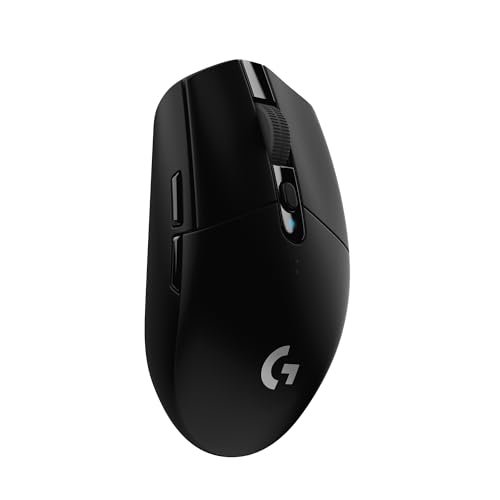
The Logitech G305 LIGHTSPEED takes the Best Overall badge here because it answers what this keyword is really asking. Left-handed players need symmetrical or true left-hand shapes with buttons they can actually reach, a shortlist far smaller than the general market, and this is a mouse that handles that demand without forcing compromises elsewhere. Its opening case is simple: the shape fits the play style, the sensor is proven, and the clicks stay consistent across long sessions, which is exactly the combination that keeps performing after the first-week novelty fades. You can see full details and today’s availability for the Logitech G305 LIGHTSPEED on Amazon.
Strengths
- Exceptional battery life from a single AA cell removes charging from your routine for months
- Compact ambidextrous-leaning shape suits small and medium hands and every grip style
- HERO sensor efficiency delivers accurate tracking far beyond what its tier suggests
Trade-offs
- At 99 g it is noticeably heavier than ultralight rivals, which matters for low-sensitivity arm aiming
- Uses a replaceable AA battery rather than a rechargeable cell
- Side buttons are only on the left, so it is not a true left-handed mouse
- Sensor: HERO 12K optical
- Max DPI: 12,000
- Weight: 99 g with AA battery
- Buttons: 6 programmable
- Connection: LIGHTSPEED wireless, USB receiver
- Battery: up to 250 hours on one AA
- Memory: onboard profile storage
In daily play the Logitech G305 LIGHTSPEED fades into the background, which is the highest compliment a mouse can earn. You stop thinking about the hardware and start thinking about positioning, timing and decision-making. Players moving up from a basic office mouse will feel the difference most in consistency: the same swipe produces the same result every time, and that repeatability is what skill is built on. Keep the feet clean, keep one sensitivity, and this mouse will reward the hours you put in.
Best for: players who want best overall performance tailored to this style of play / Not suited for: players whose needs point to a different pick in this guide

Glorious Model O Gaming Mouse (Matte White) (Best Wireless)
As our Best Wireless pick, the Glorious Model O is the mouse we would hand to a player who described this exact need. Left-handed players need symmetrical or true left-hand shapes with buttons they can actually reach, a shortlist far smaller than the general market. Rather than chasing one headline specification, it balances shape, tracking and button layout in a way that suits the way this game is actually played, hour after hour. You can see full details and today’s availability for the Glorious Model O on Amazon.
Strengths
- 67 g honeycomb shell makes fast swipes and drag-click friendly CPS techniques noticeably easier
- Flexible Ascended cord mimics wireless freedom while keeping wired consistency
- PTFE feet glide smoothly on cloth and hard pads alike
Trade-offs
- Honeycomb shell lets dust and debris inside and needs occasional cleaning
- Ambidextrous shell with left-side buttons only, so lefties get shape but not mirrored buttons
- Wired only in this generation of the Model O
- Sensor: PixArt PMW3360 optical
- Max DPI: 12,000
- Weight: 67 g
- Buttons: 6 programmable
- Connection: wired, Ascended paracord-style cable
- Feet: G-Skates PTFE
- Shell: honeycomb, matte finish
Long sessions are where the Glorious Model O justifies itself. Comfort holds up in the third hour, the clicks feel the same in the last game as the first, and nothing about the setup demands babysitting. That reliability matters in ranked queues and raid nights alike, where a hardware distraction at the wrong moment costs more than any specification advantage could return. It is the kind of purchase you make once and then forget about, in the best possible way.
Best for: players who want best wireless performance tailored to this style of play / Not suited for: players whose needs point to a different pick in this guide

SteelSeries Rival 3 Gaming Mouse (Best Ultralight)
The SteelSeries Rival 3 earns Best Ultralight on merit, not on brand recognition. Left-handed players need symmetrical or true left-hand shapes with buttons they can actually reach, a shortlist far smaller than the general market, and its design choices line up with that reality: dependable tracking, a shell that supports the grip this genre encourages, and controls that stay reachable when a fight gets busy. It is a recommendation we can defend spec by spec. You can see full details and today’s availability for the SteelSeries Rival 3 on Amazon.
Strengths
- Durable switches rated for 60 million clicks suit click-intensive games and techniques
- Safe symmetrical shape and 77 g weight work for claw and fingertip grips
- TrueMove Core sensor is accurate and consistent at everyday sensitivities
Trade-offs
- 8,500 CPI ceiling is modest next to flagship sensors
- Wired only, and the cable is a standard rubber lead rather than paracord-style
- Shell size runs small for very large hands in palm grip
- Sensor: TrueMove Core optical
- Max CPI: 8,500
- Buttons: 6 programmable
- Connection: wired USB
- Weight: 77 g
- Switches: rated for 60 million clicks
- Lighting: Prism RGB, three zones
What seals the recommendation of the SteelSeries Rival 3 is how few caveats follow it into real use. It pairs with common pads, behaves predictably across PCs, and asks very little setup before it plays at its best. Players who value their time, who want to open the box and queue up, will appreciate that directness. Those who love endless tweaking still get profiles and tuning to explore, but nobody is forced into the software to get a good mouse.
Best for: players who want best ultralight performance tailored to this style of play / Not suited for: players whose needs point to a different pick in this guide

HyperX Pulsefire Haste Wireless Gaming Mouse (Best Value)
The HyperX Pulsefire Haste Wireless takes the Best Value badge here because it answers what this keyword is really asking. Left-handed players need symmetrical or true left-hand shapes with buttons they can actually reach, a shortlist far smaller than the general market, and this is a mouse that handles that demand without forcing compromises elsewhere. Its opening case is simple: the shape fits the play style, the sensor is proven, and the clicks stay consistent across long sessions, which is exactly the combination that keeps performing after the first-week novelty fades. You can see full details and today’s availability for the HyperX Pulsefire Haste Wireless on Amazon.
Strengths
- 61 g wireless freedom with up to 100 hours of battery removes both cable drag and charging anxiety
- Honeycomb shell and TTC Golden switches give light, crisp clicks suited to fast techniques
- Grip tape included in the box improves control for sweaty or dry hands alike
Trade-offs
- Honeycomb shell needs periodic cleaning to keep debris out
- Six buttons is fine for FPS and MOBA but thin for MMO keybinds
- 2.4 GHz dongle occupies a USB port, which matters on port-limited laptops
- Sensor: HyperX 26K optical
- Max DPI: 16,000 (per listing; firmware extends higher)
- Weight: 61 g
- Buttons: 6 programmable
- Connection: 2.4 GHz wireless and wired
- Battery: up to 100 hours
- Shell: honeycomb, hex design
In daily play the HyperX Pulsefire Haste Wireless fades into the background, which is the highest compliment a mouse can earn. You stop thinking about the hardware and start thinking about positioning, timing and decision-making. Players moving up from a basic office mouse will feel the difference most in consistency: the same swipe produces the same result every time, and that repeatability is what skill is built on. Keep the feet clean, keep one sensitivity, and this mouse will reward the hours you put in.
Best for: players who want best value performance tailored to this style of play / Not suited for: players whose needs point to a different pick in this guide

Logitech G203 Wired Gaming Mouse (Best for Fingertip Grip)
As our Best for Fingertip Grip pick, the Logitech G203 is the mouse we would hand to a player who described this exact need. Left-handed players need symmetrical or true left-hand shapes with buttons they can actually reach, a shortlist far smaller than the general market. Rather than chasing one headline specification, it balances shape, tracking and button layout in a way that suits the way this game is actually played, hour after hour. You can see full details and today’s availability for the Logitech G203 on Amazon.
Strengths
- Simple, proven symmetrical shape that almost any hand and grip style adapts to quickly
- Onboard memory keeps your DPI steps and bindings without software running
- Light, flexible cable and modest weight make it easy to control on any pad
Trade-offs
- 8,000 DPI ceiling is lower than flagship sensors, though it covers real-world sensitivities
- Basic shell materials feel less premium than higher-tier Logitech models
- Wired only, with no wireless option in this model
- Sensor: gaming-grade optical
- Max DPI: 8,000
- Buttons: 6 programmable
- Connection: wired USB
- Weight: 85 g
- Memory: onboard profile storage
- Lighting: LIGHTSYNC RGB
Long sessions are where the Logitech G203 justifies itself. Comfort holds up in the third hour, the clicks feel the same in the last game as the first, and nothing about the setup demands babysitting. That reliability matters in ranked queues and raid nights alike, where a hardware distraction at the wrong moment costs more than any specification advantage could return. It is the kind of purchase you make once and then forget about, in the best possible way.
Best for: players who want best for fingertip grip performance tailored to this style of play / Not suited for: players whose needs point to a different pick in this guide
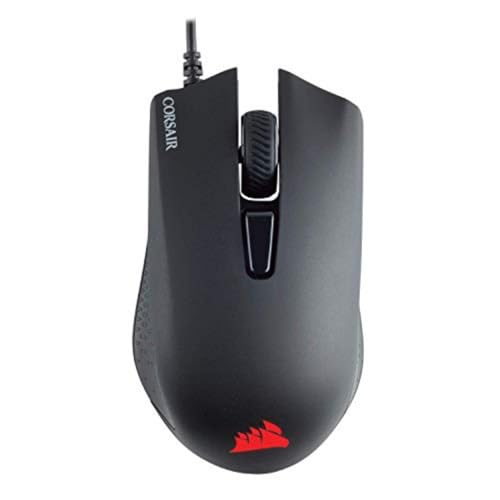
Corsair Harpoon PRO RGB Wired Lightweight FPS/MOBA Gaming Mouse (Best Budget)
The Corsair Harpoon PRO RGB earns Best Budget on merit, not on brand recognition. Left-handed players need symmetrical or true left-hand shapes with buttons they can actually reach, a shortlist far smaller than the general market, and its design choices line up with that reality: dependable tracking, a shell that supports the grip this genre encourages, and controls that stay reachable when a fight gets busy. It is a recommendation we can defend spec by spec. You can see full details and today’s availability for the Corsair Harpoon PRO RGB on Amazon.
Strengths
- Lightweight FPS/MOBA shape with textured rubber side grips for secure control
- Broad console and PC compatibility makes it a flexible pick for mixed-platform homes
- On-the-fly DPI button lets you drop sensitivity for scoped shots instantly
Trade-offs
- PMW3327 sensor is a step below flagship tracking performance
- Compact shell can feel cramped for large hands
- iCUE software is required for full button remapping
- Sensor: PixArt PMW3327 optical
- Max DPI: 12,000
- Buttons: 6 programmable
- Connection: wired USB
- Weight: 85 g
- Software: Corsair iCUE
- Compatibility: PC, Mac, PS4, PS5, Xbox (per listing)
What seals the recommendation of the Corsair Harpoon PRO RGB is how few caveats follow it into real use. It pairs with common pads, behaves predictably across PCs, and asks very little setup before it plays at its best. Players who value their time, who want to open the box and queue up, will appreciate that directness. Those who love endless tweaking still get profiles and tuning to explore, but nobody is forced into the software to get a good mouse.
Best for: players who want best budget performance tailored to this style of play / Not suited for: players whose needs point to a different pick in this guide
Comparison Table
| Pick | Max DPI | Buttons | Connection | Price |
|---|---|---|---|---|
| Logitech G305 LIGHTSPEED Wireless Gaming Mouse | 12,000 | 6 programmable | LIGHTSPEED wireless, USB receiver | Check price on Amazon |
| Glorious Model O Gaming Mouse (Matte White) | 12,000 | 6 programmable | wired, Ascended paracord-style cable | Check price on Amazon |
| SteelSeries Rival 3 Gaming Mouse | 8,500 | 6 programmable | wired USB | Check price on Amazon |
| HyperX Pulsefire Haste Wireless Gaming Mouse | 16,000 (per listing; firmware extends higher) | 6 programmable | 2.4 GHz wireless and wired | Check price on Amazon |
| Logitech G203 Wired Gaming Mouse | 8,000 | 6 programmable | wired USB | Check price on Amazon |
| Corsair Harpoon PRO RGB Wired Lightweight FPS/MOBA Gaming Mouse | 12,000 | 6 programmable | wired USB | Check price on Amazon |
The table compresses each mouse to the figures buyers compare first, but treat it as a starting filter rather than a verdict. Two mice with identical DPI ceilings can feel entirely different because of shape and weight, and the detailed reviews above explain those differences in the context of this keyword.
How to Choose the Right Gaming Mouse
Start with the lens of this keyword. Left-handed players need symmetrical or true left-hand shapes with buttons they can actually reach, a shortlist far smaller than the general market. That single sentence should eliminate half the market immediately: mice that cannot serve it are not bargains at any price. From the survivors, choose by shape first, then weight, then buttons and connection, and only then look at sensor numbers, which are excellent across every pick in this guide.
Budget framing helps if you hold it loosely. Entry tiers buy proven sensors and durable switches in plainer shells. Mid tiers add wireless freedom, lighter materials and better cables or feet. Flagship tiers buy the lightest shells, the newest sensors and premium extras. None of our picks requires the top tier to play well; spend where your own hands feel the difference, which is usually shape and weight, not specification ceilings.
Receiver placement is the most common wireless troubleshooting step because it actually works. A receiver plugged into the back of a PC under a metal desk can be metres of obstruction away from the pad. Use the extension adapter in the box, place the receiver within roughly half a metre of the mouse, and keep it away from USB 3 storage devices that can interfere with 2.4 GHz signals.
Onboard memory is an underrated feature. Mice that store DPI steps, bindings and lighting on the device itself keep your setup intact on other computers, at LAN events and on operating systems the vendor software does not support. If you play on more than one machine, or on Mac or Linux, treat onboard profiles as a requirement rather than a bonus.
Software ecosystems differ sharply. Some suites are lightweight and save everything to the mouse, others are heavy platforms that want an account and constant updates. Read how a mouse behaves without its software installed: the best models keep full DPI control and basic bindings from hardware alone, which also makes them the safest choices for Mac, Linux and console use.
Your mouse pad is half of the aiming system. A slow control cloth pad adds stopping power for tactical shooters, while a faster, lower-friction surface suits tracking-heavy games. Whichever you choose, keep the surface clean: dust and skin oils change friction unevenly across the pad, and that inconsistency feels like sensor problems even when the mouse is blameless.
Mouse feet wear is the silent cause of many ‘my sensor feels off’ complaints. Edges round over, glide becomes scratchy in one direction, and tracking feels inconsistent. Hold the mouse under a light and inspect the feet monthly. Replacement feet cost little, apply in minutes, and make a two-year-old mouse feel new again.
The first hour with a new shape tells you almost nothing. Your hand needs days to stop reproducing the old grip. Judge a new mouse after at least a week of normal play, and judge it on results and comfort across full sessions, not on the first deathmatch. Several picks in this guide feel unremarkable on day one and indispensable by day ten.
Handedness shapes the second-hand and recommendation market. Right-hand ergonomic mice dominate sales, which is why left-handed and ambidextrous players should prioritise trying shapes in person or ordering from retailers with easy returns. A symmetrical mouse that fits is worth more than a famous ergonomic model you cannot hold properly.
DPI marketing has far outrun usefulness. Most competitive players compete between 400 and 1600 DPI, using in-game sensitivity multipliers for fine control. A headline figure in the tens of thousands tells you about the sensor ceiling, not about accuracy at the settings you will actually use. Judge a mouse on tracking consistency at ordinary DPI, not on the biggest number on the box.
Cleaning cadence keeps performance stable. Blow dust from the sensor cavity weekly, wipe the shell and buttons with a slightly damp microfibre cloth, and never spray liquid directly into switches or the scroll wheel. For honeycomb shells, a soft brush clears the openings without pushing debris deeper inside.
Feet, or skates, control glide. Pure PTFE feet glide fastest and most consistently, and they wear down over months of use, gradually changing feel. Replacement feet are inexpensive and restore a mouse in minutes. If an older mouse feels scratchy, check the feet and the pad before blaming the sensor.
Modern optical sensors from the major makers are effectively flawless at real-world settings. Differences that once mattered, like acceleration, smoothing and spin-out, have largely disappeared from reputable models. What still matters is lift-off distance, how the sensor behaves on your specific pad surface, and whether the firmware lets you set DPI in fine steps so you can land on the exact sensitivity your muscle memory expects.
Mac gaming has its own checklist. Vendor software support varies, Bluetooth availability matters for port-limited laptops, and macOS pointer acceleration behaves differently from Windows. Mice with hardware DPI buttons and onboard memory sidestep most of these issues, and disabling pointer acceleration in your game or system settings restores the one-to-one tracking PC players expect.
The scroll wheel encoder matters in games that bind jumping, weapon swaps or zoom to the wheel. A good encoder gives identical, defined steps in both directions for years. A worn one starts skipping or bouncing inputs. When testing a new mouse, scroll slowly through a long document and confirm every step registers exactly once.
For click-technique players, CPS is a system, not a mouse statistic. Switch tension, click travel, shell rigidity, your grip and even humidity change measured clicks per second. Practise technique on a mouse whose clicks you find light and consistent, and re-measure after a week rather than judging from a first session, because technique adapts to hardware.
Replacement cycles are predictable once you know the wear order: feet first, then cable or battery behaviour, then switches. Budget players should favour models with widely available replacement feet and standard batteries or cables, because a mouse you can maintain is a mouse you will not need to replace.
Polling rate describes how often the mouse reports its position. The long-standing standard of 1000 Hz already delivers a report every millisecond, which is faster than most monitors refresh. Higher polling options exist on newer flagships and can feel marginally smoother on very high refresh displays, but shape, weight and switch feel will change your results far more than chasing polling numbers.
A sensible upgrade path saves money. If your current mouse has a modern sensor, changing shape or weight will improve your play more than chasing a newer sensor generation. Upgrade when your grip has outgrown your shell, when switches begin to double-click, or when a new genre, like MMO raiding or high-CPS PvP, demands buttons or click feel your current mouse cannot offer.
Travel changes your setup more than any upgrade. If you play on laptops at friends’ homes, LANs or tournaments, favour mice with onboard profiles, a receiver that stores inside the shell, and a shape you can grip identically on any desk. Consistency across environments is a competitive advantage in itself.
Side button placement matters more than side button count for most players. Two well-placed buttons you can hit without shifting your grip beat six buttons that force you to hunt. MMO grids are the exception: there, a full thumb panel becomes your second keyboard, and the learning week it demands pays back across thousands of hours of rotations.
In-game sensitivity and DPI multiply together, so changing one without the other changes everything. When you switch mice, match your old effective sensitivity first, measured as centimetres of mouse movement for a full 360-degree turn, and only experiment after a week. Players who skip this step conclude wrongly that the new mouse is worse.
Durability testing matters because gaming mice live hard lives. Look for switches with high rated lifespans, scroll wheels with defined steps that resist loosening, and shells without creaks when squeezed. A mouse that survives three years of daily play is cheaper than two budget replacements, even before you count the cost of relearning a new shape.
RGB lighting is harmless to performance on modern mice and occasionally useful as a DPI or profile indicator. Turn it off on wireless models if you want maximum battery life, and never let lighting features substitute for shape, sensor and switch quality when comparing two mice at the same tier.
Ergonomics protect your long-term ability to play. A mouse that is too small forces a pinch grip that loads the small muscles of the hand, while one that is too large stretches your fingers to reach the wheel. Discomfort during the first week with a new shape is normal; sharp pain is not. Alternate grips, take breaks, and treat persistent wrist pain as a signal to change shape, not to push through.
Your chair and desk height steer your aim more than you think. With your forearm roughly parallel to the desk and your wrist in a neutral line, your shoulder and arm can make the long, relaxed movements low-sensitivity play requires. If you sit too low, your wrist bends upward and every mouse will feel uncomfortable within the hour.
Scroll wheels deserve more attention than they get. Weapon switching, bunny hopping, zoom control and document work all run through the wheel. Tactile, well-defined steps suit shooters, free-spinning modes suit productivity, and some wheels tilt for horizontal scrolling. If your game binds actions to wheel up and down, test wheel consistency as seriously as the main clicks.
Switch feel shapes every click you make. Crisp, light switches reward fast techniques and reduce finger fatigue, while heavier switches can prevent accidental clicks in tense moments. Optical switches eliminate the mechanical double-click failure mode entirely on models that use them. Whatever you pick, test the main clicks for pre-travel and side play, because click quality varies more between individual units than spec sheets admit.
Two mice can share a sensor and still track differently because firmware tuning, lens height and feet thickness all play a part. This is why experienced players judge a mouse as a whole system rather than buying a sensor name. The picks in this guide were chosen as complete packages, not as spec-sheet winners.
A mouse bungee is the cheapest feel upgrade for wired play. It holds the cable off the desk, removes drag at the edge, and stops the cable from pushing the mouse when you let go. Combined with a modern flexible cable, a bungee makes a wired mouse feel close to wireless while keeping wired simplicity.
Lift-off distance decides how a mouse behaves when you reposition it. Low-sensitivity players lift and reset constantly, and a sensor that keeps tracking while lifted drags the crosshair off target. Most modern gaming sensors cut off within a millimetre or two, and some let you tune the setting. If your aim drifts during resets, check lift-off behaviour before changing sensitivity.
Tournament play adds constraints casual players can ignore: venue PCs may forbid extra software, cables and receivers must survive travel, and a backup of your exact shape prevents disaster if a switch fails. This is why so many professionals carry two identical mice and why onboard profiles matter more than RGB at the highest level.
Button switches under the side buttons and wheel click are usually lighter and less durable than the main switches. If you bind a critical ability to a side button, test its feel deliberately during setup. A mushy side button is a reason to choose a different pick from this guide, because you will press it thousands of times.
Weight changes how a mouse starts and stops moving. Lighter mice need less force to flick and less force to halt, which is why competitive FPS players have pushed weights down year after year. Heavier mice feel steadier during slow tracking and give MMO and productivity users a sense of planted control. Neither is objectively better: the right weight is the one that matches your sensitivity, your pad friction and the speed of the games you play most.
Left-handed players face a genuinely short market. True left-hand shells are rare, so most lefties choose symmetrical mice and accept left-side buttons, or learn to use side buttons with their ring and pinky fingers. Prioritise shape comfort first, because you will hold this mouse for thousands of hours, and treat button placement as a solvable adaptation.
Cable quality decides whether a wired mouse feels wired. Stiff rubber cables drag on desk edges and push the mouse at rest, while modern paracord-style cables are so flexible that many players forget the cable exists. A simple mouse bungee lifts any cable off the desk and removes most remaining drag for a small one-time cost.
Wireless technology from the major gaming brands has closed the latency gap with wired connections to the point where professional players compete wirelessly. The practical differences are now weight distribution, battery management and desk freedom. If you choose wireless, keep the receiver close to the pad with the included extension adapter, because distance and interference, not the radio protocol, cause most dropouts.
Battery strategy separates good wireless mice from frustrating ones. Models running on a single AA cell can go months between changes and let you swap instantly mid-session. Rechargeable models are lighter and sleeker but demand a charging habit. Either way, learn your mouse’s low-battery warning behaviour before it surprises you in a ranked match.
Testing a mouse properly takes one evening: measure your 360 distance, play an aim trainer or deathmatch on fixed settings, play one slow-paced session for comfort, and test every button you plan to bind. Write down what you changed. That small discipline separates a confident purchase from an expensive guess.
Grip tape is a legitimate upgrade, not a cosmetic one. Thin textured tape improves control for players with very dry or very sweaty hands and protects the shell finish underneath. Several mice in this guide include tape in the box. Apply it only where your fingers actually contact the shell, and replace it when the texture smooths out.
Finally, plan for the whole setup. A mouse performs with a pad, a desk height and a chair, not in isolation. Keep your pad large enough for your sensitivity, your wrist in a neutral line, and your settings written down somewhere you can restore them after any PC change. Those unglamorous habits deliver more consistency than any single upgrade.
How Do You Set Up and Dial In Your Gaming Mouse?
- Unbox and inspect: check the feet are smooth, the cable or receiver is present, and the main clicks feel even on both sides.
- Connect the mouse and let the operating system recognise it before installing any optional vendor software.
- Set your DPI to a single starting point, 800 is a sensible default for most genres, and turn off operating-system pointer acceleration for gaming.
- Bind the side buttons to your two most-used in-game actions, and nothing more, until the placement becomes automatic.
- Play three full sessions on identical settings before changing anything; note whether misses feel like overshoot, undershoot or discomfort.
- Adjust sensitivity in small steps of about five percent, and re-test for another session before adjusting again.
- Save your final profile to the mouse’s onboard memory if it offers it, so your setup survives other PCs and fresh installs.
- Clean the sensor lens and feet weekly with a dry microfibre cloth, and wash your cloth pad monthly to keep glide consistent.
Troubleshooting quick list:
- Problem: cursor feels floaty or accelerated → fix: disable pointer acceleration in the OS and enable raw input in-game where offered.
- Problem: wireless stutters → fix: move the receiver to the included extension cable near the pad and away from USB 3 hubs.
- Problem: clicks feel inconsistent → fix: clean under the buttons with compressed air and test on a second PC to isolate the cause.
- Problem: mouse feels scratchy → fix: inspect the feet for worn edges and clean or replace the pad surface.
These steps sound basic because they are, and that is the point. Most players who feel their mouse is holding them back are actually fighting unsettled settings, a dirty pad or a receiver sitting behind a metal PC case. Work through the list in order before spending anything; the guide’s picks will still be here if a genuine hardware limit remains. Readers comparing setups may also find our notes on How To Test A Gaming Mouse and How To Grip A Gaming Mouse useful alongside this section.
Common Mistakes
Chasing headline DPI
Buying for the biggest DPI number leads players to run settings they cannot control. Set DPI for the sensitivity you actually play, usually well under 3,200, and judge sensors on consistency instead.
Ignoring hand size
A celebrated mouse in the wrong size is still the wrong mouse. Measure your hand and match shell length and width to your grip before reading a single review score.
Changing sensitivity weekly
Constantly tweaking DPI and in-game sensitivity prevents muscle memory from forming. Pick a setting, keep it for two weeks, and only then judge it.
Skipping the pad
A premium mouse on a worn, dirty or glass desk surface performs like a budget mouse. Budget for a decent cloth pad and wash it regularly.
Binding everything to the mouse
Overloading side buttons makes you shift your grip mid-fight. Keep mouse buttons to actions you need while aiming; leave the rest to the keyboard.
Forgetting onboard profiles
Configuring everything in software and nothing onboard means your setup vanishes on any other PC. Save your core profile to the mouse itself.
Judging CPS in one session
Click techniques need adaptation time. Measure your clicks per second across a week of practice before deciding a mouse cannot support your technique.
Buying an MMO mouse for FPS only
A heavy thumb-grid mouse is specialised equipment. If you never use the grid, its weight and bulk only hold your aim back.
Final Recommendation
If you want one answer, take the Logitech G305 LIGHTSPEED, our Best Overall pick: it serves the core demand of this keyword with the fewest compromises. If your priorities differ, the badges are your map: Best Wireless points to the Glorious Model O, Best Ultralight to the SteelSeries Rival 3, and Best Budget to the Corsair Harpoon PRO RGB. Every mouse here was chosen to be genuinely good at something specific rather than average at everything.
Whichever you choose, give it two honest weeks on fixed settings before judging it. Shapes feel strange for the first days and brilliant by the second week more often than the reverse. And if your needs change, a new genre, a new platform, a new grip, come back to the criteria in this guide rather than to headline numbers; the criteria will still point you at the right mouse. For neighbouring questions, see Best Gaming Mouse For Beginners and Best Mouse Sensor For Gaming.
Frequently Asked Questions
Are there true left-handed gaming mice?
They exist but are rare, and most left-handed players use symmetrical mice. Look for shapes without right-hand sculpting, and test whether left-side buttons work for your ring finger or whether you will leave them unbound.
Should lefties just learn to play right-handed?
Some do for hardware choice, but it is not necessary. Symmetrical mice cover every genre well, and your long-trained left-hand coordination is an asset worth keeping.
How long should a gaming mouse last?
A well-built gaming mouse typically serves three to five years of daily play. Switches and mouse feet wear first; feet are replaceable in minutes, while failing switches, usually felt as accidental double-clicks, signal replacement time.
Is wireless good enough for competitive play?
Yes. Modern 2.4 GHz gaming wireless from the major brands matches wired latency in independent testing and is used by professional players in tournaments. Keep the receiver close to the pad to avoid interference dropouts.
What DPI should I actually use?
Most players settle between 400 and 1,600 DPI and tune the rest with in-game sensitivity. Higher DPI with lower in-game sensitivity can feel smoother on high-refresh monitors, but consistency matters more than the specific number.
How do I know my hand size for mouse fit?
Measure from your wrist crease to the tip of your middle finger. Under about 17 cm is small, roughly 17 to 20 cm is medium, and above 20 cm is large. Then match that band to shell length and your grip style.
Still comparing? Our related guides on Best Gaming Mouse For Under $50 and Best Gaming Mouse For Small Hands cover adjacent needs with the same criteria.