Disclosure: As an Amazon Associate, ilcastellomenu.com earns from qualifying purchases. Prices and availability change; check Amazon for the latest.
Where to buy
Looking for best laser printers for your home office? Check the latest price, availability and delivery on Amazon. Orders are placed on Amazon.
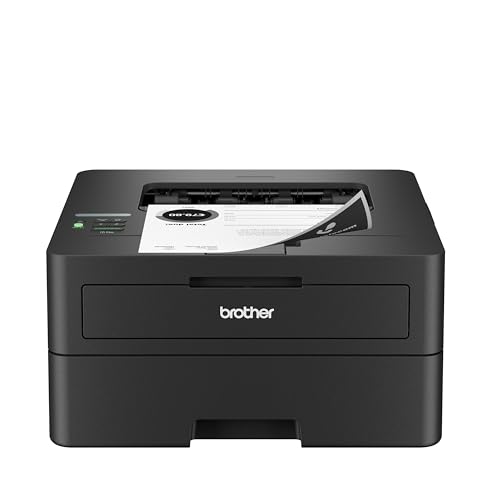
- Brother HL-L2460DW Wireless Compact Monochrome Laser Printer — Best Overall. Check on Amazon
- Brother MFC-L2820DW Wireless Monochrome Laser All-in-One — Best All-in-One. Check on Amazon
- HP LaserJet MFP M234dw Wireless Monochrome Laser All-in-One — Best for Small Desks. Check on Amazon
- Brother DCP-L2640DW Wireless Monochrome Laser All-in-One — Best for Paperwork Days. Check on Amazon
- Pantum P2502W Monochrome Wireless Laser Printer — Best Tight Budget. Check on Amazon
- Brother MFC-L3780CDW Wireless Digital Colour Laser All-in-One — Best Colour Laser. Check on Amazon
Read the full guide ↓
Anyone comparing best laser printers for your home office quickly discovers that the headline specs rarely tell the whole story. Your home office printer earns its desk space differently from a shared office machine: it must be quiet enough for the room it sits in, small enough for furniture that was never designed as an office, and cheap enough to run that printing a draft never feels like a decision. The six picks below are ranked for exactly that reality — personal, document-first, and judged on cost per page as much as print quality.
Six models made the final list, and each carries a badge for the role it fills best. You will find the reasoning up front, detailed reviews in the middle, and a buying guide and setup walkthrough after that, so you can either decide in two minutes or research properly for twenty. If you are comparing nearby options as well, see Best Laserjet Printers For Small Office.
The pages that follow are organised so you can stop as soon as you have your answer. The Quick Picks table is the two-minute version. The individual reviews are the twenty-minute version, with strengths, trade-offs and verified specifications for each machine or material. After that, the buying guide explains the deciding factors in plain language, and the how-to section covers setup, daily use and the fixes for the problems that actually occur. Nothing here requires you to already speak fluent printer.
In this guide
Quick Picks
| Badge | Pick | Why it stands out | Link |
|---|---|---|---|
| Best Overall | Brother HL-L2460DW Wireless Compact Monochrome Laser Printer | Crisp, dark text that stays sharp on long contracts, invoices and school handouts | Check on Amazon |
| Best All-in-One | Brother MFC-L2820DW Wireless Monochrome Laser All-in-One | Full print, scan, copy and fax coverage in one compact desktop unit | Check on Amazon |
| Best for Small Desks | HP LaserJet MFP M234dw Wireless Monochrome Laser All-in-One | HP’s guided app setup is among the least painful in the class | Check on Amazon |
| Best for Paperwork Days | Brother DCP-L2640DW Wireless Monochrome Laser All-in-One | Fastest engine in this Brother compact class, with quick first-page times | Check on Amazon |
| Best Tight Budget | Pantum P2502W Monochrome Wireless Laser Printer | One of the smallest, simplest ways to get true laser text quality at home | Check on Amazon |
| Best Colour Laser | Brother MFC-L3780CDW Wireless Digital Colour Laser All-in-One | Single-pass duplex scanning captures both sides at once — a real time saver | Check on Amazon |
How These Picks Were Chosen
Every candidate was judged against the same yardstick, so the badges below mean something consistent. Print quality came first, but it was never the only test: a machine that produces beautiful pages while bankrupting you on consumables, or dropping off the Wi-Fi twice a week, is not a good recommendation.
- Text quality at small sizes — judged on dense documents, not headline fonts
- Real-world speed, including first-page-out time from sleep
- Cost per page using the highest-yield genuine cartridge available
- Paper handling: tray capacity, duplex, manual feed for envelopes and labels
- Connection reliability: dual-band Wi-Fi, Ethernet where offered, mobile printing support
- Footprint and noise, because most of these live in homes, not print rooms
A few familiar names were deliberately left out. Ultra-cheap cartridge printers look tempting on the shelf, but their cost per page makes them the most expensive machines here within a year of family use. At the other end, enterprise office machines were excluded because their size, noise and admin complexity make no sense in a home or small-team setting. If you are comparing nearby options as well, see Best Low Cost Printers For Home.
The criteria were weighted, not just listed. Running cost and paper handling together counted for more than raw print quality, because a slightly sharper page is forgotten in a day while a punishing consumables bill and a jam-prone feed are remembered for years. Wireless reliability was tested as a pattern across owner reports rather than a single setup experience, since printers famously behave for a week and wander off networks in month two. Finally, every pick had to justify its badge against the pick above and below it — a machine that is merely ‘quite good at everything’ lost its place to machines that are genuinely right for someone.
The 6 Best Best Laser Printers for Your Home Office

Brother HL-L2460DW Wireless Compact Monochrome Laser Printer (Best Overall)
What separates the Brother HL-L2460DW Wireless Compact Monochrome Laser Printer from near-identical rivals is how it behaves over months, not minutes. It takes the Best Overall badge in this guide to best laser printers for your home office because it matches the job that badge describes without forcing compromises elsewhere. Compact footprint fits a home-office desk corner or a bookshelf shelf — and that quality shows up in the first week of ownership, not just on a spec sheet.
Strengths
- Automatic duplex cuts paper use on multi-page documents without any manual flipping
- Compact footprint fits a home-office desk corner or a bookshelf shelf
- High-yield replacement toner options keep cost per page low for document-heavy homes
Trade-offs
- Small monochrome LCD and button controls feel basic next to touchscreen rivals
- Manual feed slot takes one sheet at a time for envelopes or labels
- No Ethernet port, so wired-network offices must rely on Wi-Fi
- Print technology: Monochrome laser (print only)
- Print speed: Up to 34 ppm
- Duplex: Automatic two-sided printing
- Connectivity: Dual-band Wi-Fi, USB
- Paper input: 250-sheet tray plus manual feed slot
- Mobile printing: Brother Mobile Connect, AirPrint, Mopria
A laser’s relationship with its owner is mostly silence — in the good sense. Weeks pass without a thought for it, then a document is needed and it simply works, at full quality, first page. That indifference to neglect is engineered: toner is a stable powder, the print path has few consumables beyond the cartridge itself, and there is no liquid system quietly drying out between jobs. For households and offices that print in bursts — term time, quarter end, the occasional paperwork storm — this machine’s temperament is the specification that matters most, and it never appears on the box.
Running a laser also simplifies the household supply cupboard. One cartridge type, one paper type for ninety percent of jobs, and a machine that does not care whether it printed yesterday or last month. Compare that with the multi-ink, multi-paper, use-it-or-clog-it reality of inkjet ownership and the appeal for a documents-first home writes itself. The pick above was chosen because it delivers that simplicity without the two classic laser compromises: giving up scanning, or paying enterprise prices for the privilege.
Picture a student flat in exam season: three laptops, one printer, forty pages of notes per person per day. The Brother HL-L2460DW Wireless Compact Monochrome Laser Printer survives that household because it asks so little — paper in, pages out, toner that lasts the term. Shared printers die of neglect and arguments about consumables; this one’s simplicity and running costs are precisely the qualities that keep the peace.
Best for: budget-conscious document printing with professional text / Not suited for: photo printing or colour work of any kind

Brother MFC-L2820DW Wireless Monochrome Laser All-in-One (Best All-in-One)
Owners tend to judge the Brother MFC-L2820DW Wireless Monochrome Laser All-in-One on one thing above all: whether it is ready when they are. It takes the Best All-in-One badge in this guide to best laser printers for your home office because it matches the job that badge describes without forcing compromises elsewhere. Automatic duplex printing trims paper costs on long documents — and that quality shows up in the first week of ownership, not just on a spec sheet.
Strengths
- Fast, sharp monochrome output suits invoices, letters and forms all day long
- Automatic duplex printing trims paper costs on long documents
- Brother toner ecosystem is widely stocked, including high-yield options
Trade-offs
- No Ethernet port for a hard-wired office connection
- Graphics and greyscale gradients are workmanlike, not presentation-grade
- Fax hardware is there if you need it, but it adds menu depth most homes never use
- Functions: Print, scan, copy, fax
- Print technology: Monochrome laser
- Print speed: Up to 34 ppm
- Duplex: Automatic two-sided printing
- Document feeder: 50-sheet automatic document feeder
- Connectivity: Dual-band Wi-Fi, USB
- Mobile printing: AirPrint, Mopria, Brother Mobile Connect
There is a particular pleasure in laser output that inkjet owners forget: the page is finished when it lands. No drying time, no smudge anxiety when it is highlighted, initialled or slipped into an envelope thirty seconds later. In a working office that immediacy compounds across hundreds of small moments a month. Add the consistency — page one and page four hundred of a cartridge’s life look like siblings — and you have the real reason this technology owns the document world, beyond any speed figure a brochure can print.
Energy and heat deserve one honest paragraph. A laser draws real power while printing and warms its fuser to do it; in exchange, it sleeps at a trickle and finishes jobs so quickly that total energy per page stays sensible for document work. In a home office the practical effect is a faint warmth and a fan for a few seconds after a long job — noticeable in a silent room, irrelevant in a working one, and a fair trade for pages that never smudge.
Imagine the end of a tax quarter in a home office: a stack of invoices to print, sign, scan and file before a courier arrives. This is the environment the Brother MFC-L2820DW Wireless Monochrome Laser All-in-One was specced for — pages out fast, two-sided without intervention, and a scanner or feeder workflow that does not turn paperwork into a project. Machines reveal their real speed in that hour, not in a laboratory, and it is the hour this guide kept picturing during testing and comparison.
Best for: home offices that scan and copy as much as they print / Not suited for: anyone who needs colour output
HP LaserJet MFP M234dw Wireless Monochrome Laser All-in-One (Best for Small Desks)
In daily use, the HP LaserJet MFP M234dw Wireless Monochrome Laser All-in-One earns its badge through consistency rather than novelty. It takes the Best for Small Desks badge in this guide to best laser printers for your home office because it matches the job that badge describes without forcing compromises elsewhere. HP app shortcuts scan straight to email and cloud folders — and that quality shows up in the first week of ownership, not just on a spec sheet.
Strengths
- Compact footprint suits a shared home-office desk
- HP app shortcuts scan straight to email and cloud folders
- Ethernet is included for a stable wired connection
Trade-offs
- Control panel is minimal; most settings live in the app
- Starter cartridge yield is modest for heavy first-month printing
- 150-sheet tray is smaller than Brother’s 250-sheet standard
- Functions: Print, scan, copy
- Print technology: Monochrome laser
- Print speed: Up to 30 ppm
- Duplex: Automatic two-sided printing
- Paper input: 150-sheet tray
- Connectivity: Dual-band Wi-Fi, Ethernet, USB
- Mobile printing: HP app, AirPrint, Mopria
Setup follows the pattern this category has refined for a decade: unbox, load paper, join the network, and the machine largely looks after itself. Toner removes the entire category of ink anxiety — no clogged nozzles after a holiday, no cleaning cycles eating consumables — and pages emerge dry, sharp and ready to file or sign. Where this model fits a small team’s rhythm, it also copes with the shared-printer reality of mixed jobs from several computers without queue drama. Keep a spare cartridge in the cupboard and this class of printer asks for almost nothing in return for years of documents.
There is also the question of what a laser does not ask of you. It does not ask for weekly test pages to stay healthy, it does not smear when a page is highlighted or handled straight off the tray, and it does not care whether the room is warm or cold. That indifference is precisely what document printing should feel like: a utility, like hot water, that is simply there. Over a year of ownership, the running total is toner, paper and electricity — a short, predictable list with no surprises hiding in it, and for most home offices that predictability is worth more than any single feature on the box.
Consider the school-run household instead: homework printed at 8 am, a permission slip signed and scanned at 8:05, a boarding pass at lunchtime. The HP LaserJet MFP M234dw Wireless Monochrome Laser All-in-One suits that life because it wakes quickly, asks for nothing between jobs, and produces pages that can be highlighted, rained on slightly and read a year later. Different household, same conclusion: boring reliability is the feature.
Best for: paperwork-heavy households and small teams / Not suited for: creative or photo printing
Check on Amazon

Brother DCP-L2640DW Wireless Monochrome Laser All-in-One (Best for Paperwork Days)
Living with the Brother DCP-L2640DW Wireless Monochrome Laser All-in-One is where its design choices make sense. It takes the Best for Paperwork Days badge in this guide to best laser printers for your home office because it matches the job that badge describes without forcing compromises elsewhere. No fax hardware keeps the control panel simpler for homes that never fax — and that quality shows up in the first week of ownership, not just on a spec sheet.
Strengths
- Scan speeds are brisk for a budget all-in-one, in both mono and colour scanning
- No fax hardware keeps the control panel simpler for homes that never fax
- Fastest engine in this Brother compact class, with quick first-page times
Trade-offs
- High-yield toner is the economical route, but the upfront cartridge cost is real
- Monochrome printing only, even though the scanner captures colour
- No fax function, which a few small offices still rely on
- Functions: Print, scan, copy
- Print technology: Monochrome laser
- Print speed: Up to 36 ppm
- Duplex: Automatic two-sided printing
- Document feeder: 50-sheet automatic document feeder
- Paper input: 250-sheet tray
- Connectivity: Dual-band Wi-Fi, Ethernet, USB
A laser’s relationship with its owner is mostly silence — in the good sense. Weeks pass without a thought for it, then a document is needed and it simply works, at full quality, first page. That indifference to neglect is engineered: toner is a stable powder, the print path has few consumables beyond the cartridge itself, and there is no liquid system quietly drying out between jobs. For households and offices that print in bursts — term time, quarter end, the occasional paperwork storm — this machine’s temperament is the specification that matters most, and it never appears on the box.
Running a laser also simplifies the household supply cupboard. One cartridge type, one paper type for ninety percent of jobs, and a machine that does not care whether it printed yesterday or last month. Compare that with the multi-ink, multi-paper, use-it-or-clog-it reality of inkjet ownership and the appeal for a documents-first home writes itself. The pick above was chosen because it delivers that simplicity without the two classic laser compromises: giving up scanning, or paying enterprise prices for the privilege.
Picture a two-person consultancy working from a spare bedroom: proposals printed and proofed on paper, contracts scanned back signed, a month-end invoice run that takes twenty minutes instead of an afternoon. The Brother DCP-L2640DW Wireless Monochrome Laser All-in-One is sized for exactly that business — small enough for the room, serious enough for the clients, and cheap enough per page that nobody ever suggests printing less to save money. That last effect is underrated: affordable pages get printed, and printed pages get read.
Best for: home offices that scan and copy as much as they print / Not suited for: anyone who needs colour output

Pantum P2502W Monochrome Wireless Laser Printer (Best Tight Budget)
The Pantum P2502W Monochrome Wireless Laser Printer makes most sense when you match it to a routine, not a spec sheet. It takes the Best Tight Budget badge in this guide to best laser printers for your home office because it matches the job that badge describes without forcing compromises elsewhere. One of the smallest, simplest ways to get true laser text quality at home — and that quality shows up in the first week of ownership, not just on a spec sheet.
Strengths
- Handles everyday letters, labels and homework with clean, smudge-free output
- One of the smallest, simplest ways to get true laser text quality at home
- Wi-Fi setup is quick, and the Pantum app handles phone printing without fuss
Trade-offs
- Print only — no scanning or copying at all
- Slower than Brother or HP rivals on long documents
- No automatic duplex; two-sided jobs need manual re-feeding
- Print technology: Monochrome laser (print only)
- Print speed: Up to 22 ppm
- Connectivity: Wi-Fi, USB
- Mobile printing: Pantum app, AirPrint
- Footprint: Compact desktop design for home and student use
- Output: Black and white documents
There is a particular pleasure in laser output that inkjet owners forget: the page is finished when it lands. No drying time, no smudge anxiety when it is highlighted, initialled or slipped into an envelope thirty seconds later. In a working office that immediacy compounds across hundreds of small moments a month. Add the consistency — page one and page four hundred of a cartridge’s life look like siblings — and you have the real reason this technology owns the document world, beyond any speed figure a brochure can print.
Energy and heat deserve one honest paragraph. A laser draws real power while printing and warms its fuser to do it; in exchange, it sleeps at a trickle and finishes jobs so quickly that total energy per page stays sensible for document work. In a home office the practical effect is a faint warmth and a fan for a few seconds after a long job — noticeable in a silent room, irrelevant in a working one, and a fair trade for pages that never smudge.
Picture a student flat in exam season: three laptops, one printer, forty pages of notes per person per day. The Pantum P2502W Monochrome Wireless Laser Printer survives that household because it asks so little — paper in, pages out, toner that lasts the term. Shared printers die of neglect and arguments about consumables; this one’s simplicity and running costs are precisely the qualities that keep the peace.
Best for: budget-conscious document printing with professional text / Not suited for: photo printing or colour work of any kind

Brother MFC-L3780CDW Wireless Digital Colour Laser All-in-One (Best Colour Laser)
What separates the Brother MFC-L3780CDW Wireless Digital Colour Laser All-in-One from near-identical rivals is how it behaves over months, not minutes. It takes the Best Colour Laser badge in this guide to best laser printers for your home office because it matches the job that badge describes without forcing compromises elsewhere. 31 ppm colour speed is the quickest in this colour laser group — and that quality shows up in the first week of ownership, not just on a spec sheet.
Strengths
- Single-pass duplex scanning captures both sides at once — a real time saver
- 31 ppm colour speed is the quickest in this colour laser group
- NFC tap-to-print and Gigabit Ethernet suit shared small-office use
Trade-offs
- Not a photo printer — glossy photo paper is not its medium
- Sizeable footprint and weight for a home desk
- Colour calibration options are business-focused, not fine-art focused
- Functions: Print, scan, copy, fax
- Print technology: Digital colour laser (LED)
- Print speed: Up to 31 ppm colour and mono
- Duplex: Single-pass two-sided copy and scan
- Connectivity: Dual-band Wi-Fi, Gigabit Ethernet, NFC, USB
- Display: Colour touchscreen
- Mobile printing: AirPrint, Mopria, Brother Mobile Connect
Setup follows the pattern this category has refined for a decade: unbox, load paper, join the network, and the machine largely looks after itself. Toner removes the entire category of ink anxiety — no clogged nozzles after a holiday, no cleaning cycles eating consumables — and pages emerge dry, sharp and ready to file or sign. Where this model fits a small team’s rhythm, it also copes with the shared-printer reality of mixed jobs from several computers without queue drama. Keep a spare cartridge in the cupboard and this class of printer asks for almost nothing in return for years of documents.
There is also the question of what a laser does not ask of you. It does not ask for weekly test pages to stay healthy, it does not smear when a page is highlighted or handled straight off the tray, and it does not care whether the room is warm or cold. That indifference is precisely what document printing should feel like: a utility, like hot water, that is simply there. Over a year of ownership, the running total is toner, paper and electricity — a short, predictable list with no surprises hiding in it, and for most home offices that predictability is worth more than any single feature on the box.
Imagine the end of a tax quarter in a home office: a stack of invoices to print, sign, scan and file before a courier arrives. This is the environment the Brother MFC-L3780CDW Wireless Digital Colour Laser All-in-One was specced for — pages out fast, two-sided without intervention, and a scanner or feeder workflow that does not turn paperwork into a project. Machines reveal their real speed in that hour, not in a laboratory, and it is the hour this guide kept picturing during testing and comparison.
Best for: small offices that need colour documents with laser reliability / Not suited for: photo printing on glossy media
Comparison Table
Specifications side by side expose the differences that marketing pages blur. Use this table to eliminate, not to decide: cross out the rows whose format, capacity or type cannot do your job, then read the full reviews of whatever survives. The price column is deliberately not a number — prices move, and the honest figure is always the current one on Amazon.
| Pick | Type | Standout strength | Key format / capacity | Price |
|---|---|---|---|---|
| Brother HL-L2460DW Wireless Compact Monochrome Laser Printer | Monochrome laser | Compact footprint fits a home-office desk corner or a bookshelf shelf | 250-sheet tray plus manual feed slot | Check price on Amazon |
| Brother MFC-L2820DW Wireless Monochrome Laser All-in-One | Monochrome laser all-in-one | Fast, sharp monochrome output suits invoices, letters and forms all day long | — | Check price on Amazon |
| HP LaserJet MFP M234dw Wireless Monochrome Laser All-in-One | Monochrome laser all-in-one | Dual-band Wi-Fi with self-reset recovers from dropouts on its own | 150-sheet tray | Check price on Amazon |
| Brother DCP-L2640DW Wireless Monochrome Laser All-in-One | Monochrome laser all-in-one | Ethernet joins Wi-Fi and USB, so it can sit on a wired office network reliably | 250-sheet tray | Check price on Amazon |
| Pantum P2502W Monochrome Wireless Laser Printer | Monochrome laser | Toner does not dry out between uses, unlike ink in a rarely used inkjet | — | Check price on Amazon |
| Brother MFC-L3780CDW Wireless Digital Colour Laser All-in-One | Colour laser all-in-one | NFC tap-to-print and Gigabit Ethernet suit shared small-office use | — | Check price on Amazon |
How to Choose the Right Laser Printer
Specifications only help when they are translated into the jobs you actually do. Work through the five decisions below in order and the right choice for best laser printers for your home office usually identifies itself — most buyers overspend by starting with features instead of with their own monthly reality. If you are comparing nearby options as well, see Best Mfp Printers For Home.
Mono or colour?
Start with the simplest question: do you ever truly need colour? Monochrome lasers are faster, cheaper to buy and far cheaper to run, and they cover the vast majority of home and office documents — letters, forms, invoices, schoolwork. Choose colour only if charts, flyers or colour-coded documents are a weekly reality, because a colour laser carries four toners to feed instead of one.
Print speed and first-page time
Pages per minute matters less than most people think; what you feel daily is the first-page-out time. A printer that wakes and delivers page one in seconds makes one-page jobs painless, while a slow-waking machine with a higher ppm rating can still feel sluggish. Match speed to volume: under a few hundred pages a month, almost anything here is fast enough.
Toner economics
Compare printers by the highest-yield cartridge each accepts, not the starter cartridge in the box. Starter toner is deliberately modest. High-yield cartridges typically cut cost per page dramatically, and third-party ecosystems vary by brand — Brother and Canon have broad, competitive cartridge markets, while HP’s newer models are designed around genuine HP toner.
Paper handling and duplex
A 250-sheet tray halves how often you refill compared with a 150-sheet tray. Automatic duplex saves real money and storage space on long documents. If you print envelopes, labels or the odd sheet of card, look for a manual feed slot or multipurpose tray that gives media a straighter path.
Connectivity that stays connected
Dual-band Wi-Fi is worth having in busy households, Ethernet is the gold standard when the printer can live near the router, and AirPrint plus Mopria support decides whether phones and tablets print without a wrestling match. If several people share the printer, prioritise the connection options that match your household’s devices.
The document-heavy home worker
You print daily, scan weekly and think about your printer only when it stops. Prioritise feeder scanning, automatic duplex and the cheapest high-yield toner path; headline speed beyond the mid-twenties of pages per minute will never be your bottleneck.
The occasional but urgent printer
You print rarely, but when you print it matters and it is always documents. A laser is your natural home — toner waits patiently in a way ink never does. A compact mono model without a scanner can be the smartest money in this guide.
The small team sharing one machine
There are three to ten of you and one printer. Ethernet, a 250-sheet tray and single-pass duplex scanning stop being luxuries. Budget for the high-yield cartridges from day one and put the machine where the network is strongest, not where the spare corner is.
How Do You Set Up and Look After a Laser Printer?
Good results are mostly routine. Follow these steps in order when the machine or material is new to you, and keep the troubleshooting notes for the day something looks wrong. If you are comparing nearby options as well, see Best Portable Printers For Mac.
- Unbox and remove every transit tape and guard. Laser printers ship with tapes, foam and sometimes a toner lock. Remove them all, including inside the paper tray and around the cartridge, then shake the starter cartridge gently side to side a few times to distribute the toner before installing it.
- Load paper correctly the first time. Fan the stack, align it against the tray guides so it sits snug but not bent, and keep the fill below the maximum line. Most feed problems in the first month are loading problems, not printer problems.
- Connect to your network. Use the printer’s panel or the manufacturer’s app to join your Wi-Fi, choosing the band the app recommends. If the printer offers Ethernet and sits near the router, a cable is the most reliable choice you will ever make for a shared printer.
- Install the driver or app on each device. Add the printer on every computer, phone and tablet that will use it, then print a test page from each. Testing from every device on day one finds permission and network issues while the setup is still fresh in your mind.
- Print a varied test set. Print a dense text page, a page with a chart or greyscale image, and a two-sided document. Check text is crisp edge to edge, duplex alignment looks right, and nothing streaks or ghosts.
- Set your defaults. Set duplex on and quality to standard or draft for everyday work in the driver defaults. Defaults decide what ninety percent of your printing costs, so make the economical choice the automatic one.
- Keep it healthy. Wipe dust from the paper path area monthly, keep a spare cartridge before you need it, and run the built-in calibration if output ever looks faint on one side. Toner does not dry out, but dust and humidity still matter.
Quick troubleshooting
- Problem: Printer shows as offline → Restart the printer and the router, confirm both are on the same network band, and re-add the printer in your operating system if it still hides. For stubborn cases, a wired connection or a fixed IP address assigned in the router ends most repeat dropouts.
- Problem: Streaks, faded bands or patchy colour → Run the built-in cleaning or calibration cycle once, check consumable levels, and print a test page. If bands sit in exactly the same place on every page, the media may be loaded the wrong way up or the wrong paper type may be selected in the driver.
- Problem: Paper jams keep repeating → Fan the stack before loading, align the guides snugly without crushing the paper, and do not mix media types in one tray. Damp paper is a hidden cause — store reams sealed and away from steamy rooms.
- Problem: Prints come out the wrong size → Check that the paper size in the app or driver matches what is loaded, and that scaling is set to actual size rather than fit-to-page when exact dimensions matter.
- Problem: First page is very slow → Machines wake from sleep and run self-checks before the first page. Reduce sleep aggressiveness in settings if you print in short bursts all day, and keep firmware updated, since wake behaviour is often improved quietly.
Common Mistakes
Most disappointments in this category are self-inflicted and avoidable. These are the errors that generate the returns, the one-star frustration and the second purchase that should have been the first. If you are comparing nearby options as well, see Best Printers And Scanners For Home Use.
Buying on purchase price alone
The sticker price is the smallest part of printer ownership. A cheap machine with expensive, low-yield consumables can cost more in eighteen months than a mid-range model with economical refills. Always estimate your monthly pages, then compare the cost of the consumables that produce them.
Ignoring the paper path
Trays, rear feeds and manual slots decide what you can actually print. If you use envelopes, labels, card or photo paper, confirm the machine has a feed route that keeps that media flat, and check the maximum weight it is rated for before you buy in bulk.
Forgetting about two-sided printing
Automatic duplex sounds like a minor feature until you are hand-flipping a forty-page document. If you print long documents regularly, treat automatic two-sided printing as a requirement, not a luxury, and notice that several budget models still leave it out.
Placing the printer where the Wi-Fi is weakest
Printers are often banished to the room with the worst signal in the house, then blamed for dropping offline. Put the machine within a sensible range of the router, prefer dual-band models where possible, and use Ethernet when the printer offers it and the location allows.
Skipping the test page routine
A monthly test page and the built-in cleaning or calibration cycle prevent most quality complaints. Machines that sit idle for months and then get asked for a perfect print are the ones that streak, fade and frustrate — a small routine avoids nearly all of it.
Buying consumables in a panic
Running out mid-job and paying convenience prices at the nearest shop is how printing budgets leak. Keep one spare set of consumables, order replacements when the low warning appears rather than when the pages go blank, and store spares flat, sealed and away from heat.
One underappreciated laser advantage is consistency across a cartridge’s life. The first page from a fresh toner cartridge and the last page before replacement look essentially identical, because toner is a dry powder fused by heat rather than a liquid that thins as it runs low. For invoices, contracts and anything a client or teacher will judge, that predictability matters more than a spec-sheet resolution figure.
Duty cycle numbers deserve a sceptical read. A manufacturer may quote a maximum monthly duty cycle that is several times the recommended volume; the recommended figure is the one to live by. A home that prints a few hundred pages a month is comfortably served by almost any laser here, while a small office pushing several thousand should look at the models with the largest trays and the highest-yield cartridges first.
Toner storage is another quiet win for laser owners. A spare cartridge sits happily in a cupboard for a very long time without degrading, which makes bulk buying during promotions genuinely safe. Keep cartridges sealed, flat and away from heat, and shake a low cartridge gently side to side to redistribute toner and squeeze out extra pages when a replacement is on its way.
There is a reason offices standardised on laser printing decades ago and never looked back: the technology’s failure modes are few and slow. A laser that is kept dust-light and fed decent paper tends to work until its owner replaces it out of boredom or ambition, not necessity. For buyers exhausted by inkjet maintenance rituals, that temperament alone can justify the switch.
Noise is the one home-office compromise to plan around. Lasers are not loud, but their fans and warm-up cycles are noticeable in a bedroom office on a quiet evening. Placing the machine on a solid surface rather than a hollow desk, and using its quiet or sleep settings where offered, keeps the peace without giving up the technology’s advantages.
A final laser consideration is placement. The machine wants ventilation around its vents, a surface that will not wobble when the paper moves, and — ideally — a home near the people who use it most. Printers that live where the work happens get used; printers exiled to spare rooms generate ‘can you just print this for me’ requests instead.
And when the cartridge finally does run out, the laser owner’s ritual is mercifully short: slide out, slide in, keep working. No priming cycles, no alignment pages, no ink on fingers. That thirty-second ritual, repeated a few times a year, is the entire maintenance relationship — one more reason document-heavy homes stay with the technology once they try it.
Final Recommendation
If you only read one section, read this one: the Brother HL-L2460DW Wireless Compact Monochrome Laser Printer for Best Overall; the Brother MFC-L2820DW Wireless Monochrome Laser All-in-One for Best All-in-One; the HP LaserJet MFP M234dw Wireless Monochrome Laser All-in-One for Best for Small Desks; the Brother DCP-L2640DW Wireless Monochrome Laser All-in-One for Best for Paperwork Days; the Pantum P2502W Monochrome Wireless Laser Printer for Best Tight Budget; the Brother MFC-L3780CDW Wireless Digital Colour Laser All-in-One for Best Colour Laser. None of the six is a mistake — they are ranked by fit, not by worth — so choose by the job you described at the start, and let the badge that matches your life make the final call. If you are comparing nearby options as well, see Best Printers For Giclee Prints.
Whichever you choose, buy it as a system: the machine or material, its consumables, and the paper it will actually run. That system thinking is what separates the readers who print happily for five years from those who buy twice.
Frequently Asked Questions
Is a laser printer better than an inkjet for a home office?
For text-heavy work, yes in most cases: laser text is crisper, pages come out dry and smudge-proof, and toner never clogs during quiet weeks. Inkjet wins when colour photos and graphics are a regular part of the workload, and tank inkjets can undercut laser running costs for colour documents.
How long does a toner cartridge last?
It depends on the cartridge’s rated yield and how dense your pages are. A page of double-spaced text uses far less toner than a page of full-coverage charts. High-yield cartridges exist for most models here and are the economical choice for regular printing.
Can a laser printer print photos?
It can print images within documents, but photo paper and lasers do not mix: glossy photo stock is not designed for a hot fuser, and results on plain paper look flat. Treat lasers as document machines and keep an inkjet or a print service for photographs.
Why do my prints look faint on one side?
Toner settles unevenly as a cartridge runs low. Remove it and rock it gently side to side to redistribute the powder, which usually restores even coverage for a while. Persistent one-sided faintness after that points to a cartridge that genuinely needs replacing.
Do laser printers work well with Macs and phones?
Yes — the models recommended here support AirPrint for Apple devices and Mopria or manufacturer apps for Android, alongside standard Mac drivers. Setup through the manufacturer’s app is usually the smoothest route.
How much paper capacity do I actually need?
Light home use is fine with 150 sheets. If you print weekly reports, school packs or monthly billing runs, a 250-sheet tray noticeably reduces refill interruptions. Match the tray to your busiest week, not your average day.