Low light is where cameras stop being equal. In bright daylight, almost any modern camera takes a good photograph; in a dim restaurant, a concert hall, or a street at dusk, the sensor, the lens, and the autofocus system are tested at once. Noise creeps into the shadows, colours wash out, and a camera that hunts for focus in the dark will miss the moment entirely. The cameras that handle these conditions well share a few traits: a large sensor that gathers more light, clean performance at high sensitivity settings, and autofocus that can find a face or an eye when there is barely any light to work with. Full-frame sensors have a real advantage here. Their larger area collects more light per pixel than the smaller sensors in most cameras, which means cleaner images at the same settings and more room to brighten a dark photograph afterwards without it falling apart. That advantage shows up most clearly in the shadows, where smaller sensors produce noise and colour shifts while full-frame files stay smooth and detailed, and it is the reason photographers who shoot weddings, concerts, and night streets almost always choose full-frame bodies. That is why this guide focuses on full-frame mirrorless cameras, from the specialised low-light flagship to the affordable full-frame entry point. Each camera below was checked against its current Amazon listing, and every one is a complete camera, ready to shoot with the lens listed or with a lens you already own, rather than a body that needs extra parts before it works at all — a body or a kit with a lens — rather than an accessory. Read the comparison table for a fast overview, then dig into the individual sections for the strengths and trade-offs that matter for the way you shoot. One thing to keep in mind as you read: no camera on this list is bad in low light, and the differences between them are about degree rather than kind. A photographer with a fast lens and good technique will take better low-light photographs with the cheapest camera here than a careless photographer will take with the most expensive one. The camera matters, but it is not the whole story, and the buying guide at the end of this article covers the lenses and techniques that make the biggest difference after the body itself.
In this guide
Quick picks: best low light cameras
| # | Product | Where to buy |
|---|---|---|
| 1 | Sony Alpha a7S III Full-Frame Mirrorless Camera Body Black | Check on Amazon |
| 2 | Sony Alpha a7 III Mirrorless Camera with 28-70mm Lens Black | Check on Amazon |
| 3 | Sony Alpha 7 IV Full-frame Mirrorless Interchangeable Lens Camera | Check on Amazon |
| 4 | Sony Alpha a7 V Full-Frame Mirrorless Camera Body | Check on Amazon |
| 5 | Canon EOS RP Mirrorless Camera RF24-105mm Lens F4-7.1 is STM Lens Kit | Check on Amazon |
| 6 | Canon EOS R6 Mark II Mirrorless Camera RF24-105mm F4-7.1 IS STM Lens Kit | Check on Amazon |
| 7 | Nikon Z 5 Full-Frame Mirrorless Stills/Video Camera | Check on Amazon |
Quick comparison
| Product | Key traits |
|---|---|
| Sony Alpha a7S III Full-Frame Mirrorless Camera Body Black | Sony a7S III, full-frame body, low-light specialist |
| Sony Alpha a7 III Mirrorless Camera with 28-70mm Lens Black | Sony a7 III, 24.2MP, 28-70mm kit lens |
| Sony Alpha 7 IV Full-frame Mirrorless Interchangeable Lens Camera | Sony a7 IV, full-frame, all-round hybrid |
| Sony Alpha a7 V Full-Frame Mirrorless Camera Body | Sony a7 V, full-frame body, AI autofocus |
| Canon EOS RP Mirrorless Camera RF24-105mm Lens F4-7.1 is STM Lens Kit | Canon EOS RP, full-frame, RF24-105mm kit |
| Canon EOS R6 Mark II Mirrorless Camera RF24-105mm F4-7.1 IS STM Lens Kit | Canon R6 Mark II, 24.2MP, RF24-105mm kit |
| Nikon Z 5 Full-Frame Mirrorless Stills/Video Camera | Nikon Z 5, full-frame, compact |

1. Sony Alpha a7S III Full-Frame Mirrorless Camera Body Black
What stands out
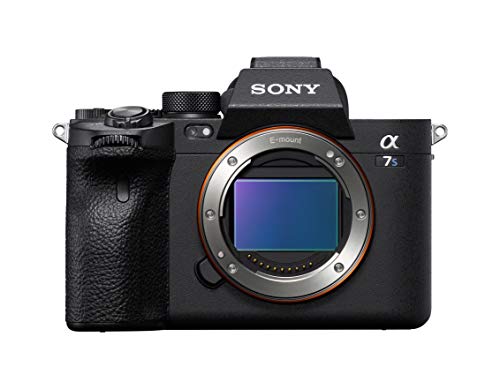
The Sony a7S III is the camera this whole category is built around. Its full-frame sensor is designed for sensitivity rather than resolution, with large pixels that gather light efficiently, and it is the camera videographers and stills photographers reach for when the light is genuinely poor. The Exmor R BSI CMOS sensor keeps noise under control at high sensitivity settings, the autofocus stays confident in dim conditions, and the in-body stabilisation helps when you are shooting handheld at slow shutter speeds. It is a body-only camera, so you pair it with a fast lens of your choice, and the combination is formidable in concerts, weddings, and night streets.
Trade-offs to weigh
The trade-offs are cost and resolution. The a7S III is the most specialised camera here, and its lower resolution means less room to crop heavily compared with higher-resolution bodies. It is also a body-only purchase, so the total cost includes a lens, and its video-first reputation means some stills photographers overlook it. For pure low-light stills work, though, its sensor remains the benchmark.
Who it fits best
Best for photographers and videographers who regularly shoot in very dark places — concerts, receptions, night streets — and who want the cleanest high-sensitivity images available.
In daily use
In everyday use, the Sony Alpha a7S III Full-Frame Mirrorless Camera Body Black settles into a routine quickly. Set it up once, the way you like it, and give yourself a few days to adjust before judging it. The first session is about learning the layout and the feel; the second and third are where it starts to feel natural. Keep it clean, keep it in the conditions it was designed for, and it will stay consistent. If it has parts that wear — cables, surfaces, moving components — a quick check now and then keeps small issues from becoming real ones, and keeping the packaging and documentation for the first weeks makes any return or exchange far simpler.
Before you buy
Before buying the Sony Alpha a7S III Full-Frame Mirrorless Camera Body Black, check two practical things. First, measure and compare: check the dimensions, the capacity, and the compatibility details listed on the product page against what you already own and the space you have. A product that does not fit your setup will never feel right, whatever its specifications say. Second, think about your routine — where it will live, how it will be stored, and what it needs to connect to. None of this is difficult, but all of it is easier to plan before the product arrives than after.
Check price on Amazon: Sony Alpha a7S III Full-Frame Mirrorless Camera Body Black

2. Sony Alpha a7 III Mirrorless Camera with 28-70mm Lens Black
What stands out
The Sony a7 III is the camera that made full-frame accessible, and it remains one of the best values for low-light stills. Its 24.2-megapixel full-frame sensor delivers clean images at high sensitivity settings, the autofocus is fast and reliable, and the 28-70mm kit lens in this listing means you can start shooting immediately without buying a lens separately. It is a balanced camera in every sense: good resolution for cropping, good low-light performance for the price, and a huge range of lenses available in the Sony system. For a first full-frame camera, it is still the default recommendation for a reason.
Trade-offs to weigh
The compromises are age and refinement. The a7 III is an older design now, so its autofocus and screen are a step behind the newest models, and its video features are more modest than the a7S III or a7 IV. The kit lens is versatile but slow, which limits low-light performance until you add a faster lens. Even so, the sensor and the system around it make this a remarkably capable camera for the money.
Who it fits best
Best for photographers buying their first full-frame camera, and for anyone who wants strong low-light stills without paying flagship money.
In daily use
Day to day, the Sony Alpha a7 III Mirrorless Camera with 28-70mm Lens Black is the kind of product you stop thinking about, which is the highest praise it can earn. It does its job the same way every time, without quirks or surprises, and lets you focus on the work or the game instead of the hardware. That consistency matters more than any single feature. Treat it reasonably — a clean desk, a suitable surface, and storage that protects it when it is not in use — and it will keep that consistency for a long time. The best products are the ones that fade into the background.
Before you buy
A few checks before you order the Sony Alpha a7 III Mirrorless Camera with 28-70mm Lens Black will save disappointment. Confirm the key details on the listing match what you expect — the exact model name, the included accessories, and the variant — since similar-looking models can differ in important ways. Check the return policy and the warranty terms so you know your options if it arrives damaged or does not suit you. And if you are replacing something you already own, compare the new product with the old one on the points that mattered most, rather than on headline features you may never use.
Check price on Amazon: Sony Alpha a7 III Mirrorless Camera with 28-70mm Lens Black

3. Sony Alpha 7 IV Full-frame Mirrorless Interchangeable Lens Camera
What stands out
The Sony a7 IV is the all-rounder of the Sony range, and it is the camera to buy if you want one body that does everything well. Its full-frame sensor offers more resolution than the a7 III, its autofocus is faster and more confident in low light, and its handling and screen are improved in every small way that matters during a long shoot. It shoots clean stills at high sensitivity settings and capable video, which makes it a true hybrid for photographers who also film. If you can only own one camera, the a7 IV is the most versatile choice on this list.
Trade-offs to weigh
The trade-off is that versatility costs more than specialisation. The a7 IV is more expensive than the a7 III, and it does not match the a7S III in the very darkest conditions. The files are larger than the a7 III’s, which means more storage and more processing time. For most photographers, those are acceptable prices for a camera that rarely feels out of its depth.
Who it fits best
Best for photographers who want one camera for stills and video, portraits and landscapes, daylight and darkness.
In daily use
Over a full week of use, the Sony Alpha 7 IV Full-frame Mirrorless Interchangeable Lens Camera shows its character in small ways. The feel stays the same from the first day to the last, nothing loosens or rattles, and the finish holds up to regular handling. If you switch between tasks, you will appreciate that it does not need a different setup for each one: configure it once for the way you actually use it and leave it alone. If you share the space with work or family, the same product should handle those jobs without feeling out of place, which is a useful bonus for a single-product setup.
Before you buy
When the Sony Alpha 7 IV Full-frame Mirrorless Interchangeable Lens Camera arrives, spend a little time setting it up properly. Follow the included instructions, check that everything listed as included is actually in the box, and test the main functions within the first day or two. Then leave the settings alone for a week. Constant tweaking is the enemy of getting used to a product, and most people get better results from a stable setup than from a perfect one. If something feels wrong after a few days, change one thing at a time so you know what actually helped.
Check price on Amazon: Sony Alpha 7 IV Full-frame Mirrorless Interchangeable Lens Camera
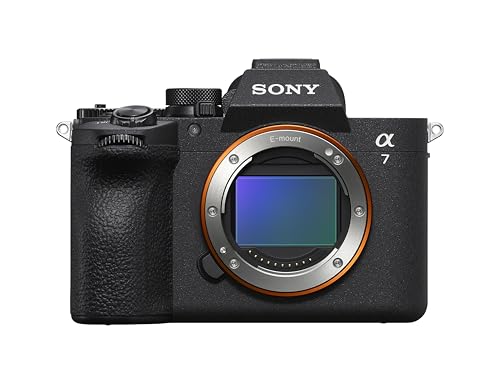
4. Sony Alpha a7 V Full-Frame Mirrorless Camera Body
What stands out
The Sony a7 V is the newest Sony body in this roundup, and it brings the latest autofocus technology to the full-frame range. Its AI-assisted autofocus can recognise and track subjects with a confidence that older cameras cannot match, which matters in low light, where focus is hardest to hold. The five-axis in-body stabilisation helps keep handheld shots sharp at slow shutter speeds, and the full-frame sensor delivers the clean high-sensitivity performance the range is known for. As a body-only camera it is aimed at photographers who already own lenses, or who plan to choose their glass carefully.
Trade-offs to weigh
The compromises are the ones that come with any new model: it is the most expensive Sony body here, and the body-only format means budgeting for a lens on top. Early adopters also pay for features that many photographers will not use for a year or more. If you already shoot Sony and want the newest autofocus, it is a genuine step forward; if you are buying your first full-frame camera, the a7 III or a7 IV may be the better value.
Who it fits best
Best for Sony shooters who want the latest autofocus and stabilisation, and for anyone who photographs moving subjects in poor light.
In daily use
In everyday use, the Sony Alpha a7 V Full-Frame Mirrorless Camera Body settles into a routine quickly. Set it up once, the way you like it, and give yourself a few days to adjust before judging it. The first session is about learning the layout and the feel; the second and third are where it starts to feel natural. Keep it clean, keep it in the conditions it was designed for, and it will stay consistent. If it has parts that wear — cables, surfaces, moving components — a quick check now and then keeps small issues from becoming real ones, and keeping the packaging and documentation for the first weeks makes any return or exchange far simpler.
Before you buy
Before buying the Sony Alpha a7 V Full-Frame Mirrorless Camera Body, check two practical things. First, measure and compare: check the dimensions, the capacity, and the compatibility details listed on the product page against what you already own and the space you have. A product that does not fit your setup will never feel right, whatever its specifications say. Second, think about your routine — where it will live, how it will be stored, and what it needs to connect to. None of this is difficult, but all of it is easier to plan before the product arrives than after.
Check price on Amazon: Sony Alpha a7 V Full-Frame Mirrorless Camera Body

5. Canon EOS RP Mirrorless Camera RF24-105mm Lens F4-7.1 is STM Lens Kit
What stands out
The Canon EOS RP is the most affordable way into full-frame photography, and it is the camera that proves you do not need to spend a fortune to shoot in low light. Its full-frame sensor is a large step up from the smaller sensors in most cameras, and the RF24-105mm kit lens in this listing covers a genuinely useful range, from wide-angle scenes to short portraits. The camera is compact and light for a full-frame body, the controls are straightforward, and the Canon colour and handling will feel familiar to anyone coming from a Canon DSLR or compact camera. For stills in dim restaurants, churches, and evening streets, the RP is far more capable than its price suggests.
Trade-offs to weigh
The trade-offs are performance and battery life. The autofocus and burst speed are more modest than the R6 Mark II, the battery is small and will need a spare for a long day, and the sensor is an older design that does not match the newest Sonys at the highest sensitivity settings. The kit lens is also slow, so the best low-light results come after adding a faster lens. As a first full-frame camera, though, the RP is an excellent starting point.
Who it fits best
Best for photographers entering full-frame on a budget, Canon users with existing lenses, and anyone who wants a light, simple camera for travel and family photography.
In daily use
Day to day, the Canon EOS RP Mirrorless Camera RF24-105mm Lens F4-7.1 is STM Lens Kit is the kind of product you stop thinking about, which is the highest praise it can earn. It does its job the same way every time, without quirks or surprises, and lets you focus on the work or the game instead of the hardware. That consistency matters more than any single feature. Treat it reasonably — a clean desk, a suitable surface, and storage that protects it when it is not in use — and it will keep that consistency for a long time. The best products are the ones that fade into the background.
Before you buy
A few checks before you order the Canon EOS RP Mirrorless Camera RF24-105mm Lens F4-7.1 is STM Lens Kit will save disappointment. Confirm the key details on the listing match what you expect — the exact model name, the included accessories, and the variant — since similar-looking models can differ in important ways. Check the return policy and the warranty terms so you know your options if it arrives damaged or does not suit you. And if you are replacing something you already own, compare the new product with the old one on the points that mattered most, rather than on headline features you may never use.
Check price on Amazon: Canon EOS RP Mirrorless Camera RF24-105mm Lens F4-7.1 is STM Lens Kit

6. Canon EOS R6 Mark II Mirrorless Camera RF24-105mm F4-7.1 IS STM Lens Kit
What stands out
The Canon EOS R6 Mark II is the camera for photographers who want Canon’s best all-round performance in low light. Its 24.2-megapixel full-frame sensor is clean at high sensitivity settings, its autofocus is fast and tenacious even in dim conditions, and the RF24-105mm kit lens gives you a versatile starting point. The in-body stabilisation works with the lens stabilisation to keep handheld shots sharp, and the handling — the grip, the controls, the screen — is designed for long days of shooting. It is a hybrid camera that handles stills and video with equal confidence, and it is the Canon to buy if you want one body that does everything.
Trade-offs to weigh
The trade-off is price: the R6 Mark II costs significantly more than the RP, and its resolution is the same 24.2 megapixels, so you are paying for autofocus, speed, and handling rather than more detail. It is also a larger, heavier camera than the RP. For photographers who shoot in challenging light for a living, or who simply want the best Canon all-rounder, it is money well spent.
Who it fits best
Best for Canon photographers who want a fast, reliable all-rounder for weddings, events, and travel in any light.
In daily use
Over a full week of use, the Canon EOS R6 Mark II Mirrorless Camera RF24-105mm F4-7.1 IS STM Lens Kit shows its character in small ways. The feel stays the same from the first day to the last, nothing loosens or rattles, and the finish holds up to regular handling. If you switch between tasks, you will appreciate that it does not need a different setup for each one: configure it once for the way you actually use it and leave it alone. If you share the space with work or family, the same product should handle those jobs without feeling out of place, which is a useful bonus for a single-product setup.
Before you buy
When the Canon EOS R6 Mark II Mirrorless Camera RF24-105mm F4-7.1 IS STM Lens Kit arrives, spend a little time setting it up properly. Follow the included instructions, check that everything listed as included is actually in the box, and test the main functions within the first day or two. Then leave the settings alone for a week. Constant tweaking is the enemy of getting used to a product, and most people get better results from a stable setup than from a perfect one. If something feels wrong after a few days, change one thing at a time so you know what actually helped.
Check price on Amazon: Canon EOS R6 Mark II Mirrorless Camera RF24-105mm F4-7.1 IS STM Lens Kit

7. Nikon Z 5 Full-Frame Mirrorless Stills/Video Camera
What stands out
The Nikon Z 5 is Nikon’s compact full-frame camera, and it is the quiet value pick of this list. Its full-frame sensor delivers clean images at high sensitivity settings, the body is weather-sealed and solidly built, and the Z mount gives you access to Nikon’s growing range of lenses. Nikon describes it as its most compact full-frame stills and video camera, and that compactness matters: it is a camera you will actually carry, which is the first requirement for any photograph. The handling is straightforward, the image quality is strong, and the price undercuts most of its rivals.
Trade-offs to weigh
The compromises are speed and video. The autofocus and burst rate are more modest than the R6 Mark II or the a7 IV, and the video features are solid rather than spectacular. It is also a camera that rewards patient shooting rather than spray-and-pray bursts. For stills photographers who value image quality and build over speed, those are minor points.
Who it fits best
Best for stills photographers who want a compact, well-built full-frame camera, and for Nikon users looking for an affordable second body.
In daily use
In everyday use, the Nikon Z 5 Full-Frame Mirrorless Stills/Video Camera settles into a routine quickly. Set it up once, the way you like it, and give yourself a few days to adjust before judging it. The first session is about learning the layout and the feel; the second and third are where it starts to feel natural. Keep it clean, keep it in the conditions it was designed for, and it will stay consistent. If it has parts that wear — cables, surfaces, moving components — a quick check now and then keeps small issues from becoming real ones, and keeping the packaging and documentation for the first weeks makes any return or exchange far simpler.
Before you buy
Before buying the Nikon Z 5 Full-Frame Mirrorless Stills/Video Camera, check two practical things. First, measure and compare: check the dimensions, the capacity, and the compatibility details listed on the product page against what you already own and the space you have. A product that does not fit your setup will never feel right, whatever its specifications say. Second, think about your routine — where it will live, how it will be stored, and what it needs to connect to. None of this is difficult, but all of it is easier to plan before the product arrives than after.
Check price on Amazon: Nikon Z 5 Full-Frame Mirrorless Stills/Video Camera
Buying guide
Sensor size matters most
A full-frame sensor gathers more light than the smaller sensors in most cameras, which is the single biggest factor in low-light image quality. Larger pixels mean less noise at the same sensitivity setting, and more room to brighten a dark image afterwards. If low light is your priority, a full-frame camera is the most effective upgrade you can buy — more effective than a new lens or a new flash, though both help as well.
Sensitivity and noise
Every camera has a sensitivity range, and the useful limit is the point where noise becomes distracting rather than the maximum number on the specification sheet. Full-frame cameras typically stay clean two or three stops beyond smaller-sensor cameras, which is the difference between a usable photograph and a noisy one. Shoot in RAW format when you can, since it preserves far more information for brightening shadows afterwards than a JPEG does.
Autofocus in the dark
A camera that cannot focus in low light will miss the shot regardless of its sensor. Look for autofocus that works in dim conditions and can find eyes and faces when the light is poor. The newest systems use subject recognition to hold focus on a person even in near darkness, and that is often the difference between a sharp photograph and a missed one. A fast lens helps here too, since it lets more light reach the autofocus system.
Lenses matter as much as bodies
A fast lens — one with a wide maximum aperture — lets in far more light than a slow kit lens, and it is often the most cost-effective low-light upgrade. A fifty-millimetre lens with a wide aperture is a classic low-light choice, and it costs far less than a new camera body. When choosing a camera, consider the lenses available for its mount and their prices, since you will likely own the lenses longer than the body.
When low light is really low
For the darkest scenes — a candlelit room, a street with no streetlights, a concert with a single spotlight — a tripod or a stable surface changes everything. It lets you use a low sensitivity setting and a long exposure, which produces a clean image that no handheld shot can match. If you cannot use a tripod, brace the camera against a wall, a table, or a railing, and use the camera’s timer so pressing the shutter does not shake it. A small, light tripod that you actually carry is worth more than a heavy one that stays at home.
Stabilisation and technique
In-body stabilisation lets you shoot handheld at slower shutter speeds, which gathers more light without raising the sensitivity. It is not a substitute for a tripod — nothing is, for truly dark scenes — but it turns many shots from impossible to possible. Good technique helps too: brace the camera, breathe out before pressing the shutter, and use a burst of shots so at least one is sharp.
Frequently asked questions
What makes a camera good in low light?
Three things: a large sensor that gathers more light, clean performance at high sensitivity settings, and autofocus that works in the dark. Full-frame sensors have a real advantage on all three, and a fast lens adds to it. No single specification tells the whole story, so look at real photographs taken in dim conditions rather than headline numbers.
Do I need a full-frame camera for low-light photography?
Not strictly — modern smaller-sensor cameras are far better in low light than they used to be — but full-frame is the most effective upgrade if low light is your priority. The difference is visible in cleaner shadows, more detail, and more room to edit afterwards. If you shoot in low light often, full-frame is worth the investment.
Is a fast lens more important than a new camera body?
Often, yes. A fast lens lets in several times more light than a slow kit lens, which directly improves low-light performance on any camera. If you already own a decent camera, a fast prime lens is usually the best value upgrade. If your camera is old or has a small sensor, a new body may matter more.
Should I shoot in RAW for low-light photography?
Yes, whenever you can. RAW files preserve far more information in the shadows and highlights than JPEGs, which means you can brighten a dark photograph afterwards without it falling apart. The files are larger and need editing, but for low-light work the difference is significant.
What is the best first lens for low-light photography?
A fifty-millimetre lens with a wide maximum aperture is the classic first low-light lens: it is affordable, sharp, and lets in several times more light than a kit zoom. A 35mm lens is a good alternative if you photograph indoors or in tight spaces, since its wider view fits more of a room into the frame. Either way, buy the lens for the photographs you actually take, not for the ones you imagine taking, and remember that a fast prime lens on a modest camera often outperforms a slow zoom on an expensive one.
Do I need a tripod for low-light photography?
Not always, but it helps enormously in the darkest scenes. Stabilisation and fast lenses cover most handheld situations, yet a tripod lets you use long exposures at low sensitivity settings, which is the cleanest way to photograph a still subject in the dark. For moving subjects a tripod does not help, since the subject itself will blur, and in those cases a fast lens and a higher sensitivity setting are the answer.
How do I reduce noise in low-light photos?
Use the lowest sensitivity setting that still gives you a fast enough shutter speed, expose correctly rather than underexposing, and shoot in RAW so you can reduce noise in editing. A fast lens, stabilisation, and a tripod all help by letting you use lower sensitivity settings in the first place.
Conclusion
The best low-light camera is the one that matches the darkness you actually shoot in. The Sony a7S III remains the benchmark for the very darkest conditions, while the a7 III is the best value for a first full-frame camera and the a7 IV is the most versatile all-rounder. The a7 V brings the newest autofocus to the range, the Canon EOS RP is the most affordable way into full-frame, the R6 Mark II is Canon’s best all-round performer, and the Nikon Z 5 is the compact, well-built value pick. Whichever you choose, pair it with a fast lens, shoot in RAW, and remember that the sensor is only the start — the lens, the light, and the photographer matter just as much. Before you buy, check the exact configuration on the listing — body-only or kit, and which lens is included — since the same camera name can cover several different packages. And once the camera arrives, take it out in the dark within the first week: the fastest way to learn a low-light camera is to use it where the light is poor, and to see for yourself what it can do. The dark is where a good camera earns its price, and the sooner you test yours there, the sooner you will know whether you chose well.