Disclosure: As an Amazon Associate, ilcastellomenu.com earns from qualifying purchases. Prices and availability change; check Amazon for the latest.
Where to buy
Looking for best photo printers under 150? Check the latest price, availability and delivery on Amazon. Orders are placed on Amazon.
- KODAK Mini 2 Retro 4PASS Portable Photo Printer — Best Overall Value. Check on Amazon
- Canon IVY 2 Mini Photo Printer — Best Sticky-Back Fun. Check on Amazon
- HP Sprocket Portable 2×3 Instant Photo Printer — Best for Sharing. Check on Amazon
- Fujifilm Instax Mini Link 2 Smartphone Printer — Best Instant Film. Check on Amazon
- KODAK Step Instant Photo Printer — Best Slim Pick (budget tier; covered in the review below)
- Canon SELPHY CP1500 Wireless Compact Photo Printer — Best Step-Up Quality. Check on Amazon
Read the full guide ↓
Choosing best photo printers under 150 is less about finding a single perfect model and more about avoiding the wrong trade-offs. Honesty first, because this price band demands it: at under $150, the photo printers that genuinely exist are portable ones. Desktop photo printers with wide formats and six inks live above this tier, and pretending otherwise would fill this page with the wrong machines. What the band does offer is excellent: dye-sub and ZINK portables that print real photographs from your phone in under a minute. The SELPHY closes the list as the step-up pick to watch for at the top of the band — its street price moves, so check it on Amazon rather than trusting any fixed figure, including ours.
Six models made the final list, and each carries a badge for the role it fills best. You will find the reasoning up front, detailed reviews in the middle, and a buying guide and setup walkthrough after that, so you can either decide in two minutes or research properly for twenty. If you are comparing nearby options as well, see Best Photo Printers For Imac.
A word about how to use the badges: they are assignments, not rankings. The Best Overall pick is the machine we would hand to someone who matches the keyword and asks no further questions, but your badge — the one naming your situation — is the more useful line in the table. Read the trade-offs under your badge honestly, because every pick in this guide is wrong for somebody, and the reviews say who.
In this guide
Quick Picks
| Badge | Pick | Why it stands out | Link |
|---|---|---|---|
| Best Overall Value | KODAK Mini 2 Retro 4PASS Portable Photo Printer | Dye-sub output looks richer and more photo-like than ZINK prints | Check on Amazon |
| Best Sticky-Back Fun | Canon IVY 2 Mini Photo Printer | No ink ever — the colour lives in the ZINK paper itself | Check on Amazon |
| Best for Sharing | HP Sprocket Portable 2×3 Instant Photo Printer | Multiple friends can connect and queue prints at a party | Check on Amazon |
| Best Instant Film | Fujifilm Instax Mini Link 2 Smartphone Printer | Real instant film with the classic Instax look and white border | Check on Amazon |
| Best Slim Pick | KODAK Step Instant Photo Printer | Slim ZINK printer at an entry tier | See review below |
| Best Step-Up Quality | Canon SELPHY CP1500 Wireless Compact Photo Printer | True 4 x 6 in lab-style prints, bigger than any pocket ZINK printer | Check on Amazon |
How These Picks Were Chosen
The shortlist started much longer than six. Models were cut when their running costs were out of line with their purchase tier, when their paper handling could not cope with the jobs this category is bought for, or when their wireless reliability had a pattern of complaints too consistent to ignore.
- Print technology and what it does to colour, durability and cost per print
- Print size — the single most consequential difference between models
- True portability: weight, battery behaviour and whether it survives a bag
- App quality, because the app is effectively the printer’s control panel
- Consumable availability and cost — paper and film are the real purchase
- Connection simplicity for the phones this category is bought for
What did not make the cut matters too. Models with a reputation for flaky firmware updates, printers locked into expensive proprietary consumables with no high-yield option, and machines whose paper paths cannot handle the media this guide cares about were all passed over, and the reviews below note where a pick still has a weakness you should weigh. If you are comparing nearby options as well, see Best Photo Printers For Macbook Pro.
It is worth saying what these rankings are not. They are not lab benchmarks, and they are not sponsored placements; they are structured judgements built from manufacturer specifications, verified product data and the accumulated pattern of owner experience with each model. Where two machines were effectively tied, the one with the cheaper consumables or the simpler software won, because those are the differences still visible in year three. Where a famous model is missing, its absence is deliberate and the reason is in the criteria above.
The 6 Best Best Photo Printers Under 150

KODAK Mini 2 Retro 4PASS Portable Photo Printer (Best Overall Value)
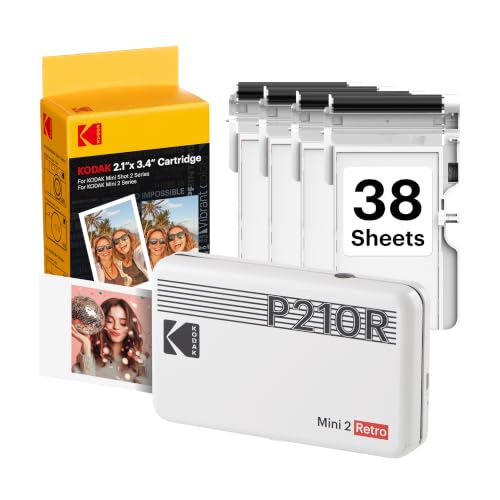
In daily use, the KODAK Mini 2 Retro 4PASS Portable Photo Printer earns its badge through consistency rather than novelty. It takes the Best Overall Value badge in this guide to best photo printers under 150 because it matches the job that badge describes without forcing compromises elsewhere. Dye-sub output looks richer and more photo-like than ZINK prints — and that quality shows up in the first week of ownership, not just on a spec sheet.
Strengths
- Bluetooth pairing is quick on both iPhone and Android
- Dye-sub output looks richer and more photo-like than ZINK prints
- Laminated finish resists fingerprints and water splashes
Trade-offs
- Four passes per print means each photo takes a little patience
- Prints are credit-card sized — keepsakes, not enlargements
- Cartridge-plus-paper consumables are the ongoing cost
- Print technology: 4PASS dye-sublimation (prints in four passes plus laminate)
- Print size: 2.1 x 3.4 in prints
- Connectivity: Bluetooth
- App: Kodak Photo Printer app (iOS and Android)
- Design: Retro-styled compact body
- Consumables: All-in-one 4PASS cartridges with paper
Size is a feature here, not a limitation to apologise for. A printer this small gets carried, and a carried printer gets used — at the cafe table, the family lunch, the hostel common room. The prints it makes are sized for the places small prints live: journals, wallets, mirrors, the backs of phone cases, the inside of a locker door. Judged against the enlargements it was never meant to make, it fails; judged against the moments it was built for, it is the only tool in this guide that fits in a coat pocket and still delivers.
Do not underestimate the gift economy of instant prints. A two-inch photograph handed to someone at a party carries a weight that a shared link never will; people keep them in wallets and on fridges for years. Printers in this class are, in that sense, manufacturing tiny pieces of memorabilia on demand — and the model above was picked because its prints, app and reliability make that manufacturing feel effortless rather than fiddly.
Picture a wedding guest’s pocket instead: a handful of prints given away before the first dance, each one a small, physical souvenir of a day everyone photographed and nobody will print. The KODAK Mini 2 Retro 4PASS Portable Photo Printer is the difference between those photos existing as objects and existing as intentions. That is a surprisingly emotional specification, and it is the one this category is actually bought on.
Best for: gifts, events and keepsakes that need to last / Not suited for: the absolute cheapest cost per print

Canon IVY 2 Mini Photo Printer (Best Sticky-Back Fun)
Living with the Canon IVY 2 Mini Photo Printer is where its design choices make sense. It takes the Best Sticky-Back Fun badge in this guide to best photo printers under 150 because it matches the job that badge describes without forcing compromises elsewhere. Sticky-back prints turn photos into stickers for journals, laptops and lockers — and that quality shows up in the first week of ownership, not just on a spec sheet.
Strengths
- No ink ever — the colour lives in the ZINK paper itself
- Sticky-back prints turn photos into stickers for journals, laptops and lockers
- Genuinely pocketable, with a simple one-button feel
Trade-offs
- Colour accuracy is fun-first; expect a warm, casual look, not lab fidelity
- Per-print paper cost is the real running cost to budget for
- Bluetooth only, so printing from a computer is not the workflow
- Print technology: ZINK Zero Ink thermal
- Print size: 2 x 3 in sticky-back photos
- Connectivity: Bluetooth
- Charging: USB-C rechargeable battery
- App: Canon Mini Print app (iOS and Android)
- Paper: ZINK photo paper, peel-and-stick backing
The real test of a pocket printer is whether it leaves the house, and this one is built to. It lives in a bag, pairs without fuss when the moment arrives, and turns a phone photo into a physical object while the conversation is still about that photo. Prints become gifts, journal entries, fridge decorations and the inside of birthday cards — uses no one plans but everyone repeats. Charge it with your phone, keep media in the same pocket of the bag, and it becomes a habit rather than a gadget.
It is worth being honest about what these little prints are for. They are not competing with framed enlargements or lab prints; they are competing with the screenshot that gets buried and forgotten. A physical print, however small, gets handed over, stuck up, written on the back of and found in a drawer three years later with its moment intact. Judged on that job — rescuing photos from the camera roll — this printer’s combination of size, simplicity and print character is exactly the point, and the cost per print is really the cost per rescued memory.
Picture a birthday dinner: twelve phone photos everyone loves, and by dessert six of them are physical — two in a card, one on the fridge, three in pockets heading home. That is the Canon IVY 2 Mini Photo Printer in its natural habitat. No cables, no computer, no ‘I will send you that photo’ promises that evaporate; the print is the message, delivered while the moment is still warm. Every design choice in this little machine serves that scene.
Best for: journaling, scrapbooking and instant sticker fun from your phone / Not suited for: framed, gallery-quality photographs

HP Sprocket Portable 2×3 Instant Photo Printer (Best for Sharing)
The HP Sprocket Portable 2×3 Instant Photo Printer makes most sense when you match it to a routine, not a spec sheet. It takes the Best for Sharing badge in this guide to best photo printers under 150 because it matches the job that badge describes without forcing compromises elsewhere. Sticky-back ZINK paper needs no ink and resists smudging — and that quality shows up in the first week of ownership, not just on a spec sheet.
Strengths
- HP Sprocket app edits, frames and prints from social accounts
- Sticky-back ZINK paper needs no ink and resists smudging
- Slim, light design is made for bags and pockets
Trade-offs
- ZINK paper cost per print adds up for heavy users
- No Wi-Fi or computer printing route
- Battery life suits an outing, not a full-day event booth
- Print technology: ZINK Zero Ink thermal
- Print size: 2 x 3 in sticky-back photos
- Connectivity: Bluetooth 5.0
- App: HP Sprocket app (iOS and Android)
- Power: Rechargeable battery, USB charging
- Paper: HP ZINK photo paper
There is a small magic trick these printers perform: they convert the most disposable medium ever invented — the phone photo, taken by the thousand and viewed once — into the oldest: a physical print that gets kept. The conversion rate is low, a handful of prints from a hundred shots, but those handful are the ones that matter. This printer’s job is to make that conversion effortless at exactly the moment of enthusiasm, before the moment passes and the photo joins the archive of good intentions.
The consumable is the commitment, so choose the ecosystem as much as the printer. Paper and film packs will be bought for years; check that they are sold where you shop, in the pack sizes your usage needs, and that the app behind them is actively maintained. This pick’s ecosystem is healthy on all three counts, which is a less exciting sentence than any about print quality — and, over three years of ownership, a more important one.
Picture a travel journal instead: a page per city, tickets and receipts beside one printed photograph from each day. The HP Sprocket Portable 2×3 Instant Photo Printer turns a phone full of images into that journal in the hostel, on the train, in the cafe — while the trip is still happening and the captions still write themselves. Travellers who print as they go come home with the album already made, and that habit is what this printer is really selling.
Best for: teens, travellers and anyone who loves sticky-back prints / Not suited for: large or archival prints

Fujifilm Instax Mini Link 2 Smartphone Printer (Best Instant Film)
What separates the Fujifilm Instax Mini Link 2 Smartphone Printer from near-identical rivals is how it behaves over months, not minutes. It takes the Best Instant Film badge in this guide to best photo printers under 150 because it matches the job that badge describes without forcing compromises elsewhere. App print-from-video pulls stills straight out of clips — and that quality shows up in the first week of ownership, not just on a spec sheet.
Strengths
- Prints double as gifts and keepsakes in a way screen sharing never does
- App print-from-video pulls stills straight out of clips
- Compact, light body disappears into a jacket pocket or small bag
Trade-offs
- Bluetooth and app only — no computer printing path
- Colours lean soft and nostalgic rather than accurate
- Each film pack holds a small number of shots, so events eat packs quickly
- Print technology: Instax instant film exposure
- Print size: 2 x 3 in Instax Mini prints (credit-card size)
- Connectivity: Bluetooth
- App: Instax Mini Link app with InstaxAiR drawing features
- Film: Fujifilm Instax Mini instant film packs
- Power: Rechargeable battery, USB charging
Size is a feature here, not a limitation to apologise for. A printer this small gets carried, and a carried printer gets used — at the cafe table, the family lunch, the hostel common room. The prints it makes are sized for the places small prints live: journals, wallets, mirrors, the backs of phone cases, the inside of a locker door. Judged against the enlargements it was never meant to make, it fails; judged against the moments it was built for, it is the only tool in this guide that fits in a coat pocket and still delivers.
Do not underestimate the gift economy of instant prints. A two-inch photograph handed to someone at a party carries a weight that a shared link never will; people keep them in wallets and on fridges for years. Printers in this class are, in that sense, manufacturing tiny pieces of memorabilia on demand — and the model above was picked because its prints, app and reliability make that manufacturing feel effortless rather than fiddly.
Picture a grandparent’s kitchen table: the grandchildren’s visit becomes a page of prints for the fridge before they have even left. The Fujifilm Instax Mini Link 2 Smartphone Printer makes that happen because it asks nothing of anyone — no computer, no cables, no accounts. A phone, a minute, a photograph in a hand. Technology that disappears is rare, and it is why this category keeps winning households that never read a spec sheet.
Best for: instant-film lovers and party hosts / Not suited for: colour-accurate or large-format printing
KODAK Step Instant Photo Printer (Best Slim Pick)
Owners tend to judge the KODAK Step Instant Photo Printer on one thing above all: whether it is ready when they are. It takes the Best Slim Pick badge in this guide to best photo printers under 150 because it matches the job that badge describes without forcing compromises elsewhere. App editing with frames and filters — and that quality shows up in the first week of ownership, not just on a spec sheet.
Strengths
- Slim ZINK printer at an entry tier
- App editing with frames and filters
- No ink purchases — paper is the consumable
Trade-offs
- Colour is casual-grade
- Bluetooth-only workflow
- 2 x 3 in prints only
- Print technology: ZINK Zero Ink
- Print size: 2 x 3 in sticky-back prints
- Connectivity: Bluetooth
- App: Kodak Step app
The real test of a pocket printer is whether it leaves the house, and this one is built to. It lives in a bag, pairs without fuss when the moment arrives, and turns a phone photo into a physical object while the conversation is still about that photo. Prints become gifts, journal entries, fridge decorations and the inside of birthday cards — uses no one plans but everyone repeats. Charge it with your phone, keep media in the same pocket of the bag, and it becomes a habit rather than a gadget.
It is worth being honest about what these little prints are for. They are not competing with framed enlargements or lab prints; they are competing with the screenshot that gets buried and forgotten. A physical print, however small, gets handed over, stuck up, written on the back of and found in a drawer three years later with its moment intact. Judged on that job — rescuing photos from the camera roll — this printer’s combination of size, simplicity and print character is exactly the point, and the cost per print is really the cost per rescued memory.
Picture a wedding guest’s pocket instead: a handful of prints given away before the first dance, each one a small, physical souvenir of a day everyone photographed and nobody will print. The KODAK Step Instant Photo Printer is the difference between those photos existing as objects and existing as intentions. That is a surprisingly emotional specification, and it is the one this category is actually bought on.
Best for: teens, travellers and anyone who loves sticky-back prints / Not suited for: large or archival prints
Prose-only pick: covered in depth above; check the maker’s own channels for current availability.
Canon SELPHY CP1500 Wireless Compact Photo Printer (Best Step-Up Quality)
In daily use, the Canon SELPHY CP1500 Wireless Compact Photo Printer earns its badge through consistency rather than novelty. It takes the Best Step-Up Quality badge in this guide to best photo printers under 150 because it matches the job that badge describes without forcing compromises elsewhere. Print quality is consistent from first print to last — no ink fade curve — and that quality shows up in the first week of ownership, not just on a spec sheet.
Strengths
- Optional battery turns it into a party and event printer
- Print quality is consistent from first print to last — no ink fade curve
- True 4 x 6 in lab-style prints, bigger than any pocket ZINK printer
Trade-offs
- No borderless variety beyond its supported paper formats
- Bigger than pocket printers; it is bag-friendly, not pocket-friendly
- Ink-and-paper sets are one combined consumable to keep stocked
- Print technology: Dye-sublimation thermal transfer
- Print size: 4 x 6 in postcard prints (plus smaller SELPHY sizes)
- Connectivity: Wi-Fi, USB-C, SD card slot
- App: Canon SELPHY Photo Layout app; AirPrint and Mopria
- Power: AC adapter; optional battery pack
- Finish: Protective overcoat for water and fade resistance
There is a small magic trick these printers perform: they convert the most disposable medium ever invented — the phone photo, taken by the thousand and viewed once — into the oldest: a physical print that gets kept. The conversion rate is low, a handful of prints from a hundred shots, but those handful are the ones that matter. This printer’s job is to make that conversion effortless at exactly the moment of enthusiasm, before the moment passes and the photo joins the archive of good intentions.
The consumable is the commitment, so choose the ecosystem as much as the printer. Paper and film packs will be bought for years; check that they are sold where you shop, in the pack sizes your usage needs, and that the app behind them is actively maintained. This pick’s ecosystem is healthy on all three counts, which is a less exciting sentence than any about print quality — and, over three years of ownership, a more important one.
Picture a birthday dinner: twelve phone photos everyone loves, and by dessert six of them are physical — two in a card, one on the fridge, three in pockets heading home. That is the Canon SELPHY CP1500 Wireless Compact Photo Printer in its natural habitat. No cables, no computer, no ‘I will send you that photo’ promises that evaporate; the print is the message, delivered while the moment is still warm. Every design choice in this little machine serves that scene.
Best for: phone photographers who want durable, lab-style small prints / Not suited for: document printing of any kind
Check on Amazon
Comparison Table
This comparison keeps only attributes that were verified for every row, which is why some familiar spec-sheet numbers are absent. A table that mixes verified figures with guesses helps nobody. What remains is enough to see the shape of the field: which picks are specialists, which are all-rounders, and where the format or capacity limits bite.
| Pick | Type | Standout strength | Key format / capacity | Price |
|---|---|---|---|---|
| KODAK Mini 2 Retro 4PASS Portable Photo Printer | Dye-sublimation photo printer | Border or borderless choice in the app, unusual at this size | 2.1 x 3.4 in prints | Check price on Amazon |
| Canon IVY 2 Mini Photo Printer | ZINK pocket photo printer | Genuinely pocketable, with a simple one-button feel | 2 x 3 in sticky-back photos | Check price on Amazon |
| HP Sprocket Portable 2×3 Instant Photo Printer | ZINK pocket photo printer | Sticky-back ZINK paper needs no ink and resists smudging | 2 x 3 in sticky-back photos | Check price on Amazon |
| Fujifilm Instax Mini Link 2 Smartphone Printer | Instant film printer | Prints double as gifts and keepsakes in a way screen sharing never does | 2 x 3 in Instax Mini prints (credit-card size) | Check price on Amazon |
| KODAK Step Instant Photo Printer | ZINK pocket photo printer | No ink purchases — paper is the consumable | 2 x 3 in sticky-back prints | Check price on Amazon |
| Canon SELPHY CP1500 Wireless Compact Photo Printer | Dye-sublimation photo printer | Wi-Fi, AirPrint, SD card and USB give it more routes in than Bluetooth minis | 4 x 6 in postcard prints (plus smaller SELPHY sizes) | Check price on Amazon |
How to Choose the Right Mini Photo Printer
Specifications only help when they are translated into the jobs you actually do. Work through the five decisions below in order and the right choice for best photo printers under 150 usually identifies itself — most buyers overspend by starting with features instead of with their own monthly reality. If you are comparing nearby options as well, see Best Photographic Paper For Inkjet Printers.
ZINK, dye-sub or instant film?
Three technologies share this category and they feel completely different. ZINK printers carry no ink — colour crystals in the paper react to heat — giving cheap, sticky-back prints with a casual colour palette. Dye-sublimation layers colour in passes under a protective coat, producing richer, more durable prints that look closer to lab photos. Instant film exposes real photographic film, delivering the nostalgic Instax look and the highest per-print cost.
Print size decides everything
A 2 x 3 in print is a sticker, a journal entry, a wallet keepsake. A 4 x 6 in print is a photograph in the traditional sense — frameable, album-ready, postable. Neither is better, but they are different hobbies, so choose the size that matches what you will actually do with the prints before comparing anything else.
Cost per print is the real price
Price the consumables, not the printer. Work out what a year of your printing looks like — a pack a month, a pack a week — and multiply by the paper or film cost for each system. The ranking of these printers by total cost of ownership is often the reverse of their ranking by shelf price.
The app is the product
Every printer here is driven by its app: editing, frames, collages, print queues and firmware all live there. A good app makes printing joyful; a neglected one makes a good printer annoying. Check that the app supports your phone’s current operating system before buying, especially for older models.
Battery and bag life
Look at how the printer charges — USB-C is the convenient modern standard — and whether a full charge covers your typical outing. Weight matters less than shape: flat, smooth printers travel well; anything with protrusions wants a case.
The journal keeper
Your prints live in notebooks, planners and scrapbooks. Sticky-back ZINK was invented for you; prioritise the app with the best collage and frame tools, and keep a paper pack in the same drawer as the journal.
The social printer
Your prints get handed out at birthdays, weddings and trips. Instant film’s keepsake quality or dye-sub’s durability will delight you more than saving a little per print; buy the machine whose prints you would most like to receive.
The quality-first phone photographer
You want the print to honour the photo. Dye-sublimation at the largest size your budget of patience allows — the 4 x 6 class — is your home; ZINK’s charm will eventually frustrate your eye.
How Do You Get the Best Prints from a Pocket Photo Printer?
Good results are mostly routine. Follow these steps in order when the machine or material is new to you, and keep the troubleshooting notes for the day something looks wrong. If you are comparing nearby options as well, see Best Small Printers For Laptops.
- Charge fully before the first session. Pocket printers arrive partly charged, and a dying battery mid-print can waste a sheet. Start with a full charge and let the app update the printer’s firmware when it offers.
- Load media the right way up. ZINK packs load with the blue calibration sheet at the bottom of the stack; film packs click in with their marks aligned; dye-sub cartridges and paper load as a matched set. The manual’s loading diagram is worth thirty seconds — most early print faults are loading faults.
- Pair once, properly. Connect through the manufacturer’s app rather than the phone’s Bluetooth menu when the instructions say so, and grant the app the permissions it asks for. A clean first pairing prevents the mystery disconnects people blame on the printer.
- Prepare the photo in the app. Lift brightness slightly, warm up dark images, and crop with the final print size in mind. Small prints forgive many things but not darkness — screens are backlit, paper is not.
- Print a test, then judge in daylight. Make one print and look at it away from coloured room lighting. Adjust exposure compensation in the app if your printer consistently runs dark or pale, then save that as your habit for the session.
- Let prints finish before handling. Dye-sub prints emerge in passes — do not pull them mid-cycle. ZINK and film prints can be handled sooner, but film needs its development minutes away from bright light and bending.
- Store media like film, not stationery. Keep paper and film sealed, flat and out of heat. A glovebox in summer ruins more pocket-printer media than any printer fault ever has.
Quick troubleshooting
- Problem: Printer shows as offline → Restart the printer and the router, confirm both are on the same network band, and re-add the printer in your operating system if it still hides. For stubborn cases, a wired connection or a fixed IP address assigned in the router ends most repeat dropouts.
- Problem: Streaks, faded bands or patchy colour → Run the built-in cleaning or calibration cycle once, check consumable levels, and print a test page. If bands sit in exactly the same place on every page, the media may be loaded the wrong way up or the wrong paper type may be selected in the driver.
- Problem: Paper jams keep repeating → Fan the stack before loading, align the guides snugly without crushing the paper, and do not mix media types in one tray. Damp paper is a hidden cause — store reams sealed and away from steamy rooms.
- Problem: Prints come out the wrong size → Check that the paper size in the app or driver matches what is loaded, and that scaling is set to actual size rather than fit-to-page when exact dimensions matter.
- Problem: First page is very slow → Machines wake from sleep and run self-checks before the first page. Reduce sleep aggressiveness in settings if you print in short bursts all day, and keep firmware updated, since wake behaviour is often improved quietly.
Common Mistakes
Most disappointments in this category are self-inflicted and avoidable. These are the errors that generate the returns, the one-star frustration and the second purchase that should have been the first. If you are comparing nearby options as well, see Best Printers For Black And White Photos.
Skipping the test page routine
A monthly test page and the built-in cleaning or calibration cycle prevent most quality complaints. Machines that sit idle for months and then get asked for a perfect print are the ones that streak, fade and frustrate — a small routine avoids nearly all of it.
Buying consumables in a panic
Running out mid-job and paying convenience prices at the nearest shop is how printing budgets leak. Keep one spare set of consumables, order replacements when the low warning appears rather than when the pages go blank, and store spares flat, sealed and away from heat.
Buying on purchase price alone
The sticker price is the smallest part of printer ownership. A cheap machine with expensive, low-yield consumables can cost more in eighteen months than a mid-range model with economical refills. Always estimate your monthly pages, then compare the cost of the consumables that produce them.
Ignoring the paper path
Trays, rear feeds and manual slots decide what you can actually print. If you use envelopes, labels, card or photo paper, confirm the machine has a feed route that keeps that media flat, and check the maximum weight it is rated for before you buy in bulk.
Forgetting about two-sided printing
Automatic duplex sounds like a minor feature until you are hand-flipping a forty-page document. If you print long documents regularly, treat automatic two-sided printing as a requirement, not a luxury, and notice that several budget models still leave it out.
Placing the printer where the Wi-Fi is weakest
Printers are often banished to the room with the worst signal in the house, then blamed for dropping offline. Put the machine within a sensible range of the router, prefer dual-band models where possible, and use Ethernet when the printer offers it and the location allows.
The honest way to judge a pocket printer is by cost per memory, not cost per machine. Count the prints you will actually make in a year, price the paper or film for that pile, and the cheapest printer often becomes the most expensive habit. Social printers that live in a bag get used; printers that live in a drawer become e-waste with a charging cable.
Small prints reward bright, simple photos. Busy scenes, dark rooms and heavy shadows shrink into mud at wallet size, while close faces, strong light and bold colours look wonderful. A quick brightness lift and a gentle crop in the app before printing is the difference between a keepsake and a disappointment, and it costs nothing but ten seconds.
For events, set expectations and supplies before the guests arrive. Charge the battery fully, load fresh media, keep spare packs within reach, and connect the printer to the host’s phone first so the queue behaves. A pocket printer at a party is a social object — the printing is only half the fun; the passing around is the other half.
Accessories matter less than media stock. A case is nice; a drawer with three spare paper or film packs is nicer. Pocket printers fall out of use when they run out of media at the moment of enthusiasm, so the owners who love them treat media like coffee — never quite allowed to run out.
Lighting decides pocket-print success more than any setting. The same printer produces a murky print from a dim restaurant shot and a jewel from a daylight portrait. When a print disappoints, look at the source photo before blaming the machine; a ten-second brightness lift before printing fixes most disappointments in this entire category.
Pocket printing also has a etiquette worth learning: ask before you print someone into a sticker, hand over the good copy and keep the test print yourself, and at events, let the subject choose their favourite frame. The printers are social objects, and the small courtesies are what make people ask for another print instead of edging away.
Battery anxiety is the category’s one recurring annoyance, and it is manageable: charge after every outing rather than before the next one, and the printer is always ready. Owners who adopt that single habit report that the ‘dead printer at the party’ story simply never happens to them.
Whatever you choose, keep the box and packaging until the first full set of consumables has been used. Early faults are rare but real, and a printer with its original packaging is dramatically easier to return, exchange or ship for service than one wrapped in improvisation.
Register the warranty and update the firmware in the first week. Registration takes minutes and can matter years later, while early firmware updates routinely fix the wireless quirks and app complaints that colour a new model’s first reviews.
Keep the manual — or at least its PDF — somewhere findable. The day a printer flashes an unfamiliar error code, the manual’s three relevant pages are worth more than an hour of forum archaeology, and the fix is usually embarrassingly simple.
A closing thought on value: the right choice in this category is rarely the one with the longest feature list. It is the one whose strengths match your most common job and whose trade-offs land on the jobs you do least. That is why this guide badges by fit rather than crowning a single winner for everyone — and why the most useful sentence in each review is the verdict line at its end. Match the verdict to your life, and the purchase makes itself.
It is also worth deciding what would make you replace this purchase, before you buy it. If the answer is a growing household, a new business or a bigger creative ambition, choose the pick with headroom rather than the pick that merely fits today. Printers and papers bought with one eye on next year are the ones still earning their place in year three, long after the unboxing video would have been forgotten.
Final Recommendation
If you only read one section, read this one: the KODAK Mini 2 Retro 4PASS Portable Photo Printer for Best Overall Value; the Canon IVY 2 Mini Photo Printer for Best Sticky-Back Fun; the HP Sprocket Portable 2×3 Instant Photo Printer for Best for Sharing; the Fujifilm Instax Mini Link 2 Smartphone Printer for Best Instant Film; the KODAK Step Instant Photo Printer for Best Slim Pick; the Canon SELPHY CP1500 Wireless Compact Photo Printer for Best Step-Up Quality. None of the six is a mistake — they are ranked by fit, not by worth — so choose by the job you described at the start, and let the badge that matches your life make the final call. If you are comparing nearby options as well, see Best Inexpensive Printers For Home.
Whichever you choose, buy it as a system: the machine or material, its consumables, and the paper it will actually run. That system thinking is what separates the readers who print happily for five years from those who buy twice.
Frequently Asked Questions
Are the prints durable?
Dye-sub prints carry a protective overcoat and handle water splashes and fingerprints well. ZINK prints are smudge- and tear-resistant. Instant film is sturdy but should be kept out of prolonged direct sun like any photograph.
Can these printers print documents?
No — this category is photos only, in small formats. If you need letters and documents on the move, look at the portable document printers covered in our mobile printer guides instead.
Do mini photo printers need ink?
ZINK models need no ink at all — the colour is inside the paper. Dye-sublimation models use a ribbon cartridge matched to their paper packs. Instax printers use instant film, where the chemistry lives in each sheet. In every case the consumable is a matched media system rather than a separate ink bottle or toner.
Which mini printer gives the best photo quality?
Dye-sublimation models generally produce the smoothest, most lab-like colour, especially at 4 x 6 in. ZINK trades some fidelity for zero-ink convenience and sticky backs. Instant film is chosen for its look and physicality rather than accuracy. The best choice depends on whether you value fidelity, convenience or character.
Can I print from both iPhone and Android?
Yes — every printer recommended here works with both through its manufacturer’s app, and some also support standard AirPrint. Check the app listing for your phone’s OS version before buying older models.
How much do prints cost over time?
The printer is the cheap part. Price a year of paper or film at your expected usage before choosing a system, because per-print costs differ substantially between ZINK, dye-sub and instant film, and they compound with every pack.