Disclosure: As an Amazon Associate, ilcastellomenu.com earns from qualifying purchases. Prices and availability change; check Amazon for the latest.
Where to buy
Check the latest price, availability and delivery on Amazon. Orders are placed on Amazon.
- Epson WorkForce WF-110 Portable Printer Class — no link.
- Canon PIXMA TR150 Portable Printer Class — no link.
- HP OfficeJet Mobile Portable Class (battery portable printers) — no link.
- Brother MFC-J1010DW — Check on Amazon
- HP DeskJet 2855e — Check on Amazon
- Pantum P2502W — Check on Amazon
Read the full guide ↓
Finding the best portable document printers means matching the machine to the work in front of you, not chasing the longest feature list. Portable document printing is a narrower field than marketing suggests: true portables print full letter or A4 pages from a briefcase, ideally on battery power, and only a handful of models have ever honestly done it. This shortlist leads with the two true portable classes (described unlinked, because neither sits in our verified link pool) and then ranks the smallest, lightest linked desktop machines as the alternatives most buyers actually end up with — labelled honestly as compact desktops, not as travel printers.
This guide compares six options across the budgets and use cases that portable document printer buyers actually face, explains the trade-offs in plain language, and finishes with a setup walkthrough, the mistakes that waste the most money, and answers to the questions readers ask before they commit. Where a tier or method has an honest limitation, we say so directly, because a shortlist you can trust is worth more than a longer one padded with poor fits.
In this guide
Quick Picks
| Badge | Pick | Why it stands out | Link |
|---|---|---|---|
| Best True Portable | Epson WorkForce WF-110 Portable Printer Class | Built-in battery and a genuinely small body make it the field-work document printer class to beat | Unlinked pick — see notes below |
| Best Canon Portable Class | Canon PIXMA TR150 Portable Printer Class | A true document portable: letter-size pages from a briefcase, with an optional battery for off-desk work | Unlinked pick — see notes below |
| Best Established Portable Class | HP OfficeJet Mobile Portable Class (battery portable printers) | The only genuinely portable all-in-one pattern: battery, scanner and copier in one briefcase-friendly unit | Unlinked pick — see notes below |
| Best Compact Desktop Alternative | Brother MFC-J1010DW | Automatic duplex printing saves paper on reports, drafts and schoolwork | Check on Amazon |
| Best Lightweight Budget Alternative | HP DeskJet 2855e | One of the most accessible entry points for occasional home printing, scanning and copying | Check on Amazon |
| Best Small Laser Alternative | Pantum P2502W | Small, simple and wireless: an easy first laser for students and home users | Check on Amazon |
How These Picks Were Chosen
Every option here was judged against the criteria that decide real-world satisfaction for a portable document printer, using manufacturer specifications, documented features and the ownership patterns that show up again and again in buyer feedback. Products that looked good in a headline but failed on consumable costs, compatibility or workflow were cut, and the shortlist keeps a genuine spread of budgets and approaches rather than six versions of the same machine.
- True portability: weight, folded size and whether a battery exists at all
- Page reality: full letter/A4 output, not photo or label sizes
- Power options: battery life per charge versus mains-only operation
- Connectivity on the road: Wi-Fi, Wi-Fi Direct and USB when hotel networks misbehave
- Running costs: small portable cartridges cost more per page; budget for the convenience
- Paper handling: rear-slot feeding versus a real tray on the compact alternatives
Two honesty notes apply to the whole list. First, prices move constantly, so this guide never prints a fixed price for a specific product; the search’s budget framing is discussed as a tier, and Amazon shows the live figure. Second, where fewer than six linked products honestly fit a specialised lens, we fill the remaining places with clearly marked as unlinked alternatives instead of forcing a poor match into the list. You may also find our related reading useful: Best Printers For Borderless Printing and Best Printers For Bullet Journal.
The 6 Best Portable Document Printers
Epson WorkForce WF-110 Portable Printer Class (Best True Portable)
Built-in battery and a genuinely small body make it the field-work document printer class to beat That is the core of its case as best true portable in this shortlist. It suits buyers whose work matches its design centre: the people described in the verdict below will get their money’s worth, while the trade-offs listed honestly underneath explain who should keep scrolling. In daily use, it is the combination of its inkjet design, its consumable economics and its workflow fit that separates it from machines with similar headline specifications.
This is an unlinked pick in this guide: we describe it so you can compare the approach, and recommend checking current availability and pricing at reputable retailers, since we only link products verified in our research pool.
Strengths
- Built-in battery and a genuinely small body make it the field-work document printer class to beat
- Prints full-size documents, so signatures and forms work anywhere
- Wireless plus USB covers vans, site offices and client kitchens alike
Trade-offs
- Not in our verified link pool, so it is described, not linked
- Tiny ink cartridges mean high per-page costs; it is a convenience tool, not a volume tool
- Paper feed is a small rear slot, so multi-page jobs need attention
- Type: compact portable inkjet with built-in battery class
- Use: invoices, contracts and forms printed on site
- Design: one of the smallest letter-size document printers
In practice, ownership rhythm matters as much as the specification sheet. Owners who build this machine into a simple weekly routine — a standing place, consumables in reserve, settings saved as defaults — report the smoothest experience, while occasional users should plan a short warm-up test before important jobs. Finally, buy for the work you have, not the work you imagine. List the jobs from the last three months, count them, and size the machine to that reality with modest headroom. Aspirational purchases fill cupboards; honest ones fill order books. If a bigger need genuinely arrives, a well-chosen first machine becomes the backup rather than the mistake, and the upgrade decision makes itself with real numbers behind it.
Best for: buyers who want true portable performance from a portable document printer and will use it regularly / Not suited for: buyers whose work falls outside its inkjet design centre or who need capabilities listed in its trade-offs
Canon PIXMA TR150 Portable Printer Class (Best Canon Portable Class)
A true document portable: letter-size pages from a briefcase, with an optional battery for off-desk work That is the core of its case as best canon portable class in this shortlist. It suits buyers whose work matches its design centre: the people described in the verdict below will get their money’s worth, while the trade-offs listed honestly underneath explain who should keep scrolling. In daily use, it is the combination of its inkjet design, its consumable economics and its workflow fit that separates it from machines with similar headline specifications.
This is an unlinked pick in this guide: we describe it so you can compare the approach, and recommend checking current availability and pricing at reputable retailers, since we only link products verified in our research pool.
Strengths
- A true document portable: letter-size pages from a briefcase, with an optional battery for off-desk work
- Canon print quality in a machine built to travel, not a shrunken home printer
- Wireless and USB-C era connectivity suits modern laptops and phones
Trade-offs
- No model from this class sits in our verified link pool, so it is described, not linked
- The battery is usually an extra-cost accessory, and speeds are travel-grade, not office-grade
- Small paper capacity means feeding it often on big jobs
- Type: battery-capable portable inkjet class
- Use: full letter/A4 documents away from a desk
- Power: optional rechargeable battery pack class
In practice, ownership rhythm matters as much as the specification sheet. Owners who build this machine into a simple weekly routine — a standing place, consumables in reserve, settings saved as defaults — report the smoothest experience, while occasional users should plan a short warm-up test before important jobs. Connectivity sounds like a footnote until the whole household shares one machine. Dual-band Wi-Fi, Ethernet for a fixed desk, and phone printing through the maker’s app cover nearly every real situation. What matters is not the longest feature list but whether the printer stays visible on your network month after month, wakes predictably, and accepts jobs from the devices your family or team actually uses. When in doubt, place the printer where the signal is strong and the paper is close.
Best for: buyers who want canon portable class performance from a portable document printer and will use it regularly / Not suited for: buyers whose work falls outside its inkjet design centre or who need capabilities listed in its trade-offs
HP OfficeJet Mobile Portable Class (battery portable printers) (Best Established Portable Class)
The only genuinely portable all-in-one pattern: battery, scanner and copier in one briefcase-friendly unit That is the core of its case as best established portable class in this shortlist. It suits buyers whose work matches its design centre: the people described in the verdict below will get their money’s worth, while the trade-offs listed honestly underneath explain who should keep scrolling. In daily use, it is the combination of its inkjet design, its consumable economics and its workflow fit that separates it from machines with similar headline specifications.
This is an unlinked pick in this guide: we describe it so you can compare the approach, and recommend checking current availability and pricing at reputable retailers, since we only link products verified in our research pool.
Strengths
- The only genuinely portable all-in-one pattern: battery, scanner and copier in one briefcase-friendly unit
- Built for field work: agents, inspectors and event staff who print and scan on site
- Runs the standard OfficeJet-style app flow despite the portable body
Trade-offs
- Premium pricing for the portability; deskbound buyers overpay for a battery they never use
- Small paper capacity and portable-class speeds
- Niche status means accessories and batteries are order-ahead items
- Type: portable all-in-one class with a rechargeable battery option
- Functions: print, scan, copy away from a desk
- Connectivity: Wi-Fi Direct and phone printing for cable-free use
- Note: a niche class sold in small numbers; stock and pricing fluctuate
In practice, ownership rhythm matters as much as the specification sheet. Owners who build this machine into a simple weekly routine — a standing place, consumables in reserve, settings saved as defaults — report the smoothest experience, while occasional users should plan a short warm-up test before important jobs. Noise and footprint shape whether a machine gets used or resented. A printer on a shared desk should be quiet, compact and quick to wake. A production machine can live louder and larger in a utility space where its size buys speed and capacity. Measure the space with trays open and cables attached, not the closed-box dimensions in a listing, and leave room to load media without moving the machine.
Best for: buyers who want established portable class performance from a portable document printer and will use it regularly / Not suited for: buyers whose work falls outside its inkjet design centre or who need capabilities listed in its trade-offs

Brother MFC-J1010DW (Best Compact Desktop Alternative)
Automatic duplex printing saves paper on reports, drafts and schoolwork That is the core of its case as best compact desktop alternative in this shortlist. It suits buyers whose work matches its design centre: the people described in the verdict below will get their money’s worth, while the trade-offs listed honestly underneath explain who should keep scrolling. In daily use, it is the combination of its inkjet design, its consumable economics and its workflow fit that separates it from machines with similar headline specifications.
See the current listing for the Brother MFC-J1010DW on Amazon for full specifications and delivery options.
Strengths
- Automatic duplex printing saves paper on reports, drafts and schoolwork
- Compact design with a proper colour display is easy for a whole household to share
- Mobile and cloud printing cover phones, Chromebooks and laptops without fuss
Trade-offs
- Cartridge ink is the ongoing cost to watch, especially for photo-heavy use
- Print speeds are fine for home volumes, not for office queues
- Photo quality is good for family use but not a substitute for a dedicated photo printer
- Type: colour inkjet all-in-one
- Functions: print, scan, copy
- Connectivity: Wi-Fi, USB, mobile and cloud print
- Display: 1.8 in colour display
- Feature: automatic two-sided printing
In practice, ownership rhythm matters as much as the specification sheet. Owners who build this machine into a simple weekly routine — a standing place, consumables in reserve, settings saved as defaults — report the smoothest experience, while occasional users should plan a short warm-up test before important jobs. Sustainability is a practical topic, not a slogan. Duplex printing halves paper for long documents, refillable systems slash plastic cartridge waste, and buying the right machine once beats replacing a wrong one twice. Recycle cartridges and resin waste responsibly, print test pages on scrap, and prefer designs and settings that succeed first time. The greenest print is the one you do not have to reprint.
Best for: buyers who want compact desktop alternative performance from a portable document printer and will use it regularly / Not suited for: buyers whose work falls outside its inkjet design centre or who need capabilities listed in its trade-offs
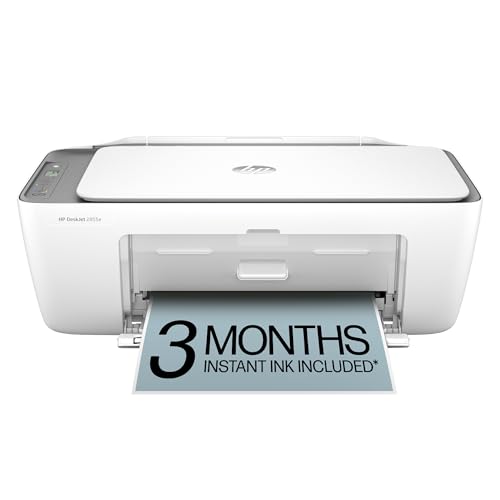
HP DeskJet 2855e (Best Lightweight Budget Alternative)
One of the most accessible entry points for occasional home printing, scanning and copying That is the core of its case as best lightweight budget alternative in this shortlist. It suits buyers whose work matches its design centre: the people described in the verdict below will get their money’s worth, while the trade-offs listed honestly underneath explain who should keep scrolling. In daily use, it is the combination of its inkjet design, its consumable economics and its workflow fit that separates it from machines with similar headline specifications.
See the current listing for the HP DeskJet 2855e on Amazon for full specifications and delivery options.
Strengths
- One of the most accessible entry points for occasional home printing, scanning and copying
- Compact and light enough for a dorm shelf or a small apartment desk
- Wireless setup through the HP app suits non-technical households
Trade-offs
- Cartridge costs per page are high, so it suits low volumes only
- No automatic duplex, and paper handling is basic
- Not built for crafts, art media or heavy photo work
- Type: colour inkjet all-in-one
- Functions: print, scan, copy
- Connectivity: Wi-Fi, mobile printing
- Focus: light home use
- Design: compact
In practice, ownership rhythm matters as much as the specification sheet. Owners who build this machine into a simple weekly routine — a standing place, consumables in reserve, settings saved as defaults — report the smoothest experience, while occasional users should plan a short warm-up test before important jobs. Reliability is mostly environment and habit. Printers of every technology dislike dust, humidity swings and long neglect. Machines that run weekly stay ready; machines that sit for months need cleaning cycles, test prints or first-layer attention before they behave. If your use is occasional, favour technologies and models known for sitting gracefully, keep consumables sealed, and build a small monthly test print into your routine so problems surface on a quiet Tuesday rather than on deadline day.
Best for: buyers who want lightweight budget alternative performance from a portable document printer and will use it regularly / Not suited for: buyers whose work falls outside its inkjet design centre or who need capabilities listed in its trade-offs

Pantum P2502W (Best Small Laser Alternative)
Small, simple and wireless: an easy first laser for students and home users That is the core of its case as best small laser alternative in this shortlist. It suits buyers whose work matches its design centre: the people described in the verdict below will get their money’s worth, while the trade-offs listed honestly underneath explain who should keep scrolling. In daily use, it is the combination of its laser design, its consumable economics and its workflow fit that separates it from machines with similar headline specifications.
See the current listing for the Pantum P2502W on Amazon for full specifications and delivery options.
Strengths
- Small, simple and wireless: an easy first laser for students and home users
- Laser text quality beats entry inkjets for essays and worksheets
- Low-key design and footprint suit shared rooms and dorms
Trade-offs
- Monochrome single-function only, with no scan or copy
- Basic paper handling and speeds compared with office lasers
- Third-party toner availability varies by region
- Type: monochrome laser printer
- Connectivity: Wi-Fi, USB, mobile printing
- Design: small footprint
- Focus: home, school and student use
- Output: black-and-white documents
In practice, ownership rhythm matters as much as the specification sheet. Owners who build this machine into a simple weekly routine — a standing place, consumables in reserve, settings saved as defaults — report the smoothest experience, while occasional users should plan a short warm-up test before important jobs. Colour deserves respect and a small amount of process. Screens show light; prints reflect it, so prints will always read slightly differently. Work in a consistent light, let prints dry fully before judging them, and change one variable at a time. For documents, insist on crisp text and clean graphics. For images, judge skin tones and shadow detail rather than chasing the most saturated output, because the most vivid setting is rarely the most accurate one.
Best for: buyers who want small laser alternative performance from a portable document printer and will use it regularly / Not suited for: buyers whose work falls outside its laser design centre or who need capabilities listed in its trade-offs
Comparison Table
| Pick | Type | Key specs | Price |
|---|---|---|---|
| Epson WorkForce WF-110 Portable Printer Class | inkjet | Type: compact portable inkjet with built-in battery class; Use: invoices, contracts and forms printed on site; Design: one of the smallest letter-size document printers | Check price on Amazon |
| Canon PIXMA TR150 Portable Printer Class | inkjet | Type: battery-capable portable inkjet class; Use: full letter/A4 documents away from a desk; Power: optional rechargeable battery pack class | Check price on Amazon |
| HP OfficeJet Mobile Portable Class (battery portable printers) | inkjet | Type: portable all-in-one class with a rechargeable battery option; Functions: print, scan, copy away from a desk; Connectivity: Wi-Fi Direct and phone printing for cable-free use | Check price on Amazon |
| Brother MFC-J1010DW | inkjet | Type: colour inkjet all-in-one; Functions: print, scan, copy; Connectivity: Wi-Fi, USB, mobile and cloud print | Check price on Amazon |
| HP DeskJet 2855e | inkjet | Type: colour inkjet all-in-one; Functions: print, scan, copy; Connectivity: Wi-Fi, mobile printing | Check price on Amazon |
| Pantum P2502W | laser | Type: monochrome laser printer; Connectivity: Wi-Fi, USB, mobile printing; Design: small footprint | Check price on Amazon |
Read the table as a map, not a ranking: the right row is the one whose type and key specs match your workload, which the buying guide below unpacks. Related comparisons worth reading next include Best Printers For Busy Office and Best Small Printers For Home.
How to Choose the Right Portable Document Printer
Decide what ‘portable’ must mean for you
If pages must appear in a client’s kitchen with no socket in reach, only the battery classes qualify and everything else is a compromise. If ‘portable’ means moving between home, office and a holiday let, the compact desktops win on cost and speed.
Battery is the dividing line
A battery turns a small printer into a portable one. Check whether the battery is built in or an extra-cost accessory, and how many pages a charge honestly covers.
Cartridge economics are the tax
Portable inkjets use small cartridges with high per-page costs. They are priced for convenience; anyone printing volume on the road should look at the compact tank alternative instead.
Connectivity must survive strange networks
Hotel and client Wi-Fi often blocks device discovery. Wi-Fi Direct or a USB cable is the fallback that saves the meeting, so insist on at least one of them.
Paper is part of the kit
A portable setup includes a document wallet of decent paper and a flat surface plan. The best travel printer still creases pages fed from a car seat.
Budget framing deserves one direct paragraph. Treat the search’s price band, where it has one, as a tier signal rather than a promise: entry tiers buy capability with compromises in speed, capacity or consumable cost, mid tiers are where most buyers should live, and premium tiers buy time, consistency and support. Spend first on the constraint you hit weekly, not the feature you might use yearly. Readers comparing neighbouring topics should also see Best Desktop Printers For Small Business.
How Do You Set Up a Portable Document Printer for Travel Work?
- Charge the battery fully and run the maker’s setup at home, never for the first time on site
- Install the full driver or app on the laptop and phone you actually travel with
- Test all three connections before a trip: network Wi-Fi, Wi-Fi Direct and USB cable
- Print a two-page contract and a form as the acceptance test, and check both sides if you rely on manual duplex
- Pack spare ink, a short USB cable and a small stack of good paper in the same bag as the printer
- Save a ‘travel’ preset with mono and standard quality as defaults to stretch cartridges
- After each trip, print one page at home so the nozzles never sit idle for a season
- Note the cartridge model in your phone; portable cartridges are rarely stocked locally
Problem: output quality drops suddenly → fix: stop changing settings at random. Return to the last known-good configuration, run the machine’s own test or calibration routine, check consumable levels and media settings, and change one variable at a time until quality returns.
Problem: the machine will not connect or respond → fix: restart the printer and the sending device, confirm both are on the same network, and fall back to a cable connection to separate a network problem from a machine problem before reinstalling anything.
Common Mistakes
- Assuming any small printer is a portable printer, then discovering it needs mains and a desk
- First-time setup attempted on client Wi-Fi minutes before a signing
- Travelling without spare ink when portable cartridges are the hardest to buy locally
- Judging a portable by office speeds; travel machines trade speed for size
- Leaving the printer unused for months, then blaming it for clogged nozzles
- Forgetting that ‘portable’ photo and label printers cannot print a contract
Most of these mistakes share one root: deciding from a headline instead of from your own workload. A ten-minute audit of what you actually produce each week prevents nearly all of them. For a neighbouring angle on the same category, see Best Iron On Transfer Paper For Inkjet Printers.
Ownership Notes: Living With Your Choice
Paper and media handling separate toys from tools. Straight paper paths handle thick stock, rear feeds protect delicate surfaces, and honest tray capacities decide whether a long job needs babysitting. Always match the media setting to what you loaded: that single dropdown controls feed speed, ink or toner behaviour and drying assumptions. Most mysterious quality problems trace back to a mismatch between the paper in the tray and the paper the driver believes is there.
Maintenance is cheaper than repair in every category. Keep firmware and drivers current, clean paper paths and print heads on the maker’s schedule rather than after failures, and use the machine’s own test pages to diagnose before changing parts. Keep one set of consumables in reserve so a low warning never becomes a missed deadline, and keep notes: the date, the change and the result turn future troubleshooting from folklore into lookup.
Warranty and support are part of the product, especially for machines that earn money. A seller, studio or office should weigh support hours, parts availability and advance-replacement terms alongside specifications. Hobby users can lean on community knowledge, which is deep for popular models and thin for obscure ones. Popularity itself is a feature: every common problem on a common machine already has a documented answer.
Running costs deserve a paragraph of their own in any honest guide, because the purchase price is the smallest cheque most owners write. Consumables, media, spare parts and your own time all belong in the ledger. A machine that costs more upfront but halves consumable spending usually wins by the second year, while a bargain machine with expensive supplies quietly becomes the priciest option in the drawer. Before buying, price the consumables you will actually use, at the volumes you actually run, and compare cost per finished job rather than cost per box.
Real-World Workloads: How These Picks Behave
Consider the side-business workload, where output is sold and every reprint is margin lost. Here the maths changes: consumable cost per sellable unit, batch consistency and turnaround time dominate, and a machine that is merely good enough at home becomes expensive. Sellers should track three numbers from the first week: cost per finished unit, failure rate per batch, and minutes of hands-on time per order. The right pick is the one that improves those numbers, and it is often the mid-tier workhorse rather than the flagship or the bargain.
Consider the space-constrained scenario: a dorm room, a studio flat, a market stall, a corner of a kitchen table that must be cleared for dinner. Footprint is not just width and depth; it is the space with trays open, lids up and material loaded, plus storage for consumables. Compact picks in this guide were chosen with that full working envelope in mind. If space is your binding constraint, measure your surface, check the working footprint, and let that honest measurement veto otherwise attractive machines.
Consider the high-volume week: the deadline, the event, the seasonal rush, the class set, the order spike. Equipment bought for average weeks fails in peak weeks, usually at the consumables tray or the duty cycle rather than in dramatic breakdowns. The defence is unglamorous: headroom in rated capacity, spare consumables on the shelf before the rush, and a rehearsed fallback, even if the fallback is a slower second machine or a local print service. Judge the picks above by how they behave in your peak week, and stock accordingly.
Consider the quality-critical job: the piece that will be framed, sold, signed, worn or handed to a client. For these jobs the workflow matters as much as the machine: a test piece first, settings recorded, output inspected under the light it will live in, and enough consumable reserved to redo the job once without a shopping trip. Every pick in this guide can produce quality-critical work within its design centre; the discipline around it is what separates a showcase result from an almost.
Consider the budget year rather than the budget day. Spread across twelve months, the honest comparison between two machines is purchase price plus consumables plus media plus the value of your reprints and your time. Entry machines often win month one and lose month twelve; tank, laser and thermal systems often do the opposite. None of that makes one universally right: a light user should absolutely buy the cheap machine and never think about it again. It makes the right choice personal, which is why this guide gives you the per-job economics instead of a single verdict.
Consider the learning investment. An hour spent on the manufacturer’s own tutorials and a calibration routine returns more quality than any accessory. New owners should schedule that hour in the first week, run the built-in tests, and keep the results as a baseline. Months later, when quality drifts, that baseline tells you whether the machine changed or the materials did. The picks above were chosen partly for the quality of this onboarding path, because a machine that teaches its owner well gets better results from the same hardware.
Consider the upgrade path. Few buyers keep their first machine forever; they either outgrow it or specialise. A sensible first purchase remains useful as the second machine: the generalist becomes the backup when the specialist arrives, and the beginner machine becomes the classroom, household or travel unit. When two picks tie, prefer the one that will still have a job in your setup after an upgrade, because that is the purchase you will never regret making.
Consider reliability over a three-year horizon. Moving parts wear, heads and screens and rollers are consumables in slow motion, and the difference between brands shows up in parts availability and documented repair procedures. Popular models win here almost by definition: their parts are stocked, their error codes are searchable and their communities have photographed every repair. For equipment that earns money or anchors a household, that boring popularity is a genuine feature and this guide weights it accordingly.
Consider the deadline scenario in its purest form: the job must exist, finished, at a fixed hour, and there is no second chance to order parts. Professionals defend deadlines with redundancy and rehearsal: consumables stocked, a test run completed the day before, and a plan B that has actually been tried. Whatever pick you choose from this guide, run your deadline job once in rehearsal at low stakes. The confidence that buys is worth more than any specification on the box.
Consider the weekday-morning workload, because that is where equipment choices are truly tested. Jobs arrive in bursts, nobody has time to coax a reluctant machine, and the person printing is often not the person who set it up. Equipment that earns its place in this scenario shares three traits: it wakes fast, it defaults correctly without supervision, and it fails loudly and early rather than silently and late. When you read the picks above, judge each one against your own busiest hour, not your calmest afternoon, and favour the option whose defaults you can set once and trust.
Consider the beginner’s first month. Every technology in this guide has a learning curve measured not in intelligence but in small, avoidable failures: the wrong setting, the wrong material, the skipped test. A good first purchase shortens that month with clear documentation, forgiving defaults and a large community that has already made your mistakes for you. If two picks look equal on specifications, choose the one with the deeper pool of tutorials, profiles and answered questions, because that pool is what you will actually use at 11 p.m. when something goes wrong.
Consider the shared-household or small-team scenario. Different people bring different devices, patience levels and job types, and the machine becomes infrastructure rather than a personal tool. Infrastructure rewards boring virtues: one-button routines, visible consumable levels, a paper path that tolerates imperfect loading, and controls a guest can understand without a manual. The picks flagged as all-in-ones and all-rounders in this guide exist precisely for this scenario, and they usually outlast cleverer specialist machines in shared spaces.
What Owners Learn After the First Month
A word about buying timing and channels. Prices for machines in this category move with seasons, sales events and stock cycles, sometimes by a lot within a month. The sensible approach is to choose the model first using this guide, then buy when the live price on the listing is one you are comfortable with, from a seller whose returns window covers your first real workload. A great printer bought in a panic at a bad price still stings; the same printer bought calmly rarely disappoints.
Accessories are where budgets quietly leak. A spare set of consumables is a genuine necessity; most other accessories are optional until a specific job demands them. Buy the machine, run your real work for a fortnight, and let that experience write your accessory list. Owners who follow that order spend less and own fewer gadgets in drawers, because every later purchase answers a problem they have actually met rather than one a listing suggested they might.
Setup day deserves more respect than it gets. Ninety unhurried minutes (unboxing, calibration, network setup, test prints from every device, defaults configured, consumable codes photographed into a note) prevent the majority of the complaints that fill support forums. Rushing setup to save half an hour is the most expensive time-saving in this entire category. The how-to section in this guide is written to be followed in order, once, on that first day.
There is a particular pleasure in a workflow that disappears. When the machine wakes reliably, accepts jobs from any device, produces the expected output and asks for consumables with fair warning, printing stops being an event and becomes infrastructure, like hot water. Every pick in this guide was weighed on its ability to reach that state of boring reliability in its category, because boring, in equipment you depend on, is the highest praise available.
Think about who else will use this machine and what they will do wrong. They will load the wrong paper, send a huge job twice, ignore the low-ink warning and close the lid mid-maintenance. Forgiving machines survive households and small teams; temperamental precision tools belong with a single careful owner. The trade-off lists above quietly encode this: where a pick demands process discipline, it says so, and generalists are praised for tolerating chaos.
Total cost has a time dimension most comparisons miss: your attention. A machine that needs weekly coaxing costs more than its consumables; it costs the mental slot it occupies. When two picks are close, choose the one you will think about least. That principle explains several rankings in this guide that look surprising on specifications alone, and it is the principle experienced owners apply without being able to name it.
Second-hand and refurbished routes deserve an honest mention. For established models with available consumables, manufacturer-refurbished units can be excellent value, and the picks above are popular enough that refurb channels exist for many of them. The cautions are warranty length, consumable state on arrival, and (for inkjets) printhead health after storage. If you go this route, run the full test sequence in the returns window, not after it.
Document your setup as if a stranger must run it, because one day the stranger is you, tired, in six months. Photograph the consumable codes, save the working settings with names that describe jobs rather than numbers, and keep one printed test page from setup day in a drawer. When quality drifts, that page is your reference; when you replace consumables, the photo is your order form. Five minutes of documentation outperforms an hour of forum searching.
Environmental choices in this category are mostly about waste avoidance. Print once, correctly: proof small, check settings, then commit. Use duplex where the job allows, refillable or high-yield consumables where volumes justify them, and the manufacturer’s recycling route for what cannot be refilled. None of this requires buying anything marketed as green; it requires running the machine you bought with a little discipline, which this guide’s how-to and mistakes sections are designed to build.
If your workload is about to change (a new business, a course, a growing shop, a child starting school), buy for the workload twelve months out, not the one twelve months back. Equipment in this category is cheapest when bought once at the right size. The picks are tiered deliberately so you can locate your future workload in the list, and the trade-offs state plainly which direction each machine fails in when outgrown: speed, capacity, quality ceiling or consumable cost.
Support communities are an invisible specification. For every pick above, thousands of owners have already hit your future problem and documented the fix, but the depth varies by model popularity. Before finalising a choice, it is worth two minutes searching your intended model’s name plus your intended job; if the results are rich and recent, you are buying into a living ecosystem, and if they are thin, price that loneliness into the decision.
One final calibration: no printer in this guide, at any tier, does everything. The six picks are six different answers to the same question, each correct for a different owner. The verdict lines exist to match you to your answer quickly, and the final recommendation names the default for the majority. If your workload is unusual, trust the criteria sections over the ranking order; they were written for exactly your situation.
Keep the box and packaging until the returns window closes and the machine has survived your hardest typical job. It feels like clutter and it is, briefly, but repacking a large machine without its moulded packaging is miserable and sometimes impossible. After the window, recycle the packaging, file the receipt with your consumable note, and let the machine get on with the unglamorous business of working every time you ask it to.
Final Recommendation
For most readers, start with the Epson WorkForce WF-110 Portable Printer Class (Best True Portable): it covers the widest range of real work with the fewest compromises. If your priorities lean the way the second pick leans, the Canon PIXMA TR150 Portable Printer Class (Best Canon Portable Class) is the alternative to beat. Budget-focused buyers should weigh the value picks in the table against their consumable costs over a full year, and specialists should choose by the lens that matches their actual output rather than by headline specifications. Every linked pick above leads to its live Amazon listing, where current pricing and availability decide the final timing of the purchase.
Frequently Asked Questions
What is the difference between a portable and a compact printer?
A portable is built to travel and usually offers battery power; a compact desktop is merely small and still expects a desk and a socket. This guide labels each pick as one or the other.
Can a portable printer print a full contract?
Yes — the true portable classes here print full letter/A4 pages. Photo and label portables cannot, which is why they are excluded from this document-focused list.
How many pages does a portable battery last?
It varies by model and coverage; treat maker figures as best cases and carry the USB cable and charger so a flat battery never cancels a job.
Is a portable printer worth it for occasional travel?
Only if pages genuinely must appear away from base. Otherwise a compact desktop at each location, or printing before you leave, is cheaper and faster.
Do portables work with Chromebooks?
Modern ones do via native ChromeOS printing on the same network; Google Cloud Print shut down in 2020 and is not part of any current setup.
Key Takeaways
- Best True Portable: Epson WorkForce WF-110 Portable Printer Class — Built-in battery and a genuinely small body make it the field-work document printer class to beat
- Best Canon Portable Class: Canon PIXMA TR150 Portable Printer Class — A true document portable: letter-size pages from a briefcase, with an optional battery for off-desk work
- Best Established Portable Class: HP OfficeJet Mobile Portable Class (battery portable printers) — The only genuinely portable all-in-one pattern: battery, scanner and copier in one briefcase-friendly unit
- Judge a portable document printer by your real workload first: true portability: weight, folded size and whether a battery exists at all — and the other criteria in How These Picks Were Chosen matter more than headline specifications.
- Running costs decide long-term satisfaction more than the purchase tier: consumables, paper and your weekly volume are the numbers to check before any headline specification.
- Prices and availability change constantly, so this guide prints no fixed product prices; check the live figure on Amazon when you are ready to buy.


