Disclosure: As an Amazon Associate, ilcastellomenu.com earns from qualifying purchases. Prices and availability change; check Amazon for the latest.
Where to buy
Looking for best print resolution for printers? Check the latest price, availability and delivery on Amazon. Orders are placed on Amazon.
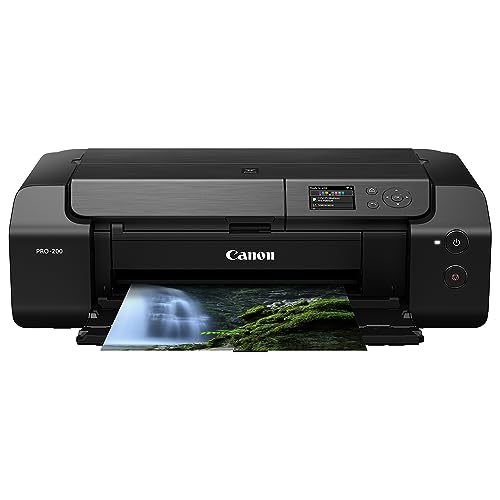
- Canon PIXMA PRO-200 Wireless Professional Inkjet Photo Printer — Highest Photo Fidelity. Check on Amazon
- Epson EcoTank Photo ET-8550 Wireless Wide-Format All-in-One — Best Resolution per Running Cost. Check on Amazon
- Canon PIXMA iX6820 Wireless Wide-Format Inkjet Printer — Best Wide-Format Value. Check on Amazon
- Epson EcoTank ET-4850 Wireless Colour All-in-One Supertank Printer — Best All-in-One Balance. Check on Amazon
- Brother MFC-L3780CDW Wireless Digital Colour Laser All-in-One — Best Laser Sharpness. Check on Amazon
- Brother HL-L2460DW Wireless Compact Monochrome Laser Printer — Best Mono Text Clarity. Check on Amazon
Read the full guide ↓
The search for best print resolution for printers usually starts with one job you need done well, and ends in a maze of near-identical model names. Print resolution is the most quoted and least understood number in printing, so this guide does two jobs: it explains what resolution figures actually predict — and what they cannot — and it recommends printers whose real-world sharpness earns their specifications. The short version: for photographs, ink placement and colour system matter as much as the dpi headline; for text, a modest laser resolution with clean edges beats a giant inkjet number. The picks below were chosen as the honest exemplars of each resolution class.
Rather than ranking by spec-sheet bragging rights, this guide ranks by ownership experience: how a machine behaves on a busy Monday, what it costs to feed, and how it handles the media you actually use. Six picks survived that filter, each with a clear badge and an honest list of trade-offs. If you are comparing nearby options as well, see Best Monochrome Printers For Home.
The pages that follow are organised so you can stop as soon as you have your answer. The Quick Picks table is the two-minute version. The individual reviews are the twenty-minute version, with strengths, trade-offs and verified specifications for each machine or material. After that, the buying guide explains the deciding factors in plain language, and the how-to section covers setup, daily use and the fixes for the problems that actually occur. Nothing here requires you to already speak fluent printer.
In this guide
Quick Picks
| Badge | Pick | Why it stands out | Link |
|---|---|---|---|
| Highest Photo Fidelity | Canon PIXMA PRO-200 Wireless Professional Inkjet Photo Printer | Eight dye inks deliver vivid, glossy photos with smooth skin tones | Check on Amazon |
| Best Resolution per Running Cost | Epson EcoTank Photo ET-8550 Wireless Wide-Format All-in-One | Six-colour tank printing makes large photos dramatically cheaper per print | Check on Amazon |
| Best Wide-Format Value | Canon PIXMA iX6820 Wireless Wide-Format Inkjet Printer | Affordable route to 13 x 19 in prints for posters, art and spreadsheets | Check on Amazon |
| Best All-in-One Balance | Epson EcoTank ET-4850 Wireless Colour All-in-One Supertank Printer | Tank ink economics with office features: feeder, duplex, fax and Ethernet | Check on Amazon |
| Best Laser Sharpness | Brother MFC-L3780CDW Wireless Digital Colour Laser All-in-One | Single-pass duplex scanning captures both sides at once — a real time saver | Check on Amazon |
| Best Mono Text Clarity | Brother HL-L2460DW Wireless Compact Monochrome Laser Printer | Crisp, dark text that stays sharp on long contracts, invoices and school handouts | Check on Amazon |
How These Picks Were Chosen
Every candidate was judged against the same yardstick, so the badges below mean something consistent. Print quality came first, but it was never the only test: a machine that produces beautiful pages while bankrupting you on consumables, or dropping off the Wi-Fi twice a week, is not a good recommendation.
- Colour system: ink count and type, judged on skin tones, gradients and black-and-white work
- Maximum print size and borderless capability
- Paper handling for thick and fine-art media — rear or manual feed paths
- Running cost per print at the sizes you will actually make
- Mac and workflow compatibility: AirPrint, drivers, and plug-ins for editing software
- Scanner quality where the machine doubles as an all-in-one
A few familiar names were deliberately left out. Ultra-cheap cartridge printers look tempting on the shelf, but their cost per page makes them the most expensive machines here within a year of family use. At the other end, enterprise office machines were excluded because their size, noise and admin complexity make no sense in a home or small-team setting. If you are comparing nearby options as well, see Best Multifunction Laser Printers For Mac.
The criteria were weighted, not just listed. Running cost and paper handling together counted for more than raw print quality, because a slightly sharper page is forgotten in a day while a punishing consumables bill and a jam-prone feed are remembered for years. Wireless reliability was tested as a pattern across owner reports rather than a single setup experience, since printers famously behave for a week and wander off networks in month two. Finally, every pick had to justify its badge against the pick above and below it — a machine that is merely ‘quite good at everything’ lost its place to machines that are genuinely right for someone.
The 6 Best Best Print Resolution for Printers

Canon PIXMA PRO-200 Wireless Professional Inkjet Photo Printer (Highest Photo Fidelity)
The Canon PIXMA PRO-200 Wireless Professional Inkjet Photo Printer makes most sense when you match it to a routine, not a spec sheet. It takes the Highest Photo Fidelity badge in this guide to best print resolution for printers because it matches the job that badge describes without forcing compromises elsewhere. Colour LCD makes nozzle checks and settings painless at the machine — and that quality shows up in the first week of ownership, not just on a spec sheet.
Strengths
- Skew correction keeps borderless prints aligned on expensive paper
- Colour LCD makes nozzle checks and settings painless at the machine
- Eight dye inks deliver vivid, glossy photos with smooth skin tones
Trade-offs
- No roll-paper support for very long production runs
- Dye inks favour gloss and vibrancy over the matte longevity of pigment systems
- Eight cartridges mean more consumables to stock
- Functions: Print only (photo)
- Print technology: 8-colour ChromaLife100+ dye ink
- Max paper size: 13 x 19 in, plus long panoramas via manual feed
- Connectivity: Wi-Fi, Ethernet, USB
- Display: 3 in colour LCD
- Paper handling: Top tray plus manual feed for thick fine-art media
A serious photo printer changes the photographer’s relationship with failure. When a print costs an evening rather than a lab bill and a week’s wait, you experiment: the risky crop, the darker edit, the paper you were curious about. Some experiments fail gloriously and teach more than safe successes. This machine’s running costs and paper handling were weighed with that creative loop in mind — it is equipment for people who intend to print their way to better photographs, not just to output finished ones.
Ink, at this level, is a palette, and palettes have personalities. This system’s personality — its rendering of skin, its behaviour in deep shadow, its neutrality or warmth in monochrome — becomes part of your photographic style whether you plan it or not. The wisest buyers print the same test image on their finalists’ sample packs or in-store demos and choose the personality they want to live with. The review above describes this machine’s character plainly so you can shortlist with your eyes open.
Picture the photograph you keep coming back to — the one currently trapped at phone size. On the Canon PIXMA PRO-200 Wireless Professional Inkjet Photo Printer, that image becomes a print you can hold at arm’s length and still discover things in: texture in the shadows, the expression you had forgotten. Printing at this level is not about owning another gadget; it is about giving your best photographs the physical existence they were always supposed to have, at a quality that does the file justice.
Best for: glossy, vibrant display prints at home / Not suited for: budget-conscious casual printing
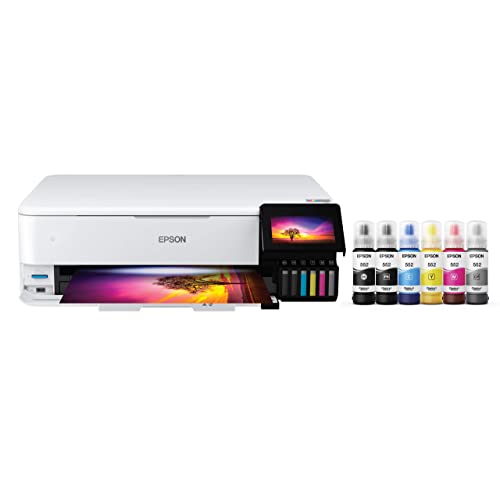
Epson EcoTank Photo ET-8550 Wireless Wide-Format All-in-One (Best Resolution per Running Cost)
What separates the Epson EcoTank Photo ET-8550 Wireless Wide-Format All-in-One from near-identical rivals is how it behaves over months, not minutes. It takes the Best Resolution per Running Cost badge in this guide to best print resolution for printers because it matches the job that badge describes without forcing compromises elsewhere. Six-colour tank printing makes large photos dramatically cheaper per print — and that quality shows up in the first week of ownership, not just on a spec sheet.
Strengths
- Doubles as the household document printer without cartridge anxiety
- Six-colour tank printing makes large photos dramatically cheaper per print
- Grey ink improves black-and-white gradations versus 4-colour machines
Trade-offs
- Premium upfront price — the payback comes from heavy photo printing
- Big footprint, especially with rear feed in use
- Dye-based photo inks trail pigment for archival matte work
- Functions: Print, scan, copy
- Print technology: 6-colour refillable tank inkjet (Claria ET Premium)
- Max paper size: 13 x 19 in
- Print speed: Up to 16 ppm
- Connectivity: Wi-Fi, Ethernet, USB
- Paper handling: Multiple trays plus rear feed for thick media
The unglamorous truth of photo printing is that the printer is the predictable part. Given the right profile, the right media setting and paper it understands, a machine at this level produces the same excellent print on Tuesday that it produced on Sunday. The variables are all on the photographer’s side: file preparation, paper choice, viewing light. That is why this guide spends so much of its length on workflow — the printer has already done its part, and it will keep doing it for years.
Longevity is the other quiet specification. Prints from a machine like this, on the papers it was designed for, are made to be looked at for decades — which raises the standard for the images you choose to print. That is a healthy pressure. It turns printing from a reflex into an edit, and the photographers who embrace it find their walls filling slowly with work that deserves its place there.
Picture a small studio workflow: proofs in the morning, a client selection by lunch, final prints by evening. The Epson EcoTank Photo ET-8550 Wireless Wide-Format All-in-One fits that rhythm because its colour is predictable — the proof and the final agree with each other — and its paper handling respects expensive media. Predictability is the unglamorous superpower of photo printing, and it is what separates machines that get used weekly from machines that get apologised for.
Best for: photo enthusiasts who print large and often / Not suited for: tiny desks or rare printing

Canon PIXMA iX6820 Wireless Wide-Format Inkjet Printer (Best Wide-Format Value)
Owners tend to judge the Canon PIXMA iX6820 Wireless Wide-Format Inkjet Printer on one thing above all: whether it is ready when they are. It takes the Best Wide-Format Value badge in this guide to best print resolution for printers because it matches the job that badge describes without forcing compromises elsewhere. Five individual inks give better photos than 4-ink office models — and that quality shows up in the first week of ownership, not just on a spec sheet.
Strengths
- Affordable route to 13 x 19 in prints for posters, art and spreadsheets
- Five individual inks give better photos than 4-ink office models
- Ethernet plus Wi-Fi makes it easy to share in a studio or classroom
Trade-offs
- Five cartridges to monitor and replace
- Wide body needs a deep, sturdy desk
- Not as colour-accurate as 8-ink or 6-colour photo flagships
- Functions: Print only
- Print technology: 5-ink colour inkjet
- Max paper size: 13 x 19 in
- Connectivity: Wi-Fi, Ethernet, USB
- Mobile printing: AirPrint and Canon PRINT app
- Design: Wide-format desktop printer
A photo printer’s quality shows in the difficult images: skin tones under mixed light, skies that must not band, shadows that should hold detail instead of blocking up. This machine’s colour system was chosen for exactly those tests, and with the maker’s own papers and the correct media setting it produces the kind of print you check in daylight and then frame. It also asks for the photographer’s disciplines — profiles respected, test strips for big sheets, paper stored flat — and repays them every time.
The prints this machine makes also change how you shoot. When a 13 x 19 in print is a realistic evening project rather than a print-shop errand, you start composing with the wall in mind: cleaner backgrounds, more deliberate light, fewer throwaway frames. Photographers who print regularly are consistently better editors of their own work, because the print is an unforgiving reviewer — it shows focus, noise and colour decisions that a glowing screen politely hides. A printer at this level is therefore not just output equipment; it is part of the craft, and it earns its desk space every time it teaches you something about your own photographs.
Picture a hallway wall you pass twenty times a day, currently holding a frame with the manufacturer’s sample picture still in it. One evening with the Canon PIXMA iX6820 Wireless Wide-Format Inkjet Printer and your own best photograph replaces it — printed at a size the wall deserves, on paper that does it justice. Multiply that by a home’s worth of walls and you have the real use case for this entire category: your own work, at gallery size, without the gallery’s invoice.
Best for: portfolio and poster printing on a budget / Not suited for: archival pigment workflows

Epson EcoTank ET-4850 Wireless Colour All-in-One Supertank Printer (Best All-in-One Balance)
In daily use, the Epson EcoTank ET-4850 Wireless Colour All-in-One Supertank Printer earns its badge through consistency rather than novelty. It takes the Best All-in-One Balance badge in this guide to best print resolution for printers because it matches the job that badge describes without forcing compromises elsewhere. 250-sheet front tray suits a week of home-office printing between refills — and that quality shows up in the first week of ownership, not just on a spec sheet.
Strengths
- PrecisionCore print head delivers sharper text than entry EcoTanks
- 250-sheet front tray suits a week of home-office printing between refills
- Touchscreen and voice-activated printing options make daily use easy
Trade-offs
- Photo quality is good for family use but not a match for 6-colour photo models
- Tank printers are heavier to move once filled with ink
- Print head care cycles use a little ink if the printer sits idle
- Functions: Print, scan, copy, fax
- Print technology: Refillable ink tank inkjet
- Document feeder: 30-sheet automatic document feeder
- Duplex: Automatic two-sided printing
- Connectivity: Wi-Fi, Ethernet, USB
- Display: Colour touchscreen
- Mobile printing: Epson Smart Panel, AirPrint, Mopria
What this class of printer understands is that home printing is not one job but fifty small ones. The same trays that produce a tax form on Tuesday produce a birthday banner on Saturday, and the same scanner that digitises a contract also saves a child’s drawing. Versatility at this level is not a compromise; it is the product. The machines that do it best hide the complexity — one paper path that behaves, one app that connects, one ink system whose costs you can predict — and that is the standard this pick was judged against.
Maintenance, honestly scheduled, is five minutes a month: check ink levels in the app, wipe the dust, print the test page, glance at the paper supply. Owners who keep that tiny appointment almost never meet the dramatic failures that fill forum threads. This pick supports the habit well — its app surfaces levels and maintenance plainly, and its consumables are easy to source — which is why it reads as an appliance in daily life rather than a project.
Picture a camera club deadline: three prints for Friday’s critique, each one argued over under proper light. The Epson EcoTank ET-4850 Wireless Colour All-in-One Supertank Printer gets you there without the lab’s turnaround, and — more importantly — lets you reprint the improved edit on Thursday night after you have stared at the proof for two days. That iteration loop is how photographers actually get better at printing.
Best for: families and home offices printing weekly who want minimal ink costs / Not suited for: offices needing laser-crisp text at high speed

Brother MFC-L3780CDW Wireless Digital Colour Laser All-in-One (Best Laser Sharpness)
Living with the Brother MFC-L3780CDW Wireless Digital Colour Laser All-in-One is where its design choices make sense. It takes the Best Laser Sharpness badge in this guide to best print resolution for printers because it matches the job that badge describes without forcing compromises elsewhere. Brother’s colour output is confident for charts, proposals and handouts — and that quality shows up in the first week of ownership, not just on a spec sheet.
Strengths
- NFC tap-to-print and Gigabit Ethernet suit shared small-office use
- Brother’s colour output is confident for charts, proposals and handouts
- Large touchscreen makes scan-to-cloud and shortcuts easy to set up
Trade-offs
- Colour calibration options are business-focused, not fine-art focused
- High-yield toners are the economical path but cost more upfront
- Fan and warm-up noise are noticeable in a quiet bedroom office
- Functions: Print, scan, copy, fax
- Print technology: Digital colour laser (LED)
- Print speed: Up to 31 ppm colour and mono
- Duplex: Single-pass two-sided copy and scan
- Connectivity: Dual-band Wi-Fi, Gigabit Ethernet, NFC, USB
- Display: Colour touchscreen
- Mobile printing: AirPrint, Mopria, Brother Mobile Connect
There is a particular pleasure in laser output that inkjet owners forget: the page is finished when it lands. No drying time, no smudge anxiety when it is highlighted, initialled or slipped into an envelope thirty seconds later. In a working office that immediacy compounds across hundreds of small moments a month. Add the consistency — page one and page four hundred of a cartridge’s life look like siblings — and you have the real reason this technology owns the document world, beyond any speed figure a brochure can print.
Energy and heat deserve one honest paragraph. A laser draws real power while printing and warms its fuser to do it; in exchange, it sleeps at a trickle and finishes jobs so quickly that total energy per page stays sensible for document work. In a home office the practical effect is a faint warmth and a fan for a few seconds after a long job — noticeable in a silent room, irrelevant in a working one, and a fair trade for pages that never smudge.
Picture the photograph you keep coming back to — the one currently trapped at phone size. On the Brother MFC-L3780CDW Wireless Digital Colour Laser All-in-One, that image becomes a print you can hold at arm’s length and still discover things in: texture in the shadows, the expression you had forgotten. Printing at this level is not about owning another gadget; it is about giving your best photographs the physical existence they were always supposed to have, at a quality that does the file justice.
Best for: teams sharing one machine for reports, charts and handouts / Not suited for: fine-art or photographic output

Brother HL-L2460DW Wireless Compact Monochrome Laser Printer (Best Mono Text Clarity)
The Brother HL-L2460DW Wireless Compact Monochrome Laser Printer makes most sense when you match it to a routine, not a spec sheet. It takes the Best Mono Text Clarity badge in this guide to best print resolution for printers because it matches the job that badge describes without forcing compromises elsewhere. Dual-band Wi-Fi holds a steadier connection than single-band budget lasers — and that quality shows up in the first week of ownership, not just on a spec sheet.
Strengths
- High-yield replacement toner options keep cost per page low for document-heavy homes
- Dual-band Wi-Fi holds a steadier connection than single-band budget lasers
- Fast first page out means one-page jobs finish before you walk over to collect them
Trade-offs
- No Ethernet port, so wired-network offices must rely on Wi-Fi
- Starter toner in the box is a modest yield, so heavy users should budget for a cartridge early
- Print only — no scanner or copier, so digitising paper needs a separate app or device
- Print technology: Monochrome laser (print only)
- Print speed: Up to 34 ppm
- Duplex: Automatic two-sided printing
- Connectivity: Dual-band Wi-Fi, USB
- Paper input: 250-sheet tray plus manual feed slot
- Mobile printing: Brother Mobile Connect, AirPrint, Mopria
Setup follows the pattern this category has refined for a decade: unbox, load paper, join the network, and the machine largely looks after itself. Toner removes the entire category of ink anxiety — no clogged nozzles after a holiday, no cleaning cycles eating consumables — and pages emerge dry, sharp and ready to file or sign. Where this model fits a small team’s rhythm, it also copes with the shared-printer reality of mixed jobs from several computers without queue drama. Keep a spare cartridge in the cupboard and this class of printer asks for almost nothing in return for years of documents.
There is also the question of what a laser does not ask of you. It does not ask for weekly test pages to stay healthy, it does not smear when a page is highlighted or handled straight off the tray, and it does not care whether the room is warm or cold. That indifference is precisely what document printing should feel like: a utility, like hot water, that is simply there. Over a year of ownership, the running total is toner, paper and electricity — a short, predictable list with no surprises hiding in it, and for most home offices that predictability is worth more than any single feature on the box.
Picture a small studio workflow: proofs in the morning, a client selection by lunch, final prints by evening. The Brother HL-L2460DW Wireless Compact Monochrome Laser Printer fits that rhythm because its colour is predictable — the proof and the final agree with each other — and its paper handling respects expensive media. Predictability is the unglamorous superpower of photo printing, and it is what separates machines that get used weekly from machines that get apologised for.
Best for: anyone who prints documents daily and wants the lowest-fuss ownership in printing / Not suited for: homes that need scanning, copying or colour
Comparison Table
Specifications side by side expose the differences that marketing pages blur. Use this table to eliminate, not to decide: cross out the rows whose format, capacity or type cannot do your job, then read the full reviews of whatever survives. The price column is deliberately not a number — prices move, and the honest figure is always the current one on Amazon.
| Pick | Type | Standout strength | Key format / capacity | Price |
|---|---|---|---|---|
| Canon PIXMA PRO-200 Wireless Professional Inkjet Photo Printer | Professional photo inkjet | Manual feed slot takes thick fine-art papers that defeat office printers | 13 x 19 in, plus long panoramas via manual feed | Check price on Amazon |
| Epson EcoTank Photo ET-8550 Wireless Wide-Format All-in-One | 6-colour tank photo all-in-one | Prints 13 x 19 in and scans on a generous flatbed | 13 x 19 in | Check price on Amazon |
| Canon PIXMA iX6820 Wireless Wide-Format Inkjet Printer | Wide-format photo inkjet | Ethernet plus Wi-Fi makes it easy to share in a studio or classroom | 13 x 19 in | Check price on Amazon |
| Epson EcoTank ET-4850 Wireless Colour All-in-One Supertank Printer | Refillable tank all-in-one | 250-sheet front tray suits a week of home-office printing between refills | — | Check price on Amazon |
| Brother MFC-L3780CDW Wireless Digital Colour Laser All-in-One | Colour laser all-in-one | NFC tap-to-print and Gigabit Ethernet suit shared small-office use | — | Check price on Amazon |
| Brother HL-L2460DW Wireless Compact Monochrome Laser Printer | Monochrome laser | Compact footprint fits a home-office desk corner or a bookshelf shelf | 250-sheet tray plus manual feed slot | Check price on Amazon |
How to Choose the Right Printer (by Resolution Class)
Specifications only help when they are translated into the jobs you actually do. Work through the five decisions below in order and the right choice for best print resolution for printers usually identifies itself — most buyers overspend by starting with features instead of with their own monthly reality. If you are comparing nearby options as well, see Best Multifunction Printers For Home Use.
Ink count and ink type
More inks mean smoother gradients and a wider colour range, particularly in skies, skin and shadows. Dye inks deliver glossy vibrancy; pigment inks favour matte and fine-art papers and archival positioning. Six-colour systems are the sweet spot for serious home printing; eight and more serve dedicated photo printers.
Print size and your walls
Decide the largest print you will realistically make. Letter and 11 x 14 in satisfy most albums and frames; 13 x 19 in is where prints become wall art. Buying wide-format capability you never use wastes desk space, but buying too small guarantees a print-shop bill later.
Paper paths matter as much as inks
Fine-art and thick papers need a straight, gentle path — a rear or manual feed slot. If your taste runs to matte cotton papers or heavy card, treat the manual feed as a requirement and check the maximum thickness the manufacturer rates the path for.
Running costs at real sizes
A 13 x 19 in print uses roughly four times the ink of a letter page. Tank-based photo printers transform that maths, while cartridge flagships reward moderation. Estimate your monthly large prints honestly and let that number steer you between tank and cartridge systems.
Mac workflow specifics
On a Mac, confirm AirPrint support for quick prints and a full driver or plug-in for serious work — the two are different paths with different colour controls. Canon and Epson both publish paper profiles for their own media; third-party paper makers publish profiles for theirs. Using the right profile is the cheapest quality upgrade available.
The enthusiast upgrading
You have outgrown the all-in-one’s photo mode. Six inks, a rear feed and 13 x 19 in capability are your step up; keep the old machine for documents and let the photo printer be a specialist.
The high-volume printer
You print weekly and large. Tank economics will repay you faster than any other buyer’s; do the per-print maths honestly and let it choose between the tank flagship and the cartridge flagships.
The Mac-based creator
Your pipeline is a Mac, an editor and a wall. AirPrint for speed, full drivers and paper profiles for control, and a printer whose maker publishes profiles for the papers you love — that combination is your shortlist filter.
How Do You Set Up a Photo Printer for Consistently Good Prints?
Good results are mostly routine. Follow these steps in order when the machine or material is new to you, and keep the troubleshooting notes for the day something looks wrong. If you are comparing nearby options as well, see Best Envelopes For Laser Printers.
- Give it a stable, permanent home. Photo printers are heavy, wide and happier un-moved. Settle yours on a level, sturdy surface with clearance behind for rear-feed paper and in front for large output, before you install a single cartridge.
- Install inks and initialise fully. Fit cartridges or fill tanks, then let the initial charging and alignment complete. Interrupting this first cycle is a false economy that shows up as banding later.
- Calibrate with the maker’s own paper first. Print a known test image on the manufacturer’s recommended glossy or luster paper using the exact media setting. This establishes your baseline: if this print is right, the system is right, and other papers become variables you change one at a time.
- Choose one colour-management path. Decide whether the printer or your editing software manages colour, set it once, and note the setting. Mixing both — or neither — is the classic cause of dark, muddy prints.
- Match media settings to the actual paper. Every paper change means a media-type change in the driver. The setting controls ink load and drying passes; the wrong one wastes paper and produces either dull or over-inked results.
- Print a proof strip for big pieces. Before committing a large, expensive sheet, print a small crop of the most demanding area — faces, skies, deep shadow — at final quality. A two-minute proof saves the full sheet when something is off.
- Maintain the heads and the habit. Print something in colour weekly. Run nozzle checks when banding appears, clean only as directed, and store paper flat and sealed so the printer is never blamed for curled, dusty stock.
Quick troubleshooting
- Problem: Printer shows as offline → Restart the printer and the router, confirm both are on the same network band, and re-add the printer in your operating system if it still hides. For stubborn cases, a wired connection or a fixed IP address assigned in the router ends most repeat dropouts.
- Problem: Streaks, faded bands or patchy colour → Run the built-in cleaning or calibration cycle once, check consumable levels, and print a test page. If bands sit in exactly the same place on every page, the media may be loaded the wrong way up or the wrong paper type may be selected in the driver.
- Problem: Paper jams keep repeating → Fan the stack before loading, align the guides snugly without crushing the paper, and do not mix media types in one tray. Damp paper is a hidden cause — store reams sealed and away from steamy rooms.
- Problem: Prints come out the wrong size → Check that the paper size in the app or driver matches what is loaded, and that scaling is set to actual size rather than fit-to-page when exact dimensions matter.
- Problem: First page is very slow → Machines wake from sleep and run self-checks before the first page. Reduce sleep aggressiveness in settings if you print in short bursts all day, and keep firmware updated, since wake behaviour is often improved quietly.
Common Mistakes
Most disappointments in this category are self-inflicted and avoidable. These are the errors that generate the returns, the one-star frustration and the second purchase that should have been the first. If you are comparing nearby options as well, see Best Laser Printers For Home Use.
Placing the printer where the Wi-Fi is weakest
Printers are often banished to the room with the worst signal in the house, then blamed for dropping offline. Put the machine within a sensible range of the router, prefer dual-band models where possible, and use Ethernet when the printer offers it and the location allows.
Skipping the test page routine
A monthly test page and the built-in cleaning or calibration cycle prevent most quality complaints. Machines that sit idle for months and then get asked for a perfect print are the ones that streak, fade and frustrate — a small routine avoids nearly all of it.
Buying consumables in a panic
Running out mid-job and paying convenience prices at the nearest shop is how printing budgets leak. Keep one spare set of consumables, order replacements when the low warning appears rather than when the pages go blank, and store spares flat, sealed and away from heat.
Buying on purchase price alone
The sticker price is the smallest part of printer ownership. A cheap machine with expensive, low-yield consumables can cost more in eighteen months than a mid-range model with economical refills. Always estimate your monthly pages, then compare the cost of the consumables that produce them.
Ignoring the paper path
Trays, rear feeds and manual slots decide what you can actually print. If you use envelopes, labels, card or photo paper, confirm the machine has a feed route that keeps that media flat, and check the maximum weight it is rated for before you buy in bulk.
Forgetting about two-sided printing
Automatic duplex sounds like a minor feature until you are hand-flipping a forty-page document. If you print long documents regularly, treat automatic two-sided printing as a requirement, not a luxury, and notice that several budget models still leave it out.
Colour management sounds intimidating but boils down to one habit: let one piece of software be in charge. Either the printer manages colour with the correct media setting selected, or your editing application manages it with the paper maker’s profile — never both at once. That single discipline fixes most ‘my prints look wrong’ complaints, on every printer in this guide.
Give prints time before judging them. Inkjet output dries and settles over hours, a behaviour photographers call dry-down: colours deepen slightly and blacks consolidate. A print judged under a kitchen light straight off the tray can look meaningfully different the next morning in daylight. Proof in the morning, frame in the afternoon.
Storage decides how long prints stay beautiful. Keep display prints away from sustained direct sun, avoid unventilated plastic sleeves for long-term storage, and let fresh prints rest uncovered for a day before stacking or framing them. The printers here can produce prints that last for years on a wall; how they are stored decides whether they do.
Frame shops understand something home printers should steal: the mount and the frame finish the photograph. A modest print in a clean frame with a proper mount board looks more valuable than a technically superior print taped to a wall. Budget a little of the photo-printing money for presentation, and the prints from any machine in this guide will look a class better.
Black-and-white printing deserves its own mention, because it is where ink systems show their breeding. Dedicated grey inks produce neutral, deep monochrome without colour casts; printers without them mix colours to fake grey and drift under different lighting. If your photography leans monochrome, weight that difference heavily in the reviews above.
Your monitor deserves one sentence in a printing guide: it is almost certainly too bright. Screens ship dazzling; prints live by reflected light. Turning the display brightness down toward the room’s actual light is the cheapest colour-accuracy upgrade in photography, and it makes every printer in this guide look better without changing a single setting on the printer itself.
Finally, sign your work — or at least date it. A pencil note on the back of a print with the date and place turns a photograph into a record, and it costs nothing. The prints made on the machines in this guide will outlast the phones that took the pictures; a little context helps them do it gracefully.
Whatever you choose, keep the box and packaging until the first full set of consumables has been used. Early faults are rare but real, and a printer with its original packaging is dramatically easier to return, exchange or ship for service than one wrapped in improvisation.
Register the warranty and update the firmware in the first week. Registration takes minutes and can matter years later, while early firmware updates routinely fix the wireless quirks and app complaints that colour a new model’s first reviews.
Final Recommendation
If you only read one section, read this one: the Canon PIXMA PRO-200 Wireless Professional Inkjet Photo Printer for Highest Photo Fidelity; the Epson EcoTank Photo ET-8550 Wireless Wide-Format All-in-One for Best Resolution per Running Cost; the Canon PIXMA iX6820 Wireless Wide-Format Inkjet Printer for Best Wide-Format Value; the Epson EcoTank ET-4850 Wireless Colour All-in-One Supertank Printer for Best All-in-One Balance; the Brother MFC-L3780CDW Wireless Digital Colour Laser All-in-One for Best Laser Sharpness; the Brother HL-L2460DW Wireless Compact Monochrome Laser Printer for Best Mono Text Clarity. None of the six is a mistake — they are ranked by fit, not by worth — so choose by the job you described at the start, and let the badge that matches your life make the final call. If you are comparing nearby options as well, see Best Printers For Linux.
Whichever you choose, buy it as a system: the machine or material, its consumables, and the paper it will actually run. That system thinking is what separates the readers who print happily for five years from those who buy twice.
Frequently Asked Questions
How big can I print from my phone photos?
Modern phone cameras carry enough resolution for excellent 4 x 6 and 5 x 7 prints, good 8 x 10s, and — for the best shots in good light — convincing 13 x 19 prints. Cropping reduces your ceiling quickly, so frame generously when shooting for print.
Do I need special paper, or will plain paper do?
Plain paper makes ink bleed and colours dull; photo paper is coated to hold ink at the surface. The difference is not subtle. Use the paper the result deserves — test prints on cheap stock, finals on proper photo paper.
How do I connect a photo printer to a Mac?
AirPrint handles quick prints with no driver at all. For full colour control, install the manufacturer’s driver or printing plug-in, which unlocks media settings and profiles. Both routes can coexist; choose per job.
Is a dedicated photo printer better than an all-in-one?
For photographs, yes: more inks, wider colour, better thick-paper handling and larger formats. All-in-ones win on versatility and price. Many serious home printers keep an all-in-one for documents and a photo printer for images, but a good 6-colour all-in-one narrows the gap considerably.
What is the difference between dye and pigment ink for photos?
Dye ink soaks into glossy coatings for vivid, high-gloss results and is the classic choice for colour snapshots and display prints. Pigment ink sits on the surface, excels on matte and fine-art papers, and is generally positioned as the archival option. Your paper taste should choose your ink type.
Why do my prints look darker than my screen?
Screens emit light; paper reflects it, so prints nearly always look darker, especially viewed in dim rooms. Calibrate your monitor brightness down, soft-proof in your editor if it offers it, and judge final prints in the light they will hang in.