Disclosure: As an Amazon Associate, ilcastellomenu.com earns from qualifying purchases. Prices and availability change; check Amazon for the latest.
Where to buy
Looking for best printers for 110 lb cardstock? Check the latest price, availability and delivery on Amazon. Orders are placed on Amazon.
- Epson EcoTank Photo ET-8550 Wireless Wide-Format All-in-One — Best Overall. Check on Amazon
- Epson EcoTank ET-15000 Wireless Wide-Format All-in-One Supertank Printer — Best for Big Projects. Check on Amazon
- Canon PIXMA PRO-200 Wireless Professional Inkjet Photo Printer — Best Finish Quality. Check on Amazon
- Canon PIXMA iX6820 Wireless Wide-Format Inkjet Printer — Best Value. Check on Amazon
- Canon MegaTank G3270 Wireless Colour All-in-One Printer — Best Compact Option. Check on Amazon
- Epson Expression Photo HD XP-15000 Wide-Format Printer — Best Rear Feed (premium tier; covered in the review below)
Read the full guide ↓
Anyone comparing best printers for 110 lb cardstock quickly discovers that the headline specs rarely tell the whole story. 110 lb cardstock is where home printers separate into those with a plan and those with a jam. Stock this heavy — roughly the 300 gsm class — needs a flat paper path, a media setting that slows the feed, and rollers that grip without crushing. Every pick here offers a rear or manual feed route and a manufacturer rating that gives heavy card a legitimate path, and the reviews are specific about which feed to use and what to expect sheet by sheet.
This guide narrows the field to six picks that genuinely earn their place. Each one was chosen for a specific kind of buyer, given a badge that reflects its real strength, and checked for the limitations that spec sheets tend to hide. Where a popular option did not make the cut, the reason is stated plainly rather than glossed over. If you are comparing nearby options as well, see Best Laserjet Printers For Small Office.
The pages that follow are organised so you can stop as soon as you have your answer. The Quick Picks table is the two-minute version. The individual reviews are the twenty-minute version, with strengths, trade-offs and verified specifications for each machine or material. After that, the buying guide explains the deciding factors in plain language, and the how-to section covers setup, daily use and the fixes for the problems that actually occur. Nothing here requires you to already speak fluent printer.
In this guide
Quick Picks
| Badge | Pick | Why it stands out | Link |
|---|---|---|---|
| Best Overall | Epson EcoTank Photo ET-8550 Wireless Wide-Format All-in-One | Six-colour tank printing makes large photos dramatically cheaper per print | Check on Amazon |
| Best for Big Projects | Epson EcoTank ET-15000 Wireless Wide-Format All-in-One Supertank Printer | Prints up to 13 x 19 in — posters, spreadsheets and artwork without a print shop | Check on Amazon |
| Best Finish Quality | Canon PIXMA PRO-200 Wireless Professional Inkjet Photo Printer | Eight dye inks deliver vivid, glossy photos with smooth skin tones | Check on Amazon |
| Best Value | Canon PIXMA iX6820 Wireless Wide-Format Inkjet Printer | Affordable route to 13 x 19 in prints for posters, art and spreadsheets | Check on Amazon |
| Best Compact Option | Canon MegaTank G3270 Wireless Colour All-in-One Printer | MegaTank running costs undercut cartridge rivals for busy families | Check on Amazon |
| Best Rear Feed | Epson Expression Photo HD XP-15000 Wide-Format Printer | Six inks with red and grey give wide, smooth photo colour | See review below |
How These Picks Were Chosen
Every candidate was judged against the same yardstick, so the badges below mean something consistent. Print quality came first, but it was never the only test: a machine that produces beautiful pages while bankrupting you on consumables, or dropping off the Wi-Fi twice a week, is not a good recommendation.
- Paper path design — straight or rear paths protect thick media from bending
- Manufacturer-rated maximum paper weight and thickness, not forum folklore
- Feed reliability with heavy stock: guides, rollers and one-sheet manual slots
- Ink or toner behaviour on coated and uncoated card surfaces
- Borderless and size options for cards, invitations and craft projects
- Running costs, because card projects consume ink faster than plain documents
A few familiar names were deliberately left out. Ultra-cheap cartridge printers look tempting on the shelf, but their cost per page makes them the most expensive machines here within a year of family use. At the other end, enterprise office machines were excluded because their size, noise and admin complexity make no sense in a home or small-team setting. If you are comparing nearby options as well, see Best Low Cost Printers For Home.
The criteria were weighted, not just listed. Running cost and paper handling together counted for more than raw print quality, because a slightly sharper page is forgotten in a day while a punishing consumables bill and a jam-prone feed are remembered for years. Wireless reliability was tested as a pattern across owner reports rather than a single setup experience, since printers famously behave for a week and wander off networks in month two. Finally, every pick had to justify its badge against the pick above and below it — a machine that is merely ‘quite good at everything’ lost its place to machines that are genuinely right for someone.
The 6 Best Best Printers for 110 lb Cardstock
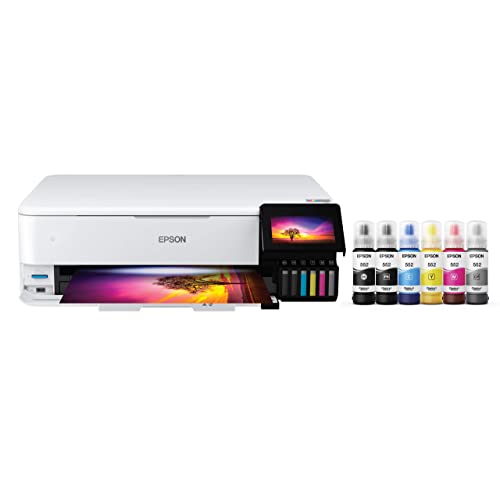
Epson EcoTank Photo ET-8550 Wireless Wide-Format All-in-One (Best Overall)
What separates the Epson EcoTank Photo ET-8550 Wireless Wide-Format All-in-One from near-identical rivals is how it behaves over months, not minutes. It takes the Best Overall badge in this guide to best printers for 110 lb cardstock because it matches the job that badge describes without forcing compromises elsewhere. Prints 13 x 19 in and scans on a generous flatbed — and that quality shows up in the first week of ownership, not just on a spec sheet.
Strengths
- Grey ink improves black-and-white gradations versus 4-colour machines
- Prints 13 x 19 in and scans on a generous flatbed
- Rear feed accepts thick art papers and card for creative projects
Trade-offs
- Dye-based photo inks trail pigment for archival matte work
- No document feeder for multi-page scanning
- Borderless wide prints still take minutes each at top quality
- Functions: Print, scan, copy
- Print technology: 6-colour refillable tank inkjet (Claria ET Premium)
- Max paper size: 13 x 19 in
- Print speed: Up to 16 ppm
- Connectivity: Wi-Fi, Ethernet, USB
- Paper handling: Multiple trays plus rear feed for thick media
Card stock printing is a negotiation between paper and machine, and this printer negotiates well because it was designed to. The feed path does not ask thick stock to perform gymnastics; the media settings do not pretend card is just heavy paper; the output pace does not promise what the rollers cannot deliver. What you get instead is the thing card projects actually need — the fiftieth sheet matching the first, so a set looks like a set.
The finishing steps matter as much as the printing: a guillotine or rotary trimmer for edges, a bone folder for creases, envelopes that match the card’s weight so the whole package feels considered. A printer like this one produces the printed heart of that package reliably; the craft around it is yours. Together they produce work that recipients assume came from a print shop — the highest compliment home card printing can earn.
Picture a craft seller’s table instead: product tags, thank-you cards and packaging inserts printed in small batches as stock sells. The Epson EcoTank Photo ET-8550 Wireless Wide-Format All-in-One keeps that table supplied without a print-shop minimum order, turning thick, handsome card into part of the product itself. For makers, the printer is production equipment, and its reliability on heavy stock is quite literally money.
Best for: families wanting a photo printer that doubles as the household all-in-one / Not suited for: pigment-based archival matte work

Epson EcoTank ET-15000 Wireless Wide-Format All-in-One Supertank Printer (Best for Big Projects)
Owners tend to judge the Epson EcoTank ET-15000 Wireless Wide-Format All-in-One Supertank Printer on one thing above all: whether it is ready when they are. It takes the Best for Big Projects badge in this guide to best printers for 110 lb cardstock because it matches the job that badge describes without forcing compromises elsewhere. Full office feature set: feeder scanning, fax and Ethernet — and that quality shows up in the first week of ownership, not just on a spec sheet.
Strengths
- Rear feed handles card stock and specialty media for craft and office work
- Full office feature set: feeder scanning, fax and Ethernet
- One machine covers A4 admin and A3-style creative output
Trade-offs
- Speed drops on wide-format and high-quality modes
- Filled tanks make it awkward to transport
- Premium upfront cost compared with letter-only EcoTanks
- Functions: Print, scan, copy, fax
- Print technology: Refillable ink tank inkjet
- Max paper size: 13 x 19 in prints; scans up to legal size
- Print speed: Up to 17 ppm
- Connectivity: Wi-Fi, Ethernet, USB
- Document feeder: 35-sheet automatic document feeder
There is a tactile economy to printing your own card work: no minimum orders, no week of waiting, no box of five hundred when you needed forty. The cost is your time at the feed slot, sheet by sheet — which, for invitations and craft production, most makers describe as part of the making rather than a chore. This machine respects that economy: it is built for small, deliberate batches done properly.
And when a sheet does misfeed — with card, honesty requires the occasional one — this class of machine makes recovery simple: open the rear, remove the sheet flat, reload, continue. No torn fragments in a curved path, no twenty-minute excavation. Designing for graceful failure is a real feature in thick-media printing, and it is one reason these picks are photo-class machines rather than office ones.
Picture a christening, a graduation, a retirement — the steady drumbeat of family occasions that each deserve a card or invitation better than a text message. The Epson EcoTank ET-15000 Wireless Wide-Format All-in-One Supertank Printer turns those occasions into small printing projects with professional results: thick stock, clean registration, a set that looks bought. Families that own this capability use it constantly; it becomes part of how occasions are marked.
Best for: creators and offices that print large pages regularly / Not suited for: small desks and light users

Canon PIXMA PRO-200 Wireless Professional Inkjet Photo Printer (Best Finish Quality)
In daily use, the Canon PIXMA PRO-200 Wireless Professional Inkjet Photo Printer earns its badge through consistency rather than novelty. It takes the Best Finish Quality badge in this guide to best printers for 110 lb cardstock because it matches the job that badge describes without forcing compromises elsewhere. Skew correction keeps borderless prints aligned on expensive paper — and that quality shows up in the first week of ownership, not just on a spec sheet.
Strengths
- Canon Print Studio Pro plug-in streamlines Photoshop and Lightroom output
- Skew correction keeps borderless prints aligned on expensive paper
- Colour LCD makes nozzle checks and settings painless at the machine
Trade-offs
- Running costs reflect its professional positioning
- No roll-paper support for very long production runs
- Dye inks favour gloss and vibrancy over the matte longevity of pigment systems
- Functions: Print only (photo)
- Print technology: 8-colour ChromaLife100+ dye ink
- Max paper size: 13 x 19 in, plus long panoramas via manual feed
- Connectivity: Wi-Fi, Ethernet, USB
- Display: 3 in colour LCD
- Paper handling: Top tray plus manual feed for thick fine-art media
Thick card exposes every weakness in a paper path, which is why this machine’s feed design is the story. Loaded through its straighter path with the correct heavy-media setting, heavy stock moves at a deliberate, reliable pace instead of the tray’s hopeful lurch. For invitations, craft projects and small-business packaging, that reliability is the product: a run of fifty matching pieces, each registered and clean, without the jam lottery that defeats lesser machines.
Card projects also reward a particular kind of patience that this machine is designed around. A tray printer promises speed and delivers it — on paper it was built for. A rear-feed machine promises something better for card: certainty. Sheet after sheet exits registered, unfaded and uncreased, and the run finishes when you planned it would. For invitations with a wedding date attached, craft stock destined for a market stall, or packaging that carries your business name, that certainty is not a luxury feature. It is the entire reason this class of printer exists.
Picture a small stationery brand instead: a designer selling card sets online, printed in batches of thirty as orders arrive, no stockroom of pre-printed inventory. The Canon PIXMA PRO-200 Wireless Professional Inkjet Photo Printer is that brand’s entire factory — deliberate, reliable, and profitable at small scale precisely because it handles the heavy stock that makes the product feel worth its price.
Best for: glossy, vibrant display prints at home / Not suited for: budget-conscious casual printing

Canon PIXMA iX6820 Wireless Wide-Format Inkjet Printer (Best Value)
Living with the Canon PIXMA iX6820 Wireless Wide-Format Inkjet Printer is where its design choices make sense. It takes the Best Value badge in this guide to best printers for 110 lb cardstock because it matches the job that badge describes without forcing compromises elsewhere. Borderless wide prints look striking for portfolios and displays — and that quality shows up in the first week of ownership, not just on a spec sheet.
Strengths
- Quiet, simple single-function design with few failure points
- Borderless wide prints look striking for portfolios and displays
- Affordable route to 13 x 19 in prints for posters, art and spreadsheets
Trade-offs
- No display; setup and status run through the computer or app
- Print only — no scanner or copier on board
- Five cartridges to monitor and replace
- Functions: Print only
- Print technology: 5-ink colour inkjet
- Max paper size: 13 x 19 in
- Connectivity: Wi-Fi, Ethernet, USB
- Mobile printing: AirPrint and Canon PRINT app
- Design: Wide-format desktop printer
Card stock printing is a negotiation between paper and machine, and this printer negotiates well because it was designed to. The feed path does not ask thick stock to perform gymnastics; the media settings do not pretend card is just heavy paper; the output pace does not promise what the rollers cannot deliver. What you get instead is the thing card projects actually need — the fiftieth sheet matching the first, so a set looks like a set.
The finishing steps matter as much as the printing: a guillotine or rotary trimmer for edges, a bone folder for creases, envelopes that match the card’s weight so the whole package feels considered. A printer like this one produces the printed heart of that package reliably; the craft around it is yours. Together they produce work that recipients assume came from a print shop — the highest compliment home card printing can earn.
Picture fifty wedding invitations that must match: same registration, same colour, same crisp edges, posted by Friday. That pile is the Canon PIXMA iX6820 Wireless Wide-Format Inkjet Printer in its element — sheet after deliberate sheet through the straight path, each one checked as it lands. Card work punishes improvisation and rewards exactly this kind of boring, rated, repeatable feeding, which is why the path matters more than any other specification in this guide.
Best for: photographers and designers printing up to 13 x 19 in at home / Not suited for: document scanning or copying

Canon MegaTank G3270 Wireless Colour All-in-One Printer (Best Compact Option)
The Canon MegaTank G3270 Wireless Colour All-in-One Printer makes most sense when you match it to a routine, not a spec sheet. It takes the Best Compact Option badge in this guide to best printers for 110 lb cardstock because it matches the job that badge describes without forcing compromises elsewhere. MegaTank running costs undercut cartridge rivals for busy families — and that quality shows up in the first week of ownership, not just on a spec sheet.
Strengths
- Refill bottles are spill-resistant and keyed by colour
- MegaTank running costs undercut cartridge rivals for busy families
- Front ink windows make it obvious when a refill is due
Trade-offs
- No automatic duplex — two-sided jobs are a manual flip
- No document feeder for multi-page scans
- Print speeds are modest next to office inkjets
- Functions: Print, scan, copy
- Print technology: Refillable ink tank inkjet
- Connectivity: Wi-Fi, USB
- Mobile printing: Canon PRINT app, AirPrint, Mopria
- Design: Compact desktop footprint with front-facing ink tanks
- Photo printing: Borderless photo printing
There is a tactile economy to printing your own card work: no minimum orders, no week of waiting, no box of five hundred when you needed forty. The cost is your time at the feed slot, sheet by sheet — which, for invitations and craft production, most makers describe as part of the making rather than a chore. This machine respects that economy: it is built for small, deliberate batches done properly.
And when a sheet does misfeed — with card, honesty requires the occasional one — this class of machine makes recovery simple: open the rear, remove the sheet flat, reload, continue. No torn fragments in a curved path, no twenty-minute excavation. Designing for graceful failure is a real feature in thick-media printing, and it is one reason these picks are photo-class machines rather than office ones.
Picture a craft seller’s table instead: product tags, thank-you cards and packaging inserts printed in small batches as stock sells. The Canon MegaTank G3270 Wireless Colour All-in-One Printer keeps that table supplied without a print-shop minimum order, turning thick, handsome card into part of the product itself. For makers, the printer is production equipment, and its reliability on heavy stock is quite literally money.
Best for: steady, colourful everyday printing on a budget per page / Not suited for: very occasional printing — a cartridge model is cheaper to buy
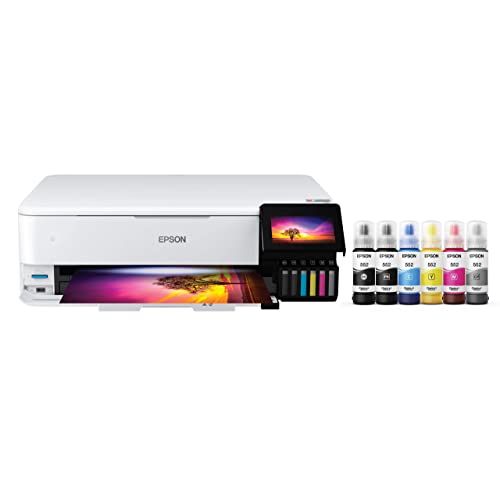
Epson Expression Photo HD XP-15000 Wide-Format Printer (Best Rear Feed)
What separates the Epson Expression Photo HD XP-15000 Wide-Format Printer from near-identical rivals is how it behaves over months, not minutes. It takes the Best Rear Feed badge in this guide to best printers for 110 lb cardstock because it matches the job that badge describes without forcing compromises elsewhere. Rear feed takes thick fine-art and card stocks — and that quality shows up in the first week of ownership, not just on a spec sheet.
Strengths
- Six inks with red and grey give wide, smooth photo colour
- Rear feed takes thick fine-art and card stocks
- Wide-format prints from a relatively compact body
Trade-offs
- Six cartridges to keep stocked
- Slower on maximum-quality wide prints
- Print only — no scanner
- Print technology: 6-colour Claria Photo HD inkjet
- Max paper size: 13 x 19 in
- Paper handling: Rear feed for specialty and thick media
- Connectivity: Wi-Fi, Ethernet, USB
Thick card exposes every weakness in a paper path, which is why this machine’s feed design is the story. Loaded through its straighter path with the correct heavy-media setting, heavy stock moves at a deliberate, reliable pace instead of the tray’s hopeful lurch. For invitations, craft projects and small-business packaging, that reliability is the product: a run of fifty matching pieces, each registered and clean, without the jam lottery that defeats lesser machines.
Card projects also reward a particular kind of patience that this machine is designed around. A tray printer promises speed and delivers it — on paper it was built for. A rear-feed machine promises something better for card: certainty. Sheet after sheet exits registered, unfaded and uncreased, and the run finishes when you planned it would. For invitations with a wedding date attached, craft stock destined for a market stall, or packaging that carries your business name, that certainty is not a luxury feature. It is the entire reason this class of printer exists.
Picture a christening, a graduation, a retirement — the steady drumbeat of family occasions that each deserve a card or invitation better than a text message. The Epson Expression Photo HD XP-15000 Wide-Format Printer turns those occasions into small printing projects with professional results: thick stock, clean registration, a set that looks bought. Families that own this capability use it constantly; it becomes part of how occasions are marked.
Best for: photographers and designers printing up to 13 x 19 in at home / Not suited for: document scanning or copying
Prose-only pick: covered in depth above; check the maker’s own channels for current availability.
Comparison Table
Specifications side by side expose the differences that marketing pages blur. Use this table to eliminate, not to decide: cross out the rows whose format, capacity or type cannot do your job, then read the full reviews of whatever survives. The price column is deliberately not a number — prices move, and the honest figure is always the current one on Amazon.
| Pick | Type | Standout strength | Key format / capacity | Price |
|---|---|---|---|---|
| Epson EcoTank Photo ET-8550 Wireless Wide-Format All-in-One | 6-colour tank photo all-in-one | Prints 13 x 19 in and scans on a generous flatbed | 13 x 19 in | Check price on Amazon |
| Epson EcoTank ET-15000 Wireless Wide-Format All-in-One Supertank Printer | Wide-format tank all-in-one | Rear feed handles card stock and specialty media for craft and office work | 13 x 19 in prints; scans up to legal size | Check price on Amazon |
| Canon PIXMA PRO-200 Wireless Professional Inkjet Photo Printer | Professional photo inkjet | Manual feed slot takes thick fine-art papers that defeat office printers | 13 x 19 in, plus long panoramas via manual feed | Check price on Amazon |
| Canon PIXMA iX6820 Wireless Wide-Format Inkjet Printer | Wide-format photo inkjet | Ethernet plus Wi-Fi makes it easy to share in a studio or classroom | 13 x 19 in | Check price on Amazon |
| Canon MegaTank G3270 Wireless Colour All-in-One Printer | Refillable tank all-in-one | Hybrid ink system keeps text darker than dye-only tank printers | — | Check price on Amazon |
| Epson Expression Photo HD XP-15000 Wide-Format Printer | Wide-format photo inkjet | Wide-format prints from a relatively compact body | 13 x 19 in | Check price on Amazon |
How to Choose the Right Printer for Card Stock
Specifications only help when they are translated into the jobs you actually do. Work through the five decisions below in order and the right choice for best printers for 110 lb cardstock usually identifies itself — most buyers overspend by starting with features instead of with their own monthly reality. If you are comparing nearby options as well, see Best Mfp Printers For Home.
Paper weight, translated honestly
Card stock is sold by several scales at once. In the US cover-weight scale, 110 lb cover is a genuinely heavy card — roughly in the 300 gsm neighbourhood. The 300 gsm figure used by crafters is the metric weight, comparable across brands. The critical number is not on the paper pack but in your printer’s specification: its rated maximum weight for each feed path.
The paper path is the whole game
Standard trays force paper through a U-turn that thick card resists — that resistance is where jams and skew come from. Rear feeds and manual slots give card a flatter route, which is why nearly every recommendation here has one. If a printer lacks a rear or manual path, treat heavy card as out of scope for it, whatever the marketing implies.
Inkjet or laser for card?
Inkjets are the safer card machines: no hot fuser, happy with matte and textured stocks, and the craft world’s default. Lasers can print lighter card within their ratings, but coated and textured stocks vary in fuser safety, and heavy card in a laser is a specification-checking exercise every single time.
One sheet at a time is normal
Heavy media feeding is deliberately slow and singular on most home machines — a manual slot that takes one sheet is a feature, not a flaw. Build that rhythm into project planning: a run of fifty invitations is an evening’s pleasant work, not a five-minute job.
Test with YOUR card, not someone else’s
Two cards with the same nominal weight feed differently depending on coating, texture and stiffness. Buy a small quantity of the exact stock, run three test sheets through the exact path you will use, and only then commit to the project quantity.
The invitation maker
Weddings, parties and announcements on real card. A rear-feed inkjet with a rated thick-media path and one-sheet patience is your machine; test your exact stock before ordering the full quantity.
The craft seller
Tags, inserts and packaging are part of your product. Consistency across a run matters more than speed; choose the printer whose feeding is boring, and keep a roller-cleaning routine after big batches.
The occasional card printer
You print a dozen cards a year. Almost any photo inkjet with a rear feed will serve; spend your money on beautiful card stock and envelopes rather than on printer capability you will rarely touch.
How Do You Print on Thick Card Stock Without Jams?
Good results are mostly routine. Follow these steps in order when the machine or material is new to you, and keep the troubleshooting notes for the day something looks wrong. If you are comparing nearby options as well, see Best Photo Printers For Mac.
- Check the rating before the paper. Find your printer’s maximum rated weight for the rear or manual feed in its specification, and confirm your card sits within it. Hope is not a feed mechanism.
- Choose the straightest path. Load heavy card through the rear feed or manual slot, one sheet at a time unless the manual explicitly allows a small stack. Set the guides to touch the edges without squeezing.
- Select the thickest matching media setting. In the driver, pick the card, thick paper or the named heavy media setting. This slows the feed, adjusts ink or heat, and is the single biggest reliability lever you have.
- Print a single proof and inspect. Check registration, edge quality and whether the sheet exits flat and fully dry or fused. Adjust quality down a notch if ink pools on coated surfaces.
- Feed the run steadily. Feed sheets one by one, letting each exit fully before loading the next. Rushing a manual feed is how double-feeds and skewed prints happen.
- Let output rest before stacking. Inkjet prints on matte card need drying minutes; laser prints need cooling moments. Stack too soon and the project marks itself.
- Clean rollers after big runs. Card sheds fibres and coating dust. A roller cleaning cycle or the manual’s lint-free wipe routine after a heavy project keeps the next plain-paper job feeding cleanly.
Quick troubleshooting
- Problem: Printer shows as offline → Restart the printer and the router, confirm both are on the same network band, and re-add the printer in your operating system if it still hides. For stubborn cases, a wired connection or a fixed IP address assigned in the router ends most repeat dropouts.
- Problem: Streaks, faded bands or patchy colour → Run the built-in cleaning or calibration cycle once, check consumable levels, and print a test page. If bands sit in exactly the same place on every page, the media may be loaded the wrong way up or the wrong paper type may be selected in the driver.
- Problem: Paper jams keep repeating → Fan the stack before loading, align the guides snugly without crushing the paper, and do not mix media types in one tray. Damp paper is a hidden cause — store reams sealed and away from steamy rooms.
- Problem: Prints come out the wrong size → Check that the paper size in the app or driver matches what is loaded, and that scaling is set to actual size rather than fit-to-page when exact dimensions matter.
- Problem: First page is very slow → Machines wake from sleep and run self-checks before the first page. Reduce sleep aggressiveness in settings if you print in short bursts all day, and keep firmware updated, since wake behaviour is often improved quietly.
Common Mistakes
Most disappointments in this category are self-inflicted and avoidable. These are the errors that generate the returns, the one-star frustration and the second purchase that should have been the first. If you are comparing nearby options as well, see Best Color Printers For Small Office.
Buying on purchase price alone
The sticker price is the smallest part of printer ownership. A cheap machine with expensive, low-yield consumables can cost more in eighteen months than a mid-range model with economical refills. Always estimate your monthly pages, then compare the cost of the consumables that produce them.
Ignoring the paper path
Trays, rear feeds and manual slots decide what you can actually print. If you use envelopes, labels, card or photo paper, confirm the machine has a feed route that keeps that media flat, and check the maximum weight it is rated for before you buy in bulk.
Forgetting about two-sided printing
Automatic duplex sounds like a minor feature until you are hand-flipping a forty-page document. If you print long documents regularly, treat automatic two-sided printing as a requirement, not a luxury, and notice that several budget models still leave it out.
Placing the printer where the Wi-Fi is weakest
Printers are often banished to the room with the worst signal in the house, then blamed for dropping offline. Put the machine within a sensible range of the router, prefer dual-band models where possible, and use Ethernet when the printer offers it and the location allows.
Skipping the test page routine
A monthly test page and the built-in cleaning or calibration cycle prevent most quality complaints. Machines that sit idle for months and then get asked for a perfect print are the ones that streak, fade and frustrate — a small routine avoids nearly all of it.
Buying consumables in a panic
Running out mid-job and paying convenience prices at the nearest shop is how printing budgets leak. Keep one spare set of consumables, order replacements when the low warning appears rather than when the pages go blank, and store spares flat, sealed and away from heat.
Colour management sounds intimidating but boils down to one habit: let one piece of software be in charge. Either the printer manages colour with the correct media setting selected, or your editing application manages it with the paper maker’s profile — never both at once. That single discipline fixes most ‘my prints look wrong’ complaints, on every printer in this guide.
Give prints time before judging them. Inkjet output dries and settles over hours, a behaviour photographers call dry-down: colours deepen slightly and blacks consolidate. A print judged under a kitchen light straight off the tray can look meaningfully different the next morning in daylight. Proof in the morning, frame in the afternoon.
Storage decides how long prints stay beautiful. Keep display prints away from sustained direct sun, avoid unventilated plastic sleeves for long-term storage, and let fresh prints rest uncovered for a day before stacking or framing them. The printers here can produce prints that last for years on a wall; how they are stored decides whether they do.
Frame shops understand something home printers should steal: the mount and the frame finish the photograph. A modest print in a clean frame with a proper mount board looks more valuable than a technically superior print taped to a wall. Budget a little of the photo-printing money for presentation, and the prints from any machine in this guide will look a class better.
Black-and-white printing deserves its own mention, because it is where ink systems show their breeding. Dedicated grey inks produce neutral, deep monochrome without colour casts; printers without them mix colours to fake grey and drift under different lighting. If your photography leans monochrome, weight that difference heavily in the reviews above.
Your monitor deserves one sentence in a printing guide: it is almost certainly too bright. Screens ship dazzling; prints live by reflected light. Turning the display brightness down toward the room’s actual light is the cheapest colour-accuracy upgrade in photography, and it makes every printer in this guide look better without changing a single setting on the printer itself.
Finally, sign your work — or at least date it. A pencil note on the back of a print with the date and place turns a photograph into a record, and it costs nothing. The prints made on the machines in this guide will outlast the phones that took the pictures; a little context helps them do it gracefully.
Whatever you choose, keep the box and packaging until the first full set of consumables has been used. Early faults are rare but real, and a printer with its original packaging is dramatically easier to return, exchange or ship for service than one wrapped in improvisation.
Register the warranty and update the firmware in the first week. Registration takes minutes and can matter years later, while early firmware updates routinely fix the wireless quirks and app complaints that colour a new model’s first reviews.
Keep the manual — or at least its PDF — somewhere findable. The day a printer flashes an unfamiliar error code, the manual’s three relevant pages are worth more than an hour of forum archaeology, and the fix is usually embarrassingly simple.
A closing thought on value: the right choice in this category is rarely the one with the longest feature list. It is the one whose strengths match your most common job and whose trade-offs land on the jobs you do least. That is why this guide badges by fit rather than crowning a single winner for everyone — and why the most useful sentence in each review is the verdict line at its end. Match the verdict to your life, and the purchase makes itself.
It is also worth deciding what would make you replace this purchase, before you buy it. If the answer is a growing household, a new business or a bigger creative ambition, choose the pick with headroom rather than the pick that merely fits today. Printers and papers bought with one eye on next year are the ones still earning their place in year three, long after the unboxing video would have been forgotten.
One last piece of practical advice: whichever pick you choose, set it up fully on the day it arrives — network, apps, test prints, defaults — rather than ‘when you need it’. Every frustration story in this category begins with a first print attempted in a hurry, against a deadline, on an unconfigured machine. Twenty unhurried minutes on day one is the cheapest insurance in the whole purchase.
Final Recommendation
If you only read one section, read this one: the Epson EcoTank Photo ET-8550 Wireless Wide-Format All-in-One for Best Overall; the Epson EcoTank ET-15000 Wireless Wide-Format All-in-One Supertank Printer for Best for Big Projects; the Canon PIXMA PRO-200 Wireless Professional Inkjet Photo Printer for Best Finish Quality; the Canon PIXMA iX6820 Wireless Wide-Format Inkjet Printer for Best Value; the Canon MegaTank G3270 Wireless Colour All-in-One Printer for Best Compact Option; the Epson Expression Photo HD XP-15000 Wide-Format Printer for Best Rear Feed. None of the six is a mistake — they are ranked by fit, not by worth — so choose by the job you described at the start, and let the badge that matches your life make the final call. If you are comparing nearby options as well, see Best Office Printers For Mac.
Whichever you choose, buy it as a system: the machine or material, its consumables, and the paper it will actually run. That system thinking is what separates the readers who print happily for five years from those who buy twice.
Frequently Asked Questions
What does 110 lb cardstock actually mean?
It is a US cover-weight designation for a heavy card — approximately equivalent to stock in the 300 gsm class. Because the pound scales differ by paper type, compare gsm when you can, and always check the weight against your printer’s rated maximum for the feed path you will use.
Can my printer handle 300 gsm card?
Only if its specification says so for a specific feed path — typically a rear or manual feed on photo-oriented inkjets. Many home printers top out well below 300 gsm in their trays. The models in this guide were chosen because their paths and ratings give heavy card a genuine route.
Why does card jam when plain paper never does?
Thickness and stiffness resist the bends in a standard paper path, and coated surfaces change roller grip. A straighter feed path, the correct media setting and one-sheet feeding solve the large majority of card jams.
Should I use an inkjet or a laser for invitations?
Inkjet, for most people: it handles matte, textured and heavier stocks gracefully and has no fuser heat to worry about. Lasers can manage lighter invitation card within rating, with crisp text, but test your exact stock first.
How do I stop ink smudging on coated card?
Match the media setting to the coating, reduce quality one step if ink pools, and give prints proper drying time before stacking. Uncoated matte card is the most forgiving surface for home inkjets.
Can I print borderless on card?
On models that support borderless with the media you are using, yes — but borderless modes sometimes restrict paper types and paths. Check the driver’s borderless compatibility list for your card, and expect slightly slower, ink-heavier printing.