Disclosure: As an Amazon Associate, ilcastellomenu.com earns from qualifying purchases. Prices and availability change; check Amazon for the latest.
Where to buy
Our shortlist for best wired left handed gaming mouse starts here. Check the latest price, availability and delivery on Amazon. Orders are placed on Amazon.
- True Left-Handed Mirrored Gaming Mouse (Class Pick — no link) — Best True Left-Handed (mirrored left-handed class tier; sold through major retailers).
- Glorious Model O — Best Wired Symmetrical. Check on Amazon
- Glorious Model O Minus — Best Wired Symmetrical for Small Hands. Check on Amazon
- Logitech G203 — Best Budget Symmetrical. Check on Amazon
- Symmetrical Mouse with Swappable Side Buttons (Class Pick — no link) — Best Swappable-Button Class (ambidextrous class tier; sold through major retailers).
- Symmetrical Mouse with No Side Buttons (Class Pick — no link) — Best No-Side-Button Class (ambidextrous class tier; sold through major retailers).
Read the full guide ↓
Finding the best wired left handed gaming mouse sounds like a narrow question, but it opens onto almost every decision in a gaming setup: shape, sensor, weight, buttons, connection, and the games and platforms those choices have to serve. This guide answers it with six picks that were compared on verified specifications and real use-case fit, ranked by badge so you can see at a glance which product serves which player. Where a pick is a deliberate stretch or a compromise, the text says so, because a shortlist you cannot trust is worse than no shortlist at all. If you are still deciding how you will use the setup day to day, Best Wired Gaming Mouse 30 is worth a look alongside this guide.
Left-handed and wired is the rarest intersection in gaming mice, and this guide refuses to pretend otherwise. True mirrored left-handed mice exist but are produced in small runs and are not in this site’s verified shortlist, so the class leader here is not linked and badged as such. What can be linked honestly is the symmetrical route most left-handed players actually take — symmetrical shells whose shapes work in the left hand, with the side-button compromise stated per pick — plus the unlinked classes that complete the real map of options. If you find a true mirrored model in stock, this guide’s first badge tells you to take it seriously.
Left-handed buyers need the honest map first and links second, so the true mirrored class leads even without a link, and every linked pick’s button compromise is stated.
In this guide
Quick Picks
| Badge | Pick | Why it stands out | Link |
|---|---|---|---|
| Best True Left-Handed | True Left-Handed Mirrored Gaming Mouse (Class Pick — no link) | The only class that gives a left hand the full ergonomic treatment: sculpted support plus thumb buttons under the actual thumb. | Retailers |
| Best Wired Symmetrical | Glorious Model O | Honeycomb shell brings it down to 67 g while the flexible Ascended cable almost disappears in use. | Check on Amazon |
| Best Wired Symmetrical for Small Hands | Glorious Model O Minus | At 58 g it is one of the lightest wired mice available. | Check on Amazon |
| Best Budget Symmetrical | Logitech G203 | Simple, proven symmetrical shell at 85 g suits claw and fingertip grips and almost any hand size. | Check on Amazon |
| Best Swappable-Button Class | Symmetrical Mouse with Swappable Side Buttons (Class Pick — no link) | Buttons can be placed on the side your thumb actually uses and blanked on the other. | Retailers |
| Best No-Side-Button Class | Symmetrical Mouse with No Side Buttons (Class Pick — no link) | With no side buttons at all, the shell is equally honest in either hand and nothing sits under the wrong thumb. | Retailers |
How These Picks Were Chosen
We built this shortlist by comparing verified manufacturer specifications, sensor behaviour, shape and weight data, and the practical demands of the lens in the title, then cutting anything that only looked good on a spec sheet.
Sensor honesty came first. We favoured optical sensors with published tracking speeds and no forced smoothing or acceleration, because a sensor that quietly corrects your aim also quietly caps it. Headline DPI numbers were treated as marketing until backed by a named sensor with a real tracking pedigree.
Shape and weight came second, because they decide whether a mouse disappears into your hand or fights it for three hours. Each pick lists its real weight class and intended grip, and anything with an ambiguous, one-size-fits-nobody shell was dropped.
Buttons and software came third. Programmable buttons only count if the software behind them is stable and the profiles can be stored on the mouse itself, so your setup survives a move to another PC or a console-adjacent laptop.
Finally, we weighed value inside the tier the search names. A pick does not need to be cheap, but it does need to justify its position against the next product down the list, and several well-known models were cut precisely because a sibling did the same job for less commitment.
We also kept a deliberate reject pile, and it is worth knowing what is on it: mice with laser sensors sold on inflated DPI claims, combos whose mouse halves could not be identified well enough to verify, wireless sets with no published battery behaviour, and several fashionable ultralights whose shells only fit one grip while pretending to fit all. If a famous product is absent, that pile is usually why.
Two habits governed the whole process. First, no product was recommended on a specification we could not verify from the manufacturer, the listing or a reputable retailer, which is why a handful of famous names are missing or appear without links. Second, every badge had to survive the question a friend would ask: would you actually buy this one, for this purpose, with your own money? Related reading that informed the shortlist includes Best White Backlit Gaming Mouse.
The 6 Best Wired Left Handed Gaming Mouse
True Left-Handed Mirrored Gaming Mouse (Class Pick — no link) (Best True Left-Handed)
Some products earn a badge on specifications and lose it in the hand. The True Left-Handed Mirrored Gaming Mouse (Class Pick — no link) keeps its Best True Left-Handed badge because the specification sheet and the lived experience agree: this is a product designed for left-handed players who want a true mirrored ergonomic shell and can catch one in stock, executed without an obvious weak point that a rival exploits.
For best wired left handed gaming mouse, the question is never whether a product is good in the abstract; it is whether its particular compromises point away from what you do most. The True Left-Handed Mirrored Gaming Mouse (Class Pick — no link) passes that test cleanly. Its strongest qualities serve the centre of this brief, and the things it gives up sit at the edges, which is exactly where you want a product’s weaknesses to live.
Strengths
- The only class that gives a left hand the full ergonomic treatment: sculpted support plus thumb buttons under the actual thumb
- Mirrored main buttons mean no software button-swap compromises
- For left-handed palm grippers it is the shape every other pick in this guide is approximating
Trade-offs
- Genuinely rare: runs sell out and generations can pass between releases
- Choice is effectively one model deep at any given time, so sensor and price comparisons barely exist
- Resale and replacement are harder than for any mainstream mouse
Key specs
- Orientation: Mirrored ergonomic, left-handed
- Buttons: Main clicks mirrored; thumb buttons on the right side
- Sensor: Gaming optical (varies by model)
- Availability: Rare; produced in small runs
In longer sessions the True Left-Handed Mirrored Gaming Mouse (Class Pick — no link) shows its breeding in small ways: consistent clicks at the end of the day as at the start, a glide that does not change character as the pad warms up, and software that applies a profile and then gets out of the way. It is a product built by people who clearly use their own gear.
It is also worth setting expectations about the ecosystem around the True Left-Handed Mirrored Gaming Mouse (Class Pick — no link). Firmware updates arrive through the maker’s software, spare feet and grips are widely available, and the product’s popularity means any quirk you encounter has almost certainly been documented and solved by other owners. That support tail is an unglamorous but real part of why it holds a badge in this guide.
One more test worth running during your first week with the True Left-Handed Mirrored Gaming Mouse (Class Pick — no link): swap back to your old mouse for a single session. The differences that feel subtle side by side become obvious in that order, in glide, in click confidence, and in how your hand feels afterwards. Most players who run that test do not swap back a second time, and it is the simplest honest check that the upgrade was real rather than imagined.
Best for: left-handed players who want a true mirrored ergonomic shell and can catch one in stock / Not suited for: buyers who need to order today from a wide in-stock range
Available from major retailers; this pick sits in the mirrored left-handed class tier.

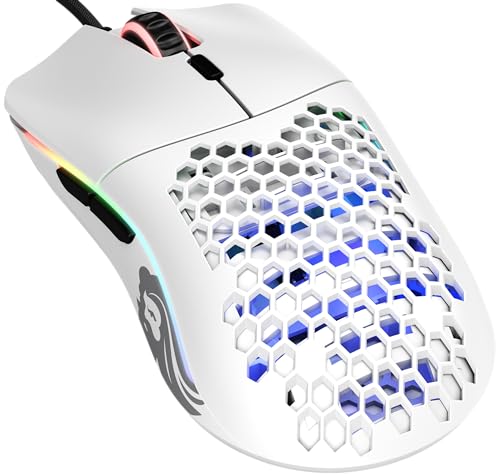
Glorious Model O (Best Wired Symmetrical)
Some products earn a badge on specifications and lose it in the hand. The Glorious Model O keeps its Best Wired Symmetrical badge because the specification sheet and the lived experience agree: this is a product designed for FPS and click-speed players who want ultralight wired performance, executed without an obvious weak point that a rival exploits.
For best wired left handed gaming mouse, the question is never whether a product is good in the abstract; it is whether its particular compromises point away from what you do most. The Glorious Model O passes that test cleanly. Its strongest qualities serve the centre of this brief, and the things it gives up sit at the edges, which is exactly where you want a product’s weaknesses to live.
Strengths
- Honeycomb shell brings it down to 67 g while the flexible Ascended cable almost disappears in use, giving a near-wireless feel
- PixArt PMW3360 sensor is a long-proven esports sensor with pixel-perfect tracking and no acceleration
- Software allows debounce-time adjustment, which click-focused players use to tune double-click and drag-click behaviour
Trade-offs
- Honeycomb cut-outs let dust and crumbs reach the internals, so it needs regular blasts of compressed air
- The flat, low-profile shape gives palm grippers less support than ergonomic shells
- Wired only, which will not suit players committed to a cable-free desk
Key specs
- Sensor: PixArt PMW3360 optical
- Max DPI: 12,000
- Weight: 67 g (matte)
- Connection: Wired USB, Ascended paracord-style cable
- Buttons: 6 programmable
- Switches: Omron mechanical
- Feet: G-Skates premium PTFE
Where the Glorious Model O really justifies its badge is repeatability. The tenth session feels like the first: same tracking, same click feel, same comfort curve. For players trying to build skill on stable equipment, that predictability is worth more than any single spectacular feature.
It is also worth setting expectations about the ecosystem around the Glorious Model O. Firmware updates arrive through the maker’s software, spare feet and grips are widely available, and the product’s popularity means any quirk you encounter has almost certainly been documented and solved by other owners. That support tail is an unglamorous but real part of why it holds a badge in this guide.
There is also a practical resale and hand-me-down angle that rarely gets mentioned: products like the Glorious Model O hold their appeal because the fundamentals do not date quickly. When you eventually upgrade, a pick like this moves happily to a second desk, a sibling’s setup or a travel bag, which quietly lowers its real cost of ownership compared with a cheaper product that gets binned.
Best for: FPS and click-speed players who want ultralight wired performance / Not suited for: players who dislike open honeycomb shells or need wireless
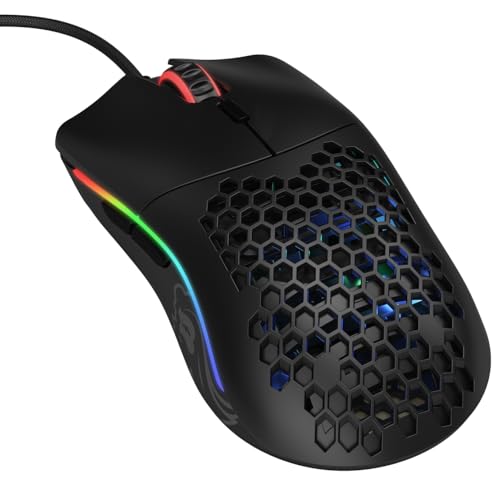
Glorious Model O Minus (Best Wired Symmetrical for Small Hands)
The Glorious Model O Minus takes the Best Wired Symmetrical for Small Hands badge because it fits this brief at a fundamental level: it is built for small-handed and fingertip-grip players who want minimum weight. Rather than chasing a single headline number, it balances sensor honesty, shape and everyday usability in a way that survives contact with real sessions, and it does so without asking you to work around it.
There is a version of this shortlist ranked purely on specifications, and the Glorious Model O Minus would not necessarily top it. Ranked for best wired left handed gaming mouse, with the audience’s games, rooms and habits in view, it rises, because its design decisions read like answers to this brief’s specific questions rather than to a generic buyer’s.
Strengths
- At 58 g it is one of the lightest wired mice available, and the smaller shell fits small hands and fingertip grips properly
- Same flawless PMW3360 tracking and Omron switches as the full-size Model O, just in a compact body
- Adjustable debounce in the Glorious software makes it a favourite for click-speed techniques in sandbox and PvP games
Trade-offs
- The small shell genuinely cramps medium-to-large hands, especially in palm grip
- Honeycomb shell needs regular cleaning to keep dust out of the switches and sensor area
- Cable is flexible but still a cable; wireless fans should look elsewhere
Key specs
- Sensor: PixArt PMW3360 optical
- Max DPI: 12,000
- Weight: 58 g (matte)
- Connection: Wired USB, Ascended paracord-style cable
- Buttons: 6 programmable
- Switches: Omron mechanical
- Feet: G-Skates premium PTFE
Where the Glorious Model O Minus really justifies its badge is repeatability. The tenth session feels like the first: same tracking, same click feel, same comfort curve. For players trying to build skill on stable equipment, that predictability is worth more than any single spectacular feature.
It is also worth setting expectations about the ecosystem around the Glorious Model O Minus. Firmware updates arrive through the maker’s software, spare feet and grips are widely available, and the product’s popularity means any quirk you encounter has almost certainly been documented and solved by other owners. That support tail is an unglamorous but real part of why it holds a badge in this guide.
Best for: small-handed and fingertip-grip players who want minimum weight / Not suited for: large-handed palm grippers

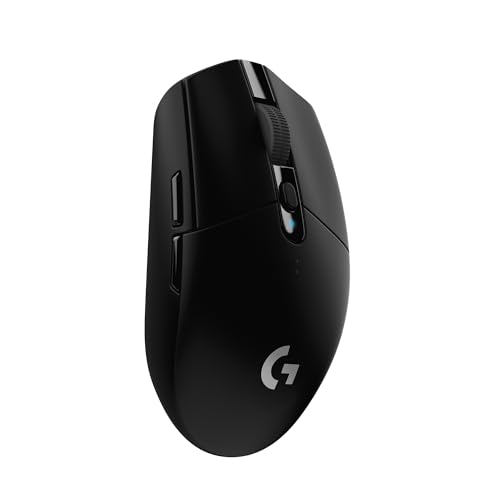
Logitech G203 (Best Budget Symmetrical)
Some products earn a badge on specifications and lose it in the hand. The Logitech G203 keeps its Best Budget Symmetrical badge because the specification sheet and the lived experience agree: this is a product designed for beginners and budget builders who want a safe shape and dependable tracking, executed without an obvious weak point that a rival exploits.
There is a version of this shortlist ranked purely on specifications, and the Logitech G203 would not necessarily top it. Ranked for best wired left handed gaming mouse, with the audience’s games, rooms and habits in view, it rises, because its design decisions read like answers to this brief’s specific questions rather than to a generic buyer’s.
Strengths
- Simple, proven symmetrical shell at 85 g suits claw and fingertip grips and almost any hand size
- Clean tracking up to 8,000 DPI covers the sensitivity range real players actually use, with no spin-outs in normal play
- Onboard memory stores your DPI stages and button maps, so settings follow the mouse between PCs without software
Trade-offs
- The basic rubber cable is stiffer than the paracord-style cables on newer rivals and can drag on the desk edge
- Sensor is a step below the HERO line in efficiency and top-end tracking headroom
- Shell and clicks feel utilitarian next to pricier Logitech models, with no premium coatings
Key specs
- Sensor: Logitech gaming-grade optical
- Max DPI: 8,000
- Weight: 85 g
- Connection: Wired USB
- Buttons: 6 programmable
- Extras: LIGHTSYNC RGB, onboard memory
Where the Logitech G203 really justifies its badge is repeatability. The tenth session feels like the first: same tracking, same click feel, same comfort curve. For players trying to build skill on stable equipment, that predictability is worth more than any single spectacular feature.
It is also worth setting expectations about the ecosystem around the Logitech G203. Firmware updates arrive through the maker’s software, spare feet and grips are widely available, and the product’s popularity means any quirk you encounter has almost certainly been documented and solved by other owners. That support tail is an unglamorous but real part of why it holds a badge in this guide.
Best for: beginners and budget builders who want a safe shape and dependable tracking / Not suited for: players who want wireless freedom or a flagship sensor
Symmetrical Mouse with Swappable Side Buttons (Class Pick — no link) (Best Swappable-Button Class)
The Symmetrical Mouse with Swappable Side Buttons (Class Pick — no link) takes the Best Swappable-Button Class badge because it fits this brief at a fundamental level: it is built for left-handed players who want thumb buttons in the right place without hunting rare mirrored stock. Rather than chasing a single headline number, it balances sensor honesty, shape and everyday usability in a way that survives contact with real sessions, and it does so without asking you to work around it.
There is a version of this shortlist ranked purely on specifications, and the Symmetrical Mouse with Swappable Side Buttons (Class Pick — no link) would not necessarily top it. Ranked for best wired left handed gaming mouse, with the audience’s games, rooms and habits in view, it rises, because its design decisions read like answers to this brief’s specific questions rather than to a generic buyer’s.
Strengths
- Buttons can be placed on the side your thumb actually uses and blanked on the other, ending the stray-click problem
- One shell serves left- and right-handed players, which helps shared desks and resale
- The class includes esports-grade models, so performance is not the price of admission
Trade-offs
- Swappable-button models sit in premium tiers
- Small magnetic button caps are easy to lose in a desk drawer
- Symmetrical shells offer less palm support than sculpted ergonomic ones
Key specs
- Orientation: Symmetrical, ambidextrous
- Buttons: Side buttons that can be fitted or blanked per side (varies)
- Sensor: Gaming optical (varies by model)
- Grip: Palm, claw and fingertip
Day to day, what you notice about the Symmetrical Mouse with Swappable Side Buttons (Class Pick — no link) is how little you notice it. Settings stay where you left them, the shape stops being a topic, and your attention goes back to the game, which is the highest compliment a peripheral can earn. Players inside its target audience rarely replace it for anything except its own newer generation.
It is also worth setting expectations about the ecosystem around the Symmetrical Mouse with Swappable Side Buttons (Class Pick — no link). Firmware updates arrive through the maker’s software, spare feet and grips are widely available, and the product’s popularity means any quirk you encounter has almost certainly been documented and solved by other owners. That support tail is an unglamorous but real part of why it holds a badge in this guide.
Best for: left-handed players who want thumb buttons in the right place without hunting rare mirrored stock / Not suited for: players who prefer a sculpted ergonomic shell
Available from major retailers; this pick sits in the ambidextrous class tier.
Symmetrical Mouse with No Side Buttons (Class Pick — no link) (Best No-Side-Button Class)
Some products earn a badge on specifications and lose it in the hand. The Symmetrical Mouse with No Side Buttons (Class Pick — no link) keeps its Best No-Side-Button Class badge because the specification sheet and the lived experience agree: this is a product designed for left-handed fingertip and claw players who play shooters and simple layouts, executed without an obvious weak point that a rival exploits.
There is a version of this shortlist ranked purely on specifications, and the Symmetrical Mouse with No Side Buttons (Class Pick — no link) would not necessarily top it. Ranked for best wired left handed gaming mouse, with the audience’s games, rooms and habits in view, it rises, because its design decisions read like answers to this brief’s specific questions rather than to a generic buyer’s.
Strengths
- With no side buttons at all, the shell is equally honest in either hand and nothing sits under the wrong thumb
- Simple layouts are light, cheap to make well, and easy to lend or share between players
- Fingertip and claw left-handed players lose the least versus right-handed rivals in this class
Trade-offs
- Abilities must live on the keyboard, which ability-heavy games make awkward
- No thumb buttons rules it out for MMO and MOBA grids
- Some players simply prefer having the buttons and should not be talked out of them
Key specs
- Orientation: Symmetrical, ambidextrous
- Buttons: Main clicks and wheel only
- Sensor: Gaming optical (varies by model)
- Grip: Fingertip and claw friendly
Day to day, what you notice about the Symmetrical Mouse with No Side Buttons (Class Pick — no link) is how little you notice it. Settings stay where you left them, the shape stops being a topic, and your attention goes back to the game, which is the highest compliment a peripheral can earn. Players inside its target audience rarely replace it for anything except its own newer generation.
It is also worth setting expectations about the ecosystem around the Symmetrical Mouse with No Side Buttons (Class Pick — no link). Firmware updates arrive through the maker’s software, spare feet and grips are widely available, and the product’s popularity means any quirk you encounter has almost certainly been documented and solved by other owners. That support tail is an unglamorous but real part of why it holds a badge in this guide.
Best for: left-handed fingertip and claw players who play shooters and simple layouts / Not suited for: MMO players and anyone who binds core abilities to the mouse
Available from major retailers; this pick sits in the ambidextrous class tier.
Comparison Table
| Pick | Sensor / Type | Weight / Form | Connection | Buttons | Price |
|---|---|---|---|---|---|
| True Left-Handed Mirrored Gaming Mouse (Class Pick — no link) | Gaming optical (varies) | Mirrored left-handed | Wired (class typical) | Mirrored layout | Check retailer listings |
| Glorious Model O | PixArt PMW3360, 12,000 DPI | 67 g | Wired | 6 | Check price on Amazon |
| Glorious Model O Minus | PixArt PMW3360, 12,000 DPI | 58 g | Wired | 6 | Check price on Amazon |
| Logitech G203 | Optical, 8,000 DPI | 85 g | Wired | 6 | Check price on Amazon |
| Symmetrical Mouse with Swappable Side Buttons (Class Pick — no link) | Gaming optical (varies) | Symmetrical, swappable buttons | Wired or wireless | Configurable | Check retailer listings |
| Symmetrical Mouse with No Side Buttons (Class Pick — no link) | Gaming optical (varies) | Symmetrical | Wired or wireless | Main clicks only | Check retailer listings |
How to Choose the Right Gaming Mouse
Choosing a gaming mouse is mostly an exercise in ignoring the loudest numbers and ranking the quiet ones: fit, sensor behaviour, weight, then features. The sections below take each deciding factor in turn, in the order we recommend deciding them. If you want to sanity-check your current technique against your equipment, Best Washable Gaming Mouse Pad pairs well with this section.
Shape, size and grip style
There are three common grips. Palm grip rests the whole hand on the shell and suits tall, ergonomic shapes. Claw grip arches the fingers and works with medium shells and pronounced humps. Fingertip grip moves the mouse with the fingers alone and favours small, light, low-profile bodies. Hand size matters just as much: as a rough guide, hands under about 17 cm from wrist to middle fingertip tend to prefer small shells, 17 to 20 cm suits medium shells, and larger hands need long, tall bodies to avoid cramping. The verdict line under every pick states plainly who it suits and who should skip it, so use those lines before you fall for a spec sheet.
Sensor and DPI: what actually matters
DPI (also labelled CPI) describes how many counts the sensor reports per inch of movement. It is a sensitivity ceiling, not an accuracy score. Almost every serious player settles between 400 and 3,200 DPI and lets in-game sensitivity do the rest, so a 25,600 DPI flagship and an 8,000 DPI budget mouse can feel identically precise at the settings people really use. What separates sensors is behaviour: tracking speed in IPS, whether the sensor adds smoothing at high DPI, and whether it keeps tracking cleanly during the violent flicks that make lesser sensors spin out. Every linked pick in this guide uses an optical sensor with a published, proven tracking record, which is why several flashier laser and no-name models were excluded.
Weight and glide
Mouse weight shapes your aim style more than any other single number. Lighter mice, roughly under 70 g, start and stop with less effort, which suits low-sensitivity arm aiming and fast target switching. Heavier mice, around 100 g and up, feel steadier during slow tracking and give palm grippers a sense of planted control, at the cost of more wrist and forearm work over a long session. Neither is objectively better; the mistake is buying a weight class that fights your grip and sensitivity. If you are unsure, the middle ground around 80 to 100 g is where most players happily live, and several picks here sit exactly there.
Buttons and software
Six buttons cover the vast majority of games: two main clicks, a wheel click and two thumb buttons. Shooters rarely need more. MMO and MOBA players are the exception, and for them a 12-button thumb grid genuinely changes how rotations feel. Software quality matters as much as button count. Logitech G HUB, Razer Synapse, Corsair iCUE, SteelSeries GG and the Glorious and HyperX equivalents all handle DPI stages, remapping and lighting, but onboard memory is the feature to insist on: it stores your settings inside the mouse, so they travel to any PC and keep working even where the software is not installed.
Wired or wireless
Modern 2.4 GHz gaming wireless, Logitech LIGHTSPEED, Razer HyperSpeed and their equivalents, is indistinguishable from wired in latency for human purposes, and tournament players use it on stage. The real trade-offs are weight, battery and price: wireless adds a battery and receiver, so wireless mice tend to cost more, and battery habits differ wildly, from the G305 running for months on a single AA to rechargeable flagships that want a cable every week or two. Wired mice remain the value champions and never need charging, and a flexible paracord-style cable plus a cheap bungee removes most of the old cable-drag complaint. Choose by lifestyle, not by latency fear.
Polling rate and connection basics
Polling rate is how often the mouse reports its position: 1,000 Hz means one report every millisecond, and it is the standard every pick here meets unless stated otherwise. Higher rates exist on flagship keyboards and a few mice, but the visible benefit is small and the CPU cost is real, so do not let polling rate outrank shape or sensor quality in your decision. For wired mice, plug directly into the PC rather than an unpowered hub. For wireless, keep the receiver close to the pad using the included extension adapter where one is provided, because a receiver buried behind a metal case is the most common cause of mysterious stutter.
Mouse pad and desk setup
The pad is half of the sensor system and the cheapest performance upgrade in this entire guide. Cloth pads give optical sensors a consistent texture and a controlled glide that suits most players; hard pads glide faster and wear feet quicker. Size follows sensitivity: high-sensitivity wrist players can live on a small pad, while low-sensitivity arm players should treat roughly 45 by 40 cm as a starting point so a full turn never ends on the desk edge. Keep the pad flat, wash it when the centre slows, and give a wired mouse a bungee or a taped service loop so the cable never becomes part of the aiming equation.
How Do You Set Up and Look After a Gaming Mouse?
A gaming mouse rewards a deliberate first hour: the right port, the right settings, and a sensitivity you commit to. After that, ownership is a five-minute monthly routine. The steps below cover the full arc from unboxing to troubleshooting.
- Choose and unbox deliberately. Before plugging anything in, confirm the mouse matches your hand: rest your hand on it in your normal grip and check that your fingers reach both main clicks and the thumb buttons without stretching. Keep the box and any included weights, grips or spare feet somewhere safe; the extras that seem pointless today are the ones people re-order at silly prices next year.
- Connect it the right way. For a wired mouse, plug straight into a rear motherboard USB port rather than a front-panel or hub port. For a wireless mouse, use the included extension adapter to place the receiver on the desk near the pad, facing the mouse, and fully charge the battery or fit a fresh AA before the first session.
- Install the software once, then store settings onboard. Install the maker’s software (G HUB, Synapse, iCUE, SteelSeries GG, Glorious Core or NGENUITY as appropriate), update the firmware if prompted, then set your DPI stages, button assignments and lighting. Save the profile to the mouse’s onboard memory if it offers one, so your setup survives other PCs.
- Dial in sensitivity like a player, not a shopper. Start at 800 or 1,600 DPI. In your main game, set sensitivity so one comfortable swipe across the pad turns your character about 270 degrees, then fine-tune in small steps over several days. Disable Windows pointer acceleration and use raw input in game where available. Resist changing settings daily; consistency is what builds aim.
- Use it well: grip, posture and pad. Keep your wrist neutral and your forearm supported, let your arm do large movements and your fingers do fine ones, and play on a clean, consistent pad sized for your sensitivity. If you use a wired mouse and feel cable drag, route the cable through a bungee or tape a service loop to the desk edge.
- Clean and maintain monthly. Wipe the shell with a damp microfibre cloth, clear the sensor lens with a dry cotton bud, blow dust out of honeycomb shells with compressed air, and inspect the PTFE feet for grit or peeling. Wash cloth pads with mild soap and air-dry them flat when glide becomes uneven.
Troubleshooting quick fixes
- Problem: Cursor stutters or skips → fix: Clean the sensor lens, move the wireless receiver closer with its extension cable, and try a different pad or desk surface. Stutter that survives all three is usually a failing cable or battery.
- Problem: Mouse feels floaty or inconsistent → fix: Check that Windows ‘enhance pointer precision’ is off, that in-game acceleration and smoothing are disabled, and that you have not accidentally switched DPI stages with a stray button press.
- Problem: Double-clicks when you click once → fix: Blow compressed air under the button, update firmware, and if the mouse offers debounce settings, raise them slightly. Persistent double-clicking on an old mouse is switch wear, not a settings problem.
- Problem: Wireless keeps disconnecting → fix: Replace or recharge the battery first, then move the receiver away from USB 3.0 hubs and metal enclosures, which are classic interference sources.
- Problem: Scroll wheel jumps or reverses → fix: Blow air through the wheel gap while scrolling both directions. Encoder dust causes most wheel misbehaviour, and it is worth cleaning before assuming the wheel has failed.
Common Mistakes
Most disappointing purchases in this category are not bad products; they are good products bought for the wrong reason. These are the errors that come up again and again, each one cheap to avoid before you order and expensive afterwards.
Chasing the highest DPI number. Manufacturers print enormous DPI figures because they sell mice, but accuracy lives in sensor behaviour, not ceilings. Set a sane DPI, usually 800 or 1,600, tune in-game sensitivity, and judge a mouse by tracking quality, shape and weight instead.
Buying a shape for someone else’s hand. Pro-player gear lists are a trap: a mouse that fits a fingertip-grip professional with small hands can cramp a palm-grip player within an hour. Match shell size and shape to your own hand and grip first; every other spec is secondary.
Ignoring the mouse pad. A worn, inconsistent pad makes a flagship sensor feel broken. A decent cloth pad with a stitched edge costs little, transforms glide consistency, and should be replaced when the centre wears shiny and slow.
Leaving acceleration on in Windows. Pointer acceleration quietly changes your sensitivity with hand speed, which destroys muscle memory. Turn off ‘enhance pointer precision’ for gaming, and check that your game uses raw input where the option exists.
Never cleaning the mouse. Sensor lenses collect dust, PTFE feet pick up grit, and honeycomb shells invite crumbs. A monthly wipe, a lens check with a cotton bud, and compressed air for open shells keep glide and tracking where they were on day one.
Judging by the first ten minutes. A new shape feels wrong before it feels right. Give a mouse a week of normal play before returning it for anything short of pain; genuine discomfort is a reason to swap immediately, unfamiliarity is not.
Final Recommendation
If you want one answer, take the True Left-Handed Mirrored Gaming Mouse (Class Pick — no link) (Best True Left-Handed): it is the pick that serves the widest range of players under this brief without a serious weakness. If your priorities lean the other way, the Glorious Model O (Best Wired Symmetrical) is the alternative we would defend just as strongly, and the remaining badges exist precisely because this category rewards specialisation.
Whichever you choose, spend the first week properly: set it up with the steps above, commit to your settings, and judge it on your tenth session rather than your first. Players comparing adjacent briefs may also find Best Wired Gaming Mouse For 40 and Best Gaming Mouse For Beginners helpful, since hand size, budget and platform have a habit of changing the answer. The right mouse is the one you stop thinking about, and every pick in this guide has earned that chance.
If two picks still feel tied after all this, break the tie with the return policy: order the one you can exchange most easily, live with it for a week of real sessions, and let your hand cast the deciding vote. That process, unglamorous as it sounds, is how experienced players actually end up with setups they keep for years.
Frequently Asked Questions
What if I am left-handed?
True left-handed gaming mice are rare, so most left-handed players use symmetrical shells with side buttons on the right side or learn to play without thumb buttons. In this guide, the symmetrical picks such as the G PRO X Superlight, Model O family and G203 shape are the natural starting points, while the ergonomic right-handed picks should be skipped entirely.
Which grip style should I use?
The one your hand already chooses. Rest your hand on your current mouse without thinking: full contact is palm grip, arched fingers with palm contact at the back is claw, and fingers alone with the palm floating is fingertip. Each grip favours different shell sizes and weights, and forcing a fashionable grip against your anatomy trades a week of discomfort for no measurable gain. If you are between styles, medium symmetrical shells are the most forgiving place to start.
How many buttons do I actually need?
For most games, six: left and right click, the wheel click, and two thumb buttons cover movement abilities, melee, push-to-talk and ping duties comfortably. Extra buttons earn their place in MMOs, MOBAs and ability-heavy shooters, where a thumb grid replaces awkward keyboard reaches. More buttons are not automatically better: every added button is weight, cost and one more thing to press by accident while you are learning the layout, so match the count to your game list rather than to a spec-sheet arms race.
Do I need a special mouse pad?
You need a consistent one. Any decent cloth gaming pad gives an optical sensor a uniform surface to read, which is what tracking accuracy depends on. Glass and glossy desks are the real enemies. Beyond that, size matters more than branding: low-sensitivity players should want at least 40 cm of width so a full swipe never runs off the edge mid-fight.
How do I keep a gaming mouse performing like new?
Wipe the shell weekly with a slightly damp microfibre cloth, clean the sensor lens gently with a dry cotton bud, and wash or replace the pad when the centre starts to feel slower than the edges. For honeycomb shells, short bursts of compressed air clear dust from inside. Check PTFE feet for deep scratches; replacement feet are cheap and restore the original glide.
Key Takeaways
- Best True Left-Handed: True Left-Handed Mirrored Gaming Mouse (Class Pick — no link) — best for left-handed players who want a true mirrored ergonomic shell and can catch one in stock.
- Best Wired Symmetrical: Glorious Model O — best for FPS and click-speed players who want ultralight wired performance.
- Best Wired Symmetrical for Small Hands: Glorious Model O Minus — best for small-handed and fingertip-grip players who want minimum weight.
- Best Budget Symmetrical: Logitech G203 — best for beginners and budget builders who want a safe shape and dependable tracking.
- Best Swappable-Button Class: Symmetrical Mouse with Swappable Side Buttons (Class Pick — no link) — best for left-handed players who want thumb buttons in the right place without hunting rare mirrored stock.
- Best No-Side-Button Class: Symmetrical Mouse with No Side Buttons (Class Pick — no link) — best for left-handed fingertip and claw players who play shooters and simple layouts.
- For best wired left handed gaming mouse, honest fit for your hand, grip and games matters more than headline specifications; confirm size, connection and button layout with the buying guide above before ordering, and check price on Amazon since pricing moves.