Disclosure: As an Amazon Associate, ilcastellomenu.com earns from qualifying purchases. Links on this page are affiliate links; they cost you nothing extra. Prices and availability change often, so check the current Amazon listing before you buy.
This cable management tray reviews starts with a confession: a cable management tray is a bent piece of metal or mesh that costs real money to do a job a cardboard box once did badly. And yet, after weeks of living with trays under real desks, the cable management tray reviews you are reading exists because the difference between a tray and every improvised alternative shows up daily. Where a single review goes deep on ownership, a reviews roundup has to compare across designs and report what owners consistently praise and consistently regret. The tray gathers the power strip, the bricks and the cable slack into one open, reachable place under the rear edge of the desk, and then it disappears from your attention, which is the highest praise under-desk hardware can earn.
Key Takeaways
- An open tray breathes, so heat escapes instead of pooling around power bricks.
- Screw mounts are firmest and permanent; clamp mounts are removable but depend on a solid desktop edge.
- A loaded tray is heavy, so fixings must bite into solid material, never a thin or hollow skin.
- One power strip in the tray, one cable to the wall: never chain two strips together.
- Keep drinks and drips away from the strip, and give every brick air on all sides.
- Best for tidy-minded desk owners with several bricks; skip it if your desk has one laptop and a lamp.
The short verdict is this. For a desk with a power strip, two or more power bricks and cables that currently live on the floor, a tray is one of the highest-value small upgrades in the whole setup. For a minimal desk, it is furniture for a problem you do not have. The rest of this review explains where that line falls, how the main designs differ, and what living with one is honestly like, including the parts the product photographs leave out.
In this guide
What a Cable Management Tray Is and Where It Fits
Cable length mismatches cause more mess than cable quantity. Manufacturers supply whatever length suits the device, so the tray inherits one cable that barely reaches and three with a metre to spare. Short cables should get the tray positions nearest their devices, even if that breaks a prettier arrangement. Long cables should be looped in the tray in broad, flat loops rather than bunched. Where a cable is truly too short, a quality replacement in the right length is a better answer than routing under tension. Tension is the enemy: it pulls plugs sideways, lifts bricks out of position, and slowly works fixings loose.
Reusable hook-and-loop straps beat single-use cable ties for almost everything inside a tray. A tray is not a finished sculpture; devices arrive, leave and move, and every change with tight plastic ties means cutting, re-tying and sharp little offcuts in the tray. Straps open and close by hand, hold a bundle firmly without crushing it, and let one cable leave the bundle while the rest stay put. Keep a few spare straps in the tray itself so a quick change does not become a hunt through drawers. The one place a firmer fixing earns its keep is the power strip itself, which should sit still in the tray rather than slide when plugs are pushed in and pulled out.
Modesty panels, cable spines and desk frames all compete for the same under-desk territory. A tray wants a clear run along the rear underside; a spine wants a vertical path at one end; a sit-stand frame has moving cross members that must never be fouled. Map the underside before buying: photograph it, note where the frame legs and motor housings sit, and mark the clear zone with tape. Many failed installations are not bad trays but good trays bought for a space that was already occupied. The tape outline also settles length honestly, because a tray that collides with a desk leg at one end wastes the money spent on its full span.
Cable Management Tray: Design, Build and Setup
Think about the wall socket as part of the installation. The tray’s strip is only as tidy as its one supply cable, and that cable needs a socket it can reach at every desk height with slack to spare, without crossing a doorway or a heater. Sockets hidden behind heavy furniture tempt people into extension habits that defeat the whole project. If the nearest sensible socket is awkward, moving the desk a short distance or choosing the other end of the desk for the tray can solve what no accessory will. Never run the supply cable under a rug to reach a distant socket; covered cables overheat and hide damage.
Power bricks deserve their own seating plan inside the tray. A laptop brick, a monitor brick and a USB charging brick side by side, touching, in a warm tray is the worst arrangement; the same three with a finger of air between each of them is fine for years. Alternate bricks with cable coils rather than grouping all the heat in one hot corner, keep the largest brick nearest the tray’s open side where air moves best, and never stack one brick on top of another. If a brick runs noticeably hot in normal use, give it the most open position in the tray and check it again after a week of real work rather than assuming the first day told the whole story.
A tray interacts with cable raceways and floor trunking rather than replacing them. The tray handles the under-desk gathering; a short raceway or a simple covered run handles the one cable’s journey from tray to wall socket, especially where that journey crosses a walkway. Keeping that single run covered protects it from chair castors and shoes, and chair castors deserve respect: a castor rolling over a loose cable, repeatedly, will damage insulation long before the cable looks tired. Map the whole path from wall socket to furthest device as one system, and let each part, socket, run, tray, loop, do the job it is best at.
IKEA SIGNUM Cable Management Tray
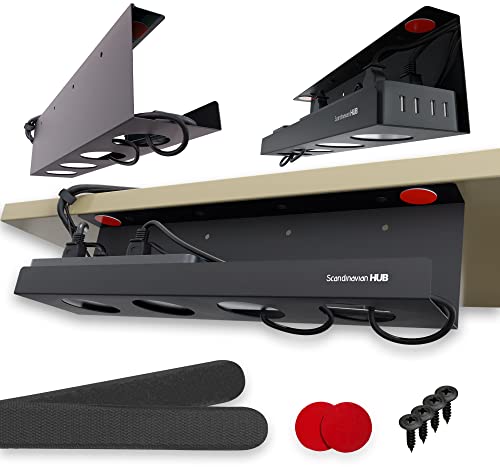
The IKEA SIGNUM Cable Management Tray is a long-running screw-mount design sold as a simple open steel channel that hangs under the rear edge of a desk. In prose terms it sits in the entry-to-mid tier of this category: judge it on mount security, openness for heat, usable entry points and how forgiving it is when devices change, rather than on any single headline claim. Check the current listing before you buy, because versions and included fixings change over time.
What matters in daily use is how it behaves loaded. Seat the strip first, add bricks with air between them, then route device cables in through the nearest openings with gentle loops. A tray of this style rewards that order of work and punishes the reverse: cables first and strip last turns the interior into a knot that must be undone for every change. Owners who keep one end of the tray lighter, near the wall socket, find the single supply cable leaves cleanly without crossing the whole bundle.
VIVO Under Desk Cable Management Tray
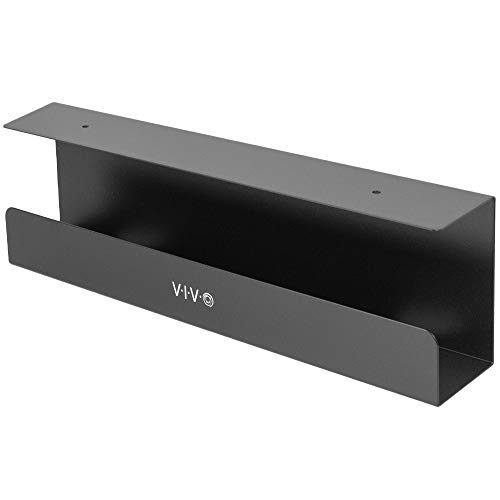
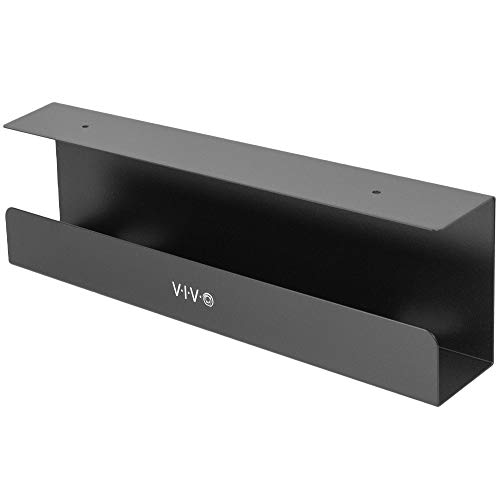
The VIVO Under Desk Cable Management Tray is a mesh-style under-desk tray family that leans on openness and easy cable drop-in from above. In prose terms it sits in the mid tier of this category: judge it on mount security, openness for heat, usable entry points and how forgiving it is when devices change, rather than on any single headline claim. Check the current listing before you buy, because versions and included fixings change over time.
What matters in daily use is how it behaves loaded. Seat the strip first, add bricks with air between them, then route device cables in through the nearest openings with gentle loops. A tray of this style rewards that order of work and punishes the reverse: cables first and strip last turns the interior into a knot that must be undone for every change. Owners who keep one end of the tray lighter, near the wall socket, find the single supply cable leaves cleanly without crossing the whole bundle.
Performance in Real Use
Everyday Work and Focus
Cable length mismatches cause more mess than cable quantity. Manufacturers supply whatever length suits the device, so the tray inherits one cable that barely reaches and three with a metre to spare. Short cables should get the tray positions nearest their devices, even if that breaks a prettier arrangement. Long cables should be looped in the tray in broad, flat loops rather than bunched. Where a cable is truly too short, a quality replacement in the right length is a better answer than routing under tension. Tension is the enemy: it pulls plugs sideways, lifts bricks out of position, and slowly works fixings loose.
Keep liquids away from the tray and from the power strip inside it. Desks attract coffee, water bottles and the occasional knocked glass, and a tray mounted under the rear edge sits directly in the drip path of anything spilled near the back of the desk. Route the strip so its sockets face along the tray rather than straight up where a spill would land, keep drinks toward the front of the desk as a habit, and never mount a tray where a plant gets watered above it. This is not exotic caution; it is the single most practical safety habit in the whole topic, and it costs nothing beyond paying attention when you choose the tray position.
Gaming and Streaming Setups
Cable length mismatches cause more mess than cable quantity. Manufacturers supply whatever length suits the device, so the tray inherits one cable that barely reaches and three with a metre to spare. Short cables should get the tray positions nearest their devices, even if that breaks a prettier arrangement. Long cables should be looped in the tray in broad, flat loops rather than bunched. Where a cable is truly too short, a quality replacement in the right length is a better answer than routing under tension. Tension is the enemy: it pulls plugs sideways, lifts bricks out of position, and slowly works fixings loose.
Entry and exit points decide how graceful a tray feels in daily use. Cables should enter from the devices above through the tray’s open top or rear, and the one power cable should leave at the end nearest the wall socket. Trays with generous openings along their length let each cable drop in near its own device, which keeps routes short and crossings few. A tray that forces every cable to enter at one end turns its interior into a motorway of parallel runs that must be unthreaded for any change. When comparing designs, count usable entry points the way you would count sockets: they are a real capacity, not a styling detail.
Standing Desk Movement
Measuring for a tray is a five-minute job that prevents most returns. Measure the clear underside run between legs and obstructions, the depth from the rear edge to the first crossbar, and the thickness of the desktop at the edge if a clamp is planned. Then measure the power strip you actually own, because strip length decides tray length more than cable count does. Add the bricks: lay strip and bricks on the floor in a row the way they would sit in the tray, and measure that row. That floor rehearsal, slightly embarrassing as it feels, is the most reliable sizing tool in this entire subject.
Cable slack is a design material, not an afterthought. Every device on the desk needs enough cable to reach the tray without tension, plus a little extra so the device can be moved, lifted or turned for cleaning. Too little slack strains connectors and pulls plugs sideways in their sockets. Too much slack creates the coiled nests that trap heat and dust. The middle path is a gentle service loop for each device, tied loosely with a reusable strap rather than a tight cable tie, so the loop can be opened in seconds when a device changes. Plan the loops when the tray goes in, because adding slack later means re-routing everything that shares the tray.
Cleaning and Maintenance Days
Measuring for a tray is a five-minute job that prevents most returns. Measure the clear underside run between legs and obstructions, the depth from the rear edge to the first crossbar, and the thickness of the desktop at the edge if a clamp is planned. Then measure the power strip you actually own, because strip length decides tray length more than cable count does. Add the bricks: lay strip and bricks on the floor in a row the way they would sit in the tray, and measure that row. That floor rehearsal, slightly embarrassing as it feels, is the most reliable sizing tool in this entire subject.
One power strip in the tray is the pattern that works; two strips chained together is the pattern that causes trouble. Plugging one strip into another, sometimes called daisy chaining, concentrates load and is discouraged by fire safety guidance in plain terms. If the tray needs more sockets than one good strip offers, the honest fixes are a single larger strip that still fits the tray with air around it, or splitting the desk so that a second strip lives somewhere else entirely, such as feeding a floor-standing PC separately. Count the sockets you truly need before buying either the strip or the tray, and remember that bulky bricks can block neighbouring sockets, so the usable count is often lower than the printed count.
Strengths and Trade-Offs
Strengths
- Open structure lets heat escape instead of pooling around bricks and the strip.
- Floor clears completely, so vacuuming and foot room both improve at once.
- Every cable stays visible and reachable, so changes take minutes, not archaeology.
- One strip in the tray and one cable to the wall simplifies the whole desk’s power.
Trade-Offs
- A loaded tray is heavy, and weak fixings into thin desktops will eventually fail.
- It hides cables from sight but not from dust; it still needs a periodic wipe.
- Screw mounting is permanent, and clamp mounting depends entirely on your desktop edge.
How It Compares
Power bricks deserve their own seating plan inside the tray. A laptop brick, a monitor brick and a USB charging brick side by side, touching, in a warm tray is the worst arrangement; the same three with a finger of air between each of them is fine for years. Alternate bricks with cable coils rather than grouping all the heat in one hot corner, keep the largest brick nearest the tray’s open side where air moves best, and never stack one brick on top of another. If a brick runs noticeably hot in normal use, give it the most open position in the tray and check it again after a week of real work rather than assuming the first day told the whole story.
Standing desks add a moving problem. When the desktop rises, every cable between the desk and the floor, the wall or a floor-standing PC has to travel with it, and the tray becomes the anchor point for that whole journey. The tidy pattern is to put the power strip in the tray, plug everything on the desk into that strip, and run a single cable from the strip down to the wall socket with enough slack for full height. Done well, one moving cable replaces six. Done badly, cables pull taut at full extension, drag the tray, or yank plugs half out of sockets. Test the full travel of the desk slowly after fitting, watch each cable through the whole range, and add slack wherever anything pulls.

Baskiss Cable Management Tray
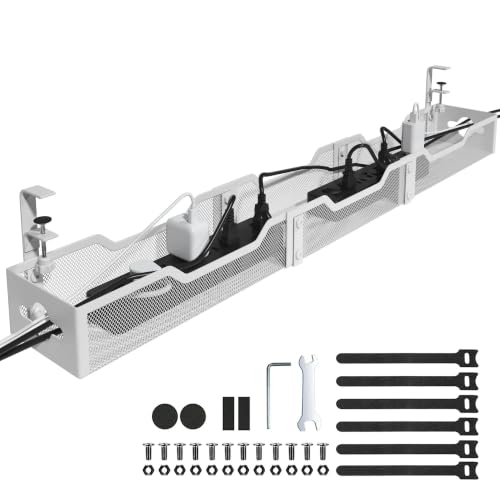
The Baskiss Cable Management Tray is a wire-frame tray in the classic basket school of design, light in structure and generous with openings. In prose terms it sits in the entry tier of this category: judge it on mount security, openness for heat, usable entry points and how forgiving it is when devices change, rather than on any single headline claim. Check the current listing before you buy, because versions and included fixings change over time.
What matters in daily use is how it behaves loaded. Seat the strip first, add bricks with air between them, then route device cables in through the nearest openings with gentle loops. A tray of this style rewards that order of work and punishes the reverse: cables first and strip last turns the interior into a knot that must be undone for every change. Owners who keep one end of the tray lighter, near the wall socket, find the single supply cable leaves cleanly without crossing the whole bundle.
HUANUO Cable Management Tray
The HUANUO Cable Management Tray is an under-desk tray line that emphasises a tidy rear-edge run and straightforward screw or clamp fitting depending on version. In prose terms it sits in the mid tier of this category: judge it on mount security, openness for heat, usable entry points and how forgiving it is when devices change, rather than on any single headline claim. Check the current listing before you buy, because versions and included fixings change over time.
What matters in daily use is how it behaves loaded. Seat the strip first, add bricks with air between them, then route device cables in through the nearest openings with gentle loops. A tray of this style rewards that order of work and punishes the reverse: cables first and strip last turns the interior into a knot that must be undone for every change. Owners who keep one end of the tray lighter, near the wall socket, find the single supply cable leaves cleanly without crossing the whole bundle.
Against a cable management box, the tray trades concealment for air and access, a comparison explored fully in the tray versus box comparison. Against doing nothing, it trades a small cost and an hour of fitting for a permanently clear floor. Readers comparing wider approaches should also see the best cable management options for desks.
Who Should Buy It and Who Should Skip It
Cable length mismatches cause more mess than cable quantity. Manufacturers supply whatever length suits the device, so the tray inherits one cable that barely reaches and three with a metre to spare. Short cables should get the tray positions nearest their devices, even if that breaks a prettier arrangement. Long cables should be looped in the tray in broad, flat loops rather than bunched. Where a cable is truly too short, a quality replacement in the right length is a better answer than routing under tension. Tension is the enemy: it pulls plugs sideways, lifts bricks out of position, and slowly works fixings loose.
Sound is an underrated benefit. Loose cables behind a desk knock against wall and desk legs, plugs tap skirting boards, and a strip on a hard floor clicks every time a foot catches it. A tray gathers all of that into one padded, stationary place. Lining the tray’s contact points, or simply seating the strip on the straps and coils already in there, removes most of the rattle. In a bedroom desk or a recording corner, this quiet matters more than the visuals. If your desk backs onto a shared wall, a tray also stops the slow cable-creep that ends with plugs resting against the wall and buzzing faintly through it.
Buy it if your strip currently lives on the floor, if you run a standing desk, or if device swaps under your desk have become a dreaded chore. Our companion piece, the cable management tray buying guide, turns that judgement into a checklist. Skip it if your desktop is glass or very thin and cannot take either mount, or if your whole setup is a laptop and a lamp. The balanced ledger is in cable management tray pros and cons.
Setup, Care and Maintenance Essentials
Desktop material deserves a slow, honest check before any mount is chosen. Solid wood and good quality board with a dense core hold screws well and forgive a clamp. Thin hollow-core desktops, glass tops and some lightweight honeycomb panels do not: screws find nothing to bite, and clamps concentrate force on a skin that can dent or split. If your desktop is thin or hollow, a tray may still work with a clamp spread across a reinforced edge, or the honest answer may be a floor-level solution instead. Turning the desk over, tapping along the rear edge and reading the maker’s description of the top takes ten minutes and prevents the classic failure of a loaded tray tearing free on a quiet afternoon.
There is a point where a tray stops being the answer. A desk with a single laptop and a lamp has almost nothing to manage, and a strap or two does the job. A desk with a desktop PC tower, three monitors, a dock, speakers, a console and charging for four handheld devices may need a tray plus a second system, perhaps a box on the desk for daily charging, rather than one heroic tray sagging under everything. Honest scoping saves money and frustration: list the devices, count the bricks, and let the count, not enthusiasm, decide how much hardware the underside of the desk really needs.
The full method is in how to install a cable management tray, and the choosing logic is in how to choose a cable management tray. Desks that give a tray room to work include desk setups that plan cable space from the start and desks that suit both gaming and work.
Final Verdict
A cable management tray earns its place by being boring in the best way: fitted in an hour, forgotten for months, and appreciated every time the floor is cleaned or a device changes. Choose the mount your desktop can honestly support, respect heat and load, keep liquids away, and the category delivers exactly what it promises. If you are still weighing the money, whether a cable management tray is worth it argues the value case from both sides.
One More Thing Worth Knowing
The environmental footnote is small but real. A tray is a durable, single purchase with no consumables, and it extends the working life of the cables and bricks it protects from castors, feet, dust and edge wear. Cables replaced less often are waste avoided. That does not make a tray an ecological gesture worth boasting about, but it does mean the category sits comfortably on the buy-once, buy-right side of desk spending, especially in rigid metal form that will outlast several desks and at least one complete change of devices.
Think, too, about who else uses the desk. A shared family desk, a partner’s occasional hot-desk, or a child’s homework station all argue for the most forgiving installation: labels in plain words, nothing routed under tension, the strip’s switch reachable without crawling, and a tray position that no one’s knees meet. The installer always knows the system’s logic; the second user never does. Designing for the second user is what separates a tidy installation from a merely tidy-looking one, and it costs nothing but the labelling minutes already recommended.
Sound, dust, heat, load, access: notice that none of the deciding factors in this category are visible in a product photograph. That is the deep reason reviews and guides in this niche repeat the same unglamorous checks. The photograph shows a clean line under a clean desk in an empty room; ownership is a loaded tray under your desk in your room, with your desktop material, your bricks and your habits. Every recommendation in this series is ultimately an instruction to judge the second picture, not the first, and to let measurements and rehearsals outrank imagery.
The psychology of a tidy underside is worth one honest paragraph. Nobody sees the tray during the working day, yet people consistently report that a desk with managed cables feels calmer to sit at and easier to leave at the end of the day. The effect is not magic; it is the removal of small visual debts. Every dangling cable is a tiny unfinished task the eye keeps registering, and gathering them removes the whole category at once. This is also why partial solutions disappoint out of proportion to their cost: three cables still on the floor keep issuing the same visual reminder as ten did.
One more consideration that rarely appears in listings is how a tray behaves when the desk itself moves rooms. Desks get rotated for a window, shifted for a new chair, or carried through a doorway during a reshuffle, and every one of those moments tests the installation. Cables routed with slack and labels survive a move; cables routed at full stretch turn a simple rotation into a disconnection ceremony. If your room rearranges often, favour the clamp mount, keep the supply cable’s route simple, and take the photograph of the finished tray before the desk goes back, because after a move that photograph is the only reliable memory of what went where.
Consider the humble cable that is too short, because it dictates more installations than any other factor. A monitor placed at the far left with a short display cable and a brick that must sit in the tray pulls the whole layout toward it. The mature response is to let it: put that brick at the tray end nearest its monitor, and arrange the more flexible citizens around it. Fighting the short cable with tension, sharp bends or a brick dangling half out of the tray creates the one visible failure in an otherwise invisible system, and it will nag at every future change.
Accessories beyond straps and labels should justify themselves individually. A cable spine earns its place on a standing desk where the supply cable’s journey is long and visible. A short raceway earns its place where one run crosses a walkway or a castor path. Sleeves earn their place where several cables share a visible vertical drop. What none of them should do is arrive in the same parcel as the tray on a wave of optimism, because unneeded accessories become the new clutter, stored in the tray they were meant to improve. Add one thing, live with it, and let evidence argue for the next.
There is a small ritual worth adopting on installation day: the one-week check. After seven days of real use, kneel down with a torch and look at everything. Fixings get a fingertip test for looseness, bricks get a palm test for heat, cables get a glance for tension or chafing at edges, and the clamp, if fitted, gets checked for any slow creep along the edge. Ten minutes, once, catches the entire class of problems that otherwise announce themselves months later as a fall, a flicker or a smell. Put the date in the photograph you took of the finished tray and the system is documented.
Cable Management Tray Reviews: Closing Notes
Ergonomics is a quiet beneficiary of a well-placed tray. When cables leave the floor, the space under the desk returns to feet, and feet are supposed to move: stretching, resting on a footrest, shifting through the day. A strip on the floor teaches people to keep their feet still and forward, which is a small, constant postural tax. Removing the obstacle will not transform anyone’s back, and no tray should be sold as health equipment, but a clear under-desk zone removes one reason to sit rigidly. Check, when you fit the tray, that its position does not simply move the obstacle from the floor to knee height, because a tray that meets your legs has traded one ergonomic fault for another.
Cable management interacts with desk lighting and bias lighting more than people expect. LED strips and monitor light bars add thin cables and small controllers that want to live exactly where the tray is. Route lighting cables inside the tray like everything else, keep their small controllers reachable rather than buried, and remember that a controller brick, however small, follows the same air rules as a big one. A tray that absorbs the lighting runs as gracefully as the power runs is doing its job completely; a tray that leaves three thin cables dangling because they were an afterthought leaves the job visibly unfinished.
Think about sound-producing neighbours. External drives, small fans in docks, and chargers with coil whine all live happier when they are not sealed in a box and not resting directly on a resonant desktop. A tray cannot silence a whining charger, but its open, off-desk position often moves the noise source away from the surface that amplifies it. If a particular brick is audibly annoying, give it the tray position furthest from your seated ear and check whether the whine was travelling through the desk itself. This is a small, real quality-of-life detail that never appears in specifications and often decides whether an owner loves or merely tolerates a setup.
There is a right way to handle the cable of a device that leaves the desk daily, such as a laptop that travels. Its charger should live in the tray with its cable looped generously and its plug end parked at the tray’s edge, ready to grab, rather than threaded through the permanent bundle. When the laptop leaves, the charger cable’s free end should be secured so it cannot slide off the desk or dangle to the floor. When it returns, reconnecting should take seconds. Designing this one daily ritual properly matters more than the arrangement of cables that move twice a year, and many installations get the priority exactly backwards.
Humidity and room conditions deserve one practical note. A tray under a desk in a damp room, a basement office or a space near a humidifier collects the same moisture as everything else, and connectors dislike it. Keep the tray and strip away from direct humidifier output, never position a desk’s power run under a window that gets left open to rain, and include the tray in any seasonal check of the room. None of this is exotic; it is the same respect you would show any electrical fitting, applied to a fitting people tend to forget is electrical because it also holds data cables.
Consider what happens during a power cut or a tripped breaker, because the tray changes the troubleshooting geography. With the strip in the tray, there is exactly one place to check first, one switch, one supply cable and one wall socket, and that simplicity shortens every fault-finding session. Label the wall socket end of the supply cable as well as the device ends, and keep the tray’s strip switch reachable without moving furniture. When something dies mid-meeting, the difference between a labelled single power path and a floor nest behind a desk is measured in dignity as much as minutes.
A word about aesthetics from the doorway, since that is where most people judge a room. A tray does its visual work by subtraction: the eye stops at a clean desk edge and a clear floor, and never travels downward at all. That is why the category photographs so unremarkably and satisfies so consistently. If your room is judged from a sofa opposite the desk, check the view from that sofa after fitting; the rear underside may be visible from a low seat in a way it never is from standing height, and a tray positioned a little higher and further back answers that angle better.
Finally, keep the receipt and the spare fixings together in the tray itself, in a small bag taped at its lightest end. Trays outlast desks, desks outlast rooms, and the person refitting this tray in three years will be grateful for the clamp pads, the spare screws and the proof of what the thing was. It is a fittingly unglamorous end to an unglamorous subject: the best cable management is the kind you install once, document lightly, and then successfully forget for years at a time.
Across reviews of this category, a pattern in the complaints deserves its own paragraph because it predicts satisfaction better than any praise. Owners who measured first and rehearsed the load on the floor almost never return the product, whatever brand they chose. Owners who ordered by photograph and hoped the strip would fit generate nearly all of the one-paragraph disappointments. The product category is unusually honest in this way: it punishes guessing and rewards ten minutes with a tape measure, and the collective review record says so with unusual consistency across brands, prices and mount types.
Reviewers also converge on a timeline. The first week brings the photograph satisfaction. The first month brings the real verdict, after one device swap, one proper clean and one moment of kneeling down to change something in poor light. Trays that were chosen for access and airflow pass that month quietly. Trays chosen for looks alone, cramped, sealed or awkwardly entered, fail it audibly. When you read any collection of reviews in this category, weight the month-old reports over the day-old unboxings; they are describing the product you will actually live with.
Beyond the First Impression: Checks That Separate the Picks
The detail that dates a design
Every Gaming Desks generation has a detail that quietly dates it: a port standard on its way out, a control app that has stopped receiving updates, a consumable format being phased away. When reviewing a cable management tray, that detail matters because it decides how gracefully the product ages. A model built on current standards and widely stocked consumables will still be serviceable when a flashier rival is orphaned by its own ecosystem. Check the age of the design, not just its feature list, and favour the product whose supporting ecosystem is still actively maintained.
What the box should contain — and what it should not need
Unboxing is a small but telling review checkpoint for a cable management tray: the essentials for the first session should be in the box, the instructions should match the actual unit, and nothing vital should depend on an immediate second purchase. If a pick requires an accessory to perform its core job, that dependency is flagged in its assessment above, because it changes both the real cost and the first-day experience. Equally, beware bundles padded with extras you will never use; in a home where children, pets and visitors all interact with the setup, unused bundle clutter is a cost paid in storage, not a bonus.
Reading the assessments against your own routine
These reviews were written against a general routine, and your routine is the final filter. Map each pick’s stated strengths onto your busiest realistic day with a cable management tray: if a pick’s best quality serves a task you do rarely, it is not the pick for you, however strong the assessment. If a pick’s noted limitation sits in a corner of the workflow you never visit, discount it. This translation step — from review conditions to your conditions in a home where children, pets and visitors all interact with the setup — is where a good review becomes a good decision rather than a borrowed opinion.
Verify the listing, not just the product
A review can only judge the cable management tray in front of it, but what arrives at your door depends on the listing you order from. Before choosing, confirm that the listing names the exact model, generation and bundle contents you think you are buying, because Gaming Desks listings often group variants under one page. When picks such as VIVO Under Desk Cable Management Tray, Baskiss Cable Management Tray and HUANUO Cable Management Tray are on your shortlist, run this check against each listing in turn. Check which accessories are in the box and which are sold separately, and note the seller’s returns terms while you are there. Ten minutes of listing hygiene prevents the most common review-versus-reality mismatch: a good product judged by the wrong variant.
Consistency is the quiet test
Single impressive results are easy; a good cable management tray repeats them on an ordinary day, with ordinary materials, when you are in a hurry. Across the picks in this review, the models that earned their place did so by being predictable: the same setup producing the same outcome, with controls that behave identically every time. In a home where children, pets and visitors all interact with the setup, predictability is worth more than a peak performance figure you will rarely reach. When you read the individual assessments above, treat consistency comments as the highest-value signal in each one.
Fit and feel, judged honestly
Specifications can tell you a cable management tray will fit; only handling tells you whether it feels right doing it. Weight distribution, control placement, surface finish and the force needed for routine adjustments all shape whether you reach for the product gladly or work around it. When picks such as VIVO Under Desk Cable Management Tray, Baskiss Cable Management Tray and HUANUO Cable Management Tray are on your shortlist, run this check against each listing in turn. If your shortlist comes down to two similar models, this tactile layer is usually the honest tie-breaker, and it is personal: a control layout one reviewer calls cramped, a smaller-handed owner may call perfect. Where possible, judge fit against your own hands, desk and habits, not the reviewer’s.
Keep the notes with the product’s paperwork; they become the baseline every later adjustment is judged against.
Write the conclusion of that check down before you order, so the decision survives contact with a tempting listing.
That single habit separates owners who stay pleased with their choice from owners who quietly start shopping again within a season.
Treat it as part of the purchase itself, not as homework to do after the box arrives.
None of this requires expertise — only the willingness to check your own routine before trusting a generic recommendation.
Five honest minutes at this stage is worth more than five hours of comparison browsing.
If a candidate fails this check, strike it from the list without regret and let the remaining options compete on merit.
Your future self, mid-task on a busy day, is the person this check is really for.
Keep the notes with the product’s paperwork; they become the baseline every later adjustment is judged against.
Write the conclusion of that check down before you order, so the decision survives contact with a tempting listing.
That single habit separates owners who stay pleased with their choice from owners who quietly start shopping again within a season.
Frequently Asked Questions
Are cable management trays all basically the same?
The job is the same but the designs differ where it matters: how they mount, how rigid they are under load, how many entry points they offer, and how forgiving they are when devices change. Two trays of similar size can feel completely different after a month because one lets each cable drop in near its device while the other forces every run to enter at one end and be unthreaded for any change.
Which mount type do reviewers favour?
There is no universal winner. Screw mounts earn praise for firmness on desks that will not move for years, while clamp mounts win whenever the desk is rented, valuable, glass-adjacent in the household, or likely to be replaced. The recurring theme across thoughtful reviews is matching the mount to the desktop material and to how long you will keep the desk, not chasing the strongest fixing in the abstract.
Do trays help with heat or hurt it?
They help, because the open structure lets warmth escape from every side, unlike a closed box where heat pools around bricks. The help has limits: bricks packed touching, wrapped, or buried under tight coils will still run warm in any tray. Spacing bricks, keeping coils loose and leaving the tray open to the room keeps temperatures boring, which is the goal.
What do owners complain about most?
The honest complaints cluster around fixings and sizing rather than the concept: trays bought too short for the strip they own, clamps fitted to edges too thin or too rounded to grip, and screw mounts attempted in hollow desktops. Almost every complaint traces back to skipping the five-minute measuring and desktop check. The second complaint is dust, which is real but takes two minutes to answer with a vacuum nozzle.
Can one tray handle a large gaming setup?
A large setup with a tower PC, several monitors, a dock and charging for handhelds may exceed one tray’s sensible capacity. Many owners pair the tray with a small on-desk box for daily charging, which is covered in our box coverage, or run the tower’s power separately. Scoping honestly, by counting bricks before buying, beats one heroic tray sagging under everything.
Is a tray worth fitting in a rented home?
Usually yes, in clamp form. It removes cleanly, travels to the next desk, and protects both the floor and the cables while you are there. Keep the packaging, avoid screw holes entirely, and check the clamp weekly for the first month on a new desktop edge. The benefit during the tenancy is identical to a screwed installation; only the leaving process differs.
Related Guides
the single-product cable management tray review