Disclosure: As an Amazon Associate, ilcastellomenu.com earns from qualifying purchases. Links on this page are affiliate links; they cost you nothing extra. Prices and availability change often, so check the current Amazon listing before you buy.
This computer tool kit review takes one clear position from the start: a computer tool kit is worth owning when it gives you correct bit profiles, safe access tools, and real screw organisation in one case, and it is not worth owning when it only looks comprehensive on a listing. Below, this review works through what these kits are, how they perform across real jobs, where they honestly fall short, and who should buy one, all with devices powered off, unplugged, and treated with the caution small electronics deserve.
Key Takeaways
Key Takeaways: Buy for bit quality and security-profile coverage, not for headline abundance. The magnetic mat and screw organisation are the real daily value. Pry tools matter as much as drivers. Never open a power supply unit with any kit. Opening a device may affect its warranty, so check the terms first on anything still covered.
In this guide
What a Computer Tool Kit Is and Where It Fits
The most useful thing a dedicated kit gives you is not any single driver. It is the moment, halfway through a repair, when the screw in front of you is not the one you expected and the right bit is already within reach. That moment is the whole argument for a kit over a lone screwdriver, and it is also the moment that separates a calm repair from a damaged screw head, a cracked clip, or a job abandoned until a parcel arrives days later.
Start every job the same way, before any tool comes out of the case. Shut the device down completely, unplug it from the wall, and remove the battery where the battery is designed to be removable. A sleeping laptop is not an off laptop, and a plugged-in desktop can still carry standby power to parts of the board. This habit costs less than a minute and it removes an entire category of avoidable accidents from everything that follows.
One safety rule in this whole topic is absolute, and it deserves to be stated plainly rather than softened. Never open a power supply unit, not with these tools, not with any tools, not out of curiosity and not to clean it. The capacitors inside a power supply can hold a dangerous charge long after the cord has been pulled from the wall. If a power supply is faulty, noisy, or suspect, the correct repair is to replace the whole unit, never to open it.
Static electricity is the quiet risk in electronics work. You rarely feel the small discharges that can stress a sensitive component, which is exactly why discipline matters more than sensation. An anti-static wrist strap used properly, a mat that gives parts a safe place to rest, and the simple habit of touching a grounded metal surface before you begin all belong to the same idea: make static control a routine you follow on easy jobs, so it is already automatic on the expensive ones.
A magnetic parts mat sounds like a minor accessory until you have watched a tiny screw roll off a desk and disappear into carpet. Screws from a single device often look identical and are not. They differ in length and thread, and putting a long screw back into a short screw’s hole can damage what sits underneath. Laying each screw on the mat in the pattern it came out, group by group and step by step, turns reassembly from a memory test into a simple reversal of the teardown.
Bit quality is where honest differences between kits actually live. A well-made bit fits the screw head fully, with clean edges that engage instead of skating across the surface. A soft bit does the opposite: on a tight factory screw it can round over, chew the head, and leave you with a far harder extraction problem than the repair you started. This is why experienced repairers judge a kit by how its most-used bits look after real work, not by how impressive the case looks on day one.
Security bits are, for many buyers, the real reason a kit exists at all. Modern devices are held together with fasteners chosen partly to keep casual owners out: unusual profiles, pin-in-centre designs, and small sizes that no household driver set includes. A single ordinary screwdriver cannot help you there no matter how good it is. A kit that covers those profiles turns a locked door into a routine step, and a kit that skips them leaves the most interesting repairs exactly as closed as they were before you bought it.
Computer Tool Kit Review: Design, Build and Setup
Opening a device can affect its warranty, and that should be said plainly before any cover comes off. Rules differ by maker and by region, and a seal or sticker is a sign to pause and check the current terms for your specific product rather than assume either way. For a device that is still covered and still valuable, reading the warranty position first is not timidity. It is part of the repair, and a kit does not change that calculation in either direction.
Pry tools teach a beginner more about repair than drivers do. Cases, screens, and covers are usually held by clips as well as screws, and the instinct to lever with a metal driver is how housings get scarred and clips get snapped. Plastic spudgers and opening picks flex, slip into seams, and sacrifice themselves before the device does. A kit that includes a thoughtful range of pry tools is telling you it was designed by people who have actually opened modern, glued, clipped-together hardware.
Tweezers earn their place quietly. Connectors inside laptops and phones are small, ribbon cables are fragile, and fingertips are simply too large and too oily for some of the work. A decent pair of tweezers lets you seat a connector squarely instead of pressing it at an angle, lift a screw out of a deep well without tipping the device, and hold a tiny part steady while the other hand drives. It is unglamorous equipment, and most repairers would give up almost anything else in the case first.
Handle comfort decides whether a long job stays accurate. A driver handle that spins freely at the cap lets you apply steady downward pressure with one part of the hand while the fingers turn, which keeps the bit seated and reduces the cam-out that damages heads. Grip diameter matters too: too slim and your hand tires and wobbles, too bulky and fine work on small fasteners feels clumsy. You cannot judge any of this from a photograph, which is why honest reviews talk about long sessions rather than first impressions.
Torque is a skill the kit cannot give you, but a good kit makes it easier to learn. Small electronics screws need to be snug, not forced. Overtightening strips threads in plastic posts and cracks mounting points, and the damage often only shows itself at the next repair, when the screw simply spins. Working with a driver that communicates feedback through the handle, rather than a bulky tool that overwhelms it, helps a beginner develop the light, consistent touch that keeps devices serviceable for years.
Stripped screws deserve an honest paragraph in any discussion of kits, because they are where cheap tools reveal themselves. Prevention is almost everything: use the exact bit profile, press firmly and squarely, turn slowly on the first movement, and stop the instant a bit starts to ride out of the head. Once a head is damaged, options narrow quickly and some of them risk the device itself. A kit with well-cut bits and full profile coverage is, in a very real sense, insurance against the worst afternoon in hobby repair.
Desktop work and laptop work ask for different things, and a good kit respects both. A desktop build is mostly standard fasteners, cable work, and the occasional standoff, done at a bench with room to organise. A laptop teardown is a long sequence of tiny, varied screws, hidden clips, and fragile connectors, done slowly with constant reference to where each part came from. Judging a kit only by one of those jobs will mislead you about the other, so think about which bench your own devices will actually meet.
Performance in Real Use
Laptop Upgrades and Cleaning
Phones and tablets raise the stakes again. Adhesive, glass, and extremely small fasteners mean the driver is only part of the job; suction handling, careful prying, and patience around batteries matter just as much. Batteries in particular demand respect: never lever against a soft-cell battery, never puncture or bend one, and if a battery is swollen, stop and treat it as a replacement-and-disposal problem rather than a repair challenge. A kit supports careful work, but it never makes careless work safe.
Game controllers and consoles are an underrated reason to own a kit. Drift fixes, battery swaps, fan cleaning, and shell work all sit behind small security fasteners that household tools cannot touch. These are satisfying, bounded jobs for a beginner: the device is off, unplugged, and on the bench, the screws are organised on the mat, and the result is a controller that works again instead of an expensive replacement. Many owners buy a kit for a computer and quietly get their money’s worth from everything around it.
Case design is not vanity. A case that holds every bit visibly, in a fixed place, is a case you can audit at a glance before you close it, and that audit is how bits stop going missing. Roll-up pouches save space but hide what is absent; rigid cases protect and display but take a drawer. Think about where the kit will live, because a kit stored in another room will lose, every single time, to the wrong tool that happens to be within arm’s reach of the desk.
Think of a kit as three layers rather than one purchase. The first layer is drivers and bits, the fastener coverage that decides which devices you can open at all. The second is access: pry tools, spudgers, suction, and tweezers, the things that get you inside without damage. The third is organisation and discipline: the mat, the case, the strap, the habit of laying work out in order. Kits that look similar on a listing can be strong in completely different layers, and your own weak layer is the one to shop for.
Desktop Builds and Maintenance
There is a learning curve, and pretending otherwise helps nobody. Your first teardown will be slow, you will photograph every step, and you will still hesitate at reassembly. That is normal, and it is also temporary. What a kit changes is that the learning is about technique rather than improvisation: you are practising with the correct bit seated properly, instead of teaching yourself bad habits with a near-enough tool that slips. Skills compound; so does damage. The kit tilts which one you accumulate.
Maintenance of the kit itself is simple but not optional. Bits that live loose in a drawer get damaged edges, and a damaged edge damages screw heads. Wipe tools down after dusty work, keep the case closed, replace a bit that has visibly rounded rather than letting it ruin one more fastener, and keep pry tools that have cracked or bent out of the rotation before they snap inside a seam. Ten minutes of care a few times a year protects every device the kit will ever touch.
Consider who else will use the kit. In a shared household or a small office, a single well-organised kit prevents the familiar chaos of borrowed drivers that never come home and mystery bits in every drawer. It also sets a standard: the person who opens the family laptop uses the strap, the mat, and the right bit, because that is simply how the kit is laid out. Good organisation is a teaching tool, and in shared spaces that may be worth as much as the steel itself.
Repair guides and a kit belong together. A guide tells you which fasteners and clips a specific device hides and in what order to meet them; the kit gives you the means to follow it. Reading the guide for your exact model before you open anything is the single highest-value habit in this hobby. It tells you where the fragile cable runs, which screw is longer than its neighbours, and which step people usually break things on, and it costs nothing but a few minutes of reading.
Controllers, Consoles and Small Devices
Environmental honesty belongs in this conversation too. Every successful battery swap, fan cleaning, drive upgrade, and controller fix is a device that stays in service instead of being replaced, and a kit is one of the cheapest enablers of that outcome. That does not make every repair wise: a device with board-level damage or a swollen battery may belong with a professional. But the ordinary failures, the ones that fill drawers with retired hardware, are very often one organised hour and the right bit away from being fixed.
Storage drives and memory upgrades are the classic first jobs, and they are classic for a reason. The device is powered off and unplugged, the cover comes away with a handful of screws, the work itself is forgiving, and the improvement is immediate and obvious. If you are deciding whether a kit fits your life, picture those jobs first rather than the most intimidating teardown you can find. Most owners live at the upgrade-and-cleaning end of the spectrum, and a kit chosen honestly for that work will satisfy for years.
Cleaning is the unsung half of ownership. Dust-choked fans and vents make machines loud, hot, and short-lived, and reaching them usually means opening the case properly rather than blasting air through a slot and hoping. With the machine off and unplugged, the cover removed, screws organised, and a strap on your wrist, a careful clean is one of the safest and most rewarding jobs a kit enables. Hold fan blades still while you clean them, work gently around connectors, and let the mat keep the fasteners honest.
Do not overlook the humble extension and flexible shaft problems. Some screws sit deep in wells, behind brackets, or at angles a rigid driver meets badly, and forcing a straight tool onto a crooked approach is how heads get chewed. Kits approach this differently: some include flexible extensions, some rely on longer bits, some simply expect you to remove the obstructing part first, as a good guide usually advises. Knowing which approach a kit takes tells you a lot about the work it was designed around.
Strengths and Trade-Offs
Strengths
- Correct precision and security profiles open devices a household set cannot touch at all.
- A magnetic mat and staged screw organisation remove the most common beginner failure: losing track of fasteners.
- Plastic pry tools and spudgers get you inside clipped cases without the scars a metal driver leaves behind.
Trade-offs
- Soft bits in cheaper kits round over on tight factory screws and can damage the heads they were bought to protect.
- No kit supplies technique; torque judgement and patience still have to be learned job by job.
- A kit never makes a power supply or a swollen battery safe to open, and it never should be treated as if it does.
How It Compares
A word about magnets, because they confuse new buyers. Magnetised bits are genuinely useful: they hold a tiny screw on the tip while you guide it into a deep or awkward hole, which prevents drops inside the device. The old fear that a driver magnet will wipe a modern drive is out of date for the storage most people now use, but common sense still applies. Keep loose magnetic parts organised on the mat, and never go fishing inside a device with anything while it is powered or plugged in.
Fit and finish on the small things predicts the big things. Look at how cleanly bits seat in the handle, whether the case latches positively, whether markings are printed where you can read them in poor light, and whether the most common profiles are easy to reach rather than buried. None of these details photographs well, and all of them decide whether you reach for the kit with confidence or with a small sigh. Reviewers who have lived with a kit talk about these things because daily friction, not headline coverage, is what ownership feels like.
There is also a real difference between a kit bought for one named job and a kit bought as a standing capability. If a single battery replacement is the entire plan, borrowing tools or paying a shop may honestly be the better economics. A kit earns its shelf space when the jobs keep coming: the family laptops, the controllers, the console fans, the drive upgrades, the friend’s machine on your bench. Judging the purchase against your actual queue of devices, rather than one dramatic repair, gives you the honest answer either way.
Work lighting and magnification are not in most kits, and the gap is worth noticing. Tiny fasteners under a desk lamp’s shadow are how screws get lost and profiles get misread, and a misread profile is a damaged head waiting to happen. A simple lamp you can angle, and magnification if your eyes ask for it, do more for repair quality than an extra handful of rarely used bits. When you budget attention for a purchase, save some for the bench itself, not only for the case that sits on it.
The honest comparison is three-way. A single quality driver wins on simplicity and loses the moment a security fastener appears. A large kit wins on coverage and can lose on bit quality if its budget went into abundance. A focused kit sits between them, and for most owners it is the right answer: the profiles real devices use, cut well, with access tools and organisation included.
The Picks Considered in This Review

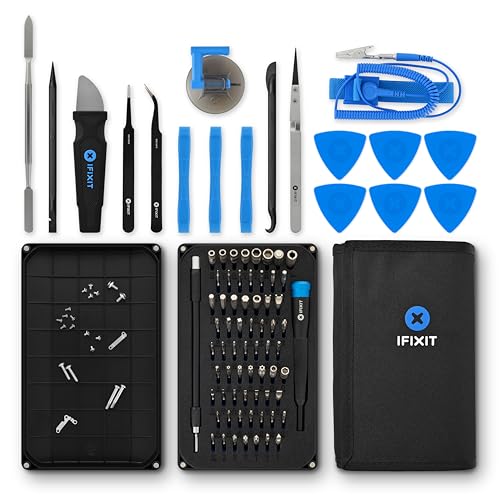
iFixit Pro Tech Toolkit
Best for: owners who repair varied devices often and want one organised case to be the standing answer. Not suited for: anyone expecting one kit to make advanced or unsafe repairs safe; no kit changes the rule against opening a power supply, and no kit replaces a model-specific repair guide. This is a premium-tier option in qualitative terms; check the current listing before you buy.
Judge the iFixit Pro Tech Toolkit the way experienced repairers judge any kit: by the cleanliness of its bit edges after real work, by whether its pry tools let you open a clipped case without marking it, and by whether its case lets you see at a glance that everything is back in place. Those qualities, not headline claims, decide whether it becomes the kit you reach for or the kit you route around.
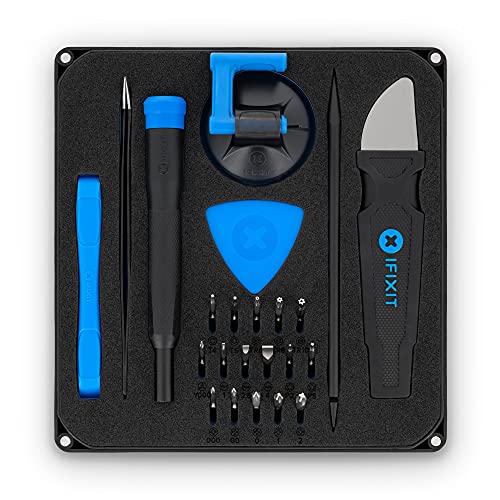
iFixit Essential Electronics Toolkit
Best for: beginners whose jobs are upgrades, cleaning, and battery work on their own machines. Not suited for: anyone expecting one kit to make advanced or unsafe repairs safe; no kit changes the rule against opening a power supply, and no kit replaces a model-specific repair guide. This is a mid-tier option in qualitative terms; check the current listing before you buy.
Judge the iFixit Essential Electronics Toolkit the way experienced repairers judge any kit: by the cleanliness of its bit edges after real work, by whether its pry tools let you open a clipped case without marking it, and by whether its case lets you see at a glance that everything is back in place. Those qualities, not headline claims, decide whether it becomes the kit you reach for or the kit you route around.
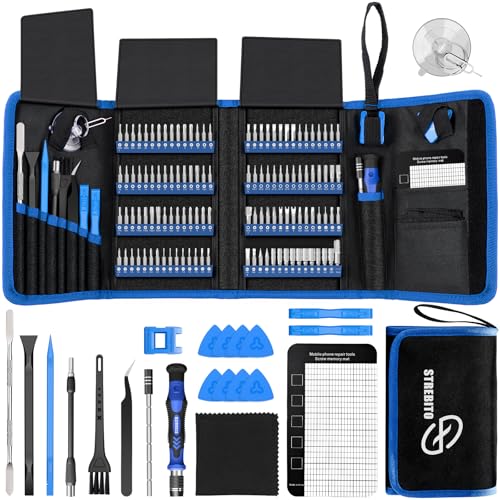
STREBITO Electronics Tool Kit
Best for: households that want broad coverage for computers, controllers, and small electronics in one place. Not suited for: anyone expecting one kit to make advanced or unsafe repairs safe; no kit changes the rule against opening a power supply, and no kit replaces a model-specific repair guide. This is a mid-tier option in qualitative terms; check the current listing before you buy.
Judge the STREBITO Electronics Tool Kit the way experienced repairers judge any kit: by the cleanliness of its bit edges after real work, by whether its pry tools let you open a clipped case without marking it, and by whether its case lets you see at a glance that everything is back in place. Those qualities, not headline claims, decide whether it becomes the kit you reach for or the kit you route around.
Who Should Buy It and Who Should Skip It
Finally, keep perspective on what a kit is. It is not expertise, and it does not make a risky repair safe. It is a well-organised set of correct interfaces between your hands and small, precise fasteners, plus the tools that get you to them without damage. Used with power off, parts organised, a guide open, and the humility to stop at a power supply or a swollen battery, it turns a whole class of jobs from intimidating to routine. That transformation, repeated across years of devices, is the entire case for owning one.
The most useful thing a dedicated kit gives you is not any single driver. It is the moment, halfway through a repair, when the screw in front of you is not the one you expected and the right bit is already within reach. That moment is the whole argument for a kit over a lone screwdriver, and it is also the moment that separates a calm repair from a damaged screw head, a cracked clip, or a job abandoned until a parcel arrives days later.
Start every job the same way, before any tool comes out of the case. Shut the device down completely, unplug it from the wall, and remove the battery where the battery is designed to be removable. A sleeping laptop is not an off laptop, and a plugged-in desktop can still carry standby power to parts of the board. This habit costs less than a minute and it removes an entire category of avoidable accidents from everything that follows.
One safety rule in this whole topic is absolute, and it deserves to be stated plainly rather than softened. Never open a power supply unit, not with these tools, not with any tools, not out of curiosity and not to clean it. The capacitors inside a power supply can hold a dangerous charge long after the cord has been pulled from the wall. If a power supply is faulty, noisy, or suspect, the correct repair is to replace the whole unit, never to open it.
computer tool kit buying guide
how to choose a computer tool kit
Setup, Care and Maintenance Essentials
A magnetic parts mat sounds like a minor accessory until you have watched a tiny screw roll off a desk and disappear into carpet. Screws from a single device often look identical and are not. They differ in length and thread, and putting a long screw back into a short screw’s hole can damage what sits underneath. Laying each screw on the mat in the pattern it came out, group by group and step by step, turns reassembly from a memory test into a simple reversal of the teardown.
Bit quality is where honest differences between kits actually live. A well-made bit fits the screw head fully, with clean edges that engage instead of skating across the surface. A soft bit does the opposite: on a tight factory screw it can round over, chew the head, and leave you with a far harder extraction problem than the repair you started. This is why experienced repairers judge a kit by how its most-used bits look after real work, not by how impressive the case looks on day one.
Security bits are, for many buyers, the real reason a kit exists at all. Modern devices are held together with fasteners chosen partly to keep casual owners out: unusual profiles, pin-in-centre designs, and small sizes that no household driver set includes. A single ordinary screwdriver cannot help you there no matter how good it is. A kit that covers those profiles turns a locked door into a routine step, and a kit that skips them leaves the most interesting repairs exactly as closed as they were before you bought it.
Opening a device can affect its warranty, and that should be said plainly before any cover comes off. Rules differ by maker and by region, and a seal or sticker is a sign to pause and check the current terms for your specific product rather than assume either way. For a device that is still covered and still valuable, reading the warranty position first is not timidity. It is part of the repair, and a kit does not change that calculation in either direction.
Final Verdict
Pry tools teach a beginner more about repair than drivers do. Cases, screens, and covers are usually held by clips as well as screws, and the instinct to lever with a metal driver is how housings get scarred and clips get snapped. Plastic spudgers and opening picks flex, slip into seams, and sacrifice themselves before the device does. A kit that includes a thoughtful range of pry tools is telling you it was designed by people who have actually opened modern, glued, clipped-together hardware.
Tweezers earn their place quietly. Connectors inside laptops and phones are small, ribbon cables are fragile, and fingertips are simply too large and too oily for some of the work. A decent pair of tweezers lets you seat a connector squarely instead of pressing it at an angle, lift a screw out of a deep well without tipping the device, and hold a tiny part steady while the other hand drives. It is unglamorous equipment, and most repairers would give up almost anything else in the case first.
Handle comfort decides whether a long job stays accurate. A driver handle that spins freely at the cap lets you apply steady downward pressure with one part of the hand while the fingers turn, which keeps the bit seated and reduces the cam-out that damages heads. Grip diameter matters too: too slim and your hand tires and wobbles, too bulky and fine work on small fasteners feels clumsy. You cannot judge any of this from a photograph, which is why honest reviews talk about long sessions rather than first impressions.
Deeper Notes From the Bench
Cleaning is the unsung half of ownership. Dust-choked fans and vents make machines loud, hot, and short-lived, and reaching them usually means opening the case properly rather than blasting air through a slot and hoping. With the machine off and unplugged, the cover removed, screws organised, and a strap on your wrist, a careful clean is one of the safest and most rewarding jobs a kit enables. Hold fan blades still while you clean them, work gently around connectors, and let the mat keep the fasteners honest.
Fit and finish on the small things predicts the big things. Look at how cleanly bits seat in the handle, whether the case latches positively, whether markings are printed where you can read them in poor light, and whether the most common profiles are easy to reach rather than buried. None of these details photographs well, and all of them decide whether you reach for the kit with confidence or with a small sigh. Reviewers who have lived with a kit talk about these things because daily friction, not headline coverage, is what ownership feels like.
Finally, keep perspective on what a kit is. It is not expertise, and it does not make a risky repair safe. It is a well-organised set of correct interfaces between your hands and small, precise fasteners, plus the tools that get you to them without damage. Used with power off, parts organised, a guide open, and the humility to stop at a power supply or a swollen battery, it turns a whole class of jobs from intimidating to routine. That transformation, repeated across years of devices, is the entire case for owning one.
One safety rule in this whole topic is absolute, and it deserves to be stated plainly rather than softened. Never open a power supply unit, not with these tools, not with any tools, not out of curiosity and not to clean it. The capacitors inside a power supply can hold a dangerous charge long after the cord has been pulled from the wall. If a power supply is faulty, noisy, or suspect, the correct repair is to replace the whole unit, never to open it.
Bit quality is where honest differences between kits actually live. A well-made bit fits the screw head fully, with clean edges that engage instead of skating across the surface. A soft bit does the opposite: on a tight factory screw it can round over, chew the head, and leave you with a far harder extraction problem than the repair you started. This is why experienced repairers judge a kit by how its most-used bits look after real work, not by how impressive the case looks on day one.
Pry tools teach a beginner more about repair than drivers do. Cases, screens, and covers are usually held by clips as well as screws, and the instinct to lever with a metal driver is how housings get scarred and clips get snapped. Plastic spudgers and opening picks flex, slip into seams, and sacrifice themselves before the device does. A kit that includes a thoughtful range of pry tools is telling you it was designed by people who have actually opened modern, glued, clipped-together hardware.
Torque is a skill the kit cannot give you, but a good kit makes it easier to learn. Small electronics screws need to be snug, not forced. Overtightening strips threads in plastic posts and cracks mounting points, and the damage often only shows itself at the next repair, when the screw simply spins. Working with a driver that communicates feedback through the handle, rather than a bulky tool that overwhelms it, helps a beginner develop the light, consistent touch that keeps devices serviceable for years.
Phones and tablets raise the stakes again. Adhesive, glass, and extremely small fasteners mean the driver is only part of the job; suction handling, careful prying, and patience around batteries matter just as much. Batteries in particular demand respect: never lever against a soft-cell battery, never puncture or bend one, and if a battery is swollen, stop and treat it as a replacement-and-disposal problem rather than a repair challenge. A kit supports careful work, but it never makes careless work safe.
Think of a kit as three layers rather than one purchase. The first layer is drivers and bits, the fastener coverage that decides which devices you can open at all. The second is access: pry tools, spudgers, suction, and tweezers, the things that get you inside without damage. The third is organisation and discipline: the mat, the case, the strap, the habit of laying work out in order. Kits that look similar on a listing can be strong in completely different layers, and your own weak layer is the one to shop for.
Consider who else will use the kit. In a shared household or a small office, a single well-organised kit prevents the familiar chaos of borrowed drivers that never come home and mystery bits in every drawer. It also sets a standard: the person who opens the family laptop uses the strap, the mat, and the right bit, because that is simply how the kit is laid out. Good organisation is a teaching tool, and in shared spaces that may be worth as much as the steel itself.
Storage drives and memory upgrades are the classic first jobs, and they are classic for a reason. The device is powered off and unplugged, the cover comes away with a handful of screws, the work itself is forgiving, and the improvement is immediate and obvious. If you are deciding whether a kit fits your life, picture those jobs first rather than the most intimidating teardown you can find. Most owners live at the upgrade-and-cleaning end of the spectrum, and a kit chosen honestly for that work will satisfy for years.
A word about magnets, because they confuse new buyers. Magnetised bits are genuinely useful: they hold a tiny screw on the tip while you guide it into a deep or awkward hole, which prevents drops inside the device. The old fear that a driver magnet will wipe a modern drive is out of date for the storage most people now use, but common sense still applies. Keep loose magnetic parts organised on the mat, and never go fishing inside a device with anything while it is powered or plugged in.
Work lighting and magnification are not in most kits, and the gap is worth noticing. Tiny fasteners under a desk lamp’s shadow are how screws get lost and profiles get misread, and a misread profile is a damaged head waiting to happen. A simple lamp you can angle, and magnification if your eyes ask for it, do more for repair quality than an extra handful of rarely used bits. When you budget attention for a purchase, save some for the bench itself, not only for the case that sits on it.
Start every job the same way, before any tool comes out of the case. Shut the device down completely, unplug it from the wall, and remove the battery where the battery is designed to be removable. A sleeping laptop is not an off laptop, and a plugged-in desktop can still carry standby power to parts of the board. This habit costs less than a minute and it removes an entire category of avoidable accidents from everything that follows.
A magnetic parts mat sounds like a minor accessory until you have watched a tiny screw roll off a desk and disappear into carpet. Screws from a single device often look identical and are not. They differ in length and thread, and putting a long screw back into a short screw’s hole can damage what sits underneath. Laying each screw on the mat in the pattern it came out, group by group and step by step, turns reassembly from a memory test into a simple reversal of the teardown.
A Closer Hands-On Check: Putting a Computer Tool Kit Through Real Tasks
Compare what the listing promised with what the box actually contained, item by item, and treat any mismatch as a reason to pause before the return window closes. Keep the area underneath and behind the computer tool kit reachable for cleaning, since the spots you cannot reach become the spots where dust and lost small parts collect. Notice the small sounds, lights and movements during normal use, because those everyday details decide whether a computer tool kit feels settled or constantly demands attention. Decide in advance what good enough looks like for your use, so a minor cosmetic flaw does not distract you from performance that genuinely meets the brief.
As a concrete listing check, take the iFixit Pro Tech Toolkit and the iFixit Essential Electronics Toolkit named earlier in this article and confirm, line by line, that each variant offered matches the size, connection and contents described for it here. Give a new computer tool kit a fair trial in the position it was bought for before improvising workarounds, since many early complaints disappear once placement is corrected. When a specification is stated in unfamiliar terms, translate it into your own routine: how long, how often, how far, how loud in practice, before letting it sway you. Ask what you would do on the day this computer tool kit stops working as expected, and whether you could swap, reset, clean or return it without dismantling half your setup. The strongest sign in a hands-on check is consistency: the same input should produce the same result on the first attempt and on the twentieth.
Picture the busiest version of your week and ask whether this computer tool kit still fits when other people, other tasks and other equipment compete for the same space. Check the underside, back or hidden face of the computer tool kit as part of your inspection, because labels, vents, switches and fasteners often live where first impressions never look. Consider who else will use, move or clean around this computer tool kit, because a choice that only works for one careful owner often frustrates everyone else in the household or team. Prefer a setup you can explain to another person in a minute, because simple arrangements are easier to troubleshoot, share and repeat than fragile clever ones.
Write the exact model name and variant from the packaging into your notes, so replacement parts, accessories and support conversations start from certainty rather than guesswork. When you compare notes with other owners, match their comments to setups like yours, because advice from a very different room, workload or routine can mislead. Note the moment you first had to think about the computer tool kit instead of your work, since that moment usually reveals more than any summary of features can. Allow a short settling period for your own habits to adapt, but set a firm date to decide, well inside the return window, whether this computer tool kit has earned its place. Clean and inspect the area around a computer tool kit on a simple schedule, since dust, loose fasteners and tangled leads cause many problems that get blamed on the product itself.
Think about storage for the accessories this computer tool kit brings with it, so spare parts and tools end up in one known place instead of scattered across drawers. Recheck the return window and the condition requirements before you discard any packaging, especially for a computer tool kit whose fit only becomes clear after several real sessions.
Frequently Asked Questions
Do I need a kit if I already own a household screwdriver set?
Usually, yes, if your devices are modern. Household sets cover larger, standard fasteners well, but laptops, phones, and controllers use small precision profiles and security fasteners that household drivers simply do not include. A household set also lacks pry tools, tweezers, and a way to organise tiny screws. If your work is furniture and appliances, the household set is enough. If your work is electronics, the profiles, the access tools, and the organisation are exactly what you are missing, and no single driver fills that gap.
What should I do before opening any device?
Shut it down fully, unplug it, and remove the battery if it is designed to come out. Put on an anti-static wrist strap or ground yourself, lay out a magnetic mat, and open a repair guide for your exact model so you know where the fragile cables and odd-length screws are. Photograph each stage as you go. That preparation takes a few minutes and prevents most beginner damage, which almost never happens at the dramatic moment people fear; it happens through a skipped step in the first five minutes.
Can I open a power supply unit with a good tool kit?
No. Never open a power supply unit, regardless of the tools you own. Its capacitors can hold a dangerous charge long after the device has been unplugged, and the risk is not one that skill or equipment removes. A faulty or noisy power supply is replaced as a whole unit, by someone working on the outside of it only. This rule has no exceptions for cleaning, curiosity, or experience, and any guide or video suggesting otherwise should be closed and ignored.
Will opening my device void its warranty?
It can, and the honest answer is that it depends on the maker, the product, and your region. Some manufacturers publish clear positions on owner servicing; others treat seals and unauthorised opening as grounds to refuse cover. Before opening anything still under warranty and still valuable, check the current terms for that specific product. For out-of-warranty devices the question disappears, which is one reason many owners quite sensibly learn their repair skills on older hardware first.
Why do bits strip screws, and how do I prevent it?
Bits strip screws when the profile is slightly wrong, the bit steel is soft, or the driver is not pressed squarely and firmly as it turns. Prevention is a routine: choose the exact profile, seat the bit fully, press down with steady pressure, and turn slowly for the first movement. Stop immediately if the bit starts to ride out of the head. Quality bits with clean, hard edges resist rounding far longer, which is why bit quality matters more in practice than how many exotic profiles a case contains.
What is an ESD wrist strap actually for?
It equalises electrical potential between you and the device so static charge does not discharge through a sensitive component as you work. The small discharges you cannot feel can still stress parts, so the strap is discipline rather than drama: wear it, attach it as its instructions direct, and combine it with sensible habits like working on a mat and handling boards by their edges. It is inexpensive, slightly inconvenient, and one of the cheapest forms of insurance in the whole repair process.
Related Reading
computer tool kit pros and cons