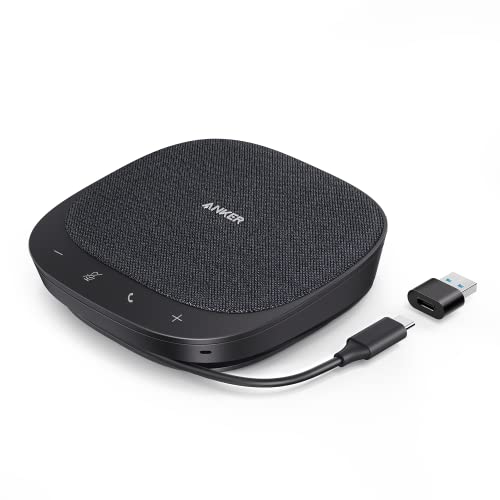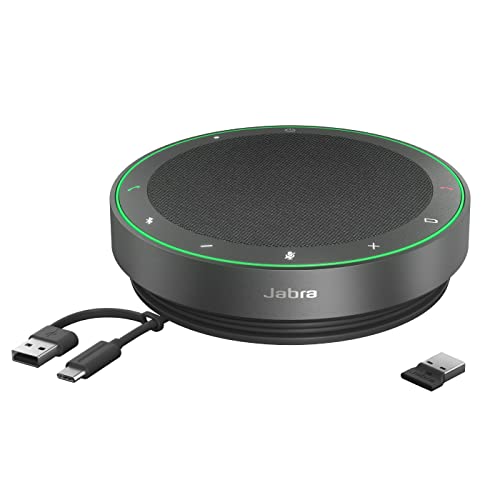
Disclosure: As an Amazon Associate, ilcastellomenu.com earns from qualifying purchases. Links on this page are affiliate links; they cost you nothing extra. Prices and availability change often, so check the current Amazon listing before you buy.
A good conference speakerphone buying guide should save you from the two expensive errors in this category: buying a unit whose brief does not match your room, and buying on the strength of the speaker while ignoring the microphones. This guide works through the category in the order decisions should actually be made: what the device does, which type fits your setting, the criteria that matter phrased as questions, and only then the picks. By the end you will know which tier and which brief to buy, and just as importantly, which features you can safely ignore.
Key Takeaways
- Decide the setting first: personal desk, huddle room or shared space eliminates most of the catalogue.
- Microphone behaviour and echo handling outrank speaker loudness and feature lists.
- Dongle or wired USB is the dependable default for laptops; Bluetooth direct is the variable option.
- Large rooms need linked units or a real system; no single puck covers them honestly.
- Buy inside a return window and test in your own room before committing.
Conference Speakerphone Buying Guide: What the Device Does and the Main Types
A conference speakerphone is a combined microphone and loudspeaker built for group calls rather than for music or for a single voice pressed close to a handset. It sits in the middle of a table, listens in every direction at once, and plays the far end loudly and clearly enough for everyone in the room to follow. The category exists because the microphone and speakers built into a laptop are designed for one person sitting directly in front of the screen, and they fall apart as soon as three or four people spread around a table and start talking at natural distances.
The gap between a laptop and a dedicated unit is easiest to hear from the far end of the call. Remote participants describe laptop audio as distant, echoing and tiring, because the built-in microphone picks up the room as much as the voices and the tiny speakers push everyone to lean in and repeat themselves. A purpose-built speakerphone attacks both halves of that problem at once: a microphone array that favours voices over room noise, and a speaker voiced for speech clarity rather than for bass. Neither half is magic, but together they change how a meeting feels for the people who are not in the room.
Personal Speakerphones
Deciding whether a speakerphone is personal or shared changes which model makes sense. A personal unit for a home office can optimise for one voice, quick connection to one laptop, and a footprint that suits a desk. A shared unit for a team room must tolerate many laptops, many handling styles and the occasional coffee-adjacent accident, and it benefits from the simplest possible connection story. Buying a delicate personal device for a shared room, or a room-sized unit for a solo desk, are the two classic mismatches in this category, and both are visible before purchase if you name the primary setting honestly.
For travellers and hybrid workers, the speakerphone competes with the humble headset, and the comparison is instructive. A headset gives privacy and consistent microphone placement anywhere, including a noisy airport. A speakerphone gives natural, ears-free conversation and lets two or three colleagues on your side join from the same hotel room or huddle space. Many frequent travellers carry the speakerphone for scheduled room calls and keep earbuds for everything else. Size and weight differences between reputable models are modest; the carrying case, the cable management and how quickly the unit wakes and connects matter more in daily travel than small dimensional differences.
Small-Room and Huddle Models
Huddle rooms and small meeting spaces are the natural habitat of this category. Two to six people around a small table, at conversational distance from a central unit, is precisely the geometry the microphone arrays and echo cancellation were designed around. In that setting a good speakerphone makes remote guests feel present rather than patched in, and it frees everyone from the headset-and-laptop huddle. If most of your meetings look like this, you are in the category’s sweet spot and even a mid-tier unit will feel like a transformation compared with laptop audio. Spend your remaining budget on the room: a rug, soft furnishings, and a door that closes.
Most modern units listen with an array of several microphones rather than a single capsule. The array lets the electronics work out where a voice is coming from, favour that direction, and play down steady background noise such as air conditioning or a projector fan. In practice this is why a good speakerphone can hold a conversation at a normal desk or table distance without anyone leaning towards the device. The benefit is real but bounded: the array can favour voices, yet it cannot invent clarity that the room itself destroys, and it works best when speakers sit at roughly similar distances from the unit.
Larger-Room and Chainable Models
Daisy-chaining, where two units link so that one acts as an extension of the other, exists on some product lines in this category and is the honest answer to the long-table problem. Two linked units spread microphone coverage along the table and put a speaker closer to each end, which helps everyone hear without raising the volume. It is a feature to verify carefully rather than assume: chaining may need a specific cable or a wireless link between units, it may work only within the same model family, and it adds setup steps. For a fixed boardroom, a chained pair can be a sensible middle step before a fully installed system.
When a room is simply too big for one tabletop unit, the realistic ladder of solutions runs like this: first improve the room and the seating, then consider a chained pair of compatible units, then look at dedicated conference systems with separate microphone pods or a soundbar-style unit designed for larger spaces. What does not work is buying the most premium single puck and expecting its processing to repeal the physics of distance and reflection. Sellers rarely volunteer this, but the most satisfied large-room buyers are the ones who matched the system to the room instead of asking one small device to cover it.
In this guide
Top Picks at a Glance
Four picks cover the briefs most buyers actually have. Badges are qualitative and tiers are described in words, deliberately: check the current Amazon listing before you buy.
| Pick | Badge | Tier | Best for |
|---|---|---|---|
| Jabra Speak2 75 | Best Overall | Premium | Demanding small rooms and serious home offices |
| Anker PowerConf | Best Value | Mid-tier | First purchases and classic huddle rooms |
| Poly Sync 20 | Best for Hybrid Workers | Mid-tier | Personal desks and travel |
| EPOS Expand 30 | Best for Shared Rooms | Premium | Team rooms many laptops must use |

Jabra Speak2 75 — Best for: defined use cases at the premium tier
The Jabra Speak2 75 sits at the premium end of this category and behaves like it: a confident, full voice from the speaker, composed microphone behaviour around a table, and controls that feel designed by people who attend meetings. In prose terms it is the choice for buyers who host important calls often and want the device to disappear into the background of the room. Its natural home is the small meeting room and the serious home office, and its trade-off is simply that you pay a premium tier price for polish that occasional callers will rarely notice.
Best for: buyers whose meetings match the brief described above. Not suited for: rooms or habits well outside that brief, where a different class of device will serve better. As a prose-only pick at this stage, treat it as a premium option and check the current Amazon listing before you buy.
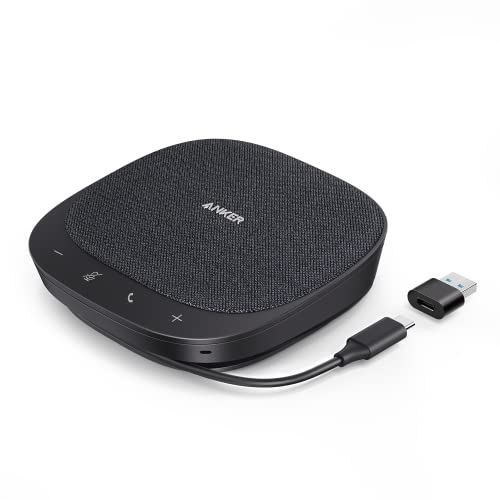
Anker PowerConf — Best for: defined use cases at the mid-tier tier
The Anker PowerConf line is the value engine of this category: the core experience of array microphones and echo cancellation, delivered at a mid-tier position without obvious corner-cutting where it matters. It is a sensible default for home offices and small teams buying their first dedicated unit, and for organisations equipping several rooms at once. The trade-offs appear at the edges: larger rooms, louder environments and buyers sensitive to the last degree of voice naturalness will hear where the money was saved, but for desk-distance and small-table work it covers the brief honestly.
Best for: buyers whose meetings match the brief described above. Not suited for: rooms or habits well outside that brief, where a different class of device will serve better. As a prose-only pick at this stage, treat it as a mid-tier option and check the current Amazon listing before you buy.
Poly Sync 20 — Best for: defined use cases at the mid-tier tier
The Poly Sync 20 is the personal, portable expression of the category: a slim unit aimed at the individual hybrid worker rather than the shared boardroom. It suits a single voice at a desk, a hotel room, or a small huddle of two or three, and it doubles naturally as a personal speaker for the working day. Its limits follow from its brief: it is not the tool for a long table or a big group, and asking it to cover one produces exactly the distant far seats its design never promised to serve. Within its brief, it is coherent and likeable.
Best for: buyers whose meetings match the brief described above. Not suited for: rooms or habits well outside that brief, where a different class of device will serve better. As a prose-only pick at this stage, treat it as a mid-tier option and check the current Amazon listing before you buy.

EPOS Expand 30 — Best for: defined use cases at the premium tier
The EPOS Expand 30 comes from a lineage of enterprise audio and shows it in its tuning: voices are presented plainly and intelligibly, and the unit behaves predictably with the platforms larger organisations standardise on. It is a strong fit for huddle rooms and team spaces where several different laptops will connect across a week and nobody wants a troubleshooting ritual. The trade-off is that its enterprise manners come at a premium-leaning tier, and individual buyers may find personal models that suit a single desk for less commitment.
Best for: buyers whose meetings match the brief described above. Not suited for: rooms or habits well outside that brief, where a different class of device will serve better. As a prose-only pick at this stage, treat it as a premium option and check the current Amazon listing before you buy.
How Far From the Unit Will People Sit?
No speakerphone defeats a bad room. A large, echoey space with hard floors, bare walls and a high ceiling smears every voice with reflections, and the far end hears that smear no matter how clever the processing is. Distance compounds it: a participant seated far down a long table is simply quieter and more reverberant than one near the unit. The honest fixes for genuinely large rooms are architectural and procedural rather than a more expensive puck: soften the room where you can, seat people closer together, or step up to multiple linked units or a properly installed conference system designed for the space.
Placement is the cheapest performance upgrade available. Put the unit at the centre of the people it serves, on the table rather than on a sideboard or a windowsill, with nothing tall immediately beside it to reflect sound or shadow the microphones. Keep it away from laptop fans, projector exhausts and air-conditioning vents, whose noise it will faithfully transmit. A unit shoved to one end of a long table makes the far seats sound exactly as far away as they are. Thirty seconds of placement thought at the start of a meeting routinely buys more clarity than a tier of product upgrade.
How Much Does Echo Cancellation Matter in Your Room?
Echo cancellation is the other half of the engineering. On a call, the far end hears its own voice played through your speaker; without cancellation that sound re-enters your microphones and returns to them as a distracting echo. The unit constantly models what it is playing and subtracts that sound from what its microphones hear, which is also what allows both sides to talk at once without the audio cutting out. Good cancellation feels invisible. Weak cancellation shows up as clipped first syllables, a swirling quality when both sides speak together, or the far end asking you to mute whenever you are not talking.
Noise reduction in these devices targets the steady and the sudden sounds of real rooms: keyboard clatter, paper shuffling, a door closing, traffic through a window. Newer models describe this processing in terms of voice isolation or AI-assisted cleanup, and the honest summary is that it helps most with predictable, continuous noise and least with competing speech. Another voice in the room, a television in the next room, or people talking over each other will still reach the far end, because to the electronics those are voices too, and voices are exactly what the device is trying to preserve.
Which Connection Will You Actually Use Every Day?
Bluetooth is the connection everyone wants and the one that causes the most quiet frustration. Paired directly to a laptop, a speakerphone depends on the computer’s Bluetooth stack and profile handling, and the result can be a device that connects as headphones but not as a microphone, or that behaves differently after every operating system update. Bluetooth to a phone is usually painless. Bluetooth to a computer is where the included USB dongle earns its place: the dongle presents the unit to the computer as a simple, standard audio device, sidesteps profile negotiations, and tends to reconnect to the same machine in the same way every morning.
The practical difference between a dongle connection and direct Bluetooth shows up on the worst mornings: the call that starts in five minutes, with guests already joining. A dongle-based link is boring in the best sense, because the pairing lives between the dongle and the speakerphone rather than inside the computer’s settings, so swapping laptops or rebooting rarely breaks it. Direct Bluetooth saves a USB port and is fine for a single personal machine you control. For a shared room device that different laptops must use across a week, boring wins, and the dongle is usually the right default.
A plain USB cable remains the most reliable connection of all, and it deserves more respect than it gets. Wired, the speakerphone is simply an audio device: no pairing, no battery anxiety, no wireless interference from a crowded office band, and no question about which of three remembered devices it will greet when it wakes. The cost is a cable across the table and a fixed seat for the unit. Many experienced users run a hybrid pattern, keeping the cable connected in the home office where the unit lives, and using wireless only when the speakerphone travels to another room or another building.
Do the Controls Protect Your Privacy?
Physical controls sound like a footnote until you are mid-call. A clear hardware mute with an unmistakable indicator, volume keys you can find without looking, and a call button that behaves predictably are worth more than a long feature list. Touch surfaces look clean and photograph well, but they can be ambiguous under pressure, and a mute you cannot verify at a glance is a privacy risk rather than a style choice. When you compare models, picture the worst moment of your meeting week and ask which set of controls you would rather operate in it. That thought experiment ranks devices more honestly than most specification tables.
A speakerphone microphone hears the whole room, and that fact deserves a standing place in any honest discussion of these devices. Side conversations, a colleague entering with a sensitive question, or paperwork discussed before the call officially starts can all reach the far end if the unit is live. Mute discipline is the countermeasure: use the hardware mute button rather than the app control where you can, learn what its indicator light means, and treat the mute check as part of starting and ending every call. Teams that adopt the habit explicitly, the way they adopt camera habits, avoid the classic speakerphone embarrassment entirely.
How to Prioritise by Use Case
The clearest beneficiaries share a pattern: groups on one side of the call. A team that gathers around one table to meet remote colleagues, a professional who hosts client calls with a partner or assistant present, a family that calls relatives together, a tutor or consultant who works with a small group in the room. For all of them the speakerphone converts a device built for one into a room built for several. The benefit compounds with frequency: a daily group call justifies care in choosing, an occasional one justifies a simpler model, and a purely solo call pattern justifies skipping the category entirely in favour of a good headset.
Judged purely as value, a speakerphone should be compared with the cost of the meetings it improves rather than with other gadgets. A team that holds several group calls a week, with remote clients or colleagues judging the organisation partly by how those calls feel, recovers the outlay in professionalism quickly, in qualitative terms. A solo worker who mostly takes one-to-one calls in a quiet room recovers it slowly or never, because a headset already solves that problem well. The category is neither a universal essential nor a luxury; it is a tool whose worth is set almost entirely by the shape of your meeting week.
Platform certification, most often for Microsoft Teams or Zoom, signals that a unit has been tested against that platform’s expectations and usually that its buttons speak the platform’s language: answering, ending and muting from the device itself, in step with the app. Certification is a convenience and compatibility signal, not a sound-quality grade. An uncertified unit from a reputable maker generally still works as a standard USB or Bluetooth audio device on any platform. Buy certification when your organisation standardises on one platform and you want the controls and behaviour to feel native; do not pay a premium for a badge if you switch platforms constantly.
Three profiles cover most readers. The home-office professional with occasional in-room guests should buy a strong mid-tier small-room unit and stop there. The team equipping a shared huddle room should buy for connection predictability and controls, which points to the enterprise-leaning premium models. The hybrid traveller should buy the personal brief and keep earbuds for noisy spaces. Our guide on how to choose a conference speakerphone turns these profiles into a step-by-step method.
First Setup and Care Essentials
Setting up well is mostly a sequence of small, unglamorous decisions made in the right order. Decide where the unit lives before you pair anything, because placement drives both the wiring and the wireless choices. Charge it fully first if it will ever run on battery, so your first tests reflect its normal behaviour rather than a low-battery compromise. Connect by the simplest route that suits the room, confirm the meeting app has selected the unit for both microphone and speaker, and only then start judging sound. Most setup misery comes from evaluating audio before the plumbing is verified, and blaming a good device for a setting buried in an app.
Test a new speakerphone the way the far end will experience it, because that is the product you actually bought. Record a short call or a voice memo through the unit from each seat you expect people to use, then listen back on headphones. Walk through the real agenda: one speaker, two speakers alternating, a question from the far seat, a moment of natural overlap. You will learn more in five minutes of listening than in an afternoon of reading impressions, and you will find the placement and volume habits that suit your room while the stakes are low and no client is on the line.
Care for a speakerphone is light but not zero. Keep the microphone openings free of dust and desk debris, wipe the housing with a dry or barely damp cloth, and avoid solvents that attack fabric wraps and finishes. Store a travelling unit in its case so the buttons are not pressed and the grille is not crushed against other gear. Batteries prefer regular, moderate use to being left flat for months. None of this is burdensome, and most neglected units fail socially before they fail mechanically: they get borrowed, unplugged, and left uncharged in a drawer, which is an argument for giving a shared device a labelled home and a labelled cable.
Mistakes to Avoid
The recurring buying mistakes in this category are easy to list because they repeat so faithfully. Buying for the biggest room you use twice a year and suffering an oversized, overcomplicated unit the other fifty weeks. Choosing on speaker loudness while ignoring microphone behaviour, when the far end’s experience is the real product. Assuming Bluetooth to a laptop will be seamless because Bluetooth to a phone was. Ignoring the mute control and its indicator until the first privacy scare. And skipping the return-window test in your own room, which is the only review that was ever going to be written about your exact walls, table and voices.
People talking over each other defeats every device in this category, including the best of them. Microphone arrays and noise processing assume, reasonably, that one person speaks at a time; two simultaneous voices from different seats arrive as a tangle that no consumer unit untangles into two clear streams. This is a meeting-discipline problem wearing a technology costume. A chair who invites contributions one at a time, and participants who leave a breath of space before replying, will improve call quality more than any upgrade. Buy the speakerphone to fix distance and echo, not to fix crosstalk, because crosstalk is not fixable at this level.
Two further mistakes deserve naming: skipping the recorded test in your own room, and judging the purchase entirely from your own chair when the far end is the real customer. Both are covered, from the decision side, in our conference speakerphone pros and cons analysis and our conference speakerphone review; setup itself is walked through in our guide to how to set up conference speakerphone.
The Bottom Line
This conference speakerphone buying guide ends where it began: fit first, microphones second, connection third, features last. Follow that order and the category is easy to buy well. If you remain unsure whether the category itself fits your week, read our answer to is a conference speakerphone worth it before the shortlist, and browse our full conference speakerphone reviews once the brief is settled.
In Depth: Living With a Conference Speakerphone
The Shared-Room Ownership Problem
Shared technology fails socially before it fails technically. A speakerphone that belongs to everyone belongs to no one: it migrates between rooms, its cable walks away, and it is flat on the morning of the board call. The fix costs nothing. Give the unit a named home room, label the unit and its cable, keep the charger with it, and make one person the informal owner who checks it weekly. Organisations that do this get years of uneventful service from modest hardware; organisations that do not manage to make even premium hardware feel unreliable.
Why Demos Mislead
Showroom and video demonstrations flatter every device in this category. The demo room is quiet, the speaker is close, the script has one voice at a time, and the listener hears a polished recording rather than a live call through a real network. Your room will offer none of those kindnesses. This is why the recurring advice in this cluster of guides is to test in your own space, from your own seats, with your own colleagues interrupting each other at their usual rate. A device that survives your Tuesday team meeting has passed the only demo that was ever relevant.
Meetings That Should Not Use One
Honesty about the category includes naming the meetings where a speakerphone is the wrong tool even for owners. Sensitive one-to-one conversations belong on a headset or handset, because a room microphone is architecturally indiscreet. Calls taken while moving between spaces punish any fixed device. Very large gatherings need a system designed for them. Recognising these cases does not weaken the case for owning a speakerphone; it protects the device from being blamed for jobs it never claimed, and it protects your genuinely private conversations from the wrong microphone.
How Long a Good Unit Should Last
This is mature technology with no moving parts worth the name, and a well-kept unit should serve for years. The realistic ageing paths are battery wear on heavily travelled units, firmware drift as platforms evolve, and the slow accumulation of shared-room neglect. All three are manageable: keep firmware current, treat the battery kindly, and give the device an owner. Buyers sometimes delay purchasing while waiting for a generational leap in this category; the technology improves incrementally, and the meetings you hold this quarter will not wait for it.
The Etiquette of Being Heard
A room microphone changes the social contract of a meeting. Everyone present is, in a small way, broadcasting, and the courtesies follow from that: announce who is in the room, keep side talk for the mute button or for after the call, and remember that rustling, typing and tapping near the unit are sounds your guests receive at full size. None of this is onerous, and most of it is simply good manners made audible. Rooms that internalise it stop thinking of the speakerphone as equipment and start treating it as the far end’s seat at the table.
Small Rooms Punch Above Their Weight
It is worth saying plainly that modest spaces are this category’s home turf. A small, soft-furnished room with a handful of people at conversational distance is exactly the environment the engineering assumes, and in that environment even mid-tier hardware delivers an experience that impresses guests. If your meetings live in such rooms, you do not need to agonise over the top of the range. Buy competently, place carefully, and enjoy the fact that your setting, not your spending, is doing the heavy lifting that boardrooms pay systems integrators to imitate.
How the Far End Judges You
Remote guests form their impression of your organisation through a narrow channel, and audio is most of it. They cannot see your office, your preparation or your intent; they hear whether voices are clear, whether they must ask for repeats, and whether the room sounds calm or chaotic. That is why experienced teams treat call audio as part of their professional presentation rather than as an IT detail. A speakerphone does not guarantee a good impression, but it removes the most common reasons for a bad one, and it does so for every guest on every call without anyone having to perform.
What Changes After the First Month
The first week with a speakerphone is about novelty and settings. By the end of the first month the device has either become furniture, in the best sense, or it has become an irritation that people route around. The difference is rarely sound quality. It is whether reconnection is uneventful, whether the mute can be trusted without thinking, and whether the unit is simply there, charged and in its place, when a meeting starts. When you evaluate any model, you are really forecasting that thirtieth day: choose the device whose daily behaviour you can picture being boring.
A Note on Voice Levels
Rooms develop a volume culture. With laptop speakers, people shout politely all afternoon because they cannot hear themselves being heard, and they leave calls hoarse and tired. A clear speaker at a sensible level resets that culture within a few meetings: voices drop to conversational level, which in turn gives the microphone array an easier signal and the echo cancellation an easier job. The improvement feeds itself. If your team currently ends call-heavy days vocally exhausted, that fatigue is diagnostic information about your current setup, and it is one of the benefits owners mention most once it is gone.
Guests, Visitors and the Borrowed Laptop
Sooner or later someone outside the usual pattern joins: a visitor with their own laptop, a colleague from another office, a client presenting from your room. Shared speakerphones earn their keep in these moments if, and only if, the connection story is simple enough to explain in one sentence. This is the practical argument for the dongle in a drawer and a cable in the table: the visitor does not care about your usual setup, and the meeting cannot pause for a pairing ritual. Design your setup for the borrowed laptop and the regulars will find it effortless too.
Recording, Transcription and the Written Record
Many meetings are now recorded or transcribed, and the quality of that record is set at the microphone, not in the software. A room captured through a laptop microphone produces transcripts full of gaps and misattributed speakers; the same room captured through a well-placed speakerphone gives the transcription something clean to work with, and gives absent colleagues a recording they can actually follow. If your organisation relies on recordings as its memory, the speakerphone is part of your record-keeping infrastructure, and it should be chosen and placed with that responsibility in mind.
Accessibility Is Part of Audio Quality
Clear call audio is an accessibility feature, not a luxury. Participants who are hard of hearing, colleagues working in a second language, and anyone joining from a less-than-silent environment all depend disproportionately on clean, intelligible speech and on the visual discipline of one speaker at a time. A good speakerphone setup, with its central placement and its intolerance of crosstalk, quietly enforces the habits that make meetings more accessible to everyone on the call. That benefit rarely appears in product comparisons, but for mixed teams it can be the most important one on the list.
Before You Shortlist: Measure, Match and Check the Fit
Decide your return-risk tolerance in advance
Some conference speakerphone choices are easy to judge from a listing and some only reveal themselves in the hand, in the room, or in your software. If your shortlist includes a model you are judging on feel, fit or noise, buy from a seller whose returns process you have actually read, and keep the packaging intact until the first full week of use is done. Knowing your exit route in advance lets you choose the bolder option on the shortlist without gambling, and it removes the pressure to keep a conference speakerphone that is merely acceptable.
Start with the space, not the shortlist
Before comparing a single conference speakerphone, measure the space it has to live and work in, and write the numbers down. Footprint is only the start: allow for cables, ventilation, doors or lids that swing open, and the room your hands need to load, adjust or clean it. In a home where children, pets and visitors all interact with the setup, a model that fits on paper can still fail in practice because access is blocked or a cable run has nowhere tidy to go. Measuring first turns the Sound Cards shortlist from a wish list into a filtered list where every remaining option is physically plausible.
Check compatibility against what you already own
A conference speakerphone rarely works alone, so list the devices, mounts, media, software or accessories it must cooperate with, and check each pairing against the listing details rather than assuming standards guarantee harmony. Connector versions, physical clearances, supported formats and control apps are the usual friction points. When picks such as Jabra Speak2 75, Anker PowerConf and Poly Sync 20 are on your shortlist, run this check against each listing in turn. Where a listing is vague about a pairing you depend on, treat that silence as a risk to resolve before ordering, not a detail to discover afterwards. Compatibility failures are the most common reason a well-reviewed conference speakerphone gets returned.
Separate the headline feature from the daily feature
Every Sound Cards range has one headline feature that dominates the marketing and one unglamorous feature you will use every single day. For a conference speakerphone, the daily feature is usually the control you touch most, the consumable you replace most, or the connection you make and break most often. Weight your shortlist by the daily feature first and let the headline feature break ties, because novelty fades within weeks while a clumsy daily interaction stays annoying for the life of the product.
Plan the consumables and spares shelf
Ownership of a conference speakerphone usually involves a small ecosystem of consumables, refills, replacement parts or spares, and availability matters as much as the unit itself. Check that the refills your shortlisted models need are standard, stocked by more than one seller, and replaceable without tools you do not own. A model tied to a single obscure consumable becomes a liability the moment that line is discontinued, whereas a conference speakerphone built around common refills stays useful for years. Keep one spare of the fastest-wearing part from day one.
Five honest minutes at this stage is worth more than five hours of comparison browsing.
If a candidate fails this check, strike it from the list without regret and let the remaining options compete on merit.
Your future self, mid-task on a busy day, is the person this check is really for.
Frequently Asked Questions
What is the most important buying factor for a speakerphone?
Match to your room and group size, ahead of any feature list. A unit whose brief fits your seating distance and room character will outperform a more expensive unit bought for a different setting. After fit, prioritise the far end’s experience: microphone behaviour and echo handling first, then speaker clarity, then connection reliability, then controls. That ordering survives every brand argument in this category.
How do I choose between personal and room models?
Count the voices, not the features. If nearly all your calls involve one person at one desk, a personal model is the right tool and a room model is wasted bulk. If a group gathers on your side with any regularity, buy for the group: central placement, wider listening and a connection story that works for any laptop. Many buyers discover their true pattern by reviewing two weeks of their calendar before they shop.
Is a USB dongle worth having?
For laptop use, usually yes. The dongle sidesteps the variable behaviour of built-in Bluetooth stacks and presents the speakerphone as a simple, predictable audio device, which is why so many connection complaints end when the dongle goes in. It costs a USB port, which is a real consideration on slim laptops. If your machine’s ports are scarce, a wired USB connection offers the same predictability through the cable instead.
Do I need daisy-chaining?
Only if your seating is genuinely long or split into clusters that one central unit cannot serve at conversational distance. Chaining is a real solution on the lines that support it, but it adds cost, setup and model restrictions. Most small rooms never need it, and most buyers who think they do actually need better placement and seating. Decide from your table’s geometry, not from a fear of missing a feature.
What should I check about mute and privacy before buying?
Check that the mute is a hardware control you can operate without looking, that its state is shown by an indicator you can read across the table, and that the app and the device stay in step. Then plan the human side: a room convention that the unit is live whenever a call is, and that private asides wait for the mute. The control and the convention together are the privacy feature.
When is a speakerphone the wrong purchase?
When your calls are solo, private or taken in noisy shared spaces, a headset serves you better on every axis that matters. When your room is very large, a single speakerphone is the wrong purchase in the other direction, and the money belongs in a multi-unit or installed system. The guide’s job is to land you in the category only when the category fits, and the fit question is always about your meetings, not about the products.
It also helps to set expectations with the people on the other side of your calls. Tell regular collaborators that the room is now on a speakerphone, invite them to say immediately if audio dips, and check in after the first week. That feedback loop catches the problems you cannot hear from your own chair: the seat that sounds distant, the volume that creeps too high, the air conditioner that only runs in the afternoon. Devices get blamed for many things that a single honest sentence from a regular guest would have diagnosed in a day.
One more practical consideration is the rest of the desk. A speakerphone joins an ecosystem of webcams, hubs, chargers and cables, and small frictions between them are the stuff of daily annoyance: the hub with no free port for the dongle, the cable that is ten centimetres too short for the tidy route, the webcam whose microphone the app prefers. Lay the whole setup out once, deliberately, and photograph it if the room is shared. A considered arrangement, made once, is repaid every single morning, and it costs nothing but the half hour nobody wants to spend.
It is also worth keeping a simple fallback. Technology that a whole room depends on should have a plan B that everyone knows: the laptop’s built-in audio, understood and pre-tested, or a headset kept in the room for the day the speakerphone is borrowed, flat or updated at the wrong moment. A fallback that has been rehearsed once turns a potential meeting failure into a thirty-second shrug. Rooms without one discover their dependence on a single small device at the least convenient possible time, usually in front of the guest they most wanted to impress.
Finally, remember that this is a mature, slow-moving category. The fundamentals of array microphones and echo cancellation improve incrementally rather than in revolutions, which means a well-chosen unit stays satisfying for years and last season’s model at a friendlier tier is often a shrewd purchase. Buy for the room and the meeting pattern you have now, keep the firmware current, and resist the urge to re-shop the category every time a new badge or a new marketing term appears. Stability is a feature in equipment that a whole room depends on.
Consider, too, how the device interacts with the camera side of the meeting. Once a room sounds good, its next weakness is usually visual: a camera that frames half the table, or lighting that silhouettes faces against a window. You do not need to solve those today, but it is worth knowing that audio was the right first investment, because guests forgive a plain picture far more readily than they forgive sound they must strain to follow. Fix hearing first, then seeing, in that order, and each fix will make the other look better than it is.
There is a temptation, after the first successful week, to keep optimising: a different position, a new setting, a firmware beta. Resist it. A meeting room’s audio should become invisible infrastructure, and invisible infrastructure is finished, not perpetually tuned. Note the configuration that works, in a document the room’s users can find, and then leave it alone until something material changes: a new room, a new platform, a new pattern of meetings. Stability is what you bought, even if it was not listed on the box.
New joiners deserve a thirty-second induction into any shared room setup: where the unit lives, what the mute light means, and the request to say immediately if the far end sounds wrong. That tiny ritual protects every meeting that follows it, because most audio failures are discovered late by people too polite to interrupt. A room that teaches its habits to newcomers keeps its standards; a room that assumes them watches its standards quietly dissolve within a quarter.
Finally, judge the purchase after a month, not after a day. Keep a rough tally of the meetings it served, the repeats it prevented, and the moments it embarrassed you, if any. That tally, written from your own calendar, is a more trustworthy review than anything published about the product, including the guides in this cluster. If the tally is good, stop reading about speakerphones and spend the attention on your meetings. If it is bad, the tally will tell you whether the device, the room or the habits were at fault, and each of those has a different cure.
Battery behaviour deserves a final practical word for travelling units. Charge on a routine rather than on a panic: the night before travel, or the same weekday each week for a room unit that runs unplugged. A speakerphone that is always nearly flat teaches its owner to distrust it, and distrust is what sends devices back into drawers. The technology asks very little; the little it asks is mostly this, that someone keeps it fed and knows where it sleeps.