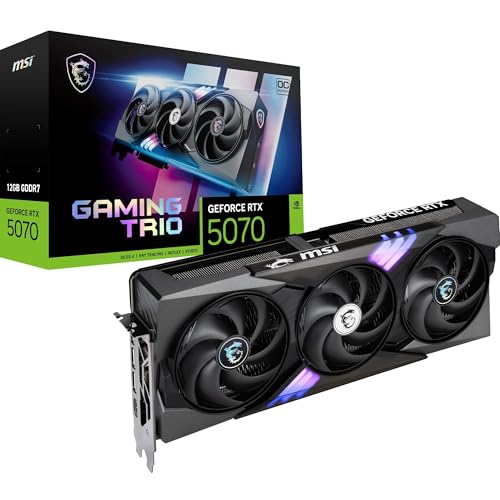
Disclosure: As an Amazon Associate, ilcastellomenu.com earns from qualifying purchases. Links on this page are affiliate links; they cost you nothing extra. Prices and availability change often, so check the current Amazon listing before you buy.
Graphics cards stopped being flat a long time ago. This gpu slot thickness guide exists because the modern performance card is a brick: two, two and a half, three, sometimes nearer four slots of cooler hanging off a board that still plugs into a slot designed when cards were slivers. Thickness decides what else fits in your case, whether the card can breathe, whether a second card or a capture card has anywhere to live, and in small cases whether the side panel closes at all. Yet it is the dimension buyers check last, usually in the disappointed past tense. This guide makes it a first-class specification. You will learn how slot thickness is counted and why the numbers lie politely, how to measure your case’s real allowance, what thickness costs in expansion room and airflow, how it interacts with motherboard layout and multi-card plans, and the pre-purchase checks that guarantee the brick you fell for is a brick your machine can house.
Gpu Slot Thickness Guide: How the Counting Works
A slot, in this vocabulary, is the standard spacing unit of the expansion bay: the distance between one slot’s centre and the next, a pitch the industry has held constant for decades. A card described as two-slot is built to occupy the space of its own slot and one neighbour; a three-slot card reaches across two neighbours; and the fractional figures, the 2.2s and 2.7s of specification sheets, are the industry’s honest confession that the cooler is fatter than the tidy number on the box. Two measurements hide inside the headline. The first is the cooler’s true thickness in millimetres, which is the number that decides whether the side panel closes and how much air gap remains beneath the fans. The second is the slot count, which decides which neighbouring slots the card renders unusable. They are related but not interchangeable, and a card can be modest in one and greedy in the other when its backplate or its shroud overhangs. Read both, always, from the manufacturer’s dimension line rather than from the marketing name, because the names round in the manufacturer’s favour and the millimetres do not.
Thickness also has a direction. Nearly all of a modern card’s bulk hangs below the slot it plugs into, toward the case floor in a standard tower, which is why the slots beneath the graphics slot are the ones it consumes and why the motherboard’s layout below the primary slot matters so much, a subject the board guides in this series treat from the other side, including motherboard form factors compared. A smaller share of designs bulge upward with tall shrouds or cabling that must clear the CPU cooler’s territory, so the full physical reading of a card is three dimensions, and thickness is merely the one that grew fastest.
In this guide
What Thickness Costs: Expansion Room and Air
Every fraction of a slot is spent twice. The first spending is expansion room: a three-slot card in a board whose second full slot sits three pitches below leaves that slot technically free and practically useless, because a card installed there would sit against the first card’s fans. Builders planning capture cards, sound cards, extra storage adapters or a second graphics card, the territory of choosing a motherboard for dual GPU, must count the graphics card’s thickness against the board’s slot map before either purchase, because the two documents together decide what the machine can ever become. The second spending is air. A thick card whose fans sit a centimetre from a solid power-supply shroud or a glass panel is a card breathing through a straw, and its temperatures will say so; the cooler’s design decides how gracefully it copes, which is why axial and blower cooler designs belongs in the same reading session. The rule of thumb is a clear finger’s width, ideally two, of open air in front of the fans, and in small cases that rule, not the slot count, is the binding constraint.
Thickness buys things too, and fairness requires the ledger’s other side. The brick is mostly heatsink, and heatsink mass and fin area are what let a powerful card run quietly; the thin cards of earlier generations were thin partly because they had less heat to shed, a relationship quantified in how TDP sets cooling requirements. A three-slot flagship at a whisper is a better ownership experience than a two-slot one at a roar, provided the case can house and feed it. The sin is not thickness; the sin is unplanned thickness, discovered after the purchase.
Measuring Your Case’s Real Allowance
Cases advertise a number of expansion slots, commonly seven in a mid-tower, and that number is the beginning of the measurement, not the end. Measure instead the three clearances that decide your life. First, from the primary graphics slot downward: count the pitches to the next component that cannot move, the shroud, the floor, the lower card you already own, and convert the card’s millimetres into that pitch space honestly. Second, the air gap: with the card’s thickness known, calculate the space remaining between its fans and whatever faces them, and judge it against the finger’s-width rule. Third, the length-and-thickness corner, the diagonal reality that a long, thick card must also be inserted at an angle during installation, past drive cages and front radiators; a card that fits on paper can refuse the journey into a tight case, and case reviews that show the installation are worth more than the specification table here. Write the three numbers down before you shop. A builder with three clearances written on paper is immune to the entire category of disappointment this guide exists to prevent.
Vertical Mounts, Riser Cables and Other Ways Thickness Moves
The vertical mount rearranges the thickness problem rather than solving it: the card turns to display its face through the case glass, its thickness now reaching toward the panel instead of toward the floor. In that orientation the binding clearance is between the card’s fans and the glass, and it is routinely too small in cases that advertise vertical mounting as a checkbox feature, which is why vertically mounted cards so often run hot behind their showcase. The riser cable that makes it possible adds its own considerations of length, rating and routing. None of this condemns the vertical look, which is legitimately beautiful; it prices it. If you mount vertically, choose a case whose vertical position leaves the fans a real air gap or whose panel is vented, and treat the temperatures of the first week as the verdict. Thickness also meets the card’s other end in the vertical world, where the output bracket and its ports, surveyed in the ports on the back of the card, must align with the case’s vertical bracket, another paper fit that deserves a physical check.
Small Cases: Where Thickness Is the Whole Conversation
In a small-form-factor build, thickness stops being a specification and becomes the architecture. Many compact cases are designed around a strict slot budget, two slots being the classic allowance, with the card’s thickness deciding not just its neighbours but its cooler style, its power connector clearance and sometimes its very eligibility. The discipline the small-case world teaches, and which this guide recommends importing into towers, is to choose the case and the card as one decision, from each other’s dimension sheets, before money moves. The support question follows the card home here too, since a heavy card in a compact case has no floor for a pillar stand and relies on its bracket and the case’s structure, a contrast with the tower world of supporting a heavy, sagging graphics card. Small cases reward the thinnest card that meets the performance need and punish every gratuitous fraction; towers forgive, but they invoice the forgiveness in expansion room.
Worked Fits: Three Builds and Their Thickness Budgets
Abstract rules settle into sense when they are spent on real builds. Take the mainstream tower first: a mid-tower with seven slots, a standard board, and a performance card of two and a half slots. The card takes the primary slot and renders the two beneath it decorative; the board’s second full-length slot, four pitches down, survives with a genuine air gap, so a capture card or a future second card remains possible, and the shroud below leaves the fans their finger’s width and more. This is the comfortable world the case was designed for, and the thickness budget is spent without pain. Now the same card in a compact tower with five slots and a close shroud: the slot count still closes, but the air gap shrinks to half the rule, and the owner discovers the thickness tax in temperatures rather than in fit, paying with a fan curve what the case would not give in space. Finally the small-form-factor build, designed around two slots: the two-and-a-half-slot card simply does not exist as an option, and the builder chooses from the genuinely two-slot catalogue, thinner coolers, lower power classes, a different machine in spirit. Three builds, one card, and thickness, not performance, decided each story. That is why the dimension belongs at the top of the shopping list rather than in the small print of the receipt.
The worked fits also expose the most common planning error in the wild: choosing the motherboard and the card in separate weeks. The board’s slot map and the card’s thickness are one document read from two sides, and the builders who read them together are the ones whose second card, capture device or storage adapter has somewhere to go in year two.
Backplates, Shrouds and the Millimetres Nobody Lists
The dimension line on a specification sheet is the card at its official thickest, but ownership is lived at the unofficial millimetres. A backplate adds its thickness above the board on the side the slot count ignores, and in tight builds that plate meets CPU cooler towers and memory latches in spaces the diagram said were clear. A shroud can overhang the card’s end or edge beyond the stated length, meeting a front radiator in the last centimetre of installation. Power connectors exit from the top or the end of thick cards and demand their own clearance cylinder for the cable’s bend, a demand that has closed more side panels in protest than any cooler. The defence is a habit rather than a tool: when you shortlist a card, read one thorough review that photographs it installed, in a real case, from several angles, because reviewers’ photographs confess the millimetres that specifications omit. The card is a physical object entering a physical box, and photographs are the only specification written in the same language as the box.
Thickness Across Generations: Why Cards Grew, and Whether They Will Shrink
The growth of the brick is a rational response to three pressures: processors that draw more power and therefore shed more heat, buyers who prize silence and will pay for the fin area that buys it, and a market where the cooler is the visible difference between one maker’s card and another’s on the same processor. Each pressure is real, and none is about to reverse on its own, which is why the prudent builder treats today’s thicknesses as the planning baseline rather than as an aberration. The counter-pressures exist: efficiency gains in new processor generations can hold performance at lower power, and liquid cooling collapses thickness entirely for those who adopt it. But the mainstream air-cooled card, for the foreseeable buying cycle, is a two-to-three-slot object, and cases, boards and expectations have quietly reorganised around that fact. The slot pitch itself, the unit of the whole system, has not changed in decades, which is the deepest reason thickness is counted in slots at all: the industry is expressing a very new object in a very old currency, and the exchange rate, about twenty millimetres to the slot, is worth memorising.
The Pre-Purchase Checklist, in Order
Close the guide with the drill it has been building toward, in the order that catches mistakes cheapest. One: from the card’s own specification, write down its length, its thickness in millimetres and its stated slot count. Two: from your case, write down the three clearances, slot pitches available below the primary slot, the fans’ air gap to the shroud or floor, and the installation path past radiators and cages. Three: from your motherboard, mark which slots the card’s thickness retires and confirm nothing you own or plan needs them. Four: add the power connector’s clearance to the thickness if the plugs exit the card’s side facing a panel. Five: if any number is within a few millimetres of failing, find a review photograph of the card installed in your case or its close relative before buying. Five lines, ten minutes, and the entire literature of forum posts titled “it doesn’t fit” becomes other people’s genre. Keep the worksheet with the machine’s records; the next card will thank you for it.
Thickness and Temperatures: The Experiment Every Owner Can Run
The relationship between a card’s thickness and its temperatures is usually argued from specifications, but it can be measured in any machine in one evening, and the measurement teaches more than the argument. The variable is not the card’s own thickness, which is fixed, but the clearance its thickness leaves, and clearance can be changed experimentally: run a long, demanding session and record the card’s core and memory temperatures and its fan speed, then run the same session with the case’s side panel removed, which grants the fans an unlimited air gap, and record again. The difference between the two sessions is the price your case’s geometry charges your card, expressed in degrees and decibels. A small difference acquits the installation: the card’s thickness is well spent and its cooler is the limit, as designed. A large difference convicts the clearance, and its remedies are the ones this guide has catalogued: a different slot where the board allows it, a case with a vented shroud or a higher floor, a vertical mount with a genuine gap, or the acceptance that the next case is part of this card’s true cost. Either result is valuable, because it converts thickness from a forum argument into a number attached to your own machine, and numbers attached to your own machine are the only kind that should ever drive a purchase.
The Used Market’s Thickness Trap, and Other Second-Hand Geometry
Second-hand cards carry a thickness risk that new ones do not, because the used buyer often shops from photographs and processor names while the card’s physical identity, which specific partner model, with which cooler, at which thickness, hides in the listing’s small print or nowhere. The same processor wears coolers spanning a full slot of thickness across its partner range, and a card bought as a bargain can arrive as a brick the case never agreed to host. The defences are the buyer’s ordinary ones applied to geometry: identify the exact model, read its dimension line from the maker’s archive, and run the three-clearance measurement against those figures before bidding, not after delivery. The same discipline applies in reverse to sellers, whose honest listings state the model precisely and photograph the card’s edge against a ruler, a courtesy that costs a minute and returns its price in bidder confidence. Geometry is the used market’s most preventable disappointment, in both directions.
Design Trends: Shrouds, Vapour Chambers and the Sculpted Brick
The modern brick is not a crude block, and its internal design explains where the millimetres go. Vapour chambers spread the processor’s heat across the whole fin stack’s base, letting the stack grow in area rather than in hot spots. Flow-through designs let the rearmost fan blow through a cut-out in the board and backplate, trading thickness in one place for airflow in another. Backplates have become structural and thermal, carrying heat from the board’s rear memory and stiffening the assembly against the sag this series treats elsewhere. Fans have grown in diameter and shrunk in hub, moving more air per revolution inside the same envelope. The trend across all of it is intelligence per millimetre rising even as the millimetres accumulate, which is why two cards of identical thickness can be a generation apart in behaviour. The buyer’s residue is simple: thickness is a budget, and like every budget it should be judged by what it buys, in the specific model’s reviews, rather than by its size alone. A thick card that spends its budget on fin area and fan diameter is a quiet card; a thick card that spends it on shroud sculpture is a photograph. Both are sold by the same dimension line, and only the reviews can tell them apart.
The Bracket End: Where Thickness Meets the Case’s Rear
Thickness is usually discussed at the cooler, but the card’s other end has a geometry of its own that this guide should not omit. The rear bracket’s tabs must align with the case’s slots while the card’s connector finds the board’s slot, and in cases whose tolerances are casual, a thick, heavy card exposes the misalignment as a card that must be persuaded, with its bracket screws storing the persuasion as a permanent twist. The symptoms of a twisted installation are subtle and cumulative: a port that sits slightly recessed behind the case’s opening, a cable that enters at a faint angle, a card whose level never quite survives its own bracket being tightened. The cure is the installer’s patience, seating the card fully before any screw is turned, supporting its weight while the bracket is secured, and checking the ports’ alignment as part of the build’s final audit. Thickness made the card heavy; heaviness makes installation a two-handed craft; and the craft, practised once, protects every other dimension this guide measures.
What Reviewers Measure and What They Miss
A word of guidance on the evidence base for thickness, since buyers must rely on it. Good reviews measure the card’s dimensions with instruments and photograph it installed, and those two services are worth more than the rest of the review combined for a buyer whose case is tight. What even good reviews often miss is the installed reality in your specific case: the shroud’s vent pattern under the fans, the front radiator’s exact encroachment, the cable’s bend radius against your panel. The community’s build logs, unglamorous as they are, fill exactly that gap, and a search for your case and your card together is worth more than either product’s specification sheet. The prepared buyer triangulates: maker’s dimensions for the truth of the card, reviewer’s photographs for the truth of its shape, and owners’ logs for the truth of the marriage. Thickness, being pure geometry, is the specification where that triangulation is most reliable, because geometry does not have opinions, only measurements waiting to be compared.
Thickness and the Upgrade Path: Buying Today’s Card in Tomorrow’s Case
Thickness decisions compound across upgrades, and the forward-looking buyer reads them as a trajectory. Cases are kept longer than cards, so the case bought today should be interrogated for the thickness of the card after next: the trend of flagship coolers, across recent generations, has been toward the generous, and a case whose clearance ends exactly at today’s card is a case with an expiry date printed in millimetres. Boards, similarly, are chosen with slot spacing that either welcomes the thick era or merely tolerates it. The buyer who internalises the trajectory buys the case with a slot of headroom and the board with a gap in its layout, and pays for both in the small premiums that foresight always costs less than regret. None of this argues for buying the largest of everything; it argues for measuring the direction of the market’s dimensions as carefully as the direction of its performance, because a machine’s upgrade path is constrained by whichever runs out first, and lately, in many builds, it has not been the performance.
The Thickness Audit, Written Once for the Machine’s Record
Close, as several guides in this series close, by converting the method into a document. The thickness audit records, for the machine as built: the card’s measured occupation in slots and millimetres; the neighbour in the next slot and the gap that remains; the clearances at the side panel, the front, and below; the support fitted, if any; and the verdict on the next thickness the case could accept. Filed with the machine’s other records, the audit answers, instantly and forever, the questions that upgrades and additions actually ask, and it prevents the two classic errors, the card bought against a memory of the case and the card bought against the case’s marketing. Five lines, written once, consulted for years. The slot, this guide has argued throughout, is a unit of territory; the audit is its title deed, and a machine with its deeds in order is a machine that can be improved without archaeology.
Thickness in the Living-Room and Console-Replacement Build
The living-room machine gives thickness a social dimension, because its case was chosen to be seen and its interior to be forgotten, and the two ambitions meet at the graphics card. Slim living-room cases ration slots as strictly as any small-form-factor box, with the additional pressure that the card’s fans often face a panel at a distance the spec sheet calls clearance and the thermometer calls a wall. The buyer for that room should read thickness together with the card’s cooler design, favouring the card whose exhaust story suits a case that sits in furniture’s company, and should test the assembled machine at the room’s real evening temperature with the cabinet doors, if any, in their real positions. A console-replacement build succeeds when it disappears, and a card that fits by a millimetre and cooks by degrees has not disappeared; it has hidden. Thickness, in this room, is a promise about silence as much as about fit.
Slot Territory in the Age of the Vanishing Expansion Card
A perspective to close the subject’s survey: the graphics card’s growing thickness has coincided with the disappearance of almost every other expansion card from the ordinary build, sound and network and storage having moved onto the board, and the coincidence is not entirely a coincidence. The slot territory the thick card consumes would, a generation ago, have been a neighbourhood; today it is usually a suburb of one, and the board makers’ layouts have adapted, spacing their remaining slots around the graphics card’s expected bulk like roads around a cathedral. The buyer should read that adaptation as information: the ecosystem expects the card to be thick and the neighbours to be few, and builds that honour the expectation assemble peacefully, while builds that revive the crowded neighbourhood, capture and sound and a second card besides, must do the old arithmetic in full. Thickness is the modern build’s central spatial fact. Plan around the cathedral.
The Thickness Question in One Minute: A Buyer’s Drill
Compress the subject into its drill, performable in the shop or at the desk in a minute. State the card’s occupation in slots and in millimetres, from the maker’s dimensions rather than the listing’s adjectives. State the case’s honest room, from its specification and, where the build is tight, from a tape against the present card. State the neighbour’s claim, the slot below’s citizen and the gap the pair will share. State the panel’s clearance with the cables the card will actually wear. Four statements, each a number, and the purchase is either geometrically sound or visibly not, with no adjectives harmed in the process. The drill’s brevity is deliberate, as with this series’ other drills, because a method that survives contact with a sale’s excitement must be shorter than the excitement. Practise it on the card you own, against the case you own, until the four numbers come as naturally as the price, and thickness will never surprise you again.
Thickness and the Test Bench: Open-Air Realities
The open test bench gives thickness a holiday from its usual consequences, and builders who develop their machines there should know which of the guide’s lessons suspend and which do not. On the bench there is no side panel to clear and no neighbour whose air is rationed by the card’s bulk, so the card’s full thickness is available to its cooler and its temperatures will flatter the eventual build by a margin the experienced builder learns to discount. What does not suspend is the slot arithmetic itself: the bench’s board still loses the slots the card covers, the capture card or the second device still negotiates for the same territory, and a configuration proven on the bench can fail in the case for the purely geometric reason that the case has walls. The bench is a laboratory, and like all laboratories it answers the questions it is asked rather than the ones the build will ask. Ask it about stability and clocks; ask the tape measure, in the case, about thickness. Each instrument to its own question, and the build inherits the truth of both.
The Slot’s Unit, Taught to the Next Builder
End with the pedagogy of the subject, because thickness is one of the first specifications a new builder must be taught to feel, and it is taught badly by the internet’s habits. The lesson fits in one demonstration: hold the card above the board’s slots and lower it slowly, watching not the slot it enters but the slots it covers, and count them aloud, one for the connector, the rest for the cooler’s ambition. That count, performed once with the hands, teaches more than a page of slot fractions, because it converts an abstract unit into a territory the eye can see being annexed. Every build thereafter, the count is automatic, and the neighbour’s claim, the panel’s distance and the gap’s honesty are assessed in the same glance. Teachers of the craft should insist on the demonstration; learners should demand it of themselves with every new card. The slot is a unit of territory. See it taken, once, and you will never misread a specification sheet’s quietest number again.
Thickness and the Sound of Air: The Gap as an Acoustic Instrument
The air gap beneath a thick card is an acoustic instrument as well as a thermal one, and its tuning deserves a section of its own. Fans drinking through a narrow gap do not merely run hotter; they run louder at the same speed, because the restricted intake raises the effort each revolution performs and adds the turbulence’s hiss to the machine’s voice. The effect is measurable in the only terms that matter, the owner’s evening: a card with an honest gap can hold its temperatures at fan speeds the strangled card reaches only by shouting. This is why the thickness audit in this guide prices the gap in the machine’s currency of comfort as well as of degrees, and why a build that is cool and loud has only half-solved the problem the gap governs. When the next slot’s citizen is negotiable, a capture card that can live elsewhere, a drive that can move to the board’s other harbour, the acoustic argument should be allowed to vote alongside the thermal one. Silence, in a domestic machine, is a specification, and the gap is one of its authors.
The Cathedral’s Etiquette: Living With a Thick Card for Five Years
A thick card is a long-term tenant, and five years of tenancy have an etiquette that keeps the relationship sound. The support, fitted at the build, is checked at every opening. The fans’ intake territory is kept as clear as the day the audit was written, with new cables routed as guests who know the house rules. The dust ritual pays the gap special attention, since the narrow spaces foul first and complain loudest. And the thickness audit is re-read before every addition to the board, because the card’s territory is the fixed fact around which additions must negotiate. None of this is burdensome; it is the ordinary respect owed to the largest object in the case. Owners who practise it find that the thick card, so often discussed as a problem of fit, becomes simply the machine’s centre of gravity in every sense, around which a stable, quiet, well-documented system arranges itself. Thickness was never the enemy. Thoughtlessness was, and it is curable in an afternoon with a tape measure.
The Thickness File: Five Lines for the Machine’s Papers
The thickness audit receives its final form here, five lines for the machine’s papers. The card’s occupation, slots and millimetres, as measured rather than as marketed. The neighbour and the gap, named with the honesty the audit taught. The clearances, panel, front and below, each with its margin. The support, its type and its setting, if one is fitted. And the headroom verdict, the thickest successor the case and board could accept, written while the present card’s evidence is in hand. Filed once, the five lines answer every spatial question the machine’s future will ask, the second device, the successor card, the case’s reuse in the next build, and they do it in the time a kettle takes, which is the correct price for geometry. Machines accumulate many documents across this series, and the thickness file is among the shortest, because its subject, alone among them, can be completely known. Complete knowledge should be written down while it is complete. The tape measure is still out. Write the lines.
The Slot’s Last Word: Territory, Respected, Is Freedom
The subject can be surrendered, at the end, to its paradox. Territory respected is freedom: the builder who measures the card’s occupation, honours the neighbour’s claim and keeps the gap’s honesty owns a machine in which everything else can be freely chosen, because the spatial questions have been answered in advance and in writing. The builder who treats territory casually owns the opposite, a machine whose every addition is a negotiation and whose every upgrade begins with archaeology. Thickness, the quietest number on the box, turns out to govern the loudest part of ownership, the machine’s future tense. Measure it once, file it forever, and let the cathedral have its ground. The rest of the city can then be built in peace, which is all any territory, respected, has ever asked.
The Card’s Handover: Thickness in the Listing
Cards change hands with their dimensions or without them, and the thickness figure is the used listing’s most consequential omission, because the buyer’s case is the one fact the seller cannot see. The courteous listing states the occupation in slots and millimetres as measured, names the neighbour the card lived beside and the gap they shared, and declares any support that travels with the card. That information costs the seller three minutes and saves the buyer the market’s commonest return, the card that fits the slot and nothing else. Buyers, symmetrically, should ask for the measured figure where the listing offers only the maker’s, since individual cards wear their coolers with small variations and the used card’s biography, a cooler reseated, a shroud replaced, can move the truth by the millimetre that matters. Territory transfers best in writing, like every other promise in this series. Measure the cathedral before you sell the ground it stands on, and the next city will be built without a single surveyor’s surprise.
Standing Orders for Slot Territory
Slot territory deserves standing orders, agreed at the first thick card and applied to every successor without renegotiation. First, no card is ordered until its occupation is known in slots and millimetres from the maker’s dimensions, and no case or board is ordered until its honest room for that occupation is known from documents or from the tape. Second, the neighbour’s claim is priced in the same breath as the card’s price, because territory surrendered is a cost whether or not it appears on the invoice. Third, the gap is kept honest, for air and for sound, and any citizen that can live elsewhere is invited to, before the card’s fans are asked to shout over a preventable ration. Fourth, the support question is asked of every heavy citizen at installation, and its answer is written in the thickness file. Fifth, the five lines are amended at every change of tenancy, so the machine’s spatial truth is never more than one reading away. Five orders, and the modern build’s central spatial fact is governed by procedure rather than by hope, which is the entire ambition of this series applied to the dimension buyers most often leave to luck.
The Cathedral’s Manifesto: Space Is the First Specification
End with the manifesto the subject has earned. Before the frames, before the bandwidth, before the acoustics and the thermals, a build is an arrangement of objects in space, and space is therefore the first specification, the one every other specification must fit inside or fail in the attempt. The industry prints space last, in the dimensions table’s small type, because space does not benchmark and cannot be photographed winning; but the builder’s experience is ordered the other way, the case’s room deciding which performance may be admitted, the slot’s territory deciding which citizens may coexist, the gap deciding how loudly the admitted performance will announce itself. A generation of builders raised on this series’ order, space first, evidence second, money third, will produce machines that assemble like furniture and upgrade like cities with their maps intact. That is the slot guide’s whole ambition, disguised as a essay about millimetres. Measure the ground. Honour the neighbours. The cathedral, given its territory, will do the rest.
A Last Exercise: Three Cases, Measured
Close the guide with the exercise that tests its whole teaching at once, the measuring of three cases the reader is likely to meet. The first is the flagship’s tower, generous in every dimension except the one that matters, the gap beneath the card where the next slot’s citizen hopes to live; the exercise there is the neighbour negotiation, priced in air and in decibels, with the audit’s verdict written before the capture card is ordered. The second is the small case, where thickness is the build’s founding constraint and the card is chosen from the case’s measured room rather than from the review’s chart, the panel’s clearance counted with the cables the card will actually wear, bent at their honest radius. The third is the inherited case, a hand-me-down with no documents, where the tape replaces the brochure entirely and the audit is written from measurements alone, card, gap, panel and headroom all established by hand. Three cases, one kit: the maker’s dimensions, the reviewer’s photographs, the owners’ logs and the tape. A reader who can measure all three without reopening the guide owns the subject, and owns with it the spatial literacy that every other guide in this series quietly assumes, the ability to see a machine as territory before seeing it as performance.
One More Measurement: The Reader’s Next Card, Taken in Advance
A guide should end by handing its instruments to the reader, and this one does so with a measurement taken in advance, against a card that has not yet been bought and perhaps not yet been launched. When the next generation’s dimensions are published, perform the audit against the present case before the reviews have finished loading: the new card’s occupation in slots and millimetres, the neighbour’s claim under the new arithmetic, the panel’s clearance with the new card’s cables, and the headroom verdict, updated in the thickness file’s fifth line. The exercise takes ten minutes and it answers, a season before the purchase, the only question that will actually decide it for this household: not whether the card is fast, which the reviews will settle, but whether the card fits the life the present machine has built around its predecessor. Machines are ecosystems, and ecosystems admit new citizens by their territory before their talents. Measure early, file the verdict, and let the launch season arrive as a formality. The tape, the file and the habit are the whole inheritance. Everything else in this guide was commentary on three numbers and the respect they deserve.
The File’s Last Blank Line
A last line for the thickness file, left deliberately blank, offered as the guide’s farewell to the territory it has spent its length measuring. The blank line stands beneath the five recorded ones for the successor not yet launched, whose occupation, in slots and millimetres, will one day be entered in the same plain figures as its predecessor’s. Files that expect their own amendment are consulted at every launch; files that pretend the territory is settled are abandoned at the first card that does not fit their memory. Leave the line. When the next generation’s dimensions are published, the household will not need a new philosophy, only a tape, ten minutes and the space that was reserved for the answer in a calm week years before. That reservation is the file’s final lesson and the series’ recurring one: the future’s geometry is coming whether it is documented or not, and the only choice is whether it arrives to a page with a line already ruled for it. Rule the line. The cathedral’s next architect is already grateful.
Frequently Asked Questions
How do I find my current card’s slot thickness?
From its manufacturer’s specification, which lists dimensions in millimetres and usually a slot count; or with a ruler across the card’s cooler at its thickest point, card removed and machine off, measuring the cooler and backplate together. Compare millimetres to millimetres when shopping, because slot labels round and rulers do not.
Will a three-slot card fit a case with seven expansion slots?
Almost certainly yes as a matter of slot count, and that is the wrong question. Ask instead what remains beneath it: which slots it covers, what air gap its fans get above the shroud, and whether its length and thickness can make the installation journey past your radiator or drive cage. The three-clearance measurement in this guide is the real test.
Does a thicker card always run cooler and quieter?
It has the equipment to: more fin area and larger fans move the same heat with less effort. Whether it does depends on the cooler’s design quality and on the air you feed it. A thick card suffocated against glass will lose to a thinner card breathing freely, which is why this guide treats thickness and clearance as one subject.
Can I install a second card directly under a thick graphics card?
Physically sometimes, wisely rarely. The upper card’s fans will draw air through the lower card’s body, and both cards’ temperatures will report the arrangement’s opinion. If a second card is a real plan, choose the graphics card’s thickness and the motherboard’s slot spacing together, with a genuine gap as the design requirement.
What does 2.5-slot actually mean?
That the cooler occupies its own slot and one neighbour fully, and reaches halfway into the next space: the slot beyond is unusable for another card, though the card does not consume a third bracket position. Treat any fractional figure as rounding up for planning purposes; plan for three, enjoy the half you get back as air.
Do I need to worry about thickness with a water block?
Water changes the arithmetic completely: a blocked card collapses to roughly a single slot of thickness, returning expansion room and transforming the case’s geometry, at the price of the loop itself. It is the one reliable way to make a flagship thin, and it belongs to builds already committed to liquid for other reasons.
The Bottom Line
Thickness is the dimension that decides what a graphics card costs the rest of the machine. Count it in millimetres, measure your case’s three clearances before you shop, protect the fans’ air gap as fiercely as the slot count, and let the brick be a deliberate purchase rather than a surprise. A card that fits, breathes and leaves the machine room to grow is a card chosen like an adult.