Disclosure: As an Amazon Associate, ilcastellomenu.com earns from qualifying purchases. Links on this page are affiliate links; they cost you nothing extra. Prices and availability change often, so check the current Amazon listing before you buy.
So, is a 3d printer worth it? The short answer is that a 3D printer is worth it if your household regularly makes, repairs, teaches or customises physical things and can give the machine a ventilated, supervisable home — and it is not worth it if prints would be rare novelties or the machine would have to live somewhere it cannot be run safely. Everything below exists to help you place yourself honestly on one side of that line, in value received, real costs, owner profiles and a closing checklist.
Key Takeaways
- Worth it is a use-frequency question: weekly usefulness repays the machine; yearly novelty never does.
- The real costs beyond money are space, learning time, supervision and a shelf of consumables.
- Repair and prototyping are where the value concentrates; gifts and hobby parts are the enjoyable surplus.
- Alternatives — resin, print services, buying parts — each win for somebody; compare before committing.
- If you buy, value comes from habits: one filament mastered, parts designed for the process, prints planned.
Worth it if: you fix things, build things, game, teach, prototype or garden your way through a list of small physical problems every month. Not worth it if: the honest list is two prints a year, the only available spot is a bedroom, or nobody will supervise a warm, moving machine. Neither answer is a judgement; both are simply the arithmetic of ownership.
In this guide
Is a 3D Printer Worth It: What You Actually Get
What to print is rarely the problem. Large public libraries of free models cover household fixes, hobby parts, tabletop terrain, cosplay pieces, planters, cable management and thousands of oddly specific brackets. Beyond downloading, simple design tools let a beginner model a spacer, a hook or a replacement clip with a handful of boxes and cylinders, and that moment — measuring a broken part, modelling a substitute, printing it the same evening — is where the machine stops being a toy and becomes infrastructure. Owners consistently say the printer earns its place not on spectacular projects but on the accumulation of small, exact, otherwise-unbuyable fixes.
Printed parts are strong in some directions and weaker in others, because the bond between layers is never quite the equal of the material within a layer. Design and orientation decide how much this matters: load a bracket so forces run along its layers rather than peeling them apart, add walls where stress concentrates, and choose infill for stiffness rather than decoration. Owners who internalise this make printed parts that survive years of real service — hinges, mounts, tool holders, machine guards. Owners who ignore it conclude wrongly that printing is only for trinkets. The machine is rarely the limit; the orientation usually is.
You also get a change in what you attempt. Projects that were not worth a supplier’s wait become evening projects: the custom mount, the odd-sized organiser, the teaching model, the replacement trim. Owners describe this as the real return — not savings on any single part, but a standing capability that quietly widens what the household can do. Capabilities are hard to price, which is exactly why the profiles below matter more than any figure could.
The Real Costs Beyond Money
The ongoing costs of ownership are best understood in words rather than figures. Filament is the main consumable, bought by the spool and used by the gram, and a household that prints weekly will work through spools at a noticeable but manageable pace. Nozzles, build surfaces and the odd belt or fan are small, infrequent purchases. Electricity for a desktop machine is modest. The hidden costs are time and space: hours spent learning, a corner of a room given over, a shelf of filament in colours you swore you needed. Set against a stream of useful parts and gifts, most owners judge the exchange fair; set against a printer that sits idle, even a cheap machine is expensive, which is why honest use-case thinking matters more than the tier you buy.
Where the printer lives shapes how much you will use it. Fans and motion make a working noise that is easy to live with in a workshop, garage or spare room and harder to love beside a bed or a desk used for calls. Heat, emissions and long print times all argue for a ventilated spot on a stable surface that does not wobble, away from flammables and out of the traffic of small children and pets. A sturdy shelf or bench, room for filament storage, and a bin for failed prints and support scraps complete the honest footprint. Budget the space in your head before the machine arrives and ownership starts smoothly.
Print time disciplines expectations. A small part may take under an hour; a large, dense, high-quality piece can run through the night and into the next day. That pace is fine for prototypes, one-off parts and hobby projects, and wrong for anyone imagining a small factory on a desk. Planning around time — starting long jobs in the morning, checking in on them, printing components in batches — becomes second nature. It also explains why owners value reliability over headline speed: a dependable machine that finishes while you are out of the room is worth more than a faster one you feel you must babysit, and supervision still matters, so check in rather than vanish.
Add the safety commitment to the honest ledger. A printer asks to be run ventilated, checked on during long jobs, kept clear of flammables and supervised around children, with hot parts treated as hot. None of this is burdensome for a household that accepts it as routine; all of it is a genuine cost for a household that wanted a sealed appliance. Price that commitment in before the machine arrives.
Who It Pays Off For
The Repairing Household
If your home regularly loses a clip, cracks a bracket or wears out a knob, the printer converts those small disasters into same-evening fixes and keeps appliances alive years longer. This profile recoups value fastest, because every avoided replacement is value received in the plainest form.
The Maker, Hobbyist and Gamer
Terrain, storage, cosplay, models, jigs for other hobbies — this profile prints weekly by temperament, and a machine used weekly is a machine earning. Add the pleasure of the process itself, which for this owner is not a cost at all but part of the return.
The Teacher, Parent and Prototyper
For work, the case rests on iteration speed. A designer, teacher, technician or small workshop can test a fit in the morning, adjust the model at lunch and hold the corrected part by evening, without waiting on a supplier. Jigs, fixtures, enclosures for electronics, replacement trim, teaching models and one-off brackets are the daily bread. The machine does not replace proper manufacturing for volume or for certified parts, and honest owners say so; it replaces waiting. Where waiting is the bottleneck — prototyping, repair, education, customisation — a desktop printer changes what is practical to attempt at all.
In a family home, a printer is both a brilliant educational tool and a piece of workshop equipment, and it has to be run as the second to be enjoyed as the first. Children can design simple objects, watch layers build patience into a project and learn that making things involves iteration. Adults keep hold of the safety rules: hot parts are never touched, hands stay clear of moving parts, printing happens in a ventilated space, and an adult supervises while the machine runs. Framed that way, printing becomes one of the few screen-adjacent hobbies that ends with something real in a child’s hands.
Who Should Skip It
The Occasional Curiosity
Two prints a year cannot carry a machine’s space, upkeep and relearning curve. A print service delivers those two prints with none of the commitments, and the honest saving is the shelf the printer never took.
The Household Without a Safe Home for It
Ventilation and supervision are the other two habits that matter. Printing melts plastic, and melted plastic releases fine particles and vapours into the room air; everyday filaments are best printed in a ventilated space with a window cracked or air moving, and filaments in the ABS family need noticeably more ventilation or an enclosed, vented setup because their emissions are stronger. Never leave a printer running unattended for long periods: check in on long prints regularly, keep the area around the machine clear of paper, fabric and other flammables, and supervise children around it at all times. A printer that is watched, ventilated and kept clear is a safe household tool; a printer that is ignored in a cluttered corner is where the rare problems live.
If no ventilated, supervisable spot exists — if the printer would live beside a bed or run unwatched in a cluttered corner — the correct purchase is no purchase, whatever the enthusiasm. Wait for the home that fits the machine.
The Buyer Expecting a Factory
Anyone imagining fast, sellable volume from one desktop machine will be disappointed by print times measured in hours. Small-batch selling exists, but it is a business built on many machines and much labour, not a property of a single printer on a desk.
The Balance of Owning One
Strengths of ownership
- A standing capability: exact parts and prototypes on demand, at home, the same day.
- Repairs and customisations that would otherwise be impossible or uneconomic become routine.
- A skill that compounds — design, slicing and materials knowledge pays out on every future print.
Trade-offs of ownership
- Space, ventilation and supervision are permanent commitments, not setup-day details.
- Print time is slow; the machine rewards planners and punishes the impatient.
- Value depends entirely on use — the idle printer is the only truly bad purchase in this category.
Alternatives to Consider
A Resin Printer Instead
Choose resin when fine detail on small display pieces is the goal and you accept liquid-resin handling, washing and curing, and stricter ventilation and disposal care. It is a different value equation — detail per part against mess per part — compared fairly in this cluster’s versus guide.
Print Services and Libraries
For rare prints, services and makerspaces deliver the part without the machine. The trade is waiting and the loss of iteration: no adjusting a fit at midnight. For the occasional user, that trade is correct, and recognising it is a saving, not a surrender.
A Printer, but a Different Tier
Sometimes the doubt is not whether but which. If the value case is clear but the budget strains, the entry-tier community favourites deliver the capability with more learning; if the case is professional, the documented premium machines repay in years of service. The full 3D printer buying guide maps the tiers honestly.
Gear That Anchors the Value Case
Three anchors at three tiers, prose-only while verification is pending — the automated start, the budget start and the long-term start:

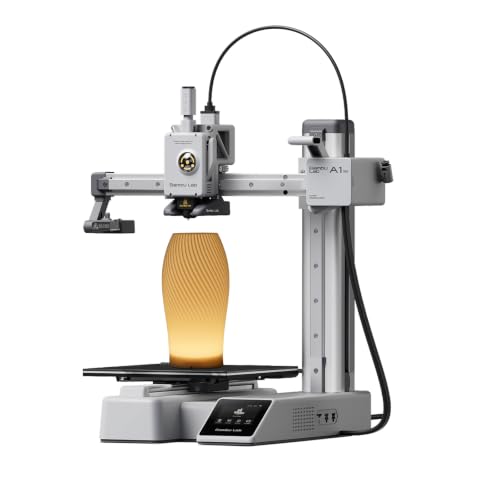
Bambu Lab A1
Best for: First-time owners who want successful prints in the first weekend.
The Bambu Lab A1 is the machine most often handed to a beginner who wants the printer to handle the fiddly parts. Its reputation rests on thorough automatic calibration: the machine probes, measures and tunes itself with a confidence that used to require an experienced owner’s hands, and its quick-swap nozzle design makes the most common maintenance job a tool-free moment rather than a small project. In daily use it feels appliance-like in the best sense — load a profile, send a job, and expect a finished part — which is exactly what a first-time owner needs while their own skills catch up.
The trade-offs are about philosophy as much as hardware. The open frame suits the friendly filaments most households print, but demanding engineering materials belong on an enclosed machine. The experience is also built around the maker’s own software ecosystem and profiles, which delights owners who want things handled and mildly frustrates owners who want to rearrange everything. Parts and accessories follow the brand’s own path rather than the generic aftermarket. For a household that wants results first and tinkering optionally, those are fair trades; for a born modifier, they are the reason to look elsewhere in this list.
Strengths
- Automatic calibration that genuinely reduces beginner failures
- Quick nozzle changes that make maintenance painless
- Polished software and profiles out of the box
Trade-offs
- Open frame limits demanding engineering filaments
- Ecosystem-led design suits customisers less
- Accessories follow the brand rather than generic parts
Best for: First-time owners who want successful prints in the first weekend. Not suited for: Owners set on engineering filaments or heavy modification. Positioned in the mid tier, as a prose-only pick while verification is pending.

Creality Ender-3 V3
Best for: Budget-first learners who enjoy understanding their tools.
The Creality Ender-3 V3 carries the most famous name in desktop printing into its modern form. The Ender line taught a generation of owners the hobby, and the current generation keeps the formula — an accessible entry tier, a huge owner community, endless shared profiles and printable upgrades — while adding the automatic touches that older Enders made you do by hand. For a buyer whose budget is the first constraint, it remains the obvious place to start looking, and the sheer volume of help available for the family name is a feature no specification sheet captures.
The honest trade-off is polish. The experience is a step less appliance-like than the most automated machines here: owners should expect to learn the machine as they go, to lean on the community’s guidance, and to treat setup and calibration as part of the hobby rather than an obstacle before it. Fit and finish reflect the tier. None of that prevents excellent prints — the community’s results prove otherwise — but it changes who should buy it. Patient learners get a bargain and an education; buyers who want the machine to disappear into the background should spend a tier up.
Strengths
- Entry tier makes starting genuinely affordable
- Enormous community, profiles and upgrade knowledge
- Modern automatic touches over the classic formula
Trade-offs
- Less appliance-like; expects owner involvement
- Finish reflects the entry tier
- Best results reward learning the machine
Best for: Budget-first learners who enjoy understanding their tools. Not suited for: Buyers who want a fully hands-off appliance. Positioned in the entry tier, as a prose-only pick while verification is pending.
Original Prusa MK4
Best for: Long-term owners, educators and small workshops.
The Original Prusa MK4 is bought by people who plan to still be printing in five years. Prusa’s reputation rests on longevity, honest engineering, deep documentation and a support operation owners praise in the specific way people praise things that have actually rescued them. The machine emphasises a dependable first layer, a well-thought extruder and a design that can be maintained and repaired rather than replaced, backed by an open heritage that keeps parts and knowledge available. It is the least fashionable machine here and, for many owners, the most trusted.
Trust is priced in the premium tier, and the MK4 asks buyers to value support, documentation and repairability over the newest conveniences. Its open frame shares the material limits of other open machines unless paired with an enclosure, and its presentation is more workshop tool than consumer gadget. Owners who measure value across years of service tend to find the exchange obviously fair. Buyers chasing the smoothest first-weekend experience, or the lowest entry cost, will find the rivals above easier to justify — which is a preference, not a flaw in either direction.
Strengths
- Documentation and support owners genuinely rely on
- Built to be maintained and repaired for years
- Dependable first-layer behaviour print after print
Trade-offs
- Premium tier pricing
- Open frame limits demanding filaments
- Workshop presentation over gadget polish
Best for: Long-term owners, educators and small workshops. Not suited for: Lowest-cost starts or enclosure-first buyers. Positioned in the premium tier, as a prose-only pick while verification is pending.
How to Get the Most Value If You Buy
The learning curve is honest but shorter than its reputation. A first weekend covers assembly or unboxing, the guided calibration, a first successful print and the small thrill of holding an object that was a file at breakfast. The following weeks teach the real curriculum: reading a first layer, recognising when supports are needed, choosing orientation so a part is strong in the direction it will be loaded. None of it requires an engineering background; it requires patience and a willingness to treat a failed print as information. Communities around the popular machines are enormous, so almost every symptom you can describe has been photographed, diagnosed and solved by someone before you.
The slicer is the quiet half of the hobby. This free software turns a three-dimensional model into the layered instructions the printer follows, and its settings — layer height, wall count, infill pattern and density, supports, temperatures — decide strength, surface quality and print time more than the badge on the machine does. Good printers ship with tuned profiles that make the defaults genuinely usable, so a beginner can accept the profile, change only the obvious settings and still succeed. As skill grows, the slicer becomes a design tool in its own right: the same model can be printed fast and rough for a fit check, then slowly and densely for the final part, from the same machine on the same afternoon.
Keep a running list of things to make and fix, on paper, by the machine. It sounds trivial; it is the difference between a printer that earns weekly and a printer that waits for inspiration. Batch small parts, print fit-checks cheaply before final parts, and save your own successful settings with notes. Value in this hobby is a habit, and habits are free.
The Decision Checklist
- Can I name five things I would print in the first month?
- Is there a stable, ventilated spot, clear of flammables, where the printer can be supervised?
- Will someone check in on long prints rather than leaving the machine entirely alone?
- Am I content that prints take hours, and that the first month is a learning month?
- Have I kept budget back for filament, a spare nozzle and storage?
- Would a service or a resin machine serve my actual list better?
Four or more honest yeses, including the safety questions, and the answer to this page’s title is yes for you. Fewer, and waiting is the wealthier choice.
Final Word
A 3D printer is worth it the way a good tool is worth it: completely, if it is used, and not at all if it is not. Judge your own frequency honestly, give the machine a safe home if you buy, and the question answers itself within the first month of parts.
Break-Even Thinking: Use Patterns That Justify the Purchase
The resale and hand-me-down exit
Value calculations usually assume you keep a 3d printer forever, but a healthy second-hand market changes the risk. Products in the Printers category that hold their appeal tend to resell or hand down easily, which means a wrong decision is recoverable rather than total. That exit value argues for buying the respected model over the obscure bargain: if your circumstances change, the known 3d printer finds a new home quickly. An ultra-cheap alternative with no following is the one that becomes pure sunk cost in a cupboard.
When waiting is the right answer
Sometimes the correct verdict is not no, but not yet. If your space, routine or budget is about to change — a move, a new job pattern, a renovation — the 3d printer that suits today’s setup may be wrong for next season’s. Waiting costs nothing and buys information: you learn whether the need survives the change. The exception is when the need is already costing you weekly in time or frustration; then waiting is itself the expensive option, and the analysis earlier in this piece applies with full force. Distinguish a stable recurring need from a temporary itch before deciding.
The one-question shortcut
If the full analysis still leaves you undecided, ask the question that cuts through it: if this 3d printer disappeared from your home after a month of use, would you replace it immediately, eventually, or not at all? People answer honestly when the purchase is framed as a loss. Immediate replacers should buy with confidence and choose the better model; eventual replacers should buy modestly; the not-at-all group has its answer too. In a compact home office where every item has to earn the space it occupies, that instinct, checked against the use-frequency count, settles the worth-it question more reliably than any feature comparison.
Count the uses, honestly
The worth-it question for a 3d printer is mostly a frequency question. Estimate how many times a month the product would genuinely be used in your routine — not the enthusiastic first fortnight, but month four, when the novelty has worn off. In a compact home office where every item has to earn the space it occupies, a 3d printer used weekly almost always justifies itself through saved time, avoided workarounds or better results, while the same product used twice a year is usually an expensive storage obligation. If your honest count is low, borrowing, hiring or using a service is the mathematically sound answer, and there is no shame in it.
The workaround you are already paying for
Most people considering a 3d printer are already solving the problem somehow — with a slower method, a borrowed tool, a workaround that costs time or produces worse results. Price that workaround in attention and frustration, not just money: how often does it interrupt you, and what does the interruption cost the rest of your day? A purchase is worth it when it retires a recurring annoyance, not when it merely upgrades a process that was already painless. If your current workaround barely bothers you, the honest verdict for you is probably to skip the purchase.
Lifespan changes the whole calculation
A 3d printer that serves for many years spreads its cost across thousands of uses; one that wears out, dates quickly or loses its supporting ecosystem does not. Judge lifespan by construction, consumable availability and how actively the maker still supports the line, rather than by optimism. This is where the picks discussed earlier differ most meaningfully for value: the model with the longer realistic service life can be the better value even when it is not the cheapest route in, because the cost per year of service is what your household actually pays.
Frequently Asked Questions
How often do I need to print for a 3D printer to be worth it?
Roughly weekly is where owners stop debating it. At that rhythm the machine is producing repairs, parts, gifts or hobby pieces often enough that its space and upkeep feel obviously repaid. Monthly printing can still justify the entry tier, especially for repairs. A few prints a year cannot justify any tier — a service will make those parts while your shelf stays empty and your skills stay unlearned, painlessly.
Does a 3D printer save money overall?
It can, through avoided replacements and parts that would otherwise mean buying a whole new product, but saving money is the wrong primary reason to buy one. Owners who chase savings alone tend to print little and conclude it was not worth it. Owners who buy for capability — repairs, prototypes, hobbies, teaching — print often, and the savings arrive as a side effect of a machine that is genuinely used.
What hidden costs should I expect beyond the machine?
In words: filament as the steady consumable, a spare nozzle and build surface now and then, dry storage for spools, modest electricity, and your own time for learning and supervision. None are large; together they are the real budget. Households that keep a tier of money back for the hobby around the printer have a noticeably smoother first season than households that spent everything on the machine itself.
Is it worth it for someone who is not technical?
Yes, if the interest is real. Current machines calibrate themselves, profiles are proven by huge communities, and the skills involved — choosing orientation, recognising a good first layer — are visual and practical rather than mathematical. The non-technical owner who prints weekly will out-print the technical owner who prints rarely. Curiosity and frequency predict satisfaction far better than any engineering background does.
When is a resin printer worth it instead?
When the work is small, detailed and display-bound: miniature figures, fine models, jewellery masters. Resin delivers detail filament cannot, at the cost of liquid handling with gloves, washing and curing stages, stronger ventilation needs and messier ownership. If your list is tough, practical or large, filament is worth it; if your list is tiny and beautiful, read the versus guide and let the detail win honestly.
Can a 3D printer be worth it in a small flat?
It can, with the right machine and honesty about the room. A compact, quiet or enclosed model in a ventilated spot, run supervised and kept clear of clutter, works in small homes — and plenty of owners do exactly that, guided by desk-friendly 3D printer ideas. What a small flat cannot offer is a forgotten corner: if the machine cannot be ventilated and watched, the flat is telling you to wait.
Related Guides
Keep exploring with these companion reads from the same workshop shelf: the single-machine deep-dive 3D printer review; the companion roundup of 3D printer reviews; 3D printer pros and cons in full; the full 3D printer buying guide; desk-friendly 3D printer ideas; our guide to the best 3D printers for models; professional-use 3D printer picks; how to choose a printer of any kind.
Reading a First Layer Like an Owner
Almost everything in this hobby reduces to the first layer. That initial pass decides whether a print sticks for the full job or curls free partway through, and it depends on a bed that is level, a nozzle at the right distance from the surface, a clean plate and a sensible temperature for the material. Modern machines automate most of this with probing and stored meshes, which is the single biggest reason a current printer feels friendlier than the kits of a few years ago. When a print fails, experienced owners check the first layer before they blame anything else, because that is where most failures are born.
Calibration Without the Wrestling Match
Calibration on a modern machine is mostly about confirming rather than wrestling. Automatic bed probing maps the surface, flow calibration matches extrusion to the filament in use, and a handful of small test prints reveal whether temperatures and retraction suit a new spool. Owners who keep a simple routine — one test print when a new filament arrives, a note of what worked, a clean bed between jobs — spend their time printing. Owners who change five settings at once spend their time diagnosing. The machines reward methodical habits far more than they reward expensive upgrades, which is encouraging news for anyone buying their first one.
Maintenance in Minutes, Not Weekends
Maintenance is light but real. Nozzles wear and eventually clog, especially with filled or abrasive filaments; build plates need washing when fingerprints steal adhesion; belts want an occasional tension check; fans collect dust in a workshop environment. None of this is difficult, and most of it is the work of minutes with the machine fully cooled and unplugged where the manual asks for it. What matters is rhythm: a quick visual check before a long print, a clean plate as a habit, and consumables — a spare nozzle, a spare plate surface — kept in a drawer so a small fault never becomes a week of waiting.
Supports, Orientation and Strong Parts
Supports are the scaffolding of printing: temporary structures that hold up overhangs until the part can stand on its own layers. Good slicing makes them easy to remove and sparing with material; poor orientation makes them a chisel-and-regret exercise. Learning to orient a model so it needs fewer supports is one of the highest-value skills in the hobby, saving time, filament and surface quality at once. Some shapes will always need support, and accepting that — printing a test of the tricky region first rather than gambling a whole plate — separates calm owners from frustrated ones within the first month.
Why Reliability Beats Headline Speed
Reliability is the trait owners praise most and brochures describe worst. In practice it means the machine finishes what it starts, print after print, with first layers that stick and dimensions that repeat. It comes from a rigid frame, honest motion components, a well-supported hot end and software that has been refined over many owners rather than rushed out. You can sense it in reviews that talk about months of uneventful printing rather than spectacular single results. For a first machine especially, reliability is the feature: every successful print teaches and encourages, while every mysterious failure taxes a beginner’s limited patience.
The Enclosure Question, Answered Honestly
An enclosure — a closed box around the print area — does three jobs. It holds warmth in, which reduces warping on demanding filaments and keeps print quality steadier in cold or draughty rooms. It keeps dust, pets and curious fingers away from moving and hot parts, which is a genuine safety gain in a family home. And it contains some of the noise and emissions, provided it is paired with sensible ventilation rather than treated as a seal. For PLA-only printing in a warm room it is optional; for engineering filaments or a printer that lives in shared space, it moves from accessory to near-necessity, and some machines simply include it from the start.
Build Surfaces and the Clean-Plate Habit
Build surfaces have quietly transformed the daily experience. Modern flexible plates let a finished print be removed by bending the sheet rather than prying with a scraper, which protects both the part and your knuckles. Textured and smooth finishes leave different marks on the bottom face of a print, and owners often keep one of each. Adhesion is a partnership between surface, cleanliness and temperature: a plate that suddenly stops sticking is usually a plate that needs washing with plain soap and water and a thorough dry, not a plate that needs replacing or gluing into submission.
Troubleshooting in the Right Order
Troubleshooting follows a reassuring order. When a print fails, ask first whether the first layer was right, because most failures start there. Then ask whether the filament is dry and feeding freely, whether temperatures suit the material, and whether the model itself asked for the impossible — an unsupported span, a wall too thin to print, a base too small to grip. Change one variable at a time and keep brief notes. This boring method solves the overwhelming majority of problems, and it scales: the same discipline that fixes stringing on a keyring fixes lifting corners on a full-plate functional part.
The Community Is Part of the Product
The community around desktop printing is a genuine part of the product. Popular machines accumulate tuned profiles, printable upgrades, repair guides and video walk-throughs for every fault, and model libraries are full of parts designed for specific printers. A beginner with a mainstream machine is never truly stuck: the answer exists, usually with photographs. This is a practical argument for choosing a widely owned model over an obscure bargain — the machine you can get help with at midnight is, in a real sense, the better machine, whatever the specification sheet says.
Upgrades: Restraint Is the Skill
Upgrades tempt every owner, and restraint is the skill. A second build surface, a spare nozzle set and good filament storage genuinely help. Beyond that, change one thing at a time, print a familiar test piece before and after, and be honest about whether the result improved. Machines that are modified constantly are diagnosed constantly, because every change is a new variable. The happiest owners tend to run near-stock machines with a short list of proven additions, and to spend their project time on the objects the printer makes rather than on the printer itself — unless tinkering is itself the hobby they bought, which is also a legitimate answer.
Filament, Understood Properly
Filament choice shapes what a printer can usefully make. PLA is the friendly default: it prints easily, warps little, smells mild and suits prototypes, models, organisers and most household parts that live indoors away from heat. PETG adds toughness and weather resistance for functional parts, brackets and anything that flexes or lives near moisture. Flexible filaments make grips, gaskets and phone cases possible but ask for a suitable extruder path. The ABS family and other engineering materials bring heat resistance and strength at the cost of warping, stronger emissions and a real need for an enclosure and ventilation. Owning one printer and three well-understood filaments beats owning five filaments you have never dialled in.
How a Filament Printer Actually Works
A filament printer, usually called an FDM or FFF machine, builds objects by melting a strand of plastic and drawing with it, one thin layer at a time. A spool of filament feeds into a heated hot end, the melt exits through a small nozzle, and motors move the nozzle and the build plate in a choreographed pattern written by slicing software. Each layer fuses to the one below as it cools, and hundreds of layers later a flat file has become a bracket, a toy, a jig or a replacement knob. The principle is simple enough to explain in a paragraph, and the craft lies entirely in how consistently a given machine executes it.
Filament Storage and the Dry-Box Habit
Dry filament prints better filament. Spools absorb moisture from room air over time, and damp material hisses, strings and leaves rough surfaces as the water flashes to steam in the nozzle. Owners who print seriously store open spools in sealed boxes or bags with desiccant, and dry a suspect spool before blaming the machine for a bad week. This is one of the least glamorous and most effective habits in the hobby: a remarkable number of mysterious quality problems are simply wet plastic asking to be dried.
Reading Print Quality Like a Diagnostician
A finished print is a report on the machine that made it. Rings and ripples point at motion and belts; rough tops point at flow; stringing points at temperature and retraction; lifting corners point at adhesion and draughts. Learning to read these signs turns troubleshooting from folklore into observation, and it is a skill that transfers to every machine you will ever own. Keep one familiar test model and reprint it after any change: the comparison, not memory, tells you whether the change helped.
Printing in Batches and Planning a Plate
Experienced owners think in plates, not parts. Grouping components of one project onto a single build, ordering jobs so long prints run while the day allows supervision, and printing a cheap fit-check before the final version are habits that save more time than any speed setting. Batching also spreads the fixed costs of printing — heating, checking, cleaning — across more output. The printer rewards planners in the same way an oven rewards someone who bakes two trays at once.
When a Print Fails Halfway
A failed print is information with a mess attached. Note where it failed: at the first layer, at a support, at a tall thin section, or everywhere at once. Photograph it before removing it, because the plate tells the story the loose part cannot. Then change one variable — adhesion, orientation, support, temperature — and retry smaller if you can. Owners who treat failures as tuition finish their education quickly; owners who treat them as insults repeat the same lesson at full size.
The Second Plate and Other Small Luxuries
Ask long-term owners which purchases mattered and the list is unglamorous: a second build surface so one plate can cool while the next print starts, spare nozzles in the drawer, good side cutters, a stiff brush for the bed, and storage that keeps filament dry and findable. None of these photographs well. All of them remove the small frictions that decide whether printing on a tired weekday evening feels easy or feels like a project about a project.
Designing Your First Part Without Fear
Your first self-designed part should be embarrassingly simple: a spacer, a hook, a clip, a box with a lid. Simple shapes teach measuring, clearances and the truth that printed parts need a little tolerance where they meet other objects. Free beginner design tools reward this scale of ambition immediately — an evening from calipers to a part that fits. Every confident designer in this hobby started with a wobbly hook that worked, and the wobble is part of the qualification.
Printing for Other People
A working printer attracts requests, and handling them well protects the hobby. Gifts and one-off favours are a joy; open-ended production for other people’s projects is a job wearing a hobby’s clothes. Owners learn to say yes to the birthday terrain and the broken dishwasher clip, and to price or decline the rest kindly. The machine stays a pleasure when its calendar is yours, and the parts you print for others land better when they were chosen rather than accumulated.
Seasonal Printing and the Project Shelf
Ownership settles into seasons: garden parts in spring, game terrain in winter evenings, organisers whenever a drawer finally provokes action. Keeping a written project list by the machine smooths these seasons — ideas are captured when they occur and printed when time allows, instead of competing with memory. The list also answers the worth-it question continuously and honestly: a long list means a used machine, and a used machine is the only verdict that matters.
Noise, Neighbours and Night-Time Manners
A printer in a flat or a family home is a citizen as well as a tool. Fans and motion carry through quiet buildings, and the courteous owner schedules the loud, long jobs for waking hours, chooses a room with a door, and considers the quieter models and enclosures when the machine must share living space. This is not merely politeness: a printer whose noise is managed is a printer that never gets banished, and banishment is the true end of most home printing stories.
What Good Documentation Is Worth
Manuals and manufacturer documentation are features you use weekly and brochures never mention. Clear assembly sequences, honest maintenance schedules, named spare parts and searchable fault guidance turn problems into errands. This is a large part of what premium tiers actually sell, and a large part of why some older machines remain in daily service while newer bargains retire early. When comparing two similar machines, read both manuals before deciding; you are choosing the book you will consult at midnight.
The Honest Place of Speed
Speed sells printers and finishes few arguments. A fast machine that fails a long print has produced nothing slowly would have finished, and a reliable machine printing overnight has all the speed a household can use. Judge pace by completed parts per week in real owners’ hands, not by demonstration clips. Where speed genuinely matters — iterative prototyping against a deadline — it matters as reliability at pace, which is a frame, motion and tuning achievement, not a number on a box.
Keeping Children Involved, Safely
The educational magic of printing for children lives in the design stage: measuring, sketching, modelling and watching a layer build patience into a physical thing. The machine stage belongs to adults’ rules — hot parts untouched, hands clear of motion, ventilation on, an adult present and supervising. Families that separate the two stages clearly get both halves of the value: children who design boldly, and a workshop routine nobody has to worry about. That separation is the whole secret, and it is easy.
Gift Printing and the Personal Object
A printer changes gift-giving in a way owners rarely predict. A personalised nameplate, a terrain set for a friend’s campaign, a replacement part wrapped as a joke that turns out to be genuinely useful — these land differently from bought objects because the making is visible in them. Gift printing also disciplines the hobby pleasantly: deadlines finish projects, and other people’s delight is a better metric than another calibration cube. Keep a small stock of friendly filament in reliable colours and the machine becomes a standing answer to occasions.
Printers in Education and Clubs
Schools, libraries and clubs run printers for the same reason households do: the gap between imagining an object and holding it collapses. Students learn measurement, tolerance and iteration by failing cheaply and visibly, which is a curriculum no worksheet delivers. Shared machines also teach the social layer of workshops — booking time, leaving the plate clean, reporting a fault honestly. If your household includes students, this institutional experience is worth borrowing: rules on a card by the machine, and printing as a normal, supervised activity rather than an event.
The Upgrade Path That Actually Makes Sense
When owners do upgrade, the sensible order is boring: storage and spares first, then a second surface, then — only if materials demand it — an enclosure, and only much later a second machine for a second technology. Each step should answer a problem the owner has actually met, in the order they met it. Upgrade paths copied from other people’s hobbies import other people’s problems. Your failed prints and finished projects are the only reliable catalogue of what your setup needs next.