Disclosure: As an Amazon Associate, ilcastellomenu.com earns from qualifying purchases. Links on this page are affiliate links; they cost you nothing extra. Prices and availability change often, so check the current Amazon listing before you buy.
This how to use macro keypad guide is written for desk users who repeat the same commands all day and want an honest, practical answer about what a small programmable pad can and cannot do. No hype, no borrowed conclusions, and no shortcut around the learning curve: just how these devices behave in real work, which details actually matter, and how to decide with your own routine as the evidence.
Key Takeaways
Key takeaways:
- A macro keypad pays off through repetition, not novelty, so your own list of repeated actions is the best buying guide.
- Software and layers matter more than raw key count; on device storage and an editor you trust beat a long feature list.
- Build a layout in passes, a handful of actions at a time, and the pad becomes automatic within a few weeks.
- Download configuration software and firmware only from official maker or project sources.
- Comfort gains are qualitative: good placement helps, but a pad is not a substitute for a properly set up desk.
In this guide
How to Use Macro Keypad: The Process in Brief
Learning how to use a macro keypad well is a process with a clear shape: place the pad properly, install only official configuration software, program a small base layer, use it until it is automatic, then grow in passes and maintain the layout as your work changes. This guide walks through each stage in order, with the common errors attached to the step where they actually happen.
Comfort here is a qualitative judgement, not a medical one. A macro keypad can reduce awkward chord stretches for some users because one key replaces a wide two hand combination, and it can let the shoulders stay in a more natural position when the main keyboard can sit centred. It is not a treatment for pain and it does not fix a badly set up desk. Chair height, screen position, breaks and variation still do the heavy lifting, and anyone with persistent discomfort should get proper advice rather than buying accessories as a remedy.
What You Need
Required: the pad itself, its cable or receiver, a computer with your main applications installed, and the official configuration software or editor for your model, downloaded only from the maker official website or the official project pages. Optional but genuinely useful: spare keycaps or labels for the learning weeks, a printed or on screen layout card, and a simple note file where you record what each layer does and why.
Connection choice is a lifestyle choice. A wired pad never needs charging, never drops out mid task and suits a fixed desk. A wireless pad suits a clean desk, a laptop that moves rooms, or a living room setup, at the cost of battery habits and the occasional reconnection pause. Neither is a quality signal. Match the connection to the desk the pad will actually live on, not the desk in the product photography.
Safety and Before You Start
Keep the work simple and safe. Set the pad up at a desk, not balanced on other equipment. Keep drinks away while you swap keycaps or cables. Work with the computer awake but your important documents saved before testing sequence macros, because a misfiring sequence can type into whatever window has focus. Never enter passwords or banking details as stored text macros, and treat any layout file from a stranger as untrusted until you have read what every key does.
Comfort here is a qualitative judgement, not a medical one. A macro keypad can reduce awkward chord stretches for some users because one key replaces a wide two hand combination, and it can let the shoulders stay in a more natural position when the main keyboard can sit centred. It is not a treatment for pain and it does not fix a badly set up desk. Chair height, screen position, breaks and variation still do the heavy lifting, and anyone with persistent discomfort should get proper advice rather than buying accessories as a remedy.
The Steps, in Order
Step One: Place the Pad Where Your Hand Expects It
Position matters as much as programming. Most people do best with the pad on the non dominant side, angled slightly, close enough that the hand falls onto it without reaching. Reaching is the silent problem with add on devices: a pad placed too far left or pushed behind the keyboard gets used for a week and then ignored. Treat the first days as a placement experiment, move the pad in small steps, and settle only when your hand finds it without your eyes leading the way.
Step Two: Install the Official Software and Update Carefully
Software decides more of the experience than the hardware does. Open standards such as QMK and VIA are popular because the layout lives on the device itself, changes can be made in a visual editor, and the pad keeps working when it moves between computers. Only ever download VIA, QMK tools, vendor configuration apps and firmware from the official website of the maker or the official project pages, never from file sharing mirrors or links in random forum posts, because configuration software runs with real privileges on your machine.
Step Three: Program a Small Base Layer
The most common mistake is programming everything on day one. A pad filled in a single enthusiastic evening becomes a memory test nobody passes, and the user quietly returns to the keyboard while the pad gathers dust. Build in passes instead: a handful of actions first, used until they are automatic, then the next handful. The slow route feels less impressive and is dramatically more likely to still be in use a month later.
Step Four: Add Labels and a Layout Card
A second mistake is duplicating the keyboard instead of complementing it. If a shortcut is already easy, close and automatic on your main board, moving it to a pad adds travel rather than removing it. The pad earns its place with actions that are awkward, distant, two handed, or sequence based. Audit your layout for tourists: keys that are pressed rarely and could return to the keyboard without any loss.
Step Five: Use It Exclusively for a Week
Streaming and content work reward immediacy. Scene changes, mute toggles, clip markers and chat actions need to happen without looking away from the camera or the game, and a dedicated pad with labelled or memorised keys is easier to hit blind than a chord on a full keyboard. This is also where layered layouts help, because a streaming layer and an editing layer can share the same physical keys without conflict.
Step Six: Grow in Passes and Add Layers
Macros themselves come in flavours worth understanding before you buy. A simple keystroke macro replays one shortcut. A text macro types a stored string such as an email template or a code snippet. A sequence macro chains several steps with pauses, which is powerful and also the easiest kind to make fragile, because a slow loading window can break the timing. Start with simple, reliable macros, live with them for a week, and only add sequences where the simple version genuinely falls short.
Step Seven: Back Up Your Layout
Macros themselves come in flavours worth understanding before you buy. A simple keystroke macro replays one shortcut. A text macro types a stored string such as an email template or a code snippet. A sequence macro chains several steps with pauses, which is powerful and also the easiest kind to make fragile, because a slow loading window can break the timing. Start with simple, reliable macros, live with them for a week, and only add sequences where the simple version genuinely falls short.
Troubleshooting and Common Mistakes
Ignoring the learning aids is another quiet failure. Blank keycaps look clean and teach nothing. Labels, printed layout cards beside the monitor, or a simple note file with the current map all shorten the awkward first fortnight. There is no prize for memorising a layout the hard way, and the users who stick with a new pad are usually the ones who made the early weeks as easy as possible for themselves.
The most common mistake is programming everything on day one. A pad filled in a single enthusiastic evening becomes a memory test nobody passes, and the user quietly returns to the keyboard while the pad gathers dust. Build in passes instead: a handful of actions first, used until they are automatic, then the next handful. The slow route feels less impressive and is dramatically more likely to still be in use a month later.
Vendor software takes the opposite trade. A gaming brand utility or a creative suite companion app can offer per application profiles that switch automatically, pressure sensitive behaviour, and integrations a generic editor cannot match. The cost is an account prompt here, a background service there, and a layout that may not travel to a second machine. Neither route is automatically better; the right question is whether you value portability and permanence, or automatic profiles and deeper app integration.
Gear That Helps
A pad with on device storage and a clear editor makes every step above easier, and a compact design suits users who will move the pad between desks. These representative designs are prose-only picks in this draft.

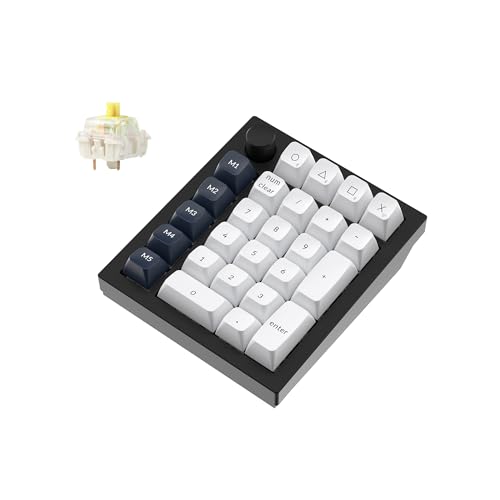
Keychron Q0 Plus
The Keychron Q0 Plus is a QMK and VIA friendly pad from a keyboard maker known for custom boards, aimed at desk users who also want a number row. Treat it as a prose-only recommendation in this draft: check the current listing for the present configuration, included accessories and regional availability before deciding, because bundles and revisions change over time. What matters in use is how its configuration route fits your habits, how its keys feel across a long session, and whether its size leaves your desk arranged the way you like to work.
Best for: users whose workflow matches that description and who will take the time to build a layout in passes. Not suited for: buyers who want a device that needs no setup at all, or whose main applications cannot accept the shortcuts they plan to map. Strengths in this class are consistency, a clear actuation feel and a layout that stays put once learned; the trade-off is always the learning period and one more device to place well on the desk.

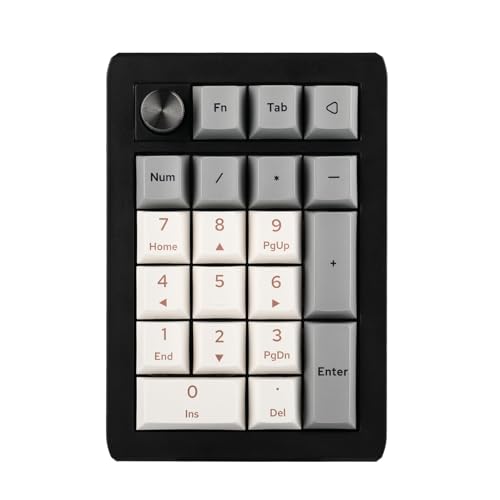
Epomaker EK21
The Epomaker EK21 is a VIA ready number pad style unit from a budget friendly custom keyboard brand, aimed at mixed number and macro use. Treat it as a prose-only recommendation in this draft: check the current listing for the present configuration, included accessories and regional availability before deciding, because bundles and revisions change over time. What matters in use is how its configuration route fits your habits, how its keys feel across a long session, and whether its size leaves your desk arranged the way you like to work.
Best for: users whose workflow matches that description and who will take the time to build a layout in passes. Not suited for: buyers who want a device that needs no setup at all, or whose main applications cannot accept the shortcuts they plan to map. Strengths in this class are consistency, a clear actuation feel and a layout that stays put once learned; the trade-off is always the learning period and one more device to place well on the desk.
Max Keyboard Falcon-20
The Max Keyboard Falcon-20 is a compact programmable macropad from a specialist maker, aimed at tinkerers who like small footprints. Treat it as a prose-only recommendation in this draft: check the current listing for the present configuration, included accessories and regional availability before deciding, because bundles and revisions change over time. What matters in use is how its configuration route fits your habits, how its keys feel across a long session, and whether its size leaves your desk arranged the way you like to work.
Best for: users whose workflow matches that description and who will take the time to build a layout in passes. Not suited for: buyers who want a device that needs no setup at all, or whose main applications cannot accept the shortcuts they plan to map. Strengths in this class are consistency, a clear actuation feel and a layout that stays put once learned; the trade-off is always the learning period and one more device to place well on the desk.
Maintenance and Keeping It Working
Position matters as much as programming. Most people do best with the pad on the non dominant side, angled slightly, close enough that the hand falls onto it without reaching. Reaching is the silent problem with add on devices: a pad placed too far left or pushed behind the keyboard gets used for a week and then ignored. Treat the first days as a placement experiment, move the pad in small steps, and settle only when your hand finds it without your eyes leading the way.
Connection choice is a lifestyle choice. A wired pad never needs charging, never drops out mid task and suits a fixed desk. A wireless pad suits a clean desk, a laptop that moves rooms, or a living room setup, at the cost of battery habits and the occasional reconnection pause. Neither is a quality signal. Match the connection to the desk the pad will actually live on, not the desk in the product photography.
Field Notes: Living With the Pad Day to Day
Creative drawing and CAD work sit in between. A pad under the non drawing hand can carry undo, redo, tool swaps, zoom and modifier holds while the pen or mouse stays where it is. In CAD, view changes, snap toggles and common constraints are natural macro material. The common thread across all of these jobs is repetition with variation: the same family of actions, repeated often, in an order the user already knows by heart.
Wrist posture deserves a plain word. Keep the wrist neutral and floating or lightly supported rather than planted and bent, keep the pad at roughly keyboard height, and avoid stacking it on top of other gear to gain a novelty angle. Small pads invite sloppy placement because they fit anywhere, and anywhere includes positions that feel fine for ten minutes and tiring after two hours. Comfort over a full working day is the only test that counts.
Connection choice is a lifestyle choice. A wired pad never needs charging, never drops out mid task and suits a fixed desk. A wireless pad suits a clean desk, a laptop that moves rooms, or a living room setup, at the cost of battery habits and the occasional reconnection pause. Neither is a quality signal. Match the connection to the desk the pad will actually live on, not the desk in the product photography.
The clearest wins show up in repetitive work. A video editor who scrubs, cuts, marks and exports all day can put those repeated commands under one hand and stop travelling back to scattered keyboard shortcuts. A photo editor can map brush size, undo, layer actions and export presets in the same way. In a spreadsheet, a macro keypad earns its space when it carries paste values, insert row, format painter style actions and navigation jumps that would otherwise need two hands and a modifier held down.
Comfort here is a qualitative judgement, not a medical one. A macro keypad can reduce awkward chord stretches for some users because one key replaces a wide two hand combination, and it can let the shoulders stay in a more natural position when the main keyboard can sit centred. It is not a treatment for pain and it does not fix a badly set up desk. Chair height, screen position, breaks and variation still do the heavy lifting, and anyone with persistent discomfort should get proper advice rather than buying accessories as a remedy.
Vendor software takes the opposite trade. A gaming brand utility or a creative suite companion app can offer per application profiles that switch automatically, pressure sensitive behaviour, and integrations a generic editor cannot match. The cost is an account prompt here, a background service there, and a layout that may not travel to a second machine. Neither route is automatically better; the right question is whether you value portability and permanence, or automatic profiles and deeper app integration.
Build quality shows in boring places. A pad that flexes, slides or rattles will annoy you long after its feature list stops impressing you. Weight helps stability, rubber feet help grip, and a detachable cable helps both tidiness and repair. Keycaps that can be replaced or labelled help learning, because a new layout is far easier to adopt when the keys can carry a reminder of what they do during the first weeks.
Key feel shapes whether a pad survives on a desk. Mechanical switches give a clear actuation point and can be swapped on hot swappable models, which suits users who like to tune feel per row. Membrane and low profile designs are quieter and slimmer, which suits shared offices and travel bags. There is no universal winner; there is only the feel you will still enjoy pressing hundreds of times in an afternoon, in the room you actually work in, at the volume your household or colleagues can accept.
Buying for a workflow you wish you had is the most expensive mistake of all. A pad bought for video editing you never do, or streaming you keep postponing, is a paperweight with switches. Be honest about the work on your desk this month. If the repeated actions are there, a pad will help. If they are not, the honest purchase is no purchase, and the money is better kept for the tool your real routine actually calls for.
Check compatibility with your own software, not software in general. A pad that is perfect in one editing suite may need workarounds in the application you actually use, and operating system differences matter too, especially for media keys and vendor utilities. Read the maker official support pages for your operating system and your main applications before buying, and favour sellers with a clear returns route while you test whether the pad fits your workflow.
Creative drawing and CAD work sit in between. A pad under the non drawing hand can carry undo, redo, tool swaps, zoom and modifier holds while the pen or mouse stays where it is. In CAD, view changes, snap toggles and common constraints are natural macro material. The common thread across all of these jobs is repetition with variation: the same family of actions, repeated often, in an order the user already knows by heart.
The most common mistake is programming everything on day one. A pad filled in a single enthusiastic evening becomes a memory test nobody passes, and the user quietly returns to the keyboard while the pad gathers dust. Build in passes instead: a handful of actions first, used until they are automatic, then the next handful. The slow route feels less impressive and is dramatically more likely to still be in use a month later.
Software decides more of the experience than the hardware does. Open standards such as QMK and VIA are popular because the layout lives on the device itself, changes can be made in a visual editor, and the pad keeps working when it moves between computers. Only ever download VIA, QMK tools, vendor configuration apps and firmware from the official website of the maker or the official project pages, never from file sharing mirrors or links in random forum posts, because configuration software runs with real privileges on your machine.
The clearest wins show up in repetitive work. A video editor who scrubs, cuts, marks and exports all day can put those repeated commands under one hand and stop travelling back to scattered keyboard shortcuts. A photo editor can map brush size, undo, layer actions and export presets in the same way. In a spreadsheet, a macro keypad earns its space when it carries paste values, insert row, format painter style actions and navigation jumps that would otherwise need two hands and a modifier held down.
Key feel shapes whether a pad survives on a desk. Mechanical switches give a clear actuation point and can be swapped on hot swappable models, which suits users who like to tune feel per row. Membrane and low profile designs are quieter and slimmer, which suits shared offices and travel bags. There is no universal winner; there is only the feel you will still enjoy pressing hundreds of times in an afternoon, in the room you actually work in, at the volume your household or colleagues can accept.
Vendor software takes the opposite trade. A gaming brand utility or a creative suite companion app can offer per application profiles that switch automatically, pressure sensitive behaviour, and integrations a generic editor cannot match. The cost is an account prompt here, a background service there, and a layout that may not travel to a second machine. Neither route is automatically better; the right question is whether you value portability and permanence, or automatic profiles and deeper app integration.
Build quality shows in boring places. A pad that flexes, slides or rattles will annoy you long after its feature list stops impressing you. Weight helps stability, rubber feet help grip, and a detachable cable helps both tidiness and repair. Keycaps that can be replaced or labelled help learning, because a new layout is far easier to adopt when the keys can carry a reminder of what they do during the first weeks.
Wrist posture deserves a plain word. Keep the wrist neutral and floating or lightly supported rather than planted and bent, keep the pad at roughly keyboard height, and avoid stacking it on top of other gear to gain a novelty angle. Small pads invite sloppy placement because they fit anywhere, and anywhere includes positions that feel fine for ten minutes and tiring after two hours. Comfort over a full working day is the only test that counts.
The most common mistake is programming everything on day one. A pad filled in a single enthusiastic evening becomes a memory test nobody passes, and the user quietly returns to the keyboard while the pad gathers dust. Build in passes instead: a handful of actions first, used until they are automatic, then the next handful. The slow route feels less impressive and is dramatically more likely to still be in use a month later.
Check compatibility with your own software, not software in general. A pad that is perfect in one editing suite may need workarounds in the application you actually use, and operating system differences matter too, especially for media keys and vendor utilities. Read the maker official support pages for your operating system and your main applications before buying, and favour sellers with a clear returns route while you test whether the pad fits your workflow.
Creative drawing and CAD work sit in between. A pad under the non drawing hand can carry undo, redo, tool swaps, zoom and modifier holds while the pen or mouse stays where it is. In CAD, view changes, snap toggles and common constraints are natural macro material. The common thread across all of these jobs is repetition with variation: the same family of actions, repeated often, in an order the user already knows by heart.
A second mistake is duplicating the keyboard instead of complementing it. If a shortcut is already easy, close and automatic on your main board, moving it to a pad adds travel rather than removing it. The pad earns its place with actions that are awkward, distant, two handed, or sequence based. Audit your layout for tourists: keys that are pressed rarely and could return to the keyboard without any loss.
Software decides more of the experience than the hardware does. Open standards such as QMK and VIA are popular because the layout lives on the device itself, changes can be made in a visual editor, and the pad keeps working when it moves between computers. Only ever download VIA, QMK tools, vendor configuration apps and firmware from the official website of the maker or the official project pages, never from file sharing mirrors or links in random forum posts, because configuration software runs with real privileges on your machine.
The clearest wins show up in repetitive work. A video editor who scrubs, cuts, marks and exports all day can put those repeated commands under one hand and stop travelling back to scattered keyboard shortcuts. A photo editor can map brush size, undo, layer actions and export presets in the same way. In a spreadsheet, a macro keypad earns its space when it carries paste values, insert row, format painter style actions and navigation jumps that would otherwise need two hands and a modifier held down.
Wrist posture deserves a plain word. Keep the wrist neutral and floating or lightly supported rather than planted and bent, keep the pad at roughly keyboard height, and avoid stacking it on top of other gear to gain a novelty angle. Small pads invite sloppy placement because they fit anywhere, and anywhere includes positions that feel fine for ten minutes and tiring after two hours. Comfort over a full working day is the only test that counts.
Vendor software takes the opposite trade. A gaming brand utility or a creative suite companion app can offer per application profiles that switch automatically, pressure sensitive behaviour, and integrations a generic editor cannot match. The cost is an account prompt here, a background service there, and a layout that may not travel to a second machine. Neither route is automatically better; the right question is whether you value portability and permanence, or automatic profiles and deeper app integration.
Build quality shows in boring places. A pad that flexes, slides or rattles will annoy you long after its feature list stops impressing you. Weight helps stability, rubber feet help grip, and a detachable cable helps both tidiness and repair. Keycaps that can be replaced or labelled help learning, because a new layout is far easier to adopt when the keys can carry a reminder of what they do during the first weeks.
Position matters as much as programming. Most people do best with the pad on the non dominant side, angled slightly, close enough that the hand falls onto it without reaching. Reaching is the silent problem with add on devices: a pad placed too far left or pushed behind the keyboard gets used for a week and then ignored. Treat the first days as a placement experiment, move the pad in small steps, and settle only when your hand finds it without your eyes leading the way.
A second mistake is duplicating the keyboard instead of complementing it. If a shortcut is already easy, close and automatic on your main board, moving it to a pad adds travel rather than removing it. The pad earns its place with actions that are awkward, distant, two handed, or sequence based. Audit your layout for tourists: keys that are pressed rarely and could return to the keyboard without any loss.
Check compatibility with your own software, not software in general. A pad that is perfect in one editing suite may need workarounds in the application you actually use, and operating system differences matter too, especially for media keys and vendor utilities. Read the maker official support pages for your operating system and your main applications before buying, and favour sellers with a clear returns route while you test whether the pad fits your workflow.
Creative drawing and CAD work sit in between. A pad under the non drawing hand can carry undo, redo, tool swaps, zoom and modifier holds while the pen or mouse stays where it is. In CAD, view changes, snap toggles and common constraints are natural macro material. The common thread across all of these jobs is repetition with variation: the same family of actions, repeated often, in an order the user already knows by heart.
Ignoring the learning aids is another quiet failure. Blank keycaps look clean and teach nothing. Labels, printed layout cards beside the monitor, or a simple note file with the current map all shorten the awkward first fortnight. There is no prize for memorising a layout the hard way, and the users who stick with a new pad are usually the ones who made the early weeks as easy as possible for themselves.
Software decides more of the experience than the hardware does. Open standards such as QMK and VIA are popular because the layout lives on the device itself, changes can be made in a visual editor, and the pad keeps working when it moves between computers. Only ever download VIA, QMK tools, vendor configuration apps and firmware from the official website of the maker or the official project pages, never from file sharing mirrors or links in random forum posts, because configuration software runs with real privileges on your machine.
The clearest wins show up in repetitive work. A video editor who scrubs, cuts, marks and exports all day can put those repeated commands under one hand and stop travelling back to scattered keyboard shortcuts. A photo editor can map brush size, undo, layer actions and export presets in the same way. In a spreadsheet, a macro keypad earns its space when it carries paste values, insert row, format painter style actions and navigation jumps that would otherwise need two hands and a modifier held down.
Position matters as much as programming. Most people do best with the pad on the non dominant side, angled slightly, close enough that the hand falls onto it without reaching. Reaching is the silent problem with add on devices: a pad placed too far left or pushed behind the keyboard gets used for a week and then ignored. Treat the first days as a placement experiment, move the pad in small steps, and settle only when your hand finds it without your eyes leading the way.
Vendor software takes the opposite trade. A gaming brand utility or a creative suite companion app can offer per application profiles that switch automatically, pressure sensitive behaviour, and integrations a generic editor cannot match. The cost is an account prompt here, a background service there, and a layout that may not travel to a second machine. Neither route is automatically better; the right question is whether you value portability and permanence, or automatic profiles and deeper app integration.
Build quality shows in boring places. A pad that flexes, slides or rattles will annoy you long after its feature list stops impressing you. Weight helps stability, rubber feet help grip, and a detachable cable helps both tidiness and repair. Keycaps that can be replaced or labelled help learning, because a new layout is far easier to adopt when the keys can carry a reminder of what they do during the first weeks.
Comfort here is a qualitative judgement, not a medical one. A macro keypad can reduce awkward chord stretches for some users because one key replaces a wide two hand combination, and it can let the shoulders stay in a more natural position when the main keyboard can sit centred. It is not a treatment for pain and it does not fix a badly set up desk. Chair height, screen position, breaks and variation still do the heavy lifting, and anyone with persistent discomfort should get proper advice rather than buying accessories as a remedy.
Ignoring the learning aids is another quiet failure. Blank keycaps look clean and teach nothing. Labels, printed layout cards beside the monitor, or a simple note file with the current map all shorten the awkward first fortnight. There is no prize for memorising a layout the hard way, and the users who stick with a new pad are usually the ones who made the early weeks as easy as possible for themselves.
Check compatibility with your own software, not software in general. A pad that is perfect in one editing suite may need workarounds in the application you actually use, and operating system differences matter too, especially for media keys and vendor utilities. Read the maker official support pages for your operating system and your main applications before buying, and favour sellers with a clear returns route while you test whether the pad fits your workflow.
Creative drawing and CAD work sit in between. A pad under the non drawing hand can carry undo, redo, tool swaps, zoom and modifier holds while the pen or mouse stays where it is. In CAD, view changes, snap toggles and common constraints are natural macro material. The common thread across all of these jobs is repetition with variation: the same family of actions, repeated often, in an order the user already knows by heart.
Buying for a workflow you wish you had is the most expensive mistake of all. A pad bought for video editing you never do, or streaming you keep postponing, is a paperweight with switches. Be honest about the work on your desk this month. If the repeated actions are there, a pad will help. If they are not, the honest purchase is no purchase, and the money is better kept for the tool your real routine actually calls for.
Software decides more of the experience than the hardware does. Open standards such as QMK and VIA are popular because the layout lives on the device itself, changes can be made in a visual editor, and the pad keeps working when it moves between computers. Only ever download VIA, QMK tools, vendor configuration apps and firmware from the official website of the maker or the official project pages, never from file sharing mirrors or links in random forum posts, because configuration software runs with real privileges on your machine.
The clearest wins show up in repetitive work. A video editor who scrubs, cuts, marks and exports all day can put those repeated commands under one hand and stop travelling back to scattered keyboard shortcuts. A photo editor can map brush size, undo, layer actions and export presets in the same way. In a spreadsheet, a macro keypad earns its space when it carries paste values, insert row, format painter style actions and navigation jumps that would otherwise need two hands and a modifier held down.
Comfort here is a qualitative judgement, not a medical one. A macro keypad can reduce awkward chord stretches for some users because one key replaces a wide two hand combination, and it can let the shoulders stay in a more natural position when the main keyboard can sit centred. It is not a treatment for pain and it does not fix a badly set up desk. Chair height, screen position, breaks and variation still do the heavy lifting, and anyone with persistent discomfort should get proper advice rather than buying accessories as a remedy.
A Careful Work-Through: Getting a Macro Keypad Set Up and Settled: Daily Use Notes
Keep the step you are least sure about for a moment when you can give it full attention, and never rush the part of the job that is hardest to reverse. A calm final test is to walk away mid-task, come back later, and see whether the setup still makes sense at a glance without reconstructing what you were doing. Picture the busiest version of your week and ask whether this macro keypad still fits when other people, other tasks and other equipment compete for the same space. Leave a little headroom in every direction that matters, whether that means physical space, connection capacity, adjustment range or simply time to do a task properly.
As a concrete listing check, take the Keychron Q0 Plus and the Epomaker EK21 named earlier in this article and confirm, line by line, that each variant offered matches the size, connection and contents described for it here. When you compare notes with other owners, match their comments to setups like yours, because advice from a very different room, workload or routine can mislead. Avoid forcing a connector, bracket or moving part that resists you, because resistance is usually information about alignment or fit rather than an invitation to push harder. Recheck the return window and the condition requirements before you discard any packaging, especially for a macro keypad whose fit only becomes clear after several real sessions. Before the first real attempt, do one slow practice run that you are willing to undo, which lets you learn the sequence without pressure and spot missing tools early.
Look closely at seams, edges, hinges, threads or contact points when the macro keypad arrives, because build quality is easiest to judge before everyday wear hides the evidence. Keep the area underneath and behind the macro keypad reachable for cleaning, since the spots you cannot reach become the spots where dust and lost small parts collect. Ask what you would do on the day this macro keypad stops working as expected, and whether you could swap, reset, clean or return it without dismantling half your setup. Check the connection points you rely on every day, and note which ones are already occupied, shared or awkward to reach once furniture is back in place.
Look for the failure you would notice first if you chose badly: a port you cannot reach, a part that will not fit, a control you cannot see, or a routine that becomes slower instead of easier. Start this final check away from the listings, with the space, the equipment and the routine you already have written down in plain terms. Take a short break between setup and first proper use to look at the result with fresh eyes, checking alignment, access and cable routes one final time.
Frequently Asked Questions
Do I need special software to use a macro keypad?
Some configuration route is always involved, whether that is an open editor such as VIA, a firmware based setup, or the maker own application. Download any configuration tool or firmware only from the official website of the maker or the official project pages. Once a layout is stored on the device itself, many pads then work on another computer with no software installed at all, which is one of the practical advantages of on device storage.
Will a macro keypad work with my main applications?
In most cases yes, because a macro keypad presents itself as a standard keyboard and sends ordinary keystrokes, shortcuts and text. Problems appear with a small number of games and secure applications that restrict automated input, and with vendor specific features that need the maker software running. Test your most important application during the returns window, with the exact macros you plan to rely on, rather than assuming compatibility from a feature list.
How long does it take to learn a macro layout?
Expect the first week to feel slower, the second week to feel mixed, and the layout to start paying back from roughly the third week if you built it in passes and kept the most used actions on the base layer. Labelling keys or keeping a layout card nearby shortens the awkward stage considerably. Users who program everything on day one usually take far longer, because they are memorising a system instead of growing one.
Is a macro keypad better than keyboard shortcuts?
It is better for the specific actions that are awkward, distant or repeated hundreds of times, and worse for actions that are already easy and automatic on your main keyboard. The two work together: the keyboard keeps the comfortable shortcuts, the pad takes the painful and the sequential ones. Judged that way, a macro keypad is a complement to good shortcut habits, not a replacement for learning them.
Can a macro keypad help with comfort at my desk?
It can help some users avoid wide, awkward chord stretches and let the main keyboard sit in a more centred position, which many people find more comfortable across a long day. Those are qualitative comfort points, not medical claims, and a pad does not correct chair height, screen position or a lack of breaks. Anyone with persistent pain or numbness should seek proper professional advice instead of relying on accessories.
What is the difference between a macro keypad and a numpad?
A numpad is optimised for entering numbers and calculator style work, with a fixed familiar layout. A macro keypad is optimised for programmable actions, layers and shortcuts, and may or may not include number keys at all. Some devices blur the line by offering a number layout that is also fully programmable. If your day is figures, choose the number layout first; if your day is repeated commands, choose programmability first.