Disclosure: As an Amazon Associate, ilcastellomenu.com earns from qualifying purchases. Links on this page are affiliate links; they cost you nothing extra. Prices and availability change often, so check the current Amazon listing before you buy.
Weighing up mini wireless keyboard pros and cons honestly means refusing to average two different products together. The advantages that make a touchpad couch board brilliant in a living room are unrelated to the advantages that make a compact typing board brilliant at a small desk, and several disadvantages belong to only one branch as well. This article lists the pros and cons of the category branch by branch, explains what each trade-off means for real households, and finishes with the buying and care habits that shrink the cons list in practice.
Quick Verdict and Key Takeaways
- The pros are structural: space returned, freedom to place the keyboard where the task is, and one device that can serve several screens.
- The cons are also structural: fewer keys, smaller pointing surfaces, and wireless habits that must be maintained.
- Almost every con has a branch-specific exception, which is why choosing the branch matters more than counting pros and cons.
Who it suits: media-centre households, small-desk workers, tablet writers and presenters. Who should skip: number-pad-dependent workers and anyone who wants one board to be both remote and main keyboard at full strength.
In this guide
Mini Wireless Keyboard Pros and Cons: The Pros
Pro: The Space Comes Back Immediately
Remove a full-size keyboard from a desk and the desk changes character the same day: the mouse moves inboard, papers fit, the laptop can centre itself, and a small room feels less like an office storage unit. In the living room the effect is the same in miniature: one small board replaces a keyboard and mouse sprawling across a coffee table. Space is the pro every owner notices first and the one that never wears off, because it is re-experienced at every session rather than remembered from a feature list.
Pro: The Keyboard Goes Where the Task Is
A wireless mini can be picked up, carried to the couch, the kitchen table, the spare room or the lecture hall, and used the moment a screen wakes. That mobility turns occasional tasks into easy ones: answering a message on the TV box, typing a recipe search on a kitchen tablet, annotating slides from among an audience. A wired or full-size board anchors computing to one chair; a mini quietly unanchors it, and households often find uses in the first month that never appeared in the buying plan.
Pro: Couch Boards Replace Two Devices with One
The touchpad is what turns a mini keyboard into a remote control, and its quality decides whether a home-theater board feels clever or frustrating. A good pad tracks smoothly at couch distance, supports simple gestures such as two-finger scrolling, and places its click buttons where your thumbs naturally land. A poor pad feels jumpy, registers palm touches while you type, or forces you to aim like you are threading a needle across the room. Size matters here in a way it does not on a laptop: the pad shares a small chassis with the keys, so it will always be modest, and your expectations should be modest with it. It is a pointing device for menus, timelines and play buttons, not for photo editing or spreadsheet surgery. Some handheld minis replace the pad with an air-mouse style pointer or a small trackball, which some people love for couch use because the cursor moves with a thumb roll rather than a slide. Try to judge the pointing method by the job: navigating a streaming interface is forgiving, while hitting small targets in a desktop operating system from three metres away is not. If your media setup runs a proper desktop interface rather than a ten-foot TV interface, pointing quality moves from a footnote to a headline feature.
Pro: Typing Minis Are Genuine Keyboards, Not Compromises
The typing-first branch of the mini category exists because full-size keyboards carry a lot of desk furniture that many people never use. Drop the number pad, compress the function row and navigation cluster into a layer, and a keyboard shrinks to the width of the letter keys alone. Your mouse hand gains a shorter journey, your shoulders sit squarer, and a laptop-style minimal desk becomes possible without surrendering to a laptop keyboard. What you give up is dedicated keys. Arrows may live on a layer, the function row may need a modifier, and delete or home keys can move to unfamiliar places. Typists adapt to layers at very different speeds, which is why honest reviews of compact boards talk about the first fortnight as much as the first hour. Low-profile mechanical switches suit this branch well because they keep a distinct, learnable actuation in a thin chassis, while quality scissor switches suit people who want the board to feel like a good laptop keyboard, only better placed. Neither feel is objectively superior. The right question is which one your fingers already trust, because a mini keyboard asks your hands to relearn geography, and familiar key feel is the one comfort you can keep while everything else moves.
Pro: One Board Can Serve Several Screens
Multi-device switching sounds like a luxury until your keyboard genuinely serves more than one host, which for minis is remarkably common: the TV box and the tablet, the work laptop and the home PC, the console and the streaming stick. Boards handle switching with a small dial, a slider or a key combination, and what matters is not the method on paper but how discoverable it feels in the dark, half-watching a screen, when the board has connected itself to the wrong host and the search box is waiting. A switch you can find by touch, and a host indicator you can read at a glance, keep the moment minor. Test switching during your first week with real tasks, not with a stopwatch: start a film on one host, answer a message on another, come back, and see whether the board returns to the machine you expect, every time. Also learn each host’s wake behaviour, because a board can be faithfully connected to a sleeping host and look broken when it is merely waiting. Households that master this small ritual describe their mini as the universal remote for screens; households that skip it describe the same device as temperamental. The difference is rarely the hardware.
Pro: They Are Simple, Durable and Easy to Live With
Build quality on a mini keyboard announces itself in the first minute of handling. Pick the board up the way you actually will, one-handed from a sofa arm or out of a bag, and notice whether the chassis flexes, creaks or feels hollow. Press a corner key and watch whether the whole unit rocks or stays planted; a board that sits steady invites confidence, while a wobbling one taxes every press with a tiny negotiation. On handheld models, check that the battery door, if there is one, closes with conviction, and that the touchpad surface feels smooth rather than gritty under a thumb. Key legends deserve a glance too: legends formed into the keycap age far more gracefully than printed ones, which matters on the handful of keys a couch board uses hundreds of times. None of this requires laboratory testing. It requires handling with intent during the return window, while changing your mind is still cheap. A mini keyboard is a tool your hands will meet daily, often in the dark, often one-handed, often in a hurry. Small physical honesty, compounded over that many meetings, is the difference between a device that disappears into the evening and one that keeps reminding you it is there.
The Cons
Con: Something Is Always Missing
Compact layouts are an exercise in honest compromise, and learning to read them is a core skill in this category. A mini board cannot carry every key, so makers choose what to keep, what to layer and what to delete entirely. On couch boards the letter keys shrink, punctuation migrates, and typing becomes a two-thumb or hunt-and-peck activity, which is fine for search boxes and passwords and miserable for paragraphs. On desk minis the letters stay full-size and the sacrifice moves to the edges: the number pad disappears, function keys share a row with numbers, and arrows hide under a modifier. Before buying, study a clear photograph of the exact layout and play a honest game of pretend: type your email address, your most common passwords’ shape, a line of code or a spreadsheet formula, and notice which characters would require a layer or a stretch. Pay special attention to the keys you use without thinking, because those are the ones whose absence you will feel daily. A layout that matches your habits is a feature no specification sheet lists, and a layout that fights them will still be fighting them in six months, long after the novelty of the small footprint has worn off.
Con: Small Keys Punish Long Typing on the Couch Branch
The handheld and lap boards of the couch branch are built for bursts, and their small, short-travel keys make long text genuinely tiring: thumbs cramp on handhelds, accuracy fades on lap boards, and punctuation becomes a treasure hunt. This is not a quality flaw but a design boundary, and it only becomes a con when a buyer asks the branch for paragraphs. Households that type long messages on the TV, chat during streams or answer email from the couch should either choose the largest couch board or accept that the desk, not the sofa, is where their typing lives.
Con: Touchpads Are Menu-Grade, Not Precision Tools
A mini’s touchpad shares a small chassis with keys, so it will always be modest in size and resolution of feel. It handles menus, timelines and play buttons happily, then struggles with small desktop targets, detailed selections and anything resembling design work. Buyers who imagine a couch board replacing a mouse for all purposes will be disappointed in proportion to the precision their tasks need. The honest framing is that the pad replaces the mouse for entertainment control, and the mouse stays in the house for real pointing work.
Con: Wireless Manners Need Maintenance
Battery life shapes daily satisfaction with a mini keyboard more than any headline feature, because a wireless board that is often flat is worse than a wired board that is always ready. Two power systems dominate: built-in rechargeable cells charged over USB, and replaceable batteries you swap when they fade. Rechargeable designs suit people with a tidy charging ritual, perhaps a cable kept at the desk or beside the TV stand, while replaceable cells suit people who want a dead keyboard revived in seconds with spares from a drawer. Either system fails the same way when neglected, usually at the start of a film night or a work session. Build the smallest possible habit: learn what your board’s low-battery warning looks like before you urgently need to recognise it, charge or swap at the warning rather than after it, and keep the cable or spare cells with the keyboard rather than across the house. Practical safety matters too: charge on a clear, hard surface, use an undamaged cable, and retire any device whose battery swells, overheats or behaves strangely instead of coaxing it along. Sensible, ordinary care of this kind turns power from a specification into a non-issue, which is exactly what you want from a device bought to remove friction.
Con: Compatibility Has Fine Print
Compatibility is where mini keyboards quietly differ the most, because they are expected to talk to an unusually mixed crowd of hosts: Windows and Mac computers, Android boxes, smart TVs, streaming sticks, game consoles, tablets and phones. The letters almost always work everywhere; it is the garnish that varies. Media keys, volume controls, home buttons and search shortcuts depend on the host understanding them, and a smart TV may accept typing in its own apps while ignoring the same keyboard inside a third-party app. Consoles have their own rules about which peripherals work in which games and menus. None of this is a reason to avoid the category; it is a reason to test your exact combination early. In the first week, deliberately try the keyboard with every host and every app you actually use: the streaming services, the browser, the chat overlay, the settings screens. Make a short note of what works where, because three months later you will not remember whether it was this TV or the old one that ignored the volume keys. A board that behaves predictably across your particular devices is worth more than a longer compatibility list printed on a box, because your home, not the box, is the test that counts.
Con: Wake Behaviour Can Irritate Daily
To save power, wireless boards sleep, and some wake clumsily: the first character of a search vanishes, or a deliberate key press is needed before typing registers. Individually trivial, this is the con owners mention most after months of use, because it occurs at the exact moment of intention, dozens of times a week. It varies by model and host, which is why the return-window test matters: type searches after pauses, in your real apps, from your real seat, and let a board that repeatedly eats your first letter go back while returning it is still easy.
What the Trade-Offs Mean for You
The people who get the most from a mini wireless keyboard share a pattern rather than a job title. Their typing arrives in two distinct shapes: short control bursts aimed at a screen across the room, or full working sessions in spaces too small, temporary or tidy for a full-size board. Media-centre households, streaming-first families, presenters, students in small rooms, tablet writers, and desk workers who have deliberately gone number-pad-free all recognise one of those shapes. Naming your own pattern honestly is the highest-value step in the whole purchase, because it decides the branch, the connection type, the pointing method and the tier in one stroke. Mixed households should name the dominant pattern and let it win: a board bought mainly for the couch that also handles the odd email is a couch board, and judging it as a desk keyboard will only disappoint. If two patterns are both daily and both serious, the honest answer may be two inexpensive specialists rather than one compromised all-rounder, because the category is affordable enough that specialisation is a realistic strategy. Buy for the pattern you have, not the pattern in the product photographs, and the small keyboard will feel like it was designed for your rooms rather than adapted to them.
The classic home for a mini wireless keyboard is the home-theater setup: a PC, media box or console under the TV, controlled from the couch. In that room the keyboard’s job description is specific. It must wake the moment a search box appears, type a title accurately enough that autocomplete can help, move a cursor or focus highlight without drama, adjust volume, pause, and then disappear onto the arm of the sofa or the coffee table without dominating it. It lives among remotes, drinks and blankets, gets used in the dark, gets sat on occasionally, and is handled by guests who have never seen it before. That last point matters more than enthusiasts admit: a couch keyboard that a visitor can pick up and use without instruction is a better household tool than a cleverer one that needs explaining. Storage is part of the design brief too. A board that lives in a drawer across the room will not be fetched for a thirty-second search; a board that lives within arm’s reach will be used daily. When you evaluate a couch mini, evaluate the whole loop: where it sleeps, how fast it wakes, how it feels in the dark, and how it behaves in a guest’s hands. The best home-theater keyboard is the one the whole household actually reaches for.
How the Category Compares with the Alternatives
Against a voice remote, a mini keyboard wins whenever the task involves names, passwords, unusual words or privacy, and loses whenever a simple spoken command suffices; most media households end up using both, each for its strength. Against a full-size wireless keyboard in the living room, the mini wins on storage, handling and guest-friendliness, and loses on sustained typing. Against a laptop keyboard at a desk, a typing mini wins on placement freedom, since the laptop can rise on a stand while the board stays low, and loses nothing except the adjustment fortnight. Against a phone as a TV remote, a physical mini wins on speed for anything longer than a title and on not draining your phone or demanding an app. The pattern is consistent: the mini is rarely the best at everything and frequently the best at the specific job it was branched for.
How to Buy Smart
Four reference points keep the pros and cons concrete: the couch all-rounder, the handheld, the premium slim typing board and the low-profile mechanical. Each carries its branch’s pros in full and its cons honestly.

Logitech K400 Plus
Positioning: mainstream home-theater tier, prose-only; described in prose only in this draft, so check the current listing for live details before you buy.
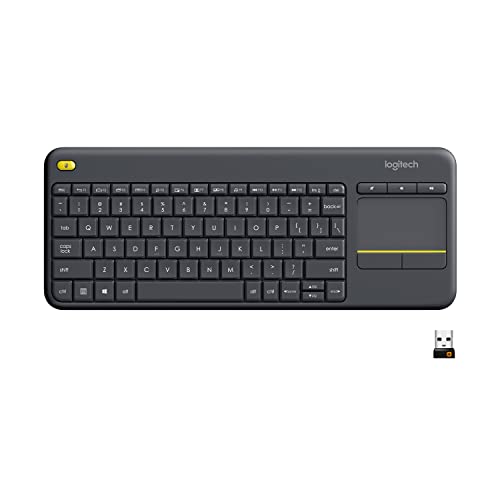
The Logitech K400 Plus is the reference design for the couch branch of this category: a full-width-but-compact board with an integrated touchpad, shaped for two-handed use on a lap and aimed squarely at the media PC or smart TV household. In prose terms its appeal is completeness and familiarity. The keys are large enough for real search terms and passwords, the touchpad removes any need for a separate mouse on the coffee table, and the layout includes the media controls a living room actually uses. Guests understand it on sight, which in a shared living room is a genuine feature. It connects by wireless receiver, which suits TV boxes and home-theater PCs that wake inconsistently over Bluetooth. The honest limitations are those of its branch: the keys are quiet, short-travel units made for bursts rather than paragraphs, the touchpad is modest in size, and nobody should plan to write essays or work a spreadsheet on it from the sofa. Choose it if your mini exists to run a screen across the room and your household values a board everyone can use without instruction. Skip it if your real need is a desk keyboard that happens to be small.
Best for: home-theater PCs, media boxes and family living rooms that want one familiar board with a touchpad. Not suited for: long typing sessions, mechanical-key feel, or compact travel kits.

Rii i8+
Positioning: entry handheld tier, prose-only; described in prose only in this draft, so check the current listing for live details before you buy.
The Rii i8+ represents the true handheld end of the category: a palm-sized board you hold like a game controller, with a small touchpad and a layout designed for thumbs rather than fingers. In prose terms, its job is to be the remote that can type. For entering search terms, passwords and short messages on a TV box or mini PC, it is quick, light and easy to store in the smallest drawer of a TV stand, and its backlit keys suit dark rooms where a full board would be overkill. It is the kind of device that makes a streaming stick feel complete. The limitations are equally clear and should be embraced rather than discovered: the keys are small, punctuation requires patience, and anything longer than a sentence or two becomes a chore. The touchpad serves menus and simple cursor work, not detailed pointing. Choose it if your typing is measured in search terms per evening and space is at a genuine premium. Skip it if several people will type longer messages, if you want a board that also serves a desk, or if small keys frustrate you on a phone, because the experience is closer to a phone keyboard than to a desk one.
Best for: streaming boxes, mini PCs and single-viewer setups where typing means searches and passwords. Not suited for: shared family typing, longer messages, or anyone who dislikes thumb-typing.

Logitech MX Keys Mini
Positioning: premium slim typing tier, prose-only; described in prose only in this draft, so check the current listing for live details before you buy.
The Logitech MX Keys Mini is the premium statement of the slim typing branch: a compact board that keeps the refined, quiet, sculpted key feel of a high-end laptop-style keyboard while cutting away the number pad and excess width. In prose terms it is aimed at desk workers who want their small keyboard to feel like their main keyboard, because it is their main keyboard. The keys are designed for long, accurate sessions, the backlighting behaves intelligently in changing light, and multi-device pairing suits the common modern arrangement of a work laptop, a personal machine and a tablet sharing one desk. It is the mini for people who type for a living and refuse to feel that they compromised. The limitations are about fit rather than quality: there is no touchpad, so couch duty needs a separate pointer; the slim profile will not satisfy anyone who wants mechanical tactility; and its premium tier only makes sense if your hands are on it for hours daily. Choose it if typing quality at a tidy desk is the entire point. Skip it if your mini is mainly a TV remote, or if your budget of attention belongs to the mechanical branch instead.
Best for: writers, professionals and multi-device desks that want premium laptop-style keys in a compact board. Not suited for: couch touchpad use or mechanical-switch seekers.

Keychron K3
Positioning: mid-to-premium low-profile mechanical tier, prose-only; described in prose only in this draft, so check the current listing for live details before you buy.
The Keychron K3 represents the low-profile mechanical branch: a compact board with genuine mechanical switches in a slim chassis, made for typists who want feedback and character without returning to a tall, full-size keyboard. In prose terms its appeal is the combination that used to be impossible: mechanical feel, wireless freedom across more than one host, and a footprint that leaves a desk feeling open. It suits the writer or coder who has gone number-pad-free on purpose, enjoys a distinct actuation under each finger, and moves between a computer and a tablet in the same session. The layout is a compact one, so the usual relearning around layers and edge keys applies, and low-profile mechanical switches feel different from both laptop keys and full-height mechanical switches; most people need a few days before they can say honestly whether the feel is theirs. Sound also needs a thought in shared or evening spaces. Choose it if you want your mini to be a hobbyist-grade typing instrument that travels well. Skip it if you need a touchpad for the couch, prefer the soft landing of scissor keys, or want the absolute quietest board in the house.
Best for: touch-typists, coders and mechanical fans who want a slim, compact main keyboard. Not suited for: couch control, silent shared rooms, or buyers who dislike relearning layouts.
Setup and Care That Reduce the Cons
Mini keyboards collect the evidence of their environments. Couch boards gather crumbs, dust and the occasional splash from coffee-table life; desk minis gather the usual desk grit in a smaller, tighter chassis where debris has nowhere to hide. Care is simple and mostly sufficient. Shake the board gently over a bin, work a soft brush between the keys, and wipe the case with a barely damp cloth. On mechanical minis many keycaps pull off for a deeper clean; work over a tray, photograph the layout first, and let everything dry fully before reassembly. Handheld boards deserve a specific habit: wipe the touchpad with a soft, dry cloth, because a film of living-room life on the pad is the most common cause of the jumpy cursor people blame on wireless interference. Keep drinks on a different surface from the keyboard where you reasonably can, and store a travelling mini in its own sleeve so keys are not held down by bag contents for hours. None of this needs special products or expertise. It needs only the recognition that a small, simple device rewards small, regular attention, and that most mini keyboards retired as faulty were, on inspection, simply dirty, flat or paired to the wrong host.
When a mini wireless keyboard misbehaves, the boring causes explain almost everything, and working through them in order beats frustration. Start with power: a fading battery produces exactly the missed letters, doubled characters and sleepy touchpad that people blame on interference, so charge or swap first. Next, the connection: remove and re-pair a Bluetooth board rather than toggling it, and if a receiver is involved, move it to a more open port, away from metal cabinets and the back of a crowded TV stand. Third, distance and obstacles: a board that works beside the host may sulk across a room when the host is buried in furniture, so test from your real seat with the room arranged as it is during a film. Fourth, the host itself: try the keyboard in a plain search box or text field to separate a keyboard problem from one app’s poor keyboard support. Keep a short note of what fixed it. Wireless faults are intermittent by nature, and the person best placed to spot the pattern is the one who wrote down that the board only drops out when a particular console wakes or a particular app opens. Method, in troubleshooting as in choosing, is what turns a flaky gadget back into a tool.
Bottom Line
The pros of a mini wireless keyboard are the kind that compound daily: space, freedom and a board matched to its room. The cons are the kind that can be managed by choosing the right branch and forming two small habits, charging and testing early. Buyers who respect the branch split almost always land on the pro side of the ledger; buyers who ask one small board to do everything land on the other. Choose your branch, audit your most-used keys, test wake behaviour in the return window, and the trade-offs resolve themselves in your favour.
Games deserve an honest paragraph, because mini keyboards brush against gaming from two directions. On the couch, a mini board is an excellent companion to a living-room PC or console for everything around the game: logging in, searching a store, typing chat messages, entering names and codes, and managing a media library between sessions. Inside fast competitive games, a small couch board on a lap is the wrong tool, and no honest review should pretend otherwise; that job belongs to a desk, a full layout and often a mechanical board. Desk minis are a different story: compact mechanical layouts are genuinely popular with players whose games need the letter cluster, movement keys and plenty of mouse room, and who rarely touch a number pad. If your gaming is of that kind, a typing-first mini is not a compromise at all but a deliberate choice many players make. The buying mistake is expecting one mini to cover both patterns at once. Decide whether your gaming needs a remote-style helper for the living room or a space-saving main board for a desk, buy that one properly, and let the other pattern be served by the equipment you already own.
Presenting, teaching and shared-screen work form a quiet third use case that suits minis surprisingly well. A compact wireless board lets a presenter stand, move and type away from the lectern, advance material, annotate and answer questions typed live, all while the audience watches the screen rather than the performer’s back. In classrooms and meeting rooms the same freedom lets a teacher or facilitator work from among the audience, which changes the energy of a session more than most technology does. The requirements are specific: pairing must be boringly reliable in a room full of other people’s devices, the board must wake instantly after long pauses while others are talking, and the layout must survive being handed to a colleague without a briefing. A small board also travels between rooms and buildings without the ceremony of packing a full keyboard, which is why so many presenters quietly own one even when their desk has a full-size board. If this is your pattern, prioritise connection reliability and a familiar layout over exotic features, test in an empty version of the actual room, and keep your pairing ritual practised. The audience should remember your material, not your keyboard, and a well-chosen mini is very good at being forgotten.
Value in this category is measured in friction removed per week, not in features per coin. A modest couch board that wakes instantly, types a search term cleanly and survives family handling will repay its cost in calm within a month of film nights, while an elaborate board that confuses its pairing or dies at awkward moments charges you attention every day you own it. The same arithmetic governs desk minis: a board whose layout you stop noticing after a week is worth more than a feature-rich one whose layers you still curse in month three. This is why experienced buyers read return policies as carefully as specifications and test with real workloads during the first week: a full film night with guests, a full morning of writing, the exact apps and hosts of your household. It is also why the second-hand market in mini keyboards is quietly healthy; the devices are simple, durable and easy to evaluate. Think of the purchase as hiring a small, specialised helper. You would not hire on a dazzling interview alone; you would set a trial week of real tasks. Do the same here, and let the trial, not the listing, have the final word on whether the keyboard has earned its place.
One More Consideration Worth Weighing
There is a quiet environmental and economic argument for this category that rarely gets made: a mini keyboard is a small, durable, repairable-by-replacement-part kind of object in a market of disposable giants. Keycaps, cables and batteries are the usual wear points, and on many models all three are replaceable, which means a board can serve for years with minor attention instead of being discarded when one part tires. Buying the right branch once, instead of the wrong branch twice, is also part of that arithmetic; the cheapest and greenest keyboard is the one you do not have to replace because it never suited you. None of this needs to dominate a buying decision. It simply rewards the same behaviour the rest of this guide recommends: choose deliberately, buy once, maintain lightly, and let a simple tool have a long working life.
Media keys are the unglamorous controls that decide how a couch board feels in daily use, and they deserve a deliberate test. Play and pause, volume up and down, mute, and a search or home shortcut are the living room’s equivalent of a typist’s home row: your thumb should find them without light or thought. During your trial week, run a realistic evening: start a film, pause it when someone speaks, lower the volume quickly, search for the next thing, and notice which of those actions required looking down. Boards differ surprisingly in how they arrange these keys, and the differences are personal rather than hierarchical. A layout that puts volume where your thumb expects it will feel intelligent; one that buries mute behind a combination will feel stupid at the exact moment a loud scene wakes the house. Judge by your thumb, in the dark, and trust the judgement completely.
Shortcut habits transfer between branches in an interesting way. Couch users learn to lean on autocomplete, voice for simple commands and media keys for control, typing only what machines cannot guess. Desk users learn layers, and the good ones customise their habits around the two or three layered keys they actually need rather than memorising an entire second layout. In both cases the skill being built is selectivity: a mini keyboard rewards people who know which twenty percent of a full keyboard does eighty percent of their work, and it gently punishes the assumption that every key matters equally. If you are new to compact boards, spend one session listing the keys and shortcuts your last week of computing genuinely used. The list is always shorter than expected, it fits on an index card, and it is the most useful buying and learning document in this entire category.
Second-hand and hand-me-down minis circulate quietly and well, which tells you something about the category’s durability. If you are offered one, or find one in the household drawer, the sensible checks are quick: charge it fully, pair it to your own host rather than trusting an old pairing, test every key in a plain text field, run a fingertip over the touchpad for grit, and confirm the receiver is present if the model needs one. A board that passes those five minutes is very likely to give good service, because there is little inside a mini keyboard to wear invisibly. The same five-minute routine, incidentally, is the right annual health check for a board you already own: it catches the fading battery, the dirty pad and the drifting pairing while all three are still small, free problems.
Gifting is a real route into this category, and it has its own logic. A mini keyboard is a kind gift for the person who has just built a media PC, moved into a small flat, started presenting at work or taken a tablet to university, because it solves a problem they may not yet know they have. The branch rule still applies, doubled: a couch board for the new media setup, a typing mini for the student or traveller, and never a compromise between the two because you were unsure. Include the small kindnesses that make the gift usable on day one: charge it before wrapping, and add a note with the two or three habits from this guide that matter most, waking, switching and where the receiver lives. A well-chosen mini is used daily for years, which is more than most gifts achieve.
Sound is a household consideration that solo reviews underplay. A keyboard is heard by everyone in the room, and on the couch branch it is heard during films, which is the least forgiving listening environment in the house. Membrane and scissor couch boards are effectively silent partners in an evening; a mechanical typing board brought to the sofa announces every search to the room. The reverse also holds at a desk shared with a sleeping household or a light-sleeping baby: the quiet board is the considerate one at midnight. None of this argues against mechanical feel, which many typists rightly love. It argues for matching the board’s voice to its room and its hour, and for testing in the real acoustic, with the real audience, during the return window. A keyboard you have to apologise for is a keyboard in the wrong room.
Small living spaces deserve a specific mention, because they are where mini keyboards stop being a preference and become a strategy. In a studio flat, a dorm room or a spare-room office that must dismantle on Friday, every object is asked to justify its footprint daily. A compact wireless board passes that audit easily: it works at the table that is also the dining table, pairs with the screen that is also the television, and stores in the drawer that is also the wardrobe. Owners in small spaces consistently report the same secondary benefit, which is psychological rather than physical: a workspace that assembles in a minute and vanishes in a minute makes work feel chosen rather than permanent, and the room returns to being a home each evening. If your space is generous, this paragraph will sound precious. If your space is not, it may be the most relevant one in the article, and you should weight size and storability accordingly when you choose.
After the First Impression: The Practical Upsides and Friction of a Mini Wireless Keyboard
If a drawback can be softened by placement, a simple accessory or a change of routine, it belongs in a different category from a drawback built into the design itself. Notice how the mini wireless keyboard behaves when you are tired or in a hurry, since products that demand perfect technique tend to fail exactly when you have least patience. Write the exact model name and variant from the packaging into your notes, so replacement parts, accessories and support conversations start from certainty rather than guesswork. A calm final test is to walk away mid-task, come back later, and see whether the setup still makes sense at a glance without reconstructing what you were doing.
As a concrete listing check, take the Logitech K400 Plus and the Rii i8+ named earlier in this article and confirm, line by line, that each variant offered matches the size, connection and contents described for it here. Look closely at seams, edges, hinges, threads or contact points when the mini wireless keyboard arrives, because build quality is easiest to judge before everyday wear hides the evidence. Notice the small sounds, lights and movements during normal use, because those everyday details decide whether a mini wireless keyboard feels settled or constantly demands attention. If the mini wireless keyboard will be shared, agree on one home position and one simple reset routine, so each person does not undo the previous person’s adjustments. Some trade-offs appear on day one and never change, while others only emerge after weeks of use, so separate the immediate compromises from the slow, cumulative ones.
Think about the longest session you realistically run, not the average one, since heat, noise, clutter and small annoyances all grow more noticeable over time. Think about storage for the accessories this mini wireless keyboard brings with it, so spare parts and tools end up in one known place instead of scattered across drawers. Keep liquids, loose papers and anything that sheds dust or fibres at a sensible distance, unless the mini wireless keyboard was clearly designed to work right beside them. Keep the instructions somewhere you can find them months later, since the setting or step you skip today is often the one a future problem sends you hunting for.
Check the connection points you rely on every day, and note which ones are already occupied, shared or awkward to reach once furniture is back in place. Avoid forcing a connector, bracket or moving part that resists you, because resistance is usually information about alignment or fit rather than an invitation to push harder. Living with a mini wireless keyboard usually means accepting one recurring small friction in exchange for removing a larger one, and naming that exchange clearly makes the decision easier. Ask whether the benefit you want survives your least favourite conditions, such as low light, a crowded desk, a warm room or a rushed start to the day. Plan where the cables or materials connected to this mini wireless keyboard will run when the room is tidy, not just while you are testing on an empty surface.
Frequently Asked Questions
What is the biggest disadvantage of a mini wireless keyboard?
For most owners it is not size but the small daily frictions size creates: a favourite key moved to a layer, a touchpad too small for precision, or a board that sleeps and eats the first letter of a search. All three are knowable in the first week. Test your real tasks during the return window and the biggest disadvantage becomes a selection criterion instead of a surprise.
Are mini keyboards bad for your hands?
A mini keyboard is a tool for arranging your setup, and used sensibly, with a position that feels natural and regular breaks, many people find a narrower board more comfortable because the mouse sits closer. No keyboard can promise medical benefits, and persistent pain, numbness or tingling should be discussed with a qualified professional rather than treated with a purchase. Comfort honestly assessed over real days is the right measure.
Do the pros outweigh the cons for a living room?
In most media households, yes. The living-room jobs are searches, passwords, menu control and short messages, and a couch-branch mini does all of them better than a remote alone or a full keyboard sprawled on the coffee table. The cons that matter at a desk, small keys and layered layouts, barely register in the living room because the typing there is measured in seconds, not hours.
Is a touchpad on a mini keyboard worth having?
If the board will drive a screen across the room, the touchpad is close to essential, because it removes the mouse from the coffee table entirely. If the board will live at a desk beside a mouse you already like, a touchpad adds cost, width and accidental touches for no benefit. Worth follows the room: pointing built in for the couch, pointing left out for the desk.
How long do mini keyboards usually last?
The devices themselves are simple and typically durable for years of household use; what ends their careers is usually a lost receiver, a neglected battery or legends wearing on the most-used keys. A storage slot for the receiver, a small charging routine and legends formed into the keycaps are the three details that most extend a mini’s working life.
Can a mini keyboard be my only keyboard?
A typing-branch mini can be the only keyboard for most writers, coders and office users who rarely need a number pad, and many owners do exactly that. A couch-branch board should not be an only keyboard if you ever type at length. Households often keep the mini as the only keyboard per room rather than per house, which is the arrangement the category suits best.
Related Guides
Related reading: mini wireless keyboard review; mini wireless keyboard buying guide; is a mini wireless keyboard worth it; wireless keyboard and mouse setups for couch gaming; keyboards for small hands; quiet keyboards for typing; keyboards for office typing.