ilcastellomenu.com is reader-supported. When you buy through links on our site, we may earn an affiliate commission.
Where to Buy
There is a recognisable moment in every photographer’s life: the phone, which was miraculous for years, starts to feel like a ceiling. You see the photograph — the low light in the café, your kid mid-laugh against a blown-out window, the street scene that needs a longer lens and a faster hand — and the tool in your pocket cannot reach it. If you are looking for the best cameras for amateur photographers, you are probably standing in that moment, and the good news is that it is the best moment in decades to be standing there. The cameras below are more capable, more forgiving, and better value than anything previous generations of amateurs learned on.
The trap at this moment is buying for the photographer you might become in five years instead of the one you are this spring. Amateur photography is a skill built in stages — first the camera must stop intimidating you, then it must stop limiting you, and only much later does it need to impress anyone. The right first serious camera is the one whose menus you will actually learn, whose size you will actually carry, and whose lens system lets you grow one affordable lens at a time. Every pick here was chosen against those unglamorous criteria, because the graveyard of this hobby is full of magnificent cameras that stayed in cupboards.
What “amateur” needs, concretely, is a short list of honest virtues: autofocus that finds faces and eyes without a fight, low-light manners that forgive indoor shooting, a viewfinder or screen you enjoy, controls that graduate from automatic to manual as your confidence does, and a lens mount with a future. Resolution beyond a healthy point, exotic video specifications, and flagship frame rates are pleasures for later. The six cameras below divide the amateur landscape by temperament — the learner, the filmmaker, the purist, the grower — because at this level the best camera is the one matched to the person, not the one topping a chart.
One more reassurance before the shortlist: every camera here is good enough to be outgrown slowly and none will embarrass you while you learn. The differences that matter are about fit — size, controls, lens prices, video leanings — and fit is something you can judge honestly about yourself right now, which is more than can be said for your future tastes in photography. Choose for the photographer holding the camera today, with one eye on the door to tomorrow.
How to use the shortlist: the badges are temperaments, not ranks. The first-camera pick, the video-minded pick, the hybrid, the purist’s instrument, the step-up, and the full-frame settler are six different answers to six different self-descriptions, and the most valuable thing you can bring to this page is an honest one-sentence description of the photography you actually do — the subjects within reach of your ordinary week. Match the sentence to the badge and the decision is usually obvious; buy against your sentence, for an imagined life, and even the finest camera here becomes furniture. Amateurs do not fail at photography for lack of equipment. They fail for lack of Tuesdays with the camera in hand, and everything in this guide is arranged to maximise your Tuesdays.
Key Takeaways
- Buy for the photographer you are now: carry-ability and friendly controls beat flagship specifications at this stage.
- Eye-detection autofocus is the single feature that most improves an amateur’s early hit rate.
- The lens mount is the real purchase — choose a system whose next two lenses you can afford.
- A camera that graduates from auto to manual with you will teach faster than one that demands manual from day one.
- The Canon EOS R50 is our default recommendation for a first serious camera.
In this guide
Quick Picks
| Pick | Badge | Why it earns its place |
|---|---|---|
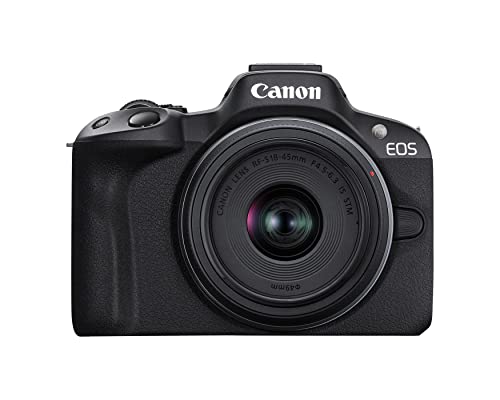
| Canon EOS R50 | Best First Serious Camera | Guided menus, dependable eye autofocus, and the RF lens ladder make this the easiest route from phone to real photography. |
| Nikon Z30 | Best for Video-Minded Amateurs | A compact, screen-first camera built for the amateur whose photography arrives with a side of filming everything. |
| Sony ZV-E10 II | Best Hybrid All-Rounder | Strong stills, serious video tools, and the vast E-mount lens shelf in a body that travels without complaint. |
| Fujifilm X-T5 | Best for Photography Purists | Dials, colour, and resolution for the amateur who fell in love with photographs rather than with filming them. |
| Canon EOS R10 | Best Step-Up Choice | More dials, more buffer, more growth — the R50’s bigger sibling for amateurs who already know they are serious. |
| Panasonic LUMIX S5II | Best Full-Frame Treat | A stabilised full-frame hybrid with superb video for the amateur ready to skip a step and settle for years. |
One filter deserves naming because it quietly removed several famous cameras from contention: the price of the second lens. A body whose system offers a bright prime and a useful telephoto at amateur prices will make its owner happier in year two than a marginally finer body locked into a costly catalogue. We priced the growth path, not just the entry ticket, for every system here — and we weighed the used market’s depth too, because the amateur’s real camera shop, after month three, is the second-hand shelf.
How We Chose These Picks
We assessed each candidate through a beginner’s first year rather than a reviewer’s first week. Does the camera produce satisfying pictures in its automatic modes while quietly teaching manual ones? Does its autofocus remove the commonest beginner failure — the almost-sharp portrait — without demanding menu archaeology? Can its owner buy a second lens, the one that usually defines their style, without a financial event? And will the camera be carried — on the school run, the holiday, the evening walk — because an amateur’s best camera is definitionally the one present. Cameras that ace charts but fail cupboards were excluded, however impressive.
What Actually Changes When You Move From a Phone to a Real Camera?
Three things, and only one of them is image quality. The first is control of depth: a real camera’s larger sensor and interchangeable lenses let you decide what is sharp and what melts away, which is the single most “photographic” effect beginners crave in portraits. The second is light: bigger sensors drink in dim rooms, evening streets, and candlelit birthdays with a grace phones simulate but cannot match, so whole categories of your life become photographable. The third — the one nobody warns you about — is intention. A camera does one thing, so picking it up is a decision, and photographs made by decision improve faster than photographs made by reflex. Amateurs consistently report that their pictures got better before their equipment knowledge did, purely because the camera made them look on purpose.
There are honest costs to acknowledge. A camera is another object to charge, carry, and learn; its files want organising; its lenses want a budget line. The picks below were chosen to minimise those frictions — USB charging where possible, menus that explain themselves, kits that start complete — but the amateur who thrives is the one who accepts the small overhead as the price of the large reward. If that trade sounds like a chore rather than a pleasure, the honest advice is to enjoy your phone another year. If it sounds like a hobby announcing itself, read on.
Which Specifications Matter for Amateurs — and Which Are Marketing?
Learn to read a spec sheet like a sceptic. Megapixels beyond the mid-twenties buy cropping room, not quality, and every pick here has enough for large prints. Autofocus language matters more: look for face and eye detection named plainly, because that feature will rescue more of your early portraits than any other. In-body stabilisation is a genuine amateur ally for handheld low light, though lens stabilisation does much of the same work. Video specifications matter only if you film; a stills-first amateur should not pay a hybrid’s premium without a use for it. And the specification that never appears on the box — the price and range of the system’s lenses — matters most of all, because the second lens is where an amateur’s style is born.
Two numbers deserve active suspicion. Burst rates in the dozens of frames per second solve problems amateurs do not have, while filling cards they do. And sky-high ISO figures describe a camera’s willingness, not its quality — judge low light by sensor size and lens brightness instead. The amateur’s spec sheet, honestly written, is short: a healthy sensor, eye autofocus, a lens mount with affordable next steps, and a body that fits the hand and the bag. Everything else is seasoning.

Canon EOS R50 — Best First Serious Camera
The R50 is the camera we hand to the amateur who asks the simplest question — “what should I actually buy first?” — because it is engineered around the beginner’s real obstacles. Its menus explain themselves in plain language, its automatic and guided modes produce genuinely good pictures while the owner is still learning, and its autofocus quietly performs the hardest trick in amateur photography: finding a person’s eye and keeping it sharp while they move, laugh, and refuse to pose. Early success is the fuel of hobbies, and the R50 manufactures it reliably.
Beneath the friendliness is a serious foundation. The sensor’s image quality matches cameras costing considerably more, the RF mount opens a lens ladder that runs from an affordable second lens to professional glass without a system change, and the body is light enough that “bring the camera” stops being a decision. The touchscreen-led handling will feel natural to anyone arriving from a phone, and Canon’s colour — especially for skin — flatters the family photography that dominates most amateurs’ first years.
The compromises are the honest ones of an entry body: fewer physical dials for the day manual control becomes a pleasure rather than a duty, a modest buffer, and an entry-level viewfinder. Most owners will not feel any of these for a year or more, and when they do, the R50’s lenses carry upward to the R10 and beyond. As a first serious camera — the one that teaches, encourages, and refuses to intimidate — it is the easiest recommendation on this list.
- Sensor: APS-C CMOS, about 24 megapixels
- Mount: Canon RF / RF-S, a long affordable ladder
- Autofocus: face and eye detection with guided modes
- Controls: touchscreen-first, plain-language menus
- Size: light enough for everyday carry
Strengths
- Guidance that produces good pictures from the first weekend
- Eye autofocus that quietly removes the classic beginner failure
- Lens system you can grow for a decade
Trade-offs
- Fewer dials when manual control becomes the fun part
- Modest buffer for action-heavy shooting
- Viewfinder is functional rather than luxurious
Best for: first-time camera buyers arriving from phones. Not suited for: amateurs who already shoot manual and want dials now.

Nikon Z30 — Best for Video-Minded Amateurs
A large share of today’s amateurs do not divide photography from filming — they document a life in both, often for an audience. The Z30 is Nikon’s answer to that person: a small, screen-first camera with no viewfinder pretensions, built around a flip screen, long recording stamina, and autofocus that tracks faces and eyes through a piece to camera as happily as it tracks a child’s birthday. For the amateur whose camera will spend half its life on a small tripod or a gimbal, it is the most honestly designed body here.
As a stills camera it is better than its video billing suggests — the sensor is a capable APS-C unit and Nikon’s Z lenses, including the compact DX zooms made for bodies like this, are sharp and sensibly priced. The handling is glove-simple, the body disappears into a jacket pocket with the smallest zooms, and USB power options suit the desk-and-day-out rhythm of creators. Photographers who shoot through a viewfinder by preference should look elsewhere on the list; photographers who compose on screens — which is to say, most people raised on phones — will feel immediately at home.
Its limits are the deliberate ones: no viewfinder for bright-day stills work, a stills feature set trimmed toward the hybrid essentials, and a DX lens shelf that is growing rather than grown. For the video-minded amateur, those are the right corners to cut, and the money saved buys the microphone and light that will improve their films more than any body upgrade.
- Sensor: APS-C (DX) CMOS, about 21 megapixels
- Mount: Nikon Z
- Design: screen-first, no viewfinder, flip-out display
- Video: long recording times, creator-friendly features
- Power: USB charging and powering options
Strengths
- Designed honestly around how creators actually shoot
- Face tracking that serves filming and stills alike
- Compact with the small DX zooms
Trade-offs
- No viewfinder for bright conditions or traditional stills work
- Stills controls are simplified by design
- DX lens range is still expanding
Best for: amateurs who film as much as they photograph. Not suited for: viewfinder traditionalists and stills purists.

Sony ZV-E10 II — Best Hybrid All-Rounder
The ZV-E10 II is the pick for the amateur who refuses to declare a side: strong stills, serious video, and the largest lens catalogue in its class, in a body that behaves like a travel camera. Sony’s autofocus is the quiet headline — face and eye tracking of a maturity that makes both portraits and pieces-to-camera feel effortless — and the E-mount shelf means the second lens, the third lens, and the eventual upgrade body all exist at every price point an amateur could name.
For stills, the sensor is a modern APS-C unit with cropping room and clean higher-ISO files for indoor life; for video, the camera offers the colour profiles, product-showcase habits, and microphone provisions that creators actually use. The body is compact, the screen fully articulating, and the whole package travels in a sling bag without negotiation. It is the least specialised camera here, which for a genuine all-rounder of an amateur is precisely the point.
Compromises: like the Z30 it has no viewfinder, which bright-day stills shooters will feel; the rolling-shutter and handling quirks of a creator-led body occasionally remind purists of its priorities; and Sony’s menus, though improved, still reward a setup evening. But as the one camera for the amateur whose interests refuse to sit still — family, travel, a channel, a photography habit growing by the month — the ZV-E10 II is the safest pair of hands on this list.
- Sensor: APS-C CMOS, about 26 megapixels
- Mount: Sony E — the deepest lens catalogue in class
- Autofocus: mature face and eye tracking for stills and video
- Screen: fully articulating touchscreen
- Design: creator-led hybrid, no viewfinder
Strengths
- Stills and video strength in one travel-sized body
- Lens choice that will never corner you
- Autofocus maturity that flatters beginners in both crafts
Trade-offs
- No viewfinder for harsh daylight stills
- Creator-first layout takes a setup evening to tame
- In-body stabilisation is absent; lenses do the steadying
Best for: hybrid amateurs splitting time between stills and video. Not suited for: viewfinder devotees or stills-only purists.

Fujifilm X-T5 — Best for Photography Purists
Some amateurs fall for photography itself — the print, the frame, the slow craft — and for them the X-T5 is the most seductive camera here. Its traditional dials put shutter speed, ISO, and exposure compensation under your fingers as physical objects, which teaches exposure faster than any menu because your hands learn it. Its film-simulation colour produces JPEGs with a finished, filmic character straight from the camera, a mercy for amateurs who would rather photograph than edit. And its high-resolution sensor gives the landscape and detail work that purists love a richness the mid-twenties sensors cannot match.
The body is weather-resistant, beautifully finished, and sized for travel; the X-mount’s prime lenses are small, sharp, and characterful in a way that encourages the one-lens walk that builds an eye. Subject detection has matured in this generation to cover faces, animals, and vehicles respectably, so the purist is not asked to surrender modern autofocus — only to accept that it is very good rather than the class’s best.
Its asks: the system costs more to enter than the Canon route, video is a competent sideline rather than a headline, and the dial-led handling is a small apprenticeship for shooters raised on screens. For the amateur whose ambition is photographs — printed, framed, and made slowly — those are the right prices, and the X-T5 is the camera most likely on this list to still be loved, rather than merely used, in ten years.
- Sensor: APS-C X-Trans CMOS, about 40 megapixels
- Mount: Fujifilm X, characterful compact primes
- Controls: physical dials for the core exposure settings
- Colour: film simulations with finished out-of-camera JPEGs
- Build: weather-resistant, traditional styling
Strengths
- Dials that teach exposure through your fingertips
- Colour that spares beginners the editing apprenticeship
- Resolution for landscapes, detail, and cropping
Trade-offs
- Entry cost above the Canon and Nikon routes
- Video is a sideline, not a speciality
- Autofocus is very good rather than class-leading
Best for: stills-first amateurs who love the craft and the print. Not suited for: video-led creators or the tightest budgets.

Canon EOS R10 — Best Step-Up Choice
The R10 is for the amateur who has already served a small apprenticeship — a borrowed DSLR, a year with an entry compact, a phone habit that turned serious — and knows the next camera must not need replacing in eighteen months. It keeps everything that makes the R50 recommendable (Canon’s colour, the RF ladder, animal and people detection of real maturity) and adds the photographer’s furniture: a second dial, a deeper buffer, a better viewfinder, and burst speed that opens the door to sports days and wildlife weekends.
In practice the difference is confidence at the edges: the school match under floodlights, the dog at full sprint, the bird that finally visited the garden. The R10’s tracking and buffer convert more of those moments into keepers, and its controls stop taxing you once manual exposure becomes your default language. It remains compact and light enough for travel, and the shared RF system means an R50 owner’s lenses — or a future upgrade’s — all speak the same mount.
The honest costs are a step up in price over the R50 and the same light weather sealing; in-body stabilisation is also absent, so choose stabilised lenses for handheld low light. But judged as the amateur’s three-to-five-year camera — the one that will not be the reason a photograph failed — the R10 is the step-up pick that justifies its name.
- Sensor: APS-C CMOS, about 24 megapixels
- Mount: Canon RF / RF-S
- Autofocus: people and animal detection, strong tracking
- Controls: dual dials, deeper buffer, better viewfinder than R50
- Use case: the multi-year amateur body
Strengths
- Controls and buffer that will not need replacing soon
- Tracking that opens sports and wildlife to amateurs
- Shares the R50’s friendly system and colour
Trade-offs
- Costs a clear step more than the entry pick
- Weather sealing remains light
- No in-body stabilisation
Best for: committed amateurs buying a camera for several years. Not suited for: absolute beginners who would not use the extra control yet.

Panasonic LUMIX S5II — Best Full-Frame Treat
Every amateur shortlist needs one honest indulgence: the camera for the buyer who has the budget, has done the homework, and wants to skip a step. The S5II is that camera — a full-frame hybrid whose in-body stabilisation is among the finest fitted to any camera at any level, whose video credentials are professional in ambition, and whose phase-detection autofocus (a landmark for Panasonic) finally matches its other virtues. For the amateur whose life includes dim rooms, evening streets, and a serious filming habit, it settles the question for years.
The full-frame sensor’s low-light grace is the headline for stills: family life happens indoors and after dark, and this camera treats both as home turf. The L-mount alliance means lenses arrive from several makers at several prices, softening full frame’s traditional cost sting, and the body itself is weather-sealed and built like it expects to be kept. Amateurs who buy it rarely buy another camera soon; they buy lenses, which is the correct order of things.
The cautions are real: it is the largest and heaviest body here, full-frame lenses continue the theme, and its power is genuinely more than a first-year amateur will use — some buyers will be paying for headroom they reach in year three, which is either wisdom or waste depending on their honesty. If you know you are in for the decade, the S5II is the treat that ages into a bargain. If you are still finding out, the R50 will tell you more cheaply.
- Sensor: full-frame CMOS, about 24 megapixels
- Mount: L-mount — lenses from several makers
- Stabilisation: class-leading in-body system
- Autofocus: phase-detection with subject detection
- Build: weather-sealed, made to be kept
Strengths
- Low-light stills and video that end the upgrade question
- Stabilisation that rescues handheld evenings
- Multi-maker lens alliance softens full-frame costs
Trade-offs
- Largest, heaviest, and priciest route on this list
- Capability exceeds a first year’s needs
- Full-frame lenses continue the size theme
Best for: well-funded amateurs buying once for the decade. Not suited for: beginners unsure the hobby will stick.
How Should an Amateur Think About Lenses After the Kit Zoom?
The kit zoom is a question the camera asks you: what do you reach for that it cannot give? After a few months, your files will answer with statistics — the focal lengths you live at, the light you keep failing in, the subjects you crop toward. The classic second lens, across every system here, is a fast prime in the portrait range: it opens the low-light world of evenings and interiors, melts backgrounds the kit zoom can only suggest, and — being fixed — teaches composition with your feet, the oldest lesson in photography. Amateurs consistently describe the first prime as the moment the camera started producing the photographs they had been imagining.
After that, let genre decide. The traveller’s third lens is wider or longer depending on whether their frames crave architecture or distance. The family photographer’s is often a longer portrait lens or a brighter standard zoom that ends the lens-swapping at events. The landscape amateur’s money may skip lenses entirely and land on a tripod and filters, which improve their genre more than glass does at this stage. The discipline is sequence: kit, prime, then the lens your files asked for — never the lens a forum’s enthusiasm prescribed. Every system on this list supports that sequence at amateur prices, which is precisely why they are on this list.
What About Editing — Does an Amateur Need to Learn Software Too?
Eventually, lightly, and in that order. Modern cameras — Fujifilm most famously, but all six here — produce JPEGs good enough that an amateur’s first year can be spent photographing rather than processing, and there is real wisdom in that: editing cannot rescue an unpractised eye, and it can easily consume the hours the eye needed. When you do begin, begin with the global moves — exposure, white balance, a crop with intent — on a simple tool, and shoot RAW alongside JPEG once your favourite photographs start deserving the extra latitude RAW provides.
Two editing habits matter more than any software choice. First, cull ruthlessly and early: the amateur who keeps everything learns nothing from anything, while the one who chooses the best three frames of a shoot has given themselves a lesson. Second, compare against your intention, not against professionals’ feeds — ask whether the photograph does what you meant, and let the gap name your next practice. Editing is the darkroom half of the craft and it will have its years; the first year belongs to the camera, the light, and your feet.
How Do You Keep the Hobby Alive After the First Month?
Novelty fades on schedule, usually around week five, and the amateurs who persist are the ones who built structures before it did. The strongest is the recurring appointment: a Saturday walk with the camera, a standing date with a photogenic grandparent, a commute route treated as a long-term documentary project. Projects beat wandering because they give the camera a reason to leave the house on the grey days, and grey days — soft light, empty streets, honest weather — make disproportionately good photographs. A one-subject project (your street through a year, the market’s stallholders, a single tree) sounds like a limitation and behaves like a teacher.
Company is the second structure. Camera clubs have survived every technological revolution because they solve the persistence problem socially: a monthly theme, a wall of prints, people who notice when you miss a meeting. Online communities do a lighter version of the same work. And the third structure is output — prints on a wall, a small book at year’s end, photographs given away. Amateurs who make things from their photographs keep making photographs; the camera on this list that gets you into those structures fastest, by being carried and enjoyed, is the right camera, whatever its specifications say.
What Should an Amateur Know About Buying Used?
That lenses are the used market’s gift and bodies are its gamble. A used lens from a reputable dealer, inspected and returnable, is how amateurs afford the second and third lenses that define their style — glass ages slowly and honest wear is cosmetic. Bodies age faster in every sense: shutter counts, battery health, and sensor generations all move, so a used body makes sense mainly as a deliberate bargain with a warranty attached, or as a second body once you know the system. The sequence this guide recommends — new entry body, used lenses as you grow — quietly halves the cost of the hobby’s first three years without halving any of its pleasures.
One caution completes the picture: buy used from sellers who grade honestly and accept returns, and treat a price far below the market as information rather than luck. The amateur’s budget is better spent on one returnable lens than on two mysteries. With that discipline, the used shelf becomes what it has always been for photographers — the place where a modest budget assembles an immodest kit.
The Six Amateur Cameras, Compared at a Glance
| Camera | Format | Viewfinder | Video lean | Learning style | Choose it if… |
|---|---|---|---|---|---|
| Canon EOS R50 | APS-C | Yes | Capable | Guided and gentle | this is your first real camera |
| Nikon Z30 | APS-C | No | Strong | Screen-first, simple | you film your life as you live it |
| Sony ZV-E10 II | APS-C | No | Strong | Hybrid, setup-driven | you refuse to choose between crafts |
| Fujifilm X-T5 | APS-C 40MP | Yes | Capable | Dial-led, deliberate | photographs themselves are the point |
| Canon EOS R10 | APS-C | Yes | Capable | Photographer’s controls | you are buying for several years |
| Panasonic LUMIX S5II | Full frame | Yes | Excellent | Full manual maturity | you want to skip a step entirely |
Read the table by temperament. The beginner who wants guidance buys the R50; the creator buys the Z30 or the Sony; the romantic buys the Fujifilm; the planner buys the R10; the settler buys the Panasonic. Notice that sensor size explains almost none of the rows — at amateur level, handling, lenses, and honesty about your habits decide everything, which is why this guide keeps returning to fit.
What Should Your First Year With the Camera Look Like?
Give the hobby a curriculum and it will repay you like one. Month one belongs to the automatic and guided modes, deliberately: learn what the camera chooses, notice where you disagree, and shoot volume — the school run, the market, the dog — because judgement is trained by frames, not by reading. Months two to four belong to one variable at a time: aperture weekends, where everything is shot for depth; shutter weekends, where movement is frozen and blurred on purpose. By mid-year, the exposure triangle stops being a diagram and becomes a set of instincts, and the camera’s manual modes turn from examination hall into workshop.
The second half of the year is for taste. Shoot one subject repeatedly — a street, a grandparent, a coastline — until you can see your own habits forming, because style is mostly habit made visible. Print monthly; a wall teaches what a screen forgives. And join something: a camera club, a class, a walking group with cameras. Amateurs who learn in company persist, and persistence is the entire difference between the photographer of year three and the cupboard of year one. The cameras on this list were chosen to survive that curriculum without becoming its bottleneck.
What Mistakes Do Amateur Photographers Make When Buying?
The champion mistake is maximising the body and minimising everything else — the flagship behind a kit lens, with no budget left for the second lens, the bag, or the course that would have taught more than the sensor gives. Second is buying for an imagined genre: the landscape rig for a person whose life is family indoors, the sports body for a street photographer. Third is ignoring size until the camera’s third consecutive weekend at home proves that the best camera is, with brutal consistency, the one you brought. Fourth is treating the purchase as the hobby — unboxing as achievement — when the hobby is the thousand frames after. Buy a pick from this list at the level your honesty supports, then close the shopping tabs and open the camera. The amateur who shoots weekly with the R50 will out-photograph the amateur who researches monthly with a flagship, and it will not be close.
Which Genres Should an Amateur Try First — and What Do They Teach?
Family and everyday life first, because the subjects are patient, the access is unlimited, and the reward — a childhood, a household, a year, properly seen — compounds for decades. This genre teaches timing and affection, and it is unreasonably forgiving of modest equipment. Street photography second, for the opposite education: speed, discretion, and composition at walking pace, in light you do not control. A month of street work will sharpen an amateur’s reflexes more than a year of occasional landscapes. Landscape third, as the school of patience and tripod discipline — it teaches you to wait for light rather than chase subjects, and it is where the X-T5 and S5II in this list most plainly earn their keep.
Portraiture deserves a deliberate season too, because directing a person kindly is a photographic skill distinct from operating a camera, and eye autofocus — present across this list — removes the technical excuse so the human lesson can happen. Macro and still life are the home-based schools, available in February, teaching light at the scale of a tabletop. And travel photography is not a genre but an examination in all of them at once, which is why it should be attempted after the others have had their terms. The amateur who rotates genres in the first two years becomes the photographer who can be dropped anywhere with any of these cameras and come home with the story.
How Should You Set Up the Camera on Day One?
Resist the forty-page setup guides and do the short list. Set the file type to the finest JPEG plus RAW if your storage allows, so today’s enthusiasm and tomorrow’s editing ambitions are both served. Turn on face and eye detection and leave the focus area wide — the camera should hunt faces so you can hunt moments. Set auto-ISO with a sensible ceiling and let the camera manage the variable beginners most often fumble. Date, copyright name, and a folder habit on the card take two minutes and save archaeology later. Then — the step that matters — save nothing else, change nothing else, and go out shooting for a fortnight.
After that fortnight, change exactly one thing at a time, driven by a failure you actually met: the buffer that filled at the school play argues for a faster card, not a new body; the indoor noise argues for the bright prime, not a forum account. Cameras arrive from the factory closer to correct than the internet admits, and the amateur’s setup should be a diary of real problems solved, in order, at the pace the problems appear. That discipline — buy and adjust in response to evidence — is the whole philosophy of this guide compressed into a settings menu.
What Does the Second Camera-Shaped Purchase Usually Turn Out to Be?
Ask photographers what actually transformed their amateur years and the answers are rarely cameras. The tripod, for anyone whose light is early or late. The comfortable strap and the bag that fits under an airline seat, because carry is destiny. The printing habit — a home printer or a standing order with a good lab — because photographs become real on paper and the lessons change when they do. The course, the workshop weekend, the mentored walk. And, quietly the most valuable, the second battery and the big fast card that end the small anxieties. A first serious camera from this list is the beginning of a kit in the widest sense: a set of habits and objects that together make photographs happen. Budget for the whole ecology and the hobby thrives; budget for the body alone and the hobby becomes a beautiful object in a cupboard, which is the one outcome every pick here was chosen to prevent.
How Do You Judge Your Own Progress Without Fooling Yourself?
By comparing against your past self at fixed intervals, in fixed ways. Keep a folder of each month’s single best frame — twelve frames a year, no more — and lay the years side by side; progress that feels invisible weekly is undeniable annually. Count keepers honestly after a familiar shoot: the same family walk, the same market, and watch the hit rate climb as the camera disappears from your attention. Notice when strangers — not family, who are kind — ask for your photographs, and when your failures change category: beginners fail technically, intermediates fail compositionally, and the day your failures are mostly about taste is the day the amateur apprenticeship is complete. The cameras on this list will record every step of that honestly, in the file data as much as the images, if you do the reviewing. That is all any tool can offer, and it is enough.
How Does Video Fit Into an Amateur’s First Camera, Honestly?
As a welcome passenger, rarely as the driver — unless you are the creator type, in which case the Z30 and ZV-E10 II above are your picks and this section is your confirmation. For the stills-led amateur, video’s role is the family archive: birthdays, grandparents’ stories, the holiday’s moving postcards. Every camera here films those beautifully with its automatic modes, and the skill that matters is not cinematic technique but the discipline of shooting short, deliberate clips and storing them where they will be found in twenty years. Buy for stills, film opportunistically, and let a genuine filming passion — if it arrives — argue for its own camera later. The reverse order, buying a video flagship for a stills life, is one of the hobby’s commonest budget errors.
What About Size — How Small Is Small Enough?
Small enough is a property of your life, not of a spec sheet. The test is behavioural: will this camera, with its most-used lens, fit the bag you already carry on the days you actually photograph? For the school-run-and-weekend amateur, the R50 and Z30 class passes that test in a coat pocket or a small sling; the X-T5 and R10 pass in a dedicated small bag you must remember to take; the S5II asks for a deliberate outing. None of those answers is wrong — deliberate outings are a fine way to photograph — but the buyer should know which life they are purchasing. Handle the finalists in a shop if you possibly can, with the lens you will actually own mounted. Hands are honest critics, and ten minutes of holding predicts years of carrying better than any review, including this one.
A Last Word on Confidence, Because It Is the Real Product
Underneath every specification in this guide sits a simpler transaction: a first serious camera is a machine for manufacturing confidence. The early keepers — the portrait where the eye is truly sharp, the evening street that finally looks like it felt — are what carry an amateur through the plateau months when progress hides. That is why this list prizes forgiving autofocus, kind colour, and guided beginnings over raw capability: the camera that makes your first hundred photographs encouraging is the camera that gets to make your ten-thousandth, by which time you will know exactly what you need next and will need no guide to tell you. Buy the encouragement. The expertise is a side effect of staying.
Final Recommendation
Start with the Canon EOS R50 unless your temperament clearly names another pick: it is the gentlest teacher, the safest system, and the easiest camera here to outgrow slowly rather than suddenly. Video-minded amateurs should take the Nikon Z30 or the Sony ZV-E10 II by whether they want simplicity or catalogue depth; purists will be happiest with the Fujifilm X-T5; planners with the Canon EOS R10; and the amateur certain of the decade can settle the matter with the Panasonic LUMIX S5II. Then do the only thing that has ever made a photographer: take the camera out this weekend, and the next, and let the year do its work.
Related guides
- Best Cameras for First Time Photographers: 6 First Bodies That Teach While They Shoot
- Best Cameras for Begining Photographers: 6 Starter Cameras That Teach You Photography
Frequently Asked Questions
Is a mirrorless camera better than a DSLR for an amateur now?
For a new purchase, yes, in almost every case that matters to a beginner: mirrorless bodies offer eye-detection autofocus, live exposure preview in the viewfinder, smaller bodies, and the lens catalogues every maker is actively growing. DSLRs remain fine cameras and can be used bargains, but an amateur buying new today should buy into the systems with a future — all six picks here are mirrorless for that reason.
How many megapixels does an amateur actually need?
Enough for the prints you will realistically make, which for most amateurs means the low-to-mid twenties is already generous — large wall prints included. More resolution buys cropping freedom and detail for landscapes, which is why the X-T5’s higher count is a feature for its particular buyer, but no amateur should choose a camera primarily by megapixels. Autofocus, lenses, and handling will decide far more of your keeper rate.
Should I buy the kit lens or body only?
Buy the kit. The standard zoom bundled with these bodies is the correct first lens — versatile, light, and honest — and the savings of body-only purchases belong to photographers who already own lenses. Your second lens, bought after a few months of noticing what the kit cannot do, is where individuality enters: a bright prime for portraits and evenings is the classic amateur second lens across every system here.
Do I need a full-frame camera to take photography seriously?
No. Seriousness is a property of photographers, not sensors, and APS-C systems — four of our six picks — produce work that fills books and walls. Full frame buys low-light grace and shallower depth at a price in money and size; it is a preference with a budget attached, not a rank. The S5II is on this list as a treat for those who want it, not as a requirement for those who do not.
How long before I should upgrade?
Upgrade when you can name, in one sentence, the photograph your current camera prevented — not when a newer model appears. For most amateurs with a pick from this list, that sentence takes years to arrive, and it usually names a lens rather than a body. Cameras age slowly now; skills age fast. Spend the interval on the skill.
What is the best way to learn — courses, books, or just shooting?
Shooting, structured by a little learning, beats either alone. A short course or a good book gives you the vocabulary — aperture, shutter, light — and then volume turns vocabulary into instinct. The highest-yield habit is the reviewed shoot: go out with one intention, come home, and study what actually happened at full magnification. Every camera here will faithfully record your settings in each file, which makes it a patient tutor if you do the reviewing.
Can I learn photography on a camera without a viewfinder?
Millions now do, and the screen-first bodies here — the Z30 and ZV-E10 II — are designed for exactly that path, with bright displays and touch focus that suit phone-raised photographers. A viewfinder still earns its place in harsh sunlight, for long-lens steadiness, and for the simple pleasure of shutting the world out; whether that matters is a question about your subjects and your climate. If your photography is indoor, social, and screen-native, a viewfinder is optional. If it is outdoor, telephoto, and contemplative, choose a body that has one.
What accessories should an amateur buy on day one?
Fewer than the shop suggests: a spare battery, a fast memory card with room to grow, a strap you find comfortable, and a bag that fits the life described earlier. Everything else — tripods, filters, flashes, the second lens — should be bought in response to a photograph you tried and failed to make, which guarantees the accessory earns its place. The day-one kit’s job is to remove excuses for the first fortnight of shooting, not to complete a collection.
Is it worth paying for a photography course with the new camera?
For most amateurs, a short structured course in the first three months returns more visible improvement than the same money spent stepping up a body tier — because it compresses the exposure-triangle apprenticeship and, just as valuably, puts you in a room with other beginners whose questions are your questions. If the budget forces a choice between the R10 and the R50 plus a course, take the course. Skills transfer to every future camera; specifications do not.
Related Guides
Continue with our guide to the best affordable cameras for creatives, our roundup of the best cameras for art students, and our picks of the best cameras for aspiring photographers.


