ilcastellomenu.com is reader-supported. When you buy through links on our site, we may earn an affiliate commission.
Where to Buy
Fictional filmmaking is a specific promise: invented people, in invented situations, must feel true. The best cameras for fictional filmmaking are therefore not the best cameras for filming in general — the wedding workhorse and the vlogging companion answer different callings — but the ones that serve a script: holding an actor’s face through a long take without hunting, rendering a designed world with a consistent and gradeable image, repeating a performance across setups and days while the light, the colour and the focus behaviour stay obediently identical. Narrative work is filmmaking under the discipline of make-believe, and its cameras are chosen as collaborators in that discipline.
This guide is written for the fiction filmmaker proper: the short-film director gathering a cast of friends, the film-school cohort shooting its graduation piece, the micro-budget feature team that must make thirty locations look like one authored world. Its virtues are narrative virtues — manual control that stays where it was put, focus that can be pulled by hand or trusted to an actor’s mark, colour science with a point of view, and files that a colourist can shape into the story’s emotional weather.
One pick is deliberately prose-only: a dedicated cinema camera that sits outside our verified pool, included because a fiction guide that ignored it would be incomplete, and labelled honestly so you can research it with clear eyes. The other five are working narrative instruments at ascending scales of production. Read them against your script, not your ambitions — the right camera is the one whose virtues match the story’s demands, and fiction, more than any genre, punishes equipment chosen for a different film than the one being made.
If general filmmaking is a net, fiction is a spear — narrower, heavier, aimed at one thing. This guide was written for the spear’s makers, and every ranking in it bends toward the single question their audiences will ask in the dark: did you believe them?
Key Takeaways
- Fiction needs a camera that obeys: manual control, repeatable colour, focus that serves the performance.
- The actor’s face in a long take is the genre’s examination; autofocus and focus-pulling both sit it.
- A consistent, gradeable image matters more than a spectacular one that changes between setups.
- Production design and light create the world; the camera’s job is to not argue with them.
- Sound design begins on set — dialogue recorded cleanly is fiction’s invisible special effect.
- Choose for the script you have, in the locations you can get, with the crew you actually are.
In this guide
Quick Picks
| Pick | Badge | Why it is here |
|---|---|---|
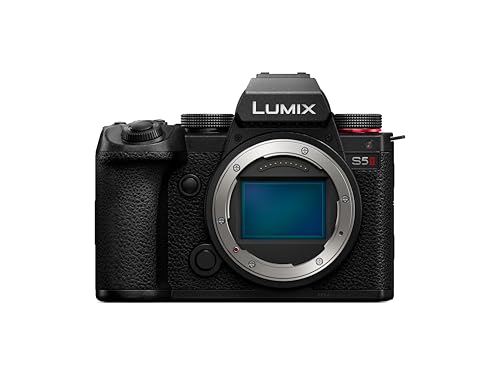
| Panasonic LUMIX S5II | Best camera for independent narrative features | A full-frame production body with directed autofocus, superb stabilisation for motivated movement, and colour built to be graded into one consistent fictional world. |
| Sony Alpha 7 IV | Best autofocus-era narrative camera | Benchmark eye autofocus holds actors through choreography, breathing compensation keeps focus pulls invisible, and the lens shelf serves any script’s geography. |
| Fujifilm X-T5 | Best for directors who shoot the look in-camera | Film simulations give a fiction its visual signature on the day — consistent, authored colour across every setup without a grading suite’s schedule. |
| Canon EOS R6 Mark II | Best for dialogue-led and actor-centred fiction | Canon’s colour has flattered actors for decades, autofocus finds faces in designed light, and long cool recording suits the dialogue scene’s patience. |
| Nikon Z50 II | Best micro-budget route into narrative files | Flagship-derived detection, Nikon’s honest colour and affordable DX lenses — the student feature and the first short, shot on files that grade like grown-ups. |
| Blackmagic Pocket Cinema Camera 6K | Best dedicated cinema camera — discussed, not linked | The fiction world’s reference small cinema camera: raw recording, cinema ergonomics and a film-first design — presented prose-only, as it sits outside our verified pool. |
How Did We Choose Cameras for Narrative Fiction?
We judged every candidate against a shooting day that fiction, and only fiction, creates: the same scene covered from three setups across an afternoon, an actor repeating an emotional peak for the fourth take, a location whose light changes while the story’s hour must not, and a director who needs the camera to disappear into the work rather than audition for attention. Cameras that excel at capturing events were not assumed to excel at constructing them, and several famous names were set aside on exactly that distinction.
Focus philosophy received the closest scrutiny, because fiction divides there. Some productions pull focus manually with a dedicated hand and marks; others, crewed by one or two, must trust autofocus to hold an actor who moves within a choreographed frame. We favoured cameras that serve at least one philosophy completely — precise, repeatable manual focus with proper assistance, or autofocus calm and configurable enough to be directed — and marked down the cameras stranded between, helpful to neither the puller nor the solo operator.
Finally we weighed the image as narrative material: colour that can be graded into a consistent world across days and locations, highlight behaviour that survives windows in designed interiors, and recording stamina for the long takes fiction loves. The six below — five working bodies and one cinema specialist discussed without a link — are the cameras we would put on a fiction call sheet, at the scales of production our readers actually mount.
A note on the prose-only row, because its presence explains our method better than any linked row can. Our pool of verified products is the boundary of what this page will sell, but it is not the boundary of what this page will discuss — and fiction, of all genres, deserves a guide that can name the elephant without inventing a price tag for it. Where a future pool verifies the cinema specialist, the row will gain its link and lose nothing else. Until then, the honest sentence stands: researched by you, respected by us, sold by neither in this document.
Which Six Cameras Belong on a Fiction Call Sheet?
The Panasonic leads as the independent feature’s workhorse, the Sony as the autofocus-era narrative body, and the Fujifilm as the look-first director’s instrument. The Canon brings actor-flattering colour to dialogue-led pieces, the Nikon is the student and micro-budget route into serious narrative files, and the Blackmagic — prose-only, honestly labelled — is the dedicated cinema camera whose shadow falls across the whole category.

Panasonic LUMIX S5II — Best camera for independent narrative features
The S5II is the camera independent fiction has been waiting for its makers to build: a full-frame body whose every system assumes a production. Its autofocus, rebuilt around phase detection, can be directed — transition speeds set for the scene’s emotional tempo, subjects locked to the actor rather than to the set’s distractions — so a two-person crew can cover a moving performance without a focus puller’s salary. Its stabilisation turns motivated camera movement, the slow push-in on a realisation, into a solo operator’s reliable tool rather than a gimbal’s rental line.
The image is built for the colourist’s suite, which is where fiction’s world is finally manufactured. Flat profiles hold the designed interior’s windows and the exteriors’ skies in one negotiable span, colour stays consistent across the days a scene’s coverage demands, and the files accept a look — the story’s visual signature — without falling apart at the edges. Directors shooting a feature across a month of weekends need exactly that consistency, and it is rarer than any resolution figure in this guide.
Its costs are the L-Mount ecosystem’s youth and a stills specification that trails its video soul — neither of which a fiction production will ever invoice. Add the production connections, the long-take stamina and the price that leaves budget for the things fiction actually shows — locations, design, the actor’s extra day — and the S5II is the narrative recommendation we make first, to the filmmaker with a script, a schedule and a finite envelope of money that must become a world.
Lock the production’s configuration before the first shooting day and treat it as sacred: one colour profile, one focus philosophy, one frame-rate convention, stored and restored identically at every location. Fiction’s consistency is manufactured by exactly this refusal to improvise the instrument, and the S5II’s customisation exists to make the refusal easy. Directors who keep it describe a particular calm in the rushes — scene twelve cutting against scene two as if the month between them were a lunch break — and that calm is worth more than any feature announced since.
- Full-frame sensor with phase-detection autofocus
- Configurable focus transitions for scenes
- Flat profiles for consistent grading
- Strong stabilisation for motivated movement
- Production audio and power connections
Strengths
- Directed autofocus serves small crews
- Colour consistency across a feature’s schedule
- Leaves budget for design and actors
Trade-offs
- Lens ecosystem still maturing
- Stills secondary to the film brief
- Menus reward a prep day, not improvisation
Best for: independent feature and short-film directors on real budgets.
Not suited for: event shooters needing a general-purpose hybrid first.

Sony Alpha 7 IV — Best autofocus-era narrative camera
Sony’s contribution to fiction is the removal of focus from the list of things a small crew must fear. The A7 IV’s eye autofocus finds the actor’s gaze and keeps it through turns, approaches and the crossing of other performers — the movements that constitute acted scenes — while focus-breathing compensation, with supported lenses, prevents the frame from visibly inhaling when focus travels between two faces in dialogue. For the director-operator shooting their own script with a cast of volunteers, that reliability converts rehearsals into coverage and coverage into a film.
The lens ecosystem then serves the script’s geography without negotiation. The fast prime for the night interior, the zoom for the location day, the specialist glass hired for the weekend the story goes somewhere extraordinary — all of it exists, much of it rentable, and the body’s customisation lets a production store its look and its settings as the show’s permanent configuration. Colour offers both a pleasing house style for fast productions and log depth for the graded feature.
Its caveats are concentration and cost: menus that demand the production’s prep day be taken seriously, and a system priced for filmmakers who will use it across several productions. Rolling shutter asks pans to be directed rather than whipped. None of that displaces it as the narrative body of the autofocus era — the camera that lets a two-person fiction crew attempt shots that used to require a department, and land them on the first emotional take rather than the fourth.
Cast the autofocus as carefully as the actors: rehearse the choreography with the tracking settings the take will use, discover where the detection lets go — the turned back, the crossed performer, the practical lamp’s flare — and block around those edges before the emotional takes begin. Sony’s system rewards that rehearsal with a reliability that feels like a focus puller’s intuition, but the intuition is partly the director’s, installed in advance. The productions that call this camera effortless are the ones that did the effort in rehearsal, where it belongs.
- Full-frame sensor with high resolution
- Benchmark eye autofocus for actors
- Focus-breathing compensation on supported lenses
- Log profiles and house colour options
- The deepest lens shelf in the guide
Strengths
- Actors held through real choreography
- Focus pulls stay invisible to the audience
- Every script’s lenses exist or rent
Trade-offs
- Prep day required for its menus
- System cost assumes several productions
- Pans should be directed, not whipped
Best for: director-operators and small crews shooting acted scenes.
Not suited for: manual-focus purists who want a cinema body’s simplicity.

Fujifilm X-T5 — Best for directors who shoot the look in-camera
Some directors grade; others decide. The X-T5 serves the second temperament with a seriousness no rival matches: Fujifilm’s film simulations are not filters but a century of emulsion knowledge, and a fiction that commits to one — the warm stock for the family drama, the harder palette for the coastal noir — acquires its visual signature on the set, in the rushes, in the actors’ own understanding of the world they are inhabiting. Consistency, fiction’s hardest technical problem, arrives as a by-product of commitment.
The body reinforces the philosophy tactilely. Physical dials put the exposure decisions in the director’s hands where they can be taught to a student crew in an afternoon, the high-resolution sensor’s stills serve the production’s poster and continuity records, and video offers both the simulations’ finished colour and flatter profiles for directors who grade selectively — the dream sequence treated, the realism left honest, within one camera’s menu.
Its honest limits are autofocus that, while capable, does not match Sony’s clairvoyance in chaotic choreography, and an APS-C sensor that asks the lighting department — often one person with one lamp — to work a little harder in the darkest designed interiors. For the director whose fiction is an authored look executed by a small, loyal crew, those are acceptable taxes on the most characterful narrative instrument in this guide.
Commit the whole production to the simulation the way a period production commits to its palette — costume, locations and design briefed against it, the actors shown the rushes so they can see the world they are performing inside. That shared visual contract is the X-T5’s unique production gift: the film’s look stops being a post-production hope and becomes a set’s common language. Directors who exploit it finish with films whose identity is unmistakable, and identity, in the festival ecosystem fiction lives in, is a form of currency.
- High-resolution APS-C sensor
- Film simulations as in-camera looks
- Physical dials for tactile control
- Flat profiles available for selective grading
- Strong stills for posters and continuity
Strengths
- The film’s look decided consistently on set
- Directors and crews learn it by touch
- Character no preset pack imitates
Trade-offs
- Autofocus behind Sony’s best
- Dark interiors ask more of lighting
- Dial layout is a temperament test
Best for: auteur shorts, film-school productions and look-led features.
Not suited for: choreography-heavy action fiction on tiny crews.

Canon EOS R6 Mark II — Best for dialogue-led and actor-centred fiction
Dialogue is fiction’s centre of gravity, and the R6 Mark II is the dialogue camera of this guide. Canon’s colour science treats faces the way actors hope to be treated — kindly in mixed practical light, consistent across the coverage, forgiving of the fourth take’s fatigue — and its autofocus finds the speaking face in a designed interior’s gloom with a discretion that never upstages the performance. Long scenes record coolly and completely, because Canon understands that a two-hander’s best take is usually the one the equipment must simply survive.
The body’s other virtues serve the fiction set quietly: stabilisation for the handheld intimacy of a kitchen-table scene, stills strong enough for the production’s unit photography, and controls that a small crew can run without a manual’s attendance. Directors casting their friends and filming in real homes — fiction’s actual majority — will find the Canon the least temperamental collaborator on this list, the camera that makes the living room look like the film in the director’s head.
Its limits are the video specification’s ceiling beside dedicated cinema bodies and the price of Canon’s finest glass, which a micro-budget feels honestly. Neither matters much against its central gift. Fiction lives or dies on whether the audience believes the people, and belief begins with faces rendered as if the camera loved them. The R6 Mark II loves them professionally, take after take, which is why dialogue-led productions keep choosing it.
Exploit its kindness in the schedule itself: place the dialogue-heavy days where this camera’s stamina and colour forgive the most — the long single-location chamber piece, the wedding-of-the-story sequence with its mixed practicals — and let its stills serve as the production’s continuity record between setups. Small productions run on such double duties, and the Canon performs them without ever making the schedule feel like a compromise. It is the cast-and-crew camera: nobody’s favourite specification, everybody’s favourite day.
- Full-frame sensor with actor-kind colour
- Face autofocus for designed interiors
- Long, cool recording for dialogue scenes
- Stabilisation for handheld intimacy
- Professional stills for unit photography
Strengths
- Faces believed by audiences
- Long takes recorded without drama
- Forgiving collaborator in real locations
Trade-offs
- Video ceiling below cinema bodies
- Finest RF lenses cost seriously
- Fewer exotic production features
Best for: dialogue-led shorts, chamber pieces and actor-centred features.
Not suited for: effects-heavy productions needing cinema-body toolsets.

Nikon Z50 II — Best micro-budget route into narrative files
Every generation of filmmakers has its first-real-camera, and the Z50 II is this one’s strongest candidate. What earns the title is not its price but its files: Nikon’s colour honesty and shadow generosity give a student feature the raw material a colourist — often the director at midnight — can shape into a consistent world, while subject detection inherited from the flagship line holds actors through the modest choreography a micro-budget can stage. The footage does not announce its budget, which is the entire technical ambition of micro-budget fiction.
The economics around it are a young production’s friend. DX lenses cover the fiction kit — a fast prime for interiors, a standard zoom for locations — at prices that leave money for the things audiences actually see: the location fee, the costumes, the food that keeps a volunteer cast returning for the second weekend. The bright finder and honest controls teach cinematography while the production shoots, which, for a first film, is not a side benefit but half the point of making it.
Its ceilings are real and arrive with success: low-light headroom below the full-frame picks, no in-body stabilisation, and a lens range the growing filmmaker will eventually climb out of — into the same Nikon system, which softens the graduation. As the camera of the first and second short, the film-school feature and the web series that finds its audience, the Z50 II offers the rarest bargain in this guide: narrative credibility at a student’s price.
Build the micro-budget kit around it with the discipline its price invites: the fast prime first, the microphone second, one light third, and the second lens only when a finished scene demands it. Student productions that keep that order discover the Z50 II was never the limiting factor in a single one of their scenes — the limiting factor was always the thing the discipline funded instead. That discovery, made on a first film, is worth more than the camera: it is the producer’s education, delivered at a student’s price.
- APS-C sensor with Nikon’s honest colour
- Flagship-derived subject detection
- Affordable DX fiction lens kit
- Bright finder for learning cinematography
- Files that grade beyond their price
Strengths
- Footage conceals its budget
- Lens prices leave money for production
- Teaches while it shoots
Trade-offs
- Low-light ceiling below full frame
- No in-body stabilisation
- A system to grow out of, eventually
Best for: students, first features and micro-budget web series.
Not suited for: night-heavy productions with lighting budgets of zero.
Blackmagic Pocket Cinema Camera 6K — Best dedicated cinema camera — discussed, not linked
A guide to fictional filmmaking that omitted Blackmagic’s Pocket Cinema line would be protecting its readers from the category’s centre of gravity, so it is included here in prose — without a purchase link, because it sits outside the pool of products we could verify for this page, and our rule is that unverified products are discussed, never sold. What can be said on the record is why fiction filmmakers revere it: a design that begins from cinema rather than from photography, raw recording as a first principle, and an image whose highlight behaviour and colour depth have carried micro-budget features into festivals and distribution.
The philosophy it embodies is the manual one: focus pulled by hand, exposure set by instruments, the camera as a precision tool in a department rather than as an intelligent collaborator. Crews formed in that philosophy produce a particular kind of fiction — deliberate, composed, lit — and the Pocket line’s ergonomics, monitoring and file formats serve it at a price that rearranged the industry. Directors who know they want that discipline should research it thoroughly, handle it, and budget for the rigging and storage its raw appetite honestly requires.
Why is it not simply the recommendation, then? Because this guide’s other five serve the fiction filmmaker who also needs autofocus to trust, stabilisation to lean on, stills to shoot and a verified path to purchase — and because honesty about our own verification is worth more than a complete-looking list. Treat the Blackmagic as the specialist benchmark: if your production has a focus puller, a lighting plan and a colourist, it may be your camera. If your crew is two friends and a script, the five above will finish more films.
A research note for directors considering it seriously: budget the whole organism, not the body — the rigging that makes it a set camera, the storage its raw files will consume across a feature’s shooting ratio, the monitoring the department needs, and the colourist’s time its philosophy assumes. Priced as an organism, it remains remarkably attainable for what it is; priced as a body alone, it has ambushed many micro-budgets. The fiction filmmakers who love it most are the ones who respected that arithmetic before the first day, not after the first week.
- Dedicated cinema-first design (prose-only discussion)
- Raw recording as a first principle
- Cinema ergonomics and monitoring
- Manual focus philosophy throughout
- No purchase link: outside our verified pool
Strengths
- The micro-budget cinema reference standard
- Files built for serious colour work
- A department’s tool at a disruptive price
Trade-offs
- Demands rigging, storage and crew discipline
- No autofocus safety net for tiny crews
- Unverified here, so research before buying
Best for: crewed productions with a focus puller and a colourist.
Not suited for: solo directors who need autofocus and stabilisation.
How Does Fiction Change What a Camera Must Do?
Fiction repeats the world until it is true, and repetition is the demand no other genre makes. The event camera captures; the fiction camera must capture the same thing again — the same framing at the other end of the day, the same colour in next week’s location, the same focus behaviour on the take where the actor finally cries. Every system in this guide was therefore judged on obedience: settings that stay set, colour that stays consistent, batteries and recording that survive the long take and the longer day. A camera with opinions of its own is a collaborator in documentary and a saboteur in fiction.
Fiction also directs attention, which makes focus a storytelling instrument rather than a technical one. The rack focus that moves the audience’s allegiance from one face to another, the shallow frame that isolates the liar in a crowded room, the deep composition where the background betrays the foreground — these are sentences in the film’s grammar, and the camera and lens together are how they are written. Choose the pair whose focus behaviour, manual or automatic, lets your production write those sentences fluently, because a fiction that cannot direct attention is merely people, photographed, talking.
Finally, fiction is finished in the grade to a degree no other genre attempts: the world must look like one place, lit by one emotional weather, across weeks of shooting. Files that accept a look gracefully — the flat profiles, the consistent colour, the highlight manners weighed in every verdict above — are therefore not post-production luxuries but narrative necessities. The camera decision and the colourist’s possibilities are the same decision, made once, at the beginning, by the director who understands that the film’s world is built twice: once on the set, and once in the suite.
How Should a Small Crew Shoot a Dialogue Scene?
Coverage is the small crew’s insurance, and dialogue is where it pays out. Shoot the scene whole from the wide position first — the master that guarantees the scene exists — then the singles, then the close details, keeping the camera’s settings, the light and the colour profile identical across every setup so the editor can cut on the performance rather than on the exposure. The cameras in this guide earn their fiction credentials largely here: consistent files and obedient controls are what make a three-setup afternoon cut into one continuous conversation.
Protect the sound with the same rigour as the picture, because dialogue scenes are heard more than they are watched. A microphone near the speakers, a quiet location defended against traffic and refrigerators, room tone recorded before anyone leaves — these are fiction’s invisible special effects, and no grade can manufacture them afterwards. Rehearse the actors to the camera’s position rather than moving the camera to the rehearsal’s accidents, and let the focus strategy — marks for the puller, or the autofocus’s directed calm — be decided in rehearsal, not discovered in the take.
Above all, shoot for the performance’s arc rather than for coverage’s completeness. Actors build across takes; the scene’s best version often arrives whole, in one setup, at an unexpected moment — and the wise small crew recognises it and protects the schedule around it rather than mechanically completing the shot list. Fiction’s cameras were chosen in this guide to stay out of that recognition’s way: quiet, consistent, and ready for the take that matters, whenever in the afternoon it chooses to happen.
How Do You Build a Fictional World With Light and Design?
The camera photographs what the production gives it, and in fiction the giving is called design. A location dressed with intention — the practical lamp that motivates the key light, the colour palette agreed between wardrobe, walls and the colourist’s eventual look — does more for a film’s believability than any sensor in this guide. Directors on micro-budgets should therefore spend on the visible before the technical: the right room, the considered costume, the hour of the day when the light agrees with the story. The cameras above were chosen to honour such spending with files that keep the design’s colours true.
Light for the story’s emotional weather, not for the camera’s convenience. Fiction’s lighting is argument: the hard noon of the confrontation, the practical-lit intimacy of the confession, the available gloom the thriller breathes. Modern sensors, as the low-light behaviour throughout this guide shows, have liberated small productions to light for meaning at modest intensities — one good source, shaped and motivated, now outperforms the blasted brightness beginners once needed. Spend the savings on control: flags, diffusion, and the discipline to keep the light consistent across the scene’s coverage.
Test the world before the cast arrives. A stand-in, the actual location, the chosen camera and profile, reviewed on the monitor the editor will use — one such test afternoon prevents the production’s most expensive discovery, which is that the look in the director’s head and the look in the camera are cousins rather than twins. Fiction forgives many economies; it does not forgive discovering its own visual identity on the first day of principal photography.
What Should a First Fiction Budget Actually Buy?
In order: the story’s necessities, then sound, then light, then the camera — and this guide’s existence does not change that order, it merely serves the fourth item honestly. A micro-budget divided by that discipline produces films; divided by camera-first enthusiasm it produces equipment tests with actors. The bodies above were deliberately chosen at prices that leave the first three items funded, and the Nikon’s row exists to prove that narrative credibility does not begin at full frame.
Feed the production before you feed the kit list. Volunteer casts return for the second weekend because the food was good, the days ended when promised, and the director knew the plan — and a returning cast is worth more than any lens in this guide. Budget the contingency honestly, too: fiction’s locations fall through, weather rewrites exteriors, and the production that reserved a tenth of its money for reality’s amendments finishes, while the one that spent to the last coin on glass becomes a cautionary anecdote at film school.
Finally, budget the finish. The grade, the sound mix, the festival fees and the poster are part of the film, and a production that spends everything by the wrap has made an expensive home video. The cameras here help by delivering files that grade efficiently and stills that serve the poster, but the discipline is the producer’s: hold back the money that turns footage into a film. Fiction is the genre where that distinction is the whole art, and it begins, unfashionably, in a spreadsheet.
How Do You Direct Actors in Front of a Small Crew’s Camera?
Protect the performance’s conditions as fiercely as the schedule. Actors give their best takes into an atmosphere of technical invisibility — the camera ready before they are, the focus strategy rehearsed, the sound rolling without ceremony — and every visible equipment negotiation taxes the next take’s truth. The cameras in this guide were chosen partly for how little negotiation they demand, but the director’s own conduct completes the invisibility: notes given quietly, resets kept short, and the machine’s needs never once blamed aloud for a scene’s difficulty.
Give the camera a performance to find rather than asking the performance to find the camera. Block the scene for the actors’ logic first, then place the frame where that logic becomes cinema, and let marks serve the blocking rather than replace it. Autofocus-era bodies forgive this ordering generously, manual productions rehearse it into marks the actors can feel rather than see — and both philosophies converge on the same set experience: the actors forget the apparatus, which is when the apparatus starts earning its place in the credits.
Finally, watch the takes like a future audience, not like a technician. The director who reviews for truth — the moment the scene became real — will call the cut that finishes the film; the director who reviews for sharpness will call the take that merely demonstrates the camera. Fiction’s equipment exists to be forgotten at exactly the moment it matters most, and every choice in this guide, from focus philosophy to colour consistency, is finally in service of that forgetting.
How Does a Fiction Production Survive Its Schedule?
By treating the camera department as a promise-keeping machine. The call sheet’s shots are promises made to the cast’s energy, the location’s patience and the light’s schedule, and the equipment choices in this guide — stamina, consistency, obedient controls — are what let a small production keep them in order. Experienced fiction crews plan the day backwards from the scene that cannot move, shoot the coverage that insurance requires before the coverage that art desires, and protect one hour, somewhere in the schedule, that belongs to the unexpected masterpiece or the unexpected disaster, both of which arrive on every production with equal reliability.
The director’s own stamina is part of the equipment list, though no guide can sell it. Fiction days are long because belief is perishable — the world must be re-entered every morning by everyone — and the camera that asks least of its operator returns energy to the performances, where it is spent at the highest rate of interest. This is the human arithmetic beneath this guide’s technical rankings, and the reason small, calm, consistent cameras keep finishing features that grander rigs abandoned at the third location.
Wrap each day with the rushes ritual: ten honest minutes with the footage, the notebook open, tomorrow’s first setup confirmed against what today actually captured. Fiction is too expensive — in money, in favours, in belief — to shoot blind across a whole schedule. The productions that finish are the ones that correct course daily, and the camera’s consistency is what makes the corrections legible: when the instrument never changes its testimony, every deviation in the rushes is a message about the film, and messages received in time are how films survive their schedules.
What Does the Edit Ask of the Camera, Months Later?
Consistency, above all — the editor is the camera’s final examiner, and the examination is merciless. Shots that match in colour, exposure logic and focus behaviour cut invisibly; shots that wander force the edit to announce itself, and every announcement spends the audience’s belief. This is why this guide ranked obedient, repeatable cameras over spectacular ones: the editor inherits the set’s discipline or its chaos, in files, forever. Directors choosing a fiction camera are really choosing the editor’s working conditions, and kind directors choose accordingly.
Sound’s continuity is the second inheritance. Production audio recorded with one discipline — microphone placement consistent, room tone gathered, levels honest — lets the dialogue editor build the invisible architecture the audience will never notice and always feel. The fiction camera’s audio connections and monitoring, unglamorous in every verdict above, are therefore narrative equipment in the fullest sense: they decide whether the finished film’s world sounds continuous, which is to say, whether it sounds like a world at all.
Keep the production’s paper with the footage: the camera reports, the continuity notes, the profile and lens choices per scene. Months later, in the grade or the reshoot, that paper is the difference between matching the world and approximating it. Fiction is a long act of remembering what was decided, and the productions that finish beautifully are the ones whose memory was written down while the set still remembered it for free.
How Do the Six Compare for Fiction?
Compare by production philosophy: the Panasonic for the crewed independent feature, the Sony for the autofocus-era small team, the Fujifilm for the look decided on set, the Canon for dialogue and faces, the Nikon for the micro-budget with serious files, and the Blackmagic — discussed, not sold here — for the manual department. The script chooses; the table merely translates.
| Pick | Badge | At a glance |
|---|---|---|
| Panasonic LUMIX S5II | Best camera for independent narrative features | Independent feature workhorse; gradeable colour, directed focus. |
| Sony Alpha 7 IV | Best autofocus-era narrative camera | Autofocus-era narrative body; actors held, pulls invisible. |
| Fujifilm X-T5 | Best for directors who shoot the look in-camera | Look-first narrative body; the film’s signature decided on set. |
| Canon EOS R6 Mark II | Best for dialogue-led and actor-centred fiction | Actor-flattering narrative body; dialogue scenes and long takes. |
| Nikon Z50 II | Best micro-budget route into narrative files | Micro-budget narrative starter; serious files, student price. |
| Blackmagic Pocket Cinema Camera 6K | Best dedicated cinema camera — discussed, not linked | Dedicated cinema reference; raw-first design, discussed honestly. |
What Mistakes Do First Fiction Productions Make With Cameras?
Buying the camera before the script is finished is the founding error, because fiction equipment serves a specific film — its locations, its light, its cast size, its night scenes — and a camera bought for an imagined epic will be rented around, worked around or quietly replaced by the production that actually happens. Finish the script, break it down honestly, and let its demands read this guide’s table for you. The right camera for your film is a conclusion, not a premise, and productions that treat it as one save the money that finishes films.
The second mistake is directing the camera instead of the actors: takes repeated for focus, for exposure, for the equipment’s readiness, until the performance that justified the day has been spent on technical rehearsals nobody will ever see. Small fiction crews live or die on the ratio of actor-takes to machine-takes, and the cameras in this guide were chosen to push that ratio toward the actors — through autofocus that can be trusted, controls that stay set, and stamina that never calls a break the story did not schedule.
The third mistake is neglecting the finish in the camera decision itself: choosing a body whose files the production cannot afford to store, grade or edit, so the film’s post-production becomes a hostage negotiation with its own footage. Raw appetites, exotic codecs and maximum everything have ended more micro-budget features than bad scripts have. Choose the camera whose whole pipeline — storage, edit, grade, delivery — your production can actually fund and operate, and the film stands a chance of existing, which is the first and rarest virtue in fiction.
A fourth mistake is aesthetic cowardice disguised as coverage: shooting every scene in the same safe medium shot, at the same safe height, because the schedule fears ambition. Fiction audiences forgive a small film almost any economy except visual monotony, and the cameras in this guide — stabilised, autofocus-trustworthy, low-light capable — exist to make the braver angle affordable: the long take, the low frame, the held close-up. Cast one such shot per scene, protect it in the schedule, and the film acquires the signature its festival future will be built on.
Final Recommendation
For most fiction filmmakers reading this guide with a script in hand, the Panasonic LUMIX S5II is the production to build around: directed focus, consistent gradeable colour, and a price that leaves the budget where fiction needs it — in front of the lens. Autofocus-era small teams should take the Sony Alpha 7 IV, look-led directors the Fujifilm X-T5, dialogue-led productions the Canon EOS R6 Mark II, and students the Nikon Z50 II without a whisper of apology.
The Blackmagic stands in this guide as the honest benchmark — discussed, respected, and deliberately unlinked, because our verification rule outranks our completeness. Research it as seriously as it deserves if your crew is a department. Whichever camera earns the call sheet, remember the genre’s arithmetic: the audience will forget every specification by the second scene and remember only whether they believed. Choose the camera that helps your people be believed, and shoot the film.
Write the shot list tonight, from the script you actually have, and let it interrogate this table one last time. The camera that survives the interrogation is yours; the film that survives the production is everyone’s.
And when the first day comes, let the camera be the least interesting thing on the set. The story, the actors and the light have waited long enough for their close-up.
Belief is built in rehearsal, protected by discipline, and recorded — quietly, consistently, take after take — by the camera you chose for exactly that.
Choose it, rehearse it, and call the first take like you mean the whole film that follows from it, scene by honest scene.
Related guides
Frequently Asked Questions
Is this guide different from a general ‘best cameras for movies’ list?
Deliberately. General movie lists serve filming of all kinds — events, vlogs, family records — where capturing well is the whole job. Fiction adds the disciplines this guide is built on: repetition across setups and days, focus as storytelling, colour consistency for a constructed world, and performances that must be protected from the equipment. Several cameras appear in both kinds of list, but they are ranked here by narrative virtues, and the verdicts name the kind of production each serves rather than the filming it can merely do.
Should a fiction filmmaker use autofocus or manual focus?
Both schools finish films, and the honest answer is crew-shaped. A production with a dedicated focus puller, marks and rehearsal time gains the deliberate grammar of manual focus — the directed rack, the held breath of a slow pull. A crew of one or two, asking actors to hit emotional marks rather than focus marks, is usually better served by modern directed autofocus, set gently and trusted. Choose per production, configure before the day, and never improvise the philosophy mid-scene.
Do I need raw recording for a short film?
Not necessarily, and for many micro-budgets raw’s storage and workflow costs outweigh its grading gifts. The log and flat profiles on the mirrorless picks here give a colourist genuine room — consistent, shapable files that have carried many shorts into festivals — without the pipeline weight. Raw earns its place when the production has the storage, the colourist and the lighting control to exploit it, which is precisely the crewed scenario where the prose-only Blackmagic in this guide becomes a serious research project.
What lens matters most for fiction?
The fast prime in the focal length your locations breathe at — most small interiors and two-person scenes live in the moderate-wide to short-telephoto range — because fiction’s signature images are faces in real rooms, lit by motivated light, separated gently from their worlds. One such lens, learned completely, outperforms a bag of zooms used shallowly. Add the second lens when a specific scene in a finished script demands it by name; fiction lenses should be cast like actors, for roles that exist.
How important is the camera for a film’s festival chances?
Much less than first-time filmmakers fear and slightly more than cynics claim. Festivals programme stories, performances and completed films; the camera’s contribution is negative space — it must not prevent the film from existing, must not distract with inconsistency, and must deliver files the finish can honour. Every pick in this guide clears that bar with room to spare. Beyond it, the script, the cast and the finish decide, which is why this guide keeps returning the budget to exactly those places.
Can a fiction film be shot on the Nikon Z50 II and still look professional?
Yes, and films at its level do so regularly, because professionalism on screen is mostly lighting, design, sound and consistency — all achievable around its files, which grade well beyond their price. Its limits appear in the darkest unlit interiors and the most ambitious choreography, where larger sensors and flagship autofocus earn their money. A director who lights deliberately and blocks honestly will produce, on the Z50 II, a film whose budget the audience cannot guess — the defining trick of micro-budget fiction.
Related Guides
General filmmaking and neighbouring crafts continue in our companion guides: best cameras for doing movies best cameras for event videography best cameras for filmmakers on a budget


