ilcastellomenu.com is reader-supported. When you buy through links on our site, we may earn an affiliate commission.
Where to Buy
A gated entrance has a specific job that ordinary home security only half performs. The camera there must identify — a face at the intercom, a number plate in the headlights, the delivery van that claims it was turned away — at the exact chokepoint where a property meets the public road. The best cameras for gated entrance are therefore judged by identification at distance and in darkness, by how they behave when a vehicle arrives at midnight in rain, and by whether the recording survives to settle the argument that gates, eventually, always produce.
Honesty about scope belongs at the front of this guide. The cameras below are drawn from our verified pool of consumer security cameras, and they cover the gated entrance at household and small-community scale excellently: the family gate, the smallholding’s entrance, the shared driveway of a handful of homes, the gatehouse and the pedestrian gate beside it. A large estate, a commercial depot or a long private road with a distant gate needs specialist long-range and plate-recognition equipment beyond this pool, and this guide will say so where that line falls rather than pretend a doorbell-class camera can read a plate at two hundred metres.
The entrance is really three viewpoints wearing one name. There is the gate itself — the barrier, the intercom, the moment of arrival. There is the approach — the drive or lane inside the gate, where a camera sees who came in and where they went. And there is the gatehouse or porch, the human-scale space where callers wait and parcels land. The six picks map onto those viewpoints: outdoor sentries for the gate and approach, pan-and-tilt watchers for the gatehouse, and indoor eyes for the porch and the parcels, so a complete entrance can be covered from one coherent list.
Night is the entrance’s examination. Most arrivals that matter — the late delivery, the returning teenager, the visitor who should not be there — happen in darkness, headlights and weather. Every pick below was judged on its night manners: infrared or colour night vision reputations, motion detection that distinguishes a person from a moth, and alerts that arrive while the event is still at the gate rather than in tomorrow’s notifications digest.
Finally, the gated entrance is a legal and neighbourly space as much as a technical one. Cameras there look outward toward a public road, record callers who have not consented to a portrait sitting, and hold footage that may one day matter to an insurer or a court. The guide treats placement, signage, retention and privacy masking as part of the camera choice itself — because an entrance camera installed thoughtlessly can create the very disputes it was bought to settle.
Read the picks, then, as a small architecture rather than a contest: sentry, sweeper, narrator and the indoor eyes, each holding the viewpoint it was built for. Entrances fail as systems far more often than as cameras — the brilliant gate unit blind to the approach, the sharp drive camera with no witness at the door — and the list’s real recommendation is the architecture itself, at whatever depth your gate’s questions require.
Keep the entrance’s hierarchy in mind while you read: identification first, narrative second, ambience never. A gate does not need to be beautiful on camera; it needs to be believed. Every ranking below was decided by believability — at midnight, in rain, in the footage a stranger will one day be shown — and that standard, held firmly, is what separates an entrance system from a collection of cameras near a gate.
Key Takeaways
- A gate camera’s job is identification — faces and vehicles at the chokepoint, in the dark.
- Cover three viewpoints: the gate itself, the approach inside it, and the gatehouse or porch.
- Night performance is the real specification; most arrivals that matter happen after dark.
- This pool serves household and small-community gates; distant estate gates need specialists.
- Placement, signage and retention are part of the purchase — gates are legal spaces.
- Alerts must arrive during the event, not in a digest after it.
- For shared gates, agree viewing rights and retention in writing before the first incident.
In this guide
Quick Picks
| Pick | Badge | Why it is here |
|---|---|---|
| Blink Outdoor 4 | Best battery sentry for the gate post | Wire-free, weatherproof and long-lived — the camera a gate post can actually host. |
| REOLINK Argus PT Ultra | Best sweeping watcher for the entrance area | Pan-and-tilt coverage with battery and solar manners for wide gate areas. |
| Wyze Cam v4 | Best value eye for the approach and drive | Sharp, inexpensive coverage for the drive inside the gate — buy the pair. |
| TP-Link Tapo C210 | Best gatehouse and porch pan-tilt | Indoor pan-and-tilt for the gatehouse, porch and parcel point. |
| Ring Indoor Cam (2nd Gen) | Best simple porch and entry camera | A plug-in indoor eye with a privacy shutter for the entrance hall and porch. |
| Google Nest Cam Indoor (Wired, 3rd Gen) | Best intelligent indoor watcher for the gatehouse | Familiar-face intelligence and polished alerts for the staffed or smart gatehouse. |
How Did We Choose Cameras for a Gated Entrance?
We started with the identification test at realistic gate distances. A household gate camera works across perhaps five to fifteen metres of drive: close enough that the consumer cameras in this pool can genuinely identify a caller at the intercom or a vehicle at the barrier, far enough that a wide, low-detail view fails. We favoured cameras whose resolution, night vision and lens character suit that band, and we were explicit in the picks about which viewpoint each camera can honestly hold.
Second, power and connectivity at the property’s edge. The gate is usually the point farthest from the house’s router and sockets, so battery and solar-friendly operation, honest wireless range behaviour and local recording options all earned real weight. A gate camera that depends on infrastructure the gate does not have is a plan, not a camera, and several otherwise fine devices were ranked by how completely they solve the edge-of-property problem on their own.
Third, the alert chain. Detection intelligence — telling a person or a vehicle from foliage, weather and insects — decides whether the owner trusts the alerts or mutes them, and a muted gate camera is garden furniture. We favoured the ecosystems whose detection and notification reputations survive contact with real driveways, real rain and real spiders, because the gate is where all three hold their conventions.
What we did not pretend: that any camera here reads number plates at highway distances, replaces a gate intercom, or substitutes for the physical security of the gate itself. A camera witnesses; it does not bar. The picks were ranked as witnesses of the highest available quality for their viewpoints, inside an honestly stated scale.
We also interrogated the failure stories gate owners actually tell: the camera that filmed the theft in unidentifiable softness, the alert that arrived with the morning digest, the battery that died the week of the incident. Every pick here is, in part, an answer to one of those stories — identification at the pause point, alerts as events, power measured in seasons — because an entrance camera’s reputation is written entirely by its worst night, and the ranking priced those nights first.
Which Six Cameras Watch a Gated Entrance Best?
The six divide by viewpoint. Two outdoor sentries hold the gate and the approach; a pan-and-tilt outdoor unit sweeps the wider entrance area; and three indoor or sheltered cameras cover the gatehouse, porch and parcel point. A typical household gate needs two or three of them in combination — the list is built to be combined, not to crown a single winner.

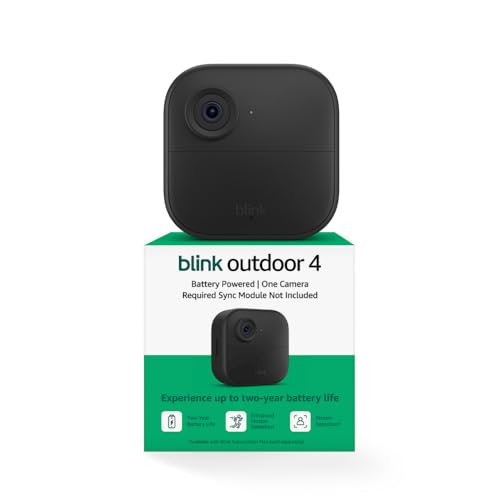
Blink Outdoor 4 — Best battery sentry for the gate post
The gate’s first problem is that it has no socket. The Blink Outdoor 4 solves the entrance’s defining constraint by simply not needing one: its battery endurance is measured in seasons, its body is weatherproofed for a post at the property’s edge, and its mounting asks for two screws and ten minutes. For the household gate — a post, a pillar, a fence corner with a view of the barrier — it is the camera that turns ‘we should really watch the gate’ into a finished job the same afternoon.
- Battery-powered outdoor security camera
- Weather-resistant body for exposed gate posts
- Infrared night vision and motion detection
- Long battery life measured in seasons, not weeks
Its witnessing is honest at gate distances: callers at the intercom, vehicles at the barrier, the shape of events in infrared darkness, recorded and alerted with the reliability that has made the ecosystem a default. It will not read a plate across a field, and this guide has already declined to pretend otherwise; what it does is put a dependable eye exactly where the property meets the road, which is where the overwhelming majority of gate questions — who came, when, in what — are actually answered.
The ownership rhythm suits an edge-of-property device: batteries changed on a seasonal round with the gate’s own maintenance, footage in the cloud or the local module according to the household’s preference, and a camera cheap enough that a second one covering the approach from the other direction is a rounding error rather than a budget meeting. Gates reward redundancy, and this is the pick priced to provide it. Its seasonal battery rhythm should be written on the same card as the gate’s servicing dates — one round, all chores.
Strengths
- Battery freedom solves the gate’s no-power problem outright
- Weatherproof and simple enough for any gate post
- Affordable enough to deploy in pairs for both directions
Trade-offs
- Identification range is household-gate scale, not estate scale
- Battery operation means clips and settings favour economy
- Ecosystem subscription decisions affect cloud features
Best for: household gates, shared driveways and any entrance without power.
Not suited for: long private roads or commercial gates needing plate capture.

REOLINK Argus PT Ultra — Best sweeping watcher for the entrance area
Some entrances are not a point but a small territory: the turning circle inside the gate, the yard before the barns, the car park of a small community. One fixed camera cannot hold a territory; the Argus PT Ultra can, sweeping it on a pan-and-tilt mount, returning to guard positions, and following detected motion across its arc. For the smallholding, the rural property and the multi-home entrance, it is the single camera that behaves like a watchman with a neck.
- Battery-powered pan-and-tilt outdoor camera
- Wide-area coverage from a single mounting point
- Colour night vision capability in its class
- Solar panel compatibility for indefinite gate duty
Its power manners suit the territory it watches. Battery operation with solar support means the camera can live on the gatehouse roof, the barn corner or the entrance’s far post indefinitely, without a cable run across the yard — the installation that kills most entrance projects at the quoting stage. Paired with its night colour capability, it gives the wide entrance something rare: a witness that sees the whole area, in the dark, in colour, without infrastructure.
Used beside a fixed sentry rather than instead of one, it completes the entrance’s geometry: the Blink holds the barrier’s close identification, the Reolink sweeps the territory behind it, and between them the property’s threshold is covered in depth. That pairing — point witness plus area watchman — is how professionals design small entrances, and this list is built so a household can buy the design off the shelf. Programme its guard positions for the territory’s story: the gate, the yard’s far corner, the barn door, in that order.
Strengths
- One camera covers a whole entrance territory
- Solar-supported battery life suits remote mounting points
- Colour night vision for identification across the yard
Trade-offs
- Pan-and-tilt can be looking elsewhere when a second event starts
- Larger and more visible than the fixed sentries
- Premium pricing within the consumer pool
Best for: smallholdings, rural entrances and small community gates with yards.
Not suited for: a single narrow gate needing only close identification.

Wyze Cam v4 — Best value eye for the approach and drive
Inside the gate, the question changes from ‘who is at the barrier?’ to ‘who came in, and where did they go?’ — and the answer is coverage of the approach: the drive, the lane, the turning area. The Wyze Cam v4 is that coverage’s value champion, sharp enough at driveway distances to identify vehicles and visitors, inexpensive enough that the approach can be watched from both ends rather than admired from one, and compact enough to live under eaves and on gatehouse walls without ceremony.
- Compact wired security camera with strong resolution for its class
- Colour night vision reputation in its price tier
- Local recording options alongside cloud
- Pricing that makes multi-camera approaches realistic
Its colour night vision earns its keep precisely on the approach, where a vehicle’s colour and a caller’s clothing are the details that settle household arguments and assist real enquiries. Wired power is its bargain with the devil: the approach, unlike the gate post, usually runs within reach of the house or gatehouse supply, so the cable the Wyze needs is the cable the location actually has — a fair trade that buys continuous, unhurried recording no battery camera should be asked for.
As the second or third camera of an entrance system it is close to unbeatable: the gate sentry identifies at the barrier, the Wyze watches the drive, and the household gains the narrative of an arrival rather than a snapshot of one. Narratives are what settle disputes, satisfy insurers and reassure the person home alone — and this little camera produces them at a price that makes the complete entrance an ordinary purchase. Mount its second unit facing back toward the house; arrivals are identified twice when the story runs both ways.
Strengths
- Sharp, colourful witnessing at driveway distances
- Cheap enough to cover the approach from both ends
- Continuous wired recording for the full arrival narrative
Trade-offs
- Needs power — it serves the approach, not the remote gate post
- Outdoor use wants a sheltered mounting in harsh exposures
- Ecosystem features vary by subscription tier
Best for: drives, lanes and approaches inside household and small gates.
Not suited for: unpowered distant gate posts or exposed commercial yards.

TP-Link Tapo C210 — Best gatehouse and porch pan-tilt
Every gated entrance has a human room attached to it: the gatehouse, the porch, the utility space where callers are received and parcels accumulate. The Tapo C210 is that room’s natural watcher — a pan-and-tilt indoor camera that covers the whole space from one corner, follows motion across it, and keeps the night watch in infrared when the gatehouse is dark and the last delivery of the day arrives at the door that nobody answered.
- Indoor pan-and-tilt security camera
- Full-room coverage from a shelf or ceiling corner
- Night vision for unlit gatehouses and porches
- Local storage options for privacy-conscious households
The parcel point is its modern specialism. Deliveries to gated properties concentrate at the gatehouse or porch, and so does delivery crime; a camera that sees the drop, the doorstep and the departure — and can sweep to follow — converts the entrance’s most disputed square metres into its best witnessed. Households learn its value the first time a ‘delivered’ parcel’s story needs checking, and the footage answers in seconds.
Its local storage options suit the privacy temperament many gate owners have: the entrance’s footage can live in the house rather than a cloud, under the household’s own retention rules. In a guide that treats the gate as a legal space, that option matters, and the Tapo’s combination of coverage, price and local manners makes it the gatehouse standard against which the other indoor picks are variations. Its motion follow is the parcel audit’s best friend — the drop, the wait and the collection in one continuous witness.
Strengths
- Whole-room gatehouse coverage from one device
- Parcel-point witnessing that settles delivery disputes
- Local storage suits privacy-minded households
Trade-offs
- Indoor device — it needs the gatehouse or a sheltered porch
- Pan-tilt follows one event at a time
- Not a substitute for the outdoor gate sentry
Best for: gatehouses, porches, parcel points and entrance halls.
Not suited for: exposed outdoor mounting at the gate itself.
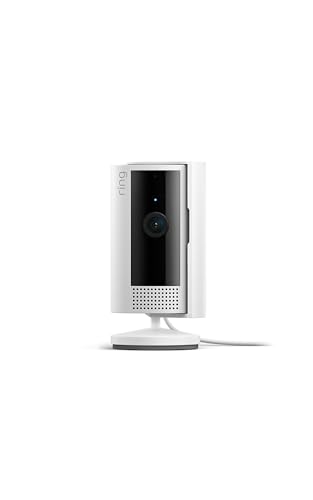
Ring Indoor Cam (2nd Gen) — Best simple porch and entry camera
The entrance hall and the covered porch are where the gated property becomes a home, and the Ring Indoor Cam fits that threshold with a simplicity the other picks should envy. Plugged in, placed, and witnessing within minutes, it covers the inner gate — the door callers reach after the barrier, the hall where the dog announces them — with the polished alert manners of the ecosystem households most often already own.
- Compact plug-in indoor security camera
- Physical privacy shutter for the household’s control
- Easy integration with a wider Ring doorbell and alarm household
- Night vision for unlit entry spaces
Its privacy shutter is the feature this guide wishes were universal at entrances: a physical cover that closes the camera’s eye when the household wants the threshold unwatched — guests arriving, family coming and going, the ordinary traffic of a home that is not a surveillance subject. Gates record strangers by necessity; a household that can also choose not to record itself has the balance right, and the shutter makes that balance a gesture rather than a settings expedition.
Within a Ring household its value compounds: the gate sentry’s alert and the hall camera’s view become one story in one app, and the entrance is covered from road to doorstep in a single glance. As a standalone it remains a fine, simple porch eye; as a citizen of its ecosystem it is the piece that makes a gated entrance feel like one system rather than a collection of gadgets. Close its shutter for the family barbecue on the porch; a camera that can politely look away gets invited to stay.
Strengths
- Privacy shutter gives the household physical control
- Effortless setup and polished alerts
- Ecosystem integration unifies gate-to-door coverage
Trade-offs
- Indoor and sheltered use only
- Full features lean on the ecosystem’s subscription
- A porch eye, not a gate-post identification camera
Best for: entrance halls, covered porches and Ring households.
Not suited for: exposed gate posts or drive coverage.
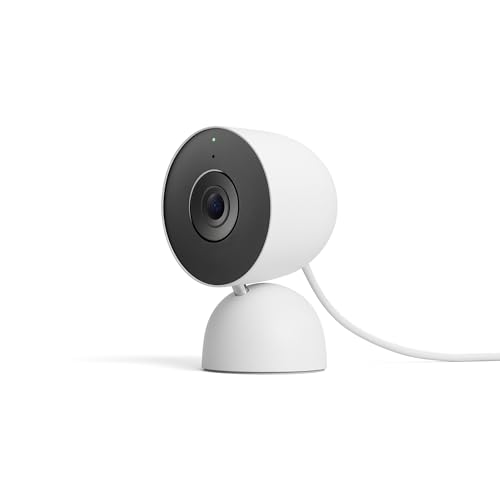
Google Nest Cam Indoor (Wired, 3rd Gen) — Best intelligent indoor watcher for the gatehouse
The staffed gatehouse and the smart home’s entrance share a need: alerts that know the difference between the household and the world. The Nest Cam Indoor brings the pool’s most developed recognition manners to that room — distinguishing people from animals, learning the household’s familiar faces within its ecosystem’s terms, and reserving the urgent alert for the arrival that is actually news. At an entrance, where the postman, the dog and the stranger must not be announced in the same voice, that discrimination is the difference between a security system and a noise machine.
- Wired indoor security camera on the Google Home platform
- Intelligent alerts distinguishing people, animals and vehicles in its view
- Familiar-face features within the ecosystem’s terms
- High-quality video for identification at room distances
Its video quality serves the gatehouse’s identification duty at room distances: the caller at the inner door, the visitor in the porch, recorded with a clarity that stands up to being shown to someone else — the delivery firm, the insurer, the neighbour whose gate shares the drive. Footage at an entrance is evidence by vocation, and this camera’s files carry that vocation with the most polish in the indoor group.
It asks the most of its household in return: a Google-centred setup, subscription for the full intelligence, and indoor placement within reach of power. For the smart gatehouse those are fair terms, and the result is the entrance’s most civilised witness — the camera that greets the known, questions the unknown, and keeps the household’s threshold intelligible rather than merely recorded. Teach it the household’s faces patiently in the first month; the intelligence compounds like a savings account.
Strengths
- Recognition intelligence that separates household from stranger
- Polished, evidence-grade indoor video
- Alerts disciplined enough to stay trusted
Trade-offs
- Full intelligence sits behind the ecosystem’s subscription
- Indoor, wired placement only
- Premium price among the indoor picks
Best for: smart gatehouses, staffed entrances and Google-centred homes.
Not suited for: unpowered or outdoor gate positions.
Where Exactly Should Entrance Cameras Be Placed?
Placement is identification geometry. The gate sentry belongs where it can see the caller’s face and the vehicle’s front at the moment both pause — because arrivals pause at barriers and intercoms, and the pause is the camera’s portrait sitting. Mount it at roughly head height for the face, angled to defeat the headlight glare that blinds a camera placed directly in a vehicle’s line, and close enough to the chokepoint that the identification band this guide described — the household gate’s handful of metres — works in the camera’s favour.
The approach camera wants height and length: mounted high on the gatehouse or house corner, looking down the drive’s longest axis, so an arrival’s whole story — entry, progress, destination — unfolds in one frame or a relay of two. Height also buys the camera its survival, out of casual reach, and its perspective over the roofs of the vehicles it watches. The gatehouse and porch cameras complete the geometry at human scale, covering the doors the outdoor cameras cannot see through.
Test placement at night before drilling anything permanent. The entrance’s truth is nocturnal: headlights, infrared reflections from the gate’s own metalwork, the number plate’s reflective flare, the moth colony orbiting the light. An hour with a ladder, a phone preview and a volunteer driver will teach more placement than any diagram — and moving a camera before the holes are drilled is the cheapest education in the whole entrance project.
How Do You Power and Connect a Camera at the Edge of a Property?
The gate is infrastructure-poor by definition: it is where the property ends. The honest options are the ones this list is built from — battery cameras that treat power as a seasonal chore, solar assistance that retires even that chore, and wired cameras reserved for the positions the buildings can feed. Running new power or data cable to a gate is sometimes right for a large installation, but for the household scale this guide serves, the battery picks exist precisely to make that trench unnecessary.
Wireless range is the second edge problem, and it is solved by honesty and geometry rather than hope. Test the signal at the gate post before choosing the camera that will live there; consider that the gatehouse, a nearer outbuilding or a weatherproof external access point may be the network’s proper frontier. A gate camera with a marginal connection produces the cruellest failure mode in security: it works in every test and drops the one arrival that mattered. Margin is not luxury at the property’s edge; it is the entire product.
Local recording is the edge’s insurance. Cameras or hubs that keep footage on the premises continue witnessing through internet outages, and at a gate — where the event and the argument about the event may be separated by a provider’s bad weekend — that continuity has settled more disputes than any resolution figure. Build the entrance so its memory lives at home, and let the cloud be the copy rather than the original.
What Are the Legal and Neighbourly Rules of Watching a Gate?
An entrance camera looks at a boundary the public also uses, so its footage will include neighbours, callers and passers-by who never agreed to be filmed. The household’s duties follow from that: aim the camera at the entrance’s business rather than the neighbour’s garden, use privacy masking where the systems offer it, sign the recording where local rules expect it, and keep footage for a defined, modest period unless an incident gives it a reason to live longer. Exact rules vary by jurisdiction, and this guide is not legal advice — but the posture it recommends, restraint with documentation, is defensible in all of them.
Within a shared entrance — the multi-home gate this guide’s Reolink and Blink picks serve so well — the duties multiply into governance: agree the cameras with the households who share the gate, agree who may view footage and for what, and write it down before the first dispute rather than during it. Shared gates produce shared footage, and shared footage without shared rules is a neighbourhood argument waiting for its occasion.
And hold the line the introduction drew: the camera witnesses, it does not accuse. Footage shared beyond the household — to a group chat, a platform, a public post — carries responsibilities that a private review does not, and the entrance’s archive should be treated with the discretion due to a record of other people’s comings and goings. The best-kept gates are the ones whose cameras are famous locally for their owners’ restraint as much as their clarity.
How Should Alerts and Retention Be Tuned at an Entrance?
An entrance generates the full bestiary of false alerts: headlights sweeping, foliage in the wind, rain in the infrared, the spider that builds across every lens in the district each autumn. Tuning is therefore the owner’s real installation work — detection zones drawn to the gate’s geometry, sensitivity set for vehicles and people rather than weather, schedules that match the household’s rhythm. The ecosystems ranked here differ in how much of that tuning they make easy, and the difference decides whether the gate’s alerts are still switched on in year two.
The alert that matters must arrive as an event, not a summary: the person at the gate now, the vehicle entering now, while response — a voice through the intercom, a light, a call — is still possible. Set the entrance’s key cameras to immediate notification and let the quieter viewpoints digest; a hierarchy of urgency keeps the household responsive without making it jumpy, and responsive households are the actual security system of which cameras are merely the senses.
Retention should be boring and written: a rolling window long enough to cover a holiday’s absence and a dispute’s discovery, incident clips saved deliberately and labelled, everything else overwritten without ceremony. The entrance archive that is all kept forever becomes unsearchable and faintly troubling; the one pruned on a rule becomes evidence. Gates, like the properties behind them, are best run on boring rules consistently kept.
When Does a Gated Entrance Need More Than This Pool?
At three thresholds, honestly named. Distance: when the gate stands beyond a consumer camera’s identification band from any mountable point — the long estate drive, the commercial yard — the answer is specialist optics and plate-recognition systems, installed as a project. Integration: when the camera must open the gate, verify credentials or join a staffed security operation, the entrance has become an access-control system, and its cameras should be specified by that industry. And consequence: where the property’s risk profile involves determined adversaries rather than opportunistic ones, consumer witnessing is a layer, not a solution.
Naming those thresholds is not this list’s apology; it is its boundary of competence, and staying inside it is what makes the recommendations trustworthy within it. The household gate, the shared drive, the smallholding and the gatehouse — the entrances most readers actually own — are covered here completely, with cameras whose witnessing has settled real arguments and welcomed real guests home in the dark.
For the reader whose gate does cross a threshold, let this guide serve as the specification’s first draft: the viewpoints, the night test, the alert discipline and the retention rules all scale upward unchanged. The specialist installer who hears a client speak in those terms knows the project will be run properly — and the cameras, at whatever tier, will end up witnessing a gate that was thought about, which is the only kind that works.
How Do Deliveries, Guests and the Household Itself Use the Watched Gate?
A gate camera’s daily life is not intruders; it is logistics and welcome. The delivery driver’s wave, the guest searching for the intercom, the child home early, the neighbour returning the borrowed ladder — the entrance’s footage is mostly a record of a household’s ordinary hospitality, and the system should be tuned to serve that life gracefully: alerts that announce a guest like news rather than an alarm, a view the household can check from the kitchen, a gatehouse eye that confirms the parcel’s safe arrival. Security that only imagines enemies becomes a burden; security that mostly assists friends gets kept, maintained and — on the one night it matters — believed.
Design the arrival experience with the camera in it. Signage that tells callers they are seen and how to summon the house; an intercom position inside the sentry’s best identification range; lighting that flatters the caller’s face for the lens rather than blinding it. These small civilities convert the entrance from a checkpoint into a threshold — the guest feels received, the delivery succeeds first time, and the camera’s footage improves as a by-product of the welcome being genuine.
And let the household’s own privacy be designed, not defaulted. The Ring’s shutter, the indoor cameras’ schedules, the retention rule’s quiet pruning — these are how a watched entrance remains a home rather than becoming its own surveillance subject. The families who keep entrance systems for decades are the ones who built the off-switches in at the start, and used them without guilt.
What Maintenance Does an Entrance System Need Across the Seasons?
An entrance camera lives outdoors in the full sense: pollen in spring, insects in summer, leaf-fall and storms in autumn, frost and low sun in winter. Its maintenance calendar is the gate’s own — batteries on the seasonal round, lenses wiped when the gate is oiled, detection zones redrawn when the foliage changes the view, firmware and connections checked before the holiday absence rather than discovered after it. None of this is onerous; all of it is the difference between a system and a souvenir of the weekend it was installed.
The spider deserves its own sentence, because it is the entrance camera’s nemesis worldwide: a web across the lens, lit by the infrared, becomes a nightly festival of false motion and a white veil over the evidence. The cures are humble — a wipe on the round, placement that avoids the favourite corners, a small brush kept with the gate keys — and they belong in the household’s routine precisely because the failure is so predictable. Security is a maintenance culture wearing technology’s clothes.
Review the system’s story quarterly, the way you would walk a fence line: watch a night arrival end to end, confirm each viewpoint still holds its geometry after storms and growth, and prune the archive by the written rule. A gate is a machine for controlling a boundary, and its cameras are part of the machine. Machines that are walked, wiped and witnessed keep their promises; the rest become scenery with a recording light.
How Does the Entrance Camera Change the Household’s Peace of Mind?
The honest benefit is not the footage; it is the answered question. Is the gate closed in the storm? Did the teenager’s lift arrive? Whose van is that on the drive while the house is empty? A well-built entrance system converts those small anxieties — the ones that send people to windows and driveways in dressing gowns — into a glance at a phone, and the cumulative calm of a thousand answered questions is the product the cameras were really bought for. Judge the system by that calm’s reliability, and the tuning and maintenance above stop looking like chores.
Calm has a failure mode worth naming: the household that checks compulsively, refreshing the gate view the way others refresh news. The discipline of alerts — immediate for the events that matter, silent for the rest — exists partly to protect the owners from their own system. Set the hierarchy once, trust it, and let the entrance watch itself. The gate’s promise was that you would not have to stand in it; a system that keeps you standing in it by phone has misunderstood the assignment.
When the system is right, its presence fades to the condition it was bought to create: a threshold the household no longer thinks about, guarded by witnesses nobody notices, answering questions nobody remembers asking. That invisibility is the entrance camera’s final specification, and every pick and practice in this guide — the layered viewpoints, the night test, the tuned alerts, the boring retention rule — exists to purchase exactly it.
How Should a Shared or Community Gate Govern Its Cameras?
The shared gate is a small state, and its cameras are its public record. Govern them like one: a named household responsible for maintenance, a written agreement on viewing rights and retention, a process for a resident to request footage of an incident at their own arrival, and a rule — agreed before it is needed — for when footage leaves the community at all. These arrangements sound formal for a driveway; they are precisely what keeps a shared entrance’s cameras a communal asset instead of a communal suspicion.
Choose the hardware for the governance, not just the view. Battery sentries whose footage one household hoards will corrode the arrangement; a system the participating households can each check for their own arrivals distributes trust along with access. The picks in this guide span both models, and the shared gate should choose consciously — the camera is easy to replace, while the neighbours’ confidence, once spent on a footage dispute, is the entrance’s most expensive repair.
How Do the Six Compare Across an Entrance?
By viewpoint: the Blink Outdoor 4 holds the gate post, the REOLINK Argus PT Ultra sweeps the entrance territory, the Wyze Cam v4 narrates the approach, and the Tapo C210, Ring Indoor Cam and Nest Cam Indoor divide the gatehouse and porch by temperament — local and sweeping, simple and private, intelligent and polished. The complete household entrance is usually the Blink plus one approach camera plus one indoor eye.
| Pick | Badge | Where it earns its place |
|---|---|---|
| Blink Outdoor 4 | Best battery sentry for the gate post | The gate-post sentry: battery freedom where the gate has no power. |
| REOLINK Argus PT Ultra | Best sweeping watcher for the entrance area | The area sweeper: pan-and-tilt, battery and solar for wide entrances. |
| Wyze Cam v4 | Best value eye for the approach and drive | The approach watcher: sharp value coverage for drives and lanes. |
| TP-Link Tapo C210 | Best gatehouse and porch pan-tilt | The gatehouse eye: pan-tilt coverage for porches and parcel points. |
| Ring Indoor Cam (2nd Gen) | Best simple porch and entry camera | The simple entry eye: privacy shutter and effortless ecosystem manners. |
| Google Nest Cam Indoor (Wired, 3rd Gen) | Best intelligent indoor watcher for the gatehouse | The intelligent gatehouse eye: recognition and alerts that know the household. |
What Mistakes Do Gate Camera Owners Make?
Mounting for the view instead of the identification. The sweeping vista of the drive is beautiful and useless; the caller’s face at the intercom is the entrance’s whole evidentiary purpose. Place for the pause point, test with a real face and a real car at night, and let the pretty view be a bonus the approach camera happens to catch.
Trusting the test in daylight. Gate cameras are bought on a Saturday afternoon and betrayed on a wet Tuesday night by headlight glare, infrared flare off the gate’s own bars, and a connection that fades with the weather. The night test — a driver, a volunteer caller, the actual app on the actual phone — is the installation’s real completion certificate.
Aiming into the neighbour’s life. A gate camera angled a few degrees too generously becomes a garden surveillance system with a gate in its spare time, and the goodwill it burns exceeds any security it buys. Mask, angle and agree — the entrance’s legitimacy is a feature, and it is maintained by restraint.
Letting alerts cry wolf into muting. Untuned detection at a busy entrance trains the household to ignore the system within a month, after which the gate has an expensive ornament. Tune zones and sensitivity in the first week, revisit them each season, and protect the alert’s credibility like the security asset it is.
A fifth mistake is forgetting the gate’s human users. The cleaner, the grandparent, the new neighbour sharing the drive — people who meet the entrance without knowing its cameras, its intercom’s temper or its alerts’ audience. Brief them, label the system kindly, and the entrance stays a welcome rather than becoming a test nobody told them they were taking.
Final Recommendation
Build the household entrance in layers: the Blink Outdoor 4 on the gate post for identification where there is no power, the REOLINK Argus PT Ultra where the entrance is a territory to sweep, the Wyze Cam v4 along the approach for the arrival’s full story, and one indoor eye — Tapo C210 for the working gatehouse, Ring for the simple porch, Nest for the intelligent gatehouse — where callers and parcels complete the journey. Installed in that order, the layers answer the entrance’s questions in the order the questions are actually asked.
Then do the unglamorous half that makes cameras into security: the night test, the tuned alerts, the written retention rule, the neighbourly angle. A gated entrance is a promise a property makes to itself about knowing who stands at its threshold. These six cameras, placed with that care, are how the promise gets kept — in daylight, in rain, and at the midnight knock that matters.
One last thought for the household pricing the trench for a cable run to the gate: walk the list once more before digging. The modern battery sentry, honestly placed and seasonally kept, answers the household gate’s questions so completely that the trench has become, for most properties, a monument to how the problem used to be solved. Spend the savings on the second viewpoint instead — depth of witnessing beats depth of cable, every night of the year.
Frequently Asked Questions
Can these cameras read number plates at my gate?
At household-gate distances — a vehicle paused at the barrier, a few metres from a well-placed camera — plates are often legible in good conditions, but none of these consumer cameras is a plate-recognition system, and this guide will not promise plate capture as their purpose. If guaranteed plate records are your requirement, that is the specialist threshold described in the guide, and it should be specified as such. In rain, at night, at the pause point — those three conditions are the honest version of the question, and the night test answers it.
My gate has no power and weak Wi-Fi. What actually works?
The battery picks exist for exactly your gate: the Blink Outdoor 4, or the Argus PT Ultra with solar support for a wider area. Solve the connection honestly — test signal at the post, consider an outdoor access point at the gatehouse — and prefer local recording so the witnessing survives connection weather. If the gate is far beyond the network’s reach, that is a network project first and a camera project second. The solar-supported sweeper is the far gate’s best friend in this pool; beyond its reach, extend the network before the camera.
How many cameras does a gated entrance need?
Most household entrances are honestly covered by two or three: one at the gate for identification, one on the approach for the arrival’s story, and optionally one at the gatehouse or porch for callers and parcels. More viewpoints add narrative, not magic — buy the layers in that order and stop when the entrance’s questions are answered. Add the viewpoints in order and live with each for a month; the entrance will tell you which question remains unanswered.
Is it legal to film the road outside my gate?
Rules vary by jurisdiction, and this guide is not legal advice. The widely defensible posture is restraint: aim at your entrance’s business, mask the neighbour’s property, sign the recording where expected, keep footage briefly unless an incident requires it, and check your local rules for specifics. A camera placed with visible restraint rarely becomes the problem it was bought to solve. Shared entrances deserve the agreement in writing before installation — goodwill is easier to keep than to rebuild.
Battery or wired for a gate camera?
At the gate post itself, battery — because the gate usually has no power, and the picks here run for seasons per charge. On the approach and at the gatehouse, where buildings provide power, wired cameras earn their keep with continuous recording. The layered answer — battery at the edge, wired near the house — is the standard this guide’s list was built to supply. Seasons per charge is the gate-post standard to demand; weekly charging is a chore that ends in an unwatched gate.
What should I do when the camera records an incident?
Save the clip deliberately and label it with the date and a plain description, keep the original rather than a screen recording, and share it only with the parties who need it — the insurer, the delivery firm, the authorities where appropriate. The retention discipline in this guide exists so that the one clip that matters is findable, intact and credible when it is needed. Labelled, original and promptly saved — the clip’s credibility is built in the first ten minutes after the event.
Related Guides
Keep exploring with our battery operated security cameras guide and the cameras for a shed roundup and our cameras for outdoor homes guide — each guide applies the same verified-pool, no-invented-specs approach to a neighbouring question.


