ilcastellomenu.com is reader-supported. When you buy through links on our site, we may earn an affiliate commission.
Where to Buy
Historians photograph evidence, not occasions. The best cameras for historians are the ones that serve the archive reading room, the artefact bench, the site visit, and the recorded interview — four workplaces with four different demands that no single specification covers. A camera for this profession must render a faded hand legibly, keep a coin’s relief honest, stand unobtrusively in a place of memory, and record an elderly witness’s voice as if the next century were listening, because it is.
Where to buy your priorities depends on which history you practise. Documentary historians live in archives, where the camera has replaced the notebook as the primary capture tool and a day’s yield is measured in hundreds of pages. Material historians and archaeologists photograph objects and sites, where scale, colour fidelity, and controlled light decide whether the picture is evidence or illustration. Oral historians need motion and sound above all — and the humility to keep the camera from intimidating the testimony out of the witness.
This guide ranks six cameras across those workplaces and labels each with its discipline. Two mirrorless systems anchor the serious document and artefact work. A high-resolution compact serves the travelling researcher. A pocket gimbal handles oral history and site walkthroughs with discretion. Two smaller cameras cover the everyday carrying and the interview close-up. The historian who reads the roles before the rankings will recognise their own working week in the table.
A professional caution belongs early: archives have rules, and they override this guide. Many reading rooms ban flash, some ban tripods, a few still ban cameras entirely in favour of their own imaging services, and all of them care about the cradle, the weights, and the researcher’s hands more than the researcher’s sensor. The cameras below were chosen partly for how gracefully they work within those constraints — silent shutters, fast lenses for available light, and screens that tilt over a document without a production unfolding around it.
Finally, historians think in centuries, so this guide thinks about files. Formats that will open in fifty years, colour that can be trusted as testimony, metadata that records the archive’s reference alongside the image — the workflow sections treat preservation as part of the camera choice, because a historian’s photograph is a source, and sources are judged by whether the future can still read them.
Key Takeaways
- Archive work rewards silent shutters, fast lenses, and screens that tilt over documents.
- Reading-room rules override equipment: no flash, careful handling, and institutional policy first.
- Artefact photography needs honest colour, controlled light, and a scale in frame.
- Oral history is an audio discipline with pictures attached — prioritise microphones and discretion.
- Shoot raw, record the archival reference in metadata, and back up like a pessimist.
- The historian’s camera is a source-making instrument; judge it by the future’s ability to read its files.
In this guide
Quick Picks
| Pick | Badge | Why it is here |
|---|---|---|
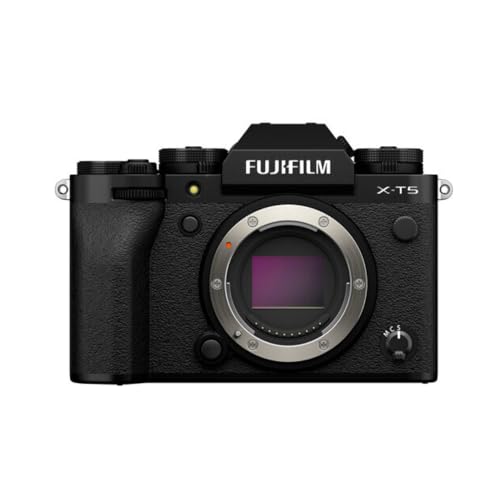
| Fujifilm X-T5 | Best camera for archive and document photography | High resolution for legible pages, dials for deliberate work, and colour that treats old paper honestly. |
| Sony Alpha 7 IV | Best full-frame camera for artefacts and low light | A forgiving full-frame sensor for dim stores, museum light, and colour-critical object work. |
| Canon EOS R50 | Best versatile system for mixed historical fieldwork | Subject-tracking autofocus, a vari-angle screen, and guided modes in a body that covers documents, sites, and people. |
| DJI Osmo Pocket 3 | Best camera for oral history interviews | A small, stabilised, face-tracking camera that disappears in an interview and honours the voice. |
| Sony RX100 VII | Best pocket camera for the travelling researcher | A 1-inch sensor and long zoom in a coat pocket — the conference, site, and archive-trip companion. |
| Nikon Z30 | Best camera for recorded lectures and project video | A video-first mirrorless for lectures, project updates, and long interviews at a desk. |
How Did We Choose Cameras for Historians?
We began in the reading room, because that is where most historians’ cameras earn their living. The test was a bound volume under mixed light with a no-flash rule: could the camera focus closely and quietly, expose accurately without drama, and keep page after page sharp at the corners where the binding curves the text? Screens that tilt, shutters that can fall silent, and lenses fast enough for available light defined the serious candidates.
Artefact work imposed the second test. Colour fidelity — reds that stay brick rather than becoming cherry, metals that keep their tarnish — matters when the photograph will be cited. Macro capability, or a system that accepts a proper macro lens, separated the evidence-grade picks from the illustrative ones. So did tethering and remote options for the bench, where the camera lives on a copy stand and the historian’s hands are busy with the object.
Oral history imposed the third. An interview camera must disappear: small, quiet, able to record for the length of a memory rather than the length of a clip, with audio that honours a soft voice in a kitchen. Stabilisation and face tracking matter because the historian is listening, not operating. The gimbal pick won its place by being the least noticeable serious camera in the pool.
Preservation thinking closed the judging. Raw formats from major manufacturers, sane file naming, and metadata support were treated as features, because they are — to the future. A camera whose files need a proprietary miracle to open is a liability in a profession that measures time in centuries, and the ranking quietly reflects that.

Fujifilm X-T5 — Best camera for archive and document photography
The X-T5 is the reading room’s friend. Its high-resolution sensor renders a dense manuscript page — secretary hand, marginalia, the foxing and the watermark — at a legibility that survives zooming in the study years later, which is the whole point of archive photography. The traditional dials suit the work’s rhythm: settings made by touch before the volume opens, a silent electronic shutter while it is open, and no screen-tapping performance to disturb the room or the researcher’s concentration.
Fujifilm’s colour science deserves its place in this discipline. Old paper is a colour problem — cream, tan, grey with age — and the X-T5’s rendering keeps documents plausible and skin tones in interviews kind, while raw files preserve the full evidence for scholars who prefer to develop their own. The tilting screen composes a page on the desk without the researcher hovering, and the system’s compact lenses include options fast enough for reading-room light and close enough for seals, bindings, and watermarks.
It asks the historian to learn its ways — the dials are a philosophy, not just an interface — and its smaller sensor concedes a little low-light ease to the full-frame pick below. In return it offers the best document legibility per pound and per gram in this guide. For the archive-based historian, it is the first camera to consider and the one most likely to still be serving at the next book.
- Sensor: high-resolution APS-C for legible document capture
- Shutter: silent electronic option for reading rooms
- Controls: analogue dials set by touch before work begins
- Screen: tilts for desk-level document composition
- System: compact lenses including fast and close-focus options
Strengths
- Page legibility that survives scholarly zooming
- Quiet, deliberate operation suits reading rooms
- Colour treats aged paper and ink honestly
Trade-offs
- Dial philosophy takes a week to become instinct
- Low-light ease trails the full-frame option
- Best macro work wants a dedicated lens
Best for: archive-based historians photographing documents, bindings, and marginalia all day.
Not suited for: interview-led oral historians, who should start with the gimbal pick.

Sony Alpha 7 IV — Best full-frame camera for artefacts and low light
Some historical evidence lives in the dark: the unlit store, the church interior, the artefact photographed by the light its keepers allow. The Alpha 7 IV’s full-frame sensor is the tool for those rooms. Its files hold together at the sensitivities dim work demands, its colour can be profiled into honesty for object records, and its dynamic range keeps a bright window and a shadowed reliquary in the same truthful frame. For material historians, this is the evidence camera.
On the bench it behaves like professional equipment should. Tethering options put the image on a proper screen while the object stays untouched; remote control keeps hands off the copy stand; and the lens system includes true macro optics that render a coin’s strike, a textile’s weave, or an inscription’s wear at evidentiary standard. The autofocus, famous for finding eyes, is equally obedient on a seal matrix when asked politely.
It is the largest and most expensive commitment in this guide, and its menus ask for an afternoon’s customisation before a project begins. Historians whose work is pages in good light will not need its powers. Those whose work is objects in bad light will find nothing else here — or in most places — as willing. Evidence gathered in the dark is still evidence, provided the camera is this honest.
- Sensor: full-frame for low-light and colour-critical work
- System: true macro lenses and professional accessories
- Workflow: tethering and remote options for bench photography
- Range: wide dynamic range for mixed-light interiors
- Files: raw capture suited to colour profiling
Strengths
- Dim stores and interiors stay evidentiary
- Macro system renders objects at citation standard
- Colour can be profiled for trustworthy records
Trade-offs
- Largest, costliest commitment in this guide
- Menus reward setup time before a project
- Overkill for bright reading-room page work
Best for: material historians, archaeologists, and anyone photographing objects in poor light.
Not suited for: lightweight archive travel on a small grant.

Canon EOS R50 — Best versatile system for mixed historical fieldwork
Many historians do a little of everything in the same week: pages on Tuesday, a site visit on Thursday, an interview on Friday if the witness is willing. The R50 is the generalist for that week. Its screen articulates over a document or out toward an interviewee, its autofocus recognises the people, animals, and vehicles that populate site photography, and its guided modes make it the camera a research team can share — the assistant and the principal investigator both get usable files from it.
Image quality sits comfortably at scholarly standard. Documents are legible, sites are detailed, and the video is clean enough for recorded interviews and walkthroughs of a building before demolition — a genre of historical evidence more valuable every year. The RF lens range lets the kit grow toward the work: a fast prime for reading rooms now, a macro when the artefact project lands.
It concedes low-light majesty to the Sony and resolution to the Fujifilm, and its battery life suits days rather than weeks. As the one-camera answer for a mixed practice — especially in a department or project where several hands will use it — it is the most sensible purchase in this guide, and sensible purchases are how small grants become archives.
- Type: interchangeable-lens mirrorless with vari-angle screen
- Autofocus: detection for people, animals, and vehicles
- Modes: guided interface for shared team use
- Video: clean recording for interviews and site records
- System: growing lens range for documents to artefacts
Strengths
- Covers documents, sites, and interviews in one body
- Shareable — guided modes help occasional users
- Screen articulates for desk and interview angles
Trade-offs
- Low-light performance trails the full-frame pick
- Battery life is a day’s, not a week’s
- Resolution concedes to the X-T5 for dense pages
Best for: historians and project teams mixing documents, fieldwork, and interviews.
Not suited for: specialists who live in one workplace only.

DJI Osmo Pocket 3 — Best camera for oral history interviews
The oral historian’s first rule is that the witness must forget the camera. The Pocket 3 is built for forgetting: it sits on a table or a small tripod the size of a pepper mill, tracks the speaker’s face gently as they move, and records stabilised, warm footage without an operator hovering behind it. The historian can do the real work — listening, prompting, remembering to ask about the photograph on the mantelpiece — while the testimony accumulates in quality no phone-on-a-shelf matches.
Audio is where this pick must be discussed honestly, because oral history is an audio archive wearing a picture. The Pocket 3’s own microphones are respectable at conversational distance in a quiet room, and the system welcomes wireless microphones that clip to a collar and transform an elderly, soft-spoken witness into a clear record. Budget for that microphone before budgeting for any other accessory in this guide; the future will forgive a plain picture and never forgive a lost voice.
Its sensor holds up in domestic light — kitchens, front rooms, the care-home lounge where interviews happen — and the gimbal smooths the site walkthroughs that often follow the talking. It will not photograph a manuscript page to scholarly standard, and it should not be asked to. As the interview instrument of this guide, it has no rival: discreet, kind, and always ready before the kettle boils.
- Stabilisation: mechanical gimbal for calm interview footage
- Tracking: face following keeps the witness framed
- Size: table-top discretion for testimony settings
- Audio: built-in microphones plus wireless microphone options
- Sensor: strong performance in domestic indoor light
Strengths
- Witnesses forget it within minutes
- Face tracking frees the historian to listen
- Wireless audio options protect the testimony’s clarity
Trade-offs
- Not a document or artefact camera
- Domestic light is its comfort zone, not darkness
- Serious audio wants the microphone accessory
Best for: oral historians recording interviews in homes and community settings.
Not suited for: archive document photography.

Sony RX100 VII — Best pocket camera for the travelling researcher
Research travel has a rhythm the RX100 VII fits precisely: the archive in the morning, the site after lunch, the colleague’s collection across town by evening, and a coat pocket as the only guaranteed luggage. Its larger sensor and long zoom handle the whole itinerary — a legible document spread, the detail of a façade across the square, the speaker at the conference lectern — without a camera bag announcing the researcher’s intentions or straining the shoulder between trains.
Speed is its scholarly virtue. It wakes fast, focuses faster, and bursts when the archivist turns the fragile page or the guide opens the normally locked door for exactly one minute. Those opportunistic frames — the glimpse records — are often the trip’s most cited images later, and they belong to cameras that were ready in a pocket rather than correct in a hotel room.
It is not the bench camera or the reading-room marathoner: the battery is small, the controls are compact, and a week of page-turning belongs to the system picks. As the travelling companion that ensures no day of a research trip goes unrecorded, it earns its place in the historian’s coat — which, for a certain kind of scholarship, is the highest office a camera can hold.
- Sensor: 1-inch class in a pocket body
- Lens: long zoom for façades and lecterns
- Speed: fast startup and burst for glimpse records
- Size: coat-pocket carriage for research travel
- Video: capable clips for site notes
Strengths
- Whole research itinerary in one pocket
- Ready in seconds for one-minute opportunities
- Zoom reaches across squares and halls
Trade-offs
- Small battery limits archive marathons
- Compact controls for compact hands
- Not a bench or copy-stand camera
Best for: travelling researchers covering archives, sites, and conferences in one trip.
Not suited for: week-long document capture projects.

Nikon Z30 — Best camera for recorded lectures and project video
Historians increasingly publish in public: the recorded lecture, the project film, the interview series that accompanies the exhibition. The Z30 is the desk-and-studio instrument for that work. It records long sessions without heat anxiety, its articulating screen serves the presenter-historian, and its microphone input welcomes the audio seriousness that public history deserves. Nikon’s colour flatters speakers, which matters when the speaker is also the author, the curator, and the brand.
Its lens mount gives the public-history kit a future — the kit zoom for the site film, a bright prime for the evening talk — and its stills are entirely respectable for the project photography that surrounds the filming. Departments building a small media corner for several projects will find it the most economical centre of that corner in this guide.
It lacks a viewfinder, which field photographers will feel, and it is nobody’s archive camera. Those are honest boundaries. Within its room — the recorded, presented, published side of modern historical practice — the Z30 turns a historian into a broadcaster with the least friction and the longest recording patience here.
- Type: video-first interchangeable-lens mirrorless
- Recording: long, cool sessions for lectures and interviews
- Screen: fully articulating for presenters
- Audio: microphone input for serious sound
- System: Z-mount lenses for a growing media kit
Strengths
- Lectures and long interviews recorded without drama
- Presenter-friendly screen and colour
- Economical centre of a project media corner
Trade-offs
- No viewfinder for field stills
- Not designed for document capture
- Stills are a supporting function
Best for: historians recording lectures, project films, and interview series.
Not suited for: reading-room or artefact photography.
How Do You Photograph Documents So the Future Can Read Them?
Legibility is a chain, and every link is boring: focus, light, steadiness, resolution. Focus on the text block, not the binding; stop down enough that the page’s curve stays sharp from gutter to fore-edge; and keep the camera parallel to the page so the lines of type do not converge into a funhouse. A screen tilted over the desk and a remote or timer release keep hands off the camera, which keeps the hundredth page as sharp as the first — consistency across a volume is what separates a surrogate from a pile of snapshots.
Light in reading rooms is given, not chosen, and the craft is adaptation. Work at the sensitivities the light demands rather than reaching for a forbidden flash; position the volume — where the rules and the cradle allow — to even out the fall of window light; and include the archive’s reference and a colour target in the first frame of every volume, so the future knows what it is reading and what the colours meant. That first frame is the least glamorous and most scholarly photograph of the day.
Name files like a cataloguer, because you are one. Reference, folio, and date in the filename; the same data in the metadata; a backup made before the train home, not after the laptop’s funeral. Historians, of all people, know that survival is a property of copies in different places. The archive you photograph has survived centuries by that principle; your photographs of it should be so lucky, and luck, in this profession, is a backup policy.
How Do You Record an Interview a Century Can Use?
Begin before the camera: consent explained in plain words, the recording’s home and future agreed, and a release the witness actually understands. Then arrange the room for the voice — soft furnishings over bare walls, the refrigerator’s hum negotiated with, chairs placed so faces catch window light rather than fight it. The Pocket 3’s discretion helps, but the historian’s preparation is the real technology: a witness who feels unhurried remembers in paragraphs.
During the interview, protect the sound like evidence. The microphone close, the levels checked on a test sentence, the camera forgotten. Ask the question and then endure the silence that follows it; witnesses fill honest silences with the memories the archive exists for. Note the time at each new topic on paper — the future’s index — and photograph the room, the hands, and the objects mentioned, afterwards, with permission, because testimony illustrated by its setting reads differently forever.
Afterwards, behave like an archivist, not a fan. Back the files up in two places before the day ends, transcribe while the conversation is warm, and log the names, dates, and spellings the recording assumes. An oral history is a source the moment it is findable and a rumour until then. The cameras in this guide record beautifully; only the historian’s paperwork makes the recording history.
Which Historical Workplaces Suit Which Camera?
The county archive and the national collection are different countries. In the first, the light is kind, the staff know your project, and a compact system like the X-T5 or R50 covers a career. In the second, the reading room may impose its own imaging rules, the material may be too fragile for any handling rhythm you choose, and the camera’s job narrows to the permitted and the possible. Historians learn to ask the institution before packing the kit — the question itself is a professional courtesy that archives remember.
The battlefield, the industrial ruin, and the standing building pose the field version of the same negotiation. Weather, access, and the landowner’s conditions shape the photography more than any sensor does. The OM-system virtues are absent from this list’s field picks only because the pool is what it is; the R50’s versatility and the RX100 VII’s pocket readiness cover most field days, and the Sony’s low-light honesty covers the interiors — mills, chapels, bunkers — where field history so often ends up standing in the dark, listening to a building.
The interview room, finally, is a workplace with one rule that outranks equipment: the witness’s comfort is the archive’s quality. Every choice in the oral-history sections — the small camera, the close microphone, the unhurried setup — serves a person deciding how much of a life to hand over. Historians who internalise that hierarchy find their equipment questions answering themselves, because the discipline’s ethics and its technique are, at this point, the same subject.
How Do You Photograph Fragile and Oversize Material?
Fragile volumes dictate the session’s terms: the cradle decides the angle, the weights decide the page’s flatness, and the camera adapts — tilting screen, remote release, a lens long enough to work from outside the book’s breathing space. Never let the camera’s convenience renegotiate the object’s safety. A slightly angled page photographed honestly is scholarship; a flattened spine is a small destruction with a picture attached, and archivists’ long memories are built from researchers who understood the difference.
Oversize material — maps, plans, posters, the broadsheet newspaper — poses the opposite problem: too much object for one frame at legible resolution. The answers are distance with resolution, which the X-T5 serves, or sectional photography with overlaps for later stitching, which any system here can perform if the lighting and geometry stay disciplined across the set. Include the whole object in one establishing frame regardless; the future needs to know how the sections belonged together.
Bound ephemera, textiles, and three-dimensional bindings resist flat technique entirely and reward the artefact approach: raking light to reveal surface, multiple angles, a scale and a target in the establishing frame. The historian’s camera kit grows a small lighting habit for these objects — a portable, dimmable panel transforms more object photography than any lens in this guide — and the bench sections of the choosing criteria explain why the Sony’s tethering and colour discipline lead that work.
How Should Historians Handle Copyright, Sensitivity, and Access?
A camera in an archive is a copying machine, and copying has rules beyond the reading room’s. Twentieth-century letters, photographs, and ephemera carry copyrights that outlive their authors by generations; culturally sensitive material — sacred, medical, or community-owned — carries obligations no law fully describes. The historian’s camera makes the copies in seconds; the historian’s judgement must decide, sometimes for years, what may be published, quoted, or shown. Build the permission question into the session paperwork, not into the publication panic.
Oral history sharpens the same duty into a relationship. Consent is a conversation with a future in it: the witness agrees to a recording whose listeners are unborn, and the historian’s promises about access, embargo, and withdrawal are part of the source’s creation. Record the consent on the recording. Honour the restrictions in the catalogue. The cameras in this guide will out-perform every ethical standard their owners set, which is precisely why the standards must be set by the owners, in advance, in writing.
None of this is bureaucracy for its own sake. It is the difference between an archive and a hoard. Historians, who spend their lives grateful for the access decisions of the dead, owe the future the same generosity structured by the same care — and the camera, obedient instrument that it is, will follow the ethics it is given.
What Does a Historian’s Field Kit Contain?
Beyond the camera: a colour target and a scale bar, the unglamorous twins of evidentiary photography. A notebook that works when batteries do not, because references copied wrong are worse than photographs taken badly. A small, dimmable light panel for the bench and the dark interior. Spare storage in duplicate and the cables that fit the actual camera — the profession’s field kits fail on cables with a reliability that would be comic if the archive were not four hundred miles away.
Handling kit matters in proportion to the material’s fragility: the weights and supports the reading room allows, clean dry hands as the institution prefers, and the patience to let the archivist’s method govern the session’s pace. Historians who arrive with the right small things signal that the material’s safety outranks the schedule, and reading rooms respond to that signal with access that no camera can buy.
Finally, the kit includes its own paperwork: the institution’s rules printed, the permissions logged, the session’s references listed before the first frame. It sounds like administration because it is — the administration that turns a day’s photographs into a citable archive rather than a folder of mysteries. The camera is the glamorous tenth of a historian’s field kit; this section is the other nine-tenths, and it is why some researchers’ photographs serve scholarship for decades.
How Do You Cite and Catalogue Camera-Made Sources?
A photograph made in an archive is a surrogate, and surrogates live or die by their references. The catalogue habit this guide recommends is capture-time cataloguing: the institution, the collection, the reference, and the folio in the filename and the metadata before the next volume is called up. Retrospective cataloguing — the winter project of renaming ten thousand frames — is the profession’s most reliable misery, and it is entirely optional, purchased by skipping a ten-second habit at the desk.
Cite the surrogate honestly in publication: the archive and reference first, the photograph’s maker and date as the mediation they are. Readers deserve to know they are looking at your photograph of the document — your angle, your light, your crop — rather than the document itself, because every surrogate is an interpretation with a lens. The scholars who disclose their mediation are the ones whose images get trusted, reused, and built upon.
Deposit, where the institution and the permissions allow, a copy of the session’s images with the archive or the project’s repository. The gesture completes the circle: the archive that gave you access gains a surrogate set for the next researcher, and your photographs begin their own archival life under professional care. Historians make sources; the best of them also house them.
How Will Today’s Historical Photographs Age?
The formats question first: raw files from the major systems in this guide rest on documented foundations, and the profession’s repositories increasingly accept them as preservation masters alongside open derivatives. Keep both — the raw as the negative, a high-quality open-format copy as the reading print — and the pair will out-argue any single format’s fate. What kills digital sources is rarely format death; it is the quieter deaths of the single copy, the unlabelled folder, and the laptop that was going to be backed up next week.
Colour will be re-interrogated by the future, as every generation re-reads its sources. The target in the first frame of each volume — this guide’s least glamorous advice — is what lets a scholar in fifty years calibrate your rendering against reality. It takes four seconds. Include it, and your photographs remain evidence; omit it, and they become illustrations of evidence, which is a different and lesser thing.
The metadata is the memoirs the photographs cannot write for themselves: who made them, where, under what permissions, of what object, in what condition. Future historians will judge our era’s camera-made sources by exactly the standards we apply to a nineteenth-century photograph album — provenance, context, and care. Make yours the album they are grateful for.
How Do You Photograph Inscriptions and Small Objects?
Raking light is the inscription’s oldest friend: a single source at a low angle throws every incised letter into relief, turning a worn stone or a soft coin into a legible text. The light panel in the field kit, dimmed and angled, does this work on the bench; outdoors, the sun at dawn performs it free of charge, which is why epigraphers keep farmers’ hours. The Sony’s tethering and the system cameras’ macro paths exist to receive what the raking light reveals.
Work in passes: the establishing frame with scale and target, the overall record at even light, then the raking-light set for the reading. Each pass answers a different future question, and the discipline of passes is what separates an evidentiary record from a beautiful guess. Historians of objects learn to love the unglamorous frames — they are the ones the citations rest on.
How Do You Handle a One-Day Archive Visit?
Triage like an editor. Photograph the catalogue first, then the documents in descending order of importance to the argument, because the day will end mid-list whatever you do and the list should fail from the bottom. The reference-frame discipline from the session routine matters most on the one-day visit: there is no return trip to repair a context gap, and the future reader of your files is you, at a deadline, in another country.
Pace the capture like a marathoner: steady pages per hour, sharpness checks on the hour, backup before lunch and before leaving. The RX100 VII serves the travelling one-day visit’s opportunism, while the X-T5 serves its legibility; either way, the day’s product is measured not in frames but in citable pages, and citable is a property of focus, reference, and context surviving together.
How Do You Record a Building Before It Changes?
Buildings are demolished, converted, and restored out of recognition, and the historian’s camera is often their last portraitist. Work the elevations in order, then the interiors room by room, then the details that carry the building’s biography — the worn step, the blocked doorway, the maker’s mark in the roof. The Pocket 3’s walkthrough adds the building’s experience of itself, the route a body takes through it, which stills alone cannot testify to.
Include the setting and the season if you can: the building in its street, its trees, its weather. Future historians will ask what the place felt like as much as what it measured, and the wide, honest frame that includes the bus stop and the pigeons is evidence too. Record the soundscape on the walkthrough — bells, traffic, the stairwell’s echo — because buildings are heard as much as seen, and demolition silences both.
How Do You Interview Someone Who Is Camera-Shy?
Shrink the apparatus and enlarge the conversation. The Pocket 3 on a small tripod, set before the tea arrives and then ignored by its operator, is the kindest configuration this guide can offer; some witnesses do better with audio alone and the camera introduced at the second visit, and the wise historian lets the testimony choose its medium. Consent given to a voice recorder is not consent borrowed by a lens.
Begin with the easy geography — the room, the photograph on the mantel, the view from the window — and let the camera become furniture while trust does its work. Many oral historians record a full first session they expect to discard, and the second session, with the apparatus forgotten, is where the archive’s gold sits. Patience is an interview technique; in shy witnesses, it is the only one that has ever worked.
How Do You Keep Research Photography Organised Across Years?
One naming system, adopted early and defended against every project’s temptation to improvise. Institution, collection, reference, date — the same skeleton for the archive pages, the artefact bench, and the interview stills — so that a decade’s work remains one archive rather than a stratigraphy of folders. The system will feel bureaucratic in the first month and miraculous in the fifth year, which is the usual exchange rate of scholarly infrastructure.
Keep a research log that mentions the photography: which volumes, which objects, under what conditions and permissions. The log is the provenance the future will ask for, and it takes ninety seconds at the session’s end. Historians, who build careers on other people’s logs and letters, owe their own sources the same courtesy — the camera makes the pictures, but the log makes them history.
How Do You Photograph a Collection You May Never See Again?
Private collections, closing archives, and objects about to be sold share one property: the session is the last chance, and it should be run like one. Photograph beyond the brief — the object in its setting, the shelves it lives among, the owner’s hands holding it as they have for fifty years — because context is the first thing dispersal destroys. The R50’s versatility and the Sony’s low-light honesty divide this work between them, and both should be fed spare batteries and empty cards like the occasion deserves.
Leave a copy with the owner where permissions allow, catalogued as carefully as your own set. Collections photographed with that generosity tend to remain accessible — to you and to the scholars who follow — because the owner was treated as a collaborator in preservation rather than a door to be got through. The historian’s camera opens archives; the historian’s manners keep them open.
How Do You Keep Up with a Whole Career of Images?
Audit the archive annually, as the workflow sections advise, but audit the practice too: which cameras actually served, which lenses earned their shelf, which sessions produced citations and which produced only folders. A career’s equipment should converge on the instruments that made the cited work, and the rest should be released to younger scholars with your blessing and your notes on their quirks.
Write the equipment into the methods, briefly, when the work is published: the future deserves to know how the surrogates were made, and present readers deserve the honesty. Then file the cameras’ own records — purchases, services, the lens that was dropped in the reading room in the third year — with the same care as the images. Historians of the future will study our tools as we study the notebooks of our predecessors, and a well-kept kit log is a small primary source with your name on it.
One Last Word on Gratitude
Archives, witnesses, and buildings all give the historian something that cannot be taken, only received. The camera records the gift; the historian’s conduct decides whether the giving continues — to the next visit, the next witness, the next scholar in the reading room chair. Work so that the door you used stands open behind you, and the equipment in this guide will have served the only purpose that finally matters in this profession: it will have helped the past survive being handed over.
How Do the Six Cameras for Historians Compare?
Match by workplace: reading room, artefact bench, mixed fieldwork, interview room, research trip, and media corner each have a row. The historian with two workplaces should buy for the one that fills the diary — and borrow for the other, as scholars have always done.
| Pick | Role | What to know |
|---|---|---|
| Fujifilm X-T5 | The reading-room camera | Legibility is its argument, and archives run on legibility. |
| Sony Alpha 7 IV | The evidence camera | For objects, darkness, and colour that must testify. |
| Canon EOS R50 | The departmental all-rounder | One camera for the whole working week of history. |
| DJI Osmo Pocket 3 | The testimony camera | Built to be forgotten by the person remembering. |
| Sony RX100 VII | The research-trip companion | The camera that is there when the door opens briefly. |
| Nikon Z30 | The public-history camera | For the historian the audience watches. |
A note on budgets, since grants write them: the camera is the smaller cost. Lenses for the bench, microphones for the interviews, storage and backup for the decades — fund the system around the body, and the body in this table will serve a whole career stage without complaint.
How Do You Run an Archive Photography Session?
A session routine for the reading room, refined by every researcher who has ever reached page three hundred and discovered the first fifty were soft.
Read the room’s rules before the camera’s manual
Confirm what is allowed — cameras, supports, lighting, the handling of bindings — with the archivists, and set the camera accordingly before the first volume arrives. The room’s goodwill is a research asset worth more than any setting.
Shoot the reference frame first
Open with the archive’s identifier, the volume’s reference, and a colour target if you carry one. Every subsequent frame inherits context from that first image, and future-you, at midnight before a deadline, will bless present-you for it.
Settle the exposure and focus routine
Fix a working pattern — aperture for the page’s curve, focus point on the text block, silent shutter — and repeat it without variation. Archive photography is a manufacturing process for legibility, and variation is its defect rate.
Check sharpness at intervals, not at the end
Zoom into a page every volume or so. A drifting focus habit or a smudged lens discovered at frame forty is a nuisance; discovered at frame nine hundred, it is a second research trip.
Back up before you leave the building
Copy the day’s files to a second device in the reading room or the café outside. Archives burn, laptops drown, and trains keep what is left on them. The day’s evidence should exist twice before dinner.
Treat archivists as collaborators and say thank you with information: tell them which volumes you photographed and why. Reading rooms remember helpful researchers, and history is a long game played across many visits.
What Mistakes Do Historians Make with Cameras?
Using flash in the reading room
Beyond breaking rules, flash flattens the page’s topography — the seals, the watermarks, the pressure of the hand — into glare. Available light and a fast lens preserve the evidence flash destroys, and keep the researcher welcome.
Photographing the object without a scale
An artefact without a scale bar or a known reference is an illustration. Include the scale, note the colour target, and record the context; the future cannot measure a photograph that forgot to bring its ruler.
Neglecting the audio for the picture
Oral historians who fuss over framing while the microphone sits across the room return with beautiful footage of an unintelligible witness. The voice is the source. Serve it first, and let the picture be good enough.
Keeping one copy of anything
A single card, a single laptop, a single drive in a single bag: the profession that studies loss should not practise it. Two copies, two places, before the day ends — the rule is older than digital photography and truer than ever.
Letting files outlive their context
Photographs named by a camera’s counter, divorced from references and dates, become riddles within a year. Catalogue at capture, while the volume is still open and the witness’s name is still in the air.
Final Recommendation
Most historians should start with the Fujifilm X-T5 for the reading room or the Canon EOS R50 for a mixed practice — legibility and versatility are the profession’s daily bread. Material historians working in dim stores should step up to the Sony Alpha 7 IV without hesitation; its files are the evidence the work deserves.
Oral historians should build around the DJI Osmo Pocket 3 and a proper wireless microphone, and public historians around the Nikon Z30. The RX100 VII rides in the travelling researcher’s coat and rescues more fleeting evidence than any camera in this guide.
Whichever you choose, work like the future is watching — because in this one profession, it literally is. Sharp pages, honest colour, protected voices, and files that will still open: that is what a historian’s camera is for.
Frequently Asked Questions
Are cameras allowed in archives?
Usually, with conditions that vary by institution: no flash is near-universal, supports and lighting are negotiated, and some collections are imaging-only by staff. Always confirm the specific reading room’s current rules before travelling, and treat them as part of the research design rather than an obstacle to it.
What resolution do document photographs need?
Enough that the smallest hand you study stays legible when the image is enlarged in the study — which is why this guide favours high-resolution sensors for page work and insists on focus discipline. A legible page at capture is worth more than a huge file of a soft one.
Should historians shoot raw or JPEG?
Raw, for anything that may be cited. Raw files preserve the colour and tonal evidence that processing choices can be revisited from, and they future-proof the record. JPEGs are fine for reference snapshots whose only job is to remind you to return.
How important is a macro lens for artefacts?
For coins, seals, textiles, and inscriptions, it is the difference between evidence and illustration. The system picks here accept true macro optics; budget for one if objects are your sources, and always include a scale in frame.
What microphone should accompany the interview camera?
A wireless lavalier that clips near the witness’s voice transforms clarity more than any camera upgrade. Whichever model you choose, test it on a real conversation at real distance before the interview that matters — testimony does not offer retakes.
Related Guides
Continue with our guides to macro photography, recording lectures, and low-light work: Best Cameras for Filming Macro Best Cameras for Recording Lectures Best Cameras for Lowlight Video


