ilcastellomenu.com is reader-supported. When you buy through links on our site, we may earn an affiliate commission.
Where to Buy
Macro filming is ordinary filming conducted in a world the size of a postage stamp, where every law of the craft returns exaggerated. A breath moves the frame. A millimetre of focus travel crosses the entire subject. Light that seemed abundant a metre away is suddenly rationed, because at magnification the lens is working far from its comfortable distances. The best cameras for filming macro are therefore not simply cameras that can focus close — they are cameras whose focus behaviour, monitoring tools and patience-supporting design survive magnification without turning the shoot into a wrestling match.
This guide is for the filmers of small worlds: the nature documentarian shooting insects and amphibians, the product filmer making a watch movement or a circuit board feel monumental, the science communicator showing a classroom how a seed germinates, the hobbyist filming a jumping spider’s portrait session. Their subjects differ; their problems are identical — depth of field measured in millimetres, subjects that leave, and light that must be brought to the subject without cooking it or scaring it.
An honesty note belongs at the front: in macro work the lens does most of the talking, and no camera body in this guide performs macro miracles with an ordinary kit lens. What the body contributes is everything around the lens — focus peaking and magnification tools that make critical focus achievable, focus systems that can be trusted or fully surrendered to manual control, screens and monitoring that work at odd angles on a tripod inches from the ground, and recording stamina for subjects that perform on their own schedule. Judge these picks as macro platforms, and budget for the macro lens as a separate, equal decision.
Movement deserves its own warning. At high magnification the world will not hold still: the subject breathes, the table vibrates, the filmer’s pulse arrives in the frame. The craft answer is support, patience and sometimes focus stacking’s video cousins — slow focus pulls, slider moves measured in centimetres. The cameras below were chosen partly for how gracefully they join that slow craft: smooth manual-focus response from their lens systems, clean magnified views for checking the plane of focus, and stabilisation that knows when to help and when to be switched off.
Finally, macro filming is a lighting discipline wearing a camera’s clothes. The picks assume you will bring light to the subject — small panels, ring lights, diffused flashes of ingenuity with desk lamps and baking paper — and they were chosen for honest colour and exposure tools that make that improvised light look intentional. Get the light right and several of these bodies will produce footage that looks like a nature documentary. Get it wrong and no sensor ever made will save the scene.
A last expectation to set honestly: macro filming has the highest discard rate in all of video. Professionals discard most of what they shoot — the plane drifted, the subject left, the light changed its mind — and their published minutes are distilled from hours. Budget your time and your cards for that ratio, and judge your early footage by its best thirty seconds rather than its average. The cameras below all support the distillation; none of them repeals it, and any guide promising otherwise has not spent a morning with a spider.
Read the picks, then, as invitations to particular small worlds — the pond’s edge, the jeweller’s bench, the garden at dawn, the long dusk wait — and choose the world before the camera. The body will follow the habitat’s logic, and the habitat, filmed faithfully, will make the body look brilliant.
Key Takeaways
- The lens does the macro talking — judge each body as a platform and budget the lens separately.
- At magnification, focus behaviour beats resolution: smooth manual response and good peaking win.
- Depth of field is millimetres deep; plan the plane of focus like a lighting decision.
- Bring light to the subject — small, diffused and close beats bright and far.
- Support and stillness are filming skills here: tripod, patience and no touching the rig.
- Subjects work on their own schedule, so recording stamina and quiet operation matter.
- Keep a field notebook: magnifications, light and behaviour notes turn one season into a calendar.
In this guide
Quick Picks
| Pick | Badge | Why it is here |
|---|---|---|
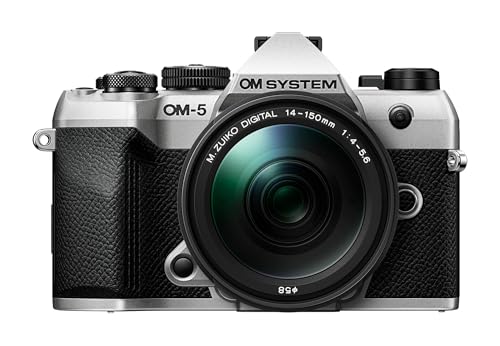
| OM SYSTEM OM-5 Mark II | Best macro-native system | The Micro Four Thirds system with close-focus culture in its bones and computational help. |
| Fujifilm X-T5 | Best focus-feel and colour for bench macro | Tactile control and beautiful colour for product, craft and studio macro filming. |
| Canon EOS R10 | Best affordable macro platform | RF-mount value with close-focus kit options — the beginner’s honest way into macro filming. |
| Sony Alpha 7 IV | Best full-frame macro for detail and cropping | Resolution and focus tools for macro films that will be cropped, reframed and delivered large. |
| OM SYSTEM Tough TG-7 | Best pond, tide-pool and field-expedition macro | Waterproof, crush-resistant and famously close-focusing — macro where other cameras cannot go. |
| Panasonic LUMIX S5II | Best long-wait behavioural macro body | Stabilisation, stamina and monitoring for the hours a subject takes to perform. |
How Did We Choose Cameras for Filming Macro?
We started with focus — not autofocus speed, which macro filming rarely wants, but focus character. The platform had to offer a magnified live view for critical checking, focus peaking that remains visible at working apertures, and lens systems whose manual focus rings move the plane smoothly rather than in steps. A focus-by-wire lens with a nervous response can ruin an otherwise excellent body for this work, so system behaviour mattered as much as the body itself.
Second, monitoring at strange angles. Macro rigs live on the floor, inside tanks, under leaves and above benches; the filmer is rarely behind the camera in any normal posture. Fully articulating screens, bright displays and the option of an external monitor all earned real weight, as did clean output for those who record or monitor externally during long behavioural waits.
Third, the subject’s point of view. Quiet operation, no fan theatrics, and in one pick’s case genuine waterproof toughness for pond-side and rain work, because macro subjects are wild things with opinions about disturbance. A camera that lets the filmer wait — long recordings, sensible power options, tolerance for being left running near a burrow entrance — is a macro camera in the only sense the footage cares about.
What we weighted least: headline video resolution and fast action autofocus. Macro films are delivered at ordinary resolutions and focused by hand; the spec-sheet heroes of sports filming are mostly tourists here. The ranking below reflects the small world’s actual values — focus character, monitoring, light manners and patience.
We also tested the platforms the way macro filmers actually abandon them: set up, focused, and left running near a subject while the filmer stepped back. Bodies that made that workflow natural — clear live views, honest battery reporting, no sleep-timer treachery mid-wait — scored heavily, because a great deal of the genre’s best footage is shot by a camera whose owner is three metres away holding their breath. Presence is a disturbance; the best macro body is partly the one that needs you least.
A final filter deserves naming: repairability of mistakes. Macro shoots fail in small, specific ways — a missed plane, a frightened subject, a light that lied — and the platforms that survived our ranking are the ones whose footage and workflow forgive a beginner’s season of those failures while still rewarding the expert’s avoidance of them. Forgiveness plus headroom is the whole formula of a recommendation in a craft this exacting, and every pick above carries both in its own proportion.
Which Six Cameras Belong in the Small World?
The list opens with the system built around close-focus excellence, then moves through the platforms whose focus tools, screens and stamina serve macro filmers at different budgets and habitats — studio bench, garden, pond edge and product table. Every pick assumes a suitable macro lens or close-focus configuration; the body’s job is to make that lens’s work filmable.

OM SYSTEM OM-5 Mark II — Best macro-native system
If one system was raised for the small world, it is this one. The OM ecosystem treats macro as a first-class citizen: its lens range is rich in close-focusing glass, its smaller sensor yields more depth of field at a given framing — a genuine gift when depth is measured in millimetres — and its computational heritage, including focus stacking for stills, shows a manufacturer that thinks about magnification professionally. For the nature filmer whose subjects are insects, frogs and fungi, this is the platform that starts closest to the answer.
- Micro Four Thirds mirrorless body on a deep lens system
- Renowned close-focusing and macro lens options
- Computational features including focus-stacking support for stills reference
- Compact, weather-sealed body for garden and field work
In the field its size becomes a filming technique. A compact body on a small tripod can be insinuated beside a burrow, under a leaf or at a pond’s edge where a full-frame rig would arrive like weather. The weather sealing shrugs off the dew and drizzle that macro habitats specialise in, and the stabilisation, used intelligently on a monopod or braced position, steadies the waiting hours. Its footage has the deep-focus clarity that suits subjects the audience needs to actually see, not just admire.
The working-distance story deserves emphasis. Macro lenses in this system let the filmer keep a respectful gap between glass and subject — the difference between filming a spider’s behaviour and filming a spider’s escape. Combined with a flip screen that works from ground level and focus tools that stay legible in daylight, the OM-5 Mark II becomes less a camera than a field station for small lives, which is precisely what serious macro filming asks for. Its depth-of-field gift compounds with every stop of light you can offer it — feed it light and it returns whole subjects.
Strengths
- Macro lens culture and depth-of-field advantage built into the system
- Compact, sealed body that fits the habitats macro lives in
- Computational heritage shows real close-focus design intent
Trade-offs
- Smaller sensor asks more of your lighting in dark habitats
- Video spec ceiling is lower than the full-frame picks
- Deep menus reward a setup session before field days
Best for: nature filmers of insects, amphibians and fungi, in real weather.
Not suited for: studio product filmers who need maximum resolution for huge crops.

Fujifilm X-T5 — Best focus-feel and colour for bench macro
On the studio bench — watches, jewellery, electronics, the miniature worlds of craft filmers — the X-T5 is the connoisseur’s macro platform. Its high-resolution sensor is unforgiving in the best way: focus is either exactly on the gear tooth or visibly not, and its focus aids make that judgement quickly. Fujifilm’s colour gives machined metal, wood grain and gemstones a richness that product clients notice without knowing why, and the tactile dials suit a workflow where every setting is chosen, never inherited.
- APS-C mirrorless body on the Fujifilm X mount
- Physical dials for deliberate exposure control
- High-resolution sensor that rewards precise focus
- Film simulation colour for finished-looking footage
The X mount’s close-focus options include a respected dedicated macro and several lenses that focus closely enough for product-scale work, and the system’s manual-focus response is among the most civilised in modern mirrorless — the plane moves like it is on a rail, not a roulette wheel. For the filmer pulling focus across a watch movement by hand, live, that civility is the difference between a take and a tantrum.
Its stills heritage pays a filming dividend too: macro filmers constantly shoot reference stills, packaging shots and thumbnails alongside the video, and the X-T5 makes those feel like the same craft rather than a second job. A one-person studio producing a product film and its entire promotional kit from one body will understand why this camera, of all the picks, is the one its owners describe with affection rather than respect. On copy stands and benches it behaves like studio infrastructure, which is the highest compliment bench kit can earn.
Strengths
- Focus feel and aids that suit live manual pulls on the bench
- Colour that flatters products, craft and natural history alike
- High resolution rewards — and verifies — precise focus
Trade-offs
- No full-frame depth-of-field thinness for the most artistic looks
- Video toolset is strong rather than cinema-specialised
- Battery planning needed for long bench sessions
Best for: product, craft and studio macro filmers who also shoot the stills kit.
Not suited for: field filmers needing the smallest, toughest pond-side rig.

Canon EOS R10 — Best affordable macro platform
Macro filming has a gentle on-ramp and the R10 is standing at the bottom of it, holding the gate. With a close-focusing RF lens it films bees on lavender, dew on grass and the mechanics of a seedling at a quality that would have required a specialist rig a decade ago — at a price that lets a beginner begin this season rather than save for two. Its articulating screen solves the beginner’s first macro problem, which is simply seeing the frame while lying in a flowerbed.
- APS-C mirrorless body on the Canon RF mount
- Confident autofocus for subjects that move between flowers
- Fully articulating screen for ground-level filming
- Access to RF close-focus and macro lenses as skills grow
Its autofocus earns a place in a manual-focus genre for one honest reason: garden subjects move. A bee working a flower head is a tracking problem, and the R10’s subject detection can hold the plane on a moving insect in a way that delights beginners and quietly assists experts during behavioural sequences. When the subject sits still, manual focus with peaking takes over — the camera teaches both crafts in one body, which is exactly what a first macro platform should do.
Growth is the third virtue. The RF mount’s macro offerings extend well beyond the beginner tier, so the lens bought in year two still mounts the body bought in year one, and the skills transfer upward unchanged when a full-frame Canon eventually joins the kit. For schools, clubs and families building a nature-filming habit, that continuity makes the R10 the list’s most sensible first step into the small world. Its screen hinge will out-perform your yoga within a week; ground-level framing stops being a posture contest.
Strengths
- The friendliest price of entry to real macro filming here
- Autofocus that genuinely helps with moving garden subjects
- Screen and size built for ground-level, handheld discovery
Trade-offs
- Kit lenses only flirt with macro — a dedicated lens is the real ticket
- APS-C low-light footage needs your lighting to be generous
- Fewer pro monitoring tools than the pricier picks
Best for: beginners, schools and garden filmers starting a macro habit.
Not suited for: professionals delivering broadcast natural history at maximum magnification.

Sony Alpha 7 IV — Best full-frame macro for detail and cropping
Sometimes the subject will not permit closeness — the wary reptile, the protected nest, the product too valuable to approach with a front element. Then macro filming becomes a cropping discipline, and the Alpha 7 IV’s full-frame detail is the bank the crop draws on. Filmed from a respectful distance with a longer macro lens, its footage can be reframed in the edit to true macro scale while staying clean — a professional technique that smaller sensors forgive less readily.
- Full-frame mirrorless body on the Sony E-mount system
- High-quality 4K with oversampled detail
- Focus peaking and magnification aids for critical focus
- Huge lens ecosystem including specialist macro glass
Sony’s macro lens bench is deep, including specialist glass with working distances and focus behaviour designed for exactly this craft, and the body’s focus aids — peaking with colour choice, punch-in magnification — are the mature implementations a critical-focus genre needs. On a copy stand or a product bench, tethered workflows and clean monitoring make the Alpha 7 IV feel like studio infrastructure rather than a camera being borrowed for the day.
It is also the pick for macro filmers whose work mixes scales: the documentary that cuts from a landscape to a beetle, the product film that opens wide and ends inside the mechanism. One body covering both worlds, with one colour language, simplifies productions enormously. The macro specialist may start with the OM; the macro generalist, filming everything with a small-world heart, starts here. Keep its crop mode in mind as a composition tool, not a rescue — planned crops keep the detail honest.
Strengths
- Full-frame detail that survives the respectful-distance crop
- Deep specialist macro lens bench in E-mount
- Studio-grade focus aids and monitoring manners
Trade-offs
- Thin depth of field at full-frame is a discipline, not a gift
- Size and cost exceed the dedicated field picks
- Autofocus brilliance is mostly wasted on still subjects
Best for: mixed-scale documentaries and product films needing crop freedom.
Not suited for: pure field macro where size and depth of field rule.

OM SYSTEM Tough TG-7 — Best pond, tide-pool and field-expedition macro
There are macro subjects no interchangeable-lens camera will ever film: the inside of a tide pool, the underside of a waterfall’s rock, the frogspawn in the flooded ditch, the insect in the downpour. The TG-7 lives in those places natively. It is waterproof, shrugs off drops and grit, and carries a close-focus party trick — microscope-style modes that focus almost on the front element — that has made it the field biologist’s pocket companion for years. As a filming tool it is the list’s explorer: limited, fearless and utterly unique.
- Rugged compact camera, waterproof and shock-resistant
- Microscope-style close-focus modes for tiny subjects
- Built-in macro lighting aids and accessory ring options
- Variable ND and field-ready construction
Its macro lighting ecosystem is the tell of a serious design: ring-light and diffuser accessories shape light at the tiny distances where ordinary panels cannot go, and the camera’s modes are built around them. Footage from a TG-7 in a rock pool, lit by its own ring, has a clarity about it that embarrasses far costlier rigs standing dry on the bank, because the costly rig is filming the surface of the water and the TG-7 is filming the world beneath it.
Expedition filmers use it as the sacrificial angle: buried at a burrow entrance, sunk in a stream, left in the rainforest understory rolling while the crew shelters. Its files are the most modest here and nobody pretends otherwise — but they are angles, and angles are the currency of documentary. Every serious macro kit should contain one camera it can afford to drown, and this is the one designed to survive the drowning anyway. Its accessory lighting ring is the single cheapest quality jump available to any pick in this guide.
Strengths
- Films macro underwater, in rain and inside habitats
- Close-focus modes no other pick can imitate
- Accessory lighting system designed for tiny distances
Trade-offs
- Smallest files and least manual cinema control here
- Fixed lens — the system is the camera, whole
- Not a primary body for studio or client macro work
Best for: field biology, tide pools, expeditions and sacrificial angles.
Not suited for: anyone needing one camera for all macro work at top quality.

Panasonic LUMIX S5II — Best long-wait behavioural macro body
Behavioural macro — the emergence, the hunt, the mating dance — happens once, on the subject’s timetable, usually after hours of nothing. The camera for it must be a patient machine: happy recording long takes, monitorable at a glance, exposure-checkable with tools that do not lie about a backlit beetle. The S5II’s waveform monitoring and long-take manners make it the professional’s waiting camera, the body left trained on the burrow entrance while the filmer watches, ready, as the light fails.
- Full-frame mirrorless body on the L-mount system
- Waveform monitoring for precise exposure of lit subjects
- Strong stabilisation for braced, tripod-light field positions
- Design suited to long continuous recording
Its stabilisation opens positions a tripod cannot reach: braced against a hide’s window, monopod-steadied at a pond margin, handheld for the slow tracking of a hunting spider across a wall. Macro at full-frame magnification handheld sounds like a dare; with this body’s help and a sensible shutter discipline it becomes a technique, and it produces a fluid, living quality that locked-off footage cannot — the camera breathing with the hunt rather than surveilling it.
Post is the third act of its case. Behavioural sequences are graded hard — shot across changing dusk light, cut together from an hour of waiting — and the S5II’s log files hold their colour and shadow detail through that unification better than most. The filmer who has matched a 6 p.m. wide to a 7:40 p.m. close-up in the grade will not need this explained twice: files that forgive are a behavioural filmer’s entire post budget, pre-spent wisely. Programme its monitoring to your subject’s brightness before the wait begins; mid-performance menu dives lose performances.
Strengths
- Monitoring tools that tell the truth about tricky subjects
- Long-take stamina for behaviour that happens once
- Stabilisation that enables braced and handheld macro positions
Trade-offs
- Full-frame thin focus demands real discipline at magnification
- Larger field footprint than the OM or TG-7
- L-mount macro lens bench is smaller than Sony’s
Best for: behavioural natural-history filmers and long-wait documentary work.
Not suited for: pocket-sized expedition filming or underwater habitats.
Why Does Depth of Field Behave So Strangely at Macro Scale?
At ordinary distances, depth of field is a forgiving slope; at macro distances it is a cliff edge measured in millimetres, and it shrinks faster as magnification rises than intuition trained on normal filming expects. The practical consequence: focus placement becomes composition. The plane you choose — the eye, not the head; the gear tooth, not the movement — is the sentence the shot speaks, and everything off that plane is punctuation. Filmers new to macro should rehearse this on a ruler at an angle until the geometry is in their hands, not just their heads.
Stopping down buys depth and charges interest: diffraction softens the very detail macro exists to show, and the light demanded at small apertures in video — where shutter speeds are constrained by motion — quickly exceeds what a subject or a small panel can provide. The working macro filmer therefore lives in a narrow band of apertures, chosen per subject, and leans on the other depth tools: subject alignment, camera angle parallel to the subject’s important plane, and the smaller formats’ natural depth advantage that the OM pick exploits so well.
Embrace the thinness when it serves the story. A portrait of a spider with only the eyes in focus is not a technical failure; it is how attention works, rendered optically. The craft is choosing the plane deliberately rather than discovering it in the edit — and every pick here provides the peaking and magnification tools to make that choice at the camera, where it belongs.
How Should You Light a Subject the Size of a Coin?
Small subjects want soft light from close by, which is convenient, because small lights are cheap lights. A little LED panel through a sheet of diffusion, a ring light around the lens, even a desk lamp bounced off white card — at macro distances these become large, gentle sources that wrap a beetle like a studio portrait. The filmer’s real craft is control: flagging spill, keeping the background’s exposure where the composition wants it, and watching that the light’s heat and brightness do not change the behaviour being filmed.
Colour honesty matters more at this scale, because subjects are often judged by it — the true green of a mantis, the real lustre of a beetle’s shell. Choose lights with decent colour rendering, set white balance deliberately rather than automatically, and let the camera’s monitoring confirm what your eyes, adapted to the room, may misjudge. The bodies above all offer the manual control to lock these decisions in; auto white balance drifting mid-take is a beginner’s tax the prepared do not pay.
For field macro, light is also an ethics instrument. Bright light at a nocturnal subject’s burrow is a disturbance with a beam; use the minimum that films, prefer red-shifted or brief working light where the subject’s biology suggests it, and let some sequences stay unfilmed. The best macro filmers are known in their habitats the way good guests are known anywhere: the place looks undisturbed after they leave.
How Do You Move a Camera That Magnifies Every Tremor?
Macro movement is measured in centimetres and executed like defusing something. The tools are focus rails, sliders with geared drives, and the discipline of touching the rig as little as possible — remote releases, self-timers for stills checks, and focus pulls performed with a follow-focus or a fingertip’s lightest pressure. A push-in that would be subtle at portrait distance becomes a dolly through a landscape at macro scale, and its smoothness is the difference between cinema and surveillance footage of a flower.
Focus pulling is the signature move: a slow travel of the plane from foreground detail to subject, revealing the small world’s geography. Practise it at the speed of the subject’s life — a pull across a snail’s shell can honestly take ten seconds — and mark focus points with the lens’s scale or a follow-focus’s hard stops where the system allows. The Fujifilm and OM systems’ civilised focus response exists for exactly this choreography.
And know when not to move. A locked frame with life moving inside it — the ant highway crossing a still composition — often films better than any tracking attempt, because the small world’s own motion is the subject. Stillness is a camera movement too, the hardest one, and the long-take manners of picks like the S5II are built to honour it.
What Subjects Should a New Macro Filmer Start With?
Start with the patient ones: snails, seed heads, watch movements, coins, the gears of anything mechanical. They hold still for your learning curve, they tolerate relighting, and they teach focus-plane discipline without the heartbreak of a subject that leaves mid-lesson. A month of still subjects builds the hands that moving subjects will later demand.
Graduate to the garden’s cooperatives: bees working a single flower head, spiders in established webs, dew at dawn before the sun takes it. These move, but predictably and in one place, and they forgive a filmer’s slow setup because their own business keeps them local. The R10 and OM-5 were chosen with exactly this curriculum in mind — bodies that assist the learning without performing it for you.
Save the hunters and the hunted for last. Predation, emergence and flight are macro filming’s summit events, requiring the long-wait setups, the behavioural knowledge and the post stamina of the S5II section above. Filmers who climb the curriculum in order arrive at those events with a craft; filmers who start there mostly arrive at anecdotes about the one that got away.
How Does Macro Filming Change Your Relationship With a Place?
Every macro filmer tells the same story: the garden, the pond, the one square metre of woodland floor they have filmed for years keeps producing subjects they had never noticed, because magnification is attention made optical. A camera from this list, used in one place across seasons, becomes less a purchase than a membership — of a world that was always there, running its hunts and dances at a scale the unaided eye edits out.
That membership carries the genre’s quiet ethic: film small, tread smaller. Know the protected species in your patch, never move a subject for a frame, never trade a habitat for a shot. The footage lasts a season on a channel; the place, treated well, films forever. It is not a coincidence that the most trusted macro filmers are also their habitats’ most knowledgeable defenders.
Practically, keep a field notebook with the footage: dates, weather, where the mantis hunted, when the frogs returned. Within a year it becomes a production calendar no rental house can sell — the knowledge of when your small world performs. The cameras record the performances; the notebook is how you stop missing them.
How Do You Direct a Subject That Cannot Take Direction?
You do not direct macro subjects; you arrange circumstances and accept performances. The arrangement is a craft in itself: placing the flower the bees already favour in the light you can film, positioning the hide before the frogs’ hour, putting the watch movement on the bench at the angle its gears deserve. Every great macro sequence is a stage built so discreetly that the audience believes in the wilderness — and the cameras here were chosen partly for how unobtrusively they can occupy a stage built at centimetre scale.
Acceptance is the harder half. The mantis will face the wrong way. The emergence will happen during your card change, once, and you will tell that story for years. Build redundancy where the stakes allow — the TG-7 as a second angle is the list’s built-in insurance — and build equanimity where they do not. A filmer who can watch a ruined take with curiosity instead of fury stays in the field longer, and staying is the whole strategy.
What you can direct is yourself: your arrival time, your shadow’s direction, the order of your setups from least to most intrusive. Film the wide context first and the intimate close last, because disturbance accumulates and the subject’s tolerance is a budget. Spend it like money, on the shots that matter, and the small world will keep paying you interest in behaviour nobody else stayed quiet enough to see.
What Does a Macro Filming Kit Look Like Beyond the Camera?
The supporting cast is small, cheap and decisive. A focusing rail turns focus placement into a mechanical decision instead of a tripod negotiation. A small slider or a geared head makes the centimetre push-in repeatable. A remote release, a right-angle finder or a monitor on a short arm saves your spine and your subject from your shadow. None of this costs like a lens, and all of it appears in the footage as smoothness the audience feels without naming.
Light shaping at this scale is a craft-store discipline: diffusion cut from sheet material, black card for flags, foil for a whisper of fill, a spray bottle for the dew that dawn forgot. The macro filmer’s grip bag looks like a magician’s because at this scale it is — every object is a lighting instrument once the subject is two centimetres tall. The cameras’ honest colour and manual white balance exist to make those improvisations look like a lighting department’s intent.
And the notebook again, which macro filmers keep like sailors keep logs: magnifications, distances, apertures per subject, the rail settings that worked. Macro is the most repeatable genre in filming when it is documented and the most mysterious when it is not. Your second season with the same subjects should begin where the first ended, not where it started — the notebook is the difference, and it costs less than a memory card.
How Should You Handle Focus Stacking’s Moving Cousins?
Stills macro leans on focus stacking; filming cannot stack a moving subject, but it has developed cousins. The slow focus pull through the subject — a rack that travels the plane from front to back across a held take — gives the edit a choice of planes from one performance. Shooting the same behaviour at two or three focal planes across repeated passes builds a library the edit can intercut as if the depth were deeper than physics allowed. Both techniques ask for the smooth focus response and repeatable lens behaviour the platform sections above kept praising.
There is also the honest cheat of the smaller stage: at the magnifications most macro films actually use, the OM system’s depth advantage and a well-aligned subject deliver single-take depth that full-frame cannot match without stacking tricks. Choosing depth natively over manufacturing it later is not a compromise; for living subjects it is frequently the only method that works at all, because the subject will not hold still for your stack.
Whichever cousin you use, log the plane. Note which take holds the eye, which holds the wing, which the whole animal. In the edit, those notes turn an hour of near-identical footage into a searchable library, and the film assembles at the speed of your documentation. Macro post-production is won in the field notebook as surely as macro filming is won in the light.
How Do You Film Macro Through the Seasons Without Repeating Yourself?
The small world has a calendar, and filming it well means letting the year direct. Spring belongs to emergence and courtship, summer to hunting and industry, autumn to seed and decay, winter to the architecture of frost on everything the other seasons grew. A filmer who returns to one square metre across that calendar — the discipline the earlier sections recommended — accumulates a film no expedition can buy, because its subject is time itself, wearing a garden as a costume.
Technique should rotate with the subjects. The dawn dew work of spring wants the TG-7’s fearlessness and the OM’s depth; high summer’s hunters want the S5II’s patience and monitoring; the bench season of winter, when the field rests, belongs to the X-T5 and the mechanical small worlds indoors. Owning one platform and renting or borrowing the season’s specialist is a legitimate strategy, and the list’s spread of systems maps onto the year more neatly than any single body could.
Keep the year’s footage organised by subject and plane, not by date, and the seasons begin editing themselves: the same flower head in April and October is a cut that means something. That is the macro film’s deepest pleasure, and it is available in a single garden with a single camera from this list. The genre’s barrier was never the equipment. It is the staying.
How Do the Six Compare in the Small World?
Match the body to the habitat and the subject’s temperament. The OM is the field system, the Fujifilm the bench artist, the Canon the welcoming gate, the Sony the detail bank, the TG-7 the explorer and the Panasonic the patient watcher. Serious macro kits often pair a platform body with the TG-7 as the sacrificial angle — the combination covers habitats no single camera can.
| Pick | Badge | Where it earns its place |
|---|---|---|
| OM SYSTEM OM-5 Mark II | Best macro-native system | The macro-native pick: close-focus lens culture, helpful computation, field-ready build. |
| Fujifilm X-T5 | Best focus-feel and colour for bench macro | The bench artist: dials, colour and focus feel for studio macro and craft films. |
| Canon EOS R10 | Best affordable macro platform | The value platform: RF lenses, friendly focus aids, room to grow into macro seriously. |
| Sony Alpha 7 IV | Best full-frame macro for detail and cropping | The detail bank: full-frame files that survive cropping when the subject would not come closer. |
| OM SYSTEM Tough TG-7 | Best pond, tide-pool and field-expedition macro | The expedition macro: underwater, under rain, inside the habitat itself. |
| Panasonic LUMIX S5II | Best long-wait behavioural macro body | The patient one: long recordings and monitoring for behaviour that happens once. |
What Mistakes Do New Macro Filmers Make?
Breathing on the rig — literally. At macro magnification the filmer’s breath, pulse and footsteps through a floorboard all arrive in the frame. Work remotely where possible, hold your breath for the take’s critical seconds like a marksman, and isolate the tripod from your body’s vibrations. Half of all ‘my macro footage looks amateur’ is vibration that was never a camera problem at all.
Choosing the plane of focus by accident. Beginners focus on the nearest point and accept the result; the craft is deciding what the shot is about — the eye, the tooth, the droplet — and putting the plane there deliberately, then composing around it. Review your footage asking only ‘where is the plane, and did I mean it?’ and the genre’s central skill installs itself within a month.
Cooking or terrifying the subject with light. A blazing panel at full power changes behaviour, dries small creatures and flattens the very modelling that makes macro beautiful. Diffuse, dim, approach gradually, and accept a stop less light for a subject still behaving like itself. Footage of natural behaviour at modest brightness outclasses lit theatre every time.
Buying the body before the lens. The macro lens — or a considered close-up configuration — is half the purchase and most of the result. Budget them together, and if the total forces a choice, take the humbler body with the true macro lens over the flagship with a kit zoom, every single time.
A fifth mistake is treating every outing as a shoot. The macro filmers with the deepest libraries spend whole sessions watching without a camera — learning where the spider rebuilds, when the bees arrive, which log the frogs favour after rain. That reconnaissance feels unproductive and is anything but: it converts future shoots from lotteries into appointments. Bring the camera when the notebook says the performance is scheduled, and your keeper ratio will shame filmers with three times your gear.
And a sixth, gentler mistake: apologising for the genre’s scale. New macro filmers sometimes present their work as a curiosity, a trick of lenses. It is not. The small world is most of the living world, and filming it well is documentary work of the first order. Choose your body with the seriousness the subjects deserve — they have been performing, unwatched, for rather longer than cinema has existed.
Final Recommendation
Start where your subjects live. Field and nature filmers: the OM SYSTEM OM-5 Mark II, with the TG-7 as its fearless companion. Bench and product filmers: the Fujifilm X-T5. Beginners and garden filmers: the Canon EOS R10 and one honest macro lens. Detail and mixed-scale work: the Sony Alpha 7 IV. Behaviour and the long wait: the Panasonic LUMIX S5II. None of them asks you to leave your own garden to justify it.
Whichever platform you choose, spend equal money and more time on the unglamorous half of the craft — the lens, the light, the support and the patience. Macro filming rewards those investments like no other genre, because in the small world, preparation is not the prelude to the footage. Preparation is the footage. The genre will repay the seriousness with footage that stops strangers mid-scroll — a whole jungle, a whole hunt, a whole life, inside a frame the size of a stamp.
One closing encouragement for the beginner reading this with a garden and a free morning: the small world does not require travel, permission or a crew. It requires a square metre, a camera that focuses close, and the willingness to lie in wet grass at dawn. Start there, with whichever pick your budget blesses, and the genre will teach you the rest at its own unhurried pace.
Frequently Asked Questions
Do I really need a dedicated macro lens for filming?
For true macro magnification, yes — close-focusing zooms and phone-style macro modes approach the subject but rarely reach life-size with working focus control. A dedicated macro lens is the genre’s entry ticket, and this guide’s bodies were chosen as platforms for one. Start with a single macro prime and learn its one magnification deeply. If the budget forces a sequence, buy body and true macro lens together and let every other accessory wait its turn.
Why does my macro footage wobble even on a tripod?
Because magnification multiplies everything: floor vibration, table flex, your pulse through a cable, even air movement across a long setup. Isolate the rig, use remote or delayed control, keep takes’ critical seconds hands-off, and check the surface — a wooden floor in a lived-in house is a seismograph, not a studio. A concrete slab or a sandbagged tripod leg cures more wobble than any in-body setting ever will.
Is autofocus useful for macro filming at all?
For moving subjects at modest magnification — the bee on the flower — modern subject detection like the R10’s genuinely helps. At high magnification on still subjects, manual focus with peaking and magnification is the professional default, and every pick here supports it properly. Treat it as a bonus tool for garden subjects and a distraction at high magnification, and you will use it exactly right.
How do I get more depth of field without ruining the image?
Align the subject’s important plane parallel to the sensor, choose the aperture band where your lens stays sharp, and consider the smaller formats’ natural advantage — the OM system’s depth at a given framing is a real tool. Beyond that, light more and accept the aperture the light honestly affords. Focus stacking for reference stills — a strength of the OM platform — also teaches you exactly where your planes lie.
Can I film macro underwater with these picks?
The TG-7 does it natively — tide pools, streams, shallow pond work are its home ground. The mirrorless picks need housings, which are specialist purchases; for occasional underwater macro the little Tough is not the budget option, it is the correct one. Its size is also its passport: it films in weather and water that would end a mirrorless body’s day.
What is the best first macro filming project?
One subject, one place, one season: a single flower head and its visitors, filmed from spring to autumn. It teaches focus, light, patience and behaviour in that order, and it produces a finished film — which is more than most first projects in any genre can promise. By autumn you will also own the field notebook habit, which is the real graduation the project confers.
Related Guides
Keep exploring with our macro cameras for stills guide and the bridge cameras for macro roundup and our film makers camera guide — each guide applies the same verified-pool, no-invented-specs approach to a neighbouring question.


