ilcastellomenu.com is reader-supported. When you buy through links on our site, we may earn an affiliate commission.
Where to Buy
Motion is photography’s examination subject. A still life forgives everything; a winger cutting inside at full pace, a dog launching for a disc, a cyclist tipping into a bend — these forgive nothing, and they expose the truth about a camera faster than any laboratory chart. The best cameras for motion are the ones whose autofocus predicts rather than chases, whose shutters and buffers keep firing through the decisive second, and whose files stay clean when the light forces you to shoot fast and wide.
This guide reads “motion” the way most photographers mean it: freezing fast-moving subjects with stills (and, where relevant, video that does the same job). If your interest is cameras that detect movement — security and monitoring — our companion guide to movement-detection cameras covers that different discipline. Here, the subject is speed itself: sports, wildlife in action, children and animals at play, vehicles, water, and the hundred other subjects that refuse to hold still for their portrait.
Three systems decide success, and the reviews weight them in order. First, autofocus that acquires a subject and stays glued through direction changes, occlusions and backgrounds designed by chaos. Second, the capture chain — burst rate, buffer depth, shutter behaviour — that determines whether the peak instant exists in your files at all. Third, the sensor’s high-ISO manners, because motion demands fast shutter speeds and fast shutter speeds demand sensitivity, especially under evening light. A camera brilliant at two and weak at the third will betray you on a schedule; the picks below are the ones with no weak leg.
Glass enters the argument too, and honestly: the lens’s focus speed and brightness cap what any body can do. The verdicts note where a system’s affordable fast lenses make the whole package credible, because a motion camera is a body and a lens arriving at the same conclusion at the same millisecond.
Key Takeaways
- Subject-tracking autofocus, not burst rate, is the first specification for motion.
- Buffer depth decides whether the camera is still firing at the decisive moment.
- Fast shutter speeds are bought with ISO; clean high-ISO files are a motion feature.
- The lens’s focus speed and brightness cap the body’s talent — budget for both.
- Pre-capture and fast readout sensors are quietly revolutionising action photography.
- Technique — panning, positioning, anticipation — still beats any single purchase.
In this guide
Quick Picks: Six Cameras That Freeze the Moment
| Pick | Badge | Why it earns its place |
|---|---|---|
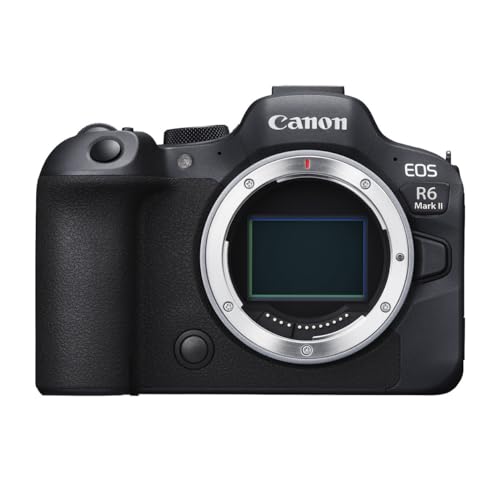
| Canon EOS R6 Mark II | Best All-Round Motion Camera | Tracking that reads minds, deep bursts and clean files at the ISOs action demands. |
| Sony Alpha 7 IV | Best for Mixed Sport and Video | Relentless eye tracking and the deepest fast-lens catalogue in the business. |
| Canon EOS R10 | Best Motion Value | Flagship-flavoured tracking and serious burst speed at a fraction of the price. |
| Nikon Z50 II | Best Compact Action Body | Subject detection and pre-capture in a body small enough for any sideline. |
| OM SYSTEM OM-5 Mark II | Best for Speed With Reach | Blistering bursts and computational tricks, with lenses that multiply your reach. |
| GoPro HERO13 Black | Best On-the-Subject Motion | Mount it to the motion itself — the helmet, the board, the handlebar view. |
How Did We Choose Cameras for Fast-Moving Subjects?
We judged in the field’s terms, not the showroom’s. Each candidate was assessed on keeper rate — the proportion of a real action sequence that lands critically sharp on the subject’s eye or leading edge — because keeper rate is the only currency action photographers actually spend. A camera that fires forty frames a second and focuses twelve of them loses, in this guide, to one that fires fifteen and focuses fourteen.
Tracking intelligence anchored the assessment: how the system recognises people, animals and vehicles, how it behaves when the subject passes behind a referee, a fence post or another player, and how quickly it reacquires when the subject re-emerges. Modern subject-detection has redrawn this category’s map, and the picks here are the bodies whose detection is both broad and stubborn.
The capture chain came next — burst rate with autofocus maintained, buffer depth before the camera slows, card speeds, and shutter options including the electronic modes that enable pre-capture and silent shooting, weighed against rolling-shutter distortion on the fastest pans. Then the sensitivity question: how the files look at the ISOs evening sport imposes, because motion photography is so often twilight photography wearing a faster shutter.
Finally, the system audit: whether the mount offers fast, bright telephoto lenses at prices humans pay, since reach and aperture are motion photography’s daily bread. A brilliant body orphaned by its lens range is a promise the guide refuses to make.
Why Does Autofocus Decide More Than Any Other Specification?
Because focus is the one failure editing cannot repair. An underexposed frame lifts, a noisy frame cleans, a crooked frame straightens — but a frame focused on the fence behind the sprinter is a frame of a fence, forever. Motion photography therefore inverts the usual hierarchy: the camera’s ability to predict where a subject will be, and to keep the lens’s focus plane there through chaos, is worth more than resolution, dynamic range and burst rate combined.
Prediction is the operative word. A subject crossing your frame at speed is never where the sensor saw it a millisecond ago; competent systems model the trajectory, hand the lens a future position, and update the model dozens of times a second. The best of them — and the top picks here qualify — feel less like focusing than like the subject being sticky, the camera reluctant to let go even when backgrounds claw at its attention.
Subject detection is prediction’s partner. Telling the camera “that is a person, that shape is a dog, that is a racing car” lets it prioritise the eye, the head, the cockpit — the point where sharpness will be judged — rather than the nearest high-contrast edge. Photographers moving from older systems consistently describe the first session with modern detection as the moment the genre changed from gambling to craft, and this guide’s rankings largely follow that experience.
Which Six Cameras Keep Up With the Action?
Five are stills-first bodies spanning full-frame and two crop formats, each with a distinct motion personality; the sixth is the action camera that joins the motion rather than watching it. Read the verdicts against your subject — the autofocus that tracks a footballer and the buffer that serves a skateboarder are cousins, not twins — and against your light, because evening sport is this category’s sternest examiner.

Canon EOS R6 Mark II — Best All-Round Motion Camera
The R6 Mark II is what happens when a manufacturer aims every system at the same target. Its autofocus detects people, animals and vehicles, finds the eye within the subject and the subject within the chaos, and holds on through the occlusions and direction changes that define real sport. Photographers describe its tracking with the vocabulary of trust — set it, frame the play, let the camera keep the promise — and trust, at a burst of dozens of frames, is the whole product.
The capture chain keeps the promise at volume. Very fast electronic bursts with pre-shooting that reaches back to the half-second before you fully pressed — the feature that rescues the dive, the strike, the exact instant the ball met the boot — combined with a buffer deep enough that the camera is still firing when the play concludes. Its files, from a full-frame sensor with excellent high-ISO manners, stay clean under floodlights and in gyms, where motion photography so often actually happens.
Canon’s RF lenses complete the system argument: fast telephotos at several price levels, all focusing at the speed the body deserves. The honest debits are resolution — twenty-four megapixels crops less generously than the Sony’s thirty-three — and the electronic shutter’s rolling behaviour on the very fastest pans, which the mechanical shutter exists to answer. For the broadest range of moving subjects, this remains the body to beat.
It is also, not incidentally, a superb everything-else camera, which matters to photographers whose motion work shares a bag with portraits and events. Versatility is not this guide’s criterion, but a motion specialist that never has to be left at home earns a quiet bonus in real kit bags.
Endurance completes its professional profile. Long lenses balance on its grip through a full match, the weather sealing shrugs at the drizzle that defines half the sporting calendar, and the battery economy survives tournament days that strand lesser bodies by the semi-finals. Motion photography is attritional work for equipment as much as for athletes, and the R6 Mark II is built like it expects to finish the season.
- Sensor: 24MP full-frame
- Subject detection for people, animals, vehicles
- Pre-shooting captures the half-second before the press
- Very fast bursts with deep buffer
- Excellent high-ISO files for evening sport
Strengths
- Tracking that survives real-game chaos
- Pre-capture rescues decisive instants
- Clean files where action actually happens: indoors, at dusk
Trade-offs
- Resolution limits aggressive cropping
- Fastest pans can bend under electronic shutter
- RF telephoto prices climb steeply at the top
Best for: Sports, wildlife action and event photographers wanting one body for all of it.
Not suited for: Static subjects where resolution is king, or extreme croppers.

Sony Alpha 7 IV — Best for Mixed Sport and Video
Sony’s autofocus reputation was built in this genre, and the Alpha 7 IV carries it into a body that also shoots the interview, the portrait and the product film. Its real-time eye tracking — for people and animals alike — has the stubbornness motion photographers pray for, reacquiring eyes after occlusions with a speed that turns would-be deletions into keepers, sequence after sequence.
The system’s depth is the strategic argument. E-mount offers fast telephotos from Sony and a legion of third parties at prices Canon’s range rarely matches, and for motion work the lens is half the purchase: a bright 70–200-class zoom or a fast tele prime transforms keeper rates more than any body upgrade in this list. The a7 IV’s thirty-three megapixels add a second insurance — room to crop when the play happened further away than the lens you brought.
Video shooters get the hybrid dividend: the same tracking intelligence serves motion footage, with focus transitions that look operated rather than automatic. The debits are a burst rate a step behind the Canon’s and menus that reward an afternoon of customisation before they feel like reflexes. Set it up once, properly, and the a7 IV becomes the thinking photographer’s motion instrument — precise, deep and very hard to outgrow.
For the photographer whose motion subjects arrive through a business — school sport, equestrian events, fitness content — that depth and resale ecosystem make it the safest long-term platform in the guide as well as one of the sharpest tools for this weekend.
There is a quieter motion virtue in its customisation depth. Buttons can be assigned so that tracking modes, focus-area changes and pre-set recall sit under the fingers that need them mid-play, without the eye leaving the viewfinder — and in action work, the setting you can change without looking is the only setting that exists. Owners who invest that setup afternoon describe the camera disappearing, which is the highest praise a tool for fast subjects can earn.
- Sensor: 33MP full-frame
- Real-time eye AF for people and animals
- Deepest fast-lens catalogue available
- Crop room for distant plays
- Strong hybrid video tracking
Strengths
- Stubborn, intelligent subject tracking
- Lens choice at every budget
- Resolution insurance for cropping
Trade-offs
- Burst pace a step behind the Canon
- Menus demand initial setup time
- Rolling shutter care needed in silent mode
Best for: Hybrid shooters mixing sport, action video and everything else.
Not suited for: Pure burst-rate maximalists.

Canon EOS R10 — Best Motion Value
The R10 is the guide’s standing rebuttal to the idea that motion photography requires a professional budget. It inherits Canon’s subject-detection autofocus — people, animals, vehicles, eyes found and followed — and pairs it with burst speeds that embarrass cameras costing twice as much, in a body light enough to hold at a touchline for a full match without negotiating with your shoulder.
The crop sensor, so often apologised for, is an accomplice here: it multiplies the reach of every lens, turning an affordable telephoto into a genuinely long one, which is precisely the arithmetic youth sport and wildlife demand. Parents photographing Saturday football and birders photographing flight both live inside that arithmetic, and the R10 serves them with a seriousness its price does not predict.
The economies are where you would place them: a shallower buffer that asks for burst discipline, a smaller battery, and high-ISO files a step behind the full-frame picks when the light truly fails. None of these prevent excellent action work in daylight and decent work under lights; they simply mark the boundary where the R6 Mark II’s premium starts earning. For most motion photographers, most weekends, this is the smartest money in the guide.
It also teaches the genre kindly — Canon’s menus and handling let a developing photographer spend their attention on positioning and anticipation, the skills that actually compound, rather than on operating the machine.
School and club photographers form its natural constituency, and they report a particular satisfaction: the professional on the same touchline, carrying five times the budget, is not producing five times the keepers. The R10 narrows the equipment excuse to nearly nothing and leaves the difference where it honestly belongs — in position, anticipation and the courage to delete. For a developing action photographer, that is the most educational purchase in this guide.
- Sensor: 24MP APS-C (reach-multiplying)
- Canon subject detection, inherited from above
- Fast bursts for the price class
- Light body for long sidelines
- RF lenses plus adapted classics
Strengths
- Professional tracking behaviour, amateur price
- Reach that flatters affordable telephotos
- All-day carry comfort
Trade-offs
- Buffer asks for burst discipline
- High-ISO ceiling below full-frame
- Smaller battery for tournament days
Best for: Youth sport, wildlife and action on a real-world budget.
Not suited for: Floodlit professional work as a main income.

Nikon Z50 II — Best Compact Action Body
Nikon’s second-generation Z50 brings the company’s modern subject-detection autofocus — people, animals, birds, vehicles — into a body small enough to be the camera that actually comes to the match, the dog park and the school sports day. That presence is a motion feature in itself: the finest tracking in the world records nothing from a bag at home, and the Z50 II’s size is an argument it wins daily.
Its party trick deserves the headline: pre-release capture, which banks frames from before the shutter is fully pressed, exists precisely for motion’s cruellest problem — the instant that happens faster than human reaction. The bird takes off, the keeper dives, the toddler’s expression peaks; a camera that was already recording turns your reflexes from the bottleneck into a formality. Combined with brisk bursts and Nikon’s pleasing colour, it produces action sequences that belie the body’s modest price and size.
The trade-offs are the crop format’s usual ones plus a buffer that rewards short, timed bursts over sustained fire. Nikon’s DX lens range is still maturing, though its affordable primes and the option of full-frame Z glass soften that. For families and enthusiasts whose motion subjects are their own lives — sporty children, athletic dogs, weekend wildlife — the Z50 II may be the most liveable camera in this entire guide.
It handles, too, like a camera designed by people who shoot: the grip, the viewfinder and the control layout keep the photographer’s attention on the play rather than the device, which is where every keeper in this genre is actually decided.
Dog owners should consider themselves directly addressed. The animal-detection tracking, the pre-capture for the launch and the leap, and a body light enough to hold one-handed while the other hand holds a lead or a ball — the Z50 II reads like a specification written at a dog park. The resulting photographs, of the animal mid-joy rather than posed and patient, are the ones that end up framed, and they are disproportionately this little camera’s work.
- Sensor: ~20MP APS-C
- Subject detection across people, animals, vehicles
- Pre-release capture for reflex-proof moments
- Compact, carry-anywhere body
- Bright viewfinder for bright sidelines
Strengths
- Pre-capture rescues the unreproducible instant
- Present at the action because it is small
- Nikon colour and handling
Trade-offs
- Buffer rewards timed bursts
- DX lens range still developing
- Modest resolution for cropping
Best for: Families and enthusiasts shooting sport, pets and wildlife action.
Not suited for: Sustained professional burst work.

OM SYSTEM OM-5 Mark II — Best for Speed With Reach
The OM-5 Mark II plays a different motion game: where the full-frame picks bring sensitivity, the Micro Four Thirds system brings multiplication. Its sensor doubles the effective reach of every lens, so a compact, affordable telephoto frames like a lens twice its size on the bigger formats — and the whole kit, body and long lens together, can weigh less than a full-frame body alone. For wildlife and field sport, where the subject is far and the photographer walks to it, that arithmetic is a philosophy.
Speed is the system’s other inheritance. Very fast burst rates, pre-capture modes and computational features inherited from OM SYSTEM’s flagship line let it harvest sequences at a rate the bigger bodies envy, and its stabilisation — among the best in any camera — steadies the long handheld telephoto work that defines bird and wildlife photography. Weather sealing suits the genre’s outdoor reality.
The honest cost is low-light headroom: the smaller sensor’s files work harder at the ISOs dusk imposes, and the system’s depth-of-field character differs from full-frame’s. Daylight action, distant subjects and travelling light are its kingdom; floodlit indoor sport belongs to the Canon and Sony above. Within its kingdom, few cameras anywhere put this much reach and speed into a jacket-friendly bag.
Bird photographers in particular should linger here: the combination of reach, pre-capture and stabilisation addresses the exact failure modes of flight photography — distance, reaction time and shake — in one coherent, affordable system.
The system’s lens economics deserve emphasis for travelling photographers. Long, bright telephotos that would dominate a full-frame budget — and a luggage allowance — exist here at weights and prices that keep the whole expedition inside a cabin bag. A motion kit that flies with you photographs more of the world’s action than a superior kit that stays home for fear of the excess-baggage desk, and the OM-5 II is the fullest expression of that argument in this guide.
- Micro Four Thirds sensor (2x reach factor)
- Very fast bursts and pre-capture
- Class-leading stabilisation
- Weather-sealed, travel-light kit
- Computational capture features
Strengths
- Reach and speed at half the weight
- Pre-capture plus stabilisation for wildlife
- Affordable long lenses
Trade-offs
- Low-light ceiling below larger sensors
- Deep depth of field character
- Smaller system, specialist following
Best for: Wildlife, birds and field sport where reach and weight rule.
Not suited for: Dim indoor arenas as a speciality.

GoPro HERO13 Black — Best On-the-Subject Motion
Every other pick in this guide watches motion; the HERO13 joins it. Bolted to a helmet, a chest, a handlebar, a surfboard or a dog’s harness, it records the subject’s own point of view with stabilisation so accomplished that violent movement renders as smooth, watchable footage — the inside view of the action that no sideline camera, however gifted, can obtain.
Its motion credentials are purpose-built: high frame rates for clean slow motion, rugged waterproofing for the environments motion lives in, and a lens ecosystem in this generation that lets creators swap perspectives for different sports. As a stills camera it is a capable wide-angle witness; as a video camera for action, it remains the category’s reference point, the device the phrase “action camera” still summons first.
Place it in the kit honestly. It will not track a footballer from the touchline or isolate a bird at two hundred metres; it is not competing with the bodies above but completing them — the second angle, the participant’s view, the camera that can be risked where a mirrorless body cannot. Sports storytellers increasingly shoot exactly this pairing: mirrorless for the narrative, GoPro for the sensation.
Durability underwrites the whole proposition. A camera whose job description includes crashing can be mounted with imagination rather than anxiety, and the footage that comes back from genuinely reckless placements is the footage audiences replay.
Coaches have adopted it for a purpose its designers only half intended: technique analysis. A gymnast’s hands, a cyclist’s position, a surfer’s feet, filmed at high frame rates from the participant’s own mount, reveal mechanics that sideline footage guesses at — and slow motion, replayed in the changing room, has become a teaching instrument across amateur sport. The HERO13’s motion is thus not only recorded but put to work, which earns it a line in kit budgets far from the content economy.
- Action camera with advanced stabilisation
- High frame rates for slow motion
- Waterproof, crash-tolerant build
- Interchangeable lens options (this generation)
- Mounts for helmets, bars, boards and bodies
Strengths
- The participant’s viewpoint, stabilised
- Goes where no mirrorless body survives
- Slow-motion clarity for technique analysis
Trade-offs
- No telephoto or subject-tracking stills role
- Small sensor; light-hungry at dusk
- A complement, not a primary action stills camera
Best for: POV sport footage, second angles and technique slow-motion.
Not suited for: Sideline stills or distant subjects.
How Do the Six Compare When the Subject Won’t Slow Down?
The comparison that matters is keeper-rate machinery: tracking intelligence, capture volume and the light each camera can work in.
| Pick | Format | Standout trait | Watch out for |
|---|---|---|---|
| Canon EOS R6 Mark II | Full-frame | Tracking plus pre-shooting plus clean ISOs | Cropping headroom |
| Sony Alpha 7 IV | Full-frame | Eye tracking and lens depth | Burst pace |
| Canon EOS R10 | APS-C | Pro tracking at a value price | Buffer discipline |
| Nikon Z50 II | APS-C | Pre-capture in a tiny body | Sustained bursts |
| OM SYSTEM OM-5 II | Micro Four Thirds | Reach and speed, travel-light | Dusk performance |
| GoPro HERO13 Black | Action cam | POV motion, stabilised | Not a sideline stills tool |
What Technique Multiplies Any Motion Camera’s Keeper Rate?
Position before equipment. The photographer standing where the action will arrive — the corner the runners must round, the goalmouth the play converges on, the light the subject will cross — starts every sequence with the subject large, lit and approaching, which is three advantages no burst rate can retrofit. Motion photography is mostly decided in the ten minutes before it starts, by feet rather than by settings.
Anticipation is the second multiplier, and the pre-capture modes in this guide are best understood as its mechanical understudy, not its replacement. Knowing the sport — when the pass will be released, where the bird flushes, how the dog telegraphs the launch — lets you begin the burst at the beginning of the story rather than its climax, and sequences with beginnings are the ones editors and families actually keep.
Panning deserves its own practice sessions. A smooth pan at a moderate shutter speed trades a tack-sharp background for a subject rendered against motion’s own blur — the photograph that feels fast rather than merely frozen. Every body here supports the technique; none can perform it for you, and an afternoon of deliberate practice at a roadside or a racetrack will improve your motion portfolio more than any purchase contemplated in this article.
How Do You Set Up a Camera for Action, Step by Step?
Start with the shutter the subject demands and work backwards: roughly, team sport and wildlife want speeds in the thousands of a second to freeze peak action, wheels and water reward somewhat slower speeds with panning, and indoor sport takes whatever the light allows. Set the speed first, open the aperture toward the lens’s brighter end, and let ISO become the variable that balances the exposure — which is why this guide prized clean high-ISO files from the first paragraph.
Then give the autofocus its orders: continuous tracking, subject detection matched to your subject, a focus area wide enough to hand the system the whole scene, and — on the bodies that offer it — pre-capture enabled for the moments your reflexes cannot serve. Test the whole configuration on the warm-up, the parade lap, the practice drill; action settings rehearsed on expendable frames are the difference between a system and a hope.
Finally, manage the harvest. Fast bursts produce thousands of frames, and the discipline of rating ruthlessly in-camera during lulls — protecting the keepers, letting the rest go — keeps the evening’s edit survivable. Motion photography’s hidden cost is curation time; the photographers who thrive in the genre budget for it as deliberately as they budget for lenses.
What Mistakes Ruin More Action Photographs Than Any Camera?
Shooting from where you happen to be. The spectator’s position is chosen for watching, not photographing — too far, too high, behind glass or fencing — and no telephoto fully rescues a bad vantage. Arrive early, walk the venue, claim the position the action visits, and let other spectators enjoy the view you declined.
Chasing with the lens instead of leading the subject. Jerky acquisition loses more keepers than slow autofocus ever did; the practised motion photographer picks the subject up early, moves with it smoothly, and lets the tracking system do the fine work it was built for. Your body is part of the stabilisation system — brace, breathe and pan like it.
Freezing everything at maximum speed. A tack-sharp subject against a tack-sharp background can read as a statue in a diorama; the photographs that communicate motion often keep a whisper of blur in the wheels, the water or the background. Maximum shutter speed is a tool, not a commandment, and the genre’s memorable images frequently break it on purpose.
Reviewing instead of watching. The photographer head-down in the rear screen during play is archiving the last moment and missing the next one. Trust the tracking, shoot the sequence, review in the lulls — the cameras in this guide were chosen to deserve exactly that trust.
How Does Indoor and Evening Sport Change the Equation?
Move the action indoors, or let the fixture list run past sunset, and motion photography becomes a negotiation with scarcity: the shutter speed is non-negotiable, the aperture is whatever the lens owns, and ISO must pay the difference. This is the arena where sensor size stops being a preference and becomes arithmetic, and where the full-frame pair in this guide earn their premiums in the most literal way — their files at the sensitivities a gymnasium imposes remain printable, publishable and clean, while smaller sensors begin to trade detail for noise reduction’s watercolour.
The working photographer’s counters are worth listing because they are cheaper than bodies. Shoot from positions where the background is darker, so the subject’s lit form separates cleanly; time bursts for the peak of the action under the best of the mixed light; favour the brighter lens over the longer one when forced to choose, because a stop of aperture is a stop of ISO everywhere in the hall. And learn the venue: school gyms and local arenas have pools of better light — under the main banks, near the brighter end — and positioning inside them is worth a camera tier.
None of this exiles the crop bodies from indoor work; it prices their assignment honestly. A Z50 II or R10 under decent hall lighting produces thoroughly publishable action, and both will serve a school-sports photographer for years. The full-frame premium buys the worst-lit decile of venues and evenings — real, valuable, and narrower than marketing suggests. Buy for the light you actually shoot in, audited across a season rather than imagined at its worst.
Why Do Water, Wheels and Wings Each Want a Different Setup?
Water advertises motion honestly: spray, wake and splash give the eye its speed cues, so the photographer’s task is to be close, low and ready for the chaotic peak — the turn, the jump, the finish — with shutter speeds high enough to render droplets as glass beads rather than fog. Weather sealing stops being a luxury in this company, and the OM SYSTEM and Canon bodies’ environmental manners, plus the GoPro’s native element, explain their placings for aquatic sport.
Wheels reward the opposite instinct. A racing car frozen at maximum shutter against a frozen background looks parked; the genre’s language is the pan — a moderate speed, a smooth swing, the subject sharp inside its own velocity. Cameras serve it with predictable tracking and viewfinders that stay blackout-free enough to pan with, and photographers serve it with practice at speeds that feel wrong until the results argue otherwise.
Wings — birds, above all — combine distance, unpredictability and take-offs faster than reflexes, which is why this guide’s pre-capture trio and the reach-multiplying formats keep surfacing in the bird photographer’s kit. The setup that serves wings is a system: detection tuned to the animal, a lens whose effective length closes the distance, and a buffer deep enough for the flight’s whole arc. Choose the wing kit as a system and the other subjects will forgive you; choose it as a body alone and the birds will not.
How Should You Practise Motion Photography Without a Ticket to Anything?
The genre’s finest training ground charges no admission: a road, a dog park, a playground, a river with traffic on it. Vehicles on a known road teach panning with infinite patience and no stakes; dogs teach tracking against chaotic direction changes and backgrounds designed by a prankster; children on swings teach the rhythm of anticipation, the peak of the arc arriving on a schedule your reflexes can learn to precede. An hour a week at any of them improves keeper rates more reliably than any menu setting in this article.
Practise the administration too. Shoot a full simulated match — ninety minutes, bursts at the decisive moments, ratings in the lulls — and then time your edit that evening. Motion photographers drown in their own harvest more often than they starve for keepers, and the discipline of culling fast and kindly is a competitive skill in every sense. The camera you can feed, house and edit comfortably across a season beats the camera whose files you dread opening.
Finally, study your failures at full magnification and name them precisely: front-focus, motion blur, missed peak, wrong position. Each name points at a different remedy — a setting, a speed, an anticipation habit, a better vantage — and a photographer who can name their failures owns a training programme no course can sell them. The cameras in this guide minimise the first category; the rest of the syllabus is gloriously yours.
What Role Do Memory Cards, Buffers and Batteries Play on a Long Day?
Action photography consumes the unglamorous consumables at professional rates. A fast burst habit can fill a card before half-time, a buffer is only as deep as the card’s write speed allows it to drain, and a cold day at a winter fixture will tax batteries that cruised through summer. The cameras in this guide differ less in these departments than their owners’ preparation does: the prepared photographer carries cards like ammunition, formats them the night before, and knows — from rehearsal, not hope — how many frames a full buffer of their chosen mode actually holds.
Card speed deserves its reputation as the hidden specification. Two identical bodies, one fed a fast card and one a slow one, are different motion cameras by the second long burst of the day; the slow-fed body is still writing while the play restarts. When a camera in this guide seems to underperform its burst reputation, the card is the first suspect and usually the guilty one — a fact worth knowing before a body is blamed, returned or replaced.
Battery strategy completes the logistics: spares in a warm pocket in winter, a rotation that never lets the in-camera battery be the day’s only plan, and the discipline of swapping at lulls rather than mid-sequence. None of this photographs anything by itself, and all of it decides whether the camera is alive for the moment the whole day was for.
How Does Video Change the Motion Camera Decision?
Many motion photographers now deliver both: the still for the wall and the clip for the feed, often of the same passage of play. That double duty elevates different virtues — tracking that transitions smoothly rather than snapping, frame rates that slow gracefully, and readout speeds that keep fast pans honest in footage. The Sony’s hybrid depth and the GoPro’s slow-motion specialism both earn their places partly in this second economy, and a buyer whose audience lives on video should weight their sections accordingly.
The stills-first bodies here are no slouches as video cameras, but the honest hierarchy stands: if the clip is the product and the still is the souvenir, buy for the clip; if the reverse, buy for the keeper rate and let the video be the bonus it usually is. Confusing the two priorities is how motion photographers end up with a camera that is second-best at the thing they actually publish — a fate every verdict in this guide was written to prevent.
Why Does the Photographer’s Body Matter as Much as the Camera Body?
Motion photography is physical work performed at the speed of its subjects. Holding a long lens steady through a match, panning smoothly for an afternoon, kneeling and rising at a touchline for hours — the photographer’s stamina, grip and eyesight are components of the capture system, and the lighter kits in this guide (the Z50 II, the OM-5 II, even the R10) earn genuine professional respect for respecting them. A camera abandoned at half-time for weight has a keeper rate of zero thereafter.
Ergonomics compound the point. Controls that fall under gloved fingers in winter, a viewfinder your eye can live in, a grip that balances the lens you actually own — these decide whether the hundredth sequence of the day is framed as carefully as the first. When you handle the candidates, handle them with their working lenses attached and your working gloves on; the showroom test that matters is the one that resembles the work.
Invest in the platform you stand on, too: the monopod that takes the lens’s weight, the stool that saves the knees, the clothing that keeps the photographer functional in the weather the sport insists on. Motion photography’s veterans spend on these without embarrassment, because they have learned which body in the system fails first — and it is rarely the one with the sensor in it.
How Do You Choose Between Two Cameras That Both Track Beautifully?
When the headline systems tie — and at the top of this guide they come close — the decision migrates to the margins where ownership actually lives. Handle both with your lens: the grip, the viewfinder’s comfort across a long match, the button you will assign to tracking and whether your thumb finds it without looking. Shoot both at your venue, in your light, at your subjects, and count keepers rather than impressions; a rental weekend costs little and settles arguments that specification sheets prolong for months.
Then audit the system you are marrying. The body is the dowry; the lenses are the marriage. Price the two or three lenses your motion work actually needs in each mount, honestly, at the quality level you will accept, and let that total — not the body’s ticket — cast the deciding vote. Photographers rarely regret choosing the system whose glass they could afford to complete; they routinely regret the brilliant body behind a lens they could not.
Finally, weigh the ecosystem’s quiet assets: the used market’s depth when you upgrade, the rental availability when a body fails before an assignment, the community whose settings files and hard-won venue knowledge you will inherit. Motion photography is a guild as much as a genre, and the camera that plugs you into its knowledge is worth a small specification deficit.
What Should You Upgrade First Once You Own a Motion Camera?
The lens, almost always — specifically the fastest, longest lens your subjects honestly require, because aperture and reach are the two currencies every motion frame is priced in. A mid-range body behind excellent telephoto glass out-shoots a flagship behind a compromise zoom in nearly every real venue, and the glass will outlive two bodies besides. The upgrade order that serves the genre is glass, then support and cards, then — when a named limitation in tracking or sensitivity starts costing published work — the body.
Resist the accessory drift that marketing encourages: the cage, the grip, the boutique strap. Motion kit should be audited by the question “did this produce a keeper I would otherwise have missed?” — a test the monopod passes weekly and most jewellery fails annually. Spend where the keepers are, and let the camera bag stay as lean as the genre’s subjects demand its owner to be.
Final Recommendation
For the broadest motion brief — sport, action events, wildlife, evenings — the Canon EOS R6 Mark II is the guide’s answer: tracking you can delegate to, pre-capture for the instants you cannot, and files that hold together in the light action actually happens in. The Sony Alpha 7 IV runs it close and passes it for hybrid shooters who value lens depth, crop room and video tracking in the same body.
Value rewrites the order for most weekends: the Canon EOS R10 delivers professional tracking behaviour at a fraction of the price, and the Nikon Z50 II adds pre-capture in the most carryable package here. Wildlife and travel-light shooters should examine the OM SYSTEM OM-5 Mark II’s reach arithmetic seriously, and anyone whose motion story needs the inside view should add the GoPro HERO13 Black as the second angle rather than a substitute.
Whichever body you choose, spend the first month on position, anticipation and panning before blaming it for anything. Motion rewards the practised out of all proportion — and these six cameras, practised with, will keep the moments that still photography exists to keep.
Related guides
- Best Cameras for Timelapse: Daylight, Crowds and Motion Without the Flicker
- Best Cameras for Photography of Moving Subjects: Autofocus, Burst and the Decisive Frame
Frequently Asked Questions
What shutter speed do I actually need to freeze motion?
It scales with the subject’s speed and direction. As working anchors: a runner crossing your frame wants around 1/1000s or faster, a racing car or a bird in flight often 1/2500s and beyond, while wheels and water frequently look best slower, with a panned camera. When in doubt, shoot a test burst at the event’s warm-up and inspect at full magnification — your subject, your distance and your lens write the real table.
Is a higher burst rate always better?
No — focused frames are better. A moderate burst with tracking locked produces more keepers than a firehose of near-misses, and it fills buffers and cards more slowly. Judge cameras by keeper rate in your sport, and use the fastest modes deliberately, at the decisive passage of play, rather than as a substitute for anticipation.
Does sensor size matter for action photography?
It trades against itself. Full-frame brings clean high-ISO files for dim venues; crop formats multiply lens reach for distant subjects and shrink the kit’s weight and cost. This guide’s spread — two full-frame, two APS-C, one Micro Four Thirds — reflects the honest answer: match the format to your light and your distances, not to a hierarchy.
What is pre-capture and do I need it?
Pre-capture (Canon’s pre-shooting, Nikon’s pre-release) banks frames from before the shutter is fully pressed, rescuing instants faster than human reaction — a take-off, a strike, a dive. Reaction-limited subjects make it transformative; predictable, rhythmic action makes it a luxury. Three picks here offer a version of it, and action photographers who try it rarely surrender it.
Which lens should I buy first for motion work?
The fastest telephoto zoom your budget honestly allows, in the range your subjects live in — for most field sports and wildlife, a lens reaching 300mm-equivalent and beyond. Aperture is a motion feature: brighter glass buys the shutter speeds and ISO headroom this whole guide is about. Buy the lens before the second body, every time.
How do I photograph my child’s sport without a professional budget?
Start with position and the value bodies in this guide. The Canon EOS R10 or Nikon Z50 II, an affordable telephoto zoom, a place near the action rather than the stands, and bursts timed to the plays your child is actually in will produce photographs indistinguishable in family value from professional coverage — because the subject is yours. Spend the savings on the seasons themselves: the fees, the boots, the travel. The archive of a childhood in sport is built from attendance and anticipation far more than from equipment tiers.
Why are so many of my action frames sharp on the wrong subject?
Because the camera focused exactly where it was told to, on a subject it found more legible — a fence, a referee, a high-contrast jersey behind your player. The remedies are the ones threaded through this guide: use subject detection matched to your subject, choose a focus area that excludes the distractions you can predict, acquire your subject early before the chaos peaks, and check the camera’s reacquisition behaviour after occlusions in a practice session rather than during the match that matters.
Is electronic or mechanical shutter better for action?
Each has its arena. Electronic shutters unlock the fastest bursts, silence and pre-capture, and suit most field sport; mechanical shutters avoid rolling-shutter distortion on the fastest pans and under certain artificial light. The bodies in this guide offer both, and the practised answer is to default to electronic for speed and reach for mechanical when your pans or your venue’s lighting start bending lines that should be straight.
Can an action camera replace a mirrorless camera for sport?
They answer different questions. The GoPro records the participant’s view and survives the environment; the mirrorless bodies isolate distant subjects with tracking and telephoto reach. Most serious sports storytellers end up using both, as this guide’s final pick pairing suggests.
Related Guides
Speed takes other forms too — see best cameras for movement for the detection side of the word, plus best cameras for motosports and the wildlife-focused best cameras for birds in flight.


