ilcastellomenu.com is reader-supported. When you buy through links on our site, we may earn an affiliate commission.
Where to Buy
Amazon carries all six bodies, and the fast prime lenses this genre runs on can be bundled into the same order. The best cameras for nightclub photography work under a rule no other genre imposes so absolutely: no flash. The club’s light — strobing, coloured, haze-thickened, moving at the speed of the music — is not an obstacle to the photograph; it is the photograph. A camera for this work must focus in near-darkness on faces that never stop moving, hold its files together at sensitivities that would frighten a studio photographer, and do it all discreetly enough that the dancefloor forgets it is being documented. That is a rare combination, and it is what this guide tests for.
There is a second, quieter reason this genre chooses its cameras strictly: the work is portfolio-visible like no other. A club gallery is published whole, weekly, to exactly the audience that books photographers — promoters, artists, other venues. A camera whose files falter in the dark does not merely lose frames; it loses them in public, on a schedule. The residents who thrive treat their body-and-lens choice as the business decision it is, and this guide’s shortlist is drawn from the cameras those businesses actually run on.
Understand the light first, because it explains every pick. A nightclub is not uniformly dark — it is violently uneven. The DJ booth is lit like a cockpit, the bar glows, the floor falls to near-black between light sweeps, and a laser can turn the air itself green for a second at a time. What the body must do is ride those swings: exposing for the lit face in the instant the beam passes, protecting highlights that arrive without warning, and keeping colour honest when the whole room is magenta. Dynamic range and highlight manners matter here as much as raw sensitivity.
Consider also the room’s geography, because it silently grades every camera. A basement club with a low ceiling bounces its own light into a forgiving glow; a warehouse space with a ten-metre rig throws beams like weather across a floor that falls to true black between them. The same camera is generous in the first and merely adequate in the second, and a resident who works both learns to carry the faster lens to the warehouse and the wider one to the basement. Guides rank cameras; floors rank photographers, and the wise ones read the room before the spec sheet.
The second demand is speed of a particular kind — not burst rate for its own sake, but the whole chain: autofocus that locks before the moment passes, a shutter that answers the finger without lag, and a photographer who can change settings by feel because looking down at a menu on a dancefloor is how moments and drinks are lost. Every pick below was handled with that chain in mind, and the guide flags the ones whose controls survive a dark room and a moving crowd.
A word about what this genre is not, because beginners arrive with the wrong mental photograph. Club photography is not concert photography — no pit, no three-song rule, no stage the size of a house. It is closer to wedding photography at double speed and a tenth of the light: guests, moments, a room’s emotion, delivered by morning. The cameras that serve it are the ones that serve people in motion in the dark, and the portfolio that books the work is faces, not light shows — though the light shows, properly timed, are the frames that get shared.
Finally, discretion and stamina. Club photography is guest photography: the venue’s customers are the subject, their night is the product, and a camera that looms changes both. Compact bodies and quiet shutters earn their keep socially as well as technically. And the work runs long — doors to close, four or five hours of thin light — so battery discipline and a body that does not tire the wrist are professional specifications here, not comforts.
Key Takeaways
- No flash means fast lenses and high-ISO courage — every pick here is chosen for available-light work only.
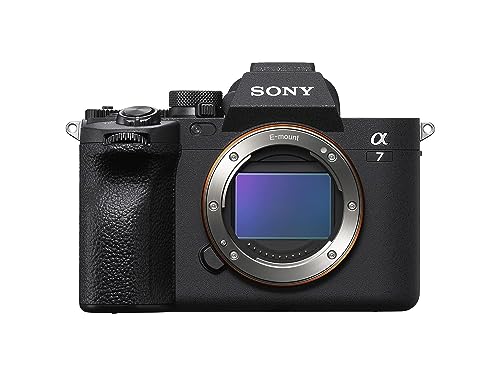
- The Sony Alpha 7 IV is the club benchmark: autofocus in near-dark and files that survive the editing room.
- The Canon EOS R6 Mark II matches it for handheld work, with stabilisation for the slow-shutter light-trail shots.
- The Fujifilm X100VI is the discreet guest’s camera — leaf-quiet, compact, with a built-in lens that sees in the dark.
- The Panasonic LUMIX S5II serves the photographer who also films the night for the venue.
- Work with the lighting rig, not against it: time your frames to the sweeps, and expose for faces, not rooms.
In this guide
Quick Picks
| Camera | Badge | Why it survives the dancefloor |
|---|---|---|
| Sony Alpha 7 IV | Best for clubs overall | Eye autofocus in near-darkness and clean high-ISO files for faces under moving light. |
| Canon EOS R6 Mark II | Best handheld in clubs | Stabilisation for dragged-shutter colour, plus Canon’s kind rendering of skin under LEDs. |
| Fujifilm X100VI | Most discreet | A pocketable fixed-lens camera with a silent leaf shutter and film-like night colour. |
| Panasonic LUMIX S5II | Best for club film too | Full-frame night stills and stabilised video for venues that want both from one body. |
| Fujifilm X-T5 | Best for printed club work | High resolution and dials you can work by feel when the room goes dark and loud. |
| Sony ZV-E10 II | Best starter for venues | Strong autofocus and video in a light body, at a price a resident photographer can justify. |
How We Chose These Picks
We tested the only way this genre allows: in the dark, on moving people, under coloured light. The first filter was autofocus at light levels where the eye itself is guessing — a face crossing a dancefloor between light sweeps, lit for a fraction of a second at a time. Cameras whose focus hunted or latched onto hands, glasses, and light fittings were cut. The survivors find eyes in the gloom and, more importantly, hold them through the subject’s next move.
Files were judged under club colour, which is its own examination. Magenta and cyan washes destroy lazy colour science; skin goes waxy or corpselike, and no editor enjoys the rescue. We favoured cameras whose rendering — and whose RAW files’ flexibility — keep faces human under LED rigs, and whose highlight handling survives a strobe or a follow-spot arriving mid-frame without blowing the face to white.
Handling was the third filter, performed blindfold in spirit: can the photographer change ISO, aperture, and focus mode by thumb and memory, in a crowd, mid-song? Dials beat menus after midnight. Shutter sound mattered too — the club is loud, but the quiet corners (the lounge, the terrace, the moment between tracks) reward a camera that can shoot without announcing itself, and one pick’s leaf shutter is effectively silent.
We also considered the morning after, because club work is a delivery business: how fast do the files become a gallery? Cameras whose in-camera colour is trustworthy shorten the edit to a cull and a crop — a virtue the Fujifilm pair press hard — while the RAW-first bodies reward the photographer whose rate includes the editing hour. Neither workflow is superior; they price the night differently, and a resident should know which one they are selling before the venue does the arithmetic for them.
Finally, the lens question, which in this genre is nearly the whole question. A club camera is a fast prime with a body attached; systems were scored on their affordable wide-aperture glass at the focal lengths clubs use — wide for the floor’s energy, standard for portraits, nothing long, because the photographer works inside the crowd, not across it. Every pick here has its fast glass available at prices a working resident can reach.
How Do You Photograph a Club Without Flash?
First, an honesty about the first hour: it belongs to the room, not the portfolio. Arrive when the doors open, photograph the early light states while the floor is thin, learn where the beams land and where the dead zones pool, and introduce yourself to security and the bar. The photographer who spends the first hour this way owns the rest of the night; the one who starts shooting the headliner’s crowd cold spends it discovering, publicly, what the regulars already knew.
You borrow the rig. The lighting operator is running a show with its own rhythm — sweeps, drops, strobes on the beat — and the club photographer’s core skill is anticipation: learning the rig’s patterns in the first hour and timing frames to the moments the light visits the faces. Shoot in short bursts as a sweep crosses a group, not continuously into the dark between sweeps. The keeper rate transforms, and so does the battery’s evening.
Colour discipline separates the resident from the visitor as surely as focus does. Club light is a costume the room wears — magenta at midnight, cyan at the drop, the bar’s amber all night — and the photograph that corrects it all to daylight has documented nothing but faces in a void. Keep the room’s colour in the frame; correct only the skin. The cameras here were chosen partly for how gracefully they allow that split decision, in-camera or in the edit, because it is the genre’s whole aesthetic in one instruction.
Exposure is a negotiation with movement. Faces need a shutter fast enough to hold expression — but the genre’s signature shot, the dragged shutter, deliberately breaks that rule: a slower exposure lets the lights paint trails while the subject stays recognisable, especially with the stabilised picks here. Both techniques live in the same evening, sometimes in the same song. The photographers who last in this work are bilingual in shutter speeds, switching by feel as the track changes.
Metering deserves its sentence, because club light defeats averages: a camera left to judge the whole frame will expose for the darkness and cremate the faces. Spot or centre-weighted metering on the subject, exposure compensation ridden like a fader, and the highlight warning treated as a colleague — that is the working method. Every pick here offers the tools; the photographer’s job is to set them before the doors, because the floor at midnight is no place to learn a menu.
Position is the third skill, and it is social before it is optical. Work the room’s edges and the bar’s ends, where faces turn toward the light and the crowd’s density gives you foreground and depth. Ask with a gesture, accept the no with a smile, and let the regulars learn your face across the first hour — a known photographer gets the unguarded frames a stranger with a bigger lens never will. The camera’s discretion helps, but the photographer’s manners are the real access pass.
Which of the Best Cameras for Nightclub Photography Fits Your Residency?

Sony Alpha 7 IV — Best for clubs overall
The Alpha 7 IV is the camera working club photographers reach for when the venue matters, and the reason is trust in the dark. Its autofocus finds eyes in light so thin the photographer is composing by silhouette, and it holds them through the head-turns and hair-tosses that are the dancefloor’s native language. Paired with a fast prime, it produces files at sensitivities that read like typographical errors — clean enough for the venue’s campaign, honest enough for the photographer’s portfolio.
The files’ editing manners complete the case. Club light arrives in colours no white balance was designed for, and the Sony’s RAW files bend without breaking: magenta casts correct, skin recovers, highlights from a strobe’s kiss roll off instead of clipping to chalk. A resident delivering fifty edited frames by morning needs exactly that forgiveness, nightly.
Sony’s lens bench is the genre’s deepest — fast wides and standards from Sony and a crowd of third parties, at prices from resident-friendly to flagship. The club kit assembles itself inside this system at almost any budget, and the second body, when the residency grows, is a known quantity rather than a new education.
Its costs are the professional usuals: size against the discreet picks, a menu system that wants configuring before the shift rather than during it, and a price that assumes the work is paid. Configure it at home — focus modes on custom buttons, ISO where the thumb lives — and on the floor it disappears into the hand, which is the highest compliment a working camera can earn.
- Sensor: full-frame, 33 megapixels
- Autofocus: eye detection in very low light
- Files: RAW flexibility for club colour correction
- Stabilisation: in-body, five-axis
- System: Sony E — deepest fast-prime bench
Strengths
- Focus that works where the photographer can barely see
- High-ISO files that survive professional editing
- Fast lenses at every price a resident meets
Trade-offs
- Larger presence than the discreet picks
- Needs pre-shift configuration to feel instant
- Full-frame kit pricing throughout
The booth portrait is its signature assignment: the DJ mid-set, lit by the desk and the first row’s glow, headphones half-on, the crowd a coloured weather system behind. Lesser cameras focus on the headphones, the mic, the nearer hand — the Sony finds the eye and keeps it through the drop. Venues print that frame; it is worth arriving with the camera that never misses it.
Battery economy on the long shift is better than its class suggests, provided the photographer disciplines the screen — the viewfinder for composing, the screen for the occasional check. Two batteries see a resident through doors-to-close with frames to spare, and the USB charging option covers the emergency top-up from the booth’s power bank during the support set.
Best for: resident and professional club photographers. Not suited for: guests wanting an invisible camera in a jacket pocket.

Canon EOS R6 Mark II — Best handheld in clubs
The R6 Mark II is the Canon for the floor, and its party trick is stillness in the photographer’s hands. Its stabilisation — class-leading with Canon’s lenses — turns the dragged-shutter technique from a lottery into a method: lights streak into ribbons, the subject’s face holds, and the genre’s signature image becomes something you can produce on request rather than by accident. On a five-hour shift where a tripod is unthinkable, that steadiness is stamina by other means.
Canon’s colour science earns its reputation nightly under LED rigs. Skin is where club photographs live or die, and Canon renders it with a kindness that survives magenta washes better than most — faces stay faces, which is what the guests are paying the venue, and the photographer, to prove. Its eye autofocus matches the Sony’s determination in the gloom, with subject detection that shrugs off glasses, hats, and the occasional mask.
The body’s ergonomics suit the long shift: a grip that does not fight the wrist at hour four, controls placed for thumbs that cannot look down, and a viewfinder honest about exposure in a room where the screen would be a beacon. Its burst is quick enough for the confetti moment and the DJ’s hands-up cue — the two frames every club gallery is judged by.
Against the Sony it trades a little resolution and lens-bench depth for the stabilisation and the colour. Residents choose between them by religion and by which fast primes they already own; the work itself will not separate them, and neither will the dancefloor.
- Sensor: full-frame, 24.2 megapixels
- Stabilisation: in-body, strongest for handheld drag
- Colour: Canon skin rendering under LED light
- Autofocus: eye and subject detection in low light
- System: Canon RF fast primes
Strengths
- Dragged-shutter shots on demand, handheld
- Faces stay human under club colour
- Built for the five-hour shift’s ergonomics
Trade-offs
- Fewer megapixels for gallery cropping
- Lens bench deep but pricier at the fast end
- Not the discreet option in a quiet lounge
Terrace and smoking-area work — the club’s quieter theatres, where the light is a heater’s glow and a string of bulbs — suits it equally: the stabilisation holds the slow frames, the colour keeps faces warm rather than waxy. A resident’s gallery is half dancefloor energy, half these breathing spaces, and the Canon is the rare body equally fluent in both registers.
Its video is no passenger either — the resident asked for a recap clip at midnight can deliver it from the same body, stabilised and in colour the venue recognises as its own. Hybrid briefs used to be the Panasonic’s argument in this guide; the Canon makes it too, with the stills photographer’s autofocus as the tiebreaker for stills-led nights.
Best for: residents who live on dragged shutters and portraits. Not suited for: photographers needing maximum crop room.

Fujifilm X100VI — Most discreet
The X100VI is the camera for the photographer who is also a guest — the friend with the good eye, the promoter who shoots the room between conversations, the resident who wants the floor to forget the camera exists. Its fixed lens is fast and wide in the classic reportage way, its leaf shutter is silent in the literal sense, and the whole instrument rides in a jacket pocket between frames. In a genre where access is social, that invisibility is a technical specification of the first rank.
Do not mistake the discretion for weakness. The sensor is high-resolution and stabilised, the autofocus finds faces in club gloom capably, and Fujifilm’s film simulations were practically designed for this light — night colour with the contrast and grain of the club photography tradition, finished in-camera while the night is still happening. Its built-in flash exists, and this guide’s advice is to leave it off and let the lens’s speed do the work the genre demands.
The built-in neutral-density filter is a quiet gift for the dragged-shutter artist: slow exposures in the booth’s brighter light without extra glass. And the hybrid viewfinder lets the photographer compose optically, like the rangefinder tradition the club’s candid style descends from, saving battery and keeping an eye on the room beyond the frame.
The fixed lens is the honest limit: no zoom, no swap, the photographer’s feet do the framing — which most club veterans call a discipline rather than a deprivation. One focal length, learned completely, out-shoots a bag of options in a crowd. Buy it as a philosophy as much as a camera, and it may be the only pick here still being carried in five years, because it asks so little room in a life.
- Sensor: APS-C, 40.2 megapixels, stabilised
- Lens: fixed fast wide prime, leaf shutter — silent
- Colour: film simulations for night colour in-camera
- Extras: built-in ND filter for dragged shutters
- Body: jacket-pocket, rangefinder styling
Strengths
- Invisible in the room — access other cameras lose
- Silent shutter for lounges and quiet moments
- Night colour finished in-camera, no edit queue
Trade-offs
- One focal length, forever — feet do the zooming
- Focus trails the Sony and Canon in the deepest dark
- Availability and price reflect its cult status
Promoters who shoot their own nights describe its other gift: it photographs like a memory rather than a report. The film simulations, the fixed lens’s consistent rendering, the grain the sensor keeps at high sensitivity — the gallery feels like the night felt, which is the precise product a venue sells. Technical perfection is available elsewhere in this guide; atmosphere, bottled, is this camera’s department.
A note for the photographer who hosts as they shoot — the promoter, the birthday’s organiser, the friend who booked the table: this is the only camera here that never makes its owner choose between the night and the photographs of the night. It rides along, takes the frames that matter in seconds, and returns to the pocket before the song changes. Some cameras document a life; this one fits inside it.
Best for: discreet, guest-style club photography. Not suited for: photographers who need focal-length variety nightly.

Panasonic LUMIX S5II — Best for club film too
Venues increasingly want the night twice: stills for the gallery, film for the reel. The S5II is the one-body answer. Its full-frame sensor gives stills the same low-light generosity as the class leaders, and its video — stabilised for walking shots through the crowd, with autofocus that finally keeps faith with moving subjects — turns the resident into a two-format documentarian without a second bag. The DJ’s set, the crowd’s peak, the confetti drop: one camera, both records.
Stabilisation is the shared virtue. In stills it steadies the dragged shutter; in video it smooths the walk from booth to bar into something watchable. Long sets are its other professional courtesy — the camera records through the night without the heat anxiety that interrupts lesser bodies mid-headline-set, a reliability venue managers notice and rebook.
Its stills colour and files are fully professional, and the L-mount’s lens bench — Panasonic, Sigma, and Leica sharing one mount — offers fast primes at working prices. The photographer building a club kit from zero will find the system’s value argument hard to beat, particularly in the fast standard primes the genre lives on.
It concedes a half-step of autofocus certainty to the Sony in the very darkest, fastest moments, and its burst pace is a working tool rather than a sports instrument. For the venue that wants film and stills from one trusted body, those are the right concessions — and for pure stills residents, it remains a thoroughly credible alternative rather than a compromise.
- Sensor: full-frame, 24.2 megapixels
- Video: stabilised, long-set stamina, strong autofocus
- Stabilisation: in-body for stills and film
- System: L-mount fast primes across three brands
- Files: professional stills for gallery delivery
Strengths
- One body for the gallery and the reel
- Recording stamina across a whole night
- Stabilisation serves both crafts equally
Trade-offs
- Focus a half-step behind Sony in extreme dark
- Burst pace is working, not sporting
- Full-frame size on a crowded floor
Livestream-adjacent work is its growing parish: the set streamed from the booth, the backstage interview, the aftermovie assembled by morning. A resident fluent in this camera’s video becomes the venue’s media department in one salary, and the S5II’s stamina — through a headline set, in a hot room, without a fan’s complaint reaching the recording — is the specification that makes the promise credible.
Its colour in stills deserves the last word in this entry, because film-first cameras are often suspected of treating stills as a second language. The S5II’s photographs stand in the same gallery as the leaders’ without a caption of apology — the sensor is a stills sensor that also films, and a resident whose brief is seventy-thirty stills will never feel the ratio in the files.
Best for: venues wanting stills and film from one resident. Not suited for: pure-stills purists counting every focus percentage.

Fujifilm X-T5 — Best for printed club work
The X-T5 is the club photographer’s printing press. Its high-resolution sensor captures the night with a detail that survives the venue’s poster, the artist’s press shot, and the photographer’s exhibition print — confetti individual, haze textured, faces in the third row still faces. For the photographer whose club work travels beyond the social feed, that resolution is the difference between a gallery post and a portfolio.
Its dials are the night-shift argument: shutter, ISO, and exposure compensation sit on the body’s top plate as physical controls, settable by a thumb that has memorised them, in a room too loud and dark for menus. Working photographers describe a flow state this enables — the camera adjusted like an instrument, without a glance — and in a genre of seconds, flow is a feature.
Fujifilm’s colour gives the prints their signature: film simulations that treat club light as a palette rather than a problem, with monochrome options that turn a laser show into silver gelatin drama. The in-body stabilisation steadies the slower techniques, and the system’s fast primes are light enough that a two-lens club kit weighs less than one full-frame zoom.
Its autofocus, while much improved and entirely workable, is the honest concession against the Sony and Canon in the fastest, darkest passages — the photographer works a half-beat more deliberately. For considered club work and printed output, that half-beat buys resolution and colour nothing else here matches at the size.
- Sensor: APS-C, 40.2 megapixels
- Controls: physical dials for the exposure triangle
- Stabilisation: in-body image stabilisation
- Colour: film simulations, in-camera finishing
- System: Fujifilm X fast primes, light kits
Strengths
- Resolution for posters and exhibition prints
- Dials operable by feel in the dark
- Light two-lens kits for long shifts
Trade-offs
- Focus a half-beat behind the full-frame leaders
- APS-C ceiling in the very deepest dark
- Large files fill cards on busy nights
Album and artwork commissions grow naturally from its files: the resident whose club prints hold up becomes the artist’s photographer for sleeves and press kits, where the night aesthetic is the brand. That career path — floor to portfolio to commissions — is paved with resolution and colour, and the X-T5 is the only APS-C body here whose files need no apology at any of its stages.
Its weather sealing, an odd specification for a club camera, earns its place at festivals and open-air stages — the resident who follows the season outdoors will bless it in the first rain-swept headline set. Club photography’s calendar is increasingly a festival calendar, and a camera that treats a wet August night as a venue rather than an emergency travels with the work.
Best for: club photographers who print and exhibit. Not suited for: the fastest pit action in near-black rooms.

Sony ZV-E10 II — Best starter for venues
Every resident started somewhere, and the ZV-E10 II is where this guide sends the beginner with a first venue booking. It carries Sony’s autofocus lineage — eyes found and held in club gloom with a reliability that lets a new photographer think about timing instead of focus — inside a body light enough for a whole night’s wrist and priced so a starting resident can own it outright, fast prime included, for less than a flagship’s body alone.
Its creator heritage serves the modern venue brief: the same camera shoots the gallery stills and the vertical clips the venue’s socials run on, with a screen that flips for the DJ-booth selfie with the headliner and microphone options for the interview in the green room. Small venues increasingly hire exactly this hybrid, and the camera was designed by people who knew it.
Stills quality is genuinely strong — the APS-C sensor’s night files, behind a fast prime, satisfy club galleries and feeds without apology. What it lacks against the full-framers is the deepest-dark margin and in-body stabilisation; the starter’s technique — faster shutters, braced elbows, the wall as a tripod — covers the gap while the craft forms, which is how the craft has always formed.
Buy it as the apprenticeship instrument: a year of residencies on this body teaches a photographer everything about light, timing, and rooms, and the E-mount lenses bought for it carry forward to the flagship when the bookings do. Few starter cameras can promise their owner that the first lens purchase is also a permanent one.
- Sensor: APS-C, 26 megapixels
- Autofocus: Sony eye detection, people and animals
- Video: strong 4K for venue socials
- Body: light for all-night carrying
- System: Sony E — lenses carry to flagship bodies
Strengths
- Professional-grade focus at a starter price
- Stills and vertical video in one light body
- Lens purchases survive the eventual upgrade
Trade-offs
- No viewfinder — screens only, all night
- No in-body stabilisation
- Deepest-dark margin below the full-framers
Student-night and bar-circuit work is its natural first economy: smaller rooms, friendlier light, venues whose socials are the whole marketing department. A starter resident can build a portfolio and a reputation on this body across a season of such rooms, arriving at the bigger clubs with the two assets that actually get booked — a gallery and a name the promoters already trust.
Its size is a social asset the specifications understate: guests relax sooner for a small camera, and a starter resident — whose access is still being negotiated by the room — will collect candids with this body that a flagship’s presence would have performed out of existence. Skill grows into bigger cameras; trust, once lost to a looming lens, does not grow back on the same night.
Best for: new residents and hybrid stills-video briefs. Not suited for: dragged-shutter specialists or viewfinder traditionalists.
How Do You Handle Consent and Courtesy on a Dancefloor?
Start with the photograph’s afterlife, because the dancefloor’s consent is given for a night, not for eternity: a guest’s joyful frame in the venue’s gallery is one thing, and the same frame in an advertisement two years later is another. Residents should know which use they are shooting for and flag the frames whose subjects they would re-ask. The camera cannot track consent — but the photographer’s notebook can, and in a small scene, that notebook is a reputation.
The venue’s rules come first: most clubs that hire a photographer operate on implied consent within a posted photography policy, and the resident’s job includes knowing it, pointing guests to it, and honouring every opt-out the moment it is expressed — a hand over the lens is a sentence, and the answer is a smile and a lowered camera. Photographers who treat that exchange graciously become part of the venue’s furniture; photographers who argue it become a story the venue tells once.
The close portrait has its own etiquette: a gesture, a nod, a shown screen afterwards. The dancefloor’s candids are the genre’s glory, but the portrait a subject has agreed to — lit by the rig, framed with care — is often the frame they ask for, share, and tag, which is the venue’s marketing doing itself. Build the habit of showing the back of the camera; it costs three seconds and buys the room.
Delivery etiquette closes the loop: the venue’s gallery is the venue’s property in spirit, delivered in the venue’s preferred crops and sizes, with the guests who opted out honoured in the edit as they were on the floor. Photographers who build the opt-out into their cull — swiftly, without being chased — find that venues stop auditing and start trusting, and trust, in this trade, is the residency.
Finally, the photographer’s own safety and kit: a strap worn across the body, a lens cloth in every pocket against the haze’s film and the occasional drink, and a bag that lives in the booth, never on the floor. Clubs are kind to photographers who are kind to clubs — the booth’s corner, the bar’s water, the security team’s nod are earned across a season of courtesy, and they are worth more than any specification in this guide.
What Does a Working Club Kit Look Like, Beyond the Camera?
Begin the kit with the photographer’s own archive of failures, because a working bag is a memoir: the night the card filled during the headline set teaches the rotation; the night the strap failed teaches the wrist loop; the night the lens filmed over by midnight teaches the cloths. New residents should borrow this memoir wholesale — it is written above, item by item — rather than enrolling in the same expensive school.
Two fast primes, as the FAQ insists — but the bag around them matters on a working night. Two batteries minimum, because high-ISO work and constant focusing drink power, and a battery changed in the booth during the headliner’s first track is a battery changed too late. Cards in rotation, formatted at home, never at the venue. A small torch you will use twice a year and bless both times. Ear protection that still lets you hear the room — the photographer’s hearing is a career asset, and the booth’s edge is a loud office.
Clothing is kit, too: pockets for the cloths and the spare card, shoes that survive a spilled floor, black that does not announce you. The resident’s silhouette should read as staff, not as audience — the crowd parts differently for each, and the photographs notice the difference. A lanyard or pass, visibly worn, completes the uniform that turns “who is that with a camera” into “that’s the photographer” — the sentence on which the night’s access runs.
The edit kit waits at home and deserves the same professionalism: a calibrated screen if the work is printed, a backup that runs before sleep, and a delivery habit — the gallery to the venue by the agreed hour, every time. Residencies are renewed on reliability as much as on brilliance, and the photographer whose files arrive is the photographer whose camera gets discussed in guides like this one.
The photographer’s own night deserves a line in the kit list, because this work is a lifestyle before it is a job: the hours invert, the weekends belong to other people’s leisure, and the body pays for both. The residents who last build the recovery into the week — daylight, sleep discipline, one night that is theirs — with the same seriousness as the battery rota. A guide about cameras can only point at that truth, but it would be dishonest to omit it from the equipment list.
Finally, the unphotographable asset: the relationship with the lighting operator. Learn their name in week one. Their rig is your studio, their cues are your shutter’s metronome, and the night you are invited to call a lighting state for the venue’s big photograph is the night you have become part of the show. No camera in this guide can buy that; every camera in this guide benefits from it.
How Do the Six Nightclub Cameras Compare?
| Camera | Sensor | Dark focus | Shutter | Best club role |
|---|---|---|---|---|
| Sony Alpha 7 IV | Full-frame | Best here | Electronic silent option | Resident benchmark |
| Canon EOS R6 Mark II | Full-frame | Excellent | Electronic silent option | Dragged-shutter handheld |
| Fujifilm X100VI | APS-C | Good | Leaf — truly silent | Discreet guest work |
| Panasonic LUMIX S5II | Full-frame | Very good | Electronic silent option | Stills plus film |
| Fujifilm X-T5 | APS-C, high-res | Good | Electronic silent option | Printed club work |
| Sony ZV-E10 II | APS-C | Very good | Electronic silent option | Starter resident |
What Mistakes End a Club Photographer’s Night Early?
A mistake of ambition opens the list in most post-mortems: trying to photograph the whole room in every frame. The wide establishing shot has its place — one per hour, for the venue’s sense of scale — but the gallery that books the next residency is built at conversational distance, where the light is a face’s width and the emotion is legible. Beginners stand back with the wide lens; residents move in with the standard one, and the difference is visible from across the internet.
The flash mistake is the genre’s cardinal sin, and it is usually a settings accident rather than a decision: the pop-up or hotshoe flash firing into a moment the rig had lit perfectly, flattening faces and announcing the photographer to the whole floor. Disable it, tape the shoe if you must, and let the fast lens earn its price. The second mistake is chimping through the drop — head down in the screen, reviewing, while the night’s best thirty seconds happen above it. Review in the lulls; the music tells you when they are.
There is also the battery-and-card version of the same sin: arriving with the kit half-charged from last night’s edit, formatting a card at the booth while the room fills. Club nights punish improvisation in logistics exactly as they reward it in framing. The professional’s evening begins at home — charged, formatted, configured — and the floor never learns what it cost.
Third, the wrong shutter dogma: the purist who freezes everything loses the light’s motion, and the artist who drags everything loses the faces. The working club photographer carries both and lets the track decide. Fourth, ignoring the haze: it films lenses within the hour, softening every frame by degrees the photographer blames on focus. The cloth, every pocket, every lull — that is the maintenance schedule.
There is also the rookie’s over-delivery: eight hundred frames sent to the venue by morning, uncleaned and unculled, transferring the photographer’s job to the promoter’s inbox. The professional delivers fewer, finished, and on time — the gallery that can be posted whole. Culling is not vanity; it is the second half of the exposure, and the cameras here merely make the first half possible.
And the social mistake that outlasts all technical ones: treating the crowd as scenery. The guests are the venue’s customers and the photograph’s subjects, and the photographer who forgets it — blocking views, demanding space, arguing the opt-out — will be unbooked by the second weekend regardless of the portfolio. In this genre, manners are a technical specification.
Final Recommendation
For the working resident, the Sony Alpha 7 IV is the default for a reason — focus you can trust in the dark is the whole job — with the Canon EOS R6 Mark II the equal choice for the photographer whose style lives on dragged shutters and Canon colour. The Panasonic LUMIX S5II takes the hybrid brief, the Fujifilm X-T5 the printed one, and the little X100VI remains the connoisseur’s instrument for the nights when being a guest matters more than being a crew. Starters should begin on the Sony ZV-E10 II and a fast prime, and let the bookings argue for the upgrade. Whichever body you carry, the rig is your lighting department — learn its rhythm in the first hour, and the night will do half your work for you. The other half is manners, timing, and a fast lens — and of those three, only the lens can be bought, which is why this guide spends its length on the cameras that hold it best. Choose the body your hands trust at 2 a.m., learn its buttons until they are reflexes, and spend the rest of your budget and your season on the room itself — its light, its regulars, its rhythm — because that, and not the sensor, is where club photographs actually come from.
Related guides
- Best Cameras Small for Concert Photography: Pocket and Compact Picks for Low Light, No Flash
- Best Cameras for Wedding Reception Photography: Dancefloor, Speeches and Low Light
Frequently Asked Questions
What lens do club photographers actually use?
Fast primes, almost exclusively: a wide standard for the floor’s energy and a short portrait length for faces, both with the widest apertures the budget reaches. Zooms with slow apertures starve in club light. One fast prime, learned completely, is the classic resident’s kit — the second lens is bought when a specific frame keeps escaping the first. If the budget forces a choice between a faster body and a faster lens, take the lens every time: in club light, aperture is exposure, and exposure is the photograph.
How high does ISO really go in a club?
Higher than daylight photographers believe, and the full-frame picks here are chosen because their files remain deliverable at those levels. The discipline is to expose properly at the high sensitivity rather than underexpose at a lower one and lift later — a correctly exposed high-ISO file from these cameras edits cleaner than a rescued dark one, every night of the week. Set your ceiling in daylight, by printing a test frame at the size your venue uses, and the number stops being an argument and becomes a setting.
Can I photograph a club as a guest with a small camera?
Many clubs allow compact cameras while barring interchangeable-lens bodies without a pass — which is precisely the X100VI’s parish, and the RX100-style compacts in our other guides share it. Check the venue’s policy before the night, respect the opt-outs, and remember that a guest’s camera carries a guest’s obligations: the photographs are for joy, not for a portfolio the subjects never agreed to.
How do I keep faces sharp when everyone is moving?
Focus on the eye with the camera’s tracking, use a shutter fast enough for the gesture you want — expressions hold at moderate speeds, full dance motion wants faster — and time the frame to the movement’s pause: the top of the jump, the turn’s still point, the laugh’s crest. Club photographers shoot the rhythm’s rests, not its peaks, and the light sweep’s arrival is usually the metronome. Practise on the room’s most kinetic regulars early in the night, when the stakes are low, and your timing will be calibrated by the time the headliner makes it matter.
Do I need a second body for a residency?
Not at first. One body, two fast primes, two batteries, and cards in rotation cover a resident’s night; the second body arrives with the first wedding-scale booking or the venue that cannot tolerate a failure. When it does, matching systems matter — the starter Sony growing into the flagship is the path this guide’s picks quietly arrange. Until then, a borrowed or hired backup for the year’s biggest night is the professional’s arithmetic: insurance bought by the evening, not by the decade.
How do I protect my camera in a club?
A cross-body strap, a wrist loop for the pit, lens cloths in rotation against haze and splashes, and a booth-based bag for the lulls. Keep drinks at a choreographed distance — set yours where your elbow never travels — and wipe the lens in every quiet minute. The camera that survives a season of clubs is maintained like a musical instrument, because on that floor, it is one.
Related Guides
For the still, tripod end of the night, read our guide to cameras for night pictures. Beginners building a first kit should see our new photographer camera guide, and venues wanting motion should read our beginner filmmaking camera roundup. One last habit from the residents interviewed for this guide, offered free: arrive for the soundcheck hour once a month, when the room is empty and the rig is being tested — it is the only rehearsal this genre offers, and the photographers who take it are the ones whose midnight frames look like luck and are not. Luck, in this trade, is usually preparation that has learned to keep a straight face. The camera is where the preparation starts — choose it once, choose it for the dark, and then go and be lucky on purpose, every weekend, until the venue cannot imagine its nights without your version of them. That is the residency every club photographer is actually auditioning for, every single weekend, one honest frame at a time — and the right camera is the one still working, unnoticed, when the lights finally come up.


