ilcastellomenu.com is reader-supported. When you buy through links on our site, we may earn an affiliate commission.
Where to Buy
Production video is where cameras stop being hobbies and start being crew. The best cameras for production video are not the ones with the most impressive demonstration reel; they are the ones a producer can schedule around — bodies that record all day without heat drama, match each other in the grade without a fight, feed a director’s monitor without a tangle, and produce files a client can archive, re-edit and re-deliver in three years when the campaign returns. On a set, reliability is a picture quality.
That is why this guide ranks differently from a vlogging or stills roundup. Peak resolution matters less than the codec’s manners in the edit; a headline frame rate matters less than whether the third hour of an interview looks like the first; and autofocus is judged not by its party tricks but by whether a solo operator can trust it with a paying client’s only take. Production is a promise-keeping business, and its cameras are promise-keeping machines or they are liabilities with lenses.
The six bodies below form the realistic production ladder for independent and small-team work: the hybrid full-frame flagships that anchor most modern sets, a colour-beloved alternative for the deliberate cinematographer, and two smaller bodies that serve as B-cameras, gimbal cameras and gateway drugs to a production career. None is a broadcast truck in a box, and the guide will say plainly where the ladder ends and true cinema cameras begin — because a producer who knows that border budgets honestly.
One theme will recur until it becomes the guide’s refrain: on set, the camera is the cheapest thing to upgrade and the most expensive thing to fail. A missed take costs the room — the talent’s hour, the location’s window, the client’s confidence — and every verdict below is priced against that room, not against a reviewer’s bench.
A final scope note: production here means the work independent professionals are actually hired for — corporate films, commercials for real businesses, documentaries, events, branded content and music work at honest scales. Hollywood features have their own rental houses and their own gods; this guide serves the republic of working sets, which is larger, busier and more interesting than it gets credit for.
Key Takeaways
- Production ranks reliability over spectacle: all-day recording, matched colour and edit-friendly files beat headline specifications.
- The Panasonic LUMIX S5II is the independent set’s anchor — cooling, monitoring tools and colour a grader can trust.
- The Sony Alpha 7 IV is the ecosystem choice: crews, rentals and second bodies everywhere, with autofocus a solo operator can trust.
- The Canon EOS R6 Mark II brings the colour clients point at and ask for, with low-light grace for real locations.
- The Fujifilm X-T5 serves the deliberate production — a filmic look in camera for fast-turnaround branded work.
- The Sony ZV-E10 II and Canon EOS R10 are the professional B-camera and gimbal tier: matched angles without flagship money.
In this guide
Quick Picks
| Camera | Badge | Why it earns its place |
|---|---|---|
| Panasonic LUMIX S5II | Best production anchor for independents | Active cooling, professional monitoring and honest colour for full working days. |
| Sony Alpha 7 IV | Best production ecosystem | The crew-and-rental standard: autofocus to trust, bodies and lenses everywhere. |
| Canon EOS R6 Mark II | Best colour clients ask for | Warm, flattering rendering and low-light grace for interviews and real locations. |
| Fujifilm X-T5 | Best in-camera look for fast turnarounds | Film-born colour that lets small productions deliver a graded look straight from the set. |
| Sony ZV-E10 II | Best production B-camera and gimbal body | Sony-matched colour and creator autofocus in a light body for second angles. |
| Canon EOS R10 | Best value second angle for Canon sets | Canon colour and vehicle-grade tracking in a light, keenly priced production utility. |
How Did We Choose Cameras for Production Work?
Testing was organised as work, not as review: a two-day corporate shoot with interviews and office B-roll, a one-day product commercial against a client’s brand colours, a documentary day following a craftsman through changing light, and an evening event where nothing could be asked to happen twice. Each body worked full production days — rigged, monitored, powered from the set’s systems, feeding the edit that night — because production virtues only appear under production loads.
Thermal and endurance behaviour headed the scoring for the reason the introduction gave: the interview that stops itself at minute forty is not a specification disappointment, it is a professional incident. Bodies were run at their working resolutions for session lengths productions actually book, in warm rooms, under lights, and their honesty across the third hour was weighted above their brilliance in the first ten minutes.
Colour was judged as a workflow property: how the files grade, how two bodies of the same make match, how skin survives a client’s brand palette being imposed in post, and how much of the set’s look can be baked in confidently for fast turnarounds. A production camera’s colour is a promise to the edit, and the edit was in the room for every verdict.
Audio, monitoring and rigging — the unglamorous triad — were scored as first-class criteria: headphone and microphone provisions, the quality of the monitoring tools a focus puller and a director actually use, timecode and sync friendliness where it exists, and how the body behaves on a gimbal, a tripod and a shoulder across a twelve-hour day. Sets are built from these fittings, not from sensors alone.
Finally, each body was judged on its ecosystem’s production reality: can a second body be rented in a strange city, do the lenses exist at a hire shop, will a freelance operator arriving with their own kit match yours. Production is a networked trade, and a camera’s value includes the network that shows up with it — a criterion no laboratory can measure and no working producer would omit.
One production reality ran beneath all the scoring and should be surfaced before the verdicts: every body here was also judged as a stills camera for the deliverables around the film — the poster frame, the press photograph, the thumbnail that must stop a scroll. Hybrid competence is no longer a bonus in the republic’s economics; it is a line on the call sheet, and bodies that cover it shrink the crew the client must feed.
What Does ‘Production-Ready’ Actually Mean on a Real Set?
It means the camera’s behaviour is boring in the specific ways money requires. It starts when asked, records until told otherwise, exposes what the monitor says it is exposing, and writes files the edit ingests without a conversion ritual. Every one of those sounds like a minimum until a set has watched a lesser body violate one at a client’s expense — after which the producer’s whole purchasing philosophy reorganises itself around boredom, correctly.
Production-ready also means legible to a crew. A body whose menus a hired operator can navigate in the dark of a venue, whose connections are where hands expect them, whose media and batteries are the ones already in the production’s cases — such a body saves the minutes that sets bleed. The flagships in this guide are production-ready partly because a generation of crews has standardised on their dialects.
And it means the files are finished when the day is. Production economics run on turnaround: the corporate film delivered this week, the event film tonight. A camera whose footage needs heroic post before it can be shown has taxed every downstream hour, and the tax is priced into the verdicts below with the same seriousness as the sensor’s quality.
Why Do Productions Care About Codecs and Colour More Than Resolution?
Because the audience never sees resolution — they see the grade. A production’s look is built in post from the latitude the files provide: highlights that hold a window behind an interviewee, shadows that keep a dark suit’s texture, skin that can be warmed to a brand’s palette without breaking into bands. That latitude lives in the codec’s depth and the colour science’s manners, and it survives delivery compression in a way raw pixel counts do not.
Resolution’s honest production use is reframing — the interview tightened in post, the vertical cut extracted for a client’s socials, the stabilisation’s margin — and the bodies here all carry enough for those duties at professional levels. Beyond that sufficiency, extra resolution is storage, render time and card budget wearing a feature’s clothes, and producers who have paid for a season of it learn to ask the codec question first.
Matching is the third leg: a production rarely shoots one camera, and the grade must not announce which angle was which. Bodies from one maker, in one colour profile, cut together invisibly; mixed fleets spend the colourist’s hours on diplomacy. This is why the B-camera verdicts below are argued as family members of the flagships rather than as bargains in isolation.
How Does a Production Choose Between One Great Camera and Two Good Ones?
The interview answers it: two angles or none. A single magnificent camera produces one viewpoint of a conversation, and the edit of a conversation lives on the cut — the listener’s reaction, the speaker’s hands, the wide that lets a moment breathe. Most working productions therefore field a flagship A-camera and a humbler B, matched in colour, rather than a lone hero — and this guide’s ladder is deliberately built to be bought that way.
The exceptions are real and nameable: the single-operator documentary following action that will not repeat, where one great camera with a great operator outruns a divided attention; and the locked-off, lit, controlled production — the studio interview, the product film — where one angle is genuinely the design. Name your production’s grammar honestly and the fleet question mostly answers itself.
Budget follows grammar: the B-camera’s money is usually better spent humbly, because its footage is cut in seconds-long pieces inside the A-camera’s story, while the money saved buys the tripod, the monitor and the audio that the audience will actually perceive. Production purchasing is orchestration, and the verdicts below are written for conductors, not collectors.
Which Cameras Anchor a Working Production?
Three flagships with three philosophies, one artist’s instrument, and the professional second tier — ordered as a set would buy them: anchor first, then the colour alternative, then the angles that complete the fleet.

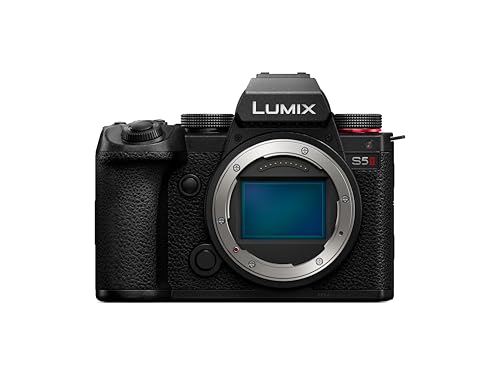
Panasonic LUMIX S5II — Best production anchor for independents
The S5II is the body this guide would hand a working independent and wish them luck, because its design reads like a producer’s checklist answered in order. Active cooling removes the thermal question from the day entirely — interviews run to their natural length, events are covered whole, and the third hour looks like the first. Its monitoring tools are a professional’s rather than a brochure’s: the exposure and focus information a solo operator needs to make promises to a client and keep them, on the camera, without a cage of accessories.
Panasonic’s colour is the set’s quiet diplomat: accurate enough for corporate work where brand colours are contractual, gentle enough on skin for the interview that carries the film, and consistent across the company’s range so a smaller Panasonic B-camera joins the fleet without a colourist’s diplomacy. Its autofocus, once the line’s famous hesitation, has matured into phase-detect reliability that documentary days in this testing never caught napping.
The L-mount’s multi-maker lens shelf completes the production case: glass at rental shops, glass at every price, glass that will outlive the body. For the independent whose camera must be anchor, workhorse and insurance policy in one, the S5II is the most complete answer this guide can give.
- Format: full-frame mirrorless
- Cooling: active, for full production days
- Monitoring: professional exposure and focus tools
- Colour: accurate, fleet-consistent
- System: L-mount lenses from several makers
Strengths
- The thermal question, deleted
- Tools a solo operator can promise with
- A fleet that matches itself
Trade-offs
- Ecosystem smaller than Sony’s
- Character is professional, not signature
- Larger than the B-tier bodies
Interview producers should register the S5II’s deepest virtue: it lets the conversation set the schedule. When a subject finally opens up at minute fifty, the camera that is still calmly recording — unheated, unhurried, unbothered — is not a convenience; it is the difference between the film’s best moment existing and not existing.
Its stabilisation serves the documentary half of production with equal discretion: the walk-and-talk, the workshop tour, the location reveal — handheld grammar that once needed a gimbal now survives on the body’s own steadiness for the short moves sets actually use, saving rigging minutes all day.
Best for: independent anchors, interviews and corporate fleets. Not suited for: buyers needing the largest rental ecosystem on earth

Sony Alpha 7 IV — Best production ecosystem
The Alpha 7 IV’s production argument is the network. It is the body a freelance operator most likely already knows, the one a rental house in a strange city most likely stocks, the one whose lenses fill the hire shelf and whose colour a colourist has a standing recipe for. A production is a temporary company of strangers and equipment, and the Sony minimises the strangeness — which, across a season of shoots, is worth more than any single specification in this guide.
As an instrument it earns the network honestly: autofocus a solo operator can trust with a walking subject and a shallow depth of field — the documentary interview’s hardest ask — files with the depth a grade needs, and a hybrid stills competence that serves the production’s photography duties, the behind-the-scenes and the client’s poster frame, from the same body. Many small productions run their whole visual department through this one model, in pairs.
Its concessions are the known ones: it asks more thermal respect than the cooled Panasonic on the longest, hottest records, and its menus reward configuration over improvisation. Within a professionally run day — media managed, sessions structured, a second body for the marathon records — those concessions rarely bind, and the ecosystem pays its dividend on every single shoot.
- Format: full-frame mirrorless
- Focus: trusted for solo documentary work
- Files: grading depth for client work
- Ecosystem: rentals, crews and lenses everywhere
- Hybrid: stills for posters and BTS
Strengths
- The network shows up with it
- Autofocus a lone operator can stake a take on
- One body for film and photography duties
Trade-offs
- Thermal respect needed on marathon records
- Menus reward setup, not improvisation
- Colour needs a deliberate profile choice
Productions that hire freelance operators should weigh the A7 IV’s dialect advantage concretely: an operator who arrives fluent needs no training hour, makes no menu mistakes at speed, and matches your existing fleet’s colour by reflex. Fluency is a line item, even when it never appears on an invoice.
Its stills strength also quietly serves the modern deliverable stack — the same shoot now owes the client frames for the poster, the press release and the feed — and a body that covers those without a second camera on the call sheet is a producer’s economy disguised as a feature.
Best for: crewed productions, rental-based fleets and hybrids. Not suited for: solo marathon records in hot rooms without a second body

Canon EOS R6 Mark II — Best colour clients ask for
Ask working producers which footage clients describe as beautiful and Canon’s name recurs with a regularity that is not nostalgia. The R6 Mark II’s colour — skin rendered warm and kind, locations given a gentle richness, highlights that roll rather than snap — produces the interview and the brand film that non-technical clients approve fastest, and approval speed is a production currency as real as any codec. Some cameras are bought for the edit suite; this one is bought for the client screening.
Its low-light files extend the production’s map: the restaurant at night, the workshop in winter dusk, the event where the light is the atmosphere and cannot be replaced. Where lesser bodies force a lighting plot onto locations that were hired for their reality, the Canon records the reality — a documentary virtue and a budget virtue simultaneously, since unlit locations are cheaper and truer.
Thermal discipline is its managed concession: structured sessions, interview blocks and professional pacing suit it perfectly, while the unbroken three-hour record in a hot room is the Panasonic’s home fixture. Productions that shoot the way productions are actually scheduled — in takes, in blocks, with resets — will meet the Canon’s limits rarely and its colour’s dividends daily.
- Format: full-frame mirrorless
- Colour: warm, client-pleasing rendering
- Files: graceful at high sensitivity
- Focus: subject tracking through gesture
- Stabilisation: in-body for handheld grammar
Strengths
- The fastest client approvals in this guide
- Real locations recorded as they are
- Skin that flatters without a fight
Trade-offs
- Marathon hot records are not its fixture
- Resolution crops less than the Sony
- Colour warmth is a house style, not neutral
Brand filmmakers should note the approval dividend in its commercial form: footage the client loves at first viewing shortens the revision cycle, and revision cycles are where small productions’ margins go to die. The R6 Mark II’s colour is, in this precise sense, a profit centre.
Its handheld steadiness also serves the run-and-gun documentary day — the market, the festival, the working harbour — where rigs slow the story down. A body that keeps real locations both beautiful and mobile covers the two halves of documentary production in one instrument.
Best for: brand films, interviews and real-location documentary. Not suited for: unbroken marathon recording in heat

Fujifilm X-T5 — Best in-camera look for fast turnarounds
The X-T5 serves the production whose turnaround forbids a colourist: the same-week brand film, the event delivered tonight, the creator-led commercial where the look must be decided on set and survive delivery untouched. Fujifilm’s film simulations are that decision pre-made by masters — colour palettes with decades of cinema and stills heritage — and a production that shoots its look in camera saves the post hours that small budgets do not contain.
Its high-resolution sensor and Fujifilm’s lens shelf give it genuine production substance beneath the style: crisp product work, honest interviews, and files that tolerate the light grade most fast productions still apply. The dial-led body slows the operator into deliberation, which on a considered set — the boutique brand, the craftsman’s film, the wedding’s cinema — is a discipline, not a delay.
The limits are the flagship pair’s home ground: autofocus for chaotic action, the deepest low light, the marathon record. A deliberate production with a defined look will rarely meet them; a chaotic one should take the Panasonic or Sony verdicts as its own. The X-T5 is this guide’s reminder that production value is sometimes a decision about colour made before the first take, by people who trust their eyes.
- Format: APS-C mirrorless, high resolution
- Colour: film simulations, look-in-camera
- Handling: dial-led, deliberate pace
- Lenses: characterful Fujifilm primes and zooms
- Files: crisp for product and interview work
Strengths
- A finished look without a colourist
- Colour with genuine heritage
- Deliberation built into the handling
Trade-offs
- Action focus a step behind the leaders
- Low-light and marathon limits
- The look is a commitment per production
Wedding filmmakers are this body’s standing army, and their reasoning transfers to any fast-turnaround production: the film that looks finished at the reception’s end is worth more than the theoretically better film delivered in a month. Turnaround is a quality clients can feel.
Its stills-first handling also disciplines the hybrid set usefully: the operator who must think in frames makes the poster, the press still and the thumbnail with the same care as the film — deliverables small productions increasingly owe from the same day’s work.
Best for: fast-turnaround brand, wedding and boutique work. Not suited for: chaotic action or marathon event records

Sony ZV-E10 II — Best production B-camera and gimbal body
Every fleet in this guide needs its second angle, and the ZV-E10 II is the Sony fleet’s natural: colour and behaviour that cut against the A7 IV without a colourist’s diplomacy, autofocus from the same trusted family, and a body light enough to live on a gimbal all day or perch on a shelf for the reaction shot nobody wants to crew. B-cameras are judged on invisibility — of weight, of cost, of difference — and this one is invisible in all three currencies.
Its creator heritage suits the production’s modern grammar: the vertical cut, the behind-the-scenes angle, the presenter piece to camera between set-ups. A small production’s deliverable list now includes all of those, and a B-camera that was designed for exactly that grammar covers the list without a third body joining the call sheet.
As an A-camera it serves the beginning production honestly — the first corporate clients, the growing channel’s professionalisation — with the same caveat as all small bodies on long records: structure the day in blocks and it will not embarrass you. As the fleet’s second citizen, though, it has no caveat worth printing, which is why it is here.
- Format: APS-C mirrorless
- Colour: matches Sony flagships for easy cutting
- Focus: creator-grade face and subject tracking
- Weight: gimbal-friendly all day
- Role: B-camera, BTS and vertical deliverables
Strengths
- Cuts invisibly against the Sony anchor
- Light enough for any rig or shelf
- Covers the modern deliverable list
Trade-offs
- Long records need a structured day
- Smaller sensor in the darkest locations
- Not the anchor for a flagship production
Gimbal operators should weigh the ZV-E10 II’s lightness in hours, not grams: across a wedding or an event day, the rig that does not ache is the rig still being used for the last dance and the final interview, which is where the day’s best footage usually hides.
It also makes the ideal training body for a production’s junior operator — same colour, same dialect as the flagship fleet, at a price whose mistakes are affordable. Fleets are crews, and crews are grown on B-cameras.
Best for: Sony fleets’ second angle and beginning productions. Not suited for: solo marathon A-camera duty in heat

Canon EOS R10 — Best value second angle for Canon sets
The R10 completes the Canon fleet the way the ZV-E10 II completes Sony’s: the colour matches the flagship’s warmth, the tracking intelligence descends from the professional line, and the price and weight let a production own its second angle outright instead of renting apologies. Its burst and subject detection, famous in stills, translate to video B-roll with a willingness that makes it the set’s utility player — the process shot, the detail angle, the second interview view.
On a gimbal or a monopod it is the Canon set’s mobile unit: light enough for a full event day, quick enough for the moments that announce themselves without warning, and familiar to any Canon hand the production hires. Small productions will also find it a credible A-camera for their first professional season, particularly where the work is events and branded content in decent light — the majority of the republic’s actual call sheets.
Its limits mirror its tier: the darkest locations and the longest records belong to the flagships, and its build is enthusiast rather than expeditionary. As the second citizen of a Canon production — or the first citizen of a beginning one — it is the value verdict of this guide, and value on a set is measured in call sheets covered, not in specifications admired.
- Format: APS-C mirrorless, lightweight
- Colour: Canon warmth, flagship-matching
- Focus: professional-line subject detection
- Role: B-camera, gimbal and event utility
- Build: enthusiast-grade, all-day light
Strengths
- A Canon fleet’s angle at an owned price
- Mobile units for full event days
- A credible first-season A-camera
Trade-offs
- Dark locations belong to the flagships
- Long records need structure
- Build is not expeditionary
Event productions should note the R10’s social invisibility: it looks like a keen amateur’s camera, which in sensitive venues — the hospital charity day, the school, the private celebration — is a professional asset. Sets are guests before they are crews, and small cameras are polite.
Its stills burst also covers the production’s photography overflow — the speaker’s portrait, the product’s hero frame — in the same body the second angle rode in on, which is how small call sheets stay small without the deliverables shrinking.
Best for: Canon fleets’ second angle and first-season productions. Not suited for: dark-venue marathons as a sole camera
How Should a Small Production Rig Its Cameras for a Working Day?
Rig for the day’s grammar, not for the photograph of the rig. The interview day wants the A-camera on sticks with a monitor the director can see, the B-camera perched and forgotten, audio routed and headphoned, and everything powered from the set’s supply rather than a pocketful of hope. The documentary day wants the opposite virtue: one body, hand-holdable for hours, its rig stripped to the microphone and the handle that serve the story’s movement.
Cages, rails and handles earn their weight only where hands and accessories actually meet them; the over-rigged small camera is a production’s vanity made visible, slower to move and no better recorded. The bodies in this guide were all tested in both grammars, and the verdicts’ handling notes — which body disappears on a long handheld day, which rewards a studio build — deserve as much weight as their sensors.
Power and media are the rig’s invisible half: a rotation of cards treated as film stock, batteries on a charging discipline, and a download ritual at lunch and at wrap that makes the day’s footage exist twice before anyone sleeps. More productions are saved by that ritual than by any camera in this guide, and it costs nothing but the decision to keep it.
How Does a Production Direct Its Own Colour Workflow?
Decide on set, in writing, per production: the profile the fleet shoots, the exposure discipline that protects it, and the reference frame the grade will be built from. Colour chaos is almost never a camera problem — it is an undecided production photographed by several bodies in several moods, and the fix is a one-page colour agreement pinned next to the call sheet.
Shoot a reference at every location change: the colour chart if the production owns one, a grey card and a face if it does not, ten seconds that will save the colourist an hour and the client a revision round. The flagships’ files reward the habit; the B-cameras’ matching depends on it; and the habit’s cost is low enough that skipping it is a confession about the production’s priorities.
Deliver with the archive in mind: the graded master, the project files, and the camera originals stored as the client’s asset rather than the production’s clutter. Productions are rehired on their archives as much as their reels — the three-year-later re-edit is a loyalty test the wise set passes by filing, on wrap day, as if the phone call were already scheduled.
What Should a Production Spend on After the Cameras?
Audio, without a contest: the audience reads a film’s professionalism in its sound before its picture, and the production microphone, the recorder and the discipline of a headphone-wearing crew member outrank every camera upgrade in this guide. A flagship recording a room’s echo through its own microphone is a student film with an expensive lens; a mid-range body with proper sound is a broadcast.
Support and light share second place: the tripod that pans like it means it, the monitor the director trusts, and the two lights that turn a location into a set are the purchases that make the cameras in this guide look like their verdicts. Productions are systems, and the camera is the component the audience is least able to identify in the finished film — which is the deepest reason this guide ranks reliability over spectacle.
Then the unglamorous insurance: media in depth, batteries in rotation, a backup body plan — owned, rented or borrowed — written into the production’s paperwork. The set that has decided in advance what happens when a camera fails is the set whose clients never learn the answer, and that ignorance, maintained across a career, is a reputation.
How Should Interviews Be Lit and Framed for the Camera You Own?
The interview is production’s home fixture, and its craft is mostly subtraction: one subject, one background made calm, one key light with a reason for existing. Frame the subject with the background’s distance doing the separation work — a room’s depth is free production design — and let the camera’s job shrink to focus, exposure and not stopping. The flagships in this guide flatter that simplicity; the discipline itself is free and outperforms most upgrades.
Eye-lines carry the film’s honesty: the subject’s gaze near the lens for direct address, angled for the conversational interview, consistent within a film because audiences feel an eye-line change as a change of relationship. Decide per production, brief the interviewer, and hold the line across days and bodies — the fleet’s matching includes matching geometry, not just matching colour.
Record the room as well as the voice: thirty seconds of location tone at every setup, the wild lines for the moments the set was too loud to hear, and the cutaway material — hands, tools, the room’s telling details — that the edit will beg for at midnight. Interviews are edited from their margins as much as their answers, and the operator who shoots the margins is the one editors request by name.
How Do the Six Production Cameras Compare on Set?
Read the table as a call sheet: anchor, alternative anchor, artist, and the angles that complete the company. A production is cast, not ranked, and the right fleet is the one whose members cover each other’s limits.
| Camera | Set role | Working character | Best matched production |
|---|---|---|---|
| Panasonic LUMIX S5II | The anchor | Cooled, tooled, tireless | The independent professional |
| Sony Alpha 7 IV | The network standard | Trusted, rentable, fluent | The crewed and hired fleet |
| Canon EOS R6 Mark II | The client favourite | Warm, graceful, approving | The brand and interview studio |
| Fujifilm X-T5 | The artist | Filmic, deliberate, fast out | The boutique and wedding film |
| Sony ZV-E10 II | The second angle | Light, matched, invisible | The Sony fleet’s B-camera |
| Canon EOS R10 | The utility | Keen, mobile, polite | The Canon fleet’s second unit |
Two fleets assemble themselves from the table and cover most of the republic’s work: Panasonic anchor plus a Panasonic-minded B-plan for the solo professional who values the unbroken day, and Sony anchor plus ZV-E10 II for the crewed production that hires and rents. The Canon fleet — R6 Mark II with the R10 — is the client-pleasing alternative, and the Fujifilm stands alone as the boutique’s signature, often hired alongside a flagship rather than instead of one.
Notice what no row promises: cinema at the summit. Features, high-end commercials and broadcast drama rent their cameras from a different shelf, and this guide’s honesty about that border is deliberate — the bodies here will cover an independent career’s actual call sheets for years, and pretending otherwise would sell readers a ladder’s top rung disguised as its middle.
A fleet note on growth: buy the anchor for the work you have, the B-camera for the work you are winning, and rent everything above that line until the call sheets make it a resident. Fleets bought in that order pay for themselves in sequence; fleets bought in the reverse order spend their first year as expensive explanations.
How Should a Production Handle a Camera Failure Mid-Shoot?
By having decided before the shoot. The failure plan is a paragraph in the production paperwork: which body becomes the A-camera, which rental house answers on a Saturday, which shots are re-prioritised if the day shrinks. Sets that have written the paragraph experience a failure as a logistics problem; sets that have not experience it as a verdict on their professionalism, delivered in front of the client.
The fleet structure in this guide is itself a failure plan: the B-camera that can promote, the anchor whose ecosystem rents in any city, the media discipline that keeps the morning’s footage safe whatever the afternoon does. Resilience is rarely a purchase — it is the shape of purchases already made, which is why producers think in fleets while hobbyists think in cameras.
And when failure comes anyway, the set’s conduct is the deliverable the client remembers: calm, honest, already moving to the plan. Cameras are replaceable within the hour in most cities; a production’s composure is not replaceable at any price, and it is the asset every camera in this guide is ultimately hired to protect.
Why Do Clients Think They Are Choosing Footage When They Are Choosing Trust?
Because a production’s real product is the absence of worry. The client who books a corporate film is buying the certainty that the chief executive’s twenty minutes will be captured beautifully, filed safely and delivered on the promised morning — and every purchasing decision in this guide, from cooling to codecs to the download ritual, is that certainty being manufactured piece by piece.
This reframes the budget conversation the republic has with itself: the camera that costs more and worries less is cheaper than the camera that costs less and worries the producer, because worry is billed in revision rounds, in reshoots, in the referral that never happens. Reliability is not the conservative choice in production purchasing; it is the commercial one.
It also explains the ecosystem verdicts’ weight. The body the crew knows, the rental house stocks and the colourist has a recipe for is a trust instrument before it is an imaging one — and trust, delivered across a season of call sheets, is the only marketing a small production has ever reliably had.
What Does the Next Rung Up Actually Buy?
True cinema cameras buy a production three things the bodies here approximate: uncompromising recording endurance and formats at any scale, a rigging and connection architecture built for full crews and their departments, and a rental-house ubiquity that makes them a line item rather than a purchase. For the productions that need those things daily, the arithmetic is obvious and this guide is not addressed to them.
For the republic this guide serves, the honest finding is how rarely the next rung is the binding constraint. The corporate film is not improved by it; the wedding is not saved by it; the documentary’s access matters more than its format. The money that would climb the rung usually earns more — in audio, in light, in a second angle, in the producer’s own rate — everywhere else in the budget, which is why the ladder in this guide stops where it does and calls the stopping point wisdom rather than economy.
Climb when the call sheets demand it — when clients specify, when crews require, when the work’s scale makes the hybrid bodies the compromise rather than the answer. That day announces itself in the paperwork long before it arrives in the footage, and the producer who has built a reliable fleet in the meantime will meet it with the only asset that transfers upward intact: a reputation.
How Does a Production Keep Its Look Across Years and Operators?
A production’s look is an asset that depreciates every time it is improvised. The companies whose films are recognisable across years treat the look as documentation: the profile settings archived with the project, the reference frames kept, the lens choices noted, so that a new operator in year three reproduces the film the client fell for in year one. Cameras change across that span; the documentation is what makes the change invisible.
Operator turnover is the stress test. A fleet built on the bodies in this guide — dialects a generation of freelancers speak — survives it, because the incoming operator’s fluency substitutes for the outgoing one’s memory. An exotic fleet, however brilliant, stores its look in people’s heads, and heads leave. Producers who have lost a look to a resignation buy standard bodies thereafter, and their reasoning belongs in every purchasing meeting.
The archive completes the discipline: project files and camera originals kept in formats the future can open, with the colour agreement filed beside them. A look that can be re-derived is a look that can be re-sold — and the re-edit in year three, which this guide mentioned at the start, is where that foresight turns into the easiest revenue a production ever earns.
What Mistakes Do Productions Make When Choosing Cameras?
Buying the demonstration reel instead of the working day. Showroom brilliance — the sharpest clip, the wildest frame rate — says nothing about the third hour of an interview in a warm room. Productions should audition cameras the way this guide tested them: on full working days, under production loads, with the edit waiting that night.
Fielding a mixed fleet without a colour agreement. Two excellent cameras in two colour moods will spend the colourist’s week on diplomacy and still announce their angles at every cut. Match the fleet or write the one-page colour discipline — ideally both — before the first call sheet, not in the first revision round.
Letting audio ride on the camera’s microphone and the room’s mercy. It is the single most reliable marker of the amateur production, audible in the first five seconds, and no camera in this guide can rescue it. The microphone budget precedes the second camera budget in every sane production ledger.
Skipping the download ritual until the card teaches it. Footage that exists once exists provisionally; the lunch and wrap downloads, verified rather than assumed, are the production’s cheapest insurance and its most skipped. Media discipline is a camera choice too — the choice to still have the footage.
Over-rigging the small camera and under-rehearsing the day. A cage of accessories cannot substitute for a walked location, a tested interview setup and a crew that knows the running order. Sets fail on preparation far more often than on equipment, and the camera budget that ate the rehearsal day has the causality exactly backwards.
Promising the client a look the fleet cannot repeat. A production’s colour, delivered once by luck, becomes the client’s expectation forever; the second film is then judged against an accident. Shoot the repeatable look — the profile, the discipline, the reference habit — and let consistency, the true production value, compound across the client relationship.
Treating the wrap as the end of responsibility. The production that backs up lazily, files chaotically and loses the project to a failed drive in year two has failed a client retroactively — the worst failure mode in the business, because it cannot be apologised into existence again. Archive like the re-edit is booked, because one day it will be.
Final Recommendation
Cast the fleet as this guide has argued: the Panasonic LUMIX S5II as the independent’s anchor, the Sony Alpha 7 IV where crews and rentals rule, the Canon EOS R6 Mark II where the client’s delight is the deliverable, the Fujifilm X-T5 for the boutique’s signature, and the ZV-E10 II and EOS R10 as the second angles that turn a camera into a production. Add audio before glass, discipline before accessories, and a failure plan before the first call sheet.
Do that, and the cameras will do what production cameras are for: disappear into the day’s work so completely that the client remembers only the film. On a set, that disappearance is the highest specification of all — and every body in this guide, in its role, has earned it.
And a word for the beginner production reading this ladder from its foot: the distance between the R10’s first season and the flagship fleet is shorter than it looks from below, because productions grow on delivered promises, not on equipment. Deliver the first season flawlessly with humble bodies and the second season’s clients will fund the anchor — that is how nearly every fleet in this guide was actually bought.
Frequently Asked Questions
What is the most important feature in a production camera?
Sustained, predictable recording — the body that starts, runs and matches itself for the whole working day without thermal or behavioural surprises. Resolution, frame rates and even autofocus serve productions only inside that reliability; outside it, they are specifications on a liability. It is why this guide weighted the third hour above the first ten minutes in every verdict.
Do I need two cameras for professional video work?
For interviews and events, effectively yes — the edit of any conversation lives on the cut between angles, and a single camera forces either a static film or a dishonest crop. The fleet structure in this guide exists for this reason: a flagship anchor and a matched, humbler second angle cover the grammar of most paid work at a sane total commitment.
Is full frame necessary for production video?
It is the working standard of the republic for good reasons — low-light locations, shallow interview depth, the lens shelves — but it is not a law. The X-T5’s crop sensor anchors real productions in this guide, and the B-cameras prove a smaller sensor inside a matched fleet is invisible to clients. Buy full frame for the anchor; let the fleet’s other members be chosen by role.
How important is in-camera colour versus grading in post?
Both are production strategies with different economics. Grading in post buys flexibility and a bespoke look at the cost of colourist hours; a decided in-camera look — the Fujifilm’s whole case — buys turnaround at the cost of commitment. The professional answer is per production, written into the colour agreement before the shoot, never improvised in the edit at the client’s expense.
What should a beginner production buy first?
One anchor body from this guide’s top three, chosen by your work’s shape — Panasonic for the solo marathon, Sony for the networked crew path, Canon for client-pleasing colour — behind one versatile zoom, with the next money reserved for audio and light rather than a second lens. That order of purchase is the closest thing production has to a guaranteed head start.
When should a production rent instead of buy?
Whenever the job’s demand is occasional or above the fleet’s ceiling: the cinema body for the one commercial that specifies it, the extra angles for the annual conference, the specialist lens for a single sequence. Owning the everyday fleet and renting the exceptions is the republic’s standard economics — capital where the call sheets are dense, rental where they are rare.
Related Guides
Production teams widening their toolkit usually continue into our guide to cameras for a music video and performance filming our guide to cameras for a videographer building a first kit our guide to cameras for open broadcaster software and live production


