ilcastellomenu.com is reader-supported. When you buy through links on our site, we may earn an affiliate commission.
Where to Buy
A budget with a hard edge on it changes how you shop, and the best canon cameras under 600 dollars are found by shoppers who understand what that edge actually cuts. Six hundred is the line where Canon’s range stops being toys and starts being systems: below it live the last DSLRs of a long era, the entry mirrorless bodies that replaced them, and premium compacts trading at street prices kinder than their launch figures. It is also a line that moves — sales seasons, refurbished stock and used shelves all redraw it monthly — so this guide is honest about which picks live comfortably under the line, which ones visit it during promotions and refurb drops, and which routes (a used body, a refurbished kit) put a nominally dearer camera legitimately within reach.
Where to buy, treat three shelves as one shop: the new shelf for the entry bodies, the manufacturer’s refurbished shelf for yesterday’s mid-range at entry money, and the reputable used shelf — graded, warranted, returnable — for everything else. Three picks below link to this site’s verified pool; check them against the line on the day you buy, because street prices breathe. Three more are covered in prose only, because they are principally used-market or entry-listing purchases where a dealer’s grading conversation matters more than a link.
No specific product prices appear in this guide, deliberately. The keyword’s budget is the frame; each pick’s exact figure on a given Tuesday is a fact that expires, and a guide that prints it would be lying by Friday.
Key Takeaways
- Under this line, the smart money splits three ways: entry mirrorless new, mid-range mirrorless refurbished, or a mature DSLR used.
- Refurbished and used routes are not compromises here — they are how the best cameras in this guide get under the line at all.
- Keep something back for the lens: a camera bought with the entire budget and paired with nothing is a paperweight with a sensor.
- Canon’s RF mount is the future-proof end of this budget; DSLR EF glass is the value end, deep and cheap on the used shelf.
- Street prices move weekly, so judge picks by their tier and route, not by a figure printed anywhere — including, honestly, anywhere else. A patient fortnight of watching the refurbished shelf routinely outperforms a desperate afternoon of full-price panic buying.
In this guide
Quick Picks
| Camera | Badge | Why it earns a place under the line |
|---|---|---|
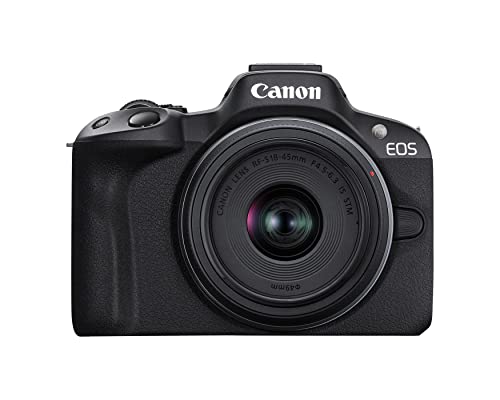
| Canon EOS R50 | Best modern Canon near the line | Current mirrorless technology — subject detection, clean video, guided menus — that reaches this budget on street and refurb pricing. |
| Canon EOS R10 | Step-up body via refurb and used routes | A faster, more serious APS-C body that used and refurbished shelves regularly bring within a 600 budget. |
| Canon PowerShot G7 X Mark III | Premium compact that visits the line | A one-inch-sensor pocket camera with a bright lens, found under the line in promotions and on the used shelf. |
| Canon EOS R100 | Entry mirrorless under the line (prose-only) | Canon’s simplest RF body, sold as a starter kit squarely in this budget, covered in prose below. |
| Canon EOS Rebel T7 | Classic DSLR starter (prose-only) | The school-and-first-camera DSLR, widely available used with kit lenses at gentle money. |
| Canon PowerShot SX740 HS | Travel zoom compact (prose-only) | A pocketable long-zoom compact for holidays and family days when a system camera stays home. |
How Did We Choose These Picks?
The first filter was realism: could a shopper with exactly this budget, shopping patiently across new, refurbished and reputable used channels, actually own this camera within a normal month? Models that only touch the line in once-a-year clearance mythology were excluded. The second filter was photographic substance — sensor size and quality, autofocus competence, and whether the camera teaches its owner anything worth learning. Budget cameras fail in a particular way when they are merely cheap: they frustrate beginners into abandoning the hobby. Every pick here produces images a phone genuinely cannot, which is the entire justification for spending the money.
The third filter was the system question. A camera under this line is almost always a first camera, so what it leads to matters: RF-mount bodies open Canon’s current lens range and every other body in this wave of guides; EF-mount DSLRs open the deepest, cheapest used lens library in photography; compacts lead nowhere and must therefore justify themselves completely on day one, which the two here do on pocketability and zoom reach respectively. Video, screens and menus were judged by beginner reality — a camera that gets carried and understood beats a specification that gets admired and shelved.
Why Is 600 Dollars Such an Interesting Line in Canon’s Range?
Because three generations collide there. The DSLR era’s enormous production runs mean mature, capable bodies circulate used at prices their original owners would find insulting. The mirrorless transition pushed entry RF bodies’ street prices toward the line while their refurbished siblings — returned, inspected, warranted — slid beneath it. And the premium compact market, squeezed by phones from below, sees its best models discounted into territory they were never launched at. A shopper at this line is not buying the leftovers of the range; they are arbitraging its history.
The line also marks a psychological boundary in what a camera is for. Below it, most buyers are purchasing their first deliberate camera — a statement that photographs matter enough to deserve a tool. That is why this guide weights teaching value and upgrade paths so heavily: the correct under-600 Canon is the one whose owner is still using the system, happily, at twice the budget in three years’ time. Cameras that dead-end — proprietary oddities, abandoned mounts, compacts that cannot grow — were marked down accordingly, however charming their discount.
How Do New, Refurbished and Used Routes Really Compare?
New buys certainty: full warranty, latest firmware, a battery at the start of its life, and the simple pleasure of a box that has only ever been yours. At this budget the new shelf is honest but narrow — essentially the entry tier — and shoppers should know they are paying a premium for the warranty years rather than for image quality. Refurbished, bought from the manufacturer or an authorised channel, is the budget shooter’s open secret: bodies inspected and restored by the people who built them, sold with a real warranty at a meaningful saving, and frequently indistinguishable from new in the hand. Stock appears in waves and vanishes quickly, which rewards the shopper who knows their target model in advance — one more reason this guide names specific bodies rather than vague tiers.
Used buys depth. The reputable used dealers grade conservatively, warranty their grading and accept returns, and their shelves hold the mid-range bodies of three years ago — better dials, better sealing, better viewfinders — at entry-tier money. The disciplines are simple: buy the grading, not the listing’s adjectives; check shutter count on bodies where it is published; confirm the return window covers a weekend of real shooting. Private sales are cheaper still and riskier in proportion; at this budget the dealer’s margin buys peace that most beginners should accept gratefully. None of these routes is the honest one and the others suspect. They are three prices for three kinds of certainty, and the guide’s picks are labelled by the route that suits each.
Which Models Qualify as the Best Canon Cameras Under 600 Dollars This Season?

Canon EOS R50 — Best modern Canon near the line
The R50 is what this budget wants to be when it grows up: a current-generation mirrorless camera whose street and refurbished pricing regularly brings it within reach of the line, carrying technology that was flagship material a few seasons ago. Its subject-detection autofocus recognises people and animals and holds their eyes; its guided interface explains photography while you practise it; its video is clean enough for the family films and first vlogs that entry cameras actually shoot. A beginner who starts here is not starting at a discount version of photography — they are starting at its present tense.
The kit question matters with this body. Bought with its standard zoom it covers the everyday range competently, and the RF mount means every lens Canon makes today — and every other body in this guide’s family — is a future option rather than a change of religion. In the hand it is light, friendly and unintimidating, the camera a nervous first-time buyer will actually carry, which is a photographic feature of the first rank.
Honesty about the line: at full list in a quiet month, this body can sit above the budget, which is why the guide frames it as the street-and-refurb target rather than a guaranteed under-line resident. Patient shoppers catch it; impatient ones should read the R100’s entry next.
- Format: APS-C sensor in Canon’s compact RF-mount body with a guided interface
- Budget route: street pricing and refurbished stock bring it to the line
- Detection: people and animals with eye priority
- Coverage: verified pool link — check it against your budget on the day
Strengths
- Current subject detection and video in an entry-priced body
- Menus teach photography instead of merely permitting it
- RF mount keeps every future upgrade inside one system
Trade-offs
- List price can hover above the line outside promotions
- Single card slot and modest buffer mark its tier honestly
- Kit zoom is a starting point, not a destination
Best for: beginners who want today’s Canon technology within a watched budget. Not suited for: shoppers who need the whole kit, lens included, under the line today.

Canon EOS R10 — Step-up body via refurb and used routes
The R10 is the guide’s argument for buying yesterday’s enthusiasm with today’s patience. New, it belongs to the tier above this budget; refurbished and on the graded used shelf, it regularly crosses under the line carrying gifts the entry bodies cannot match — a faster, deeper burst, a proper control layout with a joystick for focus, and subject detection with the speed to serve action, wildlife and children who have never once sat still. A shopper who lands one has not bought a budget camera; they have bought a mid-range camera at a budget price, which is the finest trick this price bracket offers.
It suits the buyer who already suspects photography will stick. The controls reward growing technique instead of capping it, the crop sensor multiplies telephoto reach for sports and wildlife dabbling, and the body feels like equipment rather than appliance. Paired over time with one good lens, it is a three-to-five-year camera.
The route is the caveat, and it is stated plainly: you are shopping refurb drops and used grades, which means timing, patience and buying from sellers with warranties and returns. Shoppers who need a camera in a box by Friday should choose from the new shelf instead and feel no shame about it.
- Format: APS-C RF-mount mirrorless, joystick control, fast burst
- Budget route: refurbished and graded used examples cross the line
- Detection: animals, people and vehicles with eye priority
- Coverage: verified pool link — compare its street price with refurb channels
Strengths
- Mid-range speed and controls at an entry-tier outlay
- Detection and burst serve action the entry bodies cannot
- A body that will not need replacing as skills arrive
Trade-offs
- Under-line examples depend on refurb and used availability
- No in-body stabilisation; lens stabilisation carries video
- Used examples need the grading-and-returns discipline
Best for: committed beginners hunting maximum camera per unit of budget. Not suited for: buyers who need a new-in-box camera immediately.

Canon PowerShot G7 X Mark III — Premium compact that visits the line
Some photographers’ real requirement is not a system but a pocket, and the G7 X Mark III is the compact this guide sends them to find. Its one-inch sensor is several times the area of a phone’s, its lens is bright in a way phone glass cannot imitate, and the combination produces low-light and shallow-depth photographs that announce themselves as camera work. It earned its fame with video creators — clean footage, a microphone input, live-streaming tricks — but stills shooters discovered the same virtues: a serious sensor that fits a jacket, with proper dials and raw files for people who edit.
Its relationship with the budget line is a visiting one. Promotions, bundles and the used shelf bring it under; list price in a strong month parks it above. The guide includes it because the compact buyer at this budget deserves to know the best target to hunt, and because a clean used example is one of the commonest sights on the reputable shelves.
Know what a compact cannot do. The lens is fixed, the system ends at the camera’s edges, and autofocus, while willing, is not the mirrorless detection of its siblings here. Buy it for the pocket and the lens, and it will be loved; buy it as a system substitute and it will be resold.
- Format: one-inch sensor compact, bright fixed zoom, pocket size
- Budget route: promotions and used examples bring it under the line
- Detection: face and eye-aware compact autofocus, strong video tools
- Coverage: verified pool link — verify against the line before buying
Strengths
- Sensor and lens quality no phone at any price replicates
- Video features serve creators well beyond its size
- The camera that is actually with you earns its keep daily
Trade-offs
- Fixed lens; the system begins and ends in one pocket
- Street price crosses the line in both directions by season
- Autofocus trails the mirrorless picks for action
Best for: travellers and creators who value a pocket over a system. Not suited for: photographers planning a lens collection.
Canon EOS R100 — Entry mirrorless under the line (prose-only)
The R100 is covered in prose only because it is principally a kit purchase — body and starter zoom sold together squarely inside this budget — and kit configurations vary by retailer and season in ways a single link would misrepresent. What it is, plainly: Canon’s simplest current mirrorless camera, an APS-C sensor in a body deliberately stripped of the touchscreen-and-dials richness of its siblings, aimed at the phone graduate who wants real photographs without a learning curve shaped like a cliff. The sensor is the same size as the R50’s, the mount is the same RF mount, and the images at the end of the day are far closer to its dearer siblings than the price gap suggests.
Its simplicity is a position, not an accident. Fewer controls mean fewer wrong settings; a fixed screen and guided modes mean the beginner’s attention stays on subjects. For family documentation, school projects and a first year of learning what light does, it is entirely sufficient — and its lenses, bought slowly, transfer whole to any future RF body.
The ceiling is equally plain. Photographers who catch the bug seriously will feel the missing dials and the fixed screen within a season or two, and the viewfinder experience is the range’s most modest. Buy it as the honest starter it is, at kit pricing, from a retailer whose bundle you have actually read.
- Format: APS-C RF-mount mirrorless, simplified controls, kit-sold
- Budget route: new kits sit squarely within the budget
- Detection: face and eye-aware autofocus, guided shooting modes
- Coverage: prose-only, kit configurations vary by retailer
Strengths
- Full-size APS-C sensor and RF mount at the gentlest entry price
- Simplicity that keeps beginners shooting instead of studying
- Kit pricing leaves room in the budget for a bag and a card
Trade-offs
- Fixed screen and sparse dials cap technique growth
- No touchscreen; menus are a button-driven exercise
- Keen beginners will outgrow it fastest of all the picks
Best for: phone graduates wanting a true camera with zero intimidation. Not suited for: enthusiasts who already know they want dials and detection.
Canon EOS Rebel T7 — Classic DSLR starter (prose-only)
The Rebel T7 is the sound of a generation learning photography: an entry DSLR built in enormous numbers for schools, families and first-camera buyers, now circulating on the used market in quantities that make it the budget’s ballast. It is covered in prose because its natural habitat is the graded used shelf and the hand-me-down listing, where condition and included lenses matter more than any single product page. Through its optical viewfinder you see the scene itself, not a screen’s opinion of it — an education in itself — and its battery lasts for days of shooting that would flatten a mirrorless body.
Its deepest virtue is the EF lens library. Decades of Canon and third-party EF glass, from fast primes that cost very little used to serious telephotos, mount directly and autofocus as designed. A beginner can assemble a genuinely educational kit — body, kit zoom, one bright prime — inside this budget with room to spare, and learn more photography from that prime than from any feature on a spec sheet.
Age shows in the expected places: autofocus through the viewfinder is a modest nine-point arrangement from another era, live-view and video autofocus are primitive beside the mirrorless picks, and the rear screen does not tilt or touch. None of that prevents it teaching photography beautifully. All of it explains its price.
- Format: APS-C DSLR, optical viewfinder, EF lens mount
- Budget route: used examples with kit lenses at gentle money
- Detection: classic nine-point viewfinder autofocus
- Coverage: prose-only, a used-market purchase by nature
Strengths
- The deepest, cheapest used lens library in photography
- Optical viewfinder and multi-day battery teach real craft
- Abundant used supply keeps prices and risk low
Trade-offs
- Dated autofocus, especially for video and live view
- Fixed, non-touch screen belongs to its era
- EF mount is a mature system, not a growing one
Best for: students and traditionalists building a learning kit cheaply. Not suited for: video-first buyers or detection-era action shooting.
Canon PowerShot SX740 HS — Travel zoom compact (prose-only)
There is a holiday photograph the system cameras in this guide cannot take, because they are in the hotel safe: the distant lighthouse, the safari animal at the far waterhole, the child’s face across the sports field, all from a camera that rode in a shorts pocket. The SX740 HS exists for those frames, packing a genuinely long zoom — the kind of reach that takes three lenses to replicate in a system — into a body smaller than most phones are thick-across. It is covered in prose because its buyers should shop it as a complete, self-contained travel tool across retailers and bundles rather than through a single listing.
Within its physics it is honest. The small sensor asks for daylight and rewards it; in good light the zoom delivers the postcard-and-better images its owners actually bring home, and its video and connectivity suit the family-documentation role it was born for. As a second camera for a system owner, or the only camera for a traveller who packs light and shoots in sunshine, it has no substitute in this list.
Dusk is its border. Small sensors and long zooms make dim light a negotiation the SX740 usually loses, and there is no raw capture to appeal to. Buy it for the bright, distant and pocketable, and it will never pretend to be anything else.
- Format: small-sensor compact, very long built-in zoom, pocket body
- Budget route: new and used both sit comfortably in budget
- Detection: face-aware compact autofocus for daylight subjects
- Coverage: prose-only, shop as a complete travel tool
Strengths
- Zoom reach no system kit at this budget can carry
- Genuinely pocketable; the camera that attends every outing
- Simple operation suits family and holiday documentation
Trade-offs
- Small sensor limits dusk and indoor performance
- No raw files for serious editing rescue
- Fixed lens; nothing about it grows with you
Best for: travellers wanting maximum reach from a minimum pocket. Not suited for: low-light shooters or anyone building a system.
How Do You Test a Used or Refurbished Canon Before the Return Window Closes?
A used camera gets one weekend to prove itself, and the test should be systematic rather than impressionistic. Begin with the sensor: photograph a plain bright wall or a clear sky at a small aperture, then examine the file at full magnification — dust spots are cleanable and normal, but scratches, dead patches or a constellation of hot pixels at modest sensitivities are grounds for return. Work every dial, button and port, because the control that fails in month two usually felt gritty or vague in week one. Fire a long burst to confirm the buffer and card behaviour, record a minute of video to check for overheating complaints or audio faults, and charge the battery fully to see whether it holds a plausible day of shooting or collapses by lunch — batteries are consumables, but a dead one reprices the deal.
Autofocus deserves its own examination, since it is the system beginners cannot judge by eye in a shop. Photograph a textured subject at an angle, wide open with the kit lens, and check at full magnification whether sharpness lands where the focus point sat. Repeat near and far. A body that consistently front- or back-focuses through the viewfinder — a DSLR-era ailment the mirrorless picks are largely immune to — is a return, not a project. Finally, confirm the paperwork matches the metal: serial numbers, included accessories, warranty card where promised. Reputable sellers expect this scrutiny and price their grading to survive it; a seller who resents testing is telling you something worth hearing.
What Can These Cameras Do That a Phone Cannot?
The question deserves a precise answer, because it is the whole case for spending the budget. First, optics: a real zoom lens gathers distant subjects optically instead of cropping a small sensor’s guess, and a bright prime opens apertures no phone’s fixed glass can imitate, separating a portrait subject from its background with genuine optical softness rather than a computational sketch of it. Second, light: sensors several times a phone’s area collect it with less noise and more dynamic range, so the dusk street and the candlelit table render as photographs rather than watercolours. Third, control: shutter speed as a creative choice — freezing the waterfall or silk-blurring it — exposure compensation on a dial, raw files that survive an editor’s ambition. Fourth, endurance and intent: a camera shoots all day, handles like a tool, and, not trivially, makes its owner behave like a photographer, which improves pictures before any technology is consulted.
None of this disparages the phone, which remains the better camera for the photograph you did not plan. The picks here are for planned photographs — the trip, the portrait session, the child’s match, the hobby itself. Shoppers whose honest answer is that all their photography is unplanned should save the budget entirely; this guide would rather lose the sale than the reader’s trust.
How Does the First Year With a Budget Canon Usually Go?
Month one is honeymoon and confusion in equal parts: hundreds of frames, a thrilling keeper rate compared with the phone, and a growing suspicion that the mode dial holds secrets. Months two and three bring the first real education, usually delivered by a disappointing set — the indoor birthday, the backlit beach — that sends the owner to learn exposure properly. This is where the picks separate: guided bodies coach through it, the DSLR teaches it the classical way, and every owner discovers the same revelation, that light direction matters more than any setting. By month six the kit zoom’s limits have a name — usually dusk — and the first lens purchase happens, which is why this guide insisted the mount decision outranks the body decision.
The year’s second half is consolidation: a personal style emerging in the edit, a few prints on actual walls, and the camera becoming furniture of the life rather than a gadget in a drawer. Owners who bought refurbished mid-range bodies report a particular satisfaction around now — the camera has stopped feeling like a compromise entirely — while kit buyers plan the second lens with the confidence of people who know their own photographs. Almost nobody, at month twelve, wishes they had spent the same money on a slightly better phone.
Which Settings Should a Beginner Change on Day One?
Out of the box, every pick here is configured for a mythical average user; a handful of changes personalise it immediately. Set the file quality to raw plus JPEG if you edit, or the largest JPEG if you honestly never will. Turn on the highlight warning — the blinking overexposure alert — because it teaches exposure faster than any tutorial. Assign the control ring or a custom button to exposure compensation, the single adjustment beginners use most. Set autofocus to its subject-detection or face-and-eye mode and leave it there for the first month rather than auditioning every focus pattern in the menu. Switch the image review to appear only on demand, saving battery and attention. And set the date, the copyright line if the body offers it, and a file-naming prefix you will thank yourself for when the archive reaches five figures.
Then stop. The remaining menus contain multitudes, and the beginner who configures for a week photographs for none of it. Every further setting in this guide’s other chapters — burst modes, custom white balance, back-button focus — earns its place when a real photograph demands it, at which point it will be learned in an afternoon and kept for a career.
How Do You Spot a Budget Deal That Is Too Good?
Price is information, and a figure far below the graded market is the market telling you a story. The classic chapters: grey imports whose warranty evaporates at the border, shutter counts deep into a body’s second life described as light use, kit lenses quietly substituted with inferior versions, and the refurbished label applied by sellers whose refurbishment was a cloth. None of these is automatically a catastrophe — a grey import at a true discount, bought knowingly from a seller who warranties it themselves, can be rational — but each must be a decision rather than a discovery. The discipline costs nothing: compare against two reputable graded listings, read what the warranty actually covers, and treat urgency as a warning, since genuine stock at this level replenishes constantly while manufactured scarcity does not.
Accessories bundled into a deal deserve the same cold eye. The twenty-piece kits that pad listings with filters, pouches and tripods of theatrical flimsiness add cost without adding photography; a clean body, its proper lens, a battery and a card from a seller with returns is worth more than any cornucopia. Buy the camera. The trinkets can be acquired individually later, at the moment a photograph actually asks for one.
How Far Will the Kit Lens Actually Take You?
Further than its reputation, and the beginner who exhausts a kit zoom has earned their next lens honestly. The standard kit zoom covers the wide-to-portrait range where most photography lives — landscapes, streets, family groups, the documentary sprawl of a holiday — and its modern versions are stabilised, close-focusing and sharper in the centre than kit lenses of the DSLR era ever were. Its limits are specific rather than general: apertures that dim as you zoom, making dusk and indoor work a negotiation; backgrounds that stay busier than a portraitist wants; and a long end too short for wildlife or sport beyond the children’s league. Each limit maps to a known remedy — the bright prime for the first two, the affordable telephoto for the third — which is precisely why kit lenses are well designed as curricula. They teach the whole map, then show you exactly where your own photography wants to build.
Treat the kit lens with more respect than its price suggests and it repays it: a lens hood on always, because flare and knocks are its daily enemies; zoom with your feet first and the ring second, because the wide end’s perspective is a creative tool rather than a compromise; and clean the front element with a blower before any cloth, since grit ground in by enthusiasm has ended more kit lenses than any defect. When the second lens arrives, the kit zoom does not retire — it becomes the travel and family lens, the one that lives on the body in the bag by the door.
What Should Video Shooters Expect at This Budget?
Video is where the generations in this guide separate most sharply, and buyers who film should weight it ruthlessly. The mirrorless picks record clean, well-stabilised footage with autofocus that tracks faces and eyes while you think about the scene — the R50 in particular was plainly designed with the creator generation in the room, and the G7 X Mark III adds a microphone input and streaming talents the system bodies at this level mostly lack. For family films, school projects, first vlogs and travel diaries, that combination is not a budget compromise; it is simply the modern standard, and it embarrasses dedicated camcorders of a decade ago.
The DSLR pick belongs to another video era and says so: its movie autofocus hunts where the mirrorless bodies glide, and it should be bought by stills photographers who occasionally film, never the reverse. Across all picks, respect the practicalities that spec sheets whisper: recording limits on some bodies, batteries that video drains in a fraction of their stills endurance, and cards whose speed ratings matter the moment footage gets ambitious. A spare battery and a modest microphone transform budget video more than any body upgrade within this bracket — the two accessories this guide would buy before a second lens for a filming household.
How Long Will a Budget Canon Stay Useful?
Longer than the upgrade culture admits. A camera’s useful life is set by three clocks: mechanical wear, which at this tier means shutter mechanisms rated for more frames than most owners shoot in a decade; technological drift, which moves slowly in sensors and quickly in connectivity and video; and the owner’s growth, the only clock that usually strikes early. The picks here were chosen against those clocks — RF bodies whose mount and detection remain current, a DSLR whose simplicity cannot date further, compacts whose job description never changes. Realistically, a well-chosen under-line Canon serves three to five years as a main camera and years more as a second body, a travel spare or the hand-me-down that starts the next photographer in the family.
Protect that lifespan with dull habits: firmware updated when it offers something real, the sensor cleaned by blower and courage rather than by cloth and hope, storage with a charged-but-not-full battery, and a bag that keeps the camera ready rather than entombed. Resale and trade-in values at this tier are gentle, which cuts both ways — your camera will not fund its successor, but its successor, bought used in three years, will be priced just as kindly. The system is the asset. The bodies are its tenants, and at this budget they are excellent tenants.
How Do You Decide Between a Compact and a System at This Price?
The honest test is a drawer audit. If every camera you have ever owned ended its days in a drawer because carrying it became a decision, the compact is your camera — the G7 X Mark III for quality, the SX740 for reach — because the finest system in this guide photographs nothing from inside a bag left at home. Compacts also end the spending: no lens roadmap, no mount anxiety, one purchase that is complete on the day it arrives, which for many households is not a limitation but the entire appeal.
The system case rests on trajectory. A photographer who suspects the hobby will deepen — who already notices light, who edits, who has a subject they return to — will outgrow a compact’s fixed lens within a couple of years and start the spending again from zero. The mirrorless and DSLR picks convert that same curiosity into an accumulating asset: lenses, skills and muscle memory all carry forward. Neither answer is the sophisticated one. They are answers for different people, and the budget is identical either way, which is exactly why this guide refuses to declare a single winner across the divide.
What Should Your Checkout Checklist Look Like on Buying Day?
Run it in order and the budget survives contact with the internet. One: the body or kit is the exact model and mount named in your plan, not a sibling with a similar name — Canon’s entry range contains near-identical badges with different screens, mounts and viewfinders. Two: the lens in the bundle is the current kit zoom, identified by its full designation, not an older or third-party substitute quietly swapped in. Three: battery, charger, card and strap are either included or added to the arithmetic now, not discovered at the unboxing. Four: the warranty names who honours it and where, and the return window covers at least one full weekend of shooting. Five: the total, all-in, is compared once against the refurbished channel for the same body — a two-minute check that regularly refunds a meaningful slice of this budget to spend on the second battery instead.
Then stop shopping. The under-line Canon market rewards decisiveness because the best refurb and used examples are singular — when they sell, they are gone — and it punishes dithering far more than it punishes choosing the second-best body on this list. Every pick here will take photographs its owner is proud of. The only losing move at this budget is another month of comparison spreadsheets while the light goes unphotographed.
What Do Owners of Each Pick Wish They Had Known?
Ask around the camera clubs and a pattern emerges, one confession per pick. R50 owners wish they had budgeted for the bright prime in the same month rather than the sixth, because the lens, not the body, was the revelation. R10 owners who bought used wish they had moved faster — the good graded examples at under-line prices are a market that rewards the prepared and evaporates for the hesitant. G7 X Mark III owners wish they had bought the small grip and the wrist strap on day one, because a pocket camera’s worst enemy is the pavement. R100 owners are the most contented in the survey and the most predictable: the camera did exactly what it promised, and the ones who outgrew it handed it down within the family, where it is still working. Rebel T7 owners wish they had discovered the cheap fast prime before the expensive zoom; the prime taught them photography, the zoom merely extended it. SX740 owners wish someone had told them sooner that its kingdom is daylight, so they would have stopped apologising for dusk and started planning around the light it loves.
Read those confessions as the guide’s real summary. None of them is about megapixels, menus or the specification that dominated the buying decision. All of them are about the fit between a camera and a life — which is why this article spent its length on routes, habits and trajectories, and why the right pick is the one whose confession you would be happiest to make.
How Do the Six Budget Routes Compare?
| Camera | Badge | Route under the line | Choose it when |
|---|---|---|---|
| Canon EOS R50 | Best modern Canon near the line | Street price and refurb drops | You want current detection and guided learning |
| Canon EOS R10 | Step-up body via refurb and used routes | Refurbished and graded used | You want mid-range speed for entry money |
| Canon PowerShot G7 X Mark III | Premium compact that visits the line | Promotions and used shelf | A pocket and a bright lens outrank a system |
| Canon EOS R100 | Entry mirrorless under the line (prose-only) | New kits in budget | Simplicity today, RF lenses tomorrow |
| Canon EOS Rebel T7 | Classic DSLR starter (prose-only) | Used with kit lens | You want the cheapest route into real craft |
| Canon PowerShot SX740 HS | Travel zoom compact (prose-only) | New or used, comfortably in budget | Daylight reach from a shorts pocket is the brief |
How Should You Divide the Budget Between Body and Lens?
The beginner’s instinct is to spend the whole line on the body and let the kit lens be an afterthought; experience inverts the split. A workable rule for this bracket: the body takes roughly two-thirds at most, reserving the remainder for the things that decide whether photographs happen — a memory card fast enough for the burst rate, a second battery, a bag that makes carrying the camera pleasant, and, as soon as the kit zoom’s limits announce themselves, one bright prime lens. That prime, bought used in either mount, teaches depth of field, low-light craft and composition-by-walking in a single purchase, and it is the item past owners of every pick here name as the moment photography clicked.
Resist the accessory avalanche in month one. Filters, straps with logos, elaborate cleaning arsenals — the camera shops will still exist in month three, by which time your own shooting will have written a shorter, truer shopping list. The exception is protection: a simple case and a wrist strap have saved more cameras than any insurance, usually from the kitchen table’s edge.
What Mistakes Do Budget Camera Buyers Keep Making?
First, chasing megapixels, the one specification with almost no effect on a beginner’s photographs, while ignoring sensor size, which has nearly all of it. Second, buying the body alone at the very top of the budget and discovering the lens, card and battery are separate purchases — the kit exists precisely to prevent that arithmetic. Third, treating used as a synonym for risky and paying new prices for entry bodies that a warranted refurbished mid-range body outclasses in every dial and seal. Fourth, buying for the photographer they imagine becoming — the safari specialist, the studio portraitist — rather than the one with a phone full of family, travel and street photographs today. Fifth, neglecting the return window: at this budget, a camera that feels wrong in the hand on day two will feel wrong for years, and reputable sellers on every route in this guide offer the chance to change your mind. Use it without embarrassment.
A closing word about timing, since budget shoppers agonise over it more than any specification. Camera prices at this level move in seasons rather than in trends: holiday promotions, spring refurb waves, the used market’s post-upgrade harvests. Waiting a few weeks for a known sales period is wisdom; waiting indefinitely for a rumoured successor is how a year of photographs goes untaken. The budget in the keyword buys a complete, joyful camera system today, through at least one of the routes above, and today’s photographs are the only ones guaranteed to exist.
Final Recommendation
Decide by route first and model second. If you want new, simple and squarely in budget, the prose-only EOS R100 kit is the honest starter, and its mount keeps your future open. If you can shop patiently, the R50 on a street or refurb deal is the best modern Canon this money reaches, and the R10 refurbished or graded-used is the connoisseur’s version of the same trick — more camera than the budget has any right to. Traditionalists and students should take the Rebel T7 and its ocean of cheap EF glass and never apologise. And if the true brief is a pocket, hunt the G7 X Mark III for quality or take the SX740 HS for reach, according to the light you shoot in. Every route ends at a real camera; that, at this line, is the victory.
Related guides
- Best Discount Sites for Cameras: Refurbished Stores, Authorised Sales and Graded Used Channels
- Best Digital Cameras Under 200s: Used Kits, Refurbished Value and Labelled Step-Ups
Frequently Asked Questions
Can I really get a good Canon camera for under 600 dollars?
Yes — provided you shop the way this guide describes, across new entry kits, manufacturer refurbished stock and graded used shelves. The cameras here are not toys discounted into the bracket; they are current entry bodies, recent mid-range bodies arriving by the refurb route, and mature designs whose enormous production runs keep used prices gentle.
Is refurbished gear a safe buy for a beginner?
From the manufacturer or an authorised refurbisher, yes: inspected, restored and sold with a warranty, it is the budget route this guide recommends most warmly. The safety lives in the seller, not the word — apply the same standard to used dealers, choosing graded stock with returns over private listings with adjectives.
Should the budget include a lens?
It must, unless you already own compatible glass. Prefer kit bundles or hold back roughly a third of the budget for lens, card, battery and bag. A body bought with the entire line and nothing to shoot through is the commonest false economy in this bracket.
DSLR or mirrorless at this price?
Mirrorless buys the future: current autofocus detection, better video, and the RF lens range your system will grow into. DSLR buys the past at a wonderful price: optical viewfinders, marathon batteries and the deepest used lens library in photography. Students of craft thrive on either; video-first and detection-first buyers should go mirrorless.
Why does this guide avoid printing exact prices?
Because street prices for these models move weekly with promotions, refurb stock and used supply, and a printed figure would mislead more readers than it helped. The budget in the keyword is the frame; each pick is labelled with the route that brings it under the line, and checking the live figure on buying day takes a minute.
When do refurbished Canon bodies appear in stock?
In waves, typically after major sales periods and product launches, when returns and trade-ins flow back through the manufacturer’s inspection line. There is no reliable calendar, which is why this guide advises knowing your target model in advance and checking the refurbished channel weekly when you are ready to buy — the good examples at this budget are measured in days of availability, not months.
Is a kit lens worth it, or should I buy the body alone?
For a first camera, the kit is almost always the rational buy: the bundled zoom costs far less inside the kit than separately, covers the everyday range while you learn, and remains useful as a travel lens after better glass arrives. Body-only pricing makes sense for photographers who already own a compatible lens — everyone else is simply deferring the same purchase at a worse price.
Related Guides
Keep exploring with which canon bodies track wildlife best, how canon cameras survive underwater housings, and the dslr case for wildlife on a budget.


