ilcastellomenu.com is reader-supported. When you buy through links on our site, we may earn an affiliate commission.
Where to Buy a Camera for the Seconds When an Animal Decides
Wildlife does not pose, repeat or wait for a menu to load. The best digital cameras for shooting wildlife are judged in the three seconds when a heron strikes, a fox clears the ditch, a swallow changes its mind in mid-air — seconds that demand autofocus which finds an animal’s eye inside a thicket of branches, burst rates that turn one leap into a sequence you can choose from, and handling so fluent that the photographer’s conscious mind never enters the transaction. This guide is about that action craft specifically: tracking, bursts, field technique and the ethics of approach. Readers whose interest runs to the still, contemplative side of the genre — portraits, prints and the patience of the hide as an end in itself — will find the companion discussion in our guide to cameras for wildlife photos, which takes up where this one leaves off.
Reach frames every judgement that follows. Wild subjects keep their distance for sound evolutionary reasons, so the effective contest is between systems that put the most quality pixels on a distant, moving animal: crop-sensor bodies whose fields of view multiply a lens’s reach, full-frame bodies whose files survive aggressive cropping, and telephoto ecosystems deep enough to fit a budget somewhere between a kit zoom and a professional’s mortgage. All six picks below are verified listings, ranked by how they perform when the subject will not cooperate — because it will not.
Key Takeaways
- Animal-eye autofocus that holds through branches and motion is the single most valuable wildlife feature of this decade.
- Burst rate matters only with a buffer and a card that can swallow it; the chain is as strong as its slowest link.
- Reach is a system property: sensor format, lens catalogue and cropping headroom multiply together.
- Fieldcraft — position, patience, wind and light — still decides more frames than any specification.
- Ethics is technique: the welfare of the subject outranks every photograph, and disturbed animals photograph badly anyway.
- Buy the body for the action you actually chase; birds in flight and deer at dawn are different sports sharing a name.
In this guide
Quick Picks
| Camera | Badge | Why it earns its place |
|---|---|---|
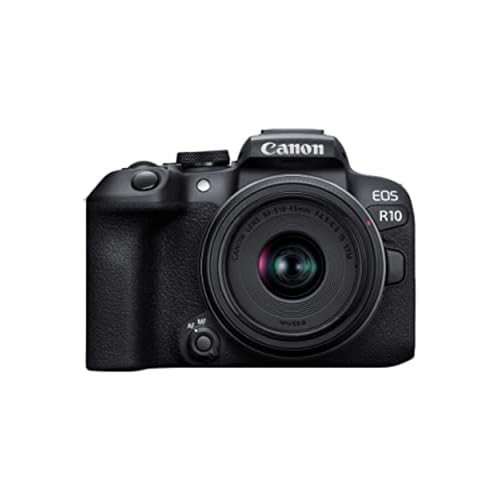
| Canon EOS R10 | The reach-per-pound starter | Fast bursts and animal detection on a crop body that stretches every telephoto you mount. |
| Canon EOS R6 Mark II | The action professional | Flagship-grade animal tracking, very fast bursts and low-light files for dawn and dusk work. |
| Sony Alpha 7 IV | The configurable tracker | Dedicated bird and animal eye modes on the deepest telephoto catalogue in mirrorless. |
| Nikon Z50 II | The lightweight apprentice | Flagship-borrowed subject detection in a small body that walks all day without complaint. |
| OM SYSTEM OM-5 Mark II | The mountain telephoto kit | Double-the-reach format economics: long effective focal lengths at half the carried weight. |
| Panasonic LUMIX S5II | The patient full frame | Dependable tracking and rich files for the slower, larger subjects and crepuscular light. |
How Did We Score Cameras for Subjects That Refuse to Cooperate?
Scoring began with the failure modes, because wildlife photography is a genre defined by them. Frames are lost to focus that found a branch instead of an eye, to buffers that filled during the one leap that mattered, to noise that ate a dusk file, to a kit so heavy it stayed in the car. Each candidate was therefore judged first on its animal-detection autofocus — how quickly it acquires a subject in clutter, how honestly it reports the eye, how stubbornly it holds through wingbeats and vegetation — and second on the burst chain behind it: frame rate, buffer depth, card speed and the blackout behaviour that decides whether the photographer can follow the action or merely pray through it.
Reach economics formed the third column. We multiplied each system’s practical telephoto options — native lenses, teleconverters, the used market’s depth — by the format’s cropping behaviour, because the delivered photograph is a rectangle of pixels on an animal, and every route to more of them is legitimate. APS-C and Micro Four Thirds bodies score structurally well here, and their reviews say so without apology; full-frame bodies answer with file quality at the light levels where wildlife is most active, dawn and dusk, and their reviews say that too.
Fieldworthiness closed the rubric. Weather sealing for the rain that concentrates animals at water, battery endurance for a hide session, quiet shutter options for close work, and a weight the photographer will actually carry up the hill at four in the morning — these unglamorous properties decide attendance, and attendance decides archives. The finest action camera ever made photographs nothing from a shelf.
Which Are the Best Digital Cameras for Shooting Wildlife When the Subject Moves First?

Canon EOS R10 — The reach-per-pound starter
Arithmetic makes the R10 the thinking beginner’s wildlife body. Its APS-C sensor narrows the field of view so that an affordable telephoto zoom delivers the framing of a lens half again as long — reach that on full frame costs serious money — while the body’s burst speed and animal-detection autofocus, inherited from Canon’s professional line, handle the action itself with a competence that embarrasses the price. A new wildlife photographer with this body and a long zoom owns a rig that can photograph birds in flight, mammals at the field’s edge and insects in the garden, which is to say: the whole apprenticeship, on one invoice.
Limitations announce themselves honestly at the light’s edges. Dawn and dusk, the genre’s prime hours, ask the smaller sensor for sensitivities where its files grow grainier than the full-frame picks’, and the single card slot and modest buffer ask the photographer to shoot bursts with intent rather than with the shutter welded down. Both are acceptable tuition: they teach exposure discipline and burst economy, the two habits that separate wildlife photographers from wildlife tourists, on equipment that will serve as a second body for years after an upgrade.
- Format: APS-C mirrorless, Canon RF mount
- Focus: animal and bird subject detection
- Speed: fast bursts suited to flight and leaps
- Reach: crop factor multiplies telephoto value
- Role: the apprenticeship body for action wildlife
Strengths
- Professional-flavoured tracking at a starter price
- Every telephoto behaves longer on this sensor
- Light kit encourages the long walks the genre demands
Trade-offs
- High-ISO files trail the full-frame picks at dusk
- Buffer rewards short, deliberate bursts
- Weather sealing is light for serious field abuse
Garden and park wildlife are this Canon’s proving ground, and they are a better school than any safari. Squirrels, garden birds, urban foxes and the heron at the municipal pond provide daily, free, repeatable action on which to drill tracking settings and burst discipline — the photographer who has mastered the local magpies will not waste the once-a-decade kingfisher. The R10’s affordability leaves budget for the long lens and the bus fares, which is the correct allocation for a beginner’s money.
New wildlife photographers should start here and spend the savings on reach and field time. Veterans of dawn shoots who already know their ISO ceiling will find their body further down the list.
Best for: beginners, park and garden action, budget reach. Not suited for: habitual dusk work at the highest sensitivities

Canon EOS R6 Mark II — The action professional
Speed with judgement is the professional wildlife brief, and the R6 Mark II reads like it was written from that brief. Its autofocus detects and tracks animals — eyes, bodies, birds in cluttered flight — with a tenacity inherited from Canon’s flagship sports bodies, its bursts run at speeds that dissect a take-off into individual wing positions, and its full-frame sensor keeps those frames clean at the dawn and dusk sensitivities where the genre’s best light lives. Photographers who sell action, or simply refuse to miss it, will recognise the specification as a checklist of their own past failures, answered one by one.
The supporting systems keep the promise through a long session. A deep buffer and fast card writing mean the burst is there when the second animal joins the first; in-body stabilisation steadies long lenses handheld during the long waits between seconds of action; and Canon’s telephoto catalogue — from the working photographer’s mid-price long zooms to the great white primes — provides the reach at every budget the profession contains. This is the body in this guide most likely to be found, in five years, still doing the job at a professional standard.
- Format: full-frame mirrorless, Canon RF mount
- Focus: flagship-lineage animal and bird tracking
- Speed: flagship-pace bursts backed by a deep buffer
- Light: clean high-ISO files for crepuscular hours
- Role: the professional action standard
Strengths
- Tracking that holds subjects other bodies apologise for
- Action sequences captured without buffer anxiety
- Dusk files that print and publish without apology
Trade-offs
- Resolution asks cropping to be tasteful rather than greedy
- Professional telephoto glass is a serious second purchase
- Size and cost exceed casual field use
Birds in flight are the examination this Canon passes with honours. The sequence — acquire against a cluttered treeline, hold through the turn, keep the eye as the wings cross the body — defeats most autofocus systems somewhere, and defeats photographers’ arms nearly everywhere else; the R6 Mark II’s tracking plus stabilisation converts that examination into a repeatable skill. Raptor and seabird specialists, for whom flight is the whole subject, should audition it before anything else in this guide.
Serious action photographers should buy this Canon as the long-term answer. Hobbyists whose wildlife is mostly stationary and near will be served as well, for less, by the crop bodies flanking it here.
Best for: birds in flight, professional action, dawn and dusk. Not suited for: casual carry or maximum-resolution cropping

Sony Alpha 7 IV — The configurable tracker
Control is the Sony’s wildlife argument: where rivals offer animal detection, the A7 IV offers a focusing system that can be tuned like an instrument — separate eye modes for animals and birds, sensitivity and tracking persistence adjustable to the subject’s behaviour, custom buttons that reconfigure the camera between a perched bird and a running deer without a menu. Photographers whose wildlife spans several sports inside one outing — marsh birds at dawn, deer by eight, butterflies by ten — will find this adaptability worth more than a headline burst rate, because the camera’s setup stops being a compromise among subjects.
Glass completes the case in the way it always does for Sony. The E mount’s telephoto shelf is the deepest in mirrorless, spanning third-party long zooms that democratise reach, professional primes, and teleconverters that stack intelligently with both, while the full-frame files crop with enough quality to rescue the frame the lens could not quite reach. Video of wildlife behaviour — increasingly the archive’s second half — is a genuine strength rather than a brochure line, with tracking that serves a waiting hide session as faithfully as a stills burst.
- Format: full-frame mirrorless, Sony E mount
- Focus: dedicated animal and bird eye modes, deeply tunable
- Glass: the widest telephoto and converter catalogue available
- Files: cropping headroom for reach emergencies
- Role: the adaptable multi-subject action body
Strengths
- Focus behaviour shaped to each subject’s habits
- Telephoto options at every price the hobby contains
- Stills and wildlife video in one serious body
Trade-offs
- Burst speed is strong rather than class-leading
- Menu depth must be mastered before the field, not in it
- Crop-mode frame rates limit some video options
Wildlife generalists — the photographer whose patch holds herons, hares, dragonflies and the occasional otter — are this Sony’s natural constituency. Specialists can buy a narrower excellence elsewhere; the generalist needs a body whose competence has no habitat-shaped holes, backed by a lens shelf that answers next season’s new obsession without a system change. The A7 IV is precisely that insurance policy, and its configurability means it improves as its owner’s knowledge does.
Multi-subject photographers and video-inclined naturalists should build on this Sony. Pure flight specialists chasing the fastest burst chain should weigh the Canon above it first.
Best for: generalists, mixed habitats and wildlife videographers. Not suited for: photographers who hate menus on principle

Nikon Z50 II — The lightweight apprentice
Nikon’s little body carries a flagship’s eyes. The subject-detection autofocus in the Z50 II descends directly from the company’s professional Z bodies — animals, birds, the eye within the animal — and it sits in a compact, affordable APS-C camera whose crop factor stretches telephoto lenses exactly as the Canon starter’s does. The combination reframes what an apprenticeship rig can be: not a compromise to be endured until the real camera arrives, but a tracking instrument whose limitations live in the sensor’s low-light ceiling rather than in its intelligence.
Handling suits the genre’s patience economy. Long waits reward a grip that does not fatigue and controls that fall to hand with gloves on; the Z50 II’s Nikon ergonomics, a proper viewfinder for bright hides and high banks, and a tilting screen for low, ground-level work at water’s edge all serve the hours around the seconds of action. Nikon’s telephoto story in Z mount, including well-regarded mid-price long zooms and adapted classics, gives the apprentice a lens ladder with no missing rungs.
- Format: APS-C mirrorless, Nikon Z mount
- Focus: detection smarts borrowed from Nikon’s flagship line
- Handling: glove-friendly, viewfinder-equipped, all-day light
- Reach: crop factor plus a maturing telephoto range
- Role: the intelligent lightweight for walkers and learners
Strengths
- Tracking intelligence far above the price class
- Kit light enough for opportunistic, all-day carrying
- Ergonomics that respect cold hands and long waits
Trade-offs
- No in-body stabilisation; long lenses lean on their own systems
- High-ISO performance is APS-C honest, not full-frame magic
- Buffer and sealing suit the apprentice tier they serve
Walking naturalists — the birders, rangers and hikers for whom the camera shares a bag with binoculars, notebook and lunch — are this Nikon’s designed audience. Their wildlife is encountered rather than stalked from hides, at distances the crop factor flatters, in light that is usually adequate, and their archives are built from hundreds of such encounters a year. A body that is always present and instantly competent beats a superior body that stayed home, and the Z50 II is engineered for presence.
Walkers and learners should carry this Nikon with confidence. Hide-based specialists working the day’s dark edges should compare the full-frame picks before committing.
Best for: walking naturalists, birders and advancing learners. Not suited for: extreme low-light or stadium-grade burst demands

OM SYSTEM OM-5 Mark II — The mountain telephoto kit
Format mathematics reach their conclusion in this little body. Micro Four Thirds doubles a lens’s effective field of view, so a compact, affordable telephoto zoom frames like a lens of twice its length and a fraction of its weight — the only system in this guide where a full day’s mountain wildlife kit, body plus serious reach, rides in a jacket-adjacent bag. For the photographer whose subjects live uphill — chamois, eagles, marmots, the high pastures’ whole cast — that arithmetic is not a convenience; it is the difference between carrying a telephoto and carrying an excuse.
Field engineering matches the format’s promise. The sealing shrugs off mountain weather, stabilisation is strong enough to handhold the long effective lengths the format creates, and computational features serve the wildlife-adjacent work — stacked macro for the alpine insects, high-resolution modes for the landscape the animals live in. Autofocus with subject detection handles perched and walking subjects with assurance; the honest boundary is the fastest flight work, where the flagship-priced rivals’ tracking depth shows, and where the OM’s owner trades a few frames for the kilograms that got them to the altitude at all.
- Format: Micro Four Thirds mirrorless
- Reach: double field-of-view effect on every lens
- Sealing: high-grade protection for mountain weather
- Stabilisation: powerful, for handheld long-lens work
- Role: the altitude and distance walker’s telephoto system
Strengths
- Longest effective reach per carried gram in this guide
- Weather sealing trusted where weather is the subject’s habitat
- Whole-system cost undercuts one rival’s single long lens
Trade-offs
- Smallest sensor concedes dusk and deep-crop extremes
- Fastest birds-in-flight tracking belongs to pricier rivals
- Shallow depth isolation is harder to achieve
Coastal and wetland walkers share the mountain logic on flatter ground. A day on a marsh path with waders, raptors and weather arriving horizontally rewards exactly this kit: reach without a tripod’s acreage, sealing without anxiety, and enough battery discipline for the tide’s full turn. The OM’s owners tend to become evangelists with mud on their boots, which is the most credible kind of product testimony the field produces.
Distance walkers in any terrain should audition this OM before assuming full frame is mandatory. Photographers whose work is dusk, forest gloom and the fastest flight should spend upward in this list instead.
Best for: mountain, coastal and long-distance walking photographers. Not suited for: the darkest hours or ultimate flight tracking

Panasonic LUMIX S5II — The patient full frame
Patience is a wildlife style as much as speed is, and the S5II serves the photographers who work the slower registers: the deer that materialises at the wood’s edge in last light, the otter’s unhurried circuit of the pool, the raptor riding a thermal in no hurry at all. Its full-frame files hold the crepuscular colours those hours produce — the mauves, the deep greens, the wet browns — with a tonal richness that smaller sensors simplify, and its phase-detect autofocus, thoroughly modern in this generation, acquires and holds such subjects with a calm reliability that suits the tempo.
The L-mount’s telephoto shelf, fed by several manufacturers, now includes the long zooms this work requires at sane prices, and the body’s stabilisation steadies them through the long handheld waits that hides and riverbanks impose. Video behaviour deserves its sentence: wildlife filmmakers working at natural-history standards will find the S5II’s motion credentials the deepest in this guide, making it the natural body for the photographer whose stills increasingly share the outing with footage.
- Format: full-frame mirrorless, L mount
- Files: rich tonal behaviour in low, coloured light
- Focus: modern phase-detect tracking for deliberate subjects
- Video: the strongest motion credentials in this roundup
- Role: the crepuscular and film-leaning wildlife body
Strengths
- Dusk and forest files with genuine tonal depth
- Stabilisation for long, patient handheld waits
- Wildlife video that satisfies serious standards
Trade-offs
- Burst speed trails the Canon action specialist
- Full-frame telephoto weight returns with the lenses
- Bird-eye specialisation is less developed than rivals’
River and woodland photographers form this Panasonic’s home parish. Their subjects are large, their light is green and dim, their encounters are measured in minutes rather than milliseconds, and their deliverable is as often a sequence or a short film as a single frame. For that practice the S5II’s blend of file quality, steadiness and motion craft is not a compromise among the picks here; it is the destination.
Patient, film-leaning and low-light wildlife photographers should weigh the S5II heavily. Reflex-action specialists — the flight and strike photographers — will be happier in Canon territory at the top of this list.
Best for: woodland, river and crepuscular wildlife, plus filmmakers. Not suited for: maximum burst-rate action as a primary diet
How Do the Six Wildlife Action Picks Compare Side by Side?
| Camera | Format | Native strength | Action profile |
|---|---|---|---|
| Canon EOS R10 | APS-C system | Reach and value | Learning action |
| Canon EOS R6 Mark II | Full-frame system | Tracking and bursts | Professional flight |
| Sony Alpha 7 IV | Full-frame system | Tunable focus, glass | Multi-subject generalist |
| Nikon Z50 II | APS-C system | Flagship-borrowed detection | Walking encounters |
| OM SYSTEM OM-5 Mark II | Micro Four Thirds | Reach per gram | Mountain and coast |
| Panasonic LUMIX S5II | Full-frame system | Tone and video | Patient, low-light work |
Match the body to your quarry’s tempo: flight rewards the Canon flagship, variety rewards the Sony, walking rewards the Nikon and the OM, patience rewards the Panasonic, and every apprenticeship in the genre rewards the little Canon that starts this list.
How Should Autofocus Be Configured for Animals That Move Like Water?
Defaults are a starting negotiation, not a wildlife setup. The working configuration across the bodies in this guide shares a skeleton: continuous autofocus always, animal or bird eye detection engaged, a focus area small enough to tell the camera which animal in the herd you mean yet large enough to keep a flying bird inside it, and back-button focus so the photographer’s thumb — not the shutter’s half-press — decides when tracking runs. Tracking sensitivity is the dial that expresses the habitat: sticky for subjects passing behind branches, where the camera must ignore interruptions; responsive for open-sky flight, where the subject is the only thing in the frame and hesitation is loss.
Practice the configuration on unimportant subjects until it is reflex. Dogs in a park, gulls at a harbour, pigeons doing anything — the settings that survive those rehearsals are the ones that will be under your fingers when the real subject gives you three seconds. Photographers who configure in the field, scrolling menus while a heron composes itself, have chosen the most expensive possible classroom. Every body here rewards the rehearsal with custom modes that store a whole wildlife setup behind one dial position; use them, and let the field be for fieldcraft.
What Shutter Speeds and Burst Habits Does Action Wildlife Actually Demand?
Motion sets the floor. A walking mammal forgives moderate speeds; a taking-off bird’s wingtips are moving faster than almost anything else in nature photography, and freezing them asks for the fastest speeds your light and ISO tolerance can fund — which is precisely why the full-frame picks’ clean high sensitivities matter at dawn, and why the crop bodies’ owners learn to pan, borrowing sharpness from technique. Panning deserves its reputation as the genre’s master skill: track the subject smoothly, shoot through the movement, and accept a keeper rate that improves for years.
Bursts are ammunition, and professionals ration them like it. Short, timed bursts at the behaviour’s peaks — the strike, the leap, the landing flare — produce editable sequences and a buffer that is always ready for the next peak; holding the shutter down continuously produces ten thousand near-duplicates, a full buffer at the decisive moment, and an evening of culling that teaches nothing. The bodies here all shoot fast; the discipline that separates their owners is timing, and timing is fieldcraft wearing a technical costume.
How Do You Get Close Enough Without the Animal Knowing — or Caring?
Approach is a negotiation conducted in the animal’s language, and its grammar is consistent across species: move slowly, move indirectly, stop often, never approach in a straight line with your eyes locked on the subject like a predator’s, and let the animal close the distance whenever it chooses to. Wind carries your scent and sound, so work into it; light decides your background, so position for the sun’s angle before the subject arrives; and the skyline is sacred — a human silhouette cresting a ridge announces itself to everything in the valley. The cameras in this guide, with their quiet shutters and long effective reach, exist to make the necessary distance smaller, never to make the negotiation unnecessary.
Clothing and stillness are equipment too. Dull, rustle-free layers that break the human outline, a hat that shades the face’s pale oval — the feature animals read first — and the discipline to sit inside discomfort without fidgeting constitute the photographer’s camouflage, and they cost less than any lens in this guide while outperforming most of them. Habituation is the long game: a patch visited weekly, at the same hours, with the same quiet routine, teaches its animals that the still figure is furniture, and furniture gets close photographs.
Why Is Waiting a Technical Skill and Not Just a Virtue?
Ambush beats pursuit for most species most of the time, because animals return to resources — the fishing perch, the crossing point, the dawn drinking place — with a regularity that rewards the photographer who has done the naturalist’s homework. Waiting converts the camera’s weaknesses into irrelevancies: focus can be pre-set on the perch, exposure rehearsed on the light, composition finished before the subject exists. The action bodies in this guide then merely execute a plan, which is why their owners’ keeper rates look like superior equipment and are actually superior patience.
Hide craft supports the waiting. A pop-up hide, a car used as a mobile blind — many species ignore vehicles they would flee from on foot — or simply a pre-dawn arrival that lets the habitat forget you are there: each is a technology for being present without being perceived. Comfort is a technical specification of the hide, not a luxury, because the photographer who is cold, cramped or bitten leaves at the hour the animals arrive. Dress for the wait you hope for, not the one you expect.
Where Exactly Is the Ethical Line When Photographing Wild Animals?
Welfare outranks the frame, and the line is drawn at disturbance: if the animal changes its behaviour because of you — stops feeding, leaves the nest area, alarms repeatedly, moves its young — you have crossed it, whatever the law of the place permits. Baiting, call playback near breeding territories, drones over colonies and the pursuit of flushed flight shots all sit on the far side of that line for any photographer who wants a clear conscience and, not coincidentally, natural-looking photographs. Stressed animals photograph as stressed; the archive can tell.
Location discretion completes the ethic. Publishing the precise whereabouts of rare or persecuted species invites pressure the animal cannot absorb, and responsible wildlife photographers share their regions generously and their coordinates rarely. Captive and rehabilitated subjects should be captioned as what they are. These habits cost nothing but honesty, and they are why the genre’s elders are trusted with the knowledge — of sites, of seasons, of behaviours — that no camera in this guide can supply.
How Do Light and Weather Concentrate Wildlife for the Prepared Photographer?
Animals schedule themselves around light and weather with a fidelity photographers can set outings by. Dawn’s first hour concentrates feeding behaviour after the night’s fast; the hour before dusk repeats the pattern; overcast days extend both by softening contrast and keeping subjects active in the open; and the first hour after rain — insects grounded, mammals shaking out, birds bathing — is a small festival for anyone already in position. The bodies in this guide were scored heavily on exactly those hours’ file quality, because that is when the genre’s calendar says the photographs are.
Backlight and side light are the action photographer’s sculpting tools. A rim-lit bird against dark water, a mammal’s breath visible in side-lit frost — these are lighting decisions made by positioning before the subject arrives, and they separate the memorable frame from the merely sharp one. Sharpness is the entry fee this guide’s cameras all pay; light is the prize, and it belongs to the photographer who was standing in the right place when the animal kept its appointment.
Which Lens Decisions Matter More Than the Body for Wildlife Action?
Reach first, speed second, and both in the service of the subjects you actually have. The working wildlife lens is the longest you will carry willingly at the apertures your light demands; a fast aperture buys shutter speed at dawn and subject isolation against cluttered backgrounds, while a slower, lighter zoom buys attendance — and attendance, again, is the archive’s real currency. Teleconverters multiply reach at the cost of light and a whisper of sharpness, a trade the full-frame picks absorb more gracefully. Every system in this guide offers a sane route to serious reach; choose the route whose total weight your favourite walk can bear in February.
Rent the hero glass before marrying it. A weekend with a professional prime teaches more about your real needs — its weight in your hands at hour four, its field of view on your patch — than a season of reviews, and many photographers discover the mid-price zoom was their lens all along. The body decisions in this guide assume that honesty about lenses; a modest body behind the right glass out-photographs a flagship behind the wrong one, every outing of the year.
How Do Cold, Heat and Condensation Sabotage Wildlife Sessions?
Weather attacks the workflow before it attacks the photographer. Cold drains batteries at a rate that surprises every beginner — the field answer is rotation, spares carried warm inside clothing and swapped before the active battery dies rather than after — while a warm car to cold dawn transition fogs lenses from the inside of the glass outward, defeated only by acclimatising the kit gradually, ideally in the cold porch or the unheated boot space rather than the heated cabin. The sealed bodies in this guide tolerate the conditions themselves; it is the photographer’s logistics that fail first, and logistics, again, is technique.
Heat writes the mirror chapter: shimmering air between lens and subject softens long-lens frames at midday in summer — one more reason the genre keeps dawn hours — and direct sun on a black body and lens is a genuine operational hazard during long hide waits. Shade the kit, shoot the edges of the day, and let the animals’ own schedule, which avoids the same hours for the same reasons, set yours. The photographer’s comfort and the file’s quality turn out, as so often in this genre, to be the same variable.
What Changes When the Wildlife Is Insects and Other Small, Fast Lives?
Scale inverts the problems. At macro distances the challenge is not reach but depth — millimetres of focus at working apertures — and motion magnified until a dragonfly’s patrol becomes an airshow. The bodies’ focus aids, the OM pick’s stacking for the still moments, fast bursts for the flighted ones, and above all the same ambush doctrine scaled down: learn the perch, the patrol route, the sunlit stone, and wait inside the insect’s routine rather than pursuing it across the meadow. Garden macro action is also the cheapest training in this entire guide, available outside most readers’ back doors from spring to autumn.
Light behaves differently at that scale, and the prepared photographer adapts: overcast becomes a softbox the size of the sky, early sun rakes texture across wings and armour, and a small diffuser carried in a pocket tames the noon that ruins larger work less. The ethics scale down intact — no chilling, no gluing, no staged captives passed off as wild encounters — because the small lives are owed the same professionalism as the charismatic ones, and their photographers’ reputations are built on exactly that consistency.
How Should a Burst Archive Be Culled So the Evening Survives the Morning?
Volume is the action workflow’s tax, and ruthless systems pay it gladly. Ingest everything, back it up before any culling, then pass through at speed deleting the technically dead — missed focus, clipped wings, empty frames — without a flicker of sentiment, because storage and attention are both finite and the second pass needs both. Rate the survivors by behaviour and sharpness in that order; a slightly soft frame of the decisive moment outranks a perfect frame of an animal doing nothing, and the archive’s future readers, editors included, will agree with the ranking.
Processing restraint finishes the discipline. Wildlife files from the bodies in this guide need exposure honesty, modest noise management and cropping with intent — not the heavy stylisation that dates an image to its software year. Keep the colours inside what the morning actually contained; judges, editors and the photographer who was there can all smell an overcooked sky. The genre’s credibility, personal and collective, is an accumulation of such small honesties.
What Does Nocturnal Wildlife Work Demand From Body and Photographer?
Night reverses the genre’s terms: the animals are present in numbers and the light is absent in full. The working methods are specialised — red-filtered lamps that many species tolerate, thermal spotting to find subjects without white light, hides at feeding stations where behaviour is habitual — and the bodies that serve them are the ones whose high-sensitivity files stay honest, which in this guide means the full-frame picks, used at their ceilings with fast glass. Autofocus gives way, at the darkest work, to pre-focused patience: the perch, the gap in the fence, the pool’s edge, set in advance and fired by remote or by disciplined timing.
Legal and ethical frameworks tighten after dark, and the prepared photographer learns their local rules on protected species and lamp use before the first outing rather than during an encounter with a warden. Owls and bats, the night’s emblematic subjects, are also among its most protected and most disturbance-sensitive. The reward for the discipline is a largely unphotographed world — behaviour no daylight archive contains — earned at the price of sleep, warmth and convenience, which the genre’s nocturnal specialists consider a fair and even flattering exchange.
Which Exposure Mode Do Working Wildlife Photographers Actually Use?
Manual exposure with auto ISO has become the genre’s working consensus, and the bodies here all implement it gracefully. The photographer fixes the two variables that carry intent — shutter speed for the motion, aperture for the depth and the lens’s best performance — and lets the camera float sensitivity within a ceiling chosen for the body’s file quality. Exposure compensation remains live for the backlit and the snowfield cases. The arrangement survives changing light without surrendering the photographer’s decisions, which is the entire requirement; beginners should adopt it early, because habits formed in automatic modes must later be unlearned at the worst possible moments.
Ceilings deserve a sentence of their own, because they are where the format argument becomes personal. Set the auto-ISO limit at the sensitivity where your own tolerance for grain ends — test it at home, on your screen, at your print size — rather than at a number borrowed from a forum. The full-frame picks will carry most photographers’ ceilings a stop or two beyond the crop bodies’, and that difference, priced honestly against the reach the crop returns, is the real content of the format debate in this guide.
How Should a First Wildlife Trip or Workshop Be Chosen?
Proximity beats exotica for learning. A workshop on your own continent’s species, in habitat resembling your patch, transfers its fieldcraft home intact, while the once-in-a-lifetime safari — magnificent as it is — teaches on animals you may never photograph again, from a vehicle you do not own, at densities your local woods will mock. Choose tuition by the guide’s naturalist credentials before their photography prizes, because behaviour knowledge is the transferable asset, and verify the operator’s ethics with the same questions this guide has taught you to ask about baiting, calls and distance.
Gear humility completes the preparation. Take the body you know — configured, rehearsed, its menus memorised — rather than the upgrade that arrived last week; trips are for animals, not for learning curves. Every body in this guide, honestly mastered, will return from a well-chosen trip with a portfolio; the newest body, half-understood, will return with a card full of evidence about menus. The animals, as always, are indifferent to your equipment’s novelty and exquisitely sensitive to your competence.
Why Do Serious Wildlife Photographers Keep a Patch Diary?
Memory flatters; records compound. A simple log — date, hour, weather, species, behaviour, light direction, what worked — kept for one local patch across one year becomes a predictive instrument no camera can imitate: it tells you the week the migrants land, the pool the deer favour after rain, the perch the kingfisher uses when the wind is north. Photographers who keep the diary find their keeper rate climbing for reasons that look, from outside, like better equipment arriving; nothing arrived but knowledge, filed. The bodies in this guide record the exposure data automatically; the diary records everything the camera cannot see, which is most of what matters.
Sharing the diary’s patterns — never its sensitive coordinates — is how local knowledge survives its keeper. Clubs, recording schemes and the next generation of photographers on your patch all benefit from the accumulated seasons, and the diarist gains the network’s knowledge in return. Wildlife photography at its best is a naturalist’s practice that happens to carry a camera; the diary is where that identity is kept, and the photographs are merely its most beautiful footnotes.
How Much Does Shutter Sound Matter at Close Quarters?
More than the brochure admits and less than the old mirror era feared. Mechanical shutters announce themselves at hide distances, and some subjects — nervous waders, mammals at a woodland pool — tally the sound against the photographer’s stillness in deciding whether to stay. Every body in this guide offers an electronic shutter that is effectively silent, which settles close work; its costs are paid elsewhere, in rolling-shutter warping on the fastest wings and occasional banding under artificial light, so the fieldcraft is choosing per subject: silent for the near and the nervous, mechanical for the fastest flight in honest daylight. Photographers who set that choice as part of their stored wildlife mode stop thinking about it, which is the goal of every setting in this genre.
Cover discipline completes the quiet: lens hoods and matte finishes that do not flash in the sun, clothing that does not rustle, a phone silenced and dark. Animals audit the whole presentation, not the shutter alone, and the photographer’s silence is a system in which the camera is one component — the easiest one to buy and the least sufficient one to rely on.
What Mistakes Do Wildlife Action Photographers Keep Making?
Chasing is the beginner’s defining error: following animals on foot, radiating intent, and collecting an archive of departing backsides at ever-higher ISO. The correction — position, patience, ambush — feels passive and is actually the genre’s core skill. A second classic is centring every subject with acres of dead habitat around it, when the frame should either commit to the animal or commit to the animal-in-its-world; the timid middle satisfies neither. Third, shooting the burst and never the behaviour: a thousand frames of a bird sitting, none of the stretch, the call or the take-off that the wait was for.
Gear neglect completes the common set, in its field-specific forms: arriving with last week’s settings still stored, batteries at the mercy of a cold dawn, a lens whose front element carries yesterday’s marsh. Wildlife gives its best seconds to the prepared, and preparation — charged, cleaned, configured, positioned — is the least photogenic and most decisive part of the craft this guide can recommend.
Final Recommendation
Buy for your quarry’s tempo and your terrain’s truth. Flight and professional action belong to the Canon EOS R6 Mark II; the varied patch belongs to the Sony Alpha 7 IV; the apprenticeship belongs to the Canon EOS R10 or the Nikon Z50 II, according to which lens shelf you prefer; the high and the coastal belong to the OM-5 Mark II; and the patient, dusky, film-leaning work belongs to the Panasonic LUMIX S5II. Then spend the following season on the skills no invoice includes — the patch learned by heart, the wind read at a glance, the wait endured in comfort — because in wildlife action the camera is the price of admission, and fieldcraft is the performance.
One rehearsal is worth a month of deliberation between finalists: take the borrowed or rented body to your own patch at dawn, configure it the night before from this guide’s settings skeleton, and work one honest session — a heron’s fishing hour, a roost’s departure, the hares at first light. The body whose tracking your thumbs trusted by the session’s end, whose files at home look like the morning you remember, is the body your wildlife archive has been waiting for; buy that one, insure it against the field’s honest accidents, and let the animals set every deadline after — they will keep you rising before dawn, walking further than comfort prefers and watching the wild world with an attention most people never practise, which is the genre’s real reward and the reason the right camera, faithfully carried through seasons of weather and waiting, repays its price in a currency no other purchase offers: mornings you would otherwise have slept through, spent instead in the company of wild lives going about their business as if you were part of the landscape.
Frequently Asked Questions
Is full frame or crop better for shooting wildlife?
Each wins its half of the argument. Crop bodies multiply reach and keep kits light and affordable, which serves most action in decent light. Full frame wins at dawn and dusk, where its clean high sensitivities protect shutter speeds, and when heavy cropping must survive. The honest answer is the subjects and hours you actually shoot, and this guide assigns each body accordingly.
How long a lens do I really need?
Longer than feels reasonable, shorter than the brochures insist. Most working wildlife photographers live on telephoto zooms reaching the equivalent of serious telephoto territory, paired with bodies whose crop behaviour helps. Buy the longest quality lens you will carry on your real walks, and let fieldcraft close the remaining distance.
Do I need a tripod or will a monopod and handholding do?
Modern stabilisation — in the bodies and lenses here — has made handheld and monopod work the action norm, reserving tripods for hide-based waiting with the heaviest glass. Match support to session: mobility for encounters, a monopod for the long lens day, the tripod for the ambush you planned last week.
Can I photograph wildlife ethically with bait or calls?
The working consensus of responsible practitioners is restraint: no baiting of predators or sensitive species, no call playback near nests or during breeding, no technique whose cost is paid by the animal’s behaviour or safety. Habituation, patience and habitat knowledge produce better photographs anyway — natural behaviour is the entire aesthetic point.
What is the best way to practise birds in flight without travelling?
Gulls, pigeons and corvids at your nearest harbour, park or playing field, in the last hour of light. They are fast, close, free and endlessly repeatable, and the tracking settings and panning technique drilled on them transfer whole to the raptors and waders you travel for. Every expert in this genre served that apprenticeship, whether or not they mention it.
Related Guides
Continue with telephoto lenses for wildlife on every budget, read birds-in-flight autofocus settings by brand, or explore hide photography and fieldcraft for beginners before your next dawn start.


