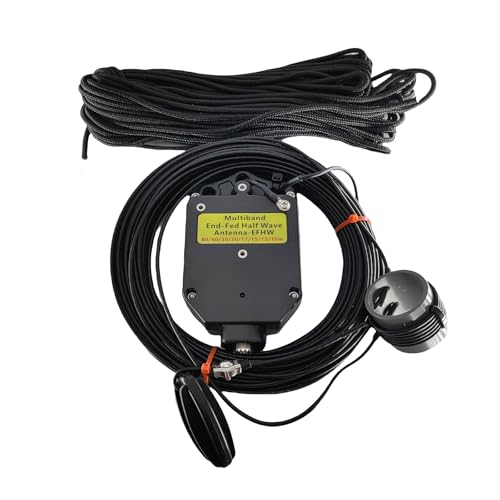
The best hf wire antennas are the antennas that prove a simple idea: a length of wire, hung in the air, can talk to the other side of the world. HF, the high-frequency bands from 1 to 30MHz, is where amateur radio does its long-distance work, and a wire antenna is the oldest, cheapest and often the best way to get on those bands. There is no tower to build, no rotator to maintain, and no great outlay, only a wire, a balun, a feedline and a tree, a mast or a pole to hang it from.
Eight wire antennas made the list, and every one is a genuine wire antenna for HF: end-fed half-wave antennas, dipoles and long-wire antennas, from 100 watts to 1000 watts, covering the bands from 80 metres to 6 metres. The JYR8010 end-fed covers eight bands with no tuning, the Harvest Taurus long-wire dipole covers 80 metres to 6 metres including the WARC bands, and the GOOZEEZOO and WOOKLEA dipoles cover the classic bands with a balun in the box. Every pick is sold as a complete antenna, with the wire and the balun, and the guide says plainly what each one covers and what it needs.
A word on what a wire antenna is, and what it is not. It is a wire cut to work on the HF bands, fed at the end or in the middle, with a balun that matches it to the feedline. It is not a vertical antenna, and it is not a loop, a mount, a cable or a book, and none of those made this list, however often they appeared in the search results. A wire antenna needs space to hang, a feedline to the radio, and a tuner or a low SWR on the bands it will be used on.
In this guide
Quick picks: best hf wire antennas
| # | Product | Where to buy |
|---|---|---|
| 1 | JYR8010-150W End Fed Half Wave Antenna | Check on Amazon |
| 2 | Harvest Taurus 80M-6M Long Wire Dipole | Check on Amazon |
| 3 | Portable HF End Fed Antenna, 1-30MHz | Check on Amazon |
| 4 | HF End Fed Antenna, 100W, 1-30MHz | Check on Amazon |
| 5 | GOOZEEZOO Multiband HF Dipole, 40/20/15/10M | Check on Amazon |
| 6 | WINDCAMP Gipsy 5-50MHz HF Dipole Antenna | Check on Amazon |
| 7 | WOOKLEA 750V HF Dipole Antenna, 5-Band | Check on Amazon |
| 8 | GOOZEEZOO 4010-1000W End Fed Half Wave | Check on Amazon |
How the picks were chosen
The picks were chosen from the site's own product listings, and only wire antennas for HF made the list. Vertical antennas were left out, because a vertical is not a wire antenna, however good it is. Antenna mounts, ground meshes, radial sets and coaxial cables were left out too, because they are accessories, not antennas. Loop receive antennas were left out, because they are for listening, not for transmitting, and books and reference cards were left out because they are not antennas at all. What remains is eight genuine wire antennas, each one named exactly as its listing names it.
Band coverage was the first test after the antenna itself, because a wire antenna is only useful on the bands it covers. The picks here cover from 80 metres to 6 metres between them, with the 40, 20, 15 and 10-metre bands covered by most, and the WARC bands covered by the Harvest Taurus. Power handling was the second test, and it runs from 100 watts to 1000 watts in this guide, which covers the power most amateur stations run. The balun ratio was the third test, because the balun is what matches the wire to the feedline, and the guide names the ratio of every pick that states one.
Portability and the setup were the remaining tests. An end-fed antenna needs only one support, which makes it the easiest wire antenna to hang, while a dipole needs two, which makes it the antenna for a garden with two trees or two masts. A portable antenna, like the pocket end-fed in this guide, is built to be carried to a park or a summit, while a fixed dipole is built to stay up for years. The comparison table calls out the type, the bands and the power of every pick, so the choice can be made at a glance.
Quick comparison
| Product | Standout detail |
|---|---|
| JYR8010-150W End Fed Half Wave Antenna | JYR8010, 8-band end fed, 150W, 1:64 balun |
| Harvest Taurus 80M-6M Long Wire Dipole | Harvest Taurus, 80M-6M dipole, WARC bands |
| Portable HF End Fed Antenna, 1-30MHz | Portable end fed, 1-30MHz, pocket size |
| HF End Fed Antenna, 100W, 1-30MHz | HF end fed, 100W, 1-30MHz, SSB and FT8 |
| GOOZEEZOO Multiband HF Dipole, 40/20/15/10M | GOOZEEZOO fan dipole, 4-band, 1:1 balun |
| WINDCAMP Gipsy 5-50MHz HF Dipole Antenna | WINDCAMP Gipsy, 5-50MHz, waterproof balun |
| WOOKLEA 750V HF Dipole Antenna, 5-Band | WOOKLEA dipole, 5-band, 2000W PEP |
| GOOZEEZOO 4010-1000W End Fed Half Wave | GOOZEEZOO 4010, 1000W, 4-band, 1:64 balun |

1. JYR8010-150W End Fed Half Wave Antenna
Key specs
JYR8010-150W end fed half wave antenna for ham radio, an 8-band long wire antenna covering 10, 12, 15, 17, 20, 30, 40 and 80 metres, with a 1:64 balun, no tuning, for POTA and SOTA use.
Strengths
- Eight bands in one wire is the widest coverage in this guide, from 80 metres to 10 metres, including the WARC bands.
- No tuning is needed, so the antenna works as soon as it is hung, which is what a portable operator wants.
- The 1:64 balun is stated in the listing, so the match to the feedline is known before the antenna is bought.
Trade-offs
- The 150-watt rating is modest, so a buyer who runs high power should take the 1000-watt GOOZEEZOO below.
- An end-fed antenna needs a good counterpoise or ground, and the listing does not state what is included.
- The long wire needs space to hang, so a buyer with a small garden should measure before ordering.
Who it fits
An amateur who wants eight bands from one wire, for home or portable use.
Best for: Portable operation and home use across eight HF bands, with no tuning.
Not suited for: Buyers who run high power, who should take the GOOZEEZOO 4010-1000W.
In daily use
Hang the wire as high and as straight as the space allows, and keep the far end away from metal roofs and gutters, because a wire near metal does not work as the maker intended. Connect the feedline to the balun, and check the SWR on each band before transmitting.
The JYR8010 is the default pick in this guide: the wire antenna that covers the most bands with the least fuss.
Check price on Amazon: JYR8010-150W End Fed Half Wave Antenna

2. Harvest Taurus 80M-6M Long Wire Dipole
Key specs
Harvest Taurus 80M-6M multi-band long wire dipole antenna, including the WARC bands, for ham radio.
Strengths
- Coverage from 80 metres to 6 metres is the widest span in this guide, including the WARC bands that many antennas skip.
- A dipole is the simplest wire antenna there is, with two wires and a feedpoint, and it is the design every amateur should understand.
- The long-wire design suits a garden with two supports, which is the classic way to hang a wire antenna.
Trade-offs
- A dipole needs two supports, so a buyer with only one tree or mast should take an end-fed pick instead.
- The listing gives no power rating or balun ratio to quote, so the buyer should check the listing for those figures.
- The long wire needs a long garden, and a small plot will not fit an 80-metre dipole.
Who it fits
An amateur with two supports and room to hang a long wire, who wants the widest band span.
Best for: Home use across the HF bands, from 80 metres to 6 metres, including WARC.
Not suited for: Buyers with only one support, who should take an end-fed antenna.
In daily use
Hang the dipole as high as possible, with the feedpoint in the middle and the two wires sloping down to their supports. Keep the wire away from power lines, and never hang an antenna where it can fall onto one.
The Harvest Taurus is the coverage pick: the dipole with the widest span of bands here.
Check price on Amazon: Harvest Taurus 80M-6M Long Wire Dipole
3. Portable HF End Fed Antenna, 1-30MHz
Key specs
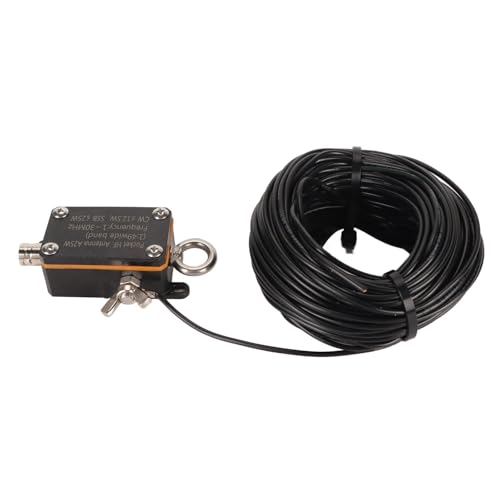
Portable short antenna, a portable HF end fed antenna covering 1 to 30MHz, for FE8, CW and SSB use, with a 1:49 balun, a short pocket end fed radio antenna for outdoor use.
Strengths
- The pocket size is the smallest in this guide, which makes it the antenna that fits in a jacket pocket.
- Coverage from 1 to 30MHz is the whole HF range, so the antenna works on every band the radio can use.
- The 1:49 balun is stated in the listing, so the match to the feedline is known before the antenna is bought.
Trade-offs
- The short length is a compromise, and a full-size wire will work better on the lower bands.
- The listing gives no power rating to quote, so the buyer should check the listing before running high power.
- A pocket antenna needs a support and a counterpoise, and the buyer should plan for both before a portable trip.
Who it fits
A portable operator who wants an antenna that fits in a pocket, for parks and summits.
Best for: Portable operation, where the antenna must be carried and hung quickly.
Not suited for: Buyers who want a fixed home antenna, who should take the Harvest Taurus dipole.
In daily use
Pack the antenna with a throw line and a counterpoise wire, because a pocket antenna is only useful if it can be hung when it is needed. Hang it from a tree branch, check the SWR before transmitting, and keep the wire away from the body while transmitting.
The portable end fed is the pocket pick: the smallest antenna in this guide, for the operator who travels light.
Check price on Amazon: Portable HF End Fed Antenna, 1-30MHz

4. HF End Fed Antenna, 100W, 1-30MHz
Key specs
HF end fed antenna, a 4-band and 8-band end fed radio antenna covering 1MHz to 30MHz, rated at 100 watts, for SSB, FT8, FM and FSK use, for outdoor operation.
Strengths
- The 100-watt rating suits the power most amateur stations run, which makes it the honest rating for everyday use.
- Coverage from 1 to 30MHz is the whole HF range, so the antenna works on every band the radio can use.
- The listing names SSB, FT8, FM and FSK, which are the modes an amateur actually uses, so the antenna is built for real operation.
Trade-offs
- The 100-watt rating is the lowest in this guide alongside the pocket antenna, so a buyer who runs high power should look elsewhere.
- The listing does not state the balun ratio, so the buyer should check the listing for that figure.
- The 4-band and 8-band wording is confusing, and the buyer should check which bands the listing actually promises.
Who it fits
An amateur who runs 100 watts and wants a simple end-fed antenna for outdoor use.
Best for: Outdoor operation on SSB and FT8, at the power most stations run.
Not suited for: Buyers who run high power, who should take the GOOZEEZOO 4010-1000W.
In daily use
Hang the antenna from a single support, and run the feedline to the radio. Check the SWR on the bands that will be used, and start with low power.
The HF end fed is the straightforward pick: the 100-watt antenna for the power most stations run.
Check price on Amazon: HF End Fed Antenna, 100W, 1-30MHz

5. GOOZEEZOO Multiband HF Dipole, 40/20/15/10M
Key specs
GOOZEEZOO multiband HF dipole antenna, a 40, 20, 15 and 10-metre 4-band fan dipole antenna kit with a 1:1 balun, for horizontal and inverted V setup, for ham radio.
Strengths
- Four bands in one fan dipole is the classic multiband design, with a wire for each band, and it works without a tuner on the bands it covers.
- The 1:1 balun is stated in the listing, so the match to the feedline is known before the antenna is bought.
- The kit form means the wires, the balun and the hardware arrive together, so the antenna can be hung on the day it arrives.
Trade-offs
- Four bands is fewer than the eight-band end-fed picks, so a buyer who wants 80 metres should take the JYR8010 instead.
- A fan dipole needs space for four wires, so a small garden will struggle to fit it.
- The inverted V setup needs a single high support, and the buyer should plan for it before ordering.
Who it fits
An amateur who wants four classic bands from one fan dipole, with a balun in the box.
Best for: Home use on 40, 20, 15 and 10 metres, in a horizontal or inverted V setup.
Not suited for: Buyers who want 80 metres, who should take the JYR8010 end fed.
In daily use
Hang the fan dipole with the wires spread apart, because wires that touch each other do not work as separate bands. Keep the feedpoint high, and check the SWR on each band before transmitting, because a fan dipole is tuned by trimming the wires, and the trimming should be done a little at a time.
The GOOZEEZOO fan dipole is the kit pick: the multiband dipole that arrives ready to hang.
Check price on Amazon: GOOZEEZOO Multiband HF Dipole, 40/20/15/10M
6. WINDCAMP Gipsy 5-50MHz HF Dipole Antenna
Key specs
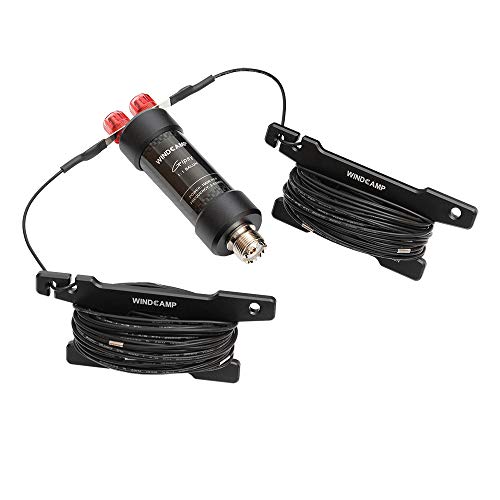
WINDCAMP Gipsy 5-50MHz HF horizontal dipole antenna for ham radio, with a waterproof balun.
Strengths
- Coverage from 5 to 50MHz is the widest frequency span in this guide, reaching into the 6-metre band and beyond.
- The waterproof balun is the feature that matters for an antenna that stays up in the rain, because a wet balun is a failed balun.
- The horizontal dipole is the classic design, and it is the antenna that most amateurs start with.
Trade-offs
- The listing gives no power rating or band list to quote, so the buyer should check the listing for those figures.
- A horizontal dipole needs two supports, so a buyer with only one should take an end-fed pick.
- The Gipsy name is a model name, and the buyer should check the listing matches the model before ordering.
Who it fits
An amateur who wants a classic horizontal dipole that stays up in all weathers.
Best for: Home use on a horizontal dipole, with a waterproof balun for the rain.
Not suited for: Buyers who want a stated power rating, who should take the WOOKLEA dipole below.
In daily use
Hang the dipole horizontally between two supports, as high as the space allows, and keep the feedline away from the wire, because a feedline that touches the wire changes the antenna. Check the waterproofing of the balun once a year, because a seal that fails in the rain is a balun that fails with it.
The WINDCAMP Gipsy is the all-weather pick: the dipole with the waterproof balun.
Check price on Amazon: WINDCAMP Gipsy 5-50MHz HF Dipole Antenna
7. WOOKLEA 750V HF Dipole Antenna, 5-Band
Key specs
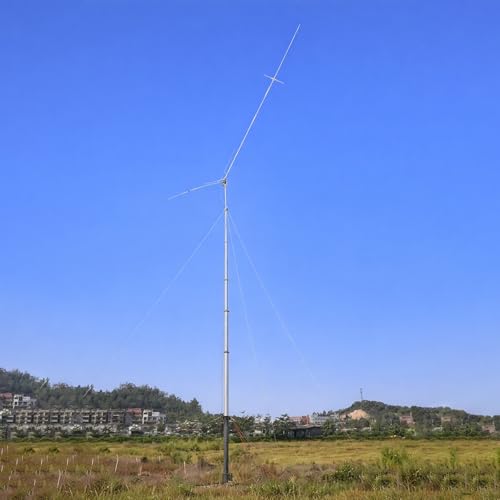
WOOKLEA 750V HF dipole antenna, a 5-band antenna covering 40 metres to 6 metres, rated at 2000 watts PEP, 1000 watts SSB and 500 watts CW, with 18.5 feet per side and factory-preset elements, for fixed outdoor installation.
Strengths
- The 2000-watt PEP rating is the highest power handling in this guide, which makes it the antenna for a high-power station.
- Five bands from 40 metres to 6 metres cover the classic bands, with factory-preset elements that need no trimming.
- The 18.5 feet per side is stated in the listing, so the buyer knows exactly how much space the antenna needs.
Trade-offs
- The high power rating is more than most stations need, so a buyer who runs 100 watts is paying for power that will never be used.
- A fixed outdoor installation is not portable, so a buyer who wants a field antenna should take the pocket end fed.
- The factory-preset elements are convenient, but they cannot be adjusted, so the buyer should check the bands before ordering.
Who it fits
An amateur with a high-power station who wants a fixed dipole for five bands.
Best for: Fixed outdoor use at high power, on five bands from 40 metres to 6 metres.
Not suited for: Buyers who run 100 watts, who should take the HF end fed above.
In daily use
Install the dipole on a fixed support, and check the SWR on each band before transmitting at full power, because a high-power station should never be trusted to an untested antenna. Keep the wire away from power lines, and never work on the antenna while the radio is transmitting.
The WOOKLEA dipole is the high-power pick: the antenna for the station that runs real power.
Check price on Amazon: WOOKLEA 750V HF Dipole Antenna, 5-Band

8. GOOZEEZOO 4010-1000W End Fed Half Wave
Key specs
GOOZEEZOO 4010-1000W end fed half wave antenna, a 4-band 20-metre long wire antenna rated at 1000 watts, covering 10, 15, 20 and 40 metres, with a low SWR, a 1:64 balun and no tuning.
Strengths
- The 1000-watt rating is the highest among the end-fed picks, which makes it the antenna for a high-power station that wants one support.
- Four bands with no tuning means the antenna works as soon as it is hung, which is what a field operator wants.
- The 1:64 balun and the low SWR are stated in the listing, so the match is known before the antenna is bought.
Trade-offs
- Four bands is fewer than the eight-band JYR8010, so a buyer who wants 80 metres should take that pick instead.
- The 20-metre wire needs space to hang, so a small garden will struggle to fit it.
- The 1000-watt rating is more than most stations need, so a buyer who runs 100 watts is paying for power that will never be used.
Who it fits
An amateur who wants a high-power end-fed antenna for four bands, with one support.
Best for: High-power use on 40, 20, 15 and 10 metres, with a single support and no tuning.
Not suited for: Buyers who want eight bands, who should take the JYR8010 end fed.
In daily use
Hang the 20-metre wire as high and as straight as the space allows, and keep the far end away from metal roofs and gutters. Check the SWR on each band before transmitting at full power, because a high-power station should never be trusted to an untested antenna, and keep the wire away from the body while transmitting.
The GOOZEEZOO 4010-1000W is the high-power end-fed pick: the wire antenna for the station that runs real power from one support.
Check price on Amazon: GOOZEEZOO 4010-1000W End Fed Half Wave
Buying guide: best hf wire antennas
End-fed or dipole
The first choice is between an end-fed antenna and a dipole, and the difference is the number of supports. An end-fed antenna is fed at the end of the wire, so it needs only one high support, which makes it the easiest wire antenna to hang, and the best choice for a garden with one tree or one mast. A dipole is fed in the middle, so it needs two supports, which makes it the antenna for a garden with two trees or two masts. The end-fed picks in this guide cover more bands, and the dipole picks are simpler to understand, and the buyer should choose the shape for the garden, not for the specification sheet.
Bands: what the numbers mean
The bands are named by their wavelength in metres, and the picks in this guide cover from 80 metres to 6 metres between them. The 80-metre band is for local and regional contacts at night, the 40-metre band is the workhorse of HF, the 20-metre band is for long-distance contacts in the day, and the 15 and 10-metre bands open when the sun is active. The WARC bands, covered by the Harvest Taurus, are the quiet bands in between, with less contest traffic. A buyer who wants one antenna for everything should take an eight-band end-fed, and a buyer who wants the classic bands should take a four-band dipole.
Power: how much is enough
Power handling is measured in watts, and the picks here run from 100 watts to 2000 watts PEP. Most amateur stations run 100 watts, which is the rating of the HF end fed in this guide, and a buyer who runs 100 watts does not need a 1000-watt antenna. A buyer who runs an amplifier needs the higher rating, and the WOOKLEA dipole at 2000 watts PEP and the GOOZEEZOO 4010 at 1000 watts are the picks for that station. The rating is a maximum, not a target, and the antenna should never be run at its limit for long, because heat is what damages a balun.
The balun: the part that makes it work
The balun is the part that matches the wire to the feedline, and its ratio is stated in the listing for most picks in this guide. An end-fed half-wave antenna needs a 1:64 balun, because the end of a half-wave wire is a high impedance, and a dipole needs a 1:1 balun, because the middle of a dipole is a low impedance. A buyer who buys a wire without a balun will need to buy one separately, and a buyer who buys an antenna with the wrong balun will have a high SWR. Check the ratio in the listing, because it is the number that decides whether the antenna works.
SWR: the number to check
SWR, the standing wave ratio, is the number that tells the operator whether the antenna is working, and it should be checked on every band before transmitting. A low SWR means the power is going into the antenna, and a high SWR means it is coming back, which can damage the radio. The picks in this guide that state a low SWR are the ones that are tuned for the bands they cover, and the ones that need no tuning are the ones that are cut to work as they arrive. A tuner can help, but it cannot fix an antenna that is hung wrong, and the guide below explains how to hang a wire properly.
Hanging a wire antenna
A wire antenna should be hung as high and as straight as the space allows, because height is what makes a wire antenna work. The wire should be kept away from metal roofs, gutters and power lines, because metal near a wire changes the antenna, and a power line near a wire is a danger, not a nuisance. The feedline should run away from the wire, and the far end of an end-fed wire should be kept away from the ground, because a wire near the ground does not work as the maker intended. Never work on an antenna while the radio is transmitting, and never hang an antenna where it can fall onto a power line.
What to check before ordering
Before ordering, check three things in the listing: the bands, the power rating, and the balun ratio. The bands decide whether the antenna covers the frequencies that will be used, the power rating decides whether it survives the station, and the balun ratio decides whether it matches the feedline. Check the length, because the wire needs space to hang, and check the model name, because an antenna with a similar name from the same maker can be a different device entirely. The picks in this guide are named exactly, and the listing should match the name before the order is placed.
Portable operation: POTA and SOTA
Portable operation, in parks and on summits, wants an antenna that is light, quick to hang, and easy to carry, and the pocket end-fed and the JYR8010 are the picks for that job. Pack the antenna with a throw line, a counterpoise wire and a small tuner, and hang it from a tree branch, because a portable antenna is only useful if it can be hung when it is needed. Check the SWR before transmitting, and keep the wire away from the body while transmitting, because a wire antenna should never be touched while it is in use.
Usage and care
Hang the antenna as high and as straight as the space allows, and check the SWR on every band before transmitting, because a low SWR is the sign that the antenna is working as it should. Keep the wire away from metal roofs, gutters and power lines, and keep the feedline away from the wire, because a feedline that touches the wire changes the antenna. Start with low power, and increase it only when the SWR is known to be low, because a high SWR at high power can damage the radio.
Look after the antenna by checking the wire, the balun and the feedline once a season, because weather wears them all. Look for frayed wire, cracked insulation and water in the balun, and replace anything that is damaged, because a damaged antenna is an antenna that does not work as it should. Take a portable antenna down after use, and store it dry, because a wire left in the rain will corrode, and a corroded wire is a wire that will fail.
Store the antenna in a dry place, coiled loosely rather than wound tight, because a tight coil kinks the wire and a kinked wire breaks. Keep the balun dry, and check its seals once a year, because a seal that fails in the rain is a balun that fails with it. Label the wire with its bands and its length, because a wire without a label is a wire that will be confused with another, and a confused wire is a wire that is hung wrong.
Common mistakes
The most common mistake is hanging the wire too low: a wire antenna near the ground does not work as the maker intended, and it will have a high SWR and poor performance, however good the antenna is. Hang the wire as high as the space allows, and keep it away from the ground, because height is what makes a wire antenna work. A wire that is hung low is a wire that is wasted.
The second mistake is forgetting the counterpoise on an end-fed antenna. An end-fed antenna needs a counterpoise or a ground to work against, and without one the feedline becomes the counterpoise, which brings radio frequency into the shack. Run a counterpoise wire, and keep the feedline away from the operating position, because a feedline that radiates is a feedline that causes interference.
The third mistake is transmitting before checking the SWR. A high SWR at high power can damage the radio, and it is the easiest mistake in this guide to avoid, because a SWR meter is cheap and the check takes a minute. Check the SWR on every band before transmitting, start with low power, and never trust an antenna that has not been tested, however good the listing says it is.
Wire antennas for a small garden
A small garden wants an end-fed antenna, because it needs only one support, and the JYR8010 and the GOOZEEZOO 4010 are the picks for that job. Hang the wire from a single mast or tree, and run it to the far end of the garden, because a wire that is hung straight works better than a wire that is bent. A dipole needs two supports, and a small garden may not have them, so the end-fed is the practical choice for most small plots.
Wire antennas for portable use
A portable antenna wants to be light, quick to hang, and easy to carry, and the pocket end-fed and the JYR8010 are the picks for that job. Pack the antenna with a throw line and a counterpoise, hang it from a tree, and check the SWR before transmitting, because a portable antenna is only useful if it can be hung when it is needed. Take it down after use, and store it dry, because a wire left in the rain will corrode.
Wire antennas for high power
A high-power station wants an antenna rated for the power it runs, and the WOOKLEA dipole at 2000 watts PEP and the GOOZEEZOO 4010 at 1000 watts are the picks for that job. Check the SWR before transmitting at full power, because a high-power station should never be trusted to an untested antenna, and keep the wire away from the body while transmitting, because a wire antenna should never be touched while it is in use.
Final recommendation
If one antenna has to win this guide, it is the JYR8010 end-fed half wave, because it covers eight bands with no tuning, from a single support, with a 1:64 balun stated in the listing. The Harvest Taurus is the pick for buyers who want the widest span of bands from a dipole, and the GOOZEEZOO 4010-1000W is the pick for buyers who run high power from a single support.
For most buyers, the choice comes down to three questions. End-fed or dipole? If the garden has one support, the end-fed picks are the answers, and if it has two, the dipole picks are the answers. How many bands? If the answer is eight, the JYR8010 is the answer, and if the answer is four classic bands, the GOOZEEZOO fan dipole is the answer. How much power? If the answer is 100 watts, the HF end fed is the answer, and if the answer is high power, the WOOKLEA and the GOOZEEZOO 4010 are the answers. Answer those three, and the right antenna in this guide picks itself.
Whatever antenna is chosen, hang it as high as the space allows, check the SWR on every band before transmitting, and keep it away from power lines. A wire antenna bought carefully and hung well is an antenna that talks to the world, and the eight antennas in this guide are all antennas that can do that, in different forms and for different stations.
Frequently asked questions
What is the best HF wire antenna?
The best HF wire antenna is the JYR8010 end-fed half wave, because it covers eight bands with no tuning, from a single support, with a 1:64 balun. The Harvest Taurus is the best dipole alternative, with the widest span of bands, and the GOOZEEZOO 4010-1000W is the best pick for high-power stations.
Are end-fed antennas good for HF?
End-fed antennas are good for HF, because they need only one support, they cover many bands, and they work without a tuner when they are cut correctly. The JYR8010, the pocket end-fed and the GOOZEEZOO 4010 in this guide are all end-fed antennas, and they are the easiest wire antennas to hang, especially in a garden with one tree or mast.
Do I need a tuner with a wire antenna?
A tuner is useful with a wire antenna, but the picks in this guide that need no tuning are cut to work on the bands they cover, and they should show a low SWR as they arrive. A tuner can help on the bands at the edges, but it cannot fix an antenna that is hung wrong, so the wire should be hung as high and as straight as possible first.
How high should I hang a wire antenna?
A wire antenna should be hung as high as the space allows, because height is what makes a wire antenna work. A wire near the ground has a high SWR and poor performance, however good the antenna is. Keep the wire away from metal roofs, gutters and power lines, and never hang an antenna where it can fall onto a power line.
What is the difference between a dipole and an end-fed antenna?
A dipole is fed in the middle and needs two supports, while an end-fed antenna is fed at the end and needs only one. A dipole is the simplest wire antenna to understand, and an end-fed is the easiest to hang. The dipole picks in this guide are the Harvest Taurus, the GOOZEEZOO fan dipole, the WINDCAMP Gipsy and the WOOKLEA, and the end-fed picks are the JYR8010, the pocket end-fed, the HF end fed and the GOOZEEZOO 4010.
Can a wire antenna handle 1000 watts?
A wire antenna can handle 1000 watts when it is rated for it, and the GOOZEEZOO 4010 in this guide is rated at 1000 watts, while the WOOKLEA dipole is rated at 2000 watts PEP. A buyer who runs 100 watts does not need a 1000-watt antenna, and the rating is a maximum, not a target, so the antenna should never be run at its limit for long.
What is a balun, and why does a wire antenna need one?
A balun matches the wire to the feedline, and its ratio is stated in the listing for most picks in this guide. An end-fed half-wave antenna needs a 1:64 balun, because the end of a half-wave wire is a high impedance, and a dipole needs a 1:1 balun, because the middle of a dipole is a low impedance. A wire without the right balun will have a high SWR, so the ratio should be checked in the listing before ordering.
More from ilcastellomenu.com
How to choose a WiFi antenna: choosing an antenna for wireless networking
WiFi antenna pros and cons: the trade-offs of adding an antenna