Disclosure: As an Amazon Associate, ilcastellomenu.com earns from qualifying purchases. Links on this page are affiliate links; they cost you nothing extra. Prices and availability change often, so check the current Amazon listing before you buy.
Learning how to choose a wifi antenna is mostly learning how to describe your own network accurately, because the right antenna is the one that matches a problem you have stated precisely: one room, one device, one direction, one connector. This guide teaches the choosing as a method. It lays out the concepts that matter, walks through the decision as numbered steps with the detail each step deserves, shows the gear that fits each branch of the decision, names the mistakes that produce the category’s famous wrong orders, and finishes with worked examples of real households choosing well.
Key Takeaways
- The deciding criteria, in order, are: the shape of your problem, the connector on your device, the radiation pattern, the bands you use, and only then brand and tier.
- Write your problem in one sentence with a place in it before looking at any product; the sentence chooses the pattern for you.
- Connector family and gender come from your device’s documentation, never from a photograph or a similar-looking model.
- Directional for one target, omnidirectional for all around, magnetic-base for a device in a bad position: pattern is the purchase.
- Outdoor choices include an installation plan with weather sealing, safe dry-weather working, clearance from power lines, and professional mast support.
The short answer: the criteria that decide a wifi antenna purchase are geometry and compatibility, not gain figures. Decide where the signal must go, confirm what it can screw onto, match the pattern to the map, and the shortlist writes itself. Everything below is that sentence expanded into a repeatable method you can apply to any home, any router and any generation of equipment.
In this guide
What You Need to Know Before Comparing
Start with the conservation law, because every comparison depends on it: an antenna creates nothing. It redistributes the signal your equipment already produces, concentrating it in some directions and thinning it in others. Gain, the figure listings shout about, is simply a measure of that concentration, which means a higher figure is a narrower favour, not a larger gift. Once that is understood, product pages become legible: you stop asking which antenna is strongest and start asking which antenna’s pattern matches your floor plan, which is the only question with a useful answer.
Next, radiation patterns in plain terms. An omnidirectional antenna radiates in a circle around its axis, flattened like a doughnut; the taller and higher-gain the omni, the flatter the doughnut, reaching further across its own floor and less to the floors above and below. A directional antenna radiates a beam, widest in paddles and panels, narrowest in yagis and grids, and is judged by how well its beam matches the shape of your need: a hallway wants a modest beam, a distant barn wants a narrow one. Polarisation, the orientation of the radio wave, rewards matching at both ends of a link, which in practice means keeping antennas vertical for ordinary home gear unless a deliberate cross-floor experiment says otherwise.
Then, the two-way truth: wifi is a conversation, and the quieter end limits it. A router may reach a laptop whose reply cannot reach back, in which case router-side antennas disappoint and the fix belongs at the device end. This is why the method below audits both ends of the link before choosing where to spend. Finally, bands: the lower band travels further and penetrates better, the higher band is faster and shorter-legged, and an antenna must support the bands it will serve. Know which band your struggling devices actually use, from the router’s client list, because an antenna chosen for the wrong band is a sculpture. Readers new to the category may want the groundwork in our wifi antenna buying guide alongside this method.
How To Choose A Wifi Antenna in Seven Steps
Step 1: State the Problem in One Sentence
Write the sentence down, with a place in it: the back bedroom drops calls; the desktop under the desk stutters; the garden office has no signal; every room is mediocre. Each sentence routes the whole purchase. One room means direction or receiver-side help. One device means working at that device. One outbuilding means an outdoor project. Everywhere means stop: the answer is more signal sources, a mesh system or wired access points, and no antenna choice made in this guide will rescue that sentence. This step feels too simple to matter and is in fact the step whose omission causes nearly every wrong order in the category, because it is the only step that can tell you not to buy an antenna at all.
Step 2: Audit Positions Before Products
Walk the route the signal must travel and note what stands in the way: masonry, metal appliances, mirrors, water in radiators and aquariums, foil-backed insulation. Note where the router must live and where an antenna element could realistically sit at each end: a shelf, a case top, a wall, a filing cabinet. Note heights, because raising an element often buys more than upgrading it. This audit converts your one-sentence problem into a map, and the map, not a catalogue, is what the remaining steps consult. Owners who skip the audit buy antennas for the home they imagine; owners who do it buy for the home they have.
Step 3: Identify the Connector From Documentation
Find your device’s manual or specification sheet and identify the antenna port exactly: the connector family and which side carries the centre pin, since the dominant home connector exists in two mirror-image forms that look identical and do not interchange. Confirm also that a port exists; sealed routers, mesh units and many laptops offer none, and discovering that after delivery is the category’s most avoidable frustration. If an adapter would be required to make a pairing work, treat that as a signal to choose a different antenna rather than to stack adapters, because every adapter adds loss and a joint that loosens. Only when the connector is certain does comparison shopping legitimately begin.
Step 4: Choose the Radiation Pattern
Now let the map decide. Signal needed in every direction from the source: omnidirectional, with flatness matched to your storeys, moderate for multi-floor homes, flatter for single-floor reach. Signal needed in one direction: directional, a panel for a room or hallway, a narrower design for a distant building. Signal needed at one badly placed device: a magnetic-base antenna at that device, pattern almost secondary to position. Signal needed between two buildings: directional at both ends, aimed at each other. Write the pattern decision beside your problem sentence; together they eliminate most of every catalogue, which is exactly what a good method should do. The reasoning behind each branch is expanded in our wifi antenna reviews.
Step 5: Match Bands and Check Both Ends
Confirm the antenna supports every band it will serve, and weight your judgement toward the band your struggling devices actually use, which for distant rooms is usually the longer-range one. Then revisit the two-way truth: if the weak end is a device with a port, the device end may be the right place to spend, or both ends may deserve modest antennas rather than one end receiving a hero. Check the far device’s port with the same documentation discipline as the router’s. A link budget balanced at both ends outperforms a link shouted from one end, in stability if not in headline numbers.
Step 6: Plan the Cable and the Mounting
Any antenna separated from its device spends signal in its cable, so plan the shortest run that reaches a genuinely better position, and refuse runs whose length exists only to reach a theoretically perfect spot. Choose the mounting by testing where possible: magnetic bases can audition positions in an evening. Outdoors, this step becomes a project plan: outdoor-rated cable, drip loops, every connector sealed against weather, a mounting position with absolute clearance from overhead power lines where no falling mast could ever touch one, work scheduled only in dry calm weather with proper ladder safety, and a professional engaged for the mast, its grounding and its lightning protection. If that plan is more than you want, the correct conclusion is an indoor pattern choice, not a casual outdoor one.
Step 7: Choose the Model and Tier Last
Only now open the listings, filtered by pattern, connector, bands and environment. Within the survivors, choose by build evidence: hinges that hold, housings honestly rated, listings that describe pattern and limits soberly. Tier follows problem size: entry for replacements and first experiments, mid for magnetic bases and quality omnis, premium for serious panels and outdoor links including their professional costs. Keep the original antennas, judge the newcomer across a week of worst-hour evenings, and let stability, not a single speed test, cast the deciding vote.
Gear for This Guide

TP-Link TL-ANT2408CL — The Generalist Choice
Choose this entry-tier hinged omni when your sentence says the router serves all around itself and simply needs to do it better: a modest home, a router at one end, no single distant target. Its virtue is that it asks nothing but verticality and clearance. Best for: first experiments and small homes. Not suited for: one far room or any outdoor duty.
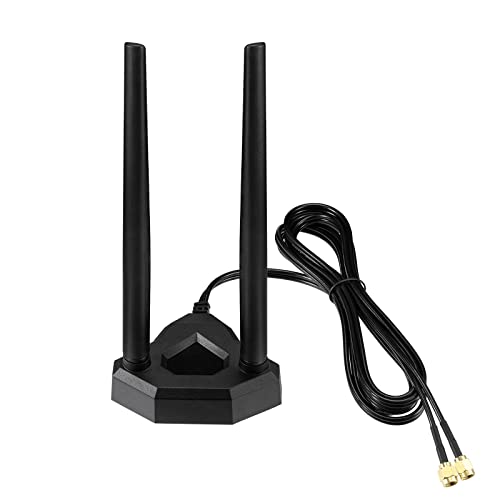
Eightwood Dual Band WiFi Antenna — The Receiver-Side Choice
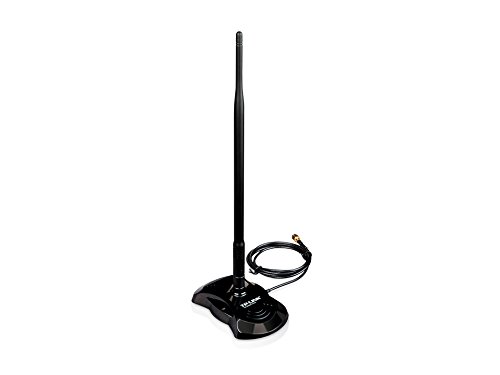
Choose this mid-tier magnetic-base antenna when your sentence names a device, above all a desktop in a metal shadow. Position is its whole argument, and it is a strong one. Best for: desktops, small-form PCs and adapters with ports. Not suited for: portless devices or permanent outdoor mounting.

Alfa Network APA-M25 — The One-Direction Choice
Choose this premium-tier dual-band panel when your sentence names a direction that is stable: down the hallway, across the long room, toward the outbuilding from a sheltered mount. It rewards aim and punishes vagueness. Best for: one stubborn room or building. Not suited for: serving rooms behind the router. Its balance of virtues and costs is dissected in wifi antenna pros and cons.
TP-Link TL-ANT2414A — The Outdoor Project Choice
Choose this premium-tier weather-rated panel when your sentence names another building and you accept the project that comes with it: sealed connectors, dry calm installation weather, proper ladder safety, total clearance from overhead power lines, and a professional for mast, grounding and lightning protection. Best for: house-to-outbuilding links. Not suited for: anyone seeking a casual weekend fix.
Common Mistakes
The mistakes repeat so reliably that they amount to a checklist of what not to do. Choosing by gain figure alone, as if concentration were creation. Choosing by photograph, and discovering the mirror-image connector on delivery day. Choosing a directional pattern for an everywhere problem, or an omni for a single distant target. Choosing for the band your devices do not use. Choosing a long cable run to a perfect position and taxing away the benefit. Choosing an indoor antenna for an outdoor life. Choosing to upgrade only the loud end of a two-way conversation. And choosing an outdoor mounting for convenience that a falling mast could bring within reach of a power line, a mistake in a different moral category from all the others, and the one this guide will repeat as often as necessary: never install where a falling mast could touch an overhead power line.
Pro Tips
Test before you buy: borrow the pattern decision by experiment, standing the router’s existing antennas at complementary angles, moving the router a short distance higher and clearer, and noting which change moves the problem room, because the change that helps predicts the antenna that will help more. Photograph your connector beside a coin and keep the photograph with the manual’s port description when ordering. Buy from listings that state pattern, connector and environment plainly, and keep packaging until a week of evenings has voted. For multi-antenna routers, change one variable at a time and label arrangements with tape and a notebook; wifi folklore is mostly unlabelled experiments. Finally, record your one-sentence problem and the result a month later; that small archive is the most useful review your future self will ever read.
Worked Examples
A two-bedroom flat, router by the door, study at the hallway’s end, sentence: the study drops calls. Map: one direction, thin walls. Pattern: directional panel on the router, or a taller omni as the gentler first experiment. Connector verified from the router manual; bands both; result judged across a week. A family home, sentence: the gaming desktop stutters while everything else is fine. Map: the problem is a position, not a coverage. Choice: magnetic-base antenna at the desktop, router untouched, stability in evening play as the test. A smallholding, sentence: the workshop barn has no signal. Map: one direction, clear line of sight, outdoor at both ends. Choice: weather-rated panels as a pair, sealed connectors, professional mast installation with grounding and lightning protection, work done in dry calm weather with total clearance from the farm’s overhead lines. Three sentences, three patterns, no catalogue browsing until the method had already chosen.
Final Word
Choosing a wifi antenna well is an act of description before it is an act of purchase. State the problem, map the route, verify the connector, let the pattern follow the map, balance the two ends, plan the cable and the mounting, and let models compete last, on build and honesty. Households that choose this way rarely return antennas and often wonder why the category has a confusing reputation. Households in the everywhere sentence should close this guide with equal confidence and spend on sources instead, starting with routers chosen for large homes and the placement wisdom in where to put a wifi router.
Choosing by Household: Flats, Houses and Rural Homes
The method stays the same, but its answers rhyme by building type. In flats, distances are short, walls are many and neighbours’ networks crowd the bands; the choosing emphasis falls on pattern discipline and band awareness, because a modest directional favour toward your own rooms is also a small refusal to shout into the corridor, and because congestion, not reach, is often the real constraint an antenna cannot fix. In houses, storeys dominate the decision: pattern flatness becomes the subtle variable, multi-antenna orientation experiments earn their keep, and the receiver-side choice at a study desktop is the recurring winner. In rural homes, distance and outbuildings dominate, line of sight replaces wall counts as the governing fact, and the outdoor branch of the method, with its professional installation plan, stops being an edge case and becomes the main road. Naming your building type before Step 1 primes every later step with the right suspicions.
Choosing by Activity: Work Calls, Gaming and Streaming
Activities differ in what they punish. Video calls punish instability and a weak return path, since your own voice and image travel outward; that profile favours receiver-side attention at the working machine and directional help aimed along the working room’s route. Gaming punishes delay spikes and dropouts rather than low average speed, favouring whatever choice stabilises the specific link to the gaming device, very often the magnetic base that frees a desktop’s antennas from behind its case, and favouring wired connection over every antenna whenever a cable is honestly practical. Streaming punishes sustained weakness in one seat, the sofa or the bedroom television, favouring a panel’s steady favour toward that seat. When a household contains all three activities, choose for the activity that cannot move: the fixed desk and the fixed screen outrank the laptop that can simply sit somewhere better.
Future-Proofing the Choice
Antennas age slowly, but networks change around them, and a few choices keep an antenna useful across those changes. Dual-band support matched to both of today’s bands is the baseline of future-proofing, because devices migrate between bands as households rearrange. A standard connector, verified and common, keeps the antenna eligible for the next router and the next adapter rather than orphaned by one device’s retirement. Pattern versatility has value too: an omni and a modest panel between them cover most rearrangements a household will ever make, which is an argument for owning the pair across years rather than chasing each season’s problem with a new specialist. Finally, keep the documentation habit itself: a household that records its connector, its bands and its winning positions has future-proofed its knowledge, which is the part of the system that actually appreciates.
A One-Page Decision Worksheet
Compress the method onto one page and keep it with the router’s manual. Line one: the problem sentence, with its place named. Line two: the building type and the storeys involved. Line three: the connector, copied from the documentation, with the port’s photograph noted. Line four: the bands in use and the band the struggling devices actually choose. Line five: the pattern decision and the sentence of reasoning behind it. Line six: the end or ends at which money will be spent, router, device or both. Line seven: the cable and mounting plan, including, for anything outdoors, the sealing, the dry-weather scheduling, the power-line clearance and the professional’s scope. Line eight: the test protocol, baseline first, a week of worst-hour evenings, stability as the verdict. A worksheet completed honestly will sometimes conclude with no antenna at all, and that conclusion, reached on paper, is the method’s cheapest success.
Reading Specifications Without Being Read by Them
Product specifications are a language, and choosing well means reading them for what they omit as much as for what they state. A specification that names the connector family and gender in its first lines is written by a maker who expects informed buyers; one that buries compatibility in a photograph expects the opposite. A pattern description, even a simple statement of omnidirectional or directional intent with a sense of the beam’s width, signals engineering honesty; a bare gain figure with no pattern attached is a number in search of a context, and the context is always the narrowing that produced it. Band support should be stated as plainly as the connector. Environmental claims should arrive with construction detail, sealed housings and rated materials, or be discounted entirely. Train yourself to read a listing in that order, connector, pattern, bands, environment, omissions, and most of the catalogue will sort itself before price or brand is ever consulted.
Reviews require the same literacy, applied in the opposite direction. A useful review states a layout, a problem and a method; a decorative one states a superlative. Weight the reviews that describe buildings resembling yours and discount the rest without rancour, because their authors are not dishonest, merely elsewhere. Pay particular attention to reviews that mention the mirror-image connector, since their frequency in the wild is the best available evidence for Step 3 of this guide’s method. Pay attention, too, to the rare review that reports a careful failure, a well-chosen antenna that did not help because the problem proved structural, because those reviews teach the boundary of the category, and the boundary is where choosing skill actually lives.
Choosing When the Equipment Fights Back
The Sealed Router and the Mesh Node
Some choosing problems begin with the discovery that there is nothing to screw an antenna onto. Sealed routers and mesh nodes are designed as finished objects, and the correct response is to reroute the method rather than resent the design: the device end may still offer a port, placement and orientation of the sealed unit itself remain powerful free variables, and an additional node placed with the geometry this guide teaches often outperforms any antenna fantasy. Choosing, in this branch, means choosing a different category with the same map in hand, and the map is the valuable part. Owners who have walked their signal route and named their problem sentence buy mesh nodes that land in the right rooms first time, which is more than can be said for most mesh purchases made without the method.
The Legacy Device Worth Keeping
At the other extreme sits the older router or adapter that the household loves: configured, understood, and one generation behind. Here the antenna choice can be the conservative masterstroke, because a pattern matched to the home extends the device’s useful life without touching a working setup. The cautions are generational: verify the port against the manual of that exact generation, since manufacturers changed connectors mid-line, and weigh the band reality honestly, because an antenna cannot add a band the radio does not have. Where the legacy device is dual-band and healthy, a well-chosen antenna is frequently the highest-value purchase available to its owner, and the method’s steps apply unchanged, which is itself evidence that the method is about homes rather than about products.
The Shared Router You May Not Touch
Shared households impose a choosing constraint that product pages never mention: the router is common property, and its antennas serve everyone’s geometry, not yours alone. In this branch the method’s centre of gravity shifts decisively to your own end of the link: the magnetic base at your machine, the adapter upgrade at your desk, the directional experiment only with consent and only after testing that no other room pays for it. Choosing under constraint is still choosing, and the receiver-side classes exist substantially for this household shape. The worksheet from this guide adapts by adding one line: whose permission, and whose rooms, does this choice touch. A choice that survives that line is one the whole house can live with, which in a shared home is the only definition of a good choice that matters.
The Economics of Choosing Well
Antennas reward choosing skill out of proportion to their cost because the cost of choosing badly is not the purchase price but the month of confusion that follows a mismatched installation: the tests run against the wrong hypothesis, the housemate goodwill spent, the return window quietly expiring. Set against that, the method in this guide costs an evening of walking, reading and writing one honest sentence. The economics also favour the modest tiers more than newcomers expect. Because the category’s wins are geometric, an entry-tier antenna correctly chosen routinely outperforms a premium antenna chosen by superlative, and the saving compounds across the household’s life as the correctly chosen piece migrates from device to device. Spend the evening before the money, and the money, when it moves, moves once.
There is a final economic point about choosing in pairs and sets, which this guide raised in its steps and now underlines. Matched antennas preserve the cooperative behaviour modern routers are designed around, and balanced spending at both ends of a hard link outperforms concentrated spending at one end, so the cheapest architecture for a difficult home is often two modest, well-chosen antennas rather than one ambitious one. The catalogue will never tell you this, because catalogues sell units. The method tells you because the method sells nothing: state the problem, map the route, verify the connector, match the pattern, balance the ends, and let the models compete last. That ordering, repeated until it is reflex, is the whole content of choosing a wifi antenna well.
Choosing for the People You Will Become
A household’s network needs are a moving target, and a mature choosing method prices the movement in. The desk that is a gaming station this year is a homework station in three years and a spare room in five; the garden office that justifies today’s outdoor project may become a studio with different occupants and different hours. None of this argues for buying for imaginary futures, which is how households accumulate heroic hardware for lives they never live. It argues for a preference, among otherwise equal candidates, for the choice that degrades gracefully: the omni that serves a rearranged room adequately rather than brilliantly in one arrangement only, the magnetic base that follows its owner from machine to machine, the panel whose mount allows re-aiming without re-drilling. Versatility is the future-proofing that actually pays, because it insures against the certain event, rearrangement, rather than against speculative ones. When the worksheet from this guide produces a tie, let graceful degradation break it.
The same maturity applies to the network around the antenna. Routers will be replaced, plans will change, devices will arrive with new habits, and the antenna chosen by method rather than by moment survives those changes because its virtues, pattern matched to architecture, connector standard and verified, position honestly earned, are properties of the building, and buildings change slowly. This is the deepest reason the method in this guide front-loads the floor plan and back-loads the product: products are the fastest-decaying part of the decision, and a choice built on the slowest-decaying facts, the walls, the distances, the fixed line point, the power-line geography of an outdoor site, remains a good choice long after the specific model that embodied it has been forgotten. Choose for the building and the building will keep your choice honest for years.
A Gallery of Choosing Errors, Annotated
The method is best remembered through its failures, so this guide closes its teaching with the gallery it has been assembling in pieces. The photograph order: an antenna chosen from a listing image, defeated by a mirror-image connector, annotated by the return label. The gain purchase: the highest figure in the catalogue installed in a small flat, where its narrowed pattern starved the very rooms it was bought to save, annotated by a bewildered review. The everywhere panel: directional money spent on a structural shortage, annotated by the mesh system that eventually replaced it and by the panel’s redemption in a garden office. The indoor emigrant: a desk antenna mounted hopefully outside, annotated by one wet season. The loud-end link: a heroic router antenna shouting at a desktop that could not whisper back, annotated by the magnetic base that fixed in an afternoon what the hero could not fix at all. The casual mast: the gallery’s only entry annotated in the language of this guide’s safety sections rather than its economics, a mounting placed for convenience within a falling radius of an overhead line, removed on professional advice before it was ever raised. Every entry in the gallery was written by a buyer who skipped exactly one step of the method, and the gallery’s collective annotation is the method itself, read backwards.
Hold the gallery in mind as the final step of choosing, a private review of your own worksheet against its six morals. If your connector came from documentation, the first entry is not yours. If your pattern came from your map, the second and third are not yours. If your environment rating is honest and your two ends are balanced, the fourth and fifth are not yours. If your outdoor plan, where you have one, was drawn with the power lines marked first and the professional’s scope agreed before the order, the sixth is not yours, and it is the only entry whose avoidance matters more than all the others combined. A choice that passes the gallery is finished: order it, install it by the companion guide in this cluster, judge it across its week of evenings, and then do the thing that distinguishes households with good networks from households with good intentions. Write down what you chose and why, file it with the worksheet, and let the next decision start from knowledge instead of from memory.
The Method, Stress-Tested
A method earns its keep on the cases that strain it, so consider three. The house where the problem moves: a family whose dead zone migrates with the school term, the working pattern, the season’s furniture. The method’s answer is to choose for the stable element inside the movement, usually the fixed desk or the fixed router, and to prefer the graceful, re-aimable, re-positionable classes, because a method that assumes a frozen household will be outlived by any real one. The house where two problems compete: the study wants a beam and the nursery wants the doughnut the beam would steal. The method’s answer is to split the spend, a modest directional for the study and the omni pattern preserved for the rest, or to fix the study at its own end and leave the shared pattern untouched, because the method’s two-end audit exists precisely to dissolve competitions that a single purchase cannot honourably settle. The house where the budget is the loudest fact: the method’s answer is that its steps are ordered by cost as surely as by logic, position before orientation before purchase, entry tier before premium, so a household that follows it spends last and least, and often discovers at step two that the purchase it feared was never necessary at all.
Stress-tested so, the method can be left in a single paragraph for the reader who will actually use it, which is the reader standing in a shop or staring at a listing with a household waiting at home. Say the problem in one sentence with its place named, or stop and buy nothing. Walk the route and note what the signal must cross. Read the connector off the documentation, never off a photograph. Let the map choose the pattern, let the bands confirm it, let both ends of the link be heard. Plan the cable, the mounting and, outdoors, the sealing, the dry weather, the power-line clearance and the professional. Then, and only then, let the models compete, on build and on honesty, at the tier the problem deserves. Seven sentences of method, and the choosing is done; everything else in this guide, the worksheets, the galleries, the scenarios, is those seven sentences with their sleeves rolled up, showing their working, so that a reader who meets a case the sentences do not obviously cover can reason from the working rather than from the summary.
Choosing, finally, is a transferable skill, and it is worth noticing what you have actually learned once the antenna is fitted and the worksheet is filed. You have learned to state a technical problem in one honest sentence, to map a physical system before shopping for it, to read documentation as evidence and marketing as weather, to let the slowest-changing facts in a situation outrank the fastest-changing products, and to judge an intervention by a baseline you recorded before you intervened. Those five habits will serve you in every category of household technology long after the particular antenna is forgotten, in routers and appliances and renovations alike. The antenna was the occasion; the method is the purchase. Choose well, and then keep the method, because the method is the part that was ever really yours.
And when the next household problem arrives wearing a different costume, a cold room, a noisy appliance, a garden that will not grow, begin where this guide taught you to begin: with the sentence, with the walk, with the map. The products, as ever, can wait their turn at the end of the process, where they belong, and where, properly summoned, they so reliably turn out to be simpler, cheaper and fewer than the catalogue promised. That is the quiet reward of choosing in the right order, and this guide leaves it, with confidence, in your hands.
There is a temptation to end a method with a flourish, and this guide will instead end it with a rehearsal, because methods survive by rehearsal rather than by flourish. The next time any networking problem appears in your home, say the sentence aloud before touching a catalogue. Walk the route with your eyes before spending with your wallet. Let the documentation speak before the photographs do. Let the map choose, let the bands confirm, let both ends be heard, and let the products wait, patient and numerous, for the summons your reasoning finally issues. Rehearsed once on an antenna, the sequence becomes a habit; become a habit, it becomes the way a household meets every technical problem, calmly and in the right order, and the antenna that taught it will have been, whatever its tier, the best money the network ever spent.
Choose, then, and choose in order, and let the record show that the order was the choice. The antenna is the smallest part of what you are buying. The rest, the map, the method and the measured verdict of your own worst room on its worst evening, is yours to keep forever, and it fits every house you will ever live in.
A guide to choosing should be judged by the choices it prevents as much as by the ones it blesses, and by that standard this one asks to be kept. Keep it for the sealed router it rerouted, for the photograph order it cancelled, for the mast it moved away from the power line’s shadow before a single hole was drilled. Prevention leaves no product on the shelf and no story at the dinner table, which is why it is undervalued, and why this guide has insisted on narrating its prevented disasters in a gallery rather than letting them vanish into the counterfactual. Your own prevented disasters will likewise leave no trace, except this: a household network that simply works, bought once, chosen in order, and a worksheet in a drawer that explains, to anyone who ever asks, exactly why.
That drawer, in the end, is the method’s true output. Guard it accordingly.
One more rehearsal, compressed to a breath, for the moment of actual purchase when the listing is open and the finger hovers: sentence, map, connector, pattern, bands, both ends, cable, mounting, model. Nine words, in that order, each one a gate the purchase must pass. If any gate stays shut, close the tab with a clear conscience and a better understanding of your own house than you had at breakfast. The catalogue will keep. The method, once it is a reflex, keeps you.
That reflex, carried out of this category and into every technical decision the household will ever face, is the guide’s final and most durable product, and it is delivered, like the best antennas themselves, without fanfare and without ongoing cost.
Fine-Tuning After the First Attempt: Fixes That Work
Teach the second user
In a small rented room where drilling, permanent fixings and bulky extras are off the table, you may not be the only person who operates the wifi antenna, and a technique that lives only in your head is a fragile one. Once your process is stable, walk the other user through it once, then let them run it while you watch for the step where your instructions were ambiguous. Their mistakes are diagnostic gold: they show exactly which step depends on tacit knowledge you have not written down. Fix the written version, not just the user, and the whole household’s results become as consistent as your own.
Diagnose before you adjust
When a wifi antenna task goes wrong, the temptation is to change three things at once and hope. Resist it. Work through the likely causes in order of probability — setup, materials or media, settings, then the hardware itself — and change one variable at a time, noting what each change does. In a small rented room where drilling, permanent fixings and bulky extras are off the table, most failures trace back to the first two categories, which are free to fix. This ordered approach feels slower for ten minutes and saves hours across the life of the product, because you build a personal map of cause and effect instead of a pile of superstitions.
The recovery sequence for a job gone wrong
Mid-task failures with a wifi antenna follow a pattern worth memorising: stop safely, preserve whatever state you can, identify the earliest point where things diverged, and restart from the step before that point rather than from the beginning. Rushing a restart from zero wastes materials and often repeats the same error at the same step. If the failure damaged a consumable or a wear part, replace it before retrying; a compromised part makes the next attempt fail in a new, confusing way that sends your troubleshooting in the wrong direction entirely.
Small calibrations, repeated on schedule
Most wifi antenna techniques drift gradually rather than failing suddenly, which means small scheduled checks beat occasional heroic fixes. Pick the two or three quick checks relevant to your setup — alignment, cleanliness, tightness, levels, or whatever your model’s manual names — and attach them to a rhythm you already keep, such as the start of the month or the end of a big job. In a small rented room where drilling, permanent fixings and bulky extras are off the table, a two-minute check on schedule prevents the slow decline that owners often misread as the product wearing out, when it is really just an adjustment that was never made.
Document your working settings
The moment a wifi antenna job goes exactly right, write down the settings, materials and steps that produced it — on paper, in a note on your phone, anywhere you will actually find it again. Memory rewrites these details within weeks, and the next difficult job will have you guessing at a recipe you once knew. A personal settings log is the single highest-value habit in the whole Routers category: it turns one success into a repeatable process and turns troubleshooting into comparison against a known-good baseline instead of guesswork.
Know when the problem is not technique
Some failures are the product telling you something: a part at the end of its life, a consumable past its best, or a task beyond the model’s design limits. If the same failure survives correct setup, fresh consumables and careful settings, stop refining your technique and inspect the hardware, or check whether the job needs a heavier-duty wifi antenna than the one you own. Recognising that boundary is a skill in itself. Persisting with technique fixes for a hardware problem is how an afternoon disappears, and how a basically sound product earns an unfair reputation.
Treat it as part of the purchase itself, not as homework to do after the box arrives.
None of this requires expertise — only the willingness to check your own routine before trusting a generic recommendation.
Five honest minutes at this stage is worth more than five hours of comparison browsing.
If a candidate fails this check, strike it from the list without regret and let the remaining options compete on merit.
Your future self, mid-task on a busy day, is the person this check is really for.
Frequently Asked Questions
What is the most important factor when choosing a wifi antenna?
The shape of your problem, because it selects the radiation pattern, and the pattern decides what an antenna can possibly achieve in your home. Connector compatibility runs a close second and is the most important mechanical factor, since the wrong connector voids the purchase entirely. Gain figures, brand and price all trail these two. A buyer who can state their problem in one sentence and name their connector from documentation is already most of the way to a good choice.
How do I choose between omnidirectional and directional?
Ask whether your need has a direction. If devices all around the source need help, choose omnidirectional and match its flatness to your storeys. If one room, one hallway or one building is the whole problem, choose directional and aim it. If the problem is a single device in a poor position, sidestep the question and choose a magnetic-base antenna for that device. When the honest answer is that everywhere needs help, choose neither and invest in mesh or wired access points.
Does brand matter when choosing an antenna?
Less than pattern, connector and build. Antennas are passive, so brands differ mainly in hinge quality, housing honesty, connector accuracy and how soberly their listings describe limits. A modest antenna from a careful maker beats a heroic claim from a careless one. Use brand as a tiebreaker among models that already match your pattern and connector, and let the quality of the product description, its willingness to state what the antenna cannot do, guide you.
Should I choose a higher-gain antenna to be safe?
No, because gain is not safety; it is concentration, and concentration taken too far starves the areas outside the favoured direction or plane. Choose the gain whose pattern matches your map: moderate for general coverage, flatter for single-floor reach, high and narrow only for a defined distant target. Overshooting gain is a common cause of the puzzling result where one room improves and two others worsen after an upgrade.
What if my router has no removable antennas?
Then the antenna category is closed at the router end, and the method reroutes: check whether the device you need to help has a port for a receiver-side antenna, improve placement and orientation of the router itself, or move the budget to mesh nodes or a wired access point. Many sealed routers are excellent; they simply ask for structural solutions. Do not attempt to open or modify sealed equipment to add a port.
How do I know my choice worked?
Judge by the original sentence. If the sentence named dropped calls in the back bedroom, the test is a week of calls there at the worst hour, not a speed test beside the router. Stability, the absence of the named symptom across ordinary evenings, is the success metric for almost every antenna purchase. Keep the original antennas until that week has passed, and record the outcome; a clear before-and-after against a named problem is the only review that matters.
Related Guides
Keep reading with these companion guides from the same cluster and the wider networking library: the wifi antenna buying guide; how to install a wifi antenna; long-range wifi antennas for extenders; wifi routers for many devices.