The fabric vs leather gaming chair debate comes down to climate, session length and how much maintenance you will honestly do. One clarification first: almost every ‘leather’ gaming chair is actually PU leather — a synthetic coating — while fabric chairs use woven polyester blends, and a few models offer genuine leather at a steep premium. This comparison scores the real-world options across comfort, heat, durability, cleaning and value so you can pick the finish that suits your room and your habits.
Disclosure: As an Amazon Associate, ilcastellomenu.com earns from qualifying purchases. Product links on this page may earn us a commission at no extra cost to you. Prices and availability change on Amazon, so check the product page for the current details before you buy.
Quick Verdict: Fabric vs Leather Gaming Chair at a Glance
Choose fabric if your room runs warm, your sessions run long, or you dislike the feel of skin sticking to a seat in summer — it breathes, ages gracefully and forgives years of use with nothing more than vacuuming and the occasional shampoo. Choose PU leather if spills are frequent, you want wipe-clean convenience, or you simply prefer the sleek racing look — accepting that the coating has a finite life and will eventually crack or peel, especially in heat and sunlight.
| Criterion | Fabric | PU leather |
|---|---|---|
| Breathability | Excellent — air moves through the weave | Poor — coating seals the surface |
| Spill handling | Absorbs; needs blotting and shampoo | Wipes clean in seconds |
| Long-term ageing | Fades slightly, rarely fails structurally | Can crack and peel after a few years |
| Cleaning effort | Vacuum + occasional foam shampoo | Damp cloth with mild soap |
| Feel in winter | Neutral, warms quickly | Cold at first sit |
| Look | Soft, modern, less ‘racing’ | Glossy, classic gaming-chair look |
Neither material wins outright — the table is a personality test for your room. The sections below unpack each row, and How to Clean a Gaming Chair covers the actual cleaning methods for whichever side you choose.
In this guide
Comfort and Breathability Over Long Sessions
Heat is fabric’s decisive advantage. In a session lasting several hours, body heat and humidity build up at the contact points — lower back and thighs — and a sealed PU surface traps both. Players in warm climates or rooms without air conditioning consistently find fabric chairs feel fresher in hour three. Fabric also avoids the initial cold-shock of PU in winter and the sticky peel-away moment when you stand up in shorts in summer.
PU leather counters with a smoother, slightly firmer sit and a surface that does not hold dust or pet hair — a real consideration for allergy-prone players. Its comfort problem is purely thermal. If your gaming room is climate-controlled year-round, the breathability gap shrinks a lot, which is why this criterion should be scored against your actual room, not a generic one. Long-session comfort overall is the theme of Best Gaming Chairs for Long Hours, where upholstery choice is a recurring divider between models.
Durability: How Each Material Ages
Fabric fails slowly and gracefully: colours may fade in sunlight and high-contact areas can thin over many years, but the chair remains presentable and usable. PU leather fails suddenly and visibly — once the coating’s plasticisers migrate out (accelerated by heat, UV and body oils), the surface crazes, cracks and flakes, and there is no repair that restores it. Quality varies hugely: premium PU formulations on higher-end chairs resist this for much longer than the thin coatings on budget chairs, which is one place a bigger budget genuinely buys lifespan.
Genuine leather, where offered, outlasts both if conditioned occasionally, but it is rare in gaming chairs and priced accordingly. For an honest picture of what wears out when, How Long do Gaming Chairs Last tracks the whole chair, upholstery included. If you expect to keep a chair five-plus years and your room is warm, fabric is the safer bet; if you upgrade every few years anyway, PU’s lifespan may never become your problem.
Cleaning, Spills and Pets
Day to day, PU leather is the easiest surface in gaming: crumbs brush off, drink spills wipe up, and a damp cloth with mild soap handles the weekly clean in minutes. Its enemies are chemical, not culinary — solvents and alcohol wipes damage the coating, so the easy-clean story only holds if you use gentle cleaners. Fabric demands the vacuum-first, foam-shampoo routine and real drying time, and a spilled energy drink is an event, not a wipe.
Pets tilt the scales in an interesting way: cat claws puncture PU coatings and leave permanent marks, while tightly woven fabric resists scratching better but collects hair that needs regular vacuuming. Dog owners who allow chair-sharing usually prefer PU for the wipe-down factor. Households are individual — weigh your own chaos level honestly.
Who Each Material Suits: Recommendations by Use Case
- Warm room, long sessions, no air conditioning: fabric, comfortably.
- Climate-controlled room, frequent snacks and drinks at the desk: PU leather for the wipe-clean life.
- Streamers on camera who want the classic racing aesthetic: PU leather reads better on camera; fabric looks softer and more ‘office’.
- Homes with clawed pets: tight-weave fabric, in a forgiving colour.
- Buy-it-for-years shoppers: fabric, or genuine leather if budget stretches; avoid thin budget PU.
- Shared or family chairs with mixed users and mess: PU leather, mid-tier or better for coating quality.
Whichever way you land, the material is one filter among several — fit and support still come first, as How to Choose a Gaming Chair sets out. A perfectly fitting PU chair beats a badly fitting fabric one in a cool room, and vice versa in a hot one. Use the material to break ties between chairs that already fit you.
The Third and Fourth Options: Mesh and Genuine Leather
The debate is usually framed as two materials, but two more deserve a hearing. Mesh — borrowed from office chairs — out-breathes even fabric and never peels, at the cost of a firmer, less cushioned sit and a look that reads ‘office’ more than ‘gaming’. Hybrid chairs with mesh backs and padded seats split the difference and are quietly some of the most comfortable long-session chairs made. If heat is your primary enemy, mesh beats both headline options.
Genuine leather sits at the opposite pole: the most durable and the most expensive, developing character instead of damage, but demanding occasional conditioning and offering breathability no better than PU. It makes sense for buyers keeping a chair a decade and happy to maintain it like the material it is. For everyone else it is a luxury answer to a question fabric already answers well.
There is also a newer generation of performance synthetics — advanced PU formulations and technical fabrics with cooling weaves — that blur the old categories. Judge them by the same criteria as everything else in this comparison: breathability you can feel, an ageing pattern you can live with, and cleaning you will actually do.
Cost of Ownership Over Five Years
Sticker price misleads in this comparison because the materials age on different clocks. A budget PU chair replaced at year three after peeling, plus its replacement, can cost more than one mid-priced fabric chair that simply continues. Conversely, a premium PU chair with a quality coating may outlast a budget fabric chair whose foam was the weak point all along — upholstery is one component in a system, and the foam beneath it usually decides comfort’s lifespan first.
Do the honest arithmetic for your case: expected years of service, your room’s heat and sunlight, and your tolerance for a chair that looks worn before it feels worn. Fabric’s graceful ageing wins that arithmetic for most long-term owners; PU’s easy cleaning wins it for high-spill households and shorter ownership cycles. Neither answer is a verdict on the other — they are different optimisations, and now you know which one is yours.
Colour, Light and the Room Itself
Material interacts with colour in ways listings never mention. Dark PU leather shows dust and light-coloured lint prominently and hides drink splashes; light PU shows dye transfer from jeans and dark clothing, sometimes within weeks, and that transfer is among the hardest marks to remove from the coating. Fabric reverses some of this: heathered mid-tone fabrics hide nearly everything, while flat black fabric advertises every crumb and hair.
Sunlight rewrites the comparison room by room. A chair in direct sun fades fabric noticeably over a couple of years and accelerates PU cracking even faster — in a sun-trap room, the correct answer might be neither material but a chair position change, or a cover for daytime hours. Judge your room’s light as honestly as its temperature; both are material-selection data.
On camera, the materials read differently too: PU’s sheen catches light and reads as ‘gaming’ instantly, while fabric reads softer and more premium-neutral. Streamers choosing a chair as part of a set are making a legitimate materials decision — just make it after the climate and care decisions, not instead of them.
The Feel Test: What Your Hands and Skin Report
Specifications cannot capture hand-feel, and hand-feel is where loyalty forms. PU leather feels smooth, slightly cool and uniform; quality fabric feels textured, warm-neutral and grippy — your clothes slide less on fabric, which some players love for stability and others find grabby when they want to shift position. Neither is better; they are different interfaces, and your skin has a preference it will report within a minute of sitting.
Temperature at first contact is the most visceral difference of all: PU is cold in a winter room and warm-sticky in a summer one, while fabric is close to neutral year-round. Players in unheated rooms who game in the morning know the PU cold-shock intimately; it fades in minutes, but it greets you every single day.
If you cannot sit in both before buying, order fabric swatches or visit any furniture store and handle both materials there — the specific chair differs, but the material behaviour transfers. Two minutes of handling teaches what twenty reviews argue about, because the reviews are all reporting the same two minutes through different skin.
Climate Zones: A World Tour of the Decision
Geography settles this debate more often than preference does. In hot-humid climates, fabric’s breathability is close to mandatory for long sessions, and PU’s tendency to feel clammy is at its worst; players in tropical rooms who choose PU for its looks usually re-decide within one summer. In hot-dry climates the gap narrows — sweat evaporates either way — and PU’s easy cleaning after dusty days becomes a genuine point in its favour.
Cold climates invert the daily experience: PU’s cold first contact is a real, twice-daily tax in an unheated room, while fabric starts neutral. Air conditioning rewrites everything again — a climate-controlled room at a steady cool temperature is PU’s best-case environment, where its breathability weakness never gets tested and its wipe-clean convenience shines daily.
The lesson is to score your actual room across a year, not the room on the day you shop. A chair bought in a mild spring gets judged by August and January; let those months vote in advance and the material decision makes itself.
Stitching, Panels and Construction Quality Within Each Material
Material is only half the upholstery story; construction is the other half. On PU chairs, look for panels that are stitched rather than glued at stress points, and for double stitching along the seat’s front edge where the coating flexes most — that edge is where peeling almost always begins, and its construction predicts the chair’s cosmetic life better than the material’s brand name.
On fabric chairs, weave density is the equivalent tell: hold the fabric to light where you can, and prefer tight, uniform weaves that resist fingernail snags. Loose weaves pill, catch pet claws and thin at contact points; dense weaves behave almost like a soft shell. Bolster piping and seam placement matter too — seams that run exactly where thighs rub will age first in either material.
These construction details explain why two chairs in the ‘same’ material age so differently, and why this comparison keeps insisting on tier alongside material. A well-built PU chair outlasts a badly built fabric one; the material sets the ageing pattern, the construction sets the clock.
Making the Decision: A Weighted Scorecard
Score your own priorities from one to five — breathability, spill frequency, session length, room temperature, pet presence, camera appearance, years you intend to keep the chair — then weight the comparison table in this guide by your scores. The method sounds mechanical, but it defeats the two failure modes of material choice: buying the look and discovering the climate, or buying the climate and hating the look every day for five years.
Most players find one criterion dominates honestly: the streamer cannot ignore camera, the parent of toddlers cannot ignore spills, the tropical player cannot ignore heat. Let the dominant criterion lead and use the others to break ties between finalists, rather than pretending all seven matter equally to you.
Whichever material wins, buy its good version. The scorecard chooses the family; the budget should then climb within that family to the tier where foam, frame and construction stop being the weak points — because a material decision executed on a badly built chair satisfies no one, in any climate.
Resale and Hand-Me-Down Value by Material
Materials age into the second-hand market very differently, and if you sell or pass chairs on, the difference is money. A fabric chair at three years old photographs honestly: what you see is what the buyer gets, and its condition is usually its true condition. A PU chair at the same age is a gamble in both directions — pristine examples exist, but every buyer knows the peeling clock is ticking, and prices discount that uncertainty whether your specific chair deserves it or not.
Handing a chair down within a family follows the same logic with kinder stakes: the fabric chair goes to the teen’s room and serves for years; the PU chair with early cracking goes too, but with its cosmetic life visibly budgeted. Neither is a reason to choose a material you will dislike daily for years — your own use is the primary term — but for buyers who rotate gear often, fabric’s predictable ageing is worth a line in the ledger.
Cleaning before resale also splits by material: PU rewards the effort instantly, wiping back to near-showroom in an afternoon, while fabric needs the full shampoo-and-dry cycle to show its best. If you sell, invest the afternoon either way; the photographs are the product, and both materials photograph their true condition when honestly cleaned.
Allergies, Dust and the Breathing Question
For allergy-prone players the material debate stops being about comfort and becomes about reservoirs. Fabric upholstery is a reservoir by construction: its fibres hold dust, pollen and the microscopic debris that feeds dust mites, and a chair sat in daily becomes one of the most loaded soft furnishings in the room. Vacuuming with the upholstery head — the routine in this batch’s cleaning guide — removes a great deal, but the reservoir refills from the room’s air continuously, and no home routine sterilises a cushion.
PU leather inverts the profile: a sealed surface holds nothing, and a damp wipe removes the day’s accumulation completely, which is why allergy specialists instinctively prefer wipeable surfaces in bedrooms. The caveat is the seams and the seat-back gap, which collect debris on any chair regardless of covering, and the foam beneath damaged PU, which becomes a reservoir the moment the coating cracks. An intact PU chair is the allergy-friendly object; a peeling one quietly stops being it.
Mesh splits the difference in an interesting way: it holds almost nothing in its open weave and vacuums clean in seconds, though it offers dust a path straight through to whatever sits beneath. For a player whose allergies are severe and whose room runs cool enough to accept it, mesh is the honest third answer this comparison keeps circling — and for everyone else, the allergy criterion should be scored like any other in the scorecard section: real, weighted, and rarely the only vote.
One more variable belongs to the room rather than the chair: a fabric chair in a room with hard floors and washable textiles lives a cleaner life than a PU chair in a carpeted room full of soft furnishings. Judge the chair as part of the room’s whole dust economy, because that is the economy your airways actually trade in.
Repairs and Patching: What Actually Works on Each Material
Damage happens to both materials, and their repair stories diverge completely. Fabric fails in ways that accept repair: a snag can be worked back into the weave, a small tear can be stitched or patched from beneath, and a worn seat panel on a well-made chair can sometimes be re-covered by an upholsterer at sane cost because cloth is cloth. The repairs are visible if you look for them and invisible in use, which is the correct standard for furniture that exists to be sat in.
PU’s failures are chemical rather than mechanical, and that is why its repair market is full of disappointment. Peel-and-stick patches cover a flaking area while introducing an edge that lifts in its turn; filler-and-paint kits can make a small crack presentable for a photograph and rarely survive a month of sitting, because the surrounding coating continues the same ageing process that caused the first crack. The honest PU repairs are preventive and peripheral: conditioning is not among them — the coating cannot absorb it — but edge protection, sunlight discipline and early attention to the first fine cracks genuinely extend the presentable years.
Genuine leather sits alone, as usual: it is the most repairable surface of the three, accepting stitching, patching and reconditioning as it has on furniture for centuries, one more entry in its cost-justification ledger. For the two mainstream materials, the summary is asymmetric: buy fabric if you want a chair whose damage you can mend, and buy PU knowing its damage is managed by delay and replacement rather than by repair.
Either way, photograph damage when it first appears and date the photograph. Both materials tell you their remaining timeline through the speed of change, and a dated series converts a vague worry into a plan — the same discipline this batch applies to foam, lifts and every other wearing part.
Mixed-Material Chairs: Fabric Seat, PU Back and Other Hybrids
A growing share of chairs refuse the binary entirely, combining materials by panel: fabric where the body sweats, PU where spills land, mesh where air should move. The logic is sound enough to take seriously. A fabric seat and backrest contact zones with PU bolsters and trim gives you breathability at the skin and wipe-clean convenience at the edges — the two materials deployed where each is strongest, which is more engineering honesty than most single-material chairs manage.
The compromises are real and worth naming. Two materials age on two clocks, so a hybrid chair can reach the point where its PU trim is cracking while its fabric is still excellent, and the chair’s cosmetic life is set by whichever panel fails first — usually the PU. Cleaning also doubles in complexity: one chair, two methods, and a boundary at every seam where the damp cloth for one panel must not wander onto the other with the wrong chemistry in it.
Judge hybrids panel by panel with the same questions this guide asks of whole chairs. Which material touches your back and thighs at hour three? That answer predicts your summer. Which material takes the spills, the armrest wear, the sun from the window? That answer predicts the chair’s looks at year four. A hybrid that puts fabric at the contact zones and PU at the periphery has understood the assignment; one that reverses the arrangement has understood only the photography.
Noise and Static: The Senses Nobody Reviews
Reviews measure chairs with eyes and backs, but two more senses file reports. The first is hearing. PU leather talks: it creaks against clothing as you shift, squeaks faintly against skin in summer, and announces every posture change to a quiet room — and, more consequentially, to a microphone. Streamers and anyone who takes calls from their gaming chair should weigh this: fabric is acoustically silent in the same movements, and the difference is plainly audible on a recording even when it seems trivial in the room.
The second sense is touch of a stranger kind: static. In dry winter air, synthetic fabrics can build a charge that discharges when you touch the keyboard or the tower — startling, occasionally uncomfortable, and in the worst case a small insult to electronics that were never designed to be zapped daily. PU builds less charge against most clothing, and room humidity governs both materials more than the choice between them; a dry room makes every chair livelier. The practical fixes are environmental — humidity, a cotton throw over the seat in the driest weeks — but the player choosing between materials in a cold, dry climate should know the phenomenon exists and which way it leans.
Neither sense should decide the purchase alone. They belong in the scorecard as tiebreakers with real weight for the players they affect: the streamer scores noise honestly, the winter-climate player scores static, and both discover that the material debate has more dimensions than the showroom’s two — heat and wiping — that dominate it.
Year Five, Side by Side: Two Chairs in One Household
Imagine the comparison run as a long experiment instead of a showroom visit: two chairs bought the same week, one fabric, one PU, used by two players in the same home for five years. Year one is a draw the PU chair wins on points — it still looks showroom-fresh with monthly wiping, while the fabric chair already carries a faint record of its life: a treated spill’s ghost, a slight darkening where hands and head rest. Nothing is wrong with either chair; the difference is that fabric keeps a diary and PU keeps a mask.
By year three the entries diverge. The fabric chair’s diary deepens but its structure is unchanged — the weave intact, the colour faded a half-shade on the sun side, the seat’s contact zone due another deep clean. The PU chair’s mask begins to slip at exactly the predicted places: fine cracks at the seat’s front edge where the coating flexes most, a polished wear patch where a belt or waistband rubs, the first suspicion of flaking at a bolster seam. Both chairs still sit well. Their futures, however, are now visibly different lengths.
Year five delivers the verdict the whole comparison has been approaching. The fabric chair looks like a five-year-old chair and sits like a three-year-old one; its remaining life is measured in years and its decline is a slope. The PU chair — in a warm room, on this schedule — has crossed from wear into failure at the seat edge, and its decline is a cliff: once flaking starts, the presentable months are counted, not the years. In a cool, shaded room the same PU chair might be a year or two behind this schedule, which is the climate argument wearing a calendar.
The household lesson is not that fabric wins; it is that the two materials sell different shapes of time. PU sells a better beginning and a worse ending, fabric a steadier line throughout. Buyers who replace chairs gladly every few years should take PU’s bright early years without guilt. Buyers who keep furniture should take the line that declines by slope — and either way, buy with your eyes open about which shape of time you are purchasing.
What the Warranty Fine Print Says About Each Material
Manufacturers reveal their true expectations for each material in the warranty’s fine print, and reading it is a research method in its own right. Upholstery is almost always covered for a shorter term than frames and mechanisms, but the split between materials is the telling part: where a brand covers its fabric and its PU for different periods, the shorter promise is the manufacturer’s own lifespan estimate, published in legal language. Compare those numbers across your finalists and you have data no reviewer can give you, because it is priced by the party who pays for failures.
The definitions matter as much as the durations. Upholstery warranties typically cover manufacturing defects — seams opening, coatings delaminating early — and exclude wear, which is precisely the failure mode both materials actually die of. A claim for peeling at year three will usually be met with the word ‘wear’, and the buyer who understood that in advance experiences it as the known cost of the material rather than as a betrayal.
None of this makes the warranty useless as a choosing tool; it makes it useful differently. Treat the upholstery term as the manufacturer’s confidence rating and the exclusions as the honest lifespan description, and let both feed the scorecard. The brands that publish clear, material-specific terms are also, not coincidentally, the brands whose support channels answer when a seam does open in month two.
Decision Under Constraints: Renters, Movers and Shared Houses
Some constraints outrank the scorecard, and naming them early shortens the debate. Renters who move every year or two should score weight and forgiveness: both materials survive moves equally when protected, but a chair that will be sold or left behind at the next move argues for the material with the stronger second-hand presentation at two years old — which, per the resale section, is usually intact PU, provided the room it lived in was kind. The mover’s real enemy is not material but the moving van’s heat, which ages PU in a single afternoon; wrap and shade the chair whichever covering it wears.
Shared houses argue by spill statistics. A chair in a communal room absorbs other people’s drinks, snacks and carelessness at a rate no private chair matches, and PU’s wipe-clean surface is worth real money there — the fabric chair in a shared house is cleaned on other people’s schedules, which is to say rarely and late. The countervailing case is the shared house with a cat, where the claw arithmetic from this guide reasserts itself and tight-weave fabric takes the verdict back.
Homes with toddlers compress the same logic into its purest form: everything will be spilled, drawn on and climbed over, and the material that forgives fastest wins the years when forgiveness is the whole job. Constraints are not a lesser way to decide than preferences; they are preferences with deadlines, and the material that serves the constraint serves the player.
Fabric Treatments: Stain Resistance and What It Really Means
Modern gaming-chair fabrics often arrive with a factory-applied stain-resistant treatment, and the treatment deserves the same scepticism this guide applies to every other claim. What it does is slow absorption: a spill beads on the surface for minutes rather than soaking in seconds, buying you the blotting window the cleaning guide’s playbook depends on. What it does not do is make fabric waterproof, stain-proof or self-cleaning — a treated fabric left sitting in coffee for an hour stains much like an untreated one, just with a later start time on the clock.
Treatments also wear. The seat and backrest contact zones lose their beading first, over a year or two of friction and cleaning, which produces the confusing spectacle of a chair that repels spills at the edges and drinks them in the middle. Some owners re-proof with aftermarket sprays; results vary, the sprays change the fabric’s hand-feel slightly, and anything applied should be patch-tested under the seat exactly as a cleaner would be. PU, for comparison, needs no treatment and accepts none — its resistance is the material itself, for exactly as long as the coating lasts.
Score treatments honestly in the decision: a genuine convenience that extends your reaction window, worth having, worth nothing like the price of choosing fabric over PU on its strength alone. The spill outcome on any chair is still decided mostly by how fast a human being arrives with a cloth, and no chemistry has yet repealed that.
Trading Across: Why Owners Switch Materials
The most informative voices in this debate are the owners who have lived with both, because their switches record which failure they could not forgive. The traffic runs in both directions, and the reasons are rarely the ones the scorecard predicts. Players who abandon PU after a first chair almost never cite heat — they cite the peeling, and specifically its suddenness: a surface that looked fine in spring and was shedding by winter. The switch is emotional as much as practical; a material that fails by cliff teaches its owner to buy slopes.
Players who abandon fabric tell the opposite story: not a single failure but an accumulation — the spill that set before they reached it, the summer the chair never quite smelled fresh, the deep clean that took an afternoon and bought a month. Their switch is also about failure shape: they are buying the material whose maintenance is a wipe rather than a project, accepting the cliff at the end as the price of calm along the way.
Read your own temperament in those stories before you score anything. If a sudden cosmetic failure would genuinely anger you every time you sat down, fabric’s slope is your material even in a warm room, and you should manage heat with the room. If daily low-grade upkeep is what wears you down, PU’s bright, wipe-clean years are worth their ending. The comparison’s deepest layer is not about chairs at all; it is about which kind of ageing you would rather live with, and only the person who will live with it can cast that vote.
Gear for This Guide
You do not need to buy anything to follow most of this guide, but the items below are the ones that genuinely come up again and again in this topic. Each one is a current, widely sold model rather than a placeholder pick.
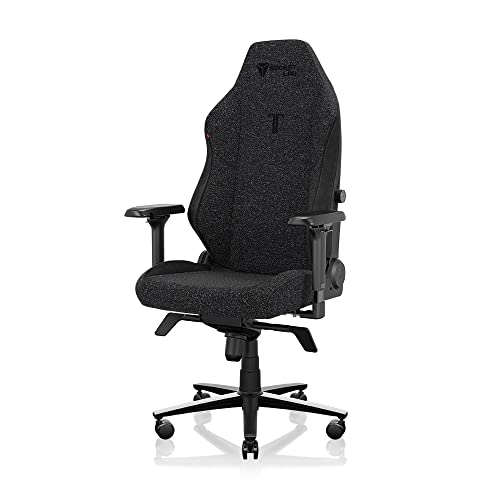
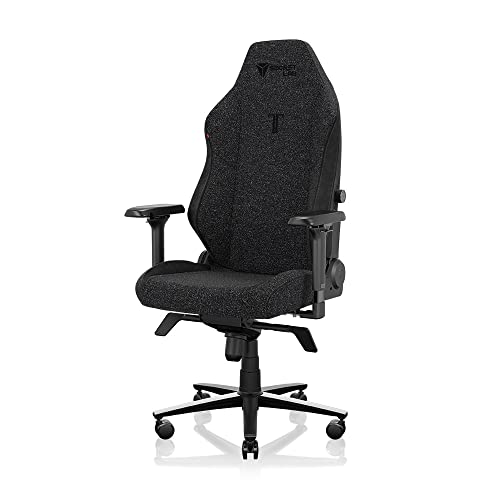
Secretlab Titan Evo (Fabric)
Secretlab’s soft-weave fabric Titan Evo represents the fabric camp at its best: breathable, tightly woven to resist pilling, paired with built-in lumbar adjustment — the long-session, warm-room choice. Check on Amazon

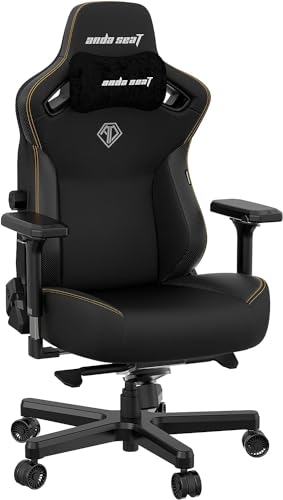
Anda Seat Kaiser 3 XL Gaming Chair
The Kaiser 3 XL flies the flag for the other side with its PVC leather finish over a wide XL frame — wipe-clean, generously sized, and a good example of a heavier-duty synthetic finish. Check on Amazon

Dowinx Gaming Chair Fabric with Pocket Spring Cushion
Dowinx’s fabric chair adds a pocket-spring seat cushion to the fabric formula, giving fabric fans a plusher sit than foam-only rivals while keeping the breathability advantage. Check on Amazon
Frequently Asked Questions
Is any gaming chair actually real leather?
A small number are, at premium prices; the overwhelming majority use PU leather. Check listings carefully — ‘leather’ in a budget listing almost always means synthetic. Genuine leather will say so explicitly and cost accordingly.
Does fabric stain easily?
Light-coloured fabric shows marks more, and spills need prompt blotting, but modern gaming-chair fabrics are tightly woven synthetics that release most stains with foam shampoo. Dark colours and heathered weaves are the forgiving choices.
Why is my PU leather chair peeling?
The coating has aged out — heat, sunlight and body oils break it down over time, and peeling cannot be reversed by cleaning. Gentle care from new (mild soap, no solvents, shade from direct sun) delays it significantly.
Which is better for back support, fabric or leather?
Neither — support comes from the frame, foam and lumbar design, not the surface material. The ergonomics are explained in Gaming Chair Ergonomics Explained; choose material for climate and care, support for your back.
Can I put a cover over a gaming chair to get the best of both?
You can, and washable covers protect either material, but they change the feel and can slip during play. Most players are happier choosing the right material up front.
Does a new PU leather chair smell, and how long does it last?
Most new PU chairs carry a noticeable chemical smell from the coating and foam for the first days to weeks. Ventilation is the whole treatment: a chair aired in a room with moving air clears quickly, while one left sealed in its box keeps the smell until it is unboxed. Fabric chairs smell milder and clear faster. If a strong smell persists beyond a few weeks of airing, that is worth raising with the seller rather than enduring.
Which material is better if I stream with a sensitive microphone?
Fabric, comfortably. PU creaks and squeaks against clothing with every shift in position, and a sensitive microphone at desk distance captures all of it. Fabric chairs are effectively silent in the same movements. If you already own the PU chair, a cotton throw over the seat and backrest contact zones quiets most of the noise for broadcast hours.
Can a gaming chair be reupholstered from PU to fabric when the coating fails?
Technically yes, practically rarely. A professional re-cover costs a significant fraction of a new chair because gaming chairs are shaped, sewn objects rather than simple cushions, and the foam beneath failed PU has usually aged alongside it. The exception is a premium chair with a sound frame and mechanism, where re-covering buys back a genuinely good chair. For budget and mid-range chairs, replacement is the honest arithmetic.
Do stain-resistant fabric treatments need to be renewed?
They fade with friction and cleaning, fastest in the seat and backrest contact zones, usually over a year or two. Aftermarket re-proofing sprays exist and help somewhat, though they slightly change how the fabric feels and should always be patch-tested under the seat first. Treat the factory treatment as a spill-reaction window, not as permanent protection.
Which material handles a chair placed by a sunny window better?
Neither enjoys it, but they fail differently. Fabric fades — evenly, gradually, and mostly cosmetically. PU’s coating breaks down under ultraviolet light and heat together, cracking and then peeling, which is a structural end to the surface rather than a cosmetic one. If the chair must live in direct sun, fabric is the safer material, a cover during the brightest hours helps either, and moving the chair a few feet out of the sun’s path beats every other intervention combined.
Is one material better for a chair that doubles as a work chair on video calls?
For appearance, the difference is taste: PU reads as the classic gaming silhouette, fabric reads closer to office furniture. For behaviour, fabric has two quiet advantages — it is silent when you shift in your seat, and it does not reflect light into the camera the way a glossy PU finish can. Players who spend their days on calls often score those two points higher than they expected to.
My room has air conditioning. Does that change the verdict?
It narrows fabric’s biggest advantage without removing it. In a reliably cooled room, PU’s heat build-up across a long session becomes a minor factor rather than the deciding one, and its wipe-clean convenience moves up the scorecard accordingly. What air conditioning does not change is the ageing story: PU’s coating still declines on its own schedule while fabric declines more slowly, so the climate-controlled room strengthens PU’s case for the first years without rewriting the ending.
The Short Version
Fabric wins on breathability and graceful ageing; PU leather wins on wipe-clean convenience and the classic look, with a finite coating life as the trade-off. Score the decision against your room temperature, your session length and your spill rate — then let fit and lumbar support, not upholstery, make the final call between specific models.