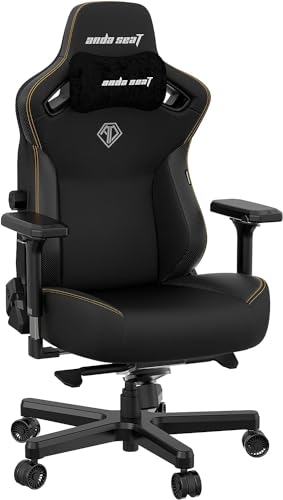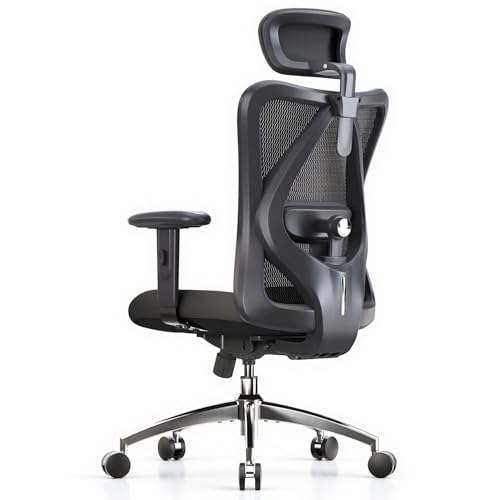
So, how long do gaming chairs last? With daily use, a typical gaming chair stays comfortable for roughly three to five years, budget models often less, and premium chairs with moulded foam, steel frames and quality upholstery can remain supportive well beyond that. The honest answer is that a chair does not die all at once — its parts age at different speeds. This explainer walks through what wears out first, what the warning signs look like, and the habits that add years to a chair’s life.
Disclosure: As an Amazon Associate, ilcastellomenu.com earns from qualifying purchases. Product links on this page may earn us a commission at no extra cost to you. Prices and availability change on Amazon, so check the product page for the current details before you buy.
How Long Do Gaming Chairs Last? The Part-by-Part Answer
| Part | Typical lifespan under daily use | How it fails |
|---|---|---|
| Seat foam | 2–5 years | Compresses and stops rebounding; you feel the base through it |
| PU leather upholstery | 2–4 years | Coating cracks, then peels, starting on the seat and armrests |
| Fabric upholstery | 4+ years | Fades and thins gradually; rarely fails outright |
| Gas lift | 3–6 years | Slow sinking, or height that will not hold |
| Casters | 2–5 years | Bearings loosen, wheels crack or stop swivelling |
| Tilt mechanism | 4+ years | Develops play, creaks, or loses its lock |
| Armrests | 2–4 years | Pads crack and split; adjustment teeth wear |
Read the table as a maintenance map rather than a death sentence: most of these parts are replaceable, and a chair whose foam and casters you refresh can serve far longer than the headline number. The economics are simple — replace parts while the frame is sound; replace the chair when the frame, mechanism and foam all go together.
In this guide
What Decides Lifespan: Build, Body and Environment
Build quality sets the ceiling. Cold-cure moulded foam resists compression far longer than low-density cut foam; steel frames outlast plastic shells; class 4 gas lifts are built for heavier duty than class 3; and premium PU formulations resist cracking years longer than thin budget coatings. This is the substance behind the price ladder in How to Choose a Gaming Chair — beyond a point, extra money mostly buys time.
The user’s body and habits set the actual pace. A chair used at the top of its weight rating ages faster in every component — foam, lift and mechanism all work harder. Environment matters too: PU leather in a hot, sunlit room can age twice as fast as the same chair in a cool, shaded one, and humidity is unkind to foam and metal alike. The material comparison in Fabric vs Leather Gaming Chair explains why fabric usually wins the longevity contest in warm rooms.
Warning Signs Your Chair Is Wearing Out
- You can feel the seat base through the foam, or the cushion has a permanent ‘you-shaped’ dent that does not recover overnight.
- The chair sinks an inch or more during a session, or the height lever feels vague.
- PU upholstery shows a network of fine cracks — peeling follows within months once cracking starts.
- A wobble that survives a full bolt-tightening session, pointing to wear in the mechanism or lift socket rather than loose fasteners.
- Casters that drag, judder or leave the chair pulling to one side — check against the fixes in How to Fix a Gaming Chair that Leans before condemning the chair.
- Armrests that will not hold their height setting under normal arm weight.
One sign alone usually means a part, not a funeral. Two or three together — especially foam plus upholstery plus mechanism play — mean the chair has given its service and a replacement from a current roundup such as Best Gaming Chairs Under 300 will feel like a revelation.
Repairs That Are Worth Doing (and Those That Are Not)
Worth it: replacement casters (universal fit, minutes to swap, transforms how the chair rolls), a replacement gas lift fitted by the manufacturer or a competent repairer — the cylinder itself must never be opened, but swapping a sealed unit is a standard service part — new armrest pads, and a replacement lumbar pillow. All of these are cheap relative to a chair and target the parts that actually wear.
Usually not worth it: reupholstering peeling PU (labour exceeds the chair’s value), replacing compressed foam in a chair whose mechanism is also worn, and any repair involving welding or modifying the frame. Be honest about the chair’s tier: nursing a budget chair through three repairs can cost more than its replacement, while a premium chair justifies every part on the ‘worth it’ list.
Habits That Add Years to a Chair
- Tighten all bolts every few months — loose joints wear into sloppy joints, and sloppiness accelerates every other failure.
- Clean upholstery gently and regularly following How to Clean a Gaming Chair; dirt is abrasive and body oils age coatings.
- Keep PU chairs out of prolonged direct sunlight and away from radiators where possible.
- Sit down rather than dropping into the chair, and avoid standing on it or using armrests as a step — shock loads are what mechanisms remember.
- Use a chair mat on hard floors and carpet alike; it smooths rolling loads on casters and the base.
- Rotate your sitting positions and use the recline — load spread across the foam ages it evenly instead of carving one dent.
None of this is burdensome; it is the same maintenance rhythm as the rest of a gaming setup. Players who treat the chair as equipment rather than furniture routinely get the top of its lifespan range.
When Replacement Is the Right Call
Replace when the frame creaks structurally, when the tilt mechanism has play you can feel in your back, when foam and upholstery are both finished, or when the chair no longer fits a body that has changed. Also replace — do not repair — any chair with a damaged gas lift housing, cracked base or bent frame member: those are safety components, and their failure mode is a fall. A chair is a load-bearing device you trust daily; retire it with the same seriousness. Your next purchase will go better with the fit method in How to Measure for a Gaming Chair and the support priorities in Best Gaming Chairs For Back Support.
Warranties, Spare Parts and the Manufacturers Who Support Old Chairs
A chair’s lifespan is partly a policy decision. Manufacturers who sell replacement gas lifts, casters, armrest pads and mechanisms — and who publish parts diagrams — are telling you they expect the chair to be serviced, not binned. Before buying, spend two minutes on the brand’s support pages: if spares exist for five-year-old models, your chair has a future. If the support page is a contact form and a prayer, price the chair as disposable.
Warranty structure reveals the same philosophy. Separate the terms: frame warranties run longest, mechanism and lift terms sit in the middle, and upholstery and foam terms are shortest — because that is the order in which parts actually fail. A brand offering a long foam warranty is making an unusually confident claim about its density and moulding, and that confidence is information you can use.
Keep your proof of purchase with the chair’s paperwork. Lifespan arithmetic changes completely when a failed lift at year three is a free warranty part instead of a purchase — but only for owners who can document the chair’s age and origin.
Second-Hand Chairs: Reading Age in a Used Listing
The second-hand market is full of gaming chairs, and this guide’s wear table is your inspection checklist. Foam first: sit, and if you can feel the base through the cushion, the chair’s best years are spent regardless of how clean it looks. Upholstery second: fine cracking in PU means peeling is scheduled, not hypothetical. Mechanism third: rock and recline — play, grinding or a sinking seat prices in a lift replacement.
Price accordingly. A premium chair with sound foam and frame at a fraction of its new price can be an excellent buy, because its wear parts are replaceable. A budget chair with tired foam is worth very little at any price, because its foam was the product. Ask the seller the chair’s age and the user’s rough weight — not to be rude, but because those two numbers predict remaining life better than any photograph.
And factor in hygiene honestly: a used fabric chair wants a deep clean before its first session, following the fabric method in this batch’s cleaning guide, and a used chair with any structural crack is a pass at any price.
Environmental Enemies, Ranked
Heat is the chair’s first enemy: it accelerates PU coating breakdown, dries genuine leather, and softens foam’s resilience over time. A chair beside a radiator or in a sun-baked room lives a faster life than its specification promises. Sunlight is second, attacking the same materials photochemically — fading fabric, embrittling coatings — and it works daily, silently, whether you sit in the chair or not.
Third is load pattern: the player who drops into the chair from standing, rocks on two casters and perches on armrests administers in a month what a gentle sitter administers in a year. Mechanisms remember shock. Fourth is neglect of the small maintenance — bolts left loose until joints wear oval, grit left in casters until bearings grind — because small wear compounds into structural wear.
Humidity completes the list, feeding mould in foam in damp rooms and corrosion on unprotected steel. None of these enemies requires heroics to defeat: shade, distance from radiators, sitting rather than dropping, quarterly bolts and a dry room. Lifespan is mostly environment plus manners, and both are yours to set.
Notice that price appears nowhere in the ranking. A premium chair in a brutal environment can die younger than a budget chair in a kind one — which is why lifespan questions answered without asking about your room are only ever half-answered.
Cost Per Year: The Only Price That Matters
Divide any chair’s price by its realistic years of comfortable service and the market rearranges itself. A cheap chair replaced three times in six years, with declining comfort in each final year, often costs more per good year than a mid-priced chair that serves the whole period — before counting the hassle of repeated assembly, disposal and re-shopping. The arithmetic favours buying at the tier where foam and frame stop being consumables.
The same arithmetic disciplines the premium end: doubling the price rarely doubles the years, because environment and load pattern cap what materials can promise. The value summit sits where moulded foam, steel frames and replaceable parts first appear together — beyond it, money buys refinement and features more than time.
Run the numbers with your own environment’s honesty factor applied: hot room, heavy use, top-of-rating weight — shorten the estimate; cool room, gentle habits — lengthen it. A chair bought with its true cost-per-year in view is a chair bought once, which is the cheapest outcome of all.
The First Year: What Normal Wear Looks Like
New owners often misread normal first-year changes as defects. Foam softens slightly and moulds to your sitting pattern — that is break-in, not failure, and it plateaus. Fabric relaxes, PU loses its showroom tautness, and the chair’s sounds change as bolts settle and are re-tightened. A chair at month twelve should feel lived-in, not worn out, and the distinction is rebound: press the seat foam and it should still return promptly and fully.
Track the break-in consciously and you gain a baseline for judging later wear. Photograph the upholstery’s high-stress zones — seat front edge, armrest tops, lumbar contact area — at month one. Comparison photographs at year two and three turn ‘is it getting worse?’ from a feeling into a measurement, and they are exactly the evidence a warranty claim wants.
The first year is also when environment does its quiet sorting: chairs in harsh rooms begin their accelerated ageing now, invisibly. The habits section of this guide is therefore a first-year document, not a mid-life correction — shade, gentle cleaning and bolt discipline applied from month one are worth triple the same habits adopted at year three.
Disposal and Recycling: The End of the Chair
When a chair truly reaches its end, dispose of it like the mixed-material object it is. Metal frames and bases are recyclable scrap; gas lifts should go to household hazardous or specialist collection where your area provides one, because pressurised cylinders do not belong in general waste or, ever, in a fire. Foam and upholstery are generally landfill, which is one more argument for buying chairs that last — the greenest chair is the one not replaced.
Before disposal, harvest the spares: a sound set of casters, armrest pads or a working lift from a chair whose foam died can keep its successor — or a friend’s chair — alive for years. The parts commonality across models is high for casters especially. One chair’s retirement can be another’s repair kit.
And consider the honest second life: a chair too tired for eight-hour days may serve a spare room, a child’s desk or a workshop for years more. Lifespan is relative to duty. Retire chairs down the ladder of demand before retiring them to the kerb, and the true service life of a well-bought chair stretches further than any single number in this guide.
The Lifespan Audit: Scoring Your Current Chair
Score your chair today on the five systems this guide tracks — foam rebound, upholstery integrity, lift behaviour, mechanism tightness, caster condition — as sound, tired or failed. The pattern of scores is the prognosis. One tired system among sounds is a maintenance note. Two tired systems is a watch list. Any failed structural system — frame, base, mechanism socket — ends the discussion regardless of the other scores.
Foam plus upholstery failed together is the classic replacement signature, because those two are the chair’s comfort and face, and both are uneconomic to renew on most models. Lift failed alone is the classic repair signature. Casters failed alone barely counts as news — swap them this weekend and re-score.
Run the audit annually, on the chair’s birthday if you remember it, and write the scores down. A chair’s decline, documented, never ambushes you mid-season — and the replacement, when it comes, is a planned purchase made with this batch’s buying guides rather than a desperate one made with a sore back.
The Ten-Year Chair: What the Outliers Do Differently
Occasionally a gaming chair is still serving beautifully at ten years, and the outliers share a profile worth copying. The chair was bought a tier above its owner’s minimum — moulded foam, steel frame, replaceable parts — and it was never asked to work at its limits: the owner’s weight sat comfortably inside its rating, its room was shaded and temperate, and its bolts were checked the way this batch prescribes, quarterly and without drama.
Its casters were replaced once, around year five, and its owner describes that afternoon the way car owners describe a tyre change — as maintenance, not decline. Its upholstery, usually fabric, faded a little and was forgiven, because the chair underneath never stopped being supportive. Nothing about its decade is miraculous; it is the compound interest of unremarkable care applied to adequate hardware.
That is the realistic ceiling this guide can honestly offer: not a chair that lasts forever, but a chair whose lifespan you substantially control. Buy the tier, set the room, keep the rhythm — and measure your chair’s years in comfort delivered, which is the only currency it was ever minting.
Full-Time Load: The Sixteen-Hour Chair
Every lifespan figure in this guide quietly assumes a user: one player, a few hours a day. Change the user and the calendar lies. A chair shared by a household — a work-from-home parent by day, a teenager in the evening, a partner at night — accumulates sitting hours at three times the domestic rate, and its foam, lift and upholstery age in hours, not in birthdays. A three-to-five-year chair in that house is honestly a one-to-two-year chair, and owners who understand the exchange rate stop feeling cheated by arithmetic they never did.
Full-time streamers run the same numbers solo: eight to twelve hours daily in one chair is a commercial duty cycle wearing a domestic product. The professional answer is to buy like a business — a chair from the tier whose foam and mechanism are built for the load, with the parts support to match — and to schedule renewals the way studios schedule equipment: casters and pillows on a calendar, not on a failure. A streamer whose chair dies mid-season bought a consumer timeline for a professional job.
The shared and full-time cases share one more trait: their chairs fail without a villain. No defect, no misuse — just hours, honestly accumulated. Budgeting for that reality, in the purchase tier and in the replacement fund, is the difference between a setup that degrades gracefully and one that collapses expensively at the worst moment of the year.
Counting in Sessions: A Better Unit Than Years
Years are a lazy unit for a chair’s life because they hide the variable that does the damage: hours under load. Two identical chairs bought the same day can be a decade apart in wear if one serves a weekend player and the other a daily one. Thinking in approximate lifetime hours recalibrates every judgement in this guide — the warning signs, the repair decisions, the cost-per-year arithmetic — onto the scale that actually wears the foam out.
You do not need precision; you need an honest order of magnitude. Estimate your weekly hours in the chair, multiply by the weeks you have owned it, and write the number in the chair’s file next to its purchase date. Compare it against your own past chairs’ totals at the moments they failed and a personal lifespan curve emerges — the only dataset that has ever described your actual usage, your actual rooms and your actual weight.
The hours lens also disciplines buying. A player logging thirty hours a week is shopping for a fundamentally different object than a player logging six, even if they weigh the same and like the same colour — and listings, which sort chairs by everything except duty cycle, will not tell them so. Bring your own hours to the comparison and the market’s tiers suddenly make sense: you are not paying for luxury as you climb them, you are paying for hours.
Storage Is an Environment Too
Chairs spend part of their lives out of service — in spare rooms, garages, lofts and the corners of offices — and storage conditions write themselves into the lifespan ledger as surely as sitting does. Heat is the chief vandal: a chair stored through summers in a hot loft ages its PU coating and dries its foam at a pace comparable to use, so a chair can emerge from two years of storage with four years of wear and an owner who cannot understand where the years went. Cool, dry, shaded storage is not fussiness; it is the difference between pausing a chair’s life and spending it.
Compression is the second vandal. A chair stored with boxes stacked on its seat, or folded against a wall with its backrest bearing weight at an angle, teaches its foam and brackets a shape they keep. Store a chair upright and unloaded, or accept that its first month back in service will be spent unlearning its storage posture — and that foam compressed past its patience in a hot garage may never fully return.
Before a stored chair rejoins a setup, give it the returning inspection this batch prescribes for cleaned chairs: bolts, casters, lift behaviour, a smell check for the mould that damp storage feeds. A chair that passes returns to its remaining lifespan as if the interval cost little. A chair stored hot, damp and loaded has been spending its life in the dark, and the inspection is how you find out how much it spent.
The Soft Accessories: Pillows, Pads and Straps Age First
The lifespan table in this guide tracks the chair’s major systems, but the parts that actually expire first are the soft accessories, and they expire quietly enough that owners misread their failure as the whole chair’s decline. Lumbar and head pillows live the hardest life in the setup: compressed daily at exactly two contact points, handled, repositioned and sweated into. Expect a pillow’s foam to lose its conviction in one to two years of daily use — half or less of the seat foam’s span — and its elastic straps to stretch out on a similar clock, which is why pillows begin their midnight migrations long before the chair feels old.
Armrest pads follow: their foam crushes at the elbow point and their covers wear shiny, then split, at the front edge. The saving grace of the whole accessory class is replaceability. Pads, pillows and straps are the cheapest renewals in the setup, and a chair whose bones are sound but whose accessories have expired is not an old chair — it is a young chair wearing old clothes, one modest parts order away from feeling new.
Build the renewals into your expectations at purchase. A chair from a maker who sells its pillows and pads as spares can be refreshed on schedule; a chair whose accessories are proprietary and unlisted will decline on the accessories’ clock no matter how good its frame is. When the lifespan guides in this batch keep pointing at the service tail, this is the concrete reason: the tail is where the first three renewals live.
The Mid-Life Refresh: What Renewing the Wear Parts Buys
Somewhere around the middle of a good chair’s life there is an intervention that owners consistently underrate: the deliberate refresh, in which the known wear parts are renewed together rather than one failure at a time. Casters, pillows, armrest pads and a deep clean, done in one afternoon, typically cost a small fraction of a replacement chair and return a disproportionate share of the new-chair feeling — because the parts you touch, hear and lean on are exactly the parts the refresh replaces.
Judge whether your chair qualifies by its bones. The refresh buys years when the frame is true, the mechanism tight, the lift honest and the seat foam still rebounding; it buys weeks when those are gone, because new casters on a chair with a worn mechanism socket are lipstick on a diagnosis. The lifespan audit in this guide is the qualifying examination: score the bones first, and let the score — not sentiment, not the parts’ price — decide whether the refresh is an investment or a postponement.
There is also a timing argument for refreshing early rather than at failure. Parts are most available while the model is current, and a refresh done at the first audit that suggests it stretches the chair’s best years instead of rescuing its worst. Owners who refresh on schedule tend to report the ten-year chairs this guide profiles: not chairs that never wore, but chairs whose wear was answered while it was still cheap.
Repair or Replace: A Symptom-Combination Triage
Single symptoms mislead; combinations tell the truth. Work through the common pairings. Foam tired plus upholstery sound: the chair is a refresh candidate or a cushion-replacement conversation, because the surface that meets your eye still has years and the failure is underneath it. Foam sound plus upholstery failing: the mirror case — the chair sits well and looks finished, and the decision turns on how much the looking matters in your room; structurally, this chair has more life than its appearance confesses.
Lift failing plus anything: replace the lift if the rest scores well, because it is a sealed, swappable unit whose failure says nothing about the frame — the most misdiagnosed combination in the category, with sound chairs discarded over a part that swaps in minutes. Mechanism play plus base wear: the opposite signature, two structural systems declining together, and the triage answer is replacement of the chair, because each repair’s cost now chases the other and the sum buys most of a new chair with none of its warranty.
Frame damage plus anything at all ends the triage immediately: a cracked frame or base is not a symptom to be weighed, it is the verdict. The combinations teach the underlying skill, which is reading a chair as a set of systems on separate clocks — the same reading the audit formalises — and spending money only on the clocks that have actually run out.
Using the Warranty Before It Expires: The End-of-Cover Inspection
Warranties expire silently, and chairs have a habit of presenting their borderline faults just after the date that would have made them free. The counter-habit is an inspection scheduled against the calendar rather than against symptoms: a month before each major warranty term ends — upholstery, mechanism, frame — run the audit from this guide with a claimant’s eye, testing the lift’s hold, the mechanism’s play, the upholstery’s seams and the base’s sockets, and photograph anything that is arguably a defect rather than wear.
Borderline findings are worth a claim precisely because they are borderline: a mechanism with play at eleven months is a warranty conversation, while the same play discovered at thirteen months is a parts invoice. Manufacturers expect claims near term boundaries and process them without drama when the evidence is dated and clear. What they cannot honour is the fault reported from memory after the window closes.
Keep the warranty’s own documents in the chair’s file from purchase day — the terms, the proof of purchase, the claim channel — because the end-of-cover inspection is only useful if the paperwork half of the claim can be assembled in minutes. Lifespan, in the end, is partly a documentation practice: the chairs that get their full years are the ones whose owners knew what was covered, until when, and checked in time.
Inherited Hours: Taking Over a Chair Someone Else Used
Hand-me-down chairs — from a sibling’s upgrade, an office clear-out, a partner’s old setup — arrive with a hidden odometer, and estimating the remaining life means reading hours you did not witness. The evidence is in the wear pattern, and it reads like a logbook: the seat foam’s recovery speed tells you the accumulated load, the upholstery’s contact zones tell you the session lengths, and the casters tell you the floors and the rolling distances. A chair can be two calendar years old and carry five years of hours, or the reverse, and the difference is entirely visible once you know the audit in this guide is really an hour-meter.
Ask the previous owner the three questions that matter: roughly how many hours a day, in what kind of room, and whether the lift has ever been replaced. Owners answer these honestly when the chair is a gift rather than a sale, and the answers convert your audit scores into a forecast. A chair with a replaced lift and sound foam from a cool room has most of its life ahead; the same model with original everything from a sunlit streaming room is nearer its end than its birthday suggests.
Then set your expectations — and your maintenance calendar — by the hours estimate rather than the purchase date you never had. Inherited chairs deserve the end-of-cover inspection habit applied immediately: everything checked in the first week, because their warranty is your own attention, and it starts the day the chair changes hands.
A Five-Year Diary: One Chair, Kept Honestly
Abstract lifespans persuade less than a single documented life, so here is a composite diary — assembled from the patterns this guide teaches — of one mid-range chair owned by a daily player in a temperate room. Year one: the break-in softening, one bolt re-check that found two loose bolts, and nothing else; the chair ends the year indistinguishable from new except that its foam now carries its owner’s shape like a signature. This is the year owners misremember later as proof the chair never changed. It changed; it just changed in the owner’s favour.
Year two: the first caster begins to judder on a hair-wrapped axle and is cleaned rather than replaced; the lumbar pillow’s foam is noticeably thinner and its strap has stretched a notch’s worth. Year three: the refresh — new pillows, new casters, pads wiped back, bolts audited — and the chair’s owner writes the sentence this guide keeps predicting, that it feels new again, because the parts that meet the body were new. The lift still holds its height to the millimetre. The upholstery shows a shine on the seat’s front edge and nothing worse.
Year four: the first fine cracks appear in that shiny edge, dated in the log like a diagnosis. Year five: the cracks have become a small flaked patch, the seat foam has lost perhaps a fifth of its conviction, and the owner — who has read the diary rather than panicking at the patch — begins a replacement search with the luxury this entire guide exists to purchase: time. The chair will be replaced in year six, on schedule, at a sale, by a buyer who knew its whole story. That is what lifespan management looks like when it works: not a chair that never died, but a death that never ambushed anyone.
When the Chair Outlives the Setup Around It
Chairs are often the longest-lived object in a battlestation, which creates a mismatch nobody plans for: the chair was chosen for a desk, a monitor arrangement and a body that have all since changed. The desk went standing, the single screen became three, the player took up sim racing on weekends. Each change quietly re-opens the fit questions the chair originally answered, and a chair can be mechanically perfect while becoming ergonomically obsolete — its seat height range wrong for the new desk, its armrests colliding with a wheel clamp, its recline arc meeting a wall that moved.
The audit habit is what catches the divergence: when the setup changes, re-run the ergonomics checks against the chair you own before assuming the chair is the problem or the solution. Sometimes the answer is a footrest or a pillow that re-fits an old chair to a new geometry for a few more years; sometimes the honest answer is that the chair’s remaining mechanical life will be spent in a spare room, serving a setup it still matches.
There is a budgeting moral here for the next purchase: a chair’s true lifespan is the shorter of its mechanical life and its fit life, and fit life is extended by adjustability — the ranges and systems that let one chair serve several setups. When two chairs tie on build, the one with the wider adjustment envelope owns the longer expected life in a changing room, whatever its foam is made of.
Gear for This Guide
You do not need to buy anything to follow most of this guide, but the items below are the ones that genuinely come up again and again in this topic. Each one is a current, widely sold model rather than a placeholder pick.

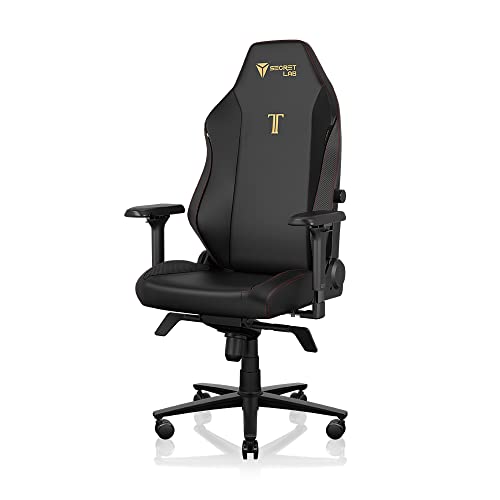
Secretlab Titan Evo XL (Leatherette)
Premium chairs like the Titan Evo XL justify their tier on lifespan components: moulded foam, a steel frame and a heavy-duty finish, in an XL size that keeps bigger players comfortably inside the chair’s ratings — the single biggest lifespan factor. Check on Amazon

GORILLA GRIP Chair Mat for Carpet Floors
A mat is lifespan insurance for the cheapest parts to protect: casters and base. This Gorilla Grip mat keeps rolling smooth on carpet so wheels and sockets wear evenly instead of grinding. Check on Amazon
Frequently Asked Questions
How long does the foam in a gaming chair last?
Low-density cut foam can feel tired within two years of daily use; denser moulded foam commonly stays supportive for four to five years or more. Body weight relative to the chair’s rating is the biggest variable.
Can a sinking gaming chair be fixed?
Yes — sinking is a gas lift at the end of its life, and the sealed lift unit can be replaced as a whole part by the manufacturer or a repair service. Never open the cylinder itself; it is pressurised.
Does the warranty tell me how long a chair will last?
It hints at the manufacturer’s own expectations: longer frame and mechanism warranties generally signal heavier-duty components. Compare warranty terms alongside the spec sheet when choosing.
Is it worth repairing a budget gaming chair?
Casters and pillows, yes. Anything structural, usually no — budget chairs are priced so that major parts plus labour approach replacement cost quickly.
How can I tell if peeling PU leather can be saved?
Once the coating cracks and flakes, it cannot be restored — cleaning only slows further damage. If the foam and frame are still excellent, a fitted cover is the pragmatic cosmetic fix.
Does a gaming chair wear out faster if two people share it?
Yes, in direct proportion to the extra hours. Chairs wear in hours under load rather than in calendar years, so a chair serving two players daily accumulates a typical chair’s three-to-five-year lifespan in roughly half to a third of the calendar time. Shared chairs also suffer more adjustment-mechanism wear. Buy a tier up for shared duty, and schedule the wear-part renewals — casters, pillows, pads — by hours rather than by birthdays.
Can storing a chair damage it?
Yes. Heat in lofts and garages ages PU coatings and foam nearly as fast as use, damp feeds mould in foam, and storing a chair loaded or leaning teaches its foam and brackets a permanent set. Store upright, unloaded, cool and dry, under a breathable cover — and run the bolt, caster and lift inspection when it comes back into service, because storage hides faults rather than causing most of them.
My chair is mechanically fine but no longer fits my setup. Is it worn out?
Not mechanically — but a chair has two lifespans, mechanical and fit, and it serves you for the shorter of the two. A new desk height, a sim rig or a changed body can retire a sound chair from its station. Before replacing it, try the re-fitting accessories: a footrest, a different lumbar pillow, armrest changes. If the geometry still refuses, the chair’s remaining mechanical life is best spent where it does fit — a spare room or a second setup — rather than being fought daily at the main desk.
Does a gaming chair last longer if it is used for work instead of gaming?
The chair cannot tell the difference — it counts hours, load and environment, not activities. In practice work use often means longer unbroken sitting, which ages foam faster per hour than gaming’s shifting and reclining, while gaming adds dynamic loads from animated movement and pedal or wheel forces. Either way, the honest predictor is your weekly hours in the chair multiplied by the room it lives in, which is why this guide keeps steering the question away from labels and toward your own logbook numbers.
Should I write down my chair’s purchase date and hours?
Yes — a single line in a phone note, added to whenever you estimate your weekly hours or complete a repair. Lifespan decisions are only as good as the data behind them, and memory systematically understates both age and use. The owners in this guide who replace chairs calmly, on schedule, at sales, are the ones whose logbooks told them a year in advance when the search should begin.
The Short Version
Expect three to five years of daily comfort from a typical gaming chair, less from budget foam and coatings, more from moulded foam, steel and fabric. Parts fail on their own schedules — casters, lifts and pads are replaceable; frames and mechanisms are the chair’s real lifespan. Maintain the bolts, clean gently, and retire the chair when structure, not surface, gives up.