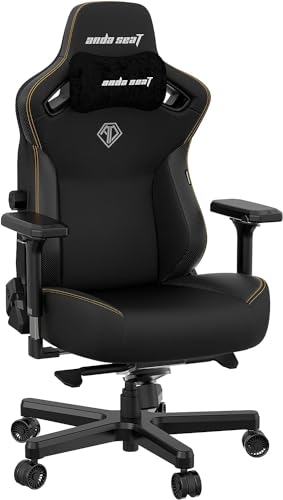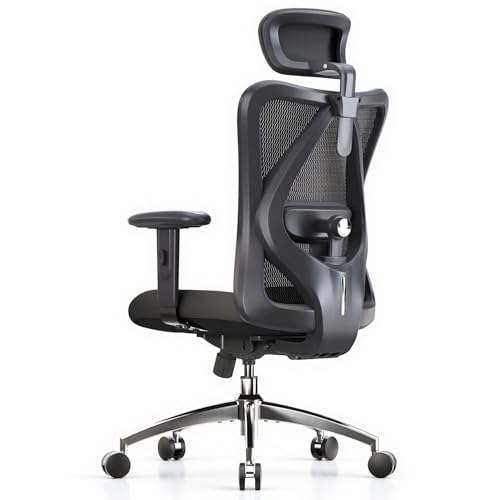
Knowing how to measure for a gaming chair takes ten minutes with a tape measure and removes nearly all the guesswork from buying one. You need five numbers: your popliteal height (floor to the back of your knee), your hip width, your seated torso height, your weight, and your desk height. This guide explains how to take each measurement accurately, what chair specification it maps to, and how to read a manufacturer’s size chart like someone who has been burned before.
Disclosure: As an Amazon Associate, ilcastellomenu.com earns from qualifying purchases. Product links on this page may earn us a commission at no extra cost to you. Prices and availability change on Amazon, so check the product page for the current details before you buy.
The Five Measurements That Decide Fit
| Your measurement | How to take it | Chair spec it decides |
|---|---|---|
| Popliteal height | Sit on a hard chair, feet flat; measure floor to underside of thigh behind the knee | Seat height range — the chair must go this low |
| Hip width | Sit and measure the widest point across your hips/thighs | Minimum seat width (add 1–2 in of clearance) |
| Thigh length | Measure from the back of your buttocks to the back of your knee while seated | Seat depth — chair depth should be 1–2 in less |
| Torso height (seated) | From the seat surface to the top of your shoulders, sitting straight | Backrest height and where the headrest lands |
| Desk height | Floor to the underside and top of your desktop | Armrest height range and whether rests slide under the desk |
Take the measurements wearing the shoes (or lack of them) you normally game in, and sit the way you actually sit — measuring with parade-ground posture gives you numbers for a person you are not. If you are between sizes on any dimension, the sections below explain which direction to round.
In this guide
Measuring for Seat Height and Depth
Your popliteal height is the single most useful number in chair shopping. The chair’s minimum seat height must be at or below it, or your feet will not rest flat and the seat edge will press into your thighs. Most gaming chairs adjust somewhere in the high-teens to low-twenties of inches; shorter players should specifically check the minimum, because many gaming chairs simply do not go low enough for petite users without a footrest.
Seat depth comes from your thigh length: subtract one to two inches from that measurement and you have your ideal depth — the gap lets the seat edge clear the back of your knees. If a chair you like is deeper than that and has no sliding seat, a firm lumbar pillow effectively shortens it, a workaround detailed in How to Adjust a Gaming Chair. Depth is also where cross-legged sitters should be honest: if you regularly sit with a leg folded under you, add width, not depth, to your requirements.
Width, Weight and the Honest Size Chart
Seat width is measured between the bolsters or armrests, not across the widest part of the cushion — a chair advertised as wide can still pinch if its racing bolsters curve inward. Compare your hip measurement against the usable width in the spec sheet, and look for owner photos if the brand only lists overall width. Players who need genuinely roomy chairs will save time starting from Best Gaming Chairs for Big Guys, where wide, flat seats are the entry requirement.
Weight capacity deserves the same scepticism. The rating assumes the load is centred and the chair is used normally; treat it as a ceiling you stay comfortably under rather than a target. If you are within about 10 percent of a chair’s limit, step up to the model with the higher rating — foam longevity and mechanism life both improve. This is one of the filters in How to Choose a Gaming Chair, and it is the one buyers most often skip.
Backrest Height and Headrest Position
Add your seated torso height to the chair’s seat height at your setting, and you know where the top of the backrest will land relative to your shoulders and head. For the headrest to work, the backrest top should reach at least the base of your skull. Tall players frequently find standard chairs put the ‘headrest’ between their shoulder blades — the tall-focused picks in Best Gaming Chairs for Tall Guys exist precisely because this dimension is so often wrong.
Lumbar position can be sanity-checked too: the lumbar support — built-in or pillow — needs to be able to sit roughly 6–10 inches above the seat surface, at belt line. Chairs with fixed lumbar humps place that hump for an average torso; if your torso is notably longer or shorter than average, prefer chairs with adjustable lumbar height or a movable pillow.
Measuring Your Space and Desk
A chair is bigger than its seat. Measure the floor area behind your desk: a reclining gaming chair needs clear space behind it roughly equal to its depth again, and the five-star base typically spans 26–28 inches across. Check doorways and the route from the front door if you live in an apartment — assembled chairs are awkward freight, which is why How to Assemble a Gaming Chair assumes you build it in the room it will live in.
Desk height decides your armrest range: with the chair at your correct seat height, your elbows should rest near desktop level. If your desk is unusually tall, you will raise the chair and need a footrest; if it is low, check the armrests can drop low enough not to collide with the desktop edge. The desk-side ergonomics are covered fully in Gaming Desk Ergonomics Explained.
Reading a Size Chart Like a Skeptic
- Use the brand’s recommended height range as a first filter, but verify with your own five measurements — ranges are marketing-friendly averages.
- Distrust any listing that gives only overall chair dimensions; you need seat width between bolsters, seat depth and seat height range specifically.
- Check whether quoted seat height is measured to the top of the compressed cushion or the frame; a half-inch discrepancy is common and matters at the margins.
- Confirm the gas lift class and frame material in the same spec table; fit without durability is half a purchase.
Do this homework once and it transfers to every future chair — office, gaming or otherwise. Keep the five numbers in your phone; they are your personal size chart, more reliable than any brand’s S/M/L.
Measuring Children, Teens and Shared Chairs
Young players complicate measurement because the target moves: a teen’s popliteal height can change noticeably in a year. For growing players, prioritise chairs with wide adjustment ranges over chairs that fit perfectly today — minimum seat height matters most, since a footrest can bridge a small gap but nothing lowers a chair below its minimum. Adult chairs ‘to grow into’ are a false economy if the child’s feet dangle and their back never reaches the lumbar support; a correctly sized smaller chair, replaced as they grow, serves their posture far better.
Shared chairs — one chair, two or more players of different sizes — are a measurement compromise by definition. Measure everyone, then choose the chair whose ranges cover the middle of the group, with easily changed settings: a lumbar pillow that moves in seconds beats a dial with a hundred positions if three people adjust it daily. Accept that a shared chair fits nobody perfectly and optimise for the person who sits in it longest.
For couples or siblings close in size, the ranges often overlap enough that one good chair genuinely works. The measurements tell you whether you are in that happy case or buying a daily argument.
Worked Example: From Tape Measure to Spec Sheet
Consider a player who measures as follows: popliteal height 17 inches, hip width 16 inches, thigh length 18 inches, seated torso 26 inches, desk height 29 inches, weight comfortably mid-range. The translation: seat height range must include 17 inches or below; usable seat width at least 17–18 inches; seat depth ideally 16–17 inches; backrest tall enough that seat height plus backrest height covers a 26-inch torso with the headrest landing at the head, not the shoulders.
Now watch how many chairs that eliminates. Models with a minimum seat height of 18.5 inches are out, however pretty. Racing chairs whose between-bolster width is 15 inches are out. Chairs with a fixed 19-inch seat depth will press this player’s calves — out, unless a thick lumbar pillow is planned. What remains is a shortlist of chairs that will actually fit, which is the entire point of measuring first and shopping second.
Run your own numbers the same way and keep them with the chair’s paperwork. Bodies change slowly; desks change occasionally; the numbers let you re-derive the right setup after any change instead of starting from folklore.
Measuring a Chair You Already Own: The Audit Method
The same tape measure audits your current chair, which is worth doing before shopping — half of all ‘I need a new chair’ conclusions are actually ‘this chair is set wrong’ or ‘this chair never fit’. Measure its seat height range by working the lever to both stops, its usable width between bolsters at the height your hips actually sit, and its depth with the lumbar pillow removed and then fitted.
Compare those numbers against your body measurements from this guide and mark each as fit, workaround or fail. A chair that fails one dimension with a known workaround — a footrest for height, a pillow for depth — may be a keeper. A chair failing two or more is the honest candidate for replacement, and now you know exactly which numbers its successor must beat.
Record the audit even if you keep the chair. When the chair eventually wears out, its replacement search starts from evidence instead of nostalgia, and the spec sheet of the next chair gets read against your body’s numbers and your old chair’s measured reality at once.
Retailers’ showrooms allow the reverse audit too: take your tape and your five numbers, and measure display chairs before sitting in them. The ones that fail on paper will fail in your room; save your sitting time for the ones that pass.
Common Measuring Errors and How to Avoid Them
Error one: measuring over thick clothing or in boots you never game in, inflating popliteal height and hip width alike. Measure in your normal playing clothes. Error two: measuring hip width standing, when hips spread under load — sit, on a hard surface, and measure the loaded width. Error three: taking thigh length from a slouched sit, which shortens the number and buys a seat that feels perchy within a week.
Error four: trusting a friend’s ‘we’re the same height’ instead of measuring. Two people of identical height can differ by three inches in torso-versus-leg split, which is the difference between a headrest at the head and a headrest at the shoulder blades. Height is the crudest proxy in this entire guide; the five real measurements exist because it fails so often.
Error five: measuring the room but not the route — doorways, hallway turns, stair widths. An assembled chair is bulky freight; confirm it can reach its room, or plan to assemble it there, before the box is open and the hallway is blocked. Every one of these errors is free to avoid and annoying to discover late, which is the definition of a measurement worth taking twice.
Measuring for Recline and Lounge Space
Fit is not only about the chair’s upright geometry. Recline the tape measure too: a chair at full recline extends well beyond its upright footprint, and the wall, bed or shelf behind your desk sets a hard limit the product page never mentions. Measure from the desk’s rear edge to the first obstruction and compare it with the chair’s reclined length at your seat height — an estimate you can make in a showroom by reclining the display chair and measuring, or at home before unboxing by checking the listed dimensions.
Lounge accessories extend the footprint further: a deployed footrest adds its length in front, and the chair-plus-footrest system needs a clear corridor your room may not have. Players in small rooms should measure the whole system in its most extended state, because that is the state it will be in every evening.
Casters complicate the footprint by rolling: a reclining chair pushes itself backward as you lean, travelling inches across the session. The space budget must include that travel, or the backrest will find the wall by experiment — an experiment walls and paintwork always lose.
Digital Shortcuts and Their Limits
Manufacturers increasingly offer size-finder quizzes and augmented-reality previews, and they are worth using as a first filter — a quiz that asks your height and weight applies the same logic as this guide, faster. But a quiz cannot know your torso split, your desk height or your cross-legged habit, so treat its recommendation as a shortlist of two or three, then apply your five measurements to choose between them.
AR previews answer the room question — will it fit, will it overwhelm the space — better than the body question. Use each tool for the question it can actually answer, and keep the tape measure as the court of final appeal. Numbers you took yourself, from your own body, outrank any algorithm’s estimate of you.
Owner communities are the third shortcut: players of your height and build reporting where a headrest lands are data no spec sheet publishes. Search for your candidate chair plus your height before buying; the internet has sat in the chair already, in bodies like yours, and it talks.
Keeping the Numbers: Your Personal Fit File
End the measuring session by writing the five numbers down somewhere permanent — a phone note titled with the date, alongside your desk height and your current chair’s audit if you did one. Bodies change slowly, but they change: weight, flexibility, a new desk, a growth spurt in a teen. Date the file and re-measure when anything material changes, rather than trusting a number from a different body.
The file pays off beyond chairs. Office chairs, car seat setup, even a bicycle fit all start from popliteal height and torso length; measure once, carefully, and a whole category of purchases gets easier forever. Few ten-minute investments in gaming gear keep paying across so many domains.
And when the new chair arrives and fits exactly as the numbers promised, the file gets the credit it deserves — along with a note of the chair’s own measured dimensions, so its eventual replacement search starts from two datasets instead of one.
Measuring Twice: A Final Verification Pass
Before you order anything, run the verification pass that professionals swear by: re-measure your five numbers on a different day, in a different mood, and compare. Bodies measure slightly differently morning and evening, slouched and alert; if your two passes agree within half an inch on the critical dimensions — popliteal height and seat-depth maths — your numbers are trustworthy. Where they disagree, take the conservative value: the lower popliteal height, the greater hip width.
Then perform the paper test on your finalist chair: write its key dimensions beside your numbers and check each pairing explicitly, one line at a time, rather than approving the chair in a general glow of research. Fit failures hide in the pairings nobody checked — the armrest range against the desk, the backrest height against the torso — and the paper test is designed to drag them into the open.
Finally, sanity-check the result against the chair’s recommended height range one last time. If your measurements say fit but the manufacturer’s range excludes you, believe the combination cautiously: their range encodes the geometry of bolsters and headrest placement that a tape cannot see. When your numbers and their range agree, order with confidence. When they fight, let the disagreement slow you down — it is cheaper than a return.
Keep the worksheet. It becomes page one of the chair’s file, next to the receipt, and it is the document that makes every future adjustment, warranty call and replacement search start from evidence.
The Two Measurements Nobody Takes: Shoulders and Arms
The five core measurements size the seat and the backrest’s height, but two more decide whether the upper chair fits: shoulder width and arm length. Shoulder width — measured across the back from the outer edge of one shoulder to the other, standing relaxed — predicts your relationship with backrest bolsters and shoulder wings. A bucket backrest whose wings are spaced narrower than your shoulders will push your arms forward all evening, and no lumbar pillow corrects a geometry problem at the top of the chair. Compare your number against the backrest’s width between its wings where the listing gives it, and treat a missing number as a reason to ask the seller, not to hope.
Arm length matters because armrests are not infinitely adjustable. Measure from your shoulder to your wrist with your elbow bent at roughly ninety degrees, forearm level: that is the reach your armrests must support without forcing you to lean. Players with long forearms need armrest depth — rests that slide forward or are long enough that the pad still sits under the elbow when the chair is close to the desk. Short-armed players meet the opposite problem: rests that cannot come close enough, leaving elbows unsupported in the gap between body and pad.
Take both numbers in the same session as the core five and file them together. They explain a whole category of otherwise mysterious chair reviews — the model one player calls supportive and another calls a straitjacket is usually a chair whose wing spacing met one pair of shoulders and fought the other — and they take ninety seconds to capture while the tape is already out.
They also transfer. Shoulder width and arm reach inform desk width choices, monitor spacing and even controller and wheel placement, which is why the fit file this guide builds keeps outgrowing its original purpose. Measure the body once, completely, and every furniture decision afterwards starts from data instead of from the showroom’s lighting.
Units, Rounding and Size Charts Across Regions
Chair dimensions cross borders badly. A size chart drawn in centimetres and converted carelessly can drift by half an inch per number, and half an inch is the entire margin in a seat-depth decision. When you shop across regions, work in one unit system — convert the chair’s numbers into your measured units yourself, with a calculator, rather than trusting the listing’s rounded conversions, and keep one decimal place until the final comparison. Rounding twice, once by the seller and once by you, is how a chair that should have been eliminated survives the paper test.
Regional sizing habits differ too. Ranges published for different markets sometimes describe the same chair with different recommended heights, because the underlying population averages differ and because some brands publish a comfort range while others publish a hard physical range. The defence is the one this guide teaches throughout: your five measurements outrank any chart’s population claims. A chart is a filter for building a shortlist; your tape measure is the court that hears the finalists.
Weight ratings carry the same warning in miniature: a capacity quoted in pounds on one regional site and kilograms on another occasionally turns out to be two different numbers wearing one chair, the result of rounding at exactly the wrong place. If you sit anywhere near a limit, verify the rating on the manufacturer’s own page for your region before ordering, and stay comfortably inside whichever number you find.
Measuring Someone Else: Helping Without Guessing
Half of all chair measurements are taken on somebody else — a partner, a teenager, a parent being gifted a setup — and measuring another person well is a small skill of its own. The subject should sit as they actually sit when gaming, not pose for the tape: put them in a dining chair with a controller in their hands for two minutes first, and measure the posture that emerges, because that is the posture the chair must serve. Measuring a person sitting to attention produces numbers for a person who will never use the chair.
Read the tape aloud and have the subject repeat the number back before you write it down; transposed digits are the most common corruption in any fit file, and they are invisible until a chair arrives wrong. For popliteal height and hip width especially, take each measurement twice and record both — agreement between the two readings is your accuracy check, and a disagreement tells you the posture shifted between them, which is itself information about how the person sits.
Gift purchases add one constraint: surprise forbids the tape measure. Work from proxies instead — the subject’s current chair audited by the method in this guide, their height and clothing sizes as rough filters — and put the real budget into the return policy rather than into precision you cannot obtain. A gift chair bought from a seller with an easy exchange, in the middle of the plausible size range, beats a precisely wrong chair bought in secret every time.
The Growth Allowance: Measuring Teenagers for Next Year
The main guide notes that young players are moving targets; the follow-through is a method for aiming at where the target is going. Measure the teenager’s five numbers today, then add the growth allowance where it matters: popliteal height and torso height are the fast movers, and a chair bought for a growing player should have its minimum settings correct today and its maximum settings correct for roughly two years of growth. In practice that means favouring chairs whose seat height range starts low enough now and rises high enough later, and treating fixed seat depth as the compromise it is — a depth slightly generous today, managed with a firmer lumbar pillow that effectively shortens the seat, becomes exactly right as thighs lengthen.
Weight capacity deserves the same forward look: buy for the adult the teenager is becoming if the chair is meant to last into late teens, because frames and lifts do not grow. What should not be bought ahead is width for its own sake — a seat far too wide today teaches a slouch that the player may keep long after they have grown into the chair.
Re-measure annually and write the new numbers over the old in the fit file, keeping the dates. The series of numbers is more useful than any single set: it shows the growth rate, which tells you whether the next chair purchase is a this-year problem or a two-years-from-now one, and it turns chair shopping for a family from a recurring emergency into a scheduled, budgeted event.
Measuring for Transfer: Seat Height as an Access Specification
For players who transfer into the gaming chair from a wheelchair or who have limited mobility, the measurement hierarchy rearranges itself: seat height stops being a comfort preference and becomes an access specification. A lateral transfer works when the gaming chair’s seat can be set level with, or a fraction below, the wheelchair’s seat — so measure the wheelchair’s seat height precisely, cushion compressed as it is in use, and make it the target the gaming chair’s height range must contain, not merely approach.
Seat depth and armrests join the specification. Armrests that remove, flip away or drop fully are not conveniences in this context; they are the difference between a clear transfer path and an obstacle, and their removability should be verified on the specific model rather than assumed from the product photos. A firm seat edge matters too — deep, soft cushioning that feels luxurious to an able-bodied player can make the sliding transfer genuinely harder, which inverts the usual foam advice and deserves to be said plainly.
The rest of this guide applies unchanged: the five numbers still govern fit once seated, and the audit still governs comfort across a session. What changes is the order of the filters. Access first — can the player get into the chair safely and independently — then fit, then everything else. A chair that fails the first filter is not a worse chair; it is furniture for a different life, and measuring honestly is what keeps that distinction clear before money moves.
The Seated Rig: Measuring Accurately With Books and a Wall
Popliteal height is the most useful number in this guide and the easiest to take badly, because it must be measured with your feet supported at the height they will occupy when seated — and most people measure it dangling from a too-tall chair or standing, both of which corrupt it. Build the simple rig instead: sit on a hard, flat chair or a sturdy box against a wall, back touching the wall, and stack books under your feet until your thighs are level and your feet rest fully on the stack. The distance from the top of the stack to the underside of your thigh, just behind the knee, measured with the tape vertical, is your popliteal height — taken in the geometry the gaming chair will actually reproduce.
The same rig refines thigh length: still seated, measure from the wall behind your back to the back of your knee along the seat surface, using a book held vertically at the knee as the marker. Wall-referenced measurements remove the slouch variable that makes freehand numbers wander by an inch between sessions, and an inch is the difference between the seat-depth verdicts this guide asks you to make.
Take every number twice in the rig and average disagreements rather than choosing the reading you prefer. Then, if you can, repeat the session on a different day and compare files: numbers that reproduce are measurements; numbers that wander are postures, and the chair should be chosen against the stable set. Ten extra minutes of rigour at this stage is the cheapest accuracy in the entire purchase.
Auditing a Showroom Chair With Your Own Tape
The main guide mentions the reverse audit — measuring display chairs against your numbers. Run it as a protocol and it becomes the most reliable fifteen minutes in chair shopping. Bring your fit file and a small tape. For each candidate, measure the chair itself rather than trusting its tag: seat height at its lowest and highest with the cushion pressed as your weight would press it, usable width between bolsters or armrests, depth from front edge to where the seat meets the backrest with the lumbar pillow in place if it ships with one.
Then sit, and measure the relationship numbers: where the headrest lands against your head or neck, whether the lumbar support’s range includes your belt line, how much of your thigh the seat carries. A friend reading the tape while you sit in playing posture produces better numbers than any solo contortion, and showroom staff who sell chairs for a living will usually hold a tape without blinking — they know what a serious buyer looks like.
Record each audited chair in the fit file beside your own numbers, including the ones you reject and why. The rejected rows are the file’s hidden value: they convert one afternoon’s showroom work into a permanent filter you can apply to every online listing afterwards, because you now know which published dimensions ran true on the physical chair and which ran generous — knowledge no review aggregate can give you.
When the Numbers Say No Chair Fits: The Compromise Protocol
Some bodies fall outside the market’s standard geometry — very tall, very short, very broad, or with proportions no single range was drawn around — and for those players the measuring exercise ends with an honest verdict: no stock chair fits every number. That is not the end of the process; it is the start of the compromise protocol, which ranks the five measurements by how well each tolerates a workaround, so the misfit lands where it can be managed rather than where it cannot.
Seat height misfits are the most forgivable: a chair whose minimum is an inch too high is answered by a footrest, and one an inch too low by a firm seat cushion. Seat depth runs next: too deep is answered by a thicker lumbar pillow that shortens the effective seat, a trick this batch uses repeatedly because it genuinely works. Width is less forgiving — bolsters cannot be moved — but a flat-seated ergonomic design sidesteps the issue entirely for broad players, which is why the shape comparison in this batch matters to the measurement conversation.
The unforgiving numbers are backrest height and weight capacity. A backrest too short puts the headrest into your shoulder blades with no accessory that fixes it, and a capacity rating is a structural fact, not a suggestion. So the protocol’s rule is simple: refuse compromise on the unforgiving two, compromise freely on height, compromise carefully on depth, and solve width by changing chair shape rather than by enduring pinch. A chair bought by that rule fits where it must and adapts where it can, which is the best definition of fit the real market offers some bodies.
Document the compromises in the fit file alongside the numbers, because they are part of the specification: the next purchase starts from knowing exactly which workarounds you ran and how well each served, and a workaround that annoyed you daily for three years should be promoted to an unforgiving criterion next time. Fit files, like chairs, should learn.
Measuring for a Range of Bodies: The Guest-Chair Problem
A chair bought for a household, a spare setup or a streaming room with guests must fit a band of bodies rather than one, and measuring for a band is a different exercise from measuring for a person. Collect the five numbers for the regular users — actually measure them, by the method in this guide, rather than estimating from heights — and write the band as ranges: the shortest popliteal height to the longest, the narrowest hips to the broadest. The chair you want is the one whose own ranges contain the band’s ranges, with the overlap judged at the extremes, because the middle of any band takes care of itself.
Two properties matter more for a band chair than for a personal one. Adjustment range is the first: every inch of seat-height travel and every notch of armrest movement is a body the chair can serve, so favour the widest ranges in their class over peak specifications nobody in the band needs. The second is forgiveness in the fixed geometry: flat seats over deep bolsters, pillows over built-in lumbar that suits one spine, because fixed shapes fit one body and adjustable systems fit the band.
Set the chair to the band’s middle as its home position and record each regular user’s offsets from that home in the fit file — the two-preset discipline from the adjustment guide, generalised. Guests then start from a sane default, regulars restore their settings in seconds, and the chair serves the household the way a household actually works: many bodies, one object, no daily negotiation.
Gear for This Guide
You do not need to buy anything to follow most of this guide, but the items below are the ones that genuinely come up again and again in this topic. Each one is a current, widely sold model rather than a placeholder pick.
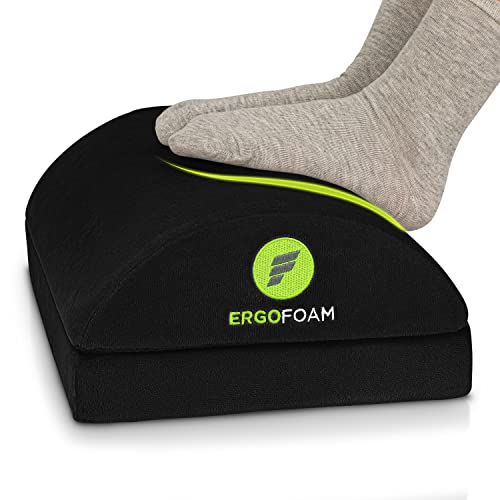
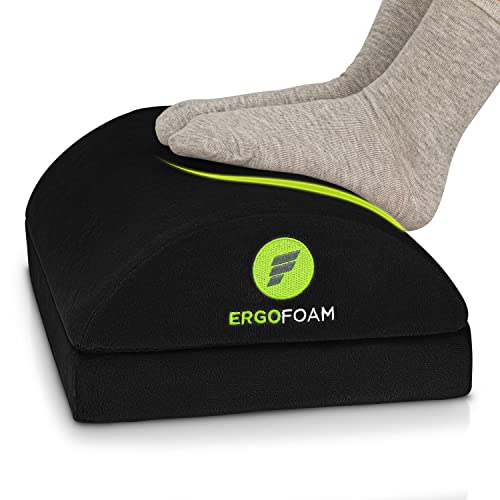
ErgoFoam Foot Rest for Under Desk
The ErgoFoam foot rest is the standard fix when your measurements say the chair must sit higher than your legs prefer — for example with a tall desk. It restores flat-foot support at a effective lower height. Check on Amazon

HON Desk Chair Mat for Hardwood Floor
While you are measuring floor space, consider a mat like this HON one for hard floors: it defines the chair’s rolling zone, protects the surface and keeps casters from wandering on smooth boards. Check on Amazon
Frequently Asked Questions
What if I am between two chair sizes?
Size up if the difference is in width or weight capacity, and check that the larger chair’s minimum seat height still suits your legs. A slightly roomy chair can be tuned with pillows; a too-small chair cannot be tuned at all.
How do I measure seat depth on a chair I already own?
Measure from the front edge of the seat to the point where the seat meets the backrest, with any lumbar pillow removed. Compare it against your thigh length minus one to two inches.
Do gaming chairs fit short players?
Some do, but check the minimum seat height carefully — many gaming chairs sit high. Petite players may need a chair with a low minimum height plus a footrest, or a model specifically sized for smaller frames.
Is overall chair height a useful number?
Only for checking it fits under a shelf or through a door. For body fit, backrest height above the seat and headrest position are the numbers that matter.
Should I measure with shoes on?
Measure the way you play. If you game in socks, measure barefoot; thick-soled shoes add up to an inch to your popliteal height and change the correct seat setting.
Should I take my measurements in the morning or the evening?
Evening, or whenever you actually game. Bodies are measurably a little taller in the morning after a night lying flat, and spinal compression through the day shortens seated torso height slightly by evening. The differences are small, but since you are measuring for the person who will sit in the chair at gaming hours, measure that person — the end-of-day version of you.
My measurements disagree with the brand’s recommended height range. Which do I trust?
Your measurements, provided they were taken carefully in the seated rig described in this guide. Height ranges are population averages compressed into a marketing line; two people of identical height routinely differ by inches in popliteal height and torso length, and it is those segment lengths — not total height — that a chair must fit. Use the range to build the shortlist and your tape to settle it.
How do I measure hip width accurately at home?
Sit on a hard chair with two books or boxes placed snugly against the outside of each hip, spines vertical, then stand carefully and measure the gap between them. That gives your seated hip width under slight compression, which is the number the chair’s usable seat width must exceed by an inch or two in total. Measuring standing with a tape around the hips gives a larger, wrong number for this purpose.
What if no gaming chair matches all five of my measurements?
Rank the measurements by how well they tolerate workarounds. Never compromise on backrest height or weight capacity. Compromise on seat height with a footrest or cushion, and on seat depth with a thicker lumbar pillow. For width problems, change chair shape — a flat ergonomic seat instead of a bolstered bucket — rather than enduring a pinch. The compromise protocol in this guide walks through the order.
Can I trust the measurements in owner reviews instead of taking my own?
As a cross-check, yes; as a substitute, no. Owners who publish a chair’s measured seat width or where its headrest lands for their height are providing genuinely useful data, and a cluster of owners built like you agreeing on a dimension is strong evidence. But your five numbers remain the input that matters, because the reviews tell you about the chair while only the tape tells you about the body it has to fit. Use reviews to verify a finalist’s published dimensions, never to skip your own session with the tape.
The Short Version
Five numbers — popliteal height, hip width, thigh length, seated torso height and desk height — plus your weight tell you whether any chair fits before you spend anything. Compare them against seat height range, usable width, depth, backrest height and capacity on the spec sheet, and round up on width and capacity. Ten minutes of measuring prevents the most common bad purchase in gaming gear.