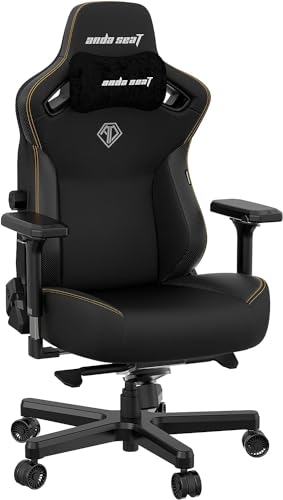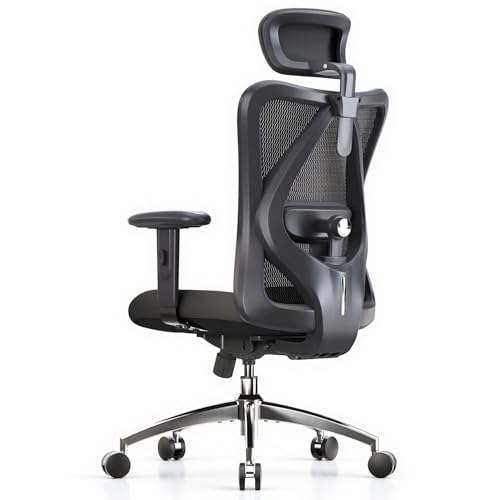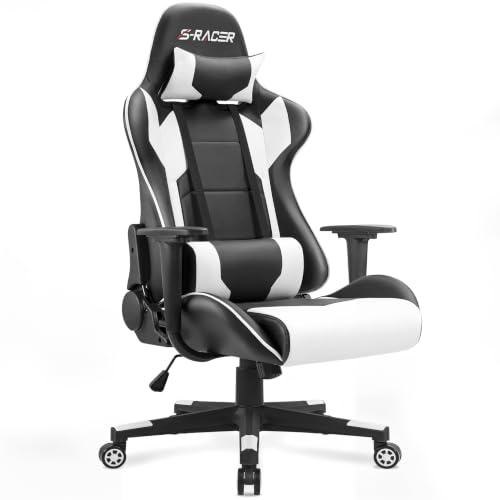
Working out how to fix a squeaky gaming chair starts with locating the noise, because squeaks have addresses: loose bolts creak at the mechanism, dry joints chirp at the backrest brackets, and the gas lift socket groans when the connection works loose. Almost every squeak yields to the same safe sequence — tighten, clean, then lubricate the right joint with the right product. This guide keeps you out of the two traps: drowning the chair in spray lubricant, and touching the pressurised gas cylinder, which is never part of a squeak fix.
Disclosure: As an Amazon Associate, ilcastellomenu.com earns from qualifying purchases. Product links on this page may earn us a commission at no extra cost to you. Prices and availability change on Amazon, so check the product page for the current details before you buy.
Find the Squeak Before You Fix It
Sit in the chair and reproduce the noise deliberately: rock forward and back, recline, swivel, bounce lightly, and shift side to side, one movement at a time. Note which movement sings. Rocking squeaks live in the tilt mechanism or its mounting bolts; recline squeaks live in the backrest brackets; swivel squeaks live where the mechanism meets the gas lift; rolling squeaks live in the casters. A helper listening at floor level while you move can pinpoint the corner in seconds.
Do the test on a hard floor if you can — carpet muffles and misleads. Also check the embarrassingly simple possibilities first: a caster rolling over a cable, the chair’s plastic trim flexing against a wall, or a loose lumbar pillow strap buckle tapping the frame. Not every noise is a joint, and the fixes in this guide assume you have found a real one.
In this guide
Fix 1: Tighten Every Bolt, In Pattern
Loose bolts are the leading cause of chair noise because a bolt under load that can move a fraction of a millimetre will creak with every shift of your weight. Tip the chair onto its side on a soft surface and work through all of them: mechanism-to-seat bolts, backrest bracket bolts, armrest bolts. Tighten in a cross pattern, firmly but without forcing — the goal is clamped joints that cannot micro-move. The pattern method is the same one used at assembly in How to Assemble a Gaming Chair.
Then sit and test before doing anything else. A large share of squeaks die at this step, and every further step is wasted effort if the joint was simply loose. If a bolt will not stay tight over the following days, the thread or captive nut is worn — a manufacturer replacement fastener is the fix, not stronger tightening, which risks cracking the mounting plate.
Fix 2: Clean the Joints and Casters
Grit is the second noise-maker. Dust and carpet fibre packed into caster axles make wheels chirp and judder as they roll; the cure is tweezers, a wipe, and a drop of lubricant on the axle if the design exposes one. The full caster-cleaning routine lives in How to Clean a Gaming Chair. Dust in the tilt mechanism’s pivot points similarly turns smooth movement into a dry creak, and a blast of compressed air or a brush-out before lubricating makes the lubricant work instead of turning dust into grinding paste.
Check the plastic side covers and trim while cleaning: covers that clip over the backrest hinges can flex and tick against the bracket. A small piece of felt or electrical tape on the contact face silences trim noise without any lubricant at all — worth trying before assuming the joint itself is at fault.
Fix 3: Lubricate the Right Joint With the Right Product
For metal pivot points — tilt mechanism pivots, backrest hinge bolts, caster axles — a silicone-based lubricant or a light machine oil is the right tool: apply a small amount directly to the joint, work the chair through its movement to draw it in, and wipe away the excess so it does not attract dust or stain the floor. White lithium grease suits heavier mechanism pivots and lasts longer between applications. Less is more: a drop per joint, not a shower.
Avoid spraying general-purpose penetrating oil indiscriminately around the chair. It can stain upholstery, attack some plastics, and its overspray on the floor is a slipping hazard. Never lubricate by spraying into the gas lift, and never attempt to open the lift to oil its internals — the cylinder is sealed and pressurised; if the lift itself is the noise source and reseating it (next section) does not help, the lift is a replacement part, not a lubrication project. Foam and upholstery creaks, incidentally, are not faults at all: new foam settling and fabric flexing make soft sounds that fade with use and need no intervention.
Fix 4: Reseat the Gas Lift Connection
The joint where the gas lift meets the tilt mechanism can develop a dry groan or click as the tapered connection works microscopically loose. The fix is mechanical, not chemical: lift the seat assembly off the lift, wipe both mating surfaces clean, refit the seat squarely, and sit with your full weight to bed the taper. Test the swivel and rock again — a clean, fully seated connection is usually silent.
Handle the lift by its outer tube only, keep the top button unpressed during handling, and never strike the cylinder with a hammer or mallet to ‘seat’ it — body weight is the correct and sufficient force. If the groan persists after reseating and the chair is also sinking, the lift is worn out; arrange a sealed replacement unit through the manufacturer, as covered in How Long do Gaming Chairs Last.
When the Squeak Means Something Worse
Some noises are warnings, not annoyances. A sharp crack or pop under load, a squeak accompanied by new wobble or lean, or grinding from the mechanism suggest cracked plastic, a failing bearing surface or a bent bracket. Cross-check with How to Fix a Gaming Chair that Leans if movement accompanies the noise, and stop using the recline if the backrest brackets are suspect. Structural parts are replaced, not lubricated into silence — quieting a crack with grease just hides the countdown.
If the chair is under warranty, document the noise with a phone video before you start lubricating anything; manufacturers resolve clear-cut cases faster with evidence, and your fix attempts do not void anything as long as they are limited to tightening, cleaning and external lubrication as described here.
Keeping It Quiet: A Five-Minute Quarterly Habit
- Run the Allen key over every structural bolt — snug anything that has drifted.
- Pull hair and fibre from the caster axles and confirm all five wheels spin freely.
- Work the tilt and recline through their full range; add a drop of silicone lubricant to any pivot that has started to whisper.
- Wipe down the lift’s exposed piston rod with a clean dry cloth so grit is not dragged into the seal as the chair moves.
- Note any new noise in your phone so you can tell next quarter whether it is stable or progressing.
That rhythm — shared with the cleaning routine — is why some chairs stay silent for years while identical models sing within months. Squeaks are almost always maintenance debt, and the interest rate is low if you pay it quarterly. If your chair is silent but your setup is not finished, How to Adjust a Gaming Chair is the natural next step.
Squeak Locations Cheat Sheet
| Where the noise lives | When it sounds | First fix |
|---|---|---|
| Mechanism-to-seat bolts | Rocking, shifting weight | Tighten in cross pattern |
| Backrest hinges | Reclining and returning | Tighten bracket bolts, then a drop of lubricant on the pivot |
| Lift socket | Swivelling | Reseat the connection clean and firm — never open the cylinder |
| Caster axles | Rolling | Clean out fibre, drop of silicone lubricant |
| Armrest mounts | Leaning on an armrest | Tighten mount bolts; check for cracked pad |
| Plastic trim covers | Any movement, faint ticking | Felt or tape on the contact face |
| Foam and fabric | Sitting down, soft creak | Normal settling — no fix needed |
Keep this table with the chair’s paperwork. Squeaks recur across a chair’s life as bolts drift and joints dry, and the second occurrence of any noise should take you straight to its row rather than back to detective work. Note the date and the fix in the margin — a noise that returns faster each time is a wear pattern, not bad luck, and it is telling you a part is approaching replacement.
Notice what the table never prescribes: force. Every fix here is tightening to snug, cleaning, or a drop of lubricant. If a joint needs violence to move or to quieten, it is damaged, and the correct tool is a replacement part.
Lubricant Safety and Housekeeping
A few disciplines keep lubrication from becoming its own problem. Apply lubricant with the chair on a protected surface — a cloth or cardboard under the work area — because a single drip of silicone on a hard floor is a slipping hazard that outlasts the squeak by weeks. Wipe every excess drop from the joint itself; surplus lubricant migrates, collects dust and turns into the grinding paste you were trying to avoid.
Keep lubricants off upholstery entirely: silicone and oils stain fabric permanently and can soften PU coatings. Mask the area with a cloth if a joint sits close to the cushion. Store the bottle with the chair’s Allen key and spare bolts so the whole maintenance kit lives in one place.
And one more time, because it is the safety line of this entire guide: the gas lift is never lubricated internally, never opened, never struck. Its only permitted interactions are a wiped-clean outer rod, a reseated connection, and wholesale replacement as a sealed unit when worn. Everything else on the chair is fair game for a drop of oil; the cylinder is not.
The Squeak Diary: Turning Annoyance Into Data
If a squeak survives this guide’s fixes, start a diary before escalating: date, movement that triggers it, where it seems to live, what you tried, and whether it is better, worse or unchanged a week later. Squeaks that worsen steadily under a diary’s eye are wear announcing itself; squeaks that hold steady for months are usually benign joint character that a drop of lubricant manages indefinitely.
Record a short video with the phone close to the suspected joint while a helper works the chair. Reviewing the video at low volume with headphones localises sounds far better than live listening, because you can replay the exact creak against each movement. The same video is gold for manufacturer support, who can often name the part from the sound and the model number alone.
Set yourself a decision rule in advance — for example: if the noise progresses across three diary entries despite tightening and lubrication, it graduates from maintenance to parts. Rules made in advance prevent both failure modes of squeak ownership: ignoring a warning until it becomes a collapse, and replacing parts on a chair that only ever needed oil.
Most chairs, honestly kept, never reach the rule. The diary’s real product is the discovery that your squeak was stable, minor and managed — data that lets you stop listening for it, which is when it truly disappears.
Squeaks in New vs Old Chairs: Different Meanings
In a new chair, squeaks are almost always assembly debt: bolts at factory tightness that need their first-week re-check, trim settling against brackets, foam finding its shape. They respond to this guide’s first two fixes and then vanish for months. Treat new-chair noise as a prompt to do the scheduled maintenance early, not as a defect — unless it arrives with wobble, lean or a visible crack, which changes the conversation entirely.
In a chair of several years, the same sound carries different information: joints have wear in them, foam has thinned so loads reach the frame differently, and a squeak may be the first symptom of the end-of-life pattern this batch’s lifespan guide describes. The fixes still apply — tightened bolts and lubricated pivots can return an old chair to silence — but the diary matters more, because progression is the signal that separates maintenance from farewell.
Age also changes the economics of escalation. A replacement mechanism on a young premium chair is rational; the same part on an old budget chair is money spent rehearsing a replacement you will buy within the year anyway. Let the chair’s age and tier arbitrate how far down the fix list you travel before the new-chair conversation begins.
Room Acoustics: Why the Squeak Sounds Worse at Midnight
Squeaks are partly an acoustics problem. Hard floors and bare walls return every creak to your ears — and to a microphone — at full value, while carpet, curtains and soft furnishings absorb them. A chair that seems silent at a friend’s carpeted house and sings in your tiled room may have changed not at all; the room is the amplifier, and a chair mat plus a rug under the setup is a legitimate part of the cure.
Streamers and anyone on calls should test fixes through the microphone, not just the ear: mics placed near desk height hear mechanism noise that your ears, two feet higher, forgive. The squeak that matters professionally is the one the mic reports, and it is worth the extra tightening pass to silence that stricter judge.
Night amplifies everything socially as well as acoustically — a squeak inaudible at noon wakes a household at 2 a.m. If your sessions run late, prioritise the caster and mechanism fixes even for minor noises, and consider the mat for the floor’s sake. Courtesy is a specification too.
Foam, Fabric and the Sounds That Are Not Faults
New foam creaks softly as air moves through it under load; fabric whispers against foam; a cold room makes every material stiffer and more vocal. These sounds are the chair’s weather, not its warnings, and they fade as materials settle and temperatures normalise. Chasing them with lubricant achieves nothing except lubricant where it does not belong.
Distinguish by character: material sounds are soft, diffuse and present from the chair’s first days, changing little over months. Joint sounds are localised, mechanical — a creak with a pitch, a click with an address — and they evolve. Your hands can confirm what your ears suspect: a sound you can feel as movement in a joint is a joint sound; a sound with no movement anywhere is the materials talking.
When in doubt, the diary decides: record the sound, live with it a fortnight, record again. Stable and soft means weather. Louder, sharper or newly accompanied by movement means read the troubleshooting sections again with fresh intent.
A Quiet Chair Is a Maintained Chair: The Closing Argument
Every fix in this guide is a form of attention: bolts checked before they wander, joints cleaned before they grind, lubricant applied by the drop rather than the can. Chairs do not stay quiet by quality alone — the most expensive chair in this batch’s roundups will sing within a year if its bolts are never touched, and a budget chair maintained quarterly can stay silent for its whole service life.
That is genuinely good news, because it puts the outcome in your hands and your calendar rather than in your budget. Ten minutes a quarter is the entire subscription price of silence. Set the reminder next to the cleaning reminder, keep the kit in one bag, and let the chair disappear beneath you the way good equipment should.
Silence, in the end, is what a gaming chair is for: the game should be the loudest thing in the room, by a very long way.
The Armrest Squeaks: Pads, Posts and Sliders
Armrests are the squeak location owners localise last, because the noise seems to come from the seat until you test with your arms lifted. Isolate them properly: sit without touching the rests and work through the movements from the localisation section; then repeat with your forearms loaded on the rests. A squeak that exists only in the second pass lives in the armrest assembly, and it has three usual addresses — the pad’s mounting screws, the height post’s sliding surfaces, and the width or angle sliders on adjustable models.
Pad screws first, as always: they are small, they loosen, and they hide under caps or beneath the pad itself. Tighten them snugly — small screws strip eagerly, so this is fingertip torque, not forearm torque. The height post is next: its sliding surfaces squeak when dry and gritty, and they respond to cleaning and the lightest application of silicone lubricant on the metal-to-metal faces, wiped almost dry. A post that squeaks because it has developed play, rocking in its housing, will not be cured by lubricant; that is wear, and it belongs in the parts conversation.
Sliders and angle pivots on 3D and 4D rests squeak at their detents — the little clicks and springs that make the positions repeatable. Work the rest through every axis while listening, treat the guilty axis’s pivot with a drop of lubricant, and then exercise it through its range a dozen times to distribute the film. If a rest squeaks because its pad foam has separated from its plate — a soft, creaking protest under elbow load — the pad is the part, and pads are among the cheapest replacements on the chair.
Finish with the test that matters: forearms loaded, a long session’s worth of shifts and leans. Armrest squeaks are load-dependent more often than any other kind, and a rest silenced for an unloaded wiggle may still sing under an elbow at hour two. Test at working weight or do not trust the silence.
A Second Pair of Hands: The Two-Person Localisation Protocol
Solo localisation has a structural flaw: the person making the chair move is also the person trying to listen to it, and your own body’s noises and efforts mask the evidence. The two-person protocol fixes the experiment. One person — ideally the chair’s owner, whose weight and movements reproduce the squeak faithfully — works the chair through its repertoire. The other person kneels beside it with a phone torch and a free ear, moving joint by joint as the owner repeats each movement on request.
The listener’s technique is simple and specific. Start at the floor and work upward: casters during a roll, the base-to-lift joint during a swivel, the mechanism during tilt, the backrest hinges during recline, the armrests under load. At each station, the owner repeats the guilty movement three times while the listener places a fingertip lightly on the joint — vibration betrays location through touch even when the room’s acoustics smear the sound, and a joint that buzzes under a fingertip at the moment of the squeak has been caught in the act.
Agree the vocabulary in advance: the owner calls the movement, the listener calls ‘there’ at the instant of noise, and both note the pairing before moving on. Ten minutes of this produces a localisation reliable enough to act on — and, just as usefully, it acquits the innocent joints formally, so the diary records not only where the squeak lives but where it provably does not.
If no second person is available, the phone becomes the listener: record video from a fixed position close to the suspected joint while you work the chair, then review with the volume up. It is slower than a partner and nearly as honest, and it produces the dated evidence the squeak diary and any warranty conversation both run on.
Squeaks That Follow the Weather
Some chairs keep a meteorological diary: silent all summer, vocal every winter, or the reverse. The mechanism is mundane physics. Cold contracts metal and stiffens the grease in pivots, so joints that ran silently on a film of lubricant in July grind faintly in January when that film has thinned and thickened at once. Humidity works the other flank — wooden floors swell, nylon parts absorb moisture and change their clearances by fractions, and foam firms or softens with the room’s water content. A squeak with a season is usually a clearance squeak: two surfaces whose gap the weather opens and closes.
Diagnose it as such rather than chasing it monthly. Note the pattern in the diary — dates, room temperature if you know it, which movement sings — and treat the joint once, properly, at the season’s start: clean it, lubricate it with a product rated for the temperature range your room actually reaches, and confirm the bolts are snug. Then leave it alone. The owner who re-lubricates at every cold snap builds up gummy deposits that attract grit and convert a seasonal whisper into a permanent one.
Heated and air-conditioned rooms add a daily cycle to the seasonal one: a chair beside a radiator or an air outlet lives through temperature swings its twin across the room never feels, and its joints age on the faster schedule. If your squeak has an address near a heat source, moving the chair a metre is a legitimate fix — sometimes the correct repair to a piece of furniture is a different piece of floor.
The Swivel Squeak: Noise From the Centre of the Chair
A squeak that sounds when you rotate — and only when you rotate — has a short list of homes, and it is worth separating from the tilt family because the fixes differ. Rotation happens at two interfaces: the gas lift’s column turning inside the mechanism’s socket, and the lift turning inside the base. Both are dry-fit metal interfaces, and both develop a groan or a chirp as their contact surfaces polish and pick up grit over years of small turns.
Work the list in the guide’s usual order. First, bolts: the mechanism’s mounting bolts carry the swivel’s loads too, and the full pattern-tightening from Fix 1 acquits or convicts them in minutes. Second, cleanliness: grit at the base socket is swept out with the chair tipped and the column lifted free — handle the lift by its outer tube, keep its top button unpressed, and never be tempted to lubricate inside the sealed unit, a line this guide does not move on. The socket and the column’s outer surface can be wiped clean and left dry; these interfaces are designed to run dry, and oil here migrates where it should not.
Third, the honest wear verdict: a swivel groan from a polished, worn socket in an older chair is the mechanism announcing its age, and it joins the replacement calculus rather than the lubricant one. The sound itself is not dangerous — but paired with new sideways play in the seat, it graduates from noise to symptom, and the ‘when the squeak means something worse’ section owns it from there.
Squeaks After Events: Moves, Spills and Deep Cleans
A squeak with a birthday is a gift to diagnosis, because events narrow the suspect list to what the event touched. After a house move, suspect the transport family: casters that took a side impact, bolts loosened by vibration in the van, a base stressed by being dragged. The response is the full bolt pattern and a caster-by-caster roll test before any lubricant is opened — event squeaks are mechanical until proven otherwise.
After a spill, suspect contamination: liquid that reached a joint carries dissolved sugar and grit into it as it dries, and the resulting squeak has a sticky, grinding character that worsens over days. The joint needs cleaning before lubrication — flush the accessible pivot with a cloth dampened in plain water, work the joint to expel the residue, dry it thoroughly, and only then apply the drop of lubricant. Lubricating over contamination seals the grit in and guarantees the squeak’s return with interest.
After a deep clean, suspect your own kindness: water wicked into a pivot and left there, a cloth’s fibres caught in a caster axle, a cover refitted slightly askew so it flexes against the hinge. Re-run the clean’s own steps mentally, dry anything that can be dried, and give the chair a day before escalating — a surprising share of post-clean squeaks are damp joints drying out on their own schedule. The diary entry writes itself in all three cases: event, date, response. Future squeaks will be diagnosed against that history, which is why the history is worth the thirty seconds it takes to keep.
The Squeak That Isn’t: Floors, Desks and Other Impostors
Before any chair is dismantled in the mind, acquit the room. Floorboards squeak under rolling casters with a voice remarkably like a chair’s; the test is to roll the chair to a different patch of floor — or onto a mat — and repeat the movement. A squeak that stays behind when the chair moves was never the chair’s. Desks join the impersonation: a chair’s backrest or armrest brushing a desk edge during recline produces a rhythmic protest that owners chase through three joints before noticing the contact, and radiators, bed frames and the chair’s own packaging left beneath it have all been convicted by the two-person protocol after the chair itself was acquitted.
The impostor list matters because every fix applied to an innocent chair is a small harm: bolts tightened past their need, lubricant added to joints that will now attract grit, and an owner whose confidence in the process erodes with each failed cure. The localisation discipline in this guide exists to prevent exactly that waste. Localise first, on a hard floor, in a clear space, and let the evidence name the culprit — even when the culprit turns out to be the floor you have owned longer than the chair.
There is a consolation prize when the room is guilty: floor and contact squeaks are usually cheaper to silence than chair squeaks. A mat under the chair, a felt pad where the backrest meets the desk’s orbit, a board’s loose screw found and tightened — the room’s repairs are as satisfying as the chair’s, and they share the same moral. Noise has an address. The whole craft is finding it before fixing anything.
From Noise to Part Number: Ordering the Right Replacement
When a squeak graduates to a parts order, precision becomes money. Manufacturers’ support channels run on specifics: the chair’s exact model and its purchase era, the part’s name as the manual gives it, and — the item owners never have — evidence. Your squeak diary and the localisation video are that evidence, and attaching them converts a vague ‘it squeaks near the bottom’ into a conversation about a mechanism, a caster set or an armrest assembly, priced correctly the first time.
Order by system, not by sound. A mechanism that squeaks because its pivots are worn is replaced as a unit; its individual springs and plates are not service parts, and attempting to source them wastes weeks. Casters are ordered as a full set so the chair sits level on five equal wheels. Armrests are ordered as the complete side assembly unless the maker lists pads separately. The manual’s exploded diagram, kept with the chair’s paperwork since assembly day, is the map for all of this — one more dividend from the batch’s keep-the-paperwork refrain.
While the part ships, the chair usually remains usable: a worn mechanism that squeaks is an annoyance long before it is a hazard, provided the warning signs from this guide — cracks, sudden play, noises with a snap in them — are absent. The exception discipline matters: the moment a noise arrives with movement that should not exist, the chair is benched until the part lands. Parts ordered calmly, against a diary, with the right numbers, are how a squeak ends as a maintenance event instead of a saga.
Children, Pets and the Noises They Add
Households add variables no diagnostic sequence can ignore. A cat that sleeps under the chair leaves hair in the caster axles at a rate no quarterly rhythm anticipates, and its favourite spot — the warm base of the lift — means the swivel joint gets a nightly application of fur. A dog that bumps the chair as it passes teaches bolts the household’s traffic patterns. None of this is damage; all of it accelerates the cleaning half of this guide’s fixes, and pet households should simply run the caster and joint cleaning monthly rather than quarterly and stop being surprised by the schedule.
Children are a load case of a different order. A child climbing into a gaming chair loads its armrests and backrest in directions and at angles no adult session produces, and a chair that squeaks only after the children have visited is reporting loosened armrest and bracket bolts with complete honesty. The response is the standard one — tighten in pattern, check the armrest screws specifically — paired with the household rule that gaming chairs are sat in, not climbed, delivered with whatever authority the household can muster.
There is also a safety edge that belongs in a troubleshooting guide: a chair used by children should have its warning signs audited more strictly, because a child will not report a developing wobble or interpret a new crack the way an adult owner does. If the household’s chair serves small people, the quarterly habit in this guide becomes the minimum, and any noise accompanied by play in a joint benches the chair until it is understood. Small users deserve the most conservative version of every rule in this batch.
The Silence Kit: Keeping the Cure Within Reach
Every fix in this guide fails socially in the same way: the lubricant is in a garage box, the Allen key is in a drawer in another room, and the squeak is granted another month because the cure was not within reach of the chair. Assemble the silence kit once and keep it where the chair lives — in the desk drawer or the cable tray: the chair’s Allen key, the small bottle or tube of silicone lubricant, a short length of cloth for wiping excess, and the notebook or phone note that serves as the squeak diary. The kit’s contents cost almost nothing; its location is the entire intervention.
Add one discipline to the kit: when a fix is applied, the diary entry is written before the tools are put away, because ‘lubricated the left hinge, sometime in spring’ is the kind of record that helps no one, while a dated entry with the joint named is the raw material of every later diagnosis. The kit and the diary are the same system seen from two sides — supplies for the hands, evidence for the memory.
This is, in miniature, the argument of the whole guide. Chairs do not stay quiet because they were built perfectly; they stay quiet because their owners built a small, reachable system for noticing and answering noise early. The kit takes ten minutes to assemble, once, and it converts every future squeak from a project into a pause between matches.
Gear for This Guide
You do not need to buy anything to follow most of this guide, but the items below are the ones that genuinely come up again and again in this topic. Each one is a current, widely sold model rather than a placeholder pick.

Homall Gaming Chair
A classic bolt-together design like the Homall chair responds exactly as this guide describes: its mechanism, bracket and armrest bolts are all accessible with the included Allen key, making the quarterly tightening habit a five-minute job. Check on Amazon

HON Desk Chair Mat for Hardwood Floor
On hard floors, half of all ‘chair squeaks’ are actually caster noise amplified by the surface. A mat like this HON one damps rolling noise and protects the floor at the same time. Check on Amazon
Frequently Asked Questions
What lubricant is best for a squeaky gaming chair?
A silicone-based lubricant for general pivots and caster axles, or white lithium grease for heavier mechanism joints. Apply a drop at a time to the specific joint, work it in, and wipe the excess.
Can I use WD-40 on my gaming chair?
It can free a stiff joint in a pinch, but it is a solvent-heavy penetrant rather than a lasting lubricant, and overspray can stain upholstery and floors. A silicone lubricant is the better default for chair joints.
My chair squeaks only when I recline. Where is it?
Almost certainly the backrest hinge brackets or their bolts. Tighten the bracket bolts in an alternating pattern first; if the noise persists, a drop of lubricant on the hinge pivot usually finishes it.
The squeak is coming from the gas lift area. What do I do?
Reseat the connection: lift the seat off, clean the mating surfaces, refit and sit firmly. Never open, drill or strike the cylinder — it is pressurised. A lift that still groans and also sinks needs replacing as a sealed unit.
How do I stop a brand-new chair from creaking?
New-chair creaks are often foam and trim settling, plus bolts that need their first-week re-check. Tighten everything once after a week of use; most settling noises fade on their own.
Can ignoring a squeak damage the chair?
The squeak itself damages nothing, but its commonest causes do: a bolt left loose wears its hole oval, grit left in a joint grinds the surfaces it sits between, and a joint left dry wears its pivot. Treat the noise as a free inspection reminder rather than a fault in itself — the ten-minute response in this guide is what keeps a squeak from graduating into the wear it was reporting.
My chair only squeaks under my heavier partner. Should I still fix it?
Yes, and their report is useful data: load-dependent squeaks identify the joints that flex at higher weights — usually the mechanism and the backrest brackets. Run the fixes at your weight, then have your partner perform the acceptance test, because a chair silenced for a lighter occupant may not be silenced at all. It is also worth confirming the chair’s weight rating comfortably covers the heavier user; a chair squeaking at the edge of its rating is giving you two messages at once.
Is PTFE or silicone lubricant better for chair joints?
For the pivots and sliding surfaces in this guide, silicone is the general recommendation: it stays where it is put, does not stain as aggressively, and is kind to the plastics near the joint. PTFE dry lubricants are excellent where you want no wet film at all — caster axles and armrest sliders — because they attract less grit. White lithium grease suits the heaviest mechanism pivots. What matters more than the family is the dose: a drop, worked in, with the excess wiped away.
How long should a lubrication fix last before the squeak returns?
On a healthy joint, months to years — lubricant films are durable when the joint is clean and the bolts hold. A squeak that returns within weeks is telling you the joint has play, contamination or a loosening bolt rather than a lubrication deficit, and re-oiling it treats the report instead of the cause. Use the return interval as a diagnostic: long silence means maintenance worked; short silence means the joint itself wants inspection.
Will a chair mat stop my chair squeaking?
It stops the floor’s contribution — caster noise on hard surfaces and the judder of wheels crossing board seams — which owners frequently misidentify as the chair itself. A mat will not silence a joint, a bolt or a mechanism, and that is precisely its diagnostic value: if the squeak survives the move onto a mat, the room has been acquitted and the chair owns the noise. Many owners keep the mat either way, because casters and floors both live longer on one.
The Short Version
Localise the squeak by movement, tighten all bolts in pattern, clean the joints and casters, then add a drop of silicone lubricant or lithium grease to the guilty pivot. Reseat — never open — the gas lift connection if the noise lives there. Noises with wobble, cracks or pops are parts problems, not lubrication problems, and deserve replacement parts instead of oil.