ilcastellomenu.com is reader-supported. When you buy through links on our site, we may earn an affiliate commission.
Where to Buy
There is a difference between buying a camera and starting a photography life, and the aspiring photographer — the reader of this guide — is buying the second thing. You are not asking which body takes the nicest holiday photographs. You are asking which system will still be serving you when the hobby becomes a portfolio, the portfolio becomes commissions, and the commissions become a practice: which mount will not corner you in year three, which body will not be the reason a paying client’s moment was missed, and which purchase teaches the craft fastest while the ambition is hot. If you are choosing the best cameras for aspiring photographers, those are the real questions, and this guide answers them in that order — trajectory first, specifications second.
That framing changes the shortlist’s shape. A merely excellent beginner camera that dead-ends its owner is a worse aspiring-photographer purchase than a slightly sterner body inside a system with a professional ceiling. Conversely, the flagship bought on day one is usually a mistake of the opposite sign: money that should have bought lenses, light, and time spent shooting, locked into a body whose capabilities the beginner cannot yet spend. The six picks below are the middle path mapped honestly — entry points with futures. Each sits in a system whose professional tier exists, whose used market is deep, and whose second and third lenses are priced for mortals.
Two tests were applied to every candidate, and they are worth stating because you can apply them to any camera this guide did not include. The growth test: can this exact body, with lenses added one at a time, shoot a competent paid job in eighteen months — a portrait session, a small wedding, a product set — without the client ever knowing it was not a flagship? And the exit test: if your ambitions change direction entirely, does the system sell easily, at fair value, into a deep used market? Cameras that pass both tests are investments; cameras that fail either are expenses wearing investment clothing.
A last word before the picks, from the far side of the journey this guide describes: the photographers who make it are rarely the ones who bought best. They are the ones who shot most, showed their work earliest, and treated every camera as a semester rather than a soulmate. Buy a pick from this list at the level your honesty supports, and then let the work, not the catalogue, set the upgrade schedule. That discipline is the actual content of aspiration.
How the reviews are sequenced, so the aspiring reader can navigate by self-knowledge: the growth platform first, because it fits the median journey; the settler second, for the certain; then the specialists by temperament — speed, style, hybrid — and finally the gentle first step, for the budget that is real today. If you finish the introduction unsure which temperament is yours, the honest answer is the first pick and a year of evidence. Aspiration clarifies by doing, and the R10 was chosen to be correct under the widest range of clarifications.
Key Takeaways
- Buy the trajectory, not the body: the mount’s professional ceiling and used market matter more than this year’s spec sheet.
- The aspiring sweet spot is a serious midrange body plus a lens plan — not a flagship, not a toy.
- Your second lens will shape your style more than your first body; budget for it from day one.
- Dual card slots, tethering manners, and reliability features are the professional line — know which side of it each pick sits on.
- The Canon EOS R10 is the best growth platform for most aspiring photographers; the Sony Alpha 7 IV is the settler’s choice.
In this guide
Quick Picks
| Pick | Badge | Why it earns its place |
|---|---|---|
| Canon EOS R10 | Best Growth Platform | Professional manners in training: tracking, dual dials, and the RF ladder from first prime to flagship glass. |
| Sony Alpha 7 IV | Best Long-Term Investment | The body aspiring shooters grow into, bought early: dual slots, full frame, and the deepest lens ocean in photography. |
| Nikon Z50 II | Best Modern Starting Point | Flagship-derived detection and a Z-mount future, in a body priced for the beginning of the story. |
| Fujifilm X-T5 | Best for Developing a Style | Resolution, dials, and colour with a signature — for the aspiring photographer whose work must look like theirs. |
| Panasonic LUMIX S5II | Best Hybrid Future | Stills and video careers in one stabilised body, for the aspiration that refuses to choose a medium. |
| Canon EOS R50 | Best First Step | The gentlest entry into a serious system — for the aspiring photographer whose budget is real and whose start is now. |
One more filter deserves confession: resale depth was treated as a feature, not an afterthought, because aspiration is statistically a hypothesis and honest guides price hypotheses. Every system here can be exited at fair value into a liquid used market, which caps the cost of discovering that the direction was wrong — or that it was right but the genre was different. A camera that can be sold kindly is a camera that can be bought bravely, and bravery, within a budget, is what starting requires.
How We Chose These Picks
We assessed each candidate across a three-year arc rather than a review week. Year one: does the body teach — controls that graduate, autofocus that builds confidence, files that reward the edit? Year two: does the system feed growth — the portrait prime, the event zoom, the flash and the second body all existing at attainable prices, new and used? Year three: does the kit hold professional water — reliability, slots, serviceability, and a resale value that respects the owner if the direction changes? Bodies that peak in year one were marked down however beloved; systems whose professional tier is a rumour were excluded entirely. What remains is a shortlist of beginnings that do not need apologising for later.
What Does the Road From Aspiring to Practising Actually Look Like?
It has recognisable seasons, and knowing them reprices every purchase. The first season is volume and vocabulary: thousands of frames, the exposure triangle becoming reflex, the discovery — always a surprise — of which subjects you actually love, which is rarely the genre you bought the camera for. The second season is depth: one genre pursued seriously, a portfolio assembled, the first time a stranger asks what you charge, which arrives earlier and more awkwardly than expected. The third season is professionalisation: the jobs that teach reliability — the wedding where the light fails, the product deadline where the tether saves the day — and the kit quietly reorganising itself around dependability rather than delight.
Equipment’s role changes by season, which is why this guide resists both the toy and the flagship. Season one needs forgiveness and presence; season two needs lenses and light; season three needs slots, spares, and service. The picks below were chosen to be correct in season one and unbought-against in season three — bodies that start as teachers and end as staff. When you read the trade-offs, read them by season: a limitation that bites in year three is a different fact from one that bites in week three, and the aspiring buyer deserves to know which is which.
Why Is the Lens Plan Worth More Than the Body Choice?
Because bodies are replaced on a cycle and lenses are a career. The portrait prime you buy this year will still be your signature in ten; the event zoom will pay for itself across a hundred Saturdays; the macro or the long telephoto will define the specialism clients eventually hire by name. Meanwhile every body on this list, flagship included, is a five-year instrument. The aspiring budget should therefore be allocated like a practice being founded: enough body to be reliable and teachable, then lenses in the order your genre demands, then light — the modifier, the flash, the backdrop — because light is the professional’s actual signature and the amateur’s most postponed purchase.
There is a second, quieter reason: lenses hold value and bodies shed it, so the lens-led budget is also the financially literate one. A kit built lens-first can change bodies, even change systems at the mount’s edge, without the bonfire that body-first kits eventually light. Aspiration is a long game; fund it like one.

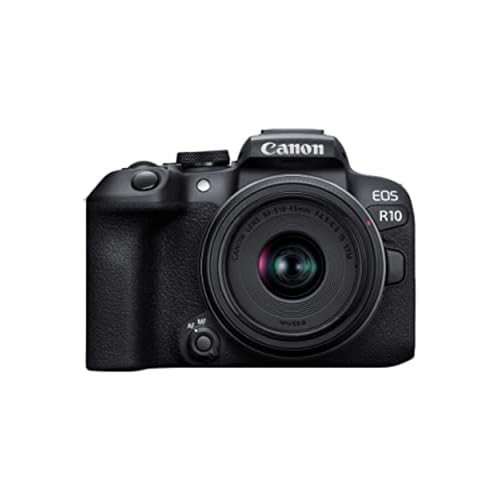
Canon EOS R10 — Best Growth Platform
The R10 is the aspiring photographer’s centre of gravity: a body with professional manners at a student-tolerable price, inside the system with the deepest amateur-to-professional ladder in the business. Its tracking autofocus and dual dials teach the working habits of event and portrait photography from the first month; its files reward the editing apprenticeship; and the RF mount stretches unbroken from the first affordable prime to the flagship glass the third season will rent and the fifth will own. No purchase in this guide strands its owner less.
Season by season, it behaves. Year one: forgiving, quick, and honest. Year two: the same body, now wearing the portrait prime and the event zoom, shoots the portfolio and the first paid Saturdays without apology. Year three: it retires — gracefully, not gratefully — to second-body duty when the flagship arrives, which is the correct career for a first serious camera and one the R50-class bodies also serve. The used market will take it kindly if the story changes instead.
Its professional limits are named plainly: a single card slot, which the wedding season will eventually prosecute, and light weather sealing. Both are year-three facts, priced into a year-one body — the honest definition of a growth platform. For most aspiring photographers, this is the buy.
- Sensor: APS-C CMOS, about 24 megapixels
- Mount: Canon RF — the full amateur-to-pro ladder
- Controls: dual dials, joystick, tracking autofocus
- Career path: first body, then second body
- Cards: single slot — a year-three consideration
Strengths
- Professional habits taught from month one
- A lens ladder with no ceiling and no restart
- Retires to second-body duty instead of a drawer
Trade-offs
- Single card slot for the eventual wedding season
- Weather sealing is light
- No in-body stabilisation
Best for: aspiring photographers building toward paid work. Not suited for: buyers who need dual slots from day one.

Sony Alpha 7 IV — Best Long-Term Investment
Some aspiring photographers know — not hope, know — that this is the work, and for them the A7 IV is the rare case where buying the grown-up body early is the economical act. It is the camera the others in this guide are eventually traded toward: full-frame files with the range paid work demands, dual card slots for the days failure is not an option, tethering and studio manners for the commercial seasons, and the E-mount — the deepest lens catalogue in photography, contested at every price by several makers. Bought once, it simply stops being a question, and the budget flows to lenses and light where it belongs.
Its teaching manners are better than its flagship-adjacent price suggests: the autofocus forgives while it instructs, the customisation lets the body grow stricter as its owner does, and the video credentials keep the hybrid door open without a second purchase. The aspiring photographer who buys it is not skipping the apprenticeship; they are merely serving it in the workshop they will keep.
The cautions are financial and physical: the body and its full-frame lenses are the heaviest commitment here, and an owner whose aspiration quietly expires will own an expensive souvenir — the exit test passes, thanks to the used market, but at a real loss. Buy it on knowledge, not on hope, and it is the best long-term investment in this guide.
- Sensor: full-frame CMOS, about 33 megapixels
- Mount: Sony E — deepest catalogue, multi-maker
- Cards: dual slots for professional reliability
- Workflow: tethering and studio manners built in
- Video: strong hybrid credentials
Strengths
- Settles the body question for the whole apprenticeship
- Professional reliability features from day one
- Lens ocean at every future price point
Trade-offs
- Heaviest financial commitment on this list
- Full-frame lenses continue the theme
- Overkill if the aspiration is still a hypothesis
Best for: the certain — aspiring photographers who know. Not suited for: the curious, who should rent the certainty first.

Nikon Z50 II — Best Modern Starting Point
The Z50 II is the modern apprenticeship in one body: subject detection inherited from Nikon’s flagships, so the beginner’s hit rate starts where previous generations’ third year ended; a clean dual-dial layout that teaches professional control without nostalgia; and a mount whose full-frame future — some of the finest telephoto and portrait glass made — waits without demanding a system change. For the aspiring photographer whose genres run to wildlife, sport, or events, where detection and tracking are the craft’s entry fee, it is the strongest starting point here.
Its growth story is the mount’s: begin with the compact DX zooms, add the portrait prime, and let the same body wear serious full-frame glass as the commissions justify it — an upgrade path that spends money only on capability, never on restarting. Nikon’s colour and metering give the editing apprenticeship an honest foundation, and the video side covers the hybrid obligations most young practices now carry.
The ecosystem’s youth is the caveat: the native DX shelf is still filling, so some lenses arrive via the full-frame catalogue earlier than a budget might wish, and the single-slot, crop-sensor format sets the same year-three ceiling as the R10’s. Within those known borders, the Z50 II is the most future-literate first body in this guide.
- Sensor: APS-C (DX) CMOS, about 21 megapixels
- Autofocus: flagship-derived subject detection
- Mount: Nikon Z — DX now, full-frame glass later
- Controls: clean dual-dial professional layout
- Video: strong for hybrid practices
Strengths
- Detection that gives beginners a professional hit rate
- Upgrade path that never restarts the system
- Handling that teaches the working posture
Trade-offs
- DX lens shelf still maturing
- Single card slot; crop format ceiling
- Resolution is moderate for heavy cropping
Best for: aspiring action, wildlife, and event photographers. Not suited for: buyers wanting the widest crop-lens shelf today.

Fujifilm X-T5 — Best for Developing a Style
Aspiring photographers are hired, eventually, for a look — and the X-T5 is the body most likely to help one develop. Its film-simulation colour gives a young practice a coherent, recognisable rendering from the first portfolio; its high-resolution sensor supports the print and exhibition ambitions that stylists gravitate toward; and its dial-led handling slows the working method down into deliberation, which is where style is actually formed. In a feed of interchangeable images, the Fujifilm shooter’s work is the one a client can describe — and describability is a career asset no specification measures.
The system supports the trajectory honestly: characterful primes that encourage a one-lens discipline, weather resistance for the location years, and files that print large enough for the gallery conversations style-led photographers court. Its video is a competent sideline, its tracking a step behind the action specialists — the known prices of its priorities, paid willingly by its tribe.
For the aspiring photographer whose market is weddings-at-speed or wildlife, other picks argue louder. For the one building a name on a look — editorial, portrait, the printed image — the X-T5 is not a compromise but a strategy, and this guide lists it as such.
- Sensor: APS-C X-Trans CMOS, about 40 megapixels
- Colour: film simulations with a signature look
- Controls: physical dials, deliberate pace
- Mount: Fujifilm X — characterful primes
- Print: resolution for exhibition sizes
Strengths
- A look clients can recognise and request
- Resolution for the print-led career
- Handling that forms deliberate habits
Trade-offs
- Tracking trails the action specialists
- Video is a sideline
- Long lenses are serious investments
Best for: style-led aspiring photographers — editorial, portrait, print. Not suited for: speed-led event and wildlife ambitions.

Panasonic LUMIX S5II — Best Hybrid Future
The modern aspiring practice is increasingly two practices: the stills client on Saturday, the video client on Tuesday, the same face behind both. The S5II is the body built for that duality — a full-frame stills camera of professional honesty whose video is not a feature but a co-headline, stabilised so thoroughly that a one-person crew can produce moving work that looks crewed. For the aspiration that includes weddings-and-films, brands-and-content, or any of the hybrid forms the market now buys by default, it is the most future-proof single purchase here.
The L-mount alliance softens the full-frame economics across a career — lenses from several makers, at several prices, all native — and the body’s reliability features and weather sealing suit the working seasons. Its stills files hold their own in any company on this list; its stabilisation, for the handheld reality of hybrid work, leads it.
The costs are the format’s weight and a lens bench younger than Sony’s ocean. The aspiring hybrid should also count a second apprenticeship — video has its own grammar of shutter and sound — which this body teaches as well as any. For the two-medium future, it is the guide’s clear recommendation.
- Sensor: full-frame CMOS, about 24 megapixels
- Stabilisation: class-leading, for one-person crews
- Video: professional ambition, stills to match
- Mount: L-mount — multi-maker lens economics
- Build: weather-sealed workhorse
Strengths
- Two careers in one body, both credible
- Stabilisation that replaces crew and tripods
- Lens prices softened by the alliance
Trade-offs
- Weight of body and full-frame glass
- Lens bench younger than Sony’s
- Moderate stills resolution for heavy cropping
Best for: aspiring hybrids — stills and video practices. Not suited for: stills purists who will never film.

Canon EOS R50 — Best First Step
Aspiration is not a budget, and the R50 is this guide’s respect for that fact: the gentlest, most affordable entry into a system with a professional ceiling, whose guided menus and forgiving autofocus manufacture the early successes that keep an aspiring photographer aspiring. It shares the R10’s mount, colour, and ladder — every lens bought for it is a lens for the future body — so the first step, however modest, is taken in the right direction and never has to be retraced.
Its honest role is the first two seasons: the learning, the portfolio’s first draft, the discovery of genre. When the third season arrives with its slots-and-sealing demands, the R50 becomes the second body, the travel camera, or the used market’s easiest sale — all respectable retirements, none of them a dead end. Aspiring photographers have started on far worse and thrived; few have started on anything kinder at the price.
The limits are the entry tier’s and are listed without drama: one dial where its sibling has two, a modest buffer, an entry viewfinder, light sealing. They bite in year three, by design and by price. If the budget stretches, the R10 is the better buy for the same journey; if it does not, the R50 is the correct one, and the difference should be spent — as this guide keeps insisting — on the lens.
- Sensor: APS-C CMOS, about 24 megapixels
- Mount: Canon RF / RF-S — shares the R10’s ladder
- Teaching: guided menus, eye autofocus
- Economy: the gentlest serious entry price
- Career: first body, then second body or easy resale
Strengths
- A first step that never needs retracing
- Early success manufactured reliably
- Every lens purchase is a future purchase
Trade-offs
- Entry controls and buffer
- Light weather sealing
- Year-three ceiling arrives sooner than the R10’s
Best for: aspiring photographers on a real budget, starting now. Not suited for: buyers who can stretch to the R10 and will shoot events soon.
How Do You Build a Portfolio That Gets the First Real Work?
By editing like a client, not like a parent. A portfolio is twelve to twenty frames that answer one question — can this person be trusted with the job I have? — so it is built by genre, not by chronology: the aspiring wedding photographer shows weddings, real or honestly staged with couples who knew the arrangement; the product hopeful shows products lit like the briefs they want. Shoot portfolio pieces deliberately, as productions, with the best light and the most patience you own, because one produced frame outranks thirty found ones in a client’s judgement. Then sequence ruthlessly: strongest first, strongest last, nothing in the middle that apologises.
The camera’s role in this is narrower than the industry admits — any pick here can produce a portfolio-grade frame — but two of their virtues matter concretely: files that survive the edit’s scrutiny at full size, and reliability across a produced shoot’s whole day. Build the portfolio before the business infrastructure, show it earlier than feels safe, and let the market’s response — which frames get asked about, which genre gets the enquiries — steer the second year’s lens money. Aspiration becomes a practice at exactly the moment the work starts answering back.
What About the Business Half — Pricing, Clients, and the First Paid Jobs?
Briefly, because it decides whether the equipment ever gets to matter. The first paid jobs should be priced for learning and references, not for dignity — but priced, because unpaid work teaches clients to value you at the invoice’s figure. Take the jobs slightly beneath your ambition and over-deliver on reliability: the photographer who arrives early, delivers when promised, and backs up like a professional gets recommended into the jobs above their current portfolio, which is the ladder’s actual mechanism. Keep the paperwork boring and complete — a simple agreement, an invoice, files delivered as specified — because clients remember administration longer than artistry.
Equipment intersects the business at exactly two points: reliability, which is why this guide tracks slots and sealing, and appearance, which is unfair and real — a client-facing kit that looks considered reassures people who cannot judge files. Neither justifies the flagship-first error. The practices that survive are built on delivered work and kept promises; the camera’s job is to never be the reason either failed, and every body in this guide clears that bar with room to spare.
How Should You Keep Learning Once the Basics Are Reflexes?
By changing the teacher. Season one’s teacher is volume; season two’s is other people — the mentor whose crit stings productively, the working photographer you assist on the jobs you want, the community that shows work monthly and notices absence. Assisting, in particular, is the profession’s open secret: a year of Saturdays carrying a wedding photographer’s second bag teaches more about reliability, light, and clients than any course, and it pays in the currency the aspiring budget needs. Season three’s teacher is the work itself, reviewed without mercy: the delivered set audited against the brief, the failures sorted by cause, the next job’s plan written from the last job’s evidence.
Keep one foot in deliberate study throughout — the book, the exhibition, the master whose frames you copy to understand, never to publish. The cameras in this guide will record the whole education faithfully; the curriculum is yours to assemble, and its tuition, after the founding kit, is measured in time and nerve rather than money. That is the best economic news in this entire article, and it is true.
Six Starting Points, One Destination: the Comparison
| Camera | Format | System ceiling | Pro reliability | Teaches best | Choose it if… |
|---|---|---|---|---|---|
| Canon EOS R10 | APS-C | Full RF ladder | Single slot | Working habits | growth on a sane budget is the plan |
| Sony Alpha 7 IV | Full frame | Deepest catalogue | Dual slots | Professional standards | you are certain, and settling |
| Nikon Z50 II | APS-C | Full Z range | Single slot | Detection and tracking | your genres move fast |
| Fujifilm X-T5 | APS-C 40MP | X system | Single slot | Style and deliberation | a look is your business plan |
| Panasonic LUMIX S5II | Full frame | L-mount alliance | Dual slots | Hybrid craft | video shares the ambition |
| Canon EOS R50 | APS-C | Full RF ladder | Single slot | Confidence itself | the start must be now and gentle |
Notice what the table does not rank: image quality, which is ample everywhere here. The aspiring decision is about ceilings, slots, and teaching styles — the architecture of a career, not the sharpness of a sensor. Choose the architecture you intend to live in.
How Should an Aspiring Photographer Spend the First Two Years’ Budget?
In the order the seasons demand. Year one: the body from this list at your honest level, the kit lens it comes with, and — as soon as the genre declares itself — the one prime or specialist lens that genre lives on, bought used without shame. Add the unglamorous infrastructure in the same year: a second battery, a fast card and a spare, a bag that fits your actual life, and the backup habit, because the first lost shoot is a tuition nobody should pay twice. Year two: light — a flash and a modifier for the people photographers, a tripod for the landscape-bound, the second specialist lens for everyone — and the portfolio’s production costs: prints, a simple site, the entry fees and train fares that put work in front of judges and clients.
What the schedule deliberately postpones is the body upgrade, which should arrive only when a named, paying limitation demands it — the slot the wedding requires, the range the client’s hall defeats — and not one catalogue cycle sooner. Aspiring photographers who fund in this order arrive at year three with a practice; those who fund body-first arrive with a camera and a story about a practice. The arithmetic is not subtle, and neither is the outcome.
What Mistakes Do Aspiring Photographers Make at the Buying Stage?
Buying the flagship first leads, for the reasons this guide has given in several dialects: it starves the lens plan, the light, and the time, which are the apprenticeship’s actual curriculum. Second is buying outside a system — the orphan body whose mount has no professional tier and no used market, stranding the owner at the exact moment growth arrives. Third is optimising for the genre you admire rather than the one you shoot: the wildlife rig bought by a portraitist-in-embryo is a common and expensive misreading of the self. Fourth is hiding — delaying the portfolio, the first shown work, the first charged job until the kit feels worthy, when the kit was never the gate. And fifth is comparing against professionals’ current equipment rather than their starting equipment, which was, in almost every documented case, humbler than yours. Buy the beginning honestly; the middle takes care of those who start.
What Does the Second Body Question Look Like When It Arrives?
Sooner than expected, and dressed as anxiety: the first real wedding, the commission across town from the second booking, the day the main body’s shutter count starts sounding like a countdown. The professional answer is boring and total — no unrepeatable paid job is shot on one body — and this guide’s architecture anticipates it: the growth platforms are designed to become the second body, so the flagship’s arrival promotes rather than replaces the founding camera, and the kit’s total cost stays honest. Plan the pairing when you buy the first body, even if the second is two years away: same mount, shared lenses and batteries where the system allows, one workflow to learn. The aspiring photographers who plan the pair shoot their third season calmly; the ones who improvise it spend that season in the used market’s emergency aisle.
How Do You Protect the Investment — Insurance, Care, and Records?
Like a business, because that is what it is becoming. Insure the kit once its value crosses the threshold where a theft would end the practice — for most, that is the second lens, not the second year. Keep the records a claim and a resale both want: serial numbers photographed, receipts filed, firmware and shutter counts noted at the year’s turns. Maintain the instruments with the dull regularity professionals are recognisable by: sensors cleaned before they announce themselves on a client’s sky, batteries rotated and retired honestly, bags aired and straps inspected. None of this photographs anything, and all of it is the difference between a kit and a practice. The cameras in this guide will serve a decade under that regime; under neglect, the finest of them is a three-year story.
What Separates the Aspiring Photographers Who Arrive From Those Who Stall?
Having watched the pattern across many cohorts, this guide will risk the generalisation: it is not talent’s distribution, which is wider and kinder than the stalled believe, and it is not equipment, which this whole article has argued is a solved problem at sane prices. It is the ratio of showing to shooting, and of finishing to starting. The ones who arrive publish the imperfect portfolio, charge the awkward first fee, deliver the difficult job adequately and learn in public; the ones who stall perfect the private archive and wait for a readiness that the work itself was supposed to manufacture. Every camera here is ready before its owner is, which is the correct order — the instrument should never be the excuse. If this guide has a sentence to be remembered by, it is that the aspiring photographer’s scarcest resource is not money or talent but nerve, and nerve, unlike equipment, appreciates with use.
How Should You Choose Between This Guide’s Two Canon Doors — and the Other Pairs?
The R50-versus-R10 question is the template for all of them, so it is worth answering in its general form: buy the lower door when the difference, spent on a lens, buys a capability you will use this year; buy the upper door when you can name the work, within eighteen months, that the lower door’s limits would genuinely tax. Applied honestly, most beginners belong in the lower door and most committed improvers in the upper — and the same logic sorts the Sony question (settle now versus grow toward), the Nikon question, and every future fork the system presents. The rule’s virtue is that it cannot be gamed by enthusiasm, because it demands a named job and a date. Keep it; it will save you more money across a career than any single recommendation in this guide, including the cameras.
What Should the Aspiring Photographer’s First Hundred Days Look Like?
Days one to thirty belong to the camera and the triangle: daily shooting, the modes made reflex, the files reviewed without flinching. Days thirty-one to sixty belong to the genre: one subject pursued with intent, the prime lens earning its place, the first produced portfolio pieces shot as if a client were watching — because the discipline of producing, rather than finding, is the professional’s core skill and it can be practised unpaid. Days sixty-one to one hundred belong to the world: the portfolio assembled and shown, the first enquiries invited, the assisting Saturdays begun, the prices — modest, real prices — written down where a client can be told them without apology. A hundred days run this way will teach an aspiring photographer more about their trajectory than a year of research, and every camera in this guide will have kept up effortlessly. The plan is the product; the camera is merely its witness, chosen — if this guide has done its work — to still be witnessing in year five.
A Note on Impostor Syndrome, Because It Arrives With the First Invoice
Every aspiring photographer meets it at the first paid job: the suspicion that the client has mistaken them for a photographer. The cure is not confidence, which cannot be summoned, but evidence — the delivered jobs, the kept promises, the portfolio that was shown before it felt ready — accumulated exactly as this guide’s seasons describe. Notice, too, that the feeling is information about your standards rather than your ability: the photographers who never feel it are the ones whose work should worry their clients. Buy the camera, do the hundred days, charge the awkward fee, and let the evidence compound. Aspiration is not a claim you make about yourself. It is a direction you walk in, with one of these six instruments in your hand, until the walking itself becomes the proof.
What Role Does Community Play in the Aspiring Years?
A larger one than the solitary mythology admits. The local club, the online group that actually critiques, the two or three peers at your exact altitude — these are the aspiring photographer’s faculty, mirror, and first referral network combined. Show work there monthly; accept the crit that stings as the tuition it is; and give crit as generously as you take it, because teaching the eye to judge others’ frames is the fastest way to educate it about your own. The practices that endure are almost never solo constructions. Choose your company with the same care as your camera — both are systems you will grow inside, and both will still be shaping the work when the founding body has long since become the backup.
One Final Test Before You Spend Anything
Write down, in a single sentence, the work you intend to be doing in three years — the genre, the client, the room it happens in. Then check the pick against the sentence: does its system reach that room, do its limits stay outside that room’s demands, does its price leave the lens and light money that room requires? If the sentence cannot be written yet, that is also an answer — it names the R50 or the R10 and a year of evidence-gathering, which is a respectable sentence in itself. Purchases made against a written intention almost never become regrets; purchases made against a mood become the used market’s inventory. Aspiration, properly funded, begins with that sentence. Write it tonight.
Final Recommendation
Start on the Canon EOS R10 unless your facts name another pick: it is the growth platform with the fewest regrets in this guide, priced for the beginning and built for the middle. The certain should settle on the Sony Alpha 7 IV; the fast-genre beginner on the Nikon Z50 II; the style-led on the Fujifilm X-T5; the hybrid on the Panasonic LUMIX S5II; and the budget-honest on the Canon EOS R50, spending the difference on glass. Then close the catalogue and open the calendar: the aspiring photographer’s real equipment is the next hundred shoots, and every body here is ready for all of them.
Frequently Asked Questions
Should an aspiring photographer buy full frame straight away?
Only on the A7 IV’s terms: certainty about the direction, a budget that still funds lenses after the body, and work whose light demands it. For most, the crop-format growth platforms here are the wiser start — their files are professional for the majority of early paid work, their systems share mounts with the full-frame future, and the money saved becomes the lens kit that actually builds the practice. Full frame is a destination with excellent reasons; it is rarely a starting line with any.
How important are dual card slots, really?
They matter exactly when the work becomes unrepeatable and paid — the wedding, the commission, the event that cannot be restaged — because a card failure then is a professional catastrophe rather than a personal sadness. That is a season-three fact, which is why this guide’s growth platforms are forgiven their single slots at their prices, and why the two dual-slot picks are marked as the settlers’ choices. Buy slots when your clients’ memories depend on them; before that, back up like a professional and shoot on.
Is it smarter to rent before buying?
For the expensive certainties, yes: a weekend with the A7 IV class of body, or with the lens you are about to found a style on, is the cheapest market research in photography. Rent the finalists, shoot your actual genre, and read your own files rather than the internet’s opinions. What renting cannot test is ownership’s long arc — the menu that becomes reflex, the system that accumulates — which is why this guide’s system analysis should accompany the rental’s evidence, not be replaced by it.
When will I know it is time to upgrade the body?
When you can complete this sentence with a paying example: “I lost the shot because the camera could not…” — the slot, the range, the buffer, the sealing. Until that sentence exists, the limitation is almost certainly in the cheaper seats: light, lens, or practice. Upgrades bought against a named failure pay for themselves; upgrades bought against a feeling become the next owner’s bargain on the used shelf — a shelf this guide recommends you buy from, and would rather you did not stock.
Do I need to pick a genre before buying?
You need a direction, not a destiny. Buy for the subjects within reach of your actual life this year — the people, places, and events your calendar already contains — inside a system broad enough to follow a change of heart. Every pick here satisfies that second condition, which is the real insurance: genres pivot, sometimes twice, before a practice settles, and the systems in this guide are the ones that pivot with their owners instead of invoicing them for it.
How much should an aspiring photographer spend in total at the start?
Enough for the body at your honest tier, one genre lens beyond the kit, and the infrastructure of batteries, cards, bag, and backup — and not a coin more until the work argues for it. In proportion: the body should be roughly half the founding budget, never all of it. The aspiring photographers who thrive are recognisable by this ratio in their first year and by their portfolios in their third; the order of those two facts is not a coincidence.
Is a photography degree or course worth it for an aspiring photographer?
For the structure, the crit, and the network, often yes — and for the technique alone, rarely, because technique is now the cheapest part of the education and the cameras here teach much of it. Judge any course by its showing opportunities and its working faculty rather than its equipment list, and never let enrolment substitute for the portfolio: the market hires the work, and the work can be built from this guide’s founding kit in any postcode. Education and equipment are both servants; the practice is the master.
Should I quit my job to pursue photography?
Not on this guide’s authority, and not on a camera’s either. The sustainable pattern is the overlap: the practice built in evenings until its income, however modest, is real and recurring, and the leap made from evidence rather than from frustration with the day job. Every pick here was chosen to serve the overlap years — evenings, weekends, the second body bought from the work’s own earnings — because that is how most durable practices are actually founded.
What if my aspiration changes genre completely in year two?
Then the system decision in this guide earns its keep: every pick sits in a mount broad enough to re-aim — the portraitist’s Canon becomes the event photographer’s Canon with two lenses changed, not a system sold. Expect the pivot; budget for it by keeping the founding kit lean and the lenses bought against real work rather than imagined work. The photographers ruined by a genre change are those who specialised their entire budget in year one on a guess. Stay general until the work insists, then specialise with its money.
How do I get my first clients as an aspiring photographer?
From the circles you already stand in, aimed at the genre you can already prove: the friend’s small wedding, the café’s menu, the team’s season, the maker’s product line — priced modestly, delivered impeccably, and converted into referrals by the simple technology of asking, with the portfolio link attached. Strangers arrive later, through the evidence the circles generate. Every durable practice this guide’s authors have watched began exactly there, with a camera from this class of list and a first client who was almost a friend.
Is social media following a substitute for a portfolio?
No — it is a distribution channel for one. Clients with budgets hire from portfolios that answer the trust question in twenty frames; feeds answer the popularity question in two hundred, which is a different exam and often an easier one to pass accidentally. Build the portfolio first, feed the channel from it, and let the following be the applause rather than the evidence. The aspiring photographers who invert that order end up fluent in a platform and strangers to a practice.
What is the best first lens to add for an aspiring photographer?
The genre’s workhorse, bought used: for people work, the bright portrait prime that opens evenings and melts backgrounds; for events, the standard zoom that never leaves the body; for the land, the wide zoom and the tripod it implies. The test is frequency — the lens you will mount weekly, not the one you admire monthly. If the genre has not declared itself yet, the bright prime is the safest first addition in photography: it teaches, it flatters, and every system in this guide offers one at a price a first year can carry.
How long does it take to go from aspiring to practising?
Longer than the brochures imply and shorter than the fear suggests: most durable practices show their first real income inside the second year of the seasons this guide describes, and their sustainable shape inside the fourth. The variance is mostly hours and nerve, not talent or tools. Anyone promising a faster universal timeline is selling something; anyone insisting it takes a decade is remembering their own detours as laws. Your mileage will be set by the hundred-days plan and its successors — which is to say, largely by you.
Related Guides
Keep going with our guide to the best cameras for amateur photographers, our roundup of the best cameras for aperture priority and shutter speed work, and our picks of the best cameras for art students.


