ilcastellomenu.com is reader-supported. When you buy through links on our site, we may earn an affiliate commission.
Where to Buy
Ethnography is the slowest photography there is, and the best cameras for ethnography are chosen by a discipline most buying guides never mention: the camera must disappear. The fieldworker documenting a market, a workshop, a ritual or a disappearing trade needs images and recordings that honour the people in them, which means equipment that never intimidates, never interrupts a conversation to demand attention, and never makes a community feel surveilled in its own home. Technical excellence matters here only after trust has been earned, and trust is partly an equipment decision.
This guide therefore ranks discretion beside resolution. The six picks are quiet, compact and unthreatening — fixed-lens companions that look like holiday cameras, small bodies that sit on a café table without changing the conversation, and one pocket gimbal for filming a craftsperson’s hands while their voice explains the work. Several record the long interviews on which ethnographic writing depends, with microphone inputs and stamina for a full afternoon of testimony.
We have also written the ethics into the recommendations rather than appending them as an afterthought, because in this field the ethics are the method. Consent, reciprocity and the difference between documenting and extracting run through the sections below, and the camera verdicts assume a researcher who prints photographs for the families in them, returns recordings to the archive that lent the stories, and understands that the best ethnographic camera is the one the community forgets is present.
A note on who this guide is for: the academic preparing a first field season, the oral historian recording a neighbourhood, the development worker documenting a craft economy, and the descendant returning to a family’s place of origin with serious intent. Their budgets and institutions differ; their obligation does not. Each needs a camera that behaves like a good guest, and that shared need, more than any sensor, is what the following six recommendations have in common.
If the recommendations below share a single heresy against ordinary camera advice, it is this: they treat the photograph as the by-product of the encounter rather than as its prize. Get the encounter right — welcomed, unhurried, reciprocal — and the images follow with an ease that no specification can purchase. Get it wrong, and the finest sensor in the world will spend the season photographing the outside of closed doors.
Key Takeaways
- In ethnography the camera’s first specification is social: it must not change the room it enters.
- Quiet shutters, small bodies and unthreatening design are fieldwork tools, not lifestyle preferences.
- Long interviews need microphone inputs and recording stamina more than they need resolution.
- Fixed-lens cameras earn trust faster, because they look like memory-keeping rather than surveillance.
- Consent is a continuing conversation, and the camera you carry shapes how that conversation goes.
- The fieldworker prints and returns photographs; build that obligation into the kit and the budget.
In this guide
Quick Picks
| Pick | Badge | Why it is here |
|---|---|---|
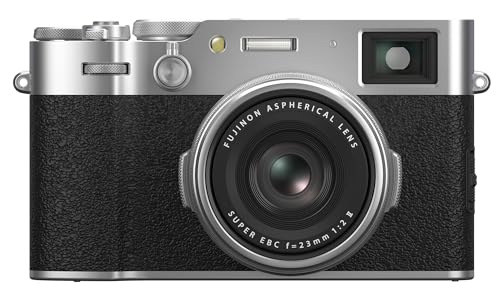
| Fujifilm X100VI | Best camera for earning trust | A quiet, fixed-lens camera that reads as a keepsake rather than an instrument, with a leaf shutter’s hush and files worthy of the access it earns. |
| OM SYSTEM OM-5 Mark II | Best for hard country and long field seasons | Weather-sealed, stabilised and small, with lenses for every distance a field site presents — the camera that survives the season and the walk between villages. |
| Nikon Z30 | Best interview camera for testimony | A small creator body with a flip screen, clean video and microphone input, made for sitting across a table and recording a life story properly. |
| Canon PowerShot G7 X Mark III | Best pocket companion for everyday presence | A true pocket camera with a fast zoom, good video and a microphone input — present at the unplanned moments that define a community’s real life. |
| Sony RX100 VII | Best pocket notebook with real reach | A pocket camera whose zoom and tracking cover ceremonies and public events from a respectful distance, with fast bursts for fleeting ritual moments. |
| DJI Osmo Pocket 3 | Best for filming craft and process | A pocket gimbal that films a potter’s hands, a weaver’s loom or a cook’s fire with floating steadiness while the maker’s voice explains the work. |
How Did We Choose Cameras for Ethnographic Fieldwork?
We began with the encounter rather than the image. Each pick was imagined in the situations ethnography actually consists of — the kitchen-table interview, the workshop visit, the festival where the researcher is a guest, the months-long return to the same village or neighbourhood — and judged on whether its presence helps or taxes those encounters. Cameras that announce themselves with bulk, noise or a news-crew silhouette were set aside regardless of their sensors, because a technically superior camera that closes doors produces inferior ethnography.
The second filter was the record’s completeness. Ethnographic evidence is as much voice as image: testimony, ambient sound, the song half-remembered and then recalled. We favoured cameras that accept proper microphones, monitor or at least meter audio honestly, and record for the length of a real conversation without heat or battery drama. Stills quality mattered in its fieldwork form — available-light competence, honest colour for skin and textiles, files that print well for return to participants.
Finally we weighed endurance in the field’s real conditions: dust, humidity, long walks between sites, unreliable charging, and weeks when the camera is carried daily and used opportunistically. Weather sealing, battery economy, pocketability and the ability to work entirely without a phone’s assistance all counted. The six below are the cameras we would put in a researcher’s bag knowing the bag will be opened in other people’s homes — the most demanding review environment in all of photography.
We also weighed a factor rarely printed in buying guides: how a camera ages inside a community’s memory. The body that was present at the naming ceremony, that printed the grandfather’s portrait for the wall, that recorded the last speaker of a dialect with care — that body becomes part of the project’s story, welcomed in doorways before its owner is. Equipment acquires biography in long fieldwork, and the six cameras here were chosen partly for their capacity to acquire a good one: unthreatening in form, generous in output, and reliable enough never to be remembered for a failure at a moment that mattered.
Readers trained on conventional reviews may wonder at the absence of resolution races and burst-rate contests in the method above. The omission is deliberate and defensible: across a field season, the difference between a welcomed camera and an endured one will decide a hundred encounters, while the difference between two excellent sensors will decide almost none. Ethnography is the genre where photography’s social physics outrank its optical physics, and this guide has simply ranked its cameras the way the field itself will rank them — by what they do to the room they enter.
Which Six Cameras Belong in a Fieldworker’s Bag?
The Fujifilm leads on trust and ritual, the OM SYSTEM body on endurance in hard country, and the Nikon and Canon compacts on interviews and everyday presence. The Sony is the notebook that zooms, and the DJI gimbal films hands and processes without a crew. Together they cover the ethnographer’s real week: testimony, craft, ceremony and the walk between them.

Fujifilm X100VI — Best camera for earning trust
Every ethnographer learns the X100VI’s central lesson within a week: people relax around it. The fixed lens removes the professional theatre of changing glass, the body resembles the family cameras of a previous century more than it resembles a news rig, and its leaf shutter is so quiet that a portrait can be made inside a conversation without the conversation noticing. In fieldwork those are not aesthetic pleasures but methodological instruments — the difference between a community performing for a camera and a community continuing its life in front of one.
The images repay the access handsomely. A large APS-C sensor behind a fast fixed lens handles the interiors where ethnography lives — kitchens, workshops, shrines, bars — with honest colour that treats skin, cloth and food with respect, and the film simulations produce finished photographs that can be printed and handed back on the next visit without an editing suite in between. That reciprocity loop, photograph given rather than merely taken, is the engine of long-term fieldwork, and no camera here closes it faster.
Its limits are the fixed lens’s honest ones: your feet do the framing, groups in small rooms and details across courtyards both ask compromises, and the camera’s fashionable scarcity has made it a considered purchase. The built-in flash and close-focus ability quietly serve the documentation of objects and documents. For the researcher whose project depends on being welcomed back — which is to say, every serious project — the X100VI is not merely the best camera in this guide; it is close to a fieldwork method in itself.
Fieldworkers should learn its quietest configuration before arrival: electronic shutter options where appropriate, sounds and lights minimised, and the film simulation chosen to match how the community will receive prints — colour for most family purposes, the gentler palettes for elders who remember photography as a slower art. Arrive with prints from the journey or from previous visits already in the bag, and the camera’s first act in the community is a giving rather than a taking. That ordering, small as it sounds, is remembered long after the equipment is forgotten.
- Fixed wide lens with fast aperture for interiors
- Near-silent leaf shutter
- Large APS-C sensor with film simulations
- Built-in flash for document and object work
- Compact body that reads as a personal camera
Strengths
- Lowers the social temperature of photography
- Quiet enough for ceremonies and interviews
- Prints for participants straight from camera
Trade-offs
- Fixed lens demands footwork and compromise
- No interchangeable-lens growth path
- Availability can require patience
Best for: long-term community fieldwork, portraits and everyday-life documentation.
Not suited for: researchers needing telephoto reach across public events.

OM SYSTEM OM-5 Mark II — Best for hard country and long field seasons
Some ethnography happens in cafés; the rest happens where the weather, the dust and the road are part of the data. The OM-5 Mark II is the pick for that second kind: a sealed, compact body that shrugs at rain on a mountain path and dust in a brickworks, stabilisation that keeps working when the light fails in an unlit interior, and a lens system whose small, affordable optics cover everything from a cramped dwelling to a ceremony photographed respectfully from its edge. It is the camera least likely to be the reason a field day failed.
The format’s virtues compound over a season. Batteries and lenses are small enough to carry in depth, the whole kit crosses a day’s walk without becoming the story, and computational features — composite night modes, high-resolution capture for documenting artefacts and architecture — serve the recording of material culture that written notes describe badly. Audio through an external microphone turns it into an interview instrument when the testimony matters more than the image.
Against it: the smaller sensor asks more of high-sensitivity settings in the darkest interiors, and the system’s menus reward the researcher who configures the camera before the season rather than during the interview. Neither dents its standing as the fieldworker’s expedition camera. When the project is measured in months, altitudes and monsoons rather than in afternoons, the OM-5 Mark II is the body we would insure, pack and trust.
Prepare it as expedition infrastructure: two lenses chosen for the season rather than the catalogue, cards and batteries counted like rations, and the interview configuration — microphone, levels, a tested headphone check where the setup allows — rehearsed before the first elder is asked to sit down. Researchers who treat the camera as infrastructure find it disappears into the work; researchers who treat it as a gadget find it interrupting at the exact moment testimony turns irreplaceable, which in fieldwork is the only moment that matters.
- Weather-sealed compact body
- Powerful stabilisation for interiors
- Small lenses covering wide to telephoto
- Computational modes for artefacts and scenes
- External microphone support for testimony
Strengths
- Survives the field’s weather and dust
- Full lens range in a walkable kit
- Doubles as an interview recorder
Trade-offs
- Dark interiors tax the smaller sensor
- Menus reward pre-season configuration
- Small controls with gloves in cold country
Best for: rural, mountain and long-season fieldwork in real weather.
Not suited for: studio-based researchers who never leave good light.

Nikon Z30 — Best interview camera for testimony
Ethnography’s core technology is the interview, and the Z30 is the interview’s camera in this guide. It sits small on the table, its screen flips so a lone researcher can confirm framing before the conversation begins, and its microphone input accepts the lapel or table microphone that makes testimony intelligible rather than atmospheric. An elder’s account of a vanished trade, recorded cleanly for two hours and archived properly, is worth more to the discipline than a thousand atmospheric frames — and this little body is built to gather exactly that.
The video it gathers is clean and honest, with autofocus that keeps a speaker’s face gently held while hands and expressions do the communicating, and colour that treats people kindly without cosmetic deceit. As a stills camera it covers the interview’s context — the room, the tools on the wall, the photograph within the photograph — with the competence of Nikon’s APS-C system and access to its growing small-lens range.
Its omissions are the creator class’s usual ones: no viewfinder for bright courtyards, weather sealing that should not be tested against a storm season, and stabilisation that leans on lenses. None of these touches its central purpose. For the oral historian, the linguistic fieldworker and the anthropologist whose evidence is voice, the Z30 paired with a good microphone is the most consequential purchase in this entire guide — the archive will thank it for decades.
Build the interview ritual around it and keep the ritual identical across the whole project: same table position, same microphone, same opening explanation, same closing offer to hear the recording. Consistency is not sterility — it is what lets a hundred hours of testimony from different speakers sit together in one archive, comparable and citable, and it frees the researcher to listen wholly because the technical decisions were made once, well, in advance. The Z30’s simplicity is what makes that ritual sustainable for a lone fieldworker.
- Compact body with fully articulating screen
- Microphone input for interview microphones
- Clean, long-form video recording
- Reliable face autofocus for speakers
- Access to Nikon’s small DX lenses
Strengths
- Purpose-shaped for recorded testimony
- Unintimidating table presence
- Simple enough for solo researchers
Trade-offs
- No viewfinder for bright exteriors
- Limited weather sealing
- Stills secondary to its video brief
Best for: oral history, linguistic fieldwork and interview-led research.
Not suited for: expedition stills work in severe weather.

Canon PowerShot G7 X Mark III — Best pocket companion for everyday presence
Fieldwork’s most valuable photographs are rarely scheduled. They happen at the bus stop, in the queue, during the joke after the interview ends — and they belong to whichever camera is actually in the researcher’s pocket at that second. The G7 X Mark III is that camera perfected: genuinely pocketable, quick to wake, with a fast zoom that handles interiors and street scenes alike, and video credentials — including a microphone input rare in its class — that let the pocket companion record testimony when the main kit is in another building.
Its social profile is its superpower. Nothing about it reads as professional equipment; it is the camera a tourist, a grandchild or a friend would carry, and communities respond to it accordingly. The photographs it makes in that atmosphere — unguarded, mid-laughter, mid-work — are the ones that later anchor the ethnography’s claim to have seen life rather than its performance. The flip screen serves the researcher’s own field notes-to-camera, an increasingly standard diary method.
Judged as a main camera it has honest ceilings: the small sensor works harder in dark interiors, battery life wants a spare in the other pocket, and it will not survive the expedition abuse the OM-5 shrugs off. But ethnography is a team sport among cameras, and as the ever-present second — the notebook that happens to take excellent photographs — the G7 X III earns a permanent pocket in the fieldworker’s coat.
Exploit its diary function deliberately: a sixty-second note-to-camera at each day’s end, filmed on the G7 X in the room where the notebooks are written, captures the hesitations, excitements and corrections that written fieldnotes flatten. Months later those small films re-teach the researcher what the season felt like from inside, and they cost nothing but the habit. A pocket camera’s highest ethnographic use may be this turning of the lens, briefly and honestly, on the research itself.
- True pocket size with fast zoom lens
- Microphone input unusual in its class
- Flip screen for notes-to-camera
- Quick start for unplanned moments
- Good video for pocket testimony
Strengths
- Present at the moments that matter most
- Socially invisible in any company
- Video and audio beyond its size class
Trade-offs
- Small sensor strains in dark interiors
- Battery life needs a carried spare
- Not built for expedition punishment
Best for: daily-presence documentation alongside a main field camera.
Not suited for: sole-camera use on long, harsh expeditions.

Sony RX100 VII — Best pocket notebook with real reach
Respect in ethnography is sometimes a matter of metres: the ceremony the researcher may witness but not enter, the procession best documented from its edge, the wildlife or livestock practice where presence itself is disturbance. The RX100 VII serves those metres from a pocket. Its zoom reaches across a courtyard or a festival ground, its tracking autofocus holds a moving subject through the crowd’s interruptions, and its burst speed gathers the fleeting gesture — the offering raised, the mask turned — that a slower camera would describe from memory.
The body remains socially negligible while doing this professional work, which is the combination the whole guide is hunting. One-inch-sensor files print respectably for community return and archive well for publication’s smaller reproductions, and the tilting screen allows waist-level shooting that reads as casual observation rather than as targeting. For the fieldworker documenting public culture — festivals, markets, street economies — it is often the only camera that needs to leave the guesthouse.
Its costs are miniature controls, a battery that rewards spares on festival days, and low-light limits that the bigger bodies here outlast. The zoom’s far end, while genuinely useful, will not replace a telephoto system for distant wildlife-centred research. Within its brief — the pocketable witness for public and ceremonial life — it has no equal in this guide, and many fieldworkers will find it quietly becoming their most-used camera of the entire season.
For festival and market work, preset its manners: tracking area wide, burst ready, screen brightness set for the day’s glare, and a spare battery riding in the pocket the camera does not occupy. Public events reward the prepared disproportionately, because their decisive gestures are unrepeatable and their crowds forgive no fumbling. The researcher who has rehearsed the little Sony’s few controls can stand at the procession’s edge as a calm witness rather than as a technician, and calm witnesses are shown more of the day than anxious ones.
- Pocket body with zoom reaching 200mm equivalent
- Tracking autofocus and fast bursts
- One-inch sensor for printable files
- Tilting screen for discreet waist-level work
- Pop-up viewfinder for bright festivals
Strengths
- Respectful distance without a telephoto rig
- Ceremonial moments caught at burst speed
- Socially invisible while working professionally
Trade-offs
- Miniature controls and battery appetite
- Low light trails the larger bodies
- Reach is useful, not expedition-grade
Best for: festivals, markets, ceremonies and public-culture documentation.
Not suited for: wildlife-centred research at true telephoto distances.

DJI Osmo Pocket 3 — Best for filming craft and process
Much of what ethnography knows is held in hands: the potter’s centreing pressure, the net-mender’s knot, the baker’s judgement of a crust. Filming embodied skill is the Pocket 3’s gift to the discipline. Its gimbal floats over the workbench at distances a tripod cannot occupy, tracks the moving hands without an operator’s tremor, and starts in seconds when the maker says ‘watch, it goes like this’ — the sentence that precedes most of the knowledge worth recording. The result is process footage of a quality that once required a film crew, made by a guest holding something the size of a spoon.
The maker’s voice completes the record, and the Pocket’s ecosystem of small wireless microphones serves it well: clip the microphone to the apron, let the hands work, and the commentary synchronises itself to the gesture in a way no later interview can reconstruct. Back at the desk, that footage becomes the discipline’s gold — evidence that can be re-watched, coded, shown to the community and archived beside the written account.
Its boundaries are a fixed lens, fair-weather construction and low light that is competent rather than miraculous; the loom in the dark barn will want the OM-5 or a light you bring yourself. It also films so easily that consent discipline must be deliberate — the camera’s unobtrusiveness is an ethical responsibility, not a loophole. Used with that discipline, the Pocket 3 records the dimension of culture that notebooks have mourned for a century: not what people say they do, but what their hands actually know.
Consent with the Pocket deserves its own sentence in your field protocol, because a camera this small and quiet can record a workshop almost invisibly — which is precisely why its use must be announced, agreed and periodically re-agreed as new people enter the room. Post a small note where the filming happens, name the project aloud when the red light starts, and let anyone pause it without ceremony. The trust that survives a season of such courtesies is the real recording medium; the gimbal merely serves it.
- Mechanical gimbal for floating process footage
- Subject tracking that follows working hands
- Rotating screen for quick framing
- Wireless microphone ecosystem for commentary
- Starts in seconds, pocketable always
Strengths
- Films craft and process like a small crew
- Maker’s voice captured at the workbench
- Unobtrusive enough for workshops and kitchens
Trade-offs
- Fixed lens and fair-weather build
- Dark interiors need brought light
- Ease of filming demands consent discipline
Best for: craft documentation, foodways and embodied-skill research.
Not suited for: storm-season expedition filming.
How Should a Fieldworker Approach Consent and the Camera?
Treat consent as the research itself in miniature: a relationship, renewed at each stage, rather than a signature harvested at the gate. Explain in the community’s own terms what the camera is for, where the images will live, who will see them and what will return. Photograph people first as collaborators — show them the screen, print for the family, delete without argument when asked — and let the camera’s presence be negotiated openly, because the negotiation itself teaches you how the community understands images, privacy and memory, which is to say it is data of the richest kind.
Different scenes carry different consents. The public festival, the market and the street operate under one set of local understandings; the home, the ceremony and the sickroom under far stricter ones, and the researcher’s job is to learn each boundary from the people who own it rather than from a handbook. Children, grief, ritual restriction and political vulnerability all raise the standard further. When in doubt, the camera stays in the pocket and the notebook does the work — a season’s trust is worth more than a day’s frame.
Remember also that consent extends into the archive’s future. Record who agreed to what, store restrictions with the files themselves, and think honestly about audiences not yet imagined — the community’s grandchildren, the internet’s permanence — before publishing anything intimate. The cameras in this guide were chosen partly because they make restraint easy: small, quiet and pocketable, they can be put away in a gesture, and in ethnography the put-away camera, deployed at the right moment, is an ethical instrument as surely as the raised one.
How Do You Record Interviews That an Archive Will Thank You For?
Begin with sound, because testimony is sound. The camera’s microphone, however decent, sits at the wrong end of the table; a small recorder or a lapel microphone near the speaker transforms an afternoon’s talk from atmosphere into evidence. Choose the quietest room the house offers, silence the refrigerator and the television without apologising for the fuss, and record a minute of the room’s own silence — archivists and editors both bless that minute when the interview is transcribed and cut.
Manage the session like a guest rather than a technician. Set the camera — the Z30 was chosen for exactly this — confirm framing and levels once, then put your attention wholly on the person, because testimony follows attention the way plants follow light. Note timecodes for the stories that matter instead of interrupting them, ask the question and then out-wait the silence that follows it, and let the recording run through the laughter and the tea; the archive’s treasures are disproportionately found in the minutes after the formal answer ends.
Afterwards, do the unglamorous work the same week: back up in two places, name files with the speaker, place and date, log consent and restrictions while they are fresh, and transcribe or at least index the material while the conversation still lives in your memory. An interview that cannot be found, attributed or legally used in ten years was a pleasant afternoon, not fieldwork. The discipline’s memory is built from exactly these clerical mercies, performed faithfully when nobody is watching.
What Should a Visual Fieldwork Kit Contain Beyond the Camera?
Carry the means of reciprocity: a small instant or portable printing option, or a standing arrangement with a local print shop, so that photographs return to the people in them within the visit rather than in a promised future. Add a notebook that works when batteries do not, spare storage treated as sacred, a headlamp for the interiors and paths of real field sites, and a modest audio recorder as the interview system’s understudy — because the day the main recorder fails will be the day the eldest speaker finally agrees to talk.
Pack for the archive from the first day. Folders, naming habits and consent logs are equipment as surely as lenses are, and the fieldworker who treats them so returns home with material that can be written from, exhibited and deposited. Include the community in the packing list too: copies of previous visits’ photographs, the local research assistant’s preferred prints, and small gifts that acknowledge the economy of hospitality you are living inside. Ethnography’s kit list has always been half social.
Finally, carry less camera than your ambition suggests. Two bodies from this guide — say the X100VI for trust and the Pocket 3 for process, or the OM-5 for the season and the G7 X for the pocket — cover the discipline’s real needs with room left for the prints, notebooks and gifts that make the work welcome. The over-equipped fieldworker spends the season managing equipment; the rightly equipped one spends it being taught. Choose the second season.
How Do You Write With Photographs Rather Than Merely Illustrate With Them?
Begin by reviewing the season’s images as evidence rather than as trophies: sort them by what they show about work, kinship, exchange and belief, and let the gaps in the sort interrogate your fieldwork — the process never filmed, the room never entered, the generation missing from the frame are findings about access and attention, not just missing pictures. Photographs taken with a method become arguments; photographs taken as souvenirs become decoration, and the difference is visible to every reader of the finished ethnography.
Sequence and caption with the same care as prose. A caption that names people as they name themselves, places the scene in its own terms and admits the photographer’s position is scholarship; a caption that exoticises is a small betrayal filed permanently beside the image. Where the community’s own readings of a photograph differ from yours, print both — the disagreement is often the most honest paragraph in the chapter, and the cameras in this guide, by making images collaboratively, generate exactly those productive disagreements.
Return, finally, is also a writing practice. The exhibition in the village hall, the printed album for the workshop, the archive copy deposited locally — these are publications in the full sense, and they discipline the metropolitan ones that follow. An ethnography that has already been read, corrected and argued with by the people it describes arrives in the world with a authority no peer review can confer. The camera’s job, in the end, is to make that return possible; everything in this guide was chosen in that job’s service.
How Do You Photograph Material Culture and Place?
Objects and buildings carry ethnographic evidence that interviews describe imperfectly: the wear on a tool’s handle, the arrangement of a shrine shelf, the additions a house accumulates across generations. Photograph them with the same deliberateness as portraits — plain backgrounds where the object allows, a scale reference agreed with its owner, the maker’s hands beside the work for the shots that will teach proportion — and record the owner’s account of the object in the same session, while the thing itself can correct the story. The OM SYSTEM’s high-resolution modes and the Fujifilm’s close focus both serve this patient documentation well.
Place deserves the same doubled attention. Photograph the field site at its working hours rather than its picturesque ones, return to the same viewpoints across the season so change becomes visible, and include the unlovely infrastructure — the road, the depot, the new concrete — that residents themselves argue about. An ethnography whose places are all golden-hour heritage has documented a brochure; one whose places include Tuesday has documented a world. The cameras in this guide, being quick and unpretentious, are built for Tuesdays.
Finally, photograph with the archive’s future readers in mind: the wide establishing frame, the working middle distance and the telling detail, taken as a deliberate trio for every important scene and object. Editors, exhibitors and the community’s own historians will all reach for that trio across the decades, and the fieldworker who shoots it as a habit returns home with a visual record that can carry arguments, not just illustrate them. It costs three frames per subject. There is no cheaper scholarship in this entire guide.
What Does a Good Fieldwork Day With a Camera Look Like?
It starts before the camera leaves the bag, with the visit itself: the greeting done properly, the previous photographs delivered, the day’s intentions explained in a sentence and genuinely opened to refusal. Only then does the equipment appear, and by then it has been framed by the relationship as a tool of the visit rather than as its purpose. Researchers who keep that order find the camera welcomed into kitchens and workshops that a more hurried arrival would have photographed only from the doorway, if at all.
The middle of the day belongs mostly to listening, with the camera working in short, unremarkable bursts — the interview recorded at the table, the process filmed at the bench, the pocket camera appearing for the joke, the tool, the sudden weather. Nothing is staged and little is directed; the fieldworker’s skill is recognising the moments when a frame or a recording will carry evidence, and letting the rest of life proceed unphotographed with equal respect. Restraint, practised visibly, is what purchases the community’s ease with the moments you do record.
The day closes with the clerical mercies performed while the light lasts: files copied, names and consents logged, prints selected for tomorrow’s delivery, and the notebook written before sleep rearranges the day into a tidier fiction than the one that happened. A season of such days compounds into the thing ethnography actually is — a trusted, documented, returnable account of a world — and the cameras in this guide earn their places by fitting into that rhythm without ever once becoming its centre.
How Do the Six Compare for Fieldwork?
Read the table by research design: trust-led projects start with the Fujifilm, expedition projects with the OM SYSTEM, testimony-led projects with the Nikon, and every project benefits from one true pocket camera — Canon or Sony — plus the DJI when process and craft are the subject.
| Pick | Badge | At a glance |
|---|---|---|
| Fujifilm X100VI | Best camera for earning trust | Fixed-lens trust-builder; the quietest serious camera in the guide. |
| OM SYSTEM OM-5 Mark II | Best for hard country and long field seasons | Sealed field camera; survives weather, dust and long walks between sites. |
| Nikon Z30 | Best interview camera for testimony | Compact interview body; flip screen and microphone input for testimony. |
| Canon PowerShot G7 X Mark III | Best pocket companion for everyday presence | Pocket camera with fast zoom; present for the unplanned moments. |
| Sony RX100 VII | Best pocket notebook with real reach | Pocket zoom for ceremonies covered from a respectful distance. |
| DJI Osmo Pocket 3 | Best for filming craft and process | Pocket gimbal for filming process, craft and embodied skill. |
What Mistakes Do Beginning Ethnographers Make With Cameras?
The extractive mistake comes first because it ends projects: arriving with a large camera, harvesting images and testimony, and vanishing into a publication the community never sees. Beyond its ethics, it is simply bad method — the second visit, when the real knowledge is shared, never happens to the extractive researcher. Every choice in this guide, from quiet shutters to printable files, assumes the opposite economy: photographs given, recordings returned, relationships maintained across years. Buy into that economy or choose a different discipline.
The spectacle mistake follows: photographing only the festival, the costume and the ceremony, while the Tuesday-morning reality that constitutes the culture goes unrecorded because it looks ordinary. Participants notice what you point the camera at, and a researcher who only raises it for the exotic teaches the community to perform the exotic. The pocket cameras in this guide exist to correct the balance — to be present, unremarkable and ready during the ordinary hours where culture actually lives.
The third mistake is technical but fatal to archives: treating audio, naming, consent records and backups as administration to be caught up on later. Later, in fieldwork, is a country that does not exist; the speaker moves away, the card fails, the restriction is forgotten, and the material becomes unusable or unusable-in-conscience. Do the clerical mercies the same day, every day, and the season’s material will still be working for scholarship — and for the community — when the cameras in this guide are antiques.
A fourth mistake is aesthetic and quietly corrosive: making the community look poorer, stranger or more timeless than it is, because that is the visual language journals and feeds reward. The satellite dish cropped out, the smartphone waited out of frame, the modern jacket asked to be removed — each is a small falsification that participants recognise instantly when the photographs return, as they must. Photograph the world as it presents itself, satellite dishes and all; the honesty is the scholarship, and the trust it preserves is the project’s life insurance.
Do not forget the smallest mistake, which is really a habit: reviewing and deleting images in front of participants as a performance of standards. A deleted frame of a person, deleted casually in their presence, teaches the room that your judgement of their likeness is swift and negative. Review in private, keep the outtakes the archive’s ethics allow, and let participants see themselves first in the prints you chose with care. Fieldwork is a long exercise in being watched back; conduct every part of it as if the community’s opinion of the process matters, because it is the process.
Final Recommendation
For the classic long-term project, begin with the Fujifilm X100VI and a good microphone: trust first, testimony second, and let the photographs accumulate at the speed of welcome. Expedition and rural researchers should anchor the bag with the OM SYSTEM OM-5 Mark II, interview-led projects with the Nikon Z30, and every fieldworker should carry one true pocket camera — the Canon for presence, the Sony when ceremonies need reach — with the DJI Osmo Pocket 3 added the moment craft and process become the subject.
Whichever combination you choose, judge it by the discipline’s own metric after the first season: not the sharpness of the files, but whether you were invited back, whether the prints are on the participants’ walls, and whether the archive you deposited can be used with a clear conscience in fifty years. Cameras that pass those tests are the best cameras for ethnography, and the six above were chosen because, in practised and respectful hands, they do.
Pack the prints before the lenses, the microphone before the second body, and the humility before everything. The field will teach the rest, at its own pace, to the researcher whose camera knows how to wait.
One practical closing note: insure the kit, register the serial numbers with your institution, and keep a photographed inventory in the same archive discipline you apply to the fieldwork itself. Equipment lost in the field is a budget problem; equipment whose loss also loses the season’s only copies is a scholarly tragedy. The backups and logs recommended throughout this guide are not fussiness — they are how a lone researcher, far from any institution’s help desk, guarantees that the community’s generosity survives the journey home intact.
Begin the season with the visit, not the photograph: bring prints, bring time, and let the camera earn its introduction. Everything this guide recommends is downstream of that first courtesy, and everything your project becomes will be too.
Choose the camera the community will forget, and do the remembering — carefully, consensually, and in duplicate — yourself.
That division of labour — the camera unnoticed, the researcher accountable — is the whole method, and it has been waiting patiently inside every recommendation above.
Keep it, and the season will keep faith with you in return, visit after visit, year after year.
That reciprocity, more than any file, is the archive your work will ultimately be judged by, everywhere it travels in all the years ahead.
Frequently Asked Questions
Do I need permission to photograph people for ethnographic research?
In almost every serious context, yes — informed consent is the discipline’s foundation, quite apart from local law, institutional ethics review and community authority, any of which may set stricter terms. Consent should cover the taking, the keeping and the eventual showing of images, be renewed as uses change, and be withdrawable without penalty. When consent is ambiguous — crowds, children, ceremonies — ask the relevant hosts and elders, and let their answer, not your deadline, decide.
Is a phone enough for ethnographic fieldwork?
A phone is a legitimate field notebook and many researchers use one daily, but a dedicated camera from this guide adds what phones lack for this work: a microphone input and proper audio discipline, a presence that reads as intentional rather than casual, battery and storage independence across long field days, and files that print and archive at publication quality. The deeper reason is social — a camera signals a considered practice that participants can negotiate with, while a phone blurs the boundary between research and everyday life in ways communities do not always welcome.
How do I photograph ceremonies without intruding?
Arrive as a guest first and a photographer second: attend once without the camera if the relationship allows, ask the officiants where a photographer may stand and what must not be recorded, use the quietest tool you own — the X100VI’s leaf shutter or the RX100 VII from the edge — and stop the moment your presence becomes part of the event. Afterwards, offer the images to the hosts before anyone else sees them. Some ceremonies should simply not be photographed, and accepting that gracefully is itself a finding about the culture’s values.
What should I do with the photographs after the fieldwork ends?
Return them, archive them properly, and publish them under the terms agreed. Returning means prints or files delivered to participants and a copy deposited where the community can reach it, not merely a link to a distant journal. Archiving means named, dated, consent-logged files in stable storage. Publishing means honouring every restriction recorded — including restrictions on images of the deceased that some communities observe — even when the perfect illustration sits behind the restriction. The archive is a promise; keep it like one.
How important is audio compared with images in ethnography?
For most projects, audio is the senior partner: testimony, language, music and ambient sound carry the meanings that writing will later argue from, while images anchor memory and evidence. That is why this guide weights microphone inputs and interview stamina so heavily, and why a modest camera with excellent recorded sound outranks a superb camera with neglected audio. Budget for the microphone before the second lens; the archive you build will justify the order for the rest of your career.
Can these cameras handle academic publication and exhibition?
Yes. Every pick here produces files that print at the sizes ethnographies and community exhibitions actually use, and several — the Fujifilm and OM SYSTEM bodies especially — produce work that hangs comfortably in gallery contexts. Publication standards in this discipline judge the image’s honesty, context and consent documentation at least as heavily as its resolution, and a smaller file with a complete ethical record will always outrank a vast file with a questionable one.
Related Guides
Neighbouring crafts share this guide’s values; explore them in our companion pieces: best cameras for documentary photography best cameras for travel photography best cameras for interviews


