ilcastellomenu.com is reader-supported. When you buy through links on our site, we may earn an affiliate commission.
Where to Buy
The best cameras for vintage videography are really answers to a question about honesty: do you want footage that looks old, or footage that is old? Modern bodies can dress a wedding, a music video or a family film in the grain, colour drift and softness of another decade with astonishing conviction — and that digital emulation is the right tool for most productions, repeatable, affordable and kind to deadlines. But some makers want the real artefact: the hiss and tracking errors of a tape camcorder, the gate weave of genuine film, imperfections no filter fully predicts. This guide serves both, and labels each route truthfully.
So the picks divide openly into two families. The digital impersonators — Fujifilm’s simulation-led bodies chief among them, plus the instant cameras that make physical artefacts — deliver the vintage look inside a modern workflow. The true ancestors, the tape camcorders and film cameras of the decades being imitated, appear as prose-only picks, because they are bought used, serviced by specialists and chosen by serial number and condition rather than by any current listing. No honest guide can sell you a 1984 camcorder with a straight face and a shopping link, and this one does not try.
Why chase the look at all? Because vintage texture is emotional shorthand. Grain tells the viewer a memory is being handled; soft edges and drifting colour forgive the present and invite the past tense. Music videos borrow it for longing, wedding filmmakers for timelessness, families for the feeling that a new baby is already part of an old story. Choose your route by how much unpredictability your production can afford — emulation for the client deadline, the real machines for the personal project — and let the sections below make the trade-offs vivid before any money moves.
Key Takeaways
- Decide first between the vintage look, achieved digitally and repeatably, and genuine vintage capture on tape or film.
- Fujifilm’s film simulations are the strongest in-camera route to a period look without post-production.
- Instant cameras produce physical artefacts with real chemical unpredictability, though their video role is companion rather than main camera.
- Genuine camcorders and film cameras are prose-only here: bought used, condition-dependent and serviced by specialists.
- Tape and film workflows cost time and money per minute, which suits personal projects better than client deadlines.
- Mixing routes — digital masters with genuine-format inserts — gives most productions the look with the safety net.
In this guide
Quick Picks
| Camera | Badge | Why it earns its place |
|---|---|---|
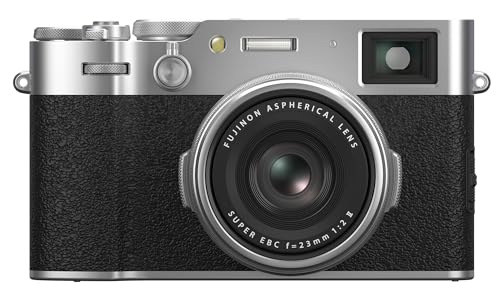
| Fujifilm X100VI | Best digital vintage-look camera | Film simulations and a fixed classic lens in a body that feels like the era it imitates. |
| Fujifilm X-T5 | Best system body for vintage productions | The full simulation suite plus interchangeable lenses for a vintage look at production scale. |
| Fujifilm Instax Mini 12 | Best instant companion for vintage-flavoured shoots | Real chemical prints on the day — physical artefacts that anchor a vintage production’s world. |
| Polaroid Go Generation 2 | Best pocket instant for retro productions | The tiny Polaroid — iconic format in miniature for behind-the-scenes and in-film artefacts. |
| A Working VHS or Video8 Camcorder | Best genuine tape route — prose-only | Real tape texture, tracking quirks and era-authentic handling, bought used and serviced with care. |
| A Super 8 Film Camera | Best genuine film route — prose-only | Real film grain, gate weave and per-second cost discipline from the classic home-movie format. |
How Did We Choose Cameras for a Vintage Video Look?
We judged the digital picks by the quality and control of their impersonation: does the look live in the capture, adjustable and consistent, or is it a filter slapped on afterwards? Film simulations with grain, highlight behaviour and colour character modelled on real stocks scored highest, because a look baked coherently into footage survives editing and grading in a way that phone-app nostalgia does not. We also weighed how each body behaves as a modern camera underneath the costume — autofocus, stabilisation, audio — since a vintage-styled production still has a schedule to keep.
The genuine-format picks were chosen as representatives of their eras rather than as shopping recommendations: the VHS and Video8 camcorder for the home-movie decades, the Super 8 camera for the silent-film grain of family archives. Their inclusion is educational and practical — what they cost to run, what breaks, what the footage truly looks like — so a reader seduced by the aesthetic can meet its logistics before falling in love. Instant cameras bridge the families: real chemistry, modern availability, and a supporting role in vintage-flavoured productions.
What Actually Makes Footage Look Vintage?
Break the look into its ingredients and the mystique becomes a recipe. Grain: the dancing texture of film emulsion or tape noise, overlaying the image with life. Colour: the drifted palettes of ageing stocks and consumer tape — lifted shadows, wandering whites, reds that bloom. Softness: lenses and formats that never resolved modern sharpness, so edges melt rather than cut. Motion character: the interlaced shimmer of video tape, the gate weave and flicker of projected film, frame rates that differ from today’s defaults. And artefacts: dropouts, tracking lines, light leaks, the honest damage of physical media ageing in real time.
Each ingredient can be emulated, and the best digital tools emulate several at once with internal consistency. What emulation still struggles to counterfeit is consequence: real tape degrades a little more each playback, real film costs money for every second and therefore changes how its operator shoots — fewer takes, more intention, accidents preserved because reshooting was unaffordable. Many makers discover that this discipline, not the grain, is what they were actually nostalgic for. The picks below let you buy the look, rent the discipline through a film project’s budget, or — wisest of all — combine them knowingly.

Fujifilm X100VI — Best digital vintage-look camera
If the vintage look is the assignment and the deadline is real, the X100VI is the most convincing impersonator in this guide. Its film simulations are not novelty filters but decades of colour science — palettes modelled on the stocks that shot the twentieth century — and its grain and highlight behaviour can be tuned until footage settles into a period mood that survives a full production. The fixed lens enforces the era’s discipline for free: one focal length, feet as the zoom, compositions found by walking exactly as the photographers being imitated once did.
The body itself participates in the aesthetic. Its rangefinder styling, analogue dials and leaf-shutter quietness change how its owner shoots and how subjects respond to being filmed — people relax before a camera that looks like a family heirloom rather than a broadcast rig. For wedding filmmakers it slips into a celebration unnoticed, gathering the grain-kissed, timeless-feeling footage that couples describe as ‘like a film of my grandparents, but it’s us’. That sentence is the entire vintage market, and this camera earns it honestly, as emulation, labelled as such.
Under the costume it is thoroughly modern: hybrid autofocus, stabilisation, capable video and digital files that slot into a professional workflow without digitising suites or prayer. The vintage production keeps its safety net — the look can be strengthened or softened in the grade, the audio is recorded properly, the day is not hostage to a forty-year-old mechanism. For client work, that reversibility is the difference between an aesthetic and a gamble.
Choose it as the main camera of a vintage-styled practice, or as the character body beside a neutral main camera. It will not give you tape’s decay or film’s cost discipline, and its fixed lens refuses certain shots on principle. What it gives is the look, reliably, at professional quality, on schedule — which is what most people searching this keyword actually need, once the romance is priced.
- Format: fixed-lens premium compact, rangefinder style
- Looks: film simulations with tunable grain
- Lens: classic fixed focal length, feet as zoom
- Workflow: modern files, reversible in the grade
- Role: main camera for vintage-styled productions
Strengths
- The period look, delivered on deadline
- Subjects relax before its heirloom styling
- Modern reliability beneath the costume
Trade-offs
- Fixed lens refuses some shots
- Emulation, not genuine media decay
- In heavy demand, so patience to buy
A wedding filmmaker’s signature package pairs this body’s footage with a neutral main camera: the ceremony covered safely, the couple’s portraits and the evening’s dancing rendered in its nostalgic register. Couples consistently choose those sequences as their favourites — the look doing emotional work no resolution chart can measure.
Street and travel makers claim it for a subtler reason: the camera’s vintage styling disarms. Filming strangers with a broadcast-looking rig raises shoulders; this heirloom-shaped object lowers them, and the resulting footage — unguarded, amused, willing — carries a period warmth that begins in the encounter rather than in the grade. Documentary makers working in a nostalgic register call that social camouflage the body’s most valuable specification, and it appears on no chart.
Best for: weddings, music videos and brand films needing a repeatable vintage look. Not suited for: purists who want genuine tape or film artefacts

Fujifilm X-T5 — Best system body for vintage productions
Where the X100VI is a single beloved instrument, the X-T5 is the vintage production’s workshop. The same celebrated simulations live here, but interchangeable lenses let the director choose period character optically as well as digitally: a soft vintage prime for the dream sequences, a cleaner modern zoom for the coverage that must simply be competent. For a filmmaker building a whole feature, series or wedding season in a period register, that flexibility turns a look into a language with more than one word.
Its dial-led body suits the deliberate pace vintage aesthetics encourage — settings made by hand, exposures considered — while its video specification handles professional delivery without apology. Paired with adapted older lenses, a thriving practice among vintage shooters, it becomes a hybrid across decades: twenty-first-century reliability wearing twentieth-century glass, the flaws of the old optics — flare, softness, swirling edges — captured faithfully by a sensor that forgives nothing and therefore preserves everything.
That adapted-lens route deserves its honest footnotes. Manual focus becomes the operator’s job, character varies copy by copy, and the look, once chosen, is baked into the footage far less reversibly than a simulation. Productions use it for hero sequences rather than entire schedules, keeping the simulation-led coverage as the safety layer. The X-T5’s virtue is hosting both strategies in one body, letting a director grade the risk shot by shot.
Recommend it to the filmmaker whose vintage work is becoming a practice: the wedding studio with a film-look package, the music-video director with a period signature, the narrative maker whose next three projects share a decade. It concedes the X100VI’s purity and portability, and gains the system depth a growing body of work demands. Between them, the two Fujifilms are this guide’s digital answer, and for most readers they are the whole answer.
- Format: APS-C mirrorless, dial-led
- Looks: full simulation suite in camera
- Lenses: modern and adapted vintage glass
- Control: physical dials for deliberate work
- Role: vintage production system body
Strengths
- Period character chosen lens by lens
- Hosts simulations and real vintage glass
- Professional delivery underneath the look
Trade-offs
- Adapted lenses mean manual everything
- Baked lens character resists reversal
- Larger kit than the fixed-lens sibling
A music-video director’s period trilogy — three artists, one visual decade — was anchored on this body, simulations standardising the look while adapted primes gave each video its own optical accent. Critics praised the consistency; the director praises the insurance of a modern workflow under period clothing.
Its second career is as the stills camera of a vintage production, holding one visual signature across the film and the photographs that accompany it — the poster, the album cover, the couple’s framed print. Productions built on a look increasingly deliver in both media, and a system body whose simulations govern both keeps the world coherent without a second colour pipeline. Coherence, across every artefact a client receives, is what turns a style into a brand.
Best for: vintage-look practices, wedding studios and period narrative work. Not suited for: one-camera minimalists who want a single fixed tool

Fujifilm Instax Mini 12 — Best instant companion for vintage-flavoured shoots
An instant camera in a videography guide needs its role stated plainly: the Instax Mini 12 does not shoot the film. It makes the artefacts the film is about. On a vintage-styled production its prints become props with genuine chemistry — the couple’s first photograph developing during the wedding film, the band’s dressing-room wall accumulating across a tour documentary, the physical evidence of the day that digital files, however graded, cannot counterfeit because these objects were actually there, ageing in real light.
That authenticity is chemical, not simulated. Each print is a small original, its colours drifting by temperature and luck, its white border inviting handwriting — dates, jokes, the names of people who will matter in forty years. Vintage aesthetics are ultimately about artefacts and memory, and a production that weaves real instant prints through its digital footage grounds the nostalgia in something the audience can sense is true. Wedding and documentary filmmakers use it exactly this way: a supporting instrument with an irreplaceable line.
Its operation could not be simpler, which is the point — anyone at the event can be handed it, and the resulting prints carry the unposed energy that directed photography misses. Film cost per print enforces a gentle discipline of its own: ten frames in a pack make each one a decision, a miniature of the film-era economics this guide discusses elsewhere. Budget for it as a production expense, like flowers, rather than as equipment.
Do not ask it to be a video camera, a low-light tool or a precision instrument; it is none of those and pretends to none. As the vintage production’s artefact-maker — the machine that manufactures the props, the gifts and the evidence — it earns its place in this list on honesty alone, and productions that adopt it rarely give it up.
- Format: instant film camera
- Output: real chemical prints, developing in hand
- Role: artefact and prop maker on productions
- Operation: point, shoot, hand it to anyone
- Cost model: film packs as a production expense
Strengths
- Physical originals no filter can counterfeit
- Guests and subjects create unposed energy
- Each frame’s cost teaches selection
Trade-offs
- It does not record video at all
- Per-print cost accumulates on long days
- Results vary with temperature and luck
A tour documentary’s closing sequence assembles the season’s instant prints on a dressing-room wall, the camera drifting along faces that grew familiar across the film. Audiences read the wall as truth — because it is — and the device that made it cost less than the production’s coffee budget.
On the production itself the little prints perform one more service: they pace the day. A wedding party that watches a photograph develop becomes, briefly, an audience for slowness — phones lowered, attention gathered — and the filmmaker gains the calmest sixty seconds of the schedule in which to reposition for the next sequence. Vintage artefacts, it turns out, are also production management tools, which is the most modern sentence in this entire guide.
Best for: wedding and documentary productions wanting real artefacts inside a digital film. Not suited for: anyone expecting it to record the video itself

Polaroid Go Generation 2 — Best pocket instant for retro productions
The Polaroid name carries the vintage argument in its very shape, and the Go Generation 2 shrinks that icon to pocket size. Its role mirrors the Instax’s — artefacts, props, the physical trail of a production — with a different flavour: the classic Polaroid frame and colour character, in a miniature format that suits scrapbooks, tour laminates and the backs of guitar cases. On a retro-styled shoot it is the camera subjects ask to hold, and the photographs it makes become the production’s souvenirs before the edit even begins.
Choose between the two instants by artefact rather than by specification. The Instax Mini’s prints are smaller, cheaper per frame and crisper in character; the little Polaroid trades some economy for the iconic border and a moodier palette that vintage productions often prefer in frame. Both develop in the hand, both forgive their operators completely, and both teach the same gentle lesson about frames costing something — the lesson at the heart of this entire guide’s philosophy.
Its miniature scale suits the behind-the-scenes trail: a print per location, per guest artist, per day of a long production, accumulating into a physical diary that the wrap party pins to a board. Videographers building vintage-flavoured work increasingly treat that diary as part of the deliverable — the box of prints handed to the couple or the band alongside the film, the analogue half of a hybrid package clients remember.
File it, like its Instax sibling, under honest supporting instruments. It records no video, masters no darkness and answers to luck as much as to its operator. What it manufactures — small, iconic, chemically real mementoes — is precisely the substance vintage aesthetics are nostalgic for, and no amount of grading a digital file produces an object a grandmother can hold.
- Format: miniature instant camera, iconic frame
- Output: chemical prints with classic borders
- Role: souvenirs and production diaries
- Carry: pocket-sized for location trails
- Character: moodier palette than its rival
Strengths
- The iconic frame subjects ask for
- A physical diary of the production
- Clients remember the box of prints
Trade-offs
- No video, no darkness heroics
- Prints cost more than Instax film
- Miniature size divides artefact lovers
A band’s acoustic tour was documented in these little prints — one per venue, taped inside the tour book — while the main film was shot digitally in a matching register. The book, not the film, is what the band’s members say they would rescue from a fire, which settles the artefact argument more eloquently than this guide can.
Its prints have a second market its maker never planned: the evidence wall in a vintage production’s own office, where each project’s artefacts accumulate into the studio’s portfolio of atmospheres. Clients choosing a filmmaker for a period piece browse that wall the way they browse a showreel, except the wall can be touched. In a trade that sells feelings about the past, the tactile portfolio closes arguments that screens leave open.
Best for: retro productions wanting iconic prints and physical production diaries. Not suited for: recording footage or economical high-volume printing
A Working VHS or Video8 Camcorder — Best genuine tape route — prose-only
Here the guide stops selling and starts confessing: if you want the true home-movie decades — the date stamp in the corner, the tracking line that rolls through birthdays, the colours that bleed like watercolour left in rain — only a real tape camcorder delivers them, because the look is not a style applied to the footage but the medium’s own ageing body. A working VHS, VHS-C or Video8 machine, bought used from a tested source, records directly into nostalgia with no post-production at all. This pick is prose-only deliberately: condition is everything, listings vary wildly, and no responsible guide links a specific used machine.
Meet the logistics before the romance. Belts perish, heads clog, batteries from the last century hold minutes of charge, and the tapes themselves must be bought, stored and eventually digitised through capture hardware before the footage can be edited or shared. A sensible budget therefore includes a service or a second body for parts, spare tapes bought while they remain findable, and the digitising chain as part of the purchase. Total cost often surprises romantics by approaching a modern camera’s — the difference is that the money buys authenticity with running costs, forever.
The shooting experience is the era itself: autofocus that breathes and hunts, zooms that whir audibly into the soundtrack, a viewfinder the size of a postage stamp, and the knowledge that each tape holds a fixed, precious duration. Makers who have worked a full project on tape describe the discipline as the real acquisition — shots considered because tape is finite, accidents kept because rewinding to reshoot felt like waste. Music videos and horror films borrow exactly this authenticity, usually for inserts within a digitally shot production.
Buy with a checklist, not a heartbeat: powered demonstration, a test recording played back, heads and mechanisms inspected, returns possible. Join the communities that keep these machines alive; their knowledge is the real service network now. And digitise everything promptly, because the cruellest property of tape nostalgia is that the medium keeps decaying — the look you love is a countdown, which is either the format’s tragedy or its entire poetic point.
- Format: used VHS, VHS-C or Video8 camcorder
- Availability: second-hand only, condition is everything
- Running costs: tapes, batteries, servicing, digitising
- Texture: genuine tape noise, bleed and tracking artefacts
- Role: inserts and full tape-native projects
Strengths
- Authenticity no emulation fully matches
- The era’s discipline comes free with it
- Finished look straight from the camera
Trade-offs
- Perished belts and tired heads await
- Digitising chain is part of the price
- Every playback ages the original
A horror short’s found-footage sequences were shot on a serviced Video8 machine while the frame story stayed digital, and test audiences singled out the tape sections as the frightening ones — the medium’s instability doing what no plugin had managed. The director’s advice travels with the anecdote: service first, shoot second, digitise immediately.
Buyers of tape machines should hear the community’s favourite warning plainly: the cheap untested camcorder is the most expensive kind, because its failures are discovered on the project’s only day. The serviced premium is not a tax on nostalgia but the price of the machine’s remaining life, assessed by someone who has opened it. Every veteran of the format tells the same story about the bargain that ate a shoot; the format’s tuition is learning it from their story instead of your own.
Best for: found-footage work, tape-native personal projects and authentic inserts. Not suited for: client deadlines or anyone unwilling to maintain old machinery
A Super 8 Film Camera — Best genuine film route — prose-only
Super 8 is the aristocrat of vintage formats: the film stock of a million family archives, still manufactured, still processed by laboratories, and still capable of footage whose grain and colour make digital natives go quiet. A serviced camera — the format’s classics come from several makers and are traded in a healthy used market — loaded with a modern cartridge delivers the genuine article: projected or scanned, its images carry the gate weave, the dust, the occasional hair in the gate, all the beautiful fallibility that the word vintage actually denotes. Like the tape pick, it is prose-only here, because the individual camera’s condition is the product.
Economics shape the experience absolutely. Each cartridge holds a few minutes at the classic filming speed, and stock plus processing plus scanning prices every second like a small decision. Super 8 shooters therefore compose like their grandparents: the camera rises for the moment that matters and rests during the ordinary, producing rushes with an unnervingly high hit rate. Wedding filmmakers who offer film packages build entire brands on that discipline, delivering three-minute heirlooms whose scarcity is their luxury.
The workflow runs on laboratory time — days or weeks between shooting and seeing — which excludes Super 8 from anything with a deadline tighter than a season, and demands a digital safety layer for unrepeatable events. Cameras need their light seals, mechanisms and meters assessed; film stocks are chosen by speed and palette like ingredients. None of this is hidden cost; it is the format’s terms, stated on the door, and the community of labs and technicians that sustains them is part of what a new film shooter joins.
Choose Super 8 when the project is an heirloom rather than a deliverable: the wedding film meant for grandchildren, the family summer shot the way summers were once shot, the music video whose budget can honour real grain. Its footage, scanned well, intercuts with digital masters as the emotional close-ups of a production — the format’s expense rationing it to the moments that deserve it, which turns out to be exactly how it was always used.
- Format: Super 8 film, cartridges still manufactured
- Availability: used cameras, serviced before use
- Running costs: stock, processing and scanning per cartridge
- Texture: true grain, gate weave and period colour
- Role: heirloom sequences within hybrid productions
Strengths
- The genuine grain every filter imitates
- Cost per second creates masterful discipline
- Heirloom status clients request by name
Trade-offs
- Laboratory turnaround measured in weeks
- Every minute is a budget line
- Needs a digital safety layer at events
A couple’s wedding package included one cartridge shot by the filmmaker across the day — arrivals, the vows’ edge, the first dance’s blur — delivered as a three-minute film beside the digital feature. A decade on, they report the short film is the one screened at anniversaries: scarcity had edited it into pure significance.
Laboratories add their own counsel for new film shooters: expose a test cartridge through the actual camera before any occasion that matters, because forty-year-old meters drift and shutters tire, and the test is the only honest calibration. That single cartridge, shot around your own streets and faces, also becomes the reference by which every later roll is judged — the format’s version of a colour chart, and a small ritual the community passes to each newcomer like a key.
Best for: heirloom wedding sequences, family archives and prestige music videos. Not suited for: deadlines, volume work or first-time filmmakers alone
How Do the Six Vintage Routes Compare Honestly?
| Camera | Format | Vintage strength | Signature job |
|---|---|---|---|
| Fujifilm X100VI | Premium compact | Repeatable film-look emulation | The nostalgic wedding sequences |
| Fujifilm X-T5 | APS-C mirrorless | System-scale vintage production | The period music-video trilogy |
| Fujifilm Instax Mini 12 | Instant camera | Real artefacts within digital films | The tour’s wall of prints |
| Polaroid Go Generation 2 | Instant camera | Iconic miniature artefacts | The tour book of prints |
| A Working VHS or Video8 Camcorder | Tape camcorder (used) | Genuine tape texture and decay | The found-footage inserts |
| A Super 8 Film Camera | Film camera (used) | True grain and heirloom discipline | The three-minute wedding film |
The honest axis of this table is not quality but consequence. The Fujifilm pair deliver the look with a modern safety net — reversible, repeatable, schedulable. The instant pair manufacture real artefacts in supporting roles. The tape and film ancestors deliver authenticity with running costs, maintenance and decay as permanent travelling companions. Most satisfying productions mix the rows: digital masters carrying the day, genuine-format sequences carrying the emotion, instant prints carrying the souvenirs. Purity is available at either extreme, and priced accordingly — the table’s purpose is to let you choose your compromise with your eyes open.
One last honesty belongs beside the table: every route here is a relationship, not a purchase. The digital bodies ask for taste, the instants for a film budget line, the ancestors for stewardship. Makers who choose the relationship they will actually keep — rather than the one that photographs best in an unboxing — produce the vintage work that lasts, because the format was tended rather than merely acquired.
How Do You Emulate Film Convincingly on Digital Bodies?
Work in layers, in the order the medium itself would impose them. Colour first: choose a simulation or grade whose palette belongs to a real stock — its shadow tint, its treatment of reds and skin — rather than a generic sepia wash. Grain second, sized to the format being imitated and animated honestly rather than frozen as a static overlay. Softness third: a gentler lens, a diffusion filter or reduced sharpening, because vintage footage never had modern edges. Each layer alone reads as a filter; together, consistently, they read as a format.
Restraint is the master skill. Real ageing is uneven but not theatrical — the temptation to add scratches, burns and wobbles to every frame produces a parody that audiences smell instantly. Pick the two or three traits of your chosen era and apply them with discipline across the whole production, including the unglamorous coverage shots. Consistency convinces; excess confesses. Test the full treatment on the production’s most ordinary scene, because a look that survives a plain conversation will survive anything.
How Should You Shoot a Real Tape Camcorder Project?
Service and test before the project exists: a full tape recorded and played back, every function exercised, batteries cycled, heads cleaned by someone who knows how. Stockpile tapes and charge spares, because the format’s supply chain is a closing door. On the shoot, embrace the machine’s manners rather than fighting them — let the autofocus breathe where the era’s footage breathed, keep the date stamp if the project wants the full confession, and record room tone and wild sound separately, since the camcorder’s microphone is part of the period whether you like it or not.
Digitise with the same care as the shooting. A proper playback deck or the serviced camera itself, a capture chain that respects the interlaced original, and files archived before the tapes return to their shelf to continue ageing. Treat the digital files as the master from that moment and the tapes as the negative — stored cool, dry and upright, played as rarely as reverence allows. The project is finished when the footage is safe; with tape, finishing is a preservation act as much as an editorial one.
What Does Super 8 Actually Cost in Practice?
Budget by the cartridge and the minute, not by the camera. The used body, serviced, is the smallest line; stock, processing and quality scanning recur for every few minutes of finished footage, and a wedding package or short film consumes cartridges the way a digital shoot consumes nothing at all. Makers control the arithmetic by rationing film to the sequences that justify it — the heirloom passages inside a digitally covered production — which is both the economic and the aesthetic sweet spot the format has settled into.
Time is the second currency. Laboratories work in days and weeks, rush services cost accordingly, and no client deadline should ever depend on film alone. Build the schedule backwards from the delivery date with generous margins, keep the clients enchanted with the digital material meanwhile, and let the film’s arrival feel like what it is: the heirloom component, worth the wait precisely because it could not be hurried. Productions that respect those terms find Super 8 sustainable; those that fight them make one film and retire the camera.
How Do You Mix Vintage and Modern Footage in One Film?
Assign each format a narrative job and never let them compete within a scene’s grammar. A common architecture gives the digital master the present tense — clear, stable, responsible — and the vintage material the past, the memory, the dream or the artefact: the Super 8 wedding morning inside the digital day, the tape inserts inside the documentary, the instant prints photographed as transitions. Audiences read the texture change as a tense change when it is consistent, and as a mistake when it is random.
Technically, unify at the grade’s end: a common grain and colour pass over the digital material at lower intensity, so the film breathes near the vintage sequences without impersonating them, and sound design that bridges the cuts — the same room tone, the same music — stitching the textures into one world. The hybrid is the professional form of vintage videography in this decade, and the picks in this guide were assembled as its toolkit: emulation for the body of the work, genuine formats for its heart.
Where Do You Find and Service Genuine Vintage Cameras?
Buy from sellers who demonstrate: powered operation, a test recording, honest disclosure of the faults these machines collect — perished belts, leaking capacitors, tired heads, dead viewfinder displays. Specialist dealers and serviced listings cost more than auction gambles and are worth it for a working production; the gamble is a hobby in itself, legitimate only when the repair journey is part of the pleasure. Communities of format enthusiasts maintain the real knowledge — which models survive, which technicians still work, which batteries can be rebuilt — and joining them is the true purchase price of vintage ownership.
Service before sentiment. A camera that has sat twenty years in a cupboard needs its seals, belts and mechanisms assessed by hands that know them, and its first project should be a test, not a wedding. Keep the serviced machine exercised — mechanisms age worse in stillness — and store it with the same care as the media it shoots. Vintage ownership is stewardship: you are keeping a piece of media history operational, and the footage it makes is the dividend on that care.
Which Eras Suit Which Stories?
Match the decade to the emotion. Super 8’s grain and silence belong to childhood, summers and beginnings — the archive tense. Tape’s interlaced shimmer and date stamps belong to the witnessed past: family events, found footage, anything claiming to have been recorded rather than made. The Fujifilm simulations span the stylised middle — the wedding that wants timelessness without a format’s risks, the brand film borrowing a decade’s palette as design. Instant prints belong wherever the story needs objects: evidence, souvenirs, the trail a life leaves on a wall.
Casting the format is a director’s decision with budget consequences, so make it at the treatment stage, not in the edit. A production that discovers in post that it wanted tape’s instability will pay for plugins and apologies; one that planned its formats from the first page spends the same money on the real thing, in the right doses. The eras are instruments. Choose them like instruments — for the note only they can sound.
How Do You Direct Performers Inside a Vintage Look?
Tell them the format’s rules before the first take, because vintage textures punish modern performance habits. Movements read larger through soft lenses and grain, so gestures shrink a fraction; faces hold longer in a Super 8 frame because the audience needs the extra beat the texture costs; dialogue recorded for tape should embrace the room rather than fight it. Performers who understand the medium adjust instinctively, and the footage gains the period coherence that no post-production can retrofit onto contemporary acting filmed carelessly.
Casting and wardrobe complete the direction. Fabrics that existed in the era, colours the stock would have loved, hair and objects chosen against a reference wall of genuine period footage — these decisions do more for the illusion than any grain overlay. The vintage production designer’s rule is subtraction: remove one modern object from every frame, then another, until the decade stops having to argue with the present. The cameras in this guide reward that discipline by never breaking the spell with an anachronistic sharpness of their own.
How Should You Archive a Hybrid Vintage Production?
Keep the generations straight in the archive or lose them in the sequel. Masters stay separated by format — digital originals, digitised tape, film scans, instant prints photographed and also kept physically — with a simple document recording which element in the finished film came from which source and where the original lives. Future re-edits, anniversary versions and the inevitable documentary about the production will thank that document in the currency of days saved.
Store the physical media as the artefacts they now are: prints in albums away from light, tapes upright and cool, film in its laboratory’s guidance, each labelled while memory is fresh. And keep one honest note about intent — why this format for this sequence — because the reasoning is the first thing time erases and the thing future custodians of the work will most want to know. Vintage production is already an act of preservation; archiving it carelessly would be the one truly ironic failure available.
How Do You Brief Clients on a Vintage Package?
Show, never merely describe. A two-minute sample in the exact treatment being sold — the same simulation, the same grain weight, a Super 8 passage if film is included — converts an abstract aesthetic into an informed agreement, and the screening conversation reveals whether the client loves the look or merely loves the idea of it. Put the format’s terms in the same conversation: film’s turnaround, tape’s unpredictability, the safety coverage that protects the day, and the deliverables each route produces, in writing, before anyone signs anything.
Price the honesty as part of the luxury. Clients commissioning vintage work are buying a point of view, and a maker who explains the compromises fluently — who can say which sequences deserve the film cartridge and which belong to the safety camera, and why — sounds like the expert the premium assumes. The makers who struggle are those who sold a vibe and delivered a logistics surprise; the format’s romance survives contact with reality only when reality was in the brochure from the beginning.
What Mistakes Betray a Fake Vintage Production?
Excess is the first betrayer: every artefact at maximum, scratches dancing over footage whose colour, grain and sharpness each belong to a different decade. Real formats are consistent in their flaws, and audiences feel inconsistency as falseness without naming it. The second is anachronism of behaviour — vintage texture over footage shot with modern habits, drone-smooth moves and autofocus precision the era never had. If the look is the point, the shooting must join the impersonation: period lenses, period movement, period patience.
The third mistake is logistical romance: committing a client, a wedding or a deadline to an unserviced machine or an untested workflow because the aesthetic felt irresistible in the abstract. Vintage production is a craft discipline with failure modes that must be rehearsed out before they are performed in public. Test the whole chain — shoot, process or digitise, edit, deliver — on a disposable project first. The makers whose vintage work is admired are, without exception, the ones whose nostalgia is administered by very modern checklists.
Frequently Asked Questions
Is digital film emulation cheating?
It is a tool, honestly labelled. Emulation serves productions that need the look repeatably and safely; genuine formats serve projects that need the artefact and its discipline. Cheating begins only when a maker claims one is the other. This guide labels every pick’s route precisely so your clients and your conscience both know which they are getting.
Can a vintage camcorder be a main camera today?
For personal and artistic projects with tested equipment and modest deadlines, yes — makers do it and the results are genuinely affecting. For unrepeatable client work, the professional pattern is a modern main camera with the vintage machine shooting the sequences its texture serves, so a mechanical failure can never take the whole day with it.
Why are the tape and film picks prose-only?
Because their market is second-hand and condition is the entire product: two outwardly identical camcorders can be a serviced worker and a parts donor. A responsible guide explains what to seek and what to check rather than linking a specific used unit whose state it cannot verify. The digital and instant picks, sold new with consistent condition, carry the links instead.
Does Super 8 film still get made and processed?
Yes — cartridges remain in production and laboratories continue to process and scan them, which is why the format survives as a working choice rather than a museum piece. Turnaround and cost are the real constraints, and this guide’s sections on budgeting by the cartridge describe them without varnish.
Which route suits a wedding film best?
For most couples, the hybrid: a modern digital coverage of the whole day, with either simulation-led vintage styling throughout or genuine Super 8 sequences for the heirloom passages, plus instant prints as artefacts. It delivers the timeless feeling with a safety net under the unrepeatable moments — the combination professional vintage packages are built on.
How do you store tapes and film after a project?
Cool, dry, upright and away from magnetic mischief for tapes; cool and dry with the laboratory’s guidance for film. Digitise or scan everything to archival files promptly and treat those files as the working masters. The originals become artefacts — consulted rarely, preserved deliberately, and valued more each year precisely because their media are mortal.
Why Does Old Footage Move Us So Much?
Because every vintage format carries its own mortality visibly. Film grain is silver and dye, physically present; tape’s image is a magnetic pattern slowly forgetting itself; even the instant print is a chemical event still gently settling. Footage made on them feels less like data and more like evidence — something that happened to a material, in a place, on a day that will not recur. Digital emulation borrows that feeling, and at its best honours it; the genuine formats simply are it, with all the cost and fragility the reality implies.
That is why the honest labelling in this guide matters more than any single recommendation. Makers deserve to choose knowingly between the look and the thing, between the deadline-safe impersonation and the artefact with a countdown inside it. Both choices are legitimate; both have produced films that families and audiences treasure. The only illegitimate move is confusion — buying one while believing it is the other — and a clear-eyed guide exists to make sure that particular mistake is never yours.
Keep one genuine artefact from every vintage-flavoured production you ever make — a print, a tape, a cartridge’s box with the date written on it in your own hand. Screens will migrate, formats will be transcoded, files will be renamed by software not yet written, but the object on the shelf will keep telling the truth about the day the footage was made. Vintage videography begins in nostalgia for other people’s artefacts. Practised well, it ends by manufacturing your own.
Final Recommendation
For most readers the answer is digital and proud of it: the X100VI for a pure, portable film look, the X-T5 when the production needs lenses and scale. Add the Instax Mini 12 or the little Polaroid Go when the film needs real artefacts in its world. Reserve the tape camcorder and the Super 8 camera for the projects — and there are real ones in every maker’s future — where authenticity justifies maintenance, laboratory time and a safety net shot on something modern.
Whichever route you take, rehearse the whole chain on a disposable project first and label the result honestly to everyone who will ever show it. Vintage videography at its best is a collaboration across decades between the maker and the medium. Choose your decade deliberately, pay its price with your eyes open, and the footage will carry the past tense exactly as powerfully as you hoped when you first typed the search.
Related Guides
Explore the neighbouring crafts in our guides to the discipline of videography and camera movement , film-look grading for modern digital footage , choosing cameras for wedding filmmaking.


