ilcastellomenu.com is reader-supported. When you buy through links on our site, we may earn an affiliate commission.
Where to Buy
Let us start with the truth this keyword deserves: the best cameras for less than 200 dollars are not hidden bargains that embarrass expensive gear. They are a specific, knowable set of compromises — instant cameras that trade control for joy, one rugged action camera that punches above its class, a simple new compact, and a used market full of yesterday’s serious cameras waiting for a patient buyer. This guide maps all of it without pretending the budget buys what it cannot.
Why shop here at all, when every phone takes pictures? Because a phone is a generalist that interrupts you, and these are single-purpose tools. An instant camera at a wedding produces a physical object guests fight over. A used DSLR teaches a teenager exposure with real dials and an optical viewfinder. An action camera goes under water and under bikes where a phone should not. The sub-200 camera is rarely your only camera; it is the one bought for a job, a gift, a trip or a first step into photography as a craft.
Honesty about the frame matters, so here it is: ‘less than 200’ in this article is the total budget frame from the keyword, not a price tag we are pinning on each product. Prices drift with sales and seasons, and used prices drift with condition and luck. Three of our six picks are current models from our verified pool that live in this budget territory; three are prose-only routes — a budget compact sold new at modest prices, and two used DSLRs whose value depends on inspecting the individual copy in front of you.
Set expectations by output, not by hope. Everything here produces good web-sized images and decent small prints. None of it rivals a modern mirrorless camera in low light, dynamic range or video polish, and the reviews below say exactly where each pick’s ceiling sits. Buy within the ceiling and these cameras delight; buy expecting miracles and the same cameras disappoint. The difference is not the hardware. It is the honesty of the match.
The used-market sections deserve your patience, because that is where this budget hides its one genuine loophole: depreciation. Cameras lose value faster than they lose ability, and a ten-year-old DSLR that launched as a serious tool still focuses, meters and exposes like one. Two of our picks exploit that loophole directly, with inspection checklists so you can tell a cherished copy from a tired one before money changes hands.
How this guide is organised, briefly: the six picks come first as routes — instant, action, compact, and the two used DSLRs — followed by the inspection, accessory and travel guidance that budget buying genuinely needs. If you already know your route, jump to its review; if you are deciding between new and used, the comparison sections were written for you, and they pull no punches about either direction.
Key Takeaways
- This budget buys purpose, not prestige: instant fun, action ruggedness, or a used DSLR’s real controls.
- Three picks are current pool models in this price territory; three are prose-only new or used routes.
- Used DSLRs are the loophole — yesterday’s serious cameras at learner prices, if you inspect carefully.
- Expect good screens-and-small-prints output; low light is where every pick here meets its ceiling.
- Film and media costs are part of instant and action ownership; budget for them, not just the body.
- Buy the copy, not the model, on the used market: shutter count, sensor and mount tell the truth.
- Decide new versus used by temperament: warranty and simplicity one way, capability and inspection the other.
In this guide
Quick Picks: What a Sub-200 Budget Can Genuinely Buy
| Pick | Badge | Why it earns its place |
|---|---|---|
| Fujifilm Instax Mini 12 | Best Instant Fun | The party camera: credit-card prints in hand within minutes, with auto exposure that spares beginners. |
| Polaroid Go Generation 2 | Most Pocketable Instant | A tiny double-exposure-capable instant camera that lives in a jacket pocket and prints stamp-sized photos. |
| AKASO Brave 7 LE | Best Action Value | Waterproof, stabilised 4K action footage with a front screen, at a fraction of flagship action-cam prices. |
| Kodak PIXPRO FZ55 | Simple New Compact | A basic new point-and-shoot for family duty — prose-only here, sold widely at modest prices. |
| Canon EOS Rebel T7 (Used Market) | Best Used Learner DSLR | Yesterday’s entry DSLR is today’s loophole: real controls, EF lenses and raw files at learner prices — buy the copy carefully. |
| Nikon D3500 (Used Market) | Best Used Battery and Handling | Nikon’s last great beginner DSLR: superb battery life, a grip learners love, and F-mount glass everywhere used. |
How Did We Choose Picks Inside Such a Tight Frame?
The first rule was refusal: we declined to pad this list with current mirrorless or premium compact models that simply do not live under this budget, however often roundup articles pretend otherwise. A guide to cameras under a fixed frame that recommends bodies costing multiples of it is not a guide; it is an advertisement wearing one. Every pick below can plausibly be owned, new or used, inside the frame — with the used picks clearly labelled as used, and the inspection burden that comes with them stated in plain language.
Second, we sorted by job rather than by specification. At this level, spec sheets converge into meaninglessness — similar sensors, similar screens, similar claims — while purposes diverge wildly. Nobody cross-shops an instant camera against a used DSLR for the same afternoon. So each pick owns a distinct job: party-and-gift instant prints, pocket instant prints, water-and-impact action footage, a simple new compact for family duty, and two used DSLRs split between Canon’s and Nikon’s lens ecosystems for learners who want real photography.
Third, running costs were audited alongside purchase cost. Instant cameras consume film at a per-shot price that adds up across a summer; action cameras want memory cards, mounts and eventually batteries; used DSLRs may need a card, a charger or a replacement battery before their first outing. A pick that fits the frame on day one but bleeds money by day thirty fails the spirit of the budget, so the reviews flag the consumables honestly.
Finally, we favoured picks a beginner can succeed with immediately. At this budget the buyer is often a parent, a gift-giver or a first-time photographer, and a camera that demands a manual-reading weekend before its first good frame is a camera that ends up in a drawer. Every pick below produces a satisfying result on its first day and still has something to teach on its hundredth.
One more filter deserves naming: repairability and community knowledge. Every pick here is common enough that a search answers any question about it within minutes, and common enough that batteries, chargers and film remain stocked everywhere. Obscure bargains fail this test — a camera nobody else owns is a camera nobody can help you with, and at this budget, community knowledge is a feature worth paying a little for.
What Can a Camera at This Level Actually Do Well?
More than cynics admit, within borders. Daylight photography — the beach, the park, the street market, the school play from a reasonable seat — is well within every pick here, because modern sensors of any size handle good light gracefully. Instant cameras turn that daylight into physical prints with a charm no screen replicates. The action camera adds waterproofing and stabilisation that phones in this conversation cannot match without a case and courage. The used DSLRs add the full grammar of photography: aperture, shutter, ISO, interchangeable lenses, raw files.
The borders appear predictably. Low light is the first: small sensors and slow lenses mean noise, smearing or flash-lit flatness once the sun leaves, and the instant cameras simply decline the assignment. Fast action is the second border — autofocus systems here track a walking child, not a sprinting winger. Video is the third: expect competent clips for family archives and social posts, not the polished footage of dedicated creator cameras elsewhere in our guides.
Understanding the borders converts disappointment into planning. Shoot the instant camera at golden hour parties, not midnight ones. Take the action camera to the lake, not the concert. Give the used DSLR the portrait session with a cheap fast prime and watch it produce images that embarrass phones — in the light it was designed for. This budget rewards photographers who choose the moment; it punishes those who demand every moment.
New Budget Camera or Used Serious Camera: Which Route Suits You?
The new route buys certainty. A current budget model arrives with a warranty, a battery that holds its rated charge, clean contacts, a manual in the box and a return window if it disappoints. For gifts — where the recipient’s first experience must simply work — and for buyers with no interest in inspecting second-hand goods, that certainty is worth more than specification. The instant and action picks in this guide are new-route purchases, and their appeal is precisely that they ask nothing of the buyer beyond batteries, film or a card.
The used route buys capability. A decade of depreciation means yesterday’s enthusiast DSLR, with its larger sensor, real viewfinder and lens mount, costs what a new toy camera costs. The price of admission is diligence: checking shutter count where the model reports it, examining the sensor and mirror, testing every dial, and buying from sellers with returns. Our two DSLR picks include the exact inspection routine, because a used camera bought well is the best value in this entire article, and bought carelessly it is the worst.
There is no shame in either route, and households often take both: the new instant camera for the family’s fun, the used DSLR for the teenager’s photography course. Decide by temperament. If inspecting goods feels like a chore you will skip, buy new and enjoy the warranty. If it feels like a treasure hunt you would enjoy anyway, the used market is your loophole — walk through it with the checklist in hand.
Which Six Routes Deserve Your Two Hundred?
Three of these picks are current models we can link from our verified pool. Three are prose-only — we name them, explain them and decline to invent listings for them — because honesty about where to buy matters more than a tidy page of buttons. Each review states its pick’s job, ceiling and running costs.
A word about ordering: the picks run from the most foolproof to the most capable, which is also the order from least to most buyer effort. The instant cameras ask nothing of you; the used DSLRs ask an afternoon of inspection and repay it for years. Neither end of that scale is the ‘right’ end — your calendar and temperament decide, and the reviews are written to make the trade visible rather than to push you toward either pole.

Fujifilm Instax Mini 12 — Best Instant Fun
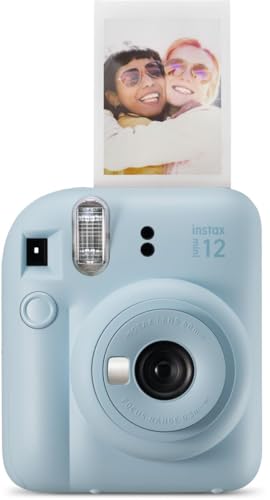
The Instax Mini 12 is the easiest recommendation in this guide because its job is joy and it performs that job flawlessly. Load the film, point, press: the camera meters the scene, sets its own exposure, fires its flash when needed and delivers a small physical print that develops while people pass it around. At weddings, birthdays, dorm rooms and family gatherings, that object — holdable, giftable, stickable to a fridge — is worth more than a technically superior file sitting in a phone’s camera roll, and the Mini 12’s simplified controls mean a grandparent or a seven-year-old produces the same successful print.
Living with it teaches the economics of instant photography quickly. Each pack of film holds ten shots, and the per-print cost concentrates the mind wonderfully: people compose, wait for the expression, and shoot once — a discipline digital photography forgot. The craft with the Mini 12 is social rather than technical: get close, because the small print rewards faces over landscapes; shoot in shade or golden light rather than harsh noon; and use the selfie mirror and close-up mode for the arm’s-length group shots that dominate real instant albums. Keep spare film in the bag, because the camera’s popularity at any gathering outruns one pack.
One habit separates happy Instax owners from disappointed ones: they shoot people, not places. The little frame cannot hold a landscape’s sweep, but a laughing face at arm’s length fills it perfectly, and a wall of such faces becomes the most commented-on decoration in any home it graces. Buy it for faces and gatherings and it will never once feel like the cheap option.
- Format: Instax Mini instant film
- Auto exposure — no settings to learn
- Selfie mirror and close-up mode
- Runs on AA batteries
- Credit-card sized prints
Strengths
- Prints in hand within minutes, anywhere
- Genuinely foolproof for all ages
- The gift that gets used at the event itself
Trade-offs
- Film cost per shot adds up across a summer
- Small prints only — no enlargements
- Low light defeats it beyond flash range
Best for: Parties, weddings, gifts, and anyone who wants photographs as objects, not files.
Not suited for: Low-light shooting, careful composition work, or anyone counting cost per frame.

Polaroid Go Generation 2 — Most Pocketable Instant
The Polaroid Go Generation 2 shrinks the instant idea to its minimum viable delight: a camera small enough to forget in a coat pocket, producing little square prints that feel like stickers from a more sentimental era. It adds small creative touches its size should not allow — a double-exposure mode, a selfie mirror, a self-timer — and its rechargeable battery frees owners from the AA-buying habit of rival systems. For travel journals, scrapbooks and the kind of daily-life documenting where the camera must already be with you, its size is not a gimmick; it is the entire point.
The working rhythm differs from the Instax in instructive ways. Polaroid film is famously moody — colours drift toward warmth, contrast behaves romantically rather than accurately, and temperature affects development — so the craft is embracing a lo-fi aesthetic rather than fighting it. Shoot it in good light, shield fresh prints from sun while they develop, and lean into subjects with strong shapes and colours that survive the film’s interpretation. Owners who want clinical accuracy leave frustrated; owners who want their summer to look like a memory leave delighted, with a shoebox of little squares to prove it.
Its film’s unpredictability deserves a final honest word: colours shift with temperature, development takes minutes rather than seconds, and an occasional frame will simply misbehave. Devotees call this character and plan around it — warm the film in cold weather, shade developing prints, keep expectations romantic. If that paragraph annoyed you, buy the Instax; if it charmed you, this is your camera.
- Format: Polaroid Go instant film (smaller frame)
- Double exposure and self-timer modes
- Rechargeable via USB
- Selfie mirror
- Among the smallest instant cameras made
Strengths
- Truly pocketable — the camera you actually carry
- Creative modes unusual at this size
- Prints suit journals, letters and scrapbooks
Trade-offs
- Tiny prints reward simple, bold subjects only
- Film is pricey per shot and temperamentally moody
- Weak in dim light even by instant standards
Best for: Travellers, journallers and gift-buyers who value carry-everywhere size.
Not suited for: Anyone wanting larger instant prints or predictable colour.

AKASO Brave 7 LE — Best Action Value
The Brave 7 LE is where this budget stops apologising. It records stabilised 4K video, shrugs off water and weather that would end a phone’s afternoon, wears a front-facing screen for self-framing, and arrives with the mounts and remote that flagship brands sell separately. For cycling, kayaking, skiing, snorkelling and dashboard duty, it captures the footage families and hobbyists actually want — smooth, wide, honest — and its stills serve perfectly well as action souvenirs. Nothing else new in this price territory does this job at all, which makes its few rough edges easy to forgive.
Getting the best from it is a craft of settings and mounting rather than talent. Choose the stabilised modes for anything moving, keep the waterproof housing’s lens scrupulously clean — a single dried droplet prints itself across an hour of footage — and mount it rigidly, because vibration defeats stabilisation faster than motion does. Battery discipline matters on long days: carry the second battery the kit culture encourages, format cards in-camera, and offload each evening. Treated like a tool rather than a toy, the Brave 7 LE documents adventures for years, and its low price means a loss overboard is a bad day rather than a financial event.
Parents discover a second career for it as the family archivist’s stunt double: mounted on a bike helmet, a boat rail or a dog’s harness, it captures viewpoints no one would risk a phone for, and children who would never sit for a portrait perform happily for its wide little eye. The footage is not cinema. It is better than cinema for the purpose — it is the holiday as it actually felt.
- Video: 4K with electronic stabilisation
- Waterproof with housing for diving depths
- Front and rear screens
- Remote control and mount kit typically bundled
- Time-lapse and burst photo modes
Strengths
- Real action capability nothing else new here matches
- Generous bundled accessories
- Cheap enough to mount in risky places
Trade-offs
- Menu system and app are less polished than flagship rivals
- Low-light video is merely adequate
- Audio needs the external options for serious work
Best for: Outdoor and watersport footage, bikes, boats, dashboards and brave mounting positions.
Not suited for: Polished vlogging audio or cinema-minded colour work.
Kodak PIXPRO FZ55 — Simple New Compact
The FZ55 represents the new compact’s remaining honest niche: a camera simpler than a phone, for people who want exactly that. Grandparents who find phones fiddly, parents equipping a child’s first camera, summer camps and workplaces that ban phones but allow cameras — these buyers want a zoom lens, a flash, a screen and one button that matters, in a body cheap enough that its loss is a shrug. The FZ55 delivers competent daylight snapshots, a useful zoom range for school concerts and zoo fences, and operation a novice masters in an afternoon. We list it prose-only: it is sold through many retailers at modest prices, and we link only verified pool listings in this guide.
Using it well means respecting its simplicity as a design brief rather than a flaw. It rewards the classic compact habits: brace against doorframes in dim halls, let the flash work within its short honest range, zoom with your feet before the lens when light is poor, and review shots on the spot because retakes are free. Families report a side benefit nobody markets — children photograph more thoughtfully with a dedicated camera than with a borrowed phone, because the device does one thing and invites them to do it deliberately. As a household’s spare and starter camera, it earns its drawer space.
There is a dignity argument for cameras like this that spec culture misses. In care homes, classrooms and community groups, a simple dedicated camera circulates without passwords, accounts, notifications or anyone’s private photo library attached. It asks nothing and exposes nothing. For institutions buying several at once, that simplicity is not a limitation of the FZ55 class; it is the procurement requirement itself.
- Type: compact point-and-shoot with zoom lens
- Rechargeable battery
- Scene modes for common situations
- Video clips for family archives
- Sold new through general retailers
Strengths
- Simpler than a phone, on purpose
- A safe gift for novices and children
- Zoom reach phones at this level lack
Trade-offs
- Small sensor struggles after sunset
- Not the tool for action or careful creative work
- Phones outclass it in image processing
Best for: Children’s first camera, grandparents, camps and phone-free workplaces.
Not suited for: Enthusiasts, low-light shooters, or video-first buyers.
Canon EOS Rebel T7 (Used Market) — Best Used Learner DSLR
The Rebel T7 was Canon’s gateway DSLR for years, which means the used market is deep, prices are soft, and clean copies with the standard kit zoom circulate constantly. What the buyer gets is the full photographic grammar this budget otherwise cannot touch: a proper optical viewfinder, aperture and shutter under your fingers, raw files that teach real editing, and the EF/EF-S lens mount — arguably the largest lens ecosystem ever made, with affordable primes that transform the camera’s output. For a photography student or a parent who wants to learn alongside their child, a good used T7 is the most educational object in this guide. It is prose-only here because used copies are individual goods, not a listing we can verify once for everyone.
The craft is in the buying. Inspect before you commit: fire the shutter at several speeds and listen for consistency, examine the sensor by photographing a plain wall at a narrow aperture and looking for spots, check the mount contacts, the card slot, the battery’s honesty, and every dial’s detents. Favour sellers offering returns, prefer kits that include the charger and a healthy battery, and treat a missing charger as a price negotiation, not a detail. Once home, the first purchase should be Canon’s inexpensive fast standard prime — the lens that turns this learner body into a portrait camera whose results will startle anyone who judged it by its age.
A realistic first-month plan for a T7 buyer: week one on the kit zoom in program mode, learning what the camera chooses and why; week two in aperture mode for portraits; week three walking one neighbourhood with a single focal length; week four printing the best ten frames small and pinning them up. That month of structure teaches more than a year of random shooting, and it costs nothing beyond the camera already bought.
- Type: APS-C DSLR (used market)
- EF/EF-S lens mount — vast new and used lens choice
- Optical viewfinder, full manual control
- Raw capture for real editing practice
- Wi-Fi in most copies for phone transfer
Strengths
- Teaches real photography like nothing else here
- Lens ecosystem unmatched at any price
- Deep used supply keeps prices gentle
Trade-offs
- You are buying a copy’s history, not a warranty
- Bulky beside every other pick here
- Video is basic by modern standards
Best for: Students and self-teachers who want photography’s full controls on a budget.
Not suited for: Gift-buyers needing guaranteed condition, or travellers packing light.
Nikon D3500 (Used Market) — Best Used Battery and Handling
The D3500 closed Nikon’s beginner DSLR line on a high note: a light body with a grip that fits hands beautifully, battery endurance measured in days of shooting rather than hours, a guide mode that teaches exposure inside the camera, and files from its twenty-four-megapixel sensor that remain genuinely good — clean, colourful and printable to respectable sizes. On the used market it competes directly with the Canon above, and the choice between them is mostly about which lens ecosystem you prefer and which grip your hands vote for. Like the T7 it is prose-only: individual used copies vary, and no single listing can stand for the market.
Inspection follows the same discipline as any used DSLR, with Nikon-specific notes: check the snapbridge-era Bluetooth pairing works if phone transfer matters to you, confirm the kit lens’s autofocus motor is quiet and decisive, and look at the shutter count if the seller can show it — low counts on this model are common because many were bought for courses and outgrown gently. Its party trick in the field is stamina: a weekend trip on one charge is normal, which teaches beginners to think about photographs rather than power management. Add Nikon’s affordable fast prime when ready and the D3500 becomes a portrait and travel kit of real quality.
The D3500 has one more quiet virtue: it holds its value. Bought used at a fair price and kept in decent condition, it typically sells onward for close to what you paid, because the beginner market beneath it is permanent. Few purchases in this guide can be trialled for a year at near-zero net cost — for the undecided learner, that changes the risk calculation entirely.
- Type: APS-C DSLR (used market)
- F-mount lenses — deep used availability
- Exceptional battery life
- In-camera guide mode for learners
- Light body for a DSLR
Strengths
- Battery that outlasts trips, not hours
- Friendly handling and teaching tools
- Sensor quality still respectable today
Trade-offs
- Fixed screen, no touch — feels dated beside phones
- Used condition varies; inspect rigorously
- Video autofocus is contrast-based and slow
Best for: Learners who prefer Nikon’s handling and lenses, and travellers wanting battery stamina.
Not suited for: Video-focused buyers or anyone wanting a tilting touchscreen.
How Do the Six Routes Compare Side by Side?
Comparing an instant camera to a used DSLR by specifications is nonsense, so the table compares them by job: what each does best, what it asks of you, and where its ceiling sits.
Read the ‘asks of you’ column as seriously as the strengths: at this budget, effort is a currency, and some buyers are rich in it while others are deliberately not.
| Pick | Sensor / Format | Standout trait | Watch out for |
|---|---|---|---|
| Fujifilm Instax Mini 12 | Instant prints | Physical photos at gatherings | Film cost per shot; weak in dim light |
| Polaroid Go Generation 2 | Instant prints | Pocketable daily-life prints | Tiny frame; moody film character |
| AKASO Brave 7 LE | Action video | Water, impact and motion | Menus and app less refined |
| Kodak PIXPRO FZ55 | New compact | Simple family snapshots | Small sensor after dark |
| Canon EOS Rebel T7 (Used) | Learning DSLR | Full controls, EF lenses | Condition lottery; bulky |
| Nikon D3500 (Used) | Learning DSLR | Battery life, F-mount lenses | Fixed screen; dated video |
How Do You Inspect a Used Camera Before the Money Moves?
Meet in daylight, bring a memory card and a laptop or phone for viewing files, and work a fixed routine. Cosmetically, distinguish honest wear — shiny grip corners, small scuffs — from damage: dents near the mount, cracked screens, a lens barrel that wobbles. Functionally, fire bursts and singles, run the autofocus near and far, turn every dial through its range, and take a photograph of a plain bright wall at the narrowest aperture: spots on that frame reveal sensor dust or worse, and a seller who refuses the test has answered your question.
Numbers help where the model offers them. Shutter count on a beginner DSLR tells you how loved or how flogged the copy is; counts in the low thousands are common on course cameras and are good news. Check the battery by shooting for ten minutes rather than trusting the gauge, inspect the card slot’s pins with a torch, and confirm the charger is present and genuine enough to trust overnight.
Buy the exit as carefully as the camera: a returns window, a marketplace with buyer protection, or a dealer with a short warranty converts a gamble into a purchase. Paying slightly more for a protected copy beats saving slightly on an unprotected one, at this budget most of all, because the savings are small and the disappointment is total.
What Accessories Does a Sub-200 Camera Still Need?
Budget for the entourage, because cameras travel with one. The instant picks consume film — price a summer of gatherings in film packs before deciding the camera is cheap. The action camera wants a quality memory card fast enough for its top modes, a floating grip for water work and a case that keeps mounts from scattering. The compact wants a small case and a spare card. The used DSLRs may need a battery, a charger, a strap and eventually that fast prime; a kit missing its charger is not the bargain it appears until those costs are added back.
Some accessories are pure protection and pay for themselves once: a wrist strap on the instant cameras that get passed around parties, a screen protector on the action camera, a padded wrap for the DSLR in a school bag. Others are creative leverage — a mini tripod transforms the compact’s dim-hall results and the DSLRs’ long-exposure play. Spend on the accessory that removes your pick’s known weakness before buying any that merely decorate it.
When Should You Save Longer Instead of Buying at This Level?
Honesty requires one section arguing against this entire guide. If your goal is paid work, serious low-light photography, polished video for a growing channel, or prints beyond modest sizes, no pick here is a stepping stone — they are side purchases that will not grow with you, and the money is better held toward the mirrorless class covered elsewhere in our camera guides. The exception is the used DSLR route: its lenses and skills transfer upward, which is why teachers keep recommending it.
Buy at this level when the job is defined and present: the wedding is in June, the kayak trip is booked, the course starts in September, the grandparent’s birthday is Friday. A camera that serves a real occasion at this price is a triumph of matching, not a compromise. A camera bought vaguely, against a future self who wants more, is how drawers fill with almost-right gear.
How Long Should a Camera at This Price Be Expected to Last?
Physically, longer than fashion suggests. The instant cameras are simple machines with few failure points beyond their film mechanisms; the action camera’s enemy is a scratched lens or a drowned housing seal rather than age; the used DSLRs were built for shutter lives far beyond what most beginners will ever ask of them, which is precisely why gentle used copies are such sound purchases. Kept dry, fed reasonable batteries and stored out of hot cars, everything in this guide can serve for years.
The realistic expiry is relevance, not function. A budget camera is outgrown when its owner’s ambitions cross its ceiling — the learner wants low-light performance, the action shooter wants better audio, the instant fan wants larger prints. Plan for that day without dreading it: the DSLR’s lenses move up with you, the instant camera retires to party duty, and the action camera becomes the risky-mount specialist. A camera that ends as a beloved specialist was not a failed purchase; it was a successful first chapter.
What Do Sample Photographs Tell You That Specifications Cannot?
Before buying any pick here, look at full-size sample images from ordinary owners — not the manufacturer’s gallery, which was shot by professionals in perfect light, but the shared albums of people who used the camera at birthdays and beaches. Look for the failure modes that matter to you: how faces render under flash, how much noise appears in living rooms, whether colours please your eye unedited. Ten minutes of honest samples will predict your satisfaction better than any comparison table, this one included.
Pay special attention to the worst samples, not the best. Every camera in this guide has produced a beautiful photograph in golden light; the question is what it produces at the school concert, in the rainy street, at the dim restaurant where your life actually happens. A pick whose bad samples you can live with is a pick you will keep; a pick whose bad samples embarrass you will be replaced within the year, at twice the total cost.
How Do You Keep a Budget Camera in Service for Years?
Care at this level is mostly storage and batteries. Remove batteries from cameras that will sit for months, because leaks destroy more budget cameras than drops do. Store everything in a dry cupboard rather than a damp garage, keep a silica gel pack in the camera bag, and clean lenses with a proper cloth instead of a shirt corner — the shirt works until the day it carries grit, and that day’s photograph carries the scratch forever.
For the used DSLRs, one professional sensor clean early in ownership is money well spent if your wall-test showed stubborn spots; afterwards, changing lenses with the mount facing down and the body off keeps new dust out. For the action camera, rinse the housing after salt water and inspect its seal before every swim. None of this is glamorous, and all of it is why some ten-year-old budget cameras still work while newer ones are landfill.
Which of These Picks Suits Travel Best?
Travel rearranges the ranking. The Polaroid Go was designed for the jacket pocket of a person documenting a journey in physical souvenirs. The action camera owns the adventurous itinerary — boats, bikes, waterfalls, weather. The compact serves the traveller who wants a camera that is only a camera, in countries and contexts where a phone invites the wrong attention. The DSLRs travel beautifully for photography-centred trips, where their bulk is the point of the journey rather than a tax on it.
The honest travel advice is to insure by redundancy rather than by price: a budget camera plus a phone is a more resilient travel kit than one expensive camera alone, because loss, theft and failure abroad end trips’ photography entirely. Several picks here exist in travellers’ bags precisely as the second camera that became the only camera on the day it mattered — and performed.
How Do You Get the Best From a Budget Camera on Day One?
Charge everything, format the card in the camera, set the date, and shoot a deliberate first roll rather than random snaps: the same scene at the lens’s extremes, a face in window light, a face in shade, one shot you expect to fail. Reviewing that roll teaches your specific camera’s habits — where its meter overexposes, how its flash falls off, what its noise looks like — faster than any review, including this one. Knowledge of your own copy beats knowledge of the model.
Then set the camera up for success permanently: highest quality setting, stabilisation on, grid lines enabled if offered, and the date stamp off unless you genuinely want it burned into family history. Learn the two or three controls you will actually touch — exposure compensation on the DSLRs, flash control on the instant cameras, resolution and stabilisation on the action camera — and ignore the rest of the menu until a real photograph demands it.
Finally, decide where photographs go before the card fills: an album for instant prints, a folder structure for digital files, a monthly offload habit. Budget cameras die of neglect more often than failure, and the offload ritual is what keeps them in your life rather than in a drawer beside a full card and a flat battery.
How Should Gift-Buyers Choose Among These Picks?
Match the camera to the recipient’s temperament, not their age. The instant cameras suit social creatures — the friend whose parties need a guest book, the teenager documenting a friendship group, the grandparent who wants prints without printers. Choose the Instax for reliability and larger prints, the little Polaroid for the pocket-carrier and journal-keeper. Include film in the gift itself; a camera presented with two packs is an afternoon of fun, while a camera alone is a shopping trip.
The action camera suits the recipient whose life is already outdoors — it amplifies an existing hobby rather than inventing one. The compact suits the phone-averse and the very young. The used DSLRs suit the visibly curious: the teenager photographing everything with a phone and asking why, the parent who had a film camera once. For those recipients, wrap the inspection checklist with the camera and make the first lens upgrade a promised birthday sequel.
When genuinely torn between two, choose the one that will be used this month. Cameras are perishable gifts in one sense only — enthusiasm — and the right camera now beats the perfect camera imagined for a person who may never exist.
What Mistakes Do Buyers at This Budget Keep Making?
Judging by megapixels. At this level the number is marketing confetti; sensor size, lens quality and light decide results. A modest count behind a good lens in daylight beats a heroic count behind a pinhole in a hallway, every time, and the sample photographs of any model prove it faster than its box does.
Forgetting the consumables. Instant film, memory cards, batteries, a charger missing from a used kit — the camera that fit the budget on the product page exceeds it by the second week. Total the first month’s true cost before comparing picks, and the ranking often rearranges itself.
Buying used without a return path. The savings on an unprotected private sale are real but small; the loss on a faulty copy is total. Dealers, protected marketplaces and patient local sellers with receipts exist at this budget — use them, and walk away from any seller who rushes you.
Expecting the phone’s night performance. Phones cheat darkness with computation these cameras do not have. Plan budget-camera photography for daylight and well-lit rooms, use flash without shame indoors, and the results will please you; demand midnight miracles and nothing at this price can satisfy you.
Gifting complexity to the unwilling. A used DSLR is a treasure to a curious teenager and a chore to a reluctant one. The best gift camera is the one its recipient reaches for voluntarily — which is why the foolproof instant picks outsell worthier cameras every holiday season.
Treating ‘less than 200’ as a challenge to spend exactly that. Several readers need only the instant camera and a summer of film; others should buy the cheapest sound used DSLR and bank the rest toward its first prime lens. The frame is a ceiling, not a target, and the best purchase in this guide for many households costs noticeably less than the full amount.
Final Recommendation
If the purchase is about fun, gatherings or a gift that must simply work, the Instax Mini 12 is the safest money in this guide, with the Polaroid Go Generation 2 as the pocket-sized alternative for journal-keepers. If the purchase is about footage — water, wheels, snow — the AKASO Brave 7 LE stands alone here and earns its place without rivals.
If the purchase is about learning photography itself, skip the toys and walk the used route: a carefully inspected Rebel T7 or D3500, chosen by lens ecosystem and grip, teaches more per dollar than any new camera at this level ever will. The little Kodak fills the remaining honest niche — a new, simple camera for people and places where phones do not belong.
Whatever you choose, hold the frame honestly: this budget buys a defined job done well, not a universal camera. Match the job, inspect the copy, budget the consumables, and a sub-200 camera becomes one of the best-value purchases in photography.
A last word for the sceptical: photography’s history was mostly written on equipment worse than everything in this guide. What the budget truly limits is convenience and low-light reach, not the possibility of a wonderful photograph. Choose the pick whose strengths match your brightest, happiest shooting conditions — because those are the conditions you will actually photograph in — and it will serve you far better than a reluctant stretch toward someone else’s idea of serious gear.
Related guides
- Best Digital Cameras Under 100 Dollars: An Honest Guide
- Best Digital 35 mm Cameras Under 1000.00: Full-Frame Benchmarks, Used Routes and the Film Branch
- Best CSC Cameras Under 500: Honest Step-Ups, Used and Refurbished Routes
- Best Canon Cameras Under 600 Dollars: New Kits, Refurbished Bodies and Used Gems
- Best Cameras With Wide Angle Lens Under 200: Honest Routes to a Wider View
- Best Cameras for Vintage Videography: Film Looks, Camcorder Nostalgia and Honest Analogue Routes
- Best Cameras for UV Photography: Honest Routes to Reflected UV and Fluorescence
Frequently Asked Questions
Can a camera under 200 take better photos than my phone?
In daylight, the used DSLRs here can — larger sensors and real lenses beat phone processing when light is kind. The instant and compact picks win on purpose and prints, not technical quality. At night, a modern phone’s computation beats everything in this guide.
Is buying a used DSLR risky?
It carries copy risk, which inspection and a return path reduce to a reasonable level. Beginner DSLRs were often bought for courses and lightly used, so the market is full of gentle copies — the checklist in this guide exists to help you find them.
How much does instant film add to the true cost?
Enough to plan for: every shot is a physical print with a per-shot cost, and a busy party can consume several packs. Owners who budget film monthly enjoy the cameras far more than owners who wince per frame — decide which you will be before buying.
Which pick is best for a child’s first camera?
For young children, the FZ55’s simplicity or an instant camera’s immediate prints. For an older child showing real interest, a used DSLR with a kit zoom teaches skills that transfer for life — and survives being outgrown gracefully, since its lenses hold value.
Can the AKASO really replace a flagship action camera?
For family and hobby footage, mostly yes: stabilised 4K, waterproofing and mounts cover the real use cases. Flagships pull ahead in low light, app polish, audio options and extreme frame rates — differences that matter to creators more than to holidaymakers.
Why are some picks not linked in this guide?
We link only listings verified in our camera pool. The compact and the two used DSLRs are bought through general retailers and the used market, where condition and price vary by copy — linking a single listing would pretend a certainty that does not exist.
What if my budget can stretch a little further?
Then the mirrorless class begins, and our other camera guides cover it. A small stretch buys dramatically better low-light ability and video. But stretch deliberately, not by drift — the defined-job purchases in this guide remain good value at exactly their price.
Are these cameras good for printing photographs?
Small prints, yes — the DSLRs’ files handle modest enlargements gracefully, and the instant cameras are prints by definition. For wall-sized work, save toward the class of cameras in our large-print guide; this budget’s ceilings are real, and respecting them is what makes these picks satisfying.
Should I buy an extended warranty at this level?
Generally no for the new picks — the cameras are simple and the warranty cost is a large fraction of the camera’s value. For used purchases, a dealer’s short warranty is worth more than a long third-party policy, because it comes with a counter you can walk back to.
Related Guides
Keep exploring with best cameras for kids digital and best affordable cameras for photos and videos and best cameras for travel.


