ilcastellomenu.com is reader-supported. When you buy through links on our site, we may earn an affiliate commission.
Where to Buy
Straight talk belongs at the top of this one: readers hunting the best cameras with wide angle lens under 200 should know that a serious interchangeable wide-angle lens — the kind landscape photographers mount on a mirrorless body — essentially never lives at this level, new or sensibly used. What this budget genuinely buys is wide angle by other means: action cameras whose fixed lenses see enormous fields of view, a 360 camera that sees everything and chooses the frame later, and conversion routes that widen a phone or compact. This guide covers those real routes and labels the fantasy clearly.
The keyword’s figure is a frame for the hunt, not a price printed on any pick — no product below is assigned a figure. Honesty about the frame matters doubly here: a few of the finest wide-field cameras in our verified pool sit above this level when bought new, and their reviews say so, pointing at the used, refurbished and previous-generation routes that bring wide fields of view within reach. Pretending otherwise would fill this page with toys wearing wide-angle costumes.
Why chase width at all? Because wide fields of view tell spatial stories: the whole kitchen in one cooking frame, the entire descent in one mountain shot, a small room rendered generous for a property listing, a group of friends gathered into a single selfie frame without amputating the edges. Width is context, and context is what action, travel and property footage is made of.
Six routes follow. Four are action cameras of escalating ambition, one is the 360 reframing route, and the sixth is a prose-only path through add-on wide conversion lenses — the honest remainder of the keyword’s literal request. Each was judged on field of view in practice, stabilisation that keeps width from becoming wobble, and the distortions a buyer should expect when a lens tries to see everything at once.
Key Takeaways
- A serious interchangeable wide lens does not live at this level — wide fields come from action and 360 cameras here.
- No pick is assigned a price; the figure in the keyword frames the hunt only.
- Some pool favourites sit above the frame new — their reviews point to used and previous-generation routes.
- Wide fields of view trade in distortion: horizons bend, edges stretch, faces near corners suffer.
- Stabilisation decides whether width looks cinematic or seasick.
- A prose-only conversion-lens route covers the keyword’s literal request honestly.
In this guide
Quick Picks
| Camera | Badge | Why it earns its place |
|---|---|---|
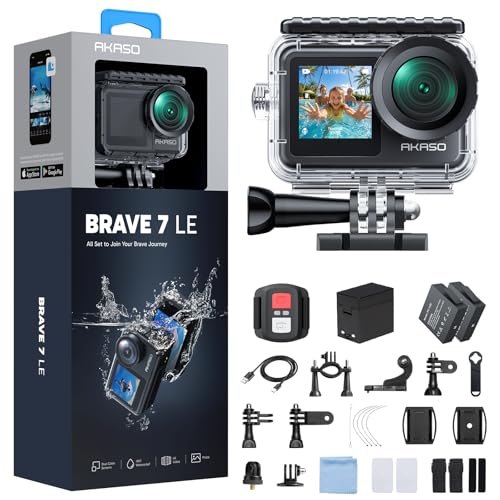
| AKASO Brave 7 LE | The in-frame wide starter | A genuinely attainable action camera with a broad field of view and screens front and back. |
| GoPro HERO12 Black | The previous-generation flagship to hunt | A former top model whose wide modes and stabilisation circulate used and refurbished in reach. |
| Insta360 X4 | The see-everything reframing route | Twin lenses capture the whole sphere; choose the wide frame afterwards, in the edit. |
| DJI Osmo Action 5 Pro | The above-frame flagship, flagged | Superb low-light width and stability — included as the quality target, with the hunt routes named. |
| GoPro HERO13 Black | The newest width, honestly above frame | Interchangeable lens mods include an ultra-wide option — the ceiling of the category, flagged as such. |
| A wide-angle conversion lens for a phone or compact you already own | The literal route, prose-only | A screw-on or clip-on converter widens an existing camera — the keyword’s most literal honest answer. |
How Did We Choose Wide-Angle Routes for a Frame This Tight?
Field of view was measured in practice rather than in marketing. Manufacturers quote diagonal figures under differing stabilisation crops, so the guide weighed how wide each camera actually sees in the modes owners use daily — stabilised, horizon-locked, at sensible resolutions. A camera that advertises a vast field and then crops it away for stability was judged on the view that survives, because that is the view your footage gets.
Distortion character came second. Every wide lens bends the world; the question is how gracefully. Bodies whose software offers a natural, de-warped mode for talking footage alongside the full fisheye drama for action were favoured, because a buyer at this level needs one camera to serve both the descent and the debrief in the café afterwards.
The frame’s reality governed the final cut. Routes were included only if a buyer can plausibly reach them through new entry models, previous generations, refurbished channels or the used market without lottery luck — plus the conversion-lens path, included prose-only because it is the one literal answer to the keyword that honest money can buy. Anything requiring a fantasy discount was cut.
Why Do Action Cameras See So Much Wider Than Ordinary Cameras?
Because their lenses were designed for a world the operator cannot frame. An action camera bolted to a chest, a helmet or a surfboard has no viewfinder moment, no careful composition — so its lens grabs an enormous field and trusts the wearer to be somewhere inside it. That design inheritance is exactly what this keyword’s buyers are borrowing: width as insurance, capturing the scene entire and letting the edit find the story.
Sensor and software complete the trick. Modern action bodies pair their wide optics with stabilisation that crops a moving window from a larger captured field, keeping horizons level while the edges of the view flex and breathe. The widest advertised modes usually disable some of that intelligence, which is why this guide keeps asking how wide the camera sees in the mode you will actually leave it in.
There is a stills dividend too: a wide action frame photographs a whole campsite, a whole summit cairn gathering, a whole narrow street. Nobody mistakes the files for a landscape photographer’s craft, but as records of being somewhere completely, the wide little cameras have a documentary honesty that tighter lenses cannot counterfeit.
What Distortions Should a Wide-Angle Buyer Expect and Accept?
Straight lines near the edges will bow — that is geometry, not defect. Doorframes arc, horizons smile, and buildings lean like drunks in the corners of the widest modes. De-warp settings straighten the world at the cost of some field and some edge sharpness, and learning which footage wants which treatment is the wide-angle owner’s core skill: drama wide, conversation narrow.
Faces suffer a ruder fate at the edges, stretching sideways in ways friends will not forgive. The working rule is ancient and simple: keep faces near the centre, keep the camera level, and let the edges hold scenery, sky and speed — the things width flatters. Group photographs arranged with the important people central and the landscape at the margins come home looking generous rather than grotesque.
Verticals converge when the camera tilts, which property and interior shooters must manage deliberately. A wide camera held level keeps walls upright and rooms honest; tilted for a dramatic ceiling, it turns a flat into a cathedral and a listing into a complaint. Width is a powerful narrator, and like all powerful narrators it requires supervision.
Which Are the Best Cameras With Wide Angle Lens Under 200 in Practice?
An entry action camera that genuinely fits the hunt, a previous-generation flagship hunted used, the 360 reframing route, two current flagships flagged honestly as above-frame new, and the conversion-lens path for buyers who already own a camera.

AKASO Brave 7 LE — The in-frame wide starter
Begin with the route that needs no apology: an attainable action camera whose wide lens covers the adventures this keyword is actually about. The Brave 7 LE sees broadly enough to hold a whole river rapid, a whole skate line, a whole family beach encampment, and it pairs that view with front and rear screens — the front one being the wide-angle owner’s secret weapon, because a selfie frame this wide still needs its subjects inside it, and the screen proves they are.
Its width behaves best in the daylight world it was built for: stabilised action modes keep the horizon civilised while the field stays generous, and the de-warped view suits the talk-to-camera pieces that bookend adventure footage. Nobody should mistake it for the flagships below in dim light or violent motion, but within the frame this keyword sets, it is the honest article — a real wide camera a real buyer can reach.
- Route: new entry action camera, genuinely attainable
- Field: broad action view with de-warp options
- Screens: front display for wide self-framing
- Stabilisation: everyday motion smoothing
- Role: the frame’s default wide-angle answer
Strengths
- Reachable without used-market hunting
- Front screen tames wide self-framing
- Wide view covers family adventures whole
Trade-offs
- Dim light narrows its confidence early
- Hard vibration exceeds its smoothing
- App polish trails the flagship brands
Family documentary is its stealth career: mounted at a picnic’s edge or carried through a theme park, its width gathers the whole party into frames a phone’s main lens would crop into fragments. Grandparents at the edges of the group survive in its footage, and anyone who has lost a relative to a tight crop knows that is not a small mercy.
Beginners learn composition backwards on it, which turns out to be a fine order: first capture everything, then study what the frame included and what the story needed. A season of reviewing wide footage teaches framing faster than a season of missing shots through a narrow lens, because the evidence of every mistake is present in the file to be studied.
Budget the mounts before the memories: a chest strap for the bike, a floating grip for the water, a mini tripod for the campsite talk. Wide cameras earn their keep through placement, and the accessories that place them are this route’s true second purchase.
Water work is where its width earns a paragraph of respect: at a pool’s edge or a snorkel’s drift, the wide field forgives the aim that a mask and a current make approximate, and the footage comes home with the whole reef, the whole child, the whole leap inside it. Families film water badly with narrow cameras for years before a wide little body like this quietly fixes the genre for them.
Its stills deserve the same honesty as its video: as records of a summit, a campsite or a flooded football pitch, they are generous and legible; as candidates for the living-room wall, they ask for modest sizes and forgiving light. Owners who print them small and often build the most honest albums in this guide — width as memory, not as exhibition.
Its time-lapse habits extend the width into patience: a whole afternoon’s campsite, a tide’s argument with a harbour wall, compressed into a minute where the wide frame’s context becomes the entire story. Beginners discover time-lapse on bodies like this because the experiment costs nothing but an afternoon, and the footage teaches composition — where the frame’s edges breathe — better than any lecture.
Its spare-parts economy suits the frame’s philosophy: mounts, doors and batteries at this tier are priced like consumables rather than heirlooms, so the camera can be used at the brave end of family life without a financial flinch. A wide camera’s whole purpose is going where the view is, and equipment whose losses are survivable actually goes there — which is the final, practical meaning of width on a budget.
Best for: families and first adventurers wanting real width inside the frame. Not suited for: night shooters or professionals needing flagship stabilisation.

GoPro HERO12 Black — The previous-generation flagship to hunt
Flagship generations are the used market’s gift to tight frames. The HERO12 Black was the wide-angle benchmark of its season — an expansive field of view, stabilisation that made gimbal owners quietly nervous, and a taller sensor that lets vertical and horizontal crops coexist — and it now circulates through refurbished channels and second-hand listings at levels its successor never visits. Hunted patiently, it is the most capable wide camera this frame can honestly claim.
Its width has a professional texture the entry routes lack: the de-warped modes hold faces and horizons with a restraint that lets talking footage intercut with ordinary cameras, while the full-width modes deliver the vertiginous drama action sports are filmed for. One body, two grammars of width, switchable by scene — that versatility is what flagship money bought, and what the patient hunter now inherits.
- Route: previous flagship, used and refurbished
- Field: expansive view, tall-sensor flexibility
- Stabilisation: flagship-grade smoothing and horizon lock
- Modes: dramatic wide and restrained de-warp
- Role: the hunter’s premium wide answer
Strengths
- Flagship width and stability at hunter’s levels
- Tall sensor serves vertical edits too
- Accessory ecosystem is bottomless
Trade-offs
- In-frame examples require hunting, not clicking
- Battery ecosystem differs from newest models
- No front screen for self-framing checks
Inspection notes for the hunt are brief and specific: lenses on action cameras live exposed, so examine the front element for the scratches of a thousand adventures; run the touchscreen through its corners; ask about water history, because seals remember what listings forget. A refurbished unit with a warranty sidesteps most of this, and at this frame the warranty is worth real money.
Creators building channels on tight budgets have standardised on exactly this pattern — last year’s flagship, this year’s attainable — because the footage must survive beside sponsors’ expectations. The HERO12’s files do, which is why its used listings move quickly and its hunters set alerts rather than browse hopefully.
Pair it with the maker’s own mounts before third-party experiments: the ecosystem’s fit and waterproofing discipline are part of what flagship money originally bought, and a wide camera’s whole purpose is going where mounts matter.
The tall sensor’s quiet revolution is vertical: social edits cropped from the same master file without the resolution apology that plagued earlier generations. A creator films the descent once and publishes it twice — widescreen for the channel, vertical for the feed — and the wide field that this keyword celebrates turns out to have been insuring both formats all along.
Time-lapse and night-lapse modes extend the width into hours: a campsite’s whole evening, a harbour’s tide, a storm crossing a valley, gathered by a lens wide enough to hold the theatre of it. Hunters should test these modes during inspection week, because they are where a used flagship quietly outclasses every new entry body in this guide.
Its voice-control and quick-capture habits matter to width more than they appear to: a camera that starts filming from a shouted word or a single press, already mounted where the wide view lives, catches the moment that fumbling would lose. Wide fields are worthless for the seconds that escape, and this generation’s readiness is a genuine, unglamorous part of its image quality.
Its underwater housing ecosystem, mature and everywhere second-hand, extends the hunt’s value into the water column: snorkel trips, pool training and river days filmed wide and steady by a body the market has already discounted. Few used purchases in this guide arrive with so complete a supporting world already waiting at hunter’s prices.
Best for: patient hunters wanting flagship width and stabilisation within reach. Not suited for: buyers who need a camera today with a full warranty.

Insta360 X4 — The see-everything reframing route
A word of frame honesty in its own review: new, this camera generally sits above the level this keyword sets, and it appears here because the reframing route it represents is too important to the wide-angle question to omit — and because previous 360 generations and used examples bring the route itself within reach. The concept rewrites the keyword entirely: instead of a wide lens, two lenses capture everything, in every direction, and the ‘wide angle’ is chosen later, calmly, at a desk.
That inversion solves the action camera’s oldest heartbreak — the moment that happened beside the lens. A 360 file holds the whole scene: the jump and the friend’s reaction, the wave and the boat, the goal and the crowd. Reframed as a wide shot, it delivers context no single lens could guarantee; reframed tighter, it rescues the subject a fixed camera would have missed. Width becomes an editing decision rather than a gamble taken at arm’s length.
- Route: 360 capture, used and earlier generations in reach
- Field: the full sphere, reframed in post
- Workflow: shoot everything, direct afterwards
- Modes: wide reframes and single-lens action views
- Role: context insurance for unrepeatable moments
Strengths
- Nothing beside the camera is ever missed
- Wide framing decided calmly in the edit
- Reactions and action share one file
Trade-offs
- New examples sit above this guide’s frame
- Reframing adds an editing step to every clip
- Stitching seams punish careless placement
Travel storytellers use it as a one-person crew: walk the market once, then direct the footage three ways at the desk — the wide establishing sweep, the stallholder’s close moment, the presenter’s own reaction. A single pass through a place becomes a sequence, which is why solo creators forgive the editing step that the route demands.
Placement craft matters more than settings: the camera must sit where the sphere is interesting in several directions, on its invisible selfie stick held high or set at a table’s centre. Beginners park it where a normal camera would go and wonder why half the sphere is ceiling; a minute’s thought about the whole surroundings is the route’s entire learning curve.
Families adopt it for gatherings where nobody should have to choose the frame in advance — birthdays, reunions, the dog’s first snow. The file waits, omnidirectional and patient, until somebody has an evening to direct it. Archives that can be re-directed by future editors are a genuinely new kind of family record.
Underwater and snow work expose its one handling sermon: the stitch line must not cross the subject that matters, so the camera rides slightly above or below the action’s plane, never through it. A minute spent placing the sphere thoughtfully returns footage that looks impossible; a careless placement returns a hero with a seam through his face, and no software apology fully rescues him.
Its single-lens mode, often forgotten beside the sphere, serves as an ordinary wide action camera on days when reframing is overkill — the family hike, the bike to school. Owners who remember the mode own two cameras; owners who forget it own one camera and a permanent editing chore, which is a fair summary of how features actually work in the wild.
Its editing software’s subject-tracking reframes deserve the hunter’s attention: mark the rider, the child, the dog, and the sphere is directed automatically around them, which collapses the reframing chore that deters beginners. Routes into 360 live or die on that software kindness, and it is why earlier generations — sharing much of the same pipeline — remain such satisfying used hunts.
Its reframing habit teaches directors an old lesson in a new costume: coverage is not the same as a point of view. Beginners return with everything and therefore nothing; a month of directing spheres into decisions builds the editorial instinct that every camera in this guide ultimately serves. The route’s editing step, resented at first, is its concealed curriculum.
Best for: solo creators and families wanting total context with framing decided later. Not suited for: buyers wanting finished footage straight from the camera.

DJI Osmo Action 5 Pro — The above-frame flagship, flagged
Flagged plainly, as this guide flags everything: bought new, the Osmo Action 5 Pro lives above this keyword’s frame, and no wording here pretends otherwise. It earns its paragraph as the quality target — the wide camera whose low-light manners and stabilisation show what the extra money buys — and as a legitimate hunt through used listings, refurbished stock and the previous generation, which shares much of its character at friendlier levels.
What the target demonstrates is width after dark. Action cameras historically surrender at dusk, their wide little lenses starved of light; this generation’s larger sensor keeps evening rides, floodlit slopes and city nights inside the usable world, with stabilisation that holds the wide field steady instead of smearing it. Hunters who film at the day’s edges should study it, then hunt its generation accordingly.
- Route: current flagship — above frame new
- Field: wide view with class-leading steadiness
- Low light: larger sensor keeps dusk usable
- Hunt: used, refurbished, previous generation
- Role: the quality benchmark for the frame
Strengths
- Evening width that rivals envy
- Stabilisation holds in hard motion
- Previous generation shares its character
Trade-offs
- New price breaks the frame honestly
- Best hunts still demand patience
- Ecosystem accessories add up quickly
Night-market and city creators are its natural hunters, because their footage lives exactly where lesser action cameras dissolve. A wide, steady, low-light-capable frame of a night street is a genuinely different product from a noisy one, and audiences feel the difference in watch time before they can name it in comments.
Professional second-unit work borrows it too: mounted where a cinema camera cannot ride, its files intercut respectably at the wide end of a production’s coverage. That professional afterlife is why its used examples hold value stubbornly — hunters are bidding against working crews, and should expect the contest.
If the hunt fails within your patience, the guide’s counsel stands: take the in-frame AKASO or the previous-generation GoPro and film this season rather than next. Width’s first virtue is presence, and a present camera at the lower tier beats an absent flagship in every archive ever assembled.
Audio is its unadvertised width: the field a camera hears matters on action footage, and this generation’s microphone arrangements and wireless pairings keep a rider’s commentary intelligible inside the wind’s roar. Hunters comparing it against rivals should record the same windy minute on both; the difference will make the decision faster than any resolution chart.
Its front screen, generous and bright, changes selfie framing from guesswork to composition — a wide lens’s oldest problem, the subject drifting out of the generous frame, solved by simply showing the framer the frame. Vlogging hunters in particular should weigh that screen heavily; it is the feature they will use in every single video.
Its colour science in the wide modes holds skies and skin in the same frame without the usual divorce proceedings, which matters because wide footage is disproportionately outdoor footage — faces against enormous skies, riders against whole valleys. A wide camera whose colour survives its own field of view is rarer than the specification tables suggest, and hunters should test exactly that marriage during inspection.
Its dual screens and quick switching between them serve the wide selfie disciplines this guide keeps returning to: frame checked in a glance, horizon honest, face safely central. Hunters comparing flagships should weigh that glance heavily, because a wide camera’s most common failure is not quality — it is the subject quietly leaving the generous frame while nobody watched.
Best for: dusk and night action hunters willing to work the used and refurbished routes. Not suited for: strict in-frame buyers needing a new camera this week.

GoPro HERO13 Black — The newest width, honestly above frame
The second flagged flagship, included for one specific reason: this generation introduced interchangeable lens modifications, including an ultra-wide option that pushes the field of view beyond anything a fixed action lens attempts. For a guide about wide angle, that is the category’s current ceiling and readers deserve to know where it sits — above this keyword’s frame when new, plainly, with used and sale routes the only honest paths toward it.
The lens-mod idea matters beyond one model. Width becomes a choice of glass again — ultra-wide for the descent, standard for the interview — restoring to action cameras the flexibility stills photographers take for granted. Hunters at this frame will mostly meet the idea through its effect on the used market: each new generation pushes the previous one’s excellent width down toward attainability.
- Route: newest flagship — above frame new
- Field: ultra-wide lens mod beyond fixed norms
- System: interchangeable lens modifications
- Hunt: used, sale and next-generation cascades
- Role: the category’s width ceiling
Strengths
- Widest option in the action category
- Lens choice returns to action filming
- Pushes earlier flagships toward the frame
Trade-offs
- New, it breaks the frame without apology
- Lens mods are extra purchases
- Its abundance of modes invites fiddling
Extreme-sports filmmakers are the ultra-wide mod’s constituency: at the widest fields, speed itself becomes visible — the trail’s edges blur past, the wave’s shoulder towers, the descent acquires the vertigo the rider actually felt. Width at this extreme is not documentation but sensation, and the mod exists for creators whose subject is sensation.
Real-estate walkthroughs borrow the same glass for opposite reasons: small rooms rendered whole, gardens connected to interiors in one move, a property’s flow made legible. Agents should heed this guide’s distortion section, though — the mod that flatters a ski slope can make a studio flat promise a ballroom.
For in-frame buyers, its practical gift is the cascade: every HERO13 bought new releases a HERO12 or earlier into the used listings this guide’s hunters patrol. Flagships you never buy still work for you, one generation removed.
The ultra-wide mod’s learning curve is real and short: one afternoon of deliberate practice — centres held, horizons levelled, faces kept from the funhouse margins — converts its drama from distortion into style. Filmmakers who skip the afternoon blame the glass; filmmakers who take it develop the wide instinct that this entire guide has been trying to teach by description.
Accessory discipline decides its used-market story in advance: lens mods are small, losable and separately priced, so hunters should verify exactly which mods a listing includes and price the missing ones before celebrating the headline figure. The cascade giveth, and the small print taketh away — in this category more than most.
Its magnetic mounting ecosystem sounds like a footnote until a filming day is timed: seconds between the chest, the pole and the vehicle’s testimony, instead of minutes of thumbscrews while the light changes its mind. Wide cameras live by placement, placement lives by speed, and speed — in this generation — is a magnet. Hunters should confirm the mounts a used listing includes with the same care as the lens mods.
Its backward compatibility with the mountain of existing mounts softens the flagship’s entry into a hunter’s kit: the poles, chests and clamps already owned keep working, so the upgrade buys image rather than infrastructure. Cascades are kindest when the ecosystem holds still beneath them, and this generation, whatever its price, at least honours the installed base.
Best for: width maximalists hunting the category’s ceiling through used and sale routes. Not suited for: anyone treating the keyword’s frame as a hard new-price limit.
A wide-angle conversion lens for a phone or compact you already own — The literal route, prose-only
The sixth route sells no camera at all, which is precisely its honesty: a wide-angle conversion lens — screwed onto a compact’s filter thread or clipped over a phone’s main camera — widens the view of a device already in your pocket. No verified pool product covers this accessory class, so it appears prose-only, without a link, as the guide’s answer to the keyword read absolutely literally: width, at this level, for a camera you own.
Expectations must be set by optics rather than listings. Converters soften edges, invite flare and bend lines with enthusiasm; the centre of the frame usually stays respectable while the margins go impressionist. For property walkthroughs, group selfies and travel context shots, that bargain is often worth it. For anything destined to be printed or judged, it is a compromise wearing a costume, and this guide declines to dress it further.
- Route: accessory for an existing camera, prose-only
- Fit: screw-on for compacts, clip-on for phones
- Quality: honest centre, softening edges
- Cost shape: the frame’s smallest outlay
- Role: the literal wide-angle answer
Strengths
- Widens the camera already in your pocket
- Smallest possible entry into wide framing
- Teaches width before you invest in it
Trade-offs
- Edge softness and flare are guaranteed
- Clip alignment drifts between shots
- No pool product — buy on maker reputation
Buy on the maker’s name and return policy rather than on the listing’s superlatives, because this accessory class attracts the market’s most creative fiction. A converter from a known optical brand, tested in your first weekend and returned if the edges disgrace themselves, is a fair experiment; a no-name miracle in a velvet pouch is a donation.
Its best professional use is rehearsal: a creator can test whether wide framing actually serves their format — whether the kitchen show needs the whole room, whether the travel vlog breathes wider — before committing to an action camera. A cheap experiment that prevents an expensive miscasting has paid for itself whatever its edges look like.
Students of photography get a final, unexpected gift from it: obvious distortion teaches lens character faster than perfection does. A month of fighting bent horizons and stretched corners builds an instinct for width that transfers, permanently, to every serious wide lens its owner later meets.
Property and rental photography is where it quietly earns professional money: a letting agent’s phone, widened, shows a small flat’s rooms whole and honest at listing sizes, where edge softness is invisible and context is everything. Thousands of homes are marketed through exactly this glass, which does not make it fine optics — it makes it fit optics, matched to a job whose output is a thumbnail and a viewing.
Care extends its short life disproportionately: both surfaces live exposed, the mount loosens with pocket life, and a converter kept in its pouch with its caps on stays respectable twice as long as one rattling against keys. It is the cheapest teacher in this guide, and like all cheap teachers it rewards the students who treat it as if it were expensive.
Its pairing with a phone’s computational photography cuts both ways and deserves an honest sentence: the phone’s software may fight the converter’s geometry with its own corrections, producing edges stranger than either would alone. Test the combination on your actual subjects within the return window, because compatibility in this accessory class is a property of pairs, not of products.
Its final virtue is reversibility: an afternoon’s experiment unclips, and the phone returns to being a phone, the compact to its ordinary view. In a guide full of commitments — systems, ecosystems, hunts — the route that can be tried and un-tried for the price of a return postage label has a democratic charm the flagships cannot imitate.
Best for: owners of a decent phone or compact wanting to test wide framing cheaply. Not suited for: anyone expecting interchangeable-lens quality from an accessory.
How Do the Six Wide Routes Compare in Practice?
| Route | Width character | Frame honesty | Choose it when |
|---|---|---|---|
| AKASO Brave 7 LE | In-frame starter | Front-screen framing | Daylight adventures |
| GoPro HERO12 Black | Hunter’s flagship | Two width grammars | Refurb warranty prized |
| Insta360 X4 | 360 reframing route | Framing in post | Used generations count |
| DJI Osmo Action 5 Pro | Flagship target | Dusk-capable width | Hunt its generation |
| GoPro HERO13 Black | Category ceiling | Lens-mod width | Drives the cascade |
| A wide-angle conversion lens for a phone or compact you already own | Accessory route | Test width cheaply | Edges tell the truth |
Notice that the table’s honest column does the guide’s real work. Two routes live inside the frame without contortion, two are hunts, two are flagships flagged, and one is an accessory rather than a camera — and a buyer who understands which kind of route they are shopping can navigate every listing in this category without being lied to by anyone, including themselves.
The routes also cooperate rather than compete across a filming life. The conversion lens teaches the taste, the entry action camera serves the season, the hunted flagship carries the channel, and the 360 waits for the moments nobody can frame in advance. Width, pursued honestly, is a ladder — and this frame is simply where its first honest rungs are.
How Should You Film Interiors and Property With a Wide Camera?
Level the camera before anything else: a wide lens held true keeps walls vertical and rooms believable, while a tilted one turns every listing into a funhouse and every viewing into an argument. Work from corners to maximise the diagonal the room offers, keep the camera at chest height rather than eye height for a natural spaciousness, and let doorways frame the next space as a promise rather than a crop.
Light the room the way its own lamps suggest, adding brightness rather than new directions — wide frames include the windows, the ceiling and the shadows all at once, so mixed sources show everywhere. Morning and late afternoon flatter interiors through wide glass; midday’s overhead glare is the wide camera’s least favourite hour and the schedule should respect that.
Walkthrough movement should be slower than feels natural. Wide fields exaggerate motion at the edges, so a pace that feels funereal in person reads as calm professionalism on screen. Practise the route once without recording, noting where the lens must pass close to furniture — proximity at wide angles shouts, and the shout should be choreographed, not discovered.
How Do You Keep Action Width From Looking Like Chaos?
Give the wide frame an anchor: a handlebar, a helmet’s edge, the rider’s own hands — something stable at the frame’s centre or foreground against which the world’s motion can be read. Unanchored width is weather; anchored width is a point of view. The action picks above all reward a deliberate foreground, and the difference between amateur and professional footage in this category is mostly that single decision.
Choose the field deliberately per scene rather than living in the widest mode. Full width for speed and scale, the de-warped view for people and places, the narrowest for the talk afterwards — the discipline of matching width to subject is what separates a wide-angle filmmaker from a person whose camera happens to be wide. Modes exist to be chosen, not defaulted.
Review the edges in your first edits with a teacher’s eye. Beginners watch the centre, where they aimed; professionals audit the margins, where the bent horizons, stretched faces and accidental clutter live. A month of edge-auditing builds the placement instincts — centre the faces, level the horizon, mind the corners — that make wide footage look expensive on any body in this guide.
How Should You Choose Between Wide Modes on the Same Camera?
Let the subject’s distance decide. At arm’s length and beyond — landscapes, descents, rooms — the widest modes earn their distortion honestly, because everything in the frame is scenery and scenery forgives. At conversation distance, the same modes vandalise faces and furniture alike, and the de-warped, narrower view is the professional choice even though it throws away the field the camera was bought for.
Let the destination decide second. Footage bound for a small screen inside a fast edit can carry drama that a living-room television interrogates cruelly; the same wide shot that thrills in a vertical feed looks seasick across a wall. Filmmakers who know where a clip will live choose its width at the camera, not in regret at the screen.
When in doubt, shoot the safer width and move closer. Proximity is the poor lens’s quality control: a step toward the subject improves light, detail and presence simultaneously, while the widest mode used from too far away delivers a small subject in a bent world. The oldest advice in photography survives every sensor generation intact.
What Accessories Does a Wide Camera Need Before a Second Lens?
A mount that places the camera where the width works: chest and head positions for the body’s own point of view, a short pole for the lifted establishing shot, a suction or clamp for the vehicle’s testimony. Wide fields are made by placement more than by optics, and the hunter who budgets mounts before memories films a different, wider world from the first weekend.
Protection comes second, because wide lenses live exposed at the front of everything. A replaceable lens protector, a case that closes, a tether for the water and the heights — the unglamorous armour that keeps the wide eye clear. Every scratched front element in the used listings this guide patrols is an argument for spending on armour while the camera is new to you.
Power closes the list: wide action filming at high stabilisation settings drinks batteries at a rate the brochure’s best case never confesses. Two spares and a charging habit are the difference between a full day’s width and a narrow afternoon, and they cost less than any other upgrade named in this guide.
How Do You Keep Wide Footage Sharp From Centre to Edge?
Light is the first sharpness control, because wide lenses at this level reach their honest apertures only when the day provides. Morning and afternoon sun flatter every route in this guide; dusk taxes them in the order their sensors deserve. Planning a wide shoot around generous light is not a limitation to apologise for — it is the schedule every landscape painter in history worked to, and the footage inherits their wisdom.
Stability is the second control, and it is mostly posture: elbows in, the camera braced against the body’s own architecture, pans begun before the subject arrives and ended after it leaves. Electronic stabilisation forgives vibration; it cannot forgive a wandering frame, and the difference between the two is the difference between footage that feels expensive and footage that feels lucky.
Finally, respect the centre for the details that matter. Even the best wide routes here spend their sharpness budget centrally, so compose the story’s subject there and let the edges carry context, motion and sky. That allocation — subject central, world wide — is the whole grammar of the format, and photographers who learn it stop fighting their lenses and start using them.
What Mistakes Do Wide-Angle Buyers Keep Making?
Believing a listing’s field-of-view figure without asking which mode it describes is the founding error. The widest number usually belongs to the least stabilised, least corrected mode — the one nobody films birthdays in. Every route above was judged on the view that survives daily settings, and buyers should interrogate any camera the same way before money follows the number.
Expecting an interchangeable-lens miracle at this level follows closely. The keyword promises width under a tight figure, and the market’s seamier listings promise exactly that miracle in fantasy specifications. This guide’s honest map — action fields, 360 reframing, conversion glass, hunted flagships — is less magical and entirely real, and photographs taken with real equipment beat specifications framed on a bedroom wall.
Filming everything at maximum width completes the trio. Width is a lens character, not a lifestyle: faces, conversations and details all deserve narrower views, and the cameras here earn their places partly by offering restrained modes alongside the drama. Buyers who learn restraint get two cameras for the price of one; buyers who do not get one trick, repeated until the audience tires of it.
Final Recommendation
Start with the route your patience matches. Buyers who want width this week, inside the frame, should take the AKASO Brave 7 LE and spend the difference on mounts and a season of filming. Hunters with alerts set should stalk the HERO12 Black through refurbished and used channels, where flagship width waits at honest levels, and creators whose moments cannot be reframed in advance should save toward the 360 route’s earlier generations.
Let the two flagged flagships do their proper work as targets and as engines of the used cascade, and let the little conversion lens do its proper work as an experiment before any of it. The best cameras with wide angle lens under 200 are not the ones the listings shout about — they are the ones whose width survives stabilisation, daylight and your own edge-audit, on a route your budget can walk without pretending.
A parting test for whichever route you take: film the same ordinary scene — your street, your kitchen, your team’s practice — at the widest setting and at the most restrained, then watch both on the largest screen you own. The comparison teaches in ninety seconds what this guide spent its length describing: when width serves the scene and when it merely shouts. Keep the lesson, and the camera — whichever honest route brought it to you — will keep its place in the bag for years.
Frequently Asked Questions
Can I really not buy a proper wide-angle lens at this level?
Not a serious interchangeable one, new — that market lives higher, and this guide says so in its opening rather than burying it. What the level genuinely offers is wide fields through action cameras, 360 reframing, conversion lenses and hunted previous-generation flagships, all covered above with their routes labelled.
Which route is widest of all?
The Insta360’s sphere is widest by definition — it captures every direction and lets you choose the wide frame in the edit. Among forward-facing cameras, the HERO13’s ultra-wide lens mod pushes furthest, followed by the flagship action fields; the guide flags both bodies’ frame status honestly in their reviews.
Why are two picks flagged as above the frame?
Because a wide-angle guide that hid the category’s quality targets would mislead hunters about what the used and refurbished routes are aiming at. Both reviews state their status in plain words and name the legitimate paths — used, refurbished, previous generations — that bring their character within reach.
Will a wide action camera distort my family footage?
At the edges, yes, unless you use its de-warped modes and keep faces near the centre — the working rules in this guide’s distortion section. Managed that way, width becomes generous rather than grotesque: whole groups, whole rooms, whole days, with the people in them looking like themselves.
Is a conversion lens worth it for a phone?
As an experiment and a rehearsal, yes; as a quality upgrade, no. It teaches whether wide framing suits your filming and covers casual context shots, with soft edges as the admitted price. Buy a known maker’s version, test it within the return window, and let it audition for a permanent place honestly.
What should I check on a used action camera?
The front element first — action lenses live unprotected, and scratches are forever. Then the touchscreen’s corners, the seals’ condition, honest questions about water history, and a test recording in the mode you will actually use. Refurbished units with warranties remove most of the risk for a small premium.
Related Guides
Put the width to work with action camera filming techniques for beginners, compare the best action cameras for travel, or step up later through wide-angle lenses for mirrorless cameras explained when the serious glass calls.


