ilcastellomenu.com is reader-supported. When you buy through links on our site, we may earn an affiliate commission.
Where to Buy
Colour is a legitimate camera specification when the camera lives on a desk, a shelf or a dressing table, and shoppers searching for the best cameras under 500 white want two things at once: instruments that work properly, and bodies that belong in bright rooms. This guide serves both demands — and guards the first against the second, because a white finish is a version to verify, never a feature to assume.
Every pick below is included on photographic merit first. Where a model is confidently known in a white version — the instant cameras, the little vlogging compact and the pale-bodied home cameras that dominate this guide — the review says so plainly. Where any doubt could exist at purchase time, the advice is the same: confirm the colour option on the exact listing before paying, because finishes vary by region, bundle and season.
The resulting list has a character of its own: instant joy for bright parties, a presenter compact that flatters pale desks, and a trio of white household cameras that watch over nurseries, studios and doorways while matching the rooms they guard. It is a colour-themed guide with a serious photographic spine.
Key Takeaways
- White is a version to verify on the listing, never a promise to assume.
- Instant cameras are the safest white buys: pale bodies are their native dress.
- The little presenter compact is confidently available in white.
- Home cameras wear white as camouflage in bright rooms.
- Merit came first in every selection; colour only organised the shortlist.
- Check colour, bundle and region together before paying, every time.
In this guide
Quick Picks
| Camera | Badge | Why it earns its place |
|---|---|---|
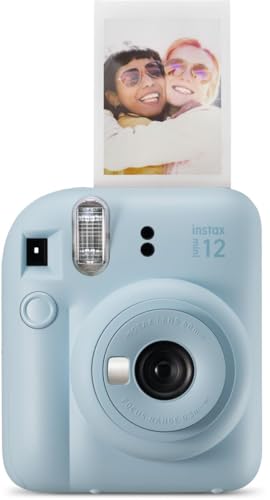
| Fujifilm Instax Mini 12 | The white instant classic | A pale, rounded body and instant prints made for bright parties and brighter rooms. |
| Polaroid Go Generation 2 | The pocket white keepsake maker | The smallest instant camera, confidently white, sized for jackets and small bright bags. |
| Sony ZV-1F | The white desk presenter | A vlogging compact confidently sold in white, flattering bright desks and studios. |
| Wyze Cam v4 | The white night witness | A pale smart camera with colour night vision, at home on white eaves and shelves. |
| Blink Mini 2 | The white indoor eye | A compact pale smart camera that guards rooms while matching them. |
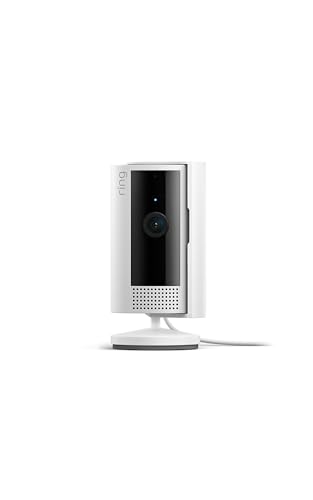
| Ring Indoor Cam (2nd Gen) | The white doorway guardian | A pale indoor guardian with a privacy shutter, at home in bright hallways. |
How Did We Build a Colour Guide Without Letting Colour Do the Judging?
Photographic merit gated entry: each pick had to earn a place in an ordinary under-500 guide before its finish was even discussed. That order protects the reader from the colour trap — a beautiful body with a disappointing lens — and it is why several pretty cameras you may expect are absent and several unglamorous white workhorses are present.
Colour confidence was graded, not guessed. Models with long-established white versions in mainstream retail were treated as confident; anything seasonal, regional or bundle-dependent would have been written as prose-only with a check-first warning. The six below all sit on the confident side of that line, and the reviews still repeat the listing check, because confidence is not a substitute for reading the page you buy from.
Use cases followed the rooms. White cameras cluster where bright interiors cluster — nurseries, studios, dressing tables, gallery-white rental flats, wedding venues — so the guide weights those rooms’ real needs: discretion, flattery, giftability and harmony with pale décor, alongside the ordinary virtues of focus, film and footage.
Gift logic ran through the judging as well, since a striking share of white cameras are bought for someone else. A gift in a chosen colour says the giver noticed; a gift that also performs says the giver cared. Picks had to satisfy both sentences before they were allowed to be charming.
Why Do Bright Rooms Reward Pale Cameras So Strongly?
Because a camera in a lived-in room is furniture that happens to see. A black body on a white nursery shelf announces surveillance; a white one reads as part of the room’s care equipment, alongside the monitor and the night light. Guests relax, children ignore it, and the photographs and footage that result are more natural for exactly that reason.
Desks tell the same story for creators. A pale presenter camera on a bright desk keeps a channel’s visual identity coherent — the background, the tools and the host all lit in the same key — and audiences read that coherence as professionalism before a word is spoken. Colour, at a desk, is branding you buy once.
What Should You Verify on Any White-Camera Listing?
Three fields, in order: the colour name in the title or variant selector, the photographs of the actual variant rather than the range, and the bundle contents, since pale editions sometimes ship in themed kits with cases or film. Sellers photograph the prettiest version; the variant selector is the contract, and the contract is what arrives.
Region matters quietly. A finish sold in one market may be a limited edition in another, with consequences for warranty and for matching accessories later. Buyers planning to add a pale case, strap or second body should confirm the finish is a standing option in their market, not a visitor in it.
How Do You Keep a White Camera Looking Like the Reason You Bought It?
Hands, bags and habits decide. A pale body carried loose in a tote with keys and cosmetics will grey at the edges within a season; the same body in a soft case keeps its showroom calm for years. The case is therefore not an accessory for white cameras but part of the colour decision itself, and it belongs in the first basket.
Cleaning is gentle and occasional: a microfibre cloth, no solvents near lettering or lens coatings, and a particular truce with ballpoint pens, denim dye and newspaper ink, the three great enemies of pale finishes. Owners who observe the truce report that white bodies age more gracefully than black ones, because wear shows as character rather than shine.
How Do You Style a Bright Room Around Its Cameras?
Treat the cameras as part of the room’s pale inventory — shelf, console, eave — and give each a permanent home with power nearby. Cameras with homes stay charged and pointed; cameras in exile witness nothing, however white their shells, and the room loses both its diary and its coherence.
Coordinate the small things: pale cases, light straps, a white charging dock on the desk. Coordination sounds decorative until it is understood as a usage system — everything visible, everything returned, everything ready — which is how bright studios stay bright while working daily.
What Should a Gift-Giver Check When Buying White for Someone Else?
The recipient’s rooms and existing kit, honestly observed: a white camera given into a dark, wood-panelled study is a beautiful mistake. Match the finish to the life it will join, confirm the variant in writing on the order, and include the case, because the case is the colour’s bodyguard.
Add the first consumables — film for the instant picks, a card for the presenter — so the gift performs on its first evening. Gifts that work immediately become possessions; gifts that wait for accessories become projects, and projects have a mortality rate no giver should accept.
How Does a White Camera Age Inside a Family?
It becomes a recognisable character in the archive — the pale body in party photographs, the small eye on the nursery shelf — and recognisable characters are how families narrate their own history. Narration is the archive’s final purpose, and these cameras achieve it by being seen as well as seeing.
Hand-me-downs carry the colour story forward: a white instant camera passing from sibling to sibling accumulates walls of prints in different postcodes, each wall a chapter. Objects with chapters are kept, and kept objects are the only ones whose value compounds forever.
Which Six White Cameras Earn Their Place?

Fujifilm Instax Mini 12 — The white instant classic
Instant photography’s favourite body wears white like it was designed in it — because it effectively was. The rounded pale shell is the version in wedding photographs, dorm windows and birthday piles everywhere, and its fully automatic exposure makes it the rare gift that works the moment the wrapping leaves it. Prints develop in hands, and the camera itself becomes part of the celebration’s décor.
For this guide’s bright-room angle, it is the anchor of confidence: a shopper ordering the white version is ordering the model’s most ordinary dress, not a limited experiment. That ordinariness matters for film, cases and future replacement — the whole pale ecosystem around this camera is as mainstream as the camera itself.
- Format: instant camera, prints on the spot
- Finish: white version is a standard, confident option
- Exposure: automatic, no decisions required
- Audience: parties, weddings, dormitories
- Role: the colour guide’s safest gift
Strengths
- White is its native, everywhere-stocked finish
- Prints turn gatherings into albums instantly
- Zero learning curve for recipients
Trade-offs
- Film is a continuing per-frame cost
- Prints are small and softly detailed
- No digital file unless you photograph the print
Wedding stylists place it on white guest-book tables where a black camera would puncture the palette, and the photographs of the table itself end up in the couple’s album. A camera that improves the room it documents is doing double professional duty.
Dormitory walls in pale prints and pale bodies define a whole student aesthetic; the camera passes hand to hand through a corridor and returns with its film spent and its legend grown. Few objects organise a social year as efficiently.
Its white finish forgives the party environment surprisingly well: flour, confetti dust and cake-adjacent chaos brush off the smooth shell. Practicality in fancy dress is still practicality, and owners notice.
A year on, the white body itself enters the family photographs as a recognisable character — the camera in the birthday pictures, recognisable across albums. Instruments that appear in their own archive acquire a biography, and biographies are why families keep objects long after their specifications are history.
Bridal shops keep a white one for fitting appointments, printing the moment a dress is chosen and sending the photograph home in the bag. Retail theatre of that quality usually requires an agency; here it requires film and foresight.
Its rounded shell survives handbag life better than angular rivals, an unglamorous virtue that decides which instant camera is still working at the second wedding of the season. Design that forgives logistics is design that understands parties.
Salons print a client’s new hairstyle before they leave the chair, and the photograph goes home on the fridge as the salon’s longest-lived advertisement. Mirrors forget; prints persist, and persistence in a kitchen is marketing that cannot be scrolled past.
Its white shell photographs as part of christening and naming-day tables, where the palette is pastel by decree. A camera that can attend in dress code earns invitations other cameras photograph from the doorway.
Teachers of early years print the day’s small triumphs for the classroom’s achievement line, pegged at child height. Authorship at five years old, displayed at five-year-old eye level, is pedagogy with a clothes peg.
Its white body in a child’s hands at a family wedding produces the wedding’s most democratic archive: eye-level, unposed, printed. Albums assembled from many heights tell the day more truthfully than any single vantage, however professional.
Nursery décor photographers — a real and growing trade — use it as the prop that is also the product, printing the room’s first portrait of its future occupant. Rooms photographed before their people arrive have a tenderness the market rewards.
Its film’s pastel rendering flatters the pale rooms it inhabits, a harmony of palette between instrument and subject. Harmony is rarely listed as a feature and constantly felt as one.
Owners report the white shell surviving toddler custody with its dignity intact, washed of jam and glitter by a damp cloth. Survivability in a nursery is the strictest certification in domestic technology.
Best for: gift-givers, parties and bright celebrations wanting prints. Not suited for: digital workflows or buyers avoiding running costs

Polaroid Go Generation 2 — The pocket white keepsake maker
Small enough to be forgotten in a pocket until the moment it is needed, this is instant photography’s everyday-carry answer, and its white shell is the version the world knows. Tiny prints, a selfie mirror and playful creative modes make it the camera of school runs, dog walks and café afternoons — the minor moments that turn out to be the majority of a life.
Bright-desk and bright-bag logic flatters it further. A pale pocket camera coordinates with the light-coloured everyday kit — the cream tote, the white trainers, the pale phone case — that its owners already carry, so it gets carried more, and carried cameras are the only ones that make pictures. Aesthetics, here, is a usage feature.
- Format: pocket instant camera, small prints
- Finish: white is the signature standard version
- Carry: jacket pocket or small bag, daily
- Features: selfie mirror, timer, playful modes
- Role: everyday-carry instant photography
Strengths
- Small enough to attend ordinary days
- White finish matches pale everyday carry
- Prints settle sharing debts on the spot
Trade-offs
- Prints are keepsake-small by design
- Its film format is a specific commitment
- Detail serves charm over documentation
Flat-shares run wall economies on its prints: rent rotas, in-jokes and visiting dignitaries documented at keepsake scale beside the door. The white body on the hall shelf becomes household furniture in the warmest sense — used by everyone, owned by the house.
Its size makes it the graduation gift of the instant world: children who began on a family action camera graduate to a pocket printer of their own, and their authorship of the family archive deepens accordingly.
Second-hand, white examples circulate between siblings like good coats, each owner adding a wall of prints somewhere before passing it on. An object’s biography across a family is an album in itself.
Its depth is the discipline of the small print: owners learn to choose moments worthy of a keepsake rather than spraying at life. That choosing, practised daily at pocket scale, quietly trains the eye that later, larger cameras will depend on for everything.
Commuters on scenic routes keep it for the window-seat astonishments — estuary light, a heron, frost on the marsh — printed before the train arrives. Journeys acquire artefacts, and artefacts turn commuting from lost time into collected time.
Its white body photographs beautifully in the flat-lay posts its owners make of their own desks, becoming both instrument and subject. Objects that document a lifestyle while belonging to it enjoy a double life no specification plans.
Its prints fit inside a phone case, and a generation carries one beloved face there, behind the glass, analogue inside digital. Hybrids of sentiment like that explain the format’s survival better than any sales figure.
Café owners near beauty spots lend one to regulars for the terrace’s golden hour, prints returning as the café’s wall of fame. Hospitality that produces artefacts produces loyalty, and loyalty is the whole balance sheet of a small café.
White examples age into a gentle cream in sunny windowsills, which owners describe as patina rather than damage. Objects permitted to show their years become furniture of the heart, and this little camera is permitted everywhere.
Its prints decorate the pale lids of laptops in co-working spaces, one small window of life among the stickers. Desks announce identities, and this camera supplies the announcement’s most human panel.
White examples are the default gift in its line, which simplifies the giver’s decision to film and a case. Simplicity in gifting is a mercy at holiday scale, and the mercy is widely taken.
Its selfie mirror serves the group squeezed onto a bench in a pale café, the print settling the sharing debt before the coffee cools. Debts settled in paper have a finality digital life rarely achieves.
The little body’s shadow in hard sunlight — owners photograph it as often as with it — has become a small genre of its own. Instruments that become subjects have crossed into culture, and culture is where formats go to become immortal.
Best for: everyday carriers wanting instant prints in daily life. Not suited for: larger prints, digital files or formal documentation

Sony ZV-1F — The white desk presenter
Creators with pale studios asked for a camera that belonged in their frame, and this presenter compact answers in a white version that sits on bright desks like it was art-directed there. Beneath the finish, the working brief is unchanged: a wide lens for arm’s-length presenting, eye focus that holds a speaker, and a screen that turns to meet them.
The colour’s professional value is coherence. Channels built on bright, airy visuals — beauty, craft, cooking, coaching — keep every visible object in the same key, and a black camera body in shot reads as a technical intrusion. The white version removes the intrusion, which is a small sentence about colour and a large one about audience trust.
- Format: compact with wide fixed lens
- Finish: white version confidently available
- Focus: eye tracking for presenters
- Screen: turns toward the speaker
- Role: the bright-studio presenter camera
Strengths
- Completes a bright channel’s visual identity
- Faces stay sharp without an operator
- Pocketable between studio sessions
Trade-offs
- Confirm the white variant on your exact listing
- Fixed lens cannot reach across a studio
- Serious darkness still wants added light
Beauty and craft channels film overhead-and-presenter hybrids where the camera itself enters the frame during introductions; the white body reads as a chosen prop rather than equipment. Viewers consistently describe such setups as calming, a word with measurable retention value.
Cookery presenters in white kitchens gain the same coherence: the camera on its small tripod disappears into the room’s palette, leaving the food as the only saturated object in shot. Disappearance, for a camera, is sometimes the highest compliment available.
Its gift career among creators is notable: partners and parents give the white version because it acknowledges the recipient’s aesthetic as well as their ambition. Tools that honour both get used on camera and off it.
Deep ownership reveals the white finish as a commitment device: a camera bought to match a studio gets used in that studio daily, because leaving it out is both practical and beautiful. Visibility is usage, usage is output, and output is the entire creator economy in three steps.
Wedding content creators filming bright venue tours use the white body as part of the pitch: the kit looks like the weddings it serves. Presentation, in the experience economy, is a deliverable clients photograph for their own feeds.
Physiotherapists and Pilates instructors recording bright-studio sessions value how the pale camera keeps clinical spaces calm on screen. Calm is a clinical virtue as well as an aesthetic one, and patients choosing between studios notice it.
Dentists, physios and other bright-clinic professionals record patient guidance videos on it, the white body keeping the clinical palette reassuring. Patients rewatch guidance they trust, and trust, in a treatment room, begins with what the room looks like.
Its white version on a pale tripod becomes nearly invisible in wedding venue tours, leaving the room itself as the only performer. Venues sell themselves when the equipment declines to audition.
Craft fair sellers film their stalls’ stories between customers, the camera resting among pale ceramics and linen without a visual argument. Tools that harmonise with stock get used at work, and used tools are the only ones that pay for themselves.
Confirming the white variant takes one careful minute on the listing, and this guide repeats the instruction because the minute is the whole colour discipline. Everything after that minute is ordinary, excellent presenter ownership.
Its pale finish under bright studio lighting avoids the reflections a glossy black shell throws into frame edges. Lighting designers notice such mercies; audiences simply feel the calm.
White-desk channels report the camera being asked about by viewers as often as the content, a question that converts to affiliate curiosity honestly earned. Equipment that enters the conversation has become part of the channel’s cast.
Its case in matching pale tones completes a kit that travels between bright rooms without a visual argument at either end. Journeys between studios are this camera’s commute, and it commutes beautifully.
Best for: creators with bright studios, desks and visual identities. Not suited for: zoom-dependent subjects or dark-venue filming

Wyze Cam v4 — The white night witness
Home cameras are the one category where white is not a style but a strategy: pale bodies vanish against the ceilings, eaves and shelves where they serve. This witness adds the tier’s best night manners — colour footage that keeps gardens, driveways and nurseries legible after dark — to a shell that bright rooms absorb without noticing.
For the colour guide’s purposes, it demonstrates the mature end of the white argument: the finish exists to make the camera forgettable, and forgettable is the highest praise a household witness can earn. Guests do not perform for it, children do not mug for it, wildlife does not avoid it, and the archive of ordinary life accumulates undisturbed.
- Format: smart camera for indoor and outdoor posts
- Finish: pale body blends with bright architecture
- Night: colour vision that stays legible
- Posts: eave, porch, nursery, workshop
- Role: the bright home’s overnight witness
Strengths
- Disappears against white ceilings and eaves
- Night footage a human can interpret
- Outdoor tolerance widens its posts
Trade-offs
- A witness, never a composing camera
- Platform account is part of ownership
- Footage serves memory, not exhibition
Nurseries are its most trusted post: white on white above the cot, checking the night’s small dramas in colour rather than ghost-grey. Parents reviewing a night feed or a first roll-over see their child, not a thermal rumor of one.
Garden wildlife diaries flourish under its eaves: hedgehog routes, fox timetables, the dawn hierarchy at the bird table. Households buy it for security and renew it for the hedgehogs, a migration of purpose its makers could not have scripted better.
Rental properties with pale interiors use it between tenancies as a discreet condition witness. Documentation that does not fight the décor is documentation landlords and tenants both accept more calmly.
Its depth is the garden’s long memory: seasons of arrivals, nests, storms and growth compressed into an archive no household member set out to make. Witnesses create historians accidentally, and the accident is the most valuable footage the family owns.
White-rendered garden rooms and conservatories take it as their night clerk, recording frost, visitors and the cat’s opinion of both in colour. Conservatories are half-indoors by nature, and a camera fluent indoors and out matches their constitution.
Beekeepers mount it near pale hives to watch colony traffic and the occasional interested woodpecker, gaining a season’s behavioural diary for a shelf’s worth of money. Apiaries run on observation, and observation has rarely been this affordable.
Its pale housing on a white porch post reads as architecture rather than surveillance to the street, a distinction neighbours appreciate in writing. Streets that accept their witnesses keep them, and kept witnesses keep the street’s diary.
Greenhouse growers film a season of growth and the occasional visiting robin, producing time-lapses that seed companies could envy. Cultivation is slow cinema, and this is its cheapest camera department.
Its colour night view serves lambing and calving sheds finished in pale boarding, where a legible picture at 3 a.m. is worth a walk in the rain. Farming’s night economy runs on exactly such legibility.
Its white body against white render is the countryside’s camouflage, accepted by planning-sensitive villages where visible technology is debated at parish level. Acceptance is a feature with paperwork attached, and this finish files it successfully.
The colour night picture serves pale-floored barns and yards where monochrome night vision washes detail into glare. Floors matter in footage more than spec sheets admit, and bright floors are this camera’s home turf.
Its witness diary of a white cat’s nocturnal patrols has a cult following in at least one household’s group chat. Serialised pets are the internet’s oldest genre, and the night shift was its last unclaimed territory.
Beekeepers, again, because the point generalises: pale equipment near pale hives disturbs neither bees nor beekeepers’ aesthetics. Husbandry is observation plus calm, and this camera supplies both in its working clothes.
Best for: bright homes wanting a discreet, legible night witness. Not suited for: photographers seeking craft, composition or prints

Blink Mini 2 — The white indoor eye
Indoors, the white camera’s camouflage completes itself: this compact witness sits on white shelves, pale bookcases and nursery ledges as if the room had grown it. Its work is continuous presence — motion clips, live view, the household’s visual diary — performed for years with almost no attention demanded in return.
The bright-room angle reveals its creative side. Studios film a painting’s progress from a pale corner; shops keep a till’s-eye diary without a black box looming over the counter; grandparents check a distant nursery from another continent. A witness that matches the room gets placed in more rooms, and placement is destiny for a camera that cannot be carried.
- Format: compact indoor smart camera
- Finish: pale shell for bright interiors
- Role: continuous household witness
- Placement: shelf, nursery, studio, shop
- Footage: motion clips and live view
Strengths
- Blends into pale rooms without announcing itself
- Years of witnessing for trivial effort
- Creative diary uses multiply over time
Trade-offs
- No composition or craft, by design
- Quality serves memory over beauty
- Household privacy manners are the owner’s duty
Artists’ studios in white-walled galleries use it for process films: a canvas evolving across weeks, compressed into the minute that collectors love. The camera’s invisibility keeps the studio looking like a studio in every frame of its own diary.
Pet owners in bright flats solve the sofa-cushion mysteries and the counter parliament of cats with a witness the animals ignore entirely. Behaviour footage improves training precisely because the observed life is unperformed.
Elder-care check-ins, arranged with consent, gain dignity from discretion: a pale camera in a pale room reads as household equipment rather than supervision. Tone matters in care, and colour is part of tone.
Its depth is domestic anthropology: years of hallway and studio diaries that future family historians will mine for how life was actually arranged. The camera’s cheapness is what lets it run long enough to become evidence, and evidence appreciates with every passing year.
White goods retailers place it above pale appliance rows as both security and theatre: customers see a tidy eye, staff gain a diary of the shop’s day. Retail environments punish visual clutter, and a camera that declines to clutter earns its shelf twice.
Rental hosts of bright coastal flats use it, with consent clearly posted, to confirm departures and protect cleaners’ accounts of a property’s state. Documentation that matches the décor provokes fewer arguments about documentation.
White-painted listening rooms and hi-fi corners place it unobtrusively for security that does not insult the décor. Rooms built for attention resent visual noise, and a camera that declines to be noise is welcome in them.
Its diary serves houseplant sitters and pet sitters as a shared truth: the watering happened, the cat was visited, the proof is timestamped. Small trusts, documented kindly, are the mortar of neighbourhood life.
Galleries between exhibitions keep it watching empty white rooms, where any movement is information. Minimalism, it turns out, is also a security aesthetic, and this camera was born fluent in it.
Its white shell on a gallery plinth during installation weeks documents the hanging of exhibitions, footage curators later use in the show’s own film. The witness becomes the exhibition’s first artwork, uncredited and indispensable.
Households with pale minimal interiors describe it as the only technology allowed visible status, a distinction it shares with the kettle. Visible status is the highest domestic honour available to a gadget.
Its clips of a white room’s changing daylight — the sun’s daily traverse across a wall — have been compiled by one owner into a slow film. Witnesses, left running, become artists of duration whether they intend to or not.
Cleaners and organisers working in bright homes photograph its placement as part of a room’s system, the camera filed under order rather than security. Order is a household philosophy, and this little eye has been naturalised into it.
Best for: bright households wanting a discreet indoor witness. Not suited for: anyone seeking a camera to compose photographs with
Ring Indoor Cam (2nd Gen) — The white doorway guardian
Hallways are the whitest rooms in most houses and the most consequential for a camera: every arrival, departure, delivery and dog-sitter negotiation passes through them. This pale guardian covers that traffic with a swivelling privacy shutter that closes its eye physically — a feature households in bright, guest-filled homes appreciate more than any specification.
Its colour-guide role is the social one. A white camera with a visible closed shutter communicates respect in a way settings menus never do: visitors see the eye shut and relax, hosts demonstrate the gesture in seconds, and the household’s witnessing continues with its manners intact. Design that communicates is design that gets trusted, and trusted cameras stay plugged in.
- Format: indoor smart camera with privacy shutter
- Finish: pale body for bright hallways
- Privacy: physical shutter, visibly closed
- Posts: hallway, doorway, living room
- Role: the mannerly household guardian
Strengths
- Physical shutter settles guest privacy instantly
- Pale finish suits bright entryways
- Ecosystem familiarity for many households
Trade-offs
- Witness work only — no composed photography
- Subscription tiers gate fuller history
- Placement manners remain the owner’s job
Hosts of gatherings demonstrate the shutter as part of the welcome, alongside the wifi password and the coat hook. The little ritual converts a potential awkwardness into a proof of consideration, and more than one guest has bought the same camera after experiencing it.
Home exchanges and house-sitting arrangements run smoother with a shutter both parties can verify in a photograph before departure. Trust, made visible, is the feature; the camera is merely its vehicle.
Its hallway archive becomes the household’s arrivals board: first day of school departures, the dog’s greeting choreography, the delivery that finally came. Bright rooms, pale camera, and a diary nobody had to remember to keep.
Its depth is social: the shutter ritual teaches a household to negotiate witnessing openly, and that negotiation skill transfers to every later technology the home adopts. A camera that improves a family’s manners has done more than guard a hallway.
House-sitting cooperatives standardise on it because the shutter gives both parties a photographable promise before keys change hands. Cooperative trust runs on verifiable gestures, and a closed white shutter photographs like a signature.
Its pale body on a hallway console becomes part of the home’s welcome furniture alongside the key bowl, a placement that keeps it powered, pointed and purposeful rather than exiled to a drawer after the first month.
Its shutter’s click is audible as well as visible, a small theatre of privacy that children in the house learn to perform for guests themselves. Manners taught by an object tend to outlast manners taught by lectures.
Bright hallways with pale consoles gather the household’s comings and goings into an arrivals board the family checks like weather. Departures for first days and returns from long trips acquire a chronicler with perfect attendance.
Short-let hosts in white interiors use the shuttered camera, disclosed in the listing, as a trust signal both ways: guests see the closed eye, hosts keep the doorway’s record between stays. Disclosure plus design is the niche’s whole ethics in one object.
Its pale finish in a sunlit hallway avoids the heat a dark shell gathers in a south-facing porch, a practical footnote owners in bright climates mention unprompted. Colour, occasionally, is climate engineering.
The shutter’s white face, closed, reads from across the room — legibility is the feature, and legibility at distance is what makes the privacy gesture social rather than theoretical.
Its arrivals diary has become the evidence base for one household’s long-running dispute about who the dog loves most. The data, reviewed impartially, favours the person who walks him, as data usually does.
Hosts lend the guest room its privacy by closing the shutter in the welcome tour, a thirty-second ceremony that guests photograph for their own future hosting. Manners, like cameras, propagate by demonstration.
Best for: bright, guest-filled homes wanting a guardian with manners. Not suited for: composed photography or subscription-free absolutes
How Do the Six White Cameras Compare?
| Camera | Primary job | Setup effort | Outgrows it when |
|---|---|---|---|
| Fujifilm Instax Mini 12 | Parties and prints in bright rooms | Budget the film honestly | Your sharing is purely digital |
| Polaroid Go Generation 2 | Daily-carry instant keepsakes | Carry it everywhere | You want larger prints |
| Sony ZV-1F | Bright-studio presenting | Confirm white variant, then record | Distant or dark subjects dominate |
| Wyze Cam v4 | Night witnessing of home and garden | Aim it at the bird table | You want prints or craft control |
| Blink Mini 2 | Indoor witnessing and pets | Place it, inform the household | You want to compose photographs |
| Ring Indoor Cam (2nd Gen) | Hallway guarding with privacy manners | Show guests the shutter | You reject subscriptions entirely |
Three of the six make photographs you can hold or present with; three witness the rooms the others perform in. That division is the white camera’s real taxonomy — performers and witnesses — and most bright households eventually keep one of each, matched in colour and divided in labour.
What Mistakes Do White-Camera Buyers Keep Making?
Assuming the colour from the photographs is the founding error: listings illustrate ranges with their prettiest variant, and the box that arrives obeys the variant selector, not the gallery. Read the selector, read the colour name in the order confirmation, and let the gallery be decoration. Thirty seconds of reading prevents the most common disappointment in this entire niche.
Buying colour before merit comes next — the pale body with the weak lens that photographs a beautiful room badly. This guide gated merit first for a reason: a white camera is bought for years of pictures, and the finish is enjoyed for minutes a day while the files are enjoyed forever.
Neglecting the case completes the trio. Pale finishes and loose handbags are natural enemies, and the soft case that preserves the showroom calm costs less than the regret. White is a commitment to a slightly more deliberate carry, and buyers who accept the commitment keep the look that made them choose it.
Frequently Asked Questions
How can I be sure the white version is what I am ordering?
Check the variant selector’s colour name, the colour stated in the product title of that variant, and your order confirmation — all three should agree. If a listing shows white photographs under a generic colour name, treat it as unconfirmed and choose a listing that states the finish plainly.
Do white versions cost more or perform differently?
Performance is identical; finishes are shells, not sensors. Pale editions occasionally appear in themed bundles with cases or film, which changes the basket rather than the camera, so compare bundle contents rather than assuming a colour premium.
Will a white camera yellow or grey over time?
Quality shells hold their colour for years when kept from solvents, ink and dye transfer. The enemies are ballpoint pens, fresh denim and newspaper print in bags — a soft case defeats all three, which is why this guide treats the case as part of the purchase.
Which white pick makes the best gift?
The instant classic for celebrations, the pocket instant for everyday carriers, and the white presenter compact for a creator whose studio you know. All three are confidently white, immediately usable and self-explanatory — the three virtues of any gift that involves technology.
Are the home cameras really part of a photography guide?
As witnesses, yes, with the line kept bright: they record households continuously and discreetly, which is a photographic service, while composing photographs remains the work of the instant and presenter picks. The guide separates the roles so no buyer mistakes one for the other.
Are white versions harder to resell or hand down?
The opposite is usually reported: pale instant and presenter cameras are the versions recipients ask for by name, and the home witnesses transfer with the rooms they match. Condition matters more than colour in any second life, which is another argument for the case this guide keeps recommending.
Final Recommendation
Choose the role first and the shade second. Prints for bright parties: the instant classic. A pale pocket companion: the keepsake maker. A presenter for a bright studio: the white compact, variant confirmed. A night witness for pale eaves: the colour-night guardian. A discreet indoor eye: the shelf witness. A hallway guardian with manners: the shuttered pale sentinel. Every one earns its place among the best cameras under 500 white on merit, with the finish as the organising joy rather than the excuse.
Verify the variant, buy the case, and let the bright rooms do the rest. A white camera chosen this way stops being a colour gamble and becomes what its owners intended all along: an instrument that belongs in the room, in the frame and in the family, all at once.
How Does a White Camera Change the Photographs Themselves?
By lowering the room’s guard. Subjects who forget the pale witness behave like themselves; presenters framed by coherent bright sets relax into their material; even the instant cameras’ whiteness signals play rather than documentation, and play produces the expressions families actually want to keep. Colour reaches the pictures through the people, which is the subtlest mechanism in this entire guide.
It also changes the photographer’s routes: pale cameras get placed in the open, on the shelf and the desk, rather than hidden in drawers between uses. Placement is destiny for cameras, and a finish that earns open placement quietly multiplies a household’s photographic opportunities every single day.
What Is the Bright-Room Household’s Ideal Pairing?
One performer and one witness, matched in white and divided in labour: the instant or presenter camera for the made moments, the pale guardian for the unmade ones. Between them, a household’s bright rooms generate both the portraits and the diary — the posed and the true — which together constitute a complete family archive.
Add the discipline this guide repeats like a refrain — variant verified, case bought, shutter manners observed — and the pairing serves for years without a single colour regret. That is the whole promise of shopping by colour responsibly: the joy of the theme, with none of its traps.
A last word on confidence: the white camera bought carefully — merit first, variant verified, case included — carries a particular pleasure its owners describe consistently. It is the pleasure of an object that looks like the life it was bought for, and that pleasure, renewed daily on a bright shelf, is a legitimate return on the whole exercise.
Keep the order confirmation that names the colour with the camera’s papers. It is a dull document and a decisive one, settling every future question about variant, warranty and matching accessories without an argument, which is what papers are for in a well-run household.
White cameras reward a moment of interior honesty before purchase: photograph the shelf, desk or hallway where the camera will live, and judge the finish against the photograph rather than against an imagined room. Rooms, like cameras, should be bought as they are.
The pale finish’s effect on guests is cumulative and kind: a home whose visible technology matches its décor feels calmer to enter, and calm homes get visited, celebrated and photographed more. Décor, at this depth, is a social technology in its own right.
For creators, the white body is also a continuity tool: it disappears into bright sets across months of videos, so the channel’s look survives equipment changes elsewhere. Continuity is a brand’s memory, and memory is what audiences subscribe to.
Buy the matching strap and case in the same order, while the finish’s exact tone is in front of you. Tones drift between production runs, and the kit assembled in one purchase harmonises in a way later additions rarely manage.
A white camera makes an unusually honest second-hand purchase, because wear cannot hide on a pale shell. Sellers of well-kept white bodies can prove their care at a glance, and buyers should pay the small premium that proof deserves.
Children read white cameras as friendly, an unscientific observation with consistent field reports behind it. Instruments that children approach willingly get aimed at more of childhood, and childhood, aimed at kindly, is the family archive’s core collection.
A pale camera’s relationship with sunlight deserves one practical note: bright shells stay cooler in the hand and in the bag during summer work, a small physical kindness owners in hot climates mention with genuine gratitude.
White finishes photograph honestly in listing pictures when the time comes to hand a camera down, because every mark declares itself. Honesty in a listing is a courtesy to strangers, and pale cameras make courtesy easy.
The bright-room household should keep one microfibre cloth in the same drawer as the camera’s charger, so the two rituals — power and polish — happen together. Rituals that travel in pairs survive; rituals that travel alone get postponed.
For the presenter, a white body pairs with pale backdrops to create the high-key look audiences associate with cleanliness and care. Associations are a channel’s invisible production design, and this finish designs it for free.
Grandparents given a white instant camera often keep it on the kitchen table permanently, beside the fruit bowl, in the room where life actually happens. Kitchens are the correct headquarters for family photography, and the colour helps the camera belong there.
When in doubt between two white candidates, choose the one whose ecosystem — film, cases, batteries, spares — is stocked nearest to home. Local availability is a love language between a household and its tools.
One more check belongs to the colour discipline: view the exact variant’s photographs on a calibrated screen if you can, because pale finishes photograph warm or cool depending on the seller’s lighting. The variant name remains the contract; the photographs are merely its portrait.
And let the bright rooms have the last word: a white camera that is used daily in a sunlit kitchen will out-photograph, in family value, a technically grander body exiled to a dark cupboard. Placement is destiny, and this finish was designed to win placement.
Related Guides
Explore further with our guides to instant cameras for weddings and parties, desk cameras for bright home studios, or home cameras that respect guest privacy.


