ilcastellomenu.com is reader-supported. When you buy through links on our site, we may earn an affiliate commission.
Where to Buy a Camera Whose Files Reward a Second Look
The best digital cameras for high quality photographs are not the fastest cameras, the smallest cameras or the cameras with the longest feature lists. They are the cameras whose files hold together when you lean in: when a portrait is printed large enough that eyelashes become architecture, when a shadow is lifted two stops in editing and stays clean instead of dissolving into coloured noise, when a red dress keeps its folds instead of flattening into a single shout of red. This guide ranks six cameras by that standard alone — the quality of the file they hand you — and it is honest about the trade that defines this corner of photography: every one of these bodies asks you to give up a little speed, a little size or a little money in exchange for pictures that survive scrutiny.
Quality, as the word is used here, has three measurable ingredients and one unmeasurable one. Resolution decides how much fine detail the sensor records. Dynamic range decides how much of a scene’s brightness — from sunlit stone to the shade beneath it — survives in a single exposure. Colour depth decides whether skin, sky and foliage graduate smoothly or band into visible steps. The unmeasurable ingredient is character: the way a camera’s files respond to editing, the honesty of its colours straight out of the body, the feeling that a photograph was made rather than merely captured. The six picks below were chosen because each one delivers an unusual amount of at least two of those ingredients, and none of them wastes your money on specifications that look impressive in a table and invisible in a print.
Buy from retailers who let you handle returns gracefully, because file quality is partly personal: two photographers can open the same raw file and disagree about its colour. Wherever you shop, spend your first weekend with the camera shooting the subjects you actually care about, at the sizes you actually print, before the return window closes. A camera that wins on a test chart but disappoints on your own walls is the wrong camera, however fine its numbers. Judge it by your subjects, your light and your walls — the three examiners it will actually face for the next decade of its working life with you.
Key Takeaways
- File quality is resolution plus dynamic range plus colour depth — a camera strong in only one of the three will eventually disappoint you.
- Full-frame bodies still lead for clean high-ISO files and gentle highlight roll-off, but the best APS-C sensors now sit closer than their price gap suggests.
- Raw files are where the quality you paid for actually lives; every pick here rewards shooting raw and punishes laziness equally.
- Lenses cap quality harder than sensors do — budget for one excellent lens before a second mediocre one.
- The Fujifilm X100VI proves a fixed lens can be a quality feature: one superb optic, perfectly matched to its sensor, with nothing to swap and nothing to compromise.
- Print size is the honest test — judge these cameras at the dimensions you display, not at pixel-peeping magnification on a monitor.
In this guide
Quick Picks
| Pick | Badge | Why it earns its place |
|---|---|---|
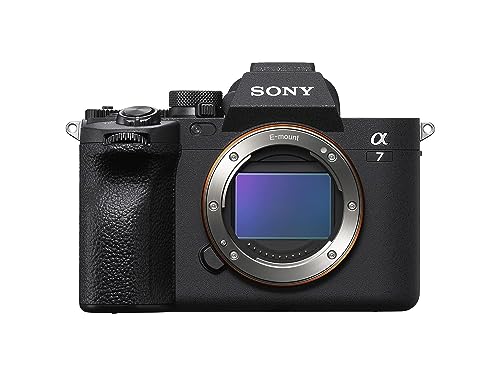
| Sony Alpha 7 IV | The balanced file champion | A high-resolution full-frame sensor whose raw files bend further in editing than almost anything at its level. |
| Fujifilm X-T5 | The detail-per-gram winner | Forty megapixels of APS-C resolution in a body small enough to carry daily, with colour science photographers genuinely love. |
| Canon EOS R6 Mark II | The low-light quality pick | Files that stay clean and colour-true when the light collapses and lesser sensors turn to mush. |
| Panasonic LUMIX S5II | The steady-handed value | Full-frame quality with stabilisation strong enough to keep ISO low and shutter speeds honest indoors. |
| Nikon Z50 II | The affordable quality door | Nikon colour and a sharp APS-C sensor at an entry price, with files far better than its cost implies. |
| Fujifilm X100VI | The one-lens masterpiece | A fixed prime matched perfectly to a high-resolution sensor — quality through subtraction. |
How Did We Judge Quality When Every Maker Claims It?
We started by ignoring the word entirely and asking what a file must survive. First, the large-print test: an image enlarged until it fills a wall print exposes weak lenses, smeared detail and noise reduction that trades texture for smoothness. Second, the editing test: a quality file tolerates being pushed — shadows raised, highlights recovered, white balance corrected after the fact — because real photographs are rarely exposed perfectly in the field. Third, the mixed-light test: tungsten room light against a blue window is where colour science separates into cameras that render skin as skin and cameras that render it as soup.
We also weighed the quality chain around the sensor. In-body stabilisation is a quality feature because it buys slower shutter speeds and lower ISO settings. A good electronic viewfinder is a quality feature because it shows exposure honestly before the shutter fires. Dual card slots are a quality feature because the finest file ever recorded is worthless if the card dies. And the lens mount matters enormously: every body below sits in a system with genuinely excellent glass available, because a superb sensor behind a mediocre lens produces mediocre photographs with very high resolution.
We also listened to working photographers rather than only to charts. Wedding shooters described which files survived a badly lit reception; landscape photographers described which sensors held a dawn sky without banding when the exposure was graded hard; printers described which bodies’ output they could enlarge without apology. Where testimony and measurement disagreed, we weighted the printed result, because a photograph’s final home is a surface, not a spreadsheet.
What we deliberately excluded: burst speed beyond adequacy, video specifications beyond competence, and menu gimmicks. A camera can be a magnificent action or cinema tool and still be the wrong answer to the question this guide asks. The question is narrow — which cameras hand you the finest still photographs — and the ranking stays loyal to it.
Which Are the Best Digital Cameras for High Quality Photographs, Pick by Pick?

Sony Alpha 7 IV — The balanced file champion
The Alpha 7 IV is what happens when a maker stops chasing a single headline number and balances all three quality ingredients at once. Its full-frame sensor resolves enough detail for large prints and meaningful cropping, its dynamic range lets a single exposure hold a bright sky and a shaded doorway in the same frame, and its colour — long the debating point of Sony bodies — has matured into something accurate and quietly flattering. Raw files from this camera are famously cooperative: exposure mistakes that would end a lesser file become recoverable, which in practice means more of your photographs survive your own imperfect days.
What lifts it above spec-sheet rivals is how rarely the camera itself becomes the problem. The autofocus finds eyes in light where you can barely see them yourself, the stabilisation steadies handheld work at shutter speeds that keep ISO — and therefore noise — down, and the body handles like an tool that expects to be used daily rather than admired. Photographers who shoot weddings, portraits and travel with one body tend to describe the same experience: the Sony disappears, and the files that come home are simply, consistently excellent.
- Sensor: full-frame, high-resolution class
- Files: raw with wide editing latitude, strong highlight recovery
- Stabilisation: in-body, effective for handheld low-light work
- Colour: accurate, modern Sony rendering with pleasing skin tones
- Role: the one-body answer for maximum stills quality per dollar
Strengths
- Raw files tolerate aggressive shadow and highlight rescue
- Detail holds up to large prints and sensible cropping
- Autofocus reliability protects quality on unrepeatable moments
Trade-offs
- Menus reward setup time before they feel natural
- Best results demand good lenses, which add real cost
- Rolling shutter shows in fast electronic-shutter panning
Consider the economics honestly: this body sits at the point where spending more buys refinement rather than transformation. The next tier of cameras adds resolution or speed in amounts most photographers will never print large enough to see. For the reader whose question is simply “what gives me the finest photographs I can reasonably afford,” the Alpha 7 IV is the answer the rest of this guide is measured against — not because it wins every category, but because it loses none of them by much.
Best for: portrait, wedding, travel and editorial photographers who print large and edit seriously. Not suited for: buyers who want the smallest possible kit or who never intend to shoot raw

Fujifilm X-T5 — The detail-per-gram winner
The X-T5 performs a trick that should not work: it packs a forty-megapixel APS-C sensor — resolution in full-frame flagship territory — into a retro-styled body you can carry all day without thinking about it. Smaller sensors historically surrendered the quality argument; this one contests it. Pixel for pixel its files are dense with detail, its high-resolution sensor oversamples beautifully, and Fujifilm’s colour science, refined over decades of film manufacture, produces straight-from-camera colours that many photographers prefer to their own editing. For the quality-obsessed traveller, it is the most persuasive argument that sensor size is a means, not a virtue.
Dials are this camera’s quiet quality mechanism. Shutter speed, ISO and exposure compensation sit on physical controls you can set by touch and verify at a glance, which means exposure decisions happen deliberately instead of by menu-diving accident. Deliberate exposure is quality: every stop of highlight you protect in the field is a stop the file does not have to fake in recovery. The X-T5’s handling teaches good exposure the way a well-balanced kitchen knife teaches knife skills — by making the correct motion the natural one.
- Sensor: APS-C, forty-megapixel class
- Files: exceptionally detailed raw, celebrated film-simulation colour
- Controls: dedicated dials for shutter, ISO and exposure compensation
- Stabilisation: in-body, strong for a body this size
- Role: maximum resolution in a genuinely portable system
Strengths
- Resolution that embarrasses larger, pricier bodies
- Colour straight from the camera often needs no editing
- Compact system keeps the whole quality kit travel-light
Trade-offs
- High-ISO files trail the full-frame picks in deep darkness
- Forty-megapixel files demand fast cards and storage
- Retro controls delight some hands and frustrate others
Landscape and architecture shooters have adopted this body in numbers that surprise people who still equate quality with full-frame, and their reasoning is sound: at base ISO, in good light, on a tripod, the X-T5’s files stand beside anything in this guide. Its quality only concedes ground when light collapses — and photographers who plan their work around good light may never shoot in the conditions where it trails. Know your own habits before paying for low-light insurance you will not claim on.
Best for: travellers, landscape shooters and detail lovers who work in decent light and print big. Not suited for: photographers whose work lives in dark venues at high ISO

Canon EOS R6 Mark II — The low-light quality pick
Every camera in this guide makes beautiful files at noon. The R6 Mark II makes them at midnight. Its full-frame sensor trades a measure of resolution for pixels that gather light greedily, and the result is the cleanest high-ISO output here: photographs taken in candlelit rooms, evening streets and dim venues that retain colour, texture and dignity where other files smear into watercolour. If your definition of quality includes the photographs other cameras cannot take at all, this Canon has a claim no rival in the list quite matches.
Canon’s colour science does heavy lifting in those conditions. Skin tones under mixed artificial light — the hardest test in everyday photography — come out of this body looking like people rather than produce. The autofocus deserves mention in a quality guide for a practical reason: it locks onto eyes and subjects in near-darkness, and a perfectly focused file at high ISO beats a misfocused clean one every time. Sharpness is a quality metric too, and it is decided at the moment of focus, not in the sensor specification.
- Sensor: full-frame, low-light-optimised resolution class
- Files: class-leading cleanliness at high ISO settings
- Focus: subject and eye detection that works in dim venues
- Colour: Canon rendering, especially kind to skin under mixed light
- Role: quality when the light has gone and the event has not
Strengths
- High-ISO files keep colour and texture rivals lose
- Focus accuracy in darkness protects sharpness
- Superb for events, weddings and evening street work
Trade-offs
- Resolution is the lowest of the full-frame picks here
- Heavy cropping eats its quality advantage quickly
- RF lenses at the top end are a serious investment
There is a philosophy embedded in this camera: that the photograph you can take beats the photograph you can describe. Twenty-four megapixels, give or take, fills any wall a home or gallery plausibly offers, and it fills it with images gathered in light where higher-resolution bodies are already negotiating with noise. Choose the R6 Mark II if your portfolio leans toward people, evenings and atmosphere; choose its higher-resolution rivals if it leans toward landscapes, products and prints the size of doors.
Best for: event, wedding and low-light photographers who prize clean files over pixel counts. Not suited for: heavy croppers and billboard-scale landscape printers

Panasonic LUMIX S5II — The steady-handed value
The S5II’s quality argument begins with a number that never appears in its files: the shutter speed you did not have to raise. Panasonic’s in-body stabilisation is among the most effective fitted to any full-frame camera, and its photographic consequence is enormous — handheld shots at speeds that would blur on lesser bodies, taken at ISO settings low enough to keep files clean, detailed and colour-rich. Indoors, at dusk, in museums and old churches where tripods are banned and light is rationed, stabilisation is not a convenience. It is the difference between a quality file and a compromised one.
Beyond steadiness, the sensor itself is a mature, well-regarded full-frame design with generous dynamic range, and Panasonic’s colour has a natural, unfussy honesty that product and documentary photographers appreciate. The body is weather-sealed, the ergonomics suit long handheld days, and the L-mount gives access to glass from several makers at several price levels — a genuine quality advantage, because it lets you buy the lens your photography needs rather than the lens one catalogue offers.
- Sensor: full-frame, strong dynamic range class
- Stabilisation: class-leading in-body system for handheld work
- Mount: L-mount alliance glass from multiple makers
- Build: weather-sealed body for outdoor quality work
- Role: full-frame files at the friendliest price in this guide
Strengths
- Stabilisation converts directly into lower ISO and cleaner files
- Full-frame quality for notably less than flagship money
- Wide lens choice through the L-mount alliance
Trade-offs
- Autofocus, though much improved, trails Sony and Canon for erratic subjects
- Resolution matches the R6 class rather than the high-res picks
- System is younger; some niche lenses are still arriving
Value arguments in quality guides are usually suspect — cheap and finest rarely coincide — but the S5II earns its place on files, not price. Its photographs stand comparison with the other full-frame picks in ordinary light, and in handheld low light its stabilisation can put it ahead of them. The discount is a bonus; the steadiness is the story. Photographers who shoot interiors, travel and documentary work without a tripod will find this the most enabling camera here.
Best for: handheld shooters, travellers and interior photographers who need clean files without a tripod. Not suited for: sports shooters who need the fastest tracking in the business

Nikon Z50 II — The affordable quality door
Quality advice usually begins at prices that end conversations, so the Z50 II matters: it is the least expensive camera here, and its files are not a compromise to apologise for. Nikon’s APS-C sensor renders colour with the company’s characteristic depth — greens that look like vegetation, skies that graduate instead of banding — and the Z mount’s short flange lets even modest lenses perform with a crispness older entry-level systems could not reach. For a photographer upgrading from a phone, the leap in file quality from this small body is the largest single step in this entire guide.
Nikon also resisted the temptation to cripple the small body. The autofocus inherits subject-detection intelligence from Nikon’s flagships, the viewfinder is bright and honest, and the raw files respond to editing with a generosity that invites learning. That last point is a quality feature in disguise: a camera whose files forgive a beginner’s exposure errors while rewarding a developing eye is a camera that improves its owner. Many photographers’ finest early work exists because a forgiving sensor let them rescue a moment and study what went wrong.
- Sensor: APS-C with Nikon’s colour rendering
- Files: raw files with editing latitude beyond its price class
- Focus: inherited flagship subject-detection modes
- Mount: Z system, from affordable primes to professional glass
- Role: the entry point to serious file quality
Strengths
- Colour and sharpness far above its price
- Forgiving files suit photographers still learning exposure
- Grows into the full Z system without a body change later
Trade-offs
- No in-body stabilisation; steadiness depends on lens or technique
- APS-C depth-of-field look differs from full-frame aesthetics
- Single card slot asks for a disciplined backup habit
Judge this camera against its mission rather than against flagships. It will not match the Sony’s editing latitude or the Canon’s darkness performance, and it does not pretend to. What it does is put genuine, printable, editable quality into the hands of someone whose budget was about to settle for far less — and it does so inside a mount they never need to abandon. As a first serious camera for a quality-minded beginner, nothing else in this guide is as easy to recommend.
Best for: beginners and upgraders who want real file quality without flagship spending. Not suited for: professionals needing dual slots, stabilisation and full-frame depth

Fujifilm X100VI — The one-lens masterpiece
The X100VI argues that quality is what remains when you remove everything that can go wrong. One body, one fixed prime lens, one focal length — and that lens is optically matched to its high-resolution sensor with a precision no interchangeable system can guarantee, because it never has to compromise for a mount it shares with other designs. The files are startling: crisp across the frame, rich in Fujifilm’s film-derived colour, and possessed of a coherence that zoom-lens photographs rarely match. It is the camera photographers buy after owning the big systems, to remind themselves what the big systems were for.
Constraint shapes the quality in a second way. A fixed focal length forces you to compose with your feet, to see scenes at one honest perspective until that perspective becomes instinct. X100 owners’ portfolios have a recognisable unity — the same eye, the same distance, the same restraint — and unity is a quality of bodies of work, not just of files. Add the leaf-quiet shutter, the hybrid viewfinder that can show an optical view of the world, and film simulations that make colour decisions feel like choosing a film stock, and the camera becomes an argument that limitation is a feature.
- Sensor: APS-C, high-resolution forty-megapixel class
- Lens: fixed prime, designed solely for this sensor
- Finder: hybrid optical/electronic viewfinder
- Colour: film simulations drawn from Fujifilm’s film heritage
- Role: ultimate quality within one focal length
Strengths
- Lens-sensor pairing delivers edge-to-edge coherence
- Files carry a distinctive, filmic colour character
- Carry-everywhere size means quality is present daily
Trade-offs
- One focal length; no zooming except by walking
- Demand keeps it hard to find at normal prices
- Not a system — it complements interchangeable cameras rather than replacing them
Honesty requires the caveat in that last trade-off: the X100VI cannot be your only camera if your work needs reach, width or macro. But as a quality instrument for the everyday — street, family, travel, the documentary of a life — its files compete with anything here while its body asks the least of you. Many owners report it becomes their most-used camera within a month, and use is the multiplier that turns quality into photographs.
Best for: street, travel and everyday photographers who value character and carry-ability. Not suited for: anyone needing interchangeable lenses or telephoto reach
How Do the Six Quality Picks Compare Side by Side?
| Camera | Sensor class | Quality signature | Watch out for |
|---|---|---|---|
| Sony Alpha 7 IV | Full-frame, high resolution | Most editable files; balanced excellence | Needs good glass to show its best |
| Fujifilm X-T5 | APS-C, 40MP class | Extreme detail per gram; beloved colour | High-ISO trails full-frame rivals |
| Canon EOS R6 Mark II | Full-frame, low-light tuned | Cleanest files in darkness | Lowest resolution of the full-frame trio |
| Panasonic LUMIX S5II | Full-frame | Stabilisation-driven clean handheld files | Tracking focus a step behind leaders |
| Nikon Z50 II | APS-C | Nikon colour and sharpness at entry price | No in-body stabilisation |
| Fujifilm X100VI | APS-C, 40MP class, fixed lens | Lens-sensor coherence; filmic character | One focal length, hard to find |
Why Does the Lens Matter More Than the Sensor You Are Paying For?
A sensor can only record the image a lens projects onto it, and lenses — not sensors — are where quality quietly dies. A soft lens on a forty-megapixel sensor produces forty million pixels of softness, faithfully recorded. This is why experienced photographers reverse the beginner’s budget: they buy the body that is good enough and the lens that is excellent, knowing glass holds value, outlives bodies and defines the ceiling of every file the system will ever make. For each pick above, the quality path is the same — pair it first with one fast prime or a top-tier standard zoom, and let a second lens wait until your portfolio proves the need.
Practical lens quality shows in specific places. Corners matter in landscapes and architecture; a lens that is sharp in the centre and vague at the edges betrays itself the moment a scene has detail across the frame. Contrast matters everywhere; premium coatings keep shadowed areas clean when bright light enters the frame. And focus accuracy at wide apertures matters most of all for portrait work, where the plane of sharpness is measured in millimetres. When you test a new quality camera, test it with the best lens you can borrow — otherwise you are reviewing the lens and blaming the body.
How Should You Set Up a Quality Camera for Raw Files That Reward Editing?
Shoot raw, always: the quality you paid for is discarded by in-camera JPEG compression before you ever see it. Set the colour space to Adobe RGB if your workflow is print-oriented, or leave sRGB only if everything you make goes straight to screens. Expose for the highlights — digital sensors forgive lifted shadows far more readily than clipped highlights, which are gone permanently — and use the histogram rather than the rear screen’s cheerful brightness to judge. Turn off aggressive in-camera noise reduction for raw work; modern editing software removes noise with far more intelligence and far less texture damage.
Two habits separate quality files from lucky ones. First, bracket important static scenes: three exposures cost nothing and guarantee one file with the full dynamic range the moment offered. Second, review at full magnification in the field when a photograph truly matters — focus errors and micro-blur are invisible on a small screen at thumbnail size and unfixable at home. The photographers whose files consistently impress are rarely luckier than you; they simply check, while the moment can still be repeated.
What Does Printing Teach You That a Monitor Never Will?
A monitor forgives. It backlights your photograph, flatters its contrast and displays it at sizes where resolution differences vanish. Print is the audit. A large print reveals whether detail is real or sharpened theatre, whether shadow gradation is smooth or banded, whether colour was accurate or merely vivid. Photographers serious about quality print their best work regularly — not for the wall, but for the education. You will learn more about your camera’s true file quality from one honest metre-wide print than from a hundred specification comparisons.
Printing also recalibrates spending. Many photographers discover their current camera prints beautifully at the sizes they actually use, and that the upgrade they craved solves a problem they do not have. Others discover the opposite: that the wall they care about exposes every weakness. Either discovery is valuable, and both are cheaper than buying blind. If you take one assignment from this guide, take this one — print your favourite photograph from your current camera at the largest size you would ever want, and let that print tell you which of the six picks above you actually need.
How Does Dynamic Range Change the Photographs You Can Attempt?
Dynamic range is the quality specification with the most visible daily consequences, and the least glamorous name. It describes how much of a scene’s span — from the brightest highlight you care about to the darkest shadow you care about — a single exposure can hold with usable detail at both ends. A camera with generous range lets you photograph a person standing in a doorway at midday: face in shade, street in full sun, both rendered. A camera without it forces a choice, and the choice always costs you half the picture.
In practice, range shows up in three recurring situations. Backlit portraits are the first: expose for the face and the sky behind your subject either survives as graduated blue or dies as white void, depending on the sensor. Interior photographs with windows are the second: the room and the view outside it live many stops apart, and range decides whether you get both or a compromise. Golden-hour landscapes are the third, where the sunlit ridge and the shadowed valley are the entire subject. Every full-frame pick in this guide handles these scenes with room to spare; the APS-C picks handle them well at low ISO and ask for more care as sensitivity climbs. That gradient — not the headline resolution — is the truest quality ladder in this list.
You can buy back some range with technique. Bracketing and blending exposures extends any camera’s reach for static scenes. Graduated filters still earn their bag space for landscapes. But technique has a cost in time and spontaneity, and the moments that define portfolios rarely wait for a tripod and a filter holder. A sensor with range built in is a sensor that says yes more often, and the photographs you did not have to refuse are a quality category of their own.
Why Do Colour and Skin Tones Decide More Purchases Than Sharpness?
Sharpness is easy to demonstrate in a shop; colour is what you live with for years. Photographers who shoot people eventually choose systems by how they render skin — whether faces hold their subtle variation of red, pink and gold or collapse into a single waxy tone, whether a blush reads as life or as sunburn. Canon’s long-standing reputation rests substantially on this; Fujifilm’s film simulations build an entire philosophy on it; Nikon’s rendering wins loyalists who describe its greens and skin as simply truthful. None of these is objectively correct. All of them are defensible. The only indefensible position is buying without looking at portraits from the camera you are considering.
Colour also governs editing time, an invisible quality cost. A file whose colours arrive close to your intention needs minutes of adjustment; a file that fights you needs an hour, multiplied by every photograph in a wedding or a journey. Over a year of shooting, the camera with colour you love is effectively the faster camera, whatever its burst rate. When you compare the picks in this guide, spend less time on resolution charts and more time on unedited portraits and landscapes from each body, ideally of subjects and light resembling your own work. Your eyes already know your answer; the specifications are just there to confirm the budget can follow.
How Should You Test a Camera’s Files Before Committing?
Download sample raw files — every maker and many reviewers publish them — and edit them the way you edit your own work. Raise the shadows on an underexposed frame. Recover a bright sky. Correct a white balance that mixed tungsten and daylight. The camera whose files bend without breaking is the camera whose quality claims are real, and you can verify this in an evening, free, before spending anything. Pay particular attention to what happens to fine texture — hair, fabric, foliage — as you push the file: quality sensors hold texture; weaker ones trade it for smear.
Then test the handling that protects quality in the field. Can you change ISO, aperture and exposure compensation without lowering the camera from your eye? Does the viewfinder show a truthful preview of exposure? Does the body balance with the lens you actually intend to buy, or does the combination front-load until your wrist tires and your framing drifts? Files are made by hands as much as by sensors. A camera that fits your hands and habits will produce better photographs than a technically superior camera that fights you, because you will carry it more, practise more and fumble less at the decisive moment.
How Do Stabilisation and Shutter Choices Quietly Govern File Quality?
Blur is the quality thief nobody specs. A file can have perfect exposure, accurate colour and a superb lens, and still be worthless because the camera moved a fraction of a millimetre during the exposure. In-body stabilisation — fitted to five of the six picks here — compensates for the tremor in human hands and converts shutter speeds once considered reckless into routine. Its quality effect is best understood as an ISO discount: every stop of shutter speed the stabiliser buys is a stop of ISO you do not have to spend, and unspent ISO is cleaner colour, finer texture and wider dynamic range. When you compare the Panasonic’s famously effective system against bodies with gentler correction, you are not comparing convenience. You are comparing the noise floor of every handheld photograph you will take indoors for years.
Shutter choice matters alongside it. Electronic shutters are silent and vibration-free, which helps at long exposures on tripods and in quiet venues, but their readout speed can distort fast-moving subjects and band under flickering artificial light. Mechanical shutters avoid those artefacts at the cost of a whisper of vibration and sound. Quality photographers learn both modes of their camera the way drivers learn both brakes: the mechanical shutter as the default for action and artificial light, the electronic for silence and stillness, and the electronic first-curtain hybrid many bodies offer as the everyday compromise. None of this appears in resolution tables, and all of it appears in your files.
Which Accessories Actually Raise Quality, and Which Only Raise Cost?
Three accessories earn their money on quality grounds alone. A sturdy tripod is the first: for static subjects it removes blur, permits base ISO and turns dynamic range into a solved problem through bracketing — no sensor upgrade matches what a good tripod does for a landscape file. A calibrated monitor is the second, and the most neglected: editing colour on an uncalibrated screen is mixing paint in the dark, and photographers routinely blame cameras for casts their displays invented. A fast, reliable memory card from a reputable source is the third; it will never improve a photograph, but its failure can delete a day of them, and counterfeit cards are a genuine plague of online marketplaces.
Beyond those three, spend sceptically. Filters divide opinion: a quality circular polariser does things software cannot — cutting reflections and deepening skies at capture — while cheap filters undo expensive lenses in a single sheet of mediocre glass. Lens hoods cost almost nothing and protect both contrast and front elements. Everything else — exotic straps, decorative half-cases, sensor-cleaning rituals performed more often than needed — belongs to the pleasure budget rather than the quality budget. There is nothing wrong with pleasure; just do not let it impersonate necessity when the money could have bought the tripod.
How Long Will a Quality Camera Stay a Quality Camera?
Longer than marketing wants you to believe. Sensor progress has slowed from a sprint to a stroll: the files from a well-chosen body today will remain respectable for a decade, because the physics of large sensors was largely solved years ago and recent gains are refinements. What ages is everything around the sensor — autofocus intelligence, stabilisation, viewfinders, connectivity — and those affect how many photographs you capture, not how good the captured ones are. This is liberating news for the quality buyer. It means the correct strategy is to buy the best file-producing body you can afford now, pair it with excellent glass, and then ignore camera launches for years with a clear conscience.
It also reframes the picks above. The Z50 II’s owner is not buying a temporary camera; they are buying a decade of good files and a mount that welcomes better bodies later. The X100VI’s owner is buying something closer to a classic instrument, whose fixed specification is precisely its immunity to upgrade anxiety. And the full-frame trio will still be producing publishable, printable work when today’s flagship specifications are trivia questions. Quality, properly bought, is the most durable purchase in photography — which is the final reason to buy it carefully and then stop shopping and start shooting.
How Do You Match a Quality Camera to the Work You Actually Do?
Start with an audit of your own archive, not with a catalogue. Sort your favourite photographs from the last two years and ask three questions of them. What light were they made in — bright, dim or mixed? What happened to them afterwards — shared on a phone screen, printed small, printed large, published? And what ruined the near-misses in the same folders — noise, blur, missed focus, clipped highlights or colours you could not fix? Your archive is a specification sheet written in evidence. A photographer whose favourites are evening portraits needs the Canon’s darkness performance; one whose favourites are mountain dawns needs the Fujifilm’s resolution and range; one whose near-misses are mostly blur needs Panasonic’s stabilisation more than anyone’s megapixels.
Then be honest about editing. Raw files from every pick here reward a photographer who enjoys the digital darkroom, and all six will produce good JPEGs for those who do not — but the size of the gap differs. Fujifilm’s simulations make the no-edit path genuinely excellent; Sony’s files assume a more deliberate post-production hand. Neither is superior. They suit different temperaments, and temperament is a specification too. The best digital cameras for high quality photographs are, in the end, the ones whose files you will still be proud of after your own real workflow has touched them — so let the workflow, honestly described, cast the deciding vote.
Why Does Technique Still Outrank Equipment at the Top End?
Because at the level of these six cameras, the differences between files are smaller than the differences between photographers. A tripod used diligently, an exposure protected deliberately, a subject approached patiently — these multiply quality more than any sensor gap in this guide. The great open secret of quality photography is that the masters’ files look the way they do largely because of when they chose to press the shutter: in the minute when light modelled the subject instead of flattening it, from the position where the background simplified instead of cluttering. Cameras record quality; photographers schedule it.
This is not an argument against buying well — poor equipment wastes good light, and every pick here exists to make sure yours does not. It is an argument for proportion. Buy the camera whose files match your ambitions, learn its exposure and colour behaviour until they are reflexes, and then invest the remaining budget in the only upgrades that compound forever: time in good locations, tuition from photographers ahead of you, and prints of your own work studied without mercy. The six cameras above are all capable of embarrassing a careless owner and glorifying a careful one. Choose yours, then become the second kind.
How Should You Care for Files After the Shutter, So Quality Survives?
A quality file can be murdered in post-production by kindness. Over-sharpening carves halos around edges that were never there; over-eager noise reduction irons fabric, foliage and skin into plastic; saturation sliders pushed past taste turn colour depth — the thing you paid for — into colour noise. The discipline of the quality photographer is restraint: correct exposure and white balance decisively, then adjust in small amounts, zooming out to judge the photograph as a photograph rather than as a collection of pixels. The finest files in this guide need the least intervention, and learning to leave them nearly alone is a skill in itself.
Archiving is the other half of aftercare. Keep the raw files, not just exported JPEGs, because editing software improves every year and tomorrow’s tools will extract more from today’s sensors than today’s can — photographers routinely re-edit decade-old raw files into visibly better results. Keep two copies on different media, one of them away from your home, and use a folder structure future-you can understand without a manual. It sounds like administration because it is, and it is also the difference between a body of work and a hard drive of regrets. The cameras above were chosen to produce files worth this care; honour the purchase by giving it.
What About Video Quality — Does It Change the Stills Verdict?
Only at the margins, and mostly through heat and design. Several bodies here — the S5II and Alpha 7 IV especially — are serious hybrid tools whose video engineering brings large, readable screens, excellent stabilisation and robust codecs that stills shooters benefit from indirectly. But video capability should not reorder a stills ranking. Oversampled 4K says something kind about a sensor’s readout; it says nothing decisive about the dynamic range of a raw photograph. Buy the stills quality first, treat strong video as a dividend, and be wary of the reverse purchase, where a cinema feature list disguises ordinary files. The exceptions are genuine hybrids — photographers whose work is half motion by contract — and for them the Panasonic and Sony picks here are doubly defensible, since neither asks stills quality to subsidise the video department.
What Mistakes Do Quality Buyers Keep Making?
- Chasing megapixels alone. Resolution is one ingredient of three; a balanced sensor outprints a lopsided one in real scenes with real light ranges.
- Pairing a fine body with a kit zoom forever. The lens caps the file. One excellent lens transforms a system more than any body upgrade.
- Shooting JPEG to save card space. Cards are cheap; the discarded raw data was the quality you paid a premium to capture.
- Clipping highlights carelessly. Blown skies and foreheads cannot be recovered by any editor; protect them at exposure time.
- Judging quality at 400% magnification. Pixel-peeping invents flaws no print will show and misses the ones — colour, gradation, focus — that prints reveal.
- Never printing. Without the audit of paper, “quality” stays a rumour and upgrades stay guesses.
Final Recommendation
One last piece of counsel before the verdict: whichever body you choose, give it a full season before judging it. File quality reveals itself across hundreds of frames and every kind of light, not in the first weekend’s test shots, and several of these cameras — the Fujifilm pair especially — grow on photographers as their colour and handling become familiar. The returns window matters for defects and genuine misfits; it is too short a jury for a tool you will use for a decade.
If one camera must be named for the finest all-round still photographs, it is the Sony Alpha 7 IV: the most balanced, editable and dependable files here, in a body that serves almost any genre. Buy the Fujifilm X-T5 instead if you travel constantly and work in good light — its detail-per-gram is unmatched and its colour may end your editing habit altogether. Choose the Canon EOS R6 Mark II when your photographs happen after dark, the Panasonic LUMIX S5II when they happen handheld indoors, the Nikon Z50 II when the budget is real but the ambition is serious, and the Fujifilm X100VI when you want one perfect instrument for the everyday. Whichever you choose, spend the difference on one excellent lens and a large print of your first favourite frame. That print, not the specification sheet, is where quality lives.
Frequently Asked Questions
Is full-frame always better quality than APS-C?
Not always. Full-frame leads in low light and editing latitude, but the X-T5 and X100VI show APS-C matching or beating it for detail in good light — at smaller size and cost. Judge by the light you shoot in.
How many megapixels do I actually need for high-quality prints?
For prints up to roughly A3, even the lowest-resolution pick here is ample. Resolution starts to matter for very large prints, heavy cropping and commercial work — which is why the high-resolution picks exist.
Does shooting raw really make that much difference?
Yes — it is the single largest quality decision you control. Raw preserves dynamic range and colour data that JPEG discards permanently, and every pick in this guide was chosen partly for what its raw files allow.
Can I judge quality from sample images online?
Partly. Published samples show colour and character honestly, but they are usually shot by experts in good light. Download raw samples and edit them yourself — pushing shadows and recovering highlights reveals more truth in ten minutes than a gallery of finished JPEGs.
Do I need a new computer for high-resolution files?
Forty-megapixel raw files are heavier to store and slower to process, and the X-T5 and X100VI will make an old laptop feel its age. Budget for storage at minimum; the editing itself remains manageable on any reasonably modern machine.
Why does the X100VI qualify with a fixed lens?
Because its lens is designed exclusively for its sensor, delivering coherence interchangeable systems approximate. Within its focal length, its files compete with anything in this guide.
Related Guides
Quality files are one axis of camera choice; reach and speed are others. Readers comparing directions will find our guides to the best digital cameras for distance pictures, the best digital cameras for landscapes and the best digital cameras for macro photography useful companions — each ranks the same systems by a different definition of excellence.


